
905 Results for "

Camp

" in MedChemExpress (MCE) Product Catalog:
Products (905)

905 Results for "Camp" in MCE Product Catalog:

224
224 Publications Verification
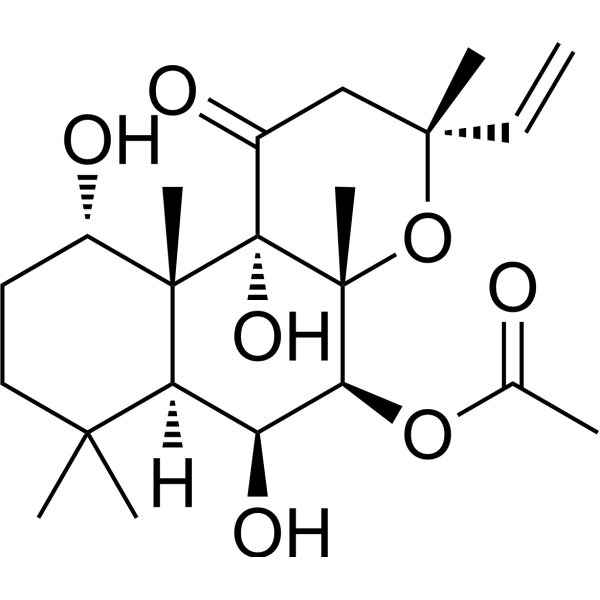
Cat. No.: HY-15371
CAS No.: 66575-29-9
Purity:  98.95%
Synonyms: Coleonol; Colforsin; HL 362
Forskolin (Coleonol) is a potent adenylate cyclase activator with an IC50 of 41 nM and an EC50 of 0.5 μM for type I adenylyl cyclase . Forskolin is also an inducer of intracellular cAMP formation . Forskolin induces differentiation of various cell types and activates pregnane X receptor (PXR) and FXR . Forskolin exerts a inotropic effect on the heart, and has platelet antiaggregatory and antihypertensive actions. Forskolin also induces autophagy .
loading...
    loading...
49
49 Cited Publications
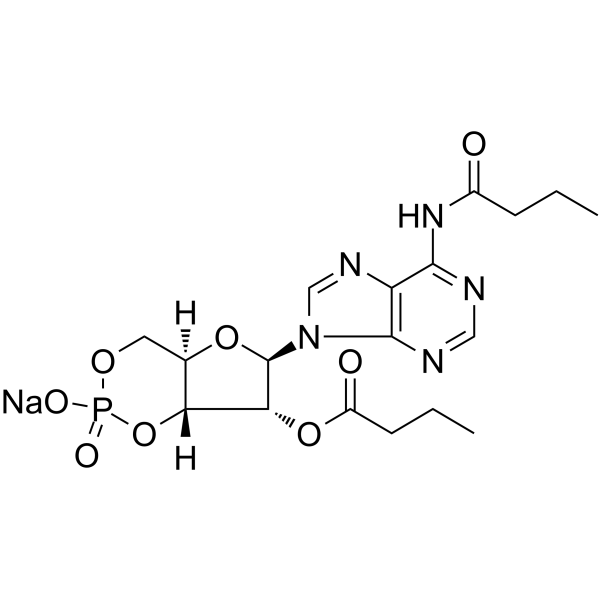
Cat. No.: HY-B0764
CAS No.: 16980-89-5
Synonyms: Dibutyryl Camp sodium; DBCamp sodium
Bucladesine (Dibutyryl cAMP; DBcAMP) sodium is a membrane-permeable 3′, 5′-cyclic adenosine monophosphate (cAMP) analog. Bucladesine selectively activates cAMP dependent protein kinase (PKA) by increasing the intracellular level of cAMP. Bucladesine significantly attenuates MDMA-induced increases in hippocampal mitochondrial ROS formation, mitochondrial outer membrane damage, cytochrome c release, and hippocampal ADP/ATP ratio, thereby improving spatial learning and memory impairments. Bucladesine exhibit anti-nociceptive and anti-inflammation effect. Bucladesine can inhibit cancer cells proliferation, induce apoptosis. Bucladesine can be used for the researches of neurological disease, cancer, inflammation .
loading...
    loading...
49
49 Cited Publications
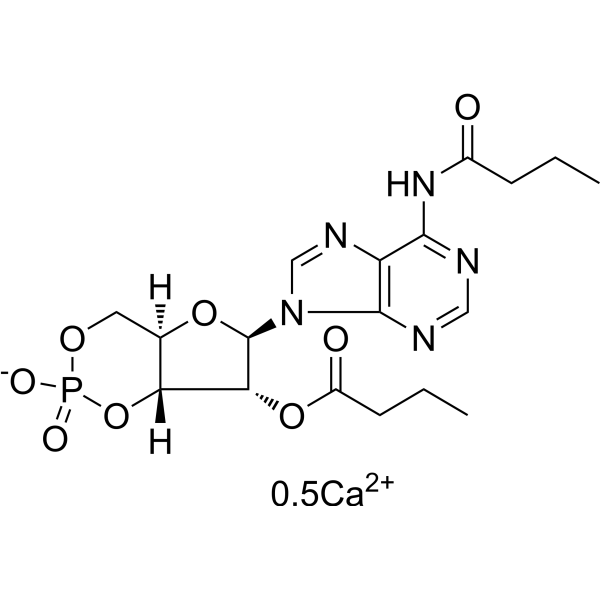
Cat. No.: HY-B0764A
CAS No.: 938448-87-4
Synonyms: Dibutyryl Camp hemicalcium; DBCamp hemicalcium
Bucladesine (Dibutyryl cAMP; DBcAMP) hemicalcium is a membrane-permeable 3′, 5′-cyclic adenosine monophosphate (cAMP) analog. Bucladesine selectively activates cAMP dependent protein kinase (PKA) by increasing the intracellular level of cAMP. Bucladesine significantly attenuates MDMA-induced increases in hippocampal mitochondrial ROS formation, mitochondrial outer membrane damage, cytochrome c release, and hippocampal ADP/ATP ratio, thereby improving spatial learning and memory impairments. Bucladesine exhibit anti-nociceptive and anti-inflammation effect. Bucladesine can inhibit cancer cells proliferation, induce apoptosis. Bucladesine can be used for the researches of neurological disease, cancer, inflammation .
loading...
    loading...
39
39 Cited Publications
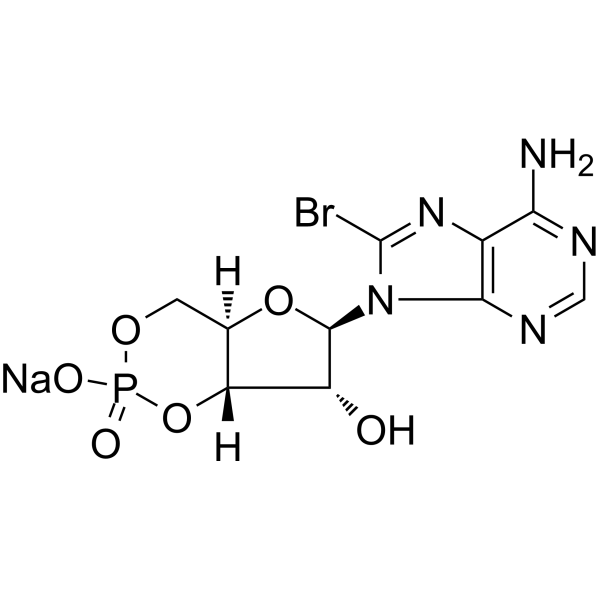
Cat. No.: HY-12306
CAS No.: 76939-46-3
Purity:  99.91%
Synonyms: 8-Br-Camp sodium salt
Target:  

PKA Apoptosis

Research Areas:  

Cancer

8-Bromo-cAMP sodium (8-Br-Camp) sodium salt, a cyclic AMP analog, is an activator of cyclic AMP-dependent protein kinase (PKA). 8-Bromo-cAMP sodium salt has anti-proliferative and apoptotic effects against cancer cells .
loading...
    loading...
39
39 Cited Publications
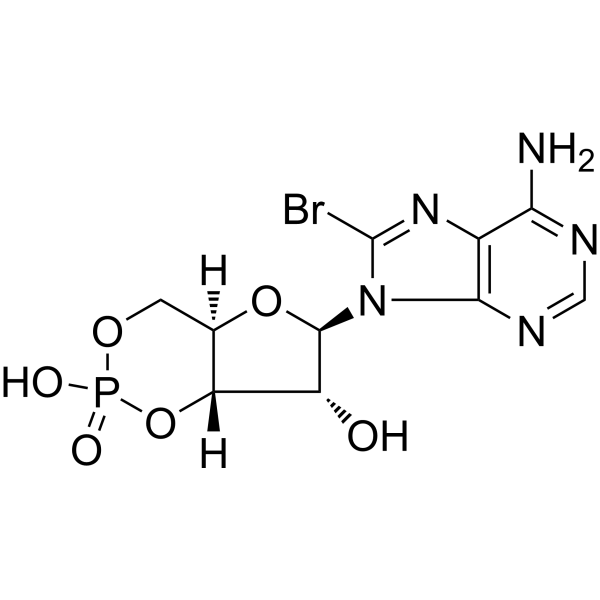
Cat. No.: HY-12306A
CAS No.: 23583-48-4
Purity:  99.48%
Synonyms: 8-Br-Camp
Target:  

PKA Apoptosis

Research Areas:  

Cancer

8-Bromo-cAMP (8-Br-Camp), a cyclic AMP analog, is an activator of cyclic AMP-dependent protein kinase (PKA). 8-Bromo-cAMP has anti-proliferative and apoptotic effects against cancer cells .
loading...
    loading...
32
32 Cited Publications
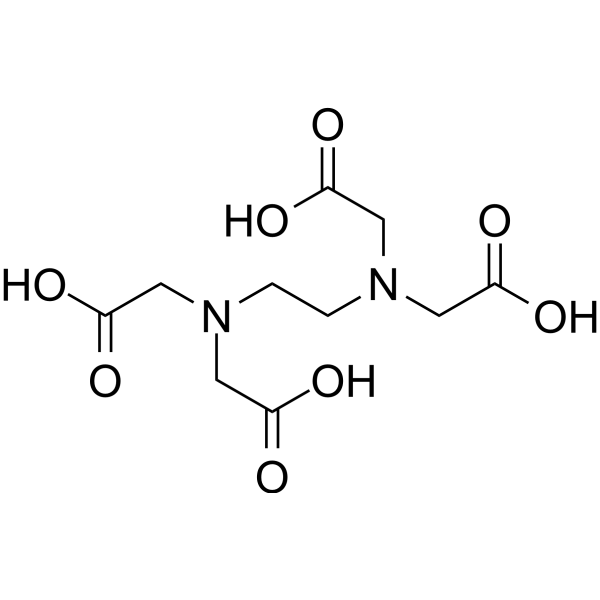
Cat. No.: HY-Y0682
CAS No.: 60-00-4
Synonyms: EDTA
Ethylenediaminetetraacetic acid (EDTA) is a kind of metal chelating agent (binds to bivalent and trivalent metal cations, including calcium). Ethylenediaminetetraacetic acid has antibacterial, anti-inflammatory, antioxidant, anti-hypercalcemia and anticoagulant activities. Ethylenediaminetetraacetic acid decreases the metal ion-catalyzed oxidative damage to proteins, and allows maintenance of reducing environment during protein purification. Ethylenediaminetetraacetic acid can alleviate the liver fibrosis. Ethylenediaminetetraacetic acid can be used for coronary artery disease and neural system disease research .
loading...
    loading...
31
31 Cited Publications
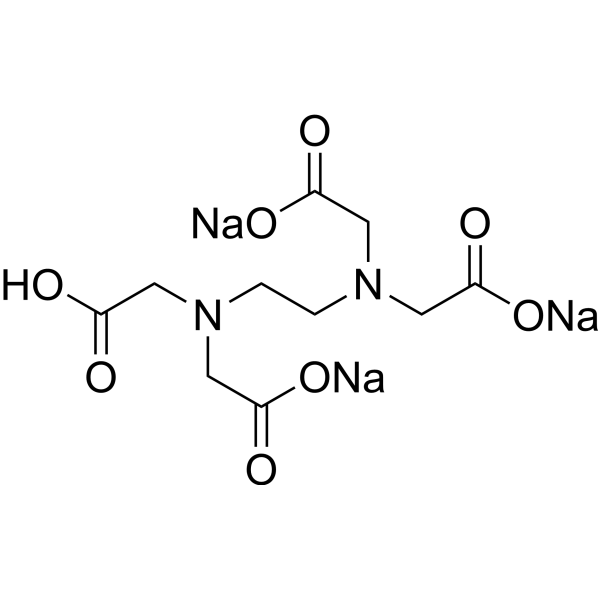
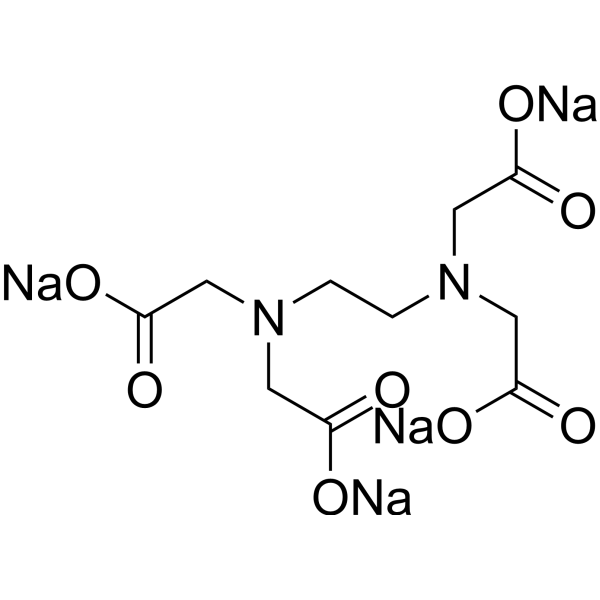
Cat. No.: HY-B1009
CAS No.: 150-38-9
Synonyms: EDTA trisodium salt; Trisodium EDTA
Ethylenediaminetetraacetic acid trisodium salt (EDTA trisodium salt; Trisodium EDTA) is a kind of metal chelating agent (binds to bivalent and trivalent metal cations, including calcium). Ethylenediaminetetraacetic acid trisodium salt has antibacterial, anti-inflammatory, antioxidant, anti-hypercalcemia and anticoagulant activities. Ethylenediaminetetraacetic acid trisodium salt decreases the metal ion-catalyzed oxidative damage to proteins, and allows maintenance of reducing environment during protein purification. Ethylenediaminetetraacetic acid trisodium salt can alleviate the liver fibrosis. Ethylenediaminetetraacetic acid can be used for coronary artery disease and neural system disease research .
loading...
    loading...
31
31 Cited Publications
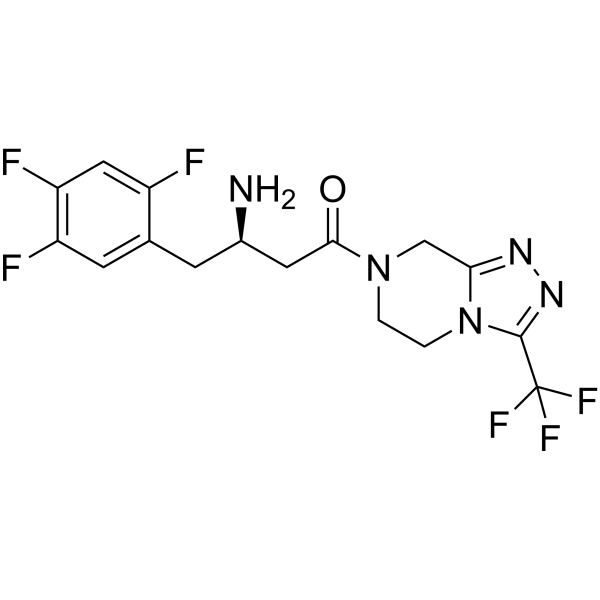
Cat. No.: HY-13749
CAS No.: 486460-32-6
Purity:  99.75%
Synonyms: MK-0431
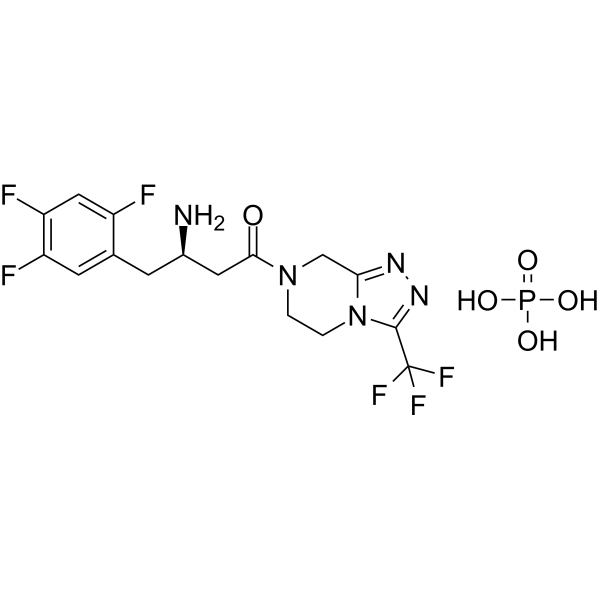
Sitagliptin (MK-0431) is an orally active and highly selective DPP4 inhibitor with an IC50 value of 19 nM. Sitagliptin blocks the degradation of glucagon-like peptide-1 (GLP-1) and glucose-dependent insulinotropic peptide (GIP) by competing inhibition mechanism (Kᵢ = 1 nM), thereby increasing the level of active incretin. Sitagliptin can also directly stimulate the secretion of GLP-1 by intestinal L cells by activating the cAMP/PKA and ERK1/2 pathways, and this effect is independent of DPP-4. Sitagliptin shows protective effects on pancreatic islet grafts in 1-type diabetes models. Sitagliptin can be used for the study of 1-type and 2-type diabetes .
loading...
    loading...
31
31 Cited Publications
Cat. No.: HY-13749A
CAS No.: 654671-78-0
Purity:  99.79%
Synonyms: MK-0431 phosphate
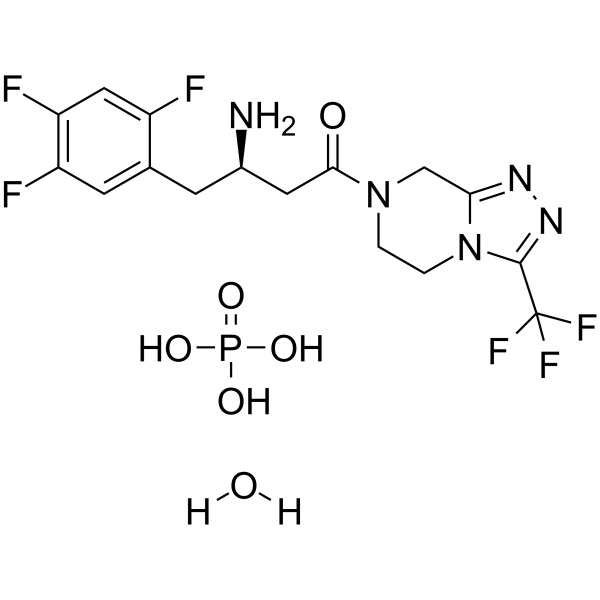
Sitagliptin (MK-0431) phosphate is an orally active and highly selective DPP4 inhibitor with an IC50 value of 19 nM. Sitagliptin phosphate blocks the degradation of glucagon-like peptide-1 (GLP-1) and glucose-dependent insulinotropic peptide (GIP) by competing inhibition mechanism (Kᵢ = 1 nM), thereby increasing the level of active incretin. Sitagliptin phosphate can also directly stimulate the secretion of GLP-1 by intestinal L cells by activating the cAMP/PKA and ERK1/2 pathways, and this effect is independent of DPP-4. Sitagliptin phosphate shows protective effects on pancreatic islet grafts in 1-type diabetes models. Sitagliptin phosphate can be used for the study of 1-type and 2-type diabetes .
loading...
    loading...
31
31 Cited Publications
Cat. No.: HY-13749B
CAS No.: 654671-77-9
Purity:  99.83%
Synonyms: MK-0431 phosphate monohydrate
Sitagliptin (MK-0431) phosphate monohydrate is an orally active and highly selective DPP4 inhibitor with an IC50 value of 19 nM. Sitagliptin phosphate monohydrate blocks the degradation of glucagon-like peptide-1 (GLP-1) and glucose-dependent insulinotropic peptide (GIP) by competing inhibition mechanism (Kᵢ = 1 nM), thereby increasing the level of active incretin. Sitagliptin phosphate monohydrate can also directly stimulate the secretion of GLP-1 by intestinal L cells by activating the cAMP/PKA and ERK1/2 pathways, and this effect is independent of DPP-4. Sitagliptin phosphate monohydrate shows protective effects on pancreatic islet grafts in 1-type diabetes models. Sitagliptin phosphate monohydrate can be used for the study of 1-type and 2-type diabetes .
loading...
    loading...
30
30 Cited Publications
Cat. No.: HY-B1511
CAS No.: 60-92-4
Synonyms: Cyclic adenosine monophosphate; Adenosine cyclic 3', 5'-monophosphate; Camp
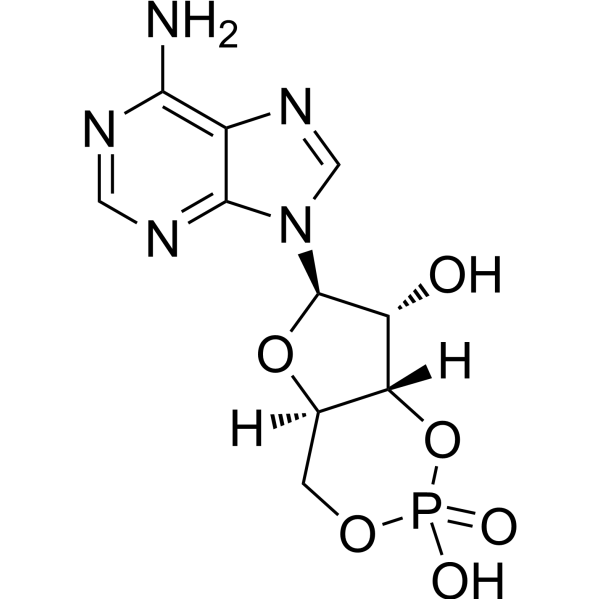
Cyclic AMP (Cyclic adenosine monophosphate), adenosine triphosphate derivative, is an intracellular signaling molecule responsible for directing cellular responses to extracellular signals. Cyclic AMP is an important second messenger in many biological processes .
loading...
    loading...
30
30 Cited Publications
Cat. No.: HY-B1511A
CAS No.: 37839-81-9
Synonyms: Cyclic adenosine monophosphate sodium; Adenosine cyclic 3', 5'-monophosphate sodium; Camp sodium
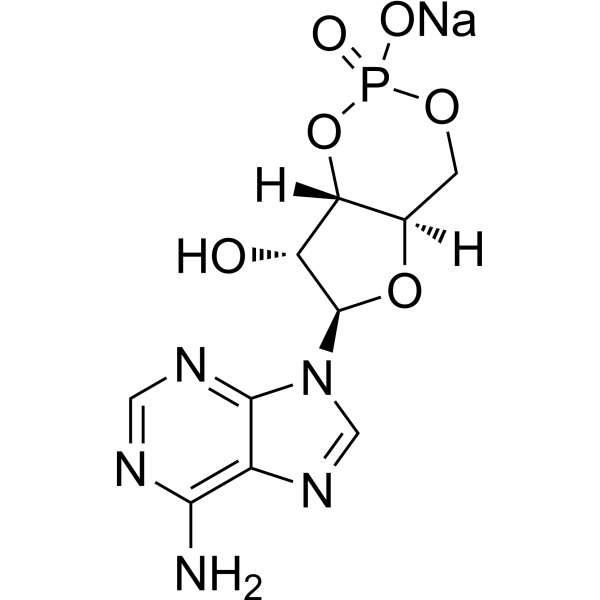
Cyclic AMP (Cyclic adenosine monophosphate) sodium, adenosine triphosphate derivative, is an intracellular signaling molecule responsible for directing cellular responses to extracellular signals. Cyclic AMP sodium is an important second messenger in many biological processes .
loading...
    loading...
27
27 Cited Publications
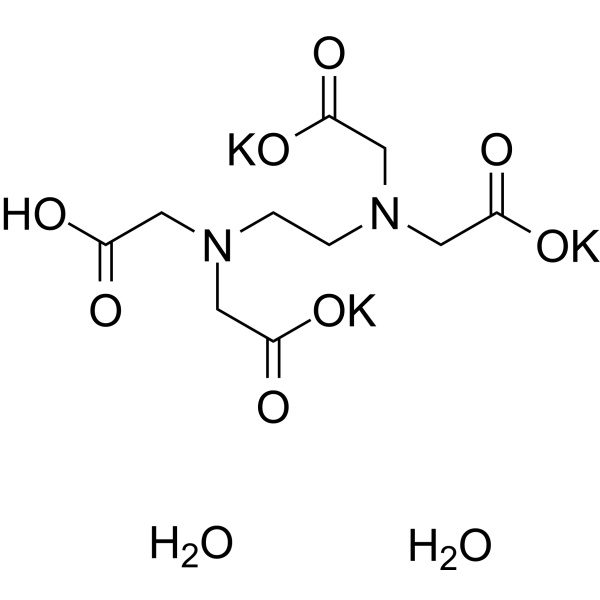
Cat. No.: HY-W087947
CAS No.: 65501-24-8
Synonyms: Ethylenediaminetetraacetic acid dihydrate tripotassium
EDTA dihydrate tripotassium (Ethylenediaminetetraacetic acid dihydrate tripotassium) is a kind of metal chelating agent (binds to bivalent and trivalent metal cations, including calcium). EDTA dihydrate tripotassium has antibacterial, anti-inflammatory, antioxidant, anti-hypercalcemia and anticoagulant activities. EDTA dihydrate tripotassium decreases the metal ion-catalyzed oxidative damage to proteins, and allows maintenance of reducing environment during protein purification. EDTA dihydrate tripotassium can alleviate the liver fibrosis. EDTA dihydrate tripotassium can be used for coronary artery disease and neural system disease research .
loading...
    loading...
27
27 Cited Publications
Cat. No.: HY-W105700
CAS No.: 10378-23-1
Synonyms: EDTA sodium hydrate
Ethylenediaminetetraacetic acid (EDTA) sodium hydrate is a kind of metal chelating agent (binds to bivalent and trivalent metal cations, including calcium). Ethylenediaminetetraacetic acid sodium hydrate has antibacterial, anti-inflammatory, antioxidant, anti-hypercalcemia and anticoagulant activities. Ethylenediaminetetraacetic acid sodium hydrate decreases the metal ion-catalyzed oxidative damage to proteins, and allows maintenance of reducing environment during protein purification. Ethylenediaminetetraacetic acid sodium hydrate can alleviate the liver fibrosis. Ethylenediaminetetraacetic acid sodium hydrate can be used for coronary artery disease and neural system disease research .
loading...
    loading...
27
27 Cited Publications
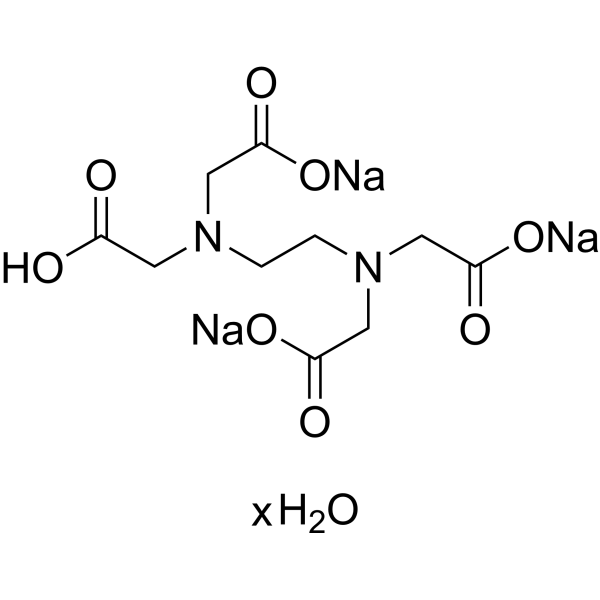
Cat. No.: HY-W127774
CAS No.: 85715-60-2
Synonyms: Ethylenediaminetetraacetic acid hydrate sodium
EDTA (Ethylenediaminetetraacetic acid) hydrate sodium is a kind of metal chelating agent (binds to bivalent and trivalent metal cations, including calcium). EDTA hydrate sodium has antibacterial, anti-inflammatory, antioxidant, anti-hypercalcemia and anticoagulant activities. EDTA hydrate sodium decreases the metal ion-catalyzed oxidative damage to proteins, and allows maintenance of reducing environment during protein purification. EDTA hydrate sodium can alleviate the liver fibrosis. Ethylenediaminetetraacetic acid can be used for coronary artery disease and neural system disease research .
loading...
    loading...
27
27 Cited Publications
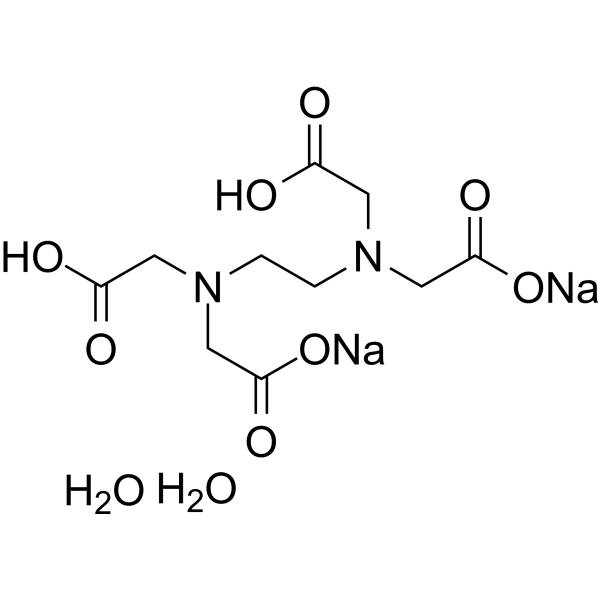
Cat. No.: HY-Y0682A
CAS No.: 6381-92-6
Synonyms: EDTA disodium dihydrate
Ethylenediaminetetraacetic acid (EDTA) disodium dehydrate is a kind of metal chelating agent (binds to bivalent and trivalent metal cations, including calcium). Ethylenediaminetetraacetic acid disodium dehydrate has antibacterial, anti-inflammatory, antioxidant, anti-hypercalcemia and anticoagulant activities. Ethylenediaminetetraacetic acid disodium dehydrate decreases the metal ion-catalyzed oxidative damage to proteins, and allows maintenance of reducing environment during protein purification. Ethylenediaminetetraacetic acid disodium dehydrate can alleviate the liver fibrosis. Ethylenediaminetetraacetic acid disodium dehydrate can be used for coronary artery disease and neural system disease research .
loading...
    loading...
27
27 Cited Publications
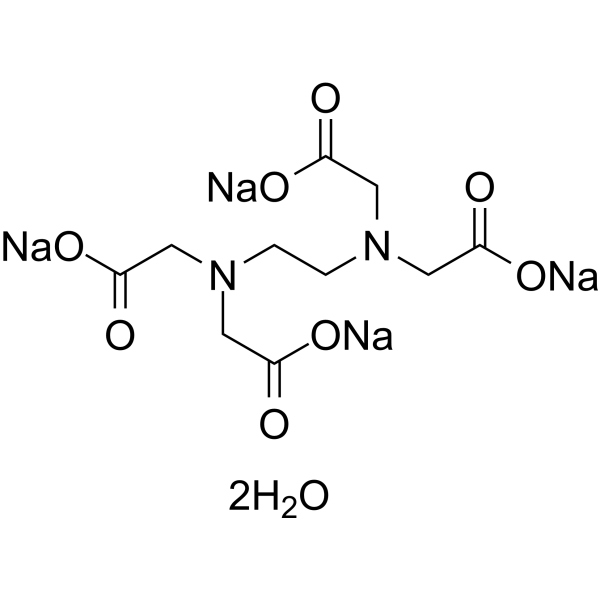
Cat. No.: HY-Y0682B
CAS No.: 64-02-8
Synonyms: EDTA tetrasodium
Ethylenediaminetetraacetic acid (EDTA) tetrasodium is a kind of metal chelating agent (binds to bivalent and trivalent metal cations, including calcium). Ethylenediaminetetraacetic acid tetrasodium has antibacterial, anti-inflammatory, antioxidant, anti-hypercalcemia and anticoagulant activities. Ethylenediaminetetraacetic acid tetrasodium decreases the metal ion-catalyzed oxidative damage to proteins, and allows maintenance of reducing environment during protein purification. Ethylenediaminetetraacetic acid tetrasodium can alleviate the liver fibrosis. Ethylenediaminetetraacetic acid tetrasodium can be used for coronary artery disease and neural system disease research .
loading...
    loading...
25
25 Cited Publications
Cat. No.: HY-100403
CAS No.: 298690-60-5
Purity:  99.67%
Target:  

mGluR

Research Areas:  

Cancer

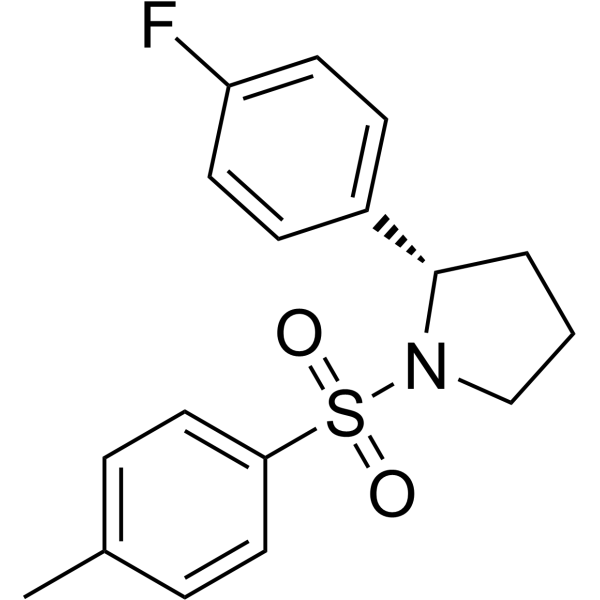
Ro 67-7476 is a potent positive allosteric modulator of mGluR1 and potentiates glutamate-induced calcium release in HEK293 cells expressing rat mGluR1a with an EC50 of 60.1 nM . Ro 67-7476 is a potent P-ERK1/2 agonist and activates ERK1/2 phosphorylation in the absence of exogenously added glutamate (EC50=163.3 nM) .
loading...
    loading...
19
19 Cited Publications
Cat. No.: HY-16900
CAS No.: 61413-54-5
Synonyms: (R,S)-Rolipram; (±)-Rolipram; ZK 62711
Rolipram is a PDE4 inhibitor, with blood-brain barrier permeability, that reverses β-amyloid-induced learning and memory impairment in rats. Rolipram elevates intracellular cAMP and clevels and regulates the cAMP/CREB signaling pathway, thereby alleviating neuroinflammation and apoptotic responses. Rolipram promotes neuronal differentiation of human bone marrow mesenchymal stem cells and inhibits Methamphetamine- and morphine-induced hyperlocomotion in mice. Rolipram also reduces the viability of glioblastoma stem-like cells and enhances Bevacizumab (HY-P9906)-induced cell death. Rolipram inhibits the expression of proinflammatory cytokines and enhances central noradrenergic transmission. Rolipram is mainly used in studies related to various central nervous system diseases including Alzheimer's disease, major depressive disorder, glioblastoma multiforme, and multiple sclerosis .
loading...
    loading...
16
16 Cited Publications
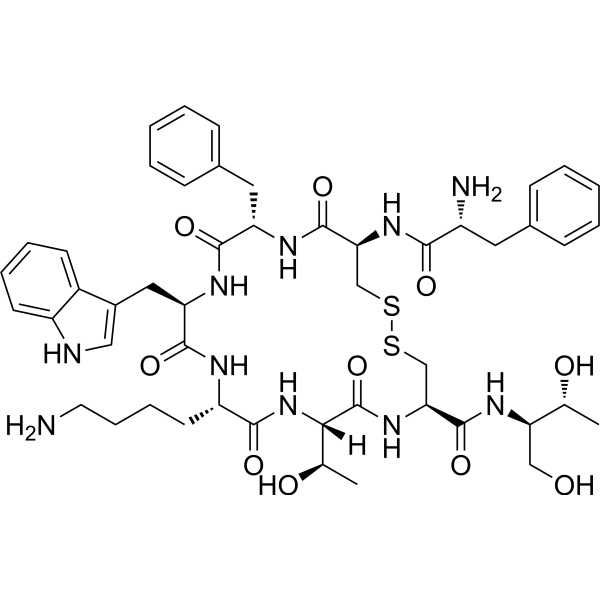
Cat. No.: HY-P0036
CAS No.: 83150-76-9
Synonyms: SMS 201-995
Octreotide (SMS 201-995) is a somatostatin receptor agonist and synthetic octapeptide endogenous somatostatin analogue. Octreotide (SMS 201-995) can bind to the somatostatin receptor and mainly subtypes 2, 3, and 5, increases Gi activity, and reduces intracellular cAMP production. Octreotide (SMS 201-995) has antitumor activity, mediates apoptosis and may also be used in disease studies in acromegaly .
loading...
    loading...

