1. Search Result
Search Result
Results for "

Cu(I)

" in MedChemExpress (MCE) Product Catalog:

24

Inhibitors & Agonists

7

Fluorescent Dyes

1

Biochemical Assay Reagents

2

Click Chemistry

Cat. No. Product Name Target Research Areas Chemical Structure
  • HY-100486
    BTTAA
    2 Publications Verification

    Biochemical Assay Reagents Others
    BTTAA is a Cu(I)-stabilizing ligand, whch performs potently with ubiquitin Glu18AzF.
    BTTAA
  • HY-Y0032
    Thiosemicarbazide
    1 Publications Verification

    Orthopoxvirus Infection Others Cancer
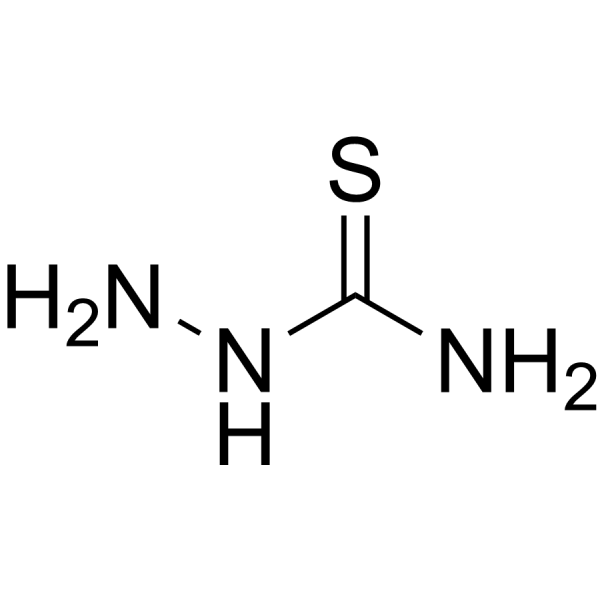
    Thiosemicarbazide is a vitamin B6 antagonist with anti-acne activity. Thiosemicarbazide is also a well-known source in the synthesis of heterocycles, and its derivatives have potential anticancer activity. Thiosemicarbazide (TSC: HL1) reacts with metal salts, urea (U), to prepare Co(II) and Cu(I) metal complexes. Thiosemicarbazide is also used in the fields of media communications and optical storage, and in the spectrophotometric detection of metals .
    Thiosemicarbazide
  • HY-W800705

    Fluorescent Dye Others
    Tamra azide is an azide-terminated fluorescent dye and click reaction partner. Tamra azide undergoes Cu I-catalyzed cycloaddition click reaction with alkyne-functionalized nanodiamonds. After conjugation with nanodiamonds, Tamra azide serves as a fluorescent label that can be excited at a specific wavelength to exhibit characteristic luminescence (Ex/Em=555/580 nm) .
    Tamra azide
  • HY-W039953

    N-azidoacetylglucosamine-tetraacylated

    Biochemical Assay Reagents Others
    Ac4GlcNAz (N-azidoacetylglucosamine-tetraacylated) is an azido-tagged analogue of N-acetylglucosamine (GlcNAC). It features azide functionality on the N-acyl side chain and is acetylated to aid in cell membrane permeation. Once in the cell, the acetylated compound is deprotected and takes part in the hexosamine biosynthetic pathway by action of GlcNAc kinase. The resulting modified proteins are detected by the addition of fluorescent tags under Cu(I)-catalyzed azide-alkyne cycloaddition conditions.
    Ac4GlcNAz
  • HY-153419

    Biochemical Assay Reagents Others
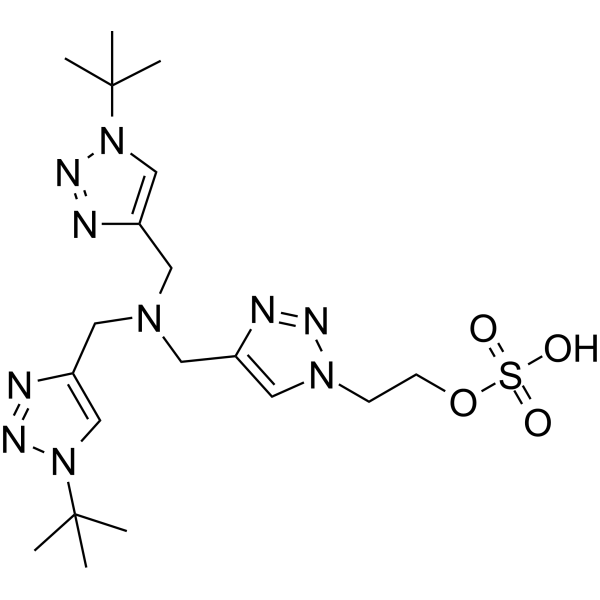
    BTTES is a tris(triazolylmethyl)amine-based ligand for Cu(I) without apparent toxicity. BTTES IMPROVES the cycloaddition reaction rapidly in living systems .
    BTTES
  • HY-W753658

    Fluorescent Dye Others
    Coppersensor-3 (CS3) is a bright small-molecule fluorescent probe for selective Cu(I) detection. Coppersensor-3 is selective and sensitive enough to image labile copper pools in living cells at endogenous, basal levels. Coppersensor-3 can be used for the cell biology of copper research .
    Coppersensor-3
  • HY-163200

    Cuproptosis Neurological Disease
    Cu(I) chelator 1 (Compound LH2) is a chelator which targets the Cu(I) redox state. Cu(I) chelator 1 prevents ROS production .
    Cu(I) chelator 1
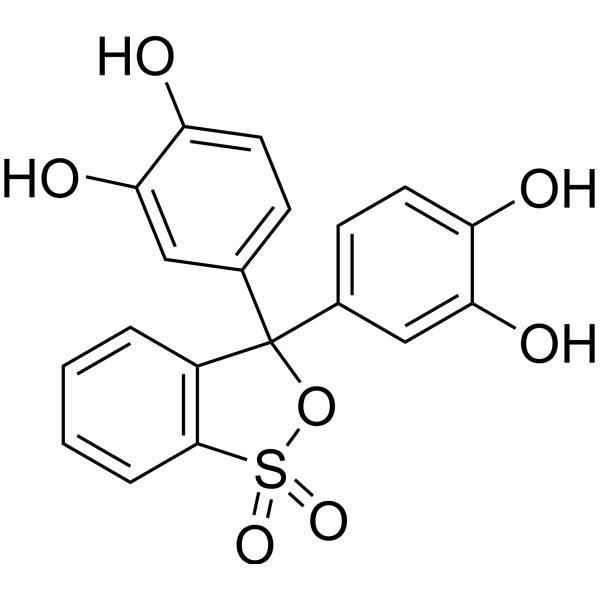
  • HY-D0798

    Fluorescent Dye Others
    Catechol violet is an efficient and versatile ligand for Cu(I)-catalyzed C-S coupling reactions. Catechol violet is also a complexometric indicator dye .
    Catechol violet
  • HY-W018008

    Ferrocenylacetylene; Ferrocenylethyne

    Biochemical Assay Reagents Others
    Ethynylferrocene (Ferrocenylacetylene) is a click chemistry agent. Ethynylferrocene can be used for labeling of hairpin DNA probes to monitor the DNA hybridization via the Cu(I)-catalyzed azide-alkyne cycloaddition (CuAAC) .
    Ethynylferrocene
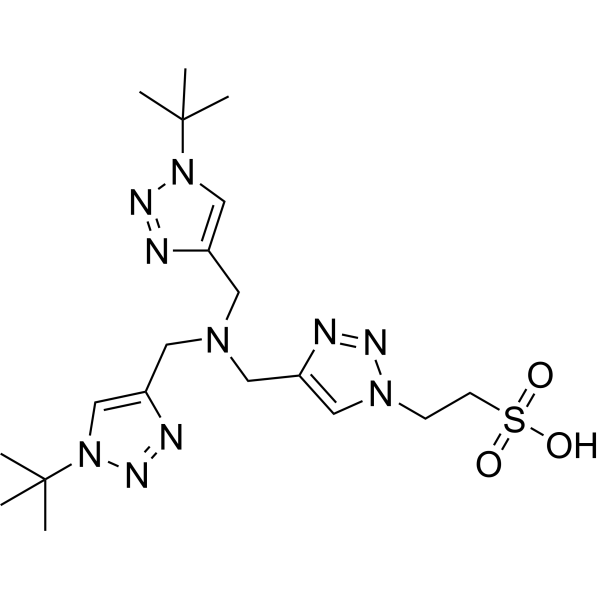
  • HY-161181

    Biochemical Assay Reagents Others
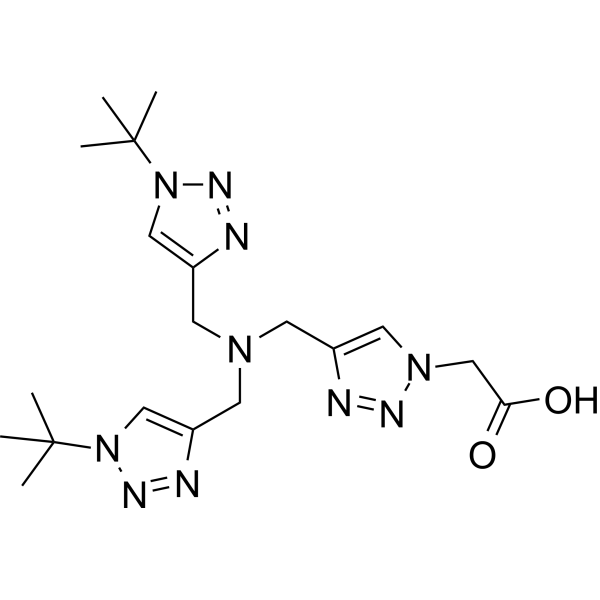
    BTTES-acid is an analog of BTTES. BTTES is a tris(triazolylmethyl)amine-based ligand for Cu(I) without apparent toxicity. BTTES improves the cycloaddition reaction rapidly in living systems .
    BTTES-acid
  • HY-Y0032R

    Orthopoxvirus Reference Standards Infection Others Cancer
    Thiosemicarbazide is a vitamin B6 antagonist with anti-acne activity. Thiosemicarbazide is also a well-known source in the synthesis of heterocycles, and its derivatives have potential anticancer activity. Thiosemicarbazide (TSC: HL1) reacts with metal salts, urea (U), to prepare Co(II) and Cu(I) metal complexes. Thiosemicarbazide is also used in the fields of media communications and optical storage, and in the spectrophotometric detection of metals .
    Thiosemicarbazide (Standard)
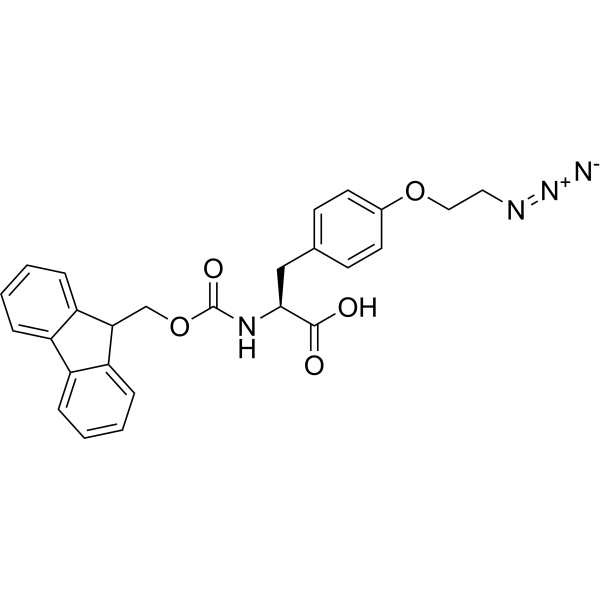
  • HY-151687

    ADC Linker Others
    Fmoc-L-Tyr(2-azidoethyl)-OH is a click chemistry reagent containing an azide group. Fmoc-L-Tyr(2-azidoethyl)-OH is unnatural Fmoc-protected Tyrosine derivative bears an azidoethyl substitution as reactive handle e.g. for biorthogonal conjugations, via a Cu(I)-catalyzed 1,3-dipolar Click cycloaddition with alkynes. And azido-UAAs can be employed as IR reporters . It contains an azide group and can undergo copper-catalyzed azide-alkyne cycloaddition (CuAAc) with molecules containing alkyne groups. It can also undergo ring strain-promoted alkyne-azide cycloaddition (SPAAC) with molecules containing DBCO or BCN groups.
    Fmoc-L-Tyr(2-azidoethyl)-OH
  • HY-W1049767

    MOFs Others
    TIFSIX-2-Cu-i is a metal-organic framework (MOF).
    TIFSIX-2-Cu-i
  • HY-W1049774

    MOFs Others
    SIFSIX-14-Cu-i is a metal-organic framework (MOF).
    SIFSIX-14-Cu-i
  • HY-161436

    Small Interfering RNA (siRNA) Others
    TPA-dT is a thymidine analog with a tris[(2-pyridyl)methyl]amine (TPA) group. TPA-dT can be used to modify siRNAs. The TPA-modified siRNAs remain functionally inactive and is incapable of silencing gene expression until the TPA moiety is removed upon exposure to Cu(I) .
    TPA-dT
  • HY-W800697

    Fluorescent Dye Others
    BP Fluor 430 Picolyl Azide is an advanced fluorescent probe that incorporatess a copper-chelating motif to raise the effective concentration of Cu(I) at the reaction site. The rate of the CuAAC reaction depends on the concentrations of all reagents, including copper, therefore raising the effective copper concentration at the reaction site will dramatically increase the rate of CuAAC reaction without the need to increase concentration of azide reagent or copper. In addition, the use of BP Fluor 430 Picolyl Azide instead of conventional BP Fluor 430 Azide allows for at least a tenfold reduction in the concentration of the copper catalyst without sacrificing the efficiency of labeling. In summary, the introduction of a picolyl moiety into an azide probe leads to a substantial increase in the sensitivity of alkyne detection. This is of special value for the detection of low abundance targets or where significant increase in signal intensity is desired.
    BP Fluor 430 picolyl azide
  • HY-D3268

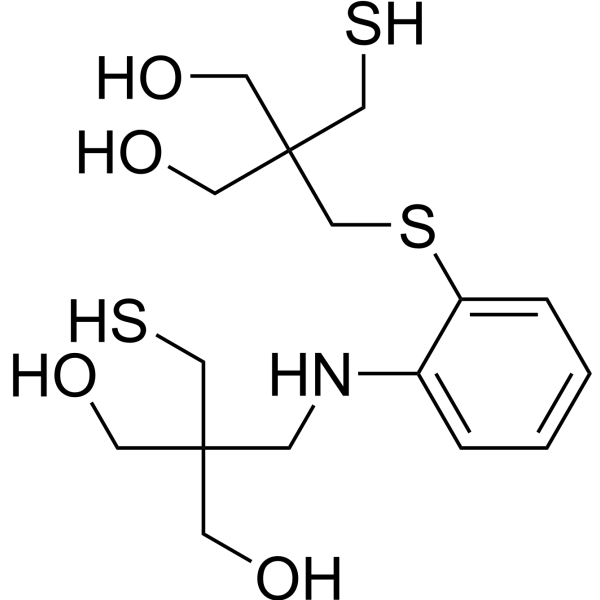
    NIR-Cu(I)
  • HY-W800693

    Fluorescent Dye Others
    BP Fluor 405 Picolyl Azide is an advanced fluorescent probe that incorporatess a copper-chelating motif to raise the effective concentration of Cu(I) at the reaction site. The rate of the CuAAC reaction depends on the concentrations of all reagents, including copper, therefore raising the effective copper concentration at the reaction site dramatically increases the rate of CuAAC reaction without increasing the concentrations of azide reagent or copper. In addition, the use of picolyl azide instead of conventional azides allows for at least a tenfold reduction in the concentration of the copper catalyst without sacrificing the efficiency of labeling. In summary, the introduction of a picolyl moiety into an azide probe leads to a substantial increase in the sensitivity of alkyne detection. This is of special value for the detection of low abundance targets or where significant increase in signal intensity is desired.
    BP Fluor 405 picolyl azide
  • HY-D3255

    Fluorescent Dye Others
    CTAP-1 is a monovalent copper ion probe. CTAP-1 binds to monovalent copper Cu (I) to inhibit photoinduced electron transfer, thereby enhancing fluorescence emission. CTAP-1 produces copper-dependent perinuclear staining that colocalizes with mitochondria and the Golgi apparatus. CTAP-1 can be used for imaging Cu (I) pools, excitation/emission Wavelength: 365/480 nm .
    CTAP-1
  • HY-100486R

    Others Reference Standards Others
    BTTAA (Standard) is the analytical standard of BTTAA (HY-100486). This product is intended for research and analytical applications. BTTAA is a Cu(I)-stabilizing ligand, whch performs potently with ubiquitin Glu18AzF.
    BTTAA (Standard)
  • HY-D3153

    Apoptosis Caspase Microtubule/Tubulin Inflammation/Immunology
    PbQ is a tubulin inhibitor (with an IC50 of 5 μM against goat tubulin) and a fluorescent probe for cuprous ions Cu (I). PbQ can penetrate the membrane of peripheral blood mononuclear cells, form a stable 1:1 complex with Cu + ions, and exhibits low toxicity and good biocompatibility toward macrophage cell lines. In addition, PbQ promotes tubulin degradation and disrupts the microtubule network in lung epithelial cells without affecting actin. PbQ also possesses genotoxicity by forming DNA base adducts, and it can activate caspase-3 and apoptosis-related genes, induce loss of mitochondrial membrane potential, and trigger cell apoptosis. PbQ can be used in studies related to chronic obstructive pulmonary disease .
    PbQ
  • HY-D3212

    Fluorescent Dye Metabolic Disease
    Crisp-17 is a monovalent copper ion probe. Crisp-17 can be used to characterize cellular phenotypes associated with copper metabolism defects. Crisp-17 is applicable to research related to Menkes disease .
    Crisp-17
  • HY-D3241

    Fluorescent Dye Others
    CD649.2 is a red-emitting copper-targeted acylimidazole-reactive Fluorescent probe and a highly specific Cu 2+ detection reagent. CD649.2 enables visualization of labile Cu 2+ pools and their dynamic changes in living cells .
    CD649.2
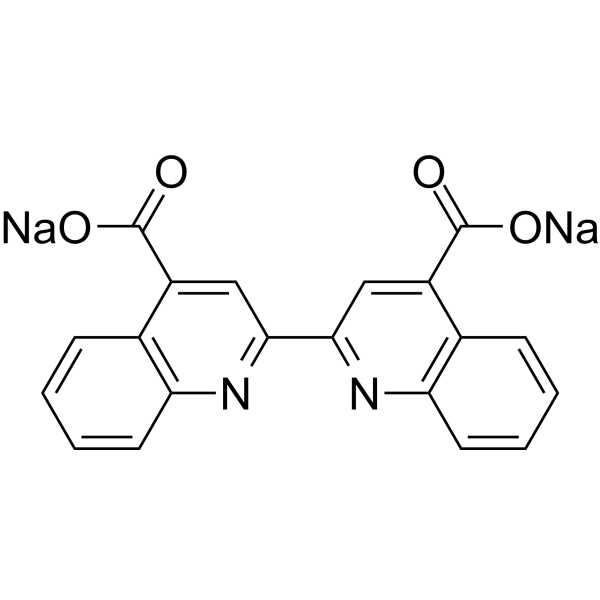
  • HY-D0005

    Amyloid-β Neurological Disease
    Bathocuproine is a phenanthroline chelator that binds specifically to Cu +. Bathocuproine preferentially binds Cu + over Cu 2+ to form a chromogenic complex, which is used to detect the oxidation state of copper in biomolecules. Bathocuproine undergoes concentration-dependent self-association to form dimers, and it can engage in aromatic stacking interactions with aromatic residues of (Kd ≈ 1 mM). Bathocuproine is applicable to research related to Alzheimer's disease .
    Bathocuproine

Inquiry Online

Your information is safe with us. * Required Fields.

Salutation


Country or Region *

Applicant Name *


Organization Name *

Department *


Email Address *


Product Name *

Cat. No.


Requested quantity *

Phone Number *


Remarks

Inquiry Online

Inquiry Information

Product Name:
Cat. No.:
Quantity:
MCE Japan Authorized Agent: