
Search Result
| Isoforms Recommended: |
ERRα
|
Results for "
ERRα
" in MedChemExpress (MCE) Product Catalog:
3
Biochemical Assay Reagents
9
Isotope-Labeled Compounds
| Cat. No. |
Product Name |
Target |
Research Areas |
Chemical Structure |
-
- HY-N0322
-
|
|
Environmental Pollutants
Endogenous Metabolite
Estrogen Receptor/ERR
Bacterial
Liposome
|
Infection
Metabolic Disease
Cancer
|
|
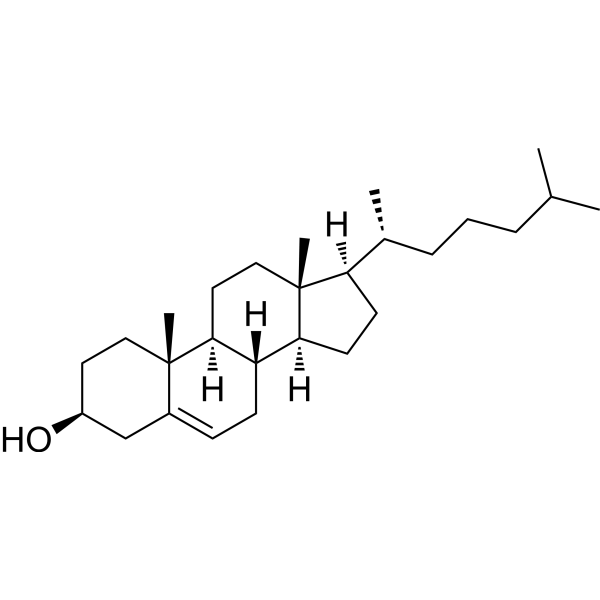
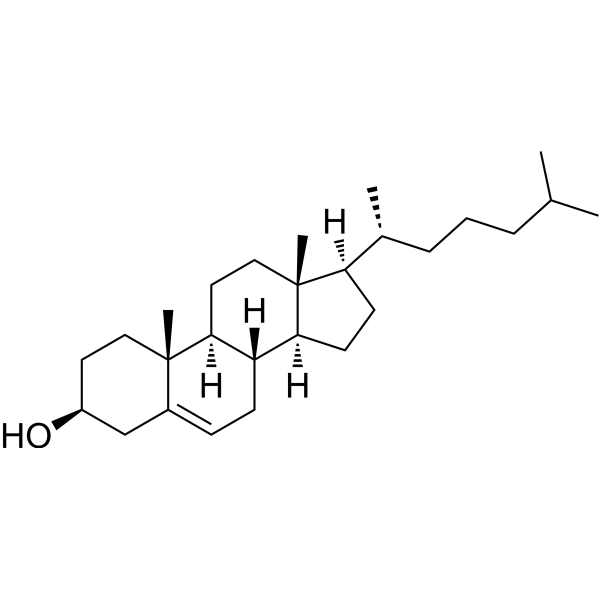
Cholesterol (from animal) is the major sterol in mammals. It is making up 20-25% of structural component of the plasma membrane. Plasma membranes are highly permeable to water but relatively impermeable to ions and protons. Cholesterol (from animal) plays an important role in determining the fluidity and permeability characteristics of the membrane as well as the function of both the transporters and signaling proteins . Cholesterol (from animal) is also an endogenous estrogen-related receptor α (ERRα) agonist .
|
-
-
- HY-N0322A
-
|
|
Liposome
|
Others
|
Cholesterol Water Soluble is a major sterol in mammals, constituting 20-25% of the structural composition of the plasma membrane. The plasma membrane is highly permeable to water but relatively impermeable to ions and protons. Cholesterol Water Soluble plays an important role in determining the fluidity and permeability characteristics of membranes and the function of transporters and signaling proteins. Cholesterol Water Soluble is also an endogenous estrogen-related receptor alpha (ERRα) agonist. Cholesterol Water Soluble can be used to study the effects of cholesterol on potassium currents in inner hair cells . (Note: This product is a mixture of Cholesterol and Methyl-β-cyclodextrin. The product specifications below only indicate the effective content of Cholesterol.)
|
-
-
- HY-155673
-
|
|
Estrogen Receptor/ERR
|
Metabolic Disease
|
|
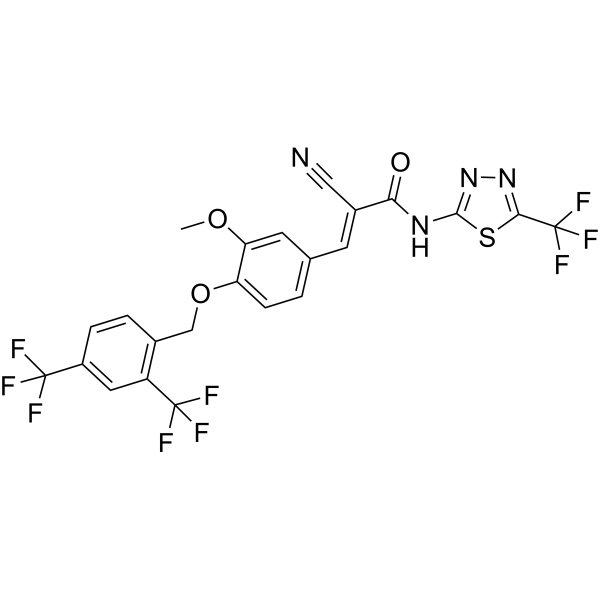
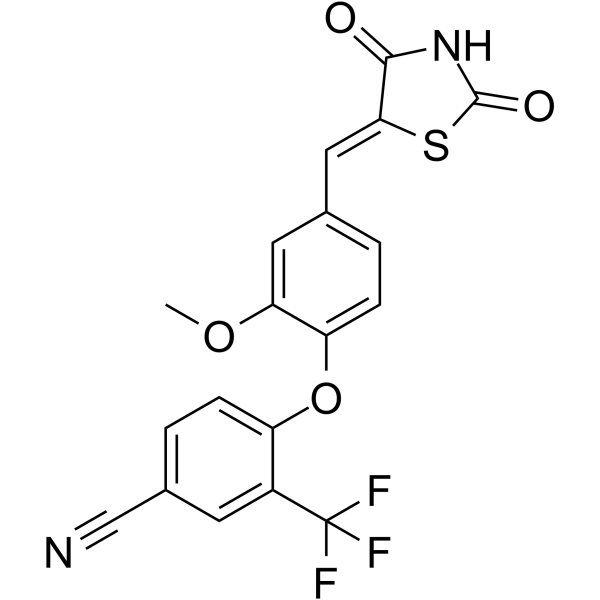
SLU-PP-332 is a pan-Estrogen Receptor/ERR agonist with EC50 values of 98, 230 and 430 nM for ERRα, ERRβ and ERRγ, respectively. SLUPP-332 enhances mitochondrial function and cellular respiration in skeletal muscle cell lines. SLU-PP-332 has the potential to study metabolic diseases as well as improve muscle function .
|
-
-
- HY-N0322S
-
|
|
Estrogen Receptor/ERR
Endogenous Metabolite
|
Metabolic Disease
|
|
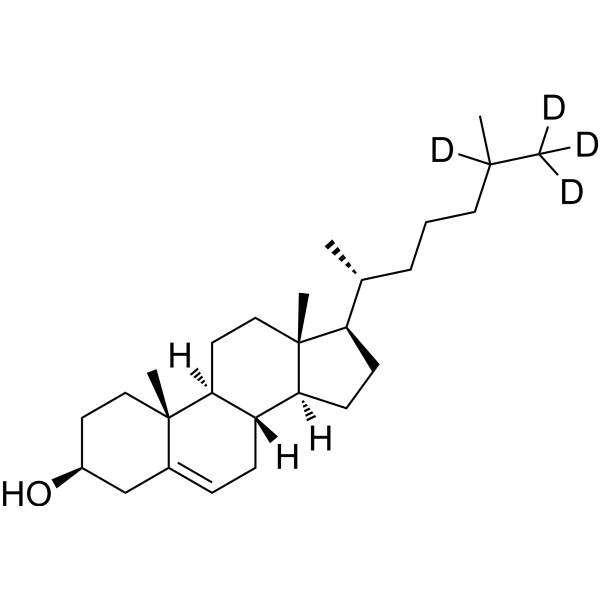
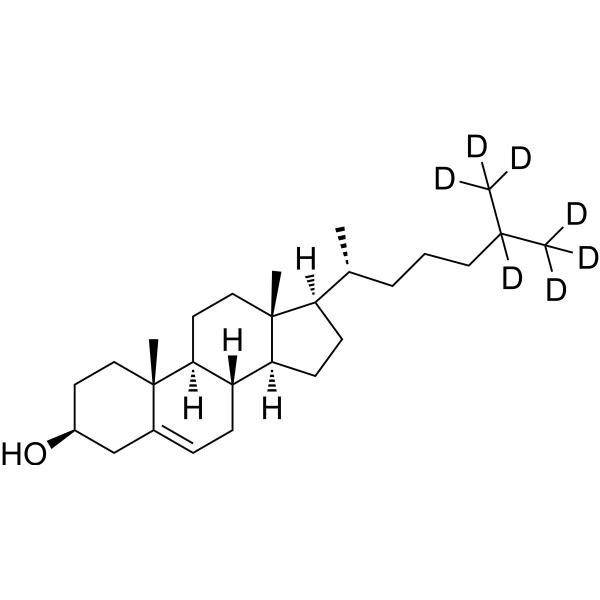
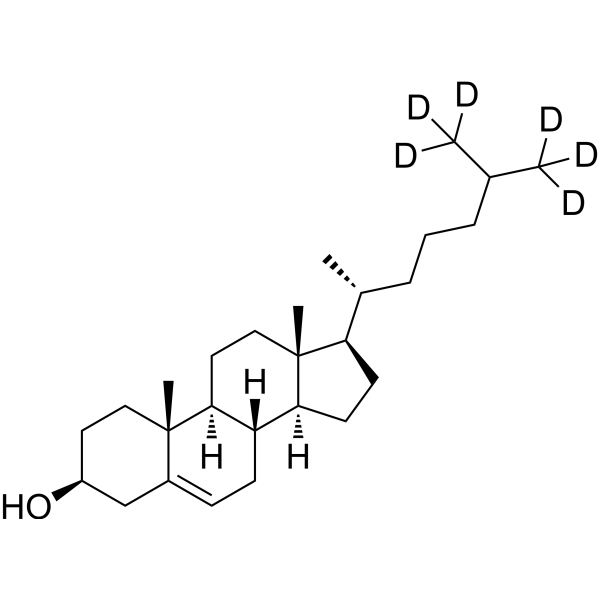
Cholesterol-d7 is the deuterium labeled Cholesterol. Cholesterol is the major sterol in mammals. It is making up 20-25% of structural component of the plasma membrane. Plasma membranes are highly permeable to water but relatively impermeable to ions and protons. Cholesterol plays an important role in determining the fluidity and permeability characteristics of the membrane as well as the function of both the transporters and signaling proteins . Cholesterol is also an endogenous estrogen-related receptor α (ERRα) agonist .
|
-
-
- HY-15483
-
DY131
3 Publications Verification
GSK 9089
|
Estrogen Receptor/ERR
Smo
|
Endocrinology
Cancer
|
|
DY131 (GSK 9089) is a potent and selective ERRγ and ERRβ agonist. DY131displays inactive against ERRα, ERα and ERβ . DY131 also inhibits Smo signaling .
|
-
-
- HY-10426
-
|
|
Estrogen Receptor/ERR
Autophagy
|
Cancer
|
|
XCT-790 is a potent and selective inverse agonist for ERRα with an IC50 value of 0.37 μM. XCT-790 induces cell death in chemotherapeutic resistant cancer cells. XCT-790 (Compound 12) is inactive against ERRγ and the estrogen receptors ERα and ERβ .
|
-
-
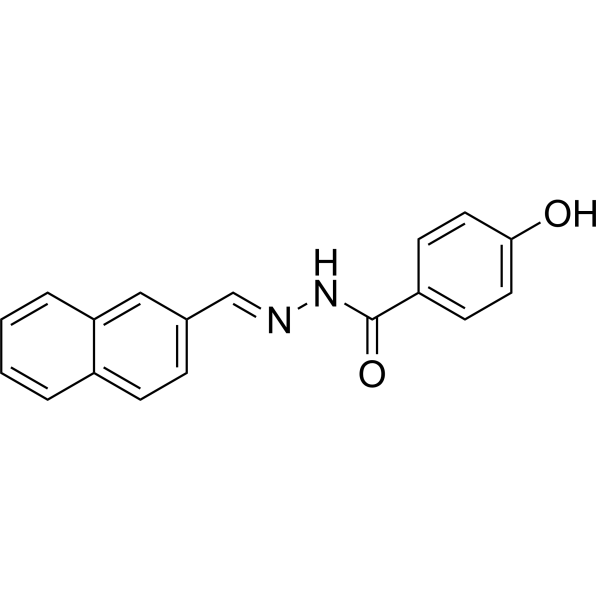
- HY-111226
-
-
-
- HY-N0322R
-
|
|
Liposome
Reference Standards
Estrogen Receptor/ERR
Endogenous Metabolite
Bacterial
|
Metabolic Disease
Cancer
|
|
Cholesterol (Standard) is the analytical standard of Cholesterol. This product is intended for research and analytical applications. Cholesterol is the major sterol in mammals. It is making up 20-25% of structural component of the plasma membrane. Plasma membranes are highly permeable to water but relatively impermeable to ions and protons. Cholesterol plays an important role in determining the fluidity and permeability characteristics of the membrane as well as the function of both the transporters and signaling proteins . Cholesterol is also an endogenous estrogen-related receptor α (ERRα) agonist .
|
-
-
- HY-N0322S5
-
|
|
Estrogen Receptor/ERR
Endogenous Metabolite
|
Metabolic Disease
|
|
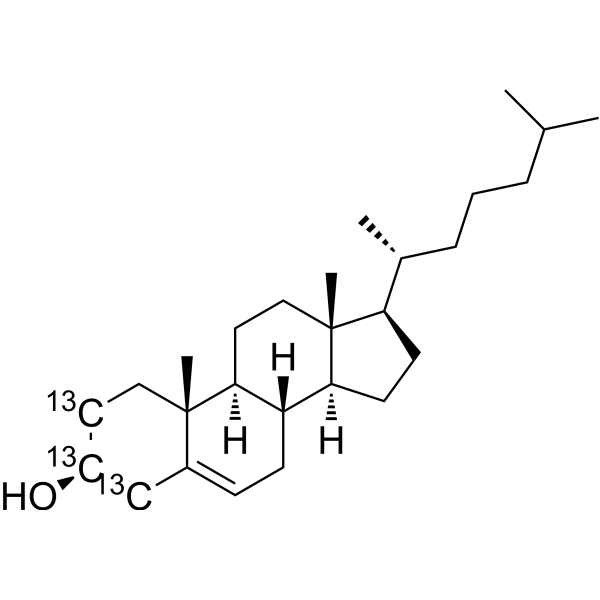
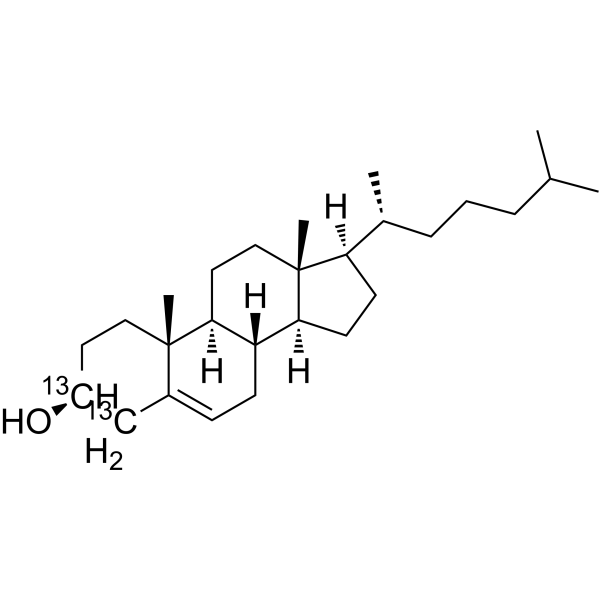
Cholesterol- 13C2 is the 13C labeled Cholesterol. Cholesterol is the major sterol in mammals. It is making up 20-25% of structural component of the plasma membrane. Plasma membranes are highly permeable to water but relatively impermeable to ions and protons. Cholesterol plays an important role in determining the fluidity and permeability characteristics of the membrane as well as the function of both the transporters and signaling proteins . Cholesterol is also an endogenous estrogen-related receptor α (ERRα) agonist .
|
-
-
- HY-139185
-
|
|
PROTACs
Estrogen Receptor/ERR
|
Cancer
|
|
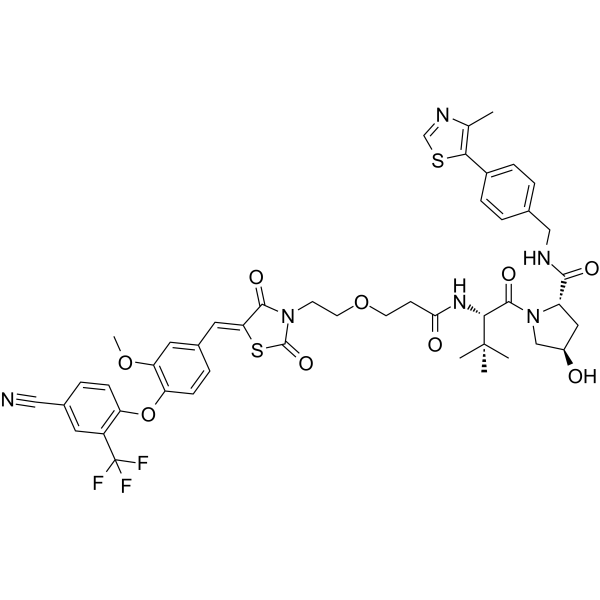
PROTAC ERRα Degrader-3 is a potent and selective ERRα degrader based on von Hippel-Lindau ligand. PROTAC ERRα Degrader-3 is capable of specifically degrading ERRα protein by >80% at a concentration of 30 nM. PROTAC ERRα Degrader-3 is inactive against ERRβ and ERRγ proteins .
|
-
-
- HY-U00425
-
|
|
Ligands for Target Protein for PROTAC
Estrogen Receptor/ERR
|
Metabolic Disease
Cancer
|
|
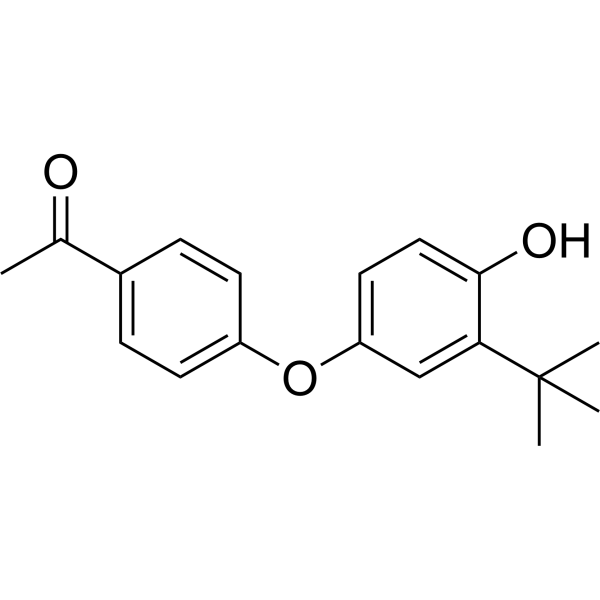
PROTAC ERRα ligand 1 is a PROTAC target protein ligand. PROTAC ERRα ligand 1 is an orally active ERRα inverse agonist with IC50 values of 0.6 μM for ERRα. PROTAC ERRα ligand 1 shows no significant activity against a panel of other nuclear receptors, including ERα c, ERRγ, ERβ, PPARα, PPARγ, PPARδ, and RXRα. PROTAC ERRα ligand 1 can provide enhanced insulin sensitivity in vivo. PROTAC ERRα ligand 1 can be used for metabolic diseases research, such as type 2 diabetes and obesity .
|
-
-
- HY-N0322S1
-
|
|
Estrogen Receptor/ERR
Endogenous Metabolite
|
Metabolic Disease
|
|
Cholesterol-d6 is the deuterium labeled Cholesterol. Cholesterol is the major sterol in mammals. It is making up 20-25% of structural component of the plasma membrane. Plasma membranes are highly permeable to water but relatively impermeable to ions and protons. Cholesterol plays an important role in determining the fluidity and permeability characteristics of the membrane as well as the function of both the transporters and signaling proteins . Cholesterol is also an endogenous estrogen-related receptor α (ERRα) agonist .
|
-
-
- HY-147174
-
|
|
PROTACs
Epigenetic Reader Domain
|
Cancer
|
|
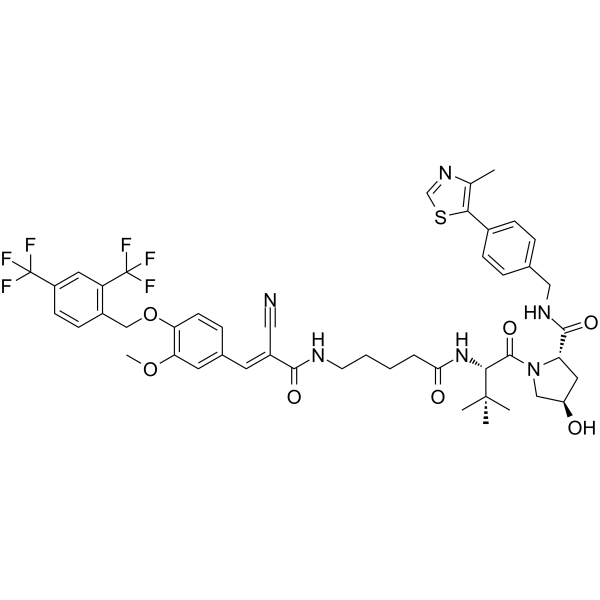
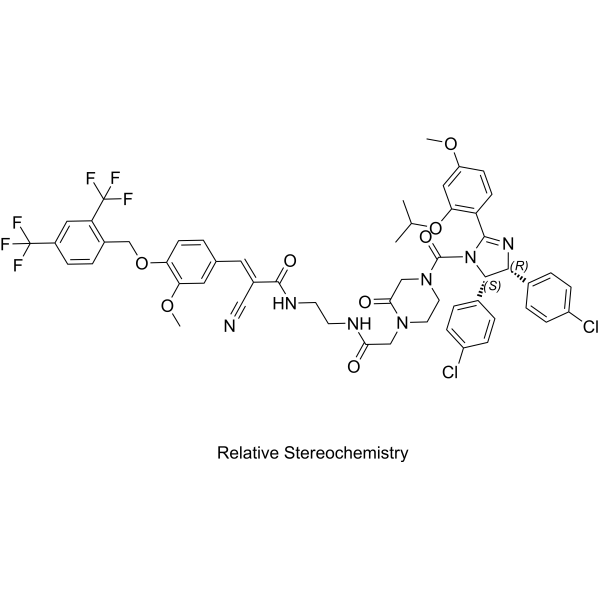
PROTAC_ERRα is a potent and selective ERRα PROTAC degrader (DC50: 100 nM in MCF-7 cells). PROTAC_ERRα induces proteasomal degradation and has capable of specifically degrading ERRα protein by >80%. Blue: VHL ligand (HY-125845), Pink: ERRα ligand (HY-U00425), black: linker .
|
-
-
- HY-132205
-
|
|
Estrogen Receptor/ERR
|
Metabolic Disease
|
|
DS45500853 is an estrogen-related receptor α (ERRα) agonist. DS45500853 inhibits the binding between receptor-interacting protein 140 (RIP140) corepressor peptide (10 nM) and GST-ERRα ligand-binding domain (LBD; 1.2 μM) with an IC50 value of 0.80 μM. DS45500853 can be used for the research of metabolic disorders, including type 2 diabetes mellitus (T2DM) .
|
-
-
- HY-113960
-
|
|
Estrogen Receptor/ERR
|
Cancer
|
|
ERRα antagonist-1 (Compound A) is a selective and high affinity agonist for estrogen-related receptor α (ERRα). ERRα antagonist-1 inhibits interaction of ERRα with Proliferator-activated Receptor γ Coactivator-1α (PGC-1α) and PGC-1β, the IC50 values are 170 nM and 180 nM, respectively .
|
-
-
- HY-N0322S2
-
|
|
Isotope-Labeled Compounds
Estrogen Receptor/ERR
Endogenous Metabolite
|
Metabolic Disease
|
|
Cholesterol-d6-1 is the deuterium labeled Cholesterol. Cholesterol is the major sterol in mammals. It is making up 20-25% of structural component of the plasma membrane. Plasma membranes are highly permeable to water but relatively impermeable to ions and protons. Cholesterol plays an important role in determining the fluidity and permeability characteristics of the membrane as well as the function of both the transporters and signaling proteins . Cholesterol is also an endogenous estrogen-related receptor α (ERRα) agonist .
|
-
-
- HY-N0322S4
-
|
|
Estrogen Receptor/ERR
Endogenous Metabolite
|
Metabolic Disease
|
|
Cholesterol- 13C3 is the 13C-labeled Cholesterol. Cholesterol is the major sterol in mammals. It is making up 20-25% of structural component of the plasma membrane. Plasma membranes are highly permeable to water but relatively impermeable to ions and protons. Cholesterol plays an important role in determining the fluidity and permeability characteristics of the membrane as well as the function of both the transporters and signaling proteins . Cholesterol is also an endogenous estrogen-related receptor α (ERRα) agonist .
|
-
-
- HY-N0322S6
-
|
|
Estrogen Receptor/ERR
Endogenous Metabolite
|
Metabolic Disease
|
|
Cholesterol-d4 is deuterium labeled Cholesterol. Cholesterol is the major sterol in mammals. It is making up 20-25% of structural component of the plasma membrane. Plasma membranes are highly permeable to water but relatively impermeable to ions and protons. Cholesterol plays an important role in determining the fluidity and permeability characteristics of the membrane as well as the function of both the transporters and signaling proteins . Cholesterol is also an endogenous estrogen-related receptor α (ERRα) agonist .
|
-
-
- HY-N0322S7
-
|
|
Isotope-Labeled Compounds
Estrogen Receptor/ERR
Endogenous Metabolite
|
Endocrinology
|
|
Cholesterol-d1 is the deuterium labeled Cholesterol. Cholesterol is the major sterol in mammals. It is making up 20-25% of structural component of the plasma membrane. Plasma membranes are highly permeable to water but relatively impermeable to ions and protons. Cholesterol plays an important role in determining the fluidity and permeability characteristics of the membrane as well as the function of both the transporters and signaling proteins . Cholesterol is also an endogenous estrogen-related receptor α (ERRα) agonist .
|
-
-
- HY-143201
-
|
|
Estrogen Receptor/ERR
|
Metabolic Disease
|
|
DS20362725 is an estrogen-related receptor α (ERRα) agonist. DS20362725 inhibits the binding between receptor-interacting protein 140 (RIP140) corepressor peptide (10 nM) and GST-ERRα ligand-binding domain (LBD; 1.2 μM) with an IC50 value of 0.6 μM. DS20362725 can be used for the research of metabolic disorders, including type 2 diabetes mellitus (T2DM) .
|
-
-
- HY-136187A
-
|
VH032-C5-NH2 dihydrochloride
|
E3 Ligase Ligand-Linker Conjugates
|
Cancer
|
|
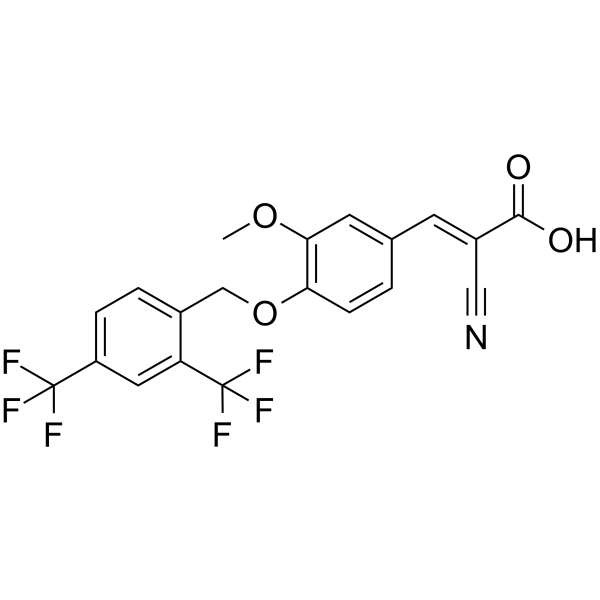
(S,R,S)-AHPC-C5-NH2 (VH032-C5-NH2) dihydrochloride is a synthesized E3 ligase ligand-linker conjugate that incorporates the VH032 based VHL ligand and a linker used for estrogen-related receptor α (ERRα) PROTAC degrader .
|
-
-
- HY-143227
-
-
-
- HY-144699
-
|
|
Estrogen Receptor/ERR
|
Cancer
|
|
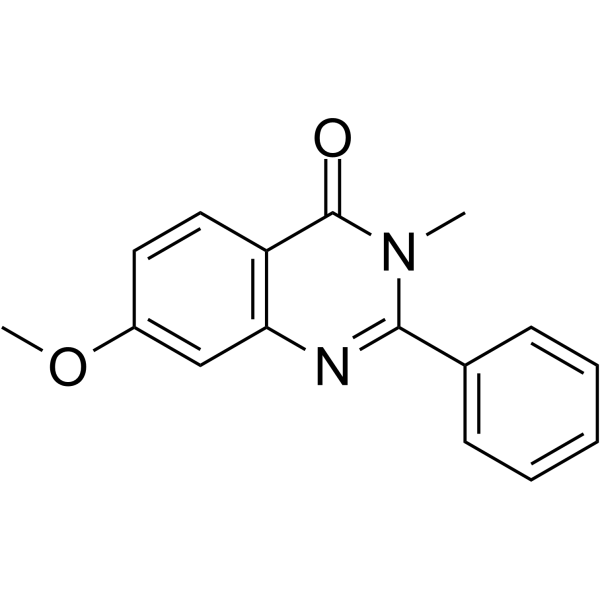
ERRα antagonist-2 (Compound 11) is a potential ERRα (estrogen related receptor α) inverse agonist with an IC50 of 0.80 μM. ERRα antagonist-2 suppresses the migration and invasion of the ER-negative MDA-MB-231 cell line. ERRα antagonist-2 inhibits breast cancer growth in vivo .
|
-
-
- HY-W020788
-
|
CGA 154281
|
Environmental Pollutants
Glutathione S-transferase
Estrogen Receptor/ERR
Pregnane X Receptor (PXR)
FXR
|
Metabolic Disease
Cancer
|
Benoxacor (CGA 154281) is a herbicide safener and xenobiotic metabolism regulator. Benoxacor protects maize from the toxicity of metolachlor mainly by inducing detoxifying enzymes such as Glutathione S-transferase. Benoxacor also activates FXR, PXR and ERRα, and inhibits aromatase (aromatase). However, Benoxacor exhibits potential subacute oral toxicity and a high risk of hepatotoxicity in animal models. Benoxacor induces reactive oxygen species accumulation, interferes with embryonic heart development, and causes increased liver and kidney weights as well as alterations in gut microbiota in mice. Benoxacor can be used in studies related to hepatic steatosis, infertility, breast cancer and developmental toxicity .
|
-
-
- HY-126351
-
-
-
- HY-114411
-
|
|
Estrogen Receptor/ERR
|
Cancer
|
|
ERRγ inverse agonist 1 (Compound 12) is a selective ERRγ inverse agonist with an IC50 value of 0.040 μM against ERRγ. ERRγ inverse agonist 1 inhibits the activity of ERRγ at the functional level. ERRγ inverse agonist 1 can be used in the research of anaplastic thyroid cancer .
|
-
-
- HY-N0322S3
-
|
|
Estrogen Receptor/ERR
Endogenous Metabolite
|
Metabolic Disease
|
|
Cholesterol- 13C5 is the 13C-labeled Cholesterol. Cholesterol is the major sterol in mammals. It is making up 20-25% of structural component of the plasma membrane. Plasma membranes are highly permeable to water but relatively impermeable to ions and protons. Cholesterol plays an important role in determining the fluidity and permeability characteristics of the membrane as well as the function of both the transporters and signaling proteins . Cholesterol is also an endogenous estrogen-related receptor α (ERRα) agonist .
|
-
-
- HY-128838
-
|
|
PROTACs
Estrogen Receptor/ERR
|
Cancer
|
|
PROTAC ERRα Degrader-1 comprises a MDM2 ligand binding group, a linker and an estrogen-related receptor alpha (ERRa) binding group. PROTAC ERRα Degrader-1 is an PROTAC estrogen-related receptor alpha (ERRa) degrader .
|
-
-
- HY-N0322GL
-
|
|
Liposome
Estrogen Receptor/ERR
Endogenous Metabolite
|
Metabolic Disease
Cancer
|
|
Cholesterol (GMP Like) is Cholesterol (HY-N0322) produced by using GMP like guidelines. GMP Like small molecules works appropriately as an auxiliary reagent for cell therapy manufacture. Cholesterol is the major sterol in mammals. It is making up 20-25% of structural component of the plasma membrane. Plasma membranes are highly permeable to water but relatively impermeable to ions and protons. Cholesterol plays an important role in determining the fluidity and permeability characteristics of the membrane as well as the function of both the transporters and signaling proteins . Cholesterol is also an endogenous estrogen-related receptor α (ERRα) agonist .
|
-
-
- HY-128839
-
|
|
PROTACs
Estrogen Receptor/ERR
|
Cancer
|
|
PROTAC ERRα Degrader-2 comprises a MDM2 ligand binding group, a linker and an estrogen-related receptor alpha (ERRa) binding group. PROTAC ERRα Degrader-2 is an estrogen-related receptor alpha (ERRa) degrader .
|
-
-
- HY-130499
-
|
|
Target Protein Ligand-Linker Conjugates
|
Cancer
|
|
ERRα Ligand-Linker Conjugates 1 incorporates a ligand for estrogen-related receptor alpha (ERRα), and a PROTAC linker, which recruit E3 ligases MDM2. ERRα Ligand-Linker Conjugates 1 can be used in the synthesis of a series of PROTACs, such as PROTAC ERRalpha Degrader-1 (HY-128838). PROTAC ERRalpha Degrader-1 is an ERRα degrader .
|
-
-
- HY-N0322S8
-
|
|
Isotope-Labeled Compounds
Estrogen Receptor/ERR
Endogenous Metabolite
|
Metabolic Disease
|
|
Cholesterol- 18O is the 18O-labeled Cholesterol. Cholesterol is the major sterol in mammals. It is making up 20-25% of structural component of the plasma membrane. Plasma membranes are highly permeable to water but relatively impermeable to ions and protons. Cholesterol plays an important role in determining the fluidity and permeability characteristics of the membrane as well as the function of both the transporters and signaling proteins . Cholesterol is also an endogenous estrogen-related receptor α (ERRα) agonist .
|
-
-
- HY-128838A
-
|
|
PROTACs
Estrogen Receptor/ERR
|
Others
|
|
(rel)-PROTAC ERRα Degrader-1 is a relative configuration of PROTAC ERRα Degrader-1. PROTAC ERRα Degrader-1 comprises a MDM2 ligand binding group, a linker and an estrogen-related receptor alpha (ERRa) binding group. PROTAC ERRα Degrader-1 is an estrogen-related receptor alpha (ERRa) degrader .
|
-
-
- HY-W020788R
-
|
CGA 154281 (Standard)
|
Reference Standards
Glutathione S-transferase
Estrogen Receptor/ERR
Pregnane X Receptor (PXR)
FXR
|
Others
|
|
Benoxacor (Standard) is the analytical standard of Benoxacor. This product is intended for research and analytical applications. Benoxacor (CGA 154281) is a herbicide safener and xenobiotic metabolism regulator. Benoxacor protects maize from the toxicity of metolachlor mainly by inducing detoxifying enzymes such as Glutathione S-transferase. Benoxacor also activates FXR, PXR and ERRα, and inhibits aromatase (aromatase). However, Benoxacor exhibits potential subacute oral toxicity and a high risk of hepatotoxicity in animal models. Benoxacor induces reactive oxygen species accumulation, interferes with embryonic heart development, and causes increased liver and kidney weights as well as alterations in gut microbiota in mice. Benoxacor can be used in studies related to hepatic steatosis, infertility, breast cancer and developmental toxicity .
|
-
-
- HY-136186
-
|
VH032-C7-amine
|
E3 Ligase Ligand-Linker Conjugates
|
Cancer
|
|
(S,R,S)-AHPC-C7-amine (VH032-C7-amine) is a synthesized E3 ligase ligand-linker conjugate that incorporates the VH032 based VHL ligand and a linker used for estrogen-related receptor α (ERRα) PROTAC degrader .
|
-
-
- HY-136187
-
|
VH032-C5-NH2
|
E3 Ligase Ligand-Linker Conjugates
|
Cancer
|
|
(S,R,S)-AHPC-C5-NH2 (VH032-C5-NH2) is a synthesized E3 ligase ligand-linker conjugate that incorporates the VH032 based VHL ligand and a linker used for estrogen-related receptor α (ERRα) PROTAC degrader .
|
-
-
- HY-143226
-
|
|
Estrogen Receptor/ERR
|
Metabolic Disease
|
|
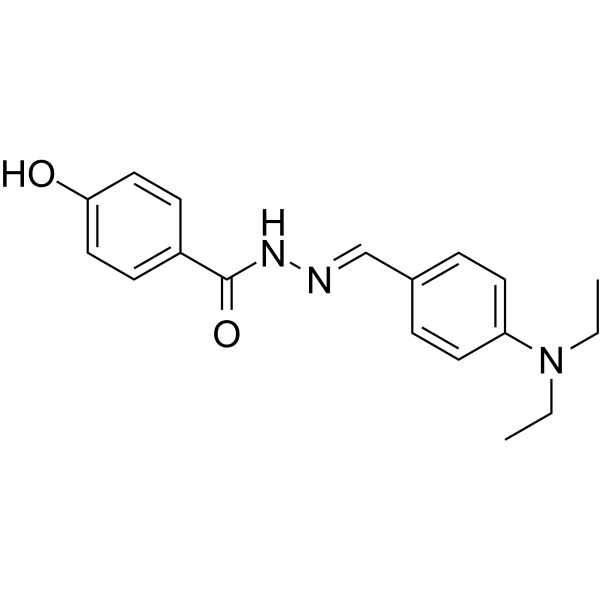
DK1 is a potent modulator of estrogen related receptor. DK1 has an ability in reducing blood glucose, and impacts the activity of ERRα receptor. DK1 has the potential for the research of diabetes .
|
-
-
- HY-136186A
-
|
VH032-C7-amine dihydrochloride
|
E3 Ligase Ligand-Linker Conjugates
|
Cancer
|
|
(S,R,S)-AHPC-C7-amine dihydrochloride is the dihydrochloride form of (S,R,S)-AHPC-C7-amine (HY-136186). (S,R,S)-AHPC-C7-amine is a synthesized E3 ligase ligand-linker conjugate that incorporates the VH032 based VHL ligand and a linker. (S,R,S)-AHPC-C7-amine can be used for estrogen-related receptor α (ERRα) PROTAC degrader .
|
-
-
- HY-153700
-
|
|
Estrogen Receptor/ERR
|
Endocrinology
|
|
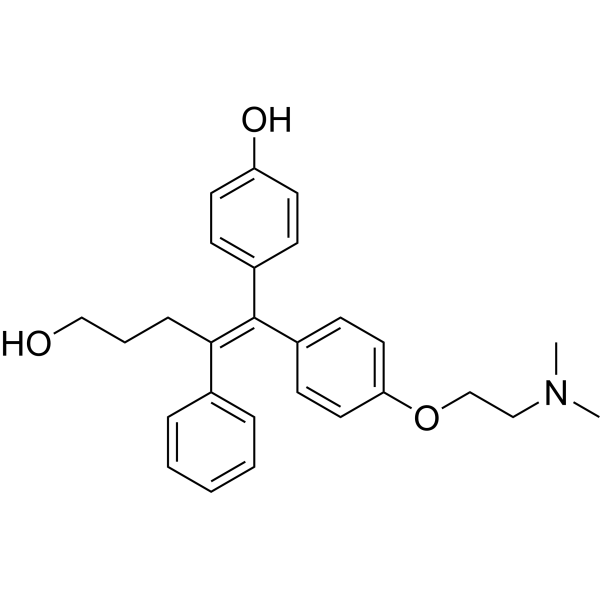
Estrogen receptor modulator 8 (compound 4) is an orally active inhibitor of Estrogen Receptor/ERR α (IC50=0.437 nM, MCF-7 cells). Estrogen receptor modulator 8 inhibits MCF-7 cells proliferation with an IC50 value of 0.1 nM .
|
-
-
- HY-136186B
-
|
VH032-C7-amine hydrochloride
|
E3 Ligase Ligand-Linker Conjugates
|
Cancer
|
|
(S,R,S)-AHPC-C7-amine (VH032-C7-amine) hydrochloride is a synthesized E3 ligase ligand-linker conjugate that incorporates the VH032 based VHL ligand and a linker used for estrogen-related receptor α (ERRα) PROTAC degrader .
|
-
-
- HY-186015
-
|
|
PROTACs
Estrogen Receptor/ERR
|
Cancer
|
|
Arg-TERRα is a mini-PROTAC targeting ERRα. Arg-TERRα induces ERRα degradation via the N-end rule pathway, thereby in inhibiting the proliferation and migration of MCF7 breast cancer cells. Arg-TERRα can be used for breast cancer research .
|
-
-
- HY-180961
-
|
|
PROTACs
Estrogen Receptor/ERR
|
Cancer
|
|
His-TERRα is a ERRα PROTAC degrader. His-TERRα uses a single amino acid (His) as the E3 ligand and employs the N-end rule pathway to induce the degradation of the target protein, significantly reducing the molecular size, and thus is called a mini-PROTAC. His-TERRα significantly inhibits the proliferation and migration of MCF7 breast cancer cells. His-TERRα can be used for the study of breast cancer .
|
-
-
- HY-10426R
-
|
|
Reference Standards
Estrogen Receptor/ERR
Autophagy
|
Cancer
|
|
XCT790 (Standard) is the analytical standard of XCT790 (HY-10426). This product is intended for research and analytical applications. XCT-790 is a potent and selective inverse agonist for ERRα with an IC50 value of 0.37 μM. XCT-790 induces cell death in chemotherapeutic resistant cancer cells. XCT-790 (Compound 12) is inactive against ERRγ and the estrogen receptors ERα and ERβ .
|
-
-
- HY-N0390G
-
|
|
mTOR
NF-κB
STAT
HIF/HIF Prolyl-Hydroxylase
|
Cardiovascular Disease
Neurological Disease
Metabolic Disease
Inflammation/Immunology
|
|
L-Glutamine GMP is L-Glutamine (HY-N0390) produced by using GMP guidelines. GMP small molecules works appropriately as an auxiliary reagent for cell therapy manufacture. L-Glutamine is an orally active nutritional agent and cellular metabolism regulator. L-Glutamine is taken up in a Na +-dependent manner and targets multiple key molecules including glutaminase, mTORC1, NF-κB, STAT-3 and HIF-1α. L-Glutamine enhances glutaminolytic catabolism, drives the conversion of glutamate to α-ketoglutarate, thereby regulating gene expression, integrating metabolic signals, mediating glutamine flux and maintaining redox homeostasis. L-Glutamine also promotes cell proliferation, osteogenic differentiation and fracture healing, exerts neuroprotective and cardioprotective effects, and inhibits osteoarthritis. L-Glutamine can be applied to research related to osteoporosis, osteoarthritis, ischemic stroke and acute cantharidin-induced cardiotoxicity .
|
-
| Cat. No. |
Product Name |
Type |
-
- HY-N0322GL
-
|
|
Fluorescent Dyes
|
|
Cholesterol (GMP Like) is Cholesterol (HY-N0322) produced by using GMP like guidelines. GMP Like small molecules works appropriately as an auxiliary reagent for cell therapy manufacture. Cholesterol is the major sterol in mammals. It is making up 20-25% of structural component of the plasma membrane. Plasma membranes are highly permeable to water but relatively impermeable to ions and protons. Cholesterol plays an important role in determining the fluidity and permeability characteristics of the membrane as well as the function of both the transporters and signaling proteins . Cholesterol is also an endogenous estrogen-related receptor α (ERRα) agonist .
|
-
- HY-N0390G
-
|
|
Fluorescent Dyes
|
|
L-Glutamine GMP is L-Glutamine (HY-N0390) produced by using GMP guidelines. GMP small molecules works appropriately as an auxiliary reagent for cell therapy manufacture. L-Glutamine is an orally active nutritional agent and cellular metabolism regulator. L-Glutamine is taken up in a Na +-dependent manner and targets multiple key molecules including glutaminase, mTORC1, NF-κB, STAT-3 and HIF-1α. L-Glutamine enhances glutaminolytic catabolism, drives the conversion of glutamate to α-ketoglutarate, thereby regulating gene expression, integrating metabolic signals, mediating glutamine flux and maintaining redox homeostasis. L-Glutamine also promotes cell proliferation, osteogenic differentiation and fracture healing, exerts neuroprotective and cardioprotective effects, and inhibits osteoarthritis. L-Glutamine can be applied to research related to osteoporosis, osteoarthritis, ischemic stroke and acute cantharidin-induced cardiotoxicity .
|
| Cat. No. |
Product Name |
Type |
-
- HY-N0322A
-
|
|
Biochemical Assay Reagents
|
Cholesterol Water Soluble is a major sterol in mammals, constituting 20-25% of the structural composition of the plasma membrane. The plasma membrane is highly permeable to water but relatively impermeable to ions and protons. Cholesterol Water Soluble plays an important role in determining the fluidity and permeability characteristics of membranes and the function of transporters and signaling proteins. Cholesterol Water Soluble is also an endogenous estrogen-related receptor alpha (ERRα) agonist. Cholesterol Water Soluble can be used to study the effects of cholesterol on potassium currents in inner hair cells . (Note: This product is a mixture of Cholesterol and Methyl-β-cyclodextrin. The product specifications below only indicate the effective content of Cholesterol.)
|
-
- HY-N0322GL
-
|
|
Biochemical Assay Reagents
|
|
Cholesterol (GMP Like) is Cholesterol (HY-N0322) produced by using GMP like guidelines. GMP Like small molecules works appropriately as an auxiliary reagent for cell therapy manufacture. Cholesterol is the major sterol in mammals. It is making up 20-25% of structural component of the plasma membrane. Plasma membranes are highly permeable to water but relatively impermeable to ions and protons. Cholesterol plays an important role in determining the fluidity and permeability characteristics of the membrane as well as the function of both the transporters and signaling proteins . Cholesterol is also an endogenous estrogen-related receptor α (ERRα) agonist .
|
-
- HY-N0390G
-
|
|
Biochemical Assay Reagents
|
|
L-Glutamine GMP is L-Glutamine (HY-N0390) produced by using GMP guidelines. GMP small molecules works appropriately as an auxiliary reagent for cell therapy manufacture. L-Glutamine is an orally active nutritional agent and cellular metabolism regulator. L-Glutamine is taken up in a Na +-dependent manner and targets multiple key molecules including glutaminase, mTORC1, NF-κB, STAT-3 and HIF-1α. L-Glutamine enhances glutaminolytic catabolism, drives the conversion of glutamate to α-ketoglutarate, thereby regulating gene expression, integrating metabolic signals, mediating glutamine flux and maintaining redox homeostasis. L-Glutamine also promotes cell proliferation, osteogenic differentiation and fracture healing, exerts neuroprotective and cardioprotective effects, and inhibits osteoarthritis. L-Glutamine can be applied to research related to osteoporosis, osteoarthritis, ischemic stroke and acute cantharidin-induced cardiotoxicity .
|
| Cat. No. |
Product Name |
Category |
Target |
Chemical Structure |
-
- HY-N0322
-
-
-
- HY-N0322A
-
|
|
Classification of Application Fields
Other Diseases
Endogenous metabolite
Disease Research Fields
Steroids
Source Classification
|
Liposome
|
Cholesterol Water Soluble is a major sterol in mammals, constituting 20-25% of the structural composition of the plasma membrane. The plasma membrane is highly permeable to water but relatively impermeable to ions and protons. Cholesterol Water Soluble plays an important role in determining the fluidity and permeability characteristics of membranes and the function of transporters and signaling proteins. Cholesterol Water Soluble is also an endogenous estrogen-related receptor alpha (ERRα) agonist. Cholesterol Water Soluble can be used to study the effects of cholesterol on potassium currents in inner hair cells . (Note: This product is a mixture of Cholesterol and Methyl-β-cyclodextrin. The product specifications below only indicate the effective content of Cholesterol.)
|
-
-
- HY-N0322R
-
-
| Cat. No. |
Product Name |
Chemical Structure |
| Cat. No. |
Product Name |
|
Classification |
-
- HY-N0322
-
|
|
|
Cholesterol
Emulsifiers
|
|
Cholesterol (from animal) is the major sterol in mammals. It is making up 20-25% of structural component of the plasma membrane. Plasma membranes are highly permeable to water but relatively impermeable to ions and protons. Cholesterol (from animal) plays an important role in determining the fluidity and permeability characteristics of the membrane as well as the function of both the transporters and signaling proteins . Cholesterol (from animal) is also an endogenous estrogen-related receptor α (ERRα) agonist .
|
-
- HY-N0322A
-
|
|
|
Cholesterol
|
Cholesterol Water Soluble is a major sterol in mammals, constituting 20-25% of the structural composition of the plasma membrane. The plasma membrane is highly permeable to water but relatively impermeable to ions and protons. Cholesterol Water Soluble plays an important role in determining the fluidity and permeability characteristics of membranes and the function of transporters and signaling proteins. Cholesterol Water Soluble is also an endogenous estrogen-related receptor alpha (ERRα) agonist. Cholesterol Water Soluble can be used to study the effects of cholesterol on potassium currents in inner hair cells . (Note: This product is a mixture of Cholesterol and Methyl-β-cyclodextrin. The product specifications below only indicate the effective content of Cholesterol.)
|
| Cat. No. |
Product Name |
Target |
Research Areas |
Chemical Structure |
-
- HY-N0322GL
-
|
|
Liposome
Estrogen Receptor/ERR
Endogenous Metabolite
|
Metabolic Disease
Cancer
|
|
Cholesterol (GMP Like) is Cholesterol (HY-N0322) produced by using GMP like guidelines. GMP Like small molecules works appropriately as an auxiliary reagent for cell therapy manufacture. Cholesterol is the major sterol in mammals. It is making up 20-25% of structural component of the plasma membrane. Plasma membranes are highly permeable to water but relatively impermeable to ions and protons. Cholesterol plays an important role in determining the fluidity and permeability characteristics of the membrane as well as the function of both the transporters and signaling proteins . Cholesterol is also an endogenous estrogen-related receptor α (ERRα) agonist .
|
-
-
- HY-N0390G
-
|
|
mTOR
NF-κB
STAT
HIF/HIF Prolyl-Hydroxylase
|
Cardiovascular Disease
Neurological Disease
Metabolic Disease
Inflammation/Immunology
|
|
L-Glutamine GMP is L-Glutamine (HY-N0390) produced by using GMP guidelines. GMP small molecules works appropriately as an auxiliary reagent for cell therapy manufacture. L-Glutamine is an orally active nutritional agent and cellular metabolism regulator. L-Glutamine is taken up in a Na +-dependent manner and targets multiple key molecules including glutaminase, mTORC1, NF-κB, STAT-3 and HIF-1α. L-Glutamine enhances glutaminolytic catabolism, drives the conversion of glutamate to α-ketoglutarate, thereby regulating gene expression, integrating metabolic signals, mediating glutamine flux and maintaining redox homeostasis. L-Glutamine also promotes cell proliferation, osteogenic differentiation and fracture healing, exerts neuroprotective and cardioprotective effects, and inhibits osteoarthritis. L-Glutamine can be applied to research related to osteoporosis, osteoarthritis, ischemic stroke and acute cantharidin-induced cardiotoxicity .
|
-
Your information is safe with us. * Required Fields.
Inquiry Information
- Product Name:
- Cat. No.:
- Quantity:
- MCE Japan Authorized Agent:

