

1. Search Result
Search Result
Results for "

Gene Delivery

" in MedChemExpress (MCE) Product Catalog:

119

Inhibitors & Agonists

2

Screening Libraries

3

Fluorescent Dye

66

Biochemical Assay Reagents

22

Peptides

2

Natural
Products

2

Isotope-Labeled Compounds

1

Click Chemistry

51

Oligonucleotides

Cat. No. Product Name Target Research Areas Chemical Structure
  • HY-138170
    ALC-0315
    Maximum Cited Publications
    39 Publications Verification

    Liposome SARS-CoV Infection
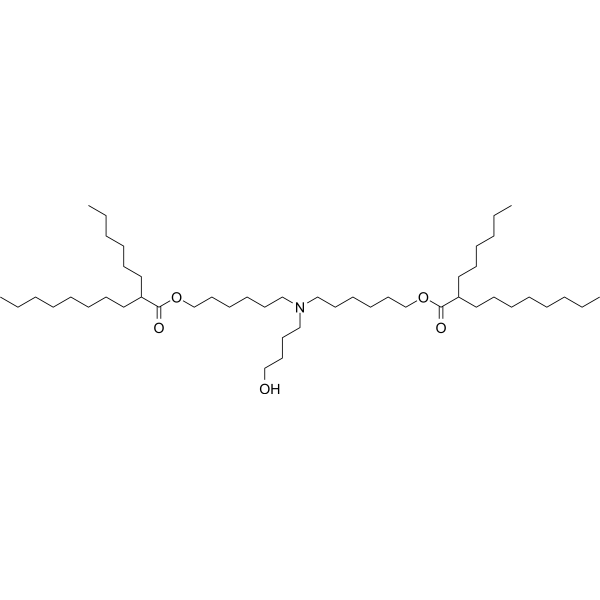
    ALC-0315 is an ionisable aminolipid that is responsible for mRNA compaction and aids mRNA cellular delivery and its cytoplasmic release through suspected endosomal destabilization. ALC-0315 can be used to form lipid nanoparticle (LNP) delivery vehicles. Lipid-Nanoparticles have been used in the research of mRNA COVID-19 vaccine .
    ALC-0315
  • HY-W127378
    DOTAP methylsulfate
    10+ Cited Publications

    1,2-Dioleoyl-3-trimethylammonium-propane methylsulfate

    Liposome Others
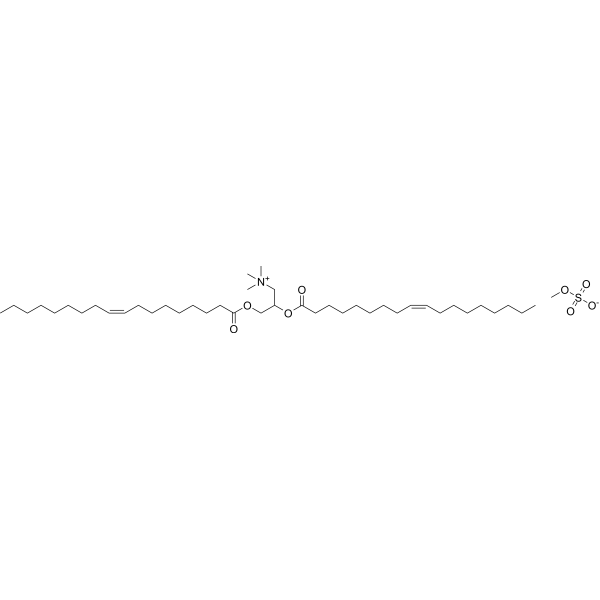
    DOTAP methylsulfat is a cationic lipid reagent, a cationic derivative of trimethylammonium, linked to two 18-carbon fatty acid tails, each with a single olefin group. DOTAP methylsulfat can self-assemble with negatively charged ions (such as DNA) to form complexes, which can be adsorbed to the cell membrane surface and enter the cell by electrostatic interaction and endocytosis, respectively. DOTAP methylsulfat promotes endosomal membrane fusion with its own hydrophobic domain, releases DNA into the cytoplasm, and exerts gene delivery function. DOTAP methylsulfat can be widely used in research fields such as gene therapy, cell transfection, and non-viral vector design .
    DOTAP methylsulfate
  • HY-W250110

    Environmental Pollutants Biochemical Assay Reagents Infection Others
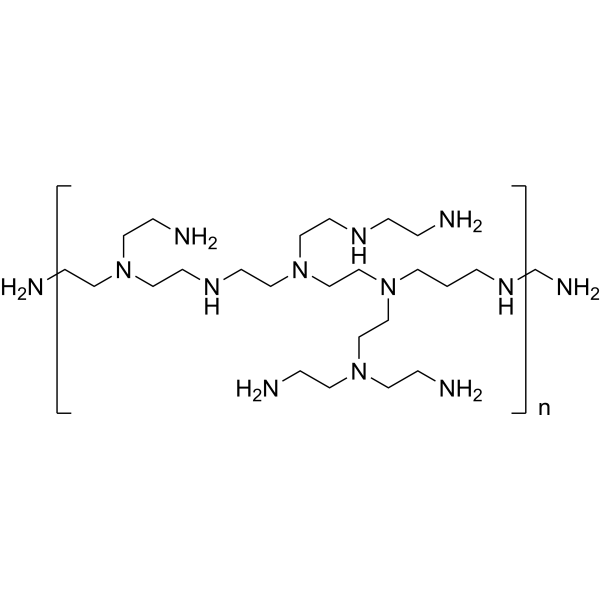
    Polyethylenimine (branched) (30% in water) is a organic macromolecule with high cationic-charge-density potential. Polyethylenimine (branched) (30% in water) can ensnare DNA as well as attach to cell membrane. Polyethylenimine (branched) (30% in water) also retains a substantial buffering capacity at virtually any pH. Polyethylenimine (branched) (30% in water) is widely used as transfection reagent .
    Polyethylenimine (branched) (30% in water)
  • HY-131119

    Dioctadecyldimethylammonium bromide; DODAB

    Liposome Others
    Dimethyldioctadecylammonium bromide is a synthetic cationic lipid commonly used in gene delivery and vaccine development. Also known as DODAB or DDAB, it consists of a positively charged ammonium head group and two long hydrophobic tails. These properties make it useful for forming liposomes and other lipid-based nanoparticles that can efficiently deliver genetic material into cells. In addition to its applications in biotechnology, DDAB is also used in surfactants, emulsifiers and fabric softeners. However, due to its potential toxicity and irritation, extreme care should be taken when handling DDAB.
    Dimethyldioctadecylammonium bromide
  • HY-112758
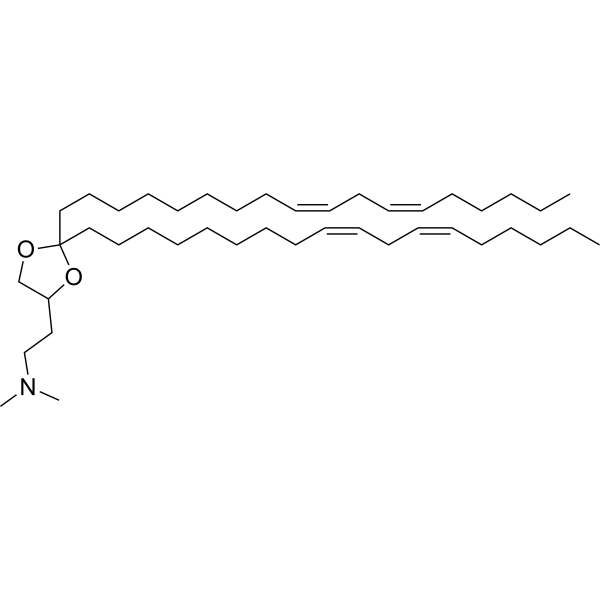
    DLin-KC2-DMA
    5+ Cited Publications

    Liposome Others
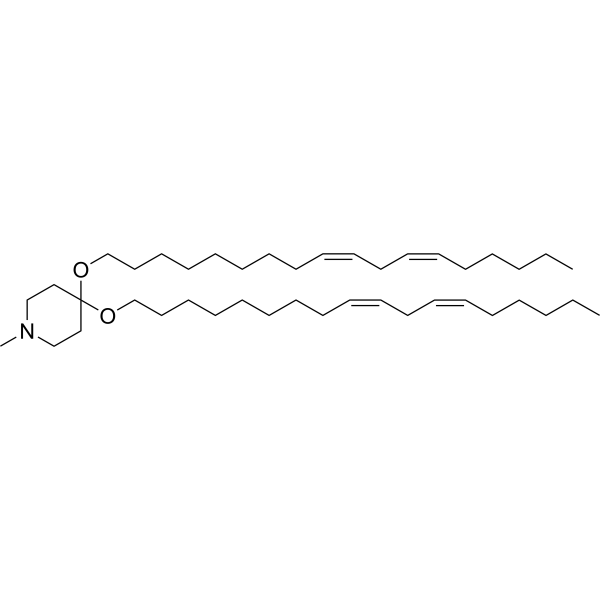
    DLin-KC2-DMA is an ionisable cationic lipid (pKa≈6) that is virtually non-toxic to antigen presenting cells (APCs). DLin-KC2-DMA produces significant siRNA-mediated gene silencing of GAPDH, when binds to lipid nanoparticles (LNP). DLin-KC2-DMA can be used in siRNA delivery studies .
    DLin-KC2-DMA
  • HY-112760
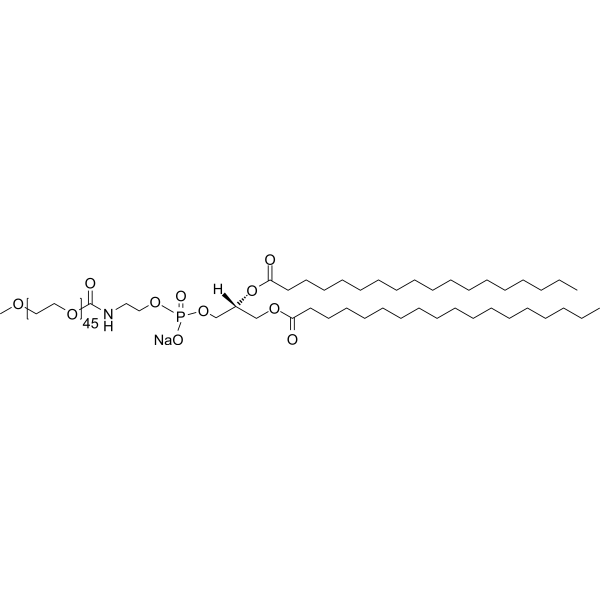
    18:0 mPEG2000 PE sodium
    1 Publications Verification

    DSPE-mPEG2000 sodium; 1,2-Distearoyl-sn-glycero-3-phosphoethanolamine-N-[methoxy(polyethylene glycol)-2000] sodium

    Liposome Others
    18:0 mPEG2000 PE (DSPE-mPEG2000) sodium is a conjugate of phospholipid and polyethylene glycol, and it can serve as an important PEG lipid component in lipid nanoparticles (LNPs). 18:0 mPEG2000 PE sodium can be used in the research of gene transfection, drug carriers and drug delivery .
    18:0 mPEG2000 PE sodium
  • HY-126437E

    Biochemical Assay Reagents Others
    Poly-L-lysine hydrobromide (with a molecular weight of 15,000 - 30,000) is an amino acid polymer with positive charge, and it serves as a non-specific attachment factor for cells. Poly-L-lysine hydrobromide (with a molecular weight of 15,000 - 30,000) can be used for gene delivery and the construction of nano-delivery systems .
    Poly-L-lysine hydrobromide (MW 15000-30000)
  • HY-155882

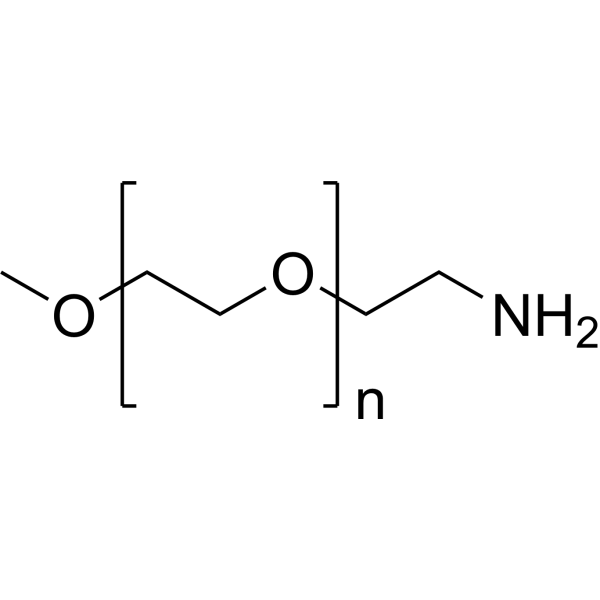
    mPEG750-NH2

    Biochemical Assay Reagents Cancer
    mPEG750-amine (mPEG750-NH2) is a chemical modification reagent for nanoparticles, capable of covalently binding to Ad-PVA to form Ad-PVA-PEG polymers. mPEG750-amine stabilizes gene delivery complexes by providing steric hindrance, reducing particle aggregation, while enhancing the water solubility and serum stability of the complex, reducing carrier cytotoxicity, and assisting in the efficient condensation of pDNA by cationic components to form nanoparticles that can be endocytosed by cells. mPEG750-amine can also be used to synthesize folate-conjugated polymer micelles for encapsulating the anticancer agent Camptothecin (HY-16560). Folate-conjugated polymer micelles are effective carriers for poorly soluble anticancer drugs, capable of avoiding macrophages and acting through folate receptor (FR)-mediated endocytosis to target tumor cells. mPEG750-amine can be applied to research in the field of non-viral gene delivery, as a component of gene delivery vectors, facilitating the safe and efficient delivery of nucleic acid drugs to target cells .
    mPEG750-amine
  • HY-W007599

    Drug Derivative Cancer
    (S)-2,6-Bis((tert-butoxycarbonyl)amino)hexanoic acid is a polypeptide derivative, can be used to synthesis multifunctional amphiphilic peptide dendrimer for non-viral gene delivery in cancer research. (S)-2,6-Bis((tert-butoxycarbonyl)amino)hexanoic acid can be used in the preparation of organic substances that enhance the luminescence intensity of alkaline phosphatase substrates .
    (S)-2,6-Bis((tert-butoxycarbonyl)amino)hexanoic acid
  • HY-126437H

    Biochemical Assay Reagents Others
    Poly-L-lysine hydrobromide (MW 4000-15000) is a positively charged amino acid polymer that acts as a non-specific attachment factor for cells. Poly-L-lysine hydrobromide (MW 4000-15000) enhances the electrostatic interaction between the negative ions of the cell membrane and the surface of the culture medium, thereby promoting the adhesion of cells to solid substrates. Poly-L-lysine hydrobromide (MW 4000-15000) can be used for gene delivery .
    Poly-L-lysine hydrobromide (MW 4000-15000)
  • HY-E70313

    Candida antarctica lipase B

    Biochemical Assay Reagents Others
    Lipase,Candida antarctica (Immobilized on hydrophilic carrier) (Candida antarctica lipase B) is a lipase derived from Candida antarctica and immobilized on a hydrophilic carrier. Lipase,Candida antarctica (Immobilized on hydrophilic carrier) is a green catalyst that can be used to catalyze polymer synthesis .
    Lipase,Candida antarctica (Immobilized on hydrophilic carrier)
  • HY-P4121

    Potassium Channel Inflammation/Immunology Cancer
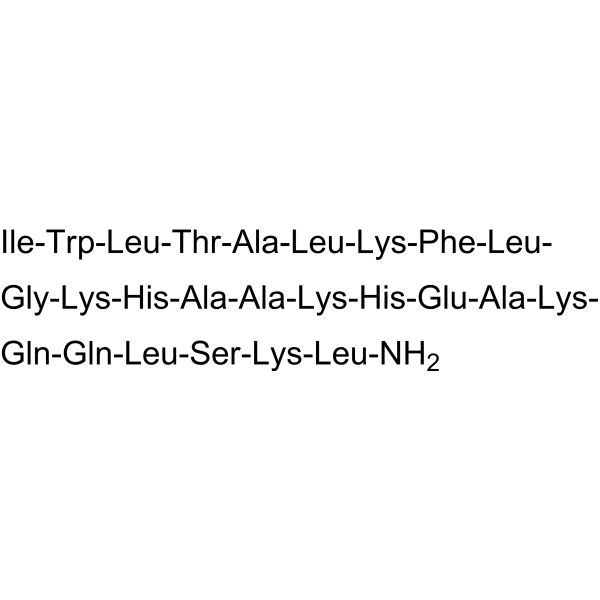
    L17E is an attenuated cationic amphiphilic lytic (ACAL) peptide that can be used to deliver a variety of macromolecules, including proteins, antibodies, and DNA nanostructures. L17E inserts and cleaves the membrane structure through electrostatic interaction, enabling intracellular escape. The efficiency of L17E-mediated delivery is strongly correlated with the expression level of KCNN4 (the gene encoding the calcium-activated potassium channel KCa3.1). L17E also promotes the cellular uptake of macromolecules by inducing micropinocytosis. L17E can be further optimized and improved through dimerization strategies and in combination with other delivery systems, such as nuclear localization signal peptides and cell membrane-coated nanoparticles .
    L17E
  • HY-174497

    mRNA Others
    eGFP mRNA expresses green fluorescent protein derived from the jellyfish Aequorea victoria. eGFP is a commonly used direct-detection reporter gene in mammalian cell culture, which produces bright green fluorescence. This product is synthesized without modified nucleosides, with a Cap1 version cap analog at the 5' end and a 100nt PolyA tail at the 3' end. It can be used as a positive reference for IVT (in vitro transcription) or LNP delivery systems.
    eGFP mRNA
  • HY-153229
    Firefly luciferase mRNA-LNP
    1 Publications Verification

    mRNA Biochemical Assay Reagents Others
    Firefly luciferase mRNA-LNP is a lipid nanoparticle (LNP) containing firefly luciferase mRNA. Firefly luciferase mRNA-LNP exhibits a stable nanostructure, in which LNP plays a key role in effectively protecting and transporting mRNA to cells. Luciferase is a bioluminescent reporter gene for gene regulation and functional studies. Firefly Luciferase mRNA-LNP expresses firefly luciferase protein after entering the cells, which is often used for promoter activity detection or dual fluorescent molecular complementation experiments. Firefly luciferase mRNA-LNP is studied in research for RNA delivery, cell viability, and translation efficiency .
    Firefly luciferase mRNA-LNP
  • HY-143702

    NBD-DOTAP

    Fluorescent Dye Liposome Inflammation/Immunology Cancer
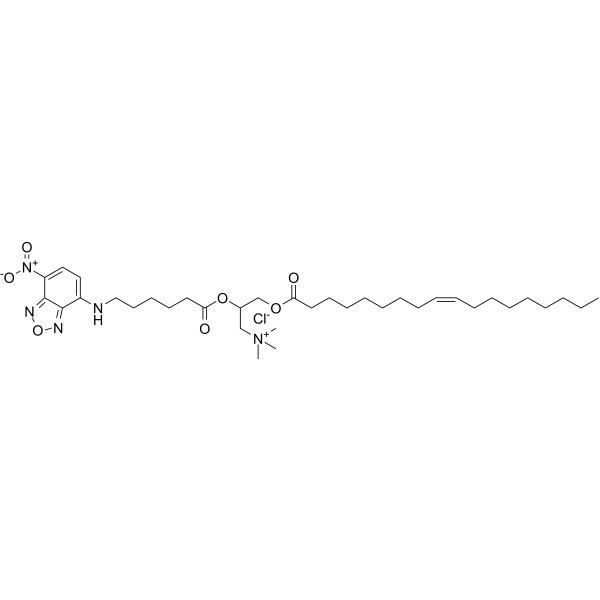
    Fluorescent DOTAP (NBD-DOTAP) is a cationic lipid which can be used for nucleic acid and protein delivery. Fluorescent DOTAP is labeled with a fluorophore NBD (maximum excitation/emission wavelength ∼463/536 nm). Fluorescent DOTAP can be used for gene delivery systems, drug delivery, as well as cell imaging and nanocarrier tracking. Fluorescent DOTAP is an ideal candidate for both biological and pharmaceutical formulation (e.g. co-delivery of vaccines) research .
    Fluorescent DOTAP
  • HY-126437I

    Biochemical Assay Reagents DNA Alkylator/Crosslinker Amino Acid Derivatives Cancer
    Poly-L-lysine hydrobromide (MW 1000-5000) is a homopolymer of L-lysine and a polycationic non-viral gene delivery vector. Poly-L-lysine hydrobromide (MW 1000-5000) forms complexes with plasmid DNA. Poly-L-lysine hydrobromide (MW 1000-5000) is applicable to relevant research on lung cancer .
    Poly-L-lysine hydrobromide (MW 1000-5000)
  • HY-112624U

    Dextran 20; Dextran D20; Dextran T20(MW 16000-24000)

    Biochemical Assay Reagents Others
    Dextran T20 (Dextran 20; Dextran D20) (MW 20,000) is a dehydrated glucose polymer with an average molecular weight of 20,000. Dextran T20 (MW 20,000) has excellent biodegradability and good biocompatibility, and can be used as a gene delivery vector, an immune adjuvant carrier, and a hemoglobin stabilizer .
    Dextran T20 (MW 20,000)
  • HY-147087

    Liposome Cancer
    YSK 05 is a pH-sensitive cationic lipid. YSK 05 improves the intracellular trafficking of non-viral vectors. YSK 05-MEND shows significantly good gene silencing activity and hemolytic activity. YSK 05 overcomes the suppression of endosomal escape by PEGylation. YSK 05 effectively enhances siRNA delivery both in vitro and in vivo .
    YSK 05
  • HY-P4086

    RABV nAChR Neurological Disease Cancer
    Chimeric Rabies Virus Glycoprotein Fragment (RVG-9R) is a cell-penetrating peptide that is synthesized by adding nona-arginine motif to the carboxy terminus of RVG (rabies virus glycoprotein). Chimeric Rabies Virus Glycoprotein Fragment (RVG-9R) binds to
    nAChR
    on neuronal cells to mediate receptor-mediated endocytosis and targeted siRNA delivery. Chimeric Rabies Virus Glycoprotein Fragment (RVG-9R) protects complexed siRNA from degradation, enhances transcellular siRNA delivery in neuronal cells, and promotes efficient, pecific gene silencing. Chimeric Rabies Virus Glycoprotein Fragment (RVG-9R) can be used for the researches of neurological disease and cancer .
    Chimeric Rabies Virus Glycoprotein Fragment (RVG-9R)
  • HY-153232

    Fluorescent Dye Liposome Others
    eGFP circRNA-LNP is a lipid nanoparticle (LNP) containing eGFP circRNA, suitable for assays of RNA delivery, translation efficiency, cell viability, etc. eGFP circRNA carries Enhanced Green Fluorescent Protein (Enhanced Green Fluorescent Protein) eGFP, which will express green fluorescent protein after entering the cell. eGFP is commonly used as a reporter gene detectable by fluorescence microscopy or flow cytometry .
    eGFP circRNA-LNP
  • HY-149037A

    N4-Spermine cholesteryl carbamate pentahydrochloride

    Liposome Others
    GL67 (N4-Spermine cholesteryl carbamate) (pentahydrochloride) is a cationic lipid. GL67 can be used for nucleic acid agents and vaccines delivery, and gene transfection .
    GL67 pentahydrochloride
  • HY-134783

    Liposome Others
    1,19-Bis(2-butyloctyl) 10-[[3-(dimethylamino)propyl](1-oxononyl)amino]nonadecanedioate is an excipient for vaccines. 1,19-Bis(2-butyloctyl) 10-[[3-(dimethylamino)propyl](1-oxononyl)amino]nonadecanedioate can be used for the research of the development of COVID-19 vaccines and drug delivery for gene therapy .
    1,19-Bis(2-butyloctyl) 10-[[3-(dimethylamino)propyl](1-oxononyl)amino]nonadecanedioate
  • HY-144022

    Liposome Others
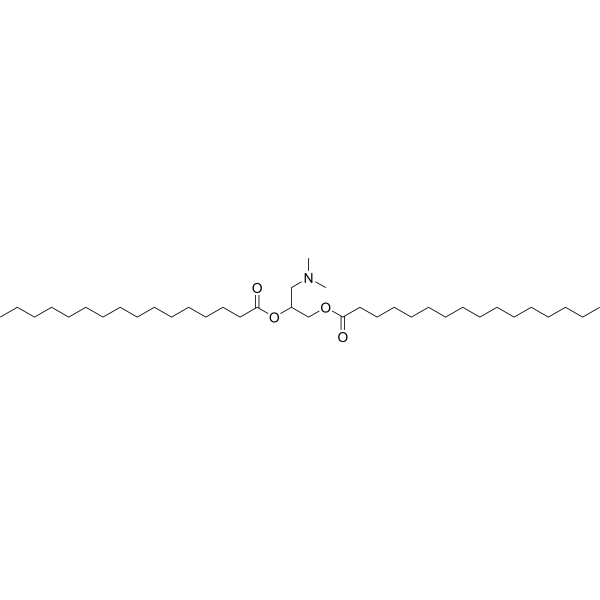
    16:0 DAP is a cationic lipids that can be used for drug delivery, gene transfection and vaccine delivery .
    16:0 DAP
  • HY-172705

    Liposome nAChR Neurological Disease
    DSPE-PEG2000-RVG29 is a PEG conjugate composed of DSPE and rabies virus glycoprotein 29 (RVG29). RVG29 specifically binds to nicotinic acetylcholine receptors (nAChR) at the blood-brain barrier (BBB), crosses the BBB, and mediates receptor-dependent transcytosis. DSPE-PEG2000-RVG29 can be used for brain-targeted drug delivery, surface modification of nanocarriers, as well as gene and nucleic acid delivery. DSPE-PEG2000-RVG29 is applicable to research related to hypoxic-ischemic brain injury, Parkinson's disease, and other conditions .
    DSPE-PEG2000-RVG29
  • HY-W591476B

    mPEG750-SH

    Biochemical Assay Reagents Others
    m-PEG750-thiol modifies DNA thiolation for the synthesis of gold nanorods (AuNRs). Thiolated DNA can be loaded onto AuNR by the mPEG-SH/Tween 20 assisted method (Tween 20 and mPEG-SH repeatedly displace CTAB on the AuNR surface). DNA AuNRs have been widely used in nanostructure assembly, gene therapy, biosensing, and drug delivery.
    m-PEG750-thiol
  • HY-N3540

    Others Inflammation/Immunology
    Caraphenol A is a resveratrol trimer and is able to transiently reduce interferon-induced transmembrane (IFITM) protein expression. Caraphenol A safely enhances lentiviral vector gene delivery to hematopoietic stem and progenitor cells . Caraphenol A also inhibits human cystathionine β-synthase (hCBS) and human cystathionine γ- lyase (hCSE) with IC50s of 5.9 μM and 12.1 μM, respectively .
    Caraphenol A
  • HY-P10991A

    Stearylated octaarginine TFA

    Biochemical Assay Reagents Others
    Stearyl-(homoarginine)8 (Stearylated octaarginine) TFA is an effective gene delivery vector that can deliver plasmid DNA into cells. Stearyl-(homoarginine)8 TFA can make plasmid DNA more effectively internalized into cells and improve the nuclear delivery rate .
    Stearyl-(homoarginine)8 TFA
  • HY-153231A

    Fluorescent Dye Liposome Others
    eGFP mRNA-LNP (500 ng/μL) is a lipid nanoparticle (LNP) containing eGFP mRNA. eGFP mRNA-LNP carries Enhanced Green Fluorescent Protein (eGFP), which will express green fluorescent protein after entering the cell. eGFP is commonly used as a reporter gene detectable by fluorescence microscopy or flow cytometry (excitation wavelength = 488 nm; emission wavelength = 535/40 bandpass). eGFP mRNA-LNP can be used for RNA delivery, translation efficiency and cell viability .
    eGFP mRNA-LNP (500 ng/μL)
  • HY-172526

    Liposome Cancer
    4A3-SCC-10 is a biodegradable ionizable lipid containing disulfide bonds. 4A3-SCC-10 can be used to prepare lipid nanoparticles (LNPs) for the delivery of mRNA in vitro and in vivo. 4A3-SCC-10 can be used for broad applications such as gene editing, vaccine, and cancer detection .
    4A3-SCC-10
  • HY-137499

    Liposome Endogenous Metabolite Neurological Disease
    NT1-O12B, an endogenous chemical and a neurotransmitter-derived lipidoid (NT-lipidoid), is an effective carrier for enhanced brain delivery of several blood-brain barrier (BBB)-impermeable cargos. Doping NT1-O12B into BBB-impermeable lipid nanoparticles (LNPs) gives the LNPs the ability to cross the BBB. NT-lipidoids formulation not only facilitate cargo crossing of the BBB, but also delivery of the cargo into neuronal cells for functional gene silencing or gene recombination .
    NT1-O12B
  • HY-P4118

    Penetrating analog

    Amino Acid Derivatives Peptide-Drug Conjugates (PDCs) Others
    EB1 peptide (Penetrating analog) is an endosomolytic agent and siRNA delivery agent. EB1 peptide forms an amphipathic alpha helix upon protonation in early-late endosomes, drives endosomal membrane permeabilization, and enables endocytosed siRNA escape into the cytosol. EB1 peptide facilitates biologically active siRNA cellular uptake and targeted gene silencing. EB1 peptide forms complexes with siRNA. EB1 peptide can be used for drug delivery research .
    EB1 peptide
  • HY-164035

    Biochemical Assay Reagents Others
    DOPE-PEG2000-DBCO is a PEG lipid with a DOPE and a DBCO as functional groups. DOPE can be used as a helper lipid in gene transfection. PEG is used in drug delivery system. DBCO can be used for click chemistry .
    DOPE-PEG2000-DBCO
  • HY-160852

    Liposome Inflammation/Immunology
    YSK 12C4 is an ionizable cationic lipid primarily used to enhance siRNA cellular delivery via multifunctional envelope-type nanodevices (MEND). YSK 12C4 promotes siRNA uptake and endosomal escape, effectively silencing genes in human immune cell lines .
    YSK 12C4
  • HY-159067

    DEAE-dextran, MW 500000 hydrochloride, from bacterial (Leuconostoc mesenteroides); Diethylaminoethyl-dextran, MW 500000 hydrochloride

    Biochemical Assay Reagents Cancer
    DEAE-dextran, MW 500000 hydrochloride (DEAE-dextran, MW 500000 hydrochloride, from bacterial (Leuconostoc mesenteroides)) is a high-molecular-weight positively charged polymer that significantly enhances the uptake of viral RNA by tissue culture cells. When employed in the delivery system for "tumor immunity" RNA-splenocyte transfer, DEAE-dextran can markedly extend the lifespan of tumor-bearing animals, comparable to that of actively immunized animals. Furthermore, DEAE-dextran serves as a complexing agent for nucleic acids, forming composite particles with DNA/RNA for extensive applications in gene delivery. Additionally, DEAE-dextran can be utilized as a coating for liposomes .
    DEAE-dextran, MW 500000 hydrochloride
  • HY-D1005I

    Biochemical Assay Reagents Others
    Poloxamer L61 is a non-ionic triblock copolymer surfactant. Poloxamer L61 effectively achieves intracellular molecular delivery to cancer cells during photoacoustic molecular delivery, and maintains cell viability by promoting cell membrane resealing, thus avoiding irreversible damage caused by laser-induced membrane permeabilization. Poloxamer L61 is a key component of SP1017, a compound related to gene therapy, which regulates the interaction between DNA and extracellular matrix as well as cellular uptake, and significantly enhances the distribution and bioavailability of plasmid DNA in skeletal muscle. Poloxamer L61 can be used in studies on local or systemic therapeutic protein production .
    Poloxamer L61
  • HY-W591476C

    mPEG550-SH

    Biochemical Assay Reagents Others
    m-PEG550-thiol modifies DNA thiolation for the synthesis of gold nanorods (AuNRs). Thiolated DNA can be loaded onto AuNR by the mPEG-SH/Tween 20 assisted method (Tween 20 and mPEG-SH repeatedly displace CTAB on the AuNR surface). DNA AuNRs have been widely used in nanostructure assembly, gene therapy, biosensing, and drug delivery.
    m-PEG550-thiol
  • HY-P4087

    HIV Infection Cancer
    Cys(Npys)-(Arg)9 is a synthetic cationic cell-penetrating peptide with a reversible thiol-reactive nitropyridyl (Npys) group. Cys(Npys)-(Arg)9 efficiently mediates the internalization and delivery of various "cargo" such as proteins and antibodies by forming reversible disulfide bonds with surface-exposed cysteine residues. Cys(Npys)-(Arg)9 endows TALEN proteins with cell-penetrating activity, enabling gene knockout in mammalian cells and protein transduction in wheat microspores. Cys(Npys)-(Arg)9 can be conjugated with antibodies to form cationized IgG for enhancing endosomal escape of oligonucleotides, or form siRNA delivery complexes. When the molar ratio of Cys(Npys)-(Arg)9 to loaded molecules is higher than 1:1, it exerts certain cytotoxic effects on cells. Cys(Npys)-(Arg)9 can be used in studies related to oral squamous cell carcinoma and HIV infection .
    Cys(Npys)-(Arg)9
  • HY-P10514

    Small Interfering RNA (siRNA) Others
    Transportan 10 is a derivative of Transportan (HY-P1732) and is an amphiphilic cell penetrating peptide (CPP). Transportan 10 helps molecules penetrate cell membrane barriers by directly interacting with the lipid bilayer. Transportan 10 can be used in gene therapy or siRNA delivery vector research .
    Transportan 10
  • HY-159709

    Liposome Metabolic Disease
    VL-422 is an ionizable cationic lipid. VL-422 delivers CRISPR complementary single-guide RNA (sgRNA) and Cas9 mRNA to enable in vitro and in vivo gene editing. LNPs containing VL-422 loaded with Cas9 mRNA and sgRNA targeting the ANGPTL3 gene induce the deletion of premature stop codons within the ANGPTL3 gene in the liver of cynomolgus monkeys. Loss-of-function of ANGPTL3 leads to decreased levels of LDL, HDL and cholesterol in plasma. The VL-422 delivery system can be used for the research of gene editing strategies targeting lipid metabolism diseases .
    VL-422
  • HY-144001

    Liposome Others
    DSPE-PEG-Carboxylic acid ammonium is a phospholipid PEG conjugate. DSPE-PEG-Carboxylic Acid can be widely used in the delivery of targeted agents and genes .
    DSPE-PEG-Carboxylic acid ammonium
  • HY-P10991

    Stearylated octaarginine

    Biochemical Assay Reagents Others
    Stearyl-(homoarginine)8 (Stearylated octaarginine) is an effective gene delivery vector that can deliver plasmid DNA into cells. Stearyl-(homoarginine)8 can make plasmid DNA more effectively internalized into cells and improve the nuclear delivery rate .
    Stearyl-homoarginine8
  • HY-149037

    N4-Spermine cholesteryl carbamate

    Liposome Others
    GL67 (N4-Spermine cholesteryl carbamate) is a cationic lipid. GL67 can be used for nucleic acid agents and vaccines delivery, and gene transfection .
    GL67
  • HY-109659

    Biochemical Assay Reagents DNA Alkylator/Crosslinker Others
    1-(3-Aminopropyl)-4-methylpiperazine is a capping agent. The 1-(3-Aminopropyl)-4-methylpiperazine-capped Poly (β-amino ester) (PBAE) poly (1,4-butanediol diacrylate-co-4-amino-1-butanol) undergoes electrostatic interactions with anionic molecules such as DNA and exhibits low cytotoxicity. The 1-(3-Aminopropyl)-4-methylpiperazine-capped Poly (1,4-butanediol diacrylate-co-4-amino-1-butanol) PBAE effectively delivers nucleic acids in various systems .
    1-(3-Aminopropyl)-4-methylpiperazine
  • HY-P10560

    Biochemical Assay Reagents Others
    M918 is a cell-penetrating peptide. M918 is internalized by cells through endocytosis and can effectively penetrate a variety of cells in a non-toxic manner. M918 can be used in gene therapy and drug delivery system research .
    M918
  • HY-P4087B

    HIV Others
    Cys(Npys)-(Arg)9 acetate is a synthetic cationic cell-penetrating peptide with a reversible thiol-reactive nitropyridyl (Npys) group. Cys(Npys)-(Arg)9 acetate efficiently mediates the internalization and delivery of various "cargo" such as proteins and antibodies by forming reversible disulfide bonds with surface-exposed cysteine residues. Cys(Npys)-(Arg)9 acetate endows TALEN proteins with cell-penetrating activity, enabling gene knockout in mammalian cells and protein transduction in wheat microspores. Cys(Npys)-(Arg)9 acetate can be conjugated with antibodies to form cationized IgG for enhancing endosomal escape of oligonucleotides, or form siRNA delivery complexes. When the molar ratio of Cys(Npys)-(Arg)9 acetate to loaded molecules is higher than 1:1, it exerts certain cytotoxic effects on cells. Cys(Npys)-(Arg)9 acetate can be used in studies related to oral squamous cell carcinoma and HIV infection .
    Cys(Npys)-(Arg)9 acetate
  • HY-142995

    Liposome Others
    DODAP (hydrochloride) is an ionizable lipid. DODAP (hydrochloride) has the potential for the research of gene delivery .
    DODAP hydrochloride
  • HY-149664

    DC-Chol

    Liposome Cancer
    3β-[N-(N′,N′-Dimethylaminoethyl)carbamoyl]cholesterol, a lipid, has been investigated in cancer gene therapy and vaccine delivery system .
    3β-[N-(N′,N′-Dimethylaminoethyl)carbamoyl]cholesterol
  • HY-160576

    Liposome Cancer
    DNCA is a neutral lipid that can be used in the generation of lipid nanoparticles (LNPs). DNCA can be used in nucleic acid delivery .
    DNCA
  • HY-P11083

    HBV Cancer
    Xentry is a cell-penetrating peptide (CCP) consisting of only 7 amino acids of hepatitis B virus: LCLRPVG. Xentry-linked anti-B-raf antibodies and siRNAs demonstrates the capability to kill B-raf-dependent melanoma cells. Xentry alone or conjugated to β-galactosidase leads to its delivery to most tissues in mice, except circulating blood cells. Xentry can be used for the delivery of large molecules (antibodies, siRNA, enzymes) .
    Xentry
  • HY-17650

    (±)-Dimyristoyl-2,3-dimethylhydroxypropylamine

    Liposome Others
    DMDHP ((±)-Dimyristoyl-2,3-dimethylhydroxypropylamine) is a cationic lipid with a polar head group containing a dihydroxy group. DMDHP exhibits superior transfection efficiency and lower toxicity at high DNA doses in mouse intrapulmonary transfection model. DMDHP is commonly used for gene delivery .
    DMDHP

Inquiry Online

Your information is safe with us. * Required Fields.

Salutation


Country or Region *

Applicant Name *


Organization Name *

Department *


Email Address *


Product Name *

Cat. No.


Requested quantity *

Phone Number *


Remarks

Inquiry Online

Inquiry Information

Product Name:
Cat. No.:
Quantity:
MCE Japan Authorized Agent: