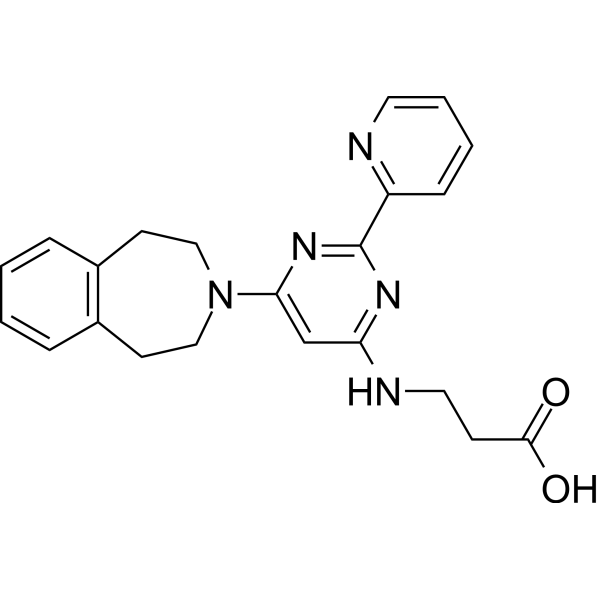
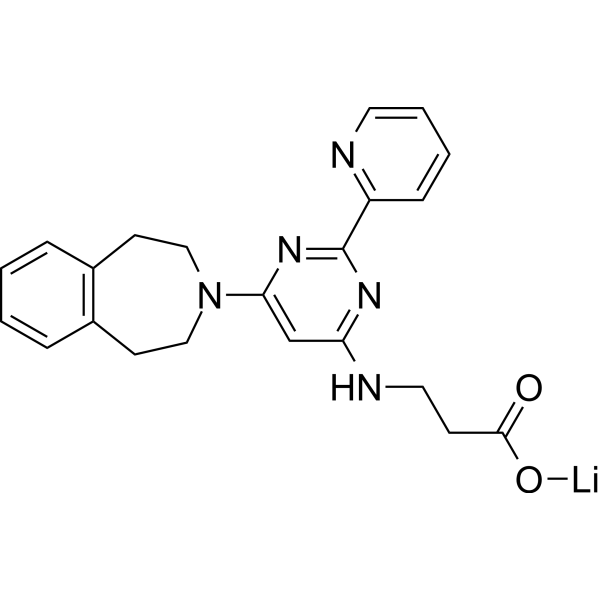
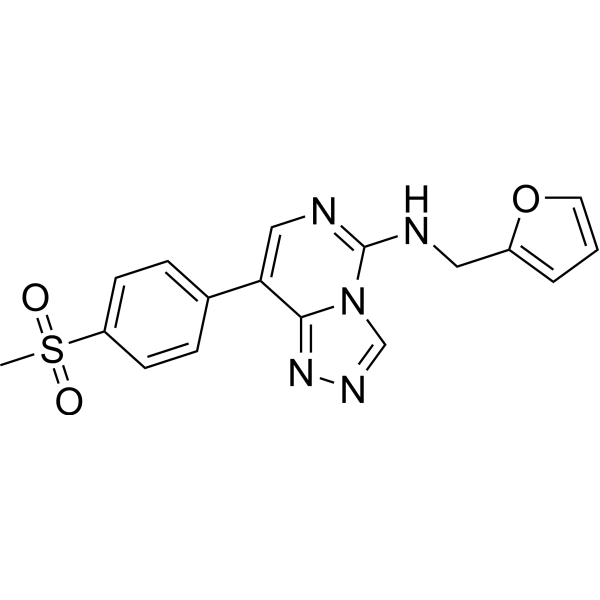
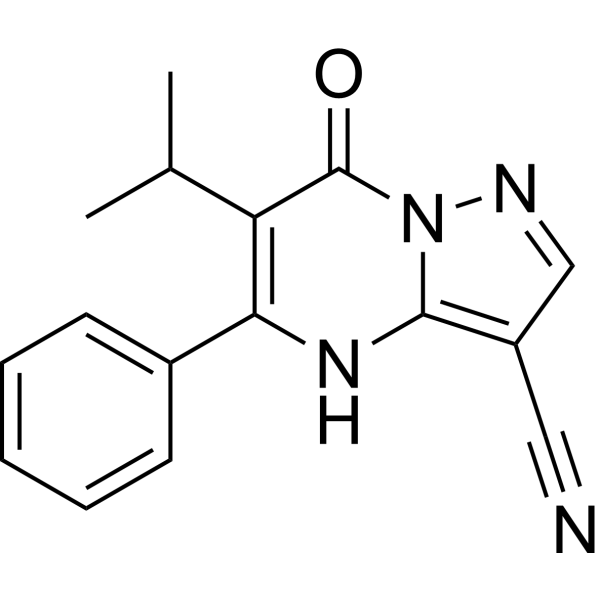
From 11:00 pm to 12:00 pm EST ( 8:00 pm to 9:00 pm PST ) on January 6th, the website will be under maintenance. We are sorry for the inconvenience. Please arrange your schedule properly.
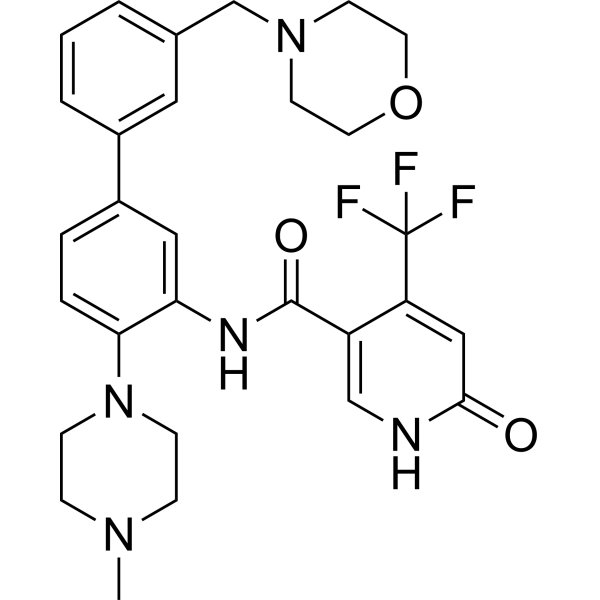
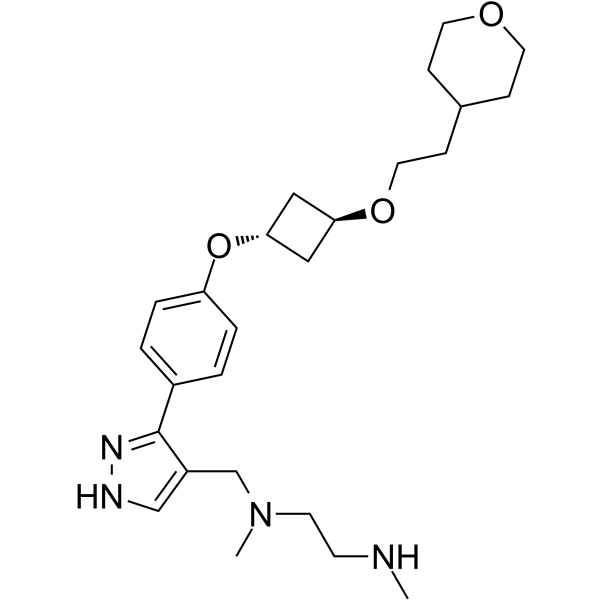
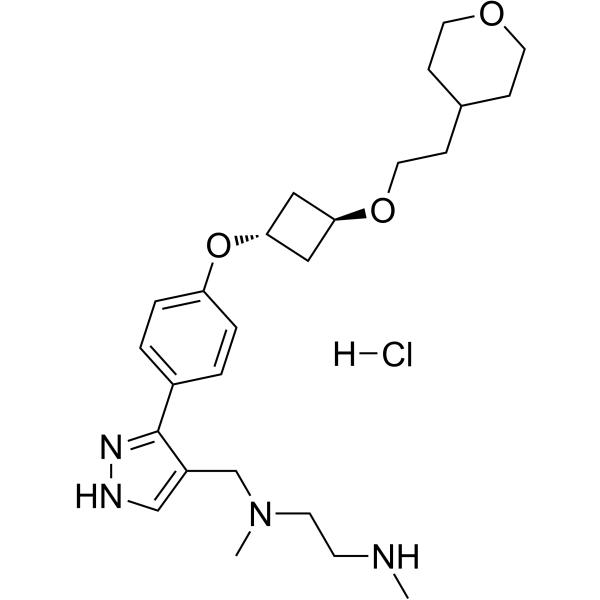
H3B-8800 is a potent and orally active SF3B splicing modulator. H3B-8800 direct interaction with the SF3b complex and shows anti-cancer activity. H3B-8800 has the potential for the research of acute myeloid leukemia (AML) with SF3B1 mutant .
Thioperamide (MR-12842) is a potent, orally available, brain penetrant and selective H3 receptor antagonist with a Ki of 4.3 nM for inhibition of [ 3H]histamine release. Thioperamide inhibits [ 3H]histamine synthesis with a Ki of 31 nM .
Obrindatamab is a humanized anti-B7-H3/CD3 bispecific antibody. Obrindatamab binds to B7-H3 and CD3, thereby mediating redirected cytotoxic T-lymphocyte (CTL) activity against B7-H3-expressing cancer cells. Obrindatamab can be used in research of cancer .
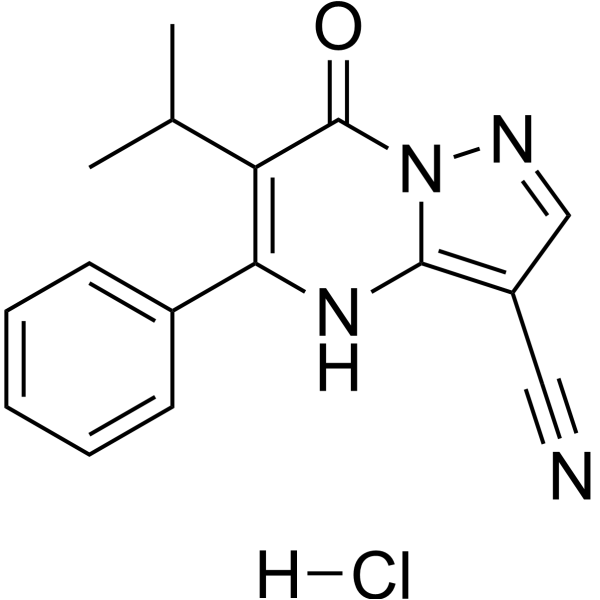
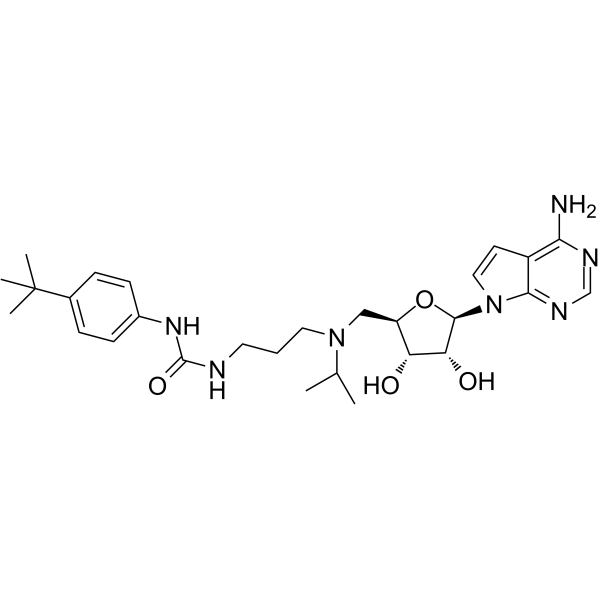
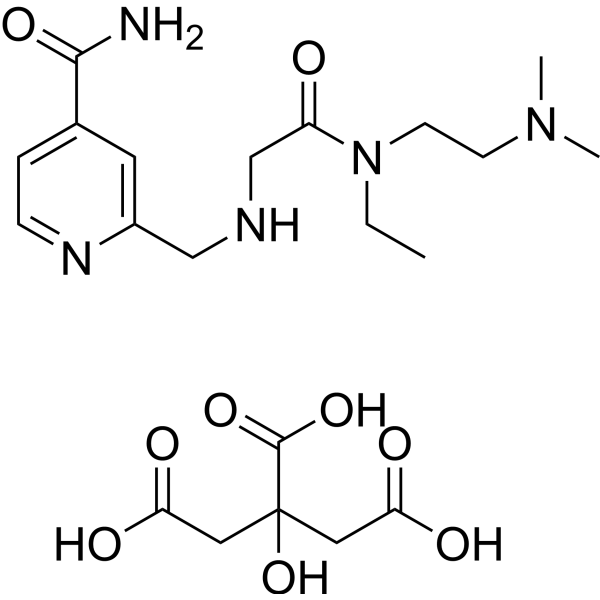
H3B-120 is a highly selective, competitive and allosteric carbamoyl phosphate synthetase 1 (CPS1) inhibitor with an IC50 of 1.5 μM and a Ki of 1.4 μM. H3B-120 has anti-cancer activity .
Conessine is an orally active and BBB-penetrable selective histamine H3 receptor antagonist. The pKi values of Conessine for rat and human H3 receptors are 7.61 and 8.27, respectively. Conessine is an inhibitor of the multidrug efflux pump system in Pseudomonas aeruginosa and can enhance the activity of antibiotics. Conessine has antimalarial activity. Conessine can also be used in the research of muscle atrophy [3] .
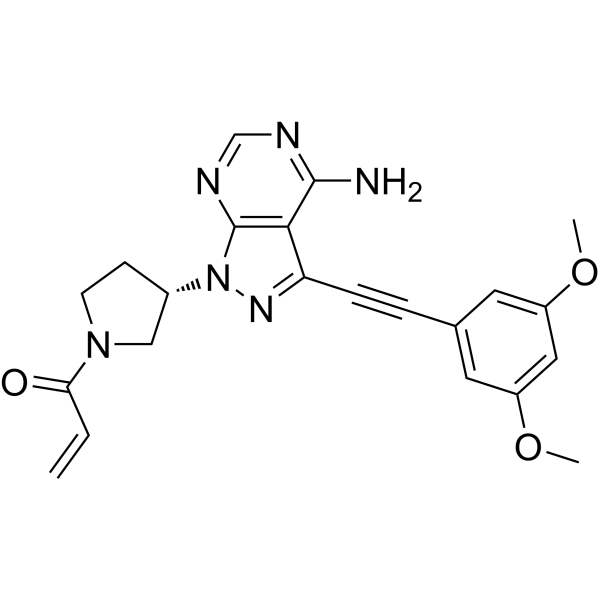
H3B-6527 is an orally active, highly selective and covalent FGFR4 inhibitor with an IC50 of <1.2 nM. H3B-6527 has at least 250-fold selectivity over FGFR1-3 with IC50s of 320 nM, 1290 nM and 1060 nM respectively. H3B-6527 has potent anti-cancer activity .
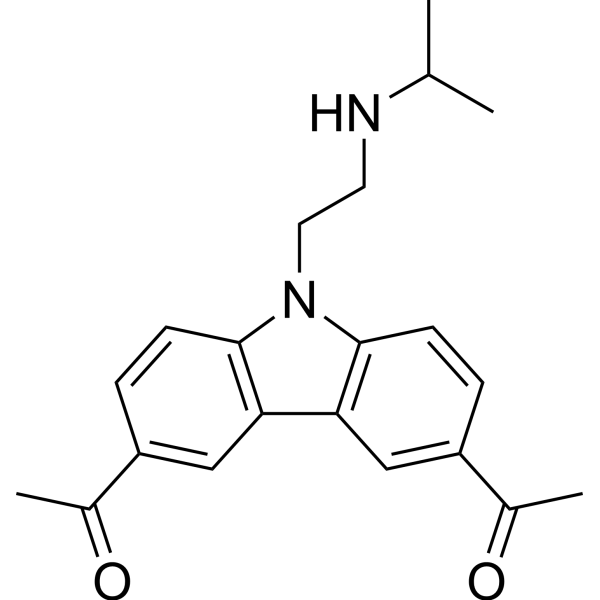
H3B-5942 is a selective, irreversible and orally active estrogen receptor covalent antagonist, inactivates both wild-type and mutant ERα by targeting Cys530, with Kis of 1 nM and 0.41 nM, respectively. H3B-5942 reduces ERα target gene GREB1, shows potent antitumor activity both in multiple cell lines or animals bearing ERα WT or ERα mutations .
Iodophenpropit dihydrobromide is a potent and selective histamine H3 receptor antagonist. The binding of [ 125I]Iodophenpropit is selective, saturable, readily reversible, and of high affinity (KD 0.32 nM) .
Ciproxifan (FUB 359) is a potent, selective, orally bioavailable and competitive antagonist of histamine H3-receptor, with an IC50 of 9.2 nM. Ciproxifan displays low apparent affinity at other receptor subtypes. Ciproxifan can be used for the research of aging disorders and Alzheimer's disease [3].
S 38093 is a brain-penetrant, orally active antagonist of H3 receptor, with Kis of 8.8, 1.44 and 1.2 μM for rat, mouse and human H3 receptors, respectively.
GSK189254A (GSK189254 free base) is a novel, potent and selective histamine H3 receptor antagonist with pKi values of 9.59-9.90 and 8.51-9.17 for human and rat H3, respectively.
Histone H3 (1-35) TFA is a 35-residue peptide of histone H3. Histone H3 is one of the five main histones involved in the structure of chromatin in eukaryotic cells .
Immepip dihydrobromide is a H3 agonist. Immepip dihydrobromide can reduce cortical histamine release. Immepip dihydrobromide can be used for the research of neurological diseases .
Histone H3 (1-34) is a peptide derived from human histone isotype 3.1. Histones are the main protein components of eukaryotic chromatin. Histone variants and histone modifications modulate chromatin structure, ensuring the precise operation of cellular processes associated with genomic DNA .
Ciproxifan maleate (FUB 359 maleate) is a potent, selective, orally bioavailable and competitive antagonist of histamine H3-receptor, with an IC50 of 9.2 nM. Ciproxifan maleate displays low apparent affinity at other receptor subtypes. Ciproxifan maleate can be used for the research of aging disorders and Alzheimer's disease [3].
Anti-Mouse CD276/B7-H3 Antibody (MJ18) is a rat-derived anti-mouse CD276/B7-H3 IgG1 monoclonal antibody. Anti-Mouse CD276/B7-H3 Antibody (MJ18) can inhibit CD276/B7-H3 and induce tumor cell apoptosis. Anti-Mouse CD276/B7-H3 Antibody (MJ18) enhances anti-tumor immune response by reducing immunosuppressive cells and promoting T cell activation. Anti-Mouse CD276/B7-H3 Antibody (MJ18) can be used for research on cancer such as breast cancer and prostate cancer [3].
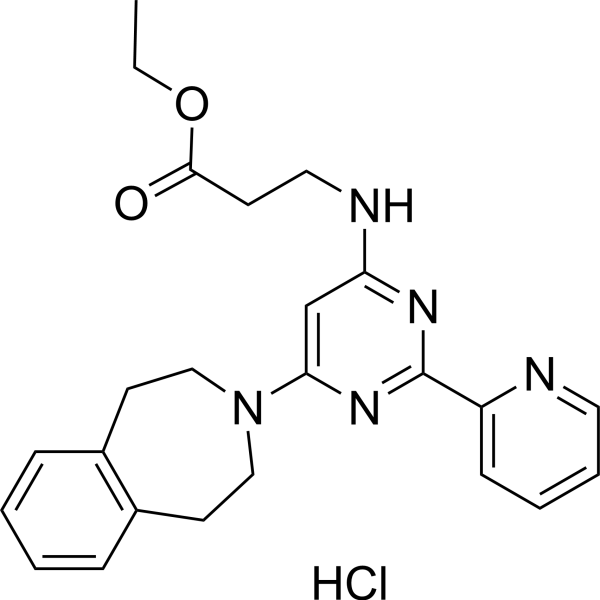
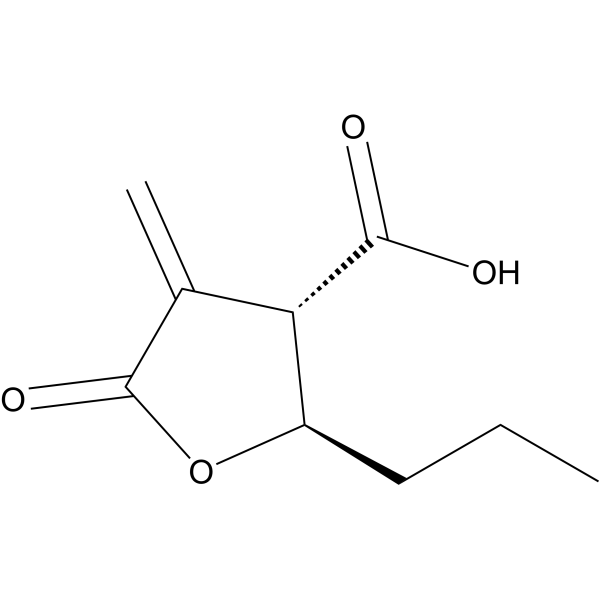
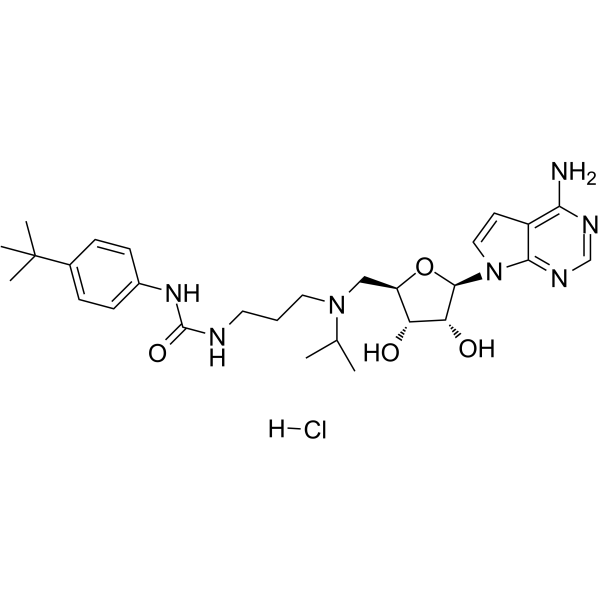
H3B-6545 hydrochloride is an oral, selective estrogen receptor covalent antagonist (SERCA) for the research of metastatic ER-positive, HER2-negative breast cancer .
H3-3A Human Pre-designed siRNA Set A contains three designed siRNAs for H3-3A gene (Human), as well as a negative control, a positive control, and a FAM-labeled negative control.
H3K27(Me3) (15-34), a histone peptide, is a repressive chromatin mark derived from human histone. Polycomb Repressive Complex 2 (PRC2) is a multiprotein complex that catalyzes the methylation of H3K27(Me) .
H3-3B Human Pre-designed siRNA Set A contains three designed siRNAs for H3-3B gene (Human), as well as a negative control, a positive control, and a FAM-labeled negative control.
Betahistine EP Impurity C (NSC19005) is an impurity of Betahistine . Betahistine is a potent, orally active and well-tolerated histamine H1 receptor agonist and H3 receptor antagonist used for the study of rheumatoid arthritis (RA) [3].
The Anti-Histone H3 Antibody is a CHO-expressed humanized antibody that targets Histone H3. The Anti-Histone H3 Antibody has a huIgG1 heavy chain and a huκ light chain, with a predicted molecular weight (MW) of 150 kDa. The isotype control for the Anti-Histone H3 Antibody can refer to Human IgG1 kappa, Isotype Control (HY-P99001).
H3C14 Human Pre-designed siRNA Set A contains three designed siRNAs for H3C14 gene (Human), as well as a negative control, a positive control, and a FAM-labeled negative control.
Histone H3 (1-35) is a 35-residue peptide of histone H3. Histone H3 is one of the five main histones involved in the structure of chromatin in eukaryotic cells .
MS7131 is a USP1-recruiting DUBTACs. MS7131 effectively reduces histone H3 lysine 27 trimethylation and significantly suppresses the proliferation and clonogenicity of cancer cells .
Ac-RYQK(Ac)-AMC (Compound S5) is a fluorescent substrate for SITR6, that is based on the H3 sequence. Ac-RYQK(Ac)-AMC mimics H3K56 deacetylation site and significantly increases the deacetylation signal with superior signal-to-background ratio. Ac-RYQK(Ac)-AMC can be used for ageing and cancers research .
Bombinin H3 is an antimicrobial peptide derived from the skin of moth Bombina variegata. The lethal concentrations of Bombinin H3 against Escherichia coli D21 and Staphylococcus aureus Cowan 1 are 3.7 and 2.4 μM, respectively .
Histone H3 (21-44), derived from histone H3 21-44 amino acids, is usually used as a substrate (such as protein arginine methyltransferases) for methylation assays .
Maximin H3 is an antimicrobial peptide derived from the skin secretions of Chinese red belly toad Bombina maxima. Maximin H3 has activity against Escherichia coli ATCC25922, Staphylococcus aureus ATCC2592, Bacillus pyocyaneus CMCCB1010 and Candida albicans ATCC2002, the MIC values are 20, 10, 20, 5 μg/ml, respectively .
Proxyfan is a potent histamine H3 receptor antagonist with Ki values of 2.9 nM and 2.7 nM for rat and human H3 receptor, respectively. Proxyfan is over 1000-fold more potent at H3 receptors than other histamine receptors .
Proxyfan Oxalate is a potent histamine H3 receptor antagonist with Ki values of 2.9 nM and 2.7 nM for rat and human H3 receptor, respectively. Proxyfan Oxalate is over 1000-fold more potent at H3 receptors than other histamine receptors .
GSK334429 is a selective and orally active non-imidazole histamine H3 receptor antagonist with a pKi of 9.49 against human H3 receptor. GSK334429 can be utilized in neurological research .
H3K4(Me) (1-20), a histone peptide. H3K4me is an intricately regulated posttranslational modification, which is broadly associated with enhancers and promoters of actively transcribed genomic loci .
H3K4(Me3) (1-20) is a histone peptide. Trimethylation of histone H3 on lysine 4 (H3K4 me3) is found in active euchromatin but not in silent heterochromatin .
Ciproxifan (FUB 359) hydrochloride is a potent, selective, orally bioavailable and competitive antagonist of histamine H3-receptor, with an IC50 of 9.2 nM. Ciproxifan hydrochloride displays low apparent affinity at other receptor subtypes. Ciproxifan hydrochloride can be used for the research of aging disorders and Alzheimer's disease [3].
Conessine dihydrobromide is an orally active and BBB-penetrable selective histamine H3 receptor antagonist. The pKi values of Conessine dihydrobromide for rat and human H3 receptors are 7.61 and 8.27, respectively. Conessine dihydrobromide is an inhibitor of the multidrug efflux pump system in Pseudomonas aeruginosa and can enhance the activity of antibiotics. Conessine dihydrobromide has antimalarial activity. Conessine dihydrobromide can also be used in the research of muscle atrophy [3] .
Histone H3 (73-83) is a histone H3 fragment. Histone H3 (73-83) can be obtained from incomplete tryptic digestion of underivatized wild-type histone H3. Histone H3 (73-83) can be used in the research of yeast infection .
H3R antagonist 8 is a selective nonimidazole histamine H3 receptor antagonist (IC50 = 0.35 μM). H3R antagonist 8 exhibits hERG channel blockade activity (IC50 = 0.67 μM). H3R antagonist 8 inhibits seizures by antagonizing H3 receptor. H3R antagonist 8 reduces tonic hind limb extension (THLE) in mice in the maximal electroshock seizure (MES) model (ED50 = 20.21 mg/kg) and and shortens pentylenetetrazol (PTZ)-induced total movement distance in AB strain zebrafish larvae. H3R antagonist 8 can be used for the study of epilepsy .
PF-03654764 is an orally active, selective histamine H3 receptor antagonist with Ki values of 1.2 nM and 7.9 nM for human H3 and rat H3 in whole cell assay, respectively. The combination of PF-03654764 and Fexofenadine (HY-B0801A) has the potential for allergic rhinitis research .
Anti-B7-H3/CD276 Antibody is a CHO-expressed human antibody targeting B7-H3/CD276. Anti-B7-H3/CD276 Antibody has a huIgG1 heavy chain and a huκ light chain, with a predicted molecular weight (MW) of 145 kDa. The isotype control for Anti-B7-H3/CD276 Antibody can be referenced as Human IgG1 kappa, Isotype Control (HY-P99001).
H3-5 Human Pre-designed siRNA Set A contains three designed siRNAs for H3-5 gene (Human), as well as a negative control, a positive control, and a FAM-labeled negative control.
H3-7 Human Pre-designed siRNA Set A contains three designed siRNAs for H3-7 gene (Human), as well as a negative control, a positive control, and a FAM-labeled negative control.
H3-4 Human Pre-designed siRNA Set A contains three designed siRNAs for H3-4 gene (Human), as well as a negative control, a positive control, and a FAM-labeled negative control.
VUF 5681 dihydrobromide is a neutral antagonist of histamine H3 receptor. VUF 5681 dihydrobromide also has partial agonist function of H3 receptor. VUF 5681 dihydrobromide blocks the effects of Thioperamide (HY-12206). VUF 5681 dihydrobromide is used in central nervous system disease research .
GT-2016 is a potent, selective, and brain penetrant histamine H3 receptor antagonist with a Ki of 43.8 nM. GT-2016 displays selectivity against H1 and H2 receptors, and has non-active against histamine methyltransferase .
H3R antagonist 5 (Compound 1b) is a selective histamine H3 receptor inverse agonist with a IC50 of 0.54 nM and the ability to cross the blood-brain barrier. H3R antagonist 5 can be used in central nervous system-related research .
Immepip (dihydrobromide) (Standard) is the analytical standard of Immepip (dihydrobromide). This product is intended for research and analytical applications. Immepip dihydrobromide is a H3 agonist. Immepip dihydrobromide can reduce cortical histamine release. Immepip dihydrobromide can be used for the research of neurological diseases .
Histone H3K9me3 (1-15) (H3(1-15)K9me3) TFA is used as substrate. Histone H3K9me3 is a histone posttranslational modification (PTM) that has emerged as hallmark of pericentromeric heterochromatin .
ROS 234 is a potent H3 antagonist, with a pKB of 9.46 for Guinea-pig ileum H3-receptor, a pKi of 8.90 for Rat cerebral cortex H3-receptor, and a ED50 of 19.12 mg/kg (ip) in ex vivo of Rat cerebral cortex. ROS 234 diaplays poor central access .
JNJ-10181457 is a selective non-imidazole histamine H3 receptor antagonist that normalizes acetylcholine neurotransmission . JNJ-10181457 is a click chemistry reagent, it contains an Alkyne group and can undergo copper-catalyzed azide-alkyne cycloaddition (CuAAc) with molecules containing Azide groups.
ROS 234 dioxalate is a potent H3 antagonist, with a pKB of 9.46 for Guinea-pig ileum H3-receptor, a pKi of 8.90 for Rat cerebral cortex H3-receptor, and a ED50 of 19.12 mg/kg (ip) in ex vivo of Rat cerebral cortex. ROS 234 dioxalate diaplays poor central access .
Ciproxifan (maleate) (Standard) is the analytical standard of Ciproxifan (maleate). This product is intended for research and analytical applications. Ciproxifan maleate (FUB 359 maleate) is a potent, selective, orally bioavailable and competitive antagonist of histamine H3-receptor, with an IC50 of 9.2 nM. Ciproxifan maleate displays low apparent affinity at other receptor subtypes. Ciproxifan maleate can be used for the research of aging disorders and Alzheimer's disease [3].
A-317920 is a selective and potent rat histamine H3 receptor (H3R) antagonist with pKi value of 9.2 and 7.0 for full-length rat and full-length human H3R, respectively. A-317920 exhibits over 130 fold selective affinity for the rat over the human H3R. A-317920 enhances cognition via H3R blockade .
H3R antagonist 2 (Compound 23) is a multitarget histamine H3 receptor (H3R) antagonist with a Ki of 170 nM for hH3R . H3R antagonist 2 shows inhibitory effects with IC50 values of 180, 880 and 775 nM for acetylcholinesterase, butyrylcholinesterase and human monoamine oxidase B (hMAO B), respectively. H3R antagonist 2 shows favorable anti-neuropathic pain and memory-enhancing effects. H3R can across BBB .
A 331440 hydrochloride is a histamine H3 receptor antagonist. A 331440 hydrochloride binds potently and selectively to human and rat histamine H3 receptors (Ki≤25 nM). A 331440 hydrochloride can be used for antiobesity research .
GSK189254A hydrochloride is a novel, potent and selective histamine H3 receptor antagonist with pKi values of 9.59-9.90 and 8.51-9.17 for human and rat H3, respectively .
S 38093 hydrochloride is a brain-penetrant, orally active antagonist of H3 receptor, with Kis of 8.8, 1.44 and 1.2 µM for rat, mouse and human H3 receptors, respectively.
Immethridine (dihydrobromide) is a potent and highly selective histamine H3 receptor agonist with pKi and pEC50 value of 9.07 and 9.74, respectively. Immethridine can be used for the research of myocardial ischemia, inflammatory, and gastric acid related diseases research .
A-349821 is a histamine H3 receptor antagonist characterized as a radioligand ([3H]-A-349821) for in vivo receptor occupancy assessment. In rats, [3H]-A-349821 penetrated the brain, showing higher levels in the cortex compared to the cerebellum, indicating selective H3 receptor binding. Its cortical occupancy was saturable, correlating with in vitro binding data. Inhibition studies with ABT-239 and other H3 antagonists showed dose-dependent reductions in receptor occupancy, matching blood levels associated with cognitive efficacy in preclinical models. [3H]-A-349821 thus serves as a valid tracer for H3 receptor occupancy, aiding in the development and clinical interpretation of H3 receptor antagonists .
H3R antagonist 6 (Compounds 3) (H3-2406) is a Histamine receptor 3(H3R) antagonist with an IC50 of 5.6 nM. H3R antagonist 6 labeled with 18F has high radiochemical yield, molar activity and moderate brain uptake, but with an off-target binding to the Sigma-1 receptor. H3R antagonist 6 can be used as a PET radioligand for positron emission tomography imaging for central nervous system (CNS) disorders research .
VUF 4904 is an impentamine analog and a neutral antagonist of the histamine H3 receptor. VUF 4904 can be used in the research of diseases related to the function of the H3 receptor, such as Alzheimer's disease .
H3K27(Me) (15-34), a histone peptide, is a repressive chromatin markderived from human histone. Polycomb Repressive Complex 2 (PRC2) is a multiprotein complex that catalyzes the methylation of H3K27(Me) .
H3R antagonist 1 is a histamine receptor 3(H3R) inverse agonist. H3R antagonist 1 increases the expression levels of myelin-associated glycoprotein (MAG) and myeline basic protein (MBP) in differentiating oligodendrocytes. H3R antagonist 1 can be used for the study of multiple sclerosis .
H3R antagonist 1 hydrochloride is a histamine receptor 3(H3R) inverse agonist. H3R antagonist 1 hydrochloride increases the expression levels of myelin-associated glycoprotein (MAG) and myeline basic protein (MBP) in differentiating oligodendrocytes. H3R antagonist 1 hydrochloride can be used for the study of multiple sclerosis .
H3R antagonist 7 (compounds 4) is a histamine subtype 3 receptor (H3R) antagonist with a Ki of 3.15 nM. H3R antagonist 7 is a potential PET radioligand for the study of central nervous system (CNS) diseases .
H3K27(Me2) (15-34), a histone peptide, is a repressive chromatin mark derived from human histone. Polycomb Repressive Complex 2 (PRC2) is a multiprotein complex that catalyzes the methylation of H3K27(Me) .
H3R antagonist 4 (compound 11L) was a dual inhibitor of cholinesterase and histamine receptor (H3R), with corresponding IC50 of 7.04 μM (eeAChE), 9.73 μM (hAChE)(reversible) and 1.09 nM (H3R) , respectively. H3R antagonist 4 inhibited the aggregation of Aβ1-42 induced by itself and Cu 2+ (95.48% and 88.63%) , and degraded the Aβ1-42 fibrils induced by itself and Cu 2+ (80.16% and 89.30%) . H3R antagonist 4 chelate biometals such as Cu 2+, Zn 2+, Al 3+, and Fe 2+. H3R antagonist 4 significantly reduced tau protein hyperphosphorylation induced by Aβ1-42 and inhibited RSL-3-inducedapoptosis and ferroptosis in PC12 cells. H3R antagonist 4 had the best blood-brain barrier permeability and intestinal absorption in hCMEC/D3 and hPepT1-MDCK cells.H3R antagonist 4 ameliorates learning and memory impairment in a mouse model of Alzheimer's disease induced by scopolamine (HY-N0296) .
H3B10-27(13/17αF) is an excellent scaffold for further developing reagent candidates and an important tool for understanding the physiological functions of the neuropeptide G protein-coupled receptor RXFP3, and it's very stable in serum .
H3C7 Human Pre-designed siRNA Set A contains three designed siRNAs for H3C7 gene (Human), as well as a negative control, a positive control, and a FAM-labeled negative control.
H3c1 Rat Pre-designed siRNA Set A contains three designed siRNAs for H3c1 gene (Rat), as well as a negative control, a positive control, and a FAM-labeled negative control.
H3C2 Human Pre-designed siRNA Set A contains three designed siRNAs for H3C2 gene (Human), as well as a negative control, a positive control, and a FAM-labeled negative control.
H3P10 Human Pre-designed siRNA Set A contains three designed siRNAs for H3P10 gene (Human), as well as a negative control, a positive control, and a FAM-labeled negative control.
H3C1 Human Pre-designed siRNA Set A contains three designed siRNAs for H3C1 gene (Human), as well as a negative control, a positive control, and a FAM-labeled negative control.
H3C8 Human Pre-designed siRNA Set A contains three designed siRNAs for H3C8 gene (Human), as well as a negative control, a positive control, and a FAM-labeled negative control.
H3C6 Human Pre-designed siRNA Set A contains three designed siRNAs for H3C6 gene (Human), as well as a negative control, a positive control, and a FAM-labeled negative control.
H3C3 Human Pre-designed siRNA Set A contains three designed siRNAs for H3C3 gene (Human), as well as a negative control, a positive control, and a FAM-labeled negative control.
LINS05414 is a histamine H3 receptor ligand with antiCholinesterase and metal chelating activities. LINS05414 exhibits inhibitory activity against acetylcholinesterase (pIC50 = 4.03) and butyrylcholinesterase (pIC50 = 3.83), with a pKi of 6.37 for human histamine H3 receptors. LINS05414 chelates copper ions, ferrous ions and ferric ions. LINS05414 regulates the release of neurotransmitters. LINS05414 can be used in the research of neurodegenerative diseases .
MK-3134 is an orally active, brain-penetrant and selective histamine H3 receptor inverse agonist. MK-3134 modulates histaminergic neurotransmission, decreases constitutive H3 receptor signaling, releases tonic inhibition of neurotransmitter release, potentiates neurotransmission, and may enhance cholinergic neurotransmission. MK-3134 can be used for the research of Alzheimer's disease [3] .
FUB 349 (Compound 8) is a selective Aromatase inhibitor with an IC50 of 12 μM. FUB 349 is also a H3 receptor antagonist with Kis of 12 and 2.1 nM for rH3R and hH3R, respectively. FUB 349 can be used for neurological diseases such as cognitive impairment research .
FUB 465 is an orally active inverse agonist at the constitutively active histamine H3 receptor with a pKi of 6.2 for H3 receptor. FUB 465 can be used in the research of central nervous system diseases .
VBI-009 is a CD47 and B7-H3 (CD276) bispecific antibody. VBI-009 blocks CD47-SIRPα 'don't eat me' signals and restricts activity to CD47 +/B7-H3 + cells. VBI-009 induces antibody-dependent cellular phagocytosis (ADCP) and antibody-dependent cellular cytotoxicity (ADCC) in CD47 +/B7-H3 + tumor cells. VBI-009 inhibits tumor growth in CD47+/B7-H3+ lung cancer xenograft models. VBI-009 can be used for the research of lung cancer .
H3B-616 is a selective carbamoyl phosphate synthetase 1 (CPS1) inhibitor with a human IC50 of 66 nM. H3B-616 binds to an allosteric pocket in the CPS1 integrating domain to exert target engagement and inhibit enzyme activity. H3B-616 can be used for the research of nonsmall cell lung cancer and gastric cancer .
H3B-6527 (Standard) is the analytical standard of H3B-6527 (HY-100491). This product is intended for research and analytical applications. H3B-6527 is an orally active, highly selective and covalent FGFR4 inhibitor with an IC50 of <1.2 nM. H3B-6527 has at least 250-fold selectivity over FGFR1-3 with IC50s of 320 nM, 1290 nM and 1060 nM respectively. H3B-6527 has potent anti-cancer activity .
H3Y2 Human Pre-designed siRNA Set A contains three designed siRNAs for H3Y2 gene (Human), as well as a negative control, a positive control, and a FAM-labeled negative control.
H3c1 Mouse Pre-designed siRNA Set A contains three designed siRNAs for H3c1 gene (Mouse), as well as a negative control, a positive control, and a FAM-labeled negative control.
Impentamine dihydrobromide (VUF 4702 dihydrobromide) is a histamine H3 receptor antagonist with potential antihistamine activity. Impentamine dihydrobromide shows the strongest selective H3 antagonism among a series of 4(5)-(ω-aminoalkyl)-1H-imidazole compounds. The pA2 value of impentamine dihydrobromide is 8.4, showing its high efficacy in guinea pig jejunum. Impentamine dihydrobromide has a specific antagonistic binding site with the H3 receptor .
Enerisant (TS-091) hydrochloride is a potent, highly selective, competitive and orally active histamine H3 receptor antagonist/inverse agonist with IC50s of 2.89 nM and 14.5 nM against human and rat histamine H3 receptors, respectively .
Enerisant (TS-091) is a potent, highly selective, competitive and orally active histamine H3 receptor antagonist/inverse agonist with IC50s of 2.89 nM and 14.5 nM against human and rat histamine H3 receptors, respectively .
MK-7288 is a histamine H3 receptor inverse agonist. MK-7288 can prolong sleep latency in the Maintain Wake Test (MWT). MK-7288 can be used in research on obstructive sleep apnea (OSA) and excessive daytime sleepiness (EDS) .
E67-2, as the E67 derivative, is a low-toxicity, selective KIAA1718 Jumonji domain inhibitor with an IC50 value of 3.4 µM. E67-2 selectively inhibits histone H3 lysine 9 (H3K9) Jumonji demethylase as well as histone H3 lysine 4 (H3K4) demethylase .
CPTH2 hydrochloride is a potent histone acetyltransferase (HAT) inhibitor. CPTH2 hydrochloride selectively inhibits the acetylation of histone H3 by Gcn5. CPTH2 hydrochloride induces apoptosis and decreases the invasiveness of a clear cell renal carcinoma (ccRCC) cell line through the inhibition of acetyltransferase p300 (KAT3B) .
CPTH2 is a potent histone acetyltransferase (HAT) inhibitor. CPTH2 selectively inhibits the acetylation of histone H3 by Gcn5. CPTH2 induces apoptosis and decreases the invasiveness of a clear cell renal carcinoma (ccRCC) cell line through the inhibition of acetyltransferase p300 (KAT3B) .
Cipralisant (GT-2331) (maleate) is an orally active, low-toxicity, potent, selective, high affinity histamine H3 receptor full antagonist in vivo, and an agonist in vitro, with a pKi of 9.9 for histamine H3 receptor and a Ki of 0.47 nM for rat histamine H3 receptor. Cipralisant (maleate) has the potential for attention-deficit hyperactivity disorder research [3] . Cipralisant (maleate) is a click chemistry reagent, it contains an Alkyne group and can undergo copper-catalyzed azide-alkyne cycloaddition (CuAAc) with molecules containing Azide groups.
Cipralisant (GT-2331) is an orally active, low-toxicity, potent, selective, high affinity histamine H3 receptor full antagonist in vivo, and an agonist in vitro, with a pKi of 9.9 for histamine H3 receptor and a Ki of 0.47 nM for rat histamine H3 receptor. Cipralisant has the potential for attention-deficit hyperactivity disorder research [3] . Cipralisant is a click chemistry reagent, it contains an Alkyne group and can undergo copper-catalyzed azide-alkyne cycloaddition (CuAAc) with molecules containing Azide groups.
NNC 38-1049 is an orally active, potent and competitive histamine H3 receptor antagonist. NNC 38-1049 produced an increase in extracellular levels of histamine in the paraventricular nucleus. NNC 38-1049 decreases food intake and body weight, which is promising for research of obesity .
KSK94 is a high-affinity histamine H3 receptor antagonist, with Kis of 7.9, 2958, 75.2 nM for H3 receptor, sigma-1, sigma-2 receptor respectively. KSK94 can be used for research of nociceptive and neuropathic pain .
EEDi-5273 (APG-5918) is a potent and orally active embryonic ectoderm development (EED) inhibitor with an IC50 of 0.2 nM. EEDi-5273 can inhibit the polycomb repressive complex 2 (PRC2) activity and block trimethylation of histone H3 lysine 27. EEDi-5273 can be used for the research of cancer, such as ovarian cancer .
HDAC-IN-82 (Compound 18b) is a histone deacetylase (HDAC) inhibitor with selective antiplasmodial and anticancer activity. HDAC-IN-82 shows potent antiproliferative activity and caspase 3/7 activation in cancer cells. HDAC-IN-82 causes hyperacetylation of histone H3 and α-tubulin .
GSK189254A (Standard) is the analytical standard of GSK189254A. This product is intended for research and analytical applications. GSK189254A (GSK189254 free base) is a novel, potent and selective histamine H3 receptor antagonist with pKi values of 9.59-9.90 and 8.51-9.17 for human and rat H3, respectively.
S 38093 (Standard) is the analytical standard of S 38093 (HY-104003). This product is intended for research and analytical applications. S 38093 is a brain-penetrant, orally active antagonist of H3 receptor, with Kis of 8.8, 1.44 and 1.2 μM for rat, mouse and human H3 receptors, respectively.
Ifinatamab deruxtecan (DS-7300a) is a B7-H3-targeting Antibody-drug conjugate (ADC), which is composed of a humanized anti-B7-H3 monoclonal antibody, an enzymatically cleavable peptide-based linker, and Exatecan derivative (DXd) (HY-13631D). Ifinatamab deruxtecan is a DNA Topoisomerase I inhibitor. Ifinatamab deruxtecan induces Apoptosis. DS-7300a exerts potent antitumor activities against B7-H3-expressing tumors. against rhabdomyosarcoma, endometrial adenocarcinoma and lung adenocarcinoma. Ifinatamab deruxtecan does not exert direct immunomodulatory effects [3]
Betahistine EP Impurity C (Standard) is the analytical standard of Betahistine EP Impurity C. This product is intended for research and analytical applications. Betahistine EP Impurity C (NSC19005) is an impurity of Betahistine . Betahistine is a potent, orally active and well-tolerated histamine H1 receptor agonist and H3 receptor antagonist used for the study of rheumatoid arthritis (RA) [3].
4-tert-Octylphenol, a endocrine-disrupting chemical, is an estrogenic agent. 4-tert-Octylphenol is also a biodegradation product of non-ionic surfactants alkylphenol polyethoxylates. 4-tert-Octylphenol induces apoptosis in neuronal progenitor cells in offspring mouse brain. 4-tert-Octylphenol reduces bromodeoxyuridine (BrdU), mitotic marker Ki67, and phospho-histone H3 (p-Histone-H3), resulting in a reduction of neuronal progenitor proliferation. 4-tert-Octylphenol disrupts brain development and behavior in mice, which is promising for reserch of immune response, neuro-related diseases and ethology [3] .
JNJ-5207852 dihydrochloride is a selective and potent histamine H3 receptor (H3R) antagonist, with pKis of 8.9, 9.24 for rat and human H3R, respectively.
Vobramitamab duocarmazine (AEX4089DC1; MGC018), a humanized antibody-drug conjugate (ADC) targeted against B7-H3 (CD276). Vobramitamab duocarmazine is comprised of the cleavable linker-Duocarmycin payload, Vc-seco-DUBA (HY-128957), conjugated to an anti-B7-H3 humanized IgG1κ monoclonal antibody. Vobramitamab duocarmazine has antineoplastic activity .
Risvutatug rezetecan (HS-20093; GSK5764227) is a B7-H3-targeting antibody-drug conjugate (ADC). Risvutatug rezetecan binds to B7-H3 on tumor cells and delivers a topoisomerase I inhibitor payload via a tumor microenvironment-responsive cleavable linker. Risvutatug rezetecan is applicable for the research of extensive-stage small cell lung cancer and non-small cell lung cancer .
IBI-334 is a bispecific B7-H3 and EGFR antibody. IBI-334 has an EGFR arm for signal blockage and is coupled with a fine-tuned B7-H3 arm with optimal affinity and binding domain. IBI-334 shows antibody-mediated cell cytotoxicity (ADCC) effects. IBI-334 has a wide range of applications in many EGFR-driven solid tumors .
BP 2-94 (BP 2.94) is an orally active and highly selective prodrug targeting the histamine H3 receptor. BP 2-94 exerts anti-inflammatory, analgesic and antinociceptive effects by inhibiting histamine release and modulating neurogenic inflammation. BP 2-94 is promising for research of asthma, migraines, and inflammatory pain-related disorders .
KSK67 is a high-affinity dual sigma-2 and histamine H3 receptor antagonist, with Kis of 3.2, 1531, 101 nM for H3 receptor, sigma-1, sigma-2 receptor respectively. KSK67 can be used for research of nociceptive and neuropathic pain .
Cipralisant maleate (Standard) is the analytical standard of Cipralisant (maleate) (HY-106993A). This product is intended for research and analytical applications. Cipralisant (GT-2331) (maleate) is an orally active, low-toxicity, potent, selective, high affinity histamine H3 receptor full antagonist in vivo, and an agonist in vitro, with a pKi of 9.9 for histamine H3 receptor and a Ki of 0.47 nM for rat histamine H3 receptor. Cipralisant (maleate) has the potential for attention-deficit hyperactivity disorder research [3] . Cipralisant (maleate) is a click chemistry reagent, it contains an Alkyne group and can undergo copper-catalyzed azide-alkyne cycloaddition (CuAAc) with molecules containing Azide groups.
BP1.3656B is a selective, orally active, blood-brain barrier-permeable histamine H3 receptor (histamine H3 receptor) inverse agonist/antagonist, with a KB value of 0.08 nM for antagonizing agonist-induced activity and an IC50 value of 0.38 nM for directly inhibiting the basal activity of the receptor. BP1.3656B reduces alcohol consumption, alcohol-seeking behavior, alcohol self-administration, motivation to drink, alcohol relapse, alcohol-induced hyperlocomotion, and binge alcohol intake. BP1.3656B is applicable for the research of alcohol use disorder .
AChE-IN-14 (compound 5) is a potent cholinesterase inhibitor with IC50s of 0.46 , 0.48, and 0.44 μM for electric eel acetylcholinesterase (eeAChE), human recombinant acetylcholinesterase (hAChE), and equine serum butyrylcholinesterase (eqBuChE), respectively. AChE-IN-14 exhibits high affinity toward human H3 receptor(H3R;Ki= 159.8 nM). AChE-IN-14 can be used for the research of Alzheimer’s disease .
Cipralisant (Standard) (GT-2331 (Standard)) is the analytical standard of Cipralisant (HY-106993). This product is intended for research and analytical applications. Cipralisant (GT-2331) is an orally active, low-toxicity, potent, selective, high affinity histamine H3 receptor full antagonist in vivo, and an agonist in vitro, with a pKi of 9.9 for histamine H3 receptor and a Ki of 0.47 nM for rat histamine H3 receptor. Cipralisant has the potential for attention-deficit hyperactivity disorder research [3] . Cipralisant is a click chemistry reagent, it contains an Alkyne group and can undergo copper-catalyzed azide-alkyne cycloaddition (CuAAc) with molecules containing Azide groups.
4-tert-Octylphenol (Standard) is the analytical standard of 4-tert-Octylphenol. This product is intended for research and analytical applications. 4-tert-Octylphenol, a endocrine-disrupting chemical, is an estrogenic agent. 4-tert-Octylphenol is also a biodegradation product of non-ionic surfactants alkylphenol polyethoxylates. 4-tert-Octylphenol induces apoptosis in neuronal progenitor cells in offspring mouse brain. 4-tert-Octylphenol reduces bromodeoxyuridine (BrdU), mitotic marker Ki67, and phospho-histone H3 (p-Histone-H3), resulting in a reduction of neuronal progenitor proliferation. 4-tert-Octylphenol disrupts brain development and behavior in mice, which is promising for reserch of immune response, neuro-related diseases and ethology [3] .
GSK-1004723 is a novel H1/H3 receptor antagonist with limited activity for the suppression of seasonal allergic rhinitis. GSK-1004723 is available as a suspension or solution for intranasal administration.
KSK68 is a high-affinity dual sigma-1 and histamine H3 receptor antagonist, with Kis of 7.7, 3.6, 22.4 nM for H3 receptor, sigma-1, sigma-2 receptor respectively. KSK68 has negligible affinity at the other histamine receptor subtypes. KSK68 can be used for research of nociceptive and neuropathic pain .
GSK239512 is a potent and brain penetrated H3 receptor antagonist. GSK239512 can be used for the research of mild-to-moderate Alzheimer's disease (AD) .
Betahistine dihydrochloride is an orally active histamine H1 receptor agonist and a H3 receptor antagonist . Betahistine dihydrochloride is used for the study of rheumatoid arthritis (RA) [3].
Betahistine mesylate is an orally active histamine H1 receptor agonist and a H3 receptor antagonist . Betahistine mesylate is used for the study of rheumatoid arthritis (RA) [3].
Betahistine is an orally active histamine H1 receptor agonist and a H3 receptor antagonist . Betahistine is used for the study of rheumatoid arthritis (RA) [3].
Cephaeline ((-)-Cephaeline), a desmethyl analog of Emetine, is a phenolic alkaloid in Indian Ipecac roots isolated from the Cephaelis ipecacuanha. Cephaeline exhibits potent inhibition of both Zika virus (ZIKV) and Ebola virus (EBOV) infections. Cephaeline is an inductor of histone H3 acetylation and an inhibitor of mucoepidermoid carcinoma cancer stem cells (MEC), which promotes ferroptosis by inhibiting NRF2 to exert anti-lung cancer efficacy [3] .
HDAC6-IN-65 is a selective HDAC6 inhibitor (IC50 = 0.9 nM) and also exhibits a certain suppressive effect on HDAC3 (IC50 = 39.4 nM). HDAC6-IN-65 can induce the accumulation of α-tubulin (ac-tubulin) and acetylated histone H3 (ac-histone H3, a class I HDAC inhibition marker) in Neuro-2a cells. HDAC6-IN-65 can be used for the study of melanoma .
Carcinine (β-Alanylhistamine) is a selective and orally active histamine H3 receptor antagonist with a Ki of 0.2939 μM. Carcinine can reduce histamine content. Carcinine exhibits anti-oxidant activity and neuroprotective effects. Carcinine shows positive inotropic effect and can reduce blood sugar and blood lipid levels. Carcinine can be used for the researches of inflammation, neurological, cardiovascular and metabolic disease, such as retinal damage, seizure and diabetes [3] .
Clobenpropit is a potent histamine H3-receptor antagonist. Clobenpropit decreases dopamine release and increases histamine levels in the hypothalamus. Clobenpropit shows antipsychotic-like activities. Clobenpropit causes a resuscitating effect in rats subjected to the hemorrhagic shock .
VUF 8328 is a potent histamine H(3) receptor agonist. VUF 8328 inhibits the electrically-evoked [ 3H]-no-radrenaline release from rat cortical slices. VUF 8328 is promising for research of central nervous system disorders .
Omburtamab is a humanized monoclonal antibody targeting B7-H3 (CD276). Omburtamab selectively binds to B7-H3 highly expressed on the surface of tumor cells and activates anti-tumor immune responses mediated by T cells and natural killer (NK) cells. Omburtamab can promote the specific infiltration of CAR-T cells into tumors, enhance the killing function of NK cells through the CD16 signaling pathway, and regulate tumor cell glucose metabolism (such as inhibiting the Warburg effect). Omburtamab has the potential to inhibit solid tumors such as non-small cell lung cancer (NSCLC) .
ABT-288 is a competitive, potent and selective histamine H3 receptor (H3R) antagonist. ABT-288 has Ki values of 1.9 and 8.2 nM for human and rat H3Rs, respectively. ABT-288 can be used in cognitive impairment research. .
A-423579 is an orally active non-imidazole histamine H3 receptor antagonist. A-423579 exhibits high affinity and good selectivity for human and rat H3 receptors, and possesses both antagonistic and inverse agonistic activities. A-423579 can effectively reduce body weight in obese rodents, with concomitant decreases in fat content, plasma leptin levels, and triglycerides. A-423579 possesses anti-obesity activity and can be used in the research of obesity and related metabolic disorders .
AZD5213 is a selective and competitive human H3 receptor antagonist with a pKi value of 9.3 for hH3R. AZD5213 can be used for the research of sleep and cognitive regulation .
VUF14862 is a stable and fatigue-resistant photoswitchable GPCR antagonist targeting the histamine H3 receptor (H3R) pathway. VUF14862 binds to H3R with >10-fold increased affinity upon 360 nm irradiation. VUF14862 can be used for spatiotemporal studies of H3R signaling .
Carcinine (β-Alanylhistamine) dihydrochloride is the dihydrochloride salt of Carcinine (HY-107567). Carcinine is a selective and orally active histamine H3 receptor antagonist with a Ki of 0.2939 μM. Carcinine can reduce histamine content. Carcinine exhibits anti-oxidant activity and neuroprotective effects. Carcinine shows positive inotropic effect and can reduce blood sugar and blood lipid levels. Carcinine can be used for the researches of inflammation, neurological, cardiovascular and metabolic disease, such as retinal damage, seizure and diabetes [3] .
Pitolisant (Standard) is the analytical standard of Pitolisant. This product is intended for research and analytical applications. Pitolisant is a potent and selective nonimidazole inverse agonist at the recombinant human histamine H3 receptor (Ki=0.16 nM).
Pitolisant (hydrochloride) (Standard) is the analytical standard of Pitolisant (hydrochloride). This product is intended for research and analytical applications. Pitolisant hydrochloride is a potent and selective nonimidazole inverse agonist at the recombinant human histamine H3 receptor (Ki=0.16 nM).
DS-5573a is a human monoclonal antibody targeting B7-H3, with a Kd of 1.8 nM for the 4Ig isoform and 11 nM for the 2Ig isoform. DS-5573a induces antibody-dependent cellular cytotoxicity and antibody-dependent cellular phagocytosis against B7-H3-expressing cancer cells. DS-5573a exerts dose-dependent anti-tumor activity via effector cells. DS-5573a can be used in the research of cancers including breast adenocarcinoma, non-small cell lung cancer, renal cell adenocarcinoma, gastric cancer and prostate cancer .
AcdK is a non-natural amino acid and a precursor of allysine. AcdK allows site-specific incorporation into target proteins in E. coli via the amber suppression strategy. AcdK enables site-specific lysine dimethylation or monomethylation modification of target proteins. AcdK can synthesize site-specific lysine-methylated variants of histone H3 and p53, which is applicable for investigating the substrate specificity and catalytic function of epigenetic enzymes .
SCH 79687 is an orally active histamine H3 receptor antagonist, with a Ki of 1.9 nM in rats and 13 nM in guinea pigs. SCH 79687 acts as a competitive antagonist against (R)-α-methylhistamine. SCH 79687 attenuates the inhibitory effect of (R)-α-methylhistamine-induced sympathetic hypertensive responses in guinea pigs. When used in combination with H1 antagonists, SCH 79687 inhibits Compound 48/80 (HY-115768)-induced nasal congestion in cats. SCH 79687 can be used for the research of allergic rhinitis .
Betahistine-d3 (dihydrochloride) is the deuterium labeled Betahistine dihydrochloride. Betahistine dihydrochloride is an orally active histamine H1 receptor agonist and a H3 receptor antagonist . Betahistine dihydrochloride is used for the study of rheumatoid arthritis (RA) [3].
Pitolisant-d6 (Tiprolisant-d6) is deuterium labeled Pitolisant. Pitolisant is a potent and selective nonimidazole inverse agonist at the recombinant human histamine H3 receptor (Ki=0.16 nM).
Bavisant (JNJ-31001074) dihydrochloride is an orally active, potent, brain-penetrating and highly selective antagonist of the histamine H3 receptor. Bavisant dihydrochloride can be used for attention-deficit hyperactivity disorder (ADHD) research [3].
APD-916 is an H3 receptor antagonist. APD-916 shows good pharmacokinetic properties, and oral administration of APD-916 has been shown to enhance wakefulness in various animal models .
Bavisant (JNJ31001074AAC) dihydrochloride hydrate is an orally active, potent, brain-penetrating and highly selective antagonist of the histamine H3 receptor. Bavisant dihydrochloride hydrate can be used for attention-deficit hyperactivity disorder (ADHD) research [3].
Aurora kinase-IN-3 (Compound 15a) is an orally active AURKB inhibitor that elicits an AURKB-suppressive activity by disrupting the mitotic localization of AURKB, rather than inhibiting its phosphorylation of H3 at Ser10 .
Mepyramine maleate, a first generation antihistamine, is an antagonist of histamine H1 receptor, with Kds of 0.8 nM, 5200 nM and >3000 nM for H1, H2, and H3 receptor, respectively, and a pKd of 9.4 for H1 receptor.
Pitolisant-d10 (Tiprolisant-d10) is deuterium labeled Pitolisant. Pitolisant is a potent and selective nonimidazole inverse agonist at the recombinant human histamine H3 receptor (Ki=0.16 nM) .
Bavisant (JNJ-31001074) is an orally active, potent, brain-penetrating and highly selective antagonist of the histamine H3 receptor. Bavisant can be used for attention-deficit hyperactivity disorder (ADHD) research [3].
Alteminostat (CKD-581) is a potent HDAC inhibitor. Alteminostat inhibits the class I-II HDAC family via histone H3 and tubulin acetylation. Alteminostat can be used for lymphoma and multiple myeloma research .
IBI-334 (FUT8-KO) is a bispecific B7-H3 and EGFR antibody that has knocked out the fucosyltransferase 8 gene (FUT8). IBI-334 (FUT8-KO) has an EGFR arm for signal blocking and is coupled with a fine-tuned B7-H3 arm with the best affinity and binding domain. IBI-334 (FUT8-KO), compared to IBI-334 (HY-P991092), has enhanced antibody-mediated cytotoxicity (ADCC) effect. IBI-334 (FUT8-KO) has wide applications in many EGFR-driven solid tumors .
UNC3866 is a potent antagonist of the CBX7-H3 interaction as determined by AlphaScreen (IC50=66±1.2 nM) and is more than 100-fold selective for CBX7 over the other nine members of this methyl-lysine (Kme) reader panel.
MHY219 is a histone deacetylase (HDAC) inhibitor with an IC50 of 0.276 μM. MHY219 inhibits total HDAC enzyme activity, increases histone H3 and H4 hyperacetylation. MHY219 induces cance cells phase arrest, apoptosis and inhibits proliferationin. MHY219 increases cleavage of PARP, Bax, cytochrome c levels, androgen receptor expression and decreases Bcl-2 expression. MHY219 can be used for the research of prostate cancer .
UNC3866 TFA is a potent antagonist of the CBX7-H3 interaction as determined by AlphaScreen (IC50=66±1.2 nM) and is more than 100-fold selective for CBX7 over the other nine members of this methyl-lysine (Kme) reader panel.
JNJ-10181457 is a neutral, potent, brain-penetrant and selective non-imidazole H3 antagonist which increases NE and ACh concentrations in rat frontal cortex. JNJ-10181457 can be used for neurological research .
N-Methylhistamine (Nα-Methylhistamine) dihydrochloride is a potent agonist of the histamine H3 receptor, exhibiting significant implications in the diagnosis and management of mastocytosis. N-Methylhistamine (dihydrochloride) also serves as a biomarker for assessing mast cell accumulation in clinical evaluations.
TAS1440 is an orally active LSD1/KDM1A inhibitor with a human IC50 of 4.8 nM. TAS1440 non-covalently binds to the histone H3-binding pocket of LSD1, inhibiting demethylase activity and disrupting repressive complexes with INSM1 and SMAD2. TAS1440 activates tumor-suppressive TGF-β and NOTCH signaling pathways via transcriptional reprogramming. TAS1440 can be used for the research of small cell lung cancer, specifically the SCLC-A subtype .
(R)-(-)-α-Methylhistamine dihydrochloride is a potent, selective and brain-penetrant agonist of H3 histamine receptor, with a Kd of 50.3 nM . (R)-(-)-α-Methylhistamine dihydrochloride can enhance memory retention, attenuates memory impairment in rats [3] .
Betahistine (mesylate) (Standard) is the analytical standard of Betahistine (mesylate). This product is intended for research and analytical applications. Betahistine mesylate is an orally active histamine H1 receptor agonist and a H3 receptor antagonist . Betahistine mesylate is used for the study of rheumatoid arthritis (RA) [3].
Betahistine (dihydrochloride) (Standard) is the analytical standard of Betahistine (dihydrochloride). This product is intended for research and analytical applications. Betahistine dihydrochloride is an orally active histamine H1 receptor agonist and a H3 receptor antagonist . Betahistine dihydrochloride is used for the study of rheumatoid arthritis (RA) [3].
PI3K/HDAC-IN-3 (36) is a PI3K and HDAC dual inhibitor, with IC50 values of 0.23 nM and 172 nM for PI3Kα and HDAC1, respectively. PI3K/HDAC-IN-3 (36) suppresses AKT phosphorylation and increased H3 acetylation in MV4-11 cells. PI3K/HDAC-IN-3 (36) exhibits significant and dose-dependent anticancer efficacy in a MV4-11 xenograft model .
FT108 is a selective HDAC6 inhibitor with an IC50 of 0.026 μM. FT108 exhibits only modest in vitro activity against HDAC3 and HDAC8 with IC50 values of 6.68 and 4.07 μM. FT108 increases acetylation of tubulin and has little to no effect on acetylated histone H3 levels. FT108 lacks activity against myeloproliferative neoplasm cell lines, and does not suppress JAK2 phosphorylation or its downstream targets pSTAT3 and pSTAT5 .
SIRT2-IN-18 (Compound 8) is a SIRT2 inhibitor with IC50s of 5.3 and 12.3 μM for SmSIRT2 and hSIRT2, respectively. SIRT2-IN-18 shows potent antischistosomal activities against both Liberian and Puerto Rican strains of Schistosoma mansoni and reduces schistosomula and adult worm pair viability, pairing, and egg production, with low cytotoxicity in mammalian cells. SIRT2-IN-18 increases histone H3 hyperacetylation and induces cytochrome c-mediated apoptosis .
PAD2-IN-2 (cis-isomer of 1) is a protein arginine deiminase 2 (PAD2) inhibitor. PAD2-IN-2 possess an azobenzene photoswitch to optically control PAD activity. PAD2-IN-2 inhibits histone H3-citrullination .
A-331440 is a potent and selective histamine H3 receptor antagonist that regulates neurotransmitter release by inhibiting presynaptic H3 receptors. In preclinical studies involving mice on a high-fat diet, A-331440 demonstrated dose-dependent effects on weight reduction and fat loss. At 5 mg/kg, it effectively decreased body weight comparable to dexfenfluramine, while at 15 mg/kg, it significantly reduced body fat and improved insulin tolerance, similar to mice on a low-fat diet. These findings suggest that A-331440 holds promise as an antiobesity agent by modulating histaminergic pathways involved in food intake and metabolic regulation .
JNJ-28583867 is an orally active and selective histamine H3 receptor antagonist (Ki=10.6 nM) and serotonin transporter (SERT) inhibitor (Ki=3.7 nM). JNJ-28583867 can be used in the research of depression .
Thioperamide maleate (MR-12842 maleate) is a potent, orally available, brain penetrant and selective H3 receptor antagonist with a Ki of 4.3 nM for inhibition of [ 3H]histamine release. Thioperamide maleate inhibits [ 3H]histamine synthesis with a Ki of 31 nM .
Betahistine- 13C,d3 (dihydrochloride) is the 13C- and deuterium labeled Betahistine (dihydrochloride). Betahistine dihydrochloride is an orally active histamine H1 receptor agonist and a H3 receptor antagonist . Betahistine dihydrochloride is used for the study of rheumatoid arthritis (RA) [3].
(R)-(-)-α-Methylhistamine dihydrobromide is a potent, selective and brain-penetrant agonist of H3 histamine receptor, with a Kd of 50.3 nM . (R)-(-)-α-Methylhistamine dihydrobromide can enhance memory retention, attenuates memory impairment in rats [3] .
FDW028 a potent and highly selective FUT8 inhibitor. FUT8 exhibits potent anti-tumor activity by defucosylation and impelling lysosomal degradation of B7-H3 through the chaperone-mediated autophagy (CMA) pathway. FDW028 can be used for metastatic colorectal cancer (mCRC) research .
PAD2-IN-2 (cis-isomer of 1) TFA is a protein arginine deiminase 2 (PAD2) inhibitor. PAD2-IN-2 TFA possess an azobenzene photoswitch to optically control PAD activity. PAD2-IN-2 TFA inhibits histone H3-citrullination .
mTORC1-IN-2 (compound H3) is a NO donor compound that alleviates vasodilation and attenuates myocardial hypoxic injury. mTORC1-IN-2 upregulates TSC2-P expression and inhibits mTORC1 expression .
Pitolisant-d5 hydrochloride (Ciproxidine-d5 hydrochloride) is the deuterium labeled Pitolisant hydrochloride (HY-12199B). Pitolisant hydrochloride is a potent and selective nonimidazole inverse agonist at the recombinant human histamine H3 receptor (Ki=0.16 nM) .
OTS193320, a imidazo[1,2-a]pyridine compound, is a SUV39H2 methyltransferase activity inhibitor. OTS193320 decreases global histone H3 lysine 9 tri-methylation levels in breast cancer cells and triggers apoptotic cell death. Combination of OTS193320 with Doxorubicin (HY-15142A) results in reduction of γ-H2AX levels as well as cancer cell viability compared to a single agent OTS193320 or DOX .
N-Boc-D-prolinol is a protected chiral proline derivative. N-Boc-D-prolinol facilitates the synthesis of highly selective histamine H1 and H3 receptor antagonists. N-Boc-D-prolinol can be used in the research of allergic rhinitis .
VUF14738 (compound 28) is a bidirectional photoswitch antagonist that can rapidly and reversibly photoisomerize at the histamine H3 receptor, with binding affinity increased or decreased upon illumination, and can be used in real-time electrophysiological experiments to study the activity of dynamic light modulation of receptor activation.
Tiotidine (ICI 125211) is a potent and selective antagonist of histamine H2-receptor(pA2=7.3-7.8 for guinea-pig right atrium). Tiotidine has low affinity for both the H1 and the H3 receptors .
Carcinine dihydrochloride (Standard) is the analytical standard of Carcinine (dihydrochloride) (HY-107567B). This product is intended for research and analytical applications. Carcinine (β-Alanylhistamine) dihydrochloride is the dihydrochloride salt of Carcinine (HY-107567). Carcinine is a selective and orally active histamine H3 receptor antagonist with a Ki of 0.2939 μM. Carcinine can reduce histamine content. Carcinine exhibits anti-oxidant activity and neuroprotective effects. Carcinine shows positive inotropic effect and can reduce blood sugar and blood lipid levels. Carcinine can be used for the researches of inflammation, neurological, cardiovascular and metabolic disease, such as retinal damage, seizure and diabetes [3] .
SK-7041 is a HDAC inhibitor with the IC50 of 172 nM. SK-7041 induces the hyperacetylation of histones H3 and H4 .SK-7041 inhibits tumor cell growth in vivo and in vitro, induces cell apoptosis, and arrests cell cycle at the G1 phase .
Imetit dihydrobromide (VUF 8325 dihydrobromide) is a high affinity and potent agonist of histamine H3 and H4 receptors, with Ki values of 0.3 and 2.7 nM, respectively. Imetit mimics histamine effect in triggering a shape change in eosinophils (EC50=25 nM) [3].
MLK2 is a kinase for phosphorylation of H3 at threonine 3 and is associated with the osmotic stress response. MLK2 is involved in multiple signaling pathways in the developmental process. Biotin-MLK2 Recombinant Human Active Protein Kinase is obtained by expressing MLK2 proteins and is biotinylated .
MLK1 is a kinase for phosphorylation of H3 at threonine 3 and is associated with the osmotic stress response. MLK1 is involved in multiple signaling pathways in the developmental process. Biotin-MLK1 Recombinant Human Active Protein Kinase is obtained by expressing MLK1 proteins and is biotinylated .
BRD4770 is a histone methyltransferase G9a inhibitor. BRD4770 reduces di- and trimethylation of lysine 9 on histone H3(H3K9) with an EC50 of 5 μM, and has less or little effect toward H3K27me3, H3K36me3, H3K4me3, and H3K79me3. BRD4770 can activate the ataxia telangiectasia mutated (ATM) pathway and induce cell senescence .
HDAC1-IN-12 is a Plasmodium falciparum HDAC1 (PfHDAC1) inhibitor with an IC50 of 4.1 nM against Pf3D7. HDAC1-IN-12 inhibits PfHDAC1, upregulates histone H3 acetylation in P. falciparum parasites, downregulates malaria invasion-related gene expression, and exhibits favorable safety profiles, improved physicochemical properties, and potent in vivo antimalarial activity. HDAC1-IN-12 can be used for the research of malaria .
AFM-30a hydrochloride is a potent protein arginine deiminase 2 (PAD2) inhibitor and has excellent PAD2-selectivity. AFM-30a hydrochloride binds to PAD2 with an EC50 value of 9.5 μM. AFM-30a hydrochloride also inhibits H3 citrullination with an EC50 value of 0.4 μM. AFM-30a hydrochloride can be used for the research of certain cancers and a variety of autoimmune diseases including rheumatoid arthritis (RA), multiple sclerosis, lupus, and ulcerative colitis .
AFM-30a is a potent protein arginine deiminase 2 (PAD2) inhibitor and has excellent PAD2-selectivity. AFM-30a binds to PAD2 with an EC50 value of 9.5 μM. AFM-30a also inhibits H3 citrullination with an EC50 value of 0.4 μM. AFM-30a can be used for the research of certain cancers and a variety of autoimmune diseases including rheumatoid arthritis (RA), multiple sclerosis, lupus, and ulcerative colitis .
LSD1-IN-5 (Compound 4e) is a potent and reversible inhibitor of lysine-specific demethylase 1 (LSD1), with an IC50 of 121 nM. LSD1-IN-5 increases dimethylated Lys4 of histone H3, shows no effect on expression of LSD1 .
LSD1-IN-6 (Compound 4m) is a potent and reversible inhibitor of lysine-specific demethylase 1 (LSD1), with an IC50 of 123 nM. LSD1-IN-6 increases dimethylated Lys4 of histone H3, shows no effect on expression of LSD1 .
HDAC6-IN-79 is a HDAC6 inhibitor with an IC50 of 98.40 nM, and it also exhibits inhibitory activity against other HDAC subtypes (HDAC1: 639.0 nM, HDAC2: 798.9 nM, HDAC8: 865.7 nM, HDAC4: 1187 nM). HDAC6-IN-79 induces acetylation of α-tubulin and histone H3, reduces the viability of cancer cells, activates the autophagy pathway and induces apoptosis. HDAC6-IN-79 can be used for research related to urothelial carcinoma (bladder cancer) .
Vobramitamab is a humanized B7-H3 monoclonal antibody (mAb). Vobramitamab conjugated with prodrug seco-DUBA (HY-132180A) via a cleavable linker, to form antibody-drug conjugate (ADC), the MGC018. MGC018 displays potent antitumor activity in preclinical tumor models of breast, ovarian, and lung cancer, as well as melanoma [3] .
Bodilisant is a histamine H3 receptor (hH3R) ligand and imaging/labeling agent, with a Ki value of 6.51 nM for hH3R. Bodilisant binds to hH3R to produce strong green fluorescence, localizes to the extracellular membrane without internalization, and generates clear, displaceable fluorescent labeling of hH3R in native human brain tissues. Bodilisant serves as a pharmacological tool to visualize the distribution of hH3R via fluorescence confocal laser scanning microscopy .
Mepyramine maleate (Standard) is the analytical standard of Mepyramine maleate. This product is intended for research and analytical applications. Mepyramine maleate, a first generation antihistamine, is an antagonist of histamine H1 receptor, with Kds of 0.8 nM, 5200 nM and >3000 nM for H1, H2, and H3 receptor, respectively, and a pKd of 9.4 for H1 receptor.
Samelisant (SUVN-G3031) is a potent and selective histamine H3 receptor (H3R) inverse agonist with good brain penetration and oral bioavailability. Samelisant has a similar binding affinity towards human (hH3R; Ki=8.7 nM) and rat (rH3R;Ki=9.8 nM) H3R indicating no inter-species differences. Samelisant can be used for the research of sleep-related disorders .
HDAC6-IN-66 is a potent and selective histone deacetylase (HDAC) 6 inhibitor with an IC50 of 1.8 nM. HDAC6-IN-66 induces α-tubulin acetylation over histone H3. HDAC6-IN-66 can be used for the research of cancer .
CBL0137, a curaxin compound, is a histone chaperone facilitates chromatin transcription (FACT) inhibitor. CBL0137 downregulates NF-κB and activates p53. CBL0137 restores both histone H3 acetylation and trimethylation. CBL0137 is an anticancer agent. CBL0137 induces cancer cell apoptosis .
AChE/BChE-IN-21 is a histamine H3 receptor antagonist, calcium channel blocker, and acetylcholinesterase inhibitor. AChE/BChE-IN-21 exhibits neuroprotective activity against H2O2 and Aβ1-40, and can restore cognitive function in AD mice .
Anticancer agent 192 (compound XXI) is a steroid-based histamine H3 receptor antagonist with no affinity for muscarinics and hERG. Anticancer agent 192 is quite stable in human and rat liver microsomes. Anticancer agent 192 can improve the cognitive level and reduce the degree of addiction in rats in the in vivo addiction test .
PF-03654746 Tosylate is a potent, selective and brain-penetrant histamine H3 receptor antagonist. PF-03654746 Tosylate reduces allergen-induced nasal symptoms . PF-03654746 Tosylate has potential for treatment of human cognitive disorders, improves cognitive efficacy and disease-modifying effects in Alzheimer's disease (AD) .
WJ35435 is a dual-targeted anticancer hybrid that induces anti-HDAC (in particular HDAC1 and HDAC6) and anti-topoisomerase I activities that causes DNA damage associated with a low DNA repair capability and induces cell cycle arrest at G1- and G2-phase to apoptosis. WJ35435 induces histone H3 acetylation and phosphorylation, α-tubulin acetylation and γ-H2AX formation to achieve anti-HDAC effect. WJ35435 is promising for research of cancer .
HS-20093 Antibody (GSK5764227 Antibody) is an antibody targeting B7-H3, which can be used to synthesize the ADC HS-20093. HS-20093 Antibody exhibits anti-tumor activity. HS-20093 Antibody can be studied in research for small cell lung cancer, relapsed or refractory osteosarcoma, and advanced solid tumors [3].
Cucumarioside H is a novel triterpene glycoside isolated from the Far Eastern sea cucumber Eupentacta fraudatrix, including H2, H3 and H4. These glycosides have a branched pentasyl structure with a rare 3-O-methyl-D-xylose as the terminal monosaccharide. H2 contains 23,24,25,26,27-pentanolone sterols and has an 18(16)-lactone, which is not common in sea cucumbers. The glycoside portion of H3 contains an extremely rare ethoxyl radical at the 25 position, which may be an artifact formed during the long ethanol extraction process. Studies have shown that H1-3 are cytotoxic to mouse spleen lymphocytes, hemolytic to mouse erythrocytes, and cytotoxic to Ehrlich carcinoma cells. The presence of a 25-hydroxyl group in the glycoside portion significantly reduces these activities.
SJY26 is a PI3K/HDAC dual-target inhibitor with IC50s of 0.59 nM (PI3Kα and PI3Kδ), 2.02 nM (PI3Kγ), 12.69 nM (PI3Kβ) and 114 nM (HDAC1). SJY26 exhibits potent broad-spectrum anti-proliferative activity, and is particularly sensitive to Jurkat and PC9R cells. SJY26 inhibited the migration of PC9R cells, arrested the cell cycle and induced cell apoptosis. SJY26 reduces AKT phosphorylation, and decreases histone H3 deacetylation (Ac-H3). SJY26 can be used for the studies of non-small cell lung cancer and leukemia .
YF-2 hydrochloride is a highly selective, blood-brain-barrier permeable histone acetyltransferase activator, acetylates H3 in the hippocampus, with EC50s of 2.75 μM, 29.04 μM and 49.31 μM for CBP, PCAF, and GCN5, respectively, shows no effect on HDAC. Anti-cancer and anti-Alzheimer's disease .
PF-03654746 is a potent and selective histamine H3 receptor antagonist with high brain penetration.
PF-03654746 reduces allergen-induced nasal symptoms, might be a novel therapeutic strategy to further explore allergic rhinitis .
PF-03654746 improves cognitive efficacy and disease-modifying effects in Alzheimer's disease (AD) .
YF-2 is a highly selective, blood-brain-barrier permeable histone acetyltransferase activator, acetylates H3 in the hippocampus, with EC50s of 2.75 μM, 29.04 μM and 49.31 μM for CBP, PCAF, and GCN5, respectively, shows no effect on HDAC. Anti-cancer and anti-Alzheimer's disease .
MC2625 is a potent pyridine-containing histone deacetylase (HDAC) inhibitor. MC2625 show selective HDAC3 and HDAC6 inhibition with IC50s of 80 nM and 11 nM. MC2625 increases acetyl-H3 and acetyl-tubulin levels and inhibits cancer stem cells (CSCs) growth by apoptosis induction .
Irdabisant (CEP-26401) hydrochloride is a selective, orally active and blood-brain barrier (BBB) penetrant histamine H3 receptor (H3R) inverse agonist/inverse agonist with Ki values of 7.2 nM and 2.0 nM for rat H3R and human H3R, respectively. Irdabisant hydrochloride has relatively low inhibitory activity against hERG current with an IC50 of 13.8 μM. Irdabisant hydrochloride has cognition-enhancing and wake-promoting activities in the rat social recognition model. Irdabisant hydrochloride can be used to research schizophrenia or cognitive impairment .
Irdabisant (CEP-26401) is a selective, orally active and blood-brain barrier (BBB) penetrant histamine H3 receptor (H3R) inverse agonist/inverse agonist with Ki values of 7.2 nM and 2.0 nM for rat H3R and human H3R, respectively. Irdabisant has relatively low inhibitory activity against hERG current with an IC50 of 13.8 μM. Irdabisant has cognition-enhancing and wake-promoting activities in the rat social recognition model. Irdabisant can be used to research schizophrenia or cognitive impairment .
MAT2A-IN-14 (compound H3) is a MAT2A inhibitor, and generates reactive oxygen species after sonication to specifically degrade cellular MAT2A via rapid oxidative reactions. Combination of MAT2A-IN-14 and sonication induces 87% MAT2A depletion in human colon cancer cell .
Tiotidine (Standard) is the analytical standard of Tiotidine. This product is intended for research and analytical applications. Tiotidine (ICI 125211) is a potent and selective antagonist of histamine H2-receptor (pA2=7.3-7.8 for guinea-pig right atrium). Tiotidine has low affinity for both the H1 and the H3 receptors .
JNJ-39220675 is a selective and brain-penetrating histamine H3 receptor antagonist with activity in regulating alcohol stimulation and reward. JNJ-39220675 is effective in reducing alcohol intake and preference in alcohol-preferring rats. JNJ-39220675 does not affect the ataxic effects of alcohol, the rate of alcohol elimination, or alcohol-induced nucleocapsid dopamine release .
Mirzotamab is an IgG1κ monoclonal antibody targeting to CD276/B7-H3 with anti-tumor activity. Mirzotamab conjugates with Clezutoclax (HY-137774), a BCL inhibitor to form Mirzotamab clezutoclax (HY-P99741), involving in research with taxane research in relapsed/refractory solid tumors. Mirzotamab clezutoclax (ABBV-155) is a targeted antibody drug conjugate (ADC) [3].
DCG066 is an inhibitor of lysine methyltransferase G9a. DCG066 can bind directly to G9a and inhibit methyltransferase activity in vitro. DCG066 decreases di-methylation levels of histone H3 lysine 9 (H3K9Me2), inhibits cell proliferation and induces cell apoptosis. DCG066 displays low cytotoxicity in leukemia cell lines with high levels of G9a expression, including K562 .
G9a-IN-1 (Compound 113) is a G9a protein inhibitor. G9A/EHMT2 is a nuclear histone lysine methyltransferase that catalyzes histone H3 lysine 9 dimethylation (H3K9me2), which is a reversible modification generally associated with transcriptional gene silencing. G9a-IN-1 can be used for the research of autoimmune disorders or cancer .
Samelisant (SUVN-G3031) free base is a potent and selective histamine H3 receptor (H3R) inverse agonist with good brain penetration and oral bioavailability. Samelisant free base has a similar binding affinity towards human (hH3R; Ki=8.7 nM) and rat (rH3R;Ki=9.8 nM) H3R indicating no inter-species differences. Samelisant free base can be used for the research of sleep-related disorders .
JNJ10191584 (VUF6002) is an orally active and selective histamine H4 receptor antagonist with a Ki value of 26 nM. JNJ10191584 shows 540-fold selectivity to H4 receptor over H3 receptor with a Ki value of 14.1 μM. JNJ10191584 inhibits chemotaxis of eosinophils and mast cells with IC50 values of 530 nM and 138 nM, respectively .
CCT077791 is a PCAF (IC50: 7.3 μM (FlashPlate); 2.2 μM (Filter assay)) and p300 histone acetyltransferase inhibitor. CCT077791 reduces total acetylation of histones H3 and H4, levels of specific acetylated lysine marks, and acetylation of α-tubulin. CCT077791 can be used in the research of colorectal cancer .
HOI-07 is a selective Aurora B kinase inhibitor. HOI-07 blocks phosphorylation of histone H3 on Ser10 in
lung cancer cells. HOI-07 induces cell-cycle arrest, and apoptosis. HOI-07 has antitumor activity, and suppresses the tumor growth of A549, 143B and KHOS xenografts .
RK-0080552 (RK-552) is a NSD2 inhibitor with an IC50 of 0.11 μM, and it exhibits selectivity over histone methyltransferases G9a (IC50: 1.2 μM) and SET7/9 (IC50: >50 μM). RK-0080552 functionally inhibits NSD2 histone methyltransferase activity, reduces the dimethylation level of histone H3 lysine 36, suppresses IRF4 transcription, induces apoptosis and triggers cell death. RK-0080552 inhibits the growth of xenograft tumors and prolongs host survival. RK-0080552 is available for the research of multiple myeloma .
Ivaltinostat (CG-200745) is an orally active, potent pan-HDAC inhibitor which has the hydroxamic acid moiety to bind zinc at the bottom of catalytic pocket. Ivaltinostat inhibits deacetylation of histone H3 and tubulin. Ivaltinostat induces the accumulation of p53, promotes p53-dependent transactivation, and enhances the expression of MDM2 and p21 (Waf1/Cip1) proteins. Ivaltinostat enhances the sensitivity of Gemcitabine-resistant cells to Gemcitabine (HY-16138) and 5-Fluorouracil (5-FU; HY-90006). Ivaltinostat induces apoptosis and has anti-tumour effects [3] .
JNJ10191584 (VUF6002) maleate (compound 40) is an orally active and selective histamine H4 receptor antagonist with a Ki value of 26 nM. JNJ10191584 maleate shows 540-fold selectivity to H4 receptor over the H3 receptor with a Ki value of 14.1 μM. JNJ10191584 maleate inhibits chemotaxis of eosinophils and mast cells with IC50 values of 530 nM and 138 nM, respectively .
Cipralisant (GT-2331) enantiomer is the enantiomer of Cipralisant (HY-106993), Cipralisant is an orally active, potent, selective, and high affinity histamine H3 receptor antagonist (rat Ki=0.47 nM) [3] . Cipralisant (enantiomer) is a click chemistry reagent, it contains an Alkyne group and can undergo copper-catalyzed azide-alkyne cycloaddition (CuAAc) with molecules containing Azide groups.
ssK36 is a supersubstrate peptide of the histone methyltransferase (SET) domain protein 2 (SETD2), and ssK36 is designed for the SETD2 protein, a specific PKMT. ssK36 is responsible in human cells for adding methyl groups to the 36th lysine residue of histone H3(H3K36) to form H3K36me3. ssK36 can be methylated by SETD2 at a rate more than 100 times faster than the natural substrate H3K36. ssK36 can be used to study the catalytic mechanism of PKMTs, especially substrate specificity and catalytic efficiency .
Ivaltinostat (CG-200745) formic is an orally active, potent pan-HDAC inhibitor which has the hydroxamic acid moiety to bind zinc at the bottom of catalytic pocket. Ivaltinostat formic inhibits deacetylation of histone H3 and tubulin. Ivaltinostat formic induces the accumulation of p53, promotes p53-dependent transactivation, and enhances the expression of MDM2 and p21 (Waf1/Cip1) proteins. Ivaltinostat formic enhances the sensitivity of Gemcitabine-resistant cells to Gemcitabine (HY-16138) and 5-Fluorouracil (5-FU; HY-90006). Ivaltinostat formic induces apoptosis and has anti-tumour effects [3].
MTBT is an anticancer agent and p38 MAPK activator. MTBT can inhibit tumor cell proliferation, induce cell cycle arrest and apoptosis. MTBT increases the phosphorylation of histone H3 serine in cancer cells, thereby arresting the cell cycle in the M phase. The specific inhibitor of p38 MAPK, Adezmapimod (HY-10256), can abrogate the cell cycle arrest induced by MTBT .
AAPK-25 is a potent and selective Aurora/PLK dual inhibitor with anti-tumor activity, which can cause mitotic delay and arrest cells in a prometaphase, reflecting by the biomarker histone H3Ser10 phosphorylation and followed by a surge in apoptosis. AAPK-25 targets Aurora-A, -B, and -C with Kd values ranging from 23-289 nM, as well as PLK-1, -2, and -3 with Kd values ranging from 55-456 nM .
Tinostamustine hydrochloride (EDO-S101 hydrochloride) is a compound with anti-multiple myeloma activity and the ability to promote CD38 expression. Tinostamustine hydrochloride enhances the sensitivity of tumor cells to the anti-CD38 monoclonal antibody daratumumab by increasing the acetylation level of histone H3. Tinostamustine hydrochloride can increase the expression of MICA and MICB, thereby activating NK cells. Tinostamustine hydrochloride can significantly delay tumor growth and improve the survival rate of mice .
TAS1440 benzoate is an orally active LSD1/KDM1A inhibitor with a human IC50 of 4.8 nM. TAS1440 benzoate non-covalently binds to the histone H3-binding pocket of LSD1, inhibiting demethylase activity and disrupting repressive complexes with INSM1 and SMAD2. TAS1440 benzoate activates tumor-suppressive TGF-β and NOTCH signaling pathways via transcriptional reprogramming. TAS1440 benzoate can be used for the research of small cell lung cancer, specifically the SCLC-A subtype .
C-MS023 is a photo-activatable MS023 (HY-19615) prodrug, achieving spatiotemporal inhibition of Histone Arginine Asymmetric Dimethylation. C-MS023 inhibits PRMT6 mediated asymmetric dimethylation of H3 arginine 2 (H3R2me2a), with an estimate IC50 of 0.2224 μM. The photolysis of C-MS023 could be triggered by visible light irradiation at 420 nm, thereby liberating MS023 for effective downregulation of histone arginine asymmetric dimethylation and DNA replication-related transcriptomic activities .
ssK36 TFA is a supersubstrate peptide of the histone methyltransferase (SET) domain protein 2 (SETD2) , and ssK36 TFA is designed for the SETD2 protein, a specific PKMT. ssK36 TFA is responsible in human cells for adding methyl groups to the 36th lysine residue of histone H3(H3K36) to form H3K36me3. ssK36 TFA can be methylated by SETD2 at a rate more than 100 times faster than the natural substrate H3K36. ssK36 TFA can be used to study the catalytic mechanism of PKMTs, especially substrate specificity and catalytic efficiency .
Butyrolactone 3 (MB-3) is a specifical small-molecule inhibitor of the histone acetyltransferase Gcn5 (IC50=100 μM), which has a high affinity to the Gcn5 enzyme comparable to that of its natural substrate, histone H3. Butyrolactone 3 shows weak inhibitory on CBP (IC50=0.5 mM). Butyrolactone 3 can be used in studies of cancer, metabolic, autoimmune and neurological diseases [3].
HDAC3/6-IN-2 (compound 15) is a potent HDAC6 and HDAC3 inhibitor, with IC50 values of 0.368 and 0.635 μM, respectively. HDAC3/6-IN-2 shows antitumor activity, and induces cancer cell apoptosis. HDAC3/6-IN-2 decreases the levels of HDAC6 and HDAC3, associated with upregulation of acetylated H3 and α-tubulin .
PHA-680626 is an effective inhibitor of the interaction between Aurora-A and N-Myc. PHA-680626 inhibits kinase activity of AURKA and Bcr-Abl, and induces N-Myc degradation. PHA-680626 decreases phosphorylation of CrkL and histone H3. PHA-680626 shows anti-proliferative and pro-apoptotic activity on Imatinib (HY-15463)-resistant chronic myeloid leukemia cell lines and primary CD34+ cells .
(1-Nitroethene-1,2-diyl)dibenzene (alpha-Nitrostilbene; α-Nitrostilbene) is an inhibitor of protein arginine methyltransferase 1 (PRMT1; IC50=11 μM in histone H4 methylation assay). It also inhibits histone H4 methylation by PRMT8, but not histone H3.1 methylation by CARM1 or Set7/9, at concentrations of 10 and 100 μM.
cis-4-Br-2,5-F2-PCPA (S1024) is a selective inhibitor of lysine-specific demethylase 1 (LSD1), with a Ki value of 94 nM instead of 8.4 μM for LSD2. There is aberrant expression of LSD1 in cancer stem cells, cis-4-Br-2,5-F2-PCPA inhibits LSD1 cell proliferation and by increasing the level of dimethylated histone H3 at K4 (H3K4) in CCRF-CEM cells .
HDAC-IN-54 is a HDAC inhibitor with an IC50 of 25 nM against human HDAC1, 66 nM against HDAC2, 6.5 nM against HDAC3, and 281 nM against HDAC6. HDAC-IN-54 induces acetylation of α-tubulin and histone H3. HDAC-IN-54 acts synergistically with cisplatin to induce cancer cell apoptosis. HDAC-IN-54 can be used in research related to head and neck cancer, ovarian cancer, and tongue squamous cell carcinoma .
PF-7006 is an Mps1 kinase inhibitor with a Ki value of 0.27 nM and an IC50 value of 2.5 nM. PF-7006 interferes with cell cycle checkpoints by inhibiting the catalytic activity of Mps1, reducing histone H3 levels, and shortening the duration of mitosis, leading to apoptosis in cancer cells. Combined use of PF-7006 with Palbociclib (HY-50767) increases cancer cell tolerance to PF-7006. PF-7006 can be used for breast cancer research .
A-366, a chemical probe, is a potent, highly selective, peptide-competitive histone methyltransferase G9a inhibitor with IC50s of 3.3 and 38 nM for G9a and GLP (EHMT1), respectively. A-366 shows >1000-fold selectivity over 21 other methyltransferases. A-366 is also a potent, nanomolar inhibitor of the Spindlin1-H3K4me3-interaction (IC50=182.6 nM). A-366 displays high affinity at human histamine H3 receptor (Ki=17 nM) and shows subtype selectivity among subsets of the histaminergic and dopaminergic receptor families [3] .
ML395 is a potent and selective allosteric inhibitor of phospholipase D2 with antiviral activity. The cellular PLD1 IC50 value of ML395 exceeds 30,000 nM, while its cellular PLD2 IC50 value is 360 nM. ML395 shows excellent pharmacokinetic characteristics in vitro and physiochemical properties superior to other reported phospholipase inhibitors. ML395 shows interesting antiviral activity in cell-based assays against multiple influenza virus strains (H1, H3, H5, and H7) .
BMY-27709 is an influenza virus growth inhibitor with an IC50 value of 3-8 μM against A/WSN/33 virus growth, and also exhibits inhibitory activity against some subtypes of influenza viruses. BMY-27709 acts early in the course of H1 and H2 virus infections, and exhibits antiviral activity through inhibition of hemagglutinin proteins. However, BMY-27709 has no effect on H3 subtype viruses and influenza B/Lee/40 viruses .
AR-42 (HDAC-42; OSU-HDAC42) is a potent, orally bioavailable pan-HDAC inhibitor (IC50=16 nM). AR-42 induces growth inhibition, cell-cycle arrest, apoptosis, and activation of caspases-3/7. AR-42 promotes hyperacetylation of H3, H4, and alpha-tubulin, and up-regulation of p21. AR-42 shows cytotoxicity against various human cancer cell lines .
HDAC1-IN-5 is a potent HDAC1 inhibitor with IC50 values of 15 nM and 20 nM for HDAC1 and HDAC6, respectively. HDAC1-IN-5 can enhance the acetylation of histone H3 and α-tubulin, as well as promote the activation of caspase 3 in cancer cells, thereby inducing apoptosis. HDAC1-IN-5 induces chromatin damage by binding with DNA. HDAC1-IN-5 has strong inhibitory activity against tumor growth in xenograft mice .
GSK484 is a PAD4 inhibitor that effectively inhibits protein citrullination and the formation of neutrophil extracellular traps (NETs) by blocking the catalytic activity of PAD4. GSK484 suppresses the production of histone H3, MHC-I expression, CD8 + T cell activation, proliferation and inflammatory cytokine release. GSK484 reduces inflammation and bone destruction in collagen-induced rheumatoid arthritis, alleviates pain and mast cell activation in sickle cell disease, and improves myocardial ischemia-reperfusion injury and experimental colitis. In addition, GSK484 restores intestinal microbial homeostasis by reversing ferroptosis-induced dysbiosis. GSK484 can be used to study the disease mechanisms of rheumatoid arthritis, sickle cell disease, thrombosis, myocardial injury, colitis and other conditions [3] .
MC1742 is a potent HDAC inhibitor, with IC50s of 0.1 μM, 0.11 μM, 0.02 μM, 0.007 μM, 0.61 μM, 0.04 μM and 0.1 μM for HDAC1, HDAC2, HDAC3, HDAC6, HDAC8, HDAC10 and HDAC11, respectively. MC1742 can increase acetyl-H3 and acetyl-tubulin levels and inhibits cancer stem cells growth. MC1742 can induce growth arrest, apoptosis, and differentiation in sarcoma CSC .
MFDCH016 is a potent HDAC1/6 (IC50 = 38/59 nM) and CDK4/6 (IC50 = 680/720 nM) inhibitor. MFDCH016 induces apoptosis and cell cycle arrest in G2/M and G0/G1 phases in MCF-7 cells. MFDCH016 can modulate the HDAC-p21-CDK signaling pathway, increasing the levels of acetylated H3 and p21. MFDCH016 can be used for the study of breast cancer .
Crebinostat is a potent histone deacetylase (HDAC) inhibitor with IC50 values of 0.7 nM, 1.0 nM, 2.0 nM and 9.3 nM for HDAC1, HDAC2, HDAC3 and HDAC6, respectively. Crebinostat potently induces acetylation of both histone H3 and histone H4 as well as enhances the expression of the cAMP response element-binding protein (CREB) target gene Egr1. Crebinostat increases the density of synapsin-1 punctae along dendrites in cultured neurons. Crebinostat can modulate chromatin-mediated neuroplasticity and exhibits enhanced memory in mice .
HDAC-IN-56 ((S)-17b) is an orally active class I histone deacetylase (HDAC) inhibitor with IC50 values of 56.0 ± 6.0, 90.0 ± 5.9, 422.2 ± 105.1, >10000 nM for HDAC1, HDAC2, HDAC3, and HDAC4-11, respectively. HDAC-IN-56 has potent inhibitory activity while strongly increasing intracellular levels of acetylhistone H3 and P21 and effectively inducing G1 cell cycle arrest and apoptosis.HDAC-IN-56 has antitumor activity .
HDAC3/BRD4-IN-1 (compound 26n) is an inhibitor of HDAC3/BRD4 with an IC50 of 8 nM for HDAC3 (IC50s are 220 nM and 120 nM for HDAC1 and HDAC2, respectively). HDAC3/BRD4-IN-1 has anti-tumor and anti-proliferative effects by upregulating Ac-H3 and downregulating c-Myc. The half-life of HDAC3/BRD4-IN-1 in human liver microsomes is 29.36 min .
HDAC/HSP90-IN-1 (compound 20) is a potent dual inhibitor of HDAC (IC50 = 194 nM) and HSP90 (HSP90αIC50 = 153 nM). HDAC/HSP90-IN-1 induces HSP70 expression, downregulates HSP90 client proteins, and promotes acetylation of α-tubulin and histone H3 in cancer cells. HDAC/HSP90-IN-1 reduces PD-L1 expression in IFN-γ treated H1975 cells. HDAC/HSP90-IN-1 can be used for cancer research, such as lung and colon cancer .
HDAC/HSP90-IN-2 (compound 26) is a potent dual inhibitor of HDAC (IC50 = 360 nM) and HSP90 (HSP90αIC50 = 77 nM). HDAC/HSP90-IN-2 induces HSP70 expression, downregulates HSP90 client proteins, and promotes acetylation of α-tubulin and histone H3 in cancer cells. HDAC/HSP90-IN-2 reduces PD-L1 expression in IFN-γ treated H1975 cells. HDAC/HSP90-IN-2 can be used for cancer research, such as lung and colon cancer .
CARM1-IN-1 (compound 7g) is a highly potent and selective inhibitor of CARM1 (IC50=8.6 μM, CARM1/PABP1), with low inhibitory activity against PRMT1 and SET7 (IC50 >667 μM). CARM1-IN-1 inhibits the methylation activity of CARM1 and the methylation levels of different substrates, such as PABP1, CA150, SmB, and H3. CARM1-IN-1 also inhibits the promoter activity of prostate-specific antigen (PSA) without significant cytotoxicity .
CARM1-IN-1 (compound 7g) hydrochloride is a highly potent and selective inhibitor of CARM1 (IC50=8.6 μM, CARM1/PABP1), with low inhibitory activity against PRMT1 and SET7 (IC50 >667 μM). CARM1-IN-1 hydrochloride inhibits the methylation activity of CARM1 and the methylation levels of different substrates, such as PABP1, CA150, SmB, and H3. CARM1-IN-1 hydrochloride also inhibits the promoter activity of prostate-specific antigen (PSA) without significant cytotoxicity .
Aurora kinase/HDAC-IN-1 is an orally active dual Aurora kinase and HDAC inhibitor that inhibits Aurora A (IC50 = 116 nM), Aurora B (IC50 = 225 nM), HDAC1 (IC50 = 164 nM), and HDAC2 (IC50 = 346 nM).Aurora kinase/HDAC-IN-1 promotes histone H3 acetylation, inhibits Aurora A phosphorylation and downstream signaling, and induces apoptosis via G2/M cell-cycle arrest. Aurora kinase/HDAC-IN-1 exhibits potent antiproliferative activity in colorectal cancer cells, with an IC50 value of 30.2 nM in HCT-116 cells.Aurora kinase/HDAC-IN-1 significantly suppresses tumor growth in an HCT-116 colorectal cancer xenograft mouse model .
HDAC-IN-99 is a histone deacetylase (HDAC) inhibitor with an IC50 of 37.73 nM, and it exhibits potent inhibitory activity against HDAC1 (IC50 = 48.09 nM), HDAC2 (IC50 = 300.28 nM) and HDAC6 (IC50 = 9.16 nM). HDAC-IN-99 exerts broad-spectrum antiproliferative activity in various cancer cell lines. HDAC-IN-99 induces S-phase cell cycle arrest and apoptosis in colon cancer cells, increases the acetylation levels of histone H3, histone H4 and α-tubulin, and upregulates the expression of p21 as well as the cleavage of caspase-3. HDAC-IN-99 displays antitumor activity in colon cancer xenograft models. HDAC-IN-99 can be used for the research of colon cancer .
PI3Kα/HDAC6-IN-1 (compound 21j) is a dual PI3Kα/HDAC6 inhibitor with IC50 of 2.9 and 26 nM, respectively. PI3Kα/HDAC6-IN-1 also inhibits AKT(Ser473) phosphorylation and induces the accumulation of acetylated α-tubulin without affecting acetylated histones H3 and H4. PI3Kα/HDAC6-IN-1 efficiently inhibits L-363 cell line (IC50=0.17 μM) and has good anti-cancer activity .
HDAC6-IN-67 is a selective HDAC6 inhibitor (IC50 = 17.15 nM) that exhibits 19-fold selectivity over HDAC1. HDAC6-IN-67 selectively inhibits HDAC6 by interacting with Ser531 and His614. HDAC6-IN-67 induces apoptosis by inducing the cleavage of caspases 9, 8, 3, and PARP, upregulating Bax expression, and downregulating Bcl-2 expression. HDAC6-IN-67 effectively induces the acetylation of α-tubulin, without affecting histone H3 acetylation in MCF-7/ADR cells. HDAC6-IN-67 can be used for the study of breast cancer .
(±)-H3RESCA-TFP ((±)-H3L28) is a tetrafluorophenyl ester derivative of restrained complexing agent (RESCA). (±)-H3RESCA-TFP can be used to conjugate the chelator with a biomolecule via amine coupling (e.g., N terminus and/or the ε-amino groups of lysine) .
LSD1/HDAC-IN-3 is a inhibitor targeting class I HDAC and LSD1 enzymes. LSD1/HDAC-IN-3 inhibits HDAC1, HDAC2, HDAC3, and LSD1 with IC50 values of 1702 nM, 842 nM, 358 nM, and 1074 nM, respectively. LSD1/HDAC-IN-3 exhibits antioxidant effects in H2O2-stressed ARPE-19 and 661W retinal cells, increasing levels of acetylated and methylated histone H3. LSD1/HDAC-IN-3 enhances photoreceptor survival in the rd10 mouse model of retinitis pigmentosa. LSD1/HDAC-IN-3 can be used for the study of inherited retinal diseases such as retinitis pigmentosa (RP) .
MS147 is a VHL-based PROTAC degrader of BMI1 and RING1B (polycomb repressive complex 1 core components). MS147 directly binds EED and VHL E3 ligase, recruiting the ligase to the EED-BMI1/RING1B complex to induce time-dependent, ubiquitination-mediated degradation of BMI1 and RING1B. MS147 reduces histone H2A Lys119 mono-ubiquitination without altering histone H3 Lys27 tri-methylation and inhibits cancer cells proliferation. MS147 can be used for the research of cancer, such as chronic myelogenous leukemia and b-cell lymphoma . (Pink: BMI1/RING1B ligand (HY-183634); Blue: VHL ligand (HY-125845); Black: linker)
PI3Kδ/HDAC6-IN-1 (Compound 22E) is an orally active and dual inhibitor of PI3Kδ and HDAC6 with IC50 values of 2.4 nM and 6.2 nM, respectively. PI3Kδ/HDAC6-IN-1 exhibits potent antiproliferative effects on non-Hodgkin lymphoma (NHL) cells and possesses in vivo antitumor activity without significant toxicity. PI3Kδ/HDAC6-IN-1 arrests the cell cycle at the G0/G1 phase and induces apoptosis. PI3Kδ/HDAC6-IN-1 blocks the PI3K/AKT/mTOR signaling pathway and increases the acetylation levels of α-tubulin and histone H3 .
Pteridine-2,4 (1H,3H)-dione is a pteridine derivative (xanthopterin) and a sulfur-containing pteridine compound (2,4-dimercaptopyrimidine). Pteridine-2,4 (1H,3H)-dione possesses metal-binding ability, and forms closed-shell (ionic) interactions with palladium via sulfur and nitrogen atoms. Pteridine-2,4 (1H,3H)-dione derivates can be used in studies related to neuroblastoma, glioma and breast cancer .
NSD2/H3K36me2 modulator-1 is an orally active NSD2/H3K36me2 modulator. NSD2/H3K36me2 modulator-1 competitively binds to the SAM pocket of NSD2, potently inhibits NSD2 expression and suppresses H3K36me2 methylation. NSD2/H3K36me2 modulator-1 reverses epithelial-mesenchymal transition (EMT), inhibits cell migration, and induces G0/G1 phase arrest and apoptosis. NSD2/H3K36me2 modulator-1 induces decreased Mitochondrial membrane potential (MMP) and subsequent Reactive oxygen species (ROS) generation. NSD2/H3K36me2 modulator-1 can be used to research the NSD2-targeting epigenetic anticancer strategies for hepatocellular carcinoma (HCC) .
mmu-miR-344h-3p mimics are small, chemically synthesized double-stranded RNAs that mimic endogenous miRNAs and enable miRNA functional analysis by up-regulation of miRNA activity.
mmu-miR-669h-3p mimics are small, chemically synthesized double-stranded RNAs that mimic endogenous miRNAs and enable miRNA functional analysis by up-regulation of miRNA activity.
hsa-miR-1273h-3p mimics are small, chemically synthesized double-stranded RNAs that mimic endogenous miRNAs and enable miRNA functional analysis by up-regulation of miRNA activity.
mmu-miR-466h-3p mimics are small, chemically synthesized double-stranded RNAs that mimic endogenous miRNAs and enable miRNA functional analysis by up-regulation of miRNA activity.
hsa-miR-548h-3p mimics are small, chemically synthesized double-stranded RNAs that mimic endogenous miRNAs and enable miRNA functional analysis by up-regulation of miRNA activity.
σ1R/H3R ligand-1 is a dual σ1R/H3R antagonist with a σ1R Ki of 8.8 nM and an H3RKi of 31.2 nM. Through the dual action of simultaneously antagonizing σ1R and H3R, σ1R/H3R ligand-1 exhibits potent dose-dependent analgesic activity in mouse models of visceral pain and neuropathic pain. σ1R/H3R ligand-1 can be used for the research of visceral pain and neuropathic pain .
3-(2-Hydroxyethyl)quinazoline-2,4(1H,3H)-dione is an metal chelating agent and anti-bacterial agent. 3-(2-Hydroxyethyl)quinazoline-2,4(1H,3H)-dione shows inhibitory activity against gram-positive and gram-negative bacterial strains .
Anti-H3L Antibody (NAL_A185) is a neutralizing antibody targeting the H3L envelope protein of vaccinia virus (CV) belonging to the genus Orthopoxvirus. By binding to the H3L protein of intracellular mature virions, Anti-H3L Antibody (NAL_A185) blocks the binding of the virus to host cells, thereby neutralizing viral infectivity. Anti-H3L Antibody (NAL_A185) not only protects BALB/c mice from intranasal challenge with the lethal vaccinia virus WR strain, reducing weight loss and mortality, but also exhibits complement-dependent neutralizing activity against monkeypox virus. Among these properties, NAL_A185 is an immune target induced by the smallpox vaccine Dryvax; it elicits a robust recall antibody response and induces high-titer neutralizing antibodies in mice. Anti-H3L Antibody (NAL_A185) can be used for studies related to vaccinia virus infection, monkeypox and monkeypox disease [3].
mmu-miR-466h-3p inhibitors are chemically-modified oligonucleotides that hybridize with mature miRNAs. The miRNA inhibitors have full-length nucleotide 2'-methoxy modification. The miRNA inhibitors strongly compete with mature miRNAs to prevent the complementary pairing of miRNAs and their target genes, thereby inhibiting miRNAs from functioning.
hsa-miR-1273h-3p inhibitors are chemically-modified oligonucleotides that hybridize with mature miRNAs. The miRNA inhibitors have full-length nucleotide 2'-methoxy modification. The miRNA inhibitors strongly compete with mature miRNAs to prevent the complementary pairing of miRNAs and their target genes, thereby inhibiting miRNAs from functioning.
mmu-miR-669h-3p inhibitors are chemically-modified oligonucleotides that hybridize with mature miRNAs. The miRNA inhibitors have full-length nucleotide 2'-methoxy modification. The miRNA inhibitors strongly compete with mature miRNAs to prevent the complementary pairing of miRNAs and their target genes, thereby inhibiting miRNAs from functioning.
mmu-miR-344h-3p inhibitors are chemically-modified oligonucleotides that hybridize with mature miRNAs. The miRNA inhibitors have full-length nucleotide 2'-methoxy modification. The miRNA inhibitors strongly compete with mature miRNAs to prevent the complementary pairing of miRNAs and their target genes, thereby inhibiting miRNAs from functioning.
hsa-miR-548h-3p inhibitors are chemically-modified oligonucleotides that hybridize with mature miRNAs. The miRNA inhibitors have full-length nucleotide 2'-methoxy modification. The miRNA inhibitors strongly compete with mature miRNAs to prevent the complementary pairing of miRNAs and their target genes, thereby inhibiting miRNAs from functioning.
Nr1h3 Rat Pre-designed siRNA Set A contains three designed siRNAs for Nr1h3 gene (Rat), as well as a negative control, a positive control, and a FAM-labeled negative control.
Nr1h3 Mouse Pre-designed siRNA Set A contains three designed siRNAs for Nr1h3 gene (Mouse), as well as a negative control, a positive control, and a FAM-labeled negative control.
NR1H3 Human Pre-designed siRNA Set A contains three designed siRNAs for NR1H3 gene (Human), as well as a negative control, a positive control, and a FAM-labeled negative control.
GTF2H3 Human Pre-designed siRNA Set A contains three designed siRNAs for GTF2H3 gene (Human), as well as a negative control, a positive control, and a FAM-labeled negative control.
ZC3H3 Human Pre-designed siRNA Set A contains three designed siRNAs for ZC3H3 gene (Human), as well as a negative control, a positive control, and a FAM-labeled negative control.
P3H3 Human Pre-designed siRNA Set A contains three designed siRNAs for P3H3 gene (Human), as well as a negative control, a positive control, and a FAM-labeled negative control.
6-((3-Chloropropyl)amino)-1,3-dimethylpyrimidine-2,4(1H,3H)-dione (Standard) is the analytical standard of 6-((3-Chloropropyl)amino)-1,3-dimethylpyrimidine-2,4(1H,3H)-dione. This product is intended for research and analytical applications.
mmu-miR-344h-3p agomirs are chemically-modified double-strand miRNA mimics with modified mature miRNA strand: 2 phosphorothioates at the 5' end, 4 phosphorothioates at the 3' end, 3' end cholesterol group, and full-length nucleotide 2'-methoxy modification. They are designed to mimic endogenous miRNAs and recommended for miRNA functional studies. Compared with miRNA mimics, they exhibits enhanced cellular uptake, stability and regulatory activity in vivo.
mmu-miR-669h-3p agomirs are chemically-modified double-strand miRNA mimics with modified mature miRNA strand: 2 phosphorothioates at the 5' end, 4 phosphorothioates at the 3' end, 3' end cholesterol group, and full-length nucleotide 2'-methoxy modification. They are designed to mimic endogenous miRNAs and recommended for miRNA functional studies. Compared with miRNA mimics, they exhibits enhanced cellular uptake, stability and regulatory activity in vivo.
mmu-miR-466h-3p agomirs are chemically-modified double-strand miRNA mimics with modified mature miRNA strand: 2 phosphorothioates at the 5' end, 4 phosphorothioates at the 3' end, 3' end cholesterol group, and full-length nucleotide 2'-methoxy modification. They are designed to mimic endogenous miRNAs and recommended for miRNA functional studies. Compared with miRNA mimics, they exhibits enhanced cellular uptake, stability and regulatory activity in vivo.
hsa-miR-548h-3p agomirs are chemically-modified double-strand miRNA mimics with modified mature miRNA strand: 2 phosphorothioates at the 5' end, 4 phosphorothioates at the 3' end, 3' end cholesterol group, and full-length nucleotide 2'-methoxy modification. They are designed to mimic endogenous miRNAs and recommended for miRNA functional studies. Compared with miRNA mimics, they exhibits enhanced cellular uptake, stability and regulatory activity in vivo.
hsa-miR-1273h-3p agomirs are chemically-modified double-strand miRNA mimics with modified mature miRNA strand: 2 phosphorothioates at the 5' end, 4 phosphorothioates at the 3' end, 3' end cholesterol group, and full-length nucleotide 2'-methoxy modification. They are designed to mimic endogenous miRNAs and recommended for miRNA functional studies. Compared with miRNA mimics, they exhibits enhanced cellular uptake, stability and regulatory activity in vivo.
JQKD82 (JADA82) dihydrochloride is a cell-permeable and selective KDM5 inhibitor. JQKD82 dihydrochloride increases H3K4me3 and can be used for the research of multiple myeloma .
JQKD82 (JADA82) trihydrochloride is a cell-permeable and selective KDM5 inhibitor. JQKD82 trihydrochloride increases H3K4me3 and can be used for the research of multiple myeloma .
3-(3-Chloropropyl)-1,3-dihydro-7,8-dimethoxy-2H-3-benzazepin-2-one (Standard) is the analytical standard of 3-(3-Chloropropyl)-1,3-dihydro-7,8-dimethoxy-2H-3-benzazepin-2-one. This product is intended for research and analytical applications.
Anti-Flu A (H3N2) HA/Hemagglutinin Antibody (C05) is a broad-spectrum neutralizing antibody that targets multiple influenza A HA subtypes. Anti-Flu A (H3N2) HA/Hemagglutinin Antibody (C05) is applicable to research related to influenza A virus infection .
Anti-Mouse 4-1BB/CD137 Antibody (3H3) is an anti-mouse 4-1BB/CD137 IgG2a monoclonal antibody. Anti-Mouse 4-1BB/CD137 Antibody (3H3) can effectively activate memory T cells and inhibit tumors by increasing Bcl-xL and granzyme B levels. Anti-Mouse 4-1BB/CD137 Antibody (3H3) can be used for research on cancer such as lymphoma and colon cancer .
hsa-miR-548h-3p antagomirs are chemically-modified oligonucleotides that hybridize with mature miRNAs. The miRNA antagomirs have 2 phosphorothioates at the 5' end, 4 phosphorothioates at the 3' end, 1 cholesterol group at the 3' end, and full-length nucleotide 2'-methoxy modification. The miRNA antagomirs strongly compete with mature miRNAs to prevent the complementary pairing of miRNAs and their target genes, thereby inhibiting miRNAs from functioning. Stability of miRNA antagomirs appears to be significantly higher than miRNA inhibitors, they exhibits enhanced cellular uptake, stability and regulatory activity in vivo.
hsa-miR-1273h-3p antagomirs are chemically-modified oligonucleotides that hybridize with mature miRNAs. The miRNA antagomirs have 2 phosphorothioates at the 5' end, 4 phosphorothioates at the 3' end, 1 cholesterol group at the 3' end, and full-length nucleotide 2'-methoxy modification. The miRNA antagomirs strongly compete with mature miRNAs to prevent the complementary pairing of miRNAs and their target genes, thereby inhibiting miRNAs from functioning. Stability of miRNA antagomirs appears to be significantly higher than miRNA inhibitors, they exhibits enhanced cellular uptake, stability and regulatory activity in vivo.
mmu-miR-669h-3p antagomirs are chemically-modified oligonucleotides that hybridize with mature miRNAs. The miRNA antagomirs have 2 phosphorothioates at the 5' end, 4 phosphorothioates at the 3' end, 1 cholesterol group at the 3' end, and full-length nucleotide 2'-methoxy modification. The miRNA antagomirs strongly compete with mature miRNAs to prevent the complementary pairing of miRNAs and their target genes, thereby inhibiting miRNAs from functioning. Stability of miRNA antagomirs appears to be significantly higher than miRNA inhibitors, they exhibits enhanced cellular uptake, stability and regulatory activity in vivo.
mmu-miR-466h-3p antagomirs are chemically-modified oligonucleotides that hybridize with mature miRNAs. The miRNA antagomirs have 2 phosphorothioates at the 5' end, 4 phosphorothioates at the 3' end, 1 cholesterol group at the 3' end, and full-length nucleotide 2'-methoxy modification. The miRNA antagomirs strongly compete with mature miRNAs to prevent the complementary pairing of miRNAs and their target genes, thereby inhibiting miRNAs from functioning. Stability of miRNA antagomirs appears to be significantly higher than miRNA inhibitors, they exhibits enhanced cellular uptake, stability and regulatory activity in vivo.
mmu-miR-344h-3p antagomirs are chemically-modified oligonucleotides that hybridize with mature miRNAs. The miRNA antagomirs have 2 phosphorothioates at the 5' end, 4 phosphorothioates at the 3' end, 1 cholesterol group at the 3' end, and full-length nucleotide 2'-methoxy modification. The miRNA antagomirs strongly compete with mature miRNAs to prevent the complementary pairing of miRNAs and their target genes, thereby inhibiting miRNAs from functioning. Stability of miRNA antagomirs appears to be significantly higher than miRNA inhibitors, they exhibits enhanced cellular uptake, stability and regulatory activity in vivo.
Anti-Flu A (H3N2) HA/Hemagglutinin Antibody (CR8043) is an antibody targeting influenza virus hemagglutinin (HA) that specifically neutralizes group 2 influenza viruses. Anti-Flu A (H3N2) HA/Hemagglutinin Antibody (CR8043) is applicable to research related to influenza virus infection .
RLN3 Human Pre-designed siRNA Set A contains three designed siRNAs for RLN3 gene (Human), as well as a negative control, a positive control, and a FAM-labeled negative control.
2,2'-(1,4-Phenylene)bis-4H-3,1-benzoxazin-4-one (Standard) is the analytical standard of 2,2'-(1,4-Phenylene)bis-4H-3,1-benzoxazin-4-one. This product is intended for research and analytical applications.
6-Amino-3-methylpyrimidine-2,4(1H,3H)-dione-d3(6-Amino-3-methyluracil-d3) is the deuterium labeled 6-Amino-3-methylpyrimidine-2,4(1H,3H)-dione (HY-W038777).
3-Methyl-5-β-D-ribofuranosyl-2,4(1H,3H)-pyrimidinedione is a purine nucleoside analogue. Purine nucleoside analogs have broad antitumor activity targeting indolent lymphoid malignancies. Anticancer mechanisms in this process rely on inhibition of DNA synthesis, induction of apoptosis, etc .
1-β-D-Arabinofuranosyl-5-bromo-2,4(1H,3H)-pyrimidinedione is a purine nucleoside analog. Purine nucleoside analogs have broad antitumor activity targeting indolent lymphoid malignancies. Anticancer mechanisms in this process rely on inhibition of DNA synthesis, induction of apoptosis, etc .
3,3'-(1,3,5,7-Tetraoxopyrrolo[3,4-f]isoindole-2,6(1H,3H,5H,7H)-diyl)dibenzoic acid (3,3'-(1,3,5,7-Tetraoxo-5,7-dihydropyrrolo[3,4-f]isoindole-2,6(1H,3H)-diyl)dibenzoic acid) is a metal-organic framework (MOF).
1-(3-Deoxy-3-fluoro-β-D-xylofuranosyl)-2,4(1H,3H)-pyrimidinedione is a purine nucleoside analog. Purine nucleoside analogs have broad antitumor activity targeting indolent lymphoid malignancies. Anticancer mechanisms in this process rely on inhibition of DNA synthesis, induction of apoptosis, etc .
1-(2-Deoxy-2-fluoro-β-D-arabinofuranosyl)-5-ethyl-2,4(1H,3H)-pyrimidinedione is a thymidine analogue. Analogs of this series have insertional activity towards replicated DNA. They can be used to label cells and track DNA synthesis .
MEDI0639 (21H3RK) is a human monoclonal antibody (mAb) targeting DLL4. MEDI0639 inhibits Notch1 binding to Dll4. MEDI0639 reverses Notch1-mediated growth inhibition of human umbilical vein endothelial cells in vitro. MEDI0639 promotes human angiogenesis and reduces the number of vessels covered by smooth muscle actin-positive mural cells. MEDI0639 can be used in Small cell lung cancer and solid tumors research .
1-(2,3,5-Tri-O-benzoyl-2-C-methyl-β-D-ribofuranosyl)-2,4(1H,3H)-pyrimidinedione is a uridine analog. Uridine has potential antiepileptic effects, and its analogs can be used to study anticonvulsant and anxiolytic activities, as well as to develop new antihypertensive agents .
(2R-cis)-5-[Tetrahydro-5-(hydroxymethyl)-4-oxo-2-furanyl]-2,4(1H,3H)-pyrimidinedione is a purine nucleoside analog. Purine nucleoside analogs have broad antitumor activity targeting indolent lymphoid malignancies. Anticancer mechanisms in this process rely on inhibition of DNA synthesis, induction of apoptosis, etc .
1,3,5-Tris(3,4-dichlorophenyl)-1,3,5-triazinane-2,4,6-trione (1,3,5-Triazine-2,4,6(1H,3H,5H)-trione,1,3,5-tris(3,4-dichlorophenyl)) is a metal-organic framework (MOF).
EZH2-IN-18 (compound 9e) is a potent inhibitor of enhancer of zeste homologue 2 (EZH2WT) , with the IC50 of 1.01 nM. EZH2-IN-18 shows inhibition in proliferation and induction in apoptosis in tumor cells .
A-987306 is a potent and oral bioavailable histamine H4 antagonist, with Kis of 3.4 nM and 5.8 nM for rat H4, and human H4. A-987306 shows anti-inflammatory activity in mice peritonitis model .
6-Chloro-1-methylpyrimidine-2,4(1H,3H)-dione (Standard) is the analytical standard of 6-Chloro-1-methylpyrimidine-2,4(1H,3H)-dione. This product is intended for research and analytical applications.
6-Chloro-1,3,5-triazine-2,4(1H,3H)-dione (Standard) is the analytical standard of 6-Chloro-1,3,5-triazine-2,4(1H,3H)-dione. This product is intended for research and analytical applications.
Maceneolignan A is a natural product that can be isolated from mace, the aril of Myristica fragrans (Myristicaceae). Maceneolignan A inhibits the release of β-hexosaminidase in RBL-2H3 cells, with an IC50 of 48.4 μM. Maceneolignan A inhibits the release of TNF-α in antigen stimulated RBL-2H3 cells, with an IC50 of 63.7 μM .
Arborinine is a potent and orally activeLSD1 inhibitor. Arborinine increases the expression of H3K4me1/2, H3K9me1/2, E-cad protein and decreases the expression of UBE2O protein level. Arborinine induces cell cycle arrest at S phase. Arborinine shows antitumor activity .
iZMYND8-34 is a ZMYND8 inhibitor with an IC50 of 0.66 μM. iZMYND8-34 inhibits the binding of H3K4me1–H3K14ac peptide to the ZMYND8 protein. iZMYND8-34 inhibits ZMYND8’s histone recognition. iZMYND8-34 blocks neuroendocrine prostate cancer development .
Dichotomine C ((R)-(-)-Dichotomine C) is a β-carboline-type alkaloid with antiallergic effects. Dichotomine C inhibits the release of β-hexosaminidase in RBL-2H3 cells with an IC50 of 62 μM. Dichotomine C inhibits the releases of antigen-IgE-mediated TNF-α and IL-4 in RBL-2H3 cells with IC50s of 19 μM and 15 μM, respectively. Dichotomine C can be used for the study of type I allergic reactions .
μ opioid receptor agonist 2 (Compound H-3)is an optically pure oxaspiro ring substituted pyrrolopyrazole derivative, acts as a MOR receptor agonist and can be used for the research of pain and pain related diseases .
AFM32a (PAD2-IN-1) hydrochloride, a benzimidazole-based derivative, is a potent and selective protein arginine deiminase 2 (PAD2) inhibitor. AFM32a hydrochloride shows superior selectivity for PAD2 over PAD4 (95-fold) and PAD3 (79-fold) .
AFM32a (PAD2-IN-1), a benzimidazole-based derivative, is a potent and selective protein arginine deiminase 2 (PAD2) inhibitor. AFM32a shows superior selectivity for PAD2 over PAD4 (95-fold) and PAD3 (79-fold) .
BRD73954 is a potent HDAC inhibitor and selectively inhibiting both HDAC6 and HDAC8 with IC50 values of 0.0036, 0.12, 9, 12, 23 µM for HDAC6, HDAC8, HDAC2, HDAC1 and HDAC3, respectively. BRD73954 decreases the levels of HDAC6, associated with upregulation of Ac-Tubulin .
4'-O-Methylnyasol is an inhibitor of β-hexosaminidase. 4'-O-Methylnyasol inhibits β-hexosaminidase release from rat basophilic leukemia-2H3 cells with an IC50 of 52.67 μM .
Fmoc-Gly-Gly-Phe-Gly-Docetaxel (compound 16h-3) is a drug-linker conjugate for ADC, which comprises a microtubule depolymerization inhibitor and a linker. Puxitatug samrotecan drug-linker can be used to synthesize antibody-drug conjugate (ADC) .
T-448 is a specific, orally active, CNS-penetrant and irreversible inhibitor of lysine-specific demethylase 1 (LSD1, an H3K4 demethylase), with an IC50 of 22 nM. T-448 enhances H3K4 methylation in primary cultured rat neurons .
PAD4-IN-2 (compound 5i) is a PAD4 inhibitor (IC50=1.94 μM). PAD4-IN-2 inhibits tumor growth in mice by specifically inhibiting the PAD4-H3cit-NETs pathway in neutrophils .
T-448 free base is a specific, orally active, CNS-penetrant and irreversible inhibitor of lysine-specific demethylase 1 (LSD1, an H3K4 demethylase), with an IC50 of 22 nM. T-448 free base enhances H3K4 methylation in primary cultured rat neurons .
Bomedemstat (IMG-7289) hydrochloride is an orally active and irreversible lysine-specific demethylase 1 (LSD1) inhibitor. Bomedemstat hydrochloride can increase H3K4 and H3K9 methylation, and then alter gene expression. Bomedemstat hydrochloride shows anti-cancer activities, inhibits cancer cell proliferation and induces apoptosis .
PAD4-IN-2 (compound 5i) TFA is a PAD4 inhibitor (IC50=1.94 μM). PAD4-IN-2 TFA inhibits tumor growth in mice by specifically inhibiting the PAD4-H3cit-NETs pathway in neutrophils .
Bomedemstat (IMG-7289) dihydrochloride is an orally active and irreversible lysine-specific demethylase 1 (LSD1) inhibitor. Bomedemstat dihydrochloride can increase H3K4 and H3K9 methylation, and then alter gene expression. Bomedemstat dihydrochloride shows anti-cancer activities, inhibits cancer cell proliferation and induces apoptosis .
pNPS-DHA (Compound 19) is an orally active DHA-ethanolamide (DHEA) derivative that has antiallergic activity. pNPS-DHA inhibits IgE-dependent passive cutaneous anaphylaxis (PCA) reaction in mice. pNPS-DHA has anti-degranulating activity in RBL-2H3 mast cells with an IC50 of 15 μM .
UNC4976 is a positive allosteric modulator (PAM) peptidomimetic of CBX7 chromodomain binding to nucleic acids. UNC4976 simultaneously antagonizes H3K27me3-specific recruitment of CBX7 to target genes while increasing non-specific binding to DNA and RNA .
Bomedemstat (IMG-7289) is an orally active and irreversible lysine-specific demethylase 1 (LSD1) inhibitor. Bomedemstat can increase H3K4 and H3K9 methylation, and then alter gene expression. Bomedemstat shows anti-cancer activities, inhibits cancer cell proliferation and induces apoptosis .
HP1-IN-2 (Compound (R)-18) is a HP1/H3K9me3 interaction inhibitor with an IC50 of 18.1 μM. HP1-IN-2 can be used for studying various cancers with overexpression of HP1 .
UNC4976 TFA is a positive allosteric modulator (PAM) peptidomimetic of CBX7 chromodomain binding to nucleic acids. UNC4976 TFA simultaneously antagonizes H3K27me3-specific recruitment of CBX7 to target genes while increasing non-specific binding to DNA and RNA .
Bomedemstat (IMG-7289) ditosylate is an orally active and irreversible lysine-specific demethylase 1 (LSD1) inhibitor. Bomedemstat ditosylate can increase H3K4 and H3K9 methylation, and then alter gene expression. Bomedemstat ditosylate shows anti-cancer activities, inhibits cancer cell proliferation and induces apoptosis .
SIRT6 activator 3 (Compound 24) is a SIRT6 activator with an EC50 of 5 μM. SIRT6 activator 3 exhibits histone deacetylation activity. SIRT6 activator 3 can be used in cancer research .
AC-340 is a potent hybrid VDR agonist/HDAC inhibitor. AC-340 superinduces VDR target genes (e.g., CYP24A1) and inhibits HDAC6 (IC50 = 0.37 μM) with ~10-fold selectivity over HDAC2. AC-340 induces VDR hyperagonism by causing widespread protein hyperacetylation (e.g., tubulin and H3K9/K27), which leads to elevated H3K27 acetylation on VDR target genes. AC-340 can be used for melanoma cancer research .
Licarin A ((+)-Licarin A), a neolignan, significantly and dose-dependently reduces TNF-α production (IC50=12.6 μM) in dinitrophenyl-human serum albumin (DNP-HSA)-stimulated RBL-2H3 cells. Anti-allergic effects. Licarin A reduces TNF-α and PGD2 production, and COX-2 expression .
Tubulin/LSD1-IN-1 is an effective dual inhibitor of Tubulin polymerization and LSD1 (IC50 = 1.72 μM). Tubulin/LSD1-IN-1 has broad-spectrum antiproliferative activity against cancer cell lines. Tubulin/LSD1-IN-1 inhibits tubulin polymerization by targeting colchicine binding sites, thereby disrupting the microtubule network in gastric cancer cells. Tubulin/LSD1-IN-1 increases the methylation levels of H3K4me1/2 and H3K9me2/3, thereby achieving epigenetic regulation. Tubulin/LSD1-IN-1 induces G2/M arrest, promotes apoptosis, and effectively inhibits colony formation of gastric cancer cells .
GSK-J2 is an isomer of GSK-J1 that does not have any specific activity. GSK-J1 is a potent inhibitor of H3K27me3/me2-demethylasesJMJD3/KDM6B and UTX/KDM6A.
Eumenitin is an antibacterial peptide with strong membrane activity, broad-spectrum antibacterial activity, and almost no hemolytic toxicity. Eumenitin has inhibitory effects on various Gram positive and Gram negative bacteria. Eumenitin can induce the release of β-hexosaminidase from rat peritoneal mast cells and RBL-2H3 cells. Eumenitin can be used in the research of infectious conditions .
(Trp63,Trp64)-C3a(63-77) is a C3a synthetic analogue peptide, which exhibits Ca 2+ stimulating efficacy in human neutrophils and hC3aR or mC3aR expressing RBL-2H3 cells with EC50 of 9.5, 2.0 and 0.8 nM, respectively .
2,5-Dihydroxy-6,7-dimethoxyquinazoline (Standard) is the analytical standard of 2,5-Dihydroxy-6,7-dimethoxyquinazoline. This product is intended for research and analytical applications.
NV03 is a potent and selective antagonist of Ubiquitin-like with PHD and RING finger domains 1(UHRF1)-H3K9me3 interaction by binding to UHRF1 tandem tudor domain, with a Kd of 2.4 μM. NV03 is also a ligand for E3 ligase. NV03 can be studied in anticancer research .
KAT6A/KAT7-IN-3 is a KAT6A and KAT7 inhibitor. KAT6A/KAT7-IN-3 can inhibit the acetylation of H3K14 and H3K23. KAT6A/KAT7-IN-3 also inhibits tumor cell proliferation and can be used in the study of cancer .
HDAC-IN-42 (compound 14f) is a potent and selective HDAC inhibitor with IC50 values of 0.19 and 4.98 µM for HDAC1 and HDAC6, respectively. HDAC-IN-42 shows anticancer and anti-proliferative activity. HDAC-IN-42 induces apoptosis and cell cycle arrest at G2/M phase .
LML134 (compound 18b) is an orally active and high selective Histamine 3 receptor (H3R) inverse agonist with Kis of 0.3 nM and 12 nM for hH3R cAMP and hH3R bdg. LML134 penetrates the brain rapidly, leading to high H3R occupancy, and disengages its target with a fast kinetic profile. LML134 has the potential for excessive sleep disorders .
TDI-11904 is a peripherally active EZH2 inhibitor with an EZH2IC50 of 0.9 nM. TDI-11904 inhibits EZH2 methyltransferase activity, reduces the trimethylation level of H3K27me3, and decreases intracellular H3K27me3 content. TDI-11904 inhibits the proliferation of lymphoma cells. TDI-11904 can be used for the research of lymphoma .
KAT6A/KAT7-IN-1 is a KAT6A and KAT7 inhibitor with IC50 for KAT6A of within the range of 1-10 nM, and for KAT7 of ≤ 1 nM. KAT6A/KAT7-IN-1 can inhibit the acetylation of H3K14 and H3K23. KAT6A/KAT7-IN-1 can be used in the research of breast adenocarcinoma .
ZJY-54 is an orally active dual-target inhibitor of EGFR/LSD1, with IC50 values of 3.8 nM and 0.6 μM, respectively. ZJY-54 can inhibit the proliferation of non-small cell lung cancer cells, induce the accumulation ofH3K4me2 andH3K9me2, and inhibit the phosphorylation of the EGFR signaling pathway. ZJY-54 has anti-tumor activity .
EPZ004777 is an effective and selective DOT1L inhibitor, with IC50 being 0.4 nM. EPZ004777 reduces the levels of H3K79me2 and H3K79me1, significantly down-regulating the expression of HOXA9 and MEIS1. EPZ004777 selectively inhibits the proliferation of MLL rearrangement cells and promotes the differentiation and subsequent apoptosis (apoptosis) of leukemia cells. EPZ004777 can be used for the study of leukemia [3].
1'-Epi 3,5-Dibenzoate-2,2-difluorouridine- 13C, 15N2 is the 13C- and 15N-labeled 1-(3,5-Di-O-benzoyl-2-deoxy-2,2-difluoro-α-D-erythro-pentofuranosyl)-2,4(1H,3H)-pyrimidinedione (HY-W778177).
EPZ004777 hydrochloride is an effective and selective DOT1L inhibitor, with IC50 being 0.4 nM. EPZ004777 hydrochloride reduces the levels of H3K79me2 and H3K79me1, significantly down-regulating the expression of HOXA9 and MEIS1. EPZ004777 hydrochloride selectively inhibits the proliferation of MLL rearrangement cells and promotes the differentiation and subsequent apoptosis (apoptosis) of leukemia cells. EPZ004777 hydrochloride can be used for the study of leukemia [3].
NPD13668 is an EZH2-mediated gene silencing modulator. NPD13668 inhibits EZH2/PRC2 (polycomb repressive complex 2) activity. NPD13668 reactivates the expression of silenced H3K27me3 target genes together with depletion of the H3K27me3 modification. NPD13668 can be used for the study of prostate cancer and ovarian cancer .
EZH2-IN-14 is a selective EZH2 (Histone Methyltransferase) inhibitor with an IC50 of 12 nM. EZH2-IN-14 inhibits the methyltransferase activity of EZH2/PRC2 (that is, reducing H3K27me3). EZH2-IN-14 shows >200-fold selective for EZH2 over the highly homologous H3K27 methyltransferase EZH1 .
CR-8020 is a human IgG1 antibody that targets influenza A virus H3N2. CR-8020 binds to hemagglutinin (HA) of H3N2 strains with IC50s of 3.36 nM and 0.06 nM for A/Brisbane/10/2007 and A/Wyoming/3/2003, respectively. The isotype control for CR-8020 can refer to Human IgG1 kappa, Isotype Control (HY-P99001) .
EPZ004777 formate is an effective and selective DOT1L inhibitor, with IC50 being 0.4 nM. EPZ004777 formate reduces the levels of H3K79me2 and H3K79me1, significantly down-regulating the expression of HOXA9 and MEIS1. EPZ004777 formate selectively inhibits the proliferation of MLL rearrangement cells and promotes the differentiation and subsequent apoptosis (apoptosis) of leukemia cells. EPZ004777 formate can be used for the study of leukemia [3].
Ilorasertib (ABT-348) hydrochloride is a potent, orally active and ATP-competitive aurora inhibitor with IC50s of116, 5, 1 nM for aurora A, aurora B, aurora C, respectively. Ilorasertib hydrochloride also is a potent VEGF, PDGF inhibitor. Ilorasertib hydrochloride has the potential for the research of acute myeloid leukemia (AML) and myelodysplastic syndrome (MDS) .
Chlamydocin (purity≥70%), a fungal metabolite, is a highly potent HDAC inhibitor, with an IC50 of 1.3 nM. Chlamydocin (purity≥70%) exhibits potent antiproliferative and anticancer activities. Chlamydocin (purity≥70%) induces apoptosis by activating caspase-3 .
Ilorasertib (ABT-348) is a potent, orally active and ATP-competitive aurora inhibitor with IC50s of116, 5, 1 nM for aurora A, aurora B, aurora C, respectively. Ilorasertib also is a potent VEGF, PDGF inhibitor. Ilorasertib has the potential for the research of acute myeloid leukemia (AML) and myelodysplastic syndrome (MDS) .
LEM-06 is an NSD2 inhibitor with a human IC50 of 890 μM and 0.8 mM. LEM-06 binds to the histone-tail binding groove of NSD2-SET, inhibiting NSD2-mediated H3K36 histone methyltransferase activity and H3K36 mono-methylation. LEM-06 serves as a hit molecule for further optimization or derivation to explore NSD2 biology. LEM-06 can be used for the research of multiple myeloma .
EZH2-IN-1 (compound 3) is a selective and SAM-competitive EZH2 and EZH1 inhibitor with an IC50s of 32 nM, 197 nM and 213 nM for EZH2wt, EZH2 Y641N mutant and EZH1, respectively. EZH2-IN-1 reduces bulk H3K27me3 and H3K27me2 levels. EZH2-IN-1 has the potential for diffuse large B cell lymphoma research .
GSK-J2 sodium is the sodium form of GSK-J2 (HY-15648A). GSK-J2 is an isomer of GSK-J1, and does not have any specific activity. GSK-J1 (HY-15648) is a potent inhibitor of H3K27me3/me2-demethylasesJMJD3/KDM6B and UTX/KDM6A .
CBB1007 hydrochloride is a reversible and selective LSD1 inhibitor with an IC50 of 5.27 µM for human LSD1. CBB1007 hydrochloride significantly blocks the demethylase activity of LSD1 on H3K4Me2 and H3K4Me. CBB1007 hydrochloride shows selectivity for LSD1 over LSD2 or JARID1A, and induces differentiation-related genes in pluripotent cells. CBB1007 hydrochloride is studied in non-pluripotent cancer research, targeting teratocarcinoma, embryonic carcinoma, and seminoma .
CBB1007 trihydrochloride is a reversible and selective LSD1 inhibitor with an IC50 of 5.27 µM for human LSD1. CBB1007 trihydrochloride significantly blocks the demethylase activity of LSD1 on H3K4Me2 and H3K4Me. CBB1007 trihydrochloride shows selectivity for LSD1 over LSD2 or JARID1A, and induces differentiation-related genes in pluripotent cells. CBB1007 trihydrochloride is studied in non-pluripotent cancer research, targeting teratocarcinoma, embryonic carcinoma, and seminoma .
Clobenpropit dihydrobromide is a potent histamine H3R antagonist/inverse agonist with a pEC50 of 8.07 for histamine H3LR . Clobenpropit dihydrobromide acts as partial agonist at histamine H4 receptors (Ki 13 nM). Clobenpropit dihydrobromide also binds to serotonin 5-HT3 receptors (Ki 7.4 nM) and α2A/α2C adrenoceptors (Ki 17.4/7.8 nM) . Clobenpropit dihydrobromide increases apoptosis[3].
CBB1007 is a reversible and selective LSD1 inhibitor with an IC50 of 5.27 µM for human LSD1. CBB1007 significantly blocks the demethylase activity of LSD1 on H3K4Me2 and H3K4Me. CBB1007 shows selectivity for LSD1 over LSD2 or JARID1A, and induces differentiation-related genes in pluripotent cells. CBB1007 is studied in non-pluripotent cancer research, targeting teratocarcinoma, embryonic carcinoma, and seminoma .
S2116, a N-alkylated tranylcypromine (TCP) derivative, is a potent lysine-specific demethylase 1 (LSD1) inhibitor. S2116 increases H3K9 methylation and reciprocal H3K27 deacetylation at super-enhancer regions. S2116 induces apoptosis in TCP-resistant T-cell acute lymphoblastic leukemia (T-ALL) cells by repressing transcription of the NOTCH3 and TAL1 genes. S2116 significantly retardes the growth of T-ALL cells in xenotransplanted mice .
CHR-6494 is a potent inhibitor of haspin, with an IC50 of 2 nM. CHR-6494 inhibits histone H3T3 phosphorylation. CHR-6494 can be used in the research of cancer .
CEase-IN-1 (Compound A1H3) is a potent and selective cholesterol esterase (CEase) inhibitor with an IC50 of 0.36 μM. CEase-IN-1 can be used for the research of hypercholesterolemia .
NCGC00685960 is a Nicotinamide N-methyltransferase (NNMT) inhibitor with an IC50 <10 nM. NCGC00685960 has potent antitumor activity. NCGC00685960 increases H3K27 trimethylation levels in ovarian cancer cells and inhibits α-SMA expression in NNMT-expressing ovarian fibroblasts. NCGC00685960 reduces 1-MNA levels, reverses SAM and H3K27 hypomethylation and significantly impairs collagen contractility in cancer-associated fibroblasts (CAFs). NCGC00685960 can be used for cancers research, such as ovarian cancer, breast cancer, colon cancer .
LSD1-IN-48 is a tranylcypromine-pyrimidine derivative and selective LSD1 inhibitor with a human IC50 of 7.87 nM. LSD1-IN-48 increases H3K4me1/2 histone methylation levels. LSD1-IN-48 induces apoptosis, upregulates CD86, downregulates SOX2 and CD44, inhibits proliferation in cancer cells. LSD1-IN-48 can be used for the research of acute myeloid leukemia .
JMJD3/HDAC-IN-1 (compound A5b) is a dual inhibitor targeting Jumonji domain-containing protein demethylase 3 (JMJD3) and histone deacetylase (HDAC1, IC50=16 nM). JMJD3/HDAC-IN-1 promotes hypermethylation of histone H3K27 and hyperacetylation of H3K9, and also cleaves caspase-7 and PARP to induce apoptosis. JMJD3/HDAC-IN-1 effectively inhibits cancer cell cloning, migration, and invasion .
LSD1-IN-35 (Compound Z-1) is a selective LSD1 Inhibitor (IC50: 108 nM). LSD1-IN-35 inhibits the demethylation on H3K4me1/2. LSD1-IN-35 is an immunomodulator. LSD1-IN-35 promotes response of gastric cancer cells to T-cell killing effect by decreasing PD-L1 expression and further attenuates the PD-1/PD-L1 interaction .
P300-IN-6 is an orally active histone acetyltransferase p300 HAT domain inhibitor with human IC50 values of 7 nM. P300-IN-6 suppresses c-Myc expression, decreases H3K18ac and H3K27ac levels, and inhibits cancer cell proliferation.P300-IN-6 suppresses tumor growth in xenograft mouse models.P300-IN-6 can be used for the research of multiple myeloma .
Pyr10 is a pyrazole derivative and a selective TRP cation 3(TRPC3) inhibitor. Pyr10 inhibits Ca 2+ influx in carbachol-stimulated TRPC3-transfected HEK293 cells with an IC50 of 0.72 μM (IC50 of 13.08 μM for store operated Ca 2+ entry in BRL-2H3 cells). Pyr10 has the ability to distinguish between receptor-operated TRPC3 and native stromal interaction molecule 1 (STIM1)/Orai1 channels .
S2157, a N-alkylated tranylcypromine (TCP) derivative, is a potent lysine-specific demethylase 1 (LSD1) inhibitor. S2157 increases H3K9 methylation and reciprocal H3K27 deacetylation at super-enhancer regions. S2157 induces apoptosis in TCP-resistant T-cell acute lymphoblastic leukemia (T-ALL) cells by repressing transcription of the NOTCH3 and TAL1 genes. S2157 efficiently pass through the blood-brain barrier and can almost completely eradicate CNS leukemia in mice transplanted with T-ALL cells .
CBX2-IN-1 is a CBX2 inhibitor with an IC50 of 9.6 μM. CBX2-IN-1 binds the CBX2 chromodomain’s H3K27me3 binding channel, blocks interaction between CBX2 and H3K27me3, and exhibits selective affinity toward CBX2, CBX4, CBX6, CBX7, and CBX8 over CBX1, CBX3, and CBX5. CBX2-IN-1 can be used for the research of prostate cancers .
UNC 0631 is a potent histone methyltransferase G9a inhibitor with an IC50 of 4 nM. UNC 0631 potently reduces H3K9me2 levels in MDA-MB-231 cells with an IC50 of 25 nM .
HDAC1-IN-13 is an orally active HDAC1 inhibitor with IC50 values of 91, 185, 170, and 280 nM against HDAC1, HDAC2, HDAC3, and HDAC10, respectively, and shows no activity against HDAC4, HDAC5, HDAC6, HDAC7, and HDAC9. HDAC1-IN-13 induces extrinsic apoptosis by activating the caspase-8 pathway and triggers G0/G1 cell cycle arrest. HDAC1-IN-13 can be used for the research of leukemia .
GSK-J4 hydrochloride is a potent dual inhibitor of H3K27me3/me2-demethylasesJMJD3/KDM6B and UTX/KDM6A with IC50s of 8.6 and 6.6 μM, respectively. GSK-J4 hydrochloride inhibits LPS-induced TNF-α production in human primary macrophages with an IC50 of 9 μM. GSK-J4 hydrochloride is a cell permeable proagent of GSK-J1 [3].
BML-278 is a SIRT1 activator (EC150: 1 μM). BML-278 increases H3K9 methylation and inhibits H3K9 acetylation in both the paternal and maternal pronucleus. BML-278 improves early embryonic development. BML-278 arrests the cell cycle at the G1/S phase, and reduces senescence in primary human mesenchymal cells. BML-278 reduces tubulin acetylation in U937 cells. BML-278 also increases mitochondrial density in murine C2C12 myoblasts .
Rtt109 inhibitor 1 (Compound 1) is an inhibitor for histone acetyltransferase Rtt109 through a tight binding, uncompetitive system. Rtt109 inhibitor 1 exhibits antifungal activity through acetylation at H3K56 site .
KAT6A/KAT7-IN-2 is a KAT6A and KAT7 inhibitor. KAT6A/KAT7-IN-2 has IC50 values of both ≤ 1 nM for KAT6A and KAT7. KAT6A/KAT7-IN-2 can inhibit the acetylation of H3K14 and H3K23. KAT6A/KAT7-IN-2 also inhibits tumor cell proliferation. KAT6A/KAT7-IN-2 can be used in the study of cancer .
5-Fluoro-1-((2R,3S,4R,5R)-3-fluoro-4-hydroxy-5-(hydroxymethyl)tetrahydrofuran-2-yl)pyrimidine-2,4(1H,3H)-dione (2',5-difluoro-2'-deoxy-1-arabinosyluracil) is a uridine analogue. Uridine has potential antiepileptic effects, and its analogs can be used to study anticonvulsant and anxiolytic activities, as well as to develop new antihypertensive agents .
8MDP is a potent equilibrative nucleoside transporter 1 (ENT1) inhibitor with an IC50 of 0.43 nM. 8MDP inhibits hENT1 and hENT2 uptake of [H 3] uridine by K562 cells and K15NTD cells .
EPZ-4777 is a selective DOT1L inhibitor which inhibits H3K79 methylation in cancer cells, blocks the expression of leukemogenic genes, and selectively kills cells that contain the translocation. EPZ-4777 can be used for cancer research .
CDK-IN-2 is a specific CDK9 inhibitor with an IC50 of less than 8 nM. CDK-IN-2 reduces the phosphorylation level of H3S10. CDK-IN-2 decreases the transition rate of spermatocytes from prophase to metaphase I .
HDAC-IN-100 is a histone deacetylase inhibitor with an IC50 of 0.038 μM against HDAC1, 0.283 μM against HDAC2, and 0.586 μM against HDAC3. HDAC-IN-100 acts as a chemosensitizer and apoptosis inducer, activates caspase 3/7, and reverses Cisplatin (HY-17394) resistance. HDAC-IN-100 exerts antiproliferative effects in ovarian cancer cells and squamous cancer cells. HDAC-IN-100 is applicable for research related to ovarian cancer, squamous cell carcinoma, and Cisplatin (HY-17394)-resistant squamous cell carcinoma .
KDM5B-IN-4 (compound 11ad) is a lysine demethylase 5B (KDM5B) inhibitor with an IC50 of 0.025 μM KDM5B-IN-4 increases substrate H3K4me1/2/3 level by inhibiting KDM5B in PC-3 cells. KDM5B-IN-4 downregulates PI3K/AKT. KDM5B-IN-4 reduces tumor volume in mice and shows less toxic to organs .
UNC6934 is a selective NSD2-PWWP1 antagonist with IC50 values of 78 nM and 104 nM, and a Ka of 91 nM against human targets. UNC6934 binds to the canonical methyl-lysine binding pocket of NSD2-PWWP1 and directly competes with H3K36me2 for binding. UNC6934 induces the aggregation of NSD2 within the nucleolus, without altering ribosomal RNA transcription, global H3K36me2 levels or the proliferation of KMS-11 cells. UNC6934 can be used in studies related to multiple myeloma and diffuse intrinsic pontine glioma.
GSK-J4 is a potent dual inhibitor of H3K27me3/me2-demethylasesJMJD3/KDM6B and UTX/KDM6A with IC50s of 8.6 and 6.6 μM, respectively. GSK-J4 inhibits LPS-induced TNF-α production in human primary macrophages with an IC50 of 9 μM. GSK J4 is a cell permeable proagent of GSK-J1 [3]. GSK-J4 induces endoplasmic reticulum stress-related apoptosis .
KAT6A/KAT7-IN-4 is a KAT6A and KAT7 inhibitor. KAT6A/KAT7-IN-4 has IC50 values of both ≤ 1 nM for KAT6A and KAT7. KAT6A/KAT7-IN-4 can inhibit the acetylation of H3K14 and H3K23. KAT6A/KAT7-IN-4 also inhibits tumor cell proliferation, with an IC50 of ≤ 100 nM for CAMA-1. KAT6A/KAT7-IN-4 can be used in the study of breast cancer .
1-(a-D-ribofuranosyl)uracil is a purine nucleoside analog. Purine nucleoside analogs have broad antitumor activity targeting indolent lymphoid malignancies. Anticancer mechanisms in this process rely on inhibition of DNA synthesis, induction of apoptosis, etc .
JQAD1 is a CRBN-dependent PROTAC that selectively targets EP300 for degradation. JQAD1 suppresses EP300 expression and the H3K27ac modification. JQAD1 induces apoptosis. JQAD1 can be used in research of cancer .
Sinefungin is a potent inhibitor of virion mRNA(guanine-7-)-methyltransferase, mRNA(nucleoside-2'-)-methyltransferase, and viral multiplication . Sinefungin, a SET7/9 inhibitor, ameliorates renal fibrosis by inhibiting H3K4 methylation .
HCV-IN-36 (compound (S)-3h) is an orally active and potent HCV entry inhibitor. HCV-IN-36 shows excellent antiviral activity, with an EC50 of 0.016 μM and a CC50 (half-maximal cytotoxic concentration) of 8.78 μM .
NCDM-32B is a potent and selective KDM4 inhibitor, with IC50 values of 3.0 μM for KDM4A and 1.0 μM for KDM4C in in vitro enzyme assays. NCDM-32B specifically increases global H3K9me3/me2 levels in basal breast cancer cells. NCDM-32B impairs the viability of KDM4C-amplified basal breast cancer cell lines (HCC1954 and Colo824). NCDM-32B can be used for the study of breast cancer .
S9-CMC1 TFA is a covalent peptide lysine-specific demethylase 1 (LSD1) inhibitor with an IC50 value of 2.53 μM. S9-CMC1 TFA specifically recognizes Cys360 in the enzyme-active region. S9-CMC1 TFA inhibits LSD1 activity, increasing H3K4me1 and H3K4me2 levels, leading to G1 cell cycle arrest and apoptosis and inhibiting cell proliferation. S9-CMC1 TFA significantly inhibits tumor growth in A549 xenograft animal models .
GSK-J4 (hydrochloride) (Standard) is the analytical standard of GSK-J4 (hydrochloride). This product is intended for research and analytical applications. GSK-J4 hydrochloride is a potent dual inhibitor of H3K27me3/me2-demethylasesJMJD3/KDM6B and UTX/KDM6A with IC50s of 8.6 and 6.6 μM, respectively. GSK-J4 hydrochloride inhibits LPS-induced TNF-α production in human primary macrophages with an IC50 of 9 μM. GSK-J4 hydrochloride is a cell permeable proagent of GSK-J1 [3].
Dot1L-IN-9 (Compound 12) is a DOT1L inhibitor (IC50: 125 nM). Dot1L-IN-9 reduces H3K79 dimethylation. Dot1L-IN-9 can be used for anti-leukemia research .
(E)-5-(2-Bromovinyl)uracil (BVU) is a pyrimidine base and an inactive metabolite of the antiviral agents sorivudine and (E)-5-(2-bromovinyl)-2'-deoxyuridine (BVDU) that may be regenerated to BVDU in vivo. BVU irreversibly inactivates dihydropyrimidine dehydrogenase (DPD) in an NADPH-dependent manner. It enhances the efficacy of the chemotherapeutic agent and DPD substrate 5-fluorouracil (HY-90006) in a P388 murine leukemia model when administered at a dose of 200 μmol/kg, increasing survival time.
H-Dab(Boc)-OMe hydrochloride is an N-terminally protected diaminobutyric acid containing two protecting groups: methoxy (OMe) and tert-butyloxycarbonyl (Boc). H-Dab(Boc)-OMe hydrochloride can be used to synthesize the bifunctional chelator H3Dpaa that can rapidly complex 68Ga under physiological conditions .
BIX-01294 hydrochloride hydrate is a histone-lysine methyltransferase (HMTase) inhibitor, which selective inhibits the G9aHMTase with IC50 of 1.7 μM, reduces histone-3 lysine (9) methylation (H3K9me), induces autophagy and apoptosis in human glioma cells .
Nicoxamat (N-Hydroxynicotinamide) is a HCV inhibitor as well as a selective HDAC6 inhibitor. Nicoxamat is applicable to research related to hepatitis C virus (HCV) infection .
Amredobresib (BI894999) is an orally active BET inhibitor. Amredobresib inhibits the binding of BRD4-BD1 and BRD4-BD2 bromodomains to acetylated histones with IC50 values of 5 nM and 41 nM, respectively. Amredobresib exhibits anticancer activity against acute myeloid leukemia (AML) and NUT cancer [3] .
MM-589 is a potent inhibitor of WD repeat domain 5 (WDR5) and mixed lineage leukemia (MLL) protein-protein interaction. MM-589 binds to WDR5 with an IC50 of 0.90 nM and inhibits the MLL H3K4 methyltransferase activity with an IC50 of 12.7 nM .
UNC 0631 (Standard) is the analytical standard of UNC 0631. This product is intended for research and analytical applications. UNC 0631 is a potent histone methyltransferase G9a inhibitor with an IC50 of 4 nM. UNC 0631 potently reduces H3K9me2 levels in MDA-MB-231 cells with an IC50 of 25 nM .
MM-589 TFA is a potent inhibitor of WD repeat domain 5 (WDR5) and mixed lineage leukemia (MLL) protein-protein interaction. MM-589 binds to WDR5 with an IC50 of 0.90 nM and inhibits the MLL H3K4 methyltransferase activity with an IC50 of 12.7 nM .
Selfotel (CGS 19755) is a selective and competitive antagonist at N-methyl-D-aspartate (NMDA)-preferring receptor. CGS 19755 inhibits the binding of [3H]-3-(2-carboxypiperazin-4-yl)propyl-1-phosphonic acid to NMDA-type receptors with an IC50 of 50 nM .
GSK-J4 (Standard) is the analytical standard of GSK-J4. This product is intended for research and analytical applications. GSK-J4 is a potent dual inhibitor of H3K27me3/me2-demethylasesJMJD3/KDM6B and UTX/KDM6A with IC50s of 8.6 and 6.6 μM, respectively. GSK-J4 inhibits LPS-induced TNF-α production in human primary macrophages with an IC50 of 9 μM. GSK J4 is a cell permeable proagent of GSK-J1 [3]. GSK-J4 induces endoplasmic reticulum stress-related apoptosis .
WIZ degrader 9 is an orally active molecular glue degrader of the WIZ transcription factor. As a molecular glue, WIZ degrader 9 recruits WIZ to the cereblon E3 ubiquitin ligase complex via its ZF7 domain, driving proteasome-dependent degradation of WIZ. WIZ degrader 9 induces hemoglobin production, reduces the level of H3K9 dimethylation across the whole genome and at the β-globin locus, upregulates the transcription of γ-globin and BGLT3, and increases the level of histone H3K9 acetylation in the promoter region of HBG1/2. WIZ degrader 9 effectively induces fetal hemoglobin production in both mice and cynomolgus monkeys. WIZ degrader 9 can be used for research on sickle cell disease .
EED-IN-4 is an orally active, EZH2-selective immunomodulator and EED-H3K27me3 inhibitor (EED, IC50=28.21 nM) with anti-inflammatory activity. In mouse models, EED-IN-4 preferentially and persistently accumulates in lymph nodes after oral administration. By reducing the H3K27me3 level of dendritic cells and inhibiting their migration, EED-IN-4 reduces the infiltration of immune cells into the central nervous system and effectively alleviates spinal cord inflammation. EED-IN-4 shows weak inhibitory activity against hERG channels and is non-mutagenic, with no obvious toxicity observed upon long-term oral administration. EED-IN-4 can be used for the research of multiple sclerosis .
HDAC3-IN-2 (compound 4i) is a pyrazinyl hydrazide-based HDAC3 inhibitor (IC50: 14 nM) that efficiently targets triple-negative breast cancer cells. HDAC3-IN-2 is cytotoxic with an IC50 of 0.55 μM against 4T1 and an IC50 of 0.74 μM against MDA-MB-231. HDAC3-IN-2 has anti-tumor efficacy in vivo in tumor-bearing mouse models, selectively increasing the acetylation levels of H3K9, H3K27 and H4K12, increasing the contents of apoptosis-related caspase-3, caspase-7 and cytochrome c, and reducing Proliferation-related Bcl-2, CD44, EGFR, and Ki-67 levels .
PRMT/HKMT-IN-1 is an epigenetic multi-target protein arginine methyltransferases (PRMTs) and histone lysine methyltransferases (HKMTs) inhibitor. PRMT/HKMT-IN-1 inhibits Aspergillus nidulans RmtA with an IC50 of 29 μM. PRMT/HKMT-IN-1 inhibits human PRMT1, p300/CBP HAT, CARM1, SET7, SIRT1 and SIRT2. PRMT/HKMT-IN-1 inhibits methylation of histone H3K4, H4R3, and H3R17 residues. CBP/p300-IN-23 induces apoptosis, arrests cell cycle in S phase, and triggers granulocytic differentiation in leukemia cells. PRMT/HKMT-IN-1 can be used for the research of leukemia .
PB2-IN-3 (Compound 11) is a PB2 inhibitor. PB2-IN-3 exhibits antiviral activity against Influenza AH1N1 and H3N2 strains. PB2-IN-3 can be used in studies related to influenza A virus infection .
SAH-EZH2, a stable EZH2 α-helical peptide, is an EZH2/EED interaction inhibitor. SAH-EZH2 targets native embryonic ectoderm development (EED), disturbs its interactions with EZH1 and EZH2, and selectively decreases trimethylation of H3K27 .
BAY-7728 is an orally active and selective dual inhibitor of KAT6A (IC50: 45 nM)/KAT6B (IC50: 95 nM). BAY-7728 can effectively inhibit tumor growth and regulate the acetylation level of histone H3K23. BAY-7728 can be used for tumor research.
H4R antagonist 1 is a potent and highly selective histamine H4 receptor (H4R) antagonist with an IC50 of 27 nM. H4R antagonist 1 does not show any noticeable binding affinity to other subtypes of histamine receptors, H1R, H2R, and H3R .
ATV2301 is an orally active anti-influenza agent (EC50, H1N1 = 1.88 nM, H3N2 = 4.77 nM). ATV2301’s anti-influenza activity is due to its effects on polymerase acid protein (PA), nuclear protein (NP), and RNA-dependent RNA polymerase (RdRp) .
DS17701585 (Compound 11) is a highly selective, orally active EP300 and CBP inhibitor with IC50 values of 0.040, 0.15, 0.45 and 0.70 µM against CBP, EP300, H3K27 and SOX2. DS17701585 can be used for cancer research .
Cyclo(-Met-Pro) is a cyclic dipeptide consisting of the amino acids methionine and proline. Cyclo(-Met-Pro) exhibits weak inhibitory activity against the influenza A virus (H3N2) (5 mM, 2.1% inhibition), while cis-cyclo(Leu-Pro) and cis-cyclo(Phe-Pro) shows significant antiviral activity .
CHR-6494 TFA is a potent inhibitor of haspin, with an IC50 of 2 nM. CHR-6494 TFA inhibits histone H3T3 phosphorylation. CHR-6494 TFA induces the apoptosis of cancer cells, including melanoma and breast cancer. CHR-6494 TFA can be used in the research of cancer [3].
2-PADQZ is an antiviral compound with activity against influenza viruses. 2-PADQZ specifically binds to the influenza A virus RNA promoter and forms a binding site at the internal loop. 2-PADQZ has a significant inhibitory effect on H1N1 and H3N2 influenza A viruses and influenza B viruses .
Ac-RHKK(Ac)-AMC (Compound S1) is a fluorescent substrate for SITR6, that is based on p53 sequence. Ac-RHKK(Ac)-AMC mimics H3K56 deacetylation site and significantly increases the deacetylation signal with low signal-to-background ratio. Ac-RHKK(Ac)-AMC can be used for ageing and cancers research .
SIRT2/6-IN-1 (Compound 5) is a SIRT6/SIRT2 inhibitor, with IC50s of 106 μM and 114 μM. SIRT2/6-IN-1 increases H3K9 acetylation, increases glucose uptake and reduces TNF-α secretion in cells .
BG47 is a prototypical histone deacetylases HDAC1 and HDAC2 selective, optoepigenetic probe. BG47 can bind to and competitively inhibits the deacetylase activity of HDAC targets upon a light-induced trans-to-cis isomerization, and increases Histone Methyltransferase H3K9 acetylation. BG47 can be used for neurological disease research .
MS049 dihydrochloride is a potent, selective, and cell-active dual inhibitor of PRMT4 and PRMT6 with IC50s of 34 nM and 43 nM, respectively. MS049 dihydrochloride reduces levels of Med12me2a and H3R2me2a in HEK293 cells. MS049 dihydrochloride is not toxic and does not affect the growth of HEK293 cells .
EED-IN-5 is an orally active, EZH2-selective trisubstituted pyridine-based EED-H3K27me3 inhibitor and immunomodulator with anti-inflammatory activity. The IC50 value of EED-IN-5 against EED is 28.21 nM. In mouse models, EED-IN-5 preferentially and persistently accumulates in lymph nodes after oral administration. By reducing the H3K27me3 level of dendritic cells and inhibiting their migration, EED-IN-5 decreases the infiltration of specific dendritic cells, macrophages and T cells into the spinal cord and brain. EED-IN-5 exhibits hERG inhibitory activity, shows negative results in the Mini-Ames test, and causes no obvious toxicity upon long-term high-dose administration. EED-IN-5 can be used for the research of multiple sclerosis .
RK-701 is an highly selective and non-genotoxic inhibitor of G9a with IC50 value of 23-27 nM. RK-701 selectively up-regulates HbF, γ- Globin, BGLT3 expression, down-regulates H3K9me2 expression. RK-701 also has inhibition for BCL11A and ZBTB7A .
LSD1-IN-47 is a highly efficient PROTAC degrader targeting LSD1 (IC50 = 43 nM). LSD1-IN-47 does not alter LSD1 protein levels and does not increase the histone marker H3K4me2. LSD1-IN-47 can be used for the study of colon carcinoma .
RO4988546 is a negative allosteric modulator (NAM) that targets metabotropic glutamate receptors 2 and 3 (mGlu2, mGlu3). RO4988546 can reduce the binding of [ 3h]-LY354740 at the positive binding site, while affecting the receptor's G protein coupling and intracellular signaling. RO4988546 can be used in the development of antidepressants and cognitive enhancers .
CPI-455 is a specific, pan-KDM5 inhibitor with an IC50 of 10 nM for KDM5A. CPI-455 mediates KDM5 inhibition, elevates global levels of H3K4me3, and decreases the number of drug-tolerant persister cancer cells in multiple cancer cell line models treated with standard chemotherapy or targeted agents .
CPI-455 hydrochloride is a specific, pan-KDM5 inhibitor with an IC50 of 10 nM for KDM5A. CPI-455 hydrochloride mediates KDM5 inhibition, elevates global levels of H3K4me3, and decreases the number of drug-tolerant persister cancer cells in multiple cancer cell line models treated with standard chemotherapy or targeted agents .
MS049, a chemical probe, is a potent, selective, and cell-active dual inhibitor of PRMT4 and PRMT6 with IC50s of 34 nM and 43 nM, respectively. MS049 reduces levels of Med12me2a and H3R2me2a in HEK293 cells. MS049 is not toxic and does not affect the growth of HEK293 cells .
BRD6688 is a selective HDAC2 inhibitor. BRD6688 increases H4K12 and H3K9 histone acetylation in primary mouse neuronal cells. BRD6688 crosses the blood brain barrier and rescues the memory defects associated with p25 induced neurodegeneration in contextual fear conditioning in a CK-p25 mouse model .
MS37452 is a potent inhibitor of CBX7 chromodomain binding to H3K27me3, with a Kd of 27.7 μM. MS37452 can derepress transcription of polycomb repressive complex target gene p16/CDKN2A by displacing CBX7 binding to the INK4A/ARF locus in prostate cancer cells .
FRC-222 is a CHD1 tandem chromodomain inhibitor with a Kd of 0.15 μM and an IC50 of 0.18 μM. FRC-222 binds to the H3K4me3 binding site of CHD1 tandem chromodomain via aromatic cage interactions and extended ligand contacts. FRC-222 can be used for the research of prostate cancer[1].
Contilisant is a permeable antioxidant and neuroprotectant agent. Contilisant exhibits high nM affinity at H3R. Contilisant inhibits monoamine oxidases and cholinesterases. Contilisant has a binding affinity of 65.23 nM towards hS1R. Contilisant can significantly restore cognitive deficit induced by Aβ1-42 in the radial maze assay of Alzheimer’s animal model .
ZJH-16 (Compound 11e) is an orally active EED inhibitor (IC50 = 2.72 nM, Kd = 4.4 nM). ZJH-16 inhibits the growth of lymphoma cells and reduces H3K27 trimethylation levels. ZJH-16 inhibits tumor growth in lymphoma animal models. ZJH-16 can be used for research on lymphoma and other cancers .
DOT1L705 is a PROTAC degrader that targets DOT1L. DOT1L705 recruits the VHL E3 ubiquitin ligase to induce proteasomal degradation of DOT1L. DOT1L705 reduces the viability of leukemia cells. DOT1L705 inhibits H3K79 methylation. DOT1L705 can be used in studies related to MLL-rearranged leukemia .
F5446 (Compound 1) is a selective small molecule inhibitor of SUV39H1 methyltransferase. F5446 decreases H3K9me3 deposition at the FAS promoter, increases Fas expression and increases colorectal carcinoma cell sensitivity to FasL-induced apoptosis in vitro. F5446 suppresses human colon tumor xenograft growth in vivo [3].
ZZM-1220 is a histone lysine methyltransferase G9a/GLP covalent inhibitor with IC50s of of 458 nM and 924 nM, respectively. ZZM-1220 inhibits H3K9me2 in cells and significantly induces apoptosis of triple-negative breast cancer (TNBC) cells and blocks the cell cycle in the G2/M phase .
Sinefungin (Standard) is the analytical standard of Sinefungin (HY-101938). This product is intended for research and analytical applications. Sinefungin is a potent inhibitor of virion mRNA(guanine-7-)-methyltransferase, mRNA(nucleoside-2'-)-methyltransferase, and viral multiplication . Sinefungin, a SET7/9 inhibitor, ameliorates renal fibrosis by inhibiting H3K4 methylation .
MS40 is a WDR5 PROTAC degrader (Kd = 125 nM). MS40 promotes the ubiquitination and degradation of WDR5. MS40-induced WDR5 degradation leads to the dissociation of the MLL/KMT2A complex from chromatin, resulting in decreased H3K4me2 levels. MS40 can be used in the study of primary leukemia .
Anti-Influenza agent 10 (Compound 41) is an influenza A virus RNA-dependent RNA polymerase (RdRp) inhibitor. Anti-Influenza agent 10 exhibits potent antiviral activity against A/PR/8/34(H1N1) with an IC50 of 0.29μM and a KD of 4.11 μM. Anti-Influenza agent 10 can inhibit the assembly of the viral RdRp complex by disrupting the protein interaction between PA and PB1 subunits, thereby blocking the transcription and replication of the viral genome. Anti-Influenza agent 10 shows significant broad-spectrum effects on multiple influenza virus strains, such as H3N2, H3N8 and H9N2 with IC50 values of 3.96, 1.91 and 1.45 μM. Anti-Influenza agent 10 can be used for the research of influenza A Virus Infection .
MM-401 (TFA) is a MLL1 H3K4 methyltransferase inhibitor. MM-401 inhibits MLL1 activity (IC50 = 0.32 μM) by blocking MLL1-WDR5 interaction. MM-401 can induce cell cycle arrest, apoptosis and differentiation. MM-401 can be used for the research of MLL leukemia .
SIRT6-IN-2 (Compound 5) is a selective and competitive SIRT6 inhibitor (IC50: 34 μM). SIRT6-IN-2 increases acetylation of H3K9 and increases glucose uptake in cultured cells. SIRT6-IN-2 also reduces T cell proliferation. SIRT6-IN-2 has immunosuppressive and chemosensitizing effects .
EPZ020411 dihydrochloride is a selective, blood-brain barrier-permeable PRMT6 inhibitor with an IC50 of 0.010 μM. EPZ020411 dihydrochloride blocks PRMT6-mediated histone H3R2 methylation, reduces ROS production, and inhibits Apoptosis. EPZ020411 dihydrochloride is applicable to research related to neuropathic pain, colorectal cancer, ototoxicity, hearing loss and glioblastoma [3] .
Dot1L-IN-1 is a highly potent and selective Dot1L inhibitor with a Ki of 2 pM and an IC50 of <0.1 nM. Dot1L-IN-1 potently suppresses H3K79 dimethylation (IC50=3 nM), as well as the activity of the HoxA9 promoter (IC50=17 nM) in HeLa and Molm-13 cells, respectively .
Influenza A virus-IN-17 (Compound 6a) is a potent influenza A inhibitor with EC90s of 3.5 μM and 2.6 μM for H3N2 and H1N1, respectively. Influenza A virus-IN-17 inhibits U2-PB2 chimeric mRNA (EC90 = 2.1 μM from cap snatching polymerase) .
KDM5-C70 is an ethyl ester derivative of KDM5-C49 and a potent, cell-permeable and pan-KDM5 histone demethylase inhibitor. KDM5-C70 has an antiproliferative effect in myeloma cells, leading to genome-wide elevation of H3K4me3 levels .
Neuraminidase-IN-2 is an anti-influenza compounds with IC50 values of 0.28, 0.27, 11.50, 0.089 and 23.44 µM for H1N1, 09H1N1, H3N2, H5N1 and H5N2, respectively. Neuraminidase-IN-2 has antiviral activity and low cytotoxicity .
MM-401 is a MLL1 H3K4 methyltransferase inhibitor. MM-401 inhibits MLL1 activity (IC50 = 0.32 μM) by blocking MLL1-WDR5 interaction. MM-401 can induce cell cycle arrest, apoptosis and differentiation. MM-401 can be used for the research of MLL leukemia .
EML631 is a SPIN1 inhibitor with a Kd of 3-7 μM. EML631 interacts with the second Tudor domain of SPIN1 and blocks its ability to read the H3K4me3 histone mark. EML631 inhibits the coactivator activity of SPIN1 in the Wnt signaling pathway and reduces the activity of Wnt response reporter genes. EML631 can be used in cancer-related research .
Oseltamivir (GS 4104) is an orally active influenza virus neuraminidase inhibitor (NAI). Oseltamivir inhibits influenza A/H3N2, A/H1N2, A/H1N1, and B viruses with mean IC50s of 0.67, 0.9, 1.34 and 13 nM, respectively .
ATV03 is an anti-influenza virus agent with excellent anti-influenza A and B virus activity. ATV03 inhibits anti-influenza A (H3N2) and anti-influenza B with EC50 values of 0.78 nM and 2.02 nM, respectively. ATV03 exerts anti-influenza activity by inhibiting polymerase acidic protein (PA) and RNA-dependent RNA polymerase (RdRp), as well as disrupting nuclear protein .
CBP/p300-IN-12 is a potent and selective covalent histone acetyltransferases p300 (IC50 of 166 nM) and CBP inhibitor. CBP/p300-IN-12 decreases the levels of H3K27Ac of PC-3 cells (EC50 of 37 nM). CBP/p300-IN-12 forms a covalent adduct with C1450 .
G9a-IN-2 (Compound 7i) is an inhibitor for histone methyltransferases G9a with IC50 of 0.024 μM. G9a-IN-2 reduces H3K9me2 levels and induces the mRNA expression of γ-globin mRNA. G9a-IN-2 shows the potential in ameliorating sickle cell disease (SCD) .
Dot1L-IN-1 TFA is a highly potent and selective Dot1L inhibitor with a Ki of 2 pM and an IC50 of <0.1 nM. Dot1L-IN-1 TFA potently suppresses H3K79 dimethylation (IC50=3 nM), as well as the activity of the HoxA9 promoter (IC50=17 nM) in HeLa and Molm-13 cells, respectively .
DCH36_06 is a potent and selective p300/CBP inhibitor with IC50s of 0.6 μM and 3.2 μM for p300 and CBP, respectively. DCH36_06 mediated p300/CBP inhibition leading to hypoacetylation on H3K18 in leukemic cells. Anti-tumor activity .
3α-Hydroxysteroid Dehydrogenase, Pseudomonas testosteroni (EC 1.1.1.50) belongs to the oxidoreductase family. Its three substrates are androstenedione, NAD+, and NADP+, while its four products are 5α-androstane-3,17-dione, NADH, NADPH, and H+. 3α-Hydroxysteroid Dehydrogenase, Pseudomonas testosteroni, acts on the CH-OH group of the donor molecule, with NAD+ or NADP+ as the acceptor.
Anti-HCMV gB Antibody (SM5-1) is an efficient neutralizing human monoclonal antibody that targets the human cytomegalovirus (HCMV) glycoprotein B (gB). Anti-HCMV gB Antibody (SM5-1) neutralizes HCMV by blocking the conformational changes of gB and interfering with its binding to the gH/gL complex. Anti-HCMV gB Antibody (SM5-1) can broadly neutralize different virus strains and inhibit the infection of various cell types (such as fibroblasts, epithelial cells, and dendritic cells). Anti-HCMV gB Antibody (SM5-1) can be used in HCMV vaccine research .
UNC6535 TFA is a covalent ligand targeting the triple Tudor domain (3TD) of SETDB1. UNC6535 TFA reversibly binds to the aromatic cages of both TD2 and TD3 within SETDB13TD simultaneously, weakly inhibits the methyltransferase activity of SETDB1, and displaces the H3K9Me2K14Ac peptide from SETDB13TD .
BCX-1898, a cyclopentane derivative, is an orally active and selective influenza virus neuraminidase inhibitor. BCX-1898 has antiviral activity with EC50s of <0.01-21 μM on influenza A (H1N1, H3N2, and H5N1) and influenza B viruses replication in MDCK cells. BCX-1898 shows protection against the mouse influenza model .
MM-589 (racemic mixture) TFA, is a racemic mixture of MM-589 TFA (HY-100869A). MM-589 TFA is a potent inhibitor of WD repeat domain 5 (WDR5) and mixed lineage leukemia (MLL) protein-protein interaction. MM-589 binds to WDR5 with an IC50 of 0.90 nM and inhibits the MLL H3K4 methyltransferase activity with an IC50 of 12.7 nM .
KDOAM-25 is a potent and highly selective histone lysine demethylases 5 (KDM5) inhibitor with IC50s of 71 nM, 19 nM, 69 nM, 69 nM for KDM5A, KDM5B, KDM5C, KDM5D, respectively. KDOAM-25 increases global H3K4 methylation at transcriptional start sites and impairs proliferation in multiple myeloma MM1S cells .
cis-BG47 is an cis-isomer of BG47, BG47 is a prototypical histone deacetylases HDAC1 and HDAC2 selective, optoepigenetic probe. BG47 can bind to and competitively inhibits the deacetylase activity of HDAC targets upon a light-induced trans-to-cis isomerization, and increases Histone Methyltransferase H3K9 acetylation. cis-BG47 can be used for neurological disease research .
FRC-303 is a CHD1 inhibitor with a Kd of 0.14 μM and an IC50 of 0.18 μM. FRC-303 binds to the H3K4me3 binding site of CHD1 tandem chromodomain, forms aromatic cage interactions and extended ligand contacts, acts as a methyl-lysine mimic, and occupies natural peptide ligand-binding regions. FRC-303 can be used for the research of prostate cancer .
KDOAM-25 trihydrochloride is a potent and highly selective histone lysine demethylases 5 (KDM5) inhibitor with IC50s of 71 nM, 19 nM, 69 nM, 69 nM for KDM5A, KDM5B, KDM5C, KDM5D, respectively. KDOAM-25 trihydrochloride increases global H3K4 methylation at transcriptional start sites and impairs proliferation in multiple myeloma MM1S cells .
MRK-740, a chemical probe, is a potent, selective and substrate-competitive PRDM9 histone methyltransferase inhibitor with an IC50 of 80?nM. MRK-740 is more selective for PRDM9 than other histone methyltransferases and other non-epigenetic targets. MRK-740 reduces PRDM9-dependent trimethylation of H3K4 (IC50?=?0.8?μM) .
UNC0646 is a potent and selective histone methyltransferase G9a inhibitor with an IC50 of 6 nM. UNC0646 is also a potent GLP inhibitor (IC50 <15 nM) and highly selective for G9a/GLP over SETD7, SUV39H2, SETD8 and PRMT3. UNC0646 reduces H3K9me2 levels in MDA-MB-231 cells with an IC50 of 26 nM .
UNC7242 is an antagonist that binds to the Tudor domains of PHF1 and PHF19, with a Kd of 1.13 μM for PHF1 and 0.64 μM for PHF19. UNC7242 fails to displace full-length PHF1 or PHF19 from H3K36me3 nucleosomes or chromatin. UNC7242 can be used in studies related to multiple myeloma, endometrial stromal sarcoma, and ossifying fibromyxoid tumor .
CBP/p300-IN-21 (Compound 5d) is a selective CBP/p300 inhibitor (IC50: 0.07 and 1.755 μM for p300 and CBP). CBP/p300-IN-21 decreases H3K18Ac level. CBP/p300-IN-21 inhibits growth of 4T1 tumor growth in mice .
KDM4-IN-4 (compound 47) is a potent histone lysine demethylase 4 (KDM4) inhibitor with a modest affinity binding to ~80 μM for KDM4A-Tudor domain. KDM4-IN-4 can inhibit H3K4Me3 binding to the Tudor domain in cells with an EC50 value of 105 μM. KDM4-IN-4 can be used for researching anticancer .
Oseltamivir-d3 is a deuterium labeled Oseltamivir. Oseltamivir is an influenza virus neuraminidase inhibitor (NAI). Oseltamivir inhibits influenza A/H3N2, A/H1N2, A/H1N1, and B viruses with mean IC50s of 0.67, 0.9, 1.34 and 13 nM, respectively. Anti-influenza A and B agent .
UNC8153 is a potent and selective nuclear receptor-binding SET domain-containing 2 (NSD2)-targeted degrader with a Kd of 24 nM. UNC8153 reduces the cellular levels of both NSD2 protein (DC50 in cell U2OS is 0.35 μM) and the H3K36me2 chromatin mark. UNC8153 contains a simple warhead that confers proteasome-dependent degradation of NSD2 .
OICR-9429, a chemical probe, is high affinity WD repeat domain 5 (WDR5) inhibitor, competitively blocks WDR5 interaction with MLL protein via binding the central peptide-binding pocket of WDR5. OICR-9429 can suppress histone H3K4 trimethylation and can be used for the research of various cancers including non-MLL-rearranged leukaemia, colon, pancreatic, prostate cancer and bladder cancer (BCa) .
Oseltamivir-d5 is the deuterium labeled Oseltamivir . Oseltamivir is an influenza virus neuraminidase inhibitor (NAI). Oseltamivir inhibits influenza A/H3N2, A/H1N2, A/H1N1, and B viruses with mean IC50 of 0.67, 0.9, 1.34 and 13 nM, respectively. Anti-influenza A and B agent .
Rimantadine (1-Rimantadine) is an orally active inhibitor for M2 protein, which blocks the hydrogen ion channel activity, prevents the entry and replication of the virus, and exhibits board-spectrum antiviral activity. Rimantadine significantly inhibits hepatitis A virus (HAV) replication at the post-entry stage in Huh7 cells. Rimantadine enhances autophagy. Rimantadine has a significant protective effect against H3N2 virus in mouse model .
EED-IN-3 is an orally active EED inhibitor. EED-IN-3 effectively inhibits PRC2 by binding to EED (IC50 = 0.62 μM for EED) and downregulates H3K27me3. EED-IN-3 can efficiently and selectively inhibit PC3 cells with the IC50 of 3.69 μΜ and could significantly suppress colony formation and migration. EED-IN-3 can be used for research on prostate cancer.
UNC8153 TFA is a potent and selective nuclear receptor-binding SET domain-containing 2 (NSD2)-targeted degrader with a Kd of 24 nM. UNC8153 TFA reduces the cellular levels of both NSD2 protein (DC50 in cell U2OS is 0.35 μM) and the H3K36me2 chromatin mark. UNC8153 TFA contains a simple warhead that confers proteasome-dependent degradation of NSD2 .
D-01 is a dual-targeting inhibitor of HIF-1α and EZH2 (IC50: 4.86 μM and 0.99 μM respectively). D-01 inhibits the expression of H3K27me3 protein. D-01 inhibits the migration, clone and the invasion of A549 cells, and also inhibits tube formation of HUVECs. D-01 can be used for research of lung cancer .
HSP90-IN-14 (compound 4) is a potent Hsp90 (heat shock protein 90) inhibitor, with a Kd of 0.26 μM. HSP90-IN-14 shows anti-influenza virus activity in MDCK cells, with EC50 values of 2.6, 3.9, and 17 μM for influenza A/H3N2, A/H1N1, and B, respectively .
LD-110 trihydrochloride is a highly efficient and effective LSD1 PROTAC degrader (DC50 = 0.44 μM). LD-110 trihydrochloride promotes LSD1 degradation and increases the level of H3K4 dimethylation in a ubiquitin-proteasome-dependent manner. LD-110 trihydrochloride inhibits the growth and survival of multiple esophagus squamous cancer cell (ESCC) lines by inducing apoptosis. LD-110 trihydrochloride can be used for the study of esophagus squamous cancer .
HDM-IN-1 (Compound A4) is an inhibitor for fungal histone demethylase (HDM), that inhibits the H3K27me3 in Cryptococcus neoformans and in Candida auris with IC50s of 134 and 12 nM. HDM-IN-1 exhibits inhibitory efficacy against C. neoformans and C. auris with MIC80 of 0.5-2 μg/mL, through inhibition of the biofilm and capsule formation. HDM-IN-1 exhibits antifungal activity in ICR mouse model .
LD-110 is a highly efficient and effective LSD1 PROTAC degrader (DC50 = 0.44 μM). LD-110 promotes LSD1 degradation and increases the level of H3K4 dimethylation in a ubiquitin-proteasome-dependent manner. LD-110 inhibits the growth and survival of multiple esophagus squamous cancer cell (ESCC) lines by inducing apoptosis. LD-110 can be used for the study of esophagus squamous cancer .
KDOAM-25 citrate is a potent and highly selective histone lysine demethylases 5 (KDM5) inhibitor with IC50s of 71 nM, 19 nM, 69 nM, 69 nM for KDM5A, KDM5B, KDM5C, KDM5D, respectively. KDOAM-25 citrate increases global H3K4 methylation at transcriptional start sites and impairs proliferation in multiple myeloma MM1S cells .
LD-110 triTFA is a highly efficient and effective LSD1 PROTAC degrader (DC50 = 0.44 μM). LD-110 triTFA promotes LSD1 degradation and increases the level of H3K4 dimethylation in a ubiquitin-proteasome-dependent manner. LD-110 triTFA inhibits the growth and survival of multiple esophagus squamous cancer cell (ESCC) lines by inducing apoptosis. LD-110 triTFA can be used for the study of esophagus squamous cancer .
vRNPs degrader-1 is a potent PROTAC viral ribonucleoproteins (vRNPs) degrader. vRNPs degrader-1 shows broad-spectrum anti-influenza A viruses (IAV) activity by targeting the conserved 5′ end of viral RNA, thereby inducing proteasomal degradation of viral proteins. vRNPs degrader-1 inhibits H1N1, H9N2, and H3N2 infection in mice. vRNPs degrader-1 can be used for influenza research .
Oseltamivir-d3 hydrochloride is the deuterium-labeled Oseltamivir (HY-13317) . Oseltamivir is an influenza virus neuraminidase inhibitor (NAI). Oseltamivir inhibits influenza A/H3N2, A/H1N2, A/H1N1, and B viruses with mean IC50s of 0.67, 0.9, 1.34 and 13 nM, respectively. Anti-influenza A and B agent .
MS049 (Standard) is the analytical standard of MS049 (HY-100360). This product is intended for research and analytical applications. MS049, a chemical probe, is a potent, selective, and cell-active dual inhibitor of PRMT4 and PRMT6 with IC50s of 34 nM and 43 nM, respectively. MS049 reduces levels of Med12me2a and H3R2me2a in HEK293 cells. MS049 is not toxic and does not affect the growth of HEK293 cells .
ZLD10A is a highly potent and selective EZH2 inhibitor with the activity of inhibiting H3K27 methylation. ZLD10A can inhibit wild-type and mutant EZH2 with nanomolar potency and has more than 1000-fold selectivity for the other 10 histone methyltransferases. ZLD10A inhibited cell proliferation of DLBCL cell lines in a concentration- and time-dependent manner, showing a potential antiproliferative effect. ZLD10A can be used in the study of EZH2 mutant lymphomas .
Oseltamivir-d3-1 is the deuterium labeled Oseltamivir . Oseltamivir is an influenza virus neuraminidase inhibitor (NAI). Oseltamivir inhibits influenza A/H3N2, A/H1N2, A/H1N1, and B viruses with mean IC50s of 0.67, 0.9, 1.34 and 13 nM, respectively. Anti-influenza A and B agent .
Cyclo(L-Leu-L-Pro) is a cyclic dipeptide with broad-spectrum antibacterial, antiviral and antifungal activities. Its biological activity is highly dependent on the stereoconfiguration and is widely present in microbial metabolites. Cyclo(L-Leu-L-Pro) efficiently and specifically inhibits the production of aflatoxin by Aspergillus flavus. The cis configuration of Cyclo(L-Leu-L-Pro) (cis-cyclo(L-Leu-L-Pro)) has broad-spectrum antibacterial activity against multi-drug resistant bacteria and significantly inhibits the influenza A virus H3N2 [3].
KDM4-IN-3 (Compound 15) is a KDM4 inhibitor (IC50 = 871 nM) that exhibits improved potency in biochemical assays. KDM4-IN-3 is cell-permeable and kills prostate cancer cells at low micro molar concentrations. KDM4-IN-3 inhibits growth of prostate cancer cell lines and increases the H3K9me3 abundance. KDM4-IN-3 can be studied in research for prostate cancer .
MS31 trihydrochloride is a potent, highly affinity and selective fragment-like methyllysine reader protein spindlin 1 (SPIN1) inhibitor. MS31 trihydrochloride potently inhibits the interactions between SPIN1 and H3K4me3 (IC50=77 nM, AlphaLISA; 243 nM, FP). MS31 trihydrochloride selectively binds Tudor domain II of SPIN1 (Kd=91 nM). MS31 trihydrochloride potently inhibits binding of trimethyllysine-containing peptides to SPIN1, and is not toxic to nontumorigenic cells .
EED226 is a polycomb repressive complex 2 (PRC2) inhibitor, which binds to the K27me3-pocket on embryonic ectoderm development (EED) and shows strong antitumor activity in xenograft mice model . EED226 is a potent, selective, and orally bioavailable EED inhibitor . EED226 inhibits PRC2 with an IC50 of 23.4 nM when the H3K27me0 peptide is used as a substrate in the in vitro enzymatic assays [3].
YUKA1 is a potent and cell permeable Lysine demethylase 5A (KDM5A) inhibitor, with an IC50 of 2.66 μM. YUKA1 has less inhibitory active on KDM5C (IC50 = 7.12 μM) and is inactive on KDM5B, KDM6A or KDM6B. YUKA1 can increase H3K4me3 levels and inhibit cell proliferation. YUKA1 can be used for the research of cancer, such as lung and breast cancers .
JI6 is a potent, selective and orally active FLT3 inhibitor, with IC50s of ~40, 8, and 4 nM for FLT3-WT, FLT3-D835Y, and FLT3-D835H, respectively. JI6 also inhibits JAK3 and c-Kit, with IC50s of ~250 and ~500 nM, respectively. JI6 can be used for the research of acute myeloid leukemia .
EZH2-IN-23 (Compound 25) is an EZH2 inhibitor that exhibits potent enzymatic inhibition of the PRC2 complex (EZH2, EED, SUZ12, AEBP2, RbAp48) with a biochemical IC50 of 0.8 nM. EZH2-IN-23 inhibits H3K27 trimethylation in cellular assays, showing an IC50 of 40 nM. EZH2-IN-23 displays good rat PKproperties with 100 % oral bioavailability.
3M-011 is a potent dual toll-like receptor TLR7/8 agonist and a cytokine inducer. 3M-011 significantly inhibits H3N2 influenza viral replication in the nasal cavity. 3M-011 is also a potent adjuvant to radiotherapy that induces local and profound systemic immune responses during radiotherapy. 3M-011 strongly has antitumor action [3].
A-395N serves as a control probe for A-395, a highly potent and selective chemical probe targeting the polycomb protein EED, a key player in Polycomb repressive complex 2 (PRC2) responsible for transcriptional repression via histone H3K27 methylation. While A-395N bears structural similarities to A-395, it demonstrates no pharmacological activity in biochemical or cellular assays, making it an ideal control compound.
Oseltamivir (Standard) is the analytical standard of Oseltamivir. This product is intended for research and analytical applications. Oseltamivir (GS 4104) is an orally active influenza virus neuraminidase inhibitor (NAI). Oseltamivir inhibits influenza A/H3N2, A/H1N2, A/H1N1, and B viruses with mean IC50s of 0.67, 0.9, 1.34 and 13 nM, respectively .
JMJD1C-IN-1 is an orally active and selective inhibitor of JMJD1C (IC50= 0.59 μM, Kd = 1.96 μM). JMJD1C-IN-1 inhibits the binding of JMJD1C to H3K9me2 peptide substrate in the HTRF assay (IC50 = 1.47 μM). JMJD1C-IN-1 disrupts intratumoral regulatory T (Treg) cell fitness by dual mechanisms: promoting H3K9me2 accumulation to downregulate PD1 expression and reducing STAT3 demethylation to enhance STAT3activation. JMJD1C-IN-1 demonstrates dose-dependent antitumor efficacy in multiple mouse tumor models (MCA205 fibrosarcoma, B16-F10 melanoma, LLC lung cancer, Hepa1-6 hepatocellular carcinoma, CT26 colorectal cancer). JMJD1C-IN-1 can be used for the study of tumor immunotherapy by selectively targeting intratumoral Treg cells .
PROTAC KDM4 degrader-1 is a KDM4PROTAC degrader that degrades KDM4A-C with DC50 values of 37.53, 39.93, and 49.41 nM, respectively, while sparing KDM4D. PROTAC KDM4 degrader-1 induces cell cycle arrest, apoptosis and antiproliferative activity in esophageal cancer cells. PROTAC KDM4 degrader-1 can be used for the research of esophageal cancer .
MS31 is a potent, highly affinity and selective fragment-like methyllysine reader protein spindlin 1 (SPIN1) inhibitor. MS31 potently inhibits the interactions between SPIN1 and H3K4me3 (IC50=77 nM, AlphaLISA; 243 nM, FP). MS31 selectively binds Tudor domain II of SPIN1 (Kd=91 nM). MS31 potently inhibits binding of trimethyllysine-containing peptides to SPIN1. MS31 is not toxic to nontumorigenic cells .
CPI-455 (Standard) is the analytical standard of CPI-455 (HY-100421). This product is intended for research and analytical applications. CPI-455 is a specific, pan-KDM5 inhibitor with an IC50 of 10 nM for KDM5A. CPI-455 mediates KDM5 inhibition, elevates global levels of H3K4me3, and decreases the number of drug-tolerant persister cancer cells in multiple cancer cell line models treated with standard chemotherapy or targeted agents .
4-O-Methylepisappanol (compound 9) is nature product that could be isolated from heartwood of Caesalpinia sappan. 4-O-Methylepisappanol is a potent neuraminidase inhibitor on the surface of influenza viruses with IC50 values of 42.8, 63.2, and 63.2 µM for A/Chicken/Korea/MS96/96 [H9N2], A/PR/8/34 [H1N1], and A/Hong Kong/8/68 [H3N2], respectively .
BSc5371 is a potent and irreversible FLT3 inhibitor, with Kds of 1.3, 0.83, 1.5, 5.8 and 2.3 nM for mutant FLT3(D835H), FLT3(ITD, D835V), FLT3(ITD, F691L), FLT3-ITD and wild type FLT3wt, respectively. BSc5371 is cytotoxic to FLT3-dependent cell lines .
HDAC1/6-IN-1 (compound D7) is a potent multitarget inhibitor of GLP, HDAC6 and HDAC1, with IC50 values of 1.3, 13, and 89 nM, respectively. HDAC1/6-IN-1 can inhibit the methylation and deacetylation of H3K9 on protein level. HDAC1/6-IN-1 induces cancer cell apoptosis, G0/G1 cell cycle arrest, and blocks migration and invasion .
LSD1/TLK1-IN-1 is an orally active LSD1, TLK1, TLK2, TTK inhibitor with an LSD1IC50 of 0.247 μM. LSD1/TLK1-IN-1 suppresses phosphorylation of Nek1 at T141 and Rad9 at S328, abrogates the TLK1>Nek1>ATR>Chk1 axis, protects H3K4me1/2 from demethylation, and does not affect LSD2, MAO-A, or MAO-B. LSD1/TLK1-IN-1 induces apoptosis, bypasses cell-cycle arrest, suppresses tumor growth, acts as a weak D4R antagonist, downregulates PD-L1 expression, enhances T-cell killing response, inhibits gastric cancer cell proliferation, shows minimal toxicity, and has no significant effect on normal prostate cells. LSD1/TLK1-IN-1 can be used for the research of prostate cancer and gastric cancer .
KB528 is a p300/CBP histone acetyltransferase (KAT) inhibitor with low nM IC50 values against human p300 and CBP, and exhibits selectivity over other KAT family members. KB528 modulates the IRF4 transcriptional network, downregulates the expression of IRF4, MYC, CAV2 and IGLL5, and reduces the protein level of IKZF3. KB528 potently induces apoptosis in multiple myeloma cells. KB528 is applicable to research related to multiple myeloma .
Anti-Mouse CD45RB Antibody (MB23G2) is a rat-derived IgG2a κ type antibody inhibitor, targeting to mouse CD45RB. Anti-Mouse CD45RB Antibody (MB23G2) blocks CD45RB and induces transplantation tolerance. Anti-Mouse CD45RB Antibody (MB23G2) can be used for the researches of infection, immunology and metabolic disease, such as diabetes and Mem71 (H3N1) virus-infection .
Neuraminidase-IN-16 (Compound 43b) is a potent neuraminidase inhibitor with IC50s of 0.031, 0.15, 0.25, 0.60, 0.63 and 10.08 μM against neuraminidase of H5N1, H5N8, H1N1, H3N2, H5N1-H274Y and H1N1-H274Y, respectively .
G9D-4 is a G9a PROTAC degrader. G9D-4 induces G9a degradation, reduces H3K9me2 levels, and prevents GLP interference via the CRBN ternary complex, proteasome and ubiquitin-like modification-dependent pathways. G9D-4 exerts antiproliferative activity and induces Apoptosis in pancreatic cancer cells. G9D-4 can be used for research on pancreatic cancer .
NSD2-PWWP1-IN-6 (Compound 16) is an effective NSD2-PWWP1 inhibitor with a Kd value of 30 nM. NSD2-PWWP1-IN-6 competitively blocks the recognition of H3K36me2 and DNA by NSD2-PWWP1, thereby weakening its binding ability to nucleosomes. NSD2-PWWP1-IN-6 can be used for cancer research .
GT-653 is a PROTAC degrader for lysine-specific demethylase 5B (KDM5B). GT-653 degrades 68.35% KDM5B at 10 μM in a ubiquitin proteasome-dependent manner, upregulates H3K4me3 levels, and activates the type-I interferon signaling pathway in prostate cancer cells 22RV1. (Pink: KDM5B ligand (HY-158433); Black: Linker (HY-W004896); Blue: E3 ligase ligand (HY-103596))
NSD-IN-3 (compound 3) is a potent nuclear receptor binding SET domain (NSD) inhibitor. NSD-IN-3 inhibits NSD2-SET and NSD3-SET with IC50 values of 0.81 μM and 0.84 μM, respectively. NSD-IN-3 inhibits histone H3K36 dimethylation and decreases the expression of NSDs-targeted genes in non-small cell lung cancer cells. NSD-IN-3 induces s-phase cell cycle arrest and apoptosis .
KDM5A-IN-1 is a potent, orally bioavailable pan-histone lysine demethylases 5 (KDM5) inhibitor with IC50s of 45 nM, 56 nM and 55 nM for KDM5A, KDM5B and KDM5C, respectively, and with an EC50 value of 960 nM for PC9 H3K4Me3. KDM5A-IN-1 is significantly less potent against other KDM5B enzymes (1A, 2B, 3B, 4C, 6A, 7B) .
EZH2-IN-7 is a potent inhibitor of EZH2. EZH2 overexpression or mutations in the SET region (Y641F, Y641N, A687V, A677G point mutations) all lead to abnormal elevation of H3K27me3 and promote the growth and development of many types of tumors, such as breast cancer, prostate cancer, leukemia, etc. EZH2-IN-7 has the potential for the research of cancer diseases (extracted from patent WO2021129629A1, compound 259) .
Futibatinib (TAS-120) is an orally bioavailable, highly selective, and irreversible FGFR inhibitor, with IC50s of 3.9, 1.3, 1.6, and 8.3 nM for FGFR 1-4, respectively. Futibatinib inhibits mutant and wild-type FGFR2 with similar IC50s (wild-type FGFR2=0.9 nM; V5651=1-3 nM; N550H=3.6 nM; E566G=2.4 nM) [3].
METTL1-WDR4-IN-1 (Compound 1) TFA is a selective competitive inhibitor of the methyltransferase complex METTL1-WDR4 (IC50=144 μM). METTL1-WDR4-IN-1 TFA inhibits the m 7G methyltransferase activity of the METTL1-WDR4 complex, blocking the m 7G modification of PKM mRNA, reducing PKM2 protein expression, disrupting the METTL1/PKM2/H3K9la positive feedback loop, and simultaneously inhibiting PKM2 nuclear translocation-mediated CD155 transcriptional activation. METTL1-WDR4-IN-1 TFA can inhibit tumor cell proliferation, weaken glycolytic metabolism, reverse tumor immune evasion (restoring NK cell and CD8 + T cell function), and regulate RNA epigenetic modification and the tumor immune microenvironment. METTL1-WDR4-IN-1 TFA can be used in immunotherapy research for cancers such as colorectal cancer, and is particularly suitable for use in combination with PKM2 inhibitors to enhance anti-tumor treatment efficacy .
METTL1-WDR4-IN-1 (Compound 1) is a selective competitive inhibitor of the methyltransferase complex METTL1-WDR4 (IC50 = 144 μM). METTL1-WDR4-IN-1 inhibits the m 7G methyltransferase activity of the METTL1-WDR4 complex, blocking m 7G modification of PKM mRNA, reducing PKM2 protein expression, disrupting the METTL1/PKM2/H3K9la positive feedback loop, and simultaneously inhibiting PKM2 nuclear translocation-mediated CD155 transcriptional activation. METTL1-WDR4-IN-1 can inhibit tumor cell proliferation, weaken glycolytic metabolism, reverse tumor immune evasion (restoring NK cell and CD8 + T cell function), and regulate RNA epigenetic modification and the tumor immune microenvironment. METTL1-WDR4-IN-1 can be used in immunotherapy research for cancers such as colorectal cancer, and is particularly suitable for use in combination with PKM2 inhibitors to enhance anti-tumor treatment efficacy .
CDK2-IN-57 is a selective Cdk2/CycE inhibitor with an IC50 of 2.8 nM. CDK2-IN-57 inhibits Cdk1/2 kinase activity, blocks cell cycle progression, induces G0-phase cell cycle arrest, and prevents S-phase entry. CDK2-IN-57 can be used for the research of colon carcinoma .
VIS-410 is an antibody inhibitor targeting the stem region of hemagglutinin (HA). VIS-410 inhibits influenza virus replication by blocking HA-mediated membrane fusion. VIS-410 exhibits broad-spectrum neutralization against influenza A viruses with group 1 and group 2 hemagglutinins, including subtypes such as H1N1, H3N2, H5N1, and H7N9 (H5N1 IC50 = 1.5 μg/mL). VIS-410 is applicable to research related to influenza A virus infection .
MS8511 (hydrochloride) is a selective G9a/GLP covalent irreversible inhibitor by targeting a cysteine residue at the substrate binding site, with IC50 values of 100 nM (G9a) and 140 nM (GLP), and Kd values of 44 nM (G9a) and 46 nM (GLP). MS8511 (hydrochloride) reduces the cellular H3K9me2 level and enhances antiproliferation activity. MS8511 (hydrochloride) can be used for the research of several types of cancers including brain, breast, ovarian, lung, bladder, melanoma, colorectal cancer, and other disease such as Alzheimer’s disease (AD), sickle cell disease, Prader−Willi syndrome (PWS) .
KI-TOX-A3 is a TOX protein-protein interaction inhibitor that blocks the TOX-KAT7 protein-protein interaction with an IC50 of 0.51 μM. KI-TOX-A3 induces proteasomal degradation of TOX, restores KAT7-mediated H3K14 acetylation, reverses exhaustion of CD8 + T cells, and inhibits the proliferation of T cell acute lymphoblastic leukemia (T-ALL) cells. KI-TOX-A3 shows promise for use in studies of hematological malignancies such as T-ALL .
MS8511 is a selective G9a/GLP covalent irreversible inhibitor by targeting a cysteine residue at the substrate binding site, with IC50 values of 100 nM (G9a) and 140 nM (GLP), and Kd values of 44 nM (G9a) and 46 nM (GLP). MS8511 reduces the cellular H3K9me2 level and enhances antiproliferation activity. MS8511 can be used for the research of several types of cancers including brain, breast, ovarian, lung, bladder, melanoma, colorectal cancer, and other disease such as Alzheimer’s disease (AD), sickle cell disease, Prader−Willi syndrome (PWS) .
Influenza A virus-IN-18 (Compound C2e) is an orally active inhibitor of Influenza A virus (IC50: 2.5 μM against PR8/H1N1; 6.42 μM against H3N2). Influenza A virus-IN-18 binds directly to the H1N1/PR8 HA protein with high affinity, with a KD of 0.25 μM. Influenza A virus-IN-18 is applicable to research related to Influenza A virus infection .
SIRT6-IN-2 (Standard) is the analytical standard of SIRT6-IN-2 (HY-103721). This product is intended for research and analytical applications. SIRT6-IN-2 (Compound 5) is a selective and competitive SIRT6 inhibitor (IC50: 34 μM). SIRT6-IN-2 increases acetylation of H3K9 and increases glucose uptake in cultured cells. SIRT6-IN-2 also reduces T cell proliferation. SIRT6-IN-2 has immunosuppressive and chemosensitizing effects .
MM-102 (HMTase Inhibitor IX) is a cell-permeable and tightly binding inhibitor of MLL1-WDR5 interaction (IC50=2.4 nM). MM-102 can specifically inhibit the growth and induce apoptosis of leukemia cells containing MLL1 fusion protein, and reduce renal fibrosis and inflammation in mice with ischemia-reperfusion injury. In addition, MM-102 also acts as an H3K4 histone methyltransferase inhibitor to improve the development of porcine somatic cell nuclear transfer (SCNT) embryos [3] .
G9D-4 TFA is a G9a PROTAC degrader. G9D-4 TFA induces G9a degradation, reduces H3K9me2 levels, and prevents GLP interference via the CRBN ternary complex, proteasome and ubiquitin-like modification-dependent pathways. G9D-4 TFA exerts antiproliferative activity and induces Apoptosis in pancreatic cancer cells. G9D-4 TFA can be used for research on pancreatic cancer .
1,3,5-Tri (1H-1,2,3-triazol-5-yl) benzene is a tritopic triazole-bridged ligand (H3BTTri) that forms a sodalite-type metal-organic framework with coordinatively unsaturated cobalt (II) centers. This framework exhibits selective O2-binding capacity over N2. 1,3,5-Tri (1H-1,2,3-triazol-5-yl) benzene can be used for the synthesis of metal-organic framework (MOF)-related materials .
YUKA1 (Standard) is the analytical standard of YUKA1 (HY-100764). This product is intended for research and analytical applications. YUKA1 is a potent and cell permeable Lysine demethylase 5A (KDM5A) inhibitor, with an IC50 of 2.66 μM. YUKA1 has less inhibitory active on KDM5C (IC50 = 7.12 μM) and is inactive on KDM5B, KDM6A or KDM6B. YUKA1 can increase H3K4me3 levels and inhibit cell proliferation. YUKA1 can be used for the research of cancer, such as lung and breast cancers .
EED226 (Standard) is the analytical standard of EED226 (HY-101117). This product is intended for research and analytical applications. EED226 is a polycomb repressive complex 2 (PRC2) inhibitor, which binds to the K27me3-pocket on embryonic ectoderm development (EED) and shows strong antitumor activity in xenograft mice model . EED226 is a potent, selective, and orally bioavailable EED inhibitor . EED226 inhibits PRC2 with an IC50 of 23.4 nM when the H3K27me0 peptide is used as a substrate in the in vitro enzymatic assays [3].
EZM8266 is an orally active and selective G9a (EHMT2) histone methyltransferase inhibitor with a human EHMT2IC50 of 1 pM. EZM8266 reduces repressive H3K9me2 marks at immune-stimulatory gene and endogenous retroviral element promoters. EZM8266 reduces colony formation, migration, and invasion of cancer cells. EZM8266 enhances IFN-γ response, increases MHC class I expression, and enhances CXCL10-mediated T cell recruitment in cancer cells. EZM8266 can be used for the research of hepatocellular carcinoma .
HDAC6-IN-82 is a selective HDAC6 inhibitor with an IC50 of 4.9 nM against HDAC6. HDAC6-IN-82 inhibits HDAC1 (112 nM), HDAC2 (737 nM), HDAC3 (623 nM), HDAC8 (1140 nM), HDAC10 (91.4 nM) and HDAC11 (219 nM). HDAC6-IN-82 reduces cancer cell viability, induces cell cycle arrest, triggers apoptosis, and increases the acetylation levels of H3K9 and α-tubulin. HDAC6-IN-82 can be used in cancer-related research such as leukemia .
UNC6535 is a covalent ligand targeting the SETDB1 triple Tudor domain (3TD) with negative allosteric modulator properties, with an IC50 of 3.4 μM and a Kd of 4.2 μM. UNC6535 inhibits the methyltransferase activity of recombinant SETDB1 protein lacking the 3TD domain. UNC6535 reversibly binds to the aromatic cages of both TD2 and TD3 subdomains of SETDB1 3TD simultaneously, displacing the endogenous H3K9Me2K14Ac histone tail ligand. UNC6535 can be used in research on cancer and neurodegenerative diseases .
Futibatinib (Standard) is the analytical standard of Futibatinib. This product is intended for research and analytical applications. Futibatinib (TAS-120) is an orally bioavailable, highly selective, and irreversible FGFR inhibitor, with IC50s of 3.9, 1.3, 1.6, and 8.3 nM for FGFR 1-4, respectively. Futibatinib inhibits mutant and wild-type FGFR2 with similar IC50s (wild-type FGFR2=0.9 nM; V5651=1-3 nM; N550H=3.6 nM; E566G=2.4 nM) [3].
GNA002 is a highly potent, specific and covalent EZH2 (Enhancer of zeste homolog 2) inhibitor with an IC50 of 1.1 μM. GNA002 can specifically and covalently bind to Cys668 within the EZH2-SET domain, triggering EZH2 degradation through COOH terminus of Hsp70-interacting protein (CHIP)-mediated ubiquitination. GNA002 efficiently reduces EZH2-mediated H3K27 trimethylation, reactivates polycomb repressor complex 2 (PRC2)-silenced tumor suppressor genes .
Potassium acetate, for molecular biology is an acetate salt commonly used as a deicing agent, food preservative and potassium source. Potassium acetate, for molecular biology can serve as an activator for preparing waste tea-based activated carbon, and is applied to the adsorption of Acid Blue 25 dye .
IHMT-EZH2-426 (compound 38) is an effective covalent EZH2 degrader, with IC50 values of 1.3 nM, 1.2 nM, and 1.7-3.5 nM for EZH2 wild type, EZH2-A687V, and EZH2-Y641F/Y641N/Y641S, respectively. IHMT-EZH2-426 reduces H3K27me3 and EZH2 levels and shows effective anti-proliferative effects in B-cell lymphoma and TNBC cell lines.
PROTAC BRD3 degrader-1 (compound D072) is a potent and selective PROTAC BRD3 degrader. PROTAC BRD3 degrader-1 selectively degrades BRD3 in mice, leading to the downregulation of H3K18ac without affecting BRD2 or BRD4. PROTAC BRD3 degrader-1 reduces intraocular inflammation in the experimental autoimmune uveitis (EAU) mouse mode and inhibits proinflammatory microglia in both uveitis retina and LPS (HY-D1056) treated mouse microglia cell line BV2. PROTAC BRD3 degrader-1 can be used for uveitis research .
WQQ-345 is an orally active BCAT1 inhibitor with an IC50 values of 10.8 mM. WQQ-345 reduces cellular α-KG levels, upregulating H3K27me3 expression, decreasing glycolytic enzyme expression, and impairing glycolysis activity. WQQ-345 reduces colony formation, suppresses growth of BCAT1-high TKI-resistant lung cancer cells. WQQ-345 exerts in vitro and in vivo antitumor activity. WQQ-345 can be used for the research of TKI-resistant non-small cell lung cancer and TKI-resistant lung cancer .
Cappariloside A is a larvicide that exhibits larvicidal activity against Aedes aegypti larvae and reduces larval glutathione-S-transferase activity. Cappariloside A also possesses antiviral activity, decreases the level of phosphorylated STAT1 in cells, inhibits the replication of influenza virusesH1N1, H3N2, PIV3 and ADV, and downregulates the expression of IL-6, IP-10, MIG, RANTES/CCL-5, IFN-β and IL-29. Cappariloside A suppresses the inflammatory response induced by mouse lung-adapted influenza virus strains. Cappariloside A can be used in studies related to larvicidal applications and influenza virus infection .
GSK699 is a KAT2A/B/PCAF/GCN5PROTAC degrader . GSK699 induces proteasome-dependent degradation of KAT2A, KAT2B, PCAF and GCN5, regulates the histone acetyltransferase activity of the SAGA complex, and reduces the level of histone H3K9ac. GSK699 inhibits the growth of neuroblastoma, acute myeloid leukemia and small cell lung cancer cells. GSK699 reduces the production of inflammatory cytokines and chemokines, and impairs LPS-stimulated immune cell responses. GSK699 is applicable to research related to acute myeloid leukemia, small cell lung cancer, neuroblastoma and inflammatory diseases .
Dendrobine is an alkaloid isolated from Dendrobium nobile. Dendrobine possesses antiviral activity against influenza A viruses, with IC50s of 3.39 μM, 2.16 μM and 5.32 μM for A/FM-1/1/47 (H1N1), A/Puerto Rico/8/34 H274Y (H1N1) and A/Aichi/2/68 (H3N2), respectively. Dendrobine activates the JNK/p38/Nrf2 signaling pathway. Dendrobine exhibits antiviral, antitumor, anti-inflammatory, and neuroprotective properties [3] .
HDAC6-IN-49 (Compound 3) is an inhibitor for HDAC with IC50 of 0.012 and 0.735 μM for HDAC6 and HDAC1. HDAC6-IN-49 also exhibits inhibitory activities against MAO-B, cholinesterase (ChE), histamine receptor (H3R) and serotonin 6 receptor (5-HT6R). HDAC6-IN-49 exhibits neuroprotective efficacy on SH-SY5Y cell. HDAC6-IN-49 improves cognitive function and locomotor ability in Drosophila Parkinson's disease models and in C. elegans Alzheimer's disease models .
SCH 50911 is a selective, orally active, blood-brain barrier permeable GABA-B receptor (GABA-B Receptor) antagonist with an IC50 of 1.1 μM in rats. SCH 50911 blocks baclofen-induced antitussive effects, regulates neuronal firing and GABA release. SCH 50911 promotes spontaneous seizures during withdrawal in ethanol-dependent rats, alters reward-related neurotransmission, and reduces or suppresses lever responding and self-administration behaviors of alcohol and sucrose in rats. SCH 50911 is applicable to research related to ethanol withdrawal syndrome, absence epilepsy and alcohol use disorder [3] .
RWJ-52353 hydrochloride is an orally potent, highly selective α2D adrenergic receptor agonist (Ki: 1.5 nM) with potential analgesic effects. RWJ-52353 hydrochloride demonstrated analgesic activity in abdominal tests in rats and mice, and improved agitation in mice in the hot plate test and tail flick test. RWJ-52353 hydrochloride also regulates the organic cation transporter (OCT) subtype, inhibiting rOCT1 and rOCT2 with IC50s of 100 μM and 20 μM respectively; it also activates rOCT3, affecting [3H]-1- in cells. Methyl-4-phenylpyridinium ([3H]MPP) transport .
DC-PRC2in-01 is a potent EZH2-EED interaction inhibitor with an IC50 of 4.21 μM and a Kd of 4.56 μM. DC-PRC2in-01 disrupts the EZH2-EED interaction, leading to degradation of PRC2 core proteins and decrease of H3K27me3 levels, inhibition of PRC2-driven lymphoma cell proliferation, and cell cycle arrest. DC-PRC2in-01 can be used for the research of PRC2-related cancers, such as Diffuse Large B-cell Lymphoma (DLBCL) and follicular lymphoma (FL) .
Fmoc-His (3-Me)-OH is a histidine derivative with a methylated imidazole group. Fmoc-His (3-Me)-OH can be used for the synthesis of the chemically modified tripeptide His (3-methyl)-Arg-Trp (H (3-Me)-RW). Fmoc-His (3-Me)-OH serves as a resin in Fmoc solid-phase synthesis for the generation of the His-(3-Me)-Gly-Lys peptide. Fmoc-His (3-Me)-OH is a building block for the synthesis of NAHIS02-(p-Met). Fmoc-His (3-Me)-OH can be applied in research related to Alzheimer's disease [3].
PROTAC NSD3 degrader-1 (compound 56) is a PROTAC targeting to Nuclear receptor binding SET domain protein NSD3. PROTAC NSD3 degrader-1 specifically induces NSD3 degradation with DC50 values of 1.43 and 0.94 μM in lung cancer cells NCI-H1703 and A549, respectively. PROTAC NSD3 degrader-1 suppresses the methylation of H3K36, induces apoptosis, and causes cell-cycle arrest. PROTAC NSD3 degrader-1 also downregulates the expression of NSD3-associated genes such as CDC25A, ALDH1A1, and IGFBP.
HDAC-IN-98 is a HDAC1, HDAC2, HDAC3 inhibitor (one of the most selective class I HDAC inhibitors) with human IC50 values of 41.2 nM, 52.5 nM, and 74.3 nM respectively. HDAC-IN-98 induces H3K9 acetylation, p21 upregulation, G2/M arrest, cell apoptosis, has strong antiproliferative effects in colorectal cancer cells, low toxicity in healthy colon epithelium, modulates short-term in vitro effects via autophagy, and shows strong antitumor efficacy in vivo in the chorioallantoic membrane model (CAM) assay. HDAC-IN-98 can be used for the research of colorectal cancer .
DC551040 is an orally active and selective lysine demethylase 1 (LSD1) inhibitor with a human IC50 of 2.14 nM. DC551040 binds to LSD1 via π-π stacking with Trp552, polar interactions with Phe538, and covalent adduct formation with FAD, and disrupts the LSD1-GFI1B-CoREST complex. DC551040 induces H3K4me2 accumulation, apoptosis, and cell differentiation, activates STAT5, NF-κB, AKT, and IL6-STAT3 pathways, and upregulates IL6 expression. DC551040 can be used for the research of acute myeloid leukemia .
Sodium acetate trihydrate, 99.5% is a short-chain fatty acid salt with multiple biological activities. Sodium acetate trihydrate, 99.5% serves as a direct precursor of acetyl-CoA, and it extensively affects gene expression by promoting histone acetylation. Sodium acetate trihydrate, 99.5% can activate the p38 MAPK pathway to induce cancer cell apoptosis. Sodium acetate trihydrate, 99.5% can activate the Wnt/β-catenin signaling pathway to stimulate the proliferation and migration of cecal epithelial cells, thereby improving intestinal health. Sodium acetate trihydrate, 99.5% alleviates lead accumulation and oxidative damage by upregulating the testosterone-dependent eNOS/NO/cGMP signaling pathway, as well as activating the Nrf2/HO-1 pathway and its downstream antioxidant enzymes [3] .
NSD2-IN-6 is a selective and orally active NSD2 inhibitor with IC50s of 3.8 and 274 nM for NSD2 and NSD1 respectively. NSD2-IN-6 reduces H3K36me2 levels, reverses cell plasticity by restoring the androgen receptor ( AR) signaling pathway. NSD2-IN-6 reduces a shift from cluster 2 and 3 states towards the cluster 1 state in organoids. NSD2-IN-6 exerts antitumor activity by reversing tumor cell plasticity, suppressing growth, and promoting apoptosis in vivo. NSD2-IN-6 can be used for prostate cancer research .
RSV/IAV-IN-3 (compound 14'i) is a dual inhibitor of respiratory syncytial virus (RSV) and influenza A virus (IAV) with EC50 values of 2.92 µM and 1.90 µM,respectively. RSV/IAV-IN-3 has antiviral effect against H1N1 and H3N2 with EC50 values of 3.25 µM and 1.50 µM in MDCK cells, respectively. RSV/IAV-IN-3 significantly inhibits the activity of luciferase in a dose-dependent manner, with an EC50 of 3.89 µM. RSV/IAV-IN-3 inhibits IAV infectivity and RdRp activity. RSV/IAV-IN-3 inhibits IAV and RSV replication at the post-entry stage .
Gintemetostat (KTX-1001) is an orally active, highly specific NSD2/MMSET histone methyltransferase inhibitor with human NSD2IC50 values ranging 0.460-2.17 nM and NSD2 SET domain IC50 of 2.32 nM and Kd values ranging 6.3-70.4 nM .Gintemetostat reduces H3K36me2 levels, impairs multiple myeloma cell adhesion and colony formation, enhances cytotoxicity, boosts T-cell activation, and sensitizes resistant multiple myeloma cells to other agents .Gintemetostat can be used for the research of multiple myeloma and relapsed and refractory multiple myeloma [3] .
NSD2-PWWP1-IN-5 (Compound 13) is an effective NSD2-PWWP1 inhibitor with a Kd value of 78 nM. NSD2-PWWP1-IN-5 competitively blocks the recognition of H3K36me2 and DNA by NSD2-PWWP1, thereby weakening its binding ability to nucleosomes. NSD2-PWWP1-IN-5 inhibits the proliferation of U2OS osteosarcoma cells and induces cell cycle arrest and apoptosis. NSD2-PWWP1-IN-5 can be used for the study of osteosarcoma .
Dendrobine (Standard) is the analytical standard of Dendrobine. This product is intended for research and analytical applications. Dendrobine is an alkaloid isolated from Dendrobium nobile. Dendrobine possesses antiviral activity against influenza A viruses, with IC50s of 3.39 μM, 2.16 μM and 5.32 μM for A/FM-1/1/47 (H1N1), A/Puerto Rico/8/34 H274Y (H1N1) and A/Aichi/2/68 (H3N2), respectively. Dendrobine activates the JNK/p38/Nrf2 signaling pathway. Dendrobine exhibits antiviral, antitumor, anti-inflammatory, and neuroprotective properties [3] .
Progerinin (SLC-D011) is an orally active progerin-lamin A binding inhibitor. Progerinin selectively binds to the C-terminal region of progerin, disrupting its interaction with lamin A and promoting progerin degradation while sparing wild-type lamin A, B, and C. Progerinin ameliorates nuclear deformation, increases H3K9me3 levels, and reduces progerin expression in HGPS patient-derived fibroblasts. Progerinin extends lifespan in Lmna G609G/G609G mice and Lmna G609G/+ mice, improves body weight, hair morphology, cardiac function, and histological phenotypes. Progerinin can be used for the study of Hutchinson-Gilford progeria syndrome (HGPS) .
Germacrone is a sesquiterpene compound with multiple biological activities. Germacrone inhibits the H1N1 and H3N2influenza A virus and the influenza B virus. Germacrone blocks the progressionof arthritis by regulating Th1/Th2 balance and inhibiting NF-κB signaling. Germacrone can arrest the cell cycle at G0/G1 and G2/M phases and induce apoptosis in breast cancer cells. Germacrone inhibits 5α-reductase and has anti-androgenic effect. Germacrone has neuroprotective functions and can be used for the study of traumatic brain injury (TBI). Germacrone also has antioxidant activity [3] .
Rodin-B is a selective histone deacetylase (HDAC)-co-repressor of repressor element-1 silencing transcription factor (CoREST) complex inhibitor with an IC50 value of 0.50 μM for the CoREST complex, 0.27 μM for HDAC1, and 0.28 μM for HDAC2. Rodin-B increases the acetylation level of histone H3K9, upregulates the expression of neuron-related genes, thereby promoting the increase in dendritic spine density, the colocalization of synaptic proteins (SV2A and PSD95), and the improvement of hippocampal long-term potentiation (LTP), exerting synaptic protection and repair activity. Rodin-B is promising for research of neurodegenerative diseases related to synaptic dysfunction, especially Alzheimer’s disease .
KDM5A-IN-1 (Standard) is the analytical standard of KDM5A-IN-1 (HY-100014). This product is intended for research and analytical applications. KDM5A-IN-1 is a potent, orally bioavailable pan-histone lysine demethylases 5 (KDM5) inhibitor with IC50s of 45 nM, 56 nM and 55 nM for KDM5A, KDM5B and KDM5C, respectively, and with an EC50 value of 960 nM for PC9 H3K4Me3. KDM5A-IN-1 is significantly less potent against other KDM5B enzymes (1A, 2B, 3B, 4C, 6A, 7B) .
Rodin-A is an orally active, brain-penetrant and selective histone deacetylase (HDAC)-co-repressor of repressor element-1 silencing transcription factor (CoREST) complex inhibitor with an IC50 value of 1.80 μM for the CoREST complex, 0.15 μM for HDAC1, and 0.43 μM for HDAC2. Rodin-A increases the acetylation level of histone H3K9, upregulates the expression of neuron-related genes, thereby promoting the increase in dendritic spine density, the colocalization of synaptic proteins (SV2A and PSD95), and the improvement of hippocampal long-term potentiation (LTP), exerting synaptic protection and repair activity. Rodin-A is promising for research of neurodegenerative diseases related to synaptic dysfunction, especially Alzheimer’s disease .
VIR-2482 is a monoclonal antibody targeting influenza A hemagglutinin (HA). VIR-2482 is generated by introducing LS mutations (M428L/N434S) into the Fc region of MEDI8852 (HY-P991446). VIR-2482 binds to the conserved HA stem epitope across all 18 influenza A HA subtypes, neutralizes a broad spectrum of H1N1 and H3N2 strains, binds to FcγRIIIa, FcγRIIa and C1q, and induces antibody-dependent cellular cytotoxicity and complement-dependent cytotoxicity. VIR-2482 reduces morbidity and mortality caused by seasonal influenza A strains and provides prophylactic protection in mice. VIR-2482 can be used in research related to influenza A disease [3].
PROTAC EZH2 Degrader-3 (compound ZJ-20) is a EZH2 PROTAC degrader. PROTAC EZH2 Degrader-3 (5 μM, 24 h) not only potently inhibits the expression of EZH2 protein, but also had a strong inhibits effect on the expression levels of other subunits of PRC2 as well as H3k27me3 protein. PROTAC EZH2 Degrader-3 shows anti-proliferative activity and blocks the cell cycle in the G0-G1 phase and induces cell apoptosis((Blue: cereblon ligand Pomalidomide (HY-10984), Black: linker HY-W361751;Pink: EZH2 inhibitor Tazemetostat (HY-13803)) .
dWIZ-1 is an orally active molecular glue and chemical probe targeting the WIZ transcription factor, which based on an IMiD backbone, binding to human WIZ with an affinity of 3.5 μM. dWIZ-1 recruits WIZ to the cereblon-DDB1 complex via its ZF7 domain, thereby triggering proteasome-dependent degradation of WIZ. dWIZ-1 significantly induces fetal hemoglobin expression in erythroblasts while reducing the level of inhibitory H3K9 dimethylation at WIZ binding sites such as the β-globin locus. Meanwhile, dWIZ-1 does not affect the proliferation and differentiation of erythroblasts, and no cytotoxicity is observed in in vitro cells or cynomolgus monkey models. dWIZ-1 serves as a critical tool molecule for investigating the mechanism and underlying pathways of sickle cell disease .
Pumitamig (PM-8002, BNT-327) is a bispecific antibody targeting PD-L1 and VEGF-A, with immune activation and anti-angiogenic activities. By binding to PD-L1, Pumitamig restores the function of effector T cells, while neutralizing VEGF-A in the tumor microenvironment to reverse its inhibition on the infiltration and activation of immune cells and normalize tumor blood vessels. Pumitamig can also be combined with various ADCs targeting TROP2, B7H3, HER2, HER3 for the research of advanced/metastatic solid tumors, including non-small cell lung cancer, ovarian cancer, triple-negative breast cancer, cervical cancer, etc. Pumitamig also exhibits potential efficacy in "cold" tumors with low PD-L1 expression that are insensitive to immunotherapy .
7,3',4'-Trihydroxy-3-benzyl-2H-chromene is an reversible noncompetitive neuraminidase (NA) inhibitor. 7,3',4'-Trihydroxy-3-benzyl-2H-chromene can be isolated from the dried heartwood of Caesalpinia sappan L. 7,3',4'-Trihydroxy-3-benzyl-2H-chromene has potent NAs inhibitory activities with IC50 values of 34.6 µM [H1N1], 39.5 µM [H3N2], and 50.5µM [H9N2], respectively. 7,3',4'-Trihydroxy-3-benzyl-2H-chromene can be used for the research of influenza virus .
Deoxyandrographolide is an orally active lactone found in the Andrographis paniculata Nees. Deoxyandrographolide shows a KD of 38.4 μM of HDAC1. Deoxyandrographolide enhances GLUT4 plasma membrane translocation, activates PI3K and AMPK-dependent signaling pathways, suppresses fasting blood glucose, serum insulin, triglycerides, and LDL-cholesterol levels. Deoxyandrographolide enhances HDAC1 expression via inhibited ubiquitination degradation, represses H3K4me3, improves chromosome stability, and restrains aging biomarkers p16, p21, γH2A.X, p53 and ROS production. Deoxyandrographolide interacts with Foot-and-Mouth Disease Virus 3Cpro active site, inhibits protease and IFN-antagonist activity, derepresses ISG expression, and inhibits viral replication. Deoxyandrographolide can be used for the researches of type 2 diabetes mellitus, vascular senescenceand virus infection [3].
G9a-IN-4 is a G9a inhibitor with high selectivity (IC50 = 32 nM). G9a-IN-4 shows high selectivity against the other tested lysine/arginine methyltransferases. G9a-IN-4 exhibits high enzymatic activity against G9a and more potent antiproliferative effects against all tested cancer cells. G9a-IN-4 significantly suppresses the H3K9me2 level. G9a-IN-4 triggers autophagy by inducing the production of ROS, thus leading to cell apoptosis and cell cycle arrest at G0/G1 in CT26 colon cells. G9a-IN-4 can be used for the study of colon cancer .
UNC7096 (compound 53) is a biotinylated affinity reagent. The phenyl ring of UNC7096 replaces the pyrimidine ring in UNC6934 (HY-145103) and introduces biotin at the para position of the phenyl ring, which has a high binding affinity to the NSD2-PWWP1 domain (Kd=46 nM). UNC7096 blocks the interaction between NSD2-PWWP1 and nucleosomal H3K36me2 by occupying the methyl-lysine binding pocket of NSD2-PWWP1. This binding is achieved by covalent binding through the formation of hydrogen bonds and a specific aromatic cage structure. UNC7096 can be used to capture proteins that interact with the NSD2-PWWP1 domain to further analyze the biological significance of these interactions .
PROTAC CBP/p300/BRD4 Degrader-1 is a dual-target PROTAC degrader with DC50 values of 8.8 pM (BRD4), 6.55 nM (CBP), and 1.05 nM (p300). PROTAC CBP/p300/BRD4 Degrader-1 induces CRBN- and proteasome-dependent degradation of BRD4 and CBP/p300, downregulates c-Myc and acetyl-H3K27, induces apoptosis. PROTAC CBP/p300/BRD4 Degrader-1 acts as an antiproliferative and antitumor agent, induces tumor growth inhibition in xenograft models. PROTAC CBP/p300/BRD4 Degrader-1 can be used for the research of prostate cancer and colorectal cancer .
PROTAC EZH2 Degrader-9 is orally active EZH2 PROTAC degrader degrading EZH2 via the ubiquitin-proteasome pathway. PROTAC EZH2 Degrader-9 downregulates PRC2 core subunits and potent inhibition of H3K27me3 without affecting common CRBN neosubstrates while it was selective over GSp'T1 and ikZF1/3. PROTAC EZH2 Degrader-9 exhibits potent antiproliferative activity against multiple cancer cell lines by inducing cell cycle and apoptosis. PROTAC EZH2 Degrader-9 reverses PRC2-mediated gene silencing and inhibiting EZH2 non-catalytic target gene activation. PROTAC EZH2 Degrader-9 can be used for leukemia, lymphoma, and non-small cell lung cancer research .
Germacrone (Standard) is an analytical standard of Gemmacrone (HY-N0440). This product is intended for research and analytical applications. Germacrone (Standard) is a sesquiterpene compound with multiple biological activities. Germacrone (Standard) inhibits the H1N1 and H3N2 influenza A viruses and the influenza B virus. Germacrone (Standard) blocks the progressionof arthritis by regulating Th1/Th2 balance and inhibiting NF-κB signaling. Germacrone (Standard) can arrest the cell cycle at G0/G1 and G2/M phases and induce apoptosis in breast cancer cells. Germacrone (Standard) inhibits 5α-reductase and has anti-androgenic effect. Germacrone (Standard) has neuroprotective functions and can be used for the study of traumatic brain injury (TBI). Germacrone (Standard) also has antioxidant activity [3] .
PROTAC EZH2 Degrader-44 (compound 60) is a highly efficient PROTAC degrader targeting the EZH2-PRC2 complex. By recruiting the CRBN E3 ligase and relying on the proteasome system, PROTAC EZH2 Degrader-44 simultaneously induces the degradation of core components EZH2, SUZ12 and EED, thereby significantly reducing the levels of H3K27me3 and CARM1. PROTAC EZH2 Degrader-44 exerts antiproliferative effects through a dual mechanism: on the one hand, it triggers mitochondrial dysfunction leading to decreased membrane potential; on the other hand, it strongly promotes apoptosis by regulating Bcl-2 family proteins (upregulating Bax, Caspase-3 and PARP, and downregulating Bcl-2). PROTAC EZH2 Degrader-44 exhibits only extremely low cytotoxicity in human normal mammary epithelial, liver and kidney cells, showing a favorable safety window. PROTAC EZH2 Degrader-44 is an ideal tool molecule for exploring the mechanisms of targeted therapy for triple-negative breast cancer .
PB2-IN-2 is an orally active PB2 inhibitor with RNA-dependent RNA Polymerase (RNP) IC50 = 0.2 nM, LRA (Ligand Receptor Assay) EC50 = 0.8 nM, Cytopathic Effect (CPE) EC50 = 0.1 nM. PB2-IN-2 exhibits broad-spectrum, nanomolar antiviral potency against a panel of influenza A strains (including H1N1pdm09, Lyon/1337/2007/H1N1, Tex12-Like/H3N2, PR/8/34/H1N1, WSN/1933/H1N1, rPR8(H1N1)/H7N9 with EC50 = 1.5, 3.6, 3.7, 13.8, 2.9 and 9.8 nM and all the CC50 values > 2 μM. PB2-IN-2 possesses an excellent pharmacokinetic profile and metabolic stability. PB2-IN-2 can be used for anti-influenza research .
GSK-3β/G9a-IN-1 (Compound T2) is an orally active, selective, blood-brain-barrier permeable, competitive G9a (substrate-competitive, IC50: 1.1 μM) and GSK-3β (ATP competitive, IC50: 0.8 μM) inhibitor. GSK-3β/G9a-IN-1 is a potent H3K9me2 inhibitor that reshapes chromatin landscape. GSK-3β/G9a-IN-1 lowers tau phosphorylation, reduces Aβ aggregation. GSK-3β/G9a-IN-1 displays inhibition toward glucocorticoid receptor, androgen receptor, and alpha-2A adrenergic receptor. GSK-3β/G9a-IN-1 also upregulates SAGA complex members such as Eny2 and Sgf29. GSK-3β/G9a-IN-1 markedly improves memory, restores social behaviors, and increases synaptic complexity in late-onset Alzheimer’s disease .
Ifinatamab deruxtecan (DS-7300a) is a B7-H3-targeting Antibody-drug conjugate (ADC), which is composed of a humanized anti-B7-H3 monoclonal antibody, an enzymatically cleavable peptide-based linker, and Exatecan derivative (DXd) (HY-13631D). Ifinatamab deruxtecan is a DNA Topoisomerase I inhibitor. Ifinatamab deruxtecan induces Apoptosis. DS-7300a exerts potent antitumor activities against B7-H3-expressing tumors. against rhabdomyosarcoma, endometrial adenocarcinoma and lung adenocarcinoma. Ifinatamab deruxtecan does not exert direct immunomodulatory effects [3]
Sodium acetate trihydrate, 99.5% is a short-chain fatty acid salt with multiple biological activities. Sodium acetate trihydrate, 99.5% serves as a direct precursor of acetyl-CoA, and it extensively affects gene expression by promoting histone acetylation. Sodium acetate trihydrate, 99.5% can activate the p38 MAPK pathway to induce cancer cell apoptosis. Sodium acetate trihydrate, 99.5% can activate the Wnt/β-catenin signaling pathway to stimulate the proliferation and migration of cecal epithelial cells, thereby improving intestinal health. Sodium acetate trihydrate, 99.5% alleviates lead accumulation and oxidative damage by upregulating the testosterone-dependent eNOS/NO/cGMP signaling pathway, as well as activating the Nrf2/HO-1 pathway and its downstream antioxidant enzymes [3] .
Potassium acetate, for molecular biology is an acetate salt commonly used as a deicing agent, food preservative and potassium source. Potassium acetate, for molecular biology can serve as an activator for preparing waste tea-based activated carbon, and is applied to the adsorption of Acid Blue 25 dye .
N-Boc-D-prolinol is a protected chiral proline derivative. N-Boc-D-prolinol facilitates the synthesis of highly selective histamine H1 and H3 receptor antagonists. N-Boc-D-prolinol can be used in the research of allergic rhinitis .
Cyclo(L-Leu-L-Pro) is a cyclic dipeptide with broad-spectrum antibacterial, antiviral and antifungal activities. Its biological activity is highly dependent on the stereoconfiguration and is widely present in microbial metabolites. Cyclo(L-Leu-L-Pro) efficiently and specifically inhibits the production of aflatoxin by Aspergillus flavus. The cis configuration of Cyclo(L-Leu-L-Pro) (cis-cyclo(L-Leu-L-Pro)) has broad-spectrum antibacterial activity against multi-drug resistant bacteria and significantly inhibits the influenza A virus H3N2 [3].
UNC3866 is a potent antagonist of the CBX7-H3 interaction as determined by AlphaScreen (IC50=66±1.2 nM) and is more than 100-fold selective for CBX7 over the other nine members of this methyl-lysine (Kme) reader panel.
Histone H3 (1-35) TFA is a 35-residue peptide of histone H3. Histone H3 is one of the five main histones involved in the structure of chromatin in eukaryotic cells .
Histone H3 (1-34) is a peptide derived from human histone isotype 3.1. Histones are the main protein components of eukaryotic chromatin. Histone variants and histone modifications modulate chromatin structure, ensuring the precise operation of cellular processes associated with genomic DNA .
Ac-RHKK(Ac)-AMC (Compound S1) is a fluorescent substrate for SITR6, that is based on p53 sequence. Ac-RHKK(Ac)-AMC mimics H3K56 deacetylation site and significantly increases the deacetylation signal with low signal-to-background ratio. Ac-RHKK(Ac)-AMC can be used for ageing and cancers research .
Fmoc-His (3-Me)-OH is a histidine derivative with a methylated imidazole group. Fmoc-His (3-Me)-OH can be used for the synthesis of the chemically modified tripeptide His (3-methyl)-Arg-Trp (H (3-Me)-RW). Fmoc-His (3-Me)-OH serves as a resin in Fmoc solid-phase synthesis for the generation of the His-(3-Me)-Gly-Lys peptide. Fmoc-His (3-Me)-OH is a building block for the synthesis of NAHIS02-(p-Met). Fmoc-His (3-Me)-OH can be applied in research related to Alzheimer's disease [3].
Histone H3 (1-21), derived from Histone H3 1-21 amino acids, is usually used as a substrate for methyltransferase (Histone 3 K4 and K9) and acetyltransferase (Histone 3 K9 and K14) assays .
Histone H3 (1-20) is a polypeptide that can be found by peptide screening. Peptide screening is a research tool that pools active peptides primarily by immunoassay. Peptide screening can be used for protein interaction, functional analysis, epitope screening, especially in the field of agent research and development .
H3K27(Me3) (15-34), a histone peptide, is a repressive chromatin mark derived from human histone. Polycomb Repressive Complex 2 (PRC2) is a multiprotein complex that catalyzes the methylation of H3K27(Me) .
Histone H3 (1-21)-Gly-Gly-Lys(biotinyl) amide TFA is a polypeptide that can be found by peptide screening. Peptide screening is a research tool that pools active peptides primarily by immunoassay. Peptide screening can be used for protein interaction, functional analysis, epitope screening, especially in the field of agent research and development .
UNC4976 TFA is a positive allosteric modulator (PAM) peptidomimetic of CBX7 chromodomain binding to nucleic acids. UNC4976 TFA simultaneously antagonizes H3K27me3-specific recruitment of CBX7 to target genes while increasing non-specific binding to DNA and RNA .
(Lys(Me)327)-Histone H3 (21-44)-Gly-Lys(biotinyl) is a polypeptide that can be found by peptide screening. Peptide screening is a research tool that pools active peptides primarily by immunoassay. Peptide screening can be used for protein interaction, functional analysis, epitope screening, especially in the field of agent research and development .
(Lys(Me,Me)27)-Histone H3 (21-44)-Gly-Lys(Biotinyl) is a polypeptide that can be found by peptide screening. Peptide screening is a research tool that pools active peptides primarily by immunoassay. Peptide screening can be used for protein interaction, functional analysis, epitope screening, especially in the field of agent research and development .
(Lys(Me)34)-Histone H3 (1-21)-Gly-Gly-Lys(biotinyl) amide is a polypeptide that can be found by peptide screening. Peptide screening is a research tool that pools active peptides primarily by immunoassay. Peptide screening can be used for protein interaction, functional analysis, epitope screening, especially in the field of agent research and development .
MM-401 is a MLL1 H3K4 methyltransferase inhibitor. MM-401 inhibits MLL1 activity (IC50 = 0.32 μM) by blocking MLL1-WDR5 interaction. MM-401 can induce cell cycle arrest, apoptosis and differentiation. MM-401 can be used for the research of MLL leukemia .
Histone H3 (1-35) is a 35-residue peptide of histone H3. Histone H3 is one of the five main histones involved in the structure of chromatin in eukaryotic cells .
Histone H3 (1-25), amide is an N-terminal peptide fragment of histone H3. Histone H3 (1-25), amide can be used to identify the substrate for histone methyltransferases (HMTs). Histone H3 (1-25), amide, as a substrate for HMT G9a, shows more efficient than histone H3 (15-39) and full-length histone H3 .
ssK36 is a supersubstrate peptide of the histone methyltransferase (SET) domain protein 2 (SETD2), and ssK36 is designed for the SETD2 protein, a specific PKMT. ssK36 is responsible in human cells for adding methyl groups to the 36th lysine residue of histone H3(H3K36) to form H3K36me3. ssK36 can be methylated by SETD2 at a rate more than 100 times faster than the natural substrate H3K36. ssK36 can be used to study the catalytic mechanism of PKMTs, especially substrate specificity and catalytic efficiency .
Ac-RYQK(Ac)-AMC (Compound S5) is a fluorescent substrate for SITR6, that is based on the H3 sequence. Ac-RYQK(Ac)-AMC mimics H3K56 deacetylation site and significantly increases the deacetylation signal with superior signal-to-background ratio. Ac-RYQK(Ac)-AMC can be used for ageing and cancers research .
Histone H3 (1-21)-Gly-Gly-Lys(biotinyl) amide is a polypeptide that can be found by peptide screening. Peptide screening is a research tool that pools active peptides primarily by immunoassay. Peptide screening can be used for protein interaction, functional analysis, epitope screening, especially in the field of agent research and development .
(Trp63,Trp64)-C3a(63-77) is a C3a synthetic analogue peptide, which exhibits Ca 2+ stimulating efficacy in human neutrophils and hC3aR or mC3aR expressing RBL-2H3 cells with EC50 of 9.5, 2.0 and 0.8 nM, respectively .
(Lys(Me)29)-Histone H3 (1-21)-Gly-Gly-Lys(biotinyl) is a polypeptide that can be found by peptide screening. Peptide screening is a research tool that pools active peptides primarily by immunoassay. Peptide screening can be used for protein interaction, functional analysis, epitope screening, especially in the field of agent research and development .
Histone H3 (23-34) is the histone H3 amino acid residues 23 to 34. Histone H3 (23-34) contains lysine residues at positions 23 and 27 that are subject to methylation and acetylation .
Bombinin H3 is an antimicrobial peptide derived from the skin of moth Bombina variegata. The lethal concentrations of Bombinin H3 against Escherichia coli D21 and Staphylococcus aureus Cowan 1 are 3.7 and 2.4 μM, respectively .
ssK36 TFA is a supersubstrate peptide of the histone methyltransferase (SET) domain protein 2 (SETD2) , and ssK36 TFA is designed for the SETD2 protein, a specific PKMT. ssK36 TFA is responsible in human cells for adding methyl groups to the 36th lysine residue of histone H3(H3K36) to form H3K36me3. ssK36 TFA can be methylated by SETD2 at a rate more than 100 times faster than the natural substrate H3K36. ssK36 TFA can be used to study the catalytic mechanism of PKMTs, especially substrate specificity and catalytic efficiency .
Histone H3 (21-44), derived from histone H3 21-44 amino acids, is usually used as a substrate (such as protein arginine methyltransferases) for methylation assays .
Maximin H3 is an antimicrobial peptide derived from the skin secretions of Chinese red belly toad Bombina maxima. Maximin H3 has activity against Escherichia coli ATCC25922, Staphylococcus aureus ATCC2592, Bacillus pyocyaneus CMCCB1010 and Candida albicans ATCC2002, the MIC values are 20, 10, 20, 5 μg/ml, respectively .
H3K4(Me) (1-20), a histone peptide. H3K4me is an intricately regulated posttranslational modification, which is broadly associated with enhancers and promoters of actively transcribed genomic loci .
H3K4(Me3) (1-20) is a histone peptide. Trimethylation of histone H3 on lysine 4 (H3K4 me3) is found in active euchromatin but not in silent heterochromatin .
UNC4976 is a positive allosteric modulator (PAM) peptidomimetic of CBX7 chromodomain binding to nucleic acids. UNC4976 simultaneously antagonizes H3K27me3-specific recruitment of CBX7 to target genes while increasing non-specific binding to DNA and RNA .
Chlamydocin (purity≥70%), a fungal metabolite, is a highly potent HDAC inhibitor, with an IC50 of 1.3 nM. Chlamydocin (purity≥70%) exhibits potent antiproliferative and anticancer activities. Chlamydocin (purity≥70%) induces apoptosis by activating caspase-3 .
(Lys(Me)24)-Histone H3 (1-21)-Gly-Gly-Lys(biotinyl) is a polypeptide that can be found by peptide screening. Peptide screening is a research tool that pools active peptides primarily by immunoassay. Peptide screening can be used for protein interaction, functional analysis, epitope screening, especially in the field of agent research and development .
H-Dab(Boc)-OMe hydrochloride is an N-terminally protected diaminobutyric acid containing two protecting groups: methoxy (OMe) and tert-butyloxycarbonyl (Boc). H-Dab(Boc)-OMe hydrochloride can be used to synthesize the bifunctional chelator H3Dpaa that can rapidly complex 68Ga under physiological conditions .
Histone H3 (73-83) is a histone H3 fragment. Histone H3 (73-83) can be obtained from incomplete tryptic digestion of underivatized wild-type histone H3. Histone H3 (73-83) can be used in the research of yeast infection .
Histone H3K9me3 (1-15) (H3(1-15)K9me3) is a histone posttranslational modification (PTM) that has emerged as hallmark of pericentromeric heterochromatin. Trimethylation of histone H3 at lysine 9 is associated with gene repression, prevents transcription factor binding .
Histone H3K9me3 (1-15) (H3(1-15)K9me3) TFA is used as substrate. Histone H3K9me3 is a histone posttranslational modification (PTM) that has emerged as hallmark of pericentromeric heterochromatin .
SAH-EZH2, a stable EZH2 α-helical peptide, is an EZH2/EED interaction inhibitor. SAH-EZH2 targets native embryonic ectoderm development (EED), disturbs its interactions with EZH1 and EZH2, and selectively decreases trimethylation of H3K27 .
Cyclo(-Met-Pro) is a cyclic dipeptide consisting of the amino acids methionine and proline. Cyclo(-Met-Pro) exhibits weak inhibitory activity against the influenza A virus (H3N2) (5 mM, 2.1% inhibition), while cis-cyclo(Leu-Pro) and cis-cyclo(Phe-Pro) shows significant antiviral activity .
(Lys(Me)39)-Histone H3 (1-21)-Gly-Gly-Lys(biotinyl) amide is a polypeptide that can be found by peptide screening. Peptide screening is a research tool that pools active peptides primarily by immunoassay. Peptide screening can be used for protein interaction, functional analysis, epitope screening, especially in the field of agent research and development .
UNC3866 TFA is a potent antagonist of the CBX7-H3 interaction as determined by AlphaScreen (IC50=66±1.2 nM) and is more than 100-fold selective for CBX7 over the other nine members of this methyl-lysine (Kme) reader panel.
H3K27(Me) (15-34), a histone peptide, is a repressive chromatin markderived from human histone. Polycomb Repressive Complex 2 (PRC2) is a multiprotein complex that catalyzes the methylation of H3K27(Me) .
H3K27(Me2) (15-34), a histone peptide, is a repressive chromatin mark derived from human histone. Polycomb Repressive Complex 2 (PRC2) is a multiprotein complex that catalyzes the methylation of H3K27(Me) .
H3B10-27(13/17αF) is an excellent scaffold for further developing reagent candidates and an important tool for understanding the physiological functions of the neuropeptide G protein-coupled receptor RXFP3, and it's very stable in serum .
Mastoparan-V1 is a peptide belonging to the Mastoparan family. Mastoparan-V1 exhibits modest mast cell degranulation activity, with EC50 of 130.24 μM in RBL-2H3 cells. Mastoparan-V1 can be used for the study of allergic reactions induced by wasp stings .
Eumenitin is an antibacterial peptide with strong membrane activity, broad-spectrum antibacterial activity, and almost no hemolytic toxicity. Eumenitin has inhibitory effects on various Gram positive and Gram negative bacteria. Eumenitin can induce the release of β-hexosaminidase from rat peritoneal mast cells and RBL-2H3 cells. Eumenitin can be used in the research of infectious conditions .
S9-CMC1 TFA is a covalent peptide lysine-specific demethylase 1 (LSD1) inhibitor with an IC50 value of 2.53 μM. S9-CMC1 TFA specifically recognizes Cys360 in the enzyme-active region. S9-CMC1 TFA inhibits LSD1 activity, increasing H3K4me1 and H3K4me2 levels, leading to G1 cell cycle arrest and apoptosis and inhibiting cell proliferation. S9-CMC1 TFA significantly inhibits tumor growth in A549 xenograft animal models .
HDAC-IN-100 is a histone deacetylase inhibitor with an IC50 of 0.038 μM against HDAC1, 0.283 μM against HDAC2, and 0.586 μM against HDAC3. HDAC-IN-100 acts as a chemosensitizer and apoptosis inducer, activates caspase 3/7, and reverses Cisplatin (HY-17394) resistance. HDAC-IN-100 exerts antiproliferative effects in ovarian cancer cells and squamous cancer cells. HDAC-IN-100 is applicable for research related to ovarian cancer, squamous cell carcinoma, and Cisplatin (HY-17394)-resistant squamous cell carcinoma .
Ifinatamab deruxtecan (DS-7300a) is a B7-H3-targeting Antibody-drug conjugate (ADC), which is composed of a humanized anti-B7-H3 monoclonal antibody, an enzymatically cleavable peptide-based linker, and Exatecan derivative (DXd) (HY-13631D). Ifinatamab deruxtecan is a DNA Topoisomerase I inhibitor. Ifinatamab deruxtecan induces Apoptosis. DS-7300a exerts potent antitumor activities against B7-H3-expressing tumors. against rhabdomyosarcoma, endometrial adenocarcinoma and lung adenocarcinoma. Ifinatamab deruxtecan does not exert direct immunomodulatory effects [3]
Obrindatamab is a humanized anti-B7-H3/CD3 bispecific antibody. Obrindatamab binds to B7-H3 and CD3, thereby mediating redirected cytotoxic T-lymphocyte (CTL) activity against B7-H3-expressing cancer cells. Obrindatamab can be used in research of cancer .
Pumitamig (PM-8002, BNT-327) is a bispecific antibody targeting PD-L1 and VEGF-A, with immune activation and anti-angiogenic activities. By binding to PD-L1, Pumitamig restores the function of effector T cells, while neutralizing VEGF-A in the tumor microenvironment to reverse its inhibition on the infiltration and activation of immune cells and normalize tumor blood vessels. Pumitamig can also be combined with various ADCs targeting TROP2, B7H3, HER2, HER3 for the research of advanced/metastatic solid tumors, including non-small cell lung cancer, ovarian cancer, triple-negative breast cancer, cervical cancer, etc. Pumitamig also exhibits potential efficacy in "cold" tumors with low PD-L1 expression that are insensitive to immunotherapy .
Vobramitamab is a humanized B7-H3 monoclonal antibody (mAb). Vobramitamab conjugated with prodrug seco-DUBA (HY-132180A) via a cleavable linker, to form antibody-drug conjugate (ADC), the MGC018. MGC018 displays potent antitumor activity in preclinical tumor models of breast, ovarian, and lung cancer, as well as melanoma [3] .
HS-20093 Antibody (GSK5764227 Antibody) is an antibody targeting B7-H3, which can be used to synthesize the ADC HS-20093. HS-20093 Antibody exhibits anti-tumor activity. HS-20093 Antibody can be studied in research for small cell lung cancer, relapsed or refractory osteosarcoma, and advanced solid tumors [3].
Omburtamab is a humanized monoclonal antibody targeting B7-H3 (CD276). Omburtamab selectively binds to B7-H3 highly expressed on the surface of tumor cells and activates anti-tumor immune responses mediated by T cells and natural killer (NK) cells. Omburtamab can promote the specific infiltration of CAR-T cells into tumors, enhance the killing function of NK cells through the CD16 signaling pathway, and regulate tumor cell glucose metabolism (such as inhibiting the Warburg effect). Omburtamab has the potential to inhibit solid tumors such as non-small cell lung cancer (NSCLC) .
Mirzotamab is an IgG1κ monoclonal antibody targeting to CD276/B7-H3 with anti-tumor activity. Mirzotamab conjugates with Clezutoclax (HY-137774), a BCL inhibitor to form Mirzotamab clezutoclax (HY-P99741), involving in research with taxane research in relapsed/refractory solid tumors. Mirzotamab clezutoclax (ABBV-155) is a targeted antibody drug conjugate (ADC) [3].
VIS-410 is an antibody inhibitor targeting the stem region of hemagglutinin (HA). VIS-410 inhibits influenza virus replication by blocking HA-mediated membrane fusion. VIS-410 exhibits broad-spectrum neutralization against influenza A viruses with group 1 and group 2 hemagglutinins, including subtypes such as H1N1, H3N2, H5N1, and H7N9 (H5N1 IC50 = 1.5 μg/mL). VIS-410 is applicable to research related to influenza A virus infection .
Anti-Mouse CD276/B7-H3 Antibody (MJ18) is a rat-derived anti-mouse CD276/B7-H3 IgG1 monoclonal antibody. Anti-Mouse CD276/B7-H3 Antibody (MJ18) can inhibit CD276/B7-H3 and induce tumor cell apoptosis. Anti-Mouse CD276/B7-H3 Antibody (MJ18) enhances anti-tumor immune response by reducing immunosuppressive cells and promoting T cell activation. Anti-Mouse CD276/B7-H3 Antibody (MJ18) can be used for research on cancer such as breast cancer and prostate cancer [3].
Anti-Mouse 4-1BB/CD137 Antibody (3H3) is an anti-mouse 4-1BB/CD137 IgG2a monoclonal antibody. Anti-Mouse 4-1BB/CD137 Antibody (3H3) can effectively activate memory T cells and inhibit tumors by increasing Bcl-xL and granzyme B levels. Anti-Mouse 4-1BB/CD137 Antibody (3H3) can be used for research on cancer such as lymphoma and colon cancer .
The Anti-Histone H3 Antibody is a CHO-expressed humanized antibody that targets Histone H3. The Anti-Histone H3 Antibody has a huIgG1 heavy chain and a huκ light chain, with a predicted molecular weight (MW) of 150 kDa. The isotype control for the Anti-Histone H3 Antibody can refer to Human IgG1 kappa, Isotype Control (HY-P99001).
MEDI0639 (21H3RK) is a human monoclonal antibody (mAb) targeting DLL4. MEDI0639 inhibits Notch1 binding to Dll4. MEDI0639 reverses Notch1-mediated growth inhibition of human umbilical vein endothelial cells in vitro. MEDI0639 promotes human angiogenesis and reduces the number of vessels covered by smooth muscle actin-positive mural cells. MEDI0639 can be used in Small cell lung cancer and solid tumors research .
IBI-334 is a bispecific B7-H3 and EGFR antibody. IBI-334 has an EGFR arm for signal blockage and is coupled with a fine-tuned B7-H3 arm with optimal affinity and binding domain. IBI-334 shows antibody-mediated cell cytotoxicity (ADCC) effects. IBI-334 has a wide range of applications in many EGFR-driven solid tumors .
Anti-B7-H3/CD276 Antibody is a CHO-expressed human antibody targeting B7-H3/CD276. Anti-B7-H3/CD276 Antibody has a huIgG1 heavy chain and a huκ light chain, with a predicted molecular weight (MW) of 145 kDa. The isotype control for Anti-B7-H3/CD276 Antibody can be referenced as Human IgG1 kappa, Isotype Control (HY-P99001).
CR-8020 is a human IgG1 antibody that targets influenza A virus H3N2. CR-8020 binds to hemagglutinin (HA) of H3N2 strains with IC50s of 3.36 nM and 0.06 nM for A/Brisbane/10/2007 and A/Wyoming/3/2003, respectively. The isotype control for CR-8020 can refer to Human IgG1 kappa, Isotype Control (HY-P99001) .
VBI-009 is a CD47 and B7-H3 (CD276) bispecific antibody. VBI-009 blocks CD47-SIRPα 'don't eat me' signals and restricts activity to CD47 +/B7-H3 + cells. VBI-009 induces antibody-dependent cellular phagocytosis (ADCP) and antibody-dependent cellular cytotoxicity (ADCC) in CD47 +/B7-H3 + tumor cells. VBI-009 inhibits tumor growth in CD47+/B7-H3+ lung cancer xenograft models. VBI-009 can be used for the research of lung cancer .
DS-5573a is a human monoclonal antibody targeting B7-H3, with a Kd of 1.8 nM for the 4Ig isoform and 11 nM for the 2Ig isoform. DS-5573a induces antibody-dependent cellular cytotoxicity and antibody-dependent cellular phagocytosis against B7-H3-expressing cancer cells. DS-5573a exerts dose-dependent anti-tumor activity via effector cells. DS-5573a can be used in the research of cancers including breast adenocarcinoma, non-small cell lung cancer, renal cell adenocarcinoma, gastric cancer and prostate cancer .
Anti-Mouse CD45RB Antibody (MB23G2) is a rat-derived IgG2a κ type antibody inhibitor, targeting to mouse CD45RB. Anti-Mouse CD45RB Antibody (MB23G2) blocks CD45RB and induces transplantation tolerance. Anti-Mouse CD45RB Antibody (MB23G2) can be used for the researches of infection, immunology and metabolic disease, such as diabetes and Mem71 (H3N1) virus-infection .
IBI-334 (FUT8-KO) is a bispecific B7-H3 and EGFR antibody that has knocked out the fucosyltransferase 8 gene (FUT8). IBI-334 (FUT8-KO) has an EGFR arm for signal blocking and is coupled with a fine-tuned B7-H3 arm with the best affinity and binding domain. IBI-334 (FUT8-KO), compared to IBI-334 (HY-P991092), has enhanced antibody-mediated cytotoxicity (ADCC) effect. IBI-334 (FUT8-KO) has wide applications in many EGFR-driven solid tumors .
Anti-H3L Antibody (NAL_A185) is a neutralizing antibody targeting the H3L envelope protein of vaccinia virus (CV) belonging to the genus Orthopoxvirus. By binding to the H3L protein of intracellular mature virions, Anti-H3L Antibody (NAL_A185) blocks the binding of the virus to host cells, thereby neutralizing viral infectivity. Anti-H3L Antibody (NAL_A185) not only protects BALB/c mice from intranasal challenge with the lethal vaccinia virus WR strain, reducing weight loss and mortality, but also exhibits complement-dependent neutralizing activity against monkeypox virus. Among these properties, NAL_A185 is an immune target induced by the smallpox vaccine Dryvax; it elicits a robust recall antibody response and induces high-titer neutralizing antibodies in mice. Anti-H3L Antibody (NAL_A185) can be used for studies related to vaccinia virus infection, monkeypox and monkeypox disease [3].
Anti-Flu A (H3N2) HA/Hemagglutinin Antibody (C05) is a broad-spectrum neutralizing antibody that targets multiple influenza A HA subtypes. Anti-Flu A (H3N2) HA/Hemagglutinin Antibody (C05) is applicable to research related to influenza A virus infection .
Anti-Flu A (H3N2) HA/Hemagglutinin Antibody (CR8043) is an antibody targeting influenza virus hemagglutinin (HA) that specifically neutralizes group 2 influenza viruses. Anti-Flu A (H3N2) HA/Hemagglutinin Antibody (CR8043) is applicable to research related to influenza virus infection .
Anti-HCMV gB Antibody (SM5-1) is an efficient neutralizing human monoclonal antibody that targets the human cytomegalovirus (HCMV) glycoprotein B (gB). Anti-HCMV gB Antibody (SM5-1) neutralizes HCMV by blocking the conformational changes of gB and interfering with its binding to the gH/gL complex. Anti-HCMV gB Antibody (SM5-1) can broadly neutralize different virus strains and inhibit the infection of various cell types (such as fibroblasts, epithelial cells, and dendritic cells). Anti-HCMV gB Antibody (SM5-1) can be used in HCMV vaccine research .
VIR-2482 is a monoclonal antibody targeting influenza A hemagglutinin (HA). VIR-2482 is generated by introducing LS mutations (M428L/N434S) into the Fc region of MEDI8852 (HY-P991446). VIR-2482 binds to the conserved HA stem epitope across all 18 influenza A HA subtypes, neutralizes a broad spectrum of H1N1 and H3N2 strains, binds to FcγRIIIa, FcγRIIa and C1q, and induces antibody-dependent cellular cytotoxicity and complement-dependent cytotoxicity. VIR-2482 reduces morbidity and mortality caused by seasonal influenza A strains and provides prophylactic protection in mice. VIR-2482 can be used in research related to influenza A disease [3].
Dendrobine is an alkaloid isolated from Dendrobium nobile. Dendrobine possesses antiviral activity against influenza A viruses, with IC50s of 3.39 μM, 2.16 μM and 5.32 μM for A/FM-1/1/47 (H1N1), A/Puerto Rico/8/34 H274Y (H1N1) and A/Aichi/2/68 (H3N2), respectively. Dendrobine activates the JNK/p38/Nrf2 signaling pathway. Dendrobine exhibits antiviral, antitumor, anti-inflammatory, and neuroprotective properties [3] .
Cephaeline ((-)-Cephaeline), a desmethyl analog of Emetine, is a phenolic alkaloid in Indian Ipecac roots isolated from the Cephaelis ipecacuanha. Cephaeline exhibits potent inhibition of both Zika virus (ZIKV) and Ebola virus (EBOV) infections. Cephaeline is an inductor of histone H3 acetylation and an inhibitor of mucoepidermoid carcinoma cancer stem cells (MEC), which promotes ferroptosis by inhibiting NRF2 to exert anti-lung cancer efficacy [3] .
Conessine is an orally active and BBB-penetrable selective histamine H3 receptor antagonist. The pKi values of Conessine for rat and human H3 receptors are 7.61 and 8.27, respectively. Conessine is an inhibitor of the multidrug efflux pump system in Pseudomonas aeruginosa and can enhance the activity of antibiotics. Conessine has antimalarial activity. Conessine can also be used in the research of muscle atrophy [3] .
4-tert-Octylphenol, a endocrine-disrupting chemical, is an estrogenic agent. 4-tert-Octylphenol is also a biodegradation product of non-ionic surfactants alkylphenol polyethoxylates. 4-tert-Octylphenol induces apoptosis in neuronal progenitor cells in offspring mouse brain. 4-tert-Octylphenol reduces bromodeoxyuridine (BrdU), mitotic marker Ki67, and phospho-histone H3 (p-Histone-H3), resulting in a reduction of neuronal progenitor proliferation. 4-tert-Octylphenol disrupts brain development and behavior in mice, which is promising for reserch of immune response, neuro-related diseases and ethology [3] .
Germacrone is a sesquiterpene compound with multiple biological activities. Germacrone inhibits the H1N1 and H3N2influenza A virus and the influenza B virus. Germacrone blocks the progressionof arthritis by regulating Th1/Th2 balance and inhibiting NF-κB signaling. Germacrone can arrest the cell cycle at G0/G1 and G2/M phases and induce apoptosis in breast cancer cells. Germacrone inhibits 5α-reductase and has anti-androgenic effect. Germacrone has neuroprotective functions and can be used for the study of traumatic brain injury (TBI). Germacrone also has antioxidant activity [3] .
Pteridine-2,4 (1H,3H)-dione is a pteridine derivative (xanthopterin) and a sulfur-containing pteridine compound (2,4-dimercaptopyrimidine). Pteridine-2,4 (1H,3H)-dione possesses metal-binding ability, and forms closed-shell (ionic) interactions with palladium via sulfur and nitrogen atoms. Pteridine-2,4 (1H,3H)-dione derivates can be used in studies related to neuroblastoma, glioma and breast cancer .
Licarin A ((+)-Licarin A), a neolignan, significantly and dose-dependently reduces TNF-α production (IC50=12.6 μM) in dinitrophenyl-human serum albumin (DNP-HSA)-stimulated RBL-2H3 cells. Anti-allergic effects. Licarin A reduces TNF-α and PGD2 production, and COX-2 expression .
Deoxyandrographolide is an orally active lactone found in the Andrographis paniculata Nees. Deoxyandrographolide shows a KD of 38.4 μM of HDAC1. Deoxyandrographolide enhances GLUT4 plasma membrane translocation, activates PI3K and AMPK-dependent signaling pathways, suppresses fasting blood glucose, serum insulin, triglycerides, and LDL-cholesterol levels. Deoxyandrographolide enhances HDAC1 expression via inhibited ubiquitination degradation, represses H3K4me3, improves chromosome stability, and restrains aging biomarkers p16, p21, γH2A.X, p53 and ROS production. Deoxyandrographolide interacts with Foot-and-Mouth Disease Virus 3Cpro active site, inhibits protease and IFN-antagonist activity, derepresses ISG expression, and inhibits viral replication. Deoxyandrographolide can be used for the researches of type 2 diabetes mellitus, vascular senescenceand virus infection [3].
7,3',4'-Trihydroxy-3-benzyl-2H-chromene is an reversible noncompetitive neuraminidase (NA) inhibitor. 7,3',4'-Trihydroxy-3-benzyl-2H-chromene can be isolated from the dried heartwood of Caesalpinia sappan L. 7,3',4'-Trihydroxy-3-benzyl-2H-chromene has potent NAs inhibitory activities with IC50 values of 34.6 µM [H1N1], 39.5 µM [H3N2], and 50.5µM [H9N2], respectively. 7,3',4'-Trihydroxy-3-benzyl-2H-chromene can be used for the research of influenza virus .
Arborinine is a potent and orally activeLSD1 inhibitor. Arborinine increases the expression of H3K4me1/2, H3K9me1/2, E-cad protein and decreases the expression of UBE2O protein level. Arborinine induces cell cycle arrest at S phase. Arborinine shows antitumor activity .
Germacrone (Standard) is an analytical standard of Gemmacrone (HY-N0440). This product is intended for research and analytical applications. Germacrone (Standard) is a sesquiterpene compound with multiple biological activities. Germacrone (Standard) inhibits the H1N1 and H3N2 influenza A viruses and the influenza B virus. Germacrone (Standard) blocks the progressionof arthritis by regulating Th1/Th2 balance and inhibiting NF-κB signaling. Germacrone (Standard) can arrest the cell cycle at G0/G1 and G2/M phases and induce apoptosis in breast cancer cells. Germacrone (Standard) inhibits 5α-reductase and has anti-androgenic effect. Germacrone (Standard) has neuroprotective functions and can be used for the study of traumatic brain injury (TBI). Germacrone (Standard) also has antioxidant activity [3] .
Cephaeline ((-)-Cephaeline), a desmethyl analog of Emetine, is a phenolic alkaloid in Indian Ipecac roots isolated from the Cephaelis ipecacuanha. Cephaeline exhibits potent inhibition of both Zika virus (ZIKV) and Ebola virus (EBOV) infections. Cephaeline is an inductor of histone H3 acetylation and an inhibitor of mucoepidermoid carcinoma cancer stem cells (MEC), which promotes ferroptosis by inhibiting NRF2 to exert anti-lung cancer efficacy [3] .
4-O-Methylepisappanol (compound 9) is nature product that could be isolated from heartwood of Caesalpinia sappan. 4-O-Methylepisappanol is a potent neuraminidase inhibitor on the surface of influenza viruses with IC50 values of 42.8, 63.2, and 63.2 µM for A/Chicken/Korea/MS96/96 [H9N2], A/PR/8/34 [H1N1], and A/Hong Kong/8/68 [H3N2], respectively .
Dichotomine C ((R)-(-)-Dichotomine C) is a β-carboline-type alkaloid with antiallergic effects. Dichotomine C inhibits the release of β-hexosaminidase in RBL-2H3 cells with an IC50 of 62 μM. Dichotomine C inhibits the releases of antigen-IgE-mediated TNF-α and IL-4 in RBL-2H3 cells with IC50s of 19 μM and 15 μM, respectively. Dichotomine C can be used for the study of type I allergic reactions .
4-tert-Octylphenol (Standard) is the analytical standard of 4-tert-Octylphenol. This product is intended for research and analytical applications. 4-tert-Octylphenol, a endocrine-disrupting chemical, is an estrogenic agent. 4-tert-Octylphenol is also a biodegradation product of non-ionic surfactants alkylphenol polyethoxylates. 4-tert-Octylphenol induces apoptosis in neuronal progenitor cells in offspring mouse brain. 4-tert-Octylphenol reduces bromodeoxyuridine (BrdU), mitotic marker Ki67, and phospho-histone H3 (p-Histone-H3), resulting in a reduction of neuronal progenitor proliferation. 4-tert-Octylphenol disrupts brain development and behavior in mice, which is promising for reserch of immune response, neuro-related diseases and ethology [3] .
Cucumarioside H is a novel triterpene glycoside isolated from the Far Eastern sea cucumber Eupentacta fraudatrix, including H2, H3 and H4. These glycosides have a branched pentasyl structure with a rare 3-O-methyl-D-xylose as the terminal monosaccharide. H2 contains 23,24,25,26,27-pentanolone sterols and has an 18(16)-lactone, which is not common in sea cucumbers. The glycoside portion of H3 contains an extremely rare ethoxyl radical at the 25 position, which may be an artifact formed during the long ethanol extraction process. Studies have shown that H1-3 are cytotoxic to mouse spleen lymphocytes, hemolytic to mouse erythrocytes, and cytotoxic to Ehrlich carcinoma cells. The presence of a 25-hydroxyl group in the glycoside portion significantly reduces these activities.
Maceneolignan A is a natural product that can be isolated from mace, the aril of Myristica fragrans (Myristicaceae). Maceneolignan A inhibits the release of β-hexosaminidase in RBL-2H3 cells, with an IC50 of 48.4 μM. Maceneolignan A inhibits the release of TNF-α in antigen stimulated RBL-2H3 cells, with an IC50 of 63.7 μM .
4'-O-Methylnyasol is an inhibitor of β-hexosaminidase. 4'-O-Methylnyasol inhibits β-hexosaminidase release from rat basophilic leukemia-2H3 cells with an IC50 of 52.67 μM .
Dendrobine (Standard) is the analytical standard of Dendrobine. This product is intended for research and analytical applications. Dendrobine is an alkaloid isolated from Dendrobium nobile. Dendrobine possesses antiviral activity against influenza A viruses, with IC50s of 3.39 μM, 2.16 μM and 5.32 μM for A/FM-1/1/47 (H1N1), A/Puerto Rico/8/34 H274Y (H1N1) and A/Aichi/2/68 (H3N2), respectively. Dendrobine activates the JNK/p38/Nrf2 signaling pathway. Dendrobine exhibits antiviral, antitumor, anti-inflammatory, and neuroprotective properties [3] .
Cappariloside A is a larvicide that exhibits larvicidal activity against Aedes aegypti larvae and reduces larval glutathione-S-transferase activity. Cappariloside A also possesses antiviral activity, decreases the level of phosphorylated STAT1 in cells, inhibits the replication of influenza virusesH1N1, H3N2, PIV3 and ADV, and downregulates the expression of IL-6, IP-10, MIG, RANTES/CCL-5, IFN-β and IL-29. Cappariloside A suppresses the inflammatory response induced by mouse lung-adapted influenza virus strains. Cappariloside A can be used in studies related to larvicidal applications and influenza virus infection .
Histone H3 proteins are critical in nucleosomes, which compact DNA into chromatin and regulate DNA accessibility. Histone H3 Protein, Human (His) is the recombinant human-derived Histone H3 protein, expressed by E. coli , with N-His labeled tag.
Histone H3 proteins are critical in nucleosomes, which compact DNA into chromatin and regulate DNA accessibility. Histone H3 Protein, Human is the recombinant human-derived Histone H3 protein, expressed by E. coli , with tag free.
Histone H3 proteins are critical in nucleosomes, which compact DNA into chromatin and regulate DNA accessibility. Histone H3 Protein, Human (98a.a, His) is the recombinant human-derived Histone H3 protein, expressed by E. coli , with C-6*His labeled tag.
Histone H3 Protein constitutes a core element in the nucleosome, an octamer comprising H2A, H2B, H3, and H4. The assembly forms a histone octamer with one H3-H4 heterotetramer and two H2A-H2B heterodimers, serving as a molecular spool that wraps around 147 base pairs of DNA. This compact organization contributes to chromatin structure, and Histone H3, as part of this assembly, plays a crucial role in chromatin structure and gene regulation. Histone H3 Protein, Xenopus laevis (135a.a) is the recombinant Xenopus laevis-derived Histone H3 protein, expressed by E. coli , with tag free.
Histone H3 Protein constitutes a core element in the nucleosome, an octamer comprising H2A, H2B, H3, and H4. The assembly forms a histone octamer with one H3-H4 heterotetramer and two H2A-H2B heterodimers, serving as a molecular spool that wraps around 147 base pairs of DNA. This compact organization contributes to chromatin structure, and Histone H3, as part of this assembly, plays a crucial role in chromatin structure and gene regulation. Histone H3 Protein, Xenopus laevis (98a.a, His) is the recombinant Xenopus laevis-derived Histone H3 protein, expressed by E. coli , with tag free.
The RKIP/PEBP1 protein has diverse binding capabilities and can interact with ATP, opioids, and phosphatidylethanolamine. It acts as a serine protease inhibitor, effectively inhibiting thrombin, neuroproteases, and chymotrypsin. RKIP/PEBP1 Protein, Human is the recombinant human-derived RKIP/PEBP1 protein, expressed by E. coli , with tag free.
HRH3-VLPs Protein, Human (HEK293, His) is recommended for animal immunization, ELISA. It is not recommended for receptor-ligand interaction detection and SPR/BLI assay since there are other irrelevant membrane proteins of the host on the VLP envelope, and the receptor-ligand interaction will have strong background interference. High requirements for chips and experimental protocols are needed for SPR/BLI assays. If VLP control is required, it is recommended HY-P701236. Tags can only be detected under denaturing conditions.
HRH3-VLPs Protein, Human (HEK293, GFP) is recommended for animal immunization, ELISA. It is not recommended for receptor-ligand interaction detection and SPR/BLI assay since there are other irrelevant membrane proteins of the host on the VLP envelope, and the receptor-ligand interaction will have strong background interference. High requirements for chips and experimental protocols are needed for SPR/BLI assays. If VLP control is required, it is recommended HY-P701236. Tags can only be detected under denaturing conditions.
The ITIH3 protein has a dual role: as a carrier of hyaluronic acid in serum and as a binding protein that facilitates interactions with various matrix proteins. These interactions regulate the localization, synthesis, and degradation of hyaluronic acid, which is critical for multiple cellular activities. ITIH3 Protein, Human (HEK293, His) is the recombinant human-derived ITIH3 protein, expressed by HEK293 , with C-6*His labeled tag.
CD276/B7-H3 protein can regulate T cell-mediated immune responses and act as a protective factor for tumor cells by inhibiting natural killer-mediated cell lysis. It also functions as a neuroblastoma cell marker, plays a role in acute and chronic transplant rejection, and modulates lymphocyte activity at mucosal surfaces. FITC-Labeled CD276/B7-H3 (4Ig)/B7-H3b Protein, Human (HEK293, His) is the recombinant human-derived FITC-Labeled CD276/B7-H3 protein, expressed by HEK293, with C-His labeled tag.
CD276/B7-H3 protein can regulate T cell-mediated immune responses and act as a protective factor for tumor cells by inhibiting natural killer-mediated cell lysis. It also functions as a neuroblastoma cell marker, plays a role in acute and chronic transplant rejection, and modulates lymphocyte activity at mucosal surfaces. CD276/B7-H3 (4Ig)/B7-H3b Protein, Human (217a.a, HEK293, Myc-hFc) is the recombinant human-derived CD276/B7-H3 protein, expressed by HEK293 , with C-Myc, C-hFc labeled tag.
CD276/B7-H3 protein can regulate T cell-mediated immune responses and act as a protective factor for tumor cells by inhibiting natural killer-mediated cell lysis. It also functions as a neuroblastoma cell marker, plays a role in acute and chronic transplant rejection, and modulates lymphocyte activity at mucosal surfaces. CD276/B7-H3 (4Ig)/B7-H3b Protein, Human (HEK293, hFc) is the recombinant human-derived CD276/B7-H3, expressed by HEK293, with C-hFc labeled tag.
CD276/B7-H3 protein can regulate T cell-mediated immune responses and act as a protective factor for tumor cells by inhibiting natural killer-mediated cell lysis. It also functions as a neuroblastoma cell marker, plays a role in acute and chronic transplant rejection, and modulates lymphocyte activity at mucosal surfaces. CD276/B7-H3 (4Ig)/B7-H3b Protein, Human (Biotinylated, HEK293, His) is the recombinant human-derived CD276/B7-H3 protein, expressed by HEK293 , with C-His labeled tag.
CD276/B7-H3 Protein, Human (HEK293, His) is a polypeptide chain containing the C-termimal His tag produced in HEK293 cells. B7-H3 is an immune checkpoint from the B7 family of molecules.
CD276/B7-H3 Protein regulates T-cell-mediated immune responses and transplant rejection. It also promotes bone formation, functioning at the bone-immune interface. Additionally, it activates immune responses against tumors, eliminating them through natural killer cells and CD8 T-cells. Its interaction with TREML2 enhances T-cell activation, highlighting its role in immune regulation. CD276/B7-H3 Protein, Rat (HEK293, His) is the recombinant rat-derived CD276/B7-H3 protein, expressed by HEK293 , with C-His labeled tag.
CD276/B7-H3 Protein regulates T-cell-mediated immune responses and transplant rejection. It also promotes bone formation, functioning at the bone-immune interface. Additionally, it activates immune responses against tumors, eliminating them through natural killer cells and CD8 T-cells. Its interaction with TREML2 enhances T-cell activation, highlighting its role in immune regulation. CD276/B7-H3 Protein, Rat (HEK293, Fc) is the recombinant rat-derived CD276/B7-H3 protein, expressed by HEK293 , with C-hFc labeled tag.
CD276/B7-H3 Protein, Human (HEK293, Fc) is a polypeptide chain containing the C-termimal His tag produced in HEK293 cells. B7-H3 is an immune checkpoint from the B7 family of molecules.
CD276/B7-H3 protein can regulate T cell-mediated immune responses and act as a protective factor for tumor cells by inhibiting natural killer-mediated cell lysis. It also functions as a neuroblastoma cell marker, plays a role in acute and chronic transplant rejection, and modulates lymphocyte activity at mucosal surfaces. FITC-Labeled CD276/B7-H3 (4Ig)/B7-H3b Protein, Human (HEK293, Fc) is the recombinant human-derived FITC-Labeled CD276/B7-H3 protein, expressed by HEK293 , with Fc labeled tag.
CD276/B7-H3 protein can regulate T cell-mediated immune responses and act as a protective factor for tumor cells by inhibiting natural killer-mediated cell lysis. It also functions as a neuroblastoma cell marker, plays a role in acute and chronic transplant rejection, and modulates lymphocyte activity at mucosal surfaces. CD276/B7-H3 (4Ig)/B7-H3b Protein, Human (HEK293, His) is the recombinant human-derived CD276/B7-H3 protein, expressed by HEK293 , with C-His labeled tag.
CD276/B7-H3 protein can regulate T cell-mediated immune responses and act as a protective factor for tumor cells by inhibiting natural killer-mediated cell lysis. It also functions as a neuroblastoma cell marker, plays a role in acute and chronic transplant rejection, and modulates lymphocyte activity at mucosal surfaces. CD276/B7-H3 (4Ig)/B7-H3b Protein, Human (Biotinylated, HEK293, His-Avi) is the recombinant human-derived CD276/B7-H3 protein, expressed by HEK293 , with C-Avi, C-His labeled tag.
NA/Neuraminidase Protein is a receptor-destroying enzyme that cleaves terminal sialic acids from cellular receptors, potentially facilitating viral invasion of the upper airways by targeting sialic acid moieties on airway epithelial cell mucin. NA plays a pivotal role in viral propagation by catalyzing the removal of terminal sialic acid residues from both viral and cellular glycoconjugates. Moreover, the sialidase activity in late endosome/lysosome traffic appears to enhance virus replication. NA/Neuraminidase Protein, H3N2 (ACN50232, HEK293) is the recombinant Virus-derived NA/Neuraminidase protein, expressed by HEK293 , with tag free. It originates from cell lysates collected after expressing a DNA sequence encoding the Influenza A virus neuraminidase.
The DOT1L protein, a histone methyltransferase, methylates lysine-79 of histone H3. It shows high activity against nucleosomes but not free core histones. It is broadly expressed, particularly in tissues like the testis, bone marrow, and 22 other tissues. DOT1L Protein, Human is the recombinant human-derived DOT1L protein, expressed by E. coli , with tag free.
CD276/B7-H3 protein can regulate T cell-mediated immune responses and act as a protective factor for tumor cells by inhibiting natural killer-mediated cell lysis. It also functions as a neuroblastoma cell marker, plays a role in acute and chronic transplant rejection, and modulates lymphocyte activity at mucosal surfaces. CD276/B7-H3 Protein, Cynomolgus (HEK293, His) is the recombinant cynomolgus-derived CD276/B7-H3 protein, expressed by HEK293 , with C-6*His labeled tag.
CD276/B7-H3 protein can regulate T cell-mediated immune responses and act as a protective factor for tumor cells by inhibiting natural killer-mediated cell lysis. It also functions as a neuroblastoma cell marker, plays a role in acute and chronic transplant rejection, and modulates lymphocyte activity at mucosal surfaces. CD276/B7-H3 Protein, Human (Biotinylated, HEK293, C-His-Avi) is the recombinant human-derived CD276/B7-H3 protein, expressed by HEK293 , with C-Avi, C-His labeled tag.
TGFBI Protein, a multifaceted regulator, plays a crucial role in cell adhesion, influencing diverse cellular processes. Its binding affinity for various collagens, such as type I, II, and IV, underscores its significance in mediating cellular responses and adhesion-related events. The protein's involvement in extracellular matrix interactions highlights its potential impact on cellular adhesion to different collagen types. TGFBI Protein, Human (HEK293, His, solution) is the recombinant human-derived TGFBI protein, expressed by HEK293 , with C-10*His labeled tag.
CD276/B7-H3 protein can regulate T cell-mediated immune responses and act as a protective factor for tumor cells by inhibiting natural killer-mediated cell lysis. It also functions as a neuroblastoma cell marker, plays a role in acute and chronic transplant rejection, and modulates lymphocyte activity at mucosal surfaces. CD276/B7-H3 Protein, Cynomolgus (HEK293, Fc) is the recombinant cynomolgus-derived CD276/B7-H3 protein, expressed by HEK293 , with C-hFc labeled tag.
CD276/B7-H3 protein can regulate T cell-mediated immune responses and act as a protective factor for tumor cells by inhibiting natural killer-mediated cell lysis. It also functions as a neuroblastoma cell marker, plays a role in acute and chronic transplant rejection, and modulates lymphocyte activity at mucosal surfaces. CD276/B7-H3 Protein, Human (Biotinylated, HEK293, Fc-Avi) is the recombinant human-derived CD276/B7-H3 protein, expressed by HEK293 , with C-Avi, C-hFc labeled tag.
The hemagglutinin (HA) protein attaches viral particles to host cells by binding to sialic acid-containing receptors and induces viral particle internalization through clathrin-dependent endocytosis. HA also promotes an alternative clathrin- and caveolin-independent pathway for some virions. Hemagglutinin/HA Protein, H3N2 (ACN50256, sf9) is the recombinant Virus-derived Hemagglutinin/HA protein, expressed by Sf9 insect cells , with tag free.
The hemagglutinin (HA) protein attaches viral particles to host cells by binding to sialic acid-containing receptors and induces viral particle internalization through clathrin-dependent endocytosis. HA also promotes an alternative clathrin- and caveolin-independent pathway for some virions. Hemagglutinin/HA Protein, H3N2 (ACS71642, sf9) is the recombinant Virus-derived Hemagglutinin/HA protein, expressed by Sf9 insect cells , with tag free.
The hemagglutinin HA1 protein is essential for attachment of virions to host cells by binding to sialic acid-containing receptors, inducing virion internalization via clathrin-dependent or clathrin- and caveolin-independent pathways. As a class I viral fusion protein, HA1 determines host range restriction and virulence, mediating fusion between the virion membrane and the endosomal membrane. Hemagglutinin/HA Protein, H3N2 (EPI541659, sf9) is the recombinant Virus-derived Hemagglutinin/HA protein, expressed by Sf9 insect cells , with tag free.
NA/Neuraminidase Protein is a receptor-destroying enzyme that cleaves terminal sialic acids from cellular receptors, potentially facilitating viral invasion of the upper airways by targeting sialic acid moieties on airway epithelial cell mucin. NA plays a pivotal role in viral propagation by catalyzing the removal of terminal sialic acid residues from both viral and cellular glycoconjugates. Moreover, the sialidase activity in late endosome/lysosome traffic appears to enhance virus replication. NA/Neuraminidase Protein, H3N2 (H274Y, ACN50232, HEK293) is the recombinant Virus-derived NA/Neuraminidase protein, expressed by HEK293 , with tag free. It originates from cell lysates collected after expressing a DNA sequence encoding the Influenza A virus neuraminidase.
NA/Neuraminidase Protein is a receptor-destroying enzyme that cleaves terminal sialic acids from cellular receptors, potentially facilitating viral invasion of the upper airways by targeting sialic acid moieties on airway epithelial cell mucin. NA plays a pivotal role in viral propagation by catalyzing the removal of terminal sialic acid residues from both viral and cellular glycoconjugates. Moreover, the sialidase activity in late endosome/lysosome traffic appears to enhance virus replication. NA/Neuraminidase Protein, H3N2 (E119V, ACN50232, HEK293) is the recombinant Virus-derived NA/Neuraminidase protein, expressed by HEK293 , with tag free. It originates from cell lysates collected after expressing a DNA sequence encoding the Influenza A virus neuraminidase.
NA/Neuraminidase Protein is a receptor-destroying enzyme that cleaves terminal sialic acids from cellular receptors, potentially facilitating viral invasion of the upper airways by targeting sialic acid moieties on airway epithelial cell mucin. NA plays a pivotal role in viral propagation by catalyzing the removal of terminal sialic acid residues from both viral and cellular glycoconjugates. Moreover, the sialidase activity in late endosome/lysosome traffic appears to enhance virus replication. NA/Neuraminidase Protein, H3N2 (AVG71505, sf9, His) is the recombinant Virus-derived NA/Neuraminidase protein, expressed by Sf9 insect cells , with C-His labeled tag.
NA/Neuraminidase Protein is a receptor-destroying enzyme that cleaves terminal sialic acids from cellular receptors, potentially facilitating viral invasion of the upper airways by targeting sialic acid moieties on airway epithelial cell mucin. NA plays a pivotal role in viral propagation by catalyzing the removal of terminal sialic acid residues from both viral and cellular glycoconjugates. Moreover, the sialidase activity in late endosome/lysosome traffic appears to enhance virus replication. NA/Neuraminidase Protein, H3N2 (AFG72176, HEK293, His) is the recombinant Virus-derived NA/Neuraminidase protein, expressed by HEK293 , with N-His labeled tag.
NA/Neuraminidase Protein is a receptor-destroying enzyme that cleaves terminal sialic acids from cellular receptors, potentially facilitating viral invasion of the upper airways by targeting sialic acid moieties on airway epithelial cell mucin. NA plays a pivotal role in viral propagation by catalyzing the removal of terminal sialic acid residues from both viral and cellular glycoconjugates. Moreover, the sialidase activity in late endosome/lysosome traffic appears to enhance virus replication. NA/Neuraminidase Protein, H3N2 (ACN50232, HEK293, His) is the recombinant Virus-derived NA/Neuraminidase protein, expressed by HEK293 , with N-His labeled tag.
NA (neuraminidase) proteins play a key role in viral transmission by catalyzing the removal of terminal sialic acid residues from viral and cellular glycoconjugates. NA plays a role in determining host range, limiting replication, and virulence. NA is associated with the development and progression of type 2 diabetes mellitus (T2D). NA/Neuraminidase Protein, H3N2 (ABO44071, HEK293, His) is the recombinant Virus-derived NA/Neuraminidase protein, expressed by HEK293 , with N-His labeled tag.
The HA/Hemagglutinin Protein attaches to cell surface receptors, allowing virus attachment.It determines host range and virulence.As a class I viral fusion protein, it mediates fusion of virus and endosomal membranes for cell penetration.In acidic endosomes, HA2 undergoes irreversible conformational change, releasing fusion peptide.Multiple HA trimers are needed for fusion pore formation.HA/Hemagglutinin Protein, H3N2 (P03438, sf9, His) is the recombinant Virus-derived HA/Hemagglutinin protein, expressed by Sf9 insect cells , with C-His labeled tag.
The HA/Hemagglutinin Protein attaches to cell surface receptors, allowing virus attachment.It determines host range and virulence.As a class I viral fusion protein, it mediates fusion of virus and endosomal membranes for cell penetration.In acidic endosomes, HA2 undergoes irreversible conformational change, releasing fusion peptide.Multiple HA trimers are needed for fusion pore formation.HA/Hemagglutinin Protein, H3N2 (P03438, HEK293, His) is the recombinant Virus-derived HA/Hemagglutinin protein, expressed by HEK293 , with C-His labeled tag.
The hemagglutinin (HA) protein attaches viral particles to host cells by binding to sialic acid-containing receptors and induces viral particle internalization through clathrin-dependent endocytosis.HA also promotes an alternative clathrin- and caveolin-independent pathway for some virions.HA/Hemagglutinin Protein, H3N1 (AFR76416, HEK293, His) is the recombinant Virus-derived HA/Hemagglutinin protein, expressed by HEK293 , with C-His labeled tag.
The hemagglutinin (HA) protein attaches viral particles to host cells by binding to sialic acid-containing receptors and induces viral particle internalization through clathrin-dependent endocytosis.HA also promotes an alternative clathrin- and caveolin-independent pathway for some virions.HA/Hemagglutinin Protein, H3N1 (ABD85122, HEK293, His) is the recombinant Virus-derived HA/Hemagglutinin protein, expressed by HEK293 , with C-His labeled tag.
HA/Hemagglutinin Protein binds to cell surface receptors, facilitating virus attachment.It determines host range and virulence.As a class I fusion protein, it mediates fusion of virus and endosomal membranes for cell penetration.Acidic endosomes trigger HA2 conformational change, releasing fusion peptide.Multiple HA trimers are needed for fusion pore formation.HA/Hemagglutinin Protein, H3N2 (P03437, sf9, His) is the recombinant Virus-derived HA/Hemagglutinin protein, expressed by Sf9 insect cells , with C-His labeled tag.
The hemagglutinin HA1 protein is essential for attachment of virions to host cells by binding to sialic acid-containing receptors, inducing virion internalization via clathrin-dependent or clathrin- and caveolin-independent pathways. As a class I viral fusion protein, HA1 determines host range restriction and virulence, mediating fusion between the virion membrane and the endosomal membrane. HA/Hemagglutinin Protein, H3N2 (EPI552125, sf9, His) is the recombinant Virus-derived HA/Hemagglutinin protein, expressed by Sf9 insect cells , with C-His labeled tag.
The hemagglutinin (HA) protein attaches viral particles to host cells by binding to sialic acid-containing receptors and induces viral particle internalization through clathrin-dependent endocytosis.HA also promotes an alternative clathrin- and caveolin-independent pathway for some virions.HA/Hemagglutinin Protein, H3N2 (AXQ12067, HEK293, His) is the recombinant Virus-derived HA/Hemagglutinin protein, expressed by HEK293 , with C-His labeled tag.
NA/Neuraminidase Protein is a receptor-destroying enzyme that cleaves terminal sialic acids from cellular receptors, potentially facilitating viral invasion of the upper airways by targeting sialic acid moieties on airway epithelial cell mucin. NA plays a pivotal role in viral propagation by catalyzing the removal of terminal sialic acid residues from both viral and cellular glycoconjugates. Moreover, the sialidase activity in late endosome/lysosome traffic appears to enhance virus replication. NA/Neuraminidase Protein, H3N2 (EPI675797, sf9, His) is the recombinant Virus-derived NA/Neuraminidase protein, expressed by Sf9 insect cells , with C-His labeled tag.
NA/Neuraminidase Protein is a receptor-destroying enzyme that cleaves terminal sialic acids from cellular receptors, potentially facilitating viral invasion of the upper airways by targeting sialic acid moieties on airway epithelial cell mucin. NA plays a pivotal role in viral propagation by catalyzing the removal of terminal sialic acid residues from both viral and cellular glycoconjugates. Moreover, the sialidase activity in late endosome/lysosome traffic appears to enhance virus replication. NA/Neuraminidase Protein, H3N2 (EPI675797, HEK293, His) is the recombinant Virus-derived NA/Neuraminidase protein, expressed by HEK293 , with N-His labeled tag.
NA/Neuraminidase Protein is a receptor-destroying enzyme that cleaves terminal sialic acids from cellular receptors, potentially facilitating viral invasion of the upper airways by targeting sialic acid moieties on airway epithelial cell mucin. NA plays a pivotal role in viral propagation by catalyzing the removal of terminal sialic acid residues from both viral and cellular glycoconjugates. Moreover, the sialidase activity in late endosome/lysosome traffic appears to enhance virus replication. NA/Neuraminidase Protein, H3N2 (AFG71945, HEK293, His) is the recombinant Virus-derived NA/Neuraminidase protein, expressed by HEK293 , with N-His labeled tag.
NA/Neuraminidase Protein is a receptor-destroying enzyme that cleaves terminal sialic acids from cellular receptors, potentially facilitating viral invasion of the upper airways by targeting sialic acid moieties on airway epithelial cell mucin. NA plays a pivotal role in viral propagation by catalyzing the removal of terminal sialic acid residues from both viral and cellular glycoconjugates. Moreover, the sialidase activity in late endosome/lysosome traffic appears to enhance virus replication. NA/Neuraminidase Protein, H3N2 (AEG65596, HEK293, His) is the recombinant Virus-derived NA/Neuraminidase protein, expressed by HEK293 , with N-His labeled tag.
NA/Neuraminidase Protein is a receptor-destroying enzyme that cleaves terminal sialic acids from cellular receptors, potentially facilitating viral invasion of the upper airways by targeting sialic acid moieties on airway epithelial cell mucin. NA plays a pivotal role in viral propagation by catalyzing the removal of terminal sialic acid residues from both viral and cellular glycoconjugates. Moreover, the sialidase activity in late endosome/lysosome traffic appears to enhance virus replication. NA/Neuraminidase Protein, H3N2 (ADT79152, HEK293, His) is the recombinant Virus-derived NA/Neuraminidase protein, expressed by HEK293 , with N-His labeled tag.
The hemagglutinin (HA) protein attaches viral particles to host cells by binding to sialic acid-containing receptors and induces viral particle internalization through clathrin-dependent endocytosis.HA also promotes an alternative clathrin- and caveolin-independent pathway for some virions.HA/Hemagglutinin Protein, H3N2 (AFM72872, 530a.a, sf9, His) is the recombinant Virus-derived HA/Hemagglutinin protein, expressed by Sf9 insect cells , with C-His labeled tag.
Influenza virus nucleoprotein (NP) is a structural protein that coats viral negative-strand RNA. NP proteins protect viral RNA from degradation by cellular enzymes during the viral life cycle, fit the helical structure of RNP, regulate transcription and replication of viral RNA templates in a histone-like manner, and induce immunosuppression during infection. Nucleoprotein/NP Protein, H3N2 (EPI541652, sf9, His) is the recombinant Virus-derived Nucleoprotein/NP protein, expressed by Sf9 insect cells , with C-His labeled tag.
Influenza virus nucleoprotein (NP) is a structural protein that coats viral negative-strand RNA.NP proteins protect viral RNA from degradation by cellular enzymes during the viral life cycle, fit the helical structure of RNP, regulate transcription and replication of viral RNA templates in a histone-like manner, and induce immunosuppression during infection.Nucleoprotein/NP Protein, H3N2 (AFM71861, sf9, His) is the recombinant Virus-derived Nucleoprotein/NP protein, expressed by Sf9 insect cells , with C-His labeled tag.
The hemagglutinin HA1 protein is essential for attachment of virions to host cells by binding to sialic acid-containing receptors, inducing virion internalization via clathrin-dependent or clathrin- and caveolin-independent pathways. As a class I viral fusion protein, HA1 determines host range restriction and virulence, mediating fusion between the virion membrane and the endosomal membrane. HA/Hemagglutinin Protein, H3N2 (EPI541659, sf9, His) is the recombinant Virus-derived HA/Hemagglutinin protein, expressed by Sf9 insect cells , with C-His labeled tag.
The hemagglutinin (HA) protein attaches viral particles to host cells by binding to sialic acid-containing receptors and induces viral particle internalization through clathrin-dependent endocytosis. HA also promotes an alternative clathrin- and caveolin-independent pathway for some virions. HA/Hemagglutinin Protein, H3N2 (EPI537015, sf9, His) is the recombinant Virus-derived HA/Hemagglutinin protein, expressed by Sf9 insect cells , with C-His labeled tag.
The hemagglutinin HA1 protein is essential for attachment of virions to host cells by binding to sialic acid-containing receptors, inducing virion internalization via clathrin-dependent or clathrin- and caveolin-independent pathways.As a class I viral fusion protein, HA1 determines host range restriction and virulence, mediating fusion between the virion membrane and the endosomal membrane.HA/Hemagglutinin Protein, H3N2 (AIU46065, sf9, His) is the recombinant Virus-derived HA/Hemagglutinin protein, expressed by Sf9 insect cells , with C-His labeled tag.
The hemagglutinin HA1 protein is essential for attachment of virions to host cells by binding to sialic acid-containing receptors, inducing virion internalization via clathrin-dependent or clathrin- and caveolin-independent pathways.As a class I viral fusion protein, HA1 determines host range restriction and virulence, mediating fusion between the virion membrane and the endosomal membrane.HA/Hemagglutinin Protein, H3N2 (AIU46063, sf9, His) is the recombinant Virus-derived HA/Hemagglutinin protein, expressed by Sf9 insect cells , with C-His labeled tag.
The hemagglutinin HA1 protein is essential for attachment of virions to host cells by binding to sialic acid-containing receptors, inducing virion internalization via clathrin-dependent or clathrin- and caveolin-independent pathways.As a class I viral fusion protein, HA1 determines host range restriction and virulence, mediating fusion between the virion membrane and the endosomal membrane.HA/Hemagglutinin Protein, H3N2 (AIU46048, sf9, His) is the recombinant Virus-derived HA/Hemagglutinin protein, expressed by Sf9 insect cells , with C-His labeled tag.
The hemagglutinin (HA) protein attaches viral particles to host cells by binding to sialic acid-containing receptors and induces viral particle internalization through clathrin-dependent endocytosis.HA also promotes an alternative clathrin- and caveolin-independent pathway for some virions.HA/Hemagglutinin Protein, H3N2 (AGB08328, sf9, His) is the recombinant Virus-derived HA/Hemagglutinin protein, expressed by Sf9 insect cells , with C-His labeled tag.
The hemagglutinin (HA) protein attaches viral particles to host cells by binding to sialic acid-containing receptors and induces viral particle internalization through clathrin-dependent endocytosis.HA also promotes an alternative clathrin- and caveolin-independent pathway for some virions.HA/Hemagglutinin Protein, H3N2 (AFR42694, sf9, His) is the recombinant Virus-derived HA/Hemagglutinin protein, expressed by Sf9 insect cells , with C-His labeled tag.
The hemagglutinin HA1 protein is essential for attachment of virions to host cells by binding to sialic acid-containing receptors, inducing virion internalization via clathrin-dependent or clathrin- and caveolin-independent pathways.As a class I viral fusion protein, HA1 determines host range restriction and virulence, mediating fusion between the virion membrane and the endosomal membrane.HA/Hemagglutinin Protein, H3N2 (AFM72164, sf9, His) is the recombinant Virus-derived HA/Hemagglutinin protein, expressed by Sf9 insect cells , with C-His labeled tag.
The hemagglutinin (HA) protein attaches viral particles to host cells by binding to sialic acid-containing receptors and induces viral particle internalization through clathrin-dependent endocytosis.HA also promotes an alternative clathrin- and caveolin-independent pathway for some virions.HA/Hemagglutinin Protein, H3N2 (ADI52838, sf9, His) is the recombinant Virus-derived HA/Hemagglutinin protein, expressed by Sf9 insect cells , with C-His labeled tag.
The hemagglutinin (HA) protein attaches viral particles to host cells by binding to sialic acid-containing receptors and induces viral particle internalization through clathrin-dependent endocytosis.HA also promotes an alternative clathrin- and caveolin-independent pathway for some virions.HA/Hemagglutinin Protein, H3N2 (ACS71642, HEK293, His) is the recombinant Virus-derived HA/Hemagglutinin protein, expressed by HEK293 , with C-His labeled tag.
The hemagglutinin HA1 protein is essential for attachment of virions to host cells by binding to sialic acid-containing receptors, inducing virion internalization via clathrin-dependent or clathrin- and caveolin-independent pathways.As a class I viral fusion protein, HA1 determines host range restriction and virulence, mediating fusion between the virion membrane and the endosomal membrane.HA/Hemagglutinin Protein, H3N2 (ACO95259, sf9, His) is the recombinant Virus-derived HA/Hemagglutinin protein, expressed by Sf9 insect cells , with C-His labeled tag.
The hemagglutinin (HA) protein attaches viral particles to host cells by binding to sialic acid-containing receptors and induces viral particle internalization through clathrin-dependent endocytosis.HA also promotes an alternative clathrin- and caveolin-independent pathway for some virions.HA/Hemagglutinin Protein, H3N2 (ACN50256, sf9, His) is the recombinant Virus-derived HA/Hemagglutinin protein, expressed by Sf9 insect cells , with C-His labeled tag.
The hemagglutinin (HA) protein attaches viral particles to host cells by binding to sialic acid-containing receptors and induces viral particle internalization through clathrin-dependent endocytosis.HA also promotes an alternative clathrin- and caveolin-independent pathway for some virions.HA/Hemagglutinin Protein, H3N2 (ACJ73757, HEK293, His) is the recombinant Virus-derived HA/Hemagglutinin protein, expressed by HEK293 , with C-His labeled tag.
The hemagglutinin (HA) protein attaches viral particles to host cells by binding to sialic acid-containing receptors and induces viral particle internalization through clathrin-dependent endocytosis.HA also promotes an alternative clathrin- and caveolin-independent pathway for some virions.HA/Hemagglutinin Protein, H3N2 (ACF54576, sf9, His) is the recombinant Virus-derived HA/Hemagglutinin protein, expressed by Sf9 insect cells , with C-His labeled tag.
The hemagglutinin (HA) protein attaches viral particles to host cells by binding to sialic acid-containing receptors and induces viral particle internalization through clathrin-dependent endocytosis.HA also promotes an alternative clathrin- and caveolin-independent pathway for some virions.HA/Hemagglutinin Protein, H3N2 (ACF54576, HEK293, His) is the recombinant Virus-derived HA/Hemagglutinin protein, expressed by HEK293 , with C-His labeled tag.
HA/Hemagglutinin Protein is a viral membrane protein responsible for the initial steps of the entry of influenza virus into the host cell.It mediates binding of the virus particle to the host-cell membrane and catalyzes fusion of the viral membrane with that of the host.HA is pivotal in determining virus host range and virulence.HA/Hemagglutinin Protein, H3N2 (ABX10525, sf9, His) is the recombinant Virus-derived HA/Hemagglutinin protein, expressed by Sf9 insect cells , with C-His labeled tag.
The hemagglutinin HA1 protein is essential for attachment of virions to host cells by binding to sialic acid-containing receptors, inducing virion internalization via clathrin-dependent or clathrin- and caveolin-independent pathways.As a class I viral fusion protein, HA1 determines host range restriction and virulence, mediating fusion between the virion membrane and the endosomal membrane.HA/Hemagglutinin Protein, H3N2 (ABW80975, sf9, His) is the recombinant Virus-derived HA/Hemagglutinin protein, expressed by Sf9 insect cells , with C-His labeled tag.
The hemagglutinin (HA) protein attaches viral particles to host cells by binding to sialic acid-containing receptors and induces viral particle internalization through clathrin-dependent endocytosis.HA also promotes an alternative clathrin- and caveolin-independent pathway for some virions.HA/Hemagglutinin Protein, H3N2 (ABW23353, sf9, His) is the recombinant Virus-derived HA/Hemagglutinin protein, expressed by Sf9 insect cells , with C-His labeled tag.
The hemagglutinin (HA) protein attaches viral particles to host cells by binding to sialic acid-containing receptors and induces viral particle internalization through clathrin-dependent endocytosis.HA also promotes an alternative clathrin- and caveolin-independent pathway for some virions.HA/Hemagglutinin Protein, H3N2 (ABW23353, HEK293, His) is the recombinant Virus-derived HA/Hemagglutinin protein, expressed by HEK293 , with C-His labeled tag.
The hemagglutinin HA1 protein is essential for attachment of virions to host cells by binding to sialic acid-containing receptors, inducing virion internalization via clathrin-dependent or clathrin- and caveolin-independent pathways.As a class I viral fusion protein, HA1 determines host range restriction and virulence, mediating fusion between the virion membrane and the endosomal membrane.HA/Hemagglutinin Protein, H3N2 (AAA87553, sf9, His) is the recombinant Virus-derived HA/Hemagglutinin protein, expressed by Sf9 insect cells , with C-His labeled tag.
The hemagglutinin (HA) protein attaches viral particles to host cells by binding to sialic acid-containing receptors and induces viral particle internalization through clathrin-dependent endocytosis.HA also promotes an alternative clathrin- and caveolin-independent pathway for some virions.HA/Hemagglutinin Protein, H3N2 (AAA43178, 530a.a, HEK293, His) is the recombinant Virus-derived HA/Hemagglutinin protein, expressed by HEK293 , with C-His labeled tag.
NA/Neuraminidase Protein is a receptor-destroying enzyme that cleaves terminal sialic acids from cellular receptors, potentially facilitating viral invasion of the upper airways by targeting sialic acid moieties on airway epithelial cell mucin. NA plays a pivotal role in viral propagation by catalyzing the removal of terminal sialic acid residues from both viral and cellular glycoconjugates. Moreover, the sialidase activity in late endosome/lysosome traffic appears to enhance virus replication. NA/Neuraminidase Protein, H3N2 (QGZ99158, HEK293, His) is the recombinant Virus-derived NA/Neuraminidase protein, expressed by HEK293 , with N-His labeled tag.
Neuraminidase proteins catalyze the removal of terminal sialic acid residues from viral and cellular glycoconjugates, facilitating virus release and spread. NA/Neuraminidase Protein, H3N2 (Q75VQ4, HEK293, His) is the recombinant Virus-derived NA/Neuraminidase protein, expressed by HEK293 , with N-His labeled tag.
NA (neuraminidase) proteins play a key role in viral transmission by catalyzing the removal of terminal sialic acid residues from viral and cellular glycoconjugates. NA plays a role in determining host range, limiting replication, and virulence. NA is associated with the development and progression of type 2 diabetes mellitus (T2D). NA/Neuraminidase Protein, H3N2 (ACF36533, HEK293, His) is the recombinant Virus-derived NA/Neuraminidase protein, expressed by HEK293 , with N-His labeled tag.
Nucleoprotein/NP Protein is vital for influenza virus replication and transcription.It binds to viral RNA, forming a ribonucleoprotein complex for genome replication.NP Protein interacts with host proteins, aiding viral pathogenesis and immune evasion.Understanding NP Protein's functions helps develop antiviral strategies against influenza.Nucleoprotein/NP Protein, H3N2 (P22435, sf9, His) is the recombinant Virus-derived Nucleoprotein/NP protein, expressed by Sf9 insect cells , with C-His labeled tag.
Influenza virus nucleoprotein (NP) is a structural protein that coats viral negative-strand RNA. NP proteins protect viral RNA from degradation by cellular enzymes during the viral life cycle, fit the helical structure of RNP, regulate transcription and replication of viral RNA templates in a histone-like manner, and induce immunosuppression during infection. Nucleoprotein/NP Protein, H3N2 (EPI1698482, sf9, His) is the recombinant Virus-derived Nucleoprotein/NP protein, expressed by Sf9 insect cells , with C-His labeled tag.
Influenza virus nucleoprotein (NP) is a structural protein that coats viral negative-strand RNA. NP proteins protect viral RNA from degradation by cellular enzymes during the viral life cycle, fit the helical structure of RNP, regulate transcription and replication of viral RNA templates in a histone-like manner, and induce immunosuppression during infection. Nucleoprotein/NP Protein, H3N2 (EPI1395762, sf9, His) is the recombinant Virus-derived Nucleoprotein/NP protein, expressed by Sf9 insect cells , with C-His labeled tag.
The hemagglutinin (HA) protein attaches viral particles to host cells by binding to sialic acid-containing receptors and induces viral particle internalization through clathrin-dependent endocytosis. HA also promotes an alternative clathrin- and caveolin-independent pathway for some virions. HA/Hemagglutinin Protein, H3N2 (EPI653201, sf9, His) is the recombinant Virus-derived HA/Hemagglutinin protein, expressed by Sf9 insect cells , with C-His labeled tag.
The hemagglutinin (HA) protein attaches viral particles to host cells by binding to sialic acid-containing receptors and induces viral particle internalization through clathrin-dependent endocytosis. HA also promotes an alternative clathrin- and caveolin-independent pathway for some virions. HA/Hemagglutinin Protein, H3N2 (EPI1698489, HEK293, His) is the recombinant Virus-derived HA/Hemagglutinin protein, expressed by HEK293 , with C-His labeled tag.
The hemagglutinin (HA) protein attaches viral particles to host cells by binding to sialic acid-containing receptors and induces viral particle internalization through clathrin-dependent endocytosis.HA also promotes an alternative clathrin- and caveolin-independent pathway for some virions.HA/Hemagglutinin Protein, H3N2 (BAP27935, HEK293, His) is the recombinant Virus-derived HA/Hemagglutinin protein, expressed by HEK293 , with C-His labeled tag.
The hemagglutinin (HA) protein attaches viral particles to host cells by binding to sialic acid-containing receptors and induces viral particle internalization through clathrin-dependent endocytosis.HA also promotes an alternative clathrin- and caveolin-independent pathway for some virions.HA/Hemagglutinin Protein, H3N2 (Avi15186, HEK293, His) is the recombinant Virus-derived HA/Hemagglutinin protein, expressed by HEK293 , with C-His labeled tag.
The hemagglutinin HA1 protein is essential for attachment of virions to host cells by binding to sialic acid-containing receptors, inducing virion internalization via clathrin-dependent or clathrin- and caveolin-independent pathways.As a class I viral fusion protein, HA1 determines host range restriction and virulence, mediating fusion between the virion membrane and the endosomal membrane.HA/Hemagglutinin Protein, H3N2 (AIU46093, sf9, His) is the recombinant Virus-derived HA/Hemagglutinin protein, expressed by Sf9 insect cells , with C-His labeled tag.
The hemagglutinin HA1 protein is essential for attachment of virions to host cells by binding to sialic acid-containing receptors, inducing virion internalization via clathrin-dependent or clathrin- and caveolin-independent pathways.As a class I viral fusion protein, HA1 determines host range restriction and virulence, mediating fusion between the virion membrane and the endosomal membrane.HA/Hemagglutinin Protein, H3N2 (AIU46089, sf9, His) is the recombinant Virus-derived HA/Hemagglutinin protein, expressed by Sf9 insect cells , with C-His labeled tag.
The hemagglutinin (HA) protein attaches viral particles to host cells by binding to sialic acid-containing receptors and induces viral particle internalization through clathrin-dependent endocytosis.HA also promotes an alternative clathrin- and caveolin-independent pathway for some virions.HA/Hemagglutinin Protein, H3N2 (AFR76481, HEK293, His) is the recombinant Virus-derived HA/Hemagglutinin protein, expressed by HEK293 , with C-His labeled tag.
The hemagglutinin (HA) protein attaches viral particles to host cells by binding to sialic acid-containing receptors and induces viral particle internalization through clathrin-dependent endocytosis.HA also promotes an alternative clathrin- and caveolin-independent pathway for some virions.HA/Hemagglutinin Protein, H3N2 (ABD62833, HEK293, His) is the recombinant Virus-derived HA/Hemagglutinin protein, expressed by HEK293 , with C-His labeled tag.
The hemagglutinin HA1 protein is essential for attachment of virions to host cells by binding to sialic acid-containing receptors, inducing virion internalization via clathrin-dependent or clathrin- and caveolin-independent pathways. As a class I viral fusion protein, HA1 determines host range restriction and virulence, mediating fusion between the virion membrane and the endosomal membrane. HA/Hemagglutinin Protein, H3N2 ( EPI189220, sf9, His) is the recombinant Virus-derived HA/Hemagglutinin protein, expressed by Sf9 insect cells , with C-His labeled tag.
The hemagglutinin (HA) protein attaches viral particles to host cells by binding to sialic acid-containing receptors and induces viral particle internalization through clathrin-dependent endocytosis.HA also promotes an alternative clathrin- and caveolin-independent pathway for some virions.HA/Hemagglutinin Protein, H3N1 (ACS71642, sf9, His) is the recombinant Virus-derived HA/Hemagglutinin protein, expressed by Sf9 insect cells , with C-His labeled tag.
Avian influenza virus (AIV) belongs to the genus Orthomyxovirus and contains eight single-stranded negative-sense RNA segments (PB2, PB1, PA, HA, NP, NA, M, and NS). The haemagglutinin (HA) protein presents as a homotrimer in which each monomer consists of two di-sulfide-linked HA1 and HA2 subunits after the cleavage of the HA0 precursor. The HA protein, which is responsible for receptor binding and membrane fusion, plays a key role in the influenza virus entry pathway. HA1/Hemagglutinin Protein, H3N8 (ACE81938, HEK293, His) is the recombinant Virus-derived HA1/Hemagglutinin protein, expressed by HEK293 , with C-His labeled tag.
Avian influenza virus (AIV) belongs to the genus Orthomyxovirus and contains eight single-stranded negative-sense RNA segments (PB2, PB1, PA, HA, NP, NA, M, and NS). The haemagglutinin (HA) protein presents as a homotrimer in which each monomer consists of two di-sulfide-linked HA1 and HA2 subunits after the cleavage of the HA0 precursor. The HA protein, which is responsible for receptor binding and membrane fusion, plays a key role in the influenza virus entry pathway. HA1/Hemagglutinin Protein, H3N8 (ACE81938, sf9, His) is the recombinant Virus-derived HA1/Hemagglutinin protein, expressed by Sf9 insect cells , with C-His labeled tag.
Neuraminidase proteins catalyze the removal of terminal sialic acid residues from viral and cellular glycoconjugates, facilitating virus release and spread. NA/Neuraminidase Protein, Influenza A H3N2 (HEK293) is the recombinant Virus-derived NA/Neuraminidase protein, expressed by HEK293 , with tag free.
The hemagglutinin (HA) protein attaches viral particles to host cells by binding to sialic acid-containing receptors and induces viral particle internalization through clathrin-dependent endocytosis.HA also promotes an alternative clathrin- and caveolin-independent pathway for some virions.HA/Hemagglutinin Protein, H3N2 (AGL07159, HEK293, His) is the recombinant Virus-derived HA/Hemagglutinin protein, expressed by HEK293 , with C-His labeled tag.
The hemagglutinin (HA) protein attaches viral particles to host cells by binding to sialic acid-containing receptors and induces viral particle internalization through clathrin-dependent endocytosis.HA also promotes an alternative clathrin- and caveolin-independent pathway for some virions.HA/Hemagglutinin Protein, H3N2 (AGB08328, HEK293, His) is the recombinant Virus-derived HA/Hemagglutinin protein, expressed by HEK293 , with C-His labeled tag.
The hemagglutinin (HA) protein attaches viral particles to host cells by binding to sialic acid-containing receptors and induces viral particle internalization through clathrin-dependent endocytosis.HA also promotes an alternative clathrin- and caveolin-independent pathway for some virions.HA/Hemagglutinin Protein, H3N2 (ACS71642, HEK293, His) is the recombinant Virus-derived HA/Hemagglutinin protein, expressed by HEK293 , with C-His labeled tag.
The hemagglutinin (HA) protein attaches viral particles to host cells by binding to sialic acid-containing receptors and induces viral particle internalization through clathrin-dependent endocytosis.HA also promotes an alternative clathrin- and caveolin-independent pathway for some virions.HA/Hemagglutinin Protein, H3N2 (ACF54576, HEK293, His) is the recombinant Virus-derived HA/Hemagglutinin protein, expressed by HEK293 , with C-His labeled tag.
HA/Hemagglutinin Protein is a viral membrane protein responsible for the initial steps of the entry of influenza virus into the host cell.It mediates binding of the virus particle to the host-cell membrane and catalyzes fusion of the viral membrane with that of the host.HA is pivotal in determining virus host range and virulence.HA/Hemagglutinin Protein, H3N2 (ABX10525, HEK293, His) is the recombinant Virus-derived HA/Hemagglutinin protein, expressed by HEK293 , with C-His labeled tag.
The hemagglutinin (HA) protein attaches viral particles to host cells by binding to sialic acid-containing receptors and induces viral particle internalization through clathrin-dependent endocytosis.HA also promotes an alternative clathrin- and caveolin-independent pathway for some virions.HA/Hemagglutinin Protein, H3N2 (ABW23353, HEK293, His) is the recombinant Virus-derived HA/Hemagglutinin protein, expressed by HEK293 , with C-His labeled tag.
The hemagglutinin (HA) protein attaches viral particles to host cells by binding to sialic acid-containing receptors and induces viral particle internalization through clathrin-dependent endocytosis.HA also promotes an alternative clathrin- and caveolin-independent pathway for some virions.HA/Hemagglutinin Protein, H3N2 (AAA43178, HEK293, His) is the recombinant Virus-derived HA/Hemagglutinin protein, expressed by HEK293 , with C-His labeled tag.
The hemagglutinin HA1 protein is essential for attachment of virions to host cells by binding to sialic acid-containing receptors, inducing virion internalization via clathrin-dependent or clathrin- and caveolin-independent pathways. As a class I viral fusion protein, HA1 determines host range restriction and virulence, mediating fusion between the virion membrane and the endosomal membrane. HA1/Hemagglutinin Protein, H3N2 (EPI552125, HEK293, His) is the recombinant Virus-derived HA1/Hemagglutinin protein, expressed by HEK293 , with C-His labeled tag.
The hemagglutinin HA1 protein is essential for attachment of virions to host cells by binding to sialic acid-containing receptors, inducing virion internalization via clathrin-dependent or clathrin- and caveolin-independent pathways. As a class I viral fusion protein, HA1 determines host range restriction and virulence, mediating fusion between the virion membrane and the endosomal membrane. HA1/Hemagglutinin Protein, H3N2 (EPI541659, HEK293, His) is the recombinant Virus-derived HA1/Hemagglutinin protein, expressed by HEK293 , with C-His labeled tag.
The hemagglutinin HA1 protein is essential for attachment of virions to host cells by binding to sialic acid-containing receptors, inducing virion internalization via clathrin-dependent or clathrin- and caveolin-independent pathways. As a class I viral fusion protein, HA1 determines host range restriction and virulence, mediating fusion between the virion membrane and the endosomal membrane. HA1/Hemagglutinin Protein, H3N2 (EPI189220, HEK293, His) is the recombinant Virus-derived HA1/Hemagglutinin protein, expressed by HEK293 , with C-His labeled tag.
The hemagglutinin HA1 protein is essential for attachment of virions to host cells by binding to sialic acid-containing receptors, inducing virion internalization via clathrin-dependent or clathrin- and caveolin-independent pathways. As a class I viral fusion protein, HA1 determines host range restriction and virulence, mediating fusion between the virion membrane and the endosomal membrane. HA1/Hemagglutinin Protein, H3N2 (BAA08716, HEK293, His) is the recombinant Virus-derived HA1/Hemagglutinin protein, expressed by HEK293 , with C-His labeled tag.
The hemagglutinin HA1 protein is essential for attachment of virions to host cells by binding to sialic acid-containing receptors, inducing virion internalization via clathrin-dependent or clathrin- and caveolin-independent pathways.As a class I viral fusion protein, HA1 determines host range restriction and virulence, mediating fusion between the virion membrane and the endosomal membrane.HA1/Hemagglutinin Protein, H3N2 (AIU46065, HEK293, His) is the recombinant Virus-derived HA1/Hemagglutinin protein, expressed by HEK293 , with C-His labeled tag.
The hemagglutinin HA1 protein is essential for attachment of virions to host cells by binding to sialic acid-containing receptors, inducing virion internalization via clathrin-dependent or clathrin- and caveolin-independent pathways.As a class I viral fusion protein, HA1 determines host range restriction and virulence, mediating fusion between the virion membrane and the endosomal membrane.HA1/Hemagglutinin Protein, H3N2 (AIU46048, HEK293, His) is the recombinant Virus-derived HA1/Hemagglutinin protein, expressed by HEK293 , with C-His labeled tag.
The hemagglutinin HA1 protein is essential for attachment of virions to host cells by binding to sialic acid-containing receptors, inducing virion internalization via clathrin-dependent or clathrin- and caveolin-independent pathways.As a class I viral fusion protein, HA1 determines host range restriction and virulence, mediating fusion between the virion membrane and the endosomal membrane.HA1/Hemagglutinin Protein, H3N2 (AFR61003, HEK293, His) is the recombinant Virus-derived HA1/Hemagglutinin protein, expressed by HEK293 , with C-His labeled tag.
The hemagglutinin HA1 protein is essential for attachment of virions to host cells by binding to sialic acid-containing receptors, inducing virion internalization via clathrin-dependent or clathrin- and caveolin-independent pathways.As a class I viral fusion protein, HA1 determines host range restriction and virulence, mediating fusion between the virion membrane and the endosomal membrane.HA1/Hemagglutinin Protein, H3N2 (AFM72164, HEK293, His) is the recombinant Virus-derived HA1/Hemagglutinin protein, expressed by HEK293 , with C-His labeled tag.
The hemagglutinin HA1 protein is essential for attachment of virions to host cells by binding to sialic acid-containing receptors, inducing virion internalization via clathrin-dependent or clathrin- and caveolin-independent pathways.As a class I viral fusion protein, HA1 determines host range restriction and virulence, mediating fusion between the virion membrane and the endosomal membrane.HA1/Hemagglutinin Protein, H3N2 (AFM71967, HEK293, His) is the recombinant Virus-derived HA1/Hemagglutinin protein, expressed by HEK293 , with C-His labeled tag.
The hemagglutinin HA1 protein is essential for attachment of virions to host cells by binding to sialic acid-containing receptors, inducing virion internalization via clathrin-dependent or clathrin- and caveolin-independent pathways.As a class I viral fusion protein, HA1 determines host range restriction and virulence, mediating fusion between the virion membrane and the endosomal membrane.HA1/Hemagglutinin Protein, H3N2 (AFM71912, HEK293, His) is the recombinant Virus-derived HA1/Hemagglutinin protein, expressed by HEK293 , with C-His labeled tag.
The hemagglutinin HA1 protein is essential for attachment of virions to host cells by binding to sialic acid-containing receptors, inducing virion internalization via clathrin-dependent or clathrin- and caveolin-independent pathways.As a class I viral fusion protein, HA1 determines host range restriction and virulence, mediating fusion between the virion membrane and the endosomal membrane.HA1/Hemagglutinin Protein, H3N2 (AFM71754, HEK293, His) is the recombinant Virus-derived HA1/Hemagglutinin protein, expressed by HEK293 , with C-His labeled tag.
The hemagglutinin HA1 protein is essential for attachment of virions to host cells by binding to sialic acid-containing receptors, inducing virion internalization via clathrin-dependent or clathrin- and caveolin-independent pathways.As a class I viral fusion protein, HA1 determines host range restriction and virulence, mediating fusion between the virion membrane and the endosomal membrane.HA1/Hemagglutinin Protein, H3N2 (ACO95259, HEK293, His) is the recombinant Virus-derived HA1/Hemagglutinin protein, expressed by HEK293 , with C-His labeled tag.
The hemagglutinin HA1 protein is essential for attachment of virions to host cells by binding to sialic acid-containing receptors, inducing virion internalization via clathrin-dependent or clathrin- and caveolin-independent pathways.As a class I viral fusion protein, HA1 determines host range restriction and virulence, mediating fusion between the virion membrane and the endosomal membrane.HA1/Hemagglutinin Protein, H3N2 (ABW80975, HEK293, His) is the recombinant Virus-derived HA1/Hemagglutinin protein, expressed by HEK293 , with C-His labeled tag.
HA/Hemagglutinin Protein is a viral membrane protein responsible for the initial steps of the entry of influenza virus into the host cell.It mediates binding of the virus particle to the host-cell membrane and catalyzes fusion of the viral membrane with that of the host.HA is pivotal in determining virus host range and virulence.HA1/Hemagglutinin Protein, H3N2 (ABE73115, HEK293, His) is the recombinant Virus-derived HA1/Hemagglutinin protein, expressed by HEK293 , with C-His labeled tag.
The hemagglutinin HA1 protein is essential for attachment of virions to host cells by binding to sialic acid-containing receptors, inducing virion internalization via clathrin-dependent or clathrin- and caveolin-independent pathways.As a class I viral fusion protein, HA1 determines host range restriction and virulence, mediating fusion between the virion membrane and the endosomal membrane.HA1/Hemagglutinin Protein, H3N2 (ABB54514, HEK293, His) is the recombinant Virus-derived HA1/Hemagglutinin protein, expressed by HEK293 , with C-His labeled tag.
The hemagglutinin HA1 protein is essential for attachment of virions to host cells by binding to sialic acid-containing receptors, inducing virion internalization via clathrin-dependent or clathrin- and caveolin-independent pathways. As a class I viral fusion protein, HA1 determines host range restriction and virulence, mediating fusion between the virion membrane and the endosomal membrane. HA1/Hemagglutinin Protein, H3N2 (AAL62329, HEK293, His) is the recombinant Virus-derived HA1/Hemagglutinin protein, expressed by HEK293 , with C-His labeled tag.
The hemagglutinin HA1 protein is essential for attachment of virions to host cells by binding to sialic acid-containing receptors, inducing virion internalization via clathrin-dependent or clathrin- and caveolin-independent pathways.As a class I viral fusion protein, HA1 determines host range restriction and virulence, mediating fusion between the virion membrane and the endosomal membrane.HA1/Hemagglutinin Protein, H3N2 (AAB69838, HEK293, His) is the recombinant Virus-derived HA1/Hemagglutinin protein, expressed by HEK293 , with C-His labeled tag.
The hemagglutinin HA1 protein is essential for attachment of virions to host cells by binding to sialic acid-containing receptors, inducing virion internalization via clathrin-dependent or clathrin- and caveolin-independent pathways.As a class I viral fusion protein, HA1 determines host range restriction and virulence, mediating fusion between the virion membrane and the endosomal membrane.HA1/Hemagglutinin Protein, H3N2 (AAA87553, HEK293, His) is the recombinant Virus-derived HA1/Hemagglutinin protein, expressed by HEK293 , with C-His labeled tag.
The hemagglutinin (HA) protein attaches viral particles to host cells by binding to sialic acid-containing receptors and induces viral particle internalization through clathrin-dependent endocytosis. HA also promotes an alternative clathrin- and caveolin-independent pathway for some virions. HA/Hemagglutinin Protein, H3N2 (EPI1341068, HEK293, His) is the recombinant Virus-derived HA/Hemagglutinin protein, expressed by HEK293 , with C-His labeled tag.
The hemagglutinin (HA) protein attaches viral particles to host cells by binding to sialic acid-containing receptors and induces viral particle internalization through clathrin-dependent endocytosis.HA also promotes an alternative clathrin- and caveolin-independent pathway for some virions.HA/Hemagglutinin Protein, H3N2 (AMY16172, HEK293, His) is the recombinant Virus-derived HA/Hemagglutinin protein, expressed by HEK293 , with C-His labeled tag.
The hemagglutinin (HA) protein attaches viral particles to host cells by binding to sialic acid-containing receptors and induces viral particle internalization through clathrin-dependent endocytosis.HA also promotes an alternative clathrin- and caveolin-independent pathway for some virions.HA/Hemagglutinin Protein, H3N2 (AIZ95441, HEK293, His) is the recombinant Virus-derived HA/Hemagglutinin protein, expressed by HEK293 , with C-His labeled tag.
The hemagglutinin (HA) protein attaches viral particles to host cells by binding to sialic acid-containing receptors and induces viral particle internalization through clathrin-dependent endocytosis.HA also promotes an alternative clathrin- and caveolin-independent pathway for some virions.HA/Hemagglutinin Protein, H3N2 (AFU10042, HEK293, His) is the recombinant Virus-derived HA/Hemagglutinin protein, expressed by HEK293 , with C-His labeled tag.
The hemagglutinin HA1 protein is essential for attachment of virions to host cells by binding to sialic acid-containing receptors, inducing virion internalization via clathrin-dependent or clathrin- and caveolin-independent pathways. As a class I viral fusion protein, HA1 determines host range restriction and virulence, mediating fusion between the virion membrane and the endosomal membrane. HA1/Hemagglutinin Protein, H3N2 (EPI348478, HEK293, His) is the recombinant Virus-derived HA1/Hemagglutinin protein, expressed by HEK293 , with C-His labeled tag.
The hemagglutinin HA1 protein is essential for attachment of virions to host cells by binding to sialic acid-containing receptors, inducing virion internalization via clathrin-dependent or clathrin- and caveolin-independent pathways.As a class I viral fusion protein, HA1 determines host range restriction and virulence, mediating fusion between the virion membrane and the endosomal membrane.HA1/Hemagglutinin Protein, H3N2 (AIU46093, HEK293, His) is the recombinant Virus-derived HA1/Hemagglutinin protein, expressed by HEK293 , with C-His labeled tag.
The hemagglutinin HA1 protein is essential for attachment of virions to host cells by binding to sialic acid-containing receptors, inducing virion internalization via clathrin-dependent or clathrin- and caveolin-independent pathways.As a class I viral fusion protein, HA1 determines host range restriction and virulence, mediating fusion between the virion membrane and the endosomal membrane.HA1/Hemagglutinin Protein, H3N2 (AIU46089, HEK293, His) is the recombinant Virus-derived HA1/Hemagglutinin protein, expressed by HEK293 , with C-His labeled tag.
The hemagglutinin HA1 protein is essential for attachment of virions to host cells by binding to sialic acid-containing receptors, inducing virion internalization via clathrin-dependent or clathrin- and caveolin-independent pathways.As a class I viral fusion protein, HA1 determines host range restriction and virulence, mediating fusion between the virion membrane and the endosomal membrane.HA1/Hemagglutinin Protein, H3N2 (AIU46063, HEK293, His) is the recombinant Virus-derived HA1/Hemagglutinin protein, expressed by HEK293 , with C-His labeled tag.
The hemagglutinin (HA) protein attaches viral particles to host cells by binding to sialic acid-containing receptors and induces viral particle internalization through clathrin-dependent endocytosis.HA also promotes an alternative clathrin- and caveolin-independent pathway for some virions.HA1/Hemagglutinin Protein, H3N2 (AFM72872, HEK293, His) is the recombinant Virus-derived HA1/Hemagglutinin protein, expressed by HEK293 , with C-His labeled tag.
The hemagglutinin HA1 protein is essential for attachment of virions to host cells by binding to sialic acid-containing receptors, inducing virion internalization via clathrin-dependent or clathrin- and caveolin-independent pathways.As a class I viral fusion protein, HA1 determines host range restriction and virulence, mediating fusion between the virion membrane and the endosomal membrane.HA1/Hemagglutinin Protein, H3N2 (AFM71868, HEK293, His) is the recombinant Virus-derived HA1/Hemagglutinin protein, expressed by HEK293 , with C-His labeled tag.
The hemagglutinin HA1 protein is essential for attachment of virions to host cells by binding to sialic acid-containing receptors, inducing virion internalization via clathrin-dependent or clathrin- and caveolin-independent pathways.As a class I viral fusion protein, HA1 determines host range restriction and virulence, mediating fusion between the virion membrane and the endosomal membrane.HA1/Hemagglutinin Protein, H3N2 (AAK51718, HEK293, His) is the recombinant Virus-derived HA1/Hemagglutinin protein, expressed by HEK293 , with C-His labeled tag.
The hemagglutinin (HA) protein attaches viral particles to host cells by binding to sialic acid-containing receptors and induces viral particle internalization through clathrin-dependent endocytosis.HA also promotes an alternative clathrin- and caveolin-independent pathway for some virions.HA1/Hemagglutinin Protein, H3N1 (ACS71642, HEK293, His) is the recombinant Virus-derived HA1/Hemagglutinin protein, expressed by HEK293 , with C-His labeled tag.
HA/hemagglutinin proteins bind to sialic acid receptors on the cell surface, promoting virion attachment and triggering virion internalization through clathrin-dependent or -independent pathways.HA plays a crucial role in host range determination and viral virulence.HA/Hemagglutinin Protein, H3N2 (Q91MA7, HEK293, His) is the recombinant Virus-derived HA/Hemagglutinin protein, expressed by HEK293 , with C-His labeled tag.
The hemagglutinin HA1 protein is essential for attachment of virions to host cells by binding to sialic acid-containing receptors, inducing virion internalization via clathrin-dependent or clathrin- and caveolin-independent pathways.As a class I viral fusion protein, HA1 determines host range restriction and virulence, mediating fusion between the virion membrane and the endosomal membrane.HA/Hemagglutinin Protein, H3N2 (AIU46036, sf9, His) is the recombinant Virus-derived HA/Hemagglutinin protein, expressed by Sf9 insect cells , with C-His labeled tag.
The hemagglutinin (HA) protein attaches viral particles to host cells by binding to sialic acid-containing receptors and induces viral particle internalization through clathrin-dependent endocytosis.HA also promotes an alternative clathrin- and caveolin-independent pathway for some virions.HA/Hemagglutinin Protein, H3N2 (AGG53108, HEK293, His) is the recombinant Virus-derived HA/Hemagglutinin protein, expressed by HEK293 , with C-His labeled tag.
HA/Hemagglutinin Protein is a viral membrane protein responsible for the initial steps of the entry of influenza virus into the host cell. It mediates binding of the virus particle to the host-cell membrane and catalyzes fusion of the viral membrane with that of the host. HA is pivotal in determining virus host range and virulence. HA/Hemagglutinin Protein, Influenza A H3N2 (sf9, His) is the recombinant Virus-derived HA/Hemagglutinin protein, expressed by Sf9 insect cells , with C-His labeled tag.
HA/Hemagglutinin Protein is a viral membrane protein responsible for the initial steps of the entry of influenza virus into the host cell. It mediates binding of the virus particle to the host-cell membrane and catalyzes fusion of the viral membrane with that of the host. HA is pivotal in determining virus host range and virulence. HA/Hemagglutinin Protein, Influenza A H3N2 (HEK293, His) is the recombinant Virus-derived HA/Hemagglutinin protein, expressed by HEK293 , with C-His labeled tag.
Matrix protein 1/M1 Protein is pivotal in virus replication, spanning entry, uncoating, assembly, and budding.Binding to ribonucleocapsids inhibits viral transcription, and interaction with NEP aids nuclear export.M1 forms a shell on the inner virion membrane, binding the RNP.During entry, M1 dissociates from the RNP, allowing nuclear transport for transcription.M1 influences virion shape, determining infectivity, with filamentous virions crucial for cell-to-cell spread and spherical virions for aerosol-based transmission.Matrix Protein 1/M1 Protein, H3N2 (AFM71858, His) is the recombinant Virus-derived Matrix protein 1/M1 protein, expressed by E.coli , with N-His labeled tag.
The hemagglutinin (HA) protein attaches viral particles to host cells by binding to sialic acid-containing receptors and induces viral particle internalization through clathrin-dependent endocytosis.HA also promotes an alternative clathrin- and caveolin-independent pathway for some virions.HA/Hemagglutinin Protein, H3N2 (ACS71642, sf9, His) is the recombinant Virus-derived HA/Hemagglutinin protein, expressed by Sf9 insect cells , with C-His labeled tag.
The hemagglutinin HA1 protein is essential for attachment of virions to host cells by binding to sialic acid-containing receptors, inducing virion internalization via clathrin-dependent or clathrin- and caveolin-independent pathways.As a class I viral fusion protein, HA1 determines host range restriction and virulence, mediating fusion between the virion membrane and the endosomal membrane.HA1/Hemagglutinin Protein, H3N2 (AGC13545, HEK293, His) is the recombinant Virus-derived HA1/Hemagglutinin protein, expressed by HEK293 , with C-His labeled tag.
The hemagglutinin HA1 protein is essential for attachment of virions to host cells by binding to sialic acid-containing receptors, inducing virion internalization via clathrin-dependent or clathrin- and caveolin-independent pathways.As a class I viral fusion protein, HA1 determines host range restriction and virulence, mediating fusion between the virion membrane and the endosomal membrane.HA1/Hemagglutinin Protein, H3N2 (AIU46036, HEK293, His) is the recombinant Virus-derived HA1/Hemagglutinin protein, expressed by HEK293 , with C-His labeled tag.
NA/Neuraminidase Protein is a receptor-destroying enzyme that cleaves terminal sialic acids from cellular receptors, potentially facilitating viral invasion of the upper airways by targeting sialic acid moieties on airway epithelial cell mucin. NA plays a pivotal role in viral propagation by catalyzing the removal of terminal sialic acid residues from both viral and cellular glycoconjugates. Moreover, the sialidase activity in late endosome/lysosome traffic appears to enhance virus replication. NA/Neuraminidase Protein, Influenza A H3N2 (N294S, HEK293) is the recombinant Virus-derived NA/Neuraminidase protein, expressed by HEK293 , with tag free and N294S mutation. It originates from cell lysates collected after expressing a DNA sequence encoding the Influenza A virus neuraminidase.
NA/Neuraminidase Protein is a receptor-destroying enzyme that cleaves terminal sialic acids from cellular receptors, potentially facilitating viral invasion of the upper airways by targeting sialic acid moieties on airway epithelial cell mucin. NA plays a pivotal role in viral propagation by catalyzing the removal of terminal sialic acid residues from both viral and cellular glycoconjugates. Moreover, the sialidase activity in late endosome/lysosome traffic appears to enhance virus replication. NA/Neuraminidase Protein, Influenza A H3N2 (R292K, HEK293) is the recombinant Virus-derived NA/Neuraminidase protein, expressed by HEK293 , with tag free and R292K mutation. It originates from cell lysates collected after expressing a DNA sequence encoding the Influenza A virus neuraminidase.
The PHF8 protein is a histone lysine demethylase that plays a key role in cell cycle progression, rDNA transcription, and brain development. It selectively demethylates H3 'Lys-9' (H3K9Me1 and H3K9Me2), H3 'Lys-27' (H3K27Me2) and H4 'Lys-20' (H4K20Me1). PHF8 Protein, Human is the recombinant human-derived PHF8 protein, expressed by E. coli , with tag free.
The PHF8 protein is a histone lysine demethylase that plays a key role in cell cycle progression, rDNA transcription, and brain development. It selectively demethylates H3 'Lys-9' (H3K9Me1 and H3K9Me2), H3 'Lys-27' (H3K27Me2) and H4 'Lys-20' (H4K20Me1). PHF8 Protein, Human (His) is the recombinant human-derived PHF8 protein, expressed by E. coli , with N-6*His labeled tag.
The Nucleoprotein/NP Protein in the influenza virus is crucial for viral replication and transcription. It binds to viral RNA, forming a ribonucleoprotein complex necessary for genome replication. NP Protein also interacts with host proteins, facilitating viral pathogenesis and immune evasion. Understanding NP Protein's functions can aid in developing antiviral strategies against influenza infections. Nucleoprotein/NP Protein, Influenza A virus H3N2 (His-SUMO) is the recombinant Virus-derived Nucleoprotein/NP protein, expressed by E. coli , with N-SUMO, N-6*His labeled tag.
The JMJD2A protein is a central histone demethylase in the histone code that specifically targets "Lys-9" and "Lys-36" of histone H3. It excludes demethylation of H3 "Lys-4", "Lys-27" and H4 "Lys-20". JMJD2A Protein, Human is the recombinant human-derived JMJD2A protein, expressed by E. coli , with tag free.
KMT1E; Histone-lysine N-methyltransferase SETDB1; ERG-associated protein with SET domain (ESET); Histone H3-K9 methyltransferase 4 (H3-K9-HMTase 4); Lysine N-methyltransferase 1E; SET domain bifurcated 1; SETDB1; ESET
LXR-α protein is a nuclear receptor that activates transcription by interacting with RXR. It regulates cholesterol uptake through MYLIP-dependent ubiquitination and is critical for cholesterol homeostasis. LXR-α Protein, Human is the recombinant human-derived LXR-α protein, expressed by E. coli , with tag free.
The SETD7 protein is a histone methyltransferase that specifically monomethylates H3K4, a mark associated with transcriptional activation. Its role in gene activation extends to the collagenase and insulin genes, specifically at the insulin promoter when IPF1/PDX-1 is recruited. SETD7 Protein, Human (His) is the recombinant human-derived SETD7 protein, expressed by E. coli , with N-His labeled tag.
LXR-α protein is a nuclear receptor that activates transcription by interacting with RXR. It regulates cholesterol uptake through MYLIP-dependent ubiquitination and is critical for cholesterol homeostasis. LXR-α Protein, Human (His) is the recombinant human-derived LXR-α protein, expressed by E. coli , with N-6*His labeled tag.
The SETD7 protein is a histone methyltransferase that specifically monomethylates H3K4, a mark associated with transcriptional activation. Its role in gene activation extends to the collagenase and insulin genes, specifically at the insulin promoter when IPF1/PDX-1 is recruited. SETD7 Protein, Human (sf9, GST) is the recombinant human-derived SETD7 protein, expressed by Sf9 insect cells , with N-GST labeled tag.
KDM6B protein is a histone demethylase targeting "Lys-27" of histone H3, which mainly affects the histone code. Demethylates H3 "Lys-27" to shape the epigenetic landscape. KDM6B Protein, Human (sf9) is the recombinant human-derived KDM6B protein, expressed by sf9 insect cells , with tag free.
KDM6B protein is a histone demethylase targeting "Lys-27" of histone H3, which mainly affects the histone code. Demethylates H3 "Lys-27" to shape the epigenetic landscape. KDM6B Protein, Human (sf9, His) is the recombinant human-derived KDM6B protein, expressed by sf9 insect cells , with N-8*His labeled tag.
3 hydroxy 3 methylglutaryl CoA reductase; 3 hydroxy 3 methylglutaryl Coenzyme A reductase; 3 hydroxymethylglutaryl CoA reductase; 3-hydroxy-3-methylglutaryl CoA reductase NADPH; 3-hydroxy-3-methylglutaryl-coenzyme A reductase; 3H3M; HMDH_HUMAN; HMG CoA reductase; HMG CoAR; HMG-CoA reductase; Hmgcr; Hydroxymethylglutaryl CoA reductase; LDLCQ3; MGC103269; Red
As a key enzyme in cholesterol biosynthesis, HMGCR protein plays a central role in regulating cellular cholesterol levels. It catalyzes the conversion of HMG-CoA to mevalonate, a key step in the synthesis of cholesterol and other isoprenoids. HMGCR Protein, Human (His) is the recombinant human-derived HMGCR protein, expressed by E. coli , with N-6*His labeled tag.
SUMO1 Protein is a member of the SUMO (small ubiquitin-like modifier) protein family. SUMO1 binds to target proteins as part of a post-translational modification system. It is involved in a variety of cellular processes, such as nuclear transport, transcriptional regulation, apoptosis, and protein stability. SUMO1 also regulates the function of several proteins via non-covalent interactions. SUMO1 Protein, Human (His) is the recombinant human-derived SUMO1 protein, expressed by E. coli , with N-6*His labeled tag.
KDM2A; Lysine-specific demethylase 2A; CXXC-type zinc finger protein 8; F-box and leucine-rich repeat protein 11; F-box protein FBL7; F-box protein Lilina; F-box/LRR-repeat protein 11; JmjC domain-containing histone demethylation protein 1A; [Histone-H3]-lysine-36 demethylase 1A
The KDM2A protein is a histone demethylase targeting "Lys-36" of histone H3. It plays a key role in the histone code, especially the demethylation of dimethylated H3 "Lys-36". Methylation. In addition to histone demethylation, KDM2A also recognizes and binds phosphorylated proteins, promoting their ubiquitination and degradation. KDM2A Protein, Human is the recombinant human-derived KDM2A protein, expressed by E. coli , with tag free.
KDM2A; Lysine-specific demethylase 2A; CXXC-type zinc finger protein 8; F-box and leucine-rich repeat protein 11; F-box protein FBL7; F-box protein Lilina; F-box/LRR-repeat protein 11; JmjC domain-containing histone demethylation protein 1A; [Histone-H3]-lysine-36 demethylase 1A
The KDM2A protein is a histone demethylase targeting "Lys-36" of histone H3. It plays a key role in the histone code, especially the demethylation of dimethylated H3 "Lys-36". Methylation. In addition to histone demethylation, KDM2A also recognizes and binds phosphorylated proteins, promoting their ubiquitination and degradation. KDM2A Protein, Human (His) is the recombinant human-derived KDM2A protein, expressed by E. coli , with N-6*His labeled tag.
Oseltamivir-d3 is a deuterium labeled Oseltamivir. Oseltamivir is an influenza virus neuraminidase inhibitor (NAI). Oseltamivir inhibits influenza A/H3N2, A/H1N2, A/H1N1, and B viruses with mean IC50s of 0.67, 0.9, 1.34 and 13 nM, respectively. Anti-influenza A and B agent .
Betahistine-d3 (dihydrochloride) is the deuterium labeled Betahistine dihydrochloride. Betahistine dihydrochloride is an orally active histamine H1 receptor agonist and a H3 receptor antagonist . Betahistine dihydrochloride is used for the study of rheumatoid arthritis (RA) [3].
Pitolisant-d6 (Tiprolisant-d6) is deuterium labeled Pitolisant. Pitolisant is a potent and selective nonimidazole inverse agonist at the recombinant human histamine H3 receptor (Ki=0.16 nM).
Pitolisant-d10 (Tiprolisant-d10) is deuterium labeled Pitolisant. Pitolisant is a potent and selective nonimidazole inverse agonist at the recombinant human histamine H3 receptor (Ki=0.16 nM) .
Betahistine- 13C,d3 (dihydrochloride) is the 13C- and deuterium labeled Betahistine (dihydrochloride). Betahistine dihydrochloride is an orally active histamine H1 receptor agonist and a H3 receptor antagonist . Betahistine dihydrochloride is used for the study of rheumatoid arthritis (RA) [3].
Pitolisant-d5 hydrochloride (Ciproxidine-d5 hydrochloride) is the deuterium labeled Pitolisant hydrochloride (HY-12199B). Pitolisant hydrochloride is a potent and selective nonimidazole inverse agonist at the recombinant human histamine H3 receptor (Ki=0.16 nM) .
ZJY-54 is an orally active dual-target inhibitor of EGFR/LSD1, with IC50 values of 3.8 nM and 0.6 μM, respectively. ZJY-54 can inhibit the proliferation of non-small cell lung cancer cells, induce the accumulation ofH3K4me2 andH3K9me2, and inhibit the phosphorylation of the EGFR signaling pathway. ZJY-54 has anti-tumor activity .
Oseltamivir-d5 is the deuterium labeled Oseltamivir . Oseltamivir is an influenza virus neuraminidase inhibitor (NAI). Oseltamivir inhibits influenza A/H3N2, A/H1N2, A/H1N1, and B viruses with mean IC50 of 0.67, 0.9, 1.34 and 13 nM, respectively. Anti-influenza A and B agent .
Oseltamivir-d3 hydrochloride is the deuterium-labeled Oseltamivir (HY-13317) . Oseltamivir is an influenza virus neuraminidase inhibitor (NAI). Oseltamivir inhibits influenza A/H3N2, A/H1N2, A/H1N1, and B viruses with mean IC50s of 0.67, 0.9, 1.34 and 13 nM, respectively. Anti-influenza A and B agent .
Oseltamivir-d3-1 is the deuterium labeled Oseltamivir . Oseltamivir is an influenza virus neuraminidase inhibitor (NAI). Oseltamivir inhibits influenza A/H3N2, A/H1N2, A/H1N1, and B viruses with mean IC50s of 0.67, 0.9, 1.34 and 13 nM, respectively. Anti-influenza A and B agent .
6-Amino-3-methylpyrimidine-2,4(1H,3H)-dione-d3(6-Amino-3-methyluracil-d3) is the deuterium labeled 6-Amino-3-methylpyrimidine-2,4(1H,3H)-dione (HY-W038777).
1'-Epi 3,5-Dibenzoate-2,2-difluorouridine- 13C, 15N2 is the 13C- and 15N-labeled 1-(3,5-Di-O-benzoyl-2-deoxy-2,2-difluoro-α-D-erythro-pentofuranosyl)-2,4(1H,3H)-pyrimidinedione (HY-W778177).
Histone H3 Antibody is a non-conjugated and Rabbit origined IgG monoclonal antibody, targeting to Histone H3. It can be used as a loading control antibody.
Acetyl-Histone H3 (Lys9) Antibody (YA7423) is a Rabbit-derived and non-conjugated IgG, Kappa monoclonal antibody, targeting to Acetyl-Histone H3 (Lys9).
Phospho-Histone H3 (Thr3) Antibody (YA7457) is a Rabbit-derived and non-conjugated IgG, Kappa monoclonal antibody, targeting to Phospho-Histone H3 (Thr3).
TriMethyl-Histone H3 (Lys27) Antibody (YA030) is a Rabbit-derived and non-conjugated IgG monoclonal antibody, targeting to TriMethyl-Histone H3 (Lys27).
TriMethyl-Histone H3 (Lys27) Antibody (YA9825) is a Rabbit-derived and non-conjugated IgG Recombinant, Monoclonal antibody, targeting to TriMethyl-Histone H3 (Lys27).
MonoMethyl-Histone H3 (Lys9) Antibody (YA9826) is a Rabbit-derived and non-conjugated IgG Recombinant, Monoclonal antibody, targeting to MonoMethyl-Histone H3 (Lys9).
WB, ICC/IF, IHC-P, IF-Tissue, FC, ChIP, Dot Blot, IP
Human, Mouse, Rat
Acetyl-Histone H3 (Lys9) Antibody (YA9827) is a Rabbit-derived and non-conjugated IgG Recombinant, Monoclonal antibody, targeting to Acetyl-Histone H3 (Lys9).
Phospho-Histone H3 (Ser28) Antibody (YA9829) is a Rabbit-derived and non-conjugated IgG Recombinant, Monoclonal antibody, targeting to Phospho-Histone H3 (Ser28).
Acetyl-Histone H3 (Lys4) Antibody (YA9830) is a Rabbit-derived and non-conjugated IgG Recombinant, Monoclonal antibody, targeting to Acetyl-Histone H3 (Lys4).
DiMethyl-Histone H3 (Lys27) Antibody (YA9831) is a Rabbit-derived and non-conjugated IgG Recombinant, Monoclonal antibody, targeting to DiMethyl-Histone H3 (Lys27).
Acetyl-Histone H3 (Lys23) Antibody (YA9832) is a Rabbit-derived and non-conjugated IgG Recombinant, Monoclonal antibody, targeting to Histone H3 (acetyl Lys23).
MonoMethyl-Histone H3 (Lys4) Antibody (YA9833) is a Rabbit-derived and non-conjugated IgG Recombinant, Monoclonal antibody, targeting to MonoMethyl-Histone H3 (Lys4).
Acetyl-Histone H3 (Lys36) Antibody (YA9834) is a Rabbit-derived and non-conjugated IgG Recombinant, Monoclonal antibody, targeting to Acetyl-Histone H3 (Lys36).
Phospho-Histone H3 (Ser10) Antibody (YA9835) is a Rabbit-derived and non-conjugated IgG Recombinant, Monoclonal antibody, targeting to Phospho-Histone H3 (Ser10).
DiMethyl-Histone H3 (Lys4) Antibody (YA9836) is a Rabbit-derived and non-conjugated IgG Recombinant, Monoclonal antibody, targeting to DiMethyl-Histone H3 (Lys4).
MonoMethyl-Histone H3 (Lys14) Antibody (YA9837) is a Rabbit-derived and non-conjugated IgG Recombinant, Monoclonal antibody, targeting to MonoMethyl-Histone H3 (Lys14).
MonoMethyl-Histone H3 (Lys79) Antibody (YA9839) is a Rabbit-derived and non-conjugated IgG Recombinant, Monoclonal antibody, targeting to MonoMethyl-Histone H3 (Lys79).
TriMethyl-Histone H3 (Lys36) Antibody (YA9840) is a Rabbit-derived and non-conjugated IgG Recombinant, Monoclonal antibody, targeting to TriMethyl-Histone H3 (Lys36).
TriMethyl-Histone H3 (Lys27) Antibody (YA030) is a Rabbit-derived and non-conjugated IgG monoclonal antibody, targeting to TriMethyl-Histone H3 (Lys27).
Mono+Di+TriMethyl-Histone H3 (Lys36) Antibody (YA9828) is a Rabbit-derived and non-conjugated IgG Recombinant, Monoclonal antibody, targeting to Mono+Di+TriMethyl-Histone H3 (Lys36).
Mono+Di+TriMethyl-Histone H3 (Lys4) Antibody (YA9838) is a Rabbit-derived and non-conjugated IgG Recombinant, Monoclonal antibody, targeting to Mono+Di+TriMethyl-Histone H3 (Lys4).
AcdK is a non-natural amino acid and a precursor of allysine. AcdK allows site-specific incorporation into target proteins in E. coli via the amber suppression strategy. AcdK enables site-specific lysine dimethylation or monomethylation modification of target proteins. AcdK can synthesize site-specific lysine-methylated variants of histone H3 and p53, which is applicable for investigating the substrate specificity and catalytic function of epigenetic enzymes .
H3-3A Human Pre-designed siRNA Set A contains three designed siRNAs for H3-3A gene (Human), as well as a negative control, a positive control, and a FAM-labeled negative control.
H3-3B Human Pre-designed siRNA Set A contains three designed siRNAs for H3-3B gene (Human), as well as a negative control, a positive control, and a FAM-labeled negative control.
H3C14 Human Pre-designed siRNA Set A contains three designed siRNAs for H3C14 gene (Human), as well as a negative control, a positive control, and a FAM-labeled negative control.
hsa-miR-1273h-3p mimics are small, chemically synthesized double-stranded RNAs that mimic endogenous miRNAs and enable miRNA functional analysis by up-regulation of miRNA activity.
H3-5 Human Pre-designed siRNA Set A contains three designed siRNAs for H3-5 gene (Human), as well as a negative control, a positive control, and a FAM-labeled negative control.
H3-7 Human Pre-designed siRNA Set A contains three designed siRNAs for H3-7 gene (Human), as well as a negative control, a positive control, and a FAM-labeled negative control.
H3-4 Human Pre-designed siRNA Set A contains three designed siRNAs for H3-4 gene (Human), as well as a negative control, a positive control, and a FAM-labeled negative control.
Nr1h3 Mouse Pre-designed siRNA Set A contains three designed siRNAs for Nr1h3 gene (Mouse), as well as a negative control, a positive control, and a FAM-labeled negative control.
mmu-miR-344h-3p mimics are small, chemically synthesized double-stranded RNAs that mimic endogenous miRNAs and enable miRNA functional analysis by up-regulation of miRNA activity.
mmu-miR-669h-3p mimics are small, chemically synthesized double-stranded RNAs that mimic endogenous miRNAs and enable miRNA functional analysis by up-regulation of miRNA activity.
mmu-miR-466h-3p mimics are small, chemically synthesized double-stranded RNAs that mimic endogenous miRNAs and enable miRNA functional analysis by up-regulation of miRNA activity.
mmu-miR-466h-3p inhibitors are chemically-modified oligonucleotides that hybridize with mature miRNAs. The miRNA inhibitors have full-length nucleotide 2'-methoxy modification. The miRNA inhibitors strongly compete with mature miRNAs to prevent the complementary pairing of miRNAs and their target genes, thereby inhibiting miRNAs from functioning.
H3C7 Human Pre-designed siRNA Set A contains three designed siRNAs for H3C7 gene (Human), as well as a negative control, a positive control, and a FAM-labeled negative control.
H3c1 Rat Pre-designed siRNA Set A contains three designed siRNAs for H3c1 gene (Rat), as well as a negative control, a positive control, and a FAM-labeled negative control.
H3C2 Human Pre-designed siRNA Set A contains three designed siRNAs for H3C2 gene (Human), as well as a negative control, a positive control, and a FAM-labeled negative control.
H3C1 Human Pre-designed siRNA Set A contains three designed siRNAs for H3C1 gene (Human), as well as a negative control, a positive control, and a FAM-labeled negative control.
H3C8 Human Pre-designed siRNA Set A contains three designed siRNAs for H3C8 gene (Human), as well as a negative control, a positive control, and a FAM-labeled negative control.
H3C6 Human Pre-designed siRNA Set A contains three designed siRNAs for H3C6 gene (Human), as well as a negative control, a positive control, and a FAM-labeled negative control.
H3C3 Human Pre-designed siRNA Set A contains three designed siRNAs for H3C3 gene (Human), as well as a negative control, a positive control, and a FAM-labeled negative control.
NR1H3 Human Pre-designed siRNA Set A contains three designed siRNAs for NR1H3 gene (Human), as well as a negative control, a positive control, and a FAM-labeled negative control.
GTF2H3 Human Pre-designed siRNA Set A contains three designed siRNAs for GTF2H3 gene (Human), as well as a negative control, a positive control, and a FAM-labeled negative control.
ZC3H3 Human Pre-designed siRNA Set A contains three designed siRNAs for ZC3H3 gene (Human), as well as a negative control, a positive control, and a FAM-labeled negative control.
P3H3 Human Pre-designed siRNA Set A contains three designed siRNAs for P3H3 gene (Human), as well as a negative control, a positive control, and a FAM-labeled negative control.
hsa-miR-1273h-3p antagomirs are chemically-modified oligonucleotides that hybridize with mature miRNAs. The miRNA antagomirs have 2 phosphorothioates at the 5' end, 4 phosphorothioates at the 3' end, 1 cholesterol group at the 3' end, and full-length nucleotide 2'-methoxy modification. The miRNA antagomirs strongly compete with mature miRNAs to prevent the complementary pairing of miRNAs and their target genes, thereby inhibiting miRNAs from functioning. Stability of miRNA antagomirs appears to be significantly higher than miRNA inhibitors, they exhibits enhanced cellular uptake, stability and regulatory activity in vivo.
mmu-miR-669h-3p antagomirs are chemically-modified oligonucleotides that hybridize with mature miRNAs. The miRNA antagomirs have 2 phosphorothioates at the 5' end, 4 phosphorothioates at the 3' end, 1 cholesterol group at the 3' end, and full-length nucleotide 2'-methoxy modification. The miRNA antagomirs strongly compete with mature miRNAs to prevent the complementary pairing of miRNAs and their target genes, thereby inhibiting miRNAs from functioning. Stability of miRNA antagomirs appears to be significantly higher than miRNA inhibitors, they exhibits enhanced cellular uptake, stability and regulatory activity in vivo.
RLN3 Human Pre-designed siRNA Set A contains three designed siRNAs for RLN3 gene (Human), as well as a negative control, a positive control, and a FAM-labeled negative control.
3-Methyl-5-β-D-ribofuranosyl-2,4(1H,3H)-pyrimidinedione is a purine nucleoside analogue. Purine nucleoside analogs have broad antitumor activity targeting indolent lymphoid malignancies. Anticancer mechanisms in this process rely on inhibition of DNA synthesis, induction of apoptosis, etc .
1-β-D-Arabinofuranosyl-5-bromo-2,4(1H,3H)-pyrimidinedione is a purine nucleoside analog. Purine nucleoside analogs have broad antitumor activity targeting indolent lymphoid malignancies. Anticancer mechanisms in this process rely on inhibition of DNA synthesis, induction of apoptosis, etc .
1-(3-Deoxy-3-fluoro-β-D-xylofuranosyl)-2,4(1H,3H)-pyrimidinedione is a purine nucleoside analog. Purine nucleoside analogs have broad antitumor activity targeting indolent lymphoid malignancies. Anticancer mechanisms in this process rely on inhibition of DNA synthesis, induction of apoptosis, etc .
1-(2-Deoxy-2-fluoro-β-D-arabinofuranosyl)-5-ethyl-2,4(1H,3H)-pyrimidinedione is a thymidine analogue. Analogs of this series have insertional activity towards replicated DNA. They can be used to label cells and track DNA synthesis .
1-(2,3,5-Tri-O-benzoyl-2-C-methyl-β-D-ribofuranosyl)-2,4(1H,3H)-pyrimidinedione is a uridine analog. Uridine has potential antiepileptic effects, and its analogs can be used to study anticonvulsant and anxiolytic activities, as well as to develop new antihypertensive agents .
(2R-cis)-5-[Tetrahydro-5-(hydroxymethyl)-4-oxo-2-furanyl]-2,4(1H,3H)-pyrimidinedione is a purine nucleoside analog. Purine nucleoside analogs have broad antitumor activity targeting indolent lymphoid malignancies. Anticancer mechanisms in this process rely on inhibition of DNA synthesis, induction of apoptosis, etc .
hsa-miR-548h-3p mimics are small, chemically synthesized double-stranded RNAs that mimic endogenous miRNAs and enable miRNA functional analysis by up-regulation of miRNA activity.
hsa-miR-1273h-3p inhibitors are chemically-modified oligonucleotides that hybridize with mature miRNAs. The miRNA inhibitors have full-length nucleotide 2'-methoxy modification. The miRNA inhibitors strongly compete with mature miRNAs to prevent the complementary pairing of miRNAs and their target genes, thereby inhibiting miRNAs from functioning.
mmu-miR-669h-3p inhibitors are chemically-modified oligonucleotides that hybridize with mature miRNAs. The miRNA inhibitors have full-length nucleotide 2'-methoxy modification. The miRNA inhibitors strongly compete with mature miRNAs to prevent the complementary pairing of miRNAs and their target genes, thereby inhibiting miRNAs from functioning.
mmu-miR-344h-3p inhibitors are chemically-modified oligonucleotides that hybridize with mature miRNAs. The miRNA inhibitors have full-length nucleotide 2'-methoxy modification. The miRNA inhibitors strongly compete with mature miRNAs to prevent the complementary pairing of miRNAs and their target genes, thereby inhibiting miRNAs from functioning.
hsa-miR-548h-3p inhibitors are chemically-modified oligonucleotides that hybridize with mature miRNAs. The miRNA inhibitors have full-length nucleotide 2'-methoxy modification. The miRNA inhibitors strongly compete with mature miRNAs to prevent the complementary pairing of miRNAs and their target genes, thereby inhibiting miRNAs from functioning.
H3Y2 Human Pre-designed siRNA Set A contains three designed siRNAs for H3Y2 gene (Human), as well as a negative control, a positive control, and a FAM-labeled negative control.
H3c1 Mouse Pre-designed siRNA Set A contains three designed siRNAs for H3c1 gene (Mouse), as well as a negative control, a positive control, and a FAM-labeled negative control.
Nr1h3 Rat Pre-designed siRNA Set A contains three designed siRNAs for Nr1h3 gene (Rat), as well as a negative control, a positive control, and a FAM-labeled negative control.
mmu-miR-344h-3p agomirs are chemically-modified double-strand miRNA mimics with modified mature miRNA strand: 2 phosphorothioates at the 5' end, 4 phosphorothioates at the 3' end, 3' end cholesterol group, and full-length nucleotide 2'-methoxy modification. They are designed to mimic endogenous miRNAs and recommended for miRNA functional studies. Compared with miRNA mimics, they exhibits enhanced cellular uptake, stability and regulatory activity in vivo.
mmu-miR-669h-3p agomirs are chemically-modified double-strand miRNA mimics with modified mature miRNA strand: 2 phosphorothioates at the 5' end, 4 phosphorothioates at the 3' end, 3' end cholesterol group, and full-length nucleotide 2'-methoxy modification. They are designed to mimic endogenous miRNAs and recommended for miRNA functional studies. Compared with miRNA mimics, they exhibits enhanced cellular uptake, stability and regulatory activity in vivo.
mmu-miR-466h-3p agomirs are chemically-modified double-strand miRNA mimics with modified mature miRNA strand: 2 phosphorothioates at the 5' end, 4 phosphorothioates at the 3' end, 3' end cholesterol group, and full-length nucleotide 2'-methoxy modification. They are designed to mimic endogenous miRNAs and recommended for miRNA functional studies. Compared with miRNA mimics, they exhibits enhanced cellular uptake, stability and regulatory activity in vivo.
hsa-miR-548h-3p agomirs are chemically-modified double-strand miRNA mimics with modified mature miRNA strand: 2 phosphorothioates at the 5' end, 4 phosphorothioates at the 3' end, 3' end cholesterol group, and full-length nucleotide 2'-methoxy modification. They are designed to mimic endogenous miRNAs and recommended for miRNA functional studies. Compared with miRNA mimics, they exhibits enhanced cellular uptake, stability and regulatory activity in vivo.
hsa-miR-1273h-3p agomirs are chemically-modified double-strand miRNA mimics with modified mature miRNA strand: 2 phosphorothioates at the 5' end, 4 phosphorothioates at the 3' end, 3' end cholesterol group, and full-length nucleotide 2'-methoxy modification. They are designed to mimic endogenous miRNAs and recommended for miRNA functional studies. Compared with miRNA mimics, they exhibits enhanced cellular uptake, stability and regulatory activity in vivo.
hsa-miR-548h-3p antagomirs are chemically-modified oligonucleotides that hybridize with mature miRNAs. The miRNA antagomirs have 2 phosphorothioates at the 5' end, 4 phosphorothioates at the 3' end, 1 cholesterol group at the 3' end, and full-length nucleotide 2'-methoxy modification. The miRNA antagomirs strongly compete with mature miRNAs to prevent the complementary pairing of miRNAs and their target genes, thereby inhibiting miRNAs from functioning. Stability of miRNA antagomirs appears to be significantly higher than miRNA inhibitors, they exhibits enhanced cellular uptake, stability and regulatory activity in vivo.
mmu-miR-466h-3p antagomirs are chemically-modified oligonucleotides that hybridize with mature miRNAs. The miRNA antagomirs have 2 phosphorothioates at the 5' end, 4 phosphorothioates at the 3' end, 1 cholesterol group at the 3' end, and full-length nucleotide 2'-methoxy modification. The miRNA antagomirs strongly compete with mature miRNAs to prevent the complementary pairing of miRNAs and their target genes, thereby inhibiting miRNAs from functioning. Stability of miRNA antagomirs appears to be significantly higher than miRNA inhibitors, they exhibits enhanced cellular uptake, stability and regulatory activity in vivo.
mmu-miR-344h-3p antagomirs are chemically-modified oligonucleotides that hybridize with mature miRNAs. The miRNA antagomirs have 2 phosphorothioates at the 5' end, 4 phosphorothioates at the 3' end, 1 cholesterol group at the 3' end, and full-length nucleotide 2'-methoxy modification. The miRNA antagomirs strongly compete with mature miRNAs to prevent the complementary pairing of miRNAs and their target genes, thereby inhibiting miRNAs from functioning. Stability of miRNA antagomirs appears to be significantly higher than miRNA inhibitors, they exhibits enhanced cellular uptake, stability and regulatory activity in vivo.
Inquiry Online
Your information is safe with us. * Required Fields.
Western blot analysis of extracts from THP-1(lane 2(20μg), Jurkat (lane 3(20μg) and NIH3T3(lane 4(20μg) using FOXO1A (HY-P80132) Rabbit mAb. Proteins were transferred
to a PVDF membrane and blocked with 5% non-fat milk in TBST for 2 hour at room temperature. The primary antibody (1/1000) and Loading control antibody (Beta Actin, HY-P80438, 1/10000) was
used in 5% non-fat milk in TBST at 4°C overnight. Goat Anti-Mouse/Rabbit IgG-HRP Secondary Antibody (1/10000) was used for 1 hour at room temperature.
Western blot analysis of extracts from THP-1(lane 2(20μg), Jurkat (lane 3(20μg) and NIH3T3(lane 4(20μg) using FOXO1A (HY-P80132) Rabbit mAb. Proteins were transferred
to a PVDF membrane and blocked with 5% non-fat milk in TBST for 2 hour at room temperature. The primary antibody (1/1000) and Loading control antibody (Beta Actin, HY-P80438, 1/10000) was
used in 5% non-fat milk in TBST at 4°C overnight. Goat Anti-Mouse/Rabbit IgG-HRP Secondary Antibody (1/10000) was used for 1 hour at room temperature.
Western blot analysis of extracts from THP-1(lane 2(20μg), Jurkat (lane 3(20μg) and NIH3T3(lane 4(20μg) using FOXO1A (HY-P80132) Rabbit mAb. Proteins were transferred
to a PVDF membrane and blocked with 5% non-fat milk in TBST for 2 hour at room temperature. The primary antibody (1/1000) and Loading control antibody (Beta Actin, HY-P80438, 1/10000) was
used in 5% non-fat milk in TBST at 4°C overnight. Goat Anti-Mouse/Rabbit IgG-HRP Secondary Antibody (1/10000) was used for 1 hour at room temperature.
Western blot analysis of extracts from THP-1(lane 2(20μg), Jurkat (lane 3(20μg) and NIH3T3(lane 4(20μg) using FOXO1A (HY-P80132) Rabbit mAb. Proteins were transferred
to a PVDF membrane and blocked with 5% non-fat milk in TBST for 2 hour at room temperature. The primary antibody (1/1000) and Loading control antibody (Beta Actin, HY-P80438, 1/10000) was
MedchemExpress Validation 03
Western blot analysis of extracts from THP-1(lane 2(20μg), Jurkat (lane 3(20μg) and NIH3T3(lane 4(20μg) using FOXO1A (HY-P80132) Rabbit mAb. Proteins were transferred
MedchemExpress Validation 04
Western blot analysis of extracts from THP-1(lane 2(20μg), Jurkat (lane 3(20μg) and NIH3T3(lane 4(20μg) using FOXO1A (HY-P80132) Rabbit mAb. Proteins were transferred
to a PVDF membrane and blocked with 5% non-fat milk in TBST for 2 hour at room temperature. The primary antibody (1/1000) and Loading control antibody (Beta Actin, HY-P80438, 1/10000) was
used in 5% non-fat milk in TBST at 4°C overnight. Goat Anti-Mouse/Rabbit IgG-HRP Secondary Antibody (1/10000) was used for 1 hour at room temperature.
MedchemExpress Validation
Western blot analysis of extracts from THP-1(lane 2(20μg), Jurkat (lane 3(20μg) and NIH3T3(lane 4(20μg) using FOXO1A (HY-P80132) Rabbit mAb. Proteins were transferred
to a PVDF membrane and blocked with 5% non-fat milk in TBST for 2 hour at room temperature. The primary antibody (1/1000) and Loading control antibody (Beta Actin, HY-P80438, 1/10000) was
used in 5% non-fat milk in TBST at 4°C overnight. Goat Anti-Mouse/Rabbit IgG-HRP Secondary Antibody (1/10000) was used for 1 hour at room temperature.
Western blot analysis of extracts from THP-1(lane 2(20μg), Jurkat (lane 3(20μg) and NIH3T3(lane 4(20μg) using FOXO1A (HY-P80132) Rabbit mAb. Proteins were transferred
to a PVDF membrane and blocked with 5% non-fat milk in TBST for 2 hour at room temperature. The primary antibody (1/1000) and Loading control antibody (Beta Actin, HY-P80438, 1/10000) was
used in 5% non-fat milk in TBST at 4°C overnight. Goat Anti-Mouse/Rabbit IgG-HRP Secondary Antibody (1/10000) was used for 1 hour at room temperature.
MedchemExpress Validation
Western blot analysis of extracts from THP-1(lane 2(20μg), Jurkat (lane 3(20μg) and NIH3T3(lane 4(20μg) using FOXO1A (HY-P80132) Rabbit mAb. Proteins were transferred
to a PVDF membrane and blocked with 5% non-fat milk in TBST for 2 hour at room temperature. The primary antibody (1/1000) and Loading control antibody (Beta Actin, HY-P80438, 1/10000) was
used in 5% non-fat milk in TBST at 4°C overnight. Goat Anti-Mouse/Rabbit IgG-HRP Secondary Antibody (1/10000) was used for 1 hour at room temperature.
MedchemExpress Validation
Western blot analysis of extracts from THP-1(lane 2(20μg), Jurkat (lane 3(20μg) and NIH3T3(lane 4(20μg) using FOXO1A (HY-P80132) Rabbit mAb. Proteins were transferred
to a PVDF membrane and blocked with 5% non-fat milk in TBST for 2 hour at room temperature. The primary antibody (1/1000) and Loading control antibody (Beta Actin, HY-P80438, 1/10000) was
used in 5% non-fat milk in TBST at 4°C overnight. Goat Anti-Mouse/Rabbit IgG-HRP Secondary Antibody (1/10000) was used for 1 hour at room temperature.
MedchemExpress Validation
Western blot analysis of extracts from THP-1(lane 2(20μg), Jurkat (lane 3(20μg) and NIH3T3(lane 4(20μg) using FOXO1A (HY-P80132) Rabbit mAb. Proteins were transferred
to a PVDF membrane and blocked with 5% non-fat milk in TBST for 2 hour at room temperature. The primary antibody (1/1000) and Loading control antibody (Beta Actin, HY-P80438, 1/10000) was
used in 5% non-fat milk in TBST at 4°C overnight. Goat Anti-Mouse/Rabbit IgG-HRP Secondary Antibody (1/10000) was used for 1 hour at room temperature.
MedchemExpress Validation
Western blot analysis of extracts from THP-1(lane 2(20μg), Jurkat (lane 3(20μg) and NIH3T3(lane 4(20μg) using FOXO1A (HY-P80132) Rabbit mAb. Proteins were transferred
to a PVDF membrane and blocked with 5% non-fat milk in TBST for 2 hour at room temperature. The primary antibody (1/1000) and Loading control antibody (Beta Actin, HY-P80438, 1/10000) was
used in 5% non-fat milk in TBST at 4°C overnight. Goat Anti-Mouse/Rabbit IgG-HRP Secondary Antibody (1/10000) was used for 1 hour at room temperature.
MedchemExpress Validation
Western blot analysis of extracts from THP-1(lane 2(20μg), Jurkat (lane 3(20μg) and NIH3T3(lane 4(20μg) using FOXO1A (HY-P80132) Rabbit mAb. Proteins were transferred
to a PVDF membrane and blocked with 5% non-fat milk in TBST for 2 hour at room temperature. The primary antibody (1/1000) and Loading control antibody (Beta Actin, HY-P80438, 1/10000) was
used in 5% non-fat milk in TBST at 4°C overnight. Goat Anti-Mouse/Rabbit IgG-HRP Secondary Antibody (1/10000) was used for 1 hour at room temperature.
MedchemExpress Validation
Western blot analysis of extracts from THP-1(lane 2(20μg), Jurkat (lane 3(20μg) and NIH3T3(lane 4(20μg) using FOXO1A (HY-P80132) Rabbit mAb. Proteins were transferred
to a PVDF membrane and blocked with 5% non-fat milk in TBST for 2 hour at room temperature. The primary antibody (1/1000) and Loading control antibody (Beta Actin, HY-P80438, 1/10000) was
used in 5% non-fat milk in TBST at 4°C overnight. Goat Anti-Mouse/Rabbit IgG-HRP Secondary Antibody (1/10000) was used for 1 hour at room temperature.
MedChemExpress values your privacy and your trust is important to us. We use cookies to enhance your website experience. Some cookies are necessary to run the website.
Privacy and Cookie Policy

