1. Search Result
Search Result
Results for "

HCT-8

" in MedChemExpress (MCE) Product Catalog:

28

Inhibitors & Agonists

1

Peptides

1

Inhibitory Antibodies

13

Natural
Products

1

Isotope-Labeled Compounds

Cat. No. Product Name Target Research Areas Chemical Structure
  • HY-P10810

    Wnt β-catenin Cancer
    QPH-FR is a LGR5 inhibitor. QPH-FR competitively binds to LGR5 and prevents the formation of the LGR5/RSPO1 complex. QPH-FR promotes RNF43/ZNRF3-mediated ubiquitination of FZD receptors, inhibits the Wnt β-catenin signaling pathway, and reduces the stemness of colorectal cancer cells. QPH-FR is applicable to relevant research on colorectal cancer .
    QPH-FR
  • HY-N4252

    Others Cancer
    Periplocymarin, a cardiac glycoside isolated from Periploca sepium and Periploca graeca, is a potential anti-cancer compound .
    Periplocymarin
  • HY-156685

    PI4K Parasite Infection Metabolic Disease Cancer
    EDI048 is an orally active, gut-restricted parasiticidal agent. EDI048 specifically binds to the ATP-binding site of Cryptosporidium phosphatidylinositol 4-kinase (CpPI (4) K), blocks parasite membrane biogenesis, arrests the pathogen at the schizont stage, and thus irreversibly clears the infection. EDI048 is rapidly converted to an inactive carboxylic acid metabolite via hepatic first-pass metabolism, with extremely low systemic exposure, good safety profile, and no cardiotoxicity, genotoxicity or off-target effects. EDI048 is used in studies of intestinal cryptosporidiosis in children .
    EDI048
  • HY-N10904

    Others Cancer
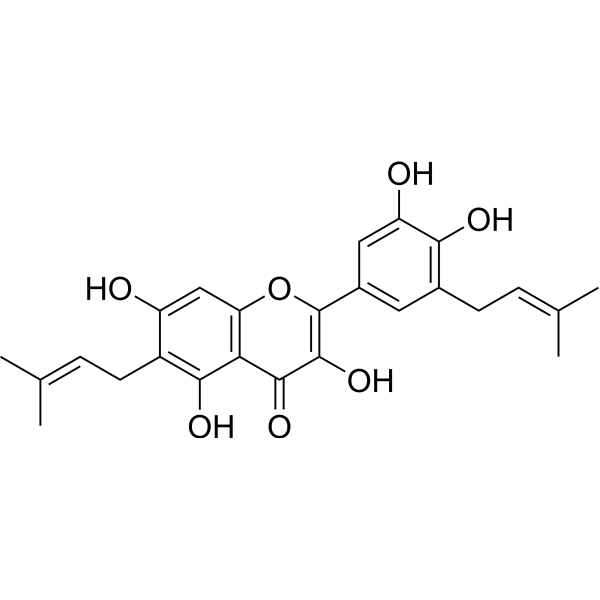
    Broussonol E is a diprenylated flavonol. Broussonol E can be isolated from the leaves of Broussonetia kazinoki. Unlike some dinonylated flavonol derivatives, Broussonol E has no cytotoxicity to human tumor cell lines (A549, HCT-8, KB) .
    Broussonol E
  • HY-163709

    PROTACs FAK Cancer
    PROTAC FAK degrader 2 (Compound F2) is a PROTAC degrader for focal adhesion kinase (FAK), with DC50 of 27.72 and 60.1 nM, for total FAK and phosphorylated p-FAK. PROTAC FAK degrader 2 inhibits cell viability of cancer cells 4T1, MDA-MB-231, MDA-MB-468 and MDA-MB-435, with IC50s of 0.73-5.84 μM. PROTAC FAK degrader 2 reverses the multidrug resistance (MDR) through inhibition of AKT and ERK signaling pathway. PROTAC FAK degrader 2 exhibits antitumor efficacy in HCT/8 xenograft mouse model. (Pink: ligand for target protein Ifebemtinib (HY-122844); Black: linker (HY-Y0681); Blue: ligand for E3 ligase Thalidomide (HY-14658))
    PROTAC FAK degrader 2
  • HY-118942

    ARC 111

    Topoisomerase Cancer
    Topovale (ARC 111) is a topoisomerase I inhbitor. Topovale is an antitumor agent, and shows low nM cytotoxicity against a panel of cancer cells. Topovale induces reversible topoisomerase I (TOP1) cleavage complexes in tumor cells .
    Topovale
  • HY-136307S

    Isotope-Labeled Compounds Parasite Infection
    Tizoxanide-d4 glucuronide is the deuterium labeled Tizoxanide glucuronide. Tizoxanide glucuronide is the metabolite of Nitazoxanide (HY-B0217) and is cell-permeable to inhibit asexual and sexual stages development of parasite C. parvum .
    Tizoxanide-d4 glucuronide
  • HY-N2863

    Others Cancer
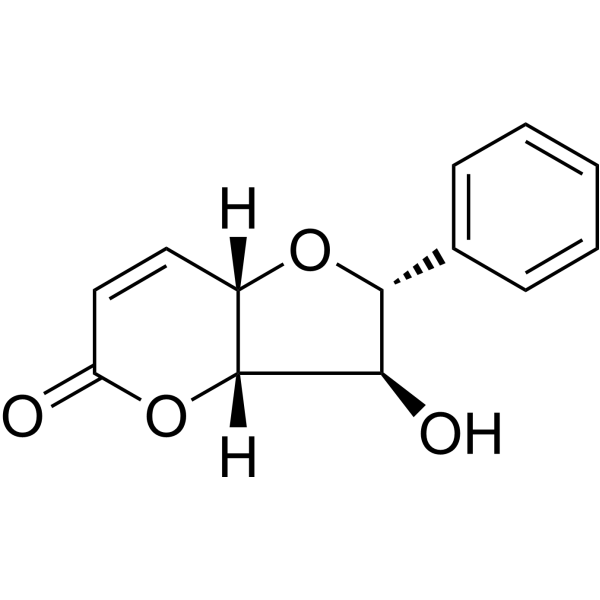
    Goniothalenol is a styryl lactone that can be isolated from Goniothalamus griffithii. Goniothalenol exhibits cytatoxic activity against A2780, HCT-8, KB and MCF-7 cell lines .
    Goniothalenol
  • HY-113578

    Antibiotic Bacterial Infection Cancer
    PD 116152 is a phenazine Antibiotic with antimicrobial and antitumor activity. PD 116152 possesses cytotoxic activity against L1210 lymphocytic leukemia and human colon adenocarcinoma (HCT-8) cells with IC50 values of 5.2 x 10 -7 M and 7.1 x 10 -7 M, respectively. PD 116152 is promising for research of P388 lymphocytic leukemia .
    PD 116152
  • HY-113700

    Antibiotic Cancer
    PD 116779 is an Antibiotic with anticancer activity. PD 116779 demonstrates moderate cytotoxicity against L1210 lymphocytic leukemia and HCT-8 human colon adenocarcinoma cell lines with IC50 values of 3.55x10 -7 and 4.08x10 -7 M, respectively .
    PD 116779
  • HY-156375

    Pyruvate Kinase PDK-1 Cancer
    PKM2 activator 6 (Compound Z10) is a PKM2 activator and PDK1 inhibitor (KD: 121 and 19.6 μM respectively). PKM2 activator 6 induces colorectal cell apoptosis, and inhibits cell proliferation and migration . PKM2 activator 6 inhibits glycolysis. PKM2 activator 6 inhibits proliferation of DLD-1, HCT-8, HT-29, MCF-10A cells (IC50: 10.04, 2.16, 3.57, 66.39 μM) .
    PKM2 activator 6
  • HY-174254

    Akt Apoptosis Caspase PARP β-catenin Cancer
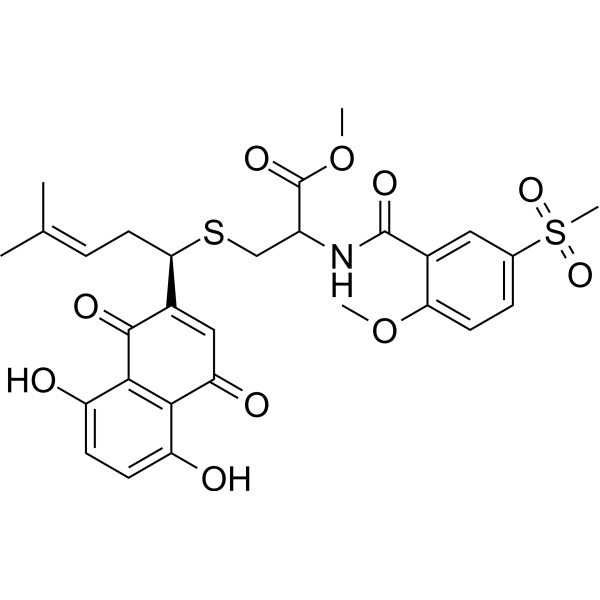
    AKT-IN-28 is an Akt allosteric inhibitor, a derivative of Shikonin (HY-N0822). AKT-IN-28 effectively binds to the allosteric site of Akt through hydrophobic and hydrogen interactions with Kd of 2.07 μM. AKT-IN-28 significantly inhibits Akt activity, induces cell apoptosis, arrests cell cycle in G2/M phase, and suppresses proliferation, migration and metabolism of KRAS mutant colorectal cancer cells .
    AKT-IN-28
  • HY-N7535

    Others Cancer
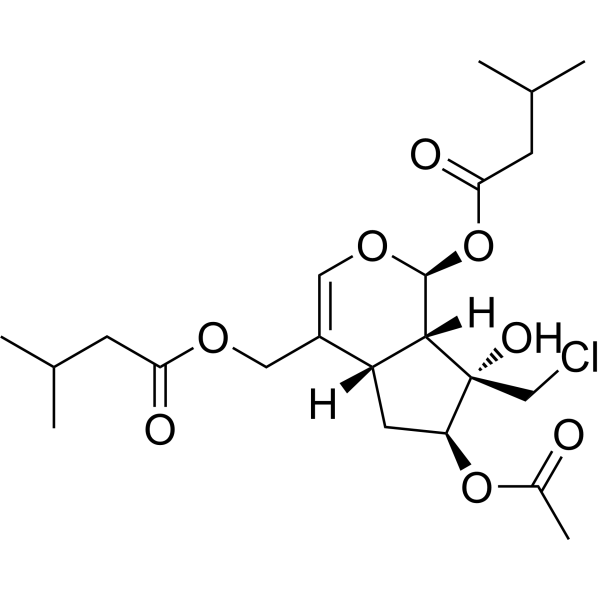
    Chlorovaltrate K is a chlorinated valepotriate with anticancer effects. Chlorovaltrate K shows moderate cytotoxicity against A549, PC-3M, HCT-8 and Bel 7402 cell lines with IC50 values of 2.32-8.26 μM .
    Chlorovaltrate K
  • HY-10823

    GW1843; 1843U89; OSI-7904

    Thymidylate Synthase DNA/RNA Synthesis Cancer
    OSI-7904L (GW1843; 1843U89; OSI-7904) is a thymidylate synthase (TS) inhibitor with a Ki of 90 pM. OSI-7904L blocks de novo synthesis of thymidine nucleotides, DNA synthesis and induces cell death. OSI-7904L inhibits the growth of human cells, induces tumor regression, and achieves durable antitumor effects in mouse xenograft models. OSI-7904L can be used in research related to colon adenocarcinoma .
    OSI-7904L
  • HY-146863

    Microtubule/Tubulin Cancer
    Tubulin polymerization-IN-10 is a potent tubulin polymerization inhibitor with an IC50 of 4.25±0.75 μM. Tubulin polymerization-IN-10 has anti-tumor effects .
    Tubulin polymerization-IN-10
  • HY-N16426

    Parasite Infection Cancer
    Mycoleptone A is an azafluorenone compound. Mycoleptone A exhibits certain anti-leishmanial activity, with an LD50 of 28.5 μM against L. major. Mycoleptone A shows cytotoxicity against human prostate cancer cell line PC3, with an IC50 of 10.0 μM. Mycoleptone A can be used in research on anti-parasitic and anti-tumor aspects .
    Mycoleptone A
  • HY-N16669

    Others Cancer
    Cathyanin B (Compound 7) is a flavonoid found in Morus cathayana. Cathyanin B can be used for the research of cancer, such as lung cancer .
    Cathyanin B
  • HY-N16667

    Others Cancer
    Cathyanin C (Compound 8) is a flavonoid found in Morus cathayana. Cathyanin C can be used for the research of cancer .
    Cathyanin C
  • HY-N17419

    Others Cancer
    Tylophoridicine F is a cytotoxic agent. Tylophoridicine F can be isolated from T. atrofolliculata. Tylophoridicine F exhibits more cytotoxic activity on cells compared to Adriamycin (assessed using ileocecal adenocarcinoma cells and keratin-forming tumor cells) .
    Tylophoridicine F
  • HY-179516

    Akt Microtubule/Tubulin Apoptosis Cancer
    AKT1-IN-11, a Podophyllotoxin (HY-15552) derivative, is a AKT1/tubulin dual inhibitor. AKT1-IN-11 down-regulates the phosphorylation level of AKT kinase in tumor cells, disrupting cell proliferation, causeing G2/M phase arrest and inducing apoptosis. AKT1-IN-11 also promotes tubulin depolymerization. AKT1-IN-11 can be used for the research of colorectal cancer .
    AKT1-IN-11
  • HY-173166

    PPAR Cancer
    PPARγ agonist 17 (Compound C1) is a PPARγ agonist. PPARγ agonist 17 enhances PPARγ activity and blocks the cell cycle in G2/M phase, inhibits cell migration and induces apoptosis in HT-29 cells. PPARγ agonist 17 has a broad spectrum anti-proliferative activity in cancer cells with relatively low toxicity in normal cells which cannot cross the blood-brain barrier .
    PPARγ agonist 17
  • HY-N17995

    Others Cancer
    GypenosideZ-3 is a dammarane triterpene glycoside found in the roots of Machilus yaoshansis .
    GypenosideZ-3
  • HY-N18229

    Others Cancer
    Hirundoside A is a steroidal glycoside found in the roots of Cynanchum stauntonii .
    Hirundoside A
  • HY-181541

    HDAC Apoptosis Wnt β-catenin MDM-2/p53 c-Myc Cancer
    HIT211504993 is a selective histone deacetylase 6 (HDAC6) inhibitor with an IC50 of 0.070 μM. HIT211504993 suppresses cancer cell proliferation, cause G1 phase cell cycle arrest and induces apoptosis. HIT211504993 inhibits Myc-driven tumorigenesis via nucleocytoplasmic acetylation, p53 modulation, and Wnt/β-catenin signaling modulation. HIT211504993 inhibits tumor growth in a colon cancer xenograft mouse model. HIT211504993 can be used for the research of colon cancer .
    HIT211504993
  • HY-N18086

    Others Cancer
    Bruceanic acid D is a quassinoid compound and cytotoxic agent that can be isolated from the xylem powder of Brucea antidysenterica. Bruceanic acid D specifically inhibits P-388 lymphocytic leukemia cells but shows no activity against human lung cancer cells and human colon cancer cells. Bruceanic acid D can be used in studies related to P-388 lymphocytic leukemia .
    Bruceanic acid D
  • HY-N18228

    Others Cancer
    Stauntoside Ⅱ is a 14,15-secopregnane-type C21 steroidal glycoside found in the roots of Cynanchum stauntonii. Stauntoside Ⅱ does not exhibit cytotoxic activity against human colon, hepatoma, gastric, lung, and ovarian cancer cells .
    Stauntoside Ⅱ
  • HY-N8255

    Fungal Infection Cancer
    Puupehenone is a cytotoxic and antifungal agent present in various marine sponge species. Puupehenone exerts cytotoxic activity against leukemia, lung cancer, colon cancer and breast cancer cells, and inhibits the growth of Candida albicans. Puupehenone can be used in research related to cancers such as leukemia, lung cancer, colon cancer and breast cancer .
    Puupehenone
  • HY-P991980

    H2Mab-141, H2Mab-19

    EGFR Cancer
    H2Mab-139 (H2Mab-141;H2Mab-19) is an anti-HER2 monoclonal antibody. H2Mab-139 specifically binds to HER2 on various cancer cells. H2Mab-139 can detect HER2 overexpression in colorectal cancer via flow cytometry and immunohistochemical analysis. H2Mab-139 exhibits anti-tumor activity in mouse oral cancer and breast cancer xenografts. H2Mab-139 is applicable to research related to multiple cancers including colon cancer, oral cancer, and breast cancer .
    H2Mab-139

Inquiry Online

Your information is safe with us. * Required Fields.

Salutation


Country or Region *

Applicant Name *


Organization Name *

Department *


Email Address *


Product Name *

Cat. No.


Requested quantity *

Phone Number *


Remarks

Inquiry Online

Inquiry Information

Product Name:
Cat. No.:
Quantity:
MCE Japan Authorized Agent:

