1. Search Result
Search Result
Results for "

HL60/s

" in MedChemExpress (MCE) Product Catalog:

32

Inhibitors & Agonists

10

Natural
Products

1

Isotope-Labeled Compounds

Cat. No. Nombre del producto Target Áreas de investigación Chemical Structure
  • HY-103286
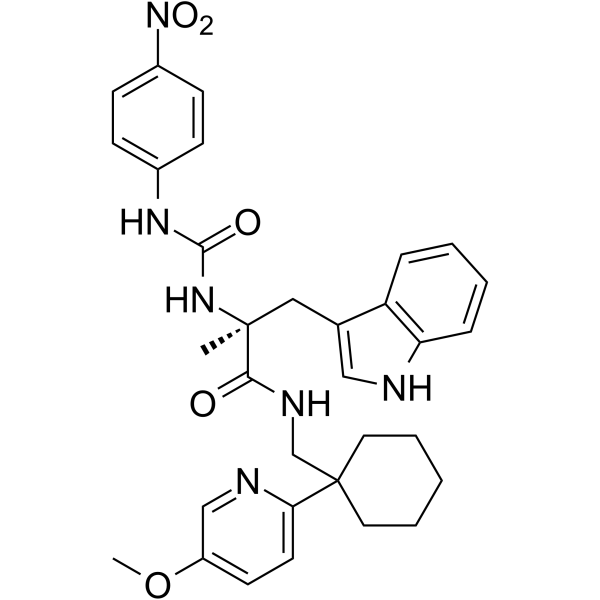
    PD176252
    2 Publications Verification

    Bombesin Receptor Cancer
    PD176252 is a potent antagonist of neuromedin-B preferring (BB1) and gastrin-releasing peptide-preferring (BB2) receptor with Kis of 0.17 nM and 1 nM for human BB1 and BB2 receptors, and 0.66 nM, 16 nM for Rat BB1 and BB2 receptors, respectively; PD176252 is also an agonist of N-Formyl peptide receptor1/2 (FPR1/FPR2), with EC50s of 0.31 and 0.66 μM in HL-60 cells.
    PD176252
  • HY-N1746

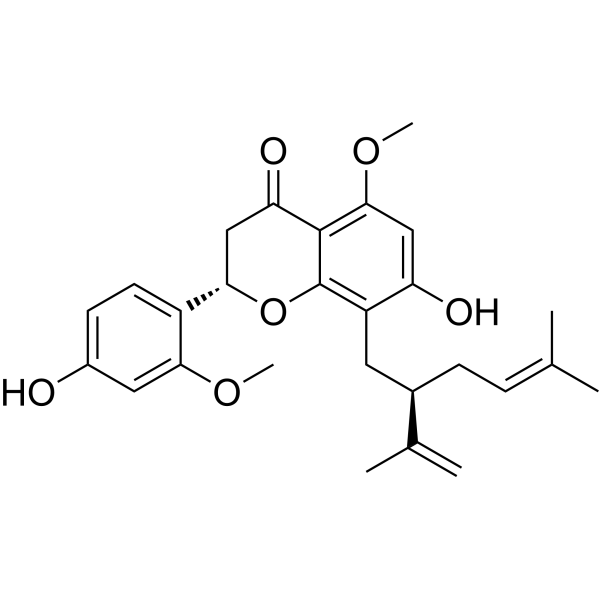
    2'-O-Methylkurarinone

    RANKL/RANK Metabolic Disease Inflammation/Immunology Cancer
    (2S)-2'-Methoxykurarinone, a compound isolated from the roots of Sophora flavescens, has anti-inflammatory, antipyretic, antidiabetic, and antineoplastic effects. (2S)-2'-Methoxykurarinone (MK) inhibits osteoclastogenesis and bone resorption through down-regulation of RANKL signaling. (2S)-2'-Methoxykurarinone (MK) displays cytotoxic activity against human myeloid leukemia HL-60 cells .
    (2S)-2'-Methoxykurarinone
  • HY-155066

    PI3K mTOR Apoptosis Cancer
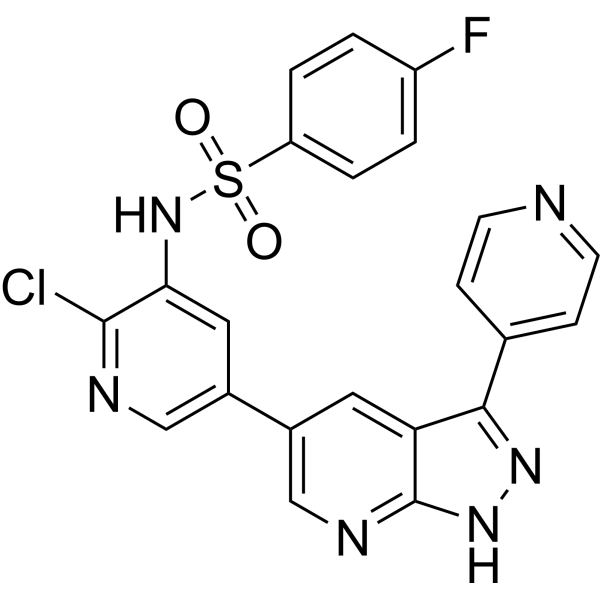
    FD274 is a highly potent PI3K/mTOR dual inhibitor with IC50s of 0.65 nM, 1.57 nM, 0.65 nM, 0.42 nM, and 2.03 nM against PI3Kα/β/γ/δ and mTOR, respectively. FD274 exhibits significant anti-proliferation of AML cell lines (HL-60 and MOLM-16). FD274 arrests HL-60 cell cycle at G1 phase and increases apoptosis. FD274 demonstrates dose-dependent inhibition of tumor growth in the HL-60 xenograft model. FD274 has the potential for acute myeloid leukemia research .
    FD274
  • HY-N7634

    Farnesyl Transferase Parasite Infection Cancer
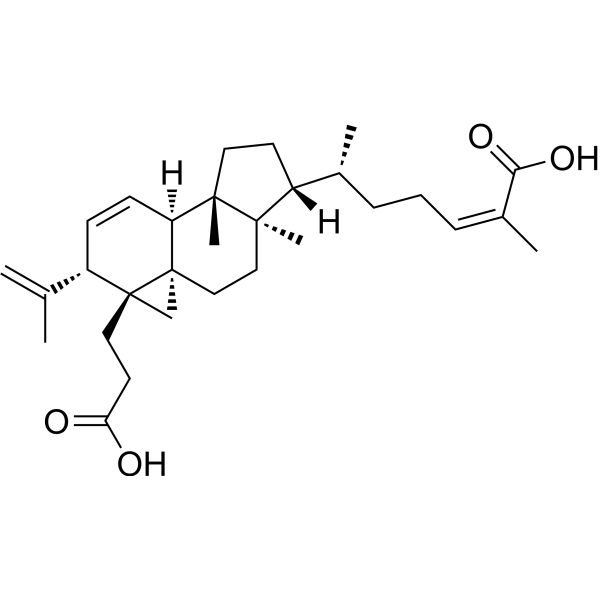
    Tectol, isolated from Lippia sidoides, exhibits significant activity against human leukemia cell lines HL60 and CEM . Tectol is a farnesyltransferase (FTase) inhibitor with IC50s of 2.09 and 1.73 μM for human and T. brucei FTase, respectively. Tectol inhibits drug-resistant strain of P. falciparum (FcB1) with an IC50 of 3.44 μM .
    Tectol
  • HY-N11928

    Others Cancer
    Changnanic acid (schisandrin) is a triterpene compound with potential anti-tumor effects. Changnanic acid exhibits moderate cytotoxic activity against human tumor cell lines Bel-7402, MCF-7 and HL-60, with IC50s of 100 μM, 100 μM and 50.51 μM respectively .
    Changnanic acid
  • HY-112898

    ADC Payload Cancer
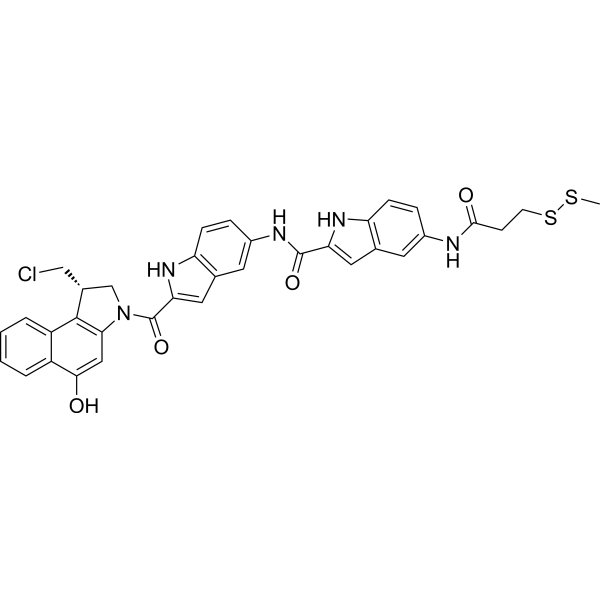
    DC1Sme, a DC1 derivative, exhibits IC50 values of 22 pM, 10 pM, 32 pM and 250 pM for Ramos, Namalwa, HL60/s and COLO 205 cancer cells, respectively. DC1, an analogue of the minor groove-binding DNA alkylator CC-1065, is a ADC Cytotoxin. DC1 can be used in synthesis of antibody-drug conjugates for the targeted treatment of cancer.
    DC1SMe
  • HY-175261

    CDK Wee1 Checkpoint Kinase (Chk) Cancer
    DHI1 is an anti-leukemia agent with high selectivity for Jurkat (IC50 = 21.83 μM) and HL-60 (IC50 = 19.14 μM) leukemia cells and has low toxicity to non-cancerous cells. DHI1 can induce G2/M phase cell arrest in Jurkat and HL-60 leukemia cells, as well as S phase arrest in HL-60 cells, and has significant effects on cell cycle signaling molecules Wee1, cyclin B1, cdc2 on Tyr15, and Chk1. DHI1 inhibits the migration and invasion of Jurkat and HL-60 cells by disrupting cytoskeletal actin filaments. DHI1 can be used to study hematological malignancies .
    DHI1
  • HY-135122

    ADC Payload DNA Alkylator/Crosslinker Cancer
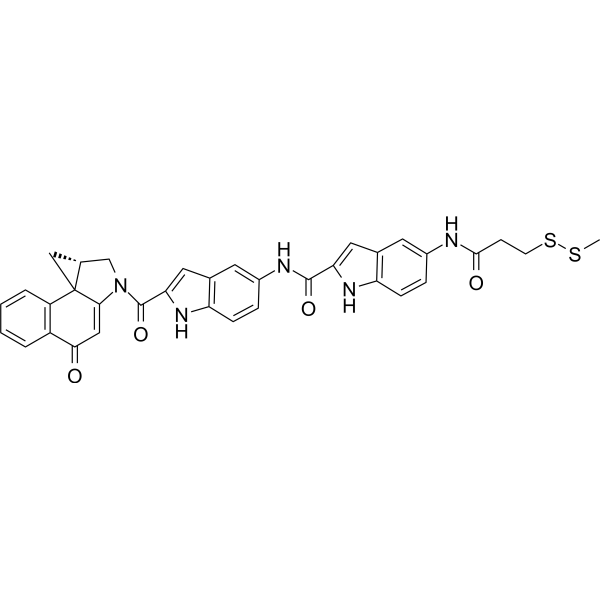
    DC10SMe is a DNA alkylator, can be used in the synthesis of antibody-drug conjugate (ADC). DC10SMe exhibits IC50s of 15 pM, 12 pM, and 12 pM for Ramos, Namalwa, and HL60/s cancer cells, respectively .
    DC10SMe
  • HY-112900

    ADC Payload Cancer
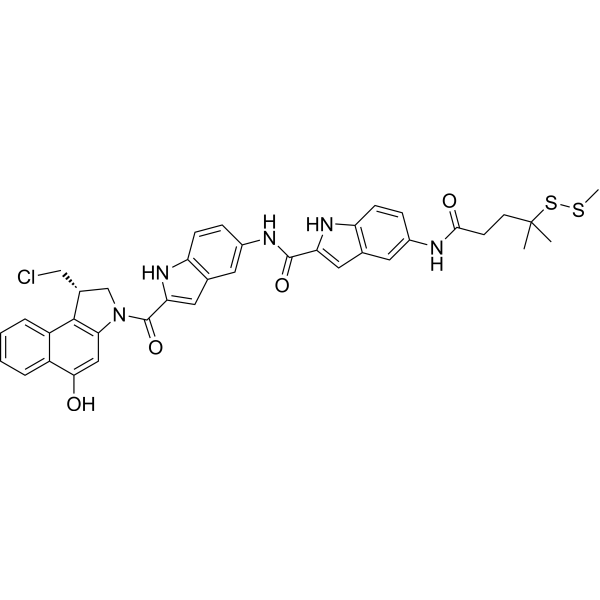
    DC41SMe, a DC1 derivative, shows cytotoxicity in Ramos, Namalwa, and HL60/s cells with IC50s ranging from 18-25 pM. DC1, a simplified analogue of CC-1065, is an antibody conjugate of cytotoxic DNA alkylators for the targeted treatment of cancer .
    DC41SMe
  • HY-115754

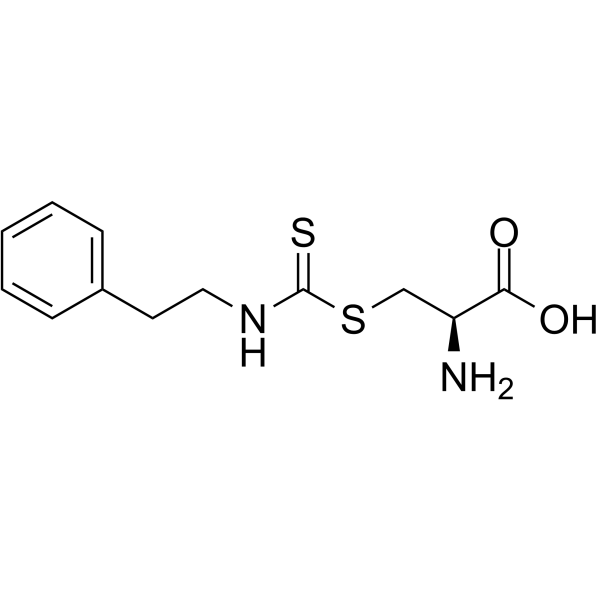
    PEITC-Cys

    DNA/RNA Synthesis Cytochrome P450 Cancer
    S-(N-PhenethylthiocarbaMoyl)-L-cysteine (PEITC-Cys), an anticarcinogenic agent, has antileukemic activity. S-(N-PhenethylthiocarbaMoyl)-L-cysteine inhibits DNA synthesis in HL60 cells . S-(N-PhenethylthiocarbaMoyl)-L-cysteine is a P450 inhibitor .
    S-(N-PhenethylthiocarbaMoyl)-L-cysteine
  • HY-159609

    Molecular Glues Cancer
    GSPT1 degrader-9 (Compound F) is a cereblon-based molecular glue degrader for G1 to S phase transition protein 1 (GSPT1) that degrades GSPT1 with a rate of 95% (1 μM) GSPT1 and 86% (0.1 μM). GSPT1 degrader-9 inhibits the cell viability of HL-60 with an IC50 of 9.2 nM .
    GSPT1 degrader-9
  • HY-124122

    VEGFR Checkpoint Kinase (Chk) Apoptosis Caspase Bcl-2 Family Cancer
    BPTQ is a potent inhibitor against VEGFR1 and CHK2 with IC50 values of 0.54 and 1.70 µmol/L, respectively. BPTQ is also an intercalator of DNA with anticancer activities. BPTQ inhibits the proliferation of HL-60 cells by arresting cells at S and G2/M phase with an IC50 value of 12 µmol/L. BPTQ also activates the mitochondria-mediated Apoptosis pathway by a decrease in mitochondrial membrane potential, increase in the Bax:Bcl-2 ratio and activation of caspases .
    BPTQ
  • HY-124007

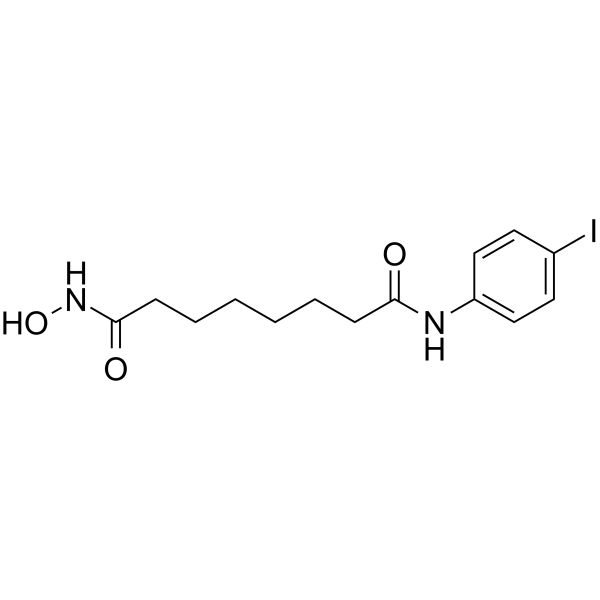
    ISAHA

    HDAC Cancer
    4-Iodo-SAHA (1k) is an orally active class I and class II histone deacetylase (HDAC) inhibitor with EC50s of 1.1, 0.95, 0.12, 0.24, 0.85 and 1.3 μM for Skbr3, HT29, U937, JA16 and HL60 cell lines, respectively. 4-Iodo-SAHA (1k) can be used for the research of cancer .
    4-Iodo-SAHA
  • HY-161687

    Src Cancer
    Cisplatin/Dasatinib prodrug-1 (Compound 3) is a prodrug of Cisplatin (HY-17394) and Dasatinib (HY-10181). Cisplatin/Dasatinib prodrug-1 exhibits antiproliferative activity against A2780, MDA-MB-231, MCF7, HCT116, RD, Thp1 and HL60 cancer cells with IC50s of 0.1, 0.1, 0.36, 2.0, 0.4, 0.3 and 0.25 μM, respectively .
    Cisplatin/Dasatinib prodrug-1
  • HY-161708

    PROTACs CDK FLT3 Cancer
    PROTAC FLT3/CDKs degrader-1 (Compound C3) is a degrader for cyclin-dependent kinases (DC50 is 18.73 nM for CDK2) and the FMS-like tyrosine kinase 3 (FLT3). PROTAC FLT3/CDKs degrader-1 induces differentation of HL-60 (72.77% differentation at 6.25 nM), inhibits proliferation of AML cells, with IC50s of 2.9-37 nM. PROTAC FLT3/CDKs degrader-1 is potential for ameliorating acute myeloid leukemia. (Pink: ligand for target protein FLT3/CDKs ligand-1 (HY-161709); Black: linker (HY-W012935); Black: ligand for E3 ligase Thalidomide 5-fluoride (HY-W087383))
    PROTAC FLT3/CDKs degrader-1
  • HY-N10392

    Apoptosis Cancer
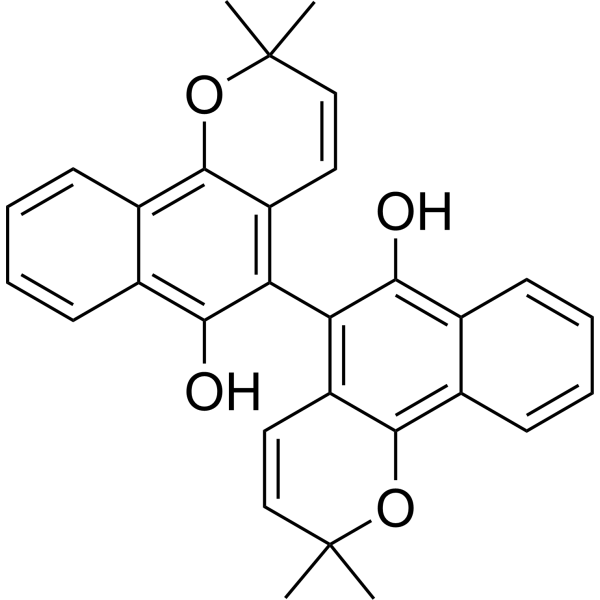
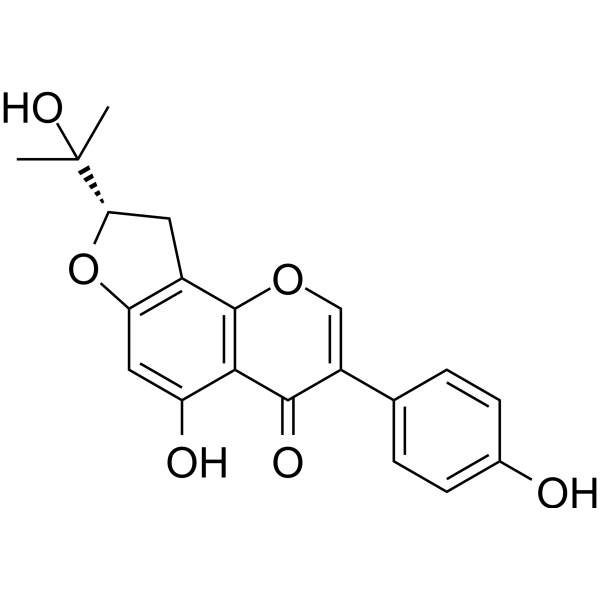
    (S)-Erypoegin K is a potent anticancer agent. (S)-Erypoegin K shows potent anti-proliferative activity against HL-60 cells. (S)-Erypoegin K induces apoptosis .
    (S)-Erypoegin K
  • HY-N10364

    Others Cancer
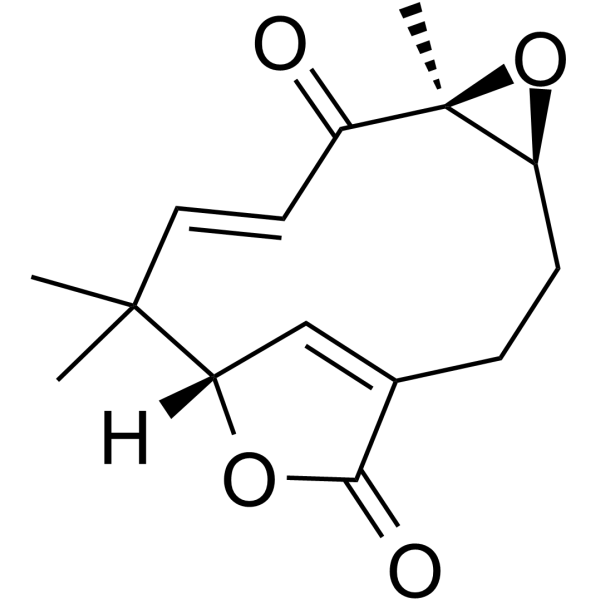
    6β,7β-Epoxyasteriscunolide A, a sesquiterpenoid, shows cytotoxicity against the HL-60 and MOLT-3 leukemia cell lines, with IC50s range 4.1-5.4 μM .
    6β,7β-Epoxyasteriscunolide A
  • HY-N12108

    Phosphatase Infection Inflammation/Immunology Cancer
    Forphenicine is a bacterial metabolite that is found in S. fulvoviridis and an inhibitor of alkaline phosphatase. Forphenicine inhibits the growth of HL-60 leukemia cells at 10 µM. Forphenicine also increases survival in a guinea pig model of experimental autoimmune encephalomyelitis (EAE) .
    Forphenicine
  • HY-N15112

    Others Cancer
    Pintulin can inhibit P388, L 1210, HL-60, KB and other tumor cell lines with IC50s (μg/mL) of 0.8, 0.8, 0.8, 0.25, respectively. Pintulin has only very weak antibacterial activity against the microorganisms tested .
    Pintulin
  • HY-N11651

    Others Others
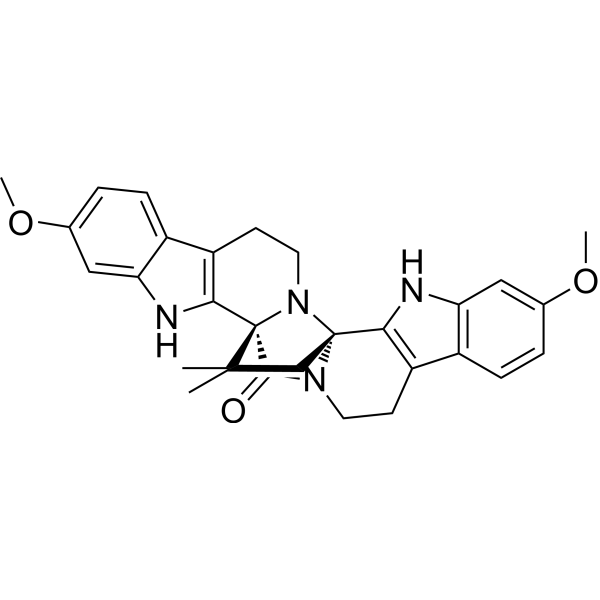
    Peganumine A is a natural product that can be found in Peganum harmala. Peganumine A shows cytotoxicity with IC50s of5.8, 38.5, 40.2, 55.4 µM for HL-60, MCF-7, PC-3, and HepG2 cells ,respectively .
    Peganumine A
  • HY-N10082

    Others Cancer
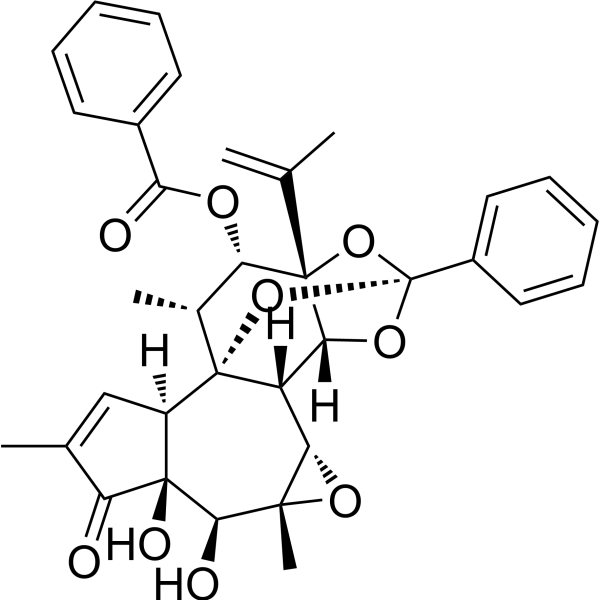
    Trigoxyphin A is a oxygenated daphnane-type diterpenoids. Trigoxyphin A exhibites strong cytotoxic activity against HL60 and A549 with IC50s of 0.27 and 7.5 μM, respectively .
    Trigoxyphin A
  • HY-135124

    ADC Payload Cancer
    DC44SMe, a phosphate proagent of cytotoxic DNA alkylator DC44, can be used in the synthesis of antibody-drug conjugate (ADC). DC44SMe exhibits IC50s of 2.0 nM, 2.8 nM, and 1.9 nM for Ramos, Namalwa, and HL60/s cancer cells, respectively. DC44SMe can be used for the targeted treatment of cancer .
    DC44SMe
  • HY-135123

    ADC Payload Cancer
    DC4SMe, a phosphate proagent of cytotoxic DNA alkylator DC4, can be used in the synthesis of antibody-drug conjugate (ADC). DC4SMe exhibits IC50s of 1.9 nM, 2.9 nM, and 1.8 nM for Ramos, Namalwa, and HL60/s cancer cells, respectively. DC4SMe can be used for the targeted treatment of cancer .
    DC4SMe
  • HY-113455S1

    Alpha-dimorphecolic acid-13C18

    Isotope-Labeled Compounds Endogenous Metabolite Apoptosis Drug Derivative Cancer
    9(S)-HODE- 13C18 ((+)-α-Dimophecolic acid- 13C18) is 13C labeled 9S-HODE. 9S-HODE (Alpha-dimorphecolic acid) is an octadecadienoic acid and the main active derivative of linoleic acid, which can reduce the viability of HL-60 cells and induce apoptosis. 9S-HODE is rich in lipid peroxidation (LPO) products and is almost an ideal marker for LPO .
    9(S)-HODE-13C18
  • HY-168082

    Histone Methyltransferase Cancer
    Dot1L-IN-8 (Compound 15) is a potent Dot1L inhibitor. Dot1L-IN-8 inhibits HL-60, K562, MV4-11, HH, and KG-1 cells vitality with IC50s of 0.45, 1.03, 0.68, 1.66, and 1.12 μM, respectively .
    Dot1L-IN-8
  • HY-N14415

    Bacterial Infection Cancer
    Cochleamycin A showed strong inhibitory activity against tumor cells, with IC50s (μg/mL) of P388, HL60, K562, COL0205 and HT29 cells of 1.6, 14.0, 6.2, 16.5 and 19.1, respectively. Cochleamycin A also has anti-Gram-positive bacteria activity .
    Cochleamycin A
  • HY-168338

    Cannabinoid Receptor Caspase Cancer
    CB2 receptor agonist 8 (Compound 17) is an agonist for cannabinoid receptor 2 (CB2 receptor). CB2 receptor agonist 8 exhibits cytotoxicity in cells U87, RPMI 8226, HL-60, and L929 with IC50s of 91.03, 16.29, 23.51 and 564.6 μM, respectively. CB2 receptor agonist 8 activates caspase 3/7, increases the expressions of pro-apoptotic genes BAX, BAD, BIM and tumor suppressor genes p53, and induces apoptosis in U87. CB2 receptor agonist 8 inhibits the migration of U87 .
    CB2 receptor agonist 8
  • HY-N8501

    Bacterial Infection
    Emestrin is a mycotoxin originally isolated from E. striata that has antimicrobial, immunomodulatory, and cytotoxic activities. It is active against the fungi C. albicans and C. neoformans, as well as the bacteria E. coli, S. aureus, and methicillin-resistant S. aureus (MRSA; IC50s=3.94, 0.6, 2.21, 4.55, and 2.21 μg/mL, respectively).2 Emestrin is a chemokine (C-C motif) receptor 2 (CCR2) antagonist (IC50=5.4 μM in a radioligand binding assay using isolated human monocytes).3 Emestrin (0.1 μg/mL) induces apoptosis in HL-60 cells. It induces heart, thymus, and liver tissue necrosis in mice when administered at doses ranging from 18 to 30 mg/kg.
    Emestrin
  • HY-W276819

    Polo-like Kinase (PLK) Cancer
    PLK1-IN-9 (Compound M2) is an inhibitor for polo-like kinase 1 (PLK1), that inhibits PLK proteins modified with peptides 1010pT, cdc25c and PBIP, with IC50s of 1.6, 0.8 and 1.4 μM, respectively. PLK1-IN-9 inhibits proliferations of cancer cells HeLa, HL60, SNU387/499, HepG2, exhibits cytotoxicity and induces apoptosis. PLK1-IN-9 inhibits tumor growth in HepG2 xenograft mouse model .
    PLK1-IN-9
  • HY-149522

    Bcl-2 Family Apoptosis Cancer
    BCL6-IN-10 (Compound WK499) is a BCL6 inhibitor. BCL6-IN-10 interrupts the binding of BCL6 to SMRT protein. BCL6-IN-10 induces cell apoptosis, cell cycle arrest and DNA damage. BCL6-IN-10 inhibits AML cell proliferation (IC50s: 0.91, 1.63, 1.026, 7.42, 0.87, 0.85μM for OCl-AML3, THP1, MOLM13, HL60, KG1, NB4 cell respectively) .
    WK499
  • HY-181023

    PROTACs HDAC Cancer
    PROTAC HDAC8 Degrader-3 (Compound BP1) is an efficient and selective HDAC8 PROTAC degrader with a DC50 of 20 nM. PROTAC HDAC8 Degrader-3 exhibits IC50 for HDAC8 and CRBN of 0.46 and 7.5 μM, respectively. PROTAC HDAC8 Degrader-3 exhibits potent anti-proliferative activity against MM.1S and HL-60 cells. PROTAC HDAC8 Degrader-3 can be used for research on multiple myeloma and acute myeloid leukemia .
    PROTAC HDAC8 Degrader-3
  • HY-103286R

    Reference Standards Bombesin Receptor Cancer
    PD176252 (Standard) is the analytical standard of PD176252 (HY-103286). This product is intended for research and analytical applications. PD176252 is a potent antagonist of neuromedin-B preferring (BB1) and gastrin-releasing peptide-preferring (BB2) receptor with Kis of 0.17 nM and 1 nM for human BB1 and BB2 receptors, and 0.66 nM, 16 nM for Rat BB1 and BB2 receptors, respectively; PD176252 is also an agonist of N-Formyl peptide receptor1/2 (FPR1/FPR2), with EC50s of 0.31 and 0.66 μM in HL-60 cells.
    PD176252 (Standard)

Consulta en línea

Your information is safe with us. * Required Fields.

Saludo


Country or Region *

Nombre del solicitante *


Nombre de la Organizaciòn *

Department *


Direcciòn del E-mail *


Nombre del producto *

Cat. No.


Requested quantity *

Número de teléfono *


Observaciones

Consulta en línea

Inquiry Information

Nombre del producto:
Cat. No.:
Cantidad:
MCE Japan Authorized Agent:

