1. Search Result
Search Result
Results for "

Human Prostate LNCaP

" in MedChemExpress (MCE) Product Catalog:

22

Inhibitors & Agonists

2

Fluorescent Dye

9

Natural
Products

Targets Recommended:
Cat. No. Product Name Target Research Areas Chemical Structure
  • HY-113332
    Myristoleic acid
    1 Publications Verification

    Environmental Pollutants Endogenous Metabolite Apoptosis Inflammation/Immunology
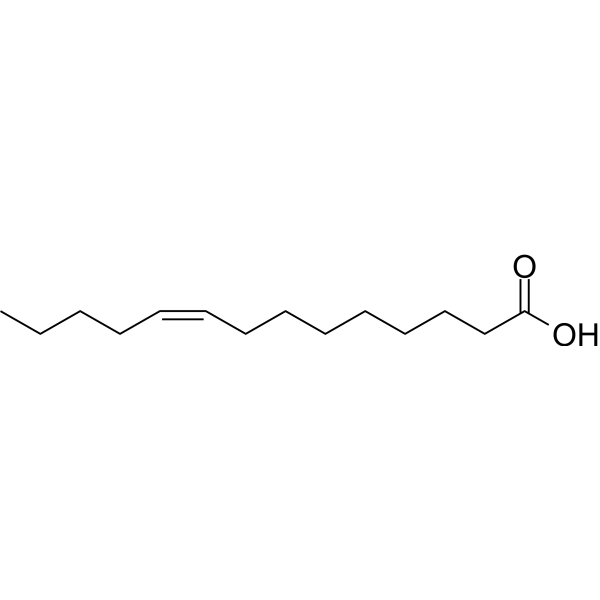
    Myristoleic acid, a cytotoxic component in the extract from Serenoa repens, induces apoptosis and necrosis in human prostatic LNCaP cells .
    Myristoleic acid
  • HY-N11908

    cis-α-Santalol

    Akt Survivin Apoptosis Caspase PARP Metabolic Disease Cancer
    α-Santalol (cis-α-Santalol), a naturally occurring sesquiterpene, is an orally active anticancer agent and apoptosis inducer. α-Santalol activates caspase-3 to drive apoptotic processes. >α-Santalol induces apoptosis, decreases cell viability, and causes PARP cleavage in human prostate cancer cells. α-santalol inhibits Akt/Survivin pathway to induce cell death. α-Santalol can be used for the research of prostate cancer and diabetes mellitus .
    α-Santalol
  • HY-16079
    AZD3514
    3 Publications Verification

    Androgen Receptor Cancer
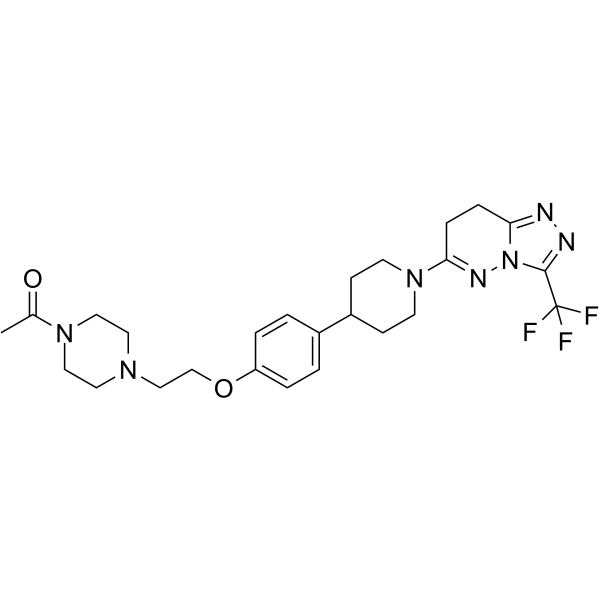
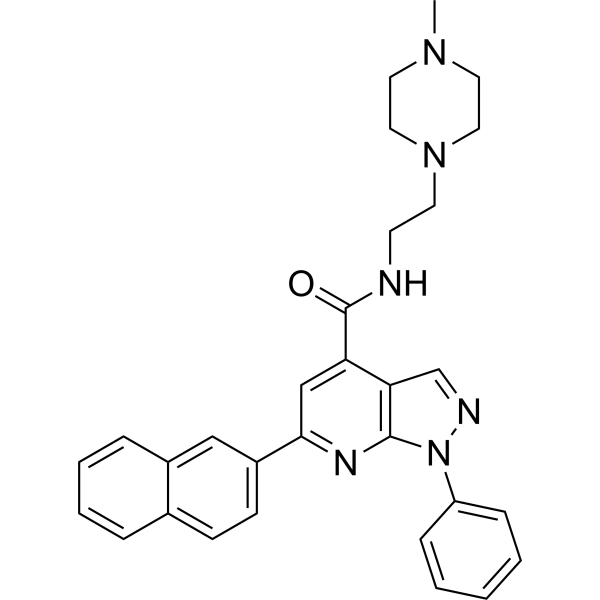
    AZD3514 is an orally activie and selective androgen receptor (AR) inhibitor. AZD3514 androgen-dependently and -independently inhibits AR signal. AZD351 down-regulates nuclear AR levels in human LNCaP prostate cancer cells in the absence of androgen with an pIC50 value of 5.75. AZD3514 can be used for the research of prostate cancer .
    AZD3514
  • HY-N0475

    Hypolide; (+)-Triptophenolide

    Androgen Receptor Pyroptosis Caspase Bcl-2 Family Apoptosis Inflammation/Immunology Cancer
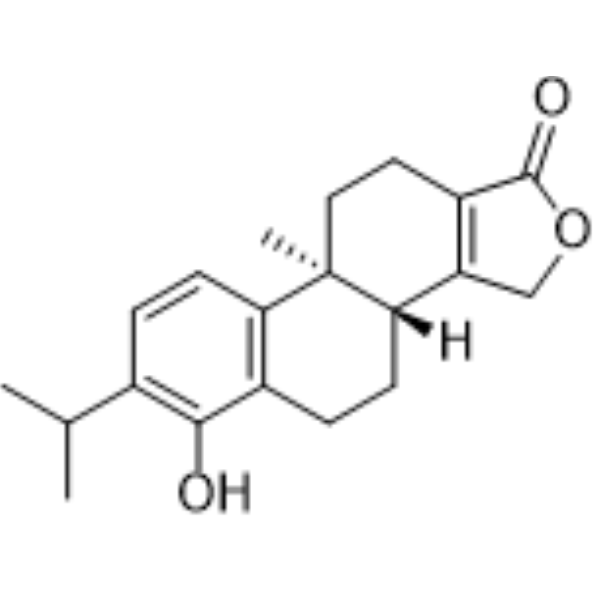
    Triptophenolide (Hypolide) is a colorless crystal isolated from the ethyl acetate extract of Tripterygium wilfordii. Triptophenolide is an orally active pan‑antagonist of the androgen receptor (AR) with an IC50 of 467 nM against human wild‑type AR. Triptophenolide reduces AR expression, inhibits AR nuclear translocation, downregulates prostate‑specific antigen mRNA levels, and suppresses the growth of AR‑positive prostate cancer cells. Triptophenolide shows anti-tumor effects against breast cancer by inhibiting cell proliferation and migration, inducing G1-phase arrest and apoptosis, repressing xenograft tumor growth. Triptophenolide inhibits pyroptosis, alleviates tissue inflammation, and ameliorates synovial injury. Triptophenolide can be used for the study of prostate cancer, rheumatoid arthritis and breast cancer .
    Triptophenolide
  • HY-149091

    Histone Demethylase Cancer
    KDM5B-IN-4 (compound 11ad) is a lysine demethylase 5B (KDM5B) inhibitor with an IC50 of 0.025 μM KDM5B-IN-4 increases substrate H3K4me1/2/3 level by inhibiting KDM5B in PC-3 cells. KDM5B-IN-4 downregulates PI3K/AKT. KDM5B-IN-4 reduces tumor volume in mice and shows less toxic to organs .
    KDM5B-IN-4
  • HY-114256

    PSMA Cancer
    EC1169 is a cytotoxic maytansinoid conjugate that specifically binds to prostate-specific membrane antigen (PSMA). EC1169 precisely delivers the maytansinoid B hydrazide payload to PSMA-positive cells to exert antitumor activity. EC1169 only inhibits the growth of PSMA-positive cells but has no effect on PSMA-negative cells, and enables complete recovery in mice bearing PSMA-positive tumors. EC1169 exhibits safety with no body weight loss or major organ damage induced. EC1169 is used in studies of prostate cancer and other PSMA-expressing malignancies .
    EC1169
  • HY-105314

    Others Cancer
    LY-33169 is an antitumor agent. LY-33169 had selective cytotoxicity against Colon Adenocarcinoma-38, Human Colon-116, Human Prostate LNCaP, and Human Breast WSU-Br-1 cells .
    LY-33169
  • HY-176128

    PROTACs Androgen Receptor Apoptosis PARP Caspase Cancer
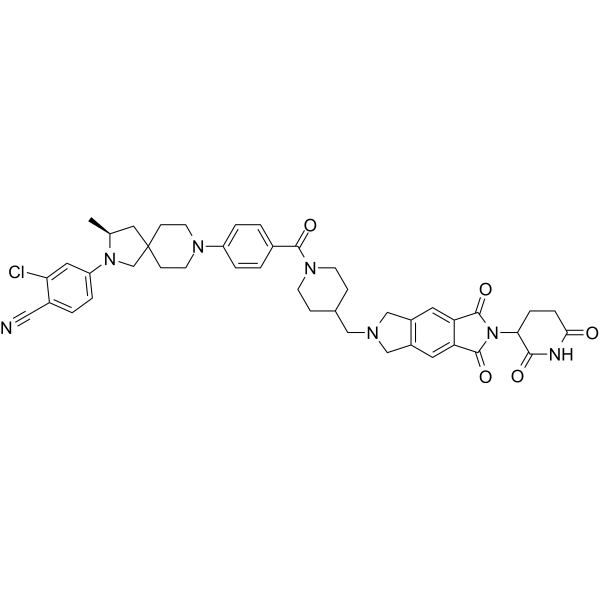
    BWA-6047 is an oral active PROTAC degrader targeting AR/AR-V7 and GSPT1 with DC50 values of 3.7, 3.0 and 1.2 nM in 22Rv1 cells. BWA-6047 suppresses the expression of AR downstream target genes and and transcriptional activity. BWA-6047 inhibits cancer cells proliferation, causes G1 phase cell cycle arrest and induces apoptosis. BWA-6047 increases cleaved-PARP-1 and cleaved-caspase-3 levels. BWA-6047 reduces growth of LNCaP xenograft tumors in mice models without obvious toxicity. BWA-6047 can be used for the research of prostate cancer .
    BWA-6047
  • HY-N16066

    CHNQD-0803

    AMPK Apoptosis NF-κB TNF Receptor Inflammation/Immunology
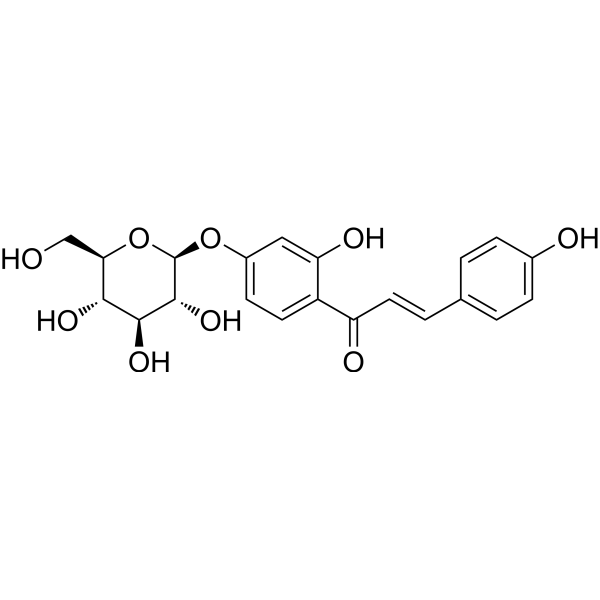
    Candidusin A (CHNQD-0803) (Compound 4) is a AMPK activator with a KD of 47.28 nM. Candidusin A can be isolated from marine fungus Aspergillus candidus. Candidusin A has cytotoxic activity and induces apoptosis in human prostate cancer cells (22Rv1, PC-3 and LNCaP cells). Candidusin A reduces adipogenesis genes expression and fat deposition, negatively regulates the NF-κB-TNFα inflammatory axis to suppress inflammation, and ameliorates liver injury and fibrosis. Candidusin A can be used for non-alcoholic steatohepatitis (NASH) research .
    Candidusin A
  • HY-118091A

    LY300502

    5 alpha Reductase Cancer
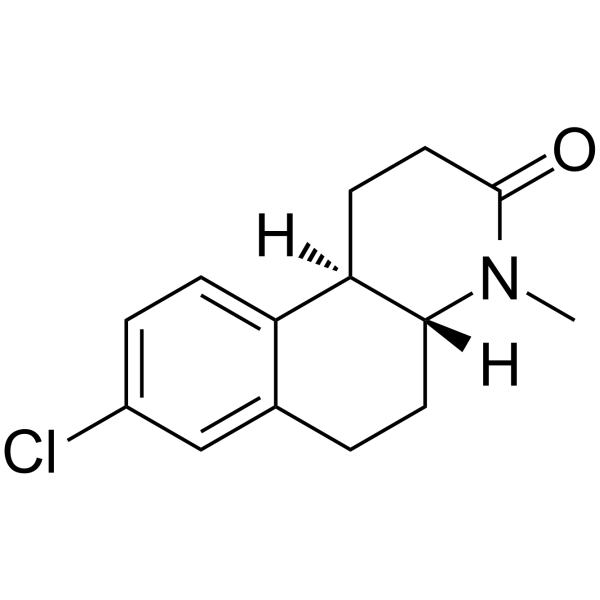
    Bexlosteride (LY300502) is a benzoquinolinone human type I 5α-reductase inhibitor. Bexlosteride shows metabolic inhibitory, antiproliferative, and antisecretory effects in LNCaP human prostatic adenocarcinoma cell cultures. Bexlosteride can be used for the research of prostatic cancer .
    Bexlosteride
  • HY-141830

    Histone Acetyltransferase Cancer
    SYY-B029-2 is a potent histone acetyltransferase (HAT) inhibitor with an IC50 of 1.4 nM. SYY-B029-2 cell growth of human mantle cell lymphoma (MCL) cell line MAVER-1 and human castration resistant prostate cancer cell line LNCaP clone FGC, with IC50 values of 15 nM and 13 nM, respectively .
    SYY-B029-2
  • HY-N15449

    HSP Caspase Apoptosis Reactive Oxygen Species (ROS) Bcl-2 Family Cancer
    Vicanicin is a depsidone compound found in lichens. Vicanicin inhibits the expression of Hsp70, regulates the redox-sensitive mechanisms within cells, promotes the increase of reactive oxygen species (ROS) in cancer cells, changes the Bax/Bcl-2 ratio, activates caspase-3, and triggers apoptosis. Vicanicin inhibits cell growth and induces apoptosis in androgen-sensitive (LNCaP) and androgen-insensitive (DU-145) human prostate cancer cells. Vicanicin is promising for research of prostate cancer .
    Vicanicin
  • HY-N3816

    Others Others
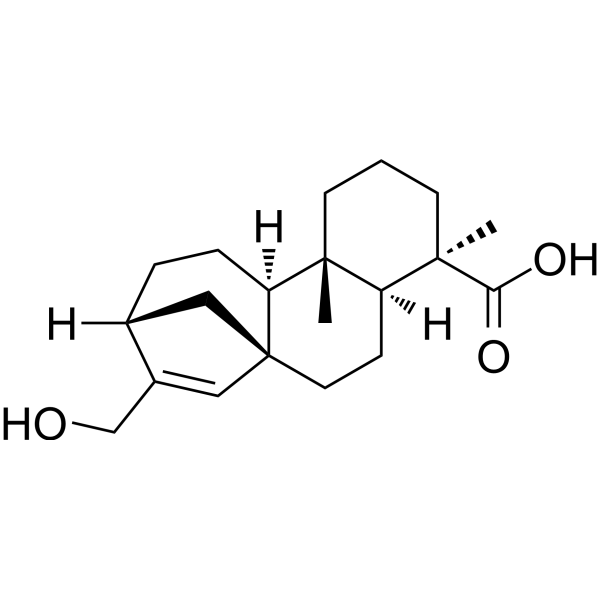
    ent-17-Hydroxykaur-15-en-19-oic acid is a ent-kaurene diterpene that can be isolated from the leaves of Laetia thamnia L.. ent-17-Hydroxykaur-15-en-19-oic acid was cytotoxic to human prostate LNCaP2 cells with IC50 17.63 mg/mL .
    ent-17-Hydroxykaur-15-en-19-oic acid
  • HY-126464

    EoM

    Androgen Receptor Cancer
    Estromustine (EoM) is the active metabolite of Estramustine phosphate (HY-13627A). Estromustine binds to mutant androgen receptor (m-AR) with EC50 of 2.6 μM in LNCaP, exhibits cytotoxicity in human prostate cells LNCaP with IC50 of 9.73 μM .
    Estromustine
  • HY-113332R

    Reference Standards Apoptosis Endogenous Metabolite Inflammation/Immunology
    Myristoleic acid (Standard) is the analytical standard of Myristoleic acid. This product is intended for research and analytical applications. Myristoleic acid, a cytotoxic component in the extract from Serenoa repens, induces apoptosis and necrosis in human prostatic LNCaP cells[1].
    Myristoleic acid (Standard)
  • HY-N10265

    Endogenous Metabolite Cancer
    Stephacidin B is a fungal metabolite. Stephacidin B shows in vitro cytotoxicity against a panel of human tumor cell lines. Stephacidin B shows the strongest cytotoxicity against testosterone-dependent prostate LNCaP cancer cells .
    Stephacidin B
  • HY-176160

    Methyl jacarate; SFE 19:3

    Apoptosis Cancer
    Jacaric acid methyl ester is a methyl ester form of the conjugated PUFA jacaric acid. Jacaric acid can induce apoptosis selectively in human prostate cancer cells. Jacaric acid induces concentration- and time-dependent LNCaP cell death. Jacaric acid methyl ester can be studied in anticancer research .
    Jacaric acid methyl ester
  • HY-W012088

    Myristoleic acid methyl ester; Methyl myristoleate; cis-9-Tetradecenoate methyl ester

    Bacterial Apoptosis Infection
    (Z)-Methyl tetradec-9-enoate (Myristoleic acid methyl ester; Methyl myristoleate) is a cytotoxic component extracted from S. repens fruit extract. It induces apoptosis and necrosis in human prostate cancer LNCaP cells. In addition, (Z)-Methyl tetradec-9-enoate found in cheese-making byproducts inhibits Candida albicans germination with a minimum inhibitory concentration (MIC) of 9 μM in vivo.
    (Z)-Methyl tetradec-9-enoate
  • HY-N16404

    Apoptosis Endogenous Metabolite Cancer
    Asperindole A is an indole-diterpene alkaloid. Asperindole A can be isolated from fungus Aspergillus sp. KMM 4676. Asperindole A induces Apoptosis. Asperindole A exerts cytotoxic activity against hormone-resistant and hormone-sensitive prostate cancer cells .
    Asperindole A
  • HY-181694

    Topoisomerase HDAC Apoptosis Kinesin RAD51 Cancer
    SeSA-HCPT is an orally active dual-target inhibitor integrating Topo I and HDAC inhibition. SeSA-HCPT induces potent DNA damage, apoptosis, S-phase arrest in prostate cancer cells. SeSA-HCPT inhibits cancer cells proliferation and migration. SeSA-HCPT impairs homologous recombination by suppressing KIF4A-RAD51 signaling. SeSA-HCPT markedly inhibits CRPC tumor growth with minimal systemic toxicity .
    SeSA-HCPT
  • HY-D3189

    Fluorescent Dye PSMA Cancer
    5GluAF-2MeTG is an activatable fluorescent probe targeting the glutamate carboxypeptidase (CP) activity of PSMA (Ex/Em=490/500-600 nm). After being hydrolyzed by PSMA, 5GluAF-2MeTG releases a cell membrane-permeable fluorescent product, and achieves fluorescence activation by disrupting donor-excited photoinduced electron transfer (d-PeT). 5GluAF-2MeTG enables fluorescence imaging of live PSMA-expressing prostate cancer cells in vitro and visualizes the carboxypeptidase activity of PSMA. 5GluAF-2MeTG can be used to detect prostate cancer regions in preclinical excised tissue specimens .
    5GluAF-2MeTG
  • HY-D3347

    Fluorescent Dye Cancer
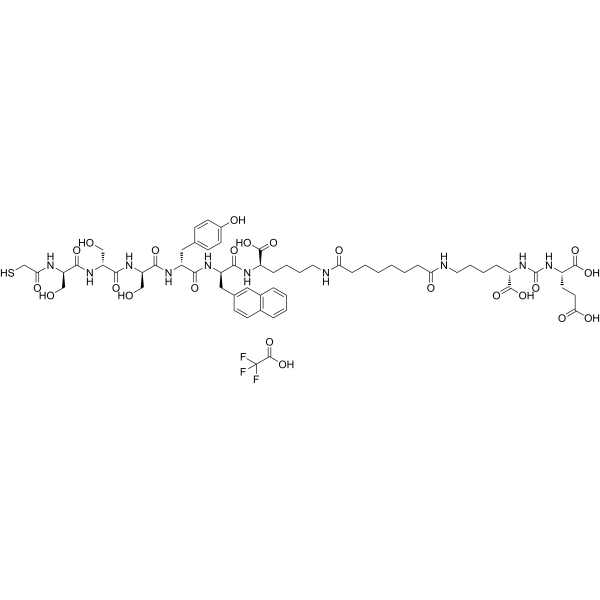
    DUPA-FITC is a fluorescent reagent targeting PSMA, which specifically binds to prostate cancer cells expressing PSMA without non-specific binding to normal blood cells. DUPA-FITC can label PSMA-expressing prostate cancer cells in whole blood, followed by internalization and trafficking to acidic intracellular endosomes, during which the fluorescence is quenched. When combined with flow cytometry and density gradient centrifugation enrichment, DUPA-FITC enables quantitative analysis of circulating tumor cells in peripheral blood samples from prostate cancer patients .
    DUPA-FITC

Inquiry Online

Your information is safe with us. * Required Fields.

Salutation


Country or Region *

Applicant Name *


Organization Name *

Department *


Email Address *


Product Name *

Cat. No.


Requested quantity *

Phone Number *


Remarks

Inquiry Online

Inquiry Information

Product Name:
Cat. No.:
Quantity:
MCE Japan Authorized Agent:

