
1. Search Result
Search Result
Results for "

KO

" in MedChemExpress (MCE) Product Catalog:

67

Inhibitors & Agonists

1

Peptides

24

Inhibitory Antibodies

4

Natural
Products

1

Recombinant Proteins

1

Isotope-Labeled Compounds

3

Antibodies

3

Click Chemistry

1

Oligonucleotides

Cat. No. Product Name Target Research Areas Chemical Structure
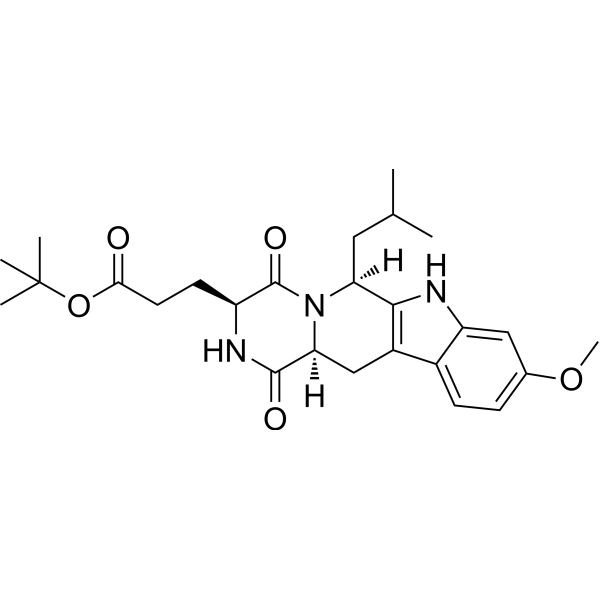
  • HY-10010
    Ko 143
    Maximum Cited Publications
    49 Publications Verification

    BCRP Cancer
    Ko 143 is a potent and selective ATP-binding cassette subfamily G member 2 (ABCG2/BCRP) inhibitor. Ko 143 displays >200-fold selectivity over P-gp and MRP-1 transporters .
    Ko 143
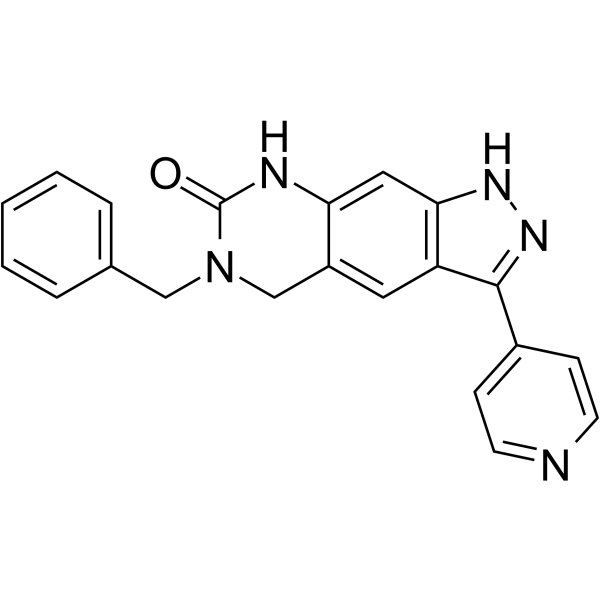
  • HY-136057
    iFSP1
    25+ Cited Publications

    Ferroptosis Ligands for Target Protein for PROTAC Cancer
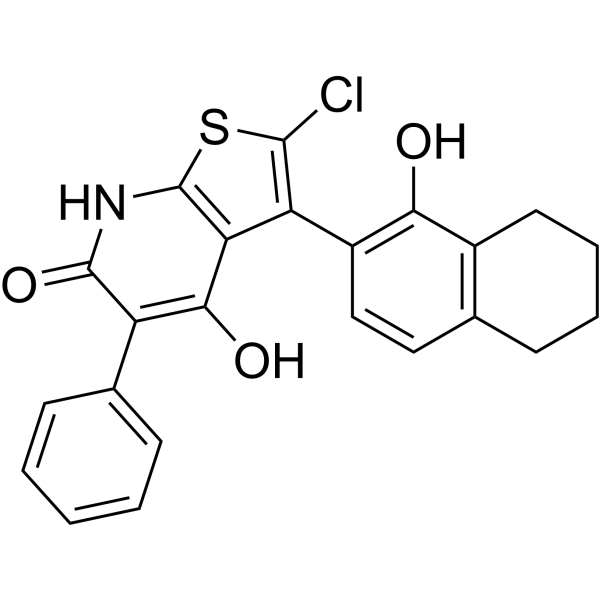
    iFSP1 is a potent, selective and glutathione-independent inhibitor of ferroptosis suppressor protein 1 (FSP1) (AIFM2) with an EC50 of 103 nM. iFSP1 selectively induces ferroptosis in GPX4-knockout cells which overexpressed FSP1. iFSP1 is able to sensitize a variety of human cancer cell lines to the ferroptosis inducer, such as (1S,3R)-RSL3 (HY-100218A) .
    iFSP1
  • HY-132001
    Ziftomenib
    2 Publications Verification

    KO-539

    Epigenetic Reader Domain Cancer
    Ziftomenib (KO-539) is an orally active menin-MLL interaction inhibitor with antitumor activities (WO2017161028A1, compound 151) .
    Ziftomenib
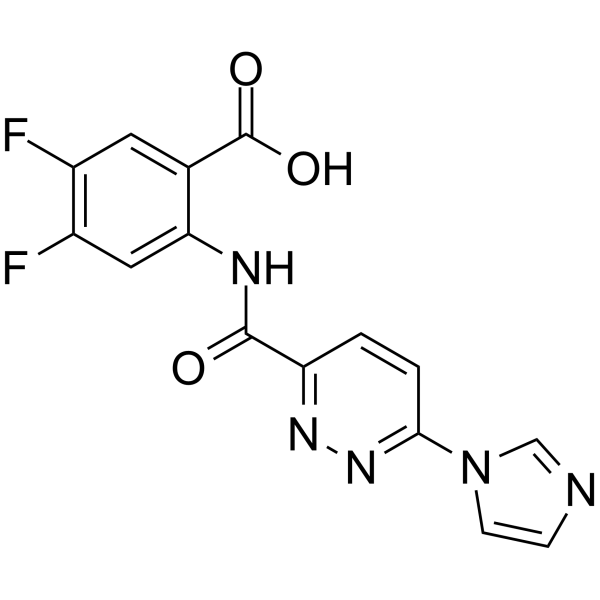
  • HY-131454
    SR-717
    25+ Cited Publications

    STING Inflammation/Immunology Cancer
    SR-717 is a non-nucleotide STING agonist with EC50s of 2.1 μM and 2.2 μM in ISG-THP1 (WT) and ISG-THP1 cGAS KO (cGAS KO) cell lines, respectively. SR-717 is a stable cyclic guanosine monophosphate-adenosine monophosphate (cGAMP) mimetic. Antitumor activity .
    SR-717
  • HY-P99113A

    CD19 Inflammation/Immunology
    Inebilizumab (FUT8-KO) is an anti-CD19 monoclonal antibody expressed by CHO cells with the fucosyltransferase 8 gene (FUT8) knocked out. Fucose deficiency enhances the antibody-dependent cellular cytotoxicity (ADCC) effect of the antibody.Inebilizumab (FUT8-KO) exhibits enhanced ADCC against B cells and can be used for research on multiple sclerosis and neuromyelitis optica .
    Inebilizumab (FUT8-KO)
  • HY-177512

    FLAP Cancer
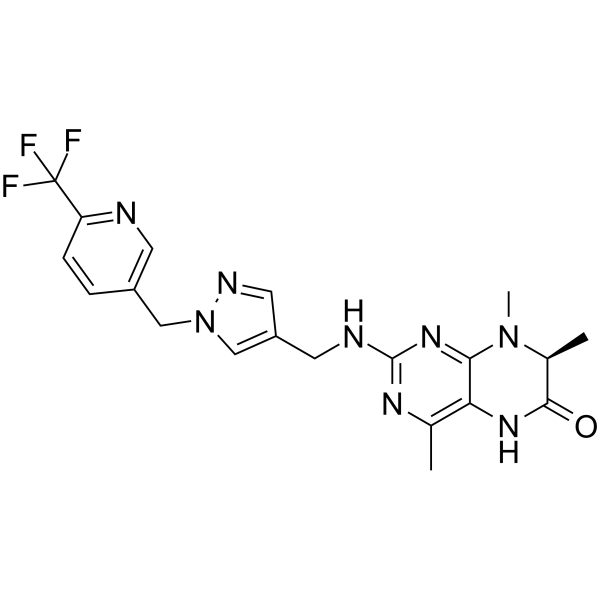
    MSC778 is an effective and orally active flap endonuclease 1 (FEN1) inhibitor with an IC50 of 3 nM and a KD of 2.9 nM. MSC778 exhibits 145-fold, 516-fold, and 65-fold selectivity over EXO1, GEN1, and XPG, respectively. MSC778 selectively kills BRCA2-deficient cells and potentiates the activity of Niraparib (HY-10619) to induce tumor stasis in a BRCA2 KO DLD-1 mouse xenograft. MSC778 can be used in the research of colorectal cancer .
    MSC778
  • HY-107744
    Nalmefene
    1 Publications Verification

    Opioid Receptor Apoptosis Reactive Oxygen Species (ROS) NO Synthase Toll-like Receptor (TLR) p38 MAPK NF-κB Cardiovascular Disease Neurological Disease Inflammation/Immunology
    Nalmefene is a BBB-penetrable opioid receptor modulator. Nalmefene is an antagonist of MOR and DOR, and a partial agonist of KOR. Nalmefene has anti-inflammatory and neuroprotective activities. Nalmefene can be used in the research of reducing alcohol-dependent disorders .
    Nalmefene
  • HY-112181
    KO-947
    4 Publications Verification

    ERK Cancer
    KO-947 is a potent and selective inhibitor of ERK1/2 kinases with potential utility in MAPK pathway dysregulated tumors.
    KO-947
  • HY-P99010A

    Interleukin Related FGFR Cancer
    Bemarituzumab (FUT8-KO) is an anti-FGFR2b monoclonal antibody expressed by CHO cells with the fucosyltransferase 8 gene (FUT8) knocked out. Fucose deficiency enhances the ADCC effect of the antibody. Bemarituzumab (FUT8-KO) lacks a core fucose in the polysaccharide portion of the Fc domain of the antibody, and results in a high affinity to human FcγRIIIa .
    Bemarituzumab (FUT8-KO)
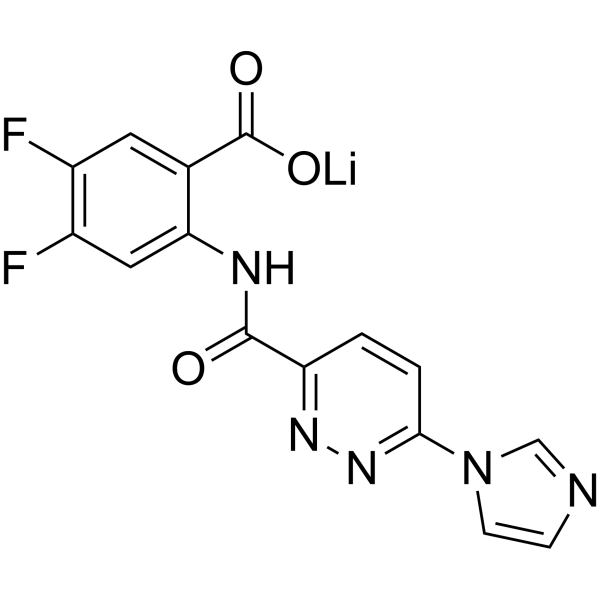
  • HY-131454A
    SR-717 free acid
    25+ Cited Publications

    STING Inflammation/Immunology Cancer
    SR-717 free acid is a non-nucleotide STING agonist with EC50s of 2.1 μM and 2.2 μM in ISG-THP1 (WT) and ISG-THP1 cGAS KO (cGAS KO) cell lines, respectively. SR-717 free acid is a stable cyclic guanosine monophosphate-adenosine monophosphate (cGAMP) mimetic. Antitumor activity .
    SR-717 free acid
  • HY-100786
    DL-AP3
    1 Publications Verification

    Endogenous Metabolite mGluR Phosphatase Neurological Disease Cancer
    DL-AP3 is a competitive mGluR1 and mGluR5 antagonist. DL-AP3 is also an inhibitor of phosphoserine phosphatase. DL-AP3 has neuroprotective effect .
    DL-AP3
  • HY-160004

    AMPK Cardiovascular Disease Neurological Disease Metabolic Disease Inflammation/Immunology Cancer
    PXL770 is an orally active, direct allosteric AMP-activated protein kinase (AMPK) activator. PXL770 decreases C26:0 levels, improves mitochondrial respiration, reduces expression of proinflammatory genes and induces expression of compensatory transporters (ABCD2/3) in ALD fibroblasts/lymphocytes. PXL770 normalizes plasma VLCFA levels, significantly reduces elevated VLCFA levels in brain and spinal cord in Abcd1 KO mice. PXL770 improves glycemia, dyslipidemia, and insulin resistance in ob/ob and high-fat diet (HFD)-fed mice. PXL770 can be used for the study of X-linked adrenoleukodystrophy (ALD), autosomal dominant polycystic kidney disease and nonalcoholic steatohepatitis (NASH) .
    PXL770
  • HY-P99653A

    VAY-736 (FUT8-KO)

    TNF Receptor Apoptosis NF-κB Inflammation/Immunology Cancer
    Ianalumab (VAY-736) (FUT8-KO) is an anti-BAFF-R monoclonal antibody expressed in CHO cells with the fucosyltransferase 8 gene (FUT8) knocked out. Fucose depletion enhances its B cell clearance capacity. Ianalumab (FUT8-KO) competitively blocks the binding of BAFF to BAFF-R, inhibits the BAFF-mediated alternative NF-κB pro-survival signaling pathway, and abrogates the apoptotic (apoptosis) protective effect of BAFF on cancer cells. Ianalumab (FUT8-KO) can be used in research related to primary Sjögren's syndrome and chronic lymphocytic leukemia .
    Ianalumab (FUT8-KO)
  • HY-P99406A

    EGFR Cancer
    Petosemtamab (FUT8-KO) is an anti-EGFR and anti-LGR5 monoclonal antibody expressed in CHO cells with the fucosyltransferase 8 gene (FUT8) knocked out. Fucosyl loss enhances the ADCC effect of the antibody. Petosemtamab (FUT8-KO) leads to EGFR signaling blockade and receptor degradation in LGR5+ cancer cells. Petosemtamab (FUT8-KO) can be used for research on solid tumors such as head and neck squamous cell carcinoma (HNSCC) and metastatic colorectal cancer (CRC) .
    Petosemtamab (FUT8-KO)
  • HY-P9977A

    EGFR Cancer
    Amivantamab (FUT8-KO) is an anti-EGFR-MET monoclonal antibody expressed by CHO cells with the fucosyltransferase 8 gene (FUT8) knocked out. Fucose deficiency enhances the ADCC effect of the antibody. Amivantamab (FUT8-KO) inhibits ligand binding, promotes endocytosis and degradation of receptor-antibody complexes, and induces Fc-dependent cytokinesis in macrophages and antibody-dependent cytotoxicity in natural killer cells .
    Amivantamab (FUT8-KO)
  • HY-124061

    Protease Activated Receptor (PAR) Neurological Disease Inflammation/Immunology
    GB83 is a potent PAR2 antagonist. GB83 reverses neutrophil elastase‐induced synovitis and pain. GB83 blocks the effect of MET-1 supernatant on NG neurons .
    GB83
  • HY-147403S

    JNJ-61393215

    Orexin Receptor (OX Receptor) Isotope-Labeled Compounds Neurological Disease
    Tebideutorexant is an OX1R-selective inhibitor with oral bioavailability and blood-brain barrier permeability, with human OX1R pKi 8.17 and rat OX1R pKi 8.13.Tebideutorexant selectively modulates OX1R, with no significant functional effect on OX2R. Tebideutorexant can be used for the research of panic and anxiety disorders .
    Tebideutorexant
  • HY-18071
    BI-9627
    3 Publications Verification

    Na+/H+ Exchanger (NHE) Autophagy Cardiovascular Disease
    BI-9627, a chemical probe, is a potent sodium-hydrogen exchanger isoform 1 (NHE1) inhibitor (IC50 = 6 and 31 nM in intracellular pH recovery (pHi) and human platelet swelling assays). BI-9627 displays >30-fold selectivity against NHE2 and with no measurable inhibitory activity against the NHE3 isoform. BI-9627 decreases autophagy in HTR-8/SVneo cells. BI-9627 can significantly reduce the pHi of human sperm and partially reverse the effect of DMA. BI-9627 prolongs Ca 2+ recovery time in KO hiPSC-CMs. BI-9627 shows low DDI (agent-agent interaction) potential, excellent pharmacokinetics in rat and dog, and remarkably potent activity in the isolated heart model of ischemia-reperfusion injury .
    BI-9627
  • HY-148369

    PROTACs Deubiquitinase Apoptosis MDM-2/p53 Cancer
    U7D-1 is a first-in-class potent and selective USP7 (ubiquitin-specific protease 7) PROTAC degrader, with a DC50 of 33 nM in RS4;11 cells. U7D-1 shows anticancer activity. U7D-1 induces apoptosis in Jeko-1 cells .
    U7D-1
  • HY-P9980A

    ADC Antibody TNF Receptor Cancer
    Belantamab (FUT8-KO) is an anti-BCMA (TNFRSF17) monoclonal antibody expressed by CHO cells with the fucosyltransferase 8 gene (FUT8) knocked out. Fucose deficiency enhances the ADCC effect of the antibody. Belantamab (FUT8-KO) can be used to synthesize antibody-active molecule conjugate (ADC), Belantamab mafodotin .
    Belantamab (FUT8-KO)
  • HY-150221

    PARP Cancer
    DB008 is potent and selective PARP16 inhibitor with an IC50 value of 0.27 μM, containing an acrylamide electrophilic reagent. DB008 is membrane-permeable and marks PARP16 selectively . DB008 is a click chemistry reagent, it contains an Alkyne group and can undergo copper-catalyzed azide-alkyne cycloaddition (CuAAc) with molecules containing Azide groups.
    DB008
  • HY-P990084

    AVE1642; VRDN-001

    IGF-1R Akt Neurological Disease Endocrinology
    Veligrotug (AVE1642) is a selective, fully human IGF-1R antagonist antibody with a Kd value of 0.55 nM for hIGF-1R. Veligrotug blocks the phosphorylation of downstream AKT. Veligrotug is applicable to research related to thyroid eye disease .
    Veligrotug
  • HY-172423

    KO-2806

    Farnesyl Transferase mTOR VEGFR Cancer
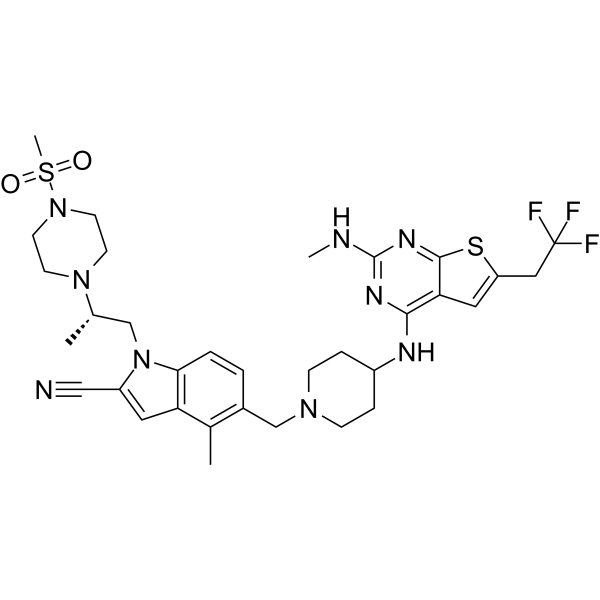
    Darlifarnib (KO-2806) is an orally active farnesyl transferase inhibitor. Darlifarnib inhibits the mTORC1 signaling pathway, thereby enhancing the anti-angiogenic properties of tyrosine kinase inhibitors. When used in combination with anti-VEGFR tyrosine kinase inhibitors, Darlifarnib promotes renal cell carcinoma tumor regression and inhibits tumor neovascularization. Darlifarnib sensitizes renal cell carcinoma tumors that progress after anti-VEGFR TKI treatment .
    Darlifarnib
  • HY-137605

    Transmembrane Glycoprotein Cancer
    WSF1-IN-1 (compound 136), an orally active WSF1 inhibitor, can be used in the study for WSF1 (Wolfram syndrome) related tumors, with IC50 values of 0.33 μM and >27 μM in HepG2 parental and HepG2 WFS1 KO cell lines, respectively .
    WSF1-IN-1
  • HY-18071A
    BI-9627 hydrochloride
    3 Publications Verification

    Na+/H+ Exchanger (NHE) Autophagy Cardiovascular Disease
    BI-9627 hydrochloride is a potent sodium-hydrogen exchanger isoform 1 (NHE1) inhibitor (IC50 = 6 and 31 nM in intracellular pH recovery (pHi) and human platelet swelling assays). BI-9627 hydrochloride displays >30-fold selectivity against NHE2 and with no measurable inhibitory activity against the NHE3 isoform. BI-9627 hydrochloride decreases autophagy in HTR-8/SVneo cells. BI-9627 hydrochloride can significantly reduce the pHi of human sperm and partially reverse the effect of DMA. BI-9627 hydrochloride prolongs Ca 2+ recovery time in KO hiPSC-CMs. BI-9627 hydrochloride shows low DDI (agent-agent interaction) potential, excellent pharmacokinetics in rat and dog, and remarkably potent activity in the isolated heart model of ischemia-reperfusion injury .
    BI-9627 hydrochloride
  • HY-148795

    Apical Sodium-Dependent Bile Acid Transporter Metabolic Disease
    Ritivixibat is an apical sodium-dependent bile acid transporter (ASBT/IBAT) inhibitor. Ritivixibat blocks ASBT/IBAT function, thereby reducing bile acid reabsorption, regulating bile acid homeostasis and alleviating liver injury. Ritivixibat protects cholangiocytes from damage caused by cytotoxic bile acids. Ritivixibat is applicable to research related to primary sclerosing cholangitis .
    Ritivixibat
  • HY-179505

    YAP Cancer
    OPN-9652 is a potent, orally active, and covalent TEAD inhibitor (MSTO-211H TEAD IC50 = 0.005 µM) targeting the central palmitate binding pocket of TEADs. OPN-9652 reduces TEAD-dependent reporter activity and expression of TEAD targets (CTGF and CYR61). OPN-9652 resensitizes drug-tolerant SOX10 KO cells to BRAFi + MAPKi. OPN-9652 delays the onset of tumor resistance to BRAFi + MEKi from minimal residual disease (MRD) in a BRAF mutant A375 xenograft mouse model. OPN-9652 can be used for melanoma research .
    OPN-9652
  • HY-P99295A

    RG 7160 (FUT8-KO); RO 5083945 (FUT8-KO); Anti-EGFR Recombinant Antibody (FUT8-KO)

    EGFR Cancer
    Imgatuzumab (FUT8-KO) is a humanized monoclonal antibody against EGFR expressed in CHO cells with the fucosyltransferase 8 gene (FUT8) knocked out. Imgatuzumab is an immunomodulator. Imgatuzumab may be used in cancer research.
    Imgatuzumab (FUT8-KO)
  • HY-121045

    KO 1366

    Adrenergic Receptor Cardiovascular Disease
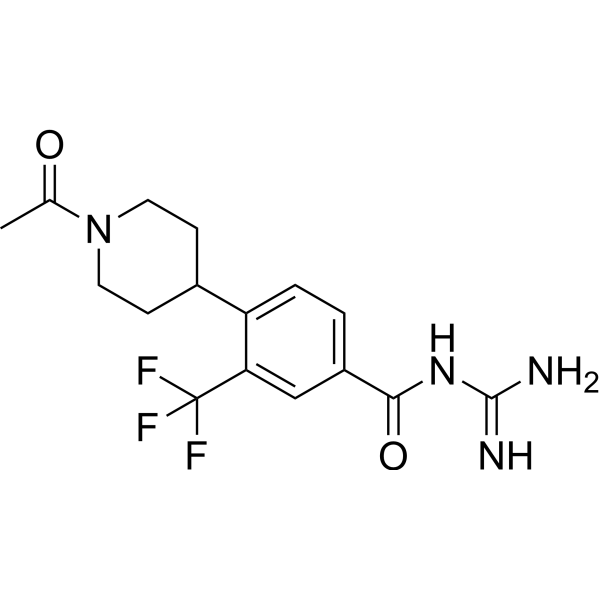
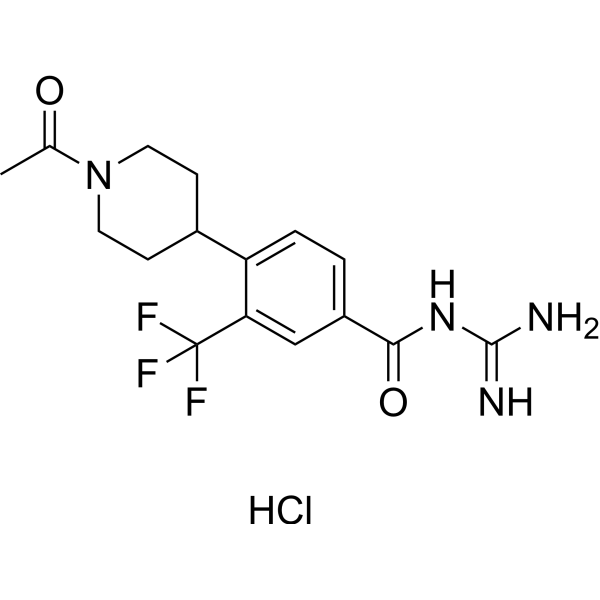
    Bunitrolol hydrochloride is an orally active β-adrenergic blocker that has a high affinity for β-adrenergic receptors. Bunitrolol hydrochloride exerts significant β-receptor antagonist activity and has weak α1-blocking activity. Bunitrolol hydrochloride is mainly used in the study of cardiovascular diseases such as hypertension and angina pectoris, and is also used in placental transport research .
    Bunitrolol
  • HY-P1386

    Dynamin II (828–842)

    iGluR Neurological Disease
    D15, a peptide with 15 aa segment of dynamin, is an AMPAR endocytosis inhibitor. D15 blocks the interaction of dynamin with amphiphysin 1 and 2. D15 significantly increases AMPAR excitatory postsynaptic potential (EPSC) amplitude of medium spiny neurons (MSNs) in Sapap3 KO mice. D15 can be used for neuropsychiatric disorder research .
    D15
  • HY-158143

    Histone Methyltransferase Apoptosis Cancer
    AZD3470 is an orally active MTA-cooperative PRMT5 inhibitor, selective for MTAP-deficient tumors. AZD3470 induces cell cycle G2/M phase alterations, DNA damage, apoptosis, and symmetric dimethylarginine reduction. AZD3470 alters alternative splicing, increases skipped exon events in DNA repair and cell cycle pathways, and inhibits cancer cell proliferation and tumor growth. AZD3470 can be used for the research of non-small cell lung cancer and MTAP-deleted solid tumors .
    AZD3470
  • HY-172941

    NOD-like Receptor (NLR) Neurological Disease
    VEN-02XX is an orally active and brain-permeable NLRP3 inhibitor. VEN-02XX inhibits the release of IL-1β and IL-18 (IC50 0.3 and 0.28 μM, respectively). VEN-02XX restores memory and cognition, inhibits microgliosis, and reduces neuroinflammation and tau pathology in the 5XFAD/Rubicon KO mouse model. VEN-02XX may be used in the study of Alzheimer's disease (AD) .
    VEN-02XX
  • HY-W721480

    TRP Channel Neurological Disease
    HC-067047 hydrochloride is a potent and selective TRPV4 antagonist and reversibly inhibits currents through the human, rat, and mouse TRPV4 orthologs with IC50 values of 48 nM, 133 nM, and 17 nM, respectively .
    HC-067047 hydrochloride
  • HY-101721

    Adrenergic Receptor Cardiovascular Disease Endocrinology
    Ko-3290 is an antagonist of β-adrenoceptor, with cardioselectivity and antilipolytic effects in animals. Ko-3290 is a click chemistry reagent, it contains an Alkyne group and can undergo copper-catalyzed azide-alkyne cycloaddition (CuAAc) with molecules containing Azide groups.
    Ko-3290
  • HY-P9991A

    Gap Junction Protein Cancer
    Osemitamab (FUT8-KO) is an anti-claudin-18.2 monoclonal antibody expressed by CHO cells with the fucosyltransferase 8 gene (FUT8) knocked out. Fucose deficiency enhances the ADCC effect of the antibody. Osemitamab in combination with Capecitabine (HY-B0016) and Oxaliplatin (HY-17371), can be used for G/GEJ cancer study .
    Osemitamab (FUT8-KO)
  • HY-168572

    BCRP Cancer
    MZ82, Ko 143 (HY-10010) derivative, is a ATP-binding cassette subfamily G member 2 (ABCG2/BCRP) inhibitor with the IC50 of ~23 nM. MZ82 not only shows greatly improved metabolic stability over Ko 143 (HY-10010) in liver microsomes but also in mice, and is able to penetrate into the brain .
    MZ82
  • HY-149206

    MAP4K Cancer
    HPK1-IN-33 (compound 21) is a potent Hematopoietic Progenitor Kinase 1 (HPK1) inhibitor with a Ki value of 1.7 nM. HPK1-IN-33 inhibits the produce of IL-2 with EC50s of 286, >10000 nM in Jurkat WT and Jurkat HPK1 KO cells, respectively .
    HPK1-IN-33
  • HY-101658A

    KO 1400

    Adrenergic Receptor Neurological Disease Endocrinology
    Pargolol is a β adrenergic receptor antagonist.
    Pargolol
  • HY-101658

    KO 1400 hydrochloride

    Adrenergic Receptor Neurological Disease Endocrinology
    Pargolol hydrochloride is a β adrenergic receptor antagonist. Pargolol hydrochloride is a click chemistry reagent, it contains an Alkyne group and can undergo copper-catalyzed azide-alkyne cycloaddition (CuAAc) with molecules containing Azide groups.
    Pargolol hydrochloride
  • HY-173349

    PARP Cancer
    TDI-012804 is a TNKS2 inhibitor that selectively inhibits intracellular endogenous TNKS2 protein. TDI-012804 increases the expression of AXIN1 protein in cells that are heterozygous (Tnks1HET) and completely knocks out (Tnks1KO) for TNKS1. TDI-012804 inhibits the proliferation of ApcQ1405X/Tnks1KO organoids (EC50 of 59.1 nM) and is selectively toxic to Tnks1KO AKP-G12D and AKP-G13D organoids .
    TDI-012804
  • HY-N9675

    NO Synthase Inflammation/Immunology
    (+)-Hannokinol can be isolated from AMOMUM TSAO-KO (ginger family) fruit. (+)-Hannokinol inhibits lipopolysaccharide-induced nitric oxide production in BV2 microglia .
    (+)-Hannokinol
  • HY-RS07467

    Small Interfering RNA (siRNA) Others

    KRT8 Human Pre-designed siRNA Set A contains three designed siRNAs for KRT8 gene (Human), as well as a negative control, a positive control, and a FAM-labeled negative control.

    KRT8 Human Pre-designed siRNA Set A
    KRT8 Human Pre-designed siRNA Set A
  • HY-155652

    BCRP Cancer
    ABCG2-IN-1 (compound K2), a Ko143 analog, is an orally active ABCG2 inhibitor with an IC50 of 0.13 μM. ABCG2-IN-1 has favorable oral pharmacokinetic profiles in mice .
    ABCG2-IN-1
  • HY-149429

    PPAR Metabolic Disease
    PPARδ agonist 9 (compound 21) is a PPARδ agonist (EC50: 3.6 nM). PPARδ agonist 9 has in vivo efficacy, reducing serum levels of MCP-1 in mice and significantly inhibiting atherosclerosis progression in the LDLr-KO model (inhibition rate: 50-60%) .
    PPARδ agonist 9
  • HY-10010R

    BCRP Reference Standards Cancer
    Ko 143 (Standard) is the analytical standard of Ko 143 (HY-10010). This product is intended for research and analytical applications. Ko 143 is a potent and selective ATP-binding cassette subfamily G member 2 (ABCG2/BCRP) inhibitor. Ko 143 displays >200-fold selectivity over P-gp and MRP-1 transporters .
    Ko 143 (Standard)
  • HY-107744R

    Opioid Receptor Apoptosis Reactive Oxygen Species (ROS) NO Synthase Toll-like Receptor (TLR) p38 MAPK NF-κB Reference Standards Cardiovascular Disease Neurological Disease Inflammation/Immunology
    Nalmefene (Standard) is the analytical standard of Nalmefene. This product is intended for research and analytical applications. Nalmefene is a long acting opioid (MOR and DOR antagonist), and a partial KOR agonist. Nalmefene is used for opioid overdose and alcohol dependence .
    Nalmefene (Standard)
  • HY-P991135A

    RO-7502175 (FUT8-KO); RG-6411 (FUT8-KO)

    CCR Cancer
    Enzelkitug (RO-7502175; RG-6411) (FUT8-KO) is an anti-CCR8 monoclonal antibody expressed by CHO cells with the fucosyltransferase 8 gene (FUT8) knocked out. Fucose deficiency enhances the antibody-dependent cellular cytotoxicity (ADCC) effect of the antibody. Enzelkitug (FUT8-KO) can be used for the research of various solid tumors and hematological malignancies .
    Enzelkitug (FUT8-KO)
  • HY-P990026A

    C-type Lectin-like Receptors (CTLRs) Inflammation/Immunology
    Ulviprubart (FUT8-KO) is a humanized anti-KLRG1 monoclonal antibody lacking fucosyltransferase 8 (FUT8). Ulviprubart (FUT8-KO) can be used for the research of diseases such as inclusion body myositis (IBM) .
    Ulviprubart (FUT8-KO)
  • HY-P991942A

    BAY3375968 (FUT8-KO); TPP-23411 (FUT8-KO)

    CCR Cancer
    Lanerkitug (FUT8-KO) (BAY3375968 (FUT8-KO)) is an anti-CCR8 monoclonal antibody expressed by CHO cells with the fucosyltransferase 8 gene (FUT8) knocked out. Fucose deficiency enhances the ADCC effect of the antibody. Lanerkitug (HY-P991942) selectively depletes human CCR8+Tregs via antibody dependent cellular cytotoxicity (ADCC) and antibody dependent cellular phagocytosis (ADCP). Lanerkitug can be used in the research of solid tumors .
    Lanerkitug (FUT8-KO)
  • HY-132001A

    (R)-KO-539

    Epigenetic Reader Domain Cancer
    (R)-Ziftomenib ((R)-KO-539) is the R-enantiomer of Ziftomenib (HY-132001). Ziftomenib (KO-539) is an orally active menin-MLL interaction inhibitor with antitumor activities .
    (R)-Ziftomenib

Inquiry Online

Your information is safe with us. * Required Fields.

Salutation


Country or Region *

Applicant Name *


Organization Name *

Department *


Email Address *


Product Name *

Cat. No.


Requested quantity *

Phone Number *


Remarks

Inquiry Online

Inquiry Information

Product Name:
Cat. No.:
Quantity:
MCE Japan Authorized Agent:

