36 Results for "

Kir6.2

" in MedChemExpress (MCE) Product Catalog:
Products (36)

36 Results for "Kir6.2" in MCE Product Catalog:

2
2 Cited Publications
Cat. No.: HY-113147
CAS No.: 2364-67-2
Purity:  99.88%
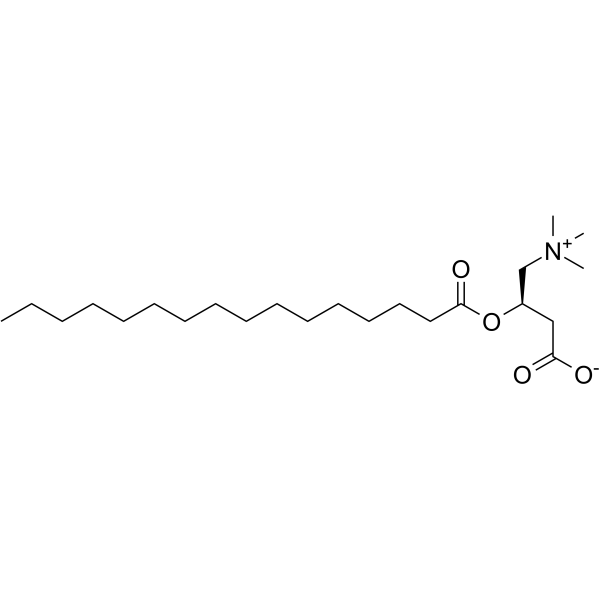
L-Palmitoylcarnitine, a long-chain acylcarnitine and a fatty acid metabolite, accumulates in the sarcolemma and deranges the membrane lipid environment during ischaemia. L-Palmitoylcarnitine inhibits KATP channel activity, without affecting the single channel conductance, through interaction with Kir6.2 .
loading...
    loading...
2
2 Cited Publications
Cat. No.: HY-113147A
CAS No.: 18877-64-0
Purity:  ≥98.0%
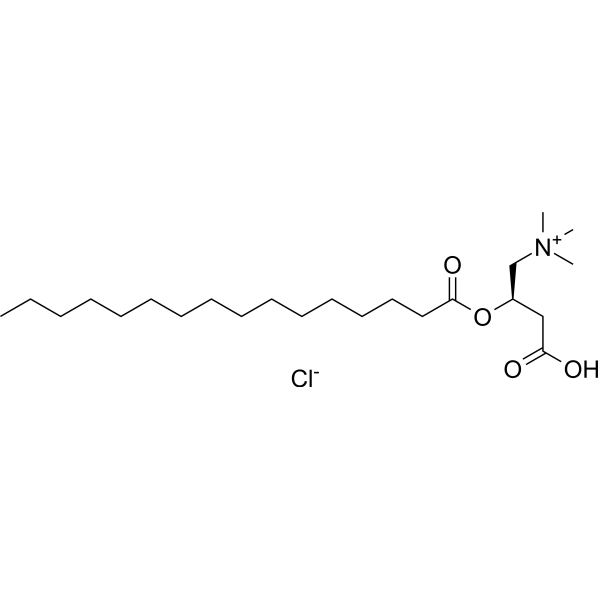
L-Palmitoylcarnitine chloride, a long-chain acylcarnitine and a fatty acid metabolite, accumulates in the sarcolemma and deranges the membrane lipid environment during ischaemia. L-Palmitoylcarnitine chloride inhibits KATP channel activity, without affecting the single channel conductance, through interaction with Kir6.2 .
loading...
    loading...
2
2 Cited Publications
Cat. No.: HY-B0682A
CAS No.: 207844-01-7
Synonyms: KAD-1229; S-21403
Target:  

Potassium Channel

Research Areas:  

Metabolic Disease

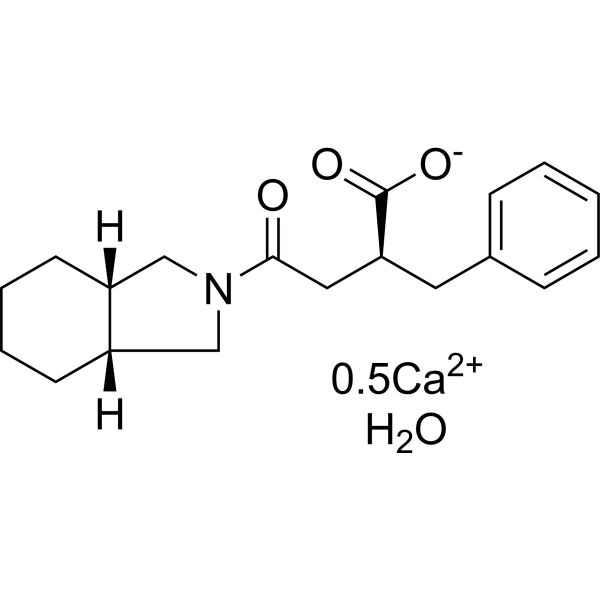
Mitiglinide calcium hydrate (KAD-1229), an insulinotropic agent, is an ATP-sensitive K + (KATP) channel antagonist. Mitiglinide calcium hydrate is highly specific to the Kir6.2/SUR1 complex (the pancreatic beta-cell KATP channel). Mitiglinide Calcium hydrate can be used for the research of type 2 diabetes .
loading...
    loading...
2
2 Cited Publications
Cat. No.: HY-17398
CAS No.: 145525-41-3
Synonyms: KAD-1229 anhydrous; S21403 anhydrous
Target:  

Potassium Channel

Research Areas:  

Metabolic Disease

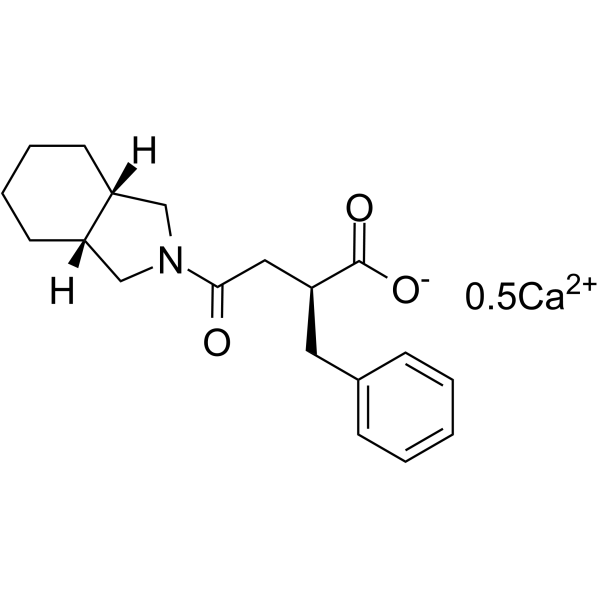
Mitiglinide Calcium (KAD-1229 anhydrous), an insulinotropic agent, is an ATP-sensitive K + (KATP) channel antagonist. Mitiglinide Calcium is highly specific to the Kir6.2/SUR1 complex (the pancreatic beta-cell KATP channel). Mitiglinide Calcium can be used for the research of type 2 diabetes .
loading...
    loading...
2
2 Cited Publications
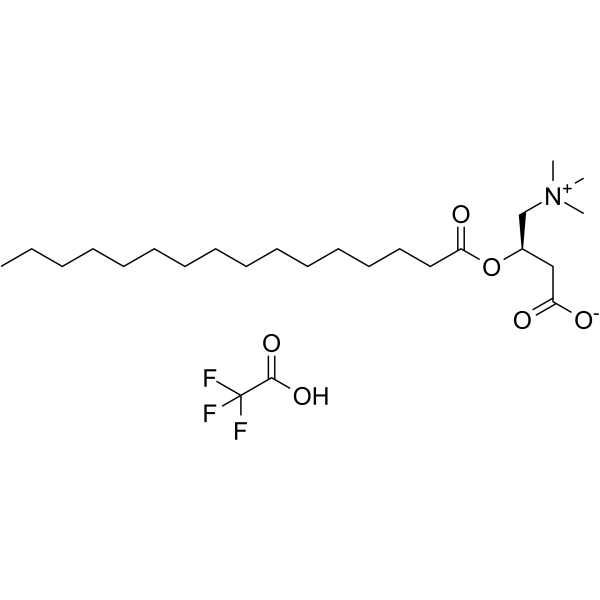
Cat. No.: HY-113147B
Purity:  ≥98.0%
L-Palmitoylcarnitine TFA, a long-chain acylcarnitine and a fatty acid metabolite, accumulates in the sarcolemma and deranges the membrane lipid environment during ischaemia. L-Palmitoylcarnitine TFA inhibits KATP channel activity, without affecting the single channel conductance, through interaction with Kir6.2 .
loading...
    loading...
1
1 Cited Publications
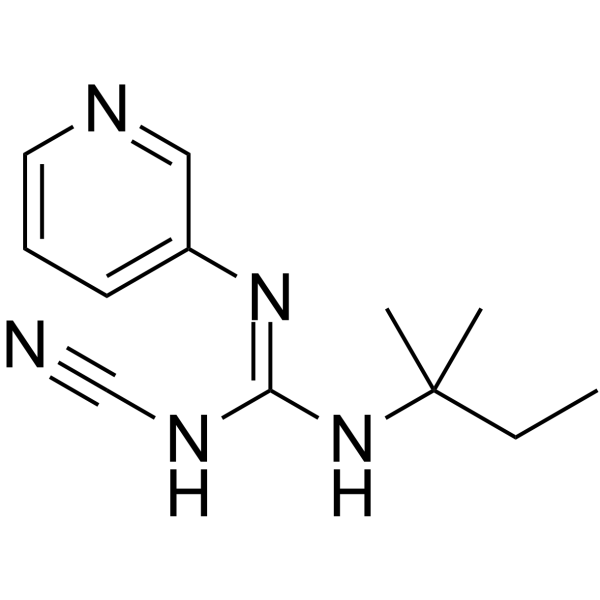
Cat. No.: HY-108573
CAS No.: 60559-98-0
Purity:  99.81%
Target:  

Potassium Channel

Research Areas:  

Cardiovascular Disease

P-1075 is a potent activator of sulfonylurea receptor 2-associated ATP-sensitive potassium channels (SUR2-KIR6), with an EC50 value of 45 nM for SUR2B-KIR6 channel activation . P-1075 also P1075 opens mitochondrial K(ATP) channels and generates reactive oxygen species resulting in cardioprotection of rabbit hearts .
loading...
    loading...
1
1 Cited Publications
Cat. No.: HY-W017387
CAS No.: 4502-00-5
Synonyms: Sodium 4-methyl-2-oxopentanoate; 2-Ketoisocaproic acid sodium salt
Sodium α-ketoisocaproate (Sodium 4-methyl-2-oxopentanoate) is an insulin secretagogue. Sodium α-ketoisocaproate undergoes transamination catalyzed by BCAT and BCATm to produce α-ketoglutarate and leucine; it also binds to the SUR1 site to inhibit KATP channel activity, but does not directly affect the Kir6.2 subunit. Sodium α-ketoisocaproate regulates Ca 2+ influx. Sodium α-ketoisocaproate exerts insulinotropic activity in pancreatic islets and intact mouse pancreata with sufficient BCATm expression. Sodium α-ketoisocaproate can be used in research related to type 2 diabetes .
loading...
    loading...
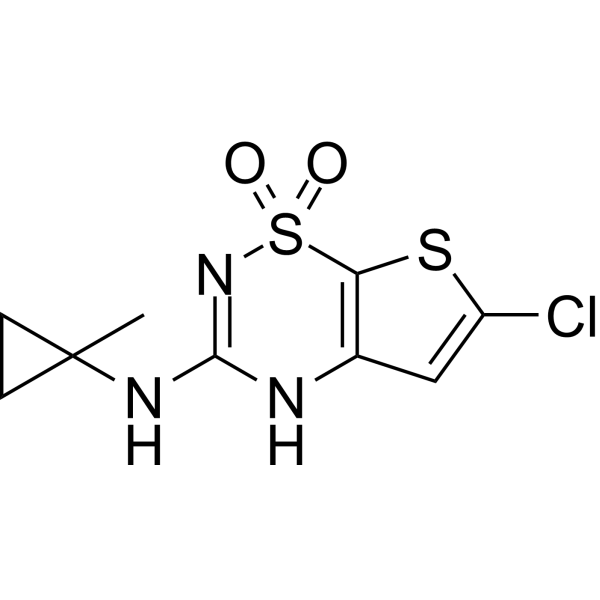
Cat. No.: HY-119322
CAS No.: 279215-43-9
Purity:  ≥99.0%
Synonyms: NN414
Target:  

Potassium Channel

Research Areas:  

Metabolic Disease

Tifenazoxide (NN414) is a potent, orally active and SUR1/Kir6.2 selective K ATP channels opener. Tifenazoxide has antidiabetic effect, can inhibit glucose stimulated insulin release in vitro and in vivo, and has a beneficial effect on glucose homeostasis .
loading...
    loading...
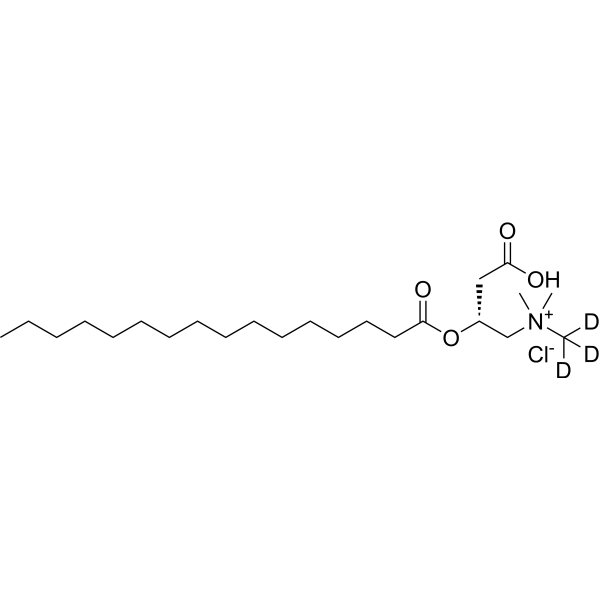
Cat. No.: HY-113147AS
CAS No.: 1334532-26-1
Purity:  99.83%
L-Palmitoylcarnitine-d3 hydrochloride is the deuterium labeled L-Palmitoylcarnitine hydrochloride. L-Palmitoylcarnitine hydrochloride, a long-chain acylcarnitine and a fatty acid metabolite, accumulates in the sarcolemma and deranges the membrane lipid environment during ischaemia. L-Palmitoylcarnitine hydrochloride inhibits KATP channel activity, without affecting the single channel conductance, through interaction with Kir6.2 .
loading...
    loading...
Cat. No.: HY-118607
CAS No.: 332943-64-3
Purity:  99.31%
Research Areas:  

Infection

VU041 is a first submicromolar-affinity inhibitor of Anopheles (An.) gambiae and Aedes (Ae.) aegypti inward rectifier potassium 1 (Kir1) channels with IC50 values of 2.5 μM and 1.7 μM, respectively. VU041 inhibits appreciably is mammalian Kir2.1 (IC50 of 12.7 μM), and has less inhibitory effect on mammalian Kir1.1, Kir4.1, Kir6.2/SUR1, and Kir7.1. VU041 also induces impaired Malpighian tubule function .
loading...
    loading...
Cat. No.: HY-106577
CAS No.: 53267-01-9
Purity:  95.08%
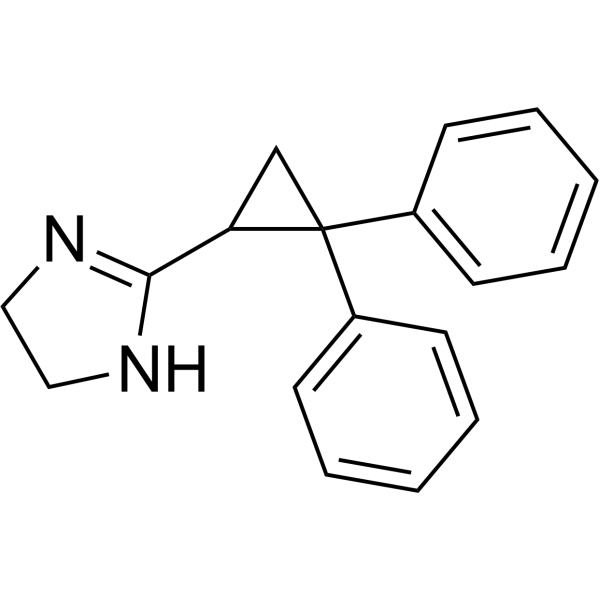
Synonyms: Cifenline; Ro 22-7796
Cibenzoline is a class Ia antiarrhythmic active molecule with low anticholinergic activity. Cibenzoline is a KATP channel inhibitor, acting through the pore forming subunit Kir6.2, with an IC50 of 22.2 μM. Cibenzoline inhibits IKr and IKs currents with IC50 values of 8.8 μM and 12.3 μM, respectively. Cibenzoline is used in the study of cardiac diseases. In addition, Cibenzoline can induce hypoglycemia .
loading...
    loading...
Cat. No.: HY-124424
CAS No.: 333415-38-6
Purity:  99.71%
Target:  

Potassium Channel

Research Areas:  

Others Neurological Disease

VU0071063 is a potent and specific Kir6.2/SUR1 opener (EC50=7.44 μM) and can be used for investigating Kir6.2/SUR1 expressed in the pancreas and brain. VU0071063 inhibits insulin secretion by inducing hyperpolarization of β-cell membrane potential. VU0071063 chemotype has a very steep structure-activity relationships .
loading...
    loading...
Cat. No.: HY-134320B
Purity:  98.13%
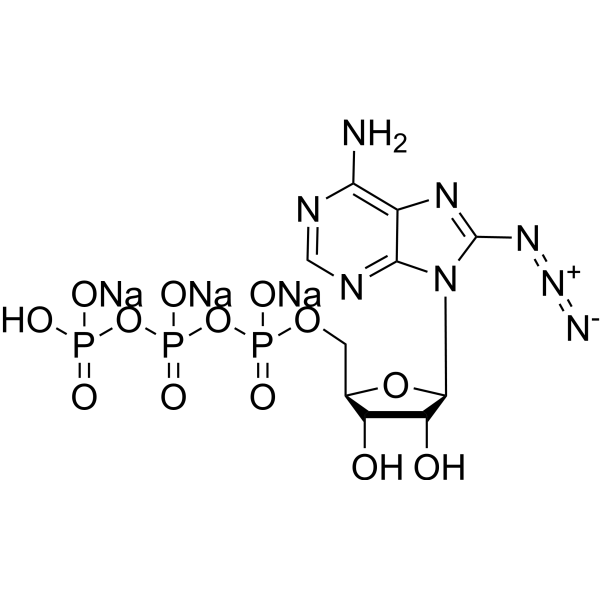
Synonyms: 8-Azidoadenosine 5'-triphosphate trisodium; 8-N3-ATP trisodium
Target:  

Potassium Channel

Research Areas:  

Metabolic Disease

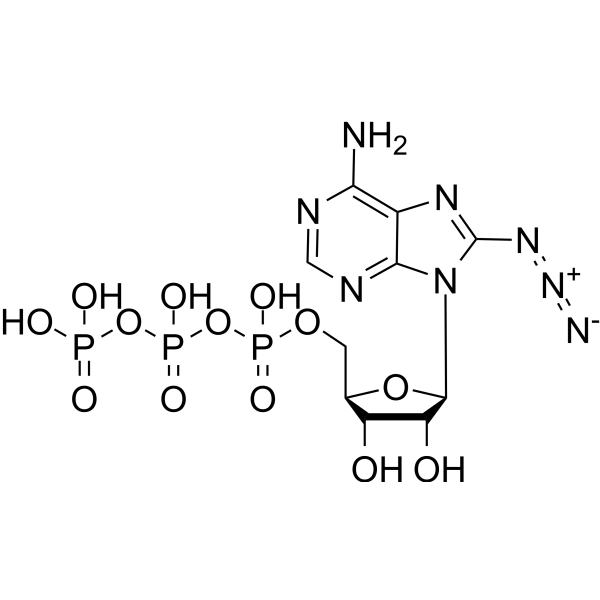
8-Azido-ATP (8-N3-ATP) trisodium, a photoreactable nucleotide analog, is useful for the identification of proteins, such as DNA-dependent RNA polymerase. 8-Azido-ATP trisodium is a click chemistry reagent that contains an Azide group and can undergo copper-catalyzed azide-alkyne cycloaddition reaction (CuAAc) with molecules containing Alkyne groups. 8-Azido-ATP trisodium can also undergo strain-promoted alkyne-azide cycloaddition (SPAAC) with molecules containing DBCO or BCN groups .
loading...
    loading...
Cat. No.: HY-134320
CAS No.: 53696-59-6
Synonyms: 8-Azidoadenosine 5'-triphosphate; 8-N3-ATP
Target:  

Potassium Channel

Research Areas:  

Metabolic Disease

8-Azido-ATP, a photoreactable nucleotide analog, is useful for the identification of proteins, such as DNA-dependent RNA polymerase . 8-Azido-ATP is a click chemistry reagent, it contains an Azide group and can undergo copper-catalyzed azide-alkyne cycloaddition reaction (CuAAc) with molecules containing Alkyne groups. It can also undergo strain-promoted alkyne-azide cycloaddition (SPAAC) reactions with molecules containing DBCO or BCN groups.
loading...
    loading...
Cat. No.: HY-W017387S
CAS No.: 93523-67-2
Synonyms: Sodium 4-methyl-2-oxopentanoate-d3; 2-Ketoisocaproic acid-d3 sodium salt
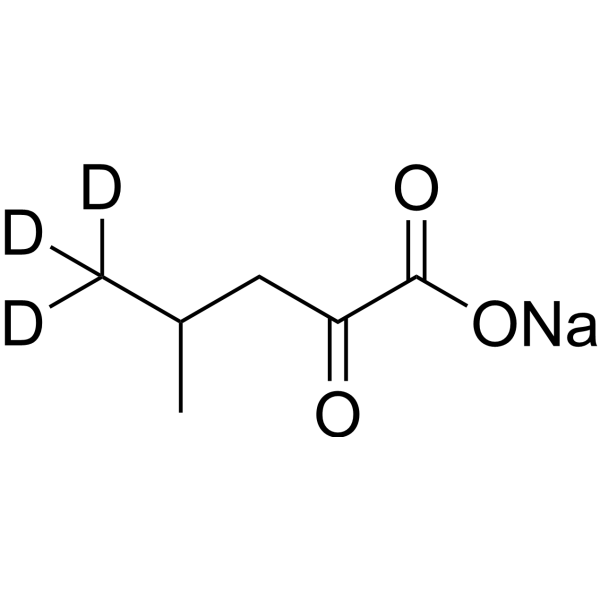
Sodium α-ketoisocaproate-d3 (Sodium 4-methyl-2-oxopentanoate-d3; 2-Ketoisocaproic acid-d3 (sodium salt)) is the deuterated-labeled Sodium α-ketoisocaproate (HY-W017387). Sodium α-ketoisocaproate (Sodium 4-methyl-2-oxopentanoate) is an insulin secretagogue. Sodium α-ketoisocaproate undergoes transamination catalyzed by BCAT and BCATm to produce α-ketoglutarate and leucine; it also binds to the SUR1 site to inhibit KATP channel activity, but does not directly affect the Kir6.2 subunit. Sodium α-ketoisocaproate regulates Ca 2+ influx. Sodium α-ketoisocaproate exerts insulinotropic activity in pancreatic islets and intact mouse pancreata with sufficient BCATm expression. Sodium α-ketoisocaproate can be used in research related to type 2 diabetes .
loading...
    loading...
Cat. No.: HY-117160
CAS No.: 23155-00-2
Synonyms: 4-trans-hydroxycyclohexyl Glyburide; 4-trans-hydroxy Glibenclamide
Target:  

Potassium Channel

Research Areas:  

Neurological Disease

rac-trans-4-hydroxy Glyburide is an active metabolite of the SUR1/Kir6.2 sulfonylurea inhibitor glyburide (HY-15206). It is formed from glyburide by the cytochrome P450 (CYP) isoforms CYP2C8 and CYP2C9. rac-trans-4-hydroxy Glyburide inhibits glyburide binding to rat brain synaptosomes at the high and low affinity sites of SUR1/Kir6.2 with IC50 values of 0.95 and 100 nM, respectively.
loading...
    loading...
Cat. No.: HY-B0682
CAS No.: 145375-43-5
Synonyms: KAD-1229 free acid anhydrous; S21403 free acid anhydrous
Target:  

Potassium Channel

Research Areas:  

Metabolic Disease

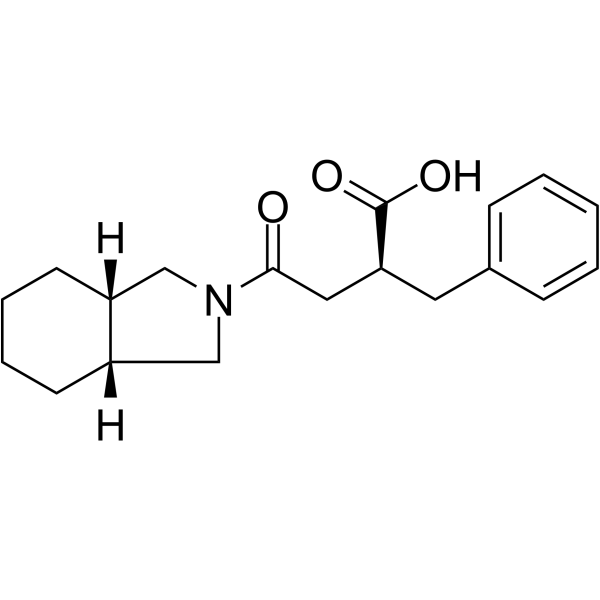
Mitiglinide (KAD-1229), an insulinotropic agent, is an ATP-sensitive K + (KATP) channel antagonist. Mitiglinide is highly specific to the Kir6.2/SUR1 complex (the pancreatic beta-cell KATP channel). Mitiglinide can be used for the research of type 2 diabetes .
loading...
    loading...
Cat. No.: HY-W740628
CAS No.: 107833-98-7
Target:  

Drug Metabolite

Research Areas:  

Neurological Disease

Nicorandil pyridine oxide is a metabolite of the sulfonylurea receptor 2B (SUR2B) linked to ATP-sensitive potassium channel Kir6.2 (SUR2B/Kir6.2) activator and nitric oxide donor Nicorandil.
loading...
    loading...
Cat. No.: HY-115014
CAS No.: 100678-32-8
Synonyms: Cifenline succinate; Ro 22-7796 succinate
Cibenzoline succinate (Cifenline succinate) is the succinate form of Cibenzoline (HY-106577). Cibenzoline succinate is an inhibitor for ATP-sensitive potassium (KATP) channel by affecting the pore-forming Kir6.2 subunit with IC50 of 22.2 µM. Cibenzoline succinate affects insulin secretion and exhibits antiarrhythmic and antidiabetic activities .
loading...
    loading...
Cat. No.: HY-113147S1
CAS No.: 2847775-90-8
L-Palmitoylcarnitine-d9 is deuterium labeled L-Palmitoylcarnitine. L-Palmitoylcarnitine, a long-chain acylcarnitine and a fatty acid metabolite, accumulates in the sarcolemma and deranges the membrane lipid environment during ischaemia. L-Palmitoylcarnitine inhibits KATP channel activity, without affecting the single channel conductance, through interaction with Kir6.2 .
loading...
    loading...

