1. Search Result
Search Result
Results for "

M receptor

" in MedChemExpress (MCE) Product Catalog:

546

Inhibitors & Agonists

1

Screening Libraries

5

Fluorescent Dyes

5

Biochemical Assay Reagents

25

Peptides

15

Inhibitory Antibodies

40

Natural
Products

71

Recombinant Proteins

47

Isotope-Labeled Compounds

22

Antibodies

3

Click Chemistry

2

Oligonucleotides

2

GMP Molecules

Cat. No. Product Name Target Research Areas Chemical Structure
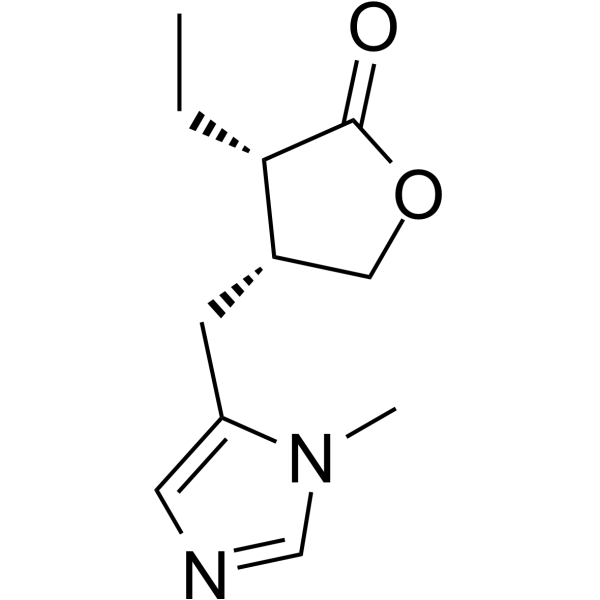
  • HY-B0726
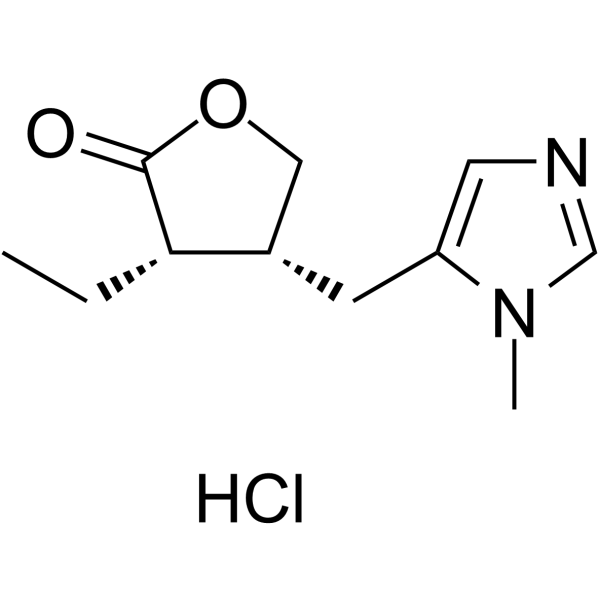
    Pilocarpine Hydrochloride
    Maximum Cited Publications
    41 Publications Verification

    mAChR Cardiovascular Disease Neurological Disease Cancer
    Pilocarpine Hydrochloride is a potent M3-type muscarinic acetylcholine receptor (M3 muscarinic receptor) agonist.
    Pilocarpine Hydrochloride
  • HY-B0726A
    Pilocarpine
    40+ Cited Publications

    mAChR Neurological Disease Cancer
    Pilocarpine is a selective M3-type muscarinic acetylcholine receptor (M3 muscarinic receptor) agonist.
    Pilocarpine
  • HY-B0527A
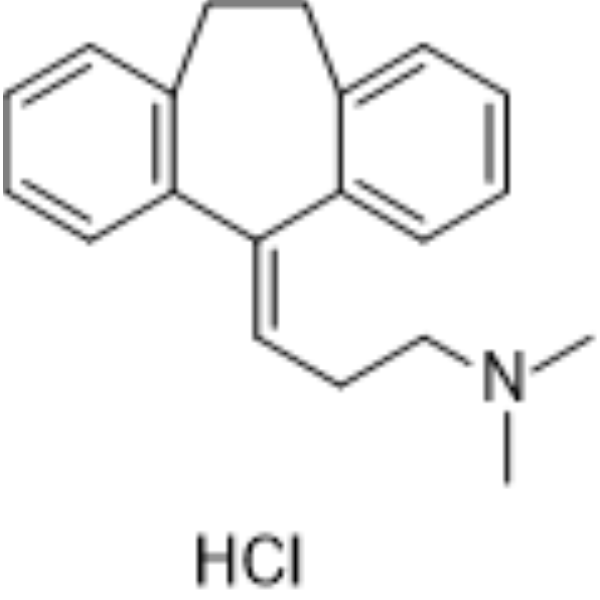
    Amitriptyline hydrochloride
    5+ Cited Publications

    Serotonin Transporter 5-HT Receptor mAChR Histamine Receptor Adrenergic Receptor Trk Receptor Sodium Channel Potassium Channel Dopamine Transporter Apoptosis Neurological Disease Inflammation/Immunology Endocrinology
    Amitriptyline hydrochloride is an orally active tricyclic antidepressant (TCA). Amitriptyline hydrochloride mainly exerts its antidepressant effect by blocking SERT (Ki = 3.45 nM) and NET (Ki = 13.3 nM), thereby increasing the concentrations of 5-hydroxytryptamine (5-HT) and norepinephrine (NE) in the synaptic cleft. Amitriptyline hydrochloride is also an agonist at α2A and TrkA/TrkB receptors, thereby exerting analgesic and neurotrophic activities (inhibiting cell apoptosis). Amitriptyline hydrochloride can reduce inflammation, angiogenesis and fibrosis. Amitriptyline hydrochloride binds to DAT (with Ki = 2.58 μM). Amitriptyline hydrochloride has high affinity for a series of receptors and can antagonize muscarinic cholinergic receptors (M1/M2/M3/M4/M5 receptors) (Ki = 11-24 nM), H1 receptors (Ki = 0.5-1.1 nM), adrenergic α1 receptors (Ki = 4.4 nM), etc., resulting in a series of side effects. Amitriptyline hydrochloride can block sodium channels and hERG potassium channel (IC50 = 4.78 μM) and it has cardiotoxicity .
    Amitriptyline hydrochloride
  • HY-105182
    Xanomeline
    5+ Cited Publications

    LY-246708

    mAChR Neurological Disease
    Xanomeline, as an effective and selective muscarinic type 1 and type 4 (M1/M4) receptor agonist, increases neuronal excitability. Xanomeline can be used for the research of neurological disorders, such as schizophrenia .
    Xanomeline
  • HY-B0527
    Amitriptyline
    5+ Cited Publications

    Serotonin Transporter Trk Receptor Sodium Channel 5-HT Receptor Histamine Receptor Adrenergic Receptor mAChR Potassium Channel Dopamine Transporter Apoptosis Neurological Disease Inflammation/Immunology Endocrinology
    Amitriptyline is an orally active tricyclic antidepressant (TCA). Amitriptyline mainly exerts its antidepressant effect by blocking SERT (Ki = 3.45 nM) and NET (Ki = 13.3 nM), thereby increasing the concentrations of 5-hydroxytryptamine (5-HT) and norepinephrine (NE) in the synaptic cleft. Amitriptyline is also an agonist at α2A and TrkA/TrkB receptors, thereby exerting analgesic and neurotrophic activities (inhibiting cell apoptosis). Amitriptyline can reduce inflammation, angiogenesis and fibrosis. Amitriptyline binds to DAT (with Ki = 2.58 μM). Amitriptyline has high affinity for a series of receptors and can antagonize muscarinic cholinergic receptors (M1/M2/M3/M4/M5 receptors) (Ki = 11-24 nM), H1 receptors (Ki = 0.5-1.1 nM), adrenergic α1 receptors (Ki = 4.4 nM), etc., resulting in a series of side effects. Amitriptyline can block sodium channels and hERG potassium channel (IC50 = 4.78 μM) and it has cardiotoxicity .
    Amitriptyline
  • HY-105182A
    Xanomeline tartrate
    5+ Cited Publications

    LY 246708 tartrate

    mAChR Neurological Disease
    Xanomeline (LY 246708) is the potent agonist of muscarinic M1/M4 receptor with antipsychotic-like activity. Xanomeline (LY 246708) increases neuronal excitability. Xanomeline (LY 246708) can be used for the research of schizophrenia .
    Xanomeline tartrate
  • HY-B1006
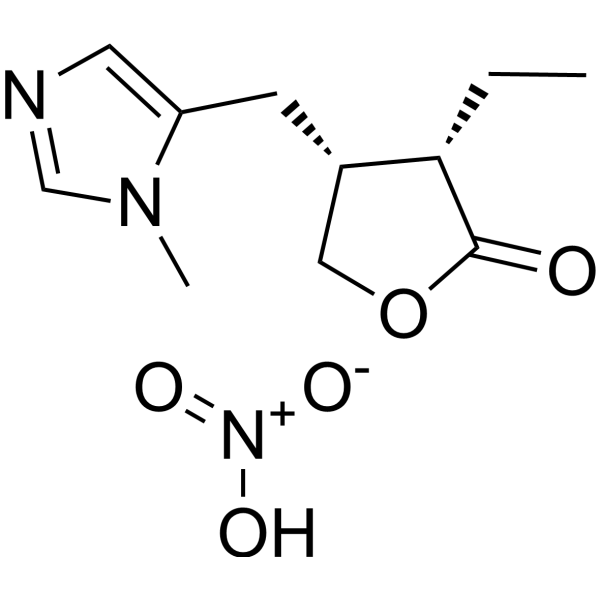
    Pilocarpine nitrate
    Maximum Cited Publications
    41 Publications Verification

    mAChR Neurological Disease Cancer
    Pilocarpine nitrate is a potent M3-type muscarinic acetylcholine receptor (M3 muscarinic receptor) agonist.
    Pilocarpine nitrate
  • HY-B0461

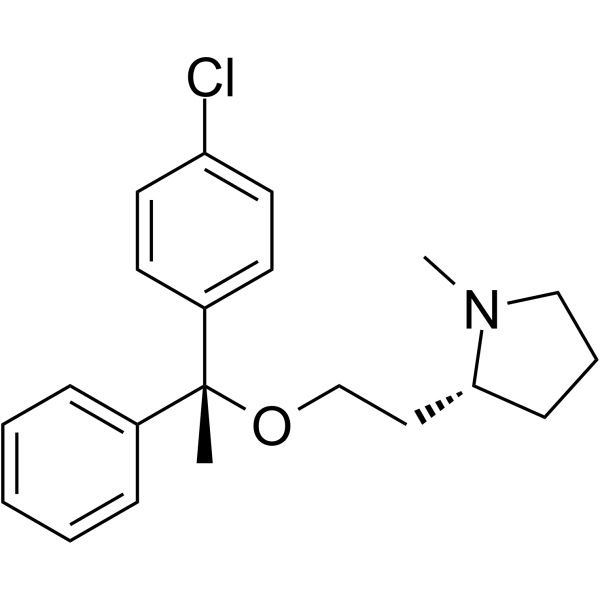
    mAChR Neurological Disease
    Trospium chloride is an orally active, specific and competitive antagonist of muscarinic cholinergic receptors (mAChRs), with antimuscarinic activity. Trospium chloride binds to muscarinic receptors M1, M2 and M3 with high affinity, but not nicotinic, cholinergic receptors .
    Trospium chloride
  • HY-A0034
    Solifenacin
    3 Publications Verification

    YM905 free base

    mAChR Neurological Disease Cancer
    Solifenacin (YM905 free base) is a novel muscarinic receptor antagonist with pKis of 7.6, 6.9 and 8.0 for M1, M2 and M3 receptors, respectively.
    Solifenacin
  • HY-A0030

    mAChR Neurological Disease Metabolic Disease Cancer
    Fesoterodine Fumarate is an orally active, nonsubtype selective, competitive muscarinic receptor (mAChR) antagonist with pKi values of 8.0, 7.7, 7.4, 7.3, 7.5 for M1, M2, M3, M4, M5 receptors, respectively. Fesoterodine Fumarate is used for the overactive bladder (OAB) .
    Fesoterodine fumarate
  • HY-A0002
    Solifenacin Succinate
    3 Publications Verification

    YM905

    mAChR Neurological Disease Cancer
    Solifenacin Succinate (YM905) is a novel muscarinic receptor antagonist with pKis of 7.6, 6.9 and 8.0 for M1, M2 and M3 receptors, respectively.
    Solifenacin Succinate
  • HY-101372A

    mAChR Neurological Disease
    Oxotremorine M iodide is a potent and non-selective muscarinic acetylcholine receptor (mAChR) agonist. Oxotremorine M iodide potentiates NMDA receptors by muscarinic receptor dependent and independent mechanisms .
    Oxotremorine M iodide
  • HY-107646

    mAChR Neurological Disease
    PD 102807 is a M4 muscarinic receptor antagonist with an IC50 of 90.7 nM. PD 102807 inhibits M1, M2, M3, M5 muscarinic receptor with IC50s of 6558.7, 3440.7, 950.0, and 7411.7 nM, respectively . Antidyskinetic effect.
    PD 102807
  • HY-107647
    (S)-(+)-Dimethindene maleate
    1 Publications Verification

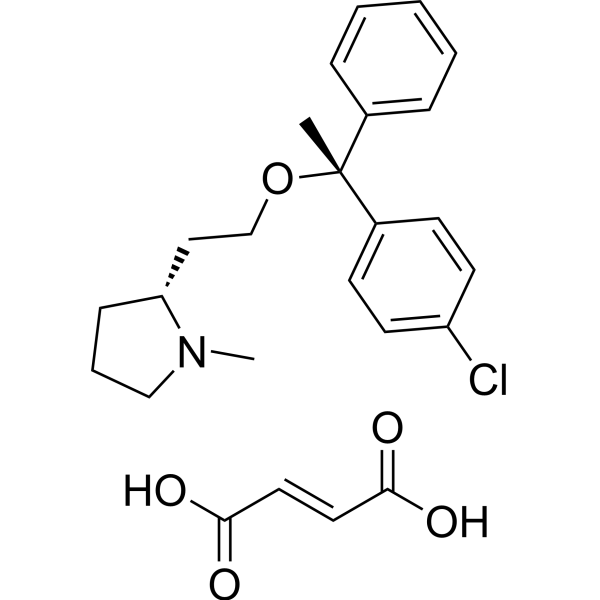
    mAChR Histamine Receptor Inflammation/Immunology
    (S)-(+)-Dimethindene maleate, an enantiomer, is a potent M2-selective muscarinic receptor antagonist (pA2 = 7.86/7.74; pKi = 7.78). (S)-(+)-Dimethindene maleate shows lower affinities for the muscarinic M1 (pA2 = 6.83/6.36; pKi = 7.08), the M3 (pA2 = 6.92/6.96; pKi = 6.70) and the M4 receptors (pKi = 7.00), respectively. (S)-(+)-Dimethindene maleate also is a histamine H1 receptor antagonist (pA2 = 7.48) .
    (S)-(+)-Dimethindene maleate
  • HY-15618

    M1 receptor modulator

    mAChR Calcium Channel Neurological Disease
    MK-7622 (M1 receptor modulator) is an orally active positive allosteric modulator of muscarinic M1 acetylcholine receptors (mAChRs). MK-7622 enhances ACh-induced calcium flux in CHO cells expressing human M1 receptors (EC50 = 21 nM) and shows robust agonist activity in rat M1-expressing CHO cells, increasing intracellular calcium. MK-7622 reverses Scopolamine (HY-N0296)-induced cognitive deficits in rhesus macaques in an object retrieval detour task. MK-7622 can be used for the study of Alzheimer's disease (AD) .
    MK-7622
  • HY-N0214
    Peimisine
    3 Publications Verification

    Ebeiensine

    mAChR Angiotensin-converting Enzyme (ACE) Apoptosis Cardiovascular Disease Inflammation/Immunology Cancer
    Peimisine (Ebeiensine) is a muscarinic M receptor antagonist and angiotensin converting enzyme (ACE) inhibitor. Peimisine shows anti-tumor, anti-inflammatory, antihypertensive activities. Peimisine can induce apoptosis and be used in cough and asthma research .
    Peimisine
  • HY-15885

    mAChR Neurological Disease
    LY2119620 is a high-affinity muscarinic M2/M4 receptor agonist.
    LY2119620
  • HY-70053

    mAChR Neurological Disease Metabolic Disease
    Fesoterodine is an orally active, nonsubtype selective, competitive muscarinic receptor (mAChR) antagonist with pKi values of 8.0, 7.7, 7.4, 7.3, 7.5 for M1, M2, M3, M4, M5 receptors, respectively. Fesoterodine is used for the overactive bladder (OAB) .
    Fesoterodine
  • HY-159829

    NBI-1117568; HTL-0016878

    mAChR Neurological Disease
    Direclidine (NBI-1117568, HTL-0016878) is a selective orthosteric agonist targeting the muscarinic acetylcholine M4 receptor, exhibiting very low affinity for M1, M2, M3, and M5 receptors. It binds to the orthosteric site of the M4 receptor in a non-covalent, competitive manner. Direclidine specifically activates the M4 receptor, inhibiting the release of acetylcholine from striatal cholinergic interneurons, thereby regulating the balance of the dopaminergic system and reducing psychiatric symptoms associated with excessive dopamine release. Direclidine can improve symptoms associated with neuropsychiatric disorders and is used in research on schizophrenia and other neuropsychiatric disorders .
    Direclidine
  • HY-122743
    Iperoxo
    2 Publications Verification

    mAChR Neurological Disease
    Iperoxo is a potent superagonist of muscarinic acetylcholine receptor (mAChR) that activates M1, M2 and M3 receptors with pEC50 of 9.87, 10.1 and 9.78. Iperoxo can be used for direct probing activation-related conformational transitions of muscarinic receptors when labeled with tritium .
    Iperoxo
  • HY-112209
    VU0467154
    5 Publications Verification

    mAChR Neurological Disease
    VU0467154 is a positive allosteric modulator of the M4 muscarinic acetylcholine receptor (mAChR), potentiating the response to ACh with pEC50s of 7.75, 6.2 and 6 for rat, human and cynomolgus monkey M4 receptor, respectively.
    VU0467154
  • HY-136587

    Histamine Receptor mGluR Inflammation/Immunology
    Oxomemazine is a phenothiazine-based histamine H1-receptor blocker. Oxomemazine is a selective antagonist for muscarinic M1 receptor, displays about 20-fold difference in the affinity for high (Ki = 84 nM, M1 receptor) and low (Ki = 1.65 μM, M2 receptor) affinity sites. Oxomemazine is an antihistamine and anticholinergic agent used for the study of cough treatment. Oxomemazine is protective against anaphylactic microshock in guinea pigs .
    Oxomemazine
  • HY-107651
    VU 0365114
    1 Publications Verification

    mAChR Metabolic Disease
    VU 0365114 is a selective mAChR M5 positive allosteric modulator, with an EC50 of 2.7 μM, and >30 μM for M1, M2, M3 and M4 receptors. VU 0365114 increases insulin secretion stimulated by ACh in human β-cells .
    VU 0365114
  • HY-P1840

    Neuropeptide Y Receptor Neurological Disease Endocrinology
    Galanin Receptor Ligand M35 is a high-affinity ligand and antagonist of galanin receptor (Kd=0.1 nM). Galanin Receptor Ligand M35 exerts a Ki values of 0.11 and 2.0 nM for human galanin receptor type 1 and 2, respectively .
    Galanin Receptor Ligand M35
  • HY-122203
    PCS1055 dihydrochloride
    2 Publications Verification

    mAChR Cholinesterase (ChE) Neurological Disease
    PCS1055 dihydrochloride is a potent, selective and competitive muscarinic M4 receptor antagonist with an IC50 of 18.1 nM and a Kd of 5.72 nM. PCS1055 dihydrochloride inhibits radioligand [ 3H]-NMS binding to the M4 receptor with a Ki of 6.5 nM. PCS1055 dihydrochloride exhibits >100-fold selectivity over M1-, M3-, and M5-receptors and 30-fold selectivity at the M2 receptor. PCS1055 dihydrochloride is also a potent AChE inhibitor with IC50 s of 22 nM and 120 nM for electric eel and human AChE, respectively .
    PCS1055 dihydrochloride
  • HY-I0230
    Solifenacin hydrochloride
    3 Publications Verification

    YM905 hydrochloride

    mAChR Neurological Disease Cancer
    Solifenacin hydrochloride (YM905 hydrochloride) is a muscarinic receptor antagonist, with pKis of 7.6, 6.9 and 8.0 for M1, M2 and M3 receptors, respectively.
    Solifenacin hydrochloride
  • HY-101358

    AH-002

    Melatonin Receptor Neurological Disease
    8-M-PDOT (AH-002) is a selective melatonin MT2 receptor agonist. 8-M-PDOT is 5.2-fold selective for MT2 over MT1 receptors. 8-M-PDOT binds human recombinant MT2 and MT2 receptors with pKi values of 8.23 and 8.95 respectively. 8-M-PDOT has anxiolytic-like activity .
    8-M-PDOT
  • HY-128975

    Endogenous Metabolite Neurological Disease
    m-Tyramine hydrobromide is an endogenous trace amine neuromodulator. m-Tyramine hydrobromide has effects on the adrenergic and dopaminergic receptor [1, 2].
    m-Tyramine hydrobromide
  • HY-118363

    mAChR Neurological Disease
    Lu AE51090 is selective muscarinic M1 receptor agonist with blood-brain barrier penetration. Lu AE51090 activates human M1 receptor with EC50 of 61 nM, while showing no significant agonism at M2-M5 receptors. Lu AE51090 exerts procognitive effects in mice. Lu AE51090 can be used for the study of Alzheimer’s disease (AD) and cognitive impairment associated with schizophrenia (CIAS) .
    Lu AE51090
  • HY-N7247

    mAChR Metabolic Disease
    Thiochrome, a natural oxidation product and metabolite of thiamine, is a selective M4 muscarinic receptor of acetylcholine (ACh) affinity enhancer. Thiochrome has neutral cooperativity with ACh at M1 to M3 receptors .
    Thiochrome
  • HY-B0461R

    mAChR Reference Standards Neurological Disease
    Trospium (chloride) (Standard) is the analytical standard of Trospium (chloride). This product is intended for research and analytical applications. Trospium chloride is an orally active, specific and competitive antagonist of muscarinic cholinergic receptors (mAChRs), with antimuscarinic activity. Trospium chloride binds to muscarinic receptors M1, M2 and M3 with high affinity, but not nicotinic, cholinergic receptors .
    Trospium chloride (Standard)
  • HY-B0527AR
    Amitriptyline hydrochloride (Standard)
    4 Publications Verification

    Reference Standards Serotonin Transporter 5-HT Receptor Histamine Receptor mAChR Adrenergic Receptor Trk Receptor Sodium Channel Potassium Channel Dopamine Transporter Apoptosis Neurological Disease Inflammation/Immunology Endocrinology
    Amitriptyline hydrochloride (Standard) is the analytical standard of Amitriptyline hydrochloride (HY-B0527A). This product is intended for research and analytical applications. Amitriptyline hydrochloride is an orally active tricyclic antidepressant (TCA). Amitriptyline hydrochloride mainly exerts its antidepressant effect by blocking SERT (Ki = 3.45 nM) and NET (Ki = 13.3 nM), thereby increasing the concentrations of 5-hydroxytryptamine (5-HT) and norepinephrine (NE) in the synaptic cleft. Amitriptyline hydrochloride is also an agonist at α2A and TrkA/TrkB receptors, thereby exerting analgesic and neurotrophic activities (inhibiting cell apoptosis). Amitriptyline hydrochloride can reduce inflammation, angiogenesis and fibrosis. Amitriptyline hydrochloride binds to DAT (with Ki = 2.58 μM). Amitriptyline hydrochloride has high affinity for a series of receptors and can antagonize muscarinic cholinergic receptors (M1/M2/M3/M4/M5 receptors) (Ki = 11-24 nM), H1 receptors (Ki = 0.5-1.1 nM), adrenergic α1 receptors (Ki = 4.4 nM), etc., resulting in a series of side effects. Amitriptyline hydrochloride can block sodium channels and hERG potassium channel (IC50 = 4.78 μM) and it has cardiotoxicity.
    Amitriptyline hydrochloride (Standard)
  • HY-14825A

    SVT-40776 D-tartrate

    mAChR Inflammation/Immunology
    Tarafenacin (SVT-40776) (D-tartrate) is an orally active, selective M3 muscarinic receptor (M3 muscarinic receptor) antagonist with 203-fold selectivity over the M2 muscarinic receptor. Tarafenacin (D-tartrate) does not affect atrial contraction, arterial blood pressure or arterial pressure at high doses. Tarafenacin (D-tartrate) can be used in the research of overactive bladder .
    Tarafenacin D-tartrate
  • HY-P1025A

    Neuropeptide Y Receptor Cardiovascular Disease Neurological Disease
    M40 TFA is the TFA salt form of M40. M40 TFA is an antagonist or a weak agonist for galanin receptor depending on different subtypes of galanin receptors in the brain, hypothalamus, hippocampus, amygdala and pancreas .
    M40 TFA
  • HY-B0461S

    Isotope-Labeled Compounds mAChR Neurological Disease
    Trospium-d8 (chloride) is the deuterium labeled Trospium chloride. Trospium chloride is an orally active, specific and competitive antagonist of muscarinic cholinergic receptors (mAChRs), with antimuscarinic activity. Trospium chloride binds to muscarinic receptors M1, M2 and M3 with high affinity, but not nicotinic, cholinergic receptors .
    Trospium-d8 chloride
  • HY-70053A

    mAChR Neurological Disease Metabolic Disease Cancer
    Fesoterodine L-mandelate is an orally active, nonsubtype selective, competitive muscarinic receptor (mAChR) antagonist with pKi values of 8.0, 7.7, 7.4, 7.3, 7.5 for M1, M2, M3, M4, M5 receptors, respectively. Fesoterodine L-mandelate is used for the overactive bladder (OAB) .
    Fesoterodine L-mandelate
  • HY-B0527AS

    Isotope-Labeled Compounds Serotonin Transporter 5-HT Receptor Histamine Receptor mAChR Adrenergic Receptor Trk Receptor Sodium Channel Potassium Channel Dopamine Transporter Apoptosis Neurological Disease Inflammation/Immunology Endocrinology
    Amitriptyline-d6 hydrochloride is the deuterium labeled Amitriptyline hydrochloride (HY-B0527A). Amitriptyline hydrochloride is an orally active tricyclic antidepressant (TCA). Amitriptyline hydrochloride mainly exerts its antidepressant effect by blocking SERT (Ki = 3.45 nM) and NET (Ki = 13.3 nM), thereby increasing the concentrations of 5-hydroxytryptamine (5-HT) and norepinephrine (NE) in the synaptic cleft. Amitriptyline hydrochloride is also an agonist at α2A and TrkA/TrkB receptors, thereby exerting analgesic and neurotrophic activities (inhibiting cell apoptosis). Amitriptyline hydrochloride can reduce inflammation, angiogenesis and fibrosis. Amitriptyline hydrochloride binds to DAT (with Ki = 2.58 μM). Amitriptyline hydrochloride has high affinity for a series of receptors and can antagonize muscarinic cholinergic receptors (M1/M2/M3/M4/M5 receptors) (Ki = 11-24 nM), H1 receptors (Ki = 0.5-1.1 nM), adrenergic α1 receptors (Ki = 4.4 nM), etc., resulting in a series of side effects. Amitriptyline hydrochloride can block sodium channels and hERG potassium channel (IC50 = 4.78 μM) and it has cardiotoxicity.
    Amitriptyline-d6 hydrochloride
  • HY-148524

    mAChR Adrenergic Receptor Cardiovascular Disease
    β2AR/M-receptor agonist-1 (example 131) is a muscarinic antagonist and β2 adrenoceptor agonist (MABA). β2AR/M-receptor agonist-1 shows potency to β2 adrenoceptor with an EC50 value of 9.2 nM. β2AR/M-receptor agonist-1 also has potency to muscarinic receptor with a Ki value of 30.2 nM. β2AR/M-receptor agonist-1 shows MABA potency with an EC50 value of 4.0 nM .
    β2AR/M-receptor agonist-1
  • HY-148525

    β2AR/M-receptor agonist-2

    mAChR Adrenergic Receptor Cardiovascular Disease Inflammation/Immunology
    β2AR/M-receptor agonist-2 (compound 15) is a muscarinic antagonist and β2 adrenoceptor agonist (MABA). β2AR/M-receptor agonist-2 shows potency to β2 adrenoceptor with an EC50 value of 3.7 nM. β2AR/M-receptor agonist-2 also has potency to human cloned M3 receptor with a Ki value of 0.73 nM. β2AR/M-receptor agonist-2 is a potent bronchodilator, it can be used for the research of chronic obstructive pulmonary disease (COPD) .
    PF-4348235
  • HY-W014208

    AF-267B

    mAChR Others
    NGX-267 is a selective agonist of the actin M1 receptor, which has high selectivity among the five actin receptor subtypes, especially for the M1 receptor rather than the M3 receptor. NGX-267 also has significant differences in affinity for dopamine D2 and 5-HT2B receptors .
    NGX-267
  • HY-A0030S

    mAChR Metabolic Disease
    Fesoterodine-d7 (fumarate) is the deuterium labeled Fesoterodine fumarate . Fesoterodine Fumarate is an orally active, nonsubtype selective, competitive muscarinic receptor (mAChR) antagonist with pKi values of 8.0, 7.7, 7.4, 7.3, 7.5 for M1, M2, M3, M4, M5 receptors, respectively. Fesoterodine Fumarate is used for the overactive bladder (OAB) .
    Fesoterodine-d7 fumarate
  • HY-177310

    mAChR Neurological Disease
    Muscarinic M3 receptor antagonist-2 (Compound 30) is a muscarinic M3 receptor antagonist .
    Muscarinic M3 receptor antagonist-2
  • HY-177309

    mAChR Neurological Disease
    Muscarinic M3 receptor antagonist-1 (Example 4) is a muscarinic acetylcholine receptor M3 antagonist. Muscarinic M3 receptor antagonist-1 can be used to study inflammatory and obstructive airway diseases .
    Muscarinic M3 receptor antagonist-1
  • HY-148526

    Adrenergic Receptor mAChR Metabolic Disease
    β2AR/M3-receptor agonist-1 (example 9) is a potent β2AR and M3 receptor agonist. β2AR/M3-receptor agonist-1 shows M3 receptor affinity with a pIC50 value of 9.3. β2AR/M3-receptor agonist-1 has the potential for the research of respiratory tract disorders .
    β2AR/M3-receptor agonist-1
  • HY-148533

    mAChR Adrenergic Receptor Neurological Disease
    β2AR agonist /M-receptor antagonist-1 is a potent dual muscarinic antagonist/beta 2 agonist (MABA). β2AR agonist /M-receptor antagonist-1 potently relaxes either Carbachol?(HY-B1208)-induced contraction, in the absence (MABA) or presence of Propranolol?(HY-B1208), or Histamine(HY-B1204)-induced contraction (β2) .
    β2AR agonist /M-receptor antagonist-1
  • HY-N0214A
    Peimisine hydrochloride
    3 Publications Verification

    Ebeiensine hydrochloride

    mAChR Angiotensin-converting Enzyme (ACE) Apoptosis Cardiovascular Disease Inflammation/Immunology Cancer
    Peimisine (Ebeiensine) hydrochloride is a muscarinic M receptor antagonist and angiotensin converting enzyme (ACE) inhibitor. Peimisine hydrochloride shows anti-tumor, anti-inflammatory, antihypertensive activities. Peimisine can induce apoptosis and be used in cough and asthma research .
    Peimisine hydrochloride
  • HY-118356

    Neurokinin Receptor mAChR Neurological Disease
    WIN 62,577 is a rat-specific, but non-human, NK1 receptor antagonist. WIN 62,577 interacts with M1-M4 mAChRs and is an allosteric enhancer of acetylcholine affinity targeting the M3 receptor.
    WIN 62,577
  • HY-B0726R

    Reference Standards mAChR Neurological Disease Cancer
    Pilocarpine (Hydrochloride) (Standard) is the analytical standard of Pilocarpine (Hydrochloride). This product is intended for research and analytical applications. Pilocarpine Hydrochloride is a potent M3-type muscarinic acetylcholine receptor (M3 muscarinic receptor) agonist.
    Pilocarpine Hydrochloride (Standard)
  • HY-U00302

    mAChR Inflammation/Immunology
    CHF5407 is a selective, long-acting and competitive muscarinic M3 receptor antagonist. CHF5407 shows subnanomolar affinities for human muscarinic M1 (hM1), M2 (hM2) and M3 (hM3) receptors. CHF5407 shows a prolonged antibronchospastic activity .
    CHF5407
  • HY-U00030

    mAChR Neurological Disease
    Rispenzepine is a novel antimuscarinic compound with a preferential action at M1, and M3 receptor subtypes.
    Rispenzepine

Inquiry Online

Your information is safe with us. * Required Fields.

Salutation


Country or Region *

Applicant Name *


Organization Name *

Department *


Email Address *


Product Name *

Cat. No.


Requested quantity *

Phone Number *


Remarks

Inquiry Online

Inquiry Information

Product Name:
Cat. No.:
Quantity:
MCE Japan Authorized Agent:

