
19 Results for "

Muscle tone

" in MedChemExpress (MCE) Product Catalog:
Products (19)

19 Results for "Muscle tone" in MCE Product Catalog:

4
4 Cited Publications
Cat. No.: HY-14290
CAS No.: 60560-33-0
Purity:  99.89%
Synonyms: P-1134
Target:  

Potassium Channel

Research Areas:  

Cardiovascular Disease

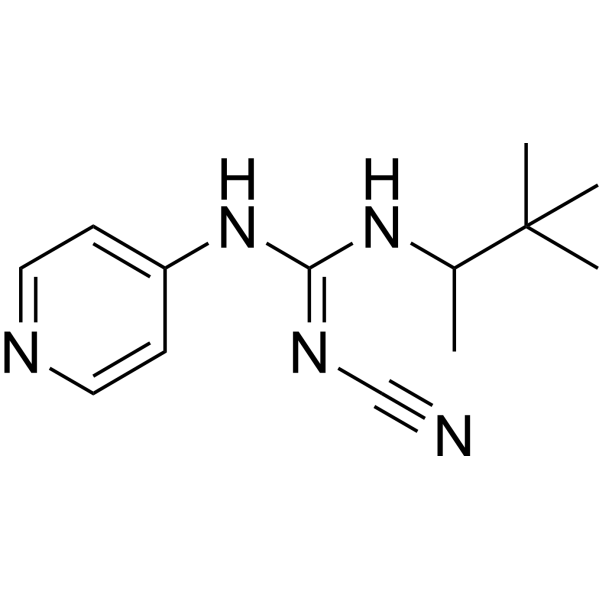
Pinacidil (P-1134) is a potent activator of ATP-sensitive potassium channel. Pinacidil is an antihypertensive agent hyperpolarizes vascular smooth muscle by opening K + channels. Pinacidil enhances K +-efflux in smooth muscle. Pinacidil has vasorelaxant properties. Pinacidil is able to inhibit spontaneous tone and of reducing agonist induced contractions. Pinacidil can be studied in research area such as cardiovascular diseases .
loading...
    loading...
4
4 Cited Publications
Cat. No.: HY-14290A
CAS No.: 85371-64-8
Purity:  99.82%
Synonyms: P-1134 monohydrate
Target:  

Potassium Channel

Research Areas:  

Cardiovascular Disease

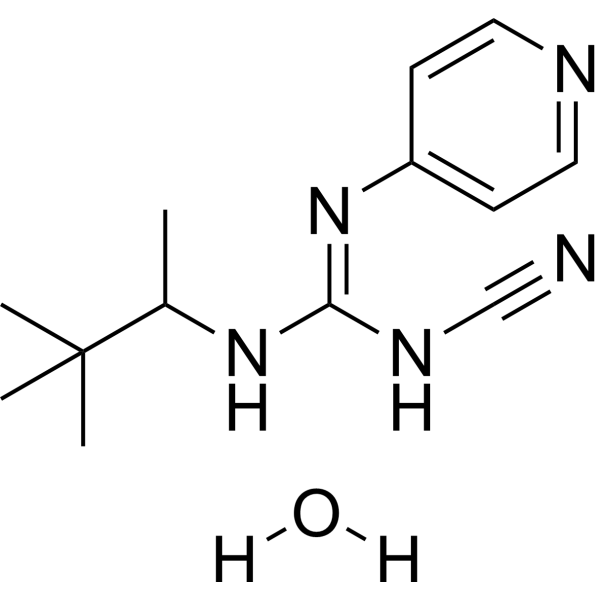
Pinacidil (P-1134) monohydrate is a potent activator of ATP-sensitive potassium channel. Pinacidil monohydrate is an antihypertensive agent hyperpolarizes vascular smooth muscle by opening K + channels. Pinacidil monohydrate enhances K +-efflux in smooth muscle. Pinacidil monohydrate has vasorelaxant properties. Pinacidil monohydrate is able to inhibit spontaneous tone and of reducing agonist induced contractions. Pinacidil monohydrate can be studied in research area such as cardiovascular diseases .
loading...
    loading...
2
2 Cited Publications
Cat. No.: HY-P0004
CAS No.: 50-57-7
Synonyms: Lysine vasopressin; [Lys8]-Vasopressin
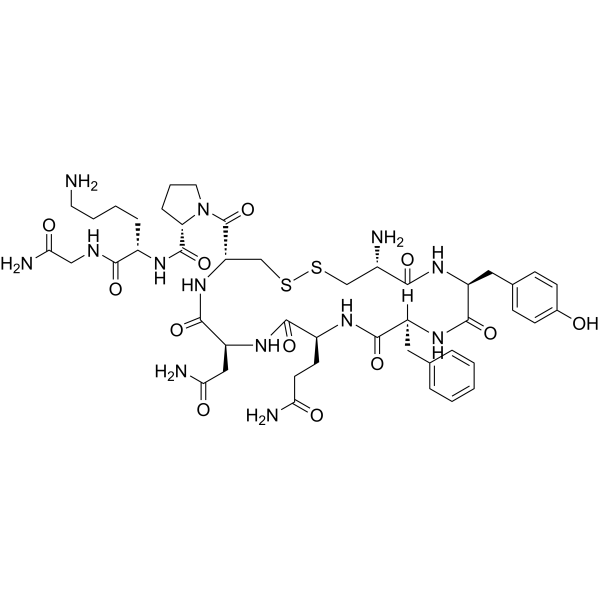
Lysipressin (Lysine vasopressin ; [Lys8]-Vasopressin ) is a neurohypophyseal nonapeptide with dual cardiovascular regulatory activities of peripheral pressor action and central hypotensive action, and it also regulates pain perception in the body. Lysipressin is an Oxytocin Receptor agonist, with a Ki value of 10.2 nM for porcine OT receptor. Lysipressin stimulates contraction of rabbit bladder smooth muscle via V1-vasopressin receptor. The central hypotensive effect of Lysipressin depends on the sympathetic tone pathway. Lysipressin dose-dependently prolongs tail-flick latency in rats, producing a stable central antinociceptive effect. Lysipressin can be used in studies related to cardiovascular regulation, hypertension and pain .
loading...
    loading...
2
2 Cited Publications
Cat. No.: HY-P0004A
CAS No.: 83968-49-4
Synonyms: Lysine vasopressin acetate; [Lys8]-Vasopressin acetate
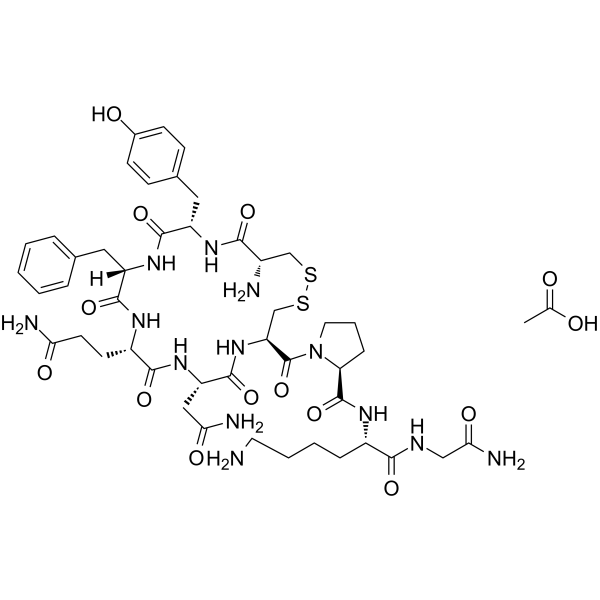
Lysipressin acetate (Lysine vasopressin acetate; [Lys8]-Vasopressin acetate) is a neurohypophyseal nonapeptide with dual cardiovascular regulatory activities of peripheral pressor action and central hypotensive action, and it also regulates pain perception in the body. Lysipressin acetate is an Oxytocin Receptor agonist, with a Ki value of 10.2 nM for porcine OT receptor. Lysipressin acetate stimulates contraction of rabbit bladder smooth muscle via V1-vasopressin receptor. The central hypotensive effect of Lysipressin acetate depends on the sympathetic tone pathway. Lysipressin acetate dose-dependently prolongs tail-flick latency in rats, producing a stable central antinociceptive effect. Lysipressin acetate can be used in studies related to cardiovascular regulation, hypertension and pain .
loading...
    loading...
Cat. No.: HY-128891
CAS No.: 64840-90-0
Target:  

P2X Receptor

Research Areas:  

Neurological Disease

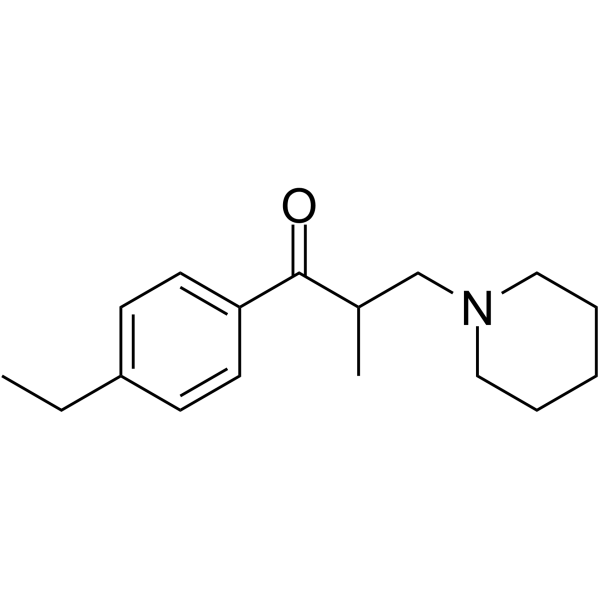
Eperisone ((±)-Eperisone) is an antispasmodic agent and centrally acting muscle relaxant useful in the study of diseases characterized by muscle stiffness and pain. Eperisone acts by relaxing skeletal and vascular smooth muscle, resulting in vasodilation, decreased muscle tone, improved circulation, and inhibition of pain reflexes. Eperisone is also a potent P2X7 receptor antagonist .
loading...
    loading...
Cat. No.: HY-19699
CAS No.: 86-86-2
Synonyms: NAAM; 1-Naphthaleneacetamide; α-Naphthylacetamide
1-Naphthylacetamide is an orally active nonsteroidal anti-inflammatory agent (NAIA) and also an indole-type auxin plant growth regulator. 1-Naphthylacetamide inhibits inflammatory response-related pathways and modulates plant hormone signaling, exhibiting anti-inflammatory, local anesthetic, antispasmodic, analgesic, and diuretic activities. 1-Naphthylacetamide promotes plant cell expansion, differentiation, and fruit enlargement. Additionally, 1-Naphthylacetamide induces central nervous system (CNS) depression in mice, characterized by reduced spontaneous activity, decreased irritability, decreased muscle tone, and attenuated ear-cuff reflex, ipsilateral flexor reflex, and corneal reflex [1][2].
loading...
    loading...
Cat. No.: HY-113443
CAS No.: 71774-10-2
Category:  

Microorganisms

Target:  

AP-1

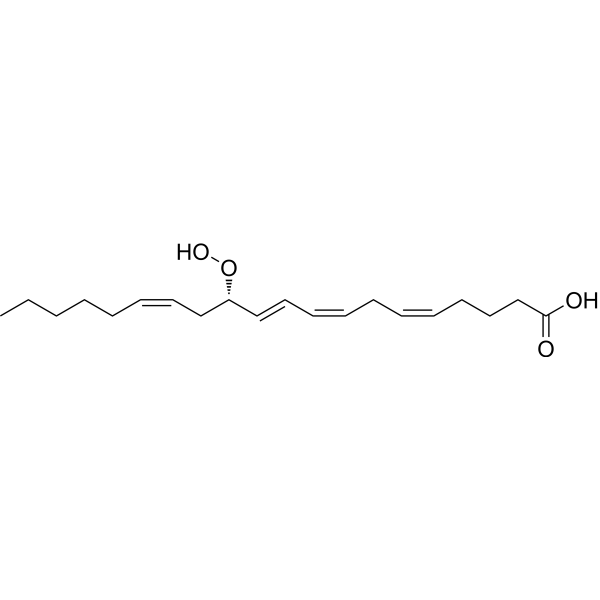
12(S)-HPETE is a 12-hydroxyeicosatetraenoic acid. 12(S)-HPETE has the function of regulating vascular tone. 12(S)-HPETE induces the expression of c-Fos and c-Jun protein and increases activating protein 1 (AP-1) activity in vascular smooth muscle cells.12(S)-HPETE may play a physiological role in vasomotor regulation through endothelium itself and crosstalk between blood cells and endothelium. 12(S)-HPETE can be used in the study of cerebrovascular tension .
loading...
    loading...
Cat. No.: HY-101220
CAS No.: 24140-98-5
Target:  

Dopamine Receptor

Research Areas:  

Neurological Disease

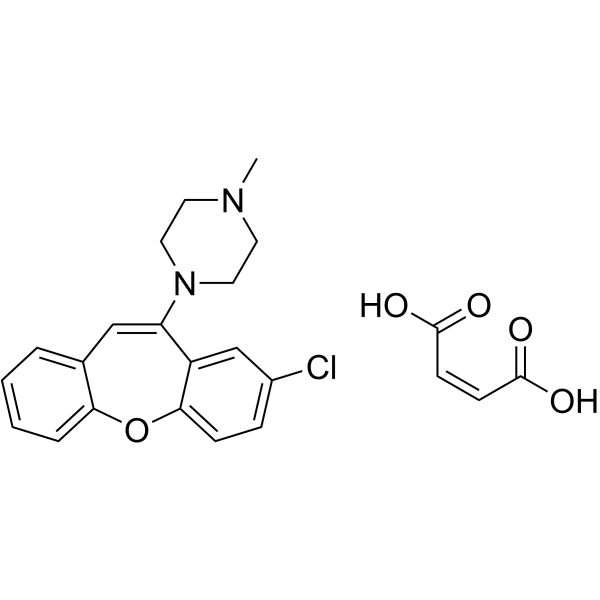
RMI-61140 is an orally active neuroleptics. RMI-61140 decreases spontaneous motility and muscle tone in mice. RMI-61140 increases barbit urate-induced sleep and causes eyelid ptosis. RMI-61140 can be used for schizophrenia research .
loading...
    loading...
Cat. No.: HY-126175
CAS No.: 1212-37-9
Target:  

Endogenous Metabolite

Research Areas:  

Neurological Disease

Neostigmine iodide is a reversible acetylcholinesterase inhibitor with muscle tone-enhancing activity. Neostigmine iodide is primarily used to improve muscle function in patients with myasthenia gravis. Neostigmine iodide is also used in routine anesthesia to reverse the effects of nondepolarizing muscle relaxants such as rocuronium .
loading...
    loading...
Cat. No.: HY-19244
CAS No.: 170148-29-5
Target:  

Potassium Channel

Research Areas:  

Cardiovascular Disease

JTV-506 is a potent ATP-sensitive potassium channel opener. JTV-506 inhibits Histamine (HY-B1204)-induced contraction of tracheal smooth muscle by activation of KATP channels. JTV-506 attenuates pulmonary vascular tone through its direct action on vascular smooth muscle cells. JTV-506 can be used for pulmonary hypertension research .
loading...
    loading...
Cat. No.: HY-127004
CAS No.: 140944-30-5
Synonyms: RGH-5002
Target:  

Sodium Channel

Research Areas:  

Others

Silperisone hydrochloride is an organosilicone compound similar to tolperisone that has centrally acting muscle relaxant properties. Silperisone (hydrochloride) is a sodium channel protein type 2 alpha channel blocker that blocks sodium and calcium channels in cells, reduces muscle cell excitability and contraction, reduces peripheral tone, and acts as a muscle relaxant and peripheral vascular dilator. Silperisone (hydrochloride) is used to study recurrent painful myoclonus due to spinal cord injury, abnormal hypertonia due to cerebrovascular disease, myotonia symptoms, pyramidal tonia syndrome, multiple sclerosis myospasm, and myelitis .
loading...
    loading...
Cat. No.: HY-14290R
CAS No.: 60560-33-0
Synonyms: P-1134 (Standard)
Pinacidil (Standard) is the analytical standard of Pinacidil. This product is intended for research and analytical applications. Pinacidil is a potent activator of ATP-sensitive potassium channel. Pinacidil is an antihypertensive agent hyperpolarizes vascular smooth muscle by opening K + channels. Pinacidil enhances K +-efflux in smooth muscle. Pinacidil has vasorelaxant properties. Pinacidil is able to inhibit spontaneous tone and of reducing agonist induced contractions. Pinacidil can be studied in research area such as cardiovascular diseases .
loading...
    loading...
Cat. No.: HY-P2590
CAS No.: 113611-68-0
Target:  

Peptides

Research Areas:  

Others

Tnrnflrfamide is a neuropeptide that modulates the receptor muscles of the lobster abdominal stretch receptors and their exoskeletal muscle homologues. Tnrnflrfamide enhances motor performance, including the amplitude of excitatory postsynaptic potentials and the development of nerve-evoked tension .
loading...
    loading...
Cat. No.: HY-174257
CAS No.: 2408134-22-3
Research Areas:  

Inflammation/Immunology

RCD405 is a bronchodilator. RCD405 exerts relaxant effects by acting directly on human airway smooth muscle (hASM) with an EC50 value of 12 μM for histamine-induced contractions and 45.71 μM for carbachol-induced contractions. RCD405 inhibits cholinergic and histaminergic tone and reduces electrically stimulated (EFS)-induced contractions. RCD405 is promising for research of asthma and chronic obstructive pulmonary disease (COPD) .
loading...
    loading...
Cat. No.: HY-W194842
CAS No.: 525-41-7
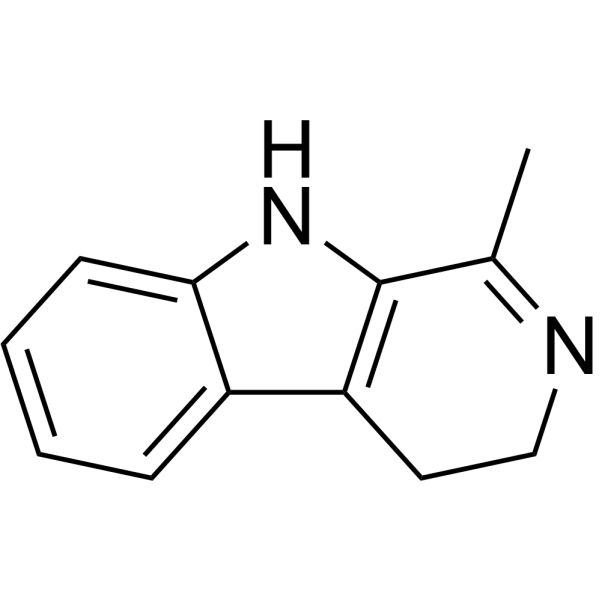
Harmalan is a tryptamine binding site stimulant and an imidazoline binding site ligand. Harmalan can be isolated from the leaves of Flindersia laevicarpa. Harmalan elevates 5-HT (HY-B1473A) levels and reduces 5-HIAA levels in the cerebral cortex. Harmalan increases spontaneous motor activity, induces clonic convulsions, produces anxiogenic effects, and elicits head weaving, hindlimb abduction, trunk curvature, piloerection, resting tremor, ataxia, forelimb abduction with increased muscle tone, and occasional alternating forepaw treading behaviors .
loading...
    loading...
Cat. No.: HY-P0004R
CAS No.: 50-57-7
Synonyms: Lysine vasopressin (Standard); [Lys8]-Vasopressin (Standard)
Lysipressin (Standard) is the analytical standard of Lysipressin (HY-P0004). This product is intended for research and analytical applications. Lysipressin (Lysine vasopressin ; [Lys8]-Vasopressin ) is a neurohypophyseal nonapeptide with dual cardiovascular regulatory activities of peripheral pressor action and central hypotensive action, and it also regulates pain perception in the body. Lysipressin is an Oxytocin Receptor agonist, with a Ki value of 10.2 nM for porcine OT receptor. Lysipressin stimulates contraction of rabbit bladder smooth muscle via V1-vasopressin receptor. The central hypotensive effect of Lysipressin depends on the sympathetic tone pathway. Lysipressin dose-dependently prolongs tail-flick latency in rats, producing a stable central antinociceptive effect. Lysipressin can be used in studies related to cardiovascular regulation, hypertension and pain .
loading...
    loading...
Cat. No.: HY-P5007
CAS No.: 78362-34-2
Research Areas:  

Cardiovascular Disease

Copeptin (human) is a peptide biochemical reagent corresponding to the 39 amino acid sequence at the C-terminus of human pre-provasopressin, which serves as a stable surrogate biomarker reflecting the secretion of arginine vasopressin (AVP). Copeptin (human) can be used in studies related to AVP secretion, fluid and osmotic homeostasis, stress responses, and cardiovascular biomarkers .
loading...
    loading...
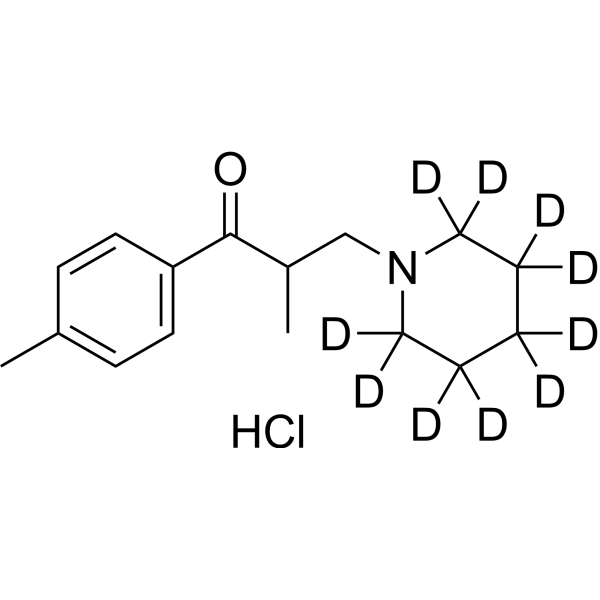
Cat. No.: HY-B1139S
CAS No.: 1185160-65-9
Tolperisone-d10 (hydrochloride) is the deuterium labeled Tolperisone hydrochloride. Tolperisone hydrochloride is a centrally acting muscle relaxant, is indicated for use in the treatment of pathologically increased tone of the cross-striated muscle caused by neurological diseases (damage of the pyramidal tract, multiple sclerosis, myelopathy, encephalomyelitis) and of spastic paralysis and other encephalopathies manifested with muscular dystonia.
loading...
    loading...
Cat. No.: HY-14290AR
CAS No.: 85371-64-8
Synonyms: P-1134 monohydrate (Standard)
Pinacidil (monohydrate) (Standard) is the analytical standard of Pinacidil (monohydrate). This product is intended for research and analytical applications. Pinacidil (P-1134) monohydrate is a potent activator of ATP-sensitive potassium channel. Pinacidil monohydrate is an antihypertensive agent hyperpolarizes vascular smooth muscle by opening K+ channels. Pinacidil monohydrate enhances K+-efflux in smooth muscle. Pinacidil monohydrate has vasorelaxant properties. Pinacidil monohydrate is able to inhibit spontaneous tone and of reducing agonist induced contractions. Pinacidil monohydrate can be studied in research area such as cardiovascular diseases .
loading...
    loading...
  • 1

