





Search Result
Results for "
NSG mice
" in MedChemExpress (MCE) Product Catalog:
1
Biochemical Assay Reagents
| Cat. No. |
Product Name |
Target |
Research Areas |
Chemical Structure |
-
- HY-157941
-
|
|
ATM/ATR
Checkpoint Kinase (Chk)
DNA/RNA Synthesis
|
Cancer
|
|
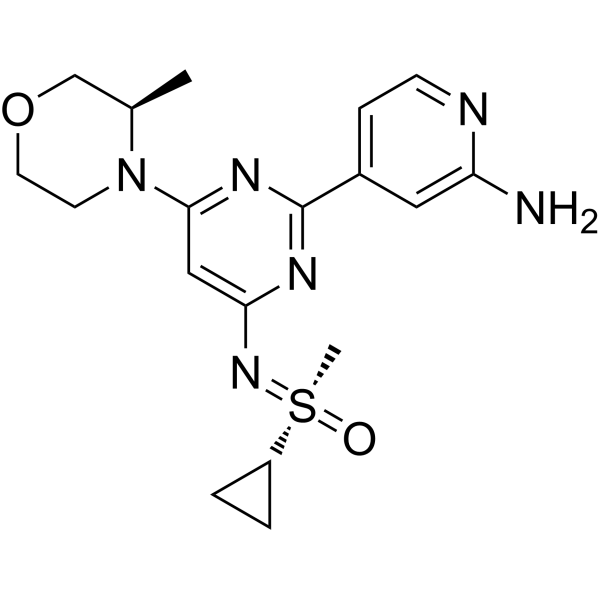
ART0380 is a potent, selective and orally active ATR kinase inhibitor. ART0380 potently inhibits human ATR-ATRIP complex with an IC50 of 51.7 nM. ART0380 binds the ATP pocket of the ATR-ATRIP complex, blocks ATR-dependent Chk1 serine 345 phosphorylation, and induces cell cycle disorder and DNA damage. ART0380 demonstrates potent and selective antitumor activity in preclinical models with varying types of ataxia-telangiectasia mutated (ATM) gene aberrancy. ART0380 can be used for the research of cancer, such as colorectal cancer and prostate cancer .
|
-
-
- HY-145765
-
-
-
- HY-P99222
-
|
MGA-031; PRV-031
|
CD3
|
Metabolic Disease
|
|
Teplizumab (MGA-031) is a Fc receptor non-binding anti-human CD3 monoclonal antibody. Teplizumab reduces the loss of beta-cell function. Teplizumab can be used in the research of type 1 diabetes .
|
-
-
- HY-175282
-
|
|
Apoptosis
Caspase
CDK
PARP
Akt
Autophagy
Atg8/LC3
|
Cancer
|
|
ASX-173 is an orally active inhibitor of asparagine synthetase (ASNS) (IC50 = 0.113 μM, Ki = 0.4 nM). ASX-173 enhances the anticancer activity of L-asparaginase (ASNase) (HY-P1923). ASX-173 disrupts nucleotide synthesis and induces leukemia cell cycle arrest, apoptosis and autophagy in leukemia cells in combination with ASNase. ASX-173 slows the growth of OCI-AML2 xenografts in combination with ASNase. ASX-173 is indicated for the study of acute lymphoblastic leukemia, acute myeloid leukemia, colorectal cancer, and other cancers .
|
-
-
- HY-P99199
-
|
NI-0401
|
CD3
|
Inflammation/Immunology
|
|
Foralumab (NI-0401) is a potent, orally active human monoclonal antibody targeting the CD3. Foralumab modulates immune responses by human cells in NSG mice that were reconstituted with human hematopoietic stem cells .
|
-
-
- HY-151902
-
|
|
PROTACs
JAK
|
Cancer
|
|
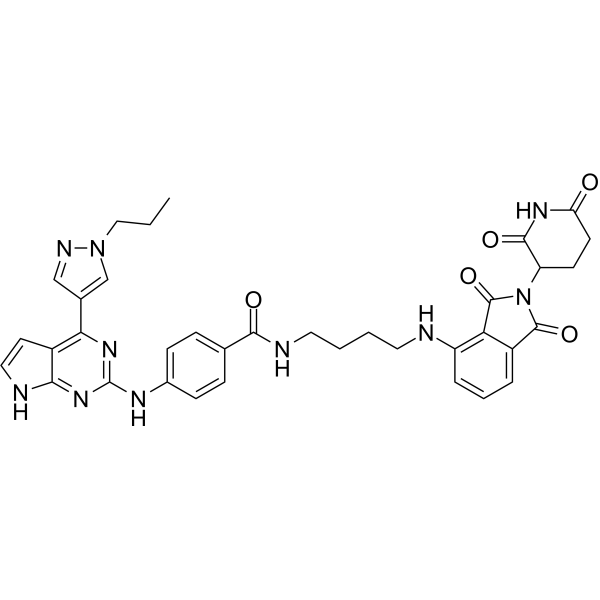
SJ988497 is a PROTAC JAK2 degrader. SJ988497 potently inhibits CRLF2-rearranged (CRLF2r) cell proliferation and degrades the CRBN neosubstrate GSPT1. SJ988497 consists of a Ruxolitinib (HY-50856) derivative, linker, and CRBN ligand Pomalidomide. SJ988497 can be used in the research of acute lymphoblastic leukemia (ALL) .
|
-
-
- HY-168016
-
|
|
PROTACs
YAP
|
Cancer
|
|
PROTAC YAP degrader-1 is a VHL-recruiting PROTAC degrader (DC50=8.2 μM) and antiproliferative agent that targets YAP. PROTAC YAP degrader-1 recruits the E3 ligase VHL and binds to VHL to form a ternary complex containing YAP. PROTAC YAP degrader-1 inhibits the nuclear localization of YAP in cancer cells, reduces YAP/TEAD-mediated transcription, and induces TAZ protein degradation. PROTAC YAP degrader-1 reduces the oncogenic activity of YAP and exerts antiproliferative effects in the Huh7 xenograft mouse model. PROTAC YAP degrader-1 can be used for the research of hepatocellular carcinoma and mesothelioma .
|
-
-
- HY-174979
-
|
|
Fat Mass and Obesity-associated Protein (FTO)
Apoptosis
|
Inflammation/Immunology
Cancer
|
|
Dac590 is an orally active and selective obesity-associated protein (FTO) inhibitor with an IC50 of 6.06 nM. Dac590 shows highly selective over ALKBH5 and ALKBH3. Dac590 suppresses oncogenic FTO signaling, induces myeloid differentiation, G1-phase cell cycle arrest, and apoptosis in acute myeloid leukemia (AML) cells. Dac590 inhibits xenograft tumor growth and prolongs survival in acute myeloid leukemia mouse models with no observed toxicity. Dac590 can be used for the research of AML .
|
-
-
- HY-122895
-
E64FC26
2 Publications Verification
|
Apoptosis
PDI
|
Cancer
|
|
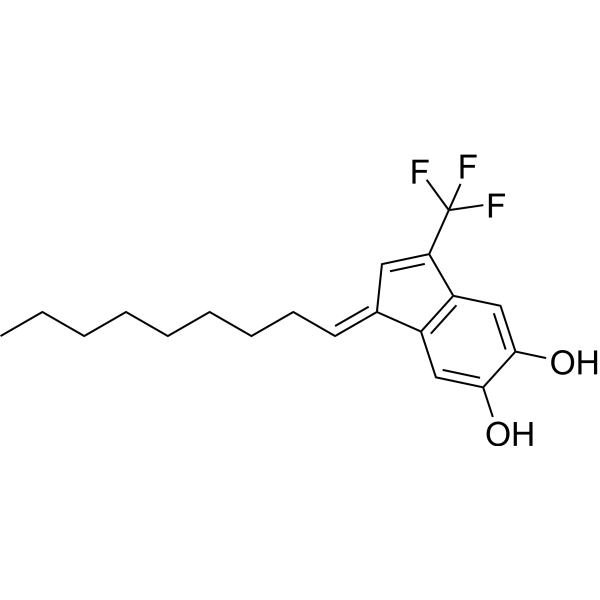
E64FC26 is a potent pan-inhibitor of the protein disulfide isomerase (PDI) family, with IC50s of 1.9, 20.9, 25.9, 16.3, and 25.4 μM against PDIA1, PDIA3, PDIA4, TXNDC5, and PDIA6, respectively. E64FC26 shows anti-myeloma activity .
|
-
-
- HY-143889
-
|
|
CDK
|
Cancer
|
|
Senexin C is a selective and orally active CDK8/19 inhibitor. Senexin C shows a strong tumor-enrichment pharmacokinetic (PK) profile and tumor-pharmacodynamic (PD) marker responses. Senexin C inhibits the growth of MV4-11 leukemia cells with good tolerability .
|
-
-
- HY-P99252
-
|
Anti-Human CD6 Recombinant Antibody
|
CD6
|
Infection
Inflammation/Immunology
|
|
Itolizumab (Anti-Human CD6 Recombinant Antibody) is a humanized recombinant anti-CD6 monoclonal antibody (MAb) targeting the extracellular SRCR distal domain 1 of CD6. Itolizumab reduces T-cell proliferation and inhibits the production of pro-inflammatory cytokines, such as INF-γ, TNFα and IL-6. Itolizumab can be used in the research of psoriasis, rheumatoid arthritis (RA), COVID-19 .
|
-
-
- HY-P99884
-
|
PF-06801591
|
PD-1/PD-L1
|
Inflammation/Immunology
Cancer
|
|
Sasanlimab is a humanized IgG4 isotype anti-PD-1 antibody. Sasanlimab blocks PD-1 interaction with PD-L1/PD-L2, reverses PD-1-mediated inhibitory T-cell signaling, augments T-cell proliferation and cytokine production. Sasanlimab inhibits colon adenocarcinoma tumor growth, and accelerates graft-versus-host disease incidence via enhanced T-cell activity. Sasanlimab can be used for the research of cancer, such as bladder cancer and colon adenocarcinoma .
|
-
-
- HY-P2989
-
|
|
Endogenous Metabolite
|
Metabolic Disease
Cancer
|
|
Pyruvate carboxylase is a key mitochondrial anaplerotic enzyme that catalyzes the conversion of pyruvate to oxaloacetate. Pyruvate carboxylase not only maintains tricarboxylic acid cycle activity and redox homeostasis, but also drives hepatic gluconeogenesis and fatty acid synthesis. The activity of Pyruvate carboxylase is upregulated in insulin-resistant states, exacerbating hepatic glucose production. Pyruvate carboxylase also shows significantly enhanced expression in early-stage non-small cell lung cancer (NSCLC). Pyruvate carboxylase promotes tumor proliferation by supporting nucleotide and lipid synthesis, and its functional deficiency cannot be compensated by glutaminolysis. Pyruvate carboxylase can be used in the research of prediabetes type 2 and NSCLC .
|
-
-
- HY-115581A
-
|
Deoxythymidine 3′,5′-diphosphate tetrasodium; pdTp tetrasodium
|
Apoptosis
MicroRNA
|
Cancer
|
|
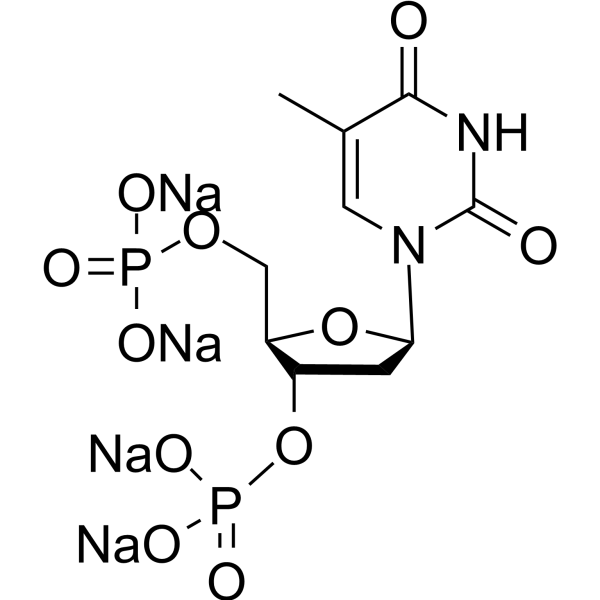
Thymidine 3',5'-diphosphate (Deoxythymidine 3′,5′-diphosphate) tetrasodium is a selective inhibitor of staphylococcal nuclease and tudor domain containing 1 (SND1, the MicroRNA regulatory complex RISC subunit) and [3,5- 2H2] tyrosyl nuclease. Thymidine 3',5'-diphosphate tetrasodium has anti-tumor activity and can also be used as a catalyst in biochemical reactions .
|
-
-
- HY-122895A
-
|
|
Apoptosis
PDI
|
Cancer
|
|
(E/Z)-E64FC26 is a mixture complex of E-E64FC26 and Z-E64FC26. E64FC26 (E-E64FC26) is a potent pan-inhibitor of the protein disulfide isomerase (PDI) family, with IC50s of 1.9, 20.9, 25.9, 16.3, and 25.4 μM against PDIA1, PDIA3, PDIA4, TXNDC5, and PDIA6. E64FC26 shows anti-myeloma activity .
|
-
-
- HY-168022
-
CAM2602
1 Publications Verification
|
Aurora Kinase
|
Cancer
|
|
CAM2602 is an orally active Aurora A-TPX2 protein−protein interaction inhibitor with a human Kd of 19 nM for Aurora A. CAM2602 increases the proportion of PH3 positive cells while reducing P-T288 Aurora A levels. CAM2602 arrests tumor xenograft growth in mice. CAM2602 can be used for the research of cancer, such as acute T cell leukemia .
|
-
-
- HY-P991176
-
|
RO7443904
|
CD19
CD28
|
Cancer
|
|
RG-6333 is a bispecific agonist targeting CD19 and CD28. RG-6333 specifically recognizes and binds to the CD19 antigen on the surface of B-cell malignancies to locate tumor cells. RG-6333 activates T cells by binding to CD28, overcoming activation barriers to enhance anti-tumor immunity. RG-6333 can be used in the study of relapsed/refractory non-Hodgkin's lymphoma. The recommended isotype control is human IgG1 kappa, isotype control (HY-P99001) .
|
-
-
- HY-P99354
-
|
Anti-Human CTLA4xLAG3; XmAb-22841; Pavunalimab
|
LAG-3
|
Inflammation/Immunology
Cancer
|
|
Bavunalimab (Anti-Human CTLA4xLAG3) is a bispecific human anti-CTLA-4/LAG-3 monoclonal antibody. Bavunalimab activates T cells in NSG mice. Bavunalimab can be used for the research of cancer .
|
-
-
- HY-178775
-
|
|
PI4K
Parasite
MAP4K
PI3K
|
Infection
|
|
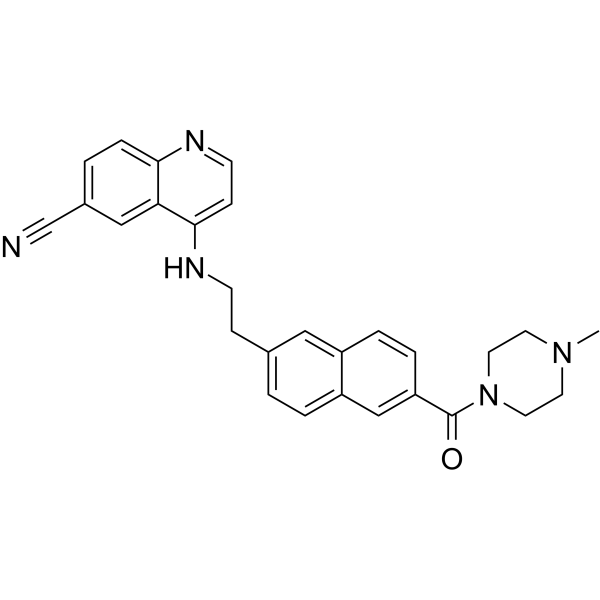
PI4K-IN-3 (Compound 27) is an orally active PI4K inhibitor with an IC50 of 1.9 nM for Plasmodium vivax PI4K. PI4K-IN-3 has no hERG channel inhibition and mammalian cytotoxicity. PI4K-IN-3 has significant selectivity against the human MINK1 and MAP4K4 kinases but with low selectivity against human PI3Kα and PI4Kβ. PI4K-IN-3 has potent antimalarial activity and significantly reduces parasitaemia in NSG mice mouse models of Plasmodium falciparum malaria .
|
-
-
- HY-115581
-
|
Deoxythymidine 3′,5′-diphosphate; pdTp
|
Apoptosis
|
Cancer
|
|
Thymidine 3',5'-disphosphate (Deoxythymidine 3′,5′-diphosphate; pdTp) is a selective small molecule inhibitor of staphylococcal nuclease and tudor domain containing 1 (SND1, the miRNA regulatory complex RISC subunit) and inhibits SND1 activity. Thymidine 3',5'-disphosphate exhibits anti-tumor efficacy in vivo .
|
-
-
- HY-176223
-
|
|
Parasite
|
Infection
|
|
Antimalarial agent 51 (Compound 2) is an orally active antimalarial compound. Antimalarial agent 51 blocks nutrient uptake by Plasmodium by inhibiting the plasmodium surface anion channel (PSAC). Antimalarial agent 51 significantly inhibits the growth of Plasmodium under nutrient-restricted conditions. Combination of antimalarial agent 51 with the residual transport inhibitor PRT-2 can enhance the antimalarial effect. Antimalarial agent 51 can be used in the study of malaria targeting the PSAC channel .
|
-
-
- HY-149031
-
|
|
Dihydroorotate Dehydrogenase
|
Cancer
|
|
DHODH-IN-22 is a potent, selective and orally active dihydroorotate dehydrogenase (DHODH) inhibitor with an IC50 value of 0.3 nM. DHODH-IN-22 can be used for researching acute myelogenous leukemia (AML) .
|
-
-
- HY-170576
-
|
|
FLT3
STAT
Apoptosis
|
Cancer
|
|
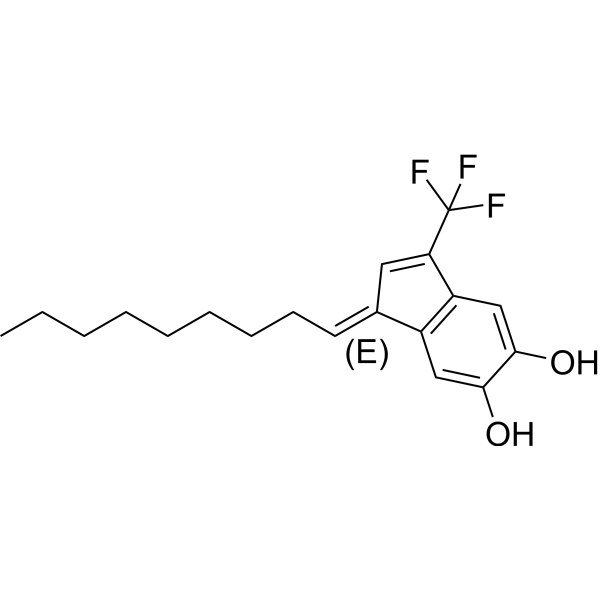
FLT3-IN-28 (Compound 12y) is an orally active FLT3 inhibitor with antitumor activity. FLT3-IN-28 selectively inhibits cancer cells harboring the FLT3 internal tandem duplication (ITD) mutation, with IC50 values of 85, 290, 130, 65, and 220 nM for BaF3-FLT3-ITD, BaF3-TEL-VEGFR2, MV4-11, MOLM-13, and MOLM-14 cell lines respectively (MV4-11 and MOLM-13/14 are acute myeloid leukemia (AML) cell lines carrying the FLT3-ITD mutation). Additionally, FLT3-IN-28 can downregulate the phosphorylation levels of FLT3 and STAT5 in MOLM-13 cells and induce cell cycle arrest and Apoptosis. FLT3-IN-28 has an oral bioavailability of 19.2% in SD rats and can prolong survival in a dose-dependent manner in NSG mice xenografted with MOLM-13 cells. FLT3-IN-28 holds promise for research in cancer fields related to FLT3-ITD .
|
-
-
- HY-183819
-
|
|
E3 Ligase Ligand-Linker Conjugates
|
Cancer
|
|
CRBN ligand-903-trans-1,4-cyclohexanediamine-Boc is a cereblon (CRBN) ligand and ligase binding ligand (LBL) used in synthesis of p300 protein degraders, also designated as compound 28f. CRBN ligand-903-trans-1,4-cyclohexanediamine-Boc is tert-butyl (trans-4-(4-(2,4-dioxotetrahydropyrimidin-1(2H)-yl)-1-methoxy-2-naphthamido)cyclohexyl)carbamate, a CRBN ligand intermediate for synthesis of degrader 28.
|
-
-
- HY-181955
-
|
|
Apoptosis
DNA Methyltransferase
HIF/HIF Prolyl-Hydroxylase
Caspase
|
Cancer
|
|
MS1129 is a DNMT degrader that induces proteasomal degradation of DNMT1, DNMT3A and DNMT3B proteins. MS1129 upregulates TRAIL, DR4 and DR5 proteins, downregulates the decoy receptor DcR2, and activates TRAIL-dependent apoptosis via the HIF-1/2 and Caspase-10 pathways. MS1129 is applicable to the research of VHL-deficient clear cell renal cell carcinoma .
|
-
-
- HY-P992074
-
|
IPH6501
|
CD20
Interleukin Related
|
Cancer
|
|
Zemlikafusp alfa (IPH6501) is a tetra-specific NK cell engager that targets CD20, CD16a, NKp46 and carries an IL-2 variant. Zemlikafusp alfa (IPH6501) is used in research for the treatment of relapsed/refractory B-cell non-Hodgkin lymphoma .
|
-
-
- HY-181427
-
|
|
Androgen Receptor
|
Cancer
|
|
UT-143 is an orally active, selective irreversible covalent antagonist of androgen receptor (AR). UT-143 inhibits the proliferation of AR-positive prostate cancer cells, reduces the weight of androgen target tissues in rats, and suppresses the growth of AR-positive xenograft tumors. UT-143 can be used for the research of prostate cancer .
|
-
-
- HY-15947G
-
|
GDC-0994
|
ERK
c-Myc
Hexokinase
Lactate Dehydrogenase
|
Cancer
|
|
Ravoxertinib GMP is Ravoxertinib (HY-15947) produced by using GMP guidelines. GMP small molecules works appropriately as an auxiliary reagent for cell therapy manufacture. Ravoxertinib (GDC-0994) is an orally active ERK1/2 inhibitor. Ravoxertinib inhibits the ERK1/2 MAPK signaling pathway and reduces the expression levels of c-Myc, HK2 and LDHA. Ravoxertinib decreases mammosphere formation, and exerts additive and/or superadditive cytotoxicity when combined with Ipatasertib (HY-15186) in 3D tumor sphere models. Ravoxertinib can be used in research related to various cancers including breast cancer, melanoma, head and neck cancer, non-small cell lung cancer, ovarian cancer and Merkel cell carcinoma .
|
-
-
- HY-181849
-
|
|
Histone Methyltransferase
|
Cancer
|
|
MS2928 is a selective SETD8 inhibitor with an IC50 of 0.14 μM against SETD8 methyltransferase activity. MS2928 reduces cellular H4K20me1 levels and inhibits proliferation of SETD8-overexpressing multiple myeloma cells. MS2928 inhibits tumor growth in xenograft mouse models of SETD8-overexpressing multiple myeloma. MS2928 can be used for the study of SETD8 biological functions and multiple myeloma .
|
-
-
- HY-124693
-
|
|
Apoptosis
|
Cancer
|
|
DB1055 is a HOXA9 inhibitor that competes with HOXA9 binding to DNA (blocking its DNA interaction activity). DB1055 induces in vitro cell growth reduction, cell apoptosis, and differentiation in human acute myeloid leukemia (AML) cells. DB1055 leads to monocyte-to-macrophage differentiation and exhibits antileukemic activities in a human THP-1 AML in vivo model. DB1055 does not impact human CD34+ bone marrow cells. DB1055 can be used for the research of acute myeloid leukemia[1].
|
-
-
- HY-181789
-
|
|
PROTACs
Histone Methyltransferase
|
Cancer
|
|
DOT1L808 is a potent and highly selective DOT1L PROTAC degrader with a DC50 value of 5 nM. DOT1L808 can promote the ubiquitination and degradation of DOT1L. DOT1L808 exhibits antitumor activity in an orthotopic leukemia model .
|
-
-
- HY-182685
-
|
|
Acetyl-CoA synthetase
Parasite
|
Infection
|
|
MMV693183 is an orally active inhibitor of Plasmodium falciparum acetyl-CoA synthetase (AcAS), with an IC50 of 300 nM against Plasmodium falciparum. MMV693183 exhibits potent inhibitory activity against clinical isolates of malaria parasites, including Artemisinin (HY-B0094)-resistant strains. MMV693183 is metabolized in vivo into the active antimetabolite CoA-MMV693183, which exerts effects of killing asexual blood-stage parasites and blocking transmission to Anopheles mosquitoes by binding to and inhibiting the function of acetyl-CoA synthetase, thereby reducing the levels of acetyl-CoA and 4'-phosphopantetheine. In humanized mouse models, MMV693183 shows favorable in vivo efficacy, drug-like properties, and no significant cytotoxicity or off-target activity against human cells. MMV693183 is widely used in malaria-related research as a parasiticide and metabolic disruptor .
|
-
-
- HY-P992465
-
|
|
Fc Receptor (FcR)
|
Cancer
|
|
SIWA318H is an adbanvced glycation end product (AGE) specific antibody. SIWA318H selectively binds to advanced glycation end product biomarkers, human FcγRIIIa, and pancreatic cancer cells, and cancer-associated fibroblasts. SIWA318H suppresses tumor growth in mouse PSN1 xenografts. SIWA318H can be used for the research of pancreatic cancer .
|
-
-
- HY-P991924
-
-
-
- HY-P991896
-
|
AT14-012
|
Transmembrane Glycoprotein
|
Inflammation/Immunology
Cancer
|
|
AT1412 is a CD9-binding antibody. AT1412 binds to the tetraspanin protein CD9 and modulates CD9 function by enhancing T cell adhesion to endothelial cells (HUVECs) and transendothelial migration. AT1412 binds to B-ALL cell lines but not to T-ALL. AT1412 induces antibody-dependent cellular cytotoxicity in B-ALL cell lines. AT1412 binds to melanoma cells, B-ALL, gastric cancer, colorectal cancer, and pancreatic cancer cells [1] .
|
-
| Cat. No. |
Product Name |
Type |
-
- HY-15947G
-
|
GDC-0994
|
Fluorescent Dyes
|
|
Ravoxertinib GMP is Ravoxertinib (HY-15947) produced by using GMP guidelines. GMP small molecules works appropriately as an auxiliary reagent for cell therapy manufacture. Ravoxertinib (GDC-0994) is an orally active ERK1/2 inhibitor. Ravoxertinib inhibits the ERK1/2 MAPK signaling pathway and reduces the expression levels of c-Myc, HK2 and LDHA. Ravoxertinib decreases mammosphere formation, and exerts additive and/or superadditive cytotoxicity when combined with Ipatasertib (HY-15186) in 3D tumor sphere models. Ravoxertinib can be used in research related to various cancers including breast cancer, melanoma, head and neck cancer, non-small cell lung cancer, ovarian cancer and Merkel cell carcinoma .
|
| Cat. No. |
Product Name |
Type |
-
- HY-15947G
-
|
GDC-0994
|
Biochemical Assay Reagents
|
|
Ravoxertinib GMP is Ravoxertinib (HY-15947) produced by using GMP guidelines. GMP small molecules works appropriately as an auxiliary reagent for cell therapy manufacture. Ravoxertinib (GDC-0994) is an orally active ERK1/2 inhibitor. Ravoxertinib inhibits the ERK1/2 MAPK signaling pathway and reduces the expression levels of c-Myc, HK2 and LDHA. Ravoxertinib decreases mammosphere formation, and exerts additive and/or superadditive cytotoxicity when combined with Ipatasertib (HY-15186) in 3D tumor sphere models. Ravoxertinib can be used in research related to various cancers including breast cancer, melanoma, head and neck cancer, non-small cell lung cancer, ovarian cancer and Merkel cell carcinoma .
|
| Cat. No. |
Product Name |
Target |
Research Area |
Image |
-
- HY-P99222
-
|
MGA-031; PRV-031
|
CD3
|
Metabolic Disease
|
|
Teplizumab (MGA-031) is a Fc receptor non-binding anti-human CD3 monoclonal antibody. Teplizumab reduces the loss of beta-cell function. Teplizumab can be used in the research of type 1 diabetes .
|
-
(5)
-
- HY-P99199
-
|
NI-0401
|
CD3
|
Inflammation/Immunology
|
|
Foralumab (NI-0401) is a potent, orally active human monoclonal antibody targeting the CD3. Foralumab modulates immune responses by human cells in NSG mice that were reconstituted with human hematopoietic stem cells .
|
-
(5)
-
- HY-P99252
-
|
Anti-Human CD6 Recombinant Antibody
|
CD6
|
Infection
Inflammation/Immunology
|
|
Itolizumab (Anti-Human CD6 Recombinant Antibody) is a humanized recombinant anti-CD6 monoclonal antibody (MAb) targeting the extracellular SRCR distal domain 1 of CD6. Itolizumab reduces T-cell proliferation and inhibits the production of pro-inflammatory cytokines, such as INF-γ, TNFα and IL-6. Itolizumab can be used in the research of psoriasis, rheumatoid arthritis (RA), COVID-19 .
|
-
(5)
-
- HY-P99884
-
|
PF-06801591
|
PD-1/PD-L1
|
Inflammation/Immunology
Cancer
|
|
Sasanlimab is a humanized IgG4 isotype anti-PD-1 antibody. Sasanlimab blocks PD-1 interaction with PD-L1/PD-L2, reverses PD-1-mediated inhibitory T-cell signaling, augments T-cell proliferation and cytokine production. Sasanlimab inhibits colon adenocarcinoma tumor growth, and accelerates graft-versus-host disease incidence via enhanced T-cell activity. Sasanlimab can be used for the research of cancer, such as bladder cancer and colon adenocarcinoma .
|
-
(5)
-
- HY-P991176
-
|
RO7443904
|
CD19
CD28
|
Cancer
|
|
RG-6333 is a bispecific agonist targeting CD19 and CD28. RG-6333 specifically recognizes and binds to the CD19 antigen on the surface of B-cell malignancies to locate tumor cells. RG-6333 activates T cells by binding to CD28, overcoming activation barriers to enhance anti-tumor immunity. RG-6333 can be used in the study of relapsed/refractory non-Hodgkin's lymphoma. The recommended isotype control is human IgG1 kappa, isotype control (HY-P99001) .
|
-
(5)
-
- HY-P99354
-
|
Anti-Human CTLA4xLAG3; XmAb-22841; Pavunalimab
|
LAG-3
|
Inflammation/Immunology
Cancer
|
|
Bavunalimab (Anti-Human CTLA4xLAG3) is a bispecific human anti-CTLA-4/LAG-3 monoclonal antibody. Bavunalimab activates T cells in NSG mice. Bavunalimab can be used for the research of cancer .
|
-
(5)
-
- HY-P992074
-
|
IPH6501
|
CD20
Interleukin Related
|
Cancer
|
|
Zemlikafusp alfa (IPH6501) is a tetra-specific NK cell engager that targets CD20, CD16a, NKp46 and carries an IL-2 variant. Zemlikafusp alfa (IPH6501) is used in research for the treatment of relapsed/refractory B-cell non-Hodgkin lymphoma .
|
-
(5)
-
- HY-P992465
-
|
|
Fc Receptor (FcR)
|
Cancer
|
|
SIWA318H is an adbanvced glycation end product (AGE) specific antibody. SIWA318H selectively binds to advanced glycation end product biomarkers, human FcγRIIIa, and pancreatic cancer cells, and cancer-associated fibroblasts. SIWA318H suppresses tumor growth in mouse PSN1 xenografts. SIWA318H can be used for the research of pancreatic cancer .
|
-
(5)
-
- HY-P991924
-
-
(5)
-
- HY-P991896
-
|
AT14-012
|
Transmembrane Glycoprotein
|
Inflammation/Immunology
Cancer
|
|
AT1412 is a CD9-binding antibody. AT1412 binds to the tetraspanin protein CD9 and modulates CD9 function by enhancing T cell adhesion to endothelial cells (HUVECs) and transendothelial migration. AT1412 binds to B-ALL cell lines but not to T-ALL. AT1412 induces antibody-dependent cellular cytotoxicity in B-ALL cell lines. AT1412 binds to melanoma cells, B-ALL, gastric cancer, colorectal cancer, and pancreatic cancer cells [1] .
|
-
(5)
| Cat. No. |
Product Name |
|
Classification |
-
- HY-181849
-
|
|
|
Alkynes
|
|
MS2928 is a selective SETD8 inhibitor with an IC50 of 0.14 μM against SETD8 methyltransferase activity. MS2928 reduces cellular H4K20me1 levels and inhibits proliferation of SETD8-overexpressing multiple myeloma cells. MS2928 inhibits tumor growth in xenograft mouse models of SETD8-overexpressing multiple myeloma. MS2928 can be used for the study of SETD8 biological functions and multiple myeloma .
|
| Cat. No. |
Product Name |
Target |
Research Areas |
Chemical Structure |
-
- HY-15947G
-
|
GDC-0994
|
ERK
c-Myc
Hexokinase
Lactate Dehydrogenase
|
Cancer
|
|
Ravoxertinib GMP is Ravoxertinib (HY-15947) produced by using GMP guidelines. GMP small molecules works appropriately as an auxiliary reagent for cell therapy manufacture. Ravoxertinib (GDC-0994) is an orally active ERK1/2 inhibitor. Ravoxertinib inhibits the ERK1/2 MAPK signaling pathway and reduces the expression levels of c-Myc, HK2 and LDHA. Ravoxertinib decreases mammosphere formation, and exerts additive and/or superadditive cytotoxicity when combined with Ipatasertib (HY-15186) in 3D tumor sphere models. Ravoxertinib can be used in research related to various cancers including breast cancer, melanoma, head and neck cancer, non-small cell lung cancer, ovarian cancer and Merkel cell carcinoma .
|
-
Your information is safe with us. * Required Fields.
Inquiry Information
- Product Name:
- Cat. No.:
- Quantity:
- MCE Japan Authorized Agent:

