4 Results for "

Obese cardiomyopathy

" in MedChemExpress (MCE) Product Catalog:
Products (4)

4 Results for "Obese cardiomyopathy" in MCE Product Catalog:

6
6 Cited Publications
Cat. No.: HY-121744
CAS No.: 1564265-82-2
Purity:  98.51%
Target:  

PDHK

Research Areas:  

Inflammation/Immunology

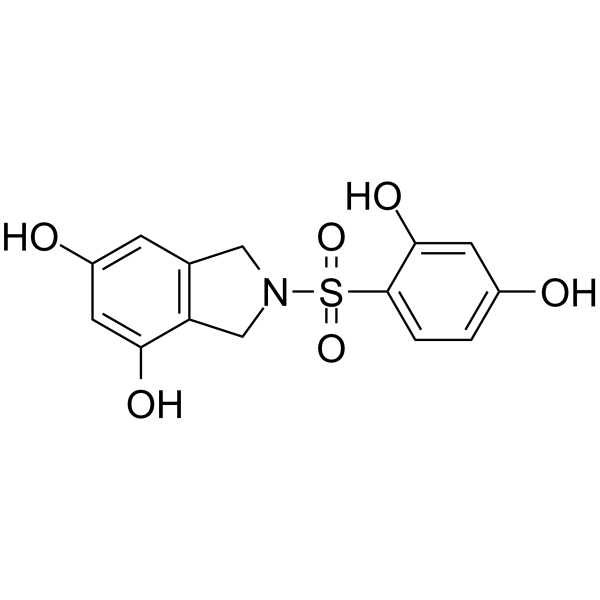
PS10 is a novel, potent and ATP-competitive pan-PDK inhibitor, inhibits all PDK isoforms with IC50 of 0.8 μM, 0.76 μM, 2.1 μM and 21.3 μM for PDK2, PDK4, PDK1, and PDK3, respectively. PS10 shows high affinity for PDK2 (Kd= 239 nM) than for Hsp90 (Kd= 47 μM) . PS10 improves glucose tolerance, stimulates myocardial carbohydrate oxidation in diet-induced obesity. PS10 has the potential for the investigation of diabetic cardiomyopathy .PDK: pyruvate dehydrogenase kinase
loading...
    loading...
Cat. No.: HY-169052
CAS No.: 2644673-01-6
Cyy-272 is an orally active JNK inhibitor with IC50 values of 1.25 μM for JNK1, 1.07 μM for JNK2, and 1.24 μM for JNK3. Cyy-272 exerts anti-inflammatory effects by inhibiting JNK phosphorylation, thereby alleviating acute lung injury (ALI) induced by lipopolysaccharide (LPS, HY-D1056). Additionally, Cyy-272 significantly reduces inflammation in cardiomyocytes and cardiac tissue induced by high lipid concentrations, further mitigating cardiac hypertrophy, fibrosis, and apoptosis. Cyy-272 can be used in the study of obese cardiomyopathy .
loading...
    loading...
Cat. No.: HY-180336
CAS No.: 2249864-11-5
LM9 is a potent, orally active MyD88 inhibitor. LM9 blocks TLR4/MyD88 binding, MyD88 homodimer formation, and TLR4/MyD88/NF-κB signaling pathway activation. LM9 prevents atherosclerosis by regulating inflammatory responses and oxidative stress in macrophages. LM9 efficiently mitigates inflammatory responses and fibrosis in obesity-induced cardiomyopathy. LM9 can be used for fibrosis and atherosclerosis research .
loading...
    loading...
Cat. No.: HY-160475
CAS No.: 1804942-56-0
AD-9308 is an orally active, highly selective aldehyde dehydrogenase 2 (ALDH2) activator. AD-9308 alleviates oxidative stress, improves mitochondrial function, restores cell viability, reduces renal tubular injury, fibrosis and inflammatory responses, reverses ventricular remodeling, restores the activities of Dicer and superoxide dismutase, inhibits the IL-6 signaling pathway, reduces the accumulation of 4-HNE-protein adducts, and improves glucose homeostasis. AD-9308 can be used in studies related to acrolein-induced kidney injury, diabetes, cardiomyopathy, heart failure, diet-induced obesity, fatty liver, insulin resistance and glucose intolerance .
loading...
    loading...

