17 Results for "

Platinum(IV)

" in MedChemExpress (MCE) Product Catalog:
Products (17)

17 Results for "Platinum(IV)" in MCE Product Catalog:

1
1 Cited Publications
Cat. No.: HY-W007712
CAS No.: 3430-17-9
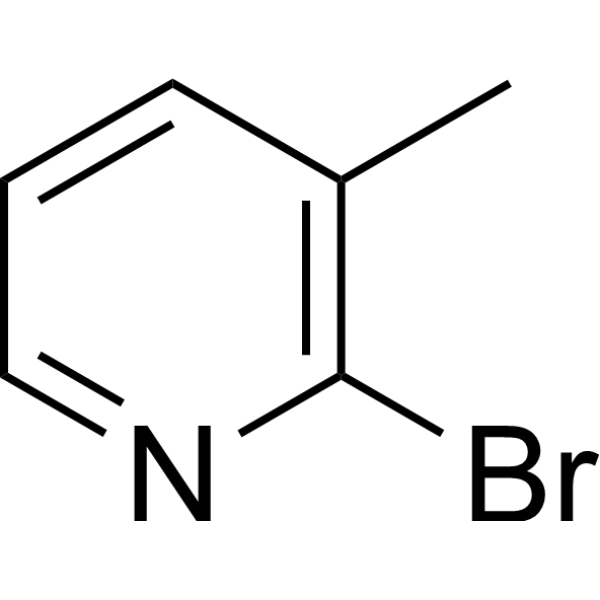
Synonyms: 2-Bromo-3-picoline
2-Bromo-3-methylpyridine (2-Bromo-3-picoline) is a heterocyclic intermediate of the halomethylpyridine family. 2-Bromo-3-methylpyridine can be used in the synthesis of platinum(IV) diazide complexes .
loading...
    loading...
Cat. No.: HY-115983
CAS No.: 2364350-07-0
Purity:  ≥98.0%
Target:  

CD47 Apoptosis

Research Areas:  

Cancer

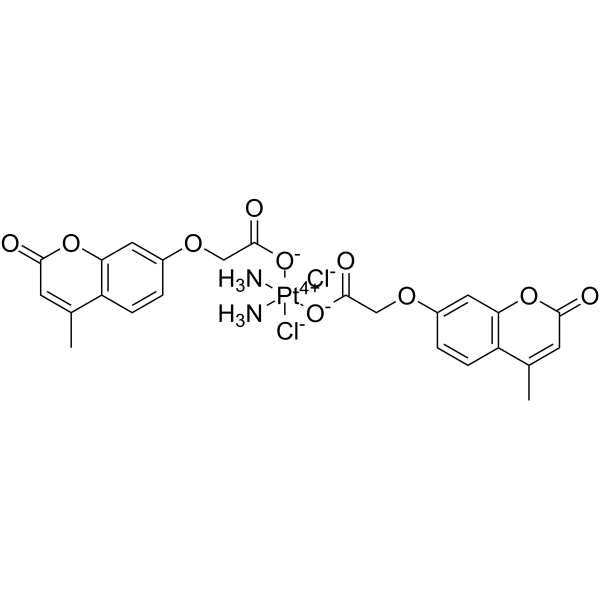
DMUP is a potent CD47-SIRPα axis inhibitor. DMUP induces apoptosis and increases the macrophage phagocytosis in A549 cells. DMUP decreases the expression of CD47 and SIRPα protein. DMUP shows antitumor activity .
loading...
    loading...
Cat. No.: HY-176149
Research Areas:  

Cancer

Fluoxetine-Conjugated Platinum(IV) prodrug-1 (Compound 8) is an eEF2K inhibitor. Fluoxetine-Conjugated Platinum(IV) prodrug-1 inhibits cancer cell proliferation, induces DNA damage, cell cycle arrest at S phase and apoptosis. Fluoxetine-Conjugated Platinum(IV) prodrug-1 induces ROS accumulation and mitochondrial dysfunction. Fluoxetine-Conjugated Platinum(IV) prodrug-1 inhibits TNBC cell migration and invasion by inhibiting MMP-2 activity. Fluoxetine-Conjugated Platinum(IV) prodrug-1 induces autophagy in TNBC cells by activating AMPK. Fluoxetine-Conjugated Platinum(IV) prodrug-1 has antitumor activity and activates immunosuppression in the 4T1-Luc mouse model. Fluoxetine-Conjugated Platinum(IV) prodrug-1 can be used in triple-negative breast cancer (TNBC) research .
loading...
    loading...
Cat. No.: HY-179418
Target:  

Apoptosis

Research Areas:  

Cancer

Ceritinib-platinum(IV)-4-phenylbutyrate (complex 7) is a Ceritinib (HY-15656)-conjugated Platinum(IV) prodrug with anticancer activity. Ceritinib-platinum(IV)-4-phenylbutyrate induces S-phase arrest, DNA damage responses, and apoptosis. Ceritinib-platinum(IV)-4-phenylbutyrate combines cytotoxicity with immune and anti-invasive activation in cancer cell models. Ceritinib-platinum(IV)-4-phenylbutyrate can be used for cancer research, such as non-small cell lung cancer (NSCLC) .
loading...
    loading...
Cat. No.: HY-179392
Research Areas:  

Cancer

Sunitinib-platinum(IV) prodrug-1 (Complex A) is a Pt(IV) prodrug based on Cisplatin (HY-17394), and this design aims to enable Pt(IV) to be reduced to active Pt(II) under intracellular reducing conditions, while simultaneously releasing a derivative of Sunitinib (HY-10255A) with tyrosine kinase inhibitor (TKI) activity. Sunitinib-platinum(IV) prodrug-1 exhibits excellent cytotoxicity against renal cell carcinoma (RCC), causing DNA crosslinking and apoptosis. Sunitinib-platinum(IV) prodrug-1 inhibits the VEGFR/PDGFR signaling pathway, suppressing tumor growth and angiogenesis. Sunitinib-platinum(IV) prodrug-1 can be used for research on renal cell carcinoma .
loading...
    loading...
Cat. No.: HY-W010062
CAS No.: 1878-66-6
Research Areas:  

Cancer

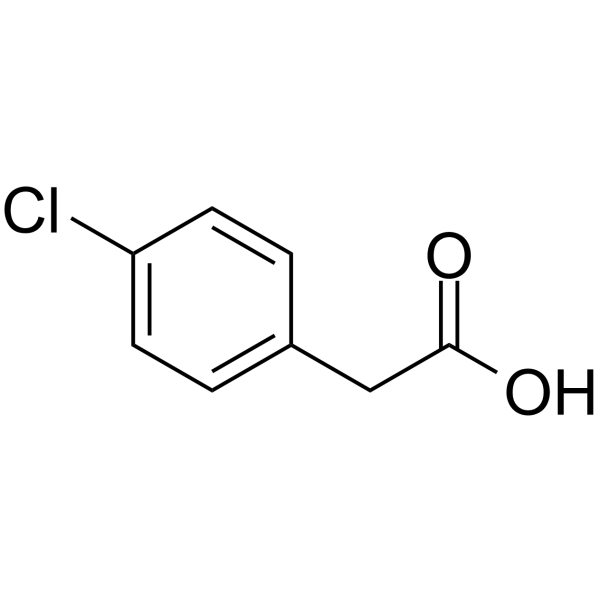
4-Chlorophenylacetic acid is an aromatase antagonist. 4-Chlorophenylacetic acid inhibits estrogen-induced breast tumorigenesis by blocking estrogen conversion. 4-Chlorophenylacetic acid also serves as the sole carbon and energy source for Pseudomonas sp. CBS3; it is degraded via dechlorination and aromatic ring cleavage pathways, and induces the synthesis of protocatechuate 2,3-dioxygenase. 4-Chlorophenylacetic acid can be applied to studies related to estrogen-induced breast tumors and bacterial degradation pathways .
loading...
    loading...
Cat. No.: HY-175257
Theophylline-platinum(IV) prodrug-1 is a PARP-1 inhibitor. Theophylline-platinum(IV) prodrug-1 enhances DNA damage, ROS production, mitochondrial dysfunction, apoptosis and S-phase arrest, along with reducing invasion and metastasis in cells. Theophylline-platinum(IV) prodrug-1 exhibits superior antitumor activity in the xenograft SKOV3-BRCA1-KD tumor model. Theophylline-platinum(IV) prodrug-1 can be used for the study of ovarian cancer .
loading...
    loading...
Cat. No.: HY-183544
Platinum (IV) Prodrug-1 is a Pt (IV) prodrug and selective TrxR1 inhibitor. Platinum (IV) Prodrug-1 induces ferroptosis (Ferroptosis) by depleting glutathione, accumulating intracellular lipid peroxides, and inactivating Glutathione peroxidase 4. Platinum (IV) Prodrug-1 triggers endoplasmic reticulum stress and immunogenic cell death via excessive accumulation of intracellular ROS. Platinum (IV) Prodrug-1 exhibits anticancer activity against both Cisplatin (HY-17394)-sensitive and Cisplatin-resistant triple-negative breast cancer cells. Platinum (IV) Prodrug-1 can be used for the research of triple-negative breast cancer .
loading...
    loading...
Cat. No.: HY-P10782
Research Areas:  

Cancer

Pt(IV)-M13 is a BBB-penetrable Platinum (IV) prodrug-perfluoroaryl macrocyclic peptide conjugate. Pt(IV)-M13 is cytotoxic to glioma stem cells and increases uptake of platinum in the brain. Pt(IV)-M13 can be used in the study of glioblastoma .
loading...
    loading...
Cat. No.: HY-157222
Target:  

Apoptosis Ferroptosis

Research Areas:  

Cancer

Antitumor agent-125 (compound 17A) is a novel platinum(IV) prodrug. Antitumor agent-125 can activate the mitochondrion-dependent apoptosis pathway. Antitumor agent-125 induces ferroptosis in HCT-116/OXA .
loading...
    loading...
Cat. No.: HY-155807
CAS No.: 2668267-47-6
Target:  

STAT JAK Apoptosis

Research Areas:  

Cancer

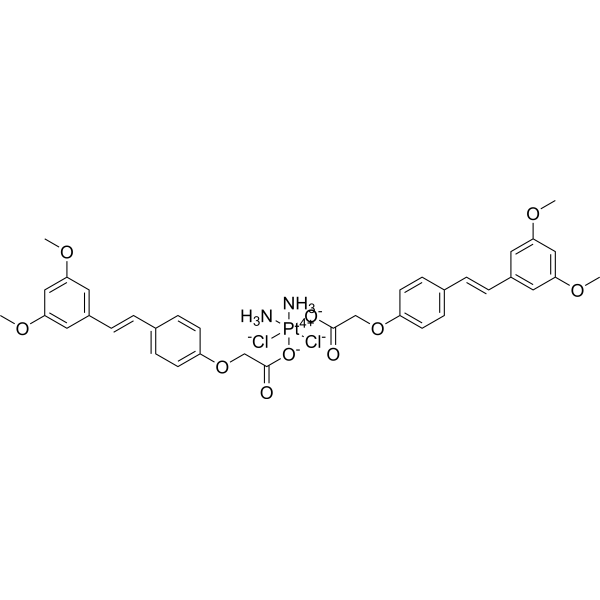
DPP is a Platinum(IV) complex, bearing pterostilbene-derived axial ligand. DPP inhibit the JAK2-STAT3 pathway in breast cancer (BC) cells with antiproliferative activity, and activates caspase-3 and cleaved poly ADP-ribose polymerase to induces apoptosis. DPP promotes the maturation and antigen presentation of dendritic cells, and exhibits in vivo safety .
loading...
    loading...
Cat. No.: HY-168877
FMP is a Platinum(IV) complexe. FMP significantly upregulates the expression of γ-H2AX and p53. FMP increases the production of ROS. FMP markedly upregulates the expressions of Apoptosis-related proteins (DR5, Fas, caspase-8, Cyt-c, caspase-3, cleaved-PARP1, Bax). FMP shows antiproliferative activity against breast cancer .
loading...
    loading...
Cat. No.: HY-182360
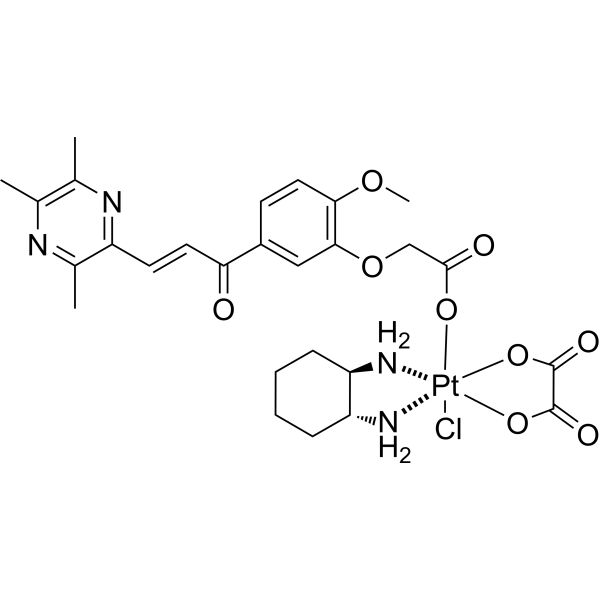
Cytisine-Platinum(IV) Prodrug-1 is a Pt(IV) prodrug incorporating the natural compound Cytisine (HY-N0175) with antiproliferative activity against tumor cells. Cytisine-Platinum(IV) Prodrug-1 promotes calcium transfer across the IP3R1-GRP75-VDAC1 axis to drive mitochondrial calcium overload. Cytisine-Platinum(IV) Prodrug-1 initiates unfolded protein response via PERK, eIF2α, ATF4, and CHOP to modulate Bcl-2 and Bax, triggering apoptosis. Cytisine-Platinum(IV) Prodrug-1 induces mitochondrial dysfunction, ROS production, reduced ATP synthesis, DNA damage, and S-phase cell cycle arrest. Cytisine-Platinum(IV) Prodrug-1 activates the cGAS-STING pathway, reduces PD-L1 expression, drives immunogenic cell death. Cytisine-Platinum(IV) Prodrug-1 exhibits high physiological stability, efficient cellular accumulation, and enhanced platinum-DNA binding, and inhibits tumor growth in mouse models with reduced systemic toxicity. Cytisine-Platinum(IV) Prodrug-1 can be used for the research of lung cancer .
loading...
    loading...
Cat. No.: HY-155808
CAS No.: 2668267-41-0
Target:  

STAT JAK Apoptosis COX

Research Areas:  

Cancer

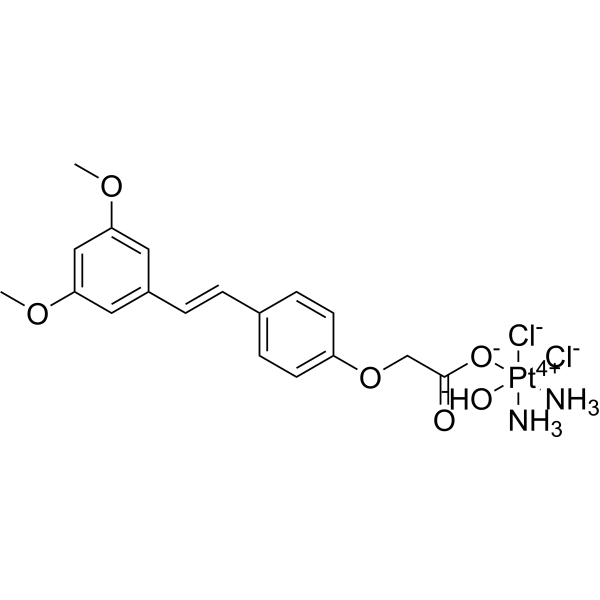
STAT3-IN-18 (compound SPP) is a platinum (IV) complex with an axial ligand derived from sandalwood. STAT3-IN-18 inhibits the JAK2-STAT3 pathway in breast cancer (BC) cells, with anti-proliferative activity. STAT3-IN-18 activates caspase-3 and increases cleaved polyADP-ribose polymerase to induce apoptosis. STAT3-IN-18 promotes maturation and antigen presentation of dendritic cells and demonstrates safety in vivo.
loading...
    loading...
Cat. No.: HY-W010062R
CAS No.: 1878-66-6
4-Chlorophenylacetic acid (Standard) is the analytical standard of 4-Chlorophenylacetic acid (HY-W010062). This product is intended for research and analytical applications. 4-Chlorophenylacetic acid is an aromatase antagonist. 4-Chlorophenylacetic acid inhibits estrogen-induced breast tumorigenesis by blocking estrogen conversion. 4-Chlorophenylacetic acid also serves as the sole carbon and energy source for Pseudomonas sp. CBS3; it is degraded via dechlorination and aromatic ring cleavage pathways, and induces the synthesis of protocatechuate 2,3-dioxygenase. 4-Chlorophenylacetic acid can be applied to studies related to estrogen-induced breast tumors and bacterial degradation pathways .
loading...
    loading...
Cat. No.: HY-182067
Research Areas:  

Cancer

anti-TNBC agent-15 is a platinum (IV) complex with anti-triple-negative breast cancer activity. anti-TNBC agent-15 inhibits cancer cell viability. anti-TNBC agent-15 reverses the resistance of triple-negative breast cancer cells to Cisplatin (HY-17394), increases intracellular uptake, and effectively triggers apoptosis by inducing DNA damage, enhancing intracellular ROS accumulation and activating the mitochondrial pathway. anti-TNBC agent-15 enhances lipid peroxidation, interferes with the signal transduction of the cystine/glutamate transporter-glutathione peroxidase axis, and induces ferroptosis. anti-TNBC agent-15 significantly inhibits tumor growth in triple-negative breast cancer/Cisplatin xenograft models. anti-TNBC agent-15 can be used for the research of triple-negative breast cancer .
loading...
    loading...
Cat. No.: HY-W008952
CAS No.: 81741-28-8
Tributyltetradecyl phosphonium chloride is a quaternary phosphonium salt cation. Tributyltetradecyl phosphonium chloride can form an acidic aqueous biphasic system with acid and water, exhibits temperature-induced phase separation behavior with a lower critical solution temperature, enables the partitioning of Co 2+, Fe 3+, Pt 4+ and Ni 2+ between the two phases, and also promotes the separation of Co 2+ and Ni 2+ .
loading...
    loading...
  • 1

