1. Search Result
Search Result
Results for "

ROS-IN-2

" in MedChemExpress (MCE) Product Catalog:

28

Inhibitors & Agonists

1

Fluorescent Dye

2

Biochemical Assay Reagents

8

Natural
Products

1

Isotope-Labeled Compounds

1

Click Chemistry

Cat. No. Product Name Target Research Areas Chemical Structure
  • HY-W015913
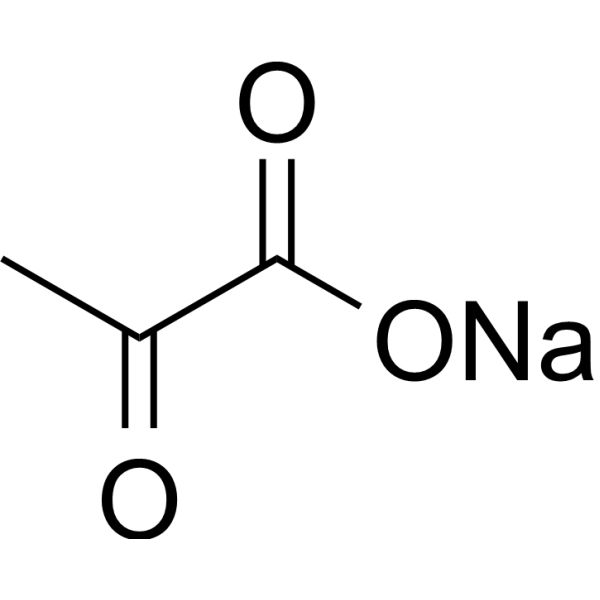
    Pyruvic acid sodium
    15+ Cited Publications

    Sodium 2-oxopropanoate; Acetylformic acid sodium

    Reactive Oxygen Species (ROS) Endogenous Metabolite Metabolic Disease
    Sodium 2-oxopropanoate (Sodium pyruvate), a three-carbon metabolite of Glucose, is a compound produced in the glycolytic pathway. Sodium 2-oxopropanoate is a free radical scavenger that can scavenge ROS .
    Pyruvic acid sodium
  • HY-W015913S
    Pyruvic acid-13C3 sodium
    1 Publications Verification

    Sodium 2-oxopropanoate-13C3; Acetylformic acid-13C3 sodium

    Reactive Oxygen Species (ROS) Endogenous Metabolite Metabolic Disease
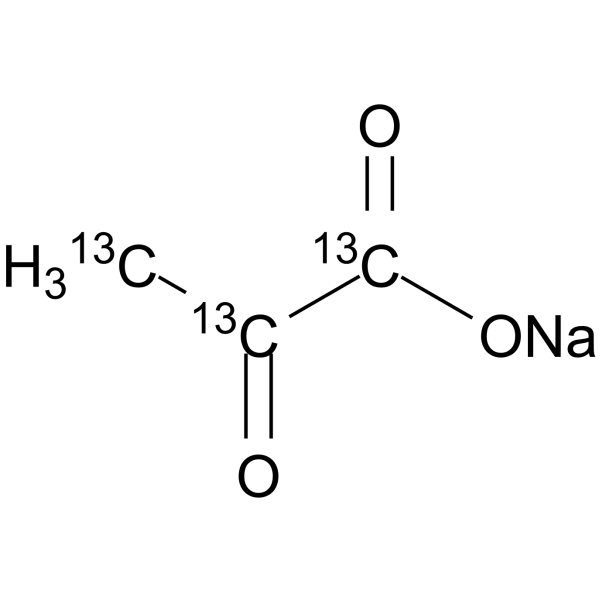
    Sodium 2-oxopropanoate- 13C3 is the 13C-labeled Sodium 2-oxopropanoate. Sodium 2-oxopropanoate (Sodium pyruvate), a three-carbon metabolite of Glucose, is a compound produced in the glycolytic pathway. Sodium 2-oxopropanoate is a free radical scavenger that can scavenge ROS .
    Pyruvic acid-13C3 sodium
  • HY-N0578
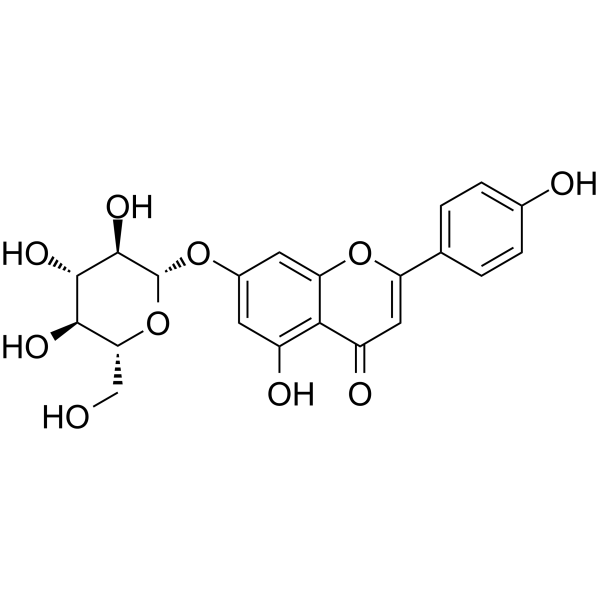
    Apigenin 7-glucoside
    5+ Cited Publications

    ApigenIN-7-O-β-D-glucopyranoside; CosmosiIN; ApigetrIN

    Reactive Oxygen Species (ROS) Cancer
    Apigenin-7-glucoside (Apigenin-7-O-β-D-glucopyranoside) exhibits significant anti-proliferative and antioxidant activity and scavenges reactive oxygen species (ROS) .
    Apigenin 7-glucoside
  • HY-N0232
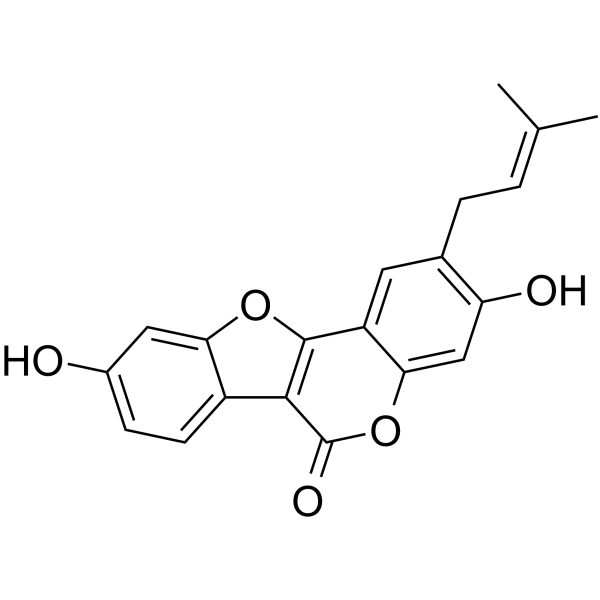
    Psoralidin
    5 Publications Verification

    COX Lipoxygenase Notch Reactive Oxygen Species (ROS) Bacterial Cancer
    Psoralidin is a dual inhibitor of COX-2 and 5-LOX, regulates ionizing radiation (IR)-induced pulmonary inflammation.Anti-cancer, anti-bacterial, and anti-inflammatory properties . Psoralidin significantly downregulates NOTCH1 signaling. Psoralidin also greatly induces ROS generation .
    Psoralidin
  • HY-N2392
    Kukoamine A
    1 Publications Verification

    Parasite Lipoxygenase Opioid Receptor Apoptosis Autophagy Reactive Oxygen Species (ROS) Interleukin Related TNF Receptor PGE synthase COX Infection Neurological Disease Metabolic Disease Inflammation/Immunology Cancer
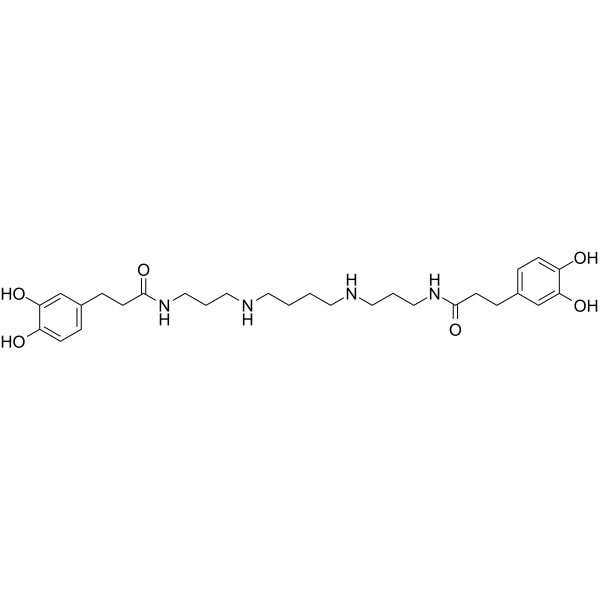
    Kukoamine A, a spermine alkaloid, is an orally active and brain-penetrant component found in the root barks of Lycium chinense (L. chinense) Miller. Kukoamine A inhibits purified Crithidia fasciculata trypanothione reductase and soybean lipoxygenase, activates μ-opioid receptor. Kukoamine A can inhibt cancer cell proliferation, migration and invasion, cause G0/G1 phase cell cycle arrest and induce apoptosis. Kukoamine A exerts neuroprotective effect and can induce autophagy . Kukoamine A inhibits LPS (HY-D1056)-induced NO, ROS, PGE2, TNF-α, IL-1β, IL-6 production and COX-2 activity. Kukoamine A reverses palmitic acid-induced insulin resistance, lipid accumulation, and oxidative stress via downregulation of Srebp-1c. Kukoamine A can be used for the research of cancer, infection, inflammation, metabolic and neurological disease, such as glioblastoma and Parkinson's disease [2] .
    Kukoamine A
  • HY-128799
    CL097
    2 Publications Verification

    Toll-like Receptor (TLR) Reactive Oxygen Species (ROS) Inflammation/Immunology
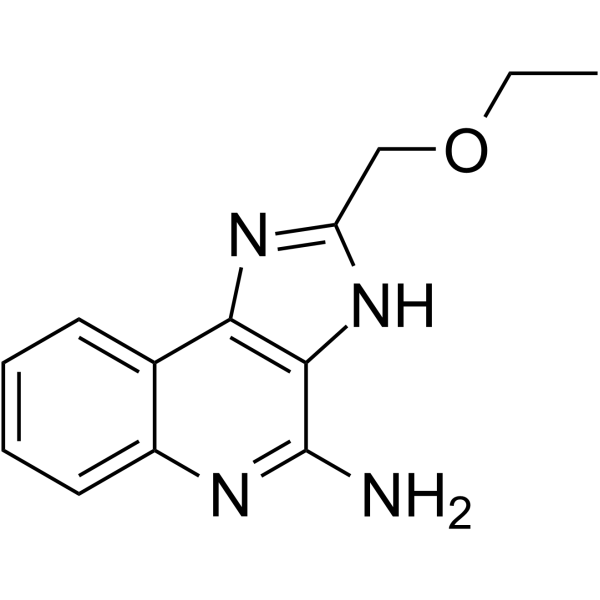
    CL097, a potent TLR7 and TLR8 agonist, induces pro-inflammatory cytokines in macrophages . CL097 induces NADPH oxidase priming, resulting in an increase of the fMLF-stimulated ROS production .
    CL097
  • HY-N2693

    Apoptosis Reactive Oxygen Species (ROS) Caspase Akt ERK JNK p38 MAPK Bcl-2 Family Cancer
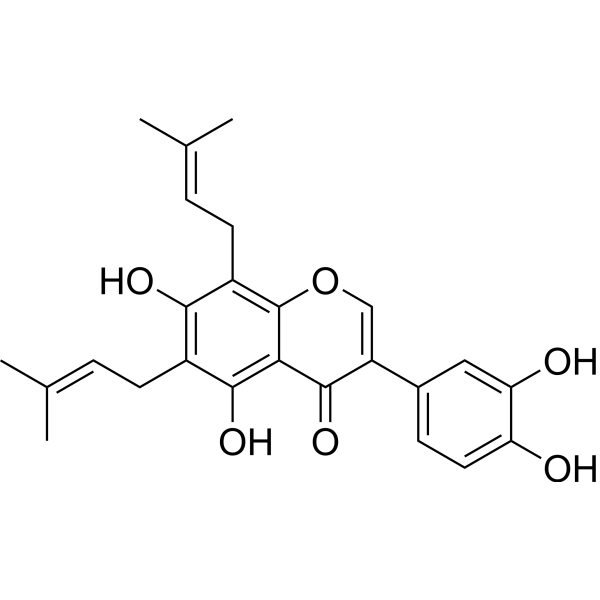
    6,8-Diprenylorobol, a prenylated isoflavone, is a nature product that could be isolated from the leaves of Cudrania tricuspidata. 6,8-Diprenylorobol antiproliferative effect and induces apoptosis through activation of p53 and generation of ROS .
    6,8-Diprenylorobol
  • HY-122311

    SMTP-7

    Reactive Oxygen Species (ROS) Neurological Disease Inflammation/Immunology
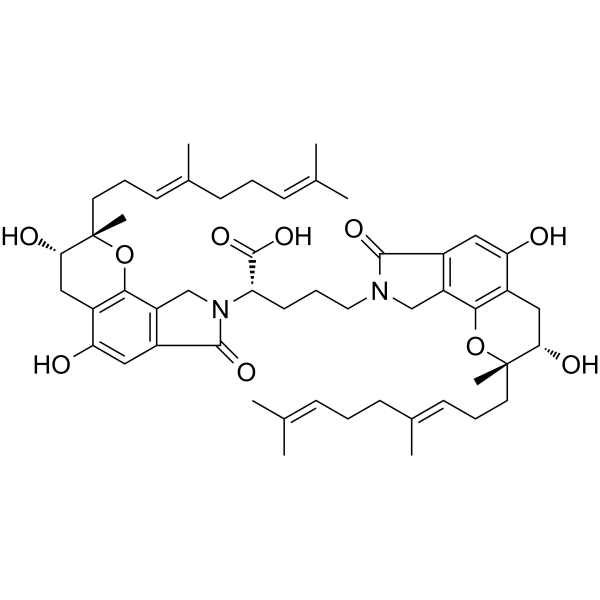
    Orniplabin (SMTP-7) is a low-molecular-weight compound that enhances plasminogen–fibrin binding, urokinase-catalyzed activation of plasminogen, and urokinase and plasminogen-mediated fibrin degradation. Orniplabin shows potential thrombolytic and anti-inflammatory effects. Orniplabin inhibits ROS .
    Orniplabin
  • HY-149586

    Reactive Oxygen Species (ROS) Others
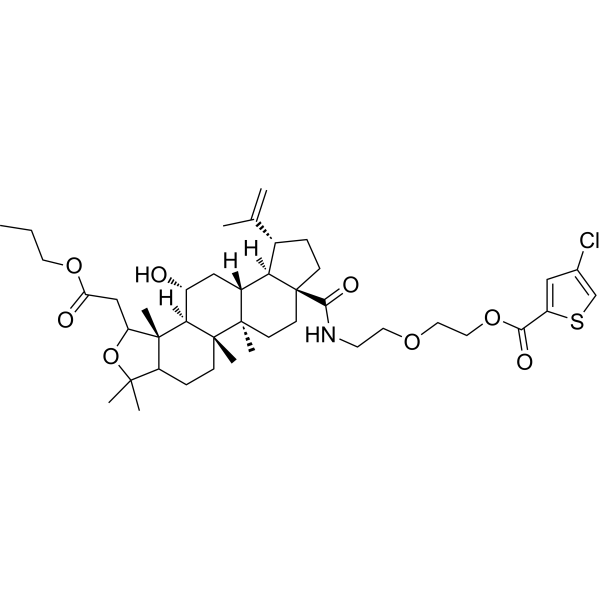
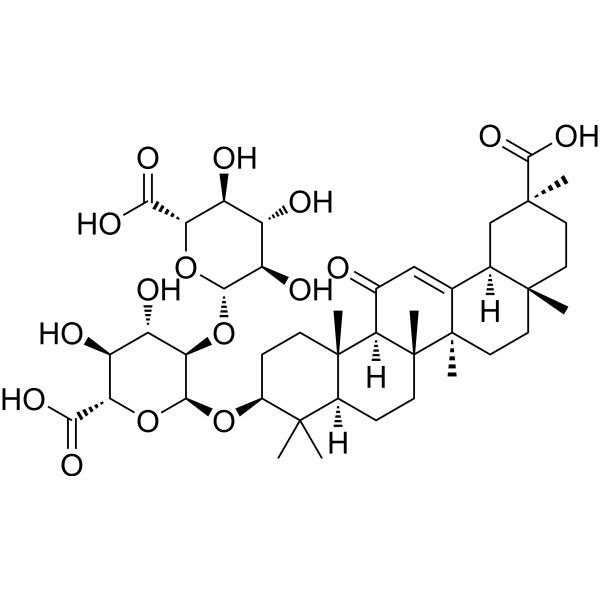
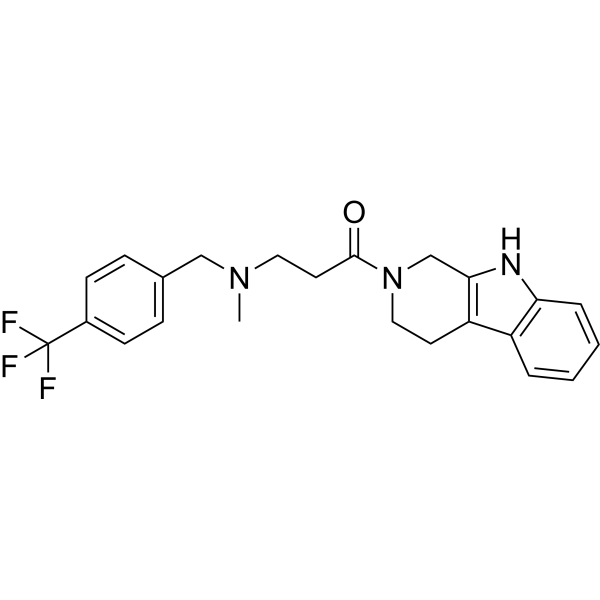
    ROS-IN-2 (compound 85) is a seco-lupane triterpenoid derivative. ROS-IN-2 blocks ROS production and protects mitochondria from damage by inhibiting excessive production of oxidative stressors. ROS-IN-2 can be used for myocardial ischemia/reperfusion (MI/R) injury research .
    ROS-IN-2
  • HY-128799A
    CL097 hydrochloride
    2 Publications Verification

    Toll-like Receptor (TLR) Reactive Oxygen Species (ROS) Inflammation/Immunology
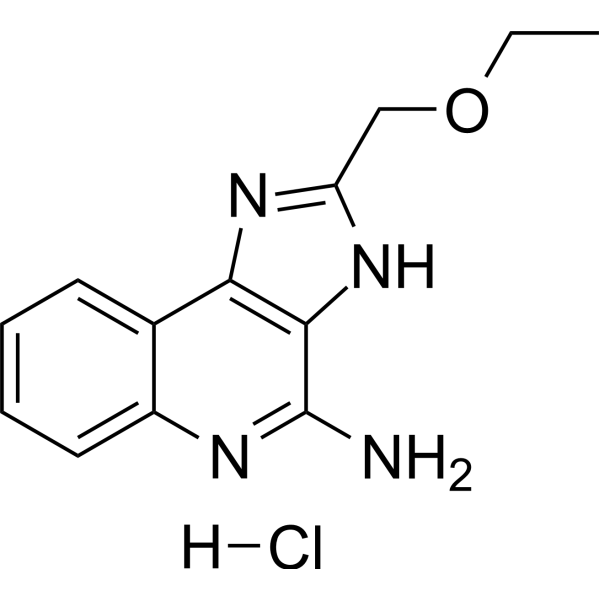
    CL097, a potent TLR7 and TLR8 agonist, induces pro-inflammatory cytokines in macrophages . CL097 induces NADPH oxidase priming, resulting in an increase of the fMLF-stimulated ROS production .
    CL097 hydrochloride
  • HY-175381

    PROTACs Pyroptosis Reactive Oxygen Species (ROS) Caspase Cancer
    DeFer-2 is a ferritin PROTAC degrader (Kd = 17.1 μM). DeFer-2 induces ferritin degradation, triggering caspase 3-GSDME-mediated pyroptosis in cancer cells through free iron accumulation and elevated ROS. DeFer-2 significantly inhibits tumor growth and prolongs survival in mice bearing B16F10 subcutaneous tumors. DeFer-2 can be used to study melanoma. (Pink: Oleic acid: HY-N1446, Blue: (S,R,S)-AHPC: HY-125845, Black: γ-Aminobutyric acid: HY-N0067, Blue + Black: (S,R,S)-AHPC-C3-NH2: HY-130711) .
    DeFer-2
  • HY-N10144

    PI3K Akt Keap1-Nrf2 Bcl-2 Family SOD Reactive Oxygen Species (ROS) Inflammation/Immunology
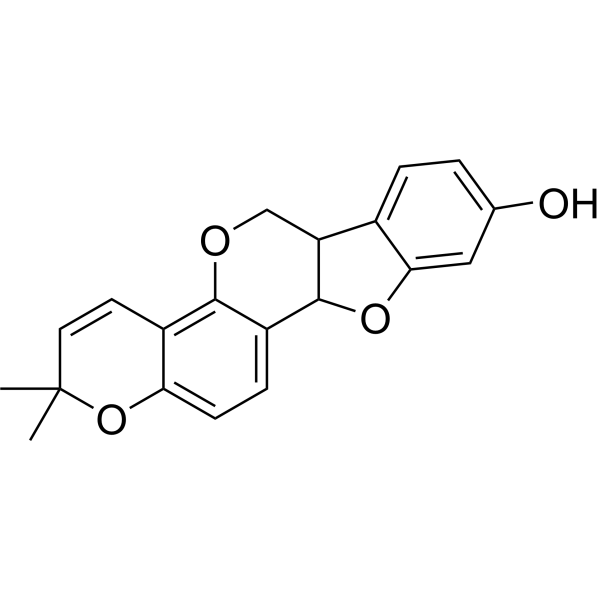
    Shinpterocarpin is a flavonoid compound. Shinpterocarpin can be isolated from the air-dried roots of Glycyrrhiza glabra L. and Xuanshen Decoction. Shinpterocarpin binds to the targets PI3K, AKT, Nrf2, Bcl-2, Bax, CAT and SOD. Shinpterocarpin enhances immunity and exerts antioxidant effects by reducing the production of ROS .
    Shinpterocarpin
  • HY-178748

    Pyruvate Kinase Apoptosis Endogenous Metabolite Reactive Oxygen Species (ROS) Cancer
    PKM2-IN-12 is an orally active PKM2 inhibitor with an IC50 of 10 nM. PKM2-IN-12 inhibits COLO-205 cell proliferation and migration, arrests the cell cycle, and induces apoptosis. PKM2-IN-12 significantly reduces cellular levels of lactate, pyruvate, and ROS. PKM2-IN-12 directly kills cancer cells and restores disrupted gut microbiota balance in mice model. PKM2-IN-12 can be used to study colorectal cancer .
    PKM2-IN-12
  • HY-D3000

    Fluorescent Dye Metabolic Disease
    NIR-RED ROS-H2O2 Probe is a near-infrared fluorescent probe used for detecting hydrogen peroxide (H₂O₂) and featuring dual-modal fluorescence/photoacoustic imaging capabilities. NIR-RED ROS-H2O2 Probe successfully detects the upregulated fluorescence signal of H₂O₂ in HepG2 cells and a mouse liver injury model. NIR-RED ROS-H2O2 Probe can be used as a biomarker detection tool for drug-induced liver injury (DILI) .
    NIR-RED ROS-H2O2 Probe
  • HY-W015913R
    Pyruvic acid sodium (Standard)
    5+ Cited Publications

    Sodium 2-oxopropanoate (Standard); Acetylformic acid sodium (Standard)

    Reference Standards Reactive Oxygen Species (ROS) Endogenous Metabolite Metabolic Disease
    Sodium 2-oxopropanoate (Standard) is the analytical standard of Sodium 2-oxopropanoate. This product is intended for research and analytical applications. Sodium 2-oxopropanoate (Sodium pyruvate), a three-carbon metabolite of Glucose, is a compound produced in the glycolytic pathway. Sodium 2-oxopropanoate is a free radical scavenger that can scavenge ROS .
    Pyruvic acid sodium (Standard)
  • HY-N0578R

    ApigenIN-7-O-β-D-glucopyranoside (Standard); CosmosiIN (Standard); ApigetrIN (Standard)

    Reference Standards Reactive Oxygen Species (ROS) Cancer
    Apigenin 7-glucoside (Standard) is the analytical standard of Apigenin 7-glucoside. This product is intended for research and analytical applications. Apigenin-7-glucoside (Apigenin-7-O-β-D-glucopyranoside) exhibits significant anti-proliferative and antioxidant activity and scavenges reactive oxygen species (ROS) .
    Apigenin 7-glucoside (Standard)
  • HY-179167

    Cholinesterase (ChE) Monoamine Oxidase Neurological Disease
    K2V-9 is an AChE and MAO-B inhibitor with IC50 values of 1.72 μM and 0.950 μM against AChE and MAO-B, respectively. K2V-9 inhibits amyloid β self-aggregation and reduces ROS. K2V-9 has neuroprotective effects .
    K2V-9
  • HY-155661

    Reactive Oxygen Species (ROS) Infection
    ROS inducer 2 (Compound I16) is a ROS inducer. ROS inducer 2 has good activity in vitro, with an EC50 of 3.43 μg/mL. ROS inducer 2 has outstanding bioactivities in vivo against Xanthomonas axonopodis pv. citri. ROS inducer 2, as a bactericidal agent, can be used for the research of intractable plant bacterial diseases .
    ROS inducer 2
  • HY-148314

    ROS Kinase Cancer
    ROS kinases-IN-2 is a ROS kinase inhibitor. ROS kinases-IN-2 can be used for research on stomach cancer, liver cancer and colorectal cancer .
    ROS kinases-IN-2
  • HY-128799R

    Toll-like Receptor (TLR) Reactive Oxygen Species (ROS) Inflammation/Immunology
    CL097 (Standard) is the analytical standard of CL097. This product is intended for research and analytical applications. CL097, a potent TLR7 and TLR8 agonist, induces pro-inflammatory cytokines in macrophages . CL097 induces NADPH oxidase priming, resulting in an increase of the fMLF-stimulated ROS production .
    CL097 (Standard)
  • HY-155662

    Reactive Oxygen Species (ROS) Infection
    ROS inducer 3 (Compound I6) is a ROS inducer. ROS inducer 3 has excellent in vitro bioactivity with an EC50 of 2.86 μg/mL. ROS inducer 3 has significant protective activity for preventing Pseudomonas syringae pv. actinidiae. ROS inducer 2, as a bactericidal agent, can be used for the research of intractable plant bacterial diseases .
    ROS inducer 3
  • HY-N0232R

    Reference Standards COX Lipoxygenase Notch Reactive Oxygen Species (ROS) Bacterial Cancer
    Psoralidin (Standard) is the analytical standard of Psoralidin. This product is intended for research and analytical applications. Psoralidin is a dual inhibitor of COX-2 and 5-LOX, regulates ionizing radiation (IR)-induced pulmonary inflammation.Anti-cancer, anti-bacterial, and anti-inflammatory properties . Psoralidin significantly downregulates NOTCH1 signaling. Psoralidin also greatly induces ROS generation .
    Psoralidin (Standard)
  • HY-122311A

    Bis(2R,3R)-SMTP-7

    Drug Isomer Cardiovascular Disease Inflammation/Immunology
    Bis(2R,3R)-Orniplabin is an isomer of Orniplabin (HY-122311). Orniplabin (SMTP-7) is a low molecular weight compound that enhances plasminogen-fibrin binding, urokinase-catalyzed plasminogen activation, and urokinase and plasminogen-mediated fibrin degradation. Orniplabin exhibits potential thrombolytic and anti-inflammatory effects. Orniplabin inhibits reactive oxygen species (ROS) .
    Bis(2R,3R)-Orniplabin
  • HY-181144

    COX Bacterial Reactive Oxygen Species (ROS) Infection Inflammation/Immunology
    COX-2-IN-65 is a selective cyclooxygenase-2 (COX-2) inhibitor with an IC50 of 10.24 μM. COX-2-IN-65 inhibits Staphylococcus aureus and Escherichia coli growth. COX-2-IN-65 scavenges reactive oxygen species (ROS). COX-2-IN-65 can be used for the researches of bacterial infections and inflammation .
    COX-2-IN-65
  • HY-182032

    VEGFR Apoptosis Reactive Oxygen Species (ROS) Cancer
    VEGFR-2-IN-83 is a VEGFR-2 kinase inhibitor with an IC50 of 0.037 μM. VEGFR-2-IN-83 induces G0/G1 cell cycle arrest and apoptosis in breast cancer cells, and increases the production of reactive oxygen species (ROS). VEGFR-2-IN-83 is applicable to relevant research on breast cancer .
    VEGFR-2-IN-83
  • HY-181982

    Ferroptosis DNA Alkylator/Crosslinker DNA/RNA Synthesis Apoptosis Reactive Oxygen Species (ROS) Neurological Disease Cancer
    HJ03 is a blood-brain barrier-permeable, orally active DNA damage and ferroptosis inducer. HJ03 triggers ferroptosis by increasing intracellular ROS, Fe 2+ accumulation and lipid peroxidation. HJ03 induces DNA adducts and interstrand crosslinks, blocks DNA replication and transcription, arrests cells at the G2/M phase and induces apoptosis. HJ03 can be used in the research of glioblastoma multiforme and colorectal cancer .
    HJ03
  • HY-165381

    MDM-2/p53 Cancer
    ZMC2 is a thiosemicarbazone-class metal ion chelator and zinc ionophore with a human mutant p53 R175H binding Ka of 27.4 nM.ZMC2 binds Fe, Cu, Mn, Zn, and other transition metals.ZMC2 facilitates zinc transport across membranes.ZMC2 restores zinc binding to zinc-deficient p53 mutants, restoring wild-type structure and function, including site-specific DNA binding.ZMC2 generates reactive oxygen species (ROS).ZMC2 can be used for the research of cancer .
    ZMC2
  • HY-183549

    Apoptosis Ferroptosis Cancer
    Ferroptosis/apoptosis inducer-4 is a pyridine-hydrazone-derived Cu (II) complex and a synergistic inducer of ferroptosis and apoptosis. Ferroptosis/apoptosis inducer-4 exerts anti-tumor proliferation and anti-metastasis effects with extremely low systemic toxicity. Ferroptosis/apoptosis inducer-4 disrupts cellular redox homeostasis by depleting glutathione and generating hydroxyl radicals through the Cu 2+/Cu + redox cycle. Ferroptosis/apoptosis inducer-4 also triggers mitochondrial dysfunction and endoplasmic reticulum stress, which in turn lead to Ca 2+ release, mitochondrial Ca 2+ overload, and the formation of a ROS−Ca 2+ self-amplifying feedback loop. Ferroptosis/apoptosis inducer-4 can be used in studies related to cervical cancer .
    Ferroptosis/apoptosis inducer-4

Inquiry Online

Your information is safe with us. * Required Fields.

Salutation


Country or Region *

Applicant Name *


Organization Name *

Department *


Email Address *


Product Name *

Cat. No.


Requested quantity *

Phone Number *


Remarks

Inquiry Online

Inquiry Information

Product Name:
Cat. No.:
Quantity:
MCE Japan Authorized Agent:

