



Psoralidin
Based on 5 publication(s) in Google Scholar
Psoralidin is a dual inhibitor of COX-2 and 5-LOX, regulates ionizing radiation (IR)-induced pulmonary inflammation.Anti-cancer, anti-bacterial, and anti-inflammatory properties. Psoralidin significantly downregulates NOTCH1 signaling. Psoralidin also greatly induces ROS generation.
For research use only. We do not sell to patients.
- Purity : 99.95%
- CAS No.: 18642-23-4
- Formula: C20H16O5
- Molecular Weight:336.34
-
Storage:Powder -20°C, 3 years , 4°C, 2 years ; In solvent -80°C, 6 months , -20°C, 1 month

To place orders, for customer services and technical support, please contact: MedChemExpress USA
Tel: 609-228-6898 E-mail: [email protected] [email protected]


-
 Biological Activity
-
Chemical Information
-
Solvent & Solubility
- Protocols
- Purity & Documentation
- References
-
 Help & FAQs


-
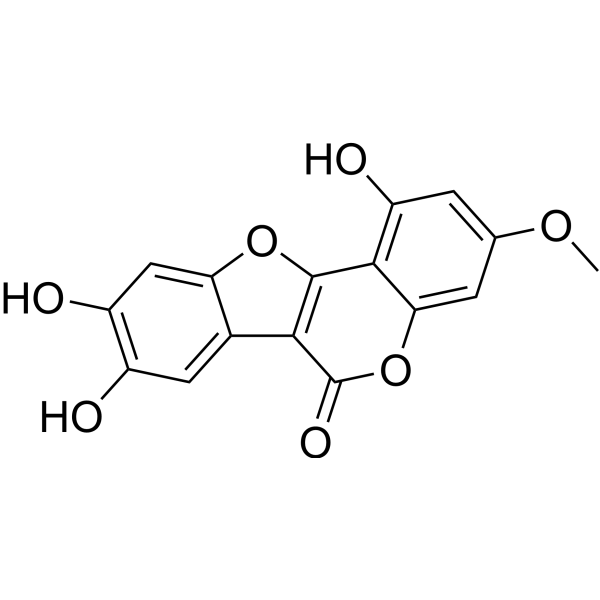
HY-N0551
WedelolactoneCaspase-11 And 5-Lox Inhibitor -

HY-N0232R
Psoralidin (Standard)COX-2/5-LOX Inhibitor -
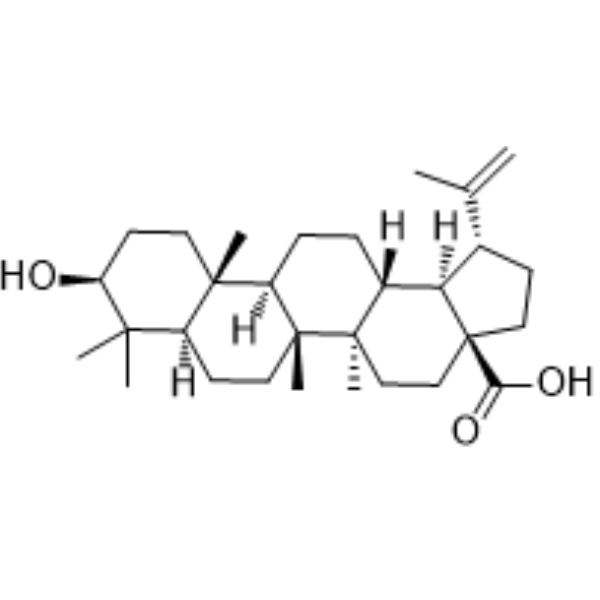
HY-10529
Betulinic acidApoptosis Inducer -
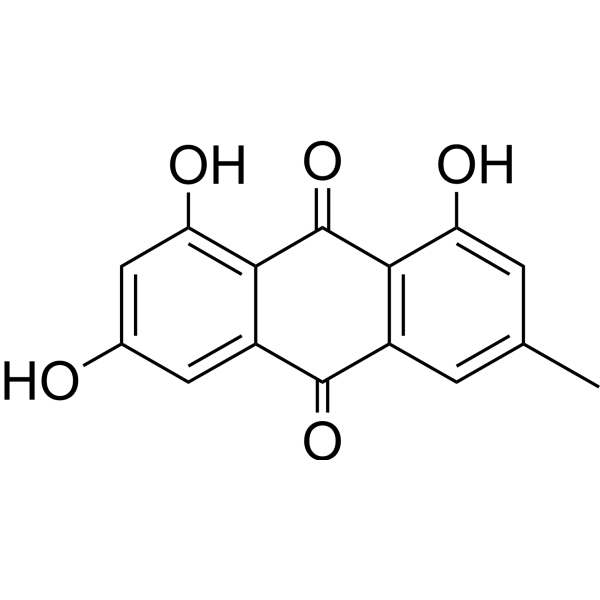
HY-14393
EmodinNatural Anthraquinone -

HY-10529R
Betulinic acid (Standard)Apoptosis Inducer -
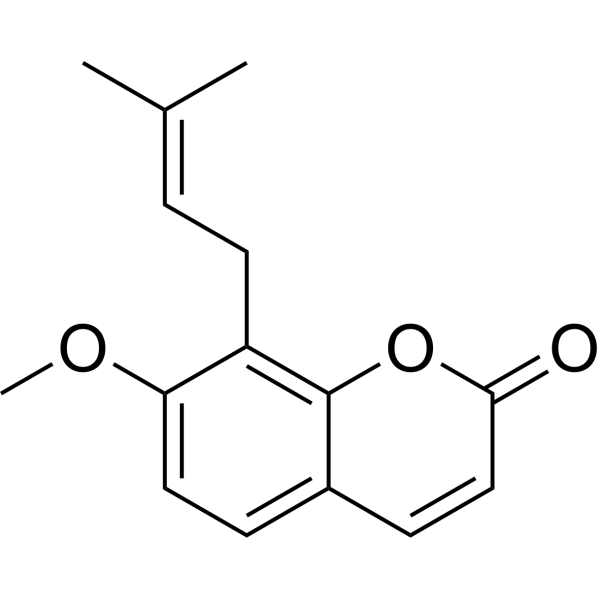
HY-N0054
OstholeApoptosis Inducer -
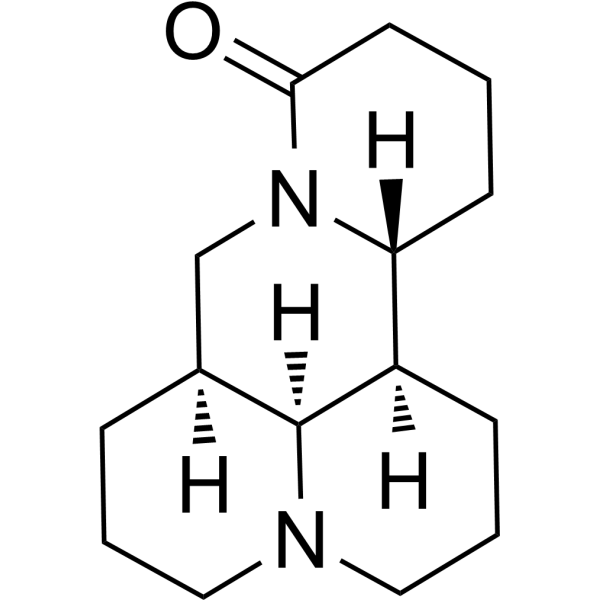
HY-N0164
MatrineAnticancer Agent -
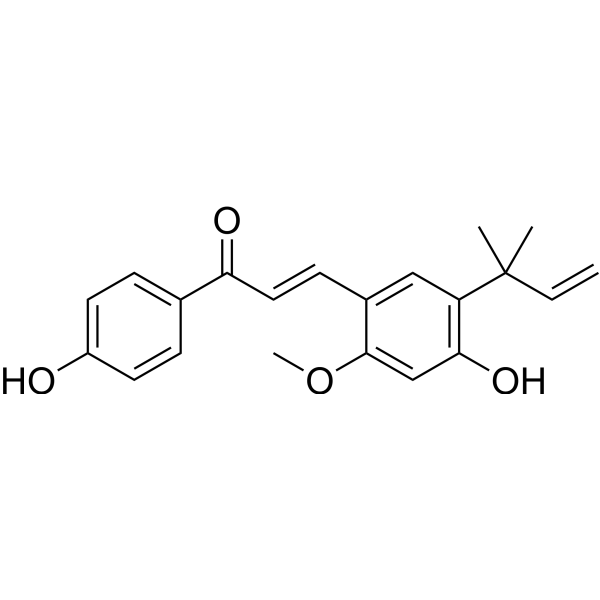
HY-N0372
Licochalcone AUGTs inhibitor -
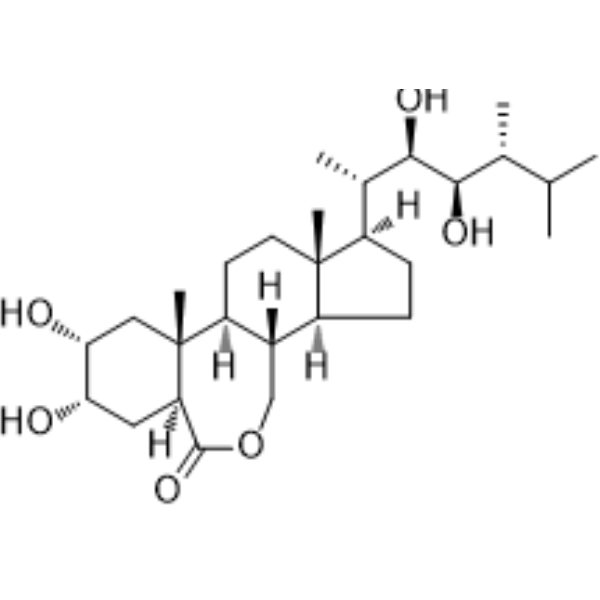
HY-N0848
EpibrassinolideApoptosis Inducer -
HY-N0284
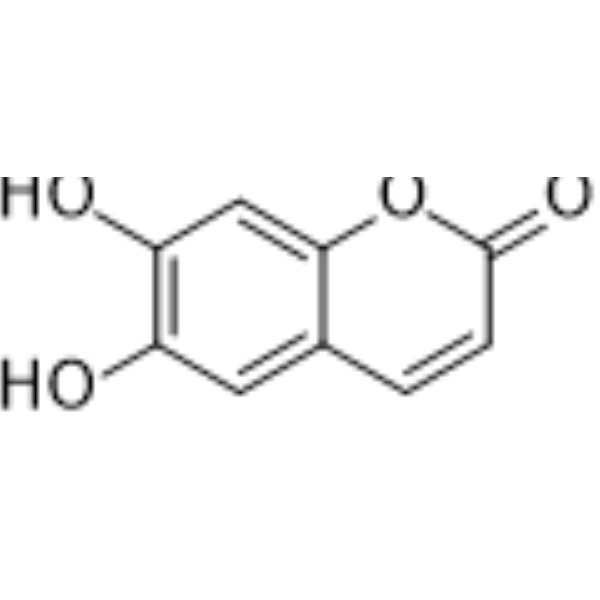
EsculetinPI3K Inhibitor
Publications Citing Use of MedChemExpress (MCE) Psoralidin
More Customer Validation & Images

-
WB
-
Cell Migration/Invasion Assay

-
Apoptosis Analysis

-
In Vivo Efficacy Study

-
Histological Imaging/Staining


Biological Activity
Description
IC50 & Target
[1]|
COX-2 |
5-LOX |
In Vitro
Three breast cancer cell (BCC)populations (ALDH- cells, ALDH+ cells, and commercial BSCSs) are sensitive to Psoralidin treatment (10, 15, 20, and 25?μM;? 24?hours) with IC50s ranging from 18 to 21?μM; however, the MCF-12A cells were resistant to Psoralidin[2].
?
Psoralidin (30?μM; 24 hours) results in a significant induction of apoptosis for ALDH- cells, ALDH+ cells, and commercial BCSCs[2].
?
Psoralidin treatment also downregulates NOTCH1 expression in both ALDH- and ALDH+ cells[2].
MedChemExpress (MCE) has not independently confirmed the accuracy of these methods. They are for reference only.
-
Cell Line:ALDH- cells, ALDH+ cells, commercial breast cancer stem cells (BSCSs), and normal breast epithelial cells (MCF-12A)
-
Concentration:10, 15, 50, and 25 μM
-
Incubation Time:24 hours
-
Result:IC50s of 18 to 21 μM for ALDH- cells, ALDH+ cells, commercial BCSCs.
-
Cell Line:ALDH- cells, ALDH+ cells, and commercial BCSCs
-
Concentration:20 and 30 μM
-
Incubation Time:24 hours
-
Result:No significant induction of apoptosis was observed for any of the three cell types following treatment at 20 μM. However, 53.60%, 44.1%, and 45.9% of cells were apoptotic at 30 μMin ALDH- cells, ALDH+ cells, and commercial BCSCs, respectively.
In Vivo
MedChemExpress (MCE) has not independently confirmed the accuracy of these methods. They are for reference only.
-
Animal Model:BALB/c mice[1]
-
Dosage:5 mg/kg
-
Administration:Intraperitoneal application; 30 min before and 1 h after IR irradiation (20 Gy).
-
Result:Anti-inflammatory effect in IR-irradiated mice.


Chemical Information
-
CAS No. 18642-23-4
-
Appearance Solid
-
Molecular Weight 336.34
-
Formula C20H16O5
-
Color White to off-white
-
SMILES
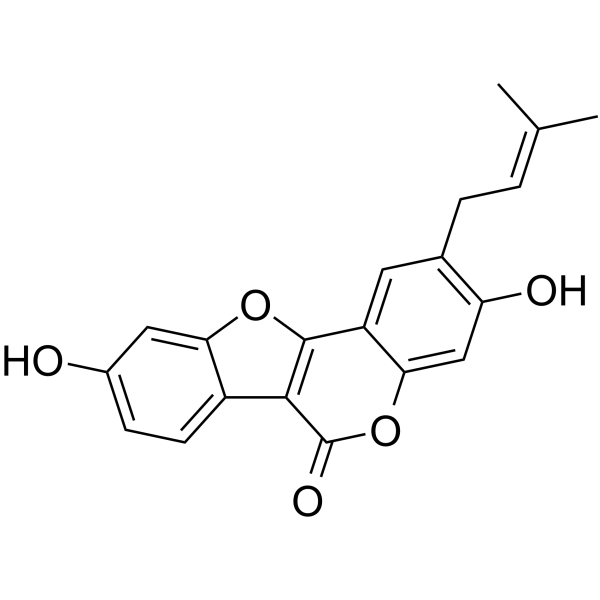
C/C(C)=C\CC1=C(C=C2OC(C3=C(C2=C1)OC4=C3C=CC(O)=C4)=O)O
-
Structure Classification
-
Initial Source
-
Shipping
Room temperature in continental US; may vary elsewhere.
-
Storage
Powder -20°C 3 years 4°C 2 years In solvent -80°C 6 months -20°C 1 month


Publications (5)
-
Journal Impact Factor
-
Most Recent
-
Chin Med
Psoralidin inhibits osteosarcoma growth and metastasis by downregulating ITGB1 expression via the FAK and PI3K/Akt signaling pathways. [Abstract]2023 Mar 31;18(1):34. PMID: 37004120
Psoralidin purchased from MedChemExpress. Usage Cited in: Chin Med. 2023 Mar 31;18(1):34. [Abstract]
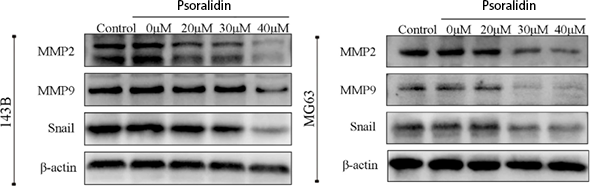
Psoralidin (20, 30, 40 µM; 24 h) significantly reduces the expression of the Snail, MMP2 and MMP9 in OS cells.
Psoralidin purchased from MedChemExpress. Usage Cited in: Chin Med. 2023 Mar 31;18(1):34. [Abstract]
The effect of Psoralidin (PSO) (0, 20, 30, 40, 50 μM) on the migration ability of human OS cells was detected by wound healing.
Psoralidin purchased from MedChemExpress. Usage Cited in: Chin Med. 2023 Mar 31;18(1):34. [Abstract]
The effect of Psoralidin (PSO) (0, 20, 30, 40, 50 μM) on the apoptosis of human OS cells was detected by flow cytometry.
Psoralidin purchased from MedChemExpress. Usage Cited in: Chin Med. 2023 Mar 31;18(1):34. [Abstract]
Psoralidin (PSO) (5, 10, 20 mg/kg, i.g.) inhibits OS cell growth and metastasis in an OS mouse model.
Psoralidin purchased from MedChemExpress. Usage Cited in: Chin Med. 2023 Mar 31;18(1):34. [Abstract]
The effects of Psoralidin (PSO) (5, 10, 20 mg/kg, i.g.) on the tumor as detected by H&E staining and immunohistochemistry.

Psoralidin purchased from MedChemExpress. Usage Cited in: Chin Med. 2023 Mar 31;18(1):34. [Abstract]
The effect of Psoralidin (PSO) (0, 20, 30, 40, 50 μM) on the proliferation of human OS cells was detected by EdU staining.
-
J Ethnopharmacol
2022 Nov 15:298:115593. PMID: 35973629 -
Hereditas
The synergistic antitumor effects of psoralidin and cisplatin in gastric cancer by inducing ACSL4-mediated ferroptosis. [Abstract]2025 Nov 4;162(1):223. PMID: 41188993 -
-
Front Med
Bavachin enhances NLRP3 inflammasome activation induced by ATP or nigericin and causes idiosyncratic hepatotoxicity. [Abstract]2021 Aug;15(4):594-607. PMID: 33909257


Solvent & Solubility
In Vitro:
DMSO : 50 mg/mL (148.66 mM; ultrasonic and warming and heat to 60°C; Hygroscopic DMSO has a significant impact on the solubility of product, please use newly opened DMSO)
Please refer to the solubility information to select the appropriate solvent. Once prepared, please aliquot and store the solution to prevent product inactivation from repeated freeze-thaw cycles.
Storage method and period of stock solution: -80°C, 6 months; -20°C, 1 month. When stored at -80°C, please use it within 6 months. When stored at -20°C, please use it within 1 month.
Please refer to the solubility information to select the appropriate solvent. Once prepared, please aliquot and store the solution to prevent product inactivation from repeated freeze-thaw cycles.
Storage method and period of stock solution: -80°C, 6 months; -20°C, 1 month. When stored at -80°C, please use it within 6 months. When stored at -20°C, please use it within 1 month.
Concentration (start) × Volume (start) = Concentration (final) × Volume (final)
In Vivo:
Select the appropriate dissolution method based on your experimental animal and administration route.
- For the following dissolution methods, please ensure to first prepare a clear stock solution using an In Vitro approach and then sequentially add co-solvents:
- To ensure reliable experimental results, the clarified stock solution can be appropriately stored based on storage conditions. As for the working solution for In Vivo experiments, it is recommended to prepare freshly and use it on the same day.
- The percentages shown for the solvents indicate their volumetric ratio in the final prepared solution. If precipitation or phase separation occurs during preparation, heat and/or sonication can be used to aid dissolution.
Add each solvent one by one: 10% DMSO 40% PEG300 5% Tween-80 45% Saline
Solubility: 2.08 mg/mL (6.18 mM); Suspended solution; Need ultrasonic
This protocol yields a suspended solution of 2.08 mg/mL. Suspended solution can be used for oral and intraperitoneal injection.
Taking 1 mL working solution as an example, add 100 μL DMSO stock solution (20.8 mg/mL) to 400 μL PEG300, and mix evenly; then add 50 μL Tween-80 and mix evenly; then add 450 μL Saline to adjust the volume to 1 mL.
Preparation of Saline: Dissolve 0.9 g sodium chloride in ddH₂O and dilute to 100 mL to obtain a clear Saline solution.
In Vivo Dissolution Calculator
Please enter the basic information of animal experiments:
-
-
-
-
Recommended: Prepare an additional quantity of animals to account for potential losses during experiments.
Please enter your animal formula composition:
-
%DMSO +
Recommended: Keep the proportion of DMSO in working solution below 2% if your animal is weak.
-
%+
-
+%Tween-80 + +
-
%Saline +
The co-solvents required include: DMSO, . All of co-solvents are available by MedChemExpress (MCE). , Tween 80. All of co-solvents are available by MedChemExpress (MCE).
Working solution concentration: 0.22 mg/mL
Method for preparing stock solution: mg drug dissolved in μL DMSO. Stock solution concentration: mg/mL.
1. Take μL DMSO stock solution;
2. Add μL .
μL , mix evenly;
3. Then add μL Tween 80, mix evenly;
4. Then add μL
Please ensure that the stock solution in the first step is dissolved to a clear state, and add co-solvents in sequence. You can use ultrasonic heating (ultrasonic cleaner, recommended frequency 20-40 kHz), vortexing, etc. to assist dissolution.


Purity & Documentation
-
Data Sheet (282 KB)
-
SDS (396 KB)
- English - EN (396 KB)
- Français - FR (396 KB)
- Deutsch - DE (396 KB)
- Norwegian - NO (396 KB)
- Español - ES (396 KB)
- Swedish - SV (396 KB)
- Italian - IT (396 KB)
- Korean - KR (396 KB)
- Portuguese - PT (396 KB)
-
Handling Instructions (2659 KB)
References
[1]. Yang HJ, et al. Psoralidin, a dual inhibitor of COX-2 and 5-LOX, regulates ionizing radiation (IR)-induced pulmonary inflammation.Biochem Pharmacol. 2011 Sep 1;82(5):524-34. [Content Brief]
[2]. Suman S, et al. Silencing NOTCH signaling causes growth arrest in both breast cancer stem cells and breast cancer cells.Br J Cancer. 2013 Nov 12;109(10):2587-96. [Content Brief]


Complete Stock Solution Preparation Table
Please refer to the solubility information to select the appropriate solvent. Once prepared, please aliquot and store the solution to prevent product inactivation from repeated freeze-thaw cycles.
Storage method and period of stock solution: -80°C, 6 months; -20°C, 1 month. When stored at -80°C, please use it within 6 months. When stored at -20°C, please use it within 1 month.
| Optional Solvent | Concentration Solvent Mass | 1 mg | 5 mg | 10 mg | 25 mg |
|---|---|---|---|---|---|
| DMSO | 1 mM | 2.9732 mL | 14.8659 mL | 29.7318 mL | 74.3295 mL |
| 5 mM | 0.5946 mL | 2.9732 mL | 5.9464 mL | 14.8659 mL | |
| 10 mM | 0.2973 mL | 1.4866 mL | 2.9732 mL | 7.4330 mL | |
| 15 mM | 0.1982 mL | 0.9911 mL | 1.9821 mL | 4.9553 mL | |
| 20 mM | 0.1487 mL | 0.7433 mL | 1.4866 mL | 3.7165 mL | |
| 25 mM | 0.1189 mL | 0.5946 mL | 1.1893 mL | 2.9732 mL | |
| 30 mM | 0.0991 mL | 0.4955 mL | 0.9911 mL | 2.4777 mL | |
| 40 mM | 0.0743 mL | 0.3716 mL | 0.7433 mL | 1.8582 mL | |
| 50 mM | 0.0595 mL | 0.2973 mL | 0.5946 mL | 1.4866 mL | |
| 60 mM | 0.0496 mL | 0.2478 mL | 0.4955 mL | 1.2388 mL | |
| 80 mM | 0.0372 mL | 0.1858 mL | 0.3716 mL | 0.9291 mL | |
| 100 mM | 0.0297 mL | 0.1487 mL | 0.2973 mL | 0.7433 mL |


Psoralidin Related Classifications
HY-N0232 Related Classifications
 Powered by Bioz