Search Result
Results for "
Theophylline
" in MedChemExpress (MCE) Product Catalog:
1
Biochemical Assay Reagents
11
Isotope-Labeled Compounds
| Cat. No. |
Product Name |
Target |
Research Areas |
Chemical Structure |
-
- HY-B0809
-
-
-
- HY-18768
-
NCT-501
5 Publications Verification
|
Aldehyde Dehydrogenase (ALDH)
|
Neurological Disease
Cancer
|
|
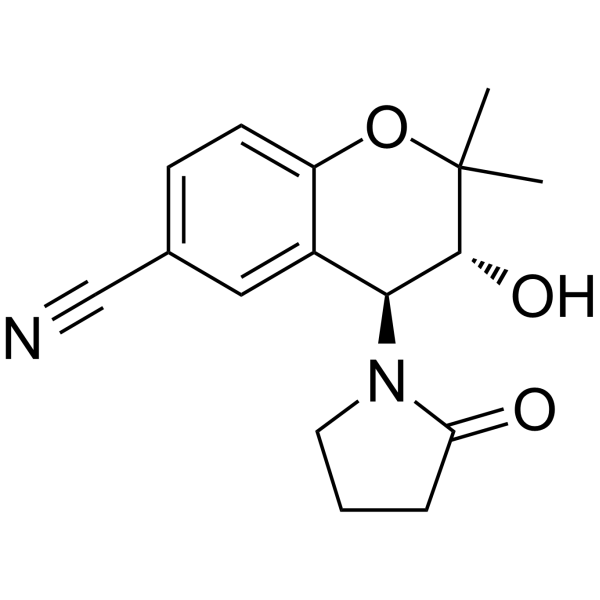
NCT-501 is a potent and selective theophylline-based inhibitor of aldehyde dehydrogenase 1A1 (ALDH1A1), inhibits hALDH1A1 with IC50 of 40 nM, typically shows better selectivity over other ALDH isozymes and other dehydrogenases (hALDH1B1, hALDH3A1, and hALDH2, IC50 >57 μM).
|
-
-
- HY-B1209
-
|
7-(β-Hydroxyethyl)Theophylline
|
Phosphodiesterase (PDE)
|
Cardiovascular Disease
Inflammation/Immunology
|
|
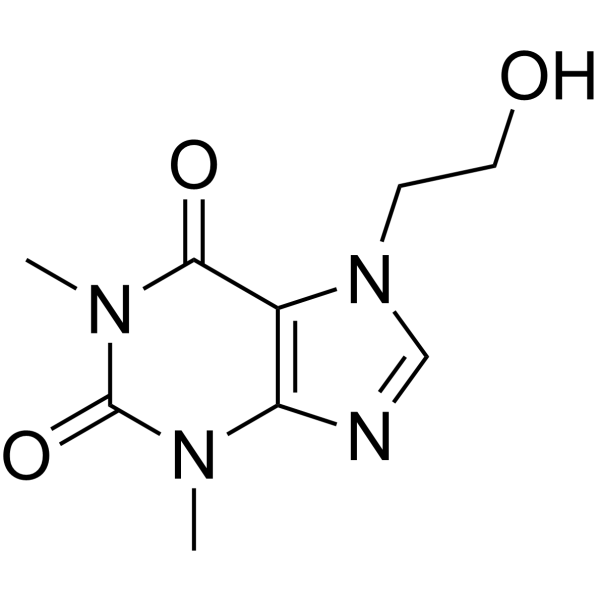
Etofylline (7-(β-Hydroxyethyl) theophylline) is an oral bronchodilator with anti-inflammatory effects. Etofylline inhibits phosphodiesterase and prevents the degradation of cAMP (cyclic adenosine monophosphate), leading to smooth muscle relaxation, reducing inflammatory responses and improving respiratory function. Etofylline affects the development of zebrafish embryos .
|
-
-
- HY-B1505
-
-
-
- HY-W008449
-
|
|
Drug Metabolite
Endogenous Metabolite
|
Cancer
|
|
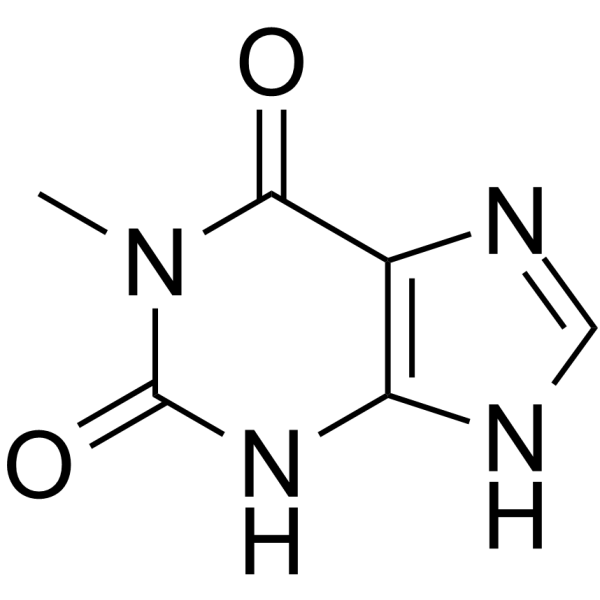
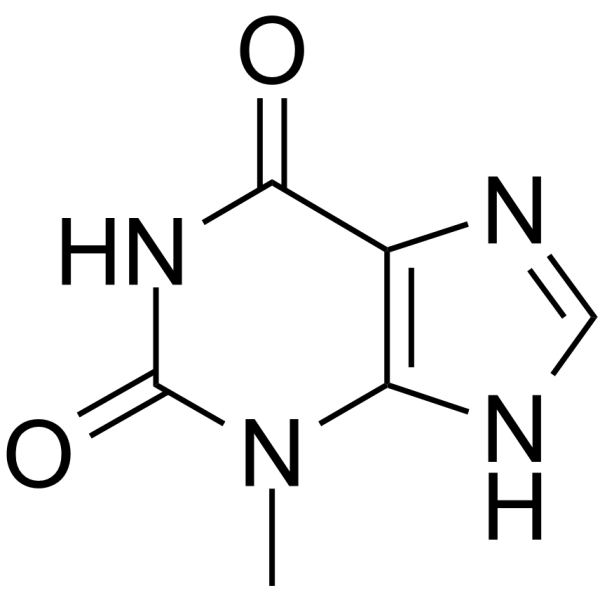
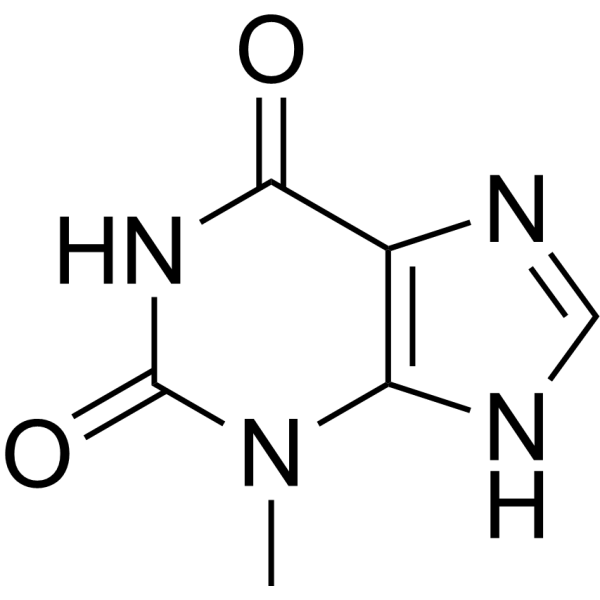
1-Methylxanthine, a caffeine derivative, is an essential human urinary metabolite of caffeine and theophylline (1,3-dimethylxanthine, TP) . 1-Methylxanthine enhances the radiosensitivity of tumor cells .
|
-
-
- HY-110011
-
|
BRL 34915
|
Potassium Channel
|
Inflammation/Immunology
|
|
Cromakalim is a potassium channel opener. Cromakalim can be used as a bronchodilator in asthma. Cromakalim inhibits the spontaneous tone of human isolated bronchi in a concentration-related manner being nearly as effective as isoprenaline or theophylline .
|
-
-
- HY-B1607
-
|
|
Histamine Receptor
SARS-CoV
Filovirus
Parasite
|
Infection
Neurological Disease
Inflammation/Immunology
|
|
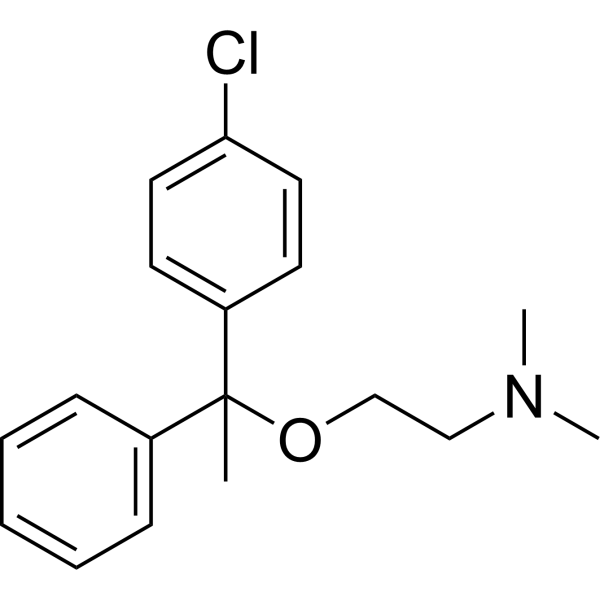
Chlorphenoxamine, an antihistamine and anticholinergic agent is a GPCR antagonist. Chlorphenoxamine inhibits multiple lethal viral diseases, such as SARS-CoV, MERS-CoV, EBOV and malaria. Chlorphenoxamine shows anti-filovirus activity against both EBOV and Marburg virus (MARV) with IC50s of 1.1 μM and 6.2 μM, respectively. Chlorphenoxamine is used for allergic conditions, urticaria, viral diseases and Parkinson’s disease .
|
-
-
- HY-B0809A
-
|
1,3-Dimethylxanthine monohydrate; Theo-24 monohydrate
|
Phosphodiesterase (PDE)
Adenosine Receptor
HDAC
Apoptosis
Interleukin Related
TNF Receptor
|
Cancer
|
|
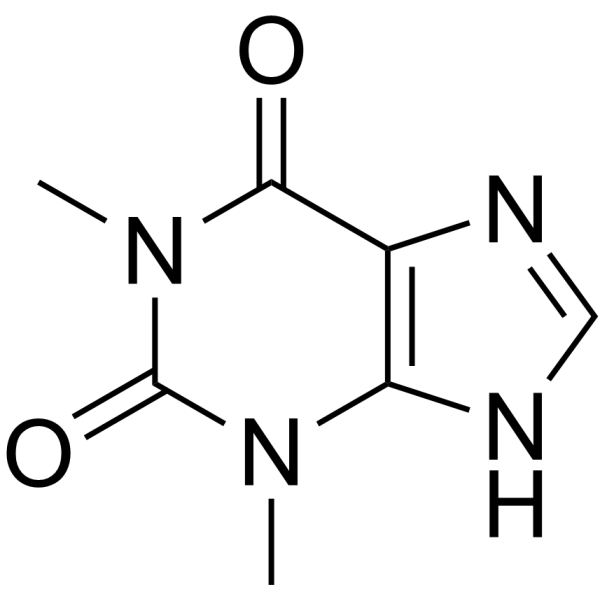
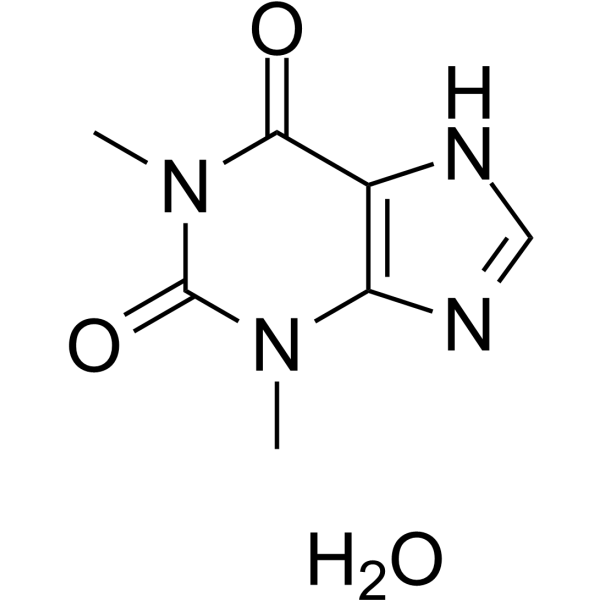
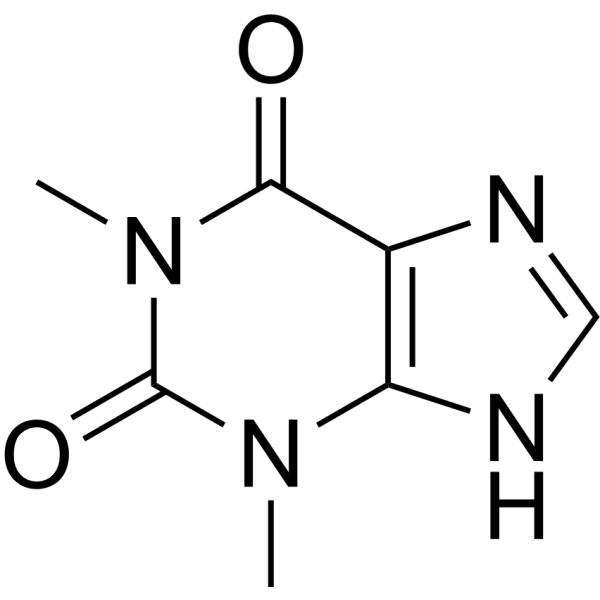
Theophylline (1,3-Dimethylxanthine) monohydrate is a potent phosphodiesterase (PDE) inhibitor, adenosine receptor antagonist, and histone deacetylase (HDAC) activator. Theophylline (1,3-Dimethylxanthine) monohydrate inhibits PDE3 activity to relax airway smooth muscle. Theophylline (1,3-Dimethylxanthine) monohydrate has anti-inflammatory activity by increase IL-10 and inhibit NF-κB into the nucleus. Theophylline (1,3-Dimethylxanthine) monohydrate induces apoptosis. Theophylline (1,3-Dimethylxanthine) monohydrate can be used for asthma and chronic obstructive pulmonary disease (COPD) research .
|
-
-
- HY-B0809R
-
|
1,3-Dimethylxanthine(Standard); Theo-24 (Standard)
|
Reference Standards
Phosphodiesterase (PDE)
Adenosine Receptor
HDAC
Apoptosis
Interleukin Related
TNF Receptor
Endogenous Metabolite
|
Cancer
|
|
Theophylline (Standard) is the analytical standard of Theophylline. This product is intended for research and analytical applications. Theophylline (1,3-Dimethylxanthine) is a potent phosphodiesterase (PDE) inhibitor, adenosine receptor antagonist, and histone deacetylase (HDAC) activator. Theophylline (1,3-Dimethylxanthine) inhibits PDE3 activity to relax airway smooth muscle. Theophylline (1,3-Dimethylxanthine) has anti-inflammatory activity by increase IL-10 and inhibit NF-κB into the nucleus. Theophylline (1,3-Dimethylxanthine) induces apoptosis. Theophylline (1,3-Dimethylxanthine) can be used for asthma and chronic obstructive pulmonary disease (COPD) research .
|
-
-
- HY-B0809S
-
-
-
- HY-W014993
-
-
-
- HY-B1718
-
-
-
- HY-B1505A
-
-
-
- HY-N7717
-
|
(–)-(1R)-N-methylcoclaurine
|
Drug Derivative
|
Metabolic Disease
|
|
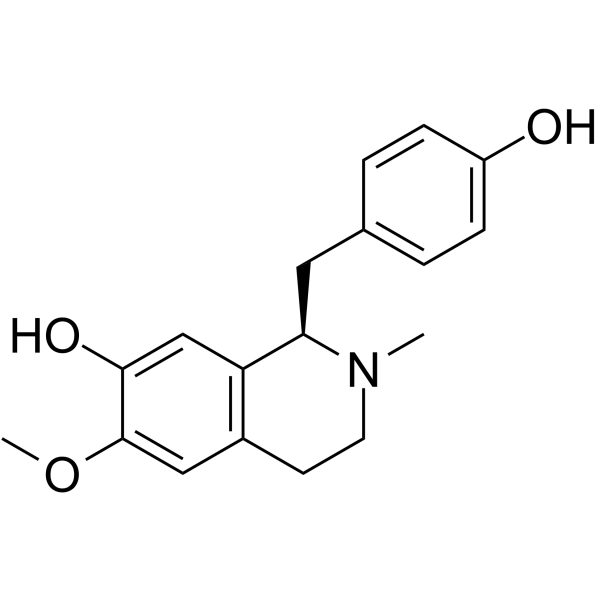
(-)-N-methylcoclaurine ((-)-(1R)-N-methylcoclaurine) is a benzylisoquinoline alkaloid and melanogenesis inhibitor with an IC50 of 6.5 μM that can be found in the flower buds of Nelumbo nucifera. (-)-N-methylcoclaurine inhibits theophylline-stimulated melanogenesis in melanoma cells. (-)-N-methylcoclaurine can be used for the research of skin hyperpigmentation disorders .
|
-
-
- HY-107909
-
|
1,3-Dimethylxanthine sodium glycinate; Theo-24 sodium glycinate
|
Adenosine Receptor
HDAC
Apoptosis
Interleukin Related
TNF Receptor
|
Cancer
|
|
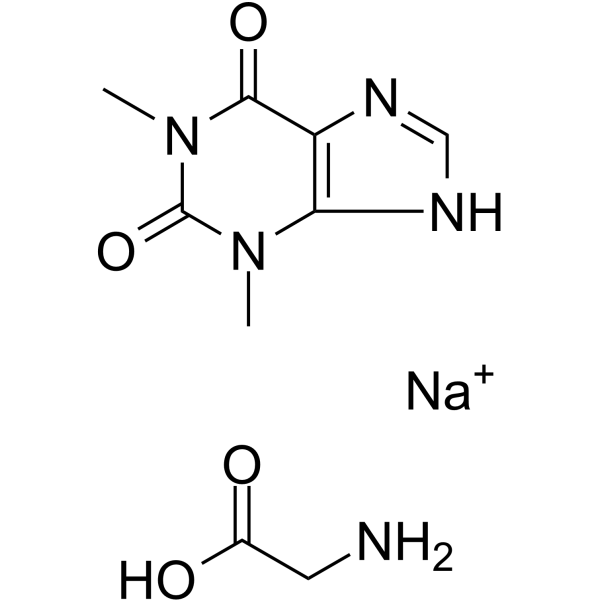
Theophylline (1,3-Dimethylxanthine) sodium glycinate is a potent phosphodiesterase (PDE) inhibitor, adenosine receptor antagonist, and histone deacetylase (HDAC) activator. Theophylline sodium glycinate inhibits PDE3 activity to relax airway smooth muscle. Theophylline sodium glycinate has anti-inflammatory activity by increase IL-10 and inhibit NF-κB into the nucleus. Theophylline sodium glycinate induces apoptosis. Theophylline sodium glycinate can be used for asthma and chronic obstructive pulmonary disease (COPD) research .
|
-
-
- HY-18768A
-
|
|
Aldehyde Dehydrogenase (ALDH)
|
Cancer
|
|
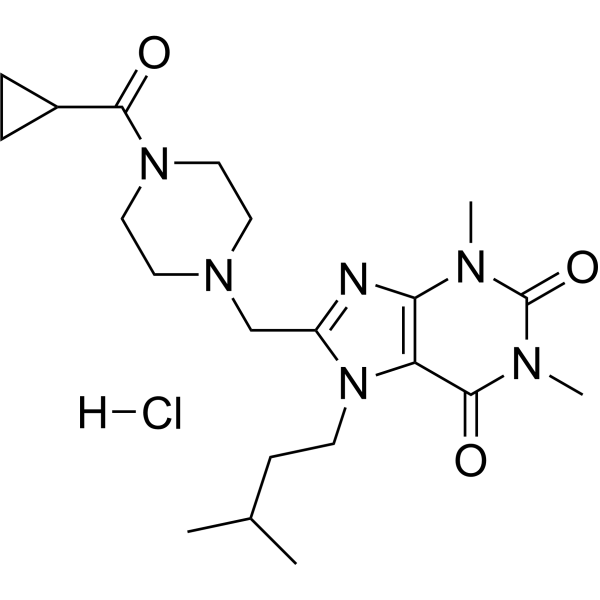
NCT-501 hydrochloride is a potent and selective theophylline-based inhibitor of aldehyde dehydrogenase 1A1 (ALDH1A1), inhibits hALDH1A1 with IC50 of 40 nM, typically shows better selectivity over other ALDH isozymes and other dehydrogenases (hALDH1B1, hALDH3A1, and hALDH2, IC50 >57 μM) .
|
-
-
- HY-175257
-
|
|
PARP
Reactive Oxygen Species (ROS)
Apoptosis
NF-κB
ERK
Bcl-2 Family
TGF-β Receptor
EGFR
Cadherin
|
Cancer
|
|
Theophylline-platinum(IV) prodrug-1 is a PARP-1 inhibitor. Theophylline-platinum(IV) prodrug-1 enhances DNA
damage, ROS production, mitochondrial dysfunction, apoptosis and S-phase arrest, along with reducing invasion and metastasis in cells. Theophylline-platinum(IV) prodrug-1 exhibits superior antitumor activity in the xenograft SKOV3-BRCA1-KD tumor model. Theophylline-platinum(IV) prodrug-1 can be used for the study of ovarian cancer .
|
-
-
- HY-W173257
-
|
6-Amino-5-1,3-dimethyl-5-(formamido)uracil
|
Others
|
|
|
Theophylline EP impurity C is an alkaloid with anti-bronchial smooth muscle spasm activity. Theophylline EP impurity C can be used to assess the purity and quality of compounds. Theophylline EP impurity C has potential clinical value in the suppression of asthma and chronic obstructive pulmonary disease.
|
-
-
- HY-129092
-
|
8-SPT; 8-pSPT
|
Adenosine Receptor
|
Others
|
|
8-(p-Sulfophenyl)theophylline (8-SPT) (compound 2) is an adenosine A2B receptor antagonist, with a Ki of 1330 nM for A2B human recombinant .
|
-
-
- HY-119879
-
|
CP-73049
|
Antibiotic
Bacterial
|
Infection
|
|
Binfloxacin (CP-73049) is a fluoroquinolone antibiotic. Binfloxacin does not inhibit the metabolism of theophylline, so it is safer to be used in combination with theophylline and other drugs metabolized by P450 1A2. Binfloxacin can be used in studies of bacterial infections .
|
-
-
- HY-B1505R
-
-
-
- HY-175227
-
|
|
STAT
NF-κB
Apoptosis
Caspase
Bcl-2 Family
|
Cancer
|
|
STAT3/NF-κB-IN-1 is a potentSTAT3 and NF-κB inhibitor with IC50s of 5.86 (STAT3) and 4.22 μM (NF-κB) in 4T1 cells. STAT3/NF-κB-IN-1 is able to induce apoptosis via its upregulation on key apoptotic regulators; caspases-3/9, Bax and downregulation of Bcl-2. STAT3/NF-κB-IN-1 exerts considerable anticancer activity against breast cancer cell lines and reduces tumor volume in vivo. STAT3/NF-κB-IN-1 can be used for the study of breast cancer .
|
-
-
- HY-W008449S
-
|
|
Isotope-Labeled Compounds
Endogenous Metabolite
|
Cancer
|
|
1-Methylxanthine- 13C,d3 is the 13C- and deuterium labeled 1-Methylxanthine. 1-Methylxanthine, a caffeine derivative, is an essential human urinary metabolite of caffeine and theophylline (1,3-dimethylxanthine, TP) . 1-Methylxanthine enhances the radiosensitivity of tumor cells .
|
-
-
- HY-130054
-
|
Lysine theophyllinate
|
Phosphodiesterase (PDE)
Adenosine Receptor
HDAC
Apoptosis
Interleukin Related
TNF Receptor
|
Inflammation/Immunology
|
|
Theophylline L-lysine (Lysine theophyllinate) is a soluble derivative of Theophylline (HY-B0809). Theophylline L-lysine is a potent phosphodiesterase (PDE) inhibitor, adenosine receptor antagonist, and histone deacetylase (HDAC) activator. Theophylline L-lysine inhibits PDE3 activity to relax airway smooth muscle. Theophylline L-lysine has anti-inflammatory activity by increasing IL-10 and inhibiting NF-κB into the nucleus. Theophylline L-lysine induces apoptosis. Theophylline L-lysine can be used for asthma and chronic obstructive pulmonary disease (COPD) research .
|
-
-
- HY-B0809B
-
|
1,3-Dimethylxanthine sodium acetate; Theo-24 sodium acetate
|
Endogenous Metabolite
Phosphodiesterase (PDE)
Adenosine Receptor
HDAC
Apoptosis
Interleukin Related
TNF Receptor
|
Cancer
|
|
Theophylline (1,3-Dimethylxanthine) sodium acetate is a potent phosphodiesterase (PDE) inhibitor, adenosine receptor antagonist, and histone deacetylase (HDAC) activator. Theophylline (1,3-Dimethylxanthine) sodium acetate inhibits PDE3 activity to relax airway smooth muscle. Theophylline (1,3-Dimethylxanthine) sodium acetate has anti-inflammatory activity by increase IL-10 and inhibit NF-κB into the nucleus. Theophylline (1,3-Dimethylxanthine) sodium acetate induces apoptosis. Theophylline (1,3-Dimethylxanthine) sodium acetate can be used for asthma and chronic obstructive pulmonary disease (COPD) research .
|
-
-
- HY-157386S
-
-
-
- HY-B0809S1
-
|
1,3-Dimethylxanthine-d3; Theo-24-d3
|
Endogenous Metabolite
Adenosine Receptor
HDAC
TNF Receptor
Interleukin Related
Phosphodiesterase (PDE)
Apoptosis
Isotope-Labeled Compounds
|
Cancer
|
|
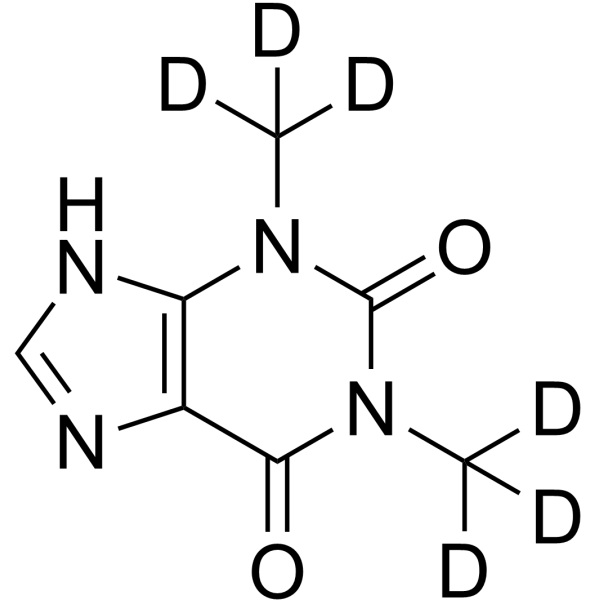
Theophylline-d3 is deuterated labeled Theophylline (HY-B0809). Theophylline (1,3-Dimethylxanthine) is a potent phosphodiesterase (PDE) inhibitor, adenosine receptor antagonist, and histone deacetylase (HDAC) activator. Theophylline (1,3-Dimethylxanthine) inhibits PDE3 activity to relax airway smooth muscle. Theophylline (1,3-Dimethylxanthine) has anti-inflammatory activity by increase IL-10 and inhibit NF-κB into the nucleus. Theophylline (1,3-Dimethylxanthine) induces apoptosis. Theophylline (1,3-Dimethylxanthine) can be used for asthma and chronic obstructive pulmonary disease (COPD) research .
|
-
-
- HY-B1209R
-
|
7-(β-Hydroxyethyl)Theophylline (Standard)
|
Phosphodiesterase (PDE)
Reference Standards
|
Cardiovascular Disease
|
|
Etofylline (Standard) is the analytical standard of Etofylline. This product is intended for research and analytical applications. Etofylline (7-(β-Hydroxyethyl)theophylline) is a N-7-substituted derivative of Theophylline. Etofylline is a bronchodilator which can be used for the research of asthma. Etofylline is also an anticholesteremic and reduces total cholesterol level in the blood .
|
-
-
- HY-105647
-
|
Bufylline
|
Phosphodiesterase (PDE)
|
Cardiovascular Disease
|
|
Ambuphylline (Bufylline) is a bronchodilator. Ambuphylline is a theophylline derivative possibly acting through phosphodiesterase inhibition. Ambuphylline can be used for the research of asthma and other lung diseases .
|
-
-
- HY-143683S
-
|
1,3-Dimethylxanthine-13C2,d6; Theo-24-13C2,d6
|
Isotope-Labeled Compounds
Phosphodiesterase (PDE)
Interleukin Related
Adenosine Receptor
Apoptosis
HDAC
TNF Receptor
Endogenous Metabolite
|
Cancer
|
|
Theophylline- 13C2,d6 (1,3-Dimethylxanthine- 13C2,d6) is the deuterium labeled and 13C-labeled Theophylline (HY-B0809). Theophylline (1,3-Dimethylxanthine) is a potent phosphodiesterase (PDE) inhibitor, adenosine receptor antagonist, and histone deacetylase (HDAC) activator. Theophylline (1,3-Dimethylxanthine) inhibits PDE3 activity to relax airway smooth muscle. Theophylline (1,3-Dimethylxanthine) has anti-inflammatory activity by increase IL-10 and inhibit NF-κB into the nucleus. Theophylline (1,3-Dimethylxanthine) induces apoptosis. Theophylline (1,3-Dimethylxanthine) can be used for asthma and chronic obstructive pulmonary disease (COPD) research .
|
-
-
- HY-W008449R
-
|
|
Drug Metabolite
Reference Standards
Endogenous Metabolite
|
Cancer
|
|
1-Methylxanthine (Standard) is the analytical standard of 1-Methylxanthine. This product is intended for research and analytical applications. 1-Methylxanthine, a caffeine derivative, is an essential human urinary metabolite of caffeine and theophylline (1,3-dimethylxanthine, TP) . 1-Methylxanthine enhances the radiosensitivity of tumor cells .
|
-
-
- HY-W008449S2
-
|
|
Drug Metabolite
Endogenous Metabolite
Isotope-Labeled Compounds
|
Cancer
|
|
1-Methylxanthine-d3 is deuterated labeled 1-Methylxanthine (HY-W008449). 1-Methylxanthine, a caffeine derivative, is an essential human urinary metabolite of caffeine and theophylline (1,3-dimethylxanthine, TP) . 1-Methylxanthine enhances the radiosensitivity of tumor cells .
|
-
-
- HY-110011R
-
|
BRL 34915 (Standard)
|
Potassium Channel
Reference Standards
|
Inflammation/Immunology
|
|
Cromakalim (Standard) is the analytical standard of Cromakalim. This product is intended for research and analytical applications. Cromakalim is a potassium channel opener. Cromakalim can be used as a bronchodilator in asthma. Cromakalim inhibits the spontaneous tone of human isolated bronchi in a concentration-related manner being nearly as effective as isoprenaline or theophylline .
|
-
-
- HY-W097331
-
-
-
- HY-B1718R
-
|
Oxtriphylline (Standard)
|
Reference Standards
Endogenous Metabolite
|
Inflammation/Immunology
|
|
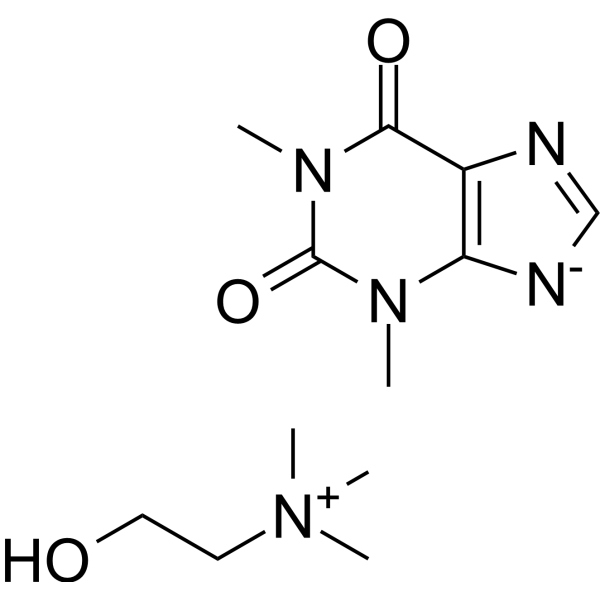
Choline theophyllinate (Standard) is the analytical standard of Choline theophyllinate. This product is intended for research and analytical applications. Choline theophyllinate (Oxtriphylline) is a choline salt of theophylline with anti-asthmatic activity .
|
-
-
- HY-126206
-
-
-
- HY-W014993R
-
|
|
Drug Metabolite
Reference Standards
Endogenous Metabolite
|
Others
|
|
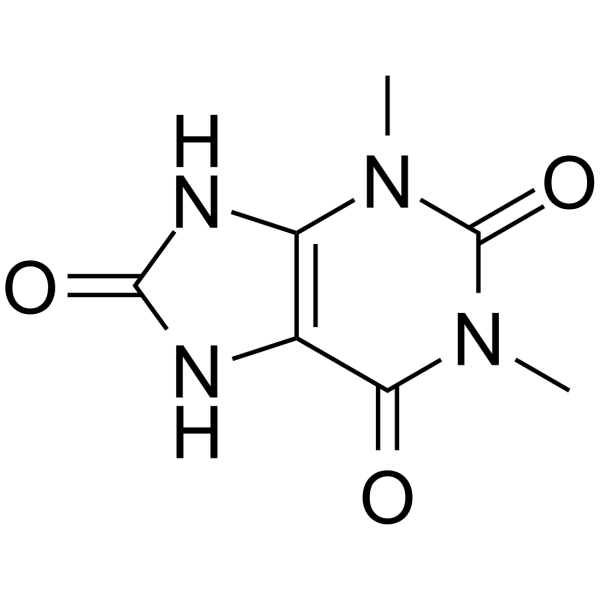
1,3-Dimethyluric acid (Standard) is the analytical standard of 1,3-Dimethyluric acid. This product is intended for research and analytical applications. 1,3-Dimethyluric acid is a product of theophylline metabolism in man. 1,3-Dimethyluric acid is one of the purine components in urinary calculi.
|
-
-
- HY-W014993S1
-
-
-
- HY-W014993S
-
|
|
Endogenous Metabolite
|
Others
|
|
1,3-Dimethyluric acid- 13C4, 15N3 is the 13C-labeled and 15N-labeled 1,3-Dimethyluric acid. 1,3-Dimethyluric acid is a product of theophylline metabolism in man. 1,3-Dimethyluric acid is one of the purine components in urinary calculi.
|
-
-
- HY-W759997
-
-
-
- HY-W008449S1
-
|
|
Isotope-Labeled Compounds
Endogenous Metabolite
|
Cancer
|
|
1-Methylxanthine- 13C4, 15N3 is the 13C-labeled and 15N-labeled 1-Methylxanthine. 1-Methylxanthine, a caffeine derivative, is an essential human urinary metabolite of caffeine and theophylline (1,3-dimethylxanthine, TP) . 1-Methylxanthine enhances the radiosensitivity of tumor cells .
|
-
-
- HY-W087424
-
-
-
- HY-165670S
-
|
7-(β-Hydroxyethyl)Theophylline-d6
|
Isotope-Labeled Compounds
|
Others
|
|
7-(β-Hydroxyethyl)theophylline-d6 (Etophyllie-d6, Hydoxyethyltheophyllie-d6) is deuterium labeled 7-(β-Hydroxyethyl)theophylline .
|
-
-
- HY-W087424R
-
|
|
Reference Standards
|
|
|
2-Hydroxyethyl 4-methylbenzenesulfonate (Standard) is the analytical standard of 2-Hydroxyethyl 4-methylbenzenesulfonate. This product is intended for research and analytical applications.
|
-
-
- HY-B1505G
-
-
-
- HY-N10337
-
|
(-)-Norjuziphine
|
Drug Derivative
|
Cancer
|
|
Norjuziphine ((-)-Norjuziphine) is an alkaloid found in the lotus flower (Nelumbo nucifera). Norjuziphine inhibits the melanogenesis of murine B16 melanoma 4A5 cells stimulated by Theophylline (HY-B0809) (IC50=14.4 μM). Norjuziphine is promising for research of skin whitening and related skin pigmentation diseases .
|
-
-
- HY-N2307B
-
|
(-)-Lirinidine
|
Melanocortin Receptor
|
Cancer
|
|
(R)-Lirinidine ((-)-Lirinidine) is an aporphine-type alkaloid found in the flower buds and leaves of Nelumbo nucifera. (R)-Lirinidineand inhibits melanogenesis with an IC50 of 19.3 μM. (R)-Lirinidine exerts cytotoxic effects at 100 μM .
|
-
-
- HY-B1607A
-
|
|
Histamine Receptor
SARS-CoV
Filovirus
Parasite
|
Infection
Neurological Disease
Inflammation/Immunology
|
|
Chlorphenoxamine hydrochloride, an antihistamine and anticholinergic agent is a GPCR antagonist. Chlorphenoxamine hydrochloride inhibits multiple lethal viral diseases, such as SARS-CoV, MERS-CoV, EBOV and malaria. Chlorphenoxamine hydrochloride shows anti-filovirus activity against both EBOV and Marburg virus (MARV) with IC50s of 1.1 μM and 6.2 μM, respectively. Chlorphenoxamine hydrochloride is used for allergic conditions, urticaria, viral diseases and Parkinson’s disease .
|
-
| Cat. No. |
Product Name |
Type |
-
- HY-B1505G
-
|
Theophyllineacetic acid; Theophylline-7-acetic acid
|
Fluorescent Dyes
|
|
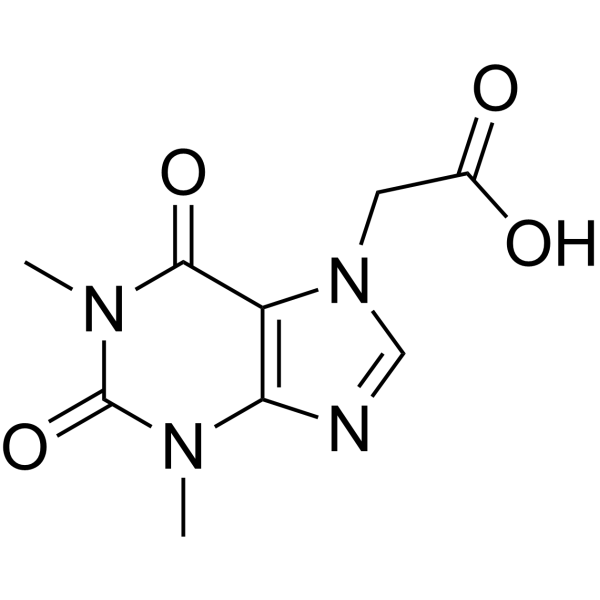
Acefylline (Theophyllineacetic acid) (GMP), a xanthine derivative, is an Adenosine Receptor antagonist. Acefylline (GMP) is a peptidylarginine deiminase (PAD) activator. Acefylline (GMP) is also a bronchodilator and cardiac stimulant that inhibits rat lung cAMP phosphodiesterase isoenzymes. Acefylline (GMP) can be used in asthma research .
|
| Cat. No. |
Product Name |
Type |
-
- HY-B1505G
-
|
Theophyllineacetic acid; Theophylline-7-acetic acid
|
Biochemical Assay Reagents
|
|
Acefylline (Theophyllineacetic acid) (GMP), a xanthine derivative, is an Adenosine Receptor antagonist. Acefylline (GMP) is a peptidylarginine deiminase (PAD) activator. Acefylline (GMP) is also a bronchodilator and cardiac stimulant that inhibits rat lung cAMP phosphodiesterase isoenzymes. Acefylline (GMP) can be used in asthma research .
|
| Cat. No. |
Product Name |
Category |
Target |
Chemical Structure |
| Cat. No. |
Product Name |
Chemical Structure |
-
- HY-B0809S
-
|
|
|
Theophylline-d6 is the deuterium labeled Theophylline. Theophylline is a nonselective phosphodiesterase (PDE) inhibitor, adenosine receptor blocker, and histone deacetylase (HDAC) activator.
|
-
-
- HY-W008449S
-
|
|
|
1-Methylxanthine- 13C,d3 is the 13C- and deuterium labeled 1-Methylxanthine. 1-Methylxanthine, a caffeine derivative, is an essential human urinary metabolite of caffeine and theophylline (1,3-dimethylxanthine, TP) . 1-Methylxanthine enhances the radiosensitivity of tumor cells .
|
-
-
- HY-157386S
-
|
|
|
8-(o-Fluoro-benzyl)theophylline methylsulfonyl- 13C2 is a 13C labeled 8-(o-Fluoro-benzyl)theophylline methylsulfonyl.
|
-
-
- HY-B0809S1
-
|
|
|
Theophylline-d3 is deuterated labeled Theophylline (HY-B0809). Theophylline (1,3-Dimethylxanthine) is a potent phosphodiesterase (PDE) inhibitor, adenosine receptor antagonist, and histone deacetylase (HDAC) activator. Theophylline (1,3-Dimethylxanthine) inhibits PDE3 activity to relax airway smooth muscle. Theophylline (1,3-Dimethylxanthine) has anti-inflammatory activity by increase IL-10 and inhibit NF-κB into the nucleus. Theophylline (1,3-Dimethylxanthine) induces apoptosis. Theophylline (1,3-Dimethylxanthine) can be used for asthma and chronic obstructive pulmonary disease (COPD) research .
|
-
-
- HY-143683S
-
|
|
|
Theophylline- 13C2,d6 (1,3-Dimethylxanthine- 13C2,d6) is the deuterium labeled and 13C-labeled Theophylline (HY-B0809). Theophylline (1,3-Dimethylxanthine) is a potent phosphodiesterase (PDE) inhibitor, adenosine receptor antagonist, and histone deacetylase (HDAC) activator. Theophylline (1,3-Dimethylxanthine) inhibits PDE3 activity to relax airway smooth muscle. Theophylline (1,3-Dimethylxanthine) has anti-inflammatory activity by increase IL-10 and inhibit NF-κB into the nucleus. Theophylline (1,3-Dimethylxanthine) induces apoptosis. Theophylline (1,3-Dimethylxanthine) can be used for asthma and chronic obstructive pulmonary disease (COPD) research .
|
-
-
- HY-W008449S2
-
|
|
|
1-Methylxanthine-d3 is deuterated labeled 1-Methylxanthine (HY-W008449). 1-Methylxanthine, a caffeine derivative, is an essential human urinary metabolite of caffeine and theophylline (1,3-dimethylxanthine, TP) . 1-Methylxanthine enhances the radiosensitivity of tumor cells .
|
-
-
- HY-W014993S1
-
|
|
|
1,3-Dimethyluric acid-d3 is deuterated labeled 1,3-Dimethyluric acid (HY-W014993). 1,3-Dimethyluric acid is a product of theophylline metabolism in man. 1,3-Dimethyluric acid is one of the purine components in urinary calculi.
|
-
-
- HY-W014993S
-
|
|
|
1,3-Dimethyluric acid- 13C4, 15N3 is the 13C-labeled and 15N-labeled 1,3-Dimethyluric acid. 1,3-Dimethyluric acid is a product of theophylline metabolism in man. 1,3-Dimethyluric acid is one of the purine components in urinary calculi.
|
-
-
- HY-W759997
-
|
|
|
Reproterol-d3 is the deuterium labeled Reproterol (HY-135490). Reproterol is a dual acting β2-adrenoceptor agonist and PDE inhibitor. The theophylline constituent of Reproterol inhibits phosphodiesterase activity induced by adenylyl cyclase. Reproterol has the potential for asthma research .
|
-
-
- HY-W008449S1
-
|
|
|
1-Methylxanthine- 13C4, 15N3 is the 13C-labeled and 15N-labeled 1-Methylxanthine. 1-Methylxanthine, a caffeine derivative, is an essential human urinary metabolite of caffeine and theophylline (1,3-dimethylxanthine, TP) . 1-Methylxanthine enhances the radiosensitivity of tumor cells .
|
-
-
- HY-165670S
-
|
|
|
7-(β-Hydroxyethyl)theophylline-d6 (Etophyllie-d6, Hydoxyethyltheophyllie-d6) is deuterium labeled 7-(β-Hydroxyethyl)theophylline .
|
-
| Cat. No. |
Product Name |
Target |
Research Areas |
Chemical Structure |
Your information is safe with us. * Required Fields.
Inquiry Information
- Product Name:
- Cat. No.:
- Quantity:
- MCE Japan Authorized Agent:

