1. Search Result
Search Result
Results for "

UPLC-Q-TOF-MS/MS.

" in MedChemExpress (MCE) Product Catalog:

396

Inhibitors & Agonists

141

Screening Libraries

1

Fluorescent Dyes

14

Biochemical Assay Reagents

38

Peptides

14

Inhibitory Antibodies

13

Natural
Products

23

Recombinant Proteins

11

Isotope-Labeled Compounds

12

Antibodies

10

Click Chemistry

18

Oligonucleotides

Cat. No. Product Name Target Research Areas Chemical Structure
  • HY-129047A

    Ser/Thr Protease Protease Activated Receptor (PAR) Infection Inflammation/Immunology
    Trypsin MS grade is a serine protease enzyme, and hydrolyzes proteins at the carboxyl side of the Lysine or Arginine. Trypsin MS grade activates PAR2 and PAR4. Trypsin MS grade induces cell-to-cell membrane fusion in PDCoV infection by the interaction of S glycoprotein of PDCoV and pAPN. Trypsin MS grade also promotes cell proliferation and differentiation. Trypsin MS grade can be used in the research of wound healing and neurogenic inflammation .
    Trypsin (MS grade)
  • HY-100685
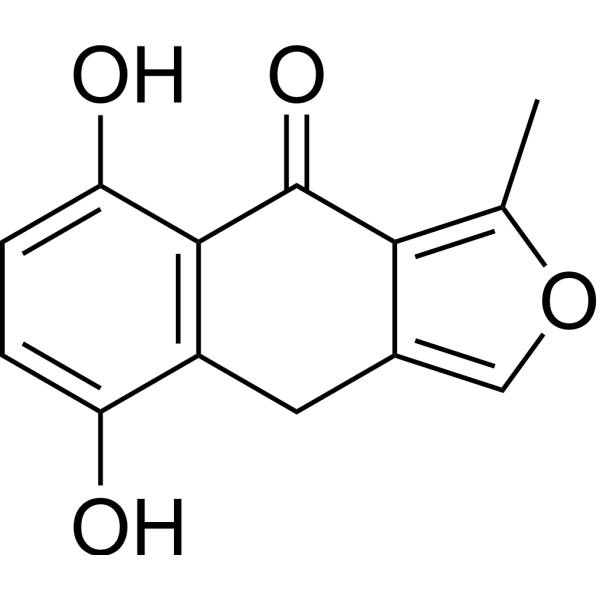
    MS-444
    2 Publications Verification

    BE-34776

    HuR Apoptosis COX Neurological Disease Cancer
    MS-444 (BE-34776) is a HuR (ELAVL1) inhibitor that blocks the cytoplasmic translocation of HuR and inhibits its dimerization. MS-444 reduces cytoplasmic HuR levels by preventing the binding of HuR to ARE-mRNA, without altering the total expression of HuR. MS-444 induces apoptosis, inhibits cell growth, angiogenesis and invasion, and also regulates immune function and microbiota. MS-444 effectively alters the number, size and invasiveness of tumors in various cancer models. MS-444 is tolerable to intraperitoneal injection in vivo and can be applied to research related to colorectal cancer, familial adenomatous polyposis, colitis-associated cancer and glioblastoma .
    MS-444
  • HY-148333
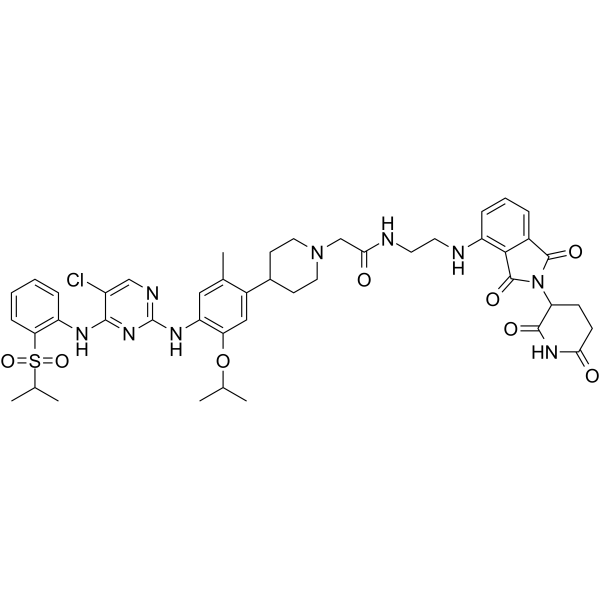
    MS177
    3 Publications Verification

    PROTACs Histone Methyltransferase Apoptosis Cancer
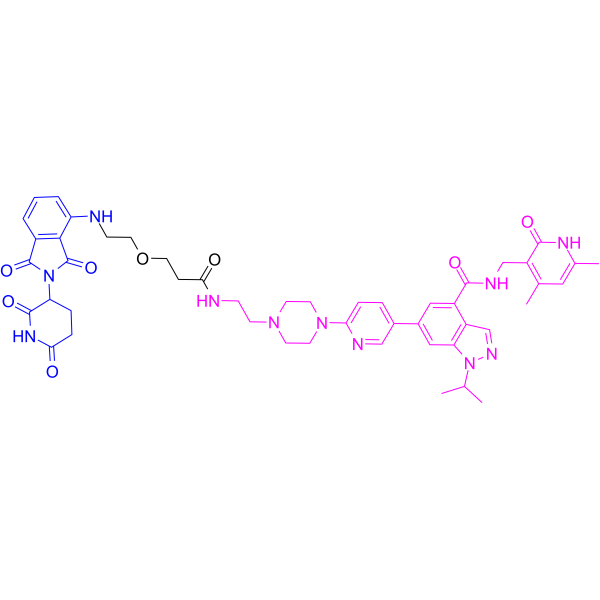
    MS177 is an effective and fast-acting EZH2 degrader. MS177 is a PROTAC that consists of a CRBN ligand, linker, and a potent enzymatic EZH2 inhibitor C24 (C24 IC50): 12 nM). MS177 effectively depletes both canonical EZH2-PRC2 and noncanonical EZH2-cMyc complexes. MS177 induces leukaemia cell growth inhibition, apoptosis and cell cycle progression arrest .
    MS177
  • HY-E70198
    Pepsin (MS Grade)
    3 Publications Verification

    EC 3.4.23.1 (MS Grade)

    Endogenous Metabolite Others
    Pepsin (MS Grade) is the major pig and human gastric proteases, it is a pepsin-like minor gastric proteolytic enzymes. Pepsin (MS Grade) contributes to proteolysis of food proteins in the vertebrate stomach .
    Pepsin (MS Grade)
  • HY-141796

    PROTACs WDR5 Cancer
    MS67 is a potent and selective WD40 repeat domain protein 5 (WDR5) degrader with a Kd of 63 nM. MS67 is inactive against other protein methyltransferases, kinases, GPCRs, ion channels, and transporters. MS67 shows potent acticancer effects .
    MS67
  • HY-116797

    MS0015203

    GPR171 Metabolic Disease
    MS15203 is a potent and selective GPR171 agonist. MS15203 increases food intake and body weight. MS15203 increases neuronal activity. MS15203 significantly increases the abundance of the mRNAs encoding proSAAS, NPY, AgRP .
    MS15203
  • HY-134494
    MS48107
    2 Publications Verification

    GPR68 Neurological Disease
    MS48107 is a potent and selective positive allosteric modulator of G protein-coupled receptor 68 (GPR68). MS48107 is selective for GPR68 over the closely related proton GPCRs, neurotransmitter transporters, and hERG ion channels. MS48107 can readily cross the blood-brain barrier (BBB) in mice .
    MS48107
  • HY-157581

    EGFR PROTACs Cancer
    MS39 (compound 6) is a PROTAC targeting EGFR. MS39 reduces the expression of EGFR and downstream signaling in HCC-827 and H3255 cells. MS39 inhibits the proliferation of H3255 cells .
    MS39
  • HY-172550

    HCN Channel Neurological Disease
    MS7710 is a hyperpolarization-activated cyclic nucleotide-gated (HCN) channel inhibitor with blood-brain barrier permeability and an excellent brain/plasma concentration ratio. MS7710 inhibits HCN channel-mediated Ih current, and reduces the firing frequency and burst activity of dopaminergic neurons in the ventral tegmental area. MS7710 ameliorates chronic social defeat stress-induced deficits in social interaction and impairments in reward-related cognitive flexibility in mice. MS7710 exerts only limited effects on ventral tegmental area dopaminergic neuron activity, social interaction, exploratory behavior, locomotor activity or sucrose preference in control mice. MS7710 is applicable to the research of major depressive disorder .
    MS7710
  • HY-148334

    PROTACs Histone Methyltransferase Cancer
    MS8815 is a selective enhancer of zeste homolog 2 (EZH2) PROTAC degrader. MS8815 has inhibition activity for EZH2 with an IC50 value of 8.6 nM. MS8815 can be used for the research of triple-negative breast cancer (TNBC) .
    MS8815
  • HY-173561

    PROTACs Histone Methyltransferase Cancer
    MS115 is a selective PRMT5/MEP50 PROTAC degrader, with DC50 values of 17.4 nM and 11.3 nM for PRMT5 and MEP50, respectively. MS115 promotes PRMT5/MEP50 ubiquitination and degradation. MS115 shows anticancer activity against breast cancer .
    MS115
  • HY-100360
    MS049
    1 Publications Verification

    Histone Methyltransferase Cancer
    MS049, a chemical probe, is a potent, selective, and cell-active dual inhibitor of PRMT4 and PRMT6 with IC50s of 34 nM and 43 nM, respectively. MS049 reduces levels of Med12me2a and H3R2me2a in HEK293 cells. MS049 is not toxic and does not affect the growth of HEK293 cells .
    MS049
  • HY-151101
    MS159
    1 Publications Verification

    PROTACs Cancer
    MS159 is a potent nuclear receptor binding SET structural domain protein 2 (NSD2) PROTACdegrader. MS159 inhibits the growth of tumour cells. MS159 is a useful chemical tool for exploring the role of NSD2 in health and disease .
    MS159
  • HY-145282
    MS170
    1 Publications Verification

    PROTACs Akt Cancer
    MS170 is a potent and selective PROTAC AKT degrader. MS170 depletes cellular total AKT (T-AKT) with the DC50 value of 32 nM. MS170 binds to AKT1, AKT2, and AKT3 with Kds of 1.3 nM, 77 nM, and 6.5 nM, respectively .
    MS170
  • HY-148244
    MS47134
    1 Publications Verification

    Mas-related G-protein-coupled Receptor (MRGPR) Others
    MS47134 is a potent and selective MRGPRX4 agonist with an EC50 value of 149 nM. MS47134 can be used for research of pain, itch and mast cell-mediated hypersensitivity .
    MS47134
  • HY-155815

    Histone Methyltransferase PROTACs Cancer
    MS9715 is a potent and seletive NSD3-targeting PROTAC. MS9715 is designed by BI-9321, which binds NSD3’s PWWP1 domain, with an E3 ligase VHL ligand. MS9715 has the potental for NSD3-dependent cancer research .
    MS9715
  • HY-114918

    TSH Receptor Endocrinology
    MS438 is a potent thyrotropin receptor (TSHR) agonist with an EC50 of 53 nM. MS438 binds to the serpentine portion of the TSHR. MS438 induces T4 secretion in mice .
    MS438
  • HY-147942

    PROTACs EGFR Cancer
    MS9449 is a potent PROTAC EGFR degrader with Kds of 17 nM and 10 nM for EGFR WT and EGFR L858R, respectively. MS9449 effectively induces degradation of mutant EGFRs through both the ubiquitin/proteasome system (UPS) and autophagy/lysosome pathways. MS9449 potently inhibits the proliferation of NSCLC cells. MS9449 can be used for researching anticancer .
    MS9449
  • HY-147941

    PROTACs EGFR Inflammation/Immunology Cancer
    MS9427 is a potent PROTAC EGFR degrader with Kds of 7.1 nM and 4.3 nM for EGFR WT and EGFR L858R, respectively. MS9427 selectively degrades the mutant but not the WT EGFR through both the ubiquitin/proteasome system (UPS) and autophagy/lysosome pathways. MS9427 potently inhibits the proliferation of NSCLC cells. MS9427 can be used for researching anticancer .
    MS9427
  • HY-157582

    EGFR Others
    MS39N (compound 27) is a negative control for MS39 that binds EGFR without inducing degradation .
    MS39N
  • HY-151613

    PROTACs Akt Cancer
    MS15 is a potent and selective AKT PROTAC degrader. MS15 inhibits the AKT1, -2, and -3 activities, with IC50 values of 798 nM, 90 nM, and 544 nM, respectively .
    MS15
  • HY-125837A
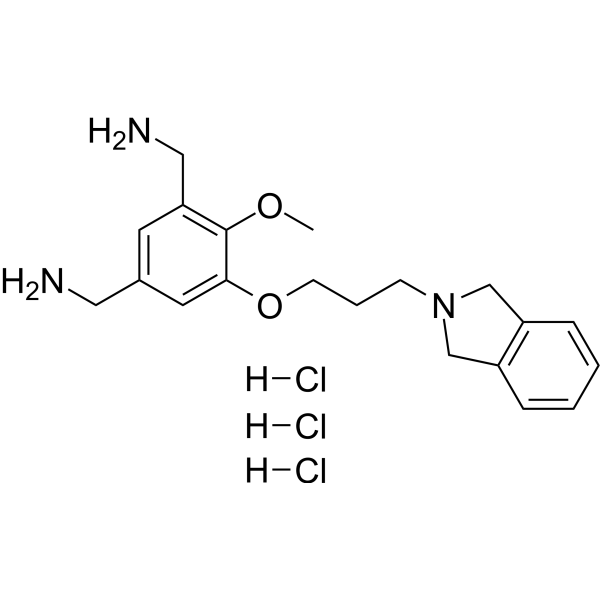
    MS31 trihydrochloride
    3 Publications Verification

    Epigenetic Reader Domain Cancer
    MS31 trihydrochloride is a potent, highly affinity and selective fragment-like methyllysine reader protein spindlin 1 (SPIN1) inhibitor. MS31 trihydrochloride potently inhibits the interactions between SPIN1 and H3K4me3 (IC50=77 nM, AlphaLISA; 243 nM, FP). MS31 trihydrochloride selectively binds Tudor domain II of SPIN1 (Kd=91 nM). MS31 trihydrochloride potently inhibits binding of trimethyllysine-containing peptides to SPIN1, and is not toxic to nontumorigenic cells .
    MS31 trihydrochloride
  • HY-42774

    1,11-Bis(methanesulfonyloxy)-3,6,9-trioxandecane

    PROTAC Linkers Cancer
    Ms-PEG4-MS is a PEG-based PROTAC linker that can be used in the synthesis of PROTACs .
    Ms-PEG4-MS
  • HY-133177

    EAAT Neurological Disease
    MS-153 is a glutamate transporter activator that can be used as a neuroprotective agent .
    MS-153
  • HY-111367

    Amine N-methyltransferase Neurological Disease Metabolic Disease Cancer
    MS2734 is a inhibitor of nicotinamide N-methyltransferase (NNMT). MS2734 potently inhibits the methyltransferase activity of human NNMT (hNNMT) with an IC50 value of 14 μM. MS2734 can be used for the study of obesity, diabetes, Parkinson's disease, and various cancers with high NNMT expression .
    MS2734
  • HY-114628

    GLP Receptor Neurological Disease Inflammation/Immunology Cancer
    MS012 is a selective GLP inhibitor (IC50=7 nM). MS012 can be used in research of GLP dysregulation, including cancer, inflammatory diseases, and neuroregenerative disorders .
    MS012
  • HY-176036

    Ligands for E3 Ligase Cancer
    MS1262 is a ligand for the E3 enzyme SPOP substrate GLP and can recruit SPOP. MS1262 can be used to synthesize MS479 (HY-176035) .
    MS1262
  • HY-178749

    ClpP Mitochondrial Metabolism Apoptosis Caspase PARP Cancer
    MS6076 is a mitochondrial protease ClpP agonist. MS6076 specifically activates the ClpP protease in the mitochondrial matrix, significantly disrupting mitochondrial Electron Transport Chain (ETC) function by accelerating the degradation of unfolded proteins. MS6076 exhibits potent cytotoxicity against a variety of cancer cell lines. MS6076 induces cell apoptosis, increasing cleavage of caspase 3 and PARP. MS6076 can be used for the research of breast cancer .
    MS6076
  • HY-117031

    ADC Linker PROTAC Linkers Cancer
    m-PEG8-MS is a PEG-based PROTAC linker can be used in the synthesis of PROTACs. m-PEG8-MS is a cleavable ADC linker used in the synthesis of antibody-drug conjugates (ADCs) .
    m-PEG8-MS
  • HY-145281

    PROTACs Akt Cancer
    MS98 is a potent and selective PROTAC AKT degrader. MS98 depletes cellular total AKT (T-AKT) with the DC50 value of 78 nM. MS98 binds to AKT1, AKT2, and AKT3 with Kds of 4 nM, 140 nM, and 8.1 nM, respectively .
    MS98
  • HY-P2929D

    Glycosidase Cancer
    PNGase F (MS grade), a glycosidase, catalyzes the cleavage of an internal glycoside bond in an oligosaccharide. PNGase F (MS grade) removes nearly all N-linked oligosaccharides from glycoproteins. PNGase F (MS grade) can be used for MS analysis .
    PNGase F (MS grade)
  • HY-140388

    PROTAC Linkers Cancer
    PEG4-MS is a PEG-based PROTAC linker that can be used in the synthesis of PROTACs .
    PEG4-MS
  • HY-141797

    Histone Methyltransferase PROTACs WDR5 Cancer
    MS33 is a potent WDR5 degrader, with Kds of 870 nM and 120 nM for VCB and WDR5, respectively. MS33 induces WDR5 degradation in an E3 ligase VHL, and proteasome-dependent manner. MS33 can be used for the research of acute myeloid leukemia .
    MS33
  • HY-119053

    MDM-2/p53 Cancer
    MS7972 is a small molecule that blocks human p53 and CREB binding protein association. MS7972 can almost completely block this BRD interaction at 50 μM .
    MS7972
  • HY-147941A

    PROTACs EGFR Infection Inflammation/Immunology Cancer
    MS9427 TFA is a potent PROTAC EGFR degrader with Kds of 7.1 nM and 4.3 nM for EGFR WT and EGFR L858R, respectively. MS9427 TFA selectively degrades the mutant but not the WT EGFR through both the ubiquitin/proteasome system (UPS) and autophagy/lysosome pathways. MS9427 TFA potently inhibits the proliferation of NSCLC cells. MS9427 TFA can be used for researching anticancer .
    MS9427 TFA
  • HY-162966

    Cyclic GMP-AMP Synthase PROTACs STING Cancer
    MS7829 is a deubiquitinase-targeting chimera (DUBTAC) that targets cGAS. MS7829 recruits OTUB1 to cGAS, binds covalently to OTUB1, stabilizes the protein abundance of cGAS, and activates the cGAS-STING-IRF3 innate immune signaling pathway in an OTUB1-dependent manner. MS7829 is applicable to cancer-related research .
    MS7829
  • HY-172824

    Deubiquitinase Cancer
    MS7131 is a USP1-recruiting DUBTACs. MS7131 effectively reduces histone H3 lysine 27 trimethylation and significantly suppresses the proliferation and clonogenicity of cancer cells .
    MS7131
  • HY-138336

    PROTAC Linkers Cancer
    Br-PEG3-MS is a PEG-based PROTAC linker that can be used in the synthesis of PROTACs .
    Br-PEG3-MS
  • HY-151794

    ADC Linker Others
    DACN(Ms) hydrochloride (compound 1ba) is a click chemistry reagent containing cyclononyne alkyne. DCN(Ms) hydrochloride has high thermal stability, chemical stability, water solubility, and high reactivity for cycloaddition reactions .
    DACN(Ms) hydrochloride
  • HY-140382

    PROTAC Linkers Cancer
    Ms-PEG2-MS is a PEG-based PROTAC linker that can be used in the synthesis of PROTACs .
    Ms-PEG2-MS
  • HY-177945

    Gal-MS99

    PROTACs Anaplastic lymphoma kinase (ALK) Cancer
    MS99-β-Gal (Gal-MS99) is a galactose-modified NPM-ALK PROTAC degrader. MS99-β-Gal is only hydrolyzed by SA-β-gal and esterase in senescent cancer cells, releasing MS99, which specifically degrades the NPM-ALK fusion protein. MS99-β-Gal shows an IC50 of 454.8 nM for aging Karpas 299 cells, significantly lower than that of normal Karpas 299 cells (IC50 = 2.162 μM). MS99-β-Gal can be used for the research of cancer .
    MS99-β-Gal
  • HY-120155

    Sigma Receptor iGluR Neurological Disease
    MS-377 is a selective and orally active sigma-1 receptor ligand (Ki=73 nM) with weak affinity for sigma-2 receptor (Ki=6900 nM) and no affinity for any other receptors including dopamine, serotonin, PCP site, glutamate, γ-aminobutylic acid, adenosine, adrenergic receptors, etc. (Ki: >10 μM). MS-377 indirectly modulates the NMDA receptor ion-channel complex. MS-377 is a antipsychotic agent. MS-377 inhibits PCP-induced behaviors by inhibition of the increase in dopamine and serotonin release in the rat medial prefrontal cortex. MS-377 can be used for research of schizophrenia .
    MS-377
  • HY-179179

    Biochemical Assay Reagents Others
    1/2 MS Medium has a similar composition to standard MS medium, including inorganic salts, sucrose, vitamins, etc. Unlike MS medium, 1/2 MS Medium contains a lower concentration of plant growth hormones (such as indoleacetic acid and adenosine), typically half the concentration of standard MS medium.
    1/2 MS Medium
  • HY-130457

    ADC Linker PROTAC Linkers Cancer
    m-PEG4-MS is a PEG-based PROTAC linker can be used in the synthesis of PROTACs. m-PEG4-MS is a cleavable ADC linker used in the synthesis of antibody-drug conjugates (ADCs) .
    m-PEG4-MS
  • HY-125837

    Epigenetic Reader Domain Cancer
    MS31 is a potent, highly affinity and selective fragment-like methyllysine reader protein spindlin 1 (SPIN1) inhibitor. MS31 potently inhibits the interactions between SPIN1 and H3K4me3 (IC50=77 nM, AlphaLISA; 243 nM, FP). MS31 selectively binds Tudor domain II of SPIN1 (Kd=91 nM). MS31 potently inhibits binding of trimethyllysine-containing peptides to SPIN1. MS31 is not toxic to nontumorigenic cells .
    MS31
  • HY-159009

    NAMPT Ligands for Target Protein for PROTAC Cancer
    MS7 is a potent inhibitor of nicotinamide phosphoribosyltransferase (NAMPT). NAMPT is overexpressed in many cancer cells to meet the continuous replenishment of NAD + required for rapid proliferation. MS7, as a NAMPT target protein ligand, can be used to synthesize PROTAC A7, which is an effective NAMPT degrader. MS7 can be used in cancer research .
    MS7
  • HY-N16034

    Momordica saponin II; MS II

    Biochemical Assay Reagents Inflammation/Immunology
    MS 2 (Momordica saponin II) is a vaccine adjuvant found in the seeds of perennial Momordica cochinchinensis Spreng .
    MS 2
  • HY-100360A

    Histone Methyltransferase Cancer
    MS049 dihydrochloride is a potent, selective, and cell-active dual inhibitor of PRMT4 and PRMT6 with IC50s of 34 nM and 43 nM, respectively. MS049 dihydrochloride reduces levels of Med12me2a and H3R2me2a in HEK293 cells. MS049 dihydrochloride is not toxic and does not affect the growth of HEK293 cells .
    MS049 dihydrochloride
  • HY-P991463

    CD3 Cancer
    MS133 is a human bispecific antibody (bsAb) targeting CD133/PROM1 & CD3E. MS133 can be used in colon cancer research .
    MS133
  • HY-176035

    PROTACs Epigenetic Reader Domain Cancer
    MS479 is a BRD4 PROTAC degrader. MS479 binds BRD4-BD2 and GLP with high affinities (BRD4-BD2: Kd = 200 nM; GLP: Kd = 306 nM). MS479 can reduce the protein level of BRD4 short isoform. MS479 recruits the E3 ligase SPOP by directly binding its substrate GLP as a bridge protein. MS479 can be used to inhibit the proliferation of colorectal cancer cells. (Pink: BRD4 ligand (HY-78695); Blue: GLP ligand (HY-176036); Black: linker (HY-176037); GLP ligand+linker: HY-176038) .
    MS479

Inquiry Online

Your information is safe with us. * Required Fields.

Salutation


Country or Region *

Applicant Name *


Organization Name *

Department *


Email Address *


Product Name *

Cat. No.


Requested quantity *

Phone Number *


Remarks

Inquiry Online

Inquiry Information

Product Name:
Cat. No.:
Quantity:
MCE Japan Authorized Agent:

