1. Search Result
Search Result
Results for "

acceptor

" in MedChemExpress (MCE) Product Catalog:

185

Inhibitors & Agonists

24

Screening Libraries

24

Fluorescent Dye

13

Biochemical Assay Reagents

8

Peptides

15

Natural
Products

14

Isotope-Labeled Compounds

3

Click Chemistry

4

Oligonucleotides

Cat. No. Product Name Target Research Areas Chemical Structure
  • HY-14520
    Tetrahydrofolic acid
    5+ Cited Publications

    L-5,6,7,8-Tetrahydrofolic acid; L-Tetrahydrofolic acid

    Endogenous Metabolite Metabolic Disease
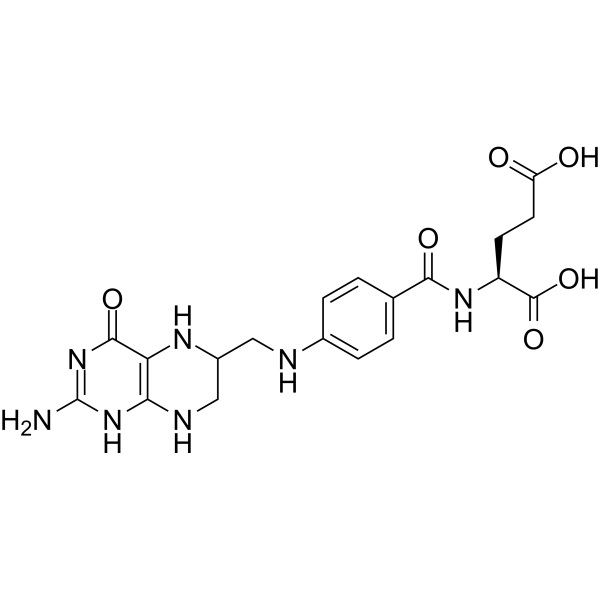
    Tetrahydrofolic acid (L-5,6,7,8-Tetrahydrofolic acid) is the biologically active vitamin B9 folate derivative. Tetrahydrofolic acid is a donor of one-carbon groups for amino acids, nucleic acids, and lipids. Tetrahydrofolic acid serves as an acceptor of free formaldehyde, producing 5,10-methylenetetrahydrofolate-Tetrahydrofolic acid .
    Tetrahydrofolic acid
  • HY-15943
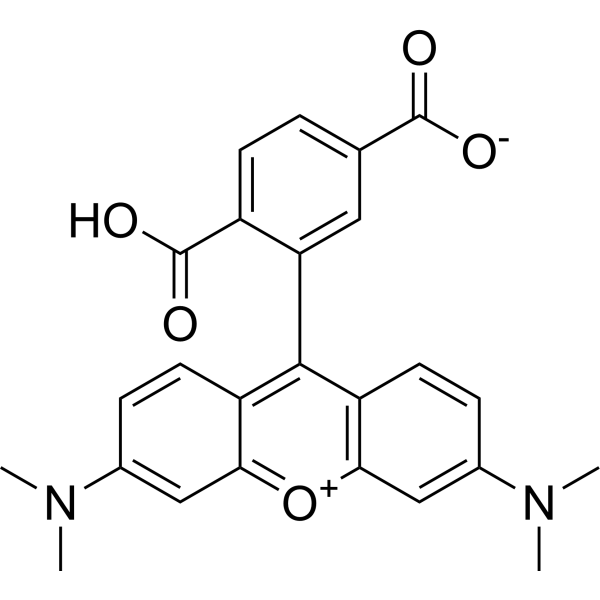
    6-TAMRA
    1 Publications Verification

    6-Carboxytetramethylrhodamine

    Fluorescent Dye Others
    6-TAMRA (6-Carboxytetramethylrhodamine) is a fluorescent dye. 6-TAMRA is often used in combination with 6-FAM (HY-66021) as an acceptor or fluorescence quencher for fluorescence resonance energy transfer (FRET) in biochemical studies such as potassium ion detection and ribonuclease activity assays .
    6-TAMRA
  • HY-W099730

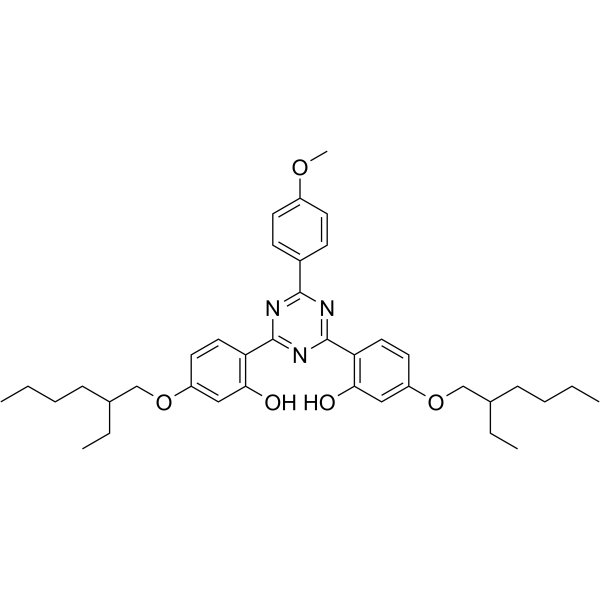
    Tinosorb S

    Others Others
    Bemotrizinol (Tinosorb S), a compound that can absorb ultraviolet light, has been shown to accept atomic oxygen generated by N-oxide photodeoxygenation .
    Bemotrizinol
  • HY-B1337S1
    Choline-d9 chloride
    3 Publications Verification

    Cholinesterase (ChE) Others
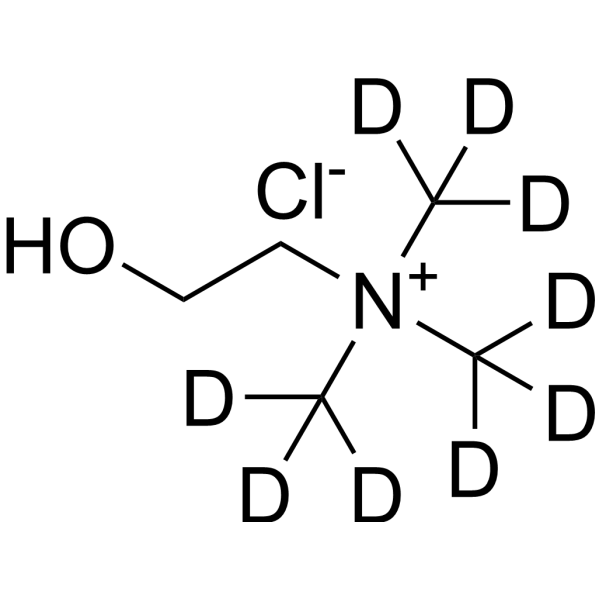
    Choline-d9 (chloride) is the deuterium labeled Choline chloride. Choline chloride is an organic compound and a quaternary ammonium salt, an acyl group acceptor and choline acetyltransferase substrate, also is an important additive in feed especially for chickens where it accelerates growth.
    Choline-d9 chloride
  • HY-107869

    Fluorescent Dye Cancer
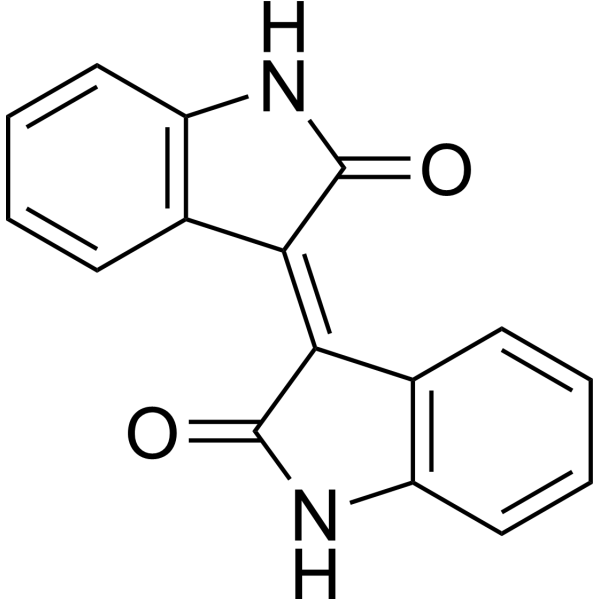
    Isoindigo acts as the acceptor unit in donor-acceptor (D-A) conjugated polymers and belongs to the indigo dye family. Isoindigo contains two lactam rings and exhibits strong electron-withdrawing properties. Isoindigo can be used in dyeing and pigment preparation. Isoindigo shows high mobility and excellent environmental stability in field-effect transistors (FETs). Isoindigo possesses the activity to inhibit tumor cell proliferation and has certain anti-tumor activity .
    Isoindigo
  • HY-W800703

    Fluorescent Dye Others
    Alexa Fluor 594 azide is an azide-modified fluorescent dye and also a FRET acceptor reactant. Owing to its negligible direct absorption under 488 nm excitation light, excellent photostability, and the ability of its azide group to participate in the CuAAC reaction, Alexa Fluor 594 azide can be paired with a donor dye for single-molecule imaging via TIRFM, thereby enabling the visual monitoring of CuNP-catalyzed click reactions .
    Alexa Fluor 594 azide
  • HY-76440

    Oxetan-3-one

    Biochemical Assay Reagents Others
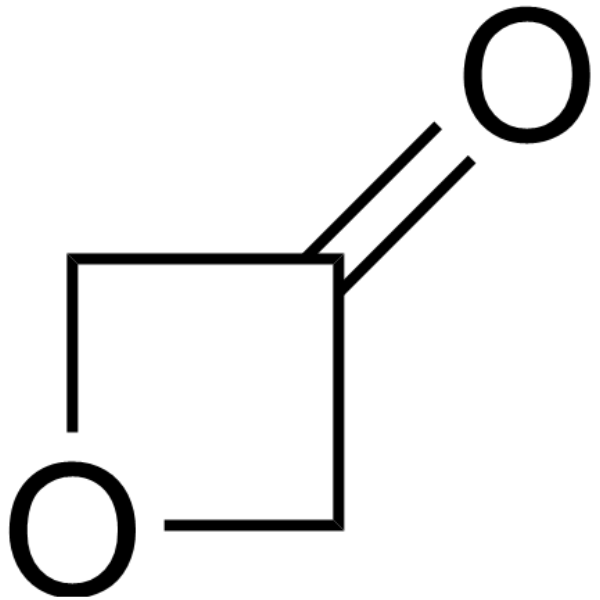
    3-Oxetanone (Oxetan-3-one) is a four-membered cyclic ketone and strained cyclic ether derivative with measurable molecular g-value, magnetic susceptibility anisotropy and molecular quadrupole moment. 3-Oxetanone acts not only as a hydrogen bond acceptor, a tetrel donor and a weak hydrogen bond acceptor, but also forms a classic O-H···O hydrogen bond with H2O via the ether oxygen atom. Alternatively, it forms a C···O tetrel bond with formaldehyde using its carbonyl group as a tetrel donor, while acting as a proton acceptor to form a C-H···O weak hydrogen bond with formaldehyde. 3-Oxetanone can be used to prepare various oxetanes .
    3-Oxetanone
  • HY-103667
    2-HBA
    3 Publications Verification

    Quinone Reductase Caspase Cancer
    2-HBA is a potent inducer of NAD(P)H:quinone acceptor oxidoreductase 1 (NQO1) which can also activate caspase-3 and caspase-10.
    2-HBA
  • HY-W006429

    Endogenous Metabolite Others
    L-Uridine is an enantiomer of the normal RNA constituent D-uridine. L-Uridine can be isolated from the Polyporaceae fungus Poria cocos (Schw.). L-uridine acts as a phosphate acceptor for nucleoside phosphotransferases .
    L-Uridine
  • HY-B1337S
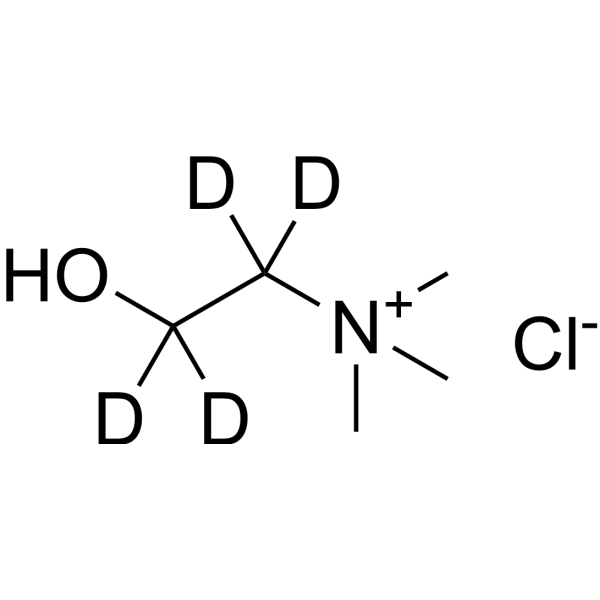
    Choline-d4 chloride
    1 Publications Verification

    Cholinesterase (ChE) Others
    Choline-d4 (chloride) is the deuterium labeled Choline chloride. Choline chloride is an organic compound and a quaternary ammonium salt, an acyl group acceptor and choline acetyltransferase substrate, also is an important additive in feed especially for chickens where it accelerates growth.
    Choline-d4 chloride
  • HY-P2897
    D-Lactate dehydrogenase, Microorganism
    1 Publications Verification

    D-LDH

    Lactate Dehydrogenase Others
    D-Lactate dehydrogenase, Microorganism (D-LDH) is an oxidoreductase that uses NAD + or NADP + as an acceptor and acts on the donor CH-OH group, and can catalyze the oxidation of D-lactate to pyruvate. D-Lactate dehydrogenase widely exists in bacteria and fungi, and is often used in biochemical research .
    D-Lactate dehydrogenase, Microorganism
  • HY-D1509

    Fluorescent Dye Others
    Phenazine ethosulfate is a cationic dye (Ex=390 nm, Em=530 nm) and an electron acceptor that can be used in dye-linked enzyme assays. Phenazine ethosulfate is an intermediate for detecting nitric oxide reducatase (Nors) activity with the presence of ascorbic acid .
    Phenazine ethosulfate
  • HY-136497

    Bacterial Endogenous Metabolite Metabolic Disease
    Coenzyme FO, a deazaflavin chromophore, acts as an important hydride acceptor/donor in the central methanogenic pathway .
    Coenzyme FO
  • HY-112205A
    RR-11a analog
    Maximum Cited Publications
    8 Publications Verification

    Parasite Legumain Infection
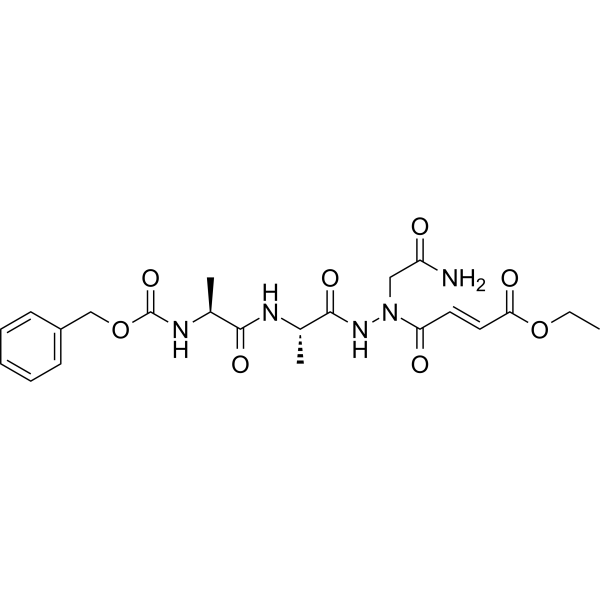
    RR-11a analog is a potent and irreversible inhibitor of Schistosoma mansoni legumain, with an IC50 of 31 nM. RR-11a analog is an aza-Asn derivative and aza-peptide Michael acceptor .
    RR-11a analog
  • HY-B1337S3

    Isotope-Labeled Compounds Endogenous Metabolite Cholinesterase (ChE) Others
    Choline-d13 (chloride) is the deuterium labeled Choline chloride. Choline chloride is an organic compound and a quaternary ammonium salt, an acyl group acceptor and choline acetyltransferase substrate, also is an important additive in feed especially for chickens where it accelerates growth.
    Choline-d13 chloride
  • HY-B1337S4
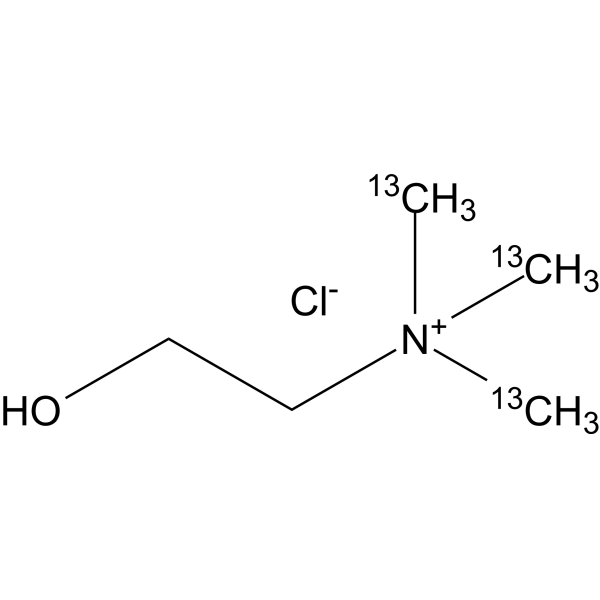
    Choline Chloride-13C3
    1 Publications Verification

    Cholinesterase (ChE) Others
    Choline Chloride- 13C3 is the 13C-labeled Choline (chloride). Choline chloride is an organic compound and a quaternary ammonium salt, an acyl group acceptor and choline acetyltransferase substrate, also is an important additive in feed especially for chickens where it accelerates growth.
    Choline Chloride-13C3
  • HY-135024

    Phenylacetyl Coenzyme A

    Endogenous Metabolite Metabolic Disease
    Phenylacetyl CoA is an acceptor oxidoreductase. Phenylacetyl CoA is a membrane-bound molybdenum–iron–sulfur enzyme involved in anaerobic metabolism of phenylalanine in the denitrifying bacterium Thauera aromatica .
    Phenylacetyl CoA
  • HY-D1682

    Fluorescent Dye Others
    NFQ1 is a non-fluorescent quencher (absorption wavelength: 474 nm), and is used for a new type of One Sample Fluorescence Resonance Energy Transfer (OS-FRET) method. OS-FRET enable measurement of unquenched donor emission in the same sample. NFQ1 shows broad absorption spectrum ensuring its utility as a dark acceptor for many donors .
    NFQ1
  • HY-W039915

    Glycosidase Others
    Allyl α-D-galactopyranoside is an α-galactoside and acceptor/donor substrate for transgalactosylation reactions. Allyl α-D-galactopyranoside acts as an acceptor substrate in α-galactosidase-catalyzed transgalactosylation, and serves as a donor substrate to form longer α-galactosyl-containing oligosaccharides. Allyl α-D-galactopyranoside serves as a model compound for investigating the catalytic mechanism and substrate specificity of glycoside hydrolases and glycosyltransferases .
    Allyl α-D-galactopyranoside
  • HY-W010554

    Drug Intermediate Others
    1,4-Cyclohexanedione is a drug intermediate. 1,4-Cyclohexanedione is an accepted substrate of EryKR1 domain which takes on a certain biocatalyst activity and stereospecificity .
    1,4-Cyclohexanedione
  • HY-W099730R

    Tinosorb S (Standard)

    Reference Standards Others Others
    Bemotrizinol (Standard) is the analytical standard of Bemotrizinol. This product is intended for research and analytical applications. Bemotrizinol (Tinosorb S), an ultraviolet (UV) filter, has been shown to accept atomic oxygen generated by N-oxide photodeoxygenation .
    Bemotrizinol (Standard)
  • HY-E70138

    EC:2.4.1.133; B4GALT7

    Glycosyltransferase Others
    β-1,4-Galactosyltransferase 7 has exclusive specificity for the donor substrate UDP-galactose and all transfer galactose in a β-1,4 linkage to similar acceptor sugars: GlcNAc, Glc, and Xyl. .
    β-1,4-Galactosyltransferase 7
  • HY-153484A

    VEGFR Small Interfering RNA (siRNA) Others
    Bevasiranib sodium is a siRNA designed to silence the genes that produce vascular endothelial growth factor (VEGF). It is widely accepted that vascular endothelial growth factor (VEGF) is a key component in the pathogenesis of choroidal neo-vascularization (CNV), which is a precursor to wet age-related macular degeneration (wet AMD).
    Bevasiranib sodium
  • HY-P2956

    D-Fructose dehydrogenase

    Biochemical Assay Reagents Metabolic Disease
    Fructose 5-dehydrogenase (acceptor) (D-Fructose dehydrogenase) is a membrane-bound flavohemo-protein that catalyzes the oxidation of d-fructose to 5-keto-d-fructose. Fructose 5-dehydrogenase (acceptor) consists of three subunits: subunit I (67 kDa), subunit II (51 kDa), and subunit III (20 kDa) .
    Fructose 5-dehydrogenase (acceptor)
  • HY-134566

    Fluorescent Dye Others
    NBD-X, SE, the acceptor fluorophore, can be used to create environment sensitive bioconjugates .
    NBD-X, SE
  • HY-N2240

    STAT Cancer
    Eupalinolide K, a sesquiterpene lactones compound from Eupatorium lindleyanum, is a STAT3 inhibitor. Eupalinolide K is a Michael reaction acceptor (MRA) .
    Eupalinolide K
  • HY-E70064A

    Hp3FT

    Glycosyltransferase Others
    Helicobacter pylori alpha-1,3-fucosyltransferase (Hp3FT) catalyzes the glycosyl addition of fucose from the donor GDP-fucose to the acceptor N-acetyllactosamine .
    Helicobacter pylori alpha-1,3-fucosyltransferase
  • HY-141488

    Galβ1-3GlcNAc

    Endogenous Metabolite Endocrinology
    Lacto-N-biose I (Galβ1-3GlcNAc), as an endogenous metabolite, is an acceptor for the α1,2-fucosyltransferase enzyme from Helicobacter pylori .
    Lacto-N-biose I
  • HY-W725574

    BAS 29095

    Photosystem II Others
    Dimidazon (BAS 29095) is a weak electron transport inhibitor targeting photosystem II (PSII). Dimidazon inhibits electron transfer from the primary electron acceptor Q in PSII to photosystem I. Dimidazon is promising for research of photosynthesis regulation and weed control .
    Dimidazon
  • HY-P10172

    Angiotensin-converting Enzyme (ACE) Neurological Disease
    Abz-SDK(Dnp)P-OH is a fluorescence peptide. Abz-SDK(Dnp)P-OH is the substrate of angiotensin I-converting enzyme (ACE). Abz-SDK(Dnp)P-OH has fluorescent donor-acceptor pair Abz and Dnp (2,4-dinitrophenyl) .
    Abz-SDK(Dnp)P-OH
  • HY-P3770

    PKC Others
    Phosphate acceptor peptide is a substrate for cAMP-dependent protein kinase (PKA). phosphate acceptor peptide is also a weak PKC inhibitor .
    Phosphate acceptor peptide
  • HY-D1577

    Fluorescent Dye Cancer
    C6 NBD Lactosylceramide is a derivative of lactosylceramides, and can be used in lactosylceramide synthase assay as a fluorescent acceptor substrate. C6 NBD Lactosylceramide can also be used in cancer research .
    C6 NBD Lactosylceramide
  • HY-W012232

    Biochemical Assay Reagents Drug Intermediate Others
    2,6-Diphenylpyridine is a proton acceptor (log(P) = 5) and a tridentate [C^N^C] dianionic ligand. 2,6-Diphenylpyridine efficiently transfers protons through a direct pathway at the interface of two immiscible electrolyte solutions. 2,6-Diphenylpyridine as a tridentate ligand and can form mononuclear and binuclear complexes with gold(III). 2,6-Diphenylpyridin is applicable to research in electrochemical ion transfer kinetics and organometallic chemistry .
    2,6-Diphenylpyridine
  • HY-E70124A

    Biochemical Assay Reagents Metabolic Disease
    Esterase, Bacillus subtilis is a carboxylate hydrolase. Esterase, Bacillus subtilis accepts a branched alcohol moiety as substrate .
    Esterase, Bacillus subtilis
  • HY-137294

    Y6

    Endogenous Metabolite Others
    BTPTT-4F (Y6) is a non-fullerene acceptor-donor-acceptor (A-D-A) type small molecular acceptor (SMA) characterized by its flexible alkyl chains and centrally fused ring structure. Featuring a ladder-type electron-deficient core, BTPTT-4F can be effectively blended with PM6, showcasing significant potential for enhancing the performance of organic photovoltaic applications. Its tailored optical properties and adjustable electronic energy levels contribute to improved thermal and photochemical stability, making it a promising candidate for next-generation high-performance organic solar cells.
    BTPTT-4F
  • HY-D2262

    Fluorescent Dye Metabolic Disease
    BODIPY-cholesterol conjugate-2 (compound 6) is a BODIPY-cholesterol conjugate. BODIPY-cholesterol conjugate-2 is a useful probe for simultaneous visualization of intracellular cholesterol pools and for monitoring cholesterol efflux from cells to extracellular acceptors. (λex=589 nm, λem=638 nm) .
    BODIPY-cholesterol conjugate-2
  • HY-N10516

    Bacterial Others
    Bacteriopheophytin, a photosynthetic pigment, is a bacterial demagnetised chlorophyll composed of bacterial chlorophyll in which two hydrogen atoms replace the magnesium center. Bacteriopheophytin acts as an electron acceptor in the purple bacterial reaction center (RC) and is involved in electron transfer .
    Bacteriopheophytin
  • HY-125830

    Biochemical Assay Reagents Others
    ITIC, non-fullerene acceptor, is an indacenodithienothiophene-based postfullerene electron acceptor, crystallizes in a profoundly different way as compared to fullerenes. ITIC has a superior thermal stability and undergoes a glass-crystal transition considerably below its high Tg of 180 °C.
    ITIC
  • HY-151109

    Fluorescent Dye Others
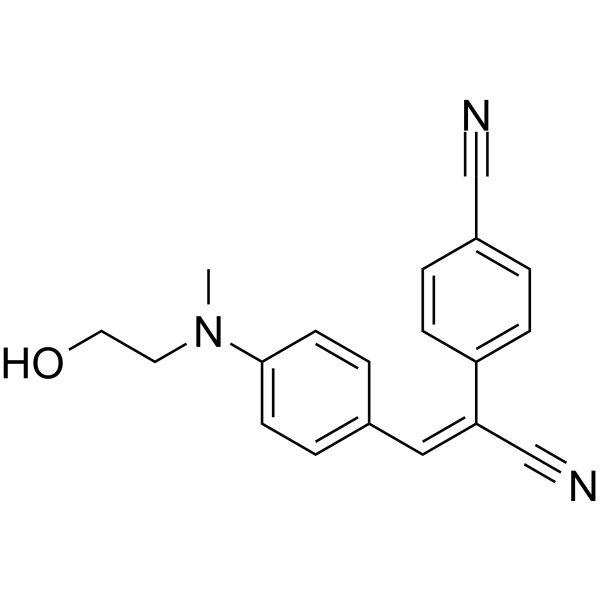
    IR-990 is an activatable NIR-II fluorescent probe with an acceptor-π-acceptor (A-π-A) skeleton for real-time detection of H2O2 in vivo. IR-990 is a powerful diagnosis of agent-induced liver injury (DILI) .
    IR-990
  • HY-D2735

    Fluorescent Dye Others
    QSY-9-succinimidyl ester is a nonfluorescent acceptor molecule with a terminal NHS ester group. QSY-9-succinimidyl ester has a wide and intense quenching range from 500-600 nm that makes it useful as an acceptor in fluorescence resonance energy transfer (FRET) applications in conjunction with fluorescent dyes at 500 nm to 600 nm. The NHS ester can be applied to label the primary amines (-NH2) of proteins, amine-modified oligonucleotides, and other amine-containing molecules.
    QSY-9-succinimidyl ester
  • HY-176757

    NADPH Oxidase Cancer
    N-Benzyl-N-demethylpronqodine A (Compound 16) is an inhibitor of NAD(P)H:quinine acceptor oxidoreductase 1 (NQO1) with an IC50 of 83.3 nM .
    N-Benzyl-N-demethylpronqodine A
  • HY-E70159

    EC:2.4.1.-; FUT11

    Glycosyltransferase Cancer
    Fucosyltransferase 11 (EC:2.4.1.-, FUT11) links alpha-l-fucose onto conalbumin glycopeptides and biantennary N-glycan acceptors. Fucosyltransferase 11 plays an important role in cancer .
    Fucosyltransferase 11
  • HY-P0248F

    PKA Fluorescent Dye Metabolic Disease
    Kemptide, 5-FAM labeled is a 5-FAM labeled Kemptide (HY-P0248). Kemptide is a phosphate acceptor peptide that serves as a synthetic substrate for PKA (Km = 16 μM). The corresponding fluorescent and biotinylated peptides are also proven to be good substrates for PKA.
    Kemptide, 5-FAM labeled
  • HY-153484

    VEGFR Small Interfering RNA (siRNA) Others
    Bevasiranib is a siRNA designed to silence the genes that produce vascular endothelial growth factor (VEGF). It is widely accepted that vascular endothelial growth factor (VEGF) is a key component in the pathogenesis of choroidal neo-vascularization (CNV), which is a precursor to wet age-related macular degeneration (wet AMD).
    Bevasiranib
  • HY-14520B

    L-5,6,7,8-Tetrahydrofolic acid trihydrochloride; L-Tetrahydrofolic acid trihydrochloride

    Endogenous Metabolite Metabolic Disease
    Tetrahydrofolic acid (L-5,6,7,8-Tetrahydrofolic acid) trihydrochloride is the biologically active vitamin B9 folate derivative. Tetrahydrofolic acid trihydrochloride is a donor of one-carbon groups for amino acids, nucleic acids, and lipids. Tetrahydrofolic acid trihydrochloride serves as an acceptor of free formaldehyde, producing 5,10-methylenetetrahydrofolate-Tetrahydrofolic acid .
    Tetrahydrofolic acid trihydrochloride
  • HY-P10828

    Virus Protease Infection Inflammation/Immunology
    MAPI is a polypeptide irreversible 3C cysteine protease (SV3CP) inhibitor. MAPI inhibits SV3CP by covalently binding its C-terminal Michael-acceptor extension to the active site thiol of SV3CP Cys 139. MAPI is promising for research of noroviruses infection .
    MAPI
  • HY-135024A

    Phenylacetyl coenzyme A lithium; S-Benzeneacetate-CoA lithium; S-Benzeneacetate-coenzyme A lithium

    Endogenous Metabolite Metabolic Disease
    Phenylacetyl CoA lithium (Phenylacetyl Coenzyme A lithium) is an acceptor oxidoreductase. Phenylacetyl CoA is a membrane-bound molybdenum–iron–sulfur enzyme involved in anaerobic metabolism of phenylalanine in the denitrifying bacterium Thauera aromatica .
    Phenylacetyl CoA lithium
  • HY-W021079

    2,4-Dimethylpenta-2,3-diene; 2,4-Dimethyl-2,3-pentadiene; 1,1,3,3-Tetramethylallene

    Biochemical Assay Reagents Others
    Tetramethylallene (2,4-Dimethylpenta-2,3-diene) is a methylated analogue of allen that can be used as a hydrogen-atom acceptor in reactions with HMn(CO)5 and HCo(CO)4 .
    Tetramethylallene
  • HY-W016591

    ADC Linker Neurological Disease
    2,4-Diisopropylphenol is a widely accepted chemical agent .
    2,4-Diisopropylphenol
  • HY-E70124C

    Biochemical Assay Reagents Metabolic Disease
    Esterase, Rabbit liver is a carboxylate hydrolase. Esterase, Bacillus subtilis accepts a branched alcohol moiety as substrate .
    Esterase, Rabbit liver

Inquiry Online

Your information is safe with us. * Required Fields.

Salutation


Country or Region *

Applicant Name *


Organization Name *

Department *


Email Address *


Product Name *

Cat. No.


Requested quantity *

Phone Number *


Remarks

Inquiry Online

Inquiry Information

Product Name:
Cat. No.:
Quantity:
MCE Japan Authorized Agent:

