1. Search Result
Search Result
Results for "

amazonensis

" in MedChemExpress (MCE) Product Catalog:

25

Inhibitors & Agonists

1

Fluorescent Dye

3

Natural
Products

Cat. No. Product Name Target Research Areas Chemical Structure
  • HY-19567
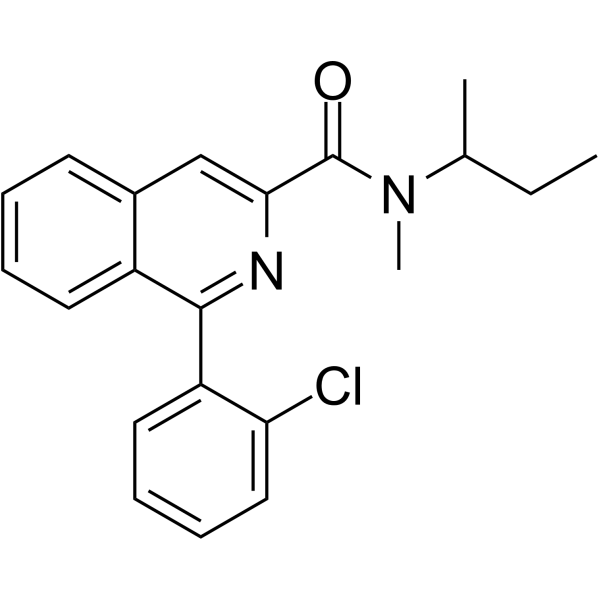
    PK 11195
    5+ Cited Publications

    RP 52028

    Parasite Infection
    PK 11195 (RP 52028) is a ligand of translocator protein (TSPO), which targets Leishmania chemotherapy, with IC50s of 14.2 μM, 8.2 μM, 3.5 μM for L. amazonensis, L. major and L. braziliensis, respectively.
    PK 11195
  • HY-147428

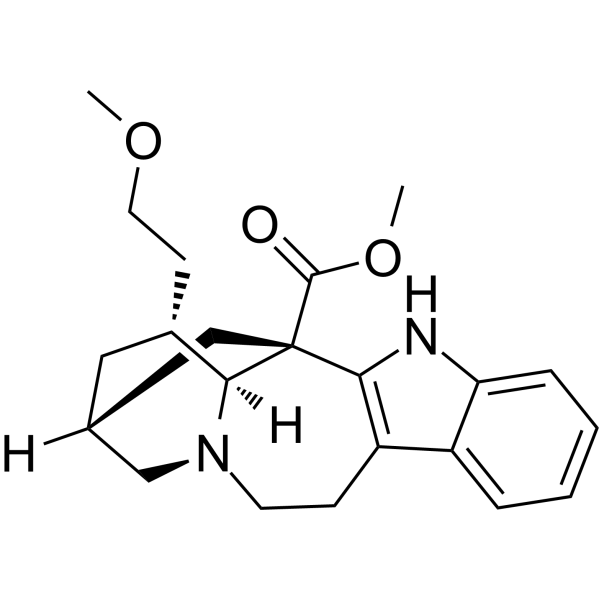
    MM-110; (±)​-18-Methoxycoronaridine

    nAChR Parasite Infection Neurological Disease
    Zolunicant (MM-110) is a potent inhibitor against nicotinic α3β4 receptors with an IC50 of 0.90 μM to combat addiction. Zolunicant can decrease the self-administration of several addictive agents including morphine, methamphetamine, nicotine, and ethanol in rat model. Zolunicant can be studied as a potential research for multiple forms of agent abuse . Zolunicant also reveals a potent leishmanicide effect against Leishmania amazonensis .
    Zolunicant
  • HY-21496

    4-Carboxybenzyl bromide

    Parasite Infection
    4-(Bromomethyl)benzoic acid (4-Carboxybenzyl bromide) is an antiparasitic agent with low activity against Leishmania amazonensis and Trypanosoma cruzi. 4-(Bromomethyl)benzoic acid has certain cytotoxicity to PBMCs, with an IC50 of 88.8 μM .
    4-(Bromomethyl)benzoic acid
  • HY-129959

    AlClPc

    Environmental Pollutants Parasite MOFs Infection
    Aluminum phthalocyanine chloride is a photosensitizer that effectively inhibits the parasite Leishmania amazonensis (the causative agent of cutaneous leishmaniasis) by light-mediated cytolysis. Aluminum phthalocyanine chloride causes parasite morphology and cytolysis of isolated amasilians, while higher photosensitizer concentrations and light intensities are required to induce lysis of mammalian cells. Aluminum phthalocyanine chloride lyses parasites within infected J774 macrophages and can be used to further investigate the study of leishmaniasis .
    Aluminum phthalocyanine chloride
  • HY-N4267

    Calcium Channel Platelet-activating Factor Receptor (PAFR) UGT Leukotriene Receptor TNF Receptor PGE synthase Interleukin Related Cardiovascular Disease Infection Inflammation/Immunology
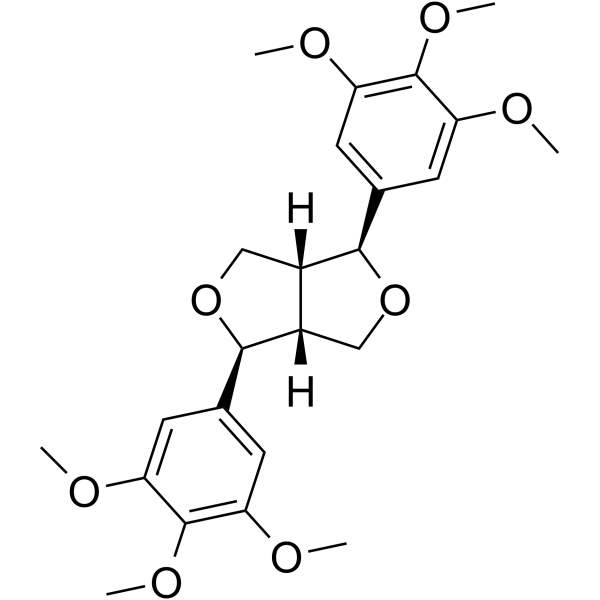
    Yangambin is a PAF receptor antagonist and UGT1A1/UGT1A3 inhibitor, with an IC50 of 29.7 μM and a Ki of 17.1 μM against human UGT1A1, and an IC50 of 56.5 μM and a Ki of 66.8 μM against human UGT1A3. Yangambin blocks PAF-mediated responses, inhibits LTB4-mediated neutrophil infiltration, and suppresses inflammatory events and anaphylactic contraction. Yangambin acts as a central nervous system inhibitor to reduce spontaneous activity, and also exhibits analgesic, anticonvulsant, antileishmanial, vasodilatory and hypotensive effects. Yangambin blocks voltage-gated Ca 2+ channels, reduces the production of NO, TNF-α, IL-6 and PGE2 in cells, increases the production of IL-10, and exerts a protective effect against cardiovascular injury. Yangambin can be used in research related to allergies, cutaneous leishmaniasis, central nervous system diseases and cardiovascular diseases .
    Yangambin
  • HY-123601

    Parasite Infection
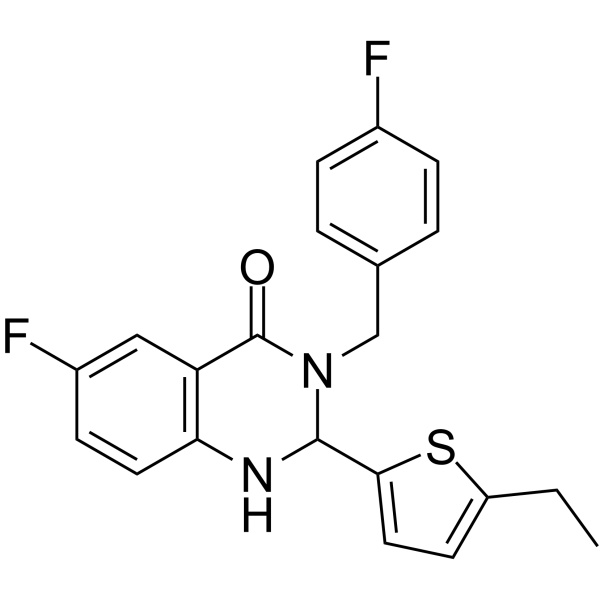
    DHQZ 36 is a potent inhibitor of retrograde trafficking. DHQZ 36 inhibits Leishmania amazonensis infection in macrophages with an EC50 of 13.63 μM. DHQZ 36 has potent anti-parasite activity .
    DHQZ 36
  • HY-N2656

    Parasite Infection
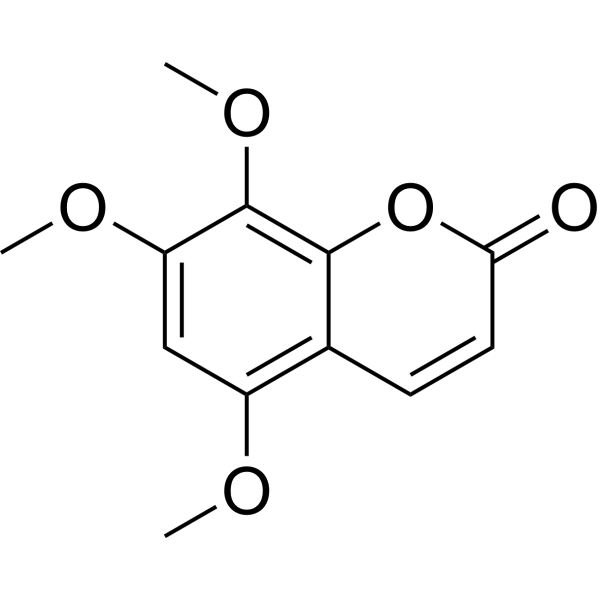
    5,7,8-Trimethoxycoumarin is an anti-parasite agent with IC50s of 25.5 μM and 57.7 μM against Trypanosoma cruzi and L. amazonensis, respectively .
    5,7,8-Trimethoxycoumarin
  • HY-130484

    Parasite Infection
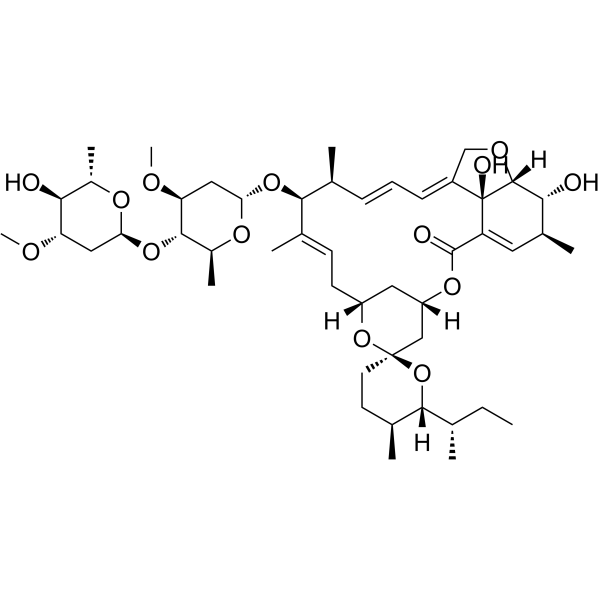
    2,3-Dehydro-3,4-dihydro ivermectin is an analog of ivermectin (HY-15310) and an anthelmintic. 2,3-Dehydro-3,4-dihydro ivermectin has activity against L. amazonensis promastigotes and amastigotes (IC50s=13.8 and 3.6 µM, respectively) without inducing cytotoxicity to macrophages (IC50= 65.5 µM).
    2,3-Dehydro-3,4-dihydro ivermectin
  • HY-159097

    Parasite Infection
    T.cruzi-IN-4 (Compound 21) is an anti-parasitic agent. T.cruzi-IN-4 inhibits the trypomastigote and amastigote form of Trypanosoma cruzi with IC50 of 0.033 μM (120 h), T.cruzi-IN-4 inhibits the promastigote and amastigote form of Leishmania infantum with IC50 of 28.74 and 61.82 μM. T.cruzi-IN-4 inhibits Leishmania amazonensis promastigote form with IC50 of 18.38 μM .
    T.cruzi-IN-4
  • HY-149079

    Parasite Necroptosis Infection
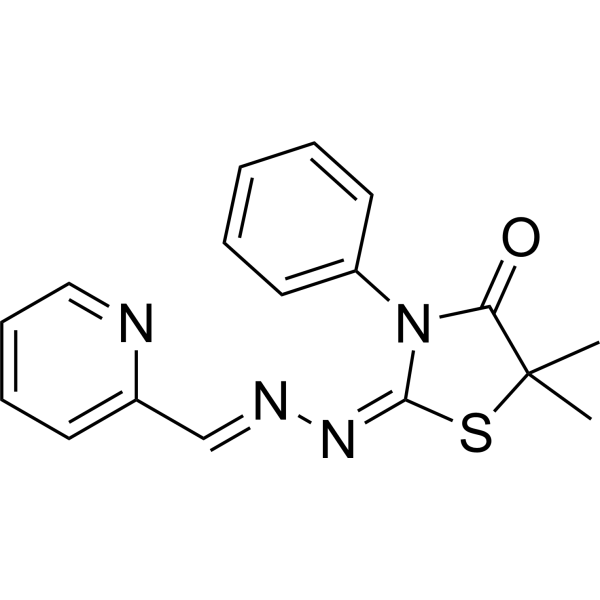
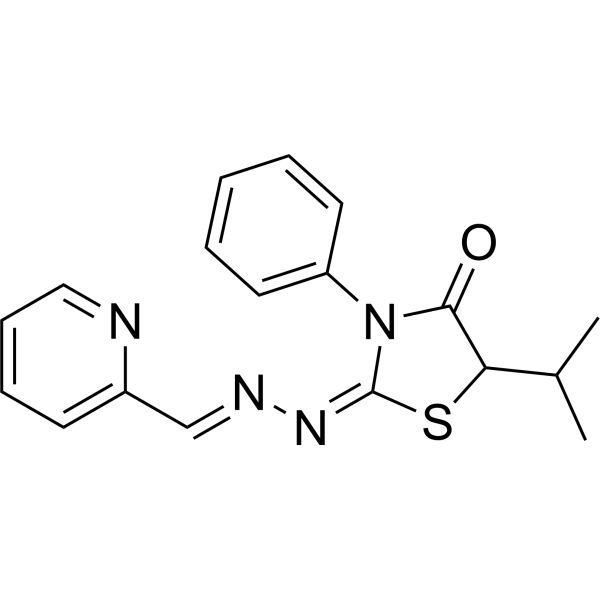
    Antiparasitic agent-15, a pyridine-thiazolidinone, has anti-Trypanosoma cruzi and leishmanicidal activities. Antiparasitic agent-15 has IC50s of 0.9 μM and 0.64 μM against trypomastigote and amastigote forms of T. cruzi. Antiparasitic agent-15 has IC50s of 42.2 μM and 9.58 μM against trypomastigote and amastigote forms of L. amazonensis. Antiparasitic agent-15 induces parasite cell death through necrosis induction. Antiparasitic agent-15 induces morphological changes such as shortening, retraction and curvature of the parasite body and leakage of internal content with T. cruzi trypomastigotes .
    Antiparasitic agent-15
  • HY-149080

    Parasite Necroptosis Infection
    Antiparasitic agent-16, a pyridine-thiazolidinone, has anti-Trypanosoma cruzi and leishmanicidal activities. Antiparasitic agent-16 has IC50s of 1.0 μM and 0.6 μM against trypomastigote and amastigote forms of T. cruzi. Antiparasitic agent-16 has IC50s of 150.2 μM and 16.75 μM against trypomastigote and amastigote forms of L. amazonensis. Antiparasitic agent-16 induces parasite cell death through necrosis induction. Antiparasitic agent-16 induces morphological changes such as shortening, retraction and curvature of the parasite body and leakage of internal content with T. cruzi trypomastigotes .
    Antiparasitic agent-16
  • HY-W197328

    Parasite Infection
    Isonicotinaldehyde 2-pyridin is an antileishmanial agent that is effective against the promastigotes of L. amazonensis and L. braziliensis. Isonicotinaldehyde 2-pyridin has no significant toxic effects on mouse macrophages. The biological activity of Isonicotinaldehyde 2-pyridin is closely related to increasing reactive oxygen species (ROS) and interfering with parasite mitochondrial function. Isonicotinaldehyde 2-pyridin showed its effects on L. amazonensis in preliminary studies on its pharmacological mechanism of action .
    Isonicotinaldehyde 2-pyridin
  • HY-115725

    Parasite Infection
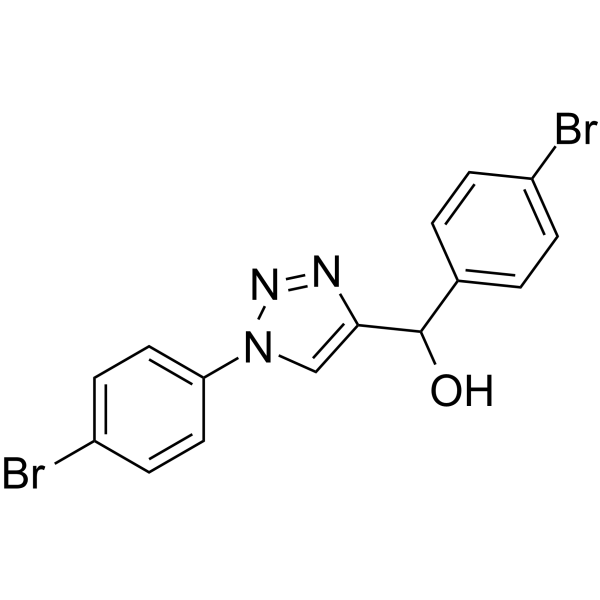
    Antileishmanial agent-1 exhibits the activity against L. amazonensis promastigotes (IC50 = 15.52 μM) and intracellular amastigotes (IC50 = 4.10 μM).
    Antileishmanial agent-1
  • HY-W097659

    Parasite Infection
    Antileishmanial agent-32 (Compound 12) exhibits a weak antileishmanial activity that inhibits stationary promastigote forms of L. amazonensis with an IC50 >15 μM. Antileishmanial agent-32 exhibits cytotoxicity towards murine macrophages .
    Antileishmanial agent-32
  • HY-138812

    Parasite Infection Inflammation/Immunology
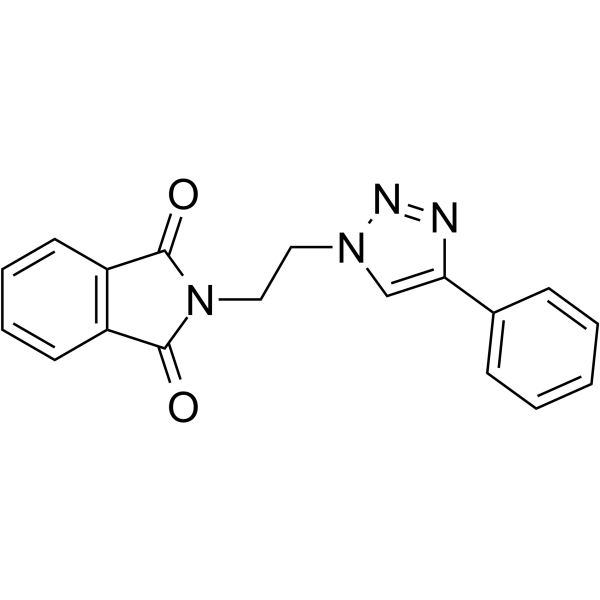
    Antileishmanial agent-28 (Compd 12) is an antileishmanial agent, with EC50 values of 1.5 μM (L.donovani), 13 μM (L.amazonensis) and 18 μM (J774A.1), respectively .
    Antileishmanial agent-28
  • HY-19567R

    RP 52028 (Standard)

    Parasite Reference Standards Infection
    PK 11195 (Standard) is the analytical standard of PK 11195. This product is intended for research and analytical applications. PK 11195 (RP 52028) is a ligand of translocator protein (TSPO), which targets Leishmania chemotherapy, with IC50s of 14.2 μM, 8.2 μM, 3.5 μM for L. amazonensis, L. major and L. braziliensis, respectively.
    PK 11195 (Standard)
  • HY-178033

    Parasite Mitochondrial Metabolism Reactive Oxygen Species (ROS) Infection
    Antileishmanial agent-35 (Compound 6) is an antileishmanial agent with an IC50 of 0.29μM for promastigotes of Leishmania amazonensis. Antileishmanial agent-35 significantly decreases the mitochondrial membrane potential and ATP levels, and further increases the production of ROS by a blockage in the electron transport chain, where ubiquinone intervenes. Antileishmanial agent-35 can be used for cutaneous leishmaniases research .
    Antileishmanial agent-35
  • HY-146166

    Parasite Reactive Oxygen Species (ROS) Infection Inflammation/Immunology
    PT4 is a therapeutic agent against Cutaneous leishmaniasis (CL). PT4 is effective against both species of Leishmania, with IC50s of 125.18 and 233.18 μM for L. amazonensis and L. braziliensis, respectively. PT4 decreases of mitochondrial membrane potential and increases production of reactive oxygen species, which leads to parasite death. PT4 has a potent in vivo anti-inflammatory activity .
    PT4
  • HY-124068

    Apoptosis GSK-3 MMP Reactive Oxygen Species (ROS) Infection Inflammation/Immunology Cancer
    LQB-118 is an orally active compound derived from sandalwood. LQB-118 can inhibit the migration of glioblastoma cells and induce cell death. LQB-118 can suppress the migration and invasion of prostate cancer cells by regulating the AKT/GSK3β pathway and the expression of the MMP-9/reck genes. LQB-118 can also inhibit yeast polysaccharide-induced inflammation both in vivo and in vitro. Additionally, LQB-118 selectively induces ROS-triggered and mitochondrial-dependent apoptosis in Leishmania amazonensis. LQB-118 can be used in studies related to inflammation, infections, and cancer diseases .
    LQB-118
  • HY-N18245

    Arginase Parasite Infection
    (-)-3-O-Acetylcatechin is a Leishmania amazonensis arginase inhibitor with an IC50 of 3.7 μM. (-)-3-O-Acetylcatechin can be used for the research of leishmaniasis .
    (-)-3-O-Acetylcatechin
  • HY-W001119

    Parasite Infection
    6-Hydroxyindazole is an anti-parasite agent with an EC50 of 128.9 μM against intracellular amastigotes of Leishmania amazonensis. 6-Hydroxyindazole can be used in the research of leishmaniasis .
    6-Hydroxyindazole
  • HY-179710

    Parasite Reactive Oxygen Species (ROS) DNA/RNA Synthesis Apoptosis Infection
    SET-12 is an antiparasitic agent with high activity and selectivity against the Leishmania amazonensis. SET-12 exhibits excellent activity against the pre-flagellated form of the Leishmania amazonensis, with an IC₅₀ of 10.89 μM and a selectivity index (SI) of up to 12.1. SET-12 is also effective against the non-flagellated form within cells, with an IC₅₀ of 3.81 μM and a further increased selectivity index (SI) to 34.5. SET-12 causes signs of parasite cell apoptosis, including mitochondrial damage and accumulation of ROS .
    SET-12
  • HY-183362

    Parasite Adenosine Kinase Infection
    Antileishmanial agent-42 is an antileishmanial agent. Antileishmanial agent-42 has favorable interactions with key active site residues (e.g., Ser63, Asn66/295/299) of adenosine kinase. Antileishmanial agent-42 exerts activity against promastigote and amastigote forms of L. amazonensis, L. braziliensis, L. infantum, and L. donovani .
    Antileishmanial agent-42
  • HY-183621

    Parasite Reactive Oxygen Species (ROS) Autophagy Infection
    Antileishmanial agent-43 is a 3,4,5‑trisubstituted isoxazole with selective antileishmanial activity. Antileishmanial agent-43 shows IC50 values of 12.7 μM against Leishmania amazonensis promastigotes and 0.96 μM against intracellular amastigotes. Antileishmanial agent-43 induces ROS elevation, oxidative stress and mitochondrial dysfunction, resulting in lipid peroxidation, mitochondrial depolarization and ATP imbalance. Antileishmanial agent-43 causes cell shrinkage, phosphatidylserine externalization, plasma membrane permeabilization, and promotes autophagy. Antileishmanial agent-43 can be used for the research of leishmaniasis .
    Antileishmanial agent-43
  • HY-123746

    Farnesyl Transferase Fungal Parasite Infection
    E5700 is an orally active squalene synthase inhibitor, antimalarial agent and antifungal agent with an IC50 of 0.49 nM (without PPi) against squalene synthase from T. cruzi epimastigotes. E5700 shows antiparasitic activities against Trypanosoma cruzi. E5700 inhibits the growth and alters the lipid prolife and the ultrastructure of a multiple agent-resistant C. tropicalis strain. E5700 is a potent and selective inhibitor of the growth of Leishmania amazonensis .
    E5700

Inquiry Online

Your information is safe with us. * Required Fields.

Salutation


Country or Region *

Applicant Name *


Organization Name *

Department *


Email Address *


Product Name *

Cat. No.


Requested quantity *

Phone Number *


Remarks

Inquiry Online

Inquiry Information

Product Name:
Cat. No.:
Quantity:
MCE Japan Authorized Agent:

