Search Result
Results for "
anticholinergic activity
" in MedChemExpress (MCE) Product Catalog:
2
Biochemical Assay Reagents
4
Isotope-Labeled Compounds
| Cat. No. |
Product Name |
Target |
Research Areas |
Chemical Structure |
-
- HY-B0478A
-
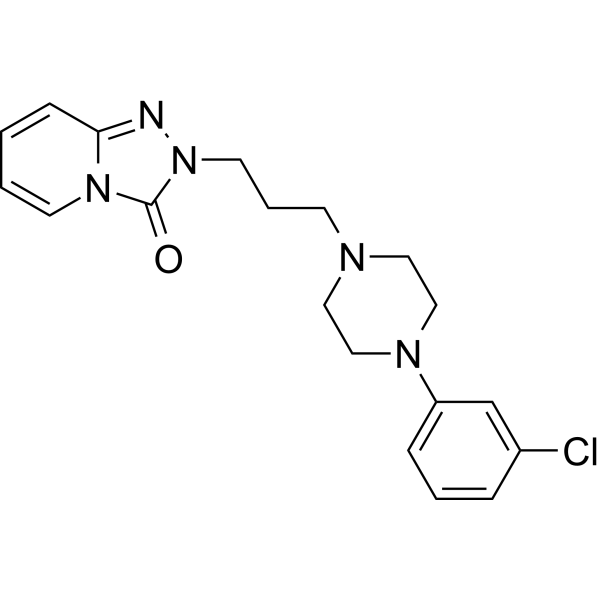
Trazodone
Maximum Cited Publications
6 Publications Verification
AF-1161 free base
|
5-HT Receptor
Serotonin Transporter
Histamine Receptor
Adrenergic Receptor
|
Neurological Disease
|
|
Trazodone (AF-1161 free base) is a triazolopyridine derivative that belongs to the class of serotonin receptor antagonists and reuptake inhibitors (SARIs). Trazodone has anti-depressant and anti-insomnious activity. Trazodone exerts antagonistic properties against a1- and a2-adrenergic receptors and histamine H1 receptors, with minimal anticholinergic effects .
|
-
-
- HY-B0478
-
|
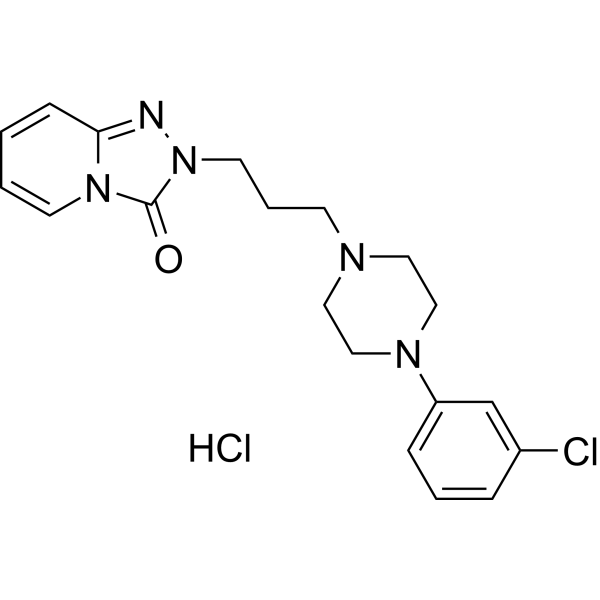
AF-1161
|
5-HT Receptor
Serotonin Transporter
Histamine Receptor
Adrenergic Receptor
|
Neurological Disease
|
|
Trazodone hydrochloride (AF-1161) is a triazolopyridine derivative that belongs to the class of serotonin receptor antagonists and reuptake inhibitors (SARIs). Trazodone hydrochloride has anti-depressant and anti-insomnious activity. Trazodone hydrochloride exerts antagonistic properties against a1- and a2-adrenergic receptors and histamine H1 receptors, with minimal anticholinergic effects .
|
-
-
- HY-U00050
-
|
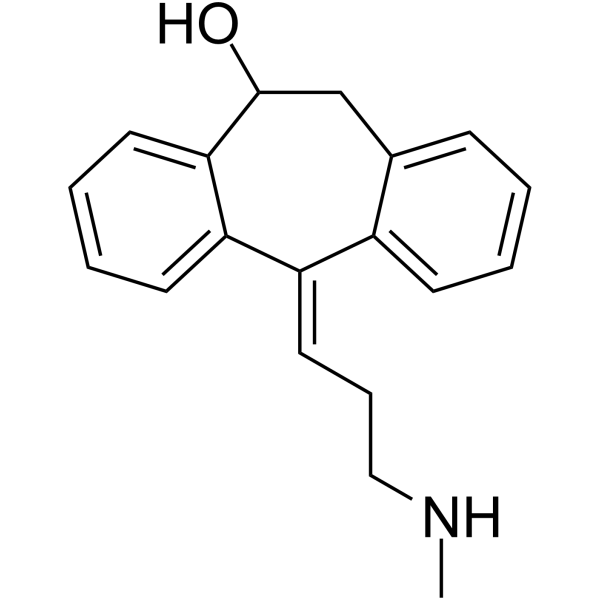
E-10-OH-NT
|
Drug Metabolite
Adrenergic Receptor
mAChR
|
Neurological Disease
|
|
(E)-10-Hydroxynortriptyline (E-10-OH-NT) is a blood-brain barrier-permeable norepinephrine uptake inhibitor. (E)-10-Hydroxynortriptyline effectively promotes central norepinephrine neuronal transmission, with little interindividual variation in in vivo potency. (E)-10-Hydroxynortriptyline has low affinity for muscarinic receptors, exhibits only extremely weak anticholinergic activity, and does not inhibit salivary secretion. (E)-10-Hydroxynortriptyline can be used in studies related to depression .
|
-
-
- HY-111130
-
|
|
Histamine Receptor
mAChR
|
Neurological Disease
Cancer
|
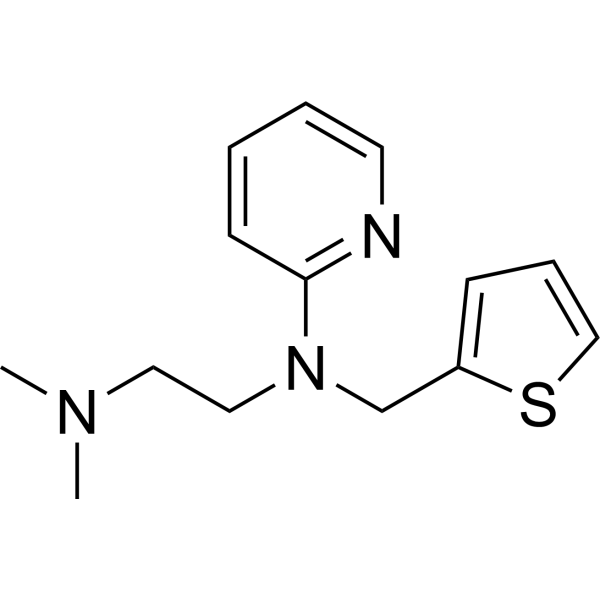
Methapyrilene is a histamine antagonist, a pyridine chemical with anticholinergic activity. Methapyrilene can cause target organ-specific epigenetic alterations, such as a decrease in DNA methylation levels. Methapyrilene induces hepatocellular carcinoma in rats .
|
-
-
- HY-B1607
-
|
|
Histamine Receptor
SARS-CoV
Filovirus
Parasite
|
Infection
Neurological Disease
Inflammation/Immunology
|
|
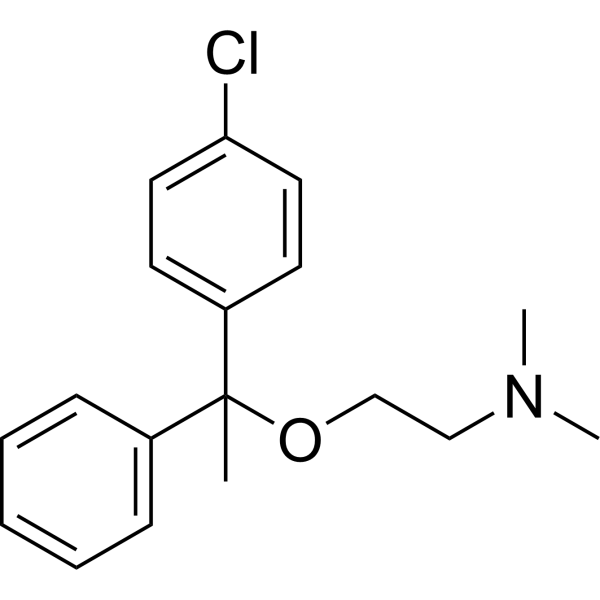
Chlorphenoxamine, an antihistamine and anticholinergic agent is a GPCR antagonist. Chlorphenoxamine inhibits multiple lethal viral diseases, such as SARS-CoV, MERS-CoV, EBOV and malaria. Chlorphenoxamine shows anti-filovirus activity against both EBOV and Marburg virus (MARV) with IC50s of 1.1 μM and 6.2 μM, respectively. Chlorphenoxamine is used for allergic conditions, urticaria, viral diseases and Parkinson’s disease .
|
-
-
- HY-106577
-
|
Cifenline; Ro 22-7796
|
Potassium Channel
|
Cardiovascular Disease
Metabolic Disease
|
|
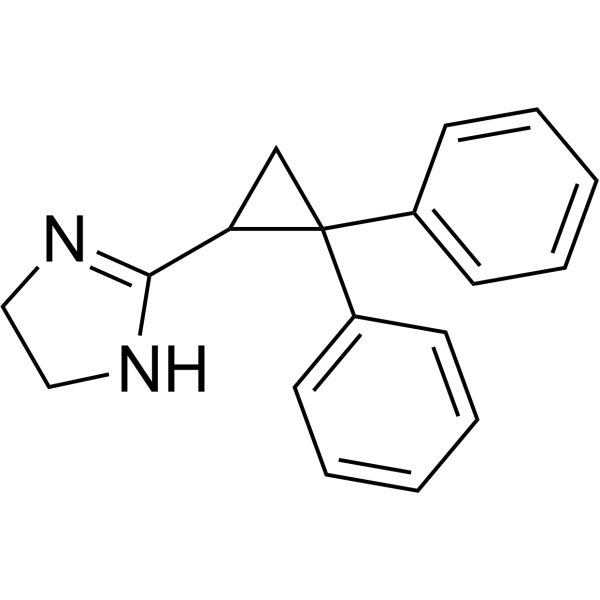
Cibenzoline is a class Ia antiarrhythmic active molecule with low anticholinergic activity. Cibenzoline is a KATP channel inhibitor, acting through the pore forming subunit Kir6.2, with an IC50 of 22.2 μM. Cibenzoline inhibits IKr and IKs currents with IC50 values of 8.8 μM and 12.3 μM, respectively. Cibenzoline is used in the study of cardiac diseases. In addition, Cibenzoline can induce hypoglycemia .
|
-
-
- HY-Z16070
-
|
|
Drug Derivative
|
Cardiovascular Disease
Neurological Disease
|
|
Hydronopol is a saturated alcohol terpene derivative. Hydronopol shows central inhibitory, anticonvulsant, analgesic, anticholinergic and antihypertensive activities. Hydronopol can be used for the researches of neurological and cardiovascular disease .
|
-
-
- HY-N9337
-
|
|
NO Synthase
|
Metabolic Disease
Inflammation/Immunology
Cancer
|
|
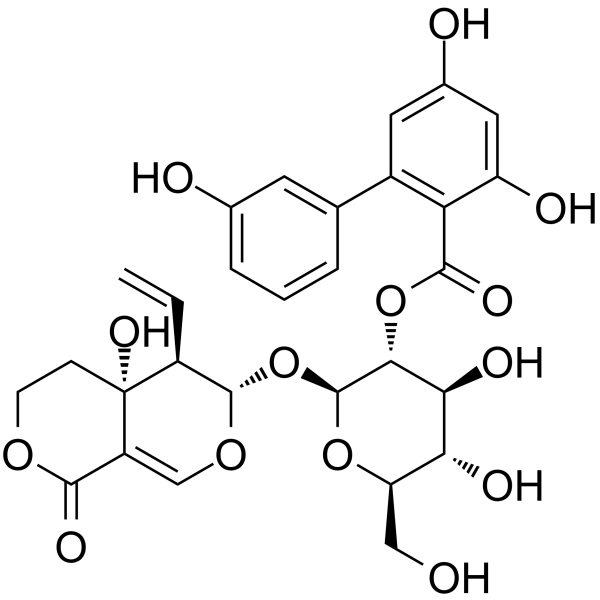
Amaroswerin is a bioactive secoiridoid glucoside from Swertia mussotii. Amaroswerin has anti-inflammatory, antidiabetic, antiviral, anticholinergic and immunomodulatory activities. Amaroswerin inhibits NO release with an IC50 value of 5.42 μg/mL in RAW264.7 cells .
|
-
-
- HY-122086
-
|
|
mAChR
|
Neurological Disease
|
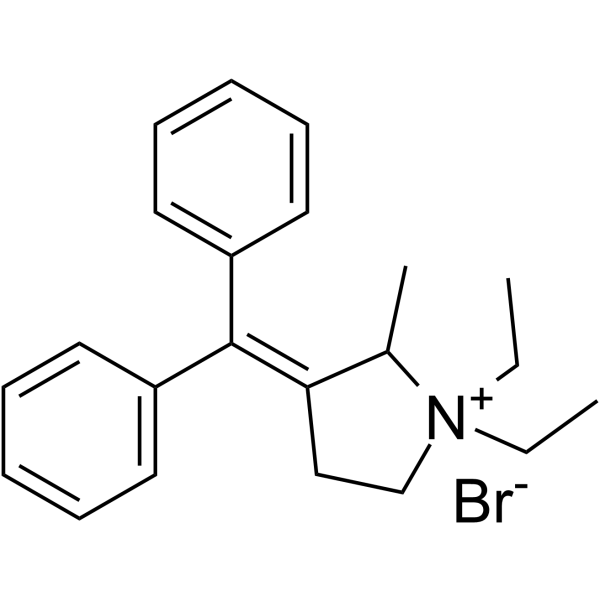
Prifinium bromide is an anticholinergic drug with anticholinergic and antispasmodic activities, and it exhibits oral activity. Prifinium bromide competitively antagonizes cholinergic receptors and relieves symptoms of spasm or hypermotility in the digestive and urinary tracts, with its anticholinergic activity representing the core mechanism underlying the inhibition of bladder smooth muscle contraction. Prifinium bromide can be used in research related to spasms and diverticular disease .
|
-
-
- HY-B1806A
-
|
Pathilon chloride
|
mAChR
|
Neurological Disease
Inflammation/Immunology
|
|
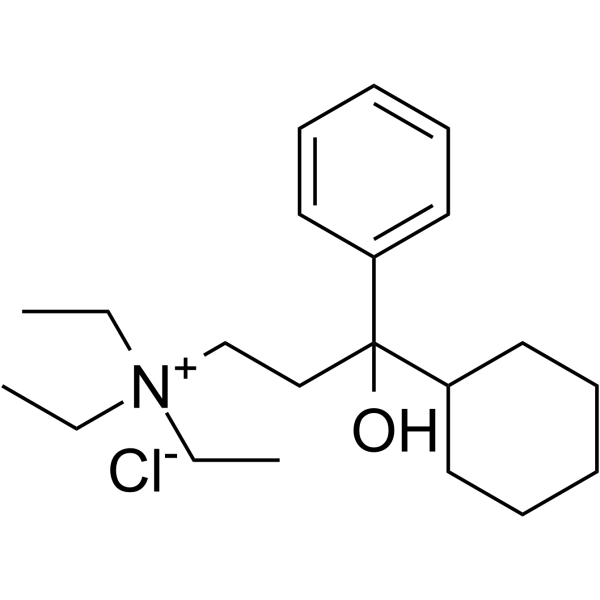
Tridihexethyl (Pathilon) chloride is an orally active anticholinergic agent and mAChR antagonist, shows activities of antimuscarinic and anticholinergic. Tridihexethyl chloride shows pronounced antispasmodic and antisecretory effects on the gastrointestinal tract. Tridihexethyl chloride can be used in studies of peptic ulcer disease and acquired nystagmus .
|
-
-
- HY-B0267C
-
|
Aroxybutynin
|
mAChR
|
Neurological Disease
|
|
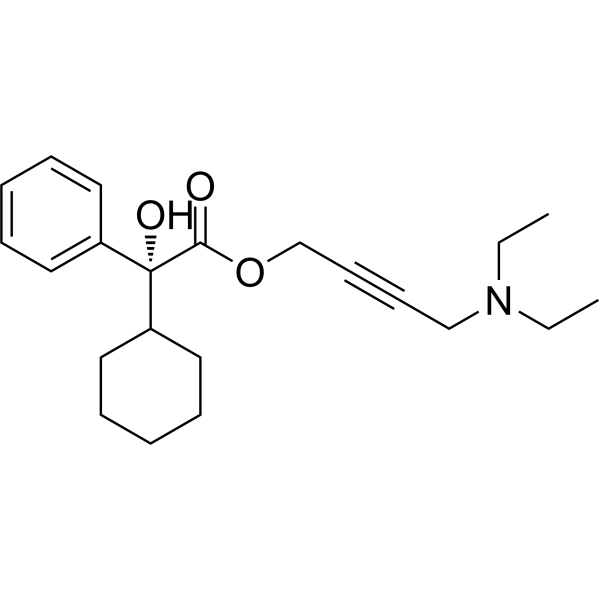
(R)-Oxybutynin (Aroxybutynin) is the racemic isomer of Oxybutynin and an orally active muscarinic receptor antagonist. (R)-Oxybutynin has antispasmodic, antimuscarinic, and anticholinergic activities and competitively antagonizes carbachol-induced contractions. (R)-Oxybutynin can be used to study urinary incontinence caused by neurogenic bladder dysfunction .
|
-
-
- HY-119468
-
|
|
Dopamine Transporter
|
Neurological Disease
|
|
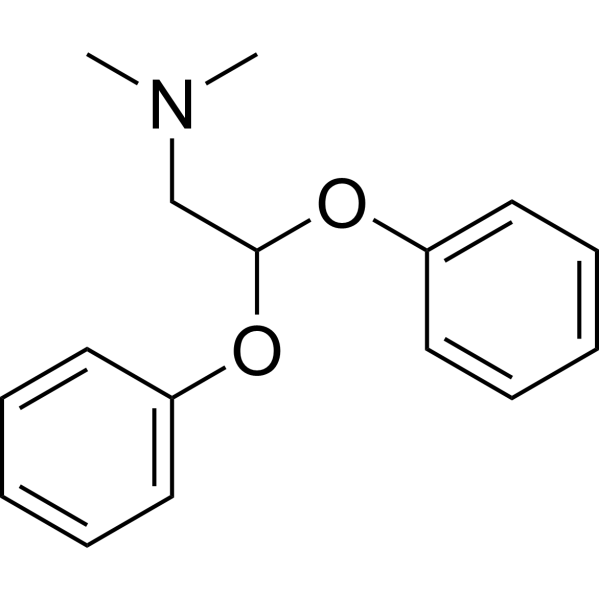
Medifoxamine is an orally active monoamine reuptake inhibitor and antidepressant. Medifoxamine preferentially inhibits presynaptic dopamine reuptake. Medifoxamine acts as an intraocular pressure-lowering agent to reduce intraocular pressure, and also functions as a miotic agent to decrease pupil diameter. Medifoxamine exhibits characteristic properties of antidepressant compounds, including preventing hypothermia induced by Reserpine (HY-N0480) or Apomorphine (HY-12723), potentiating the toxic effects of Yohimbine (HY-N0127) in mice, and reducing immobility behavior in mice and rats in the "behavioral despair" model. Medifoxamine has no anticholinergic activity. Medifoxamine can be used in research related to depression .
|
-
-
- HY-U00082
-
|
Tigloyl pseudotropine; Tiglylpseudotropine; Tiglyssin
|
mAChR
|
Inflammation/Immunology
|
|
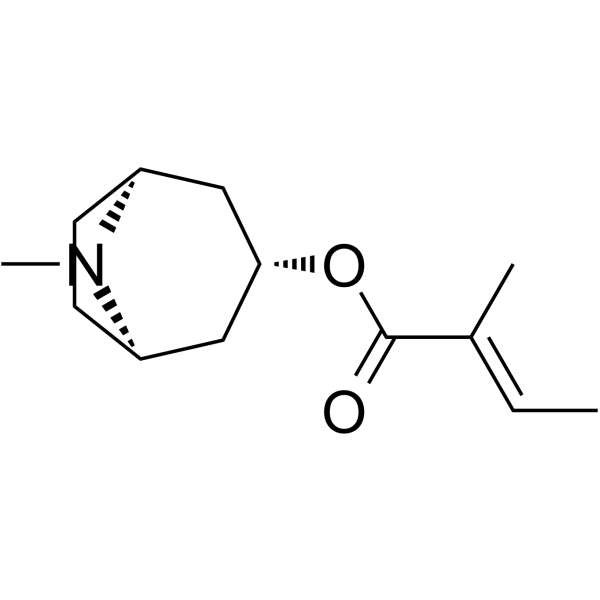
Tigloidin is an analogue of atropine, with anticholinergic activity.
|
-
-
- HY-B0267B
-
|
Aroxybutynin hydrochloride
|
mAChR
|
Neurological Disease
|
|
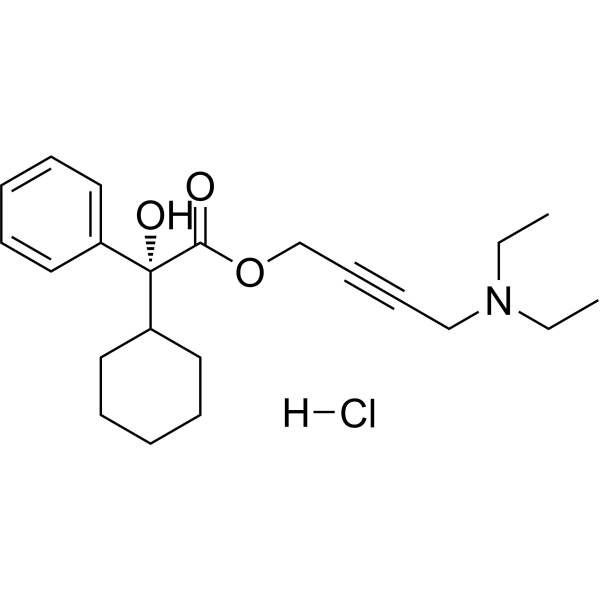
(R)-Oxybutynin hydrochloride, a (R)-isomer of Oxybutynin hydrochloride, is an orally active muscarinic receptor antagonist. (R)-Oxybutynin hydrochloride has antimuscarinic, antispasmodic and anticholinergic activity, competitively antagonizes Carbachol-induced contractions. (R)-Oxybutynin hydrochloride can be used for researching incontinence due to neurogenic bladder dysfunction . (R)-Oxybutynin (hydrochloride) is a click chemistry reagent, it contains an Alkyne group and can undergo copper-catalyzed azide-alkyne cycloaddition (CuAAc) with molecules containing Azide groups.
|
-
-
- HY-43711
-
|
|
mAChR
|
Neurological Disease
|
|
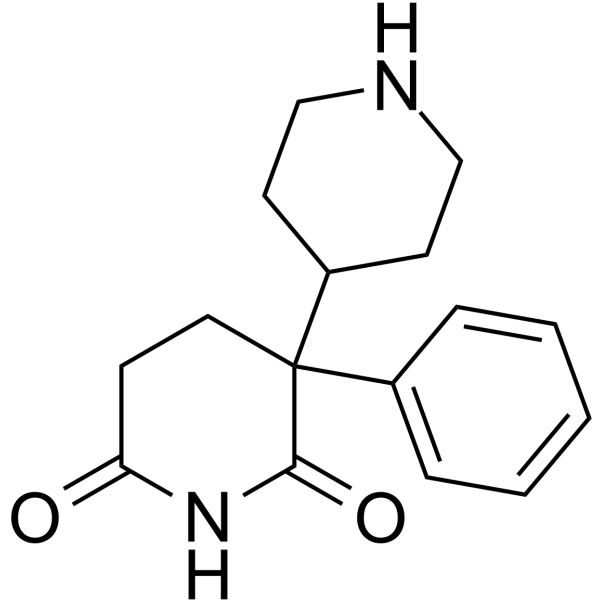
Nor-benzetimide is a major metabolite of Benzetimide. Benzetimide is a mAChR antagonist with anticholinergic activity .
|
-
-
- HY-B1689A
-
|
|
Drug Derivative
mAChR
|
Metabolic Disease
Inflammation/Immunology
|
|
Methantheline bromide is a quaternary Ammonium derivate with anticholinergic activity. Methantheline bromide results in a significant greater reduction of axillary sweat production. Methyl bromide can be used in the research of intractable peptic ulcers .
|
-
-
- HY-145391
-
|
|
Influenza Virus
|
Infection
|
|
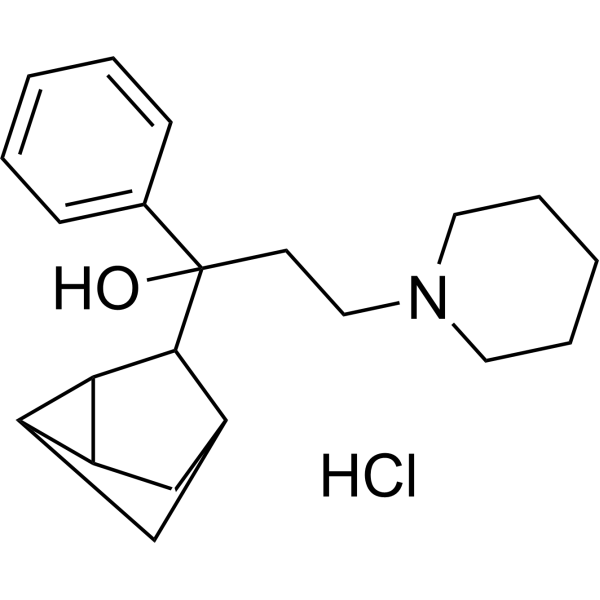
Triperiden is an inhibitor of influenza virus multiplication. Triperiden targets the haemagglutinin of fowl plague virus (FPV) for antiviral activity and acts by inhibiting the conformational change in the haemagglutinin at acid pH. Triperiden is also anticholinergic anti-parkinsonism agent .
|
-
-
- HY-B1585B
-
|
Parpanil (edisylate)
|
iGluR
|
Neurological Disease
|
|
Caramiphen edisylate (Parpanil edisylate) is an anticholinergic agent with NMDA receptor antagonist activity. Caramiphen edisylate can be used to inhibit diseases related to cholinergic neurotransmission. Caramiphen edisylate exerts its pharmacological effects by blocking cholinergic effects .
|
-
-
- HY-U00267
-
|
|
Cholinesterase (ChE)
|
Inflammation/Immunology
|
|
Thiazinamium (chloride) possesses potent anticholinergic and antiallergic activity and inhibits TxB2 synthesis with IC50 value of 0.2 µM. Thiazinamium (chloride) is structurally similar to H-1 antagonists Promethazine (HY-B1296). Thiazinamium (chloride) stimulates the phosphatidylcholine secretion in adult rat type II pneumocytes .
|
-
-
- HY-155822
-
|
|
Cholinesterase (ChE)
Apoptosis
Caspase
|
Neurological Disease
|
|
TZ3O is an anticholinergic agent with neuroprotective effects. TZ3O inhibits acetylcholinesterase (AChE) activity in human plasma with an IC50 of 304.5 μM. TZ3O can improve memory impairment and cognitive decline in rats in the Scopolamine (HY-N0296)-induced Alzheimer-type model. TZ3O could be used in Alzheimer’s research .
|
-
-
- HY-106601A
-
|
LY-150720 hydrochloride
|
Opioid Receptor
|
Neurological Disease
|
|
Picenadol (LY-150720) hydrochloride is an opioid mixed agonist-antagonist analgesic. Picenadol hydrochloride is an external racemic mixture, where its d-isomer (LY136596) is a potent μ-opioid receptor agonist, and the l-isomer (LY136595) is a weak μ-receptor competitive antagonist, which can inhibit the agonist effect and reduce the risk of dependence. Picenadol hydrochloride has anticholinergic activity .
|
-
-
- HY-122300B
-
|
Levoprotiline
|
Adrenergic Receptor
|
Neurological Disease
|
|
R-(-)-Oxaprotiline (Levoprotiline) is an antidepressant with anticholinergic and sympathostimulatory activities. R-(-)-Oxaprotiline exhibits different abilities to block norepinephrine uptake and anticholinergic activity compared to its enantiomer C 49802 B-Ba. R-(-)-Oxaprotiline in human studies shows physiological effects consistent with those in animals. Administration of R-(-)-Oxaprotiline results in a modest increase in heart rate and arterial blood pressure. Salivation is inhibited with R-(-)-Oxaprotiline, consistent with its anticholinergic properties. R-(-)-Oxaprotiline has similar effects to the established antidepressant compound Levoprotiline and has a shorter onset of action .
|
-
-
- HY-123375
-
|
Phenethazine
|
Histamine Receptor
|
Others
|
|
Fenethazine (Phenethazine) is a compound with antihistamine activity. It is an effective antihistamine. Its congeners also have anticholinergic effects and can be used to inhibit Parkinson's disease.
|
-
-
- HY-118406B
-
|
Ponalid hydrobromide; UK 738 hydrobromide
|
mAChR
|
Neurological Disease
|
|
Ethybenztropine hydrobromide (Ponalid hydrobromide) is an anticholinergic drug with antiparkinsonian activity. Ethybenztropine hydrobromide may also act as a dopamine reuptake inhibitor. Ethybenztropine hydrobromide is commonly used to suppress Parkinson's disease .
|
-
-
- HY-W354753
-
|
|
mAChR
|
Others
|
|
Homatropine hydrochloride is an orally active anticholinergic agent that rapidly dilates pupils and has cycloplegic effects. Homatropine hydrochloride also has antitussive activity. Homatropine hydrochloride can be used in research on eye diseases and coughs .
|
-
-
- HY-B1585
-
|
Parpanil
|
iGluR
|
Neurological Disease
|
|
Parpanil is an anticholinergic agent with NMDA receptor antagonist activity. Parpanil can be used to inhibit diseases related to cholinergic neurotransmission. Parpanil exerts its pharmacological effects by blocking cholinergic effects .
|
-
-
- HY-122133
-
|
|
Others
|
Metabolic Disease
|
|
CI 750 is a potent and orally active antidiarrheal agent. CI 750 increases the motor pattern of the gastrointestinal tract. CI 750 shows a constipating activity. CI 750 shows no analgesic, addiction liability, or anticholinergic pharmacological activity .
|
-
-
- HY-138110
-
|
4-Methyldiphenhydramine
|
Endogenous Metabolite
iGluR
Histamine Receptor
|
Neurological Disease
Inflammation/Immunology
|
|
Toladryl is a derivative of Diphenhydramine (HY-B0303), capable of penetrating the blood-brain barrier and possessing oral activity, as well as antihistamine and anticholinergic activities. The anticholinergic activity of Toladryl is approximately one-tenth that of Diphenhydramine (HY-B0303), and its protective effect against lethal doses of histamine in guinea pigs is 2 to 4 times that of Diphenhydramine (HY-B0303). The side effects of Toladryl are fewer and milder than those of Diphenhydramine (HY-B0303), but at higher doses, it may cause central nervous system symptoms such as insomnia, agitation, and disorientation. Toladryl can be used for research in allergic diseases .
|
-
-
- HY-118406A
-
|
Ponalid hydrochloride; UK 738 hydrochloride
|
mAChR
|
Neurological Disease
|
|
Ethybenztropine hydrochloride (Ponalid hydrochloride) is an anticholinergic drug with antiparkinsonian activity. Ethybenztropine hydrochloride may also have dopamine reuptake inhibitory effects. Ethybenztropine hydrochloride is used to improve motor symptoms in patients with Parkinson's disease. Ethybenztropine hydrochloride exerts its inhibitory effects by regulating the balance of neurotransmitters .
|
-
-
- HY-138110R
-
|
4-Methyldiphenhydramine (Standard)
|
Reference Standards
Endogenous Metabolite
iGluR
Histamine Receptor
|
Neurological Disease
Inflammation/Immunology
|
|
Toladryl (Standard) is the analytical standard of Toladryl. This product is intended for research and analytical applications. Toladryl is a derivative of Diphenhydramine (HY-B0303), capable of penetrating the blood-brain barrier and possessing oral activity, as well as antihistamine and anticholinergic activities. The anticholinergic activity of Toladryl is approximately one-tenth that of Diphenhydramine (HY-B0303), and its protective effect against lethal doses of histamine in guinea pigs is 2 to 4 times that of Diphenhydramine (HY-B0303). The side effects of Toladryl are fewer and milder than those of Diphenhydramine (HY-B0303), but at higher doses, it may cause central nervous system symptoms such as insomnia, agitation, and disorientation. Toladryl can be used for research in allergic diseases .
|
-
-
- HY-B0535R
-
|
|
Reference Standards
Bacterial
Antibiotic
|
Infection
|
|
Homatropine (hydrochloride) (Standard) is the analytical standard of Homatropine (hydrochloride). This product is intended for research and analytical applications. Homatropine hydrochloride is an orally active anticholinergic agent that rapidly dilates pupils and has cycloplegic effects. Homatropine hydrochloride also has antitussive activity. Homatropine hydrochloride can be used in research on eye diseases and coughs .
|
-
-
- HY-W354753R
-
|
|
mAChR
Reference Standards
|
Others
|
|
Homatropine (hydrochloride) (Standard) is the analytical standard of Homatropine (hydrochloride). This product is intended for research and analytical applications. Homatropine hydrochloride is an orally active anticholinergic agent that rapidly dilates pupils and has cycloplegic effects. Homatropine hydrochloride also has antitussive activity. Homatropine hydrochloride can be used in research on eye diseases and coughs .
|
-
-
- HY-122991
-
|
|
Histone Methyltransferase
|
Neurological Disease
|
|
Prospasmine hydrochloride is an anticholinergic drug that has the activity of inhibiting glandular secretions and relaxing smooth muscles. Prospasmine hydrochloride is mainly used to inhibit certain types of gastrointestinal disorders. Prospasmine hydrochloride helps relieve pain caused by smooth muscle spasms. Prospasmine hydrochloride is also used as an anesthetic adjuvant in some cases .
|
-
-
- HY-163646
-
|
|
Cholinesterase (ChE)
|
Neurological Disease
|
|
(Rac)-TZ3O is the (Rac) isomer of TZ3O. TZ3O is an anticholinergic compound with neuroprotective activity. TZ3O improves memory impairment and cognitive decline in a scopolamine-induced Alzheimer's disease rat model and can be used in the study of Alzheimer's disease.
|
-
-
- HY-N15736
-
|
|
mAChR
|
Neurological Disease
|
|
Petiline is a steroidal alkaloid found in Petilium raddeanum, acting as a selective antagonist of M cholinergic receptors. Petiline exerts anticholinergic effects (e.g., reducing vagal influence on the heart) by competitively blocking M cholinergic receptors, and also has central excitatory, cardiotonic, and spasmolytic activities. Petiline is promising for research of cholinergic system-related diseases (e.g., arrhythmia, intestinal spasm) .
|
-
-
- HY-105793
-
|
|
mAChR
|
Neurological Disease
|
|
Mazaticol is an anticholinergic agent. Mazaticol blocks the muscarinic acetylcholine receptors and cholinergic nerve activity. Mazaticol is a potent 3H-QNB and 3H-PZ binding inhibitor, can bind to the M2 receptors with high affinity. Mazaticol exhibits inhibitory effects on dopamine uptake in the striatal nerve terminal. Mazaticol can be used for parkinsonian syndrome research .
|
-
-
- HY-106601
-
|
LY-150720
|
Opioid Receptor
|
Neurological Disease
|
|
Picenadol (LY-150720) is an opioid mixed agonist-antagonist analgesic. Picenadol is an external racemic mixture, where its d-isomer (LY136596) is a potent μ-opioid receptor agonist, and the l-isomer (LY136595) is a weak μ-receptor competitive antagonist, which can inhibit the agonist effect and reduce the risk of dependence. Picenadol has anticholinergic activity .
|
-
-
- HY-B0267CS
-
|
Aroxybutynin-d10
|
Isotope-Labeled Compounds
mAChR
|
Neurological Disease
|
|
(R)-Oxybutynin-d10 (Aroxybutynin-d10) is deuterium labeled (R)-Oxybutynin. (R)-Oxybutynin (Aroxybutynin) is the racemic isomer of Oxybutynin and an orally active muscarinic receptor antagonist. (R)-Oxybutynin has antispasmodic, antimuscarinic, and anticholinergic activities and competitively antagonizes carbachol-induced contractions. (R)-Oxybutynin can be used to study urinary incontinence caused by neurogenic bladder dysfunction .
|
-
-
- HY-B0478AR
-
|
AF-1161 free base (Standard)
|
Reference Standards
5-HT Receptor
Histamine Receptor
Adrenergic Receptor
Serotonin Transporter
|
Neurological Disease
|
|
Trazodone (AF-1161 free base) (Standard) is the analytical standard of Trazodone. This product is intended for research and analytical applications. Trazodone is a triazolopyridine derivative that belongs to the class of serotonin receptor antagonists and reuptake inhibitors (SARIs). Trazodone has anti-depressant and anti-insomnious activity. Trazodone exerts antagonistic properties against a1- and a2-adrenergic receptors and histamine H1 receptors, with minimal anticholinergic effects .
|
-
-
- HY-122294
-
|
|
Endogenous Metabolite
|
Neurological Disease
|
|
Rociverine is an anticholinergic compound with smooth muscle relaxant activity. Rociverine showed different binding modes in five cloned muscarinic receptors. The cis stereoisomer of Rociverine showed a higher affinity change compared to the trans stereoisomer. The (1R,2R) configuration of Rociverine showed significantly higher affinity, even up to 240 times. The (1S,2S) configuration of Rociverine is very important for binding selectivity .
|
-
-
- HY-106577R
-
|
Cifenline (Standard); Ro 22-7796 (Standard)
|
Reference Standards
Potassium Channel
|
Cardiovascular Disease
Metabolic Disease
|
|
Cibenzoline (Standard) is the analytical standard of Cibenzoline. This product is intended for research and analytical applications. Cibenzoline is a class Ia antiarrhythmic active molecule with low anticholinergic activity. Cibenzoline is a KATP channel inhibitor, acting through the pore forming subunit Kir6.2, with an IC50 of 22.2 μM. Cibenzoline inhibits IKr and IKs currents with IC50 values of 8.8 μM and 12.3 μM, respectively. Cibenzoline is used in the study of cardiac diseases. In addition, Cibenzoline can induce hypoglycemia .
|
-
-
- HY-B1607R
-
|
|
Reference Standards
Histamine Receptor
SARS-CoV
Filovirus
Parasite
|
Infection
Neurological Disease
Inflammation/Immunology
|
|
Chlorphenoxamine (Standard) is the analytical standard of Chlorphenoxamine (HY-B1607). This product is intended for research and analytical applications. Chlorphenoxamine, an antihistamine and anticholinergic agent is a GPCR antagonist. Chlorphenoxamine inhibits multiple lethal viral diseases, such as SARS-CoV, MERS-CoV, EBOV and malaria. Chlorphenoxamine shows anti-filovirus activity against both EBOV and Marburg virus (MARV) with IC50s of 1.1 μM and 6.2 μM, respectively. Chlorphenoxamine is used for allergic conditions, urticaria, viral diseases and Parkinson’s disease.
|
-
-
- HY-106577S
-
|
Cifenline-d4; Ro 22-7796-d4
|
Isotope-Labeled Compounds
Potassium Channel
|
Cardiovascular Disease
Metabolic Disease
|
|
Cibenzoline-d4 (Cifenline-d4) is deuterium labeled Cibenzoline. Cibenzoline is a class Ia antiarrhythmic active molecule with low anticholinergic activity. Cibenzoline is a KATP channel inhibitor, acting through the pore forming subunit Kir6.2, with an IC50 of 22.2 μM. Cibenzoline inhibits IKr and IKs currents with IC50 values of 8.8 μM and 12.3 μM, respectively. Cibenzoline is used in the study of cardiac diseases. In addition, Cibenzoline can induce hypoglycemia .
|
-
-
- HY-B0267BS
-
|
|
mAChR
Isotope-Labeled Compounds
|
Neurological Disease
|
|
Oxybutynin-d5 hydrochloride is deuterated labeled (R)-Oxybutynin hydrochloride (HY-B0267B). (R)-Oxybutynin hydrochloride, a (R)-isomer of Oxybutynin hydrochloride, is an orally active muscarinic receptor antagonist. (R)-Oxybutynin hydrochloride has antimuscarinic, antispasmodic and anticholinergic activity, competitively antagonizes Carbachol-induced contractions. (R)-Oxybutynin hydrochloride can be used for researching incontinence due to neurogenic bladder dysfunction . (R)-Oxybutynin hydrochloride is a click chemistry reagent, it contains an Alkyne group and can undergo copper-catalyzed azide-alkyne cycloaddition (CuAAc) with molecules containing Azide groups.
|
-
-
- HY-B1067B
-
|
Phenazoline phosphate
|
Histamine Receptor
|
Neurological Disease
Endocrinology
|
|
Antazoline phosphate is an H1 receptor antagonist that affects the activity of the central nervous system, has a potent antiarrhythmic effect .
Antazoline phosphate is a histamine H1 receptor antagonist with anticholinergic and antiviral properties. Antazoline phosphate can prevent histamine from acting on target cells through a reversible competition effect on histamine receptor sites of these cells. Antazoline phosphate can exert an antiallegic effect and prevent the occurrence of physiological reactions from the effect of blocking as well as inhibiting H1 receptor. Antazoline phosphate can effectively reduce HBV DNA in the extracellular supernatant in a dose-dependent manner, with EC50 of 2.910 μmol/L in HepAD38 cells. Antazoline phosphate also has a significant inhibitory effect on HBV DNA in the extracellular supernatant of Huh7 cells (EC50 = 2.349 μmol/L). Antazoline phosphate has anti-arrhythmic effect in acute myocardial infarctions. Antazoline phosphate can be studied in research for cardiovascular diseases, and HBV .
|
-
-
- HY-B2101
-
-
-
- HY-127151
-
|
Levophencynonate hydrochloride
|
Endogenous Metabolite
|
Neurological Disease
|
|
Levophencynonate is a muscarinic receptor antagonist with anticholinergic activity. The biological activity of levophencynonate makes it a key target for the determination of its concentration in human plasma in medical research. Levophencynonate was analyzed by high performance liquid chromatography tandem mass spectrometry (HPLC-MS/MS) and showed good specificity and linearity .
|
-
-
- HY-135543
-
|
|
Endogenous Metabolite
|
Neurological Disease
|
|
Levophencynonate is a muscarinic receptor antagonist with anticholinergic activity. The biological activity of levophencynonate makes it a key target for the determination of its concentration in human plasma in medical research. Levophencynonate was analyzed by high performance liquid chromatography tandem mass spectrometry (HPLC-MS/MS) and showed good specificity and linearity .
|
-
-
- HY-113057R
-
|
|
Reference Standards
Endogenous Metabolite
|
Cancer
|
|
Trihexyphenidyl (hydrochloride) (Standard) is the analytical standard of Trihexyphenidyl (hydrochloride). This product is intended for research and analytical applications. Trihexyphenidyl hydrochloride is a potent and selective M1 muscarinic receptor antagonist. Trihexyphenidyl hydrochloride shows anticholinergic activity, and can be used for Parkinson syndrome or dystonia research .
|
-
-
- HY-B1607A
-
|
|
Histamine Receptor
SARS-CoV
Filovirus
Parasite
|
Infection
Neurological Disease
Inflammation/Immunology
|
|
Chlorphenoxamine hydrochloride, an antihistamine and anticholinergic agent is a GPCR antagonist. Chlorphenoxamine hydrochloride inhibits multiple lethal viral diseases, such as SARS-CoV, MERS-CoV, EBOV and malaria. Chlorphenoxamine hydrochloride shows anti-filovirus activity against both EBOV and Marburg virus (MARV) with IC50s of 1.1 μM and 6.2 μM, respectively. Chlorphenoxamine hydrochloride is used for allergic conditions, urticaria, viral diseases and Parkinson’s disease .
|
-
- HY-106577S1
-
|
Cifenline-d5; Ro 22-7796-d5
|
Isotope-Labeled Compounds
|
Cardiovascular Disease
Metabolic Disease
|
|
Cibenzoline-d5 (Cifenline-d5) is deuterium labeled Cibenzoline. Cibenzoline is a class Ia antiarrhythmic active molecule with low anticholinergic activity. Cibenzoline is a KATP channel inhibitor, acting through the pore forming subunit Kir6.2, with an IC50 of 22.2 μM. Cibenzoline inhibits IKr and IKs currents with IC50 values of 8.8 μM and 12.3 μM, respectively. Cibenzoline is used in the study of cardiac diseases. In addition, Cibenzoline can induce hypoglycemia .
|
-
| Cat. No. |
Product Name |
Type |
-
- HY-W354753
-
|
|
Biochemical Assay Reagents
|
|
Homatropine hydrochloride is an orally active anticholinergic agent that rapidly dilates pupils and has cycloplegic effects. Homatropine hydrochloride also has antitussive activity. Homatropine hydrochloride can be used in research on eye diseases and coughs .
|
-
- HY-W354753R
-
|
|
Biochemical Assay Reagents
|
|
Homatropine (hydrochloride) (Standard) is the analytical standard of Homatropine (hydrochloride). This product is intended for research and analytical applications. Homatropine hydrochloride is an orally active anticholinergic agent that rapidly dilates pupils and has cycloplegic effects. Homatropine hydrochloride also has antitussive activity. Homatropine hydrochloride can be used in research on eye diseases and coughs .
|
| Cat. No. |
Product Name |
Category |
Target |
Chemical Structure |
| Cat. No. |
Product Name |
Chemical Structure |
-
- HY-B0267CS
-
|
|
|
(R)-Oxybutynin-d10 (Aroxybutynin-d10) is deuterium labeled (R)-Oxybutynin. (R)-Oxybutynin (Aroxybutynin) is the racemic isomer of Oxybutynin and an orally active muscarinic receptor antagonist. (R)-Oxybutynin has antispasmodic, antimuscarinic, and anticholinergic activities and competitively antagonizes carbachol-induced contractions. (R)-Oxybutynin can be used to study urinary incontinence caused by neurogenic bladder dysfunction .
|
-
-
- HY-106577S
-
|
|
|
Cibenzoline-d4 (Cifenline-d4) is deuterium labeled Cibenzoline. Cibenzoline is a class Ia antiarrhythmic active molecule with low anticholinergic activity. Cibenzoline is a KATP channel inhibitor, acting through the pore forming subunit Kir6.2, with an IC50 of 22.2 μM. Cibenzoline inhibits IKr and IKs currents with IC50 values of 8.8 μM and 12.3 μM, respectively. Cibenzoline is used in the study of cardiac diseases. In addition, Cibenzoline can induce hypoglycemia .
|
-
-
- HY-B0267BS
-
|
|
|
Oxybutynin-d5 hydrochloride is deuterated labeled (R)-Oxybutynin hydrochloride (HY-B0267B). (R)-Oxybutynin hydrochloride, a (R)-isomer of Oxybutynin hydrochloride, is an orally active muscarinic receptor antagonist. (R)-Oxybutynin hydrochloride has antimuscarinic, antispasmodic and anticholinergic activity, competitively antagonizes Carbachol-induced contractions. (R)-Oxybutynin hydrochloride can be used for researching incontinence due to neurogenic bladder dysfunction . (R)-Oxybutynin hydrochloride is a click chemistry reagent, it contains an Alkyne group and can undergo copper-catalyzed azide-alkyne cycloaddition (CuAAc) with molecules containing Azide groups.
|
-
-
- HY-106577S1
-
|
|
|
Cibenzoline-d5 (Cifenline-d5) is deuterium labeled Cibenzoline. Cibenzoline is a class Ia antiarrhythmic active molecule with low anticholinergic activity. Cibenzoline is a KATP channel inhibitor, acting through the pore forming subunit Kir6.2, with an IC50 of 22.2 μM. Cibenzoline inhibits IKr and IKs currents with IC50 values of 8.8 μM and 12.3 μM, respectively. Cibenzoline is used in the study of cardiac diseases. In addition, Cibenzoline can induce hypoglycemia .
|
-
Your information is safe with us. * Required Fields.
Inquiry Information
- Product Name:
- Cat. No.:
- Quantity:
- MCE Japan Authorized Agent:

