Search Result
Results for "
anticholinergic agent
" in MedChemExpress (MCE) Product Catalog:
2
Biochemical Assay Reagents
6
Isotope-Labeled Compounds
| Cat. No. |
Product Name |
Target |
Research Areas |
Chemical Structure |
-
- HY-B0520A
-
|
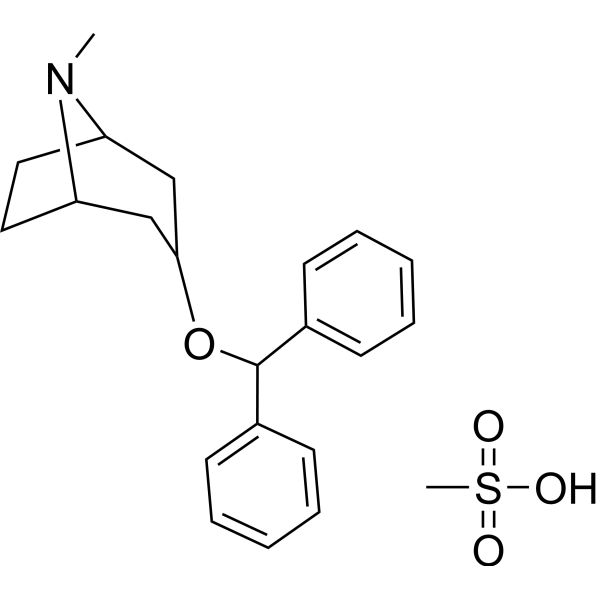
Benzatropine mesylate; Benzotropine mesylate; Benztropine methanesulfonate
|
Dopamine Receptor
mAChR
Histamine Receptor
|
Infection
Neurological Disease
Metabolic Disease
Cancer
|
|
Benztropine mesylate (Benzatropine mesylate) is an orally active and BBB-permeable centrally acting anticholinergic agent that can be used for Parkinson's disease research. Benztropine mesylate is an anti-histamine agent and a dopamine re-uptake inhibitor. Benztropine mesylate is also a human D2 dopamine receptor allosteric antagonist. Benztropine mesylate also has anti-CSCs (cancer stem cells) effects .
|
-
-
- HY-B0267
-
|
|
mAChR
Potassium Channel
|
Neurological Disease
Cancer
|
|
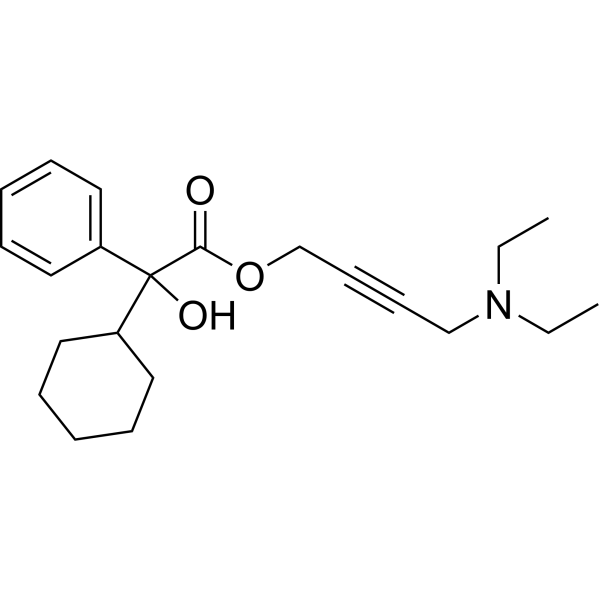
Oxybutynin is an anticholinergic agent, which inhibits vascular Kv channels in a concentration-dependent manner, with an IC50 of 11.51 μM . Oxybutynin is a click chemistry reagent, it contains an Alkyne group and can undergo copper-catalyzed azide-alkyne cycloaddition (CuAAc) with molecules containing Azide groups.
|
-
-
- HY-N0340
-
|
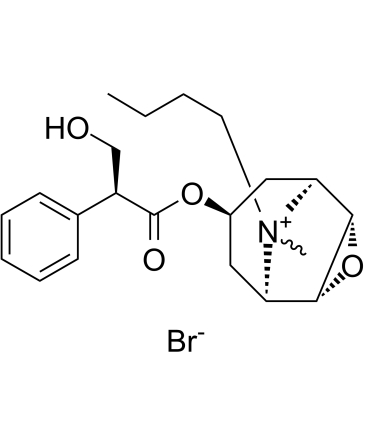
Hyoscine butylbromide; (-)-Scopolamine butylbromide; Butylscopolamine bromide
|
mAChR
|
Neurological Disease
Inflammation/Immunology
|
|
Scopolamine butylbromide (Hyoscine butylbromide) is an orally active anticholinergic agent and spasmolytic. Scopolamine butylbromide binds with high affinity to rat cardiac M2 (Ki 83 nmol/L), hM2 (Ki 233 nmol/L), rat intestinal M3 (Ki 290 nmol/L) and hM3 (Ki 643 nmol/L) muscarinic receptors. Scopolamine butylbromide exerts a dose-dependent antagonistic effect on Carbachol-induced gastrointestinal smooth muscle spasm. Scopolamine butylbromide can be used for the research of abdominal colic and pain associated with gastrointestinal spasm, functional abdominal pain, chronic gastropathy and gastric ulcer .
|
-
-
- HY-B1487
-
|
Tricyclamol hydrochloride; (±)-Procyclidine hydrochloride
|
iGluR
mAChR
|
Neurological Disease
|
|
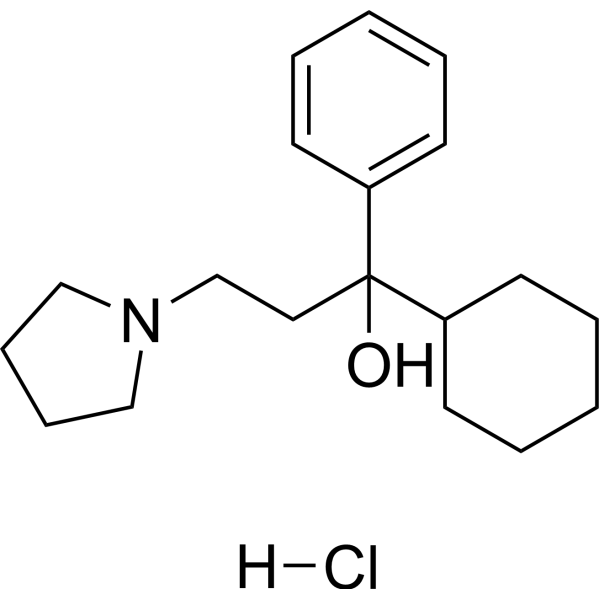
Procyclidine (Tricyclamol, (±)-Procyclidine) hydrochloride , an anticholinergic agent, is a muscarinic receptor antagonist that also has the properties of an N-methyl-D-aspartate (NMDA) antagonist. Procyclidine hydrochloride can be used in studies of Parkinson's disease and related psychiatric disorders such as Soman-induced epilepsy .
|
-
-
- HY-14263
-
|
Propericiazine; RP 8909
|
Dopamine Receptor
|
Neurological Disease
|
|
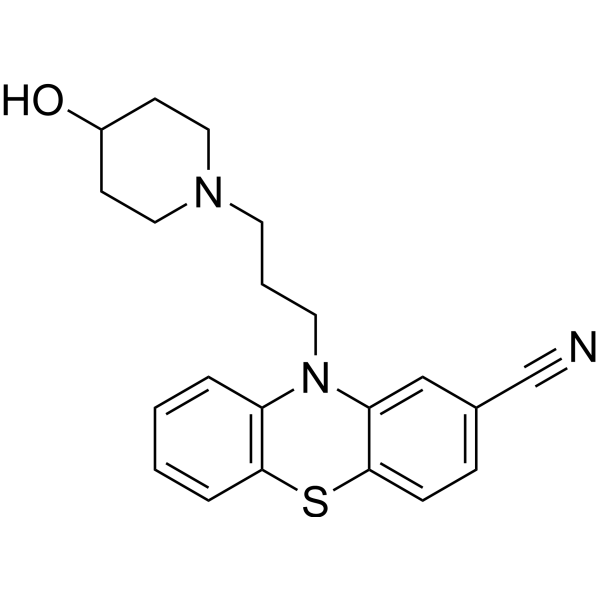
Pericyazine (Propericiazine) is a first-generation antipsychotic agent that is used as an adjunct to the short-term management of severe anxiety states and psychosis . Pericyazine is a selective D2-dopamine receptor antagonist . Pericyazine has adrenolytic, anticholinergic, and extrapyramidal effects .
|
-
-
- HY-105710
-
|
|
Cholinesterase (ChE)
|
Neurological Disease
|
|
Tropatepine is an orally active anticholinergic agent and can be used in the research of neurological diseases such as Parkinson's disease and extrapyramidal syndromes .
|
-
-
- HY-120081A
-
|
|
mAChR
|
Neurological Disease
|
|
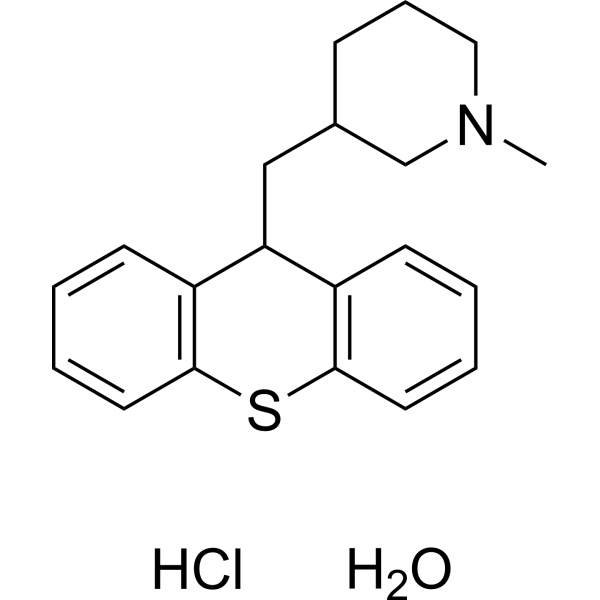
Metixene (Piperidine) hydrochloride hydrate is an anticholinergic and antiparkinsonian agent. Metixene hydrochloride hydrate potently inhibits binding of quinuclidinyl benzilate (QNB) with the muscarinic receptor, IC50 and Ki values of 55 nM and 15 nM, respectively. Metixene hydrochloride hydrate can be used for the research of parkinsonian .
|
-
-
- HY-109013
-
|
BBI 4000
|
mAChR
|
Neurological Disease
|
|
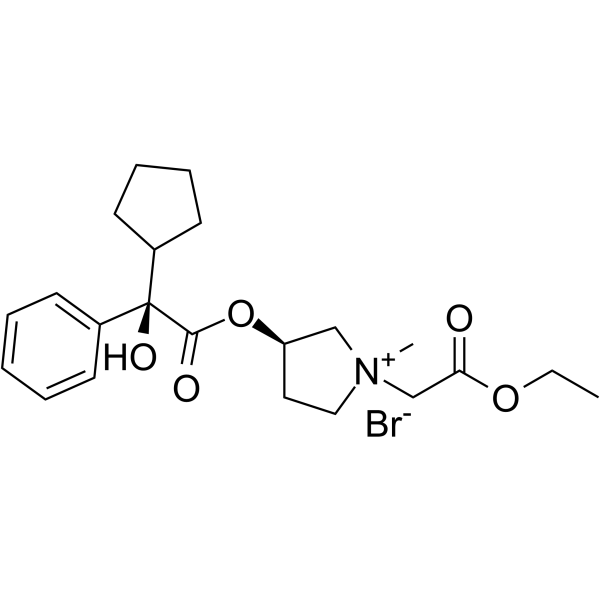
Sofpironium bromide (BBI 4000) is an anticholinergic agent used in the study of primary axillary hyperhidrosis (PAH). Sofpironium bromide reduces sweating by inhibiting M3 muscarinic receptors in eccrine glands at the application site. Sofpironium bromide also has a high afnity for the M1, M2, M4 and M5 subtypes .
|
-
-
- HY-B0547A
-
|
|
mAChR
|
Neurological Disease
|
|
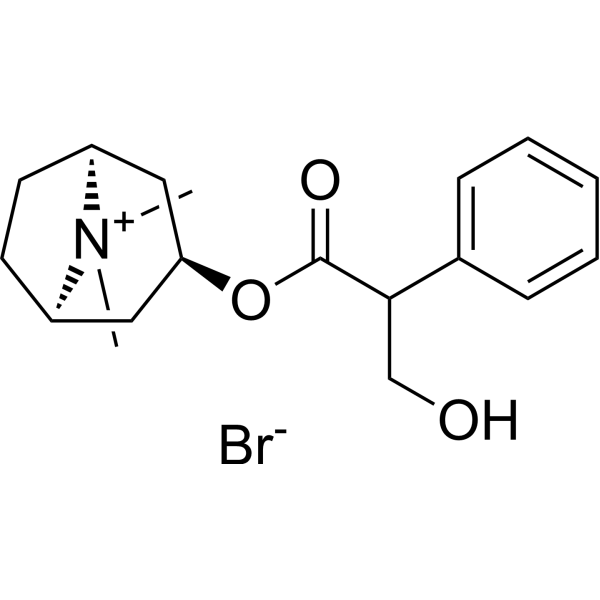
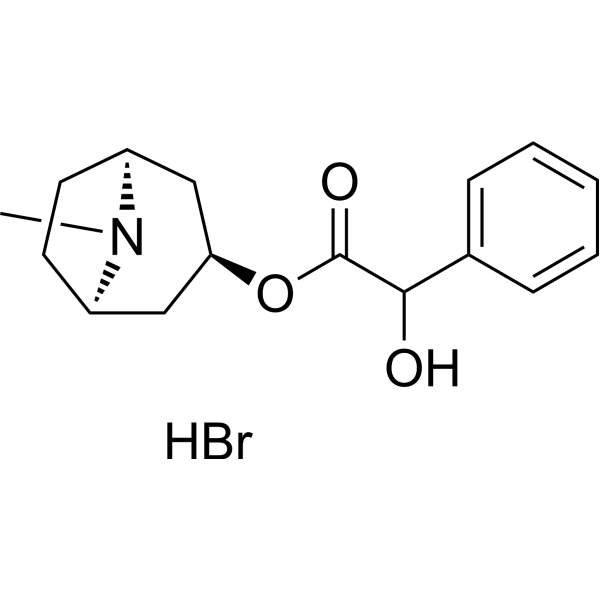
Homatropine Bromide is an orally active muscarinic acetylcholine receptor antagonist and can be used as an anticholinergic agent .
|
-
-
- HY-B1483
-
|
Thenylpyramine hydrochloride
|
Environmental Pollutants
Histamine Receptor
|
Inflammation/Immunology
|
|
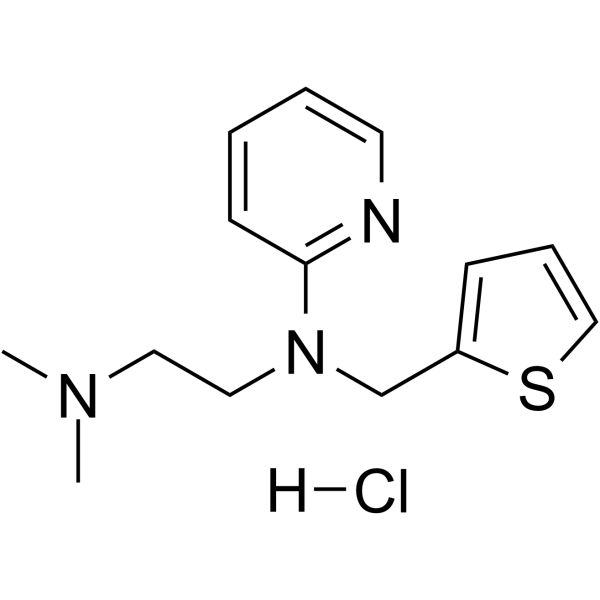
Methapyrilene (Thenylpyramine) hydrochloride is an orally active H1-receptor antihistamine and an anticholinergic agent of the pyridine chemical class. Methapyrilene hydrochloride has hepatotoxicity and can be used as a hepatotoxin that cause periportal hepatic necrosis in vivo
|
-
-
- HY-B0520
-
|
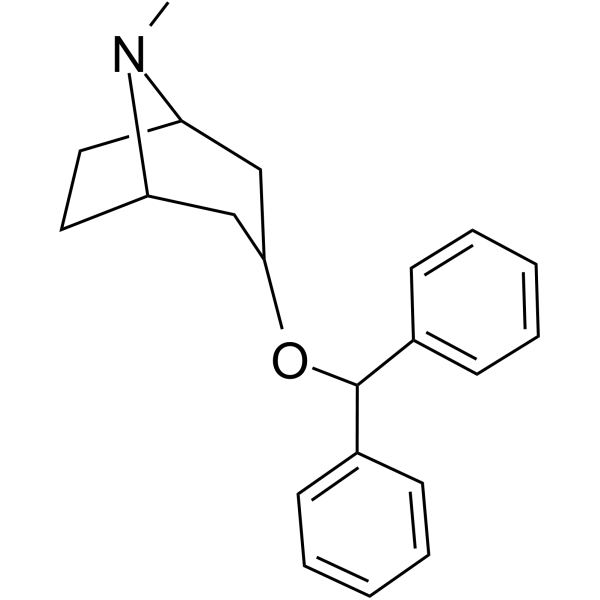
Benzatropine; Benzotropine
|
Dopamine Receptor
mAChR
Histamine Receptor
|
Cancer
|
|
Benztropine (Benzatropine; Benzotropine) is an orally active and BBB-permeable centrally acting anticholinergic agent that can be used for Parkinson's disease research . Benztropine is an anti-histamine agent and a dopamine re-uptake inhibitor. Benztropine is also a human D2 dopamine receptor allosteric antagonist. Benztropine mesylate also has anti-CSCs (cancer stem cells) effects .
|
-
-
- HY-B1607
-
|
|
Histamine Receptor
SARS-CoV
Filovirus
Parasite
|
Infection
Neurological Disease
Inflammation/Immunology
|
|
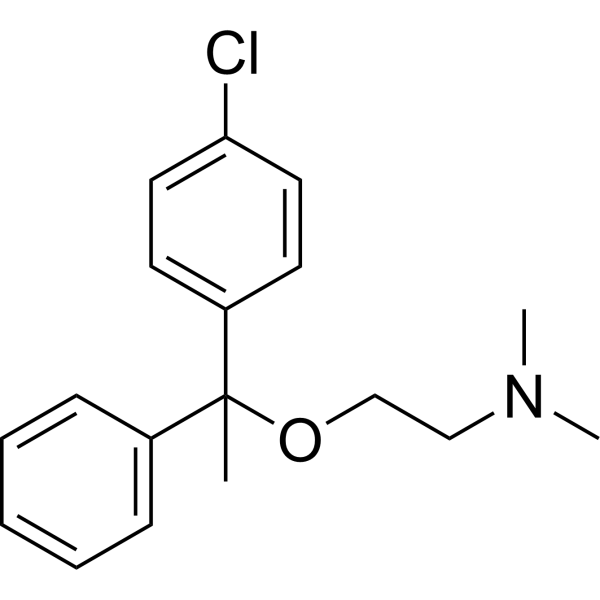
Chlorphenoxamine, an antihistamine and anticholinergic agent is a GPCR antagonist. Chlorphenoxamine inhibits multiple lethal viral diseases, such as SARS-CoV, MERS-CoV, EBOV and malaria. Chlorphenoxamine shows anti-filovirus activity against both EBOV and Marburg virus (MARV) with IC50s of 1.1 μM and 6.2 μM, respectively. Chlorphenoxamine is used for allergic conditions, urticaria, viral diseases and Parkinson’s disease .
|
-
-
- HY-136587
-
|
|
Histamine Receptor
mGluR
|
Inflammation/Immunology
|
|
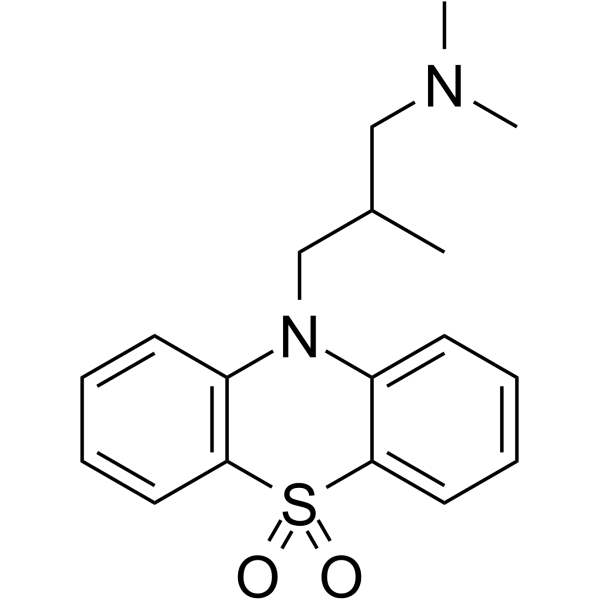
Oxomemazine is a phenothiazine-based histamine H1-receptor blocker. Oxomemazine is a selective antagonist for muscarinic M1 receptor, displays about 20-fold difference in the affinity for high (Ki = 84 nM, M1 receptor) and low (Ki = 1.65 μM, M2 receptor) affinity sites. Oxomemazine is an antihistamine and anticholinergic agent used for the study of cough treatment. Oxomemazine is protective against anaphylactic microshock in guinea pigs .
|
-
-
- HY-137976
-
|
Penequinine hydrochloride
|
mAChR
NF-κB
Apoptosis
Autophagy
Akt
GSK-3
ERK
|
Cardiovascular Disease
Neurological Disease
Inflammation/Immunology
|
|
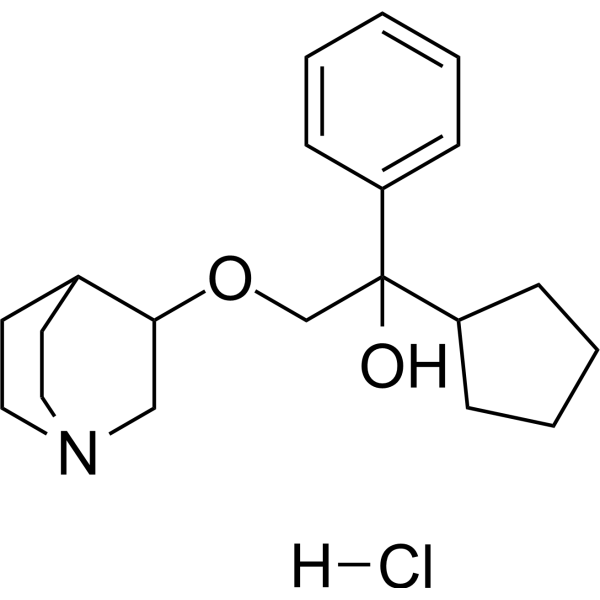
Penehyclidine (Penequinine) hydrochloride, a anticholinergic agent, is a selective antagonist of M1 and M3 receptors. Penehyclidine hydrochloride activates NF-kβ in lung tissue and inhibits the release of inflammatory factors. Penehyclidine hydrochloride can alleviate the pulmonary inflammatory response in rats with chronic obstructive pulmonary disease (COPD) undergoing mechanical ventilation .
|
-
-
- HY-B1667
-
|
|
mAChR
|
Metabolic Disease
|
|
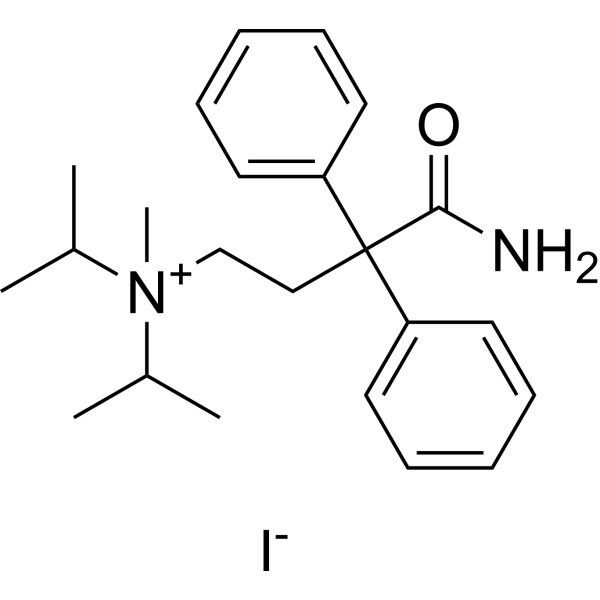
Isopropamide iodide is a long-acting quaternary anticholinergic agent. Isopropamide iodide is used in peptic ulcer and other gastrointestinal disorders marked by hyperacidity and hypermotility .
|
-
-
- HY-B0547
-
|
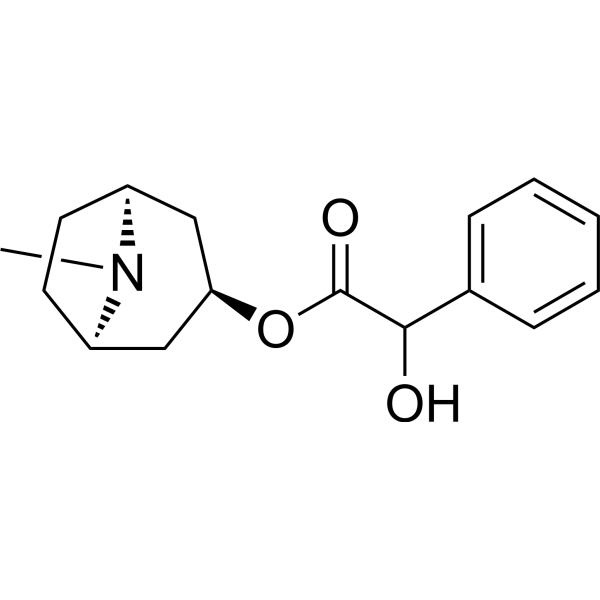
|
mAChR
|
Neurological Disease
|
|
Homatropine is an orally active muscarinic acetylcholine receptor antagonist and can be used as an anticholinergic agent .
|
-
-
- HY-B1806A
-
|
Pathilon chloride
|
mAChR
|
Neurological Disease
Inflammation/Immunology
|
|
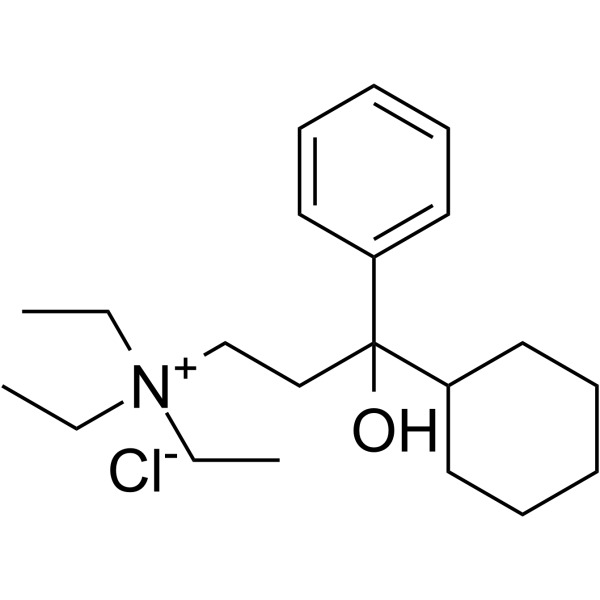
Tridihexethyl (Pathilon) chloride is an orally active anticholinergic agent and mAChR antagonist, shows activities of antimuscarinic and anticholinergic. Tridihexethyl chloride shows pronounced antispasmodic and antisecretory effects on the gastrointestinal tract. Tridihexethyl chloride can be used in studies of peptic ulcer disease and acquired nystagmus .
|
-
-
- HY-B0267AS
-
-
-
- HY-119468
-
|
|
Dopamine Transporter
|
Neurological Disease
|
|
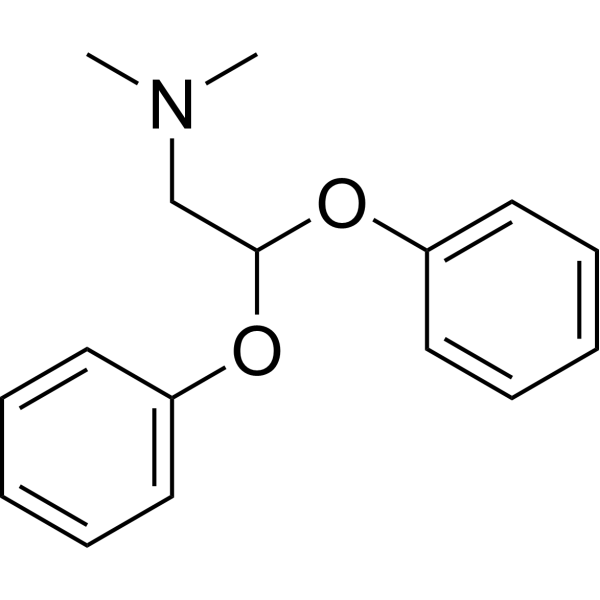
Medifoxamine is an orally active monoamine reuptake inhibitor and antidepressant. Medifoxamine preferentially inhibits presynaptic dopamine reuptake. Medifoxamine acts as an intraocular pressure-lowering agent to reduce intraocular pressure, and also functions as a miotic agent to decrease pupil diameter. Medifoxamine exhibits characteristic properties of antidepressant compounds, including preventing hypothermia induced by Reserpine (HY-N0480) or Apomorphine (HY-12723), potentiating the toxic effects of Yohimbine (HY-N0127) in mice, and reducing immobility behavior in mice and rats in the "behavioral despair" model. Medifoxamine has no anticholinergic activity. Medifoxamine can be used in research related to depression .
|
-
-
- HY-105771
-
|
|
mAChR
|
Neurological Disease
|
|
Parapenzolate bromide, an antispasmodic, is an orally active mAChR antagonist. Parapenzolate bromide is an anticholinergic agent .
|
-
-
- HY-117284
-
|
|
mAChR
|
Neurological Disease
|
|
Eucatropine is a potent muscarinic acetylcholine receptor (mAChR) inhibitor with an IC50 value of 0.583 μM. Eucatropine is an anticholinergic agent .
|
-
-
- HY-122520
-
|
|
mAChR
|
Neurological Disease
|
|
Fentonium bromide is an anti-ulcerogenic, anticholinergic and antispasmodic agent. Fentonium bromide can be used in the research of neurological conditions, such as unstable bladder .
|
-
-
- HY-120081
-
|
|
mAChR
|
Neurological Disease
|
|
Metixene (Piperidine) is an anticholinergic and antiparkinsonian agent. Metixene potently inhibits binding of quinuclidinyl benzilate (QNB) with the muscarinic receptor, IC50 and Ki values of 55 nM and 15 nM, respectively. Metixene can be used for the research of parkinsonian .
|
-
-
- HY-B1487R
-
|
Tricyclamol hydrochloride (Standard); (±)-Procyclidine hydrochloride (Standard)
|
Reference Standards
iGluR
mAChR
|
Neurological Disease
|
|
Procyclidine (hydrochloride) (Standard) is the analytical standard of Procyclidine (hydrochloride). This product is intended for research and analytical applications. Procyclidine (Tricyclamol, (±)-Procyclidine) hydrochloride , an anticholinergic agent, is a muscarinic receptor antagonist that also has the properties of an N-methyl-D-aspartate (NMDA) antagonist. Procyclidine hydrochloride can be used in studies of Parkinson's disease and related psychiatric disorders such as Soman-induced epilepsy .
|
-
-
- HY-U00184
-
-
-
- HY-145391
-
|
|
Influenza Virus
|
Infection
|
|
Triperiden is an inhibitor of influenza virus multiplication. Triperiden targets the haemagglutinin of fowl plague virus (FPV) for antiviral activity and acts by inhibiting the conformational change in the haemagglutinin at acid pH. Triperiden is also anticholinergic anti-parkinsonism agent .
|
-
-
- HY-B1585B
-
|
Parpanil (edisylate)
|
iGluR
|
Neurological Disease
|
|
Caramiphen edisylate (Parpanil edisylate) is an anticholinergic agent with NMDA receptor antagonist activity. Caramiphen edisylate can be used to inhibit diseases related to cholinergic neurotransmission. Caramiphen edisylate exerts its pharmacological effects by blocking cholinergic effects .
|
-
-
- HY-B1487A
-
|
Tricyclamol; (±)-Procyclidine
|
mAChR
iGluR
|
Neurological Disease
|
|
Procyclidine (Tricyclamol; (±)-Procyclidine), an anticholinergic agent, is a muscarinic receptor antagonist that also has the properties of an N-methyl-D-aspartate (NMDA) antagonist. Procyclidine can be used in studies of Parkinson's disease and related psychiatric disorders such as Soman-induced epilepsy .
|
-
-
- HY-B0761
-
|
(R,R)-Glycopyrronium bromide; (R,R)-Glycopyrrolate bromide
|
mAChR
|
Neurological Disease
|
|
(R,R)-Glycopyrrolate ((R,R)-Glycopyrronium (bromide); (R,R)-Glycopyrrolate (bromide)) is an anticholinergic agent. (R,R)-Glycopyrrolate ((R,R)-Glycopyrronium (bromide); (R,R)-Glycopyrrolate (bromide)) has the ability to reduce the frequency of drooling in vivo with developmental disabilities .
|
-
-
- HY-155822
-
|
|
Cholinesterase (ChE)
Apoptosis
Caspase
|
Neurological Disease
|
|
TZ3O is an anticholinergic agent with neuroprotective effects. TZ3O inhibits acetylcholinesterase (AChE) activity in human plasma with an IC50 of 304.5 μM. TZ3O can improve memory impairment and cognitive decline in rats in the Scopolamine (HY-N0296)-induced Alzheimer-type model. TZ3O could be used in Alzheimer’s research .
|
-
-
- HY-117633
-
-
-
- HY-105744
-
-
-
- HY-116550
-
|
|
Dopamine Transporter
|
Neurological Disease
|
|
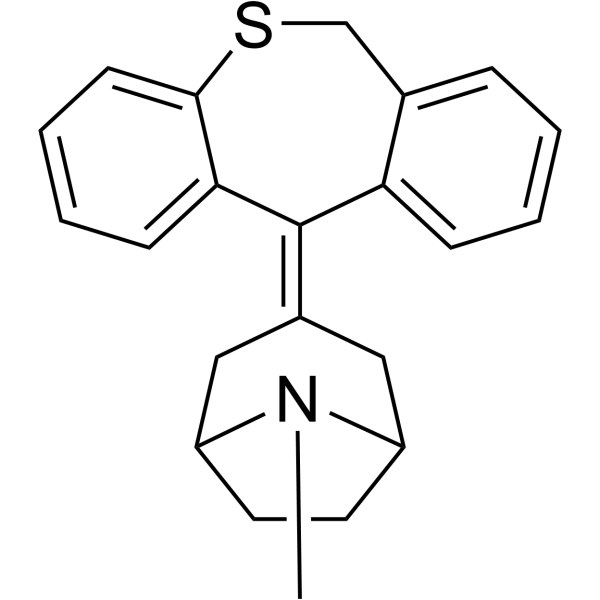
Piroheptine hydrochloride is an anticholinergic agent to inhibit dopamine uptake. Piroheptine hydrochloride prevents loss of striatal dopamine induced by MPTP (HY-15608). Piroheptine hydrochloride can be used for research in Parkinson .
|
-
-
- HY-121773
-
-
-
- HY-W201842
-
-
-
- HY-W201842B
-
-
-
- HY-U00001
-
|
Ciba 10870; Phenglutarimide
|
mAChR
|
Neurological Disease
|
|
Phenglutarimid is an anticholinergic used as an antiparkinsonian agent.
|
-
-
- HY-U00001A
-
|
Ciba 10870 hydrochloride; Phenglutarimide hydrochloride
|
mAChR
|
Neurological Disease
|
|
Phenglutarimid hydrochloride is an anticholinergic used as an antiparkinsonian agent.
|
-
-
- HY-W201842A
-
-
-
- HY-118406
-
|
Ponalid; UK 738
|
mAChR
|
Neurological Disease
|
|
Ethybenztropine (Ponalid) is a muscarinic receptor blocker. Ethybenztropine is an anticholinergic and antihistaminergic agent .
|
-
-
- HY-U00105
-
|
|
mAChR
|
Inflammation/Immunology
|
|
Oxitropium bromide is an mAChR antagonist used as an anticholinergic bronchodilator agent for the treatment of asthma and chronic obstructive pulmonary disease.
|
-
-
- HY-121603
-
-
-
- HY-19555AR
-
|
Secorapamycin A monosodium (Standard)
|
Reference Standards
Drug Metabolite
|
Others
|
|
Phenglutarimid (hydrochloride) (Standard) is the analytical standard of Phenglutarimid (hydrochloride). This product is intended for research and analytical applications. Phenglutarimid hydrochloride is an anticholinergic used as an antiparkinsonian agent.
|
-
-
- HY-U00001AR
-
|
Ciba 10870 hydrochloride (Standard); Phenglutarimide hydrochloride (Standard)
|
Reference Standards
mAChR
|
Neurological Disease
|
|
Phenglutarimid (hydrochloride) (Standard) is the analytical standard of Phenglutarimid (hydrochloride). This product is intended for research and analytical applications. Phenglutarimid hydrochloride is an anticholinergic used as an antiparkinsonian agent.
|
-
-
- HY-118524
-
-
-
- HY-118524A
-
|
LD-935
|
Adrenergic Receptor
|
Neurological Disease
|
|
Dipiproverine (hydrochloride) is the hydrochloride form of Dipiproverine (HY-118524). Dipiproverine (hydrochloride) is an alpha-amino acid ester, an antispasmodic compound, which is used as an anticholinergic agent .
|
-
-
- HY-169470
-
|
|
Cholinesterase (ChE)
|
Neurological Disease
|
|
Pridinol hydrochloride is the hydrochloride salt form of Pridinol (HY-B1343A). Pridinol hydrochloride is an orally active anticholinergic agent, and acts as muscle relaxant .
|
-
-
- HY-W373206
-
|
|
Biochemical Assay Reagents
|
Metabolic Disease
|
|
Triampizine is a potent gastric antisecretory agent without the side effects of anticholinergic drugs. Triampizine may react with the excipient magnesium stearate and is used in studies of hyperacidity .
|
-
-
- HY-W354753
-
|
|
mAChR
|
Others
|
|
Homatropine hydrochloride is an orally active anticholinergic agent that rapidly dilates pupils and has cycloplegic effects. Homatropine hydrochloride also has antitussive activity. Homatropine hydrochloride can be used in research on eye diseases and coughs .
|
-
-
- HY-B1585
-
|
Parpanil
|
iGluR
|
Neurological Disease
|
|
Parpanil is an anticholinergic agent with NMDA receptor antagonist activity. Parpanil can be used to inhibit diseases related to cholinergic neurotransmission. Parpanil exerts its pharmacological effects by blocking cholinergic effects .
|
-
- HY-B0547AR
-
|
|
Reference Standards
mAChR
|
Neurological Disease
|
|
Homatropine (Bromide) (Standard) is the analytical standard of Homatropine (Bromide). This product is intended for research and analytical applications. Homatropine Bromide is an orally active muscarinic acetylcholine receptor antagonist and can be used as an anticholinergic agent .
|
-
- HY-135407S
-
|
|
Isotope-Labeled Compounds
Drug Metabolite
|
Neurological Disease
|
|
N-Desethyl Oxybutynin-d5 (hydrochloride) is deuterium labeled N-Desethyl Oxybutynin hydrochloride. N-Desethyl Oxybutynin is the the active metabolite Oxybutynin. Oxybutynin is an anticholinergic agent that inhibits voltage-dependent K+ channels .
|
-
- HY-U00055
-
|
|
mAChR
|
Neurological Disease
|
|
Temiverine hydrochloride is a synthesized agent that is expected to have anticholinergic action. Temiverine hydrochloride is a click chemistry reagent, it contains an Alkyne group and can undergo copper-catalyzed azide-alkyne cycloaddition (CuAAc) with molecules containing Azide groups.
|
-
- HY-120081B
-
|
|
mAChR
|
Neurological Disease
|
|
Metixene (Piperidine) hydrochloride hydrate is an anticholinergic and antiparkinsonian agent. Metixene hydrochloride potently inhibits binding of quinuclidinyl benzilate (QNB) with the muscarinic receptor, IC50 and Ki values of 55 nM and 15 nM, respectively. Metixene hydrochloride can be used for the research of parkinsonian .
|
-
- HY-122133
-
|
|
Others
|
Metabolic Disease
|
|
CI 750 is a potent and orally active antidiarrheal agent. CI 750 increases the motor pattern of the gastrointestinal tract. CI 750 shows a constipating activity. CI 750 shows no analgesic, addiction liability, or anticholinergic pharmacological activity .
|
-
- HY-16489
-
|
|
Potassium Channel
mAChR
Calcium Channel
|
Metabolic Disease
|
|
Terodiline, an antispasmodic agent, blocks hERG current with the IC50 of 375 nM. Terodiline has both anticholinergic and calcium antagonist properties, and effectively reduces abnormal bladder contractions caused by detrusor instability. Terodiline can be used for the research of urinary incontinence .
|
-
- HY-B1667R
-
|
|
mAChR
Reference Standards
|
Metabolic Disease
|
|
Isopropamide (iodide) (Standard) is the analytical standard of Isopropamide (iodide). This product is intended for research and analytical applications. Isopropamide iodide is a long-acting quaternary anticholinergic agent. Isopropamide iodide is used in peptic ulcer and other gastrointestinal disorders marked by hyperacidity and hypermotility .
|
-
- HY-B0535R
-
|
|
Reference Standards
Bacterial
Antibiotic
|
Infection
|
|
Homatropine (hydrochloride) (Standard) is the analytical standard of Homatropine (hydrochloride). This product is intended for research and analytical applications. Homatropine hydrochloride is an orally active anticholinergic agent that rapidly dilates pupils and has cycloplegic effects. Homatropine hydrochloride also has antitussive activity. Homatropine hydrochloride can be used in research on eye diseases and coughs .
|
-
- HY-W354753R
-
|
|
mAChR
Reference Standards
|
Others
|
|
Homatropine (hydrochloride) (Standard) is the analytical standard of Homatropine (hydrochloride). This product is intended for research and analytical applications. Homatropine hydrochloride is an orally active anticholinergic agent that rapidly dilates pupils and has cycloplegic effects. Homatropine hydrochloride also has antitussive activity. Homatropine hydrochloride can be used in research on eye diseases and coughs .
|
-
- HY-N0471B
-
|
Hyoscyamine hydrobromide
|
mAChR
|
Neurological Disease
|
|
L-Hyoscyamine (Hyoscyamine) hydrobromide is an anticholinergic agent that may potentially affect breastfeeding and milk production. L-Hyoscyamine hydrobromide is not likely to interfere with breastfeeding when used in single doses. L-Hyoscyamine hydrobromide should be monitored for signs of decreased lactation during long-term use.
|
-
- HY-B0520AS1
-
|
|
Dopamine Receptor
Histamine Receptor
mAChR
|
Cancer
|
|
Benztropine-d3 (mesylate) is the deuterium labeled Benztropine mesylate . Benztropine mesylate (Benzatropine mesylate) is an orally active centrally acting anticholinergic agent that can be used for Parkinson's disease research. Benztropine mesylate is an anti-histamine agent and a dopamine re-uptake inhibitor. Benztropine mesylate is also a human D2 dopamine receptor allosteric antagonist. Benztropine mesylate also has anti-CSCs (cancer stem cells) effects .
|
-
- HY-120081AR
-
|
|
mAChR
Reference Standards
|
Neurological Disease
|
|
Metixene (hydrochloride hydrate) (Standard) is the analytical standard of Metixene (hydrochloride hydrate). This product is intended for research and analytical applications. Metixene (Piperidine) hydrochloride hydrate is an anticholinergic and antiparkinsonian agent. Metixene hydrochloride hydrate potently inhibits binding of quinuclidinyl benzilate (QNB) with the muscarinic receptor, IC50 and Ki values of 55 nM and 15 nM, respectively. Metixene hydrochloride hydrate can be used for the research of parkinsonian .
|
-
- HY-142119
-
|
|
mAChR
NF-κB
|
Inflammation/Immunology
|
|
Penehyclidine, a anticholinergic agent, is a selective antagonist of M1 and M3 receptors. Penehyclidine activates NF-kβ in lung tissue and inhibits the release of inflammatory factors. Penehyclidine can alleviate the pulmonary inflammatory response in rats with chronic obstructive pulmonary disease (COPD) undergoing mechanical ventilation .
|
-
- HY-167849
-
|
BBI-4000 tosylate
|
mAChR
|
Neurological Disease
|
|
Sofpironium (BBI 4000) tosylate is an anticholinergic agent used in the study of primary axillary hyperhidrosis (PAH). Sofpironium tosylate reduces sweating by inhibiting M3 muscarinic receptors in eccrine glands at the application site. Sofpironium tosylate also has a high afnity for the M1, M2, M4 and M5 subtypes .
|
-
- HY-B0520AR
-
|
Benzatropine mesylate (Standard); Benzotropine mesylate (Standard); Benztropine methanesulfonate (Standard)
|
Reference Standards
Dopamine Receptor
mAChR
Histamine Receptor
|
Neurological Disease
Cancer
|
|
Benztropine (mesylate) (Standard) is the analytical standard of Benztropine (mesylate). This product is intended for research and analytical applications. Benztropine mesylate (Benzatropine mesylate) is an orally active centrally acting anticholinergic agent that can be used for Parkinson's disease research. Benztropine mesylate is an anti-histamine agent and a dopamine re-uptake inhibitor. Benztropine mesylate is also a human D2 dopamine receptor allosteric antagonist. Benztropine mesylate also has anti-CSCs (cancer stem cells) effects .
|
-
- HY-B0520AS
-
|
|
Isotope-Labeled Compounds
Dopamine Receptor
mAChR
Histamine Receptor
|
Neurological Disease
Cancer
|
|
Benztropine- 13C,d3 (mesylate) is the 13C- and deuterium labeled Benztropine (mesylate). Benztropine mesylate (Benzatropine mesylate) is an orally active centrally acting anticholinergic agent that can be used for Parkinson's disease research. Benztropine mesylate is an anti-histamine agent and a dopamine re-uptake inhibitor. Benztropine mesylate is also a human D2 dopamine receptor allosteric antagonist. Benztropine mesylate also has anti-CSCs (cancer stem cells) effects .
|
-
- HY-B1487S1
-
|
Tricyclamol-d5; (±)-Procyclidine-d5
|
Isotope-Labeled Compounds
iGluR
mAChR
|
Neurological Disease
|
|
Procyclidine-d5 (Tricyclamol-d5) is deuterium labeled Procyclidine (hydrochloride). Procyclidine (Tricyclamol, (±)-Procyclidine) hydrochloride , an anticholinergic agent, is a muscarinic receptor antagonist that also has the properties of an N-methyl-D-aspartate (NMDA) antagonist. Procyclidine hydrochloride can be used in studies of Parkinson's disease and related psychiatric disorders such as Soman-induced epilepsy .
|
-
- HY-14263R
-
|
Propericiazine (Standard); RP 8909 (Standard)
|
Dopamine Receptor
Reference Standards
|
Neurological Disease
|
|
Pericyazine (Standard) is the analytical standard of Pericyazine. This product is intended for research and analytical applications. Pericyazine (Propericiazine) is a first-generation antipsychotic agent that is used as an adjunct to the short-term management of severe anxiety states and psychosis . Pericyazine is a selective D2-dopamine receptor antagonist . Pericyazine has adrenolytic, anticholinergic, and extrapyramidal effects .
|
-
- HY-B0267R
-
|
|
Reference Standards
mAChR
Potassium Channel
|
Neurological Disease
|
|
Oxybutynin (Standard) is the analytical standard of Oxybutynin. This product is intended for research and analytical applications. Oxybutynin is an anticholinergic agent, which inhibits vascular Kv channels in a concentration-dependent manner, with an IC50 of 11.51 μM . Oxybutynin is a click chemistry reagent, it contains an Alkyne group and can undergo copper-catalyzed azide-alkyne cycloaddition (CuAAc) with molecules containing Azide groups.
|
-
- HY-109006
-
|
|
mAChR
|
Neurological Disease
|
|
Ilmetropium iodide is an anticholinergic agent. Ilmetropium iodide selectively blocks M-cholinergic receptors of bronchial muscle, reduces or prevents bronchoconstrictor response associated with both cholinergic stimulation, as well as the impact of the factors that provoke bronchospasm. Strength and selectivity of ilmetropium iodide action substantially exceeds Atropine sulfate (HY-B1205A) and Ipratropium bromide (HY-B0241) .
|
-
- HY-105793
-
|
|
mAChR
|
Neurological Disease
|
|
Mazaticol is an anticholinergic agent. Mazaticol blocks the muscarinic acetylcholine receptors and cholinergic nerve activity. Mazaticol is a potent 3H-QNB and 3H-PZ binding inhibitor, can bind to the M2 receptors with high affinity. Mazaticol exhibits inhibitory effects on dopamine uptake in the striatal nerve terminal. Mazaticol can be used for parkinsonian syndrome research .
|
-
- HY-167633
-
|
|
mGluR
Histamine Receptor
|
Neurological Disease
|
|
Oxomemazine hydrochloride is a phenothiazine-based histamine H1-receptor blocker with pronounced antimuscarinic properties. Oxomemazine hydrochloride is a selective antagonist for muscarinic M1 receptor, displays about 20-fold difference in the affinity for high (Ki= 84 nM, M1 receptor) and low (Ki= 1.65 μM, M2 receptor) affinity sites [1]. Oxomemazine hydrochloride an antihistamine and anticholinergic agent used for the study of cough treatment .
|
-
- HY-B1607R
-
|
|
Reference Standards
Histamine Receptor
SARS-CoV
Filovirus
Parasite
|
Infection
Neurological Disease
Inflammation/Immunology
|
|
Chlorphenoxamine (Standard) is the analytical standard of Chlorphenoxamine (HY-B1607). This product is intended for research and analytical applications. Chlorphenoxamine, an antihistamine and anticholinergic agent is a GPCR antagonist. Chlorphenoxamine inhibits multiple lethal viral diseases, such as SARS-CoV, MERS-CoV, EBOV and malaria. Chlorphenoxamine shows anti-filovirus activity against both EBOV and Marburg virus (MARV) with IC50s of 1.1 μM and 6.2 μM, respectively. Chlorphenoxamine is used for allergic conditions, urticaria, viral diseases and Parkinson’s disease.
|
-
- HY-136587R
-
|
|
Reference Standards
Histamine Receptor
mGluR
|
Inflammation/Immunology
|
|
Oxomemazine (Standard) is the analytical standard of Oxomemazine (HY-136587). This product is intended for research and analytical applications. Oxomemazine is a phenothiazine-based histamine H1-receptor blocker. Oxomemazine is a selective antagonist for muscarinic M1 receptor, displays about 20-fold difference in the affinity for high (Ki = 84 nM, M1 receptor) and low (Ki = 1.65 μM, M2 receptor) affinity sites. Oxomemazine is an antihistamine and anticholinergic agent used for the study of cough treatment. Oxomemazine is protective against anaphylactic microshock in guinea pigs .
|
-
- HY-N0340R
-
|
Hyoscine butylbromide (Standard); (-)-Scopolamine butylbromide (Standard); Butylscopolamine bromide (Standard)
|
Reference Standards
mAChR
|
Neurological Disease
Inflammation/Immunology
|
|
Scopolamine butylbromide (Standard) is the analytical standard of Scopolamine butylbromide (HY-N0340). This product is intended for research and analytical applications. Scopolamine butylbromide (Hyoscine butylbromide) is an orally active anticholinergic agent and spasmolytic. Scopolamine butylbromide binds with high affinity to rat cardiac M2 (Ki 83 nmol/L), hM2 (Ki 233 nmol/L), rat intestinal M3 (Ki 290 nmol/L) and hM3 (Ki 643 nmol/L) muscarinic receptors. Scopolamine butylbromide exerts a dose-dependent antagonistic effect on Carbachol-induced gastrointestinal smooth muscle spasm. Scopolamine butylbromide can be used for the research of abdominal colic and pain associated with gastrointestinal spasm, functional abdominal pain, chronic gastropathy and gastric ulcer .
|
-
- HY-W276446
-
|
|
Cholinesterase (ChE)
|
Inflammation/Immunology
|
|
1,1-Diphenyl-4-(pyrrolidin-1-yl)but-2-yn-1-ol is an anticholinergic agent. 1,1-Diphenyl-4-(pyrrolidin-1-yl)but-2-yn-1-ol has the potential for the research of bronchial asthma . 1,1-Diphenyl-4-(pyrrolidin-1-yl)but-2-yn-1-ol is a click chemistry reagent, it contains an Alkyne group and can undergo copper-catalyzed azide-alkyne cycloaddition (CuAAc) with molecules containing Azide groups.
|
-
- HY-167649
-
|
|
Cholinesterase (ChE)
|
Neurological Disease
|
|
Poskine is an anticholinergic agent and a central nervous system depressant. Poskine can be utilized in research related to Parkinson's disease and travel sickness .
|
-
- HY-120403A
-
|
|
Calcium Channel
|
Neurological Disease
|
|
Pramiverine hydrochloride is a long-acting anticholinergic agent. Pramiverine hydrochloride exerts a tonic inhibitory effect on esophageal peristalsis during swallowing. Pramiverine hydrochloride can be used for research on gastrointestinal spasms .
|
-
- HY-117284A
-
|
|
mAChR
|
Neurological Disease
|
|
Eucatropine hydrochloride is a potent muscarinic acetylcholine receptor (mAChR) inhibitor with an IC50 value of 0.583 μM. Eucatropine hydrochloride acts as an anticholinergic agent. Eucatropine hydrochloride produces behavioral effects via central cholinergic receptive sites in cats .
|
-
- HY-105710R
-
|
|
Cholinesterase (ChE)
Reference Standards
|
Neurological Disease
|
|
Tropatepine (Standard) is the analytical standard of Tropatepine (HY-105710). This product is intended for research and analytical applications. Tropatepine is an orally active anticholinergic agent and can be used in the research of neurological diseases such as Parkinson's disease and extrapyramidal syndromes .
|
-
- HY-143690S
-
|
|
Isotope-Labeled Compounds
|
Others
|
|
Oxybutynin-d10 hydrochloride is the deuterium labeled Oxybutynin (HY-B0267). Oxybutynin is an anticholinergic agent, which inhibits vascular Kv channels in a concentration-dependent manner, with an IC50 of 11.51 μM . Oxybutynin is a click chemistry reagent, it contains an Alkyne group and can undergo copper-catalyzed azide-alkyne cycloaddition (CuAAc) with molecules containing Azide groups.
|
-
- HY-B1607A
-
|
|
Histamine Receptor
SARS-CoV
Filovirus
Parasite
|
Infection
Neurological Disease
Inflammation/Immunology
|
|
Chlorphenoxamine hydrochloride, an antihistamine and anticholinergic agent is a GPCR antagonist. Chlorphenoxamine hydrochloride inhibits multiple lethal viral diseases, such as SARS-CoV, MERS-CoV, EBOV and malaria. Chlorphenoxamine hydrochloride shows anti-filovirus activity against both EBOV and Marburg virus (MARV) with IC50s of 1.1 μM and 6.2 μM, respectively. Chlorphenoxamine hydrochloride is used for allergic conditions, urticaria, viral diseases and Parkinson’s disease .
|
-
- HY-109013R
-
|
BBI 4000 (Standard)
|
Reference Standards
mAChR
|
Neurological Disease
|
|
Sofpironium bromide (Standard) is the analytical standard of Sofpironium (bromide) (HY-109013). This product is intended for research and analytical applications. Sofpironium bromide (BBI 4000) is an anticholinergic agent used in the study of primary axillary hyperhidrosis (PAH). Sofpironium bromide reduces sweating by inhibiting M3 muscarinic receptors in eccrine glands at the application site. Sofpironium bromide also has a high afnity for the M1, M2, M4 and M5 subtypes .
|
-
| Cat. No. |
Product Name |
Type |
-
- HY-W354753
-
|
|
Biochemical Assay Reagents
|
|
Homatropine hydrochloride is an orally active anticholinergic agent that rapidly dilates pupils and has cycloplegic effects. Homatropine hydrochloride also has antitussive activity. Homatropine hydrochloride can be used in research on eye diseases and coughs .
|
-
- HY-W354753R
-
|
|
Biochemical Assay Reagents
|
|
Homatropine (hydrochloride) (Standard) is the analytical standard of Homatropine (hydrochloride). This product is intended for research and analytical applications. Homatropine hydrochloride is an orally active anticholinergic agent that rapidly dilates pupils and has cycloplegic effects. Homatropine hydrochloride also has antitussive activity. Homatropine hydrochloride can be used in research on eye diseases and coughs .
|
| Cat. No. |
Product Name |
Category |
Target |
Chemical Structure |
-
- HY-N0340
-
|
Hyoscine butylbromide; (-)-Scopolamine butylbromide; Butylscopolamine bromide
|
Alkaloids
Structural Classification
Other Alkaloids
Datura metel L.
Solanaceae
Plants
Source Classification
|
mAChR
|
|
Scopolamine butylbromide (Hyoscine butylbromide) is an orally active anticholinergic agent and spasmolytic. Scopolamine butylbromide binds with high affinity to rat cardiac M2 (Ki 83 nmol/L), hM2 (Ki 233 nmol/L), rat intestinal M3 (Ki 290 nmol/L) and hM3 (Ki 643 nmol/L) muscarinic receptors. Scopolamine butylbromide exerts a dose-dependent antagonistic effect on Carbachol-induced gastrointestinal smooth muscle spasm. Scopolamine butylbromide can be used for the research of abdominal colic and pain associated with gastrointestinal spasm, functional abdominal pain, chronic gastropathy and gastric ulcer .
|
-
-
- HY-N0340R
-
|
Hyoscine butylbromide (Standard); (-)-Scopolamine butylbromide (Standard); Butylscopolamine bromide (Standard)
|
Alkaloids
Structural Classification
Other Alkaloids
Datura metel L.
Solanaceae
Plants
Source Classification
|
Reference Standards
mAChR
|
|
Scopolamine butylbromide (Standard) is the analytical standard of Scopolamine butylbromide (HY-N0340). This product is intended for research and analytical applications. Scopolamine butylbromide (Hyoscine butylbromide) is an orally active anticholinergic agent and spasmolytic. Scopolamine butylbromide binds with high affinity to rat cardiac M2 (Ki 83 nmol/L), hM2 (Ki 233 nmol/L), rat intestinal M3 (Ki 290 nmol/L) and hM3 (Ki 643 nmol/L) muscarinic receptors. Scopolamine butylbromide exerts a dose-dependent antagonistic effect on Carbachol-induced gastrointestinal smooth muscle spasm. Scopolamine butylbromide can be used for the research of abdominal colic and pain associated with gastrointestinal spasm, functional abdominal pain, chronic gastropathy and gastric ulcer .
|
-
| Cat. No. |
Product Name |
Chemical Structure |
-
- HY-B0267AS
-
|
|
|
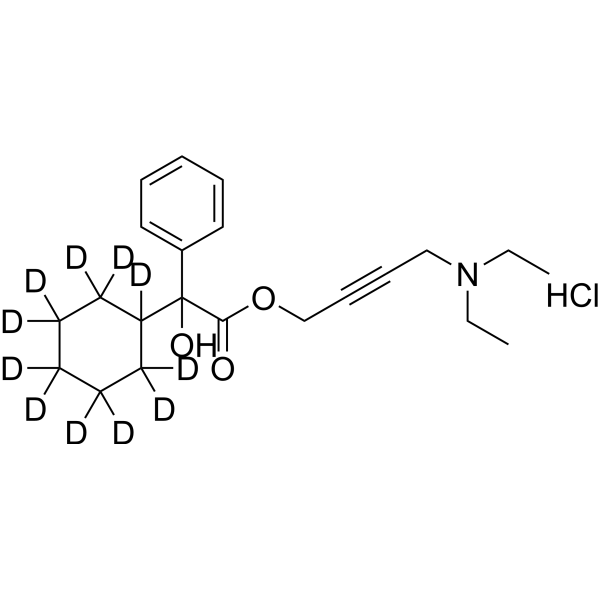
Oxybutynin-d11 (chloride) is the deuterium labeled Oxybutynin chloride. Oxybutynin chloride is an anticholinergic agent, which inhibits vascular Kv channels in a concentration-dependent manner, with an IC50 of 11.51 μM .
|
-
-
- HY-135407S
-
|
|
|
N-Desethyl Oxybutynin-d5 (hydrochloride) is deuterium labeled N-Desethyl Oxybutynin hydrochloride. N-Desethyl Oxybutynin is the the active metabolite Oxybutynin. Oxybutynin is an anticholinergic agent that inhibits voltage-dependent K+ channels .
|
-
-
- HY-B0520AS1
-
|
|
|
Benztropine-d3 (mesylate) is the deuterium labeled Benztropine mesylate . Benztropine mesylate (Benzatropine mesylate) is an orally active centrally acting anticholinergic agent that can be used for Parkinson's disease research. Benztropine mesylate is an anti-histamine agent and a dopamine re-uptake inhibitor. Benztropine mesylate is also a human D2 dopamine receptor allosteric antagonist. Benztropine mesylate also has anti-CSCs (cancer stem cells) effects .
|
-
-
- HY-B0520AS
-
|
|
|
Benztropine- 13C,d3 (mesylate) is the 13C- and deuterium labeled Benztropine (mesylate). Benztropine mesylate (Benzatropine mesylate) is an orally active centrally acting anticholinergic agent that can be used for Parkinson's disease research. Benztropine mesylate is an anti-histamine agent and a dopamine re-uptake inhibitor. Benztropine mesylate is also a human D2 dopamine receptor allosteric antagonist. Benztropine mesylate also has anti-CSCs (cancer stem cells) effects .
|
-
-
- HY-B1487S1
-
|
|
|
Procyclidine-d5 (Tricyclamol-d5) is deuterium labeled Procyclidine (hydrochloride). Procyclidine (Tricyclamol, (±)-Procyclidine) hydrochloride , an anticholinergic agent, is a muscarinic receptor antagonist that also has the properties of an N-methyl-D-aspartate (NMDA) antagonist. Procyclidine hydrochloride can be used in studies of Parkinson's disease and related psychiatric disorders such as Soman-induced epilepsy .
|
-
-
- HY-143690S
-
|
|
|
Oxybutynin-d10 hydrochloride is the deuterium labeled Oxybutynin (HY-B0267). Oxybutynin is an anticholinergic agent, which inhibits vascular Kv channels in a concentration-dependent manner, with an IC50 of 11.51 μM . Oxybutynin is a click chemistry reagent, it contains an Alkyne group and can undergo copper-catalyzed azide-alkyne cycloaddition (CuAAc) with molecules containing Azide groups.
|
-
Your information is safe with us. * Required Fields.
Inquiry Information
- Product Name:
- Cat. No.:
- Quantity:
- MCE Japan Authorized Agent:

