15 Results for "

antidepressant (TCA)

" in MedChemExpress (MCE) Product Catalog:
Products (15)

15 Results for "antidepressant (TCA)" in MCE Product Catalog:

9
9 Publications Verification
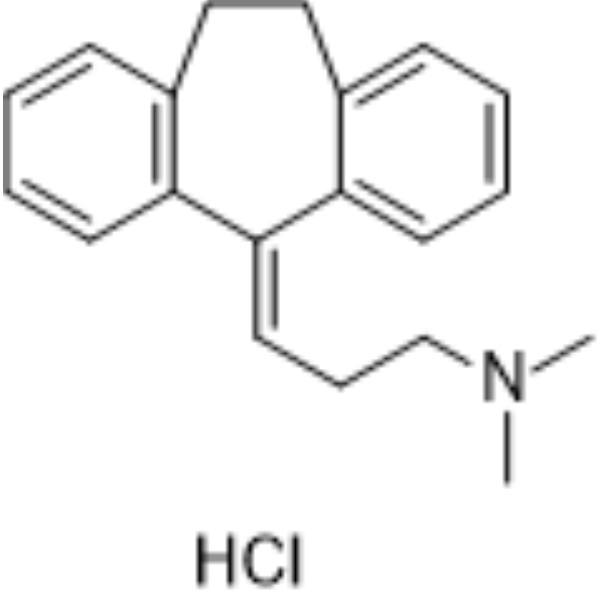
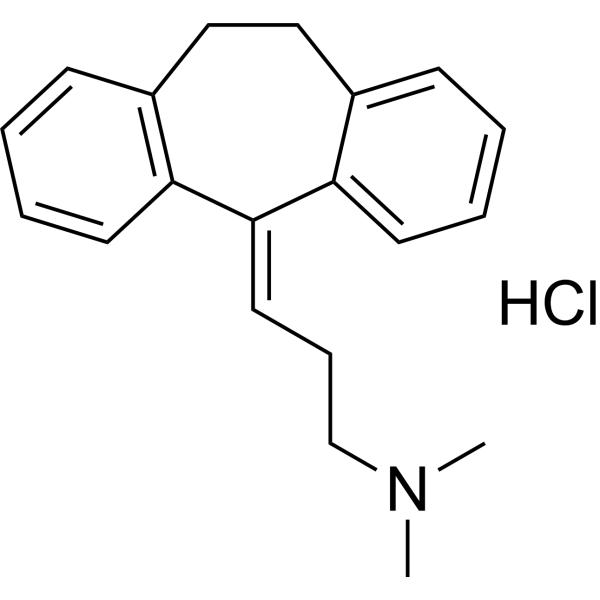
Cat. No.: HY-B0527A
CAS No.: 549-18-8
Amitriptyline hydrochloride is an orally active tricyclic antidepressant (TCA). Amitriptyline hydrochloride mainly exerts its antidepressant effect by blocking SERT (Ki = 3.45 nM) and NET (Ki = 13.3 nM), thereby increasing the concentrations of 5-hydroxytryptamine (5-HT) and norepinephrine (NE) in the synaptic cleft. Amitriptyline hydrochloride is also an agonist at α2A and TrkA/TrkB receptors, thereby exerting analgesic and neurotrophic activities (inhibiting cell apoptosis). Amitriptyline hydrochloride can reduce inflammation, angiogenesis and fibrosis. Amitriptyline hydrochloride binds to DAT (with Ki = 2.58 μM). Amitriptyline hydrochloride has high affinity for a series of receptors and can antagonize muscarinic cholinergic receptors (M1/M2/M3/M4/M5 receptors) (Ki = 11-24 nM), H1 receptors (Ki = 0.5-1.1 nM), adrenergic α1 receptors (Ki = 4.4 nM), etc., resulting in a series of side effects. Amitriptyline hydrochloride can block sodium channels and hERG potassium channel (IC50 = 4.78 μM) and it has cardiotoxicity .
loading...
    loading...
9
9 Publications Verification
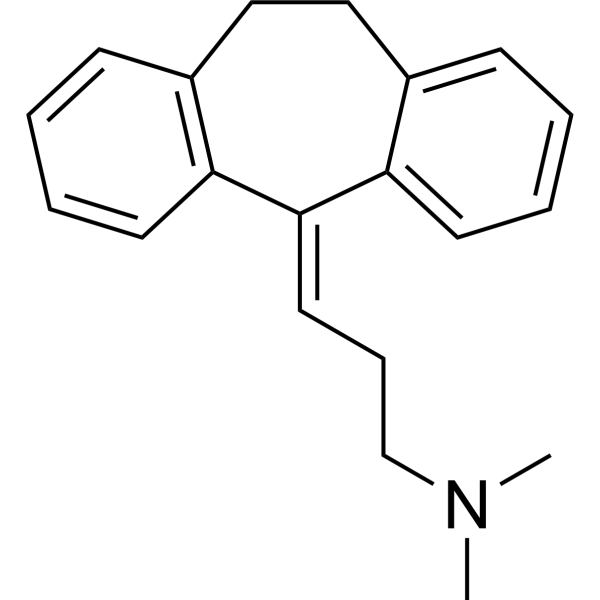
Cat. No.: HY-B0527
CAS No.: 50-48-6
Amitriptyline is an orally active tricyclic antidepressant (TCA). Amitriptyline mainly exerts its antidepressant effect by blocking SERT (Ki = 3.45 nM) and NET (Ki = 13.3 nM), thereby increasing the concentrations of 5-hydroxytryptamine (5-HT) and norepinephrine (NE) in the synaptic cleft. Amitriptyline is also an agonist at α2A and TrkA/TrkB receptors, thereby exerting analgesic and neurotrophic activities (inhibiting cell apoptosis). Amitriptyline can reduce inflammation, angiogenesis and fibrosis. Amitriptyline binds to DAT (with Ki = 2.58 μM). Amitriptyline has high affinity for a series of receptors and can antagonize muscarinic cholinergic receptors (M1/M2/M3/M4/M5 receptors) (Ki = 11-24 nM), H1 receptors (Ki = 0.5-1.1 nM), adrenergic α1 receptors (Ki = 4.4 nM), etc., resulting in a series of side effects. Amitriptyline can block sodium channels and hERG potassium channel (IC50 = 4.78 μM) and it has cardiotoxicity .
loading...
    loading...
2
2 Cited Publications
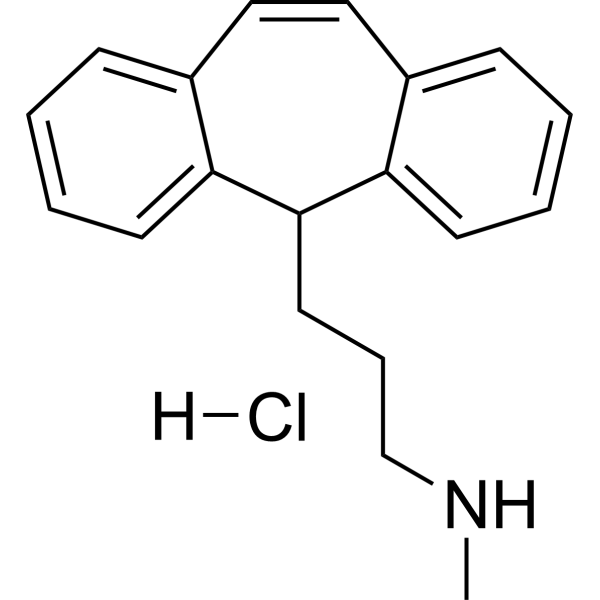
Cat. No.: HY-B0949
CAS No.: 1225-55-4
Research Areas:  

Neurological Disease

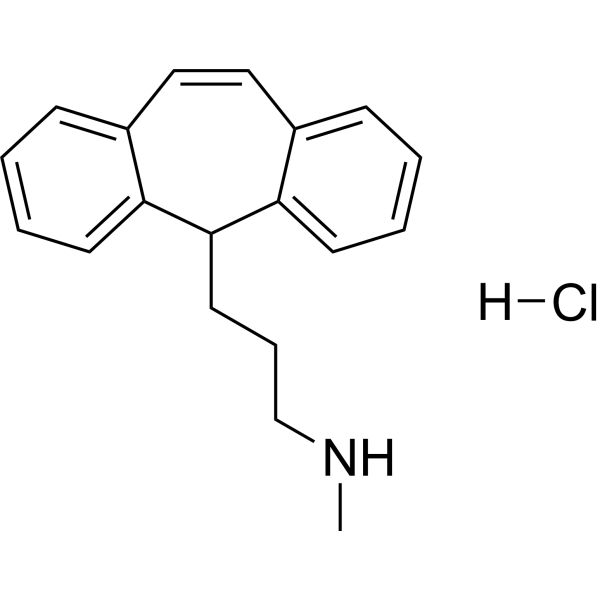
Protriptyline hydrochloride is a potent tricyclic antidepressant (TCA). Protriptyline hydrochloride inhibits AChE activity with an IC50 value of 0.06 mM and inhibits Aβ self-assembly. Protriptyline hydrochloride can be used for the study of depression and Alzheimers disease .
loading...
    loading...
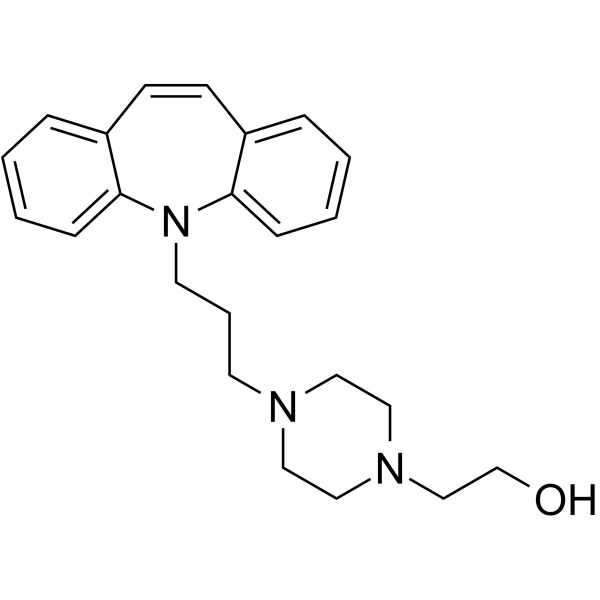
Cat. No.: HY-118901
CAS No.: 315-72-0
Purity:  99.91%
Synonyms: Ensidon; G-33040
Target:  

Sigma Receptor

Research Areas:  

Neurological Disease

Opipramol (Ensidon) is an atypical tricyclic antidepressant (TCA). Opipramol acts primarily as a sigma (σ) receptor agonist and can potently interact with sigma recognition sites with a Ki value of 50 nM. Opipramol can be used for the research of generalized anxiety disorder (GAD) .
loading...
    loading...
Cat. No.: HY-78509
CAS No.: 1210-35-1
Dibenzosuberone is a tricyclic compound, commonly referred to as a tricyclic antidepressant (TCA), and is widely used in research on migraine, tension-type headache, anxiety disorder and schizophrenia. Dibenzosuberone also serves as a key intermediate for the synthesis of various active pharmaceutical ingredients (APIs) (e.g., amitriptyline (HY-B0527), nortriptyline (HY-118620), nortriptyline or cyproheptadine (HY-B1622)) .
loading...
    loading...
Cat. No.: HY-B0527AR
CAS No.: 549-18-8
Amitriptyline hydrochloride (Standard) is the analytical standard of Amitriptyline hydrochloride (HY-B0527A). This product is intended for research and analytical applications. Amitriptyline hydrochloride is an orally active tricyclic antidepressant (TCA). Amitriptyline hydrochloride mainly exerts its antidepressant effect by blocking SERT (Ki = 3.45 nM) and NET (Ki = 13.3 nM), thereby increasing the concentrations of 5-hydroxytryptamine (5-HT) and norepinephrine (NE) in the synaptic cleft. Amitriptyline hydrochloride is also an agonist at α2A and TrkA/TrkB receptors, thereby exerting analgesic and neurotrophic activities (inhibiting cell apoptosis). Amitriptyline hydrochloride can reduce inflammation, angiogenesis and fibrosis. Amitriptyline hydrochloride binds to DAT (with Ki = 2.58 μM). Amitriptyline hydrochloride has high affinity for a series of receptors and can antagonize muscarinic cholinergic receptors (M1/M2/M3/M4/M5 receptors) (Ki = 11-24 nM), H1 receptors (Ki = 0.5-1.1 nM), adrenergic α1 receptors (Ki = 4.4 nM), etc., resulting in a series of side effects. Amitriptyline hydrochloride can block sodium channels and hERG potassium channel (IC50 = 4.78 μM) and it has cardiotoxicity.
loading...
    loading...
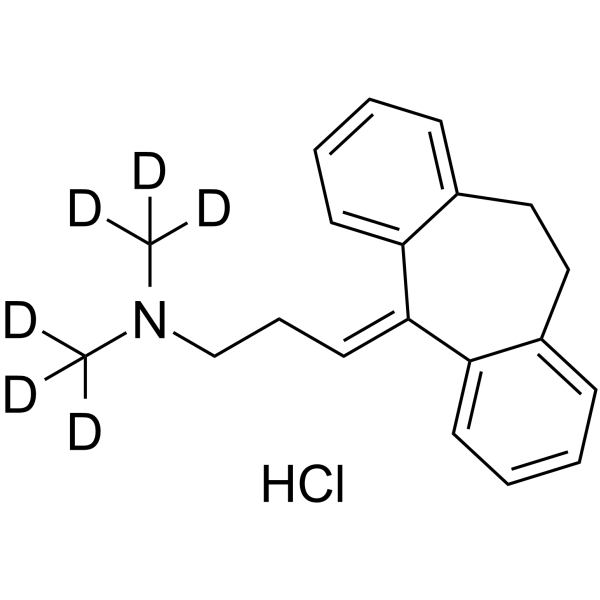
Cat. No.: HY-B0527AS
CAS No.: 203645-63-0
Amitriptyline-d6 hydrochloride is the deuterium labeled Amitriptyline hydrochloride (HY-B0527A). Amitriptyline hydrochloride is an orally active tricyclic antidepressant (TCA). Amitriptyline hydrochloride mainly exerts its antidepressant effect by blocking SERT (Ki = 3.45 nM) and NET (Ki = 13.3 nM), thereby increasing the concentrations of 5-hydroxytryptamine (5-HT) and norepinephrine (NE) in the synaptic cleft. Amitriptyline hydrochloride is also an agonist at α2A and TrkA/TrkB receptors, thereby exerting analgesic and neurotrophic activities (inhibiting cell apoptosis). Amitriptyline hydrochloride can reduce inflammation, angiogenesis and fibrosis. Amitriptyline hydrochloride binds to DAT (with Ki = 2.58 μM). Amitriptyline hydrochloride has high affinity for a series of receptors and can antagonize muscarinic cholinergic receptors (M1/M2/M3/M4/M5 receptors) (Ki = 11-24 nM), H1 receptors (Ki = 0.5-1.1 nM), adrenergic α1 receptors (Ki = 4.4 nM), etc., resulting in a series of side effects. Amitriptyline hydrochloride can block sodium channels and hERG potassium channel (IC50 = 4.78 μM) and it has cardiotoxicity.
loading...
    loading...
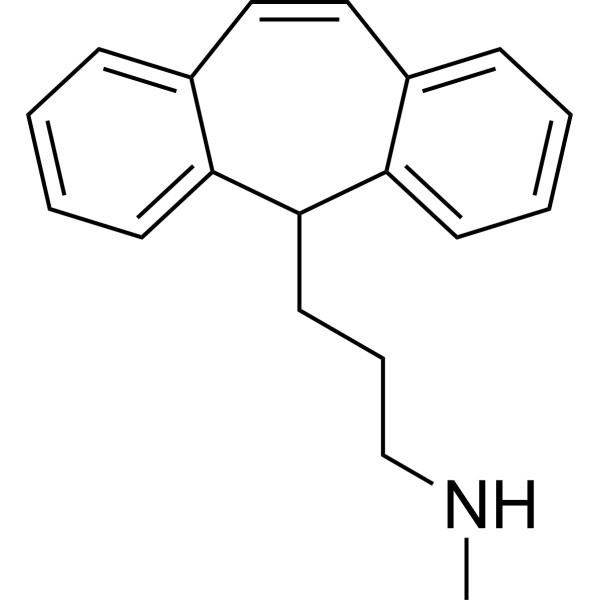
Cat. No.: HY-B0949A
CAS No.: 438-60-8
Research Areas:  

Neurological Disease

Protriptyline is a potent tricyclic antidepressant (TCA). Protriptyline inhibits AChE activity with an IC50 value of 0.06 mM and inhibits Aβ self-assembly. Protriptyline can be used for the study of depression and Alzheimers disease .
loading...
    loading...
Cat. No.: HY-118901A
CAS No.: 909-39-7
Synonyms: Ensidon dihydrochloride; G-33040 dihydrochloride
Target:  

Sigma Receptor

Research Areas:  

Neurological Disease

Opipramol (Ensidon) is an atypical tricyclic antidepressant (TCA). Opipramol acts primarily as a sigma (σ) receptor agonist and can potently interact with sigma recognition sites with a Ki value of 50 nM. Opipramol can be used for the research of generalized anxiety disorder (GAD) .
loading...
    loading...
Cat. No.: HY-118901R
CAS No.: 315-72-0
Synonyms: Ensidon (Standard); G-33040 (Standard)
Research Areas:  

Neurological Disease

Opipramol (Standard) is the analytical standard of Opipramol. This product is intended for research and analytical applications. Opipramol (Ensidon) is an atypical tricyclic antidepressant (TCA). Opipramol acts primarily as a sigma (σ) receptor agonist and can potently interact with sigma recognition sites with a Ki value of 50 nM. Opipramol can be used for the research of generalized anxiety disorder (GAD) .
loading...
    loading...
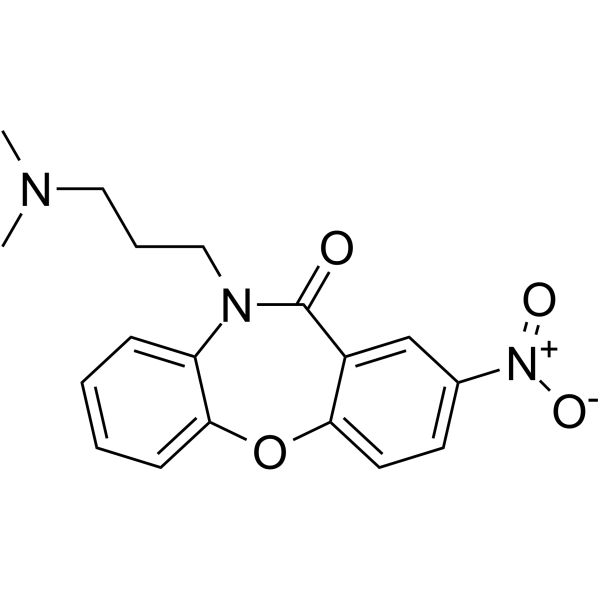
Cat. No.: HY-101684
CAS No.: 47439-36-1
Synonyms: CIBA 2330Go
Target:  

Serotonin Transporter

Research Areas:  

Neurological Disease

Nitroxazepine is a tricyclic antidepressant (TCA) for the research of depression. Nitroxazepine acts as a serotonin-norepinephrine reuptake inhibitor.
loading...
    loading...
Cat. No.: HY-101684A
CAS No.: 16398-39-3
Synonyms: CIBA 2330Go hydrochloride
Target:  

Serotonin Transporter

Research Areas:  

Neurological Disease

Nitroxazepine hydrochloride is a tricyclic antidepressant (TCA) for the study of depression. Nitroxazepine acts as a serotonin-norepinephrine reuptake inhibitor.
loading...
    loading...
Cat. No.: HY-B0949S
CAS No.: 1435934-21-6
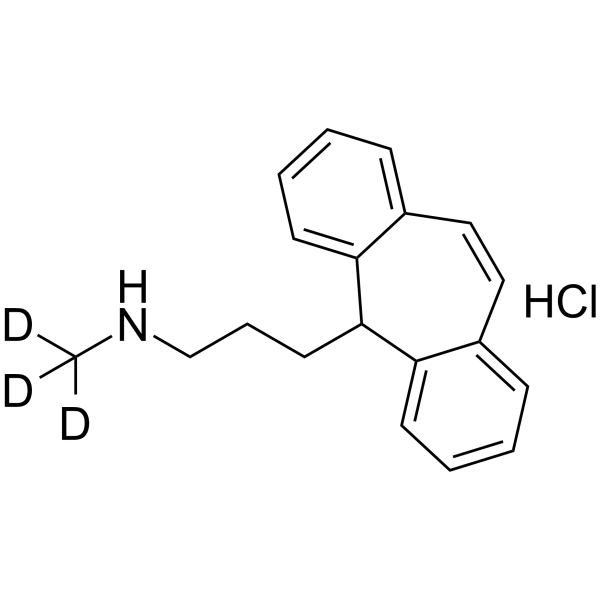
Protriptyline (N-methyl-d3) (hydrochloride) is the deuterium labeled Protriptyline hydrochloride. Protriptyline hydrochloride is a tricyclic antidepressant (TCA), specifically a secondary amine, for the treatment of depression and ADHD. Unique among the TCAs, protriptyline tends to be energizing instead of sedating, used for narcolepsy to achieve a wakefulness-promoting effect .
loading...
    loading...
Cat. No.: HY-B0949AS
CAS No.: 136765-50-9
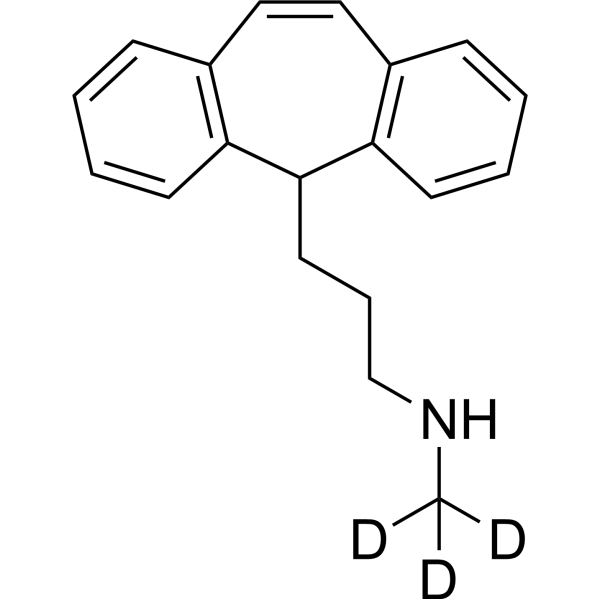
Protriptyline-d3 is deuterium labeled Protriptyline (HY-B0949). Protriptyline is a potent tricyclic antidepressant (TCA). Protriptyline inhibits AChE activity with an IC50 value of 0.06 mM and inhibits Aβ self-assembly. Protriptyline can be used for the study of depression and Alzheimers disease .
loading...
    loading...
Cat. No.: HY-B0949R
CAS No.: 1225-55-4
Protriptyline hydrochloride (Standard) is the analytical standard of Protriptyline hydrochloride (HY-B0949). This product is intended for research and analytical applications. Protriptyline hydrochloride is a potent tricyclic antidepressant (TCA). Protriptyline hydrochloride inhibits AChE activity with an IC50 value of 0.06 mM and inhibits Aβ self-assembly. Protriptyline hydrochloride can be used for the study of depression and Alzheimers disease .
loading...
    loading...
  • 1

