
222 Results for "

aspartic

" in MedChemExpress (MCE) Product Catalog:
Products (222)

222 Results for "aspartic" in MCE Product Catalog:

62
62 Publications Verification
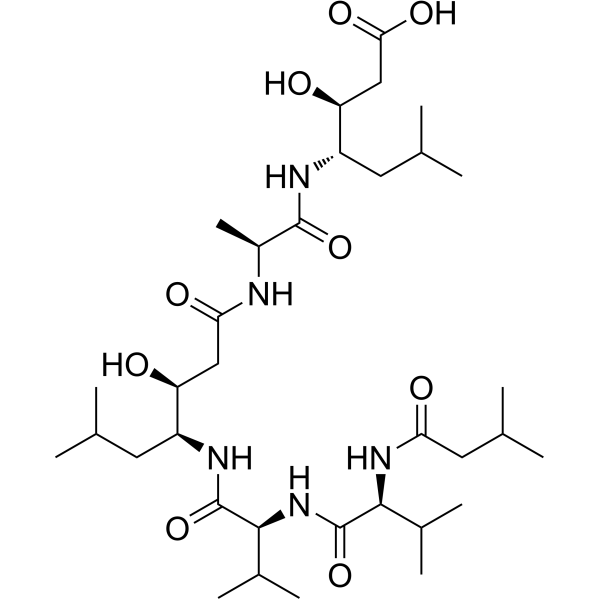
Cat. No.: HY-P0018
CAS No.: 26305-03-3
Synonyms: Pepstatin A
Pepstatin (Pepstatin A) is a specific, orally active aspartic protease inhibitor produced by actinomycetes, with IC50s of 4.5 nM, 6.2 nM, 150 nM, 290 nM, 520 nM and 260 nM for hemoglobin-pepsin, hemoglobin-proctase, casein-pepsin, casein-proctase, casein-acid protease and hemoglobin-acid protease, respectively. Pepstatin also inhibits HIV protease .
loading...
    loading...
62
62 Publications Verification
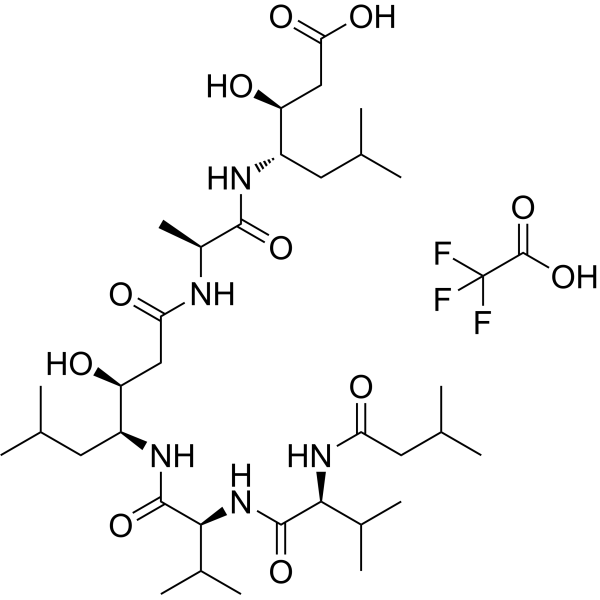
Cat. No.: HY-P0018A
Synonyms: Pepstatin A Trifluoroacetate
Pepstatin (Pepstatin A) Trifluoroacetate is a specific, orally active aspartic protease inhibitor produced by actinomycetes, with IC50s of 4.5 nM, 6.2 nM, 150 nM, 290 nM, 520 nM and 260 nM for hemoglobin-pepsin, hemoglobin-proctase, casein-pepsin, casein-proctase, casein-acid protease and hemoglobin-acid protease, respectively. Pepstatin Trifluoroacetate also inhibits HIV protease .
loading...
    loading...
62
62 Publications Verification
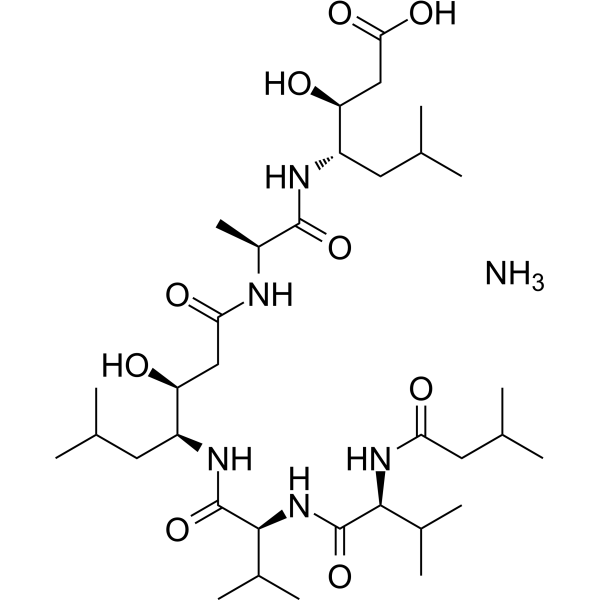
Cat. No.: HY-P0018B
Synonyms: Pepstatin A Ammonium
Pepstatin (Pepstatin A) Ammonium is a specific, orally active aspartic protease inhibitor produced by actinomycetes, with IC50s of 4.5 nM, 6.2 nM, 150 nM, 290 nM, 520 nM and 260 nM for hemoglobin-pepsin, hemoglobin-proctase, casein-pepsin, casein-proctase, casein-acid protease and hemoglobin-acid protease, respectively. Pepstatin Ammonium also inhibits HIV protease .
loading...
    loading...
31
31 Cited Publications
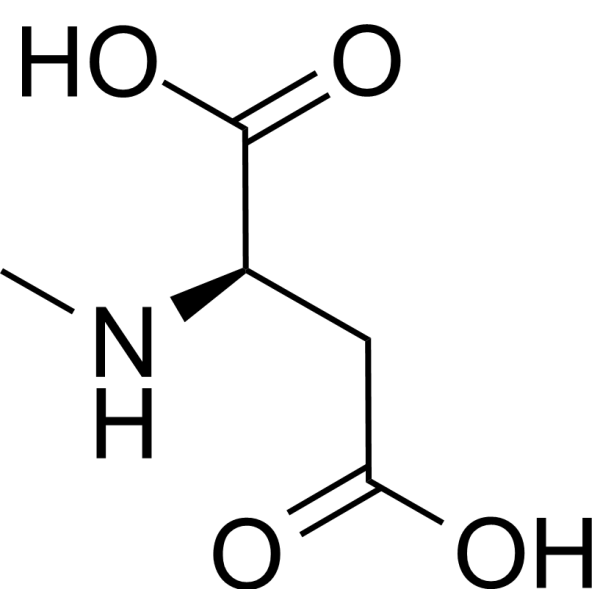
Cat. No.: HY-17551
CAS No.: 6384-92-5
Synonyms: N-Methyl-D-aspartic acid
NMDA is a specific agonist for NMDA receptor mimicking the action of glutamate, the neurotransmitter which normally acts at that receptor.
loading...
    loading...
15
15 Cited Publications
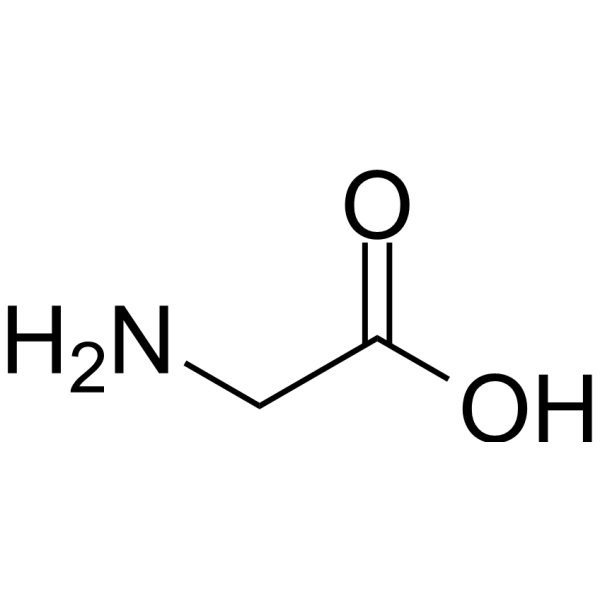
Cat. No.: HY-Y0966
CAS No.: 56-40-6
Glycine is an inhibitory neurotransmitter in the CNS and also acts as a co-agonist along with glutamate, facilitating an excitatory potential at the glutaminergic N-methyl-D-aspartic acid (NMDA) receptors. Glycine is orally active. Glycine inhibits the membrane aggregation of NINJ1 and prevents plasma membrane rupture during cell death. Glycine can be used to study cell protection, cancer, neurological diseases, and angiogenesis .
loading...
    loading...
13
13 Cited Publications
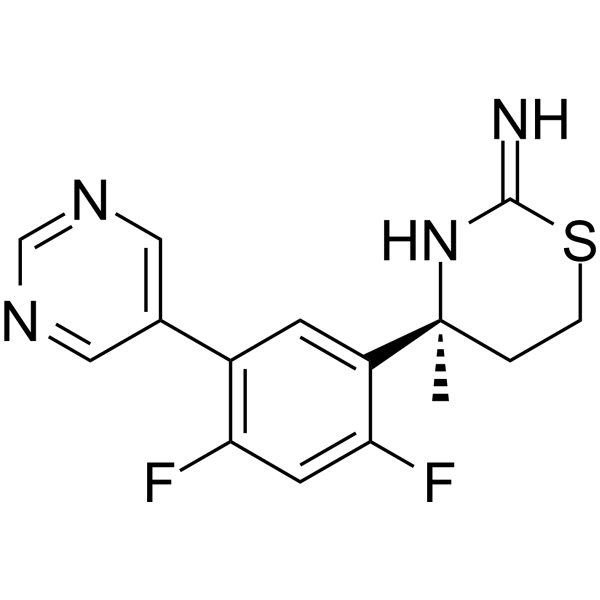
Cat. No.: HY-10472
CAS No.: 1194044-20-6
Purity:  99.62%
Target:  

Beta-secretase

Research Areas:  

Neurological Disease

LY2811376 is the first orally available non-peptidic β-secretase (BACE1) inhibitor with IC50 of 239 nM-249 nM, that acts to decrease Aβ secretion with EC50 of 300 nM, and demonstrates to have 10-fold selectivity towards BACE1 over BACE2, and more than 50-fold inhibition over other aspartic proteases including cathepsin D, pepsin, or renin.
loading...
    loading...
5
5 Cited Publications
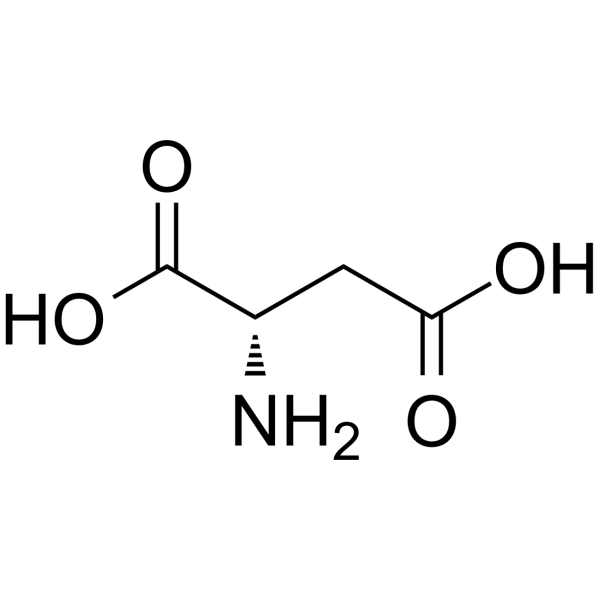
Cat. No.: HY-N0666
CAS No.: 56-84-8
L-Aspartic acid is a NMDA receptor agonist and acidic amino acid. L-Aspartic acid has no independent analgesic activity. L-Aspartic acid can antagonize the analgesic effects of D-Aspartic acid and Morphine. L-Aspartic acid regulates polymorph transformation, crystal growth/aggregation and nucleation processes of calcium carbonate, and can serve as a biomineralization template. L-Aspartic acid promotes burst firing of central neurons. L-Aspartic acid can be used in studies related to cerebral ischemia and epilepsy .
loading...
    loading...
5
5 Cited Publications
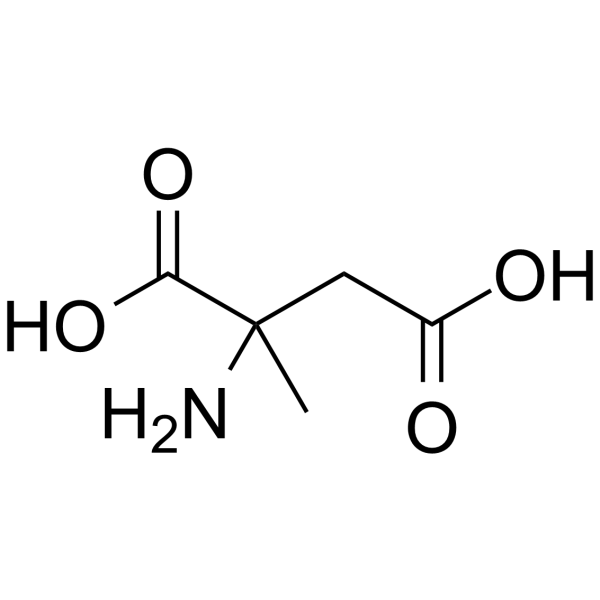
Cat. No.: HY-W142119
CAS No.: 2792-66-7
Target:  

Ser/Thr Protease

Research Areas:  

Neurological Disease

α-Methyl-DL-aspartic acid is a specific inhibitor of argininosuccinate synthase (ASS), and also is the rate-limiting enzyme for the recycling of 1-citrulline to 1-arginine .
loading...
    loading...
5
5 Cited Publications
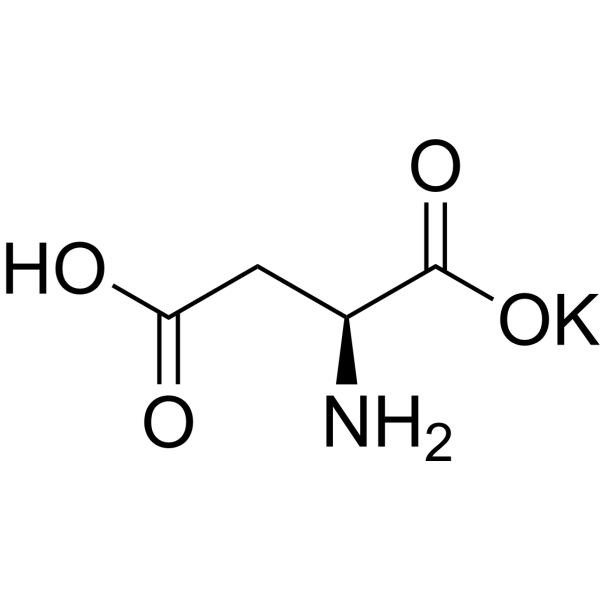
Cat. No.: HY-N0666A
CAS No.: 1115-63-5
L-Aspartic acid potassium (potassium L-aspartate) is a NMDA receptor agonist and acidic amino acid. L-Aspartic acid potassium has no independent analgesic activity. L-Aspartic acid potassium can antagonize the analgesic effects of D-Aspartic acid and Morphine. L-Aspartic acid potassium regulates polymorph transformation, crystal growth/aggregation and nucleation processes of calcium carbonate, and can serve as a biomineralization template. L-Aspartic acid potassium promotes burst firing of central neurons. L-Aspartic acid potassium can be used in studies related to cerebral ischemia and epilepsy .
loading...
    loading...
5
5 Cited Publications
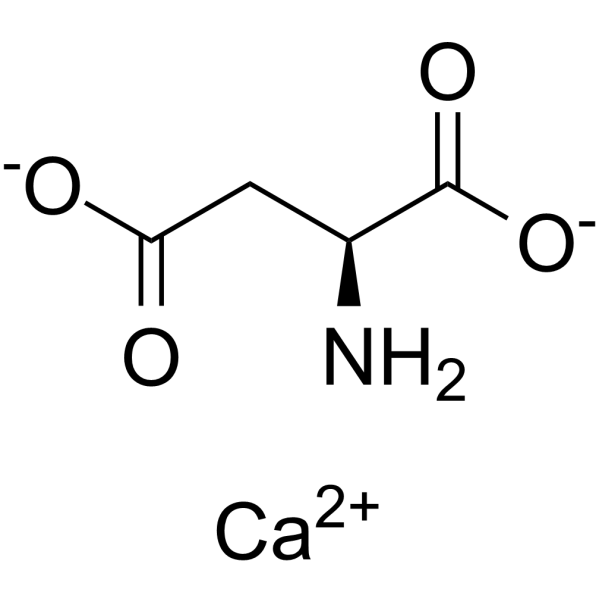
Cat. No.: HY-N0666B
CAS No.: 10389-09-0
Synonyms: Calcium L-aspartate
Aspartic acid calcium (calcium L-aspartate) is a NMDA receptor agonist and acidic amino acid. Aspartic acid calcium has no independent analgesic activity. Aspartic acid calcium can antagonize the analgesic effects of D-Aspartic acid and Morphine. Aspartic acid calcium regulates polymorph transformation, crystal growth/aggregation and nucleation processes of calcium carbonate, and can serve as a biomineralization template. Aspartic acid calcium promotes burst firing of central neurons. Aspartic acid calcium can be used in studies related to cerebral ischemia and epilepsy .
loading...
    loading...
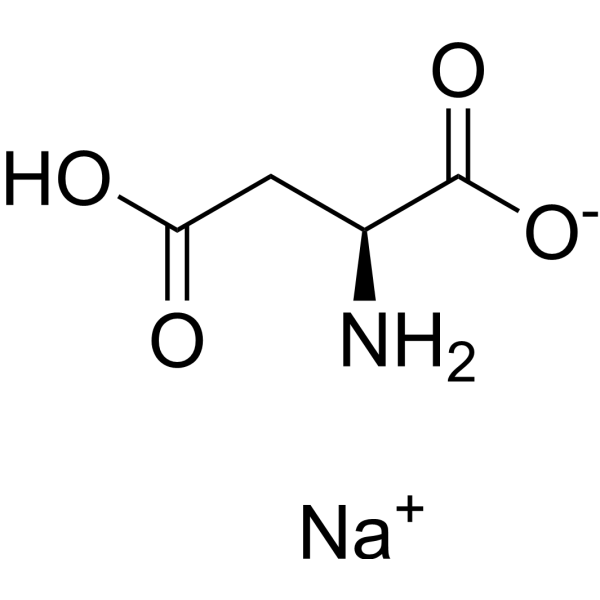
5
5 Cited Publications
Cat. No.: HY-N0666C
CAS No.: 3792-50-5
Synonyms: Sodium L-aspartate
L-Aspartic acid sodium (Sodium L-aspartate) is a NMDA receptor agonist and acidic amino acid. L-Aspartic acid sodium has no independent analgesic activity. L-Aspartic acid sodium can antagonize the analgesic effects of D-Aspartic acid and Morphine. L-Aspartic acid sodium regulates polymorph transformation, crystal growth/aggregation and nucleation processes of calcium carbonate, and can serve as a biomineralization template. L-Aspartic acid sodium promotes burst firing of central neurons. L-Aspartic acid sodium can be used in studies related to cerebral ischemia and epilepsy .
loading...
    loading...
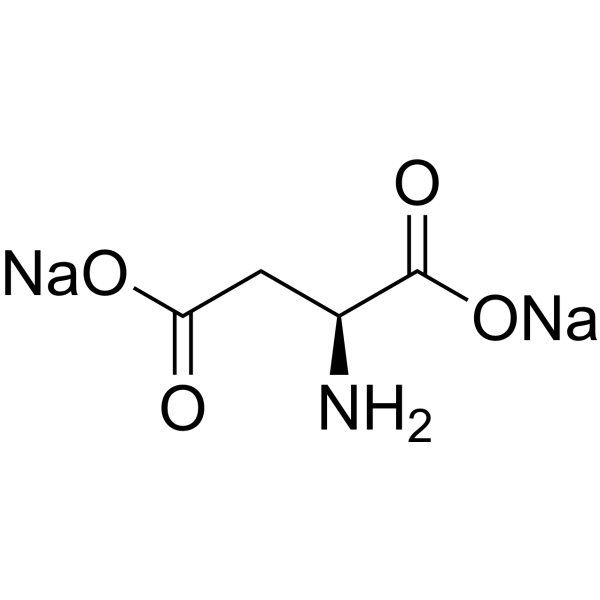
5
5 Cited Publications
Cat. No.: HY-N0666D
CAS No.: 5598-53-8
Synonyms: Disodium L-aspartate
L-Aspartic acid disodium (disodium L-aspartate) is a NMDA receptor agonist and acidic amino acid. L-Aspartic acid disodium has no independent analgesic activity. L-Aspartic acid disodium can antagonize the analgesic effects of D-Aspartic acid and Morphine. L-Aspartic acid disodium regulates polymorph transformation, crystal growth/aggregation and nucleation processes of calcium carbonate, and can serve as a biomineralization template. L-Aspartic acid disodium promotes burst firing of central neurons. L-Aspartic acid disodium can be used in studies related to cerebral ischemia and epilepsy .
loading...
    loading...
2
2 Cited Publications
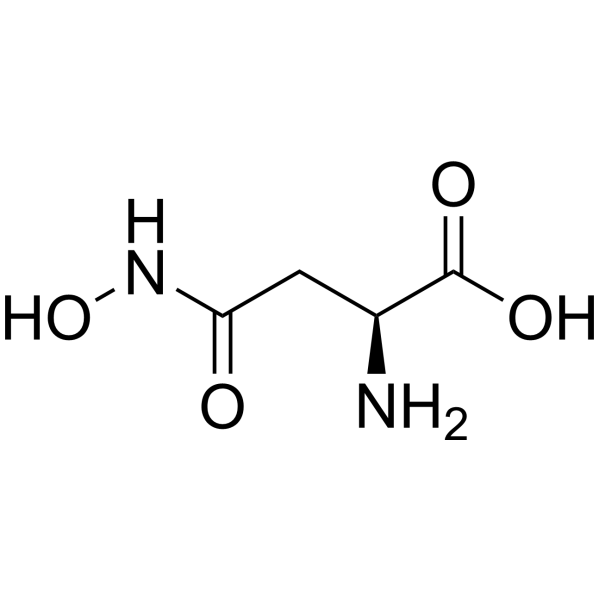
Cat. No.: HY-134450
CAS No.: 1955-68-6
Purity:  ≥98.0%
Research Areas:  

Others

L-Aspartic acid β-hydroxamate is an aspartic acid derivative .
loading...
    loading...
2
2 Cited Publications
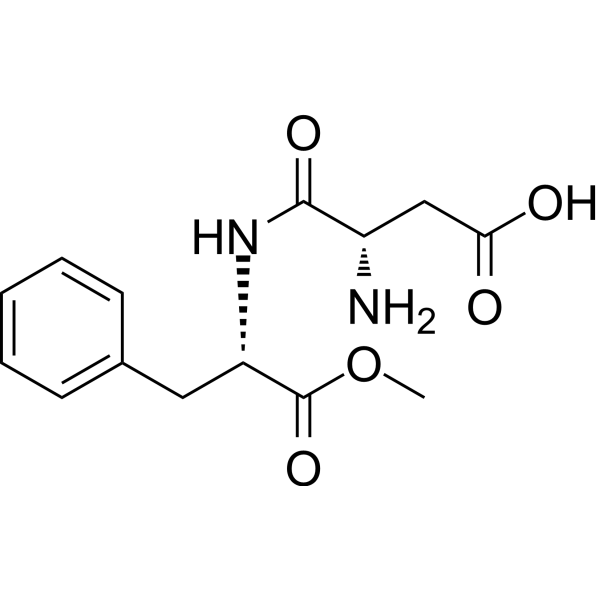
Cat. No.: HY-B0361
CAS No.: 22839-47-0
Synonyms: SC-18862
Aspartame (SC-18862) is a methyl ester of a dipeptide. Aspartame can be used as a synthetic nonnutritive sweetener .
loading...
    loading...
1
1 Cited Publications
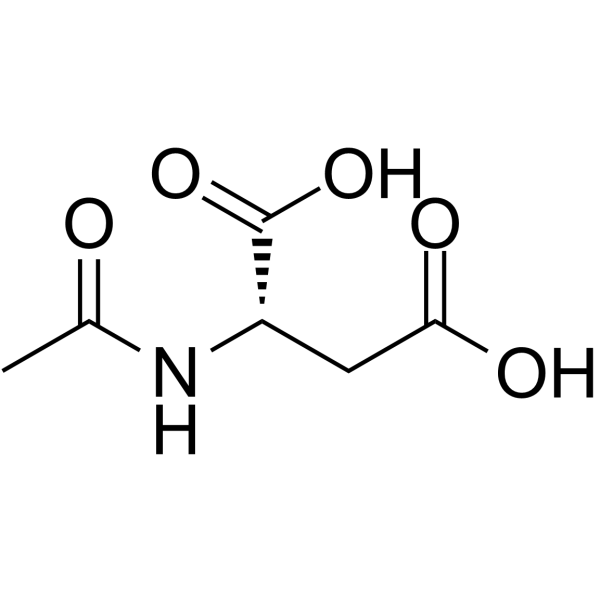
Cat. No.: HY-113524
CAS No.: 997-55-7
Purity:  99.45%
N-Acetyl-L-aspartic acid is a derivative of Aspartic acid (HY-N0666) and endogenous compound. N-Acetyl-L-aspartic acid acts as an acetyl donor. N-Acetyl-L-aspartic acid is involved in brain metabolism. N-Acetyl-L-aspartic acid is used in the research of neurodegenerative diseases (such as Canavan disease) .
loading...
    loading...
1
1 Cited Publications
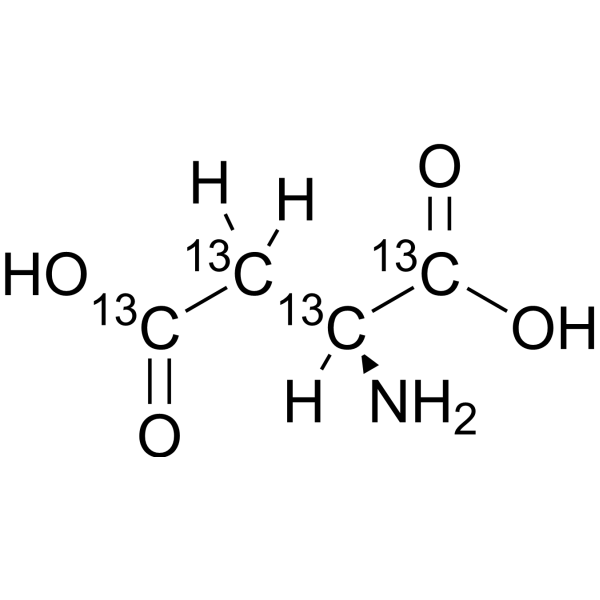
Cat. No.: HY-N0666S4
CAS No.: 55443-54-4
L-Aspartic acid- 13C4 is the 13C-labeled L-Aspartic acid (HY-N0666). L-Aspartic acid is a NMDA receptor agonist and acidic amino acid. L-Aspartic acid has no independent analgesic activity. L-Aspartic acid can antagonize the analgesic effects of D-Aspartic acid and Morphine. L-Aspartic acid regulates polymorph transformation, crystal growth/aggregation and nucleation processes of calcium carbonate, and can serve as a biomineralization template. L-Aspartic acid promotes burst firing of central neurons. L-Aspartic acid can be used in studies related to cerebral ischemia and epilepsy .
loading...
    loading...
1
1 Cited Publications
Cat. No.: HY-N0666R
CAS No.: 56-84-8
L-Aspartic acid (Standard) is the analytical standard of L-Aspartic acid (HY-N0666). This product is intended for research and analytical applications. L-Aspartic acid is a NMDA receptor agonist and acidic amino acid. L-Aspartic acid has no independent analgesic activity. L-Aspartic acid can antagonize the analgesic effects of D-Aspartic acid and Morphine. L-Aspartic acid regulates polymorph transformation, crystal growth/aggregation and nucleation processes of calcium carbonate, and can serve as a biomineralization template. L-Aspartic acid promotes burst firing of central neurons. L-Aspartic acid can be used in studies related to cerebral ischemia and epilepsy .
loading...
    loading...
1
1 Cited Publications
Cat. No.: HY-128425A
CAS No.: 13184-27-5
Purity:  ≥98.0%
Synonyms: L-Ureidosuccinic acid
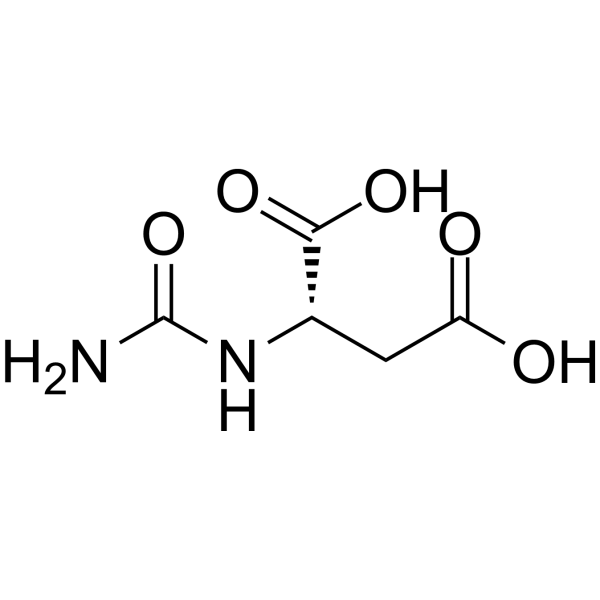
N-Carbamoyl-L-aspartic acid (L-Ureidosuccinic acid) is an important pyrimidine metabolic precursor and intermediate metabolite. N-Carbamoyl-L-aspartic acid reverses the growth inhibition of Ura + strains induced by 2-thiouracil (with growth rate increasing linearly with its concentration), but fails to support the growth of uracil-requiring Ura - strains. N-Carbamoyl-L-aspartic acid inhibits the cell growth of *Saccharomyces cerevisiae* by suppressing the purine biosynthetic pathway at a pre-step of 5-aminoimidazole nucleotide synthesis. The growth inhibitory effect of N-Carbamoyl-L-aspartic acid on yeast can be alleviated by purines, and the sensitivity of strains is closely related to the activity level of dihydroorotase .
loading...
    loading...
1
1 Cited Publications
Cat. No.: HY-P2750
CAS No.: 9025-26-7
Synonyms: CTSD
Cathepsin D (CTSD) is a lysosomal aspartic protease encoded by the CTSD gene. Cathepsin D regulates lysosomal protease activity. Loss of Cathepsin D leads to lysosomal dysfunction and the accumulation of various cellular proteins associated with neurodegenerative diseases. Cathepsin D is involved in breast cancer metastasis. Cathepsin D can be used in research on diseases such as breast cancer and stroke .
loading...
    loading...
1
1 Cited Publications
Cat. No.: HY-Y0966R
CAS No.: 56-40-6
Glycine (Standard) is the analytical standard of Glycine. This product is intended for research and analytical applications. Glycine is an inhibitory neurotransmitter in the CNS and also acts as a co-agonist along with glutamate, facilitating an excitatory potential at the glutaminergic N-methyl-D-aspartic acid (NMDA) receptors. Glycine is orally active. Glycine can be used to study cell protection, cancer, neurological diseases, and angiogenesis .
loading...
    loading...

