

37 Results for "

bifidobacterium

" in MedChemExpress (MCE) Product Catalog:
Products (37)

37 Results for "bifidobacterium" in MCE Product Catalog:

2
2 Cited Publications
Cat. No.: HY-41324
CAS No.: 911-40-0
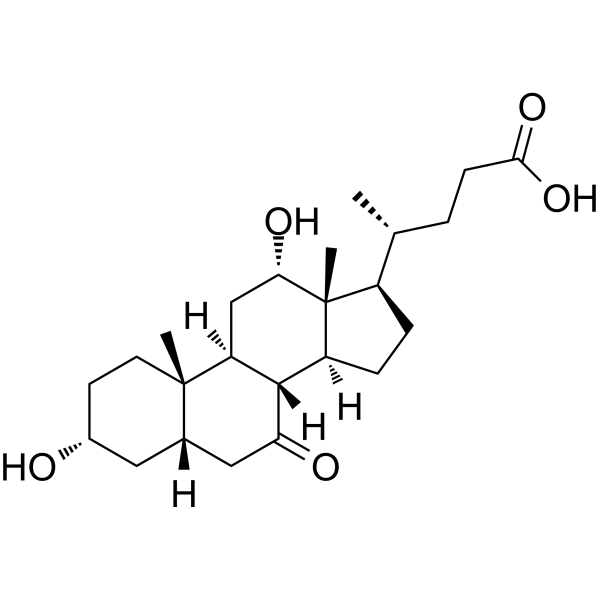
7-keto-Deoxycholic acid is a metabolite of bile acids in Clostridium absonum. 7-keto-Deoxycholic acid is also converted from Lactobacillus and Bifidobacterium with specific condition .
loading...
    loading...
1
1 Cited Publications
Cat. No.: HY-137335
CAS No.: 157574-76-0
Purity:  ≥98.0%
Target:  

Bacterial VEGFR Akt ERK

Research Areas:  

Infection Inflammation/Immunology

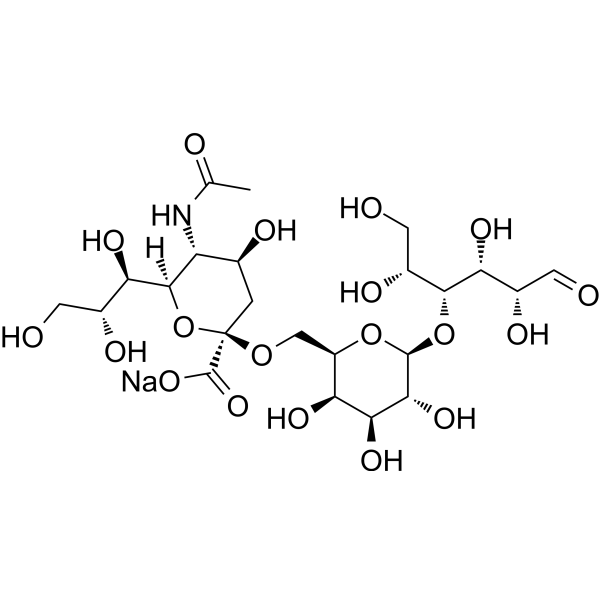
6'-Sialyllactose sodium promotes the growth of beneficial bacteria (such as Bifidobacterium and lactobacillus) and inhibits the proliferation of harmful bacteria. 6'-Sialyllactose sodium exhibits anti-inflammatory and anti-angiogenic activities. 6'-Sialyllactose sodium promotes the muscle health .
loading...
    loading...
1
1 Cited Publications
Cat. No.: HY-N10521
CAS No.: 35890-39-2
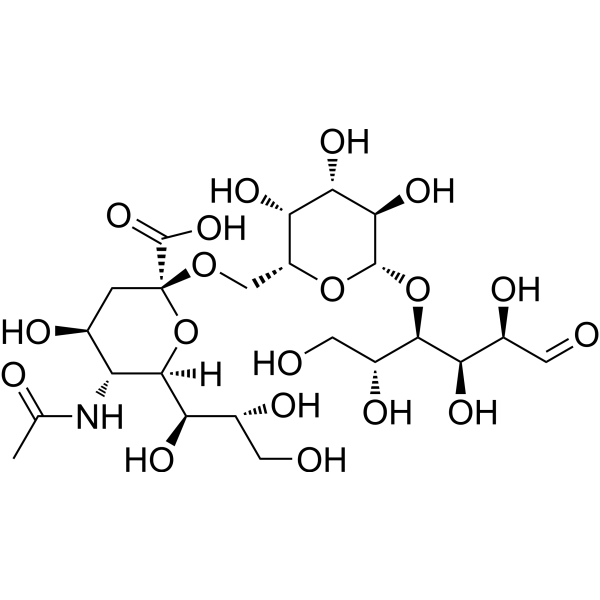
6'-Sialyllactose promotes the growth of beneficial bacteria (such as Bifidobacterium and lactobacillus) and inhibits the proliferation of harmful bacteria. 6'-Sialyllactose exhibits anti-inflammatory and anti-angiogenic activities. 6'-Sialyllactose promotes the muscle health .
loading...
    loading...
1
1 Cited Publications
Cat. No.: HY-113133
CAS No.: 2140-29-6
Purity:  99.76%
Category:  

Microorganisms

Target:  

Glycosidase

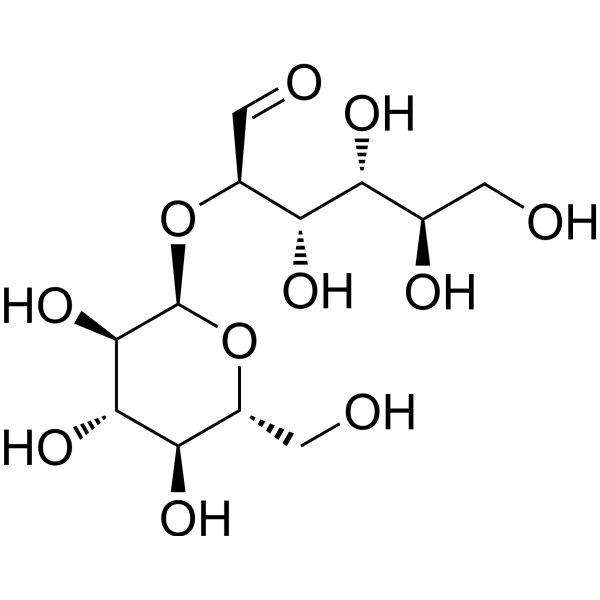
Kojibiose, an orally active prebiotic disaccharide, can specifically inhibit the activity of α-glucosidase I. kojibiose is a proliferation factor for Bifidobacterium, lactic acid bacteria, and eubacteria. kojibiose is a low-calorie sweetener capable of increasing the absorption of iron. Kojibiose exhibits antitoxic activity. Kojibiose reduces hepatic expression of inflammatory markers in vivo .
loading...
    loading...
1
1 Cited Publications
Cat. No.: HY-120536
CAS No.: 13080-21-2
Purity:  ≥98.0%
Target:  

Bacterial

Research Areas:  

Infection

HPi1 is a potent, selective and orally active antimicrobial against Helicobacter pylori with an IC50 of 0.24 μM and an MIC of 0.08-0.16 μg/mL. HPi1 is inactive against other bacteria, including the gut commensals Lactobacillus casei, Lactobacillus reuteri, and Bifidobacterium longum .
loading...
    loading...
Cat. No.: HY-N7104
CAS No.: 585-86-4
Synonyms: D-Lactitol
Target:  

Bacterial

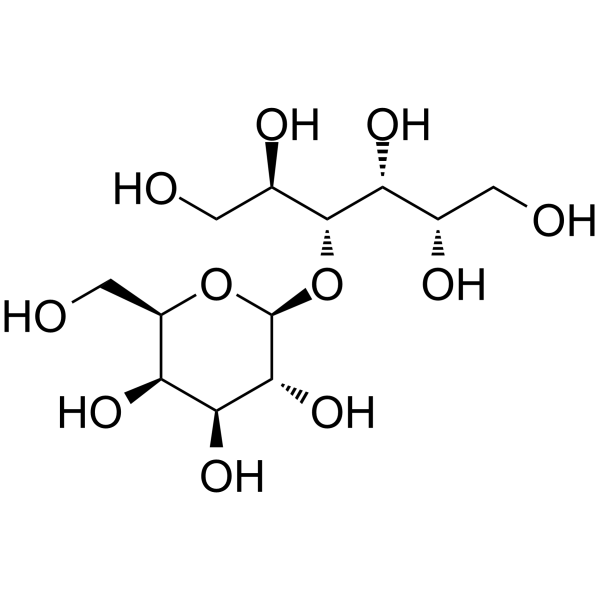
Lactitol (D-Lactitol) is a non-absorbable disaccharide and Bacterial regulator. Lactitol reduces the populations of Bacteroides, Clostridium, coliforms and Eubacterium, while increasing the populations of Lactobacillus and Streptococcus. Lactitol can be used in the research of portosystemic encephalopathy and chronic constipation .
loading...
    loading...
Cat. No.: HY-107863
CAS No.: 308066-66-2
Purity:  99.45%
Synonyms: Oligolevulose
Fructooligosaccharides (Oligolevulose) are a class of orally active dietary fibers and prebiotics. Fructooligosaccharides exist in foods such as breast milk, wheat, honey, onions, garlic and bananas. Fructooligosaccharides resist hydrolysis by the body's digestive enzymes and stimulate the growth of beneficial intestinal bacteria through colonic fermentation. Fructooligosaccharides significantly prevent bone loss in the femur and lumbar spine .
loading...
    loading...
Cat. No.: HY-P3752
CAS No.: 92327-84-9
Synonyms: H-Gly-Ala-Tyr-OH
Research Areas:  

Others

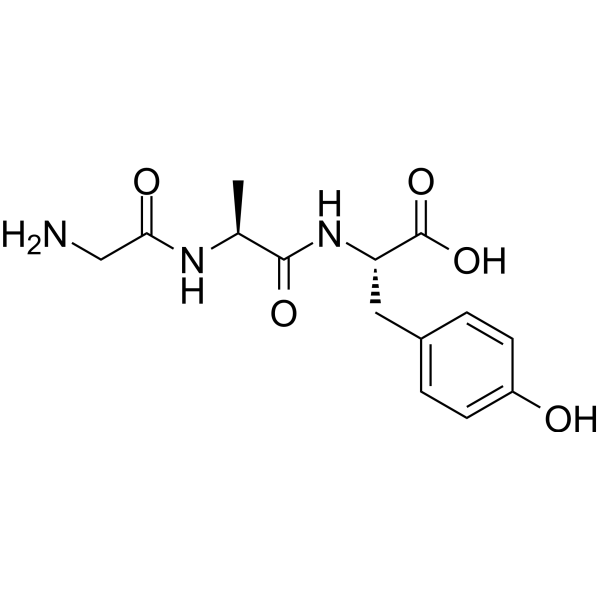
Gly-Ala-Tyr (H-Gly-Ala-Tyr-OH) is a tripeptide substrate composed of L-glycine, alanine, and L-tyrosine joined in sequence by peptide linkages. Gly-Ala-Tyr can be hydrolyzed at both extracellular and intracellular levels by Streptococcus thermophilus, Lactobacillus delbrueckii ssp. bulgaricus, Lactobacillus acidophilus, and Bifidobacterium spp. Ala-Gly-Tyr is functionally related to L-alanine, glycine and L-tyrosine. .
loading...
    loading...
Cat. No.: HY-P2869A
CAS No.: 9031-11-2
Target:  

Glycosidase

Research Areas:  

Metabolic Disease

β1-3 Galactosidase is a GH42 exoglycosidase that specifically hydrolyzes terminal β1-3-linked galactose. β1-3 Galactosidase uses Glu164 as the acid/base catalyst and Glu324 as the catalytic nucleophile to hydrolyze β1-3 galactosidic linkages. β1-3 Galactosidase can be used for research on galactoside metabolism .
loading...
    loading...
Cat. No.: HY-132177C
CAS No.: 9037-65-4
Target:  

Glycosidase

Research Areas:  

Metabolic Disease

α1-3,4 Fucosidase, Bifidobacterium bifidum is a broad specificity exoglycosidase that catalyzes the hydrolysis of terminal, non-reducing α1-3 and α1-4 linked fucose residues from oligosaccharides and glycoproteins .
loading...
    loading...
Cat. No.: HY-132177A
CAS No.: 9037-65-4
Target:  

Glycosidase

Research Areas:  

Metabolic Disease

α1-2 Fucosidase (EC 3.2.1.51) is a highly specific exoglycosidase that catalyzes the hydrolysis of linear α1-2 linked fucose residues from oligosaccharides .
loading...
    loading...
Cat. No.: HY-156261
CAS No.: 68990-09-0
Beef extract is a common ingredient in the preparation of biological culture media .
loading...
    loading...
Cat. No.: HY-N7761
CAS No.: 126979-84-8
Synonyms: Tetrahydro tanshinone I
Target:  

Bacterial

Research Areas:  

Cancer

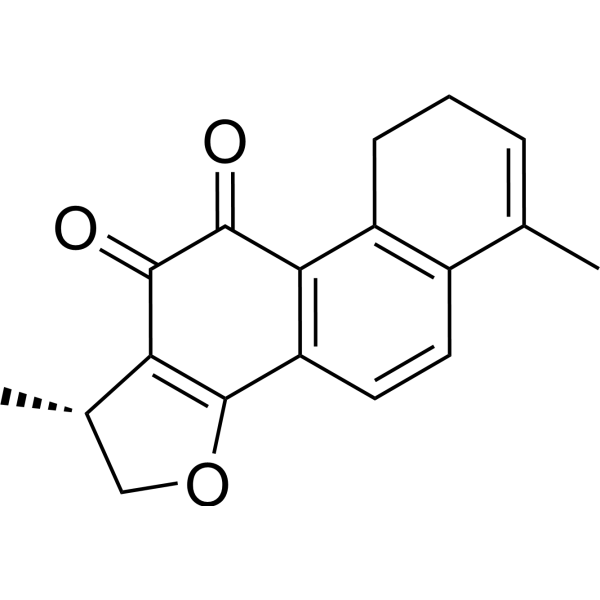
Trijuganone B (Tetrahydro tanshinone I) is a naturally occurring covalent pan-inhibitor of gut microbial bile salt hydrolases that can be isolated from Salvia trijuga. Trijuganone B inhibits total gut microbial bile salt hydrolase activity in live microorganisms and murine gut luminal content. Trijuganone B can be used for the research of bile-acid-related metabolic disorders .
loading...
    loading...
Cat. No.: HY-P2988A
CAS No.: 9001-67-6
Target:  

Glycosidase

Research Areas:  

Metabolic Disease

α2-3,6 Neuraminidase, Bifidobacterium infantis is a highly specific exoglycosidase that catalyzes the hydrolysis of non-reducing terminal α2-3 and α2-6 unbranched sialic acid residues from complex carbohydrates and glycoproteins. α2-3,6 Neuraminidase does not exhibit activity on α2-8 or branched sialic acids .
loading...
    loading...
Cat. No.: HY-W007708
CAS No.: 4412-91-3
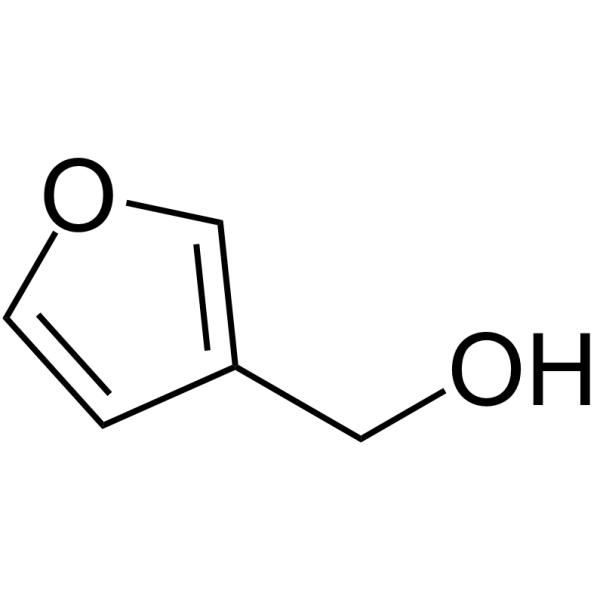
3-Furanmethanol, a volatile furan compound, can be detected in malt beverages fermented with Bifidobacterium breve. 3-Furanmethanol exhibits roasty, popcorn-like flavors .
loading...
    loading...
Cat. No.: HY-W008030
CAS No.: 2243-47-2
Target:  

Bacterial

Research Areas:  

Infection

3-Aminobiphenyl is a chemical isomer of 4-ABP. 3-Aminobiphenyl can inhibit the growth of human intestinal bacteria Bifidobacterium infantis ATCC 15697, B. bifidium ATCC 11863, Clostridium perfringens ATCC 13124, Escherichia coli ATCC 25922, E. coli ATCC 35218, Enterobacter cloacae ATCC 13047 and Salmonella typhimurium TA98, TA100, YG1041. 3-Aminobiphenyl can be used as a biomarker of exposure to aromatic amines from cigarette smoke .
loading...
    loading...
Cat. No.: HY-P2958
CAS No.: 37289-07-9
Synonyms: Bile salt hydrolase
Target:  

Acyltransferase

Research Areas:  

Inflammation/Immunology

Choloylglycine hydrolase (Bile salt hydrolase) is an important intestinal hydrolase. Choloylglycine hydrolase not only catalyzes the decomposition of conjugated bile acids into free bile acids and amino acids, but also exhibits amine N-acyltransferase activity, which re-links amino acids/amines to free bile acids (even conjugated bile acids) to produce bacterial bile acid amides. Choloylglycine hydrolase regulates the composition of the bile acid pool, intestinal mucosal barrier integrity, intestinal inflammatory responses, intestinal flora composition, host weight gain, circadian rhythm, and colonization resistance to Clostridioides difficile. Choloylglycine hydrolase can be used in the research of inflammatory bowel diseases, including ulcerative colitis and Crohn's disease .
loading...
    loading...
Cat. No.: HY-113254
CAS No.: 363-23-5
Purity:  96.7%
Research Areas:  

Endocrinology

13,14-Dihydro-15-keto-PGE2 participates in Bifidobacterium animalis F1-7 to alleviate opioid-induced constipation by 5-HT pathway .
loading...
    loading...
Cat. No.: HY-P11084
CAS No.: 256952-63-3
Target:  

MHC

Research Areas:  

Inflammation/Immunology Cancer

WT1 126-134 peptide is a Wilms' tumor oncogene protein (WT1) peptide (RMFPNAPYL). WT1 126-134 peptide is presented by HLA-A0201 and induces cytotoxic CD8 T cells capable of killing WT1+ positive tumor cells. WT1 126-134 can form stable complexes with the H-2Db (mouse) or HLA-A0201 (human) molecules. WT1 126-134 peptide/HLA-A0201 complex has an extremely high affinity (Kd = 0.2 nM) with the humanized monoclonal antibody (IgG1). WT1 126-134 peptide can be used as a vaccine for T cells or as a target for antibodies .
loading...
    loading...
Cat. No.: HY-105762
CAS No.: 314-35-2
Synonyms: Etamiphylline
Target:  

Others

Research Areas:  

Inflammation/Immunology

Etamiphyllin (Etamiphylline) is a respiratory and cardiac stimulant. Etamiphyllin camsylate relaxes bronchial and bronchiolar smooth muscle to open airways, and increases cardiac output without elevating heart rate. The level of Etamiphyllin camsylate decreases in mice with ulcerative colitis, and it is positively correlated with *Bifidobacterium* and *Faecalibacterium*. Etamiphyllin camsylate can be applied to research related to chronic obstructive pulmonary disease, respiratory failure and ulcerative colitis .
loading...
    loading...

