

11 Results for "

bismuth

" in MedChemExpress (MCE) Product Catalog:
Products (11)

11 Results for "bismuth" in MCE Product Catalog:

Cat. No.: HY-16102
CAS No.: 880149-29-1
Target:  

Antibiotic Bacterial

Research Areas:  

Infection

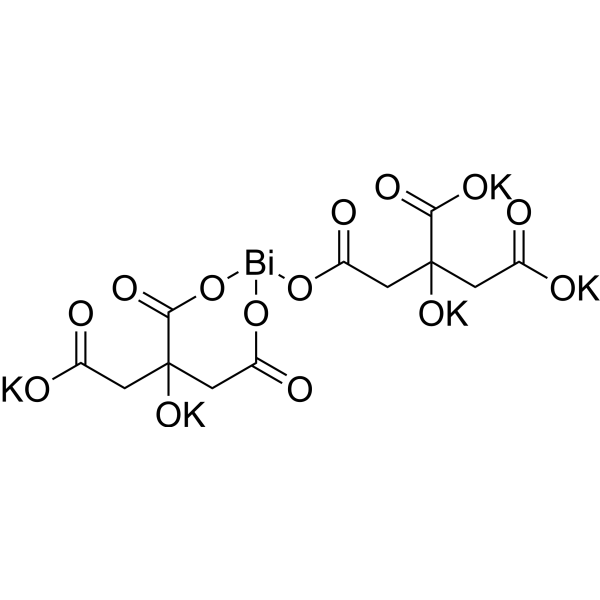
Bismuth subcitrate potassium is a compound bismuth salt with oral activity. Bismuth subcitrate potassium has antibacterial activity and can inhibit the growth of Campylobacter pyloridis with a MIC50 of 8 μg/mL. Bismuth subcitrate potassium can be used in the study of gastrointestinal diseases infected by Campylobacter pyloridis .
Cat. No.: HY-125785A
CAS No.: 3811-73-2
Purity:  ≥98.0%
Target:  

Bacterial

Research Areas:  

Infection

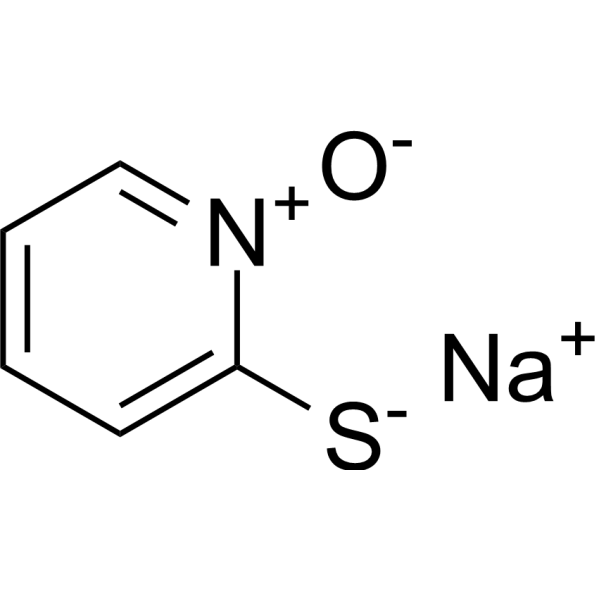
2-Mercaptopyridine N-oxide sodium has bactericidal effect and is against a standard strain of Mycobacterium tuberculosis H37Rv (ATCC 27294) with MIC90 of 7.20 μM. 2-Mercaptopyridine N-oxide sodium and its complex with iron, gallium, and bismuth have good anti-M. tuberculosis activity. 2-Mercaptopyridine N-oxide sodium has potential for the treatment of tuberculosis .
Cat. No.: HY-W032388
CAS No.: 1072-71-5
1,3,4-Thiadiazole-2,5-dithiol is a reagent for the determination of bismuth, copper and lead .
Cat. No.: HY-159051
CAS No.: 39775-75-2
Dragendorff reagent is used for detecting alkaloids and other nitrogen-containing compounds. Dragendorff reagent is a solution of potassium bismuth iodide composing of Basic bismuth nitrate (Bi(NO3)3), Tartaric acid (HY-N2436), and Potassium iodide (KI). When contact with alkaloids, Dragendorff reagent produces an orange or orange red precipitate .
Cat. No.: HY-B0693A
CAS No.: 128345-62-0
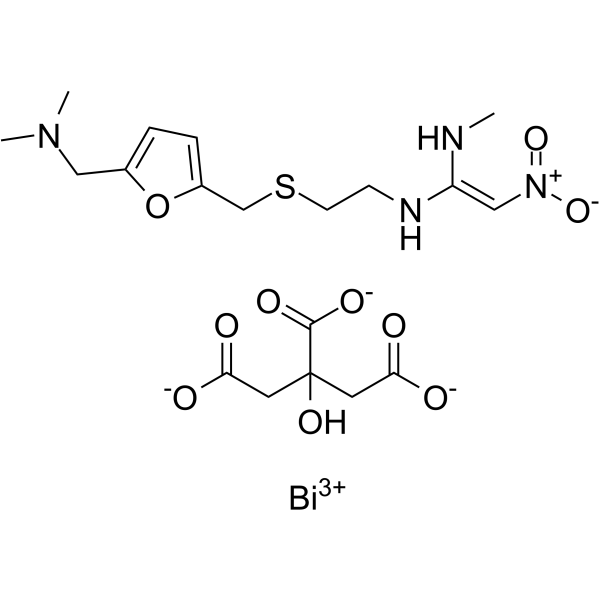
Ranitidine bismuth citrate is a potent, selective and orally active histamine H2-receptor antagonist that inhibits gastric secretion. Ranitidine bismuth citrate antagonizes Histamine (HY-B1204)-induced increases of the guinea-pig isolated rat atrium and Histamine-induced relaxations of the rat isolated uterine horn, with pA2 values of 7.2 and 6.95, respectively. Ranitidine bismuth citrate has selectivity for SARS-CoV-2-infected cells. Ranitidine bismuth citrate also has anti-Helicobacter pylori infection. Ranitidine bismuth citrate inhibits breast tumor development and spread in mice .
Cat. No.: HY-D0216
CAS No.: 94-67-7
Research Areas:  

Cancer

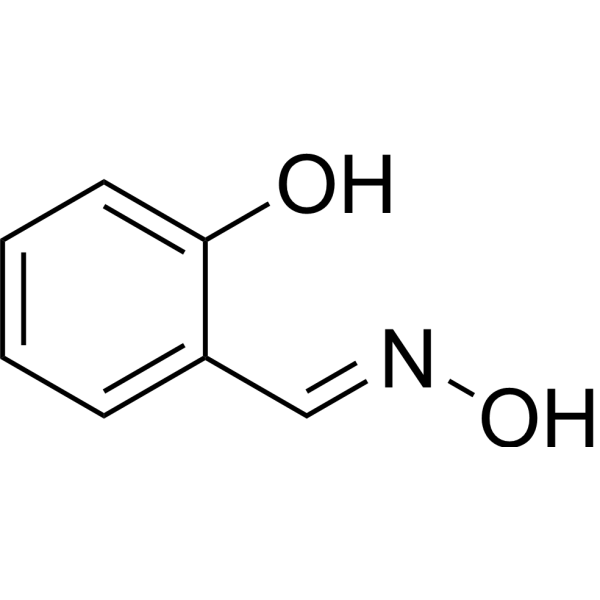
Salicylaldoxime is an organic compound, that has been used as a reagent for the gravimetric determination and separation of Cooper, Nickel, Palladium, Lead, Bismuth and Zine. The copper complex of Salicylaldoxime has anticancer activity .
Cat. No.: HY-157368
Bismuth Sulfite Agar is a selective solid medium that can be used for the isolation, determination and culture of Salmonella .
Cat. No.: HY-16102R
CAS No.: 880149-29-1
Research Areas:  

Infection

Bismuth subcitrate potassium (Standard) is the analytical standard of Bismuth subcitrate potassium (HY-16102). This product is intended for research and analytical applications. Bismuth subcitrate potassium is a compound bismuth salt with oral activity. Bismuth subcitrate potassium has antibacterial activity and can inhibit the growth of Campylobacter pyloridis with a MIC50 of 8 μg/mL. Bismuth subcitrate potassium can be used in the study of gastrointestinal diseases infected by Campylobacter pyloridis.
Cat. No.: HY-157367
Bismuth Sulfite Agar Medium can be used for selective isolation and culture of Salmonella. Bismuth Sulfite Agar Medium ingredients include tryptone, peptone, beef powder, ferrous sulfate, bismuth sulfite, disodium hydrogen phosphate, glucose, brilliant green, agar .
Cat. No.: HY-W739372
CAS No.: 25704-18-1
Poly (sodium 4-styrenesulfonate) is a cation exchange polyelectrolyte used to prepare highly mechanically stable and highly reproducible coatings. During the reduction of graphene oxide, Poly (sodium 4-styrenesulfonate) is used to synthesize polymer-coated graphite nanosheets. Furthermore, the interactions between Poly (sodium 4-styrenesulfonate) and metal ions have been studied, and it has been combined with Nafion for mixed coatings in bismuth film electrodes, showcasing its broad application potential in functional materials and electrochemical research .
Cat. No.: HY-181966
Research Areas:  

Infection

Sideromycin 7 is an antibacterial agent. Sideromycin 7 forms a 7-Bi 3+ coordination complex with bismuth citrate, exerting a three-pronged antibacterial mode of action: direct DNA binding to induce damage and arrest replication, suppression of KdpC synthesis to block KdpFABC-mediated potas-sium transport, and inhibition of ATP production. Sideromycin 7 exhibits potent antibacterial activity against Ciprofloxacin (HY-B0356)-resistant Pseudomonas aeruginosa strains. Sideromycin 7 exerts antibiofilm activity against Pseudomonas aeruginosa. Sideromycin 7 can be used for the research of ciprofloxacin-resistant Pseudomonas aeruginosa infection .
  • 1

