1. Search Result
Search Result
Results for "

blue solution

" in MedChemExpress (MCE) Product Catalog:

33

Inhibitors & Agonists

23

Fluorescent Dye

7

Biochemical Assay Reagents

5

MCE Kits

2

Natural
Products

Cat. No. Product Name Target Research Areas Chemical Structure
  • HY-D0915
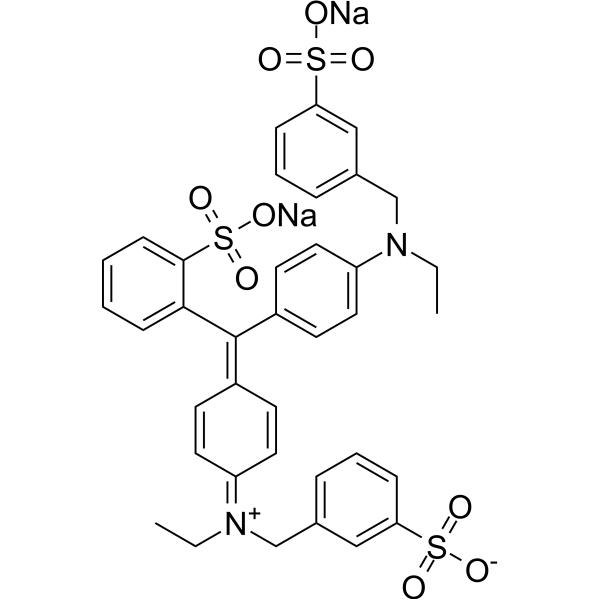
    Brilliant Blue FCF
    5 Publications Verification

    Acid blue 9; FD&C blue No. 1; E133

    Environmental Pollutants Fluorescent Dye Others
    Brilliant Blue FCF is an aromatic hydrocarbon, a synthetic dye produced from petroleum and used as a colorant for food and other substances. The solution has a maximum absorption at 628 nm.
    Brilliant Blue FCF
  • HY-15558
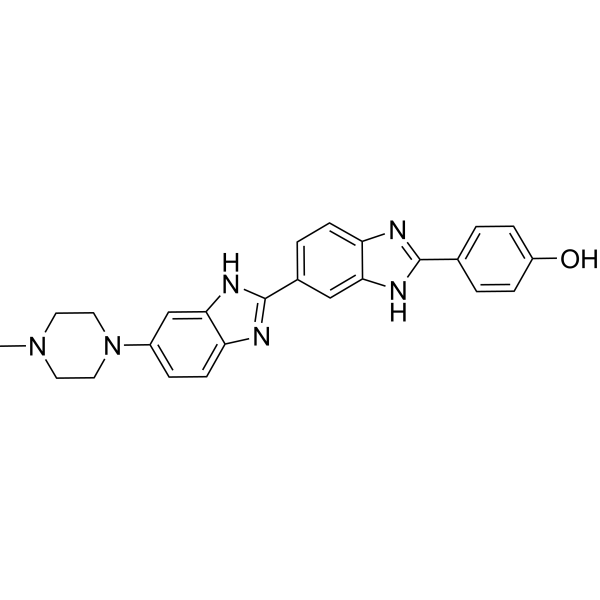
    Hoechst 33258
    Maximum Cited Publications
    22 Publications Verification

    bisBenzimide H 33258; H 33258

    Fluorescent Dye DNA Stain DNA Alkylator/Crosslinker Others
    Hoechst 33258 is a blue to blue-green fluorescent live cell dye that can label DNA. Hoechst 33258 can specifically bind to the minor groove of DNA (and tends to bind to A/T-rich DNA), resulting in a significant increase in fluorescence intensity. Hoechst 33258 can cross the cell membrane and cause changes in DNA structure, such as G2/M phase arrest. Hoechst 33258 can bind to live or fixed cells, and the fluorescence intensity increases with increasing solution pH. As a DNA-specific probe, Hoechst 33258 can be used to detect DNA content, analyze cell cycle, etc. The excitation wavelength of Hoechst 33258 is 350-365 nm, and the emission wavelength is 460-490 nm .
    Hoechst 33258
  • HY-D0003

    Environmental Pollutants Bacterial Infection
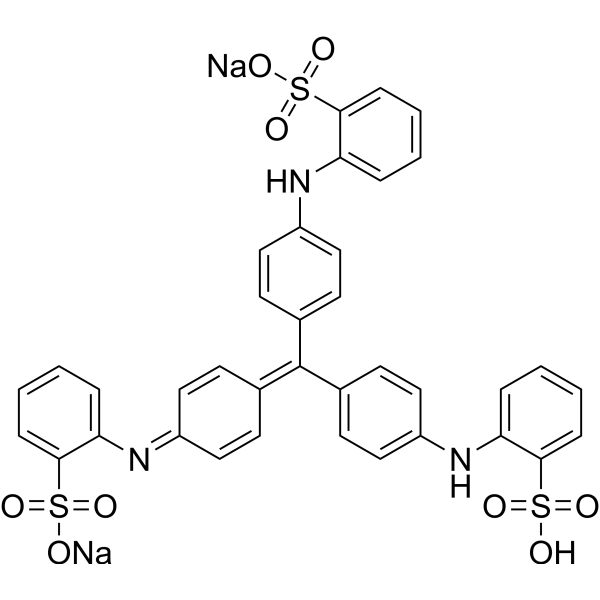
    Methyl blue belongs to the group of triaminotriphenylmethane dyes. Methyl blue is widely used as antiseptic dye in polychrome staining method and has applications in histological and microbiological staining solutions. Methyl blue has been used as a model to study the effect of various catalysts on photodegradation of dyes .
    Methyl Blue
  • HY-W110798
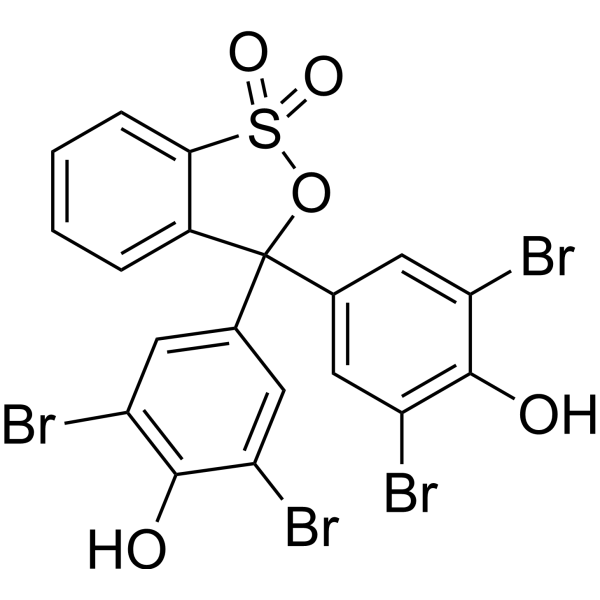
    Bromophenol blue indicator (3.0-4.6)
    1 Publications Verification

    Environmental Pollutants Biochemical Assay Reagents Others
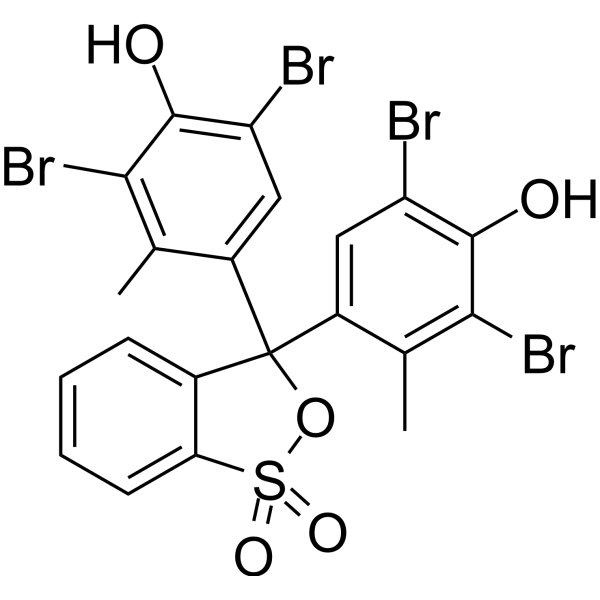
    Bromophenol blue indicator (3.0-4.6) is a synthetic dye commonly used as an acid-base indicator with a transition range of pH 3.0-4.6. Bromophenol blue indicator (3.0-4.6) is water soluble and changes color from yellow to blue as the pH of the solution changes from acidic to basic. Its unique chemical properties make it an important ingredient in a variety of scientific applications, especially in biochemistry and molecular biology. In addition, it can be used as a stain in microbiology and histology. However, Bromophenol blue indicator (3.0-4.6) has potential irritating and staining properties.
    Bromophenol blue indicator (3.0-4.6)
  • HY-DY2002

    Fluorescent Dye Glycosidase Others
    X-GAL (BCIG) (solution) is a widely used chromogenic β-galactosidase substrate. X-GAL is a colorless compound until cleaved by β-galactosidase, at which point X-GAL turns to an insoluble and detectable blue compound, making X-GAL particularly useful in techniques such as blue-white screening for cloning in bacteria. X-GAL can also be used for detection of β-galactosidase activity .
    Solvent and Concentration: DMF: 20 mg/mL
    X-GAL (solution)
  • HY-W040144

    Fluorescent Dye Others
    Bromocresol green is a pH-sensitive triphenylmethane dye commonly used for the determination of protein and albumin in serum. Bromocresol green is a bio-based dye with a yellow-green to blue-green color. Bromocresol green turns yellow (λmax=435 nm, protonated form) when placed in acidic solution (e.g. pH=4.15), and turns blue in basic solution (λmax=615 nm, deprotonated form). Bromocresol green is widely used as a pH indicator in the field of biochemical analysis. In addition, Bromocresol green is also used to detect the concentration of molecules such as creatinine, and to judge the viability of cells .
    Bromocresol green
  • HY-103609
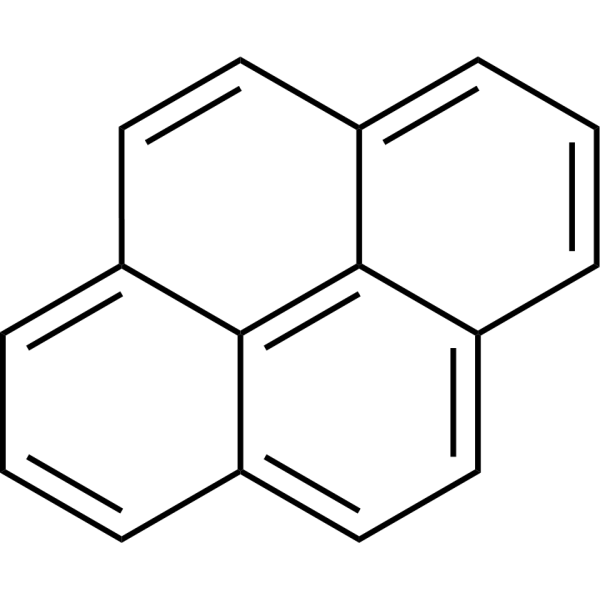
    Pyrene
    1 Publications Verification

    Benzo[def]phenanthrene

    Environmental Pollutants Biochemical Assay Reagents Others
    Pyrene is a polycyclic aromatic hydrocarbon (PAH) composed of four fused benzene rings. It has a distinct aromatic odor, produced by incomplete combustion of organic matter. Pyrene exhibits strong fluorescence, emitting in the blue region of the spectrum, making it useful as a probe for studying molecular interactions in solution and on surfaces. Pyrene is also used as a model compound for the study of PAHs in various environments and biological systems because of its ubiquity in these environments. However, long-term exposure to pyrene has been associated with potential health risks, including carcinogenicity and mutagenicity.
    Pyrene
  • HY-D0007

    Tetrazolium blue

    Biochemical Assay Reagents Others
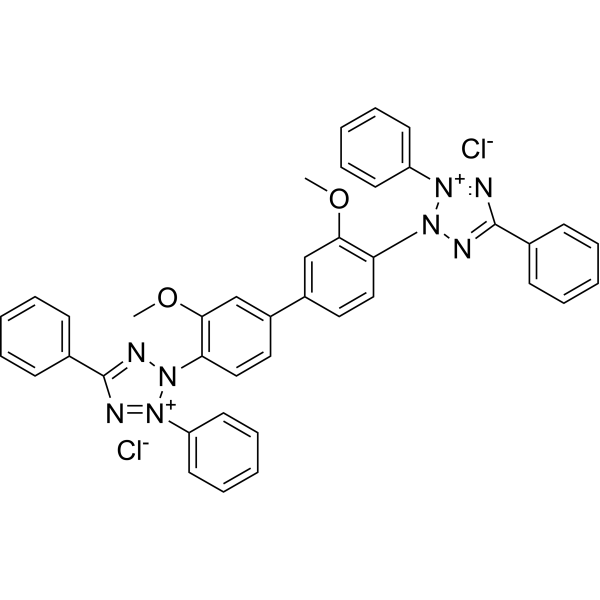
    Blue Tetrazolium is a tetrazolium salt chromogenic dye that can be reduced to a dark blue formazan product. Blue Tetrazolium is applicable for assays such as succinate dehydrogenase activity detection and reducing sugar quantification. Blue Tetrazolium also serves as a novel corrosion inhibitor for cold-rolled steel in hydrochloric acid solutions. Blue Tetrazolium has a broad wavelength range (480-600 nm), with the maximum absorbance observed at 540 nm .
    Blue Tetrazolium
  • HY-D0219

    Thymolsulphonephthalein

    Fluorescent Dye Others
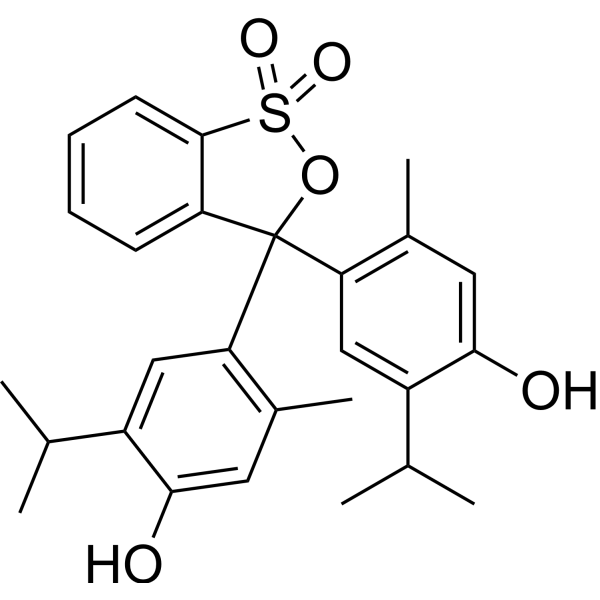
    Thymol blue is a reversible pH indicator that responds to the pH of the solution through structural changes of protonation and deprotonation. Thymol blue is red (HI - form) under acidic conditions and blue (I 2- form) under alkaline conditions. Quantitative detection is achieved through the absorption peak shift (435 nm/596 nm) of the UV-visible spectrum. Thymol blue selectively responds to pH changes, changing from red to yellow at pH 1.2-2.8 and from yellow to blue at pH 8.0-9.6. Thymol blue can be fixed in a silica gel matrix through sol-gel technology to form a solid-state sensor for in-situ pH measurement in the marine environment and acid-base monitoring in the biomedical field[1][2].
    Thymol blue
  • HY-W110910

    Biochemical Assay Reagents Infection
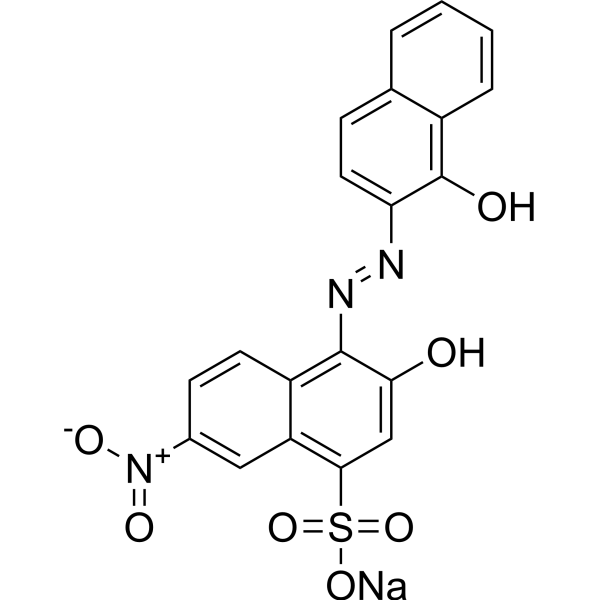
    Eriochrome black T, Indicator is a complexing agent for metal ions (e.g., Ca 2+, Mg 2+) and is used as an indicator in complexometric titrations. Eriochrome black T, Indicator forms colored complexes with metal ions through covalent coordination bonds, and indicates the endpoint of the titration by color change. Eriochrome black T, Indicator can be used as an anionic azo dye in photocatalytic degradation studies to evaluate the performance of photocatalysts. The reaction solution of Eriochrome black T, Indicator combined with Mg 2+ is initially purple. During loop-mediated isothermal amplification (LAMP), the color changes from purple to sky blue due to the consumption of Mg 2+ by the formation of magnesium pyrophosphate, indicating a positive reaction. The optimal concentration of Eriochrome black T, Indicator in LAMP is 60 μM, and the detection limit for Mycobacterium tuberculosis is 1 pg DNA/reaction .
    Eriochrome black T, Indicator
  • HY-DY1074

    Fluorescent Dye Others
    ER-Tracker dye is a derivative of BODIPY series dyes coupled with Glibenclamide (HY-15206) , highly selective binding to the endoplasmic reticulum, non-toxic to cells at low concentrations, this type of dye is an environmentally sensitive probe, and formaldehyde treatment can still retain part of the fluorescence, with high fluorescence life, good extinction coefficient and other characteristics. Glibenclamide is an atp-dependent K + channel blocker (Kir6, KATP) and CFTR Cl-channel blocker that binds in the endoplasmic reticulum. ER-Tracker is not suitable for staining fixed cells. Staining followed by fixation is possible, but cells fixed with aldehydes will only retain partial fluorescence .
    Solvent and concentration: DMSO: 1 mM
    ER-Tracker Blue-White DPX (solution)
  • HY-D0800

    Biochemical Assay Reagents Others
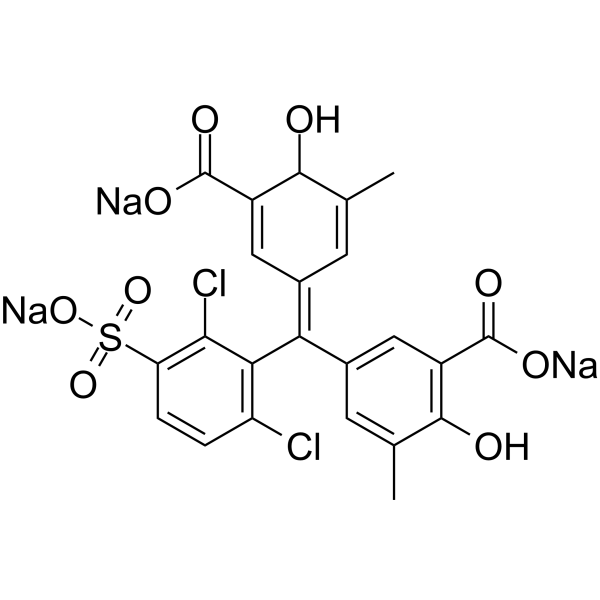
    Chromeazurol S is a compound belonging to the class of azo dyes. It is often used as an indicator in analytical chemistry to detect metal ions such as copper, nickel, and cobalt. Chromeazurol S turns from yellow to blue in the presence of metal ions, allowing them to be detected and quantified. It can be applied to a test strip or added directly to a solution for analysis.
    Mordant Blue 29
  • HY-D1196

    Fluorescent Dye
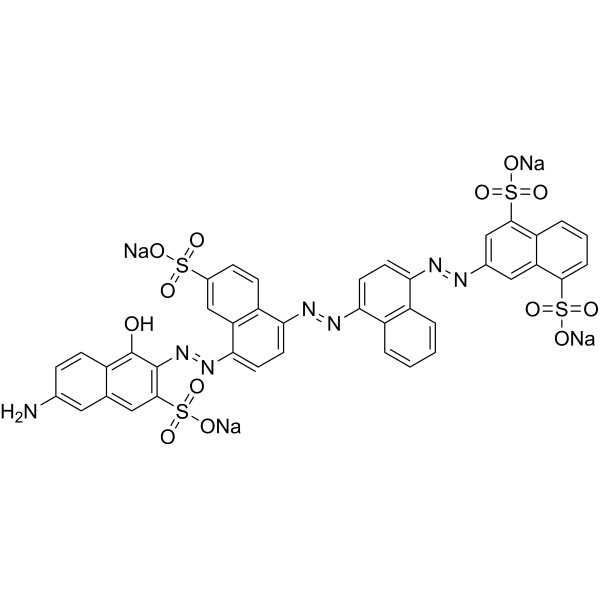
    Direct Blue 71 is a good dyeing agent for cotton fabrics and can be adsorbed by palm ash and removed from the aqueous solution.
    Direct Blue 71
  • HY-W151206

    Fluorescent Dye Others
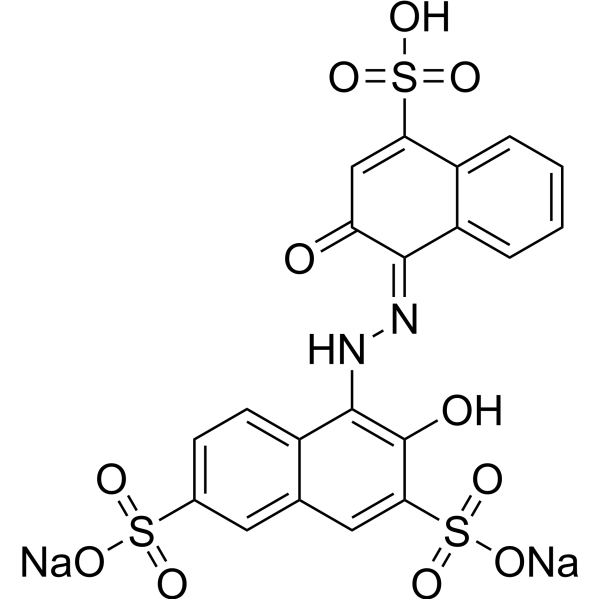
    Hydroxy naphthol blue disodium is an azo dye compound commonly used as an acid-base indicator (λmax = 650 nm). Within the pH range of 12 to 13, the indicator solution of Hydroxy naphthol blue disodium appears pale red in the presence of calcium ions and dark blue in the presence of disodium EDTA .
    Hydroxy naphthol blue disodium
  • HY-DY1041

    Fluorescent Dye Others
    CellTracker Blue CMAC (solution) is a non-fluorescent cell membrane permeable dye. The chloromethyl groups of CellTracker Blue CMAC are enzymatically cleaved by intracellular glutathione (GSH) to generate a fluorescent product (blue fluorescence, Ex/Em: 360/460 nm). CellTracker Blue CMAC is suitable for long-term cell tracking (up to 72 hours) and cell proliferation studies, and can also quantify GSH levels .
    Solvent and concentration: DMSO: 10 mM
    CellTracker Blue CMAC (solution)
  • HY-DY1051

    Bacterial Fluorescent Dye Infection
    Resazurin sodium (Diazoresorcinol sodium) (solution) is a non-toxic, stable, membrane-permeable blue non-fluorescent dye (faintly fluorescent). Resazurin sodium is used as a redox indicator, can be reduced to pink, highly fluorescent Resorufin (Ex=530-560 nm, Em=590 nm) in living cells. Resazurin sodium can be used for the detection of cell viability, toxicity, proliferation, migration and invasion in cells (human, plant and animal, bacterial and fungal) .
    Solvent and Concentration: Sterile water: 10 mM
    Resazurin sodium (solution)
  • HY-D0812

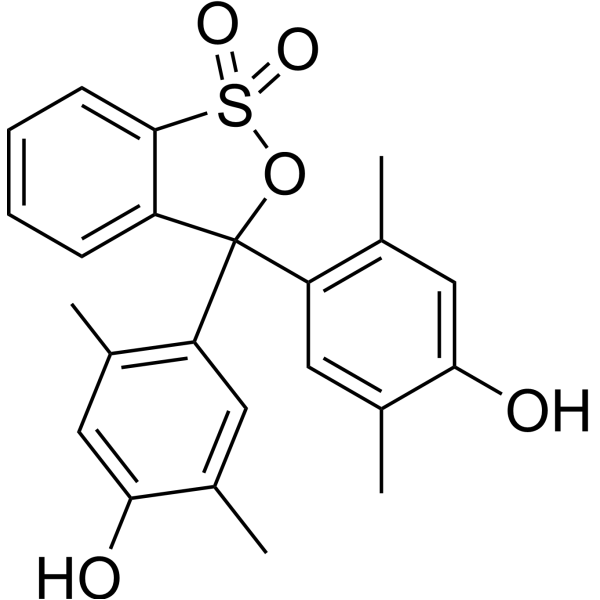
    Fluorescent Dye Biochemical Assay Reagents Others
    Xylenol Blue is a sulfonephthalein dye. It exhibits observable color changes in response to variations in pH. Xylenol Blue undergoes two distinct color transitions across two specific pH ranges: an acidic range and an alkaline range. In a neutral solution, Xylenol Blue appears yellow (at pH 8); in a strongly acidic medium, its color shifts to red (at pH 2.8); and in an alkaline medium, the yellow hue transitions to blue (at pH 9.6) .
    Xylenol blue
  • HY-DY1015

    Fluorescent Dye Others
    Dihydroethidium (solution) , also known as DHE, is a peroxide indicator. Dihydroethidium penetrates cell membranes to form a fluorescent protein complex with blue fluoresces. After entering the cells, Dihydroethidium is mainly localized in the cell membrane, cytoplasm and nucleus, and the staining effect is the strongest in the nucleus. Dihydroethidium produces inherent blue fluorescence with a maximum excitation wavelength of 370 nm and a maximum emission wavelength of 420 nm; after dehydrogenation, Dihydroethidium combines with RNA or DNA to produce red fluorescence with a maximum excitation wavelength of 300 nm and a maximum emission wavelength of 610 nm. 535 nm can also be used as the excitation wavelength for actual observation .
    Solvent and concentration: DMSO: 5 mM
    Dihydroethidium (solution)
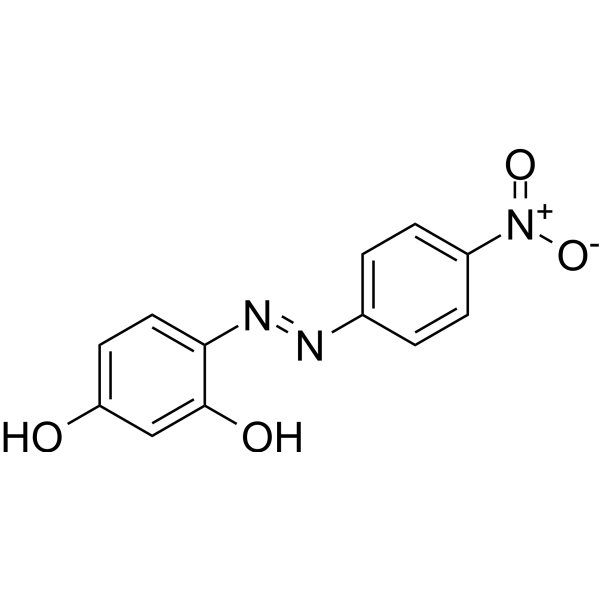
  • HY-D0228

    Azo Violet; Magneson I

    Fluorescent Dye Others
    4-(4-Nitrophenylazo)resorcinol (Azo Violet) is an azo purple dye used experimentally as a pH indicator, showing yellow when the pH value is lower than 11 and purple when the pH value is higher than 13. In slightly alkaline or alkaline environments, it also turns dark blue in the presence of magnesium salts. Azo Violet can also be used to test for the presence of ammonium ions. The color of the ammonium chloride or ammonium hydroxide solution will change depending on the concentration of azo violet used .
    4-(4-Nitrophenylazo)resorcinol
  • HY-D1190

    RAR/RXR Others
    DC271 is a RAR agonist and synthetic retinoid that binds to the retinoid-binding site of cellular retinoic acid-binding protein II (CRBP-II). DC271 exhibits solvatochromic fluorescence properties: it produces intense blue-shifted emission in nonpolar environments and weak red-shifted emission in polar environments, and its severe fluorescence quenching in aqueous solutions can be reversed by embedding in the hydrophobic retinoid-binding protein pocket. DC271 enables direct detection of the binding between unlabeled compounds and related retinoid-binding proteins via fluorescence competition assays (Ex/Em = 355 nm/460 nm) .
    DC271
  • HY-D0485

    Fluorescent Dye Others
    Fluorescent brightener 24 is a stilbene-type fluorescent brightener and fading regulator .
    Fluorescent brightener 24
  • HY-D0492

    Fluorescent Dye
    C.I. Basic blue 41 is an alkaline dye that can be removed from aqueous solutions in intermittent adsorption systems using tree ferns as biosorbents.
    C.I. Basic blue 41
  • HY-W250143

    Biochemical Assay Reagents Others
    Toluidine blue (ZnCl2) is a basic thiazine dye commonly used as a biological stain for microscopy. It has a deep bluish-purple color and is commonly used to stain nucleic acids such as DNA and RNA, as well as to stain mast cells, cartilage, and other connective tissues. Toluidine blue (ZnCl2) stains the acidic components of these tissues, such as sulfated or carboxylated mucopolysaccharides. It is frequently used in histology, cytology, and pathology applications to aid in the diagnosis of various diseases and conditions. The dye is usually applied to tissue sections prior to microscopic examination and can be differentiated using an acidic alcohol solution. Toluidine blue (ZnCl2) is a relatively simple and inexpensive stain with good reproducibility, making it a popular choice for many laboratories.
    Toluidine blue (ZnCl2)
  • HY-W250148

    Spirit nigrosine

    Biochemical Assay Reagents Others
    Solvent black 5 (Spirit nigrosine) is a synthetic dye belonging to the family of azo dyes. Also known as oil black or naphthol black, it is dark blue-black and has excellent solubility in organic solvents. Solvent black 5 is commonly used as a colorant in various industrial applications such as printing inks, coatings and plastics. It can also be used as an indicator dye to detect the presence of metals in solution. Furthermore, due to its high absorption and emission properties in the near-infrared region, it has been used in scientific research as a fluorescent biomarker for tissues and cells. However, Solvent black 5 has been reported to have potentially toxic effects on human health and the environment and its use is therefore regulated in some countries.
    Solvent black 5
  • HY-D0276

    Metacresol purple sodium

    Biochemical Assay Reagents Others
    m-Cresol purple sodium (Metacresol purple sodium) is a pH indicator. m-Cresol purple sodium solution from yellow to blue in the pH range from 7.5 to 9.0 .
    m-Cresol purple sodium
  • HY-DY1055

    Fluorescent Dye Others
    TSQ (solution) is a cytosolic zinc ion fluorescence probe that is membrane permeable and can be used for intracellular imaging of zinc proteins (λmax ~470 nm). TSQ can combine with Zn 2+ in the presence of Ca 2+ and Mg 2+ to produce blue fluorescence (Ex/Em = 334/495 nm) .
    Solvent and concentration: DMSO: 10 mM
    TSQ (solution)
  • HY-N8224

    Others Others
    5-O-Cinnamoylquinic acid is a co-pigment. 5-O-Cinnamoylquinic acid could form the stable blue solution .
    5-O-Cinnamoylquinic acid
  • HY-W111168

    Biochemical Assay Reagents Others
    Acid chrome blue K is a metal indicator. The solution color of the LAMP (Loop-mediated isothermal amplification) reaction with ACBK (Acid chrome blue K) changes from red to blue based on a decrease in the Mg 2+ concentration in the reaction solution .
    Acid chrome blue K
  • HY-DY1086

    MTT (solution); Thiazolyl blue Tetrazolium bromide (solution); Methylthiazolyldiphenyl-tetrazolium bromide (solution)

    Fluorescent Dye Others
    Thiazolyl Blue (solution) (MTT (solution)) is a cell-permeable and positively charged tetrazolium dye that is used to detect reductive metabolism in cells. Thiazolyl Blue is taken up by cells through the plasma membrane and then reduced to formazan by intracellular NAD (P) H-oxidoreductases. Thiazolyl Blue is frequently used in colorimetric assays to measure cell proliferation, cytotoxicity, and apoptosis .
    Solvent and concentration: PBS: 5 mg/mL
    Thiazolyl Blue (solution)
  • HY-103609R

    Benzo[def]phenanthrene (Standard)

    Biochemical Assay Reagents Reference Standards Others
    Pyrene (Standard) is the analytical standard of Pyrene. This product is intended for research and analytical applications. Pyrene is a polycyclic aromatic hydrocarbon (PAH) composed of four fused benzene rings. It has a distinct aromatic odor, produced by incomplete combustion of organic matter. Pyrene exhibits strong fluorescence, emitting in the blue region of the spectrum, making it useful as a probe for studying molecular interactions in solution and on surfaces. Pyrene is also used as a model compound for the study of PAHs in various environments and biological systems because of its ubiquity in these environments. However, long-term exposure to pyrene has been associated with potential health risks, including carcinogenicity and mutagenicity.
    Pyrene (Standard)
  • HY-N8224A

    Others Others
    (E)-5-O-Cinnamoylquinic acid is the isomer of 5-O-Cinnamoylquinic acid. 5-O-Cinnamoylquinic acid is a co-pigment. 5-O-Cinnamoylquinic acid could form the stable blue solution to clarify the mechanism of blue sepal-color development of hydrangea .
    (E)-5-O-Cinnamoylquinic acid
  • HY-W075708

    Cu(II) Meso-Tetra(4-carboxyphenyl)porphyrin

    MOFs Others
    Cu (II) MTCPP (Cu (II) Meso-Tetra (4-carboxyphenyl) porphyrin) is a copper coordination complex. Cu (II) MTCPP-sensitized TiO2 nanotubes are a type of visible-light photocatalyst. Cu (II) MTCPP-sensitized TiO2 nanotubes can expand the wavelength response range, transfer excited electrons more efficiently, and separate photogenerated electron-hole pairs .
    Cu(II) MTCPP
  • HY-DY1097

    Fluorescent Dye Others
    Thiazole Orange (solution) is an asymmetric anthocyanin dye that can be coupled with oligonucleotides (ONs) to prepare fluorescent hybridization probes. Thiazole Orange has been widely used in biomolecular detection and staining of DNA/ RNA in gels and can be used for reticulocyte analysis. Thiazole orange generates a significant fluorescence enhancement and high quantum yield when it binds with nucleic acids, especially RNA. Thiazole orange can permeate living cell membranes. Thiazole orange can use UV light for detection, but can also be detected with blue light. The excitation and emission of Thiazole orange are λex = 510 nm (488 nm and 470 nm also show strong excitation) and λem = 527 nm, respectively .
    Solvent and concentration: DMSO: 10 mM
    The 1 mL volume is defined as the base specification. All larger sizes correspond to incremental volumes of this base.
    Thiazole Orange (solution)

Inquiry Online

Your information is safe with us. * Required Fields.

Salutation


Country or Region *

Applicant Name *


Organization Name *

Department *


Email Address *


Product Name *

Cat. No.


Requested quantity *

Phone Number *


Remarks

Inquiry Online

Inquiry Information

Product Name:
Cat. No.:
Quantity:
MCE Japan Authorized Agent:

