1. Search Result
Search Result
Results for "

brain slices

" in MedChemExpress (MCE) Product Catalog:

18

Inhibitors & Agonists

1

Fluorescent Dye

2

Peptides

Cat. No. Product Name Target Research Areas Chemical Structure
  • HY-D2709

    Fluorescent Dye Others
    Cy3 Dextran (MW 20000) is a fluorescent labeling reagent that combines Cy3 (HY-D0822) fluorescent dye and Dextran (HY-112624). The Cy3 fluorophore is commonly used in applications such as immunolabeling, nucleic acid labeling, fluorescence microscopy, and flow cytometry. Dextran has an inhibitory effect on thrombocyte aggregation and coagulation factors and is used as a plasma volume expander (Ex/Em = 550/570 nm) .
    Cy3 Dextran (MW 20000)
  • HY-P2259
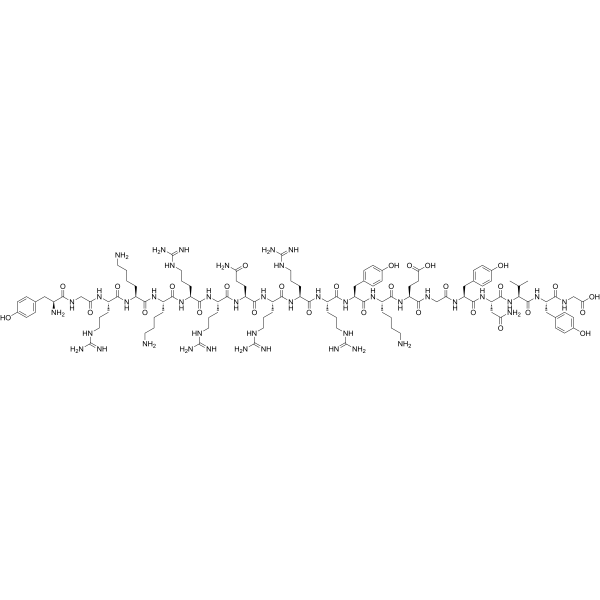
    TAT-GluA2 3Y
    2 Publications Verification

    iGluR HIV Integrase Adenosine Receptor Cardiovascular Disease Neurological Disease
    TAT-GluA2 3Y is a blood-brain barrier-permeable AMPA receptor inhibitory peptide that crosses cell membranes via the HIV-1 TAT protein domain. TAT-GluA2 3Y blocks the endocytosis of AMPA receptors, including the internalization of GluA1/GluA2 subunits, by disrupting interactions with the AP2, Brag2 and Syt3-GluA2 complexes, while also inhibiting long-term depression. TAT-GluA2 3Y blocks hypoxia-mediated AMPAR internalization, alleviates A1R-induced persistent synaptic inhibition, and reduces cerebral ischemic volume, neurological deficits and spatial memory deficits. TAT-GluA2 3Y blocks the effect of NLRP3 deficiency on fear generalization, inhibits amphetamine-induced behavioral/neurochemical sensitization, weakens the unconditioned stimulus-conditioned stimulus association of morphine, and promotes the extinction of morphine CPP. TAT-GluA2 3Y can be used in studies related to fear generalization, ischemic stroke, hypoxia, drug addiction and opioid addiction .
    TAT-GluA2 3Y
  • HY-163455

    HCN Channel Neurological Disease
    pan-HCN-IN-1 (Compound J&J12e) is an inhibitor for hyperpolarization-activated and cyclic-nucleotide-gated 1 (HCN1) ion channel, with IC50 of 58 nM. pan-HCN-IN-1 reduces the voltage sag response and enhances EPSP summation in ex vivo rats brain slices .
    pan-HCN-IN-1
  • HY-117764

    mGluR Neurological Disease
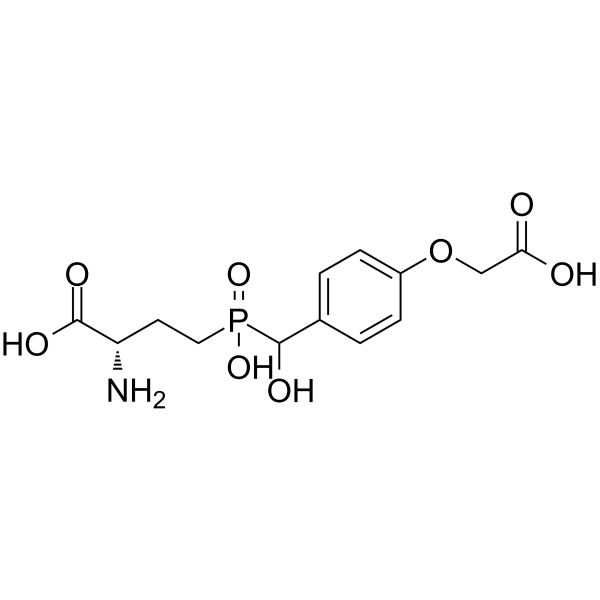
    LSP4-2022 is a potent and brain-penetrant mGlu4-selective orthosteric agonist, with an EC50 of 0.11 μM. LSP4-2022 inhibits neurotransmission in cerebellar slices from wild-type but not mGlu4 receptor-knockout mice. LSP4-2022 shows pro-depressant activity .
    LSP4-2022
  • HY-139142B
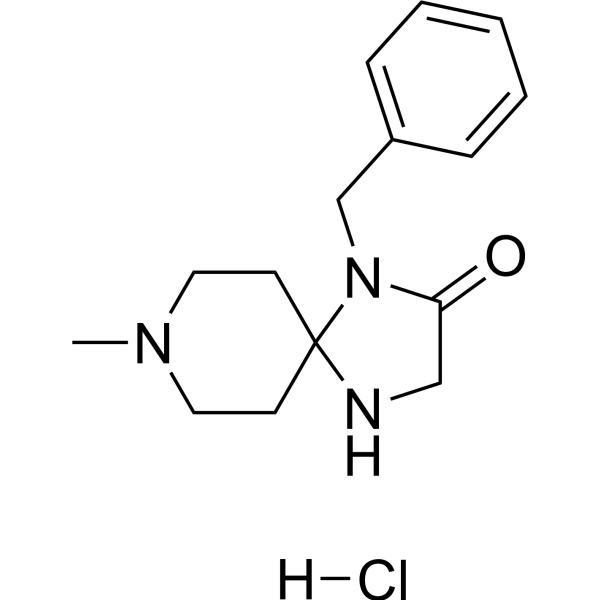
    Simufilam hydrochloride
    1 Publications Verification

    PTI-125 hydrochloride

    mTOR iGluR Amyloid-β Tau Protein Neurological Disease Metabolic Disease Inflammation/Immunology Cancer
    Simufilam hydrochloride (PTI-125 hydrochloride) is an orally active FLNA modulator. Simufilam hydrochloride restores NMDAR signaling and Arc expression. Simufilam hydrochloride inhibits overactive mTOR signaling by restoring the normal conformation of FLNA, improves insulin sensitivity, reduces Aβ42-induced neuroinflammation and tau protein hyperphosphorylation. Simufilam hydrochloride can be used for research of Alzheimer's disease .
    Simufilam hydrochloride
  • HY-P2612

    TNF Receptor RANKL/RANK Apoptosis Inflammation/Immunology
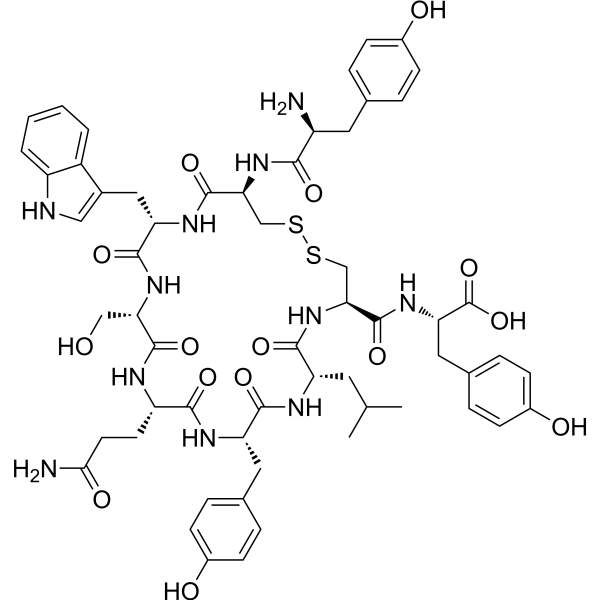
    WP9QY is an inhibitor targeting TNFα and RANKL, which blocks the TNFα-TNFR1 interaction and inhibits TNFα-mediated apoptosis, cytotoxicity and bone destruction. WP9QY inhibits osteoclastogenesis and promotes osteoblast differentiation, induces chondrocyte proliferation and glycosaminoglycan production, and synergizes with TGF-β3 to promote chondrogenesis. WP9QY effectively repairs full-thickness articular cartilage defects in rabbits via intra-articular injection, and inhibits methylmercury-induced reduction of NeuN-positive cells in mouse brain slices. WP9QY can be applied to the research of diseases related to methylmercury-induced neuronal death, cartilage injury, osteoarthritis and bone loss .
    WP9QY
  • HY-139142A

    PTI-125 dihydrochloride

    Tau Protein Amyloid-β mTOR iGluR Neurological Disease
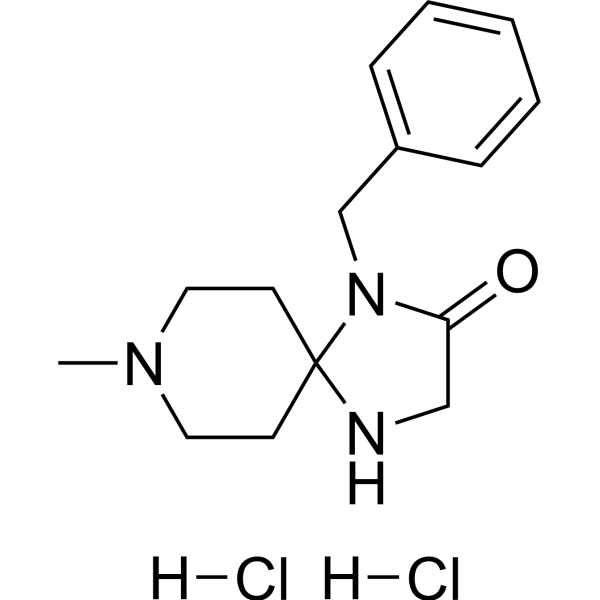
    Simufilam dihydrochloride (PTI-125 dihydrochloride) is an orally active FLNA modulator. Simufilam dihydrochloride restores NMDAR signaling and Arc expression. Simufilam dihydrochloride inhibits overactive mTOR signaling by restoring the normal conformation of FLNA, improves insulin sensitivity, reduces Aβ42-induced neuroinflammation and tau protein hyperphosphorylation. Simufilam dihydrochloride can be used for research of Alzheimer's disease .
    Simufilam dihydrochloride
  • HY-124985

    mGluR Neurological Disease
    VU6010608 is a blood-brain barrier-crossing mGlu7 negative allosteric modulator (IC50 = 0.76 μM). VU6010608 can block long-term enhancement (LTP) of SC-CA1 synapses in mouse brain slices induced by high-frequency stimulation. VU6010608 can be used for research on neurological diseases .
    VU6010608
  • HY-103331

    Cannabinoid Receptor Neurological Disease Inflammation/Immunology
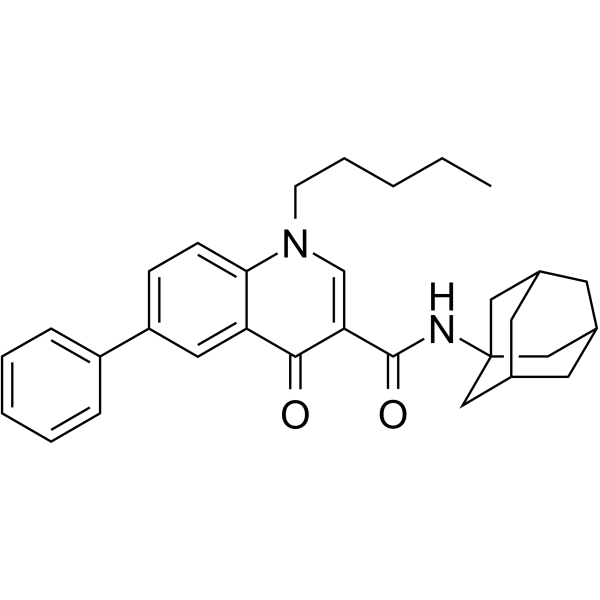
    COR170 (11u) is a selective CB2 inverse-agonist which is a 4-quinolone-3-carboxylic acid derivative with a Ki value of 3.8 nM for CB2 receptor. COR170 can be used for the research of inflammation and neuroprotection .
    COR170
  • HY-118758

    γ-Kainic acid-glutamic acid

    Sodium Channel Neurological Disease
    γ-Kainylglutamic acid (γ-Kainic acid-glutamic acid), a dipeptide derived from kainic and L-Glutamic acids, is a selective antagonist of amino acid induced neuroexcitation with anticonvulsant properties. γ-Kainylglutamic acid inhibits the stimulation of Na + fluxes induced in brain slices by the neuroexcitant N-methyl-D-aspartic acid. γ-Kainylglutamic acid is also effective in protecting mice from picrotoxin-induced convulsions with an EC50 value of 0.17 μmol .
    γ-Kainylglutamic acid
  • HY-13325

    Drug Derivative Amyloid-β Neurological Disease
    Aβ aggregation modulator-1 is a stimulator of amyloid-β () fibrillogenesis. Aβ aggregation modulator-1 binds hydrophobic residues in peptides and stabilizes β-sheet-rich protofibrils and fibrils. Aβ aggregation modulator-1 accelerates polymerization and reduces concentrations of small, toxic oligomers in heterogeneous aggregation reactions. Aβ aggregation modulator-1 suppresses long-term potentiation (LTP) inhibition by oligomers in hippocampal brain slices. Aβ aggregation modulator-1 can be used for the study of Alzheimer's disease (AD) .
    Aβ aggregation modulator-1
  • HY-138232

    LTNAM

    Aminopeptidase Neurological Disease
    Lys-psi(CH2NH)-Trp(Nps)-OMe is a lysine-tryptophan (Nps) pseudodipeptide analog. It is obtained by replacing the peptide bond in the Lys-Trp(Nps) molecule with an aminomethylene bond and has analgesic activity. Lys-psi(CH2NH)-Trp(Nps)-OMe induces a dose-dependent and naloxone-reversible analgesia after intracerebroventricular administration in mice, and its analgesic effect lasts longer than that of the original compound. It protects methionine enkephalin from degradation in rat striatal slices and binds to low-dose opioid peptides to produce analgesia. Lys-psi(CH2NH)-Trp(Nps)-OMe effectively inhibits brain aminopeptidase activity both in vitro and in vivo. The enhanced resistance of this pseudodipeptide to proteolysis may explain its prolonged analgesic activity.
    Lys-psi(CH2NH)-Trp(Nps)-OMe
  • HY-121364

    Histamine Receptor Fluorescent Dye Others
    Bodilisant is a histamine H3 receptor (hH3R) ligand and imaging/labeling agent, with a Ki value of 6.51 nM for hH3R. Bodilisant binds to hH3R to produce strong green fluorescence, localizes to the extracellular membrane without internalization, and generates clear, displaceable fluorescent labeling of hH3R in native human brain tissues. Bodilisant serves as a pharmacological tool to visualize the distribution of hH3R via fluorescence confocal laser scanning microscopy .
    Bodilisant
  • HY-119990

    Biochemical Assay Reagents Neurological Disease Inflammation/Immunology
    Fotocaine is a photochromic blocker of voltage-gated ion channels. Fotocaine is readily taken up by neurons in brain slices and enables optical control of action potential firing by switching between 350 and 450 nm light. Fotocaine can be used in analgesia research .
    Fotocaine
  • HY-186094

    Drug Derivative Drug Intermediate Neurological Disease
    (S,S)-Demethyl-reboxetine is a key phenolic precursor for the preparation of the PET tracer (S,S)-[ 11C]-MeNER. (S,S)-Demethyl-reboxetine is also the demethylated derivative of Reboxetine (HY-14560). Efficient synthesis of the norepinephrine transporter (NET)-targeted tracer is achieved through 11C methylation of (S,S)-Demethyl-reboxetine. (S,S)-Demethyl-reboxetine serves as a core raw material for the synthesis of radiopharmaceuticals related to NET imaging .
    (S,S)-Demethyl-reboxetine
  • HY-182944

    GABA Receptor Neurological Disease
    GATT-44 is a blood-brain barrier-permeable, selective GABA transporter 1 (GAT-1) ligand with an IC50 of 126 nM. GATT-44 shows selectivity for GAT-2, GAT-3 and BGT-1 subtypes, and undergoes copper-mediated 18F-radiofluorination. The radiolabeled GATT-44 ([ 18F]GATT-44) exhibits brain uptake, metabolic stability and high GAT-1 binding specificity in non-human primates. GATT-44 is applicable for research on neurodegenerative and neuropsychiatric diseases .
    GATT-44
  • HY-182571

    Chloride Channel Neurological Disease
    AK-42 is a selective CLC-2 chloride channel inhibitor with human IC50 of 17 nM and rat IC50 of 14 nM. AK-42 binds to an extracellular vestibule above the channel pore, inhibits CLC-2 currents acutely and reversibly, including with auxiliary subunit GlialCAM coexpression. AK-42 acts as a selective tool compound for acute CLC-2 function modulation to probe CLC-2 neurophysiology. AK-42 can be used for the research of leukodystrophy and idiopathic generalized epilepsies .
    AK-42
  • HY-182548

    GABA Receptor Sodium Channel iGluR Cardiovascular Disease Neurological Disease
    BTS 72664 is a broad-spectrum, non-sedating, orally effective anticonvulsant. Its anticonvulsant effect mainly arises from enhancing GABAA receptor (GABAA receptor)-mediated chloride channel currents, while it exerts weak blocking effects on Na + channels (Ki = 350 μM) and NMDA receptors (NMDA receptor) (IC50 = 43 μM). BTS 72664 prevents the elevation of extracellular glutamate, glycine and serine concentrations in neurons, reduces cerebral infarct size, promotes functional recovery, prevents multiple types of epileptic seizures, and has low sedative potential. BTS 72664 can be used for the research of epilepsy, stroke and migraine .
    BTS 72664

Inquiry Online

Your information is safe with us. * Required Fields.

Salutation


Country or Region *

Applicant Name *


Organization Name *

Department *


Email Address *


Product Name *

Cat. No.


Requested quantity *

Phone Number *


Remarks

Inquiry Online

Inquiry Information

Product Name:
Cat. No.:
Quantity:
MCE Japan Authorized Agent:

