




1. Search Result
Search Result
Pathways Recommended: Stem Cell/Wnt Cell Cycle/DNA Damage
Results for "

cell labeling

" in MedChemExpress (MCE) Product Catalog:

1500

Inhibitors & Agonists

279

Fluorescent Dye

61

Biochemical Assay Reagents

51

Peptides

4

MCE Kits

3

Inhibitory Antibodies

7

Natural
Products

985

Isotope-Labeled Compounds

37

Click Chemistry

81

Oligonucleotides

1

GMP Molecules

Cat. No. Product Name Target Research Areas Chemical Structure
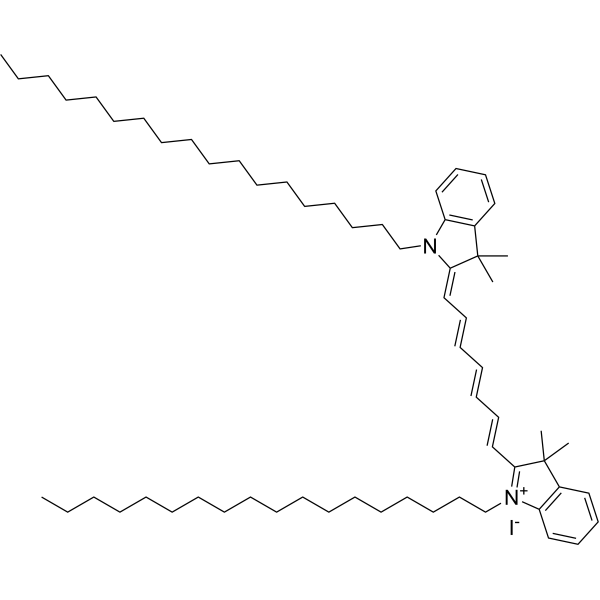
  • HY-D1048
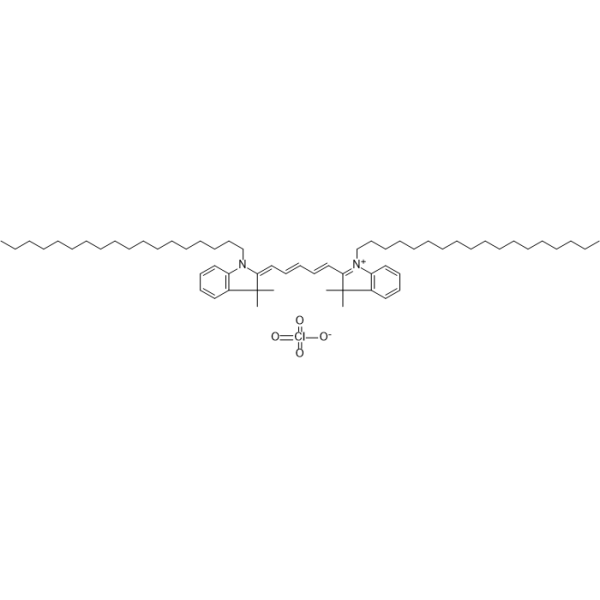
    DiR
    95+ Cited Publications

    Cy7 DiC18

    Fluorescent Dye Cancer
    DiR is a long-chain carbocyanine dye. Carbocyanine dyes are widely used as Di to label cells, organelles, liposomes, viruses and lipoproteins .
    DiR
  • HY-D0083
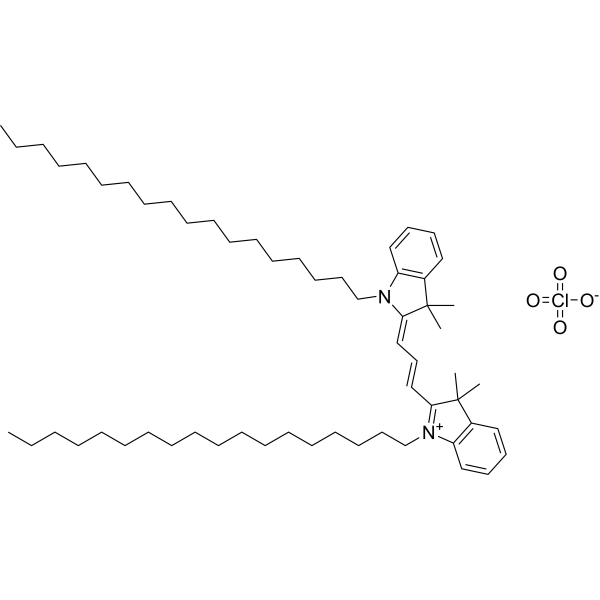
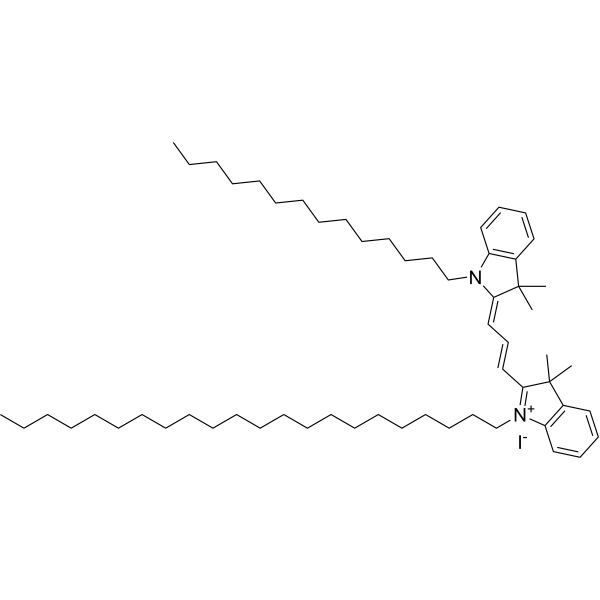
    DiI
    55+ Cited Publications

    DiIC18(3)

    Fluorescent Dye Others
    DiI is a long-chain carbocyanine dye. Carbocyanine dyes are widely used as Di to label cells, organelles, liposomes, viruses and lipoproteins .
    DiI
  • HY-D0969
    DiO
    20+ Cited Publications

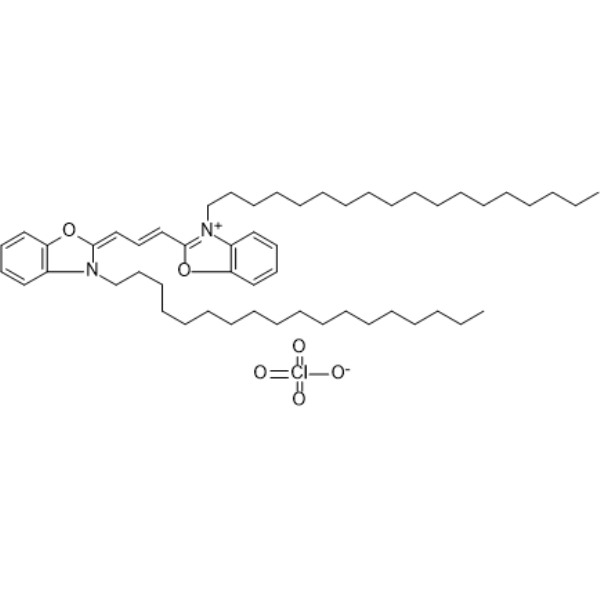
    DiOC18(3); 3,3'-Dioctadecyloxacarbocyanine perchlorate

    Fluorescent Dye Others
    DiO is a long-chain carbocyanine dye. Carbocyanine dyes are widely used as Di to label cells, organelles, liposomes, viruses and lipoproteins .
    DiO
  • HY-128699

    Dethiobiotin

    Endogenous Metabolite Endocrinology
    D-Desthiobiotin is a biotin derivative. D-Desthiobiotin increases testosterone. D-Desthiobiotin is used in affinity chromatography and protein chromatography, also can be used for protein and cell labeling, detection and isolation .
    D-Desthiobiotin
  • HY-111496
    Sulfo-NHS-SS-Biotin sodium
    4 Publications Verification

    Biochemical Assay Reagents Others
    Sulfo-NHS-SS-biotin sodium is a long-chain cleavable and cell-impermeant amine-reactive biotinylation reagent. Sulfo-NHS-SS-biotin sodium can be used for the labeling and purifying of cell-surface protein .
    Sulfo-NHS-SS-Biotin sodium
  • HY-D1421
    PKH 67
    10+ Cited Publications

    Fluorescent Dye Others
    PKH67 is a fluorescent cell binding dye with green fluorescence. PKH67 can stain the cell membrane and the Ex/Em is 490/502 nm. PKH67 is often used in combination with the non-specific red fluorescent dye PKH26 (Ex/Em=551/567 nm) to label cells, detect cell proliferation in vitro, and trace cells in vitro and in vivo .
    PKH 67
  • HY-D1451
    PKH 26
    35+ Cited Publications

    Fluorescent Dye Others
    PKH 26 is a red fluorescent dye, PKH 26 can stably bind to the lipid region of cell membrane and emit red fluorescence (Ex/Em=551/567 nm), which is mainly used for in vitro cell labeling, in vitro cell proliferation studies and in vivo and in vitro cell tracing studies .
    PKH 26
  • HY-W127715
    Lucifer Yellow CH dipotassium salt
    5 Publications Verification

    Fluorescent Dye Others
    Lucifer Yellow CH dipotassium is a high-intensity fluorescent probe containing free hydrazyl groups. Lucifer Yellow CH can react with fatty aldehydes at room temperature. Lucifer Yellow CH serves as a biological tracer to monitor neuronal branching, regeneration, gap junction detection and characterization, and selective ablation of cells after aldehyde fixation. Lucifer yellow CH displays the maximum excitation/emission of 430 nm/540 nm, respectively .
    Lucifer Yellow CH dipotassium salt
  • HY-112697
    Rhodamine B isothiocyanate
    1 Publications Verification

    Biochemical Assay Reagents Others
    Rhodamine B isothiocyanate (RBITC) is a fluorescent dye commonly used in biological imaging and labeling applications. It has an isothiocyanate functional group that can be covalently attached to amino groups on proteins and other biomolecules, making it useful for fluorescent labeling of cells and tissues. RBITC fluoresces bright orange-red under green light excitation, which makes it easy to detect and track labeled molecules in complex samples. Due to its stability and sensitivity, RBITC has been widely used in various research fields, including cell biology, immunology, and neurobiology.
    Rhodamine B isothiocyanate
  • HY-D1106

    Fluorescent Dye Cancer
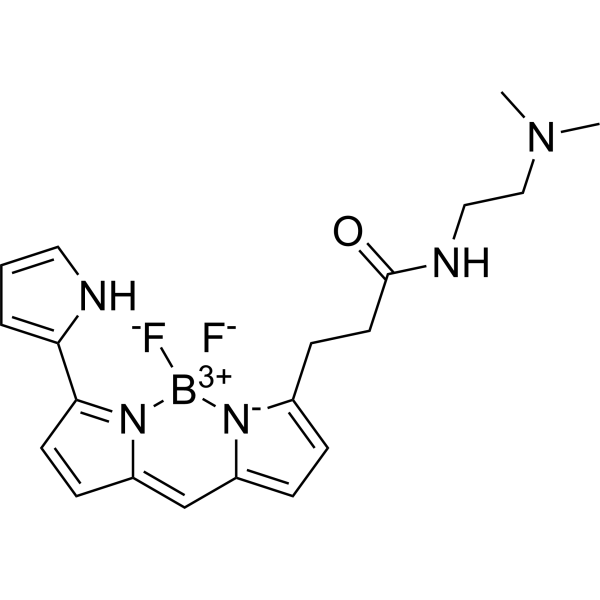
    BODIPY dye is a small molecule dye with strong ultraviolet absorption ability, its fluorescence peak is relatively sharp, and the quantum yield is high. They are relatively insensitive to the polarity and pH of the environment and are relatively stable under different physiological conditions . Due to its structural asymmetry, BODIPY derives a variety of structural products. BODIPY lipid droplet dyes can well pass through the cell membrane into the cell, and localize the neutral lipids in the cell to specifically stain the lipid droplets, which can be used for labeling of live cells and fixed cells .
    Py-BODIPY-NHS ester
  • HY-D1583
    Cyanine5 DBCO hexafluorophosphate
    4 Publications Verification

    DBCO-Cy5 hexafluorophosphate; Cyanine5 dibenzocyclooctyne hexafluorophosphate

    Fluorescent Dye Others
    Cyanine5 DBCO (DBCO-Cy5) hexafluorophosphate is a low-toxicity azide reactive probe (NIR fluorescent dye), for imaging azide-labeled biomolecules via a copper-free "click-through" reaction. Cyanine5 DBCO hexafluorophosphate has no apparent cytotoxicity or animal toxicity and shows no damage to the physiological functions of cells other than the target cells (azide-labeled cells). Cyanine5 DBCO hexafluorophosphate can be used to label and track cells in vitro and in vivo (Ex=635 nm, Em=650-700 nm) .
    Cyanine5 DBCO hexafluorophosphate
  • HY-15398S3

    Cholecalciferol-d3; Colecalciferol-d3

    Isotope-Labeled Compounds Bacterial Endogenous Metabolite VD/VDR Metabolic Disease Cancer
    Vitamin D3-d3 is the deuterium labeled Vitamin D3. Vitamin D3 (Cholecalciferol; Colecalciferol) is a naturally occuring form of vitamin D. Vitamin D3 induces cell differentiation and prevents proliferation of cancer cells.
    Vitamin D3-d3
  • HY-130412
    FlAsH-EDT2
    2 Publications Verification

    Fluorescent Dye Others
    FlAsH-EDT2 is a protein labeling reagent. FlAsH-EDT2 binds to Cys4 with high affinity and emits fluorescence. FlAsH-EDT2 can cross the cell membrane and enter the interior of the cell. FlAsH-EDT2 can only be used for labeling proteins with high concentration .
    FlAsH-EDT2
  • HY-15398S

    Isotope-Labeled Compounds VD/VDR Endogenous Metabolite Bacterial Metabolic Disease Cancer
    Vitamin D3-d7 is the deuterium labeled Vitamin D3. Vitamin D3 (Cholecalciferol) is a naturally occuring form of vitamin D. Vitamin D3 induces cell differentiation and prevents proliferation of cancer cells .
    Vitamin D3-d7
  • HY-D0183
    ATP-polyamine-biotin
    3 Publications Verification

    Biochemical Assay Reagents Others
    ATP-polyamine-biotin, the first cell-permeable ATP analogue, is an efficient kinase cosubstrate. ATP-polyamine-biotin promotes biotin labeling of kinase substrates in live cells .
    ATP-polyamine-biotin
  • HY-DY1011

    Fluorescent Dye Others
    PKH 26 (solution) is a red fluorescent dye, PKH 26 can stably bind to the lipid region of cell membrane and emit red fluorescence (Ex/Em=551/567 nm) , which is mainly used for in vitro cell labeling, in vitro cell proliferation studies and in vivo and in vitro cell tracing studies .
    Solvent and concentration: DMSO: 5 mM
    PKH 26 (solution)
  • HY-D2355

    Biochemical Assay Reagents Others
    Tris-NTA Biotin is a biotin-labeled version of tris-NTA. Tris-NTA Biotin, as a bridge connecting His-tagged proteins with streptavidin, can reversibly label proteins and cell surfaces. Tris-NTA Biotin can be used in experiments such as protein immobilization, kinetic determination, live cell labeling, and Western blot detection .
    tris-NTA Biotin
  • HY-W332335

    Biochemical Assay Reagents Others
    Sulfosuccinimidyl-6-(biotinamido)hexanoate sodium is a protein crosslinker, and is a biotinylation reagentcan for labeling cell surface proteins .
    Sulfosuccinimidyl-6-(biotinamido)hexanoate sodium
  • HY-100894
    Biotin-VAD-FMK
    1 Publications Verification

    Caspase Cancer
    Biotin-VAD-FMK is a cell permeable, irreversible biotin-labeled caspase inhibitor, used to identify active caspases in cell lysates.
    Biotin-VAD-FMK
  • HY-136490S

    Galactosylsphingosine-d5

    PKC Neurological Disease Cancer
    Psychosine-d5 is deuterium labeled Psychosine. Psychosine, a substrate of the galactocerebrosidase (GALC) enzyme, is a potential biomarker for Krabbe disease. Psychosine is a highly cytotoxic lipid, capable of inducing cell death in a wide variety of cell.
    Psychosine-d5
  • HY-U00118
    EF-5
    1 Publications Verification

    Biochemical Assay Reagents Cancer
    EF-5 (EF5; 2-Nitroimidazole) is a hypoxia labeling agent used to identify hypoxia in cells.
    EF-5
  • HY-D2186
    BTD probe-1
    1 Publications Verification

    Biochemical Assay Reagents Others
    BTD probe-1 is a benzothiazine-based chemoproteomic probe and selective protein S-sulfenic acid (Cys-SOH) labeling agent. BTD probe-1 labels protein S-sulfenic acids in vitro in cell and tissue samples, and in situ in intact cells, enabling detection or enrichment of modified proteins/peptides. BTD probe-1 exhibits no cytotoxicity in cells at concentrations ≤1 mM. BTD probe-1 enables global, site-specific mapping and quantification of cysteine S-sulfenylation in complex proteomes with lower input material .
    BTD probe-1
  • HY-D2335

    Fluorescent Dye Neurological Disease
    SERTlight is a fluorescent agent that can specifically label serotonergic neuronal cell bodies, dendrites, and axonal projections as fluorescent substrates of the serotonin transporter (SERT). SERTlight is orthogonal to various genetically encoded sensors in terms of optics, pharmacology, and operation, enabling multiple imaging. SERTlight allows the use of GRAB5HT sensors to label distal 5HT axonal projections and simultaneously image the release of endogenous 5HT, providing a new multifunctional molecular tool for studying serotonergic systems .
    SERTlight
  • HY-D0830

    Fluorexon tetraethyl ester

    Fluorescent Dye Others
    Calcein tetraethyl ester is a fluorescent dye, is used in biology as it can be transported through the cellular membrane into live cells, which makes it useful for testing of cell viability and for short-term labeling of cells.
    Calcein (tetraethyl ester)
  • HY-D1261
    Naph-EA-mal
    1 Publications Verification

    Thiol-green 1

    Fluorescent Dye Others
    Naph-EA-mal (Thiol-green 1) is a rapid detect and ultrafast turn-on thiol fluorescence probe for protein labeling and bioimaging. Naph-EA-mal (Thiol-green 1) can be used to detect thiols in living cells, label the protein thiols, quantify the concentration of total thiols in cell lysate, and determine the reversible protein thiols oxidation in fixed cells . Ex: 488 nM; Em: 540 nM.
    Naph-EA-mal
  • HY-P3432

    Biochemical Assay Reagents Others
    DfTat is a dimer of the prototypical cell-penetrating peptide TAT. DfTat can deliver small molecules, peptides and proteins into live cells with a particularly high efficiency. DfTat labeled with the rhodamine can be used as a tracer for easy detection .
    DfTat
  • HY-155640

    Fluorescent Dye Others
    Maleimide-5’FAM is a fluorescein. Maleimide-5’FAM can be used for labeling non-transduced cells .
    5-FAM maleimide
  • HY-151759

    Fluorescent Dye Cancer
    Sulfo-Cy5-TCO is a water-soluble sulfonated Cy5 fluorescent reagent containing trans-cyclooctene (TCO). Sulfo-Cy5-TCO undergoes an inverse electron demand Diels‑Alder reaction with tetrazine-labeled fixed breast cancer cells to achieve cell labeling. Sulfo-Cy5-TCO is used for fluorescent labeling and imaging of biological samples such as proteins and cells .
    Sulfo-Cy5-TCO
  • HY-W039921

    N-Azidoacetylgalactosamine; GalNAz

    Biochemical Assay Reagents Others
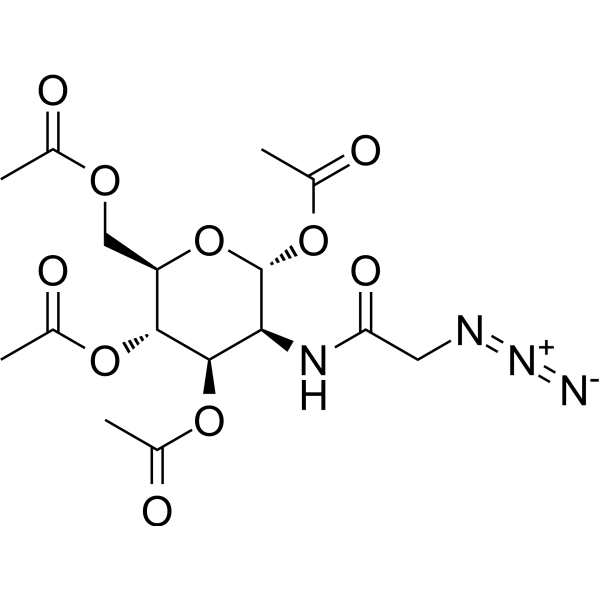
    2-[(Azidoacety)amino]-2-deoxy-D-galactose targets O-GlcNAc-modified proteins. By detecting and targeting O-GlcNAc-modified proteins, 2-[(Azidoacety)amino]-2-deoxy-D-galactose can serve as a chemical tag for intracellular sugar chain metabolism .
    2-[(Azidoacety)amino]-2-deoxy-D-galactose
  • HY-P2500

    Fluorescent Dye Others
    (Arg)9, FAM-labeled, a cell-penetrating peptide (CPP), is a nona-arginine (ARG) with FAM label. CPPs have emerged as powerful tools for delivering bioactive cargoes into the cytosol of intact cells .
    (Arg)9, FAM-labeled
  • HY-B0172AS

    3β-Hydroxy-5α-cholanic acid-d2

    Autophagy Apoptosis Endogenous Metabolite Isotope-Labeled Compounds Neurological Disease
    Isoallolithocholic acid-d2 is the deuterium labeled Isoallolithocholic acid (HY-B0172A). Isoallolithocholic acid is a T cell regulator and enhances regulatory T cells (Tregs) differentiation .
    Isoallolithocholic acid-d2
  • HY-177764

    Amino Acid Derivatives Others
    Tet-v2.0-ethyl is a tetrazine non-canonical amino acid. Tet-v2.0-ethyl can stably exist within living cells without being degraded, enabling in situ labeling of intracellular biomolecules. Tet-v2.0-ethyl is mainly used as a bioorthogonal labeling tool compound .
    Tet-v2.0-ethyl
  • HY-P4083

    Fluorescent Dye Others
    (Arg)9,TAMRA-labeled is a TAMRA-labeled cell permeable peptide. (Arg)9 is a cell-permeable peptide used for drug delivery .
    (Arg)9,TAMRA-labeled
  • HY-D2907

    DBCO-Cy5; Cyanine5 dibenzocyclooctyne

    Fluorescent Dye Others
    Cyanine5 DBCO (DBCO-Cy5) is a low-toxicity azide reactive probe (NIR fluorescent dye), for imaging azide-labeled biomolecules via a copper-free "click-through" reaction. Cyanine5 DBCO has no apparent cytotoxicity or animal toxicity and shows no damage to the physiological functions of cells other than the target cells (azide-labeled cells). Cyanine5 DBCO can be used to label and track cells in vitro and in vivo (Ex=635 nm, Em=650-700 nm) .
    Cyanine 5 DBCO
  • HY-164577

    Radionuclide-Drug Conjugates (RDCs) Cancer
    BCN-DOTA-GA is a cyclooctyne-linked DOTA chelator that can be labeled with radioactive zirconium-89 and used as a radionuclide-labeled drug conjugate (RDC) to target specific biomolecules, cells or tissues.
    BCN-DOTA-GA
  • HY-B0511S2

    Vitamin B7-d2; Vitamin H-d2; D-Biotin-d2

    Endogenous Metabolite Metabolic Disease
    Biotin-d2 is the deuterium labeled Biotin. Biotin is an enzyme co-factor present in minute amounts in every living cell.
    Biotin-d2
  • HY-N1150S2

    DThyd-13C; NSC 21548-13C

    Isotope-Labeled Compounds DNA/RNA Synthesis Endogenous Metabolite Orthopoxvirus Cancer
    Thymidine- 13C is the 13C labeled Thymidine. Thymidine, a specific precursor of deoxyribonucleic acid, is used as a cell synchronizing agent. Thymidine is a DNA synthesis inhibitor that can arrest cell at G1/S boundary, prior to DNA replication
    Thymidine-13C
  • HY-B0511S

    Vitamin B7 d2-1; Vitamin H d2-1; D-Biotin d2-1

    Isotope-Labeled Compounds Endogenous Metabolite Metabolic Disease
    Biotin-d2-1 is the deuterium labeled Biotin. Biotin is an enzyme co-factor present in minute amounts in every living cell.
    Biotin-d2-1
  • HY-N1150S

    DThyd-d3; NSC 21548-d3

    Isotope-Labeled Compounds DNA/RNA Synthesis Endogenous Metabolite Others
    Thymidine-d3 is the deuterium labeled Thymidine. Thymidine, a specific precursor of deoxyribonucleic acid, is used as a cell synchronizing agent. Thymidine is a DNA synthesis inhibitor that can arrest cell at G1/S boundary, prior to DNA replication .
    Thymidine-d3
  • HY-D2444

    Fluorescent Dye Cancer
    AF555 NHS is a red fluorescent dye with excellent fluorescence properties and light stability. The excitation wavelength is 556 nm and the emission wavelength is 571 nm, which can be used for protein labeling, antibody labeling, and cell imaging .
    AF555 NHS
  • HY-128699R

    Dethiobiotin (Standard)

    Endogenous Metabolite Reference Standards Endocrinology
    D-Desthiobiotin (Standard) is the analytical standard of D-Desthiobiotin. This product is intended for research and analytical applications. D-Desthiobiotin is a biotin derivative. D-Desthiobiotin increases testosterone. D-Desthiobiotin is used in affinity chromatography and protein chromatography, also can be used for protein and cell labeling, detection and isolation .
    D-Desthiobiotin (Standard)
  • HY-D2956

    CLIP-GLA-NHS

    Biochemical Assay Reagents Others
    BC-GLA-NHS (CLIP-GLA-NHS) is a NHS-labeled CLIP tag, which is an amine-reactive crosslinker and can achieve site-specific protein labeling. The NHS ester of BC-GLA-NHS reacts with the primary amine of the target molecule (such as antibodies, quantum dots) in a pH 7.5-8.5 buffer solution to form a stable amide bond. After coupling, the BC molecule undergoes a nucleophilic substitution reaction with the active site (Cys) of the CLIP-tagged fusion protein, releasing benzylcytosine and forming an irreversible thioether bond, achieving covalent labeling. BC-GLA-NHS can be used for click chemistry labeling .
    BC-GLA-NHS
  • HY-B0862S

    Isotope-Labeled Compounds Others
    Pendimethalin-d5 is the deuterium labeled Pendimethalin . Pendimethalin is an herbicide that controls annual grasses and certain broadleaf weeds. Pendimethalin inhibits cell division and cell elongation .
    Pendimethalin-d5
  • HY-136490S1

    Galactosylsphingosine-d7

    PKC Neurological Disease Cancer
    Psychosine-d7 is deuterium labeled Psychosine. Psychosine, a substrate of the galactocerebrosidase (GALC) enzyme, is a potential biomarker for Krabbe disease. Psychosine is a highly cytotoxic lipid, capable of inducing cell death in a wide variety of cell
    Psychosine-d7
  • HY-B0753S

    Potassium Channel Cardiovascular Disease
    Gliclazide-d4 (S1702 D4) is the deuterium labeled Gliclazide. Gliclazide (S1702) is a whole-cell beta-cell ATP-sensitive potassium currents blocker with an IC50 of 184 nM. Gliclazide is used as an antidiabetic .
    Gliclazide-d4
  • HY-164915

    Bacterial Metabolic Disease
    5-InoAz is an inositol analogue used as a metabolic probe for labeling the mycobacterial cell envelope. 5-InoAz integrates into cell envelope glycolipids [phosphatidylinositol mannoside (PIM), PIM-anchored lipomannan (LM), and lipoarabinomannan (LAM)] .
    5-InoAz
  • HY-N1150S6

    DThyd-d2; NSC 21548-d2

    Isotope-Labeled Compounds DNA/RNA Synthesis Endogenous Metabolite Orthopoxvirus Cancer
    Thymidine-d2 is the deuterium labeled Thymidine. Thymidine, a specific precursor of deoxyribonucleic acid, is used as a cell synchronizing agent. Thymidine is a DNA synthesis inhibitor that can arrest cell at G1/S boundary, prior to DNA replication[1
    Thymidine-d2
  • HY-B0511S1

    rel-Vitamin B7-d4; rel-Vitamin H-d4; rel-D-Biotin-d4

    Endogenous Metabolite Metabolic Disease
    rel-Biotin-d4 is the deuterium labeled Biotin. Biotin is an enzyme co-factor present in minute amounts in every living cell.
    rel-Biotin-d4
  • HY-DY1068

    Fluorescent Dye Others
    Cyanine5 DBCO (DBCO-Cy5) hexafluorophosphate (solution) is a low-toxicity azide reactive probe (NIR fluorescent dye) , for imaging azide-labeled biomolecules via a copper-free "click-through" reaction. Cyanine5 DBCO hexafluorophosphate has no apparent cytotoxicity or animal toxicity and shows no damage to the physiological functions of cells other than the target cells (azide-labeled cells). Cyanine5 DBCO hexafluorophosphate can be used to label and track cells in vitro and in vivo (Ex=635 nm, Em=650-700 nm) .
    Solvent and concentration: DMSO: 10 mM
    Cyanine5 DBCO hexafluorophosphate (solution)
  • HY-D1591

    Fluorescent Dye Others
    BODIPY R6G methyl ester (compound 5′-1) is a BODIPY-like fluorescent dye with good light stability and insensitive to pH value. BODIPY R6G methyl ester shows good photostability, high sensitivity and insensitive to pH value. BODIPY R6G methyl ester can be used in research areas such as photodynamic research, PH probes, ion recognition, photocatalysis, protein labeling, cell imaging, and proteomic analysis .
    BODIPY R6G methyl ester

Inquiry Online

Your information is safe with us. * Required Fields.

Salutation


Country or Region *

Applicant Name *


Organization Name *

Department *


Email Address *


Product Name *

Cat. No.


Requested quantity *

Phone Number *


Remarks

Inquiry Online

Inquiry Information

Product Name:
Cat. No.:
Quantity:
MCE Japan Authorized Agent:

