4 Results for "

ciprofloxacin analog

" in MedChemExpress (MCE) Product Catalog:
Products (4)

4 Results for "ciprofloxacin analog" in MCE Product Catalog:

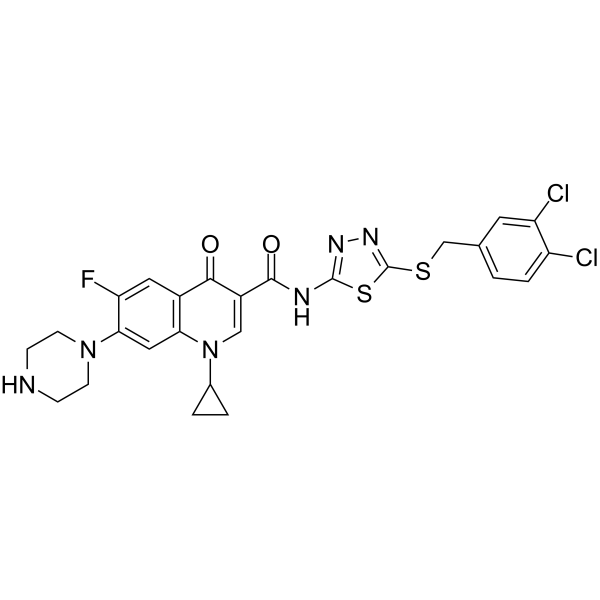
Cat. No.: HY-147781
CAS No.: 2691895-64-2
Target:  

Apoptosis

Research Areas:  

Cancer

Anticancer agent 66 (Compound 13e) is an anti-cancer agent. Anticancer agent 66 induces apoptosis and increases sub-G1 cell population in MCF-7 cells. Anticancer agent 66 is a ciprofloxacin analog .
loading...
    loading...
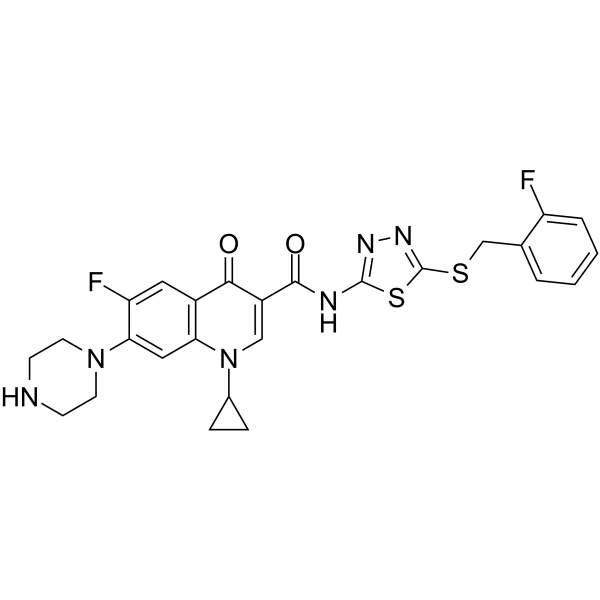
Cat. No.: HY-147782
CAS No.: 2691895-66-4
Target:  

Apoptosis

Research Areas:  

Cancer

Anticancer agent 67 (Compound 13g) is an anti-cancer agent. Anticancer agent 67 induces apoptosis and increases sub-G1 cell population in MCF-7 cells. Anticancer agent 67 is a ciprofloxacin analog .
loading...
    loading...
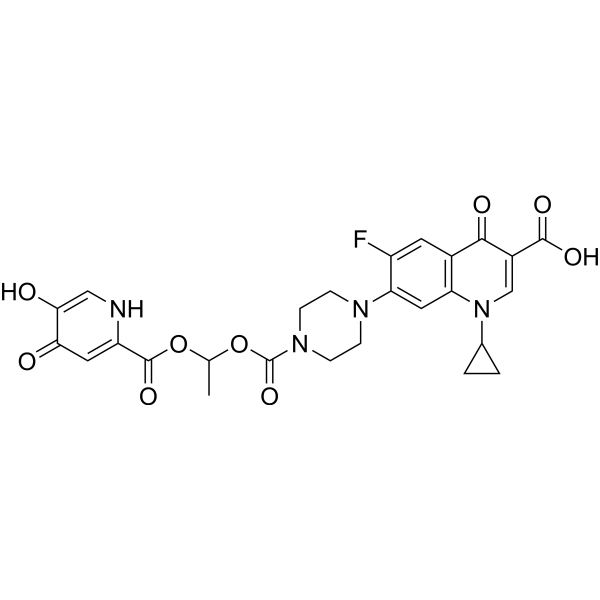
Cat. No.: HY-151944
CAS No.: 3059046-75-9
Target:  

Bacterial Antibiotic

Research Areas:  

Infection

Antibacterial agent 128 is a siderophore analog-Ciprofloxacin (HY-B0356) conjugate with a cleavable linker. Antibacterial agent 128 shows antibiotic activities against P. aeruginosa (MIC values of 0.25-64 μg/mL) and B. pseudomallei (MIC values of 1-32 μg/mL) .
loading...
    loading...
Cat. No.: HY-P11615
Target:  

Bacterial

Research Areas:  

Infection

FuK is a WK2-analog antimicrobial peptide modified with fluorinated unnatural amino acids. FuK has an LD50 of 72.34 mg/kg in mice, shows no hemolytic activity, with high stability against trypsin, chymotrypsin, and saline environments. FuK exerts bactericidal effects by enhancing the permeability of bacterial outer membranes, inducing depolarization of cytoplasmic membranes, and disrupting membrane potential balance against bacterias such as Staphylococcus aureus, Escherichia coli, Klebsiella pneumoniae, and MRSA. FuK exhibits synergistic antimicrobial activity with polymyxin B (HY-149179), vancomycin (HY-B0671), and ciprofloxacin (HY-B0356), and also inhibits Ciprofloxacin-induced bacterial drug resistance. FuK has in vivo safety, effectively reduces bacterial load and inflammatory cell infiltration in a mouse MRSA model, and promotes collagen fiber formation in skin wounds .
loading...
    loading...

