Search Result
Results for "
compound 2
" in MedChemExpress (MCE) Product Catalog:
11
Biochemical Assay Reagents
15
Isotope-Labeled Compounds
| Cat. No. |
Product Name |
Target |
Research Areas |
Chemical Structure |
-
- HY-147257
-
|
HSK7653
|
Dipeptidyl Peptidase
|
Metabolic Disease
|
|
Cofrogliptin (HSK7653) (compound 2), a tetrahydropyran derivative, is a potent oral dipeptidyl aminopeptidase 4 (DPP-4) inhibitor with Long-acting antidiabetic efficacy. Cofrogliptin (compound 2) has a great potential for type 2 diabetes mellitus (T2DM) .
|
-
-
- HY-117602
-
-
-
- HY-136485
-
|
|
FLAP
|
Cancer
|
|
FEN1-IN-4 (Compound 2) is a human flap endonuclease-1 (hFEN1) inhibitor .
|
-
-
- HY-N15642
-
-
-
- HY-177133
-
|
|
Glutaminase
|
Cancer
|
|
Suvigletistat (compound 2) is a potent transglutaminase 2 (TG2) inhibitor with an IC50 value of < 0.5 µM .
|
-
-
- HY-N2138
-
|
|
Others
|
Inflammation/Immunology
|
|
Buddlejasaponin IVb (Compound 2), a triterpene saponin isolated from Clinopodium chinense (Benth.) O. Kuntze, Compound 2 has hemostasis efficacy, shortens thrombin time (TT) by 20.6 % .
|
-
-
- HY-121834
-
-
-
- HY-W010562
-
|
|
Drug Derivative
|
Others
|
|
2-Methoxypyrazine is an active compound. 2-Methoxypyrazine can be used for the research of various biochemical studies .
|
-
-
- HY-139319
-
|
|
Lactate Dehydrogenase
|
Cancer
|
|
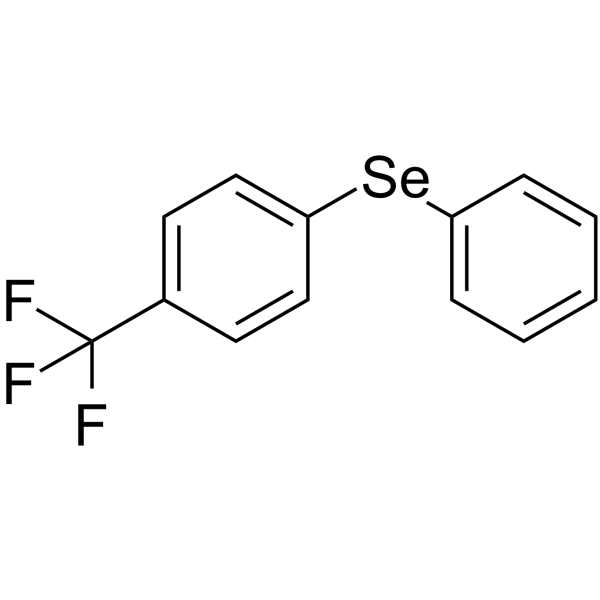
LDHA-IN-3 (compound 2), as a selenobenzene compound, is a potent, noncompetitive lactate dehydrogenase (LDHA) inhibitor (IC50=145.2 nM). LDHA-IN-3 can be used for the research of cancer .
|
-
-
- HY-U00358
-
-
-
- HY-155318A
-
|
|
Orphan GPCR
|
Endocrinology
|
|
GPR3 agonist-2(compound 32) is a potent full agonist of G protein-coupled receptor 3, with the IC50of 260 nM .
|
-
-
- HY-W710914A
-
-
-
- HY-156668
-
-
-
- HY-N3969
-
|
(+)-Goniotriol
|
Others
|
Others
|
|
Goniotriol(compound 2) is a styrylpyronethat can be found in Goniothalamus amuyon. Goniotriolshows cytotoxicity .
|
-
-
- HY-136073
-
|
|
Wnt
|
Cancer
|
|
Wnt pathway activator 2 (compound 2) is a potent Wnt activator with an EC50 of 13 nM .
|
-
-
- HY-101730
-
|
|
Bacterial
|
Infection
|
|
Antibacterial compound 2 is a useful antibacterial agent extracted from patent US5652238, compound example 9.
|
-
-
- HY-156752
-
|
|
Drug Metabolite
|
Others
|
|
Cyclosiversioside F 16,25-diacetate (Compound 6), a glycoside, is an alkaline hydrolysis product of Acetyl Derivative (Compound 2) .
|
-
-
- HY-N12167
-
|
|
Others
|
Others
|
|
3-epi-Bufalin (compound 2a) is the microbial transformation product of bufadienolide .
|
-
-
- HY-N3987
-
|
|
Others
|
Others
|
|
Hancinone C (compound 2) is a natural product that can be found in Piper hancei .
|
-
-
- HY-N2857
-
|
|
Others
|
Others
|
|
Alpinumisoflavone (compound 2) is a flavonoid derivative isolated from the stem bark of Erythrina lysistemon Hutch .
|
-
-
- HY-W749558
-
-
-
- HY-N10892
-
|
|
Others
|
Others
|
|
Officinaruminane B (compound 2), a diarylheptanoid, is a nature product that could be isolated from the rhizome of Alpinia officinarum .
|
-
-
- HY-172626A
-
|
|
Ras
|
Cancer
|
|
(R)-KRAS G12D inhibitor 28 hydrochloride dehydrate is the hydrochloride dehydrate of (R)-KRAS G12D inhibitor 28 (HY-172626). KRAS G12D inhibitor 28 (Compound 2) is a KRAS G12D inhibitor. KRAS G12D inhibitor 28 (Compound 2) can be used in the cancer research .
|
-
-
- HY-132130
-
-
-
- HY-41004
-
|
|
Drug Intermediate
|
Cancer
|
|
3-Isoquinolinecarboxylic acid (compound 2) is a synthetic intermediate that has been used to design antitumor compounds .
|
-
-
- HY-114147
-
|
|
Bacterial
|
Infection
Inflammation/Immunology
|
|
Tuberculosis inhibitor 3 (compound 2i) displays potent anti-TB activity (MIC < 0.016 μg/mL) against agent-sensitive/resistant MTB strains. Tuberculosis inhibitor 3 (compound 2i) shows acceptable PK profiles with oral bioavailability .
|
-
-
- HY-132273
-
-
-
- HY-W068420
-
-
-
- HY-157170
-
-
-
- HY-131451
-
-
-
- HY-153448
-
|
|
MAP4K
|
Cancer
|
|
HPK1-IN-36 (compound 2) is a potent HPK1 inhibitor with an IC50 value of 0.5 nM .
|
-
-
- HY-157915
-
|
Tetrakis[3,5-bis(1,1,1,3,3,3-hexafluoro-2-methoxy-2-propyl)phenyl]borate, sodium salt, trihydrate
|
Biochemical Assay Reagents
|
Others
|
|
HFPB (Compound 2) is a type of cation exchanger with high lipophilicity and acid resistivity, which can be used in membrane electrode research .
|
-
-
- HY-147050
-
-
-
- HY-N1722
-
|
|
Others
|
Others
|
|
(–)-Erythro-saccharinic acid lactone (compound2) can be isolated from the leaves of Talauma arcabucoana .
|
-
-
- HY-162592
-
|
|
Phosphatase
|
Cancer
|
|
EYA2-IN-1(compound 2e) is a novel allosteric EYA2 inhibitor. EYA2-IN-1 has anti-tumor activity .
|
-
-
- HY-N9277
-
|
|
Others
|
Others
|
|
β-Furoyleupatolide (Compound 2) is a compound that can be isolated from Helogyne apaloidea .
|
-
-
- HY-Z4467
-
-
-
- HY-161006
-
|
|
Biochemical Assay Reagents
|
Inflammation/Immunology
|
|
TETS-C4-acid (Compound 2d) is a hapten coupled directly to a carrier protein through a carboxylic acid functionality. TETS-C4-acid (Compound 2d) can be used to detect tetramethylenedisulfotetramine (TETS) .
|
-
-
- HY-133232
-
|
|
Others
|
Others
|
|
Sonnerphenolic B (compound 2) is a phenolic that can be found in Sonneratia ovata .
|
-
-
- HY-149216
-
|
|
Others
|
Cancer
|
|
Anticancer agent 103 (Compound 2k) is a potent anticancer agent .
|
-
-
- HY-N2888
-
|
|
Others
|
Others
|
|
Araneosol (Compound 2) is a flavonoid that can be isolated from Herissantia tiubae .
|
-
-
- HY-N12107
-
|
|
Others
|
Others
|
|
N-[(Z)-Hexadec-9-enoyl]homoserine lactone (Compound 2) is a compound that can be isolated from Roseovarius tolerans .
|
-
-
- HY-N12304
-
|
|
Others
|
Others
|
|
Xanthalin (compound 2) is a characteristic component isolated from Peucedanum ledebourielloides root .
|
-
-
- HY-159868
-
-
-
- HY-168480
-
|
|
Ras
|
Cancer
|
|
SOS2 ligand 1(compound 2) is a selective ligand of son of sevenless 2 (SOS2) with an KD value of 4.6 µM .
|
-
-
- HY-139433
-
-
-
- HY-N1277
-
|
|
Others
|
Others
|
|
Dimethyl secologanoside (compound 2) is an e iridoid isolated from the leaves of Khaya senegalensis .
|
-
-
- HY-169492
-
-
-
- HY-162296
-
|
|
Fungal
|
Infection
|
|
Antibacterial agent 188 (compound 2d) is an antibacterial agent that inhibits dermatophyte activity .
|
-
-
- HY-158376
-
-
- HY-176061
-
|
|
NF-κB
|
Cancer
|
|
NIK ligand 1 (compound 2) is a NF-κB inducing kinase (NIK) ligand .
|
-
- HY-W736950
-
|
|
Insecticide
|
Others
|
|
HL-Cys(MDNPE)-OH (compound 2) is a genetically encoded photocaged cysteine compound that has the activity to activate TEV protease upon light exposure in mammalian cells.
|
-
- HY-137037
-
|
|
HIV
|
Cancer
|
|
Ingenol 20-palmitate (compound 2) is a diterpene that can be found in Euphorbia lath yris .
|
-
- HY-146658
-
|
|
Glutaminase
|
Cancer
|
|
Glutaminase-IN-4 (compound 2a) is a glutaminase (GLS) inhibitor with an IC50 of 2.3 μM .
|
-
- HY-N8892
-
-
- HY-W042583
-
-
- HY-N9408
-
|
|
Others
|
Others
|
|
Furostan, β-D-glucopyranoside deriv (compound 2) is a oligofurostanoside that can be found in Asparagus cochinchinensis.
|
-
- HY-N1350
-
|
|
Others
|
Others
|
|
Riligustilide (compound 2) is a kind of phthalide dimer. Riligustilide can be isolated from the radix of Angelica sinensis .
|
-
- HY-N12427
-
|
|
Tyrosinase
|
Cancer
|
|
Litchinol B (compound 2) is a non-competitive tyrosinase inhibitor with an inhibition constant of 5.70 μM .
|
-
- HY-157117
-
|
|
ICMT
|
Cancer
|
|
ICMT-IN-49 (compound 2) is an inhibitor of ICMT (IC50=0.12 μM) .
|
-
- HY-103074
-
|
|
JNK
|
Neurological Disease
|
|
GSK2226649A (compound 2) is a novel activator of satellite cell proliferation and enhanced repair of damaged muscle .
|
-
- HY-N16647
-
|
|
Others
|
Others
|
|
1-O-β-D-Glucopyranosylrutaecarpine (Compound 2) is an alkaloid found in the leaves of Evodia rutaecarpa .
|
-
- HY-131048
-
|
|
Bacterial
|
Infection
|
|
Antimicrobial agent-33 (Compound 2b) is an antimicrobial agent, with MIC values of 2-64 μg/mL. Antimicrobial agent-33 is an active compound against Staph. Aureus .
|
-
- HY-18928
-
|
|
FAK
|
Cancer
|
|
FAK inhibitor 5 (compound 2) is a novel allosteric FAK inhibitor, with IC50 values in the low micromolar range .
|
-
- HY-151927
-
-
- HY-40284A
-
|
|
Fungal
|
Infection
|
|
3-Piperidinopropiophenone (hydrochloride) (Compound 2) is a mono Mannich base derived from acetophenone and has antifungal activity .
|
-
- HY-N8319
-
|
|
Others
|
Others
|
|
Leojaponin (compound 2 ) is a labdane diterpene. Leojaponin can be isolated from the EtOH extract of the herb Leonurus japonicus .
|
-
- HY-156826
-
-
- HY-158303
-
-
- HY-P5699
-
|
|
Bacterial
|
Infection
|
|
Cyclopetide 2 (Compound 2) is an antimicrobial peptide with moderate activity against B. subtilis, with a MIC of 50 μg/mL .
|
-
- HY-N15534
-
|
|
Others
|
Others
|
|
5β,6α-Dihydroxy-3β-(β-glucopyranosyloxy)-7-megastigmen-9-one (Compound 2) is a compound found in Agastache rugosa. 5β,6α-Dihydroxy-3β-(β-glucopyranosyloxy)-7-megastigmen-9-one (Compound 2) is promising for research of skin pigment-related diseases .
|
-
- HY-161336
-
|
|
Bacterial
|
Cancer
|
|
Alendronate prodrug-1(compound 2) is an inhibitor of farnesyl diphosphate synthase (FPPS). Alendronate prodrug-1 has an antiproliferative effect with an IC50 value of 34.0 μM .
|
-
- HY-N12192
-
|
|
Others
|
Others
|
|
Ebenifoline E-II (Compound 2) is a sesquiterpene alkaloid derived from Euonymus laxiflorus. Ebenifoline E-II is cytotoxic .
|
-
- HY-N8675
-
|
|
Others
|
Others
|
|
Olivil-4'-O-β-glucopyranoside (Compound 2) is a lignin derived from Jasminum tortuosum stems .
|
-
- HY-144980
-
|
|
Ligands for E3 Ligase
|
Cancer
|
|
E3 ligase Ligand 21 (compound 2) is a cereblon binder for the degradation of Ikaros or Aiolos by the ubiquitin proteasome pathway .
|
-
- HY-156133
-
|
|
Drug Derivative
|
Others
|
|
Dihydrospinosyn A aglycone (compound 2) is a derivative of spinosyn A aglycone with a hydrolyzed C9- and C17-glycosidic bond.
|
-
- HY-172879
-
|
|
Aminopeptidase
|
Cancer
|
|
Aminopeptidase N inhibitor 2 (Compound 2k) is an APN inhibitor (IC50: 4.3 μM) and has antitumor activity.
|
-
- HY-N4064
-
|
|
Others
|
Others
|
|
Hederagenic acid (compound 2) is a kind of triterpenoid saponin. Hederagenic acid can be isolated from the roots of Kalopanax septemlobus (Thunb.) Koidz .
|
-
- HY-134960
-
-
- HY-N1716
-
|
|
Parasite
|
Infection
|
|
2’’-Acetylastragalin (Compound 2) is a compound isolated from the aerial parts of Delphinium staphisagria, with an IC50 value of 6.5 μM for Vero cells. 2’’-Acetylastragalin has trypanoidal activity .
|
-
- HY-N1592
-
|
|
Others
|
Others
|
|
15-Methoxypatagonic acidz (compound 2) is a clerodane diterpenoid compound isolated from the leaves of Casearia sylvestris .
|
-
- HY-N12827
-
|
|
Others
|
Others
|
|
(+)-Frullanolide (Compound 2) is a sesquiterpene lactone found in Frullania muscicola .
|
-
- HY-N17971
-
|
|
Others
|
Others
|
|
5,7-Dihydroxychromone-7-neohesperidoside (Compound 2) is a phenolic compound found in the seeds of Argemone mexicana .
|
-
- HY-N17966
-
|
|
Others
|
Others
|
|
Puerarin-6"-O-glucoside (Compound 2) is an isoflavonoid compound that can be isolated from the roots of Pueraria lobata (Wild.) Ohwi .
|
-
- HY-N17376
-
|
|
Others
|
Others
|
|
Praeroside VI (Compound 2) is a coumarin glycoside found in the roots of Peucedanum praeruptorum Dunn .
|
-
- HY-W976179
-
|
|
Others
|
Others
|
|
2E,4E-Decadienoylpiperidide (Compound 2) is a cyclic amide compound that can be found in the roots, leaves, and flowers of Achillea ptarmica .
|
-
- HY-N12585
-
|
|
Others
|
Others
|
|
Picfeltarraegenin I (Compound 2) is a cucurbitacin that can be isolated from Picria fel-terrae Lour .
|
-
- HY-N18189
-
|
|
Others
|
Others
|
|
Methyl-bixin (compound 2) is a diapocarotenoid that can found in the seed coat of Bixa orellana L. (annatto) .
|
-
- HY-N11281
-
-
- HY-N12251
-
|
|
Others
|
Others
|
|
Gymnoside IX (compound 2) can be isolated from the methanolic extract from the tubers of Gymnadenia conopsea .
|
-
- HY-182489
-
-
- HY-N12923
-
|
|
Others
|
Others
|
|
IB-96212 aglycone (Compound 2) is the hydrolyzate of IB-96212 (HY-161239A) .
|
-
- HY-N18212
-
|
|
Drug Derivative
|
Others
|
|
12-O-Methyl-1-O-tigloyl-1-O-deacetylnimbolinin B (Compound 2) is a limonoid compound present in the fruits of Melia toosendan .
|
-
- HY-N18258
-
|
|
Drug Derivative
|
Others
|
|
(+)-Chelamine (Compound 2) is a hexahydrobenzo[c]phenanthridine isoquinoline alkaloid that can be isolated from Chelidonium majus .
|
-
- HY-N17856
-
|
|
Others
|
Others
|
|
Gossypetin 3-O-arabinofuranoside (compound 2) is a flavonol glycoside that can be found in the leaves of Metrosideros polymorpha .
|
-
- HY-N17667
-
|
|
Others
|
Others
|
|
6’’-O-trans-p-Coumaroylgenipin gentiobioside (compound 2) is an iridoid glucoside that can be found in Gardenia jasminoides .
|
-
- HY-N17956
-
|
|
Others
|
Others
|
|
3,5,7,8,4'-Pentamethoxyflavone (Compound 2) is a polymethoxylated flavone found in the leaves of Micromelum compressum .
|
-
- HY-N18103
-
|
|
Others
|
Cardiovascular Disease
|
|
Anhydrohirundigenin (Compound 2) is a steroid. Anhydrohirundigenin can be isolated from the roots of Cynanchum stauntonii. Anhydrohirundigenin has no vasodilation activity .
|
-
- HY-W720460
-
|
|
Drug Intermediate
|
Others
|
|
Lacosamide impurity 1 (Compound 2 in Figure 2 on page 6) is a Lacosamide impurity, and a key intermediate in the synthesis of Lacosamide .
|
-
- HY-N9935
-
|
|
Drug Derivative
|
Others
|
|
Coumestrol dimethyl ether (compound 2) is a methylated derivative of the phytoestrogen Coumestrol (HY-N2335). Coumestrol dimethyl ether can be used as a model compound for studying the protonation and fluorescence properties of Coumestrol .
|
-
- HY-P3045
-
|
|
Opioid Receptor
|
Others
|
|
Bilaid B (compound 2a) is a tetrapeptide. Bilaid B resembles opioid peptides albeit with a unique, alternating LDLD amino acid configuration. .
|
-
- HY-172610
-
-
- HY-N12376
-
|
|
Others
|
Others
|
|
Renchangianin B (compound 2) is dibenzo cyclooctene-type lignan. Renchangianin B can be isolated from the stems of Kadsura renchangiana .
|
-
- HY-N2210
-
|
8-Methyl-naringenine
|
Others
|
Inflammation/Immunology
|
|
5,7,4'-Trihydroxy-8-Methylflavanone (Compound 2) is a flavanone isolated from Qualea grandiflora .
|
-
- HY-124022
-
|
|
HDAC
|
Others
|
|
HDAC-IN-69 (Compound 2) is a derivative of an HDAC inhibitor with inhibitory activity targeting maize histone deacetylase HD2 .
|
-
- HY-N1263
-
|
|
NO Synthase
|
Inflammation/Immunology
|
|
Scutebarbatine X (Compound 2) is a neo-clerodane diterpenoids isolated from Scutellaria barbatae (Labiatae) and has anti-inflammatory properties .
|
-
- HY-122946
-
|
|
Keap1-Nrf2
|
Others
|
|
Pterisolic acid B (Compound 2) is an ent-Kaurane diterpenoid. Pterisolic acid B can be isolated from fern Pteris semipinnata (Pteridaceae) .
|
-
- HY-W063197
-
|
|
Adenosine Receptor
|
Cancer
|
|
Adenosine receptor antagonist 4 (compound 2) is an adenosine A1 receptor antagonist with a Ki of 101 nM for human A1 receptor .
|
-
- HY-170533
-
-
- HY-153940
-
|
|
SOS1
Ras
|
Cancer
|
|
SOS1/KRAS-IN-1(Compound 2) is a SOS1/KRAS inhibitor, which can be used in the research of SOS1/KRAS-mediated diseases .
|
-
- HY-173079
-
-
- HY-W009708
-
|
|
Mucin
|
Others
|
|
Bis(2-methyl-3-furyl)disulfide, compound (2), is intended to provide a flavoring compound to enhance a natural feeling, a fresh feeling and a milk-rich feeling of a milk-related product .
|
-
- HY-171043
-
|
|
Drug Metabolite
|
Others
|
|
3-Hydroxy desalkylgidazepam (compound 2) is the active metabolite of Gidazepam (HY-U00315) and Desalkylgidazepam (HY-W634748).
|
-
- HY-N17900
-
|
|
Others
|
Others
|
|
Secologanoside 7-methyl ester (compound 2) is an iridoid glycoside. Secologanoside 7-methyl ester can be found in the leaves of Syringa reticulata .
|
-
- HY-N10935
-
|
|
Others
|
Others
|
|
2-Desoxyflorilenalin-L-α-arabinopyranoside is an active compound. 2-Desoxyflorilenalin-L-α-arabinopyranoside can be isolated from Helenium amarum .
|
-
- HY-W718146
-
|
|
HIV
|
Others
|
|
Tremuloidin (Compound 2) is a salicylic acid derivative derived from Homalium cochinchinensis. Tremuloidin has a weak activity against HIV-1 .
|
-
- HY-157573
-
|
|
Bacterial
|
Infection
|
|
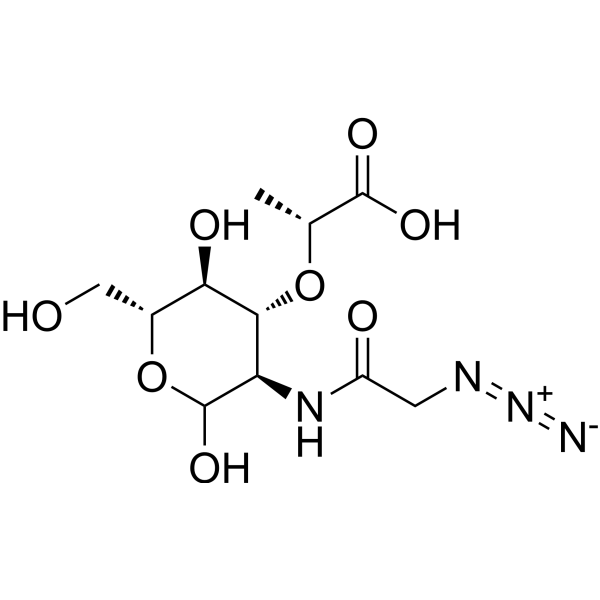
N-Acetylmuramic acid-azide (Compound 2) is a derivative of N-acetylaminoacetic acid (NAM) in bacterial peptidoglycan. Incorporated into bacterial peptidoglycan during biosynthesis .
|
-
- HY-136974
-
|
|
Drug Derivative
|
Others
|
|
9-Deoxyforskolin (compound 2) is a labdane-type diterpenoid, and also a forskolin derivative identified in hairy root cultures of Coleus forskohlii .
|
-
- HY-147050A
-
-
- HY-103079
-
|
|
Phosphatase
|
Cancer
|
|
PRL-3 Inhibitor 2 (compound 2) is a potent PRL-3 inhibitor with an IC50 value of 28.1 µM .
|
-
- HY-N8608
-
|
|
Others
|
Others
|
|
2''-O-Acetyl-platyconic acid A is an active compound. 2''-O-Acetyl-platyconic acid A can be used for the research of various biochemical .
|
-
- HY-N12638
-
|
|
Vasopressin Receptor
|
Endocrinology
|
|
Endolide F (Compound 2) is a proline-containing lactone. Endolide F is a moderate antagonist of the arginine antidiuretic hormone V1A receptor .
|
-
- HY-126106
-
|
|
Potassium Channel
|
Others
|
|
(BrMT)2 (compound 2) is a non-peptide snail toxin that slows down the activation of Kv1.1 channels .
|
-
- HY-N3303
-
|
|
Others
|
Others
|
|
Meliasenin B (compound 2) is an apotirucallane-type triterpenoid. Meliasenin B is a nature product that could be isolated from the fruits of Melia azedarach .
|
-
- HY-N10433
-
|
Icarisids E
|
Xanthine Oxidase
|
Metabolic Disease
|
|
Xanthine oxidase-IN-9 (Icarisids E) (Compound 2) is a potent xanthine oxidase (XOD) inhibitor with an IC50 of 31.81 μM .
|
-
- HY-163361
-
|
|
PI3K
|
Cancer
|
|
PI3Kα-IN-20 (compound 2) is a selective PI3Kα inhibitor .
|
-
- HY-161005
-
|
|
Hapten
|
Metabolic Disease
|
|
TETS-Methyl benzoate(compound 2j) is a haptendirectly conjugated to the carrier protein via carboxylic acid function using the standard activated ester method .
|
-
- HY-179636
-
|
|
Drug Intermediate
|
Cardiovascular Disease
|
|
DS-1040 Tosylate prodrug-1 (Compound 2) is a prodrug of DS-1040 Tosylate (Compound 1) (HY-101918). DS-1040 Tosylate prodrug-1 can be used to study thromboembolic diseases .
|
-
- HY-169505
-
|
|
Aurora Kinase
|
Cancer
|
|
Aurora kinase inhibitor-13 (Compound 2) is an inhibitor of Aurora kinase, with an IC50 value of 2.3 μM against Aurora kinase A .
|
-
- HY-N13156
-
|
|
Fungal
|
Infection
|
|
Amycolatopsin B (compound 2) is a glycosylated polyketide macrolide with antifungal activity that was isolated from the soil isolate Amycolatopsis sp. MST-108494 .
|
-
- HY-N8600
-
-
- HY-180477
-
|
|
Drug Derivative
|
Others
|
|
L-Kynurenine-5-F (Compound 2h) is the 5-F derivative of L-Kynurenine (HY-104026) .
|
-
- HY-151566
-
|
|
Ras
Farnesyl Transferase
Fungal
|
Infection
|
|
Antifungal agent 46 (compound 2f) is a potent antifungal agent. Antifungal agent 46 prevents Ras signaling by inhibiting protein farnesyltransferase .
|
-
- HY-N15223
-
|
|
Endogenous Metabolite
|
Others
|
|
[(2E,4E)-Octadienoyl]-N-isobutylamide (compound 2) is an isobutylamide that can be isolated from pepper seeds .
|
-
- HY-N12250
-
|
|
Others
|
Cancer
|
|
7-Deoxynarciclasine (compound 2b) can be isolated from Hymenocallis littoralis. 7-Deoxynarciclasine inhibits the cancer cell growth .
|
-
- HY-70028
-
|
|
MDM-2/p53
E1/E2/E3 Enzyme
|
Cancer
|
|
p53 and MDM2 proteins-interaction-inhibitor (racemic) (Compound 2j) is an inhibitor of the interaction between p53 and MDM2 proteins.
|
-
- HY-W340234
-
|
|
Galectin
|
Others
|
|
4,5-Dibromo-2-pyrrolic acid (compound 2) is an immunosuppressive compound. 4,5-Dibromo-2-pyrrolic acid suppresses the proliferative response of splenocytes to suboptimal concentrations of the mitogen, concanavalin A (Con A) .
|
-
- HY-N13118
-
|
|
Others
|
Cancer
|
|
Sinopodophylline B (compound 2) is a flavonoid glycoside compound that is cytotoxic to breast cancer cells. For example, the IC50 of Sinopodophylline B is 1.5 μM (T47D) and 44.2 μM (MDA-MB-231), respectively .
|
-
- HY-W707365
-
|
|
HIV
|
Infection
|
|
Docosyl trans-ferulate (compound 2) is an antiviral compound. Docosyl trans-ferulate exhibits anti-HIV-1 activity in anti-syncytial assays using the ΔTat/revMC99 virus and 1A2 cell line systems .
|
-
- HY-N3871
-
|
|
Others
|
Others
|
|
Ethyl β-D-ribo-hexopyranosid-3-ulose (Compound 2) is a natural product that can be isolated from Coleus forskohlii .
|
-
- HY-111798A
-
-
- HY-158977
-
|
|
Beta-lactamase
Bacterial
|
Infection
|
|
β-Lactamase-IN-9 (compound 2) is a β-lactamase inhibitor that can restore the sensitivity of pathogens to β-lactam antibiotics .
|
-
- HY-157215
-
|
|
HDAC
|
Cancer
|
|
HDAC-IN-66 (compound 2F) is a selective HDAC inhibitor and Pomalidomide (HY-10984) derivative that potently inhibits hematological tumor cells .
|
-
- HY-N9192
-
|
|
Others
|
Others
|
|
2,2-Dimethyl-8-prenylchromene 6-carboxylic acid (compound 2) is a natural product that can be found in Piper aduncum .
|
-
- HY-163520
-
-
- HY-W854353
-
-
- HY-162138
-
-
- HY-15692
-
-
- HY-N16541
-
|
|
Enterovirus
|
Infection
|
|
(-)-Mecambridine (Compound 2) is a retroprotoberberine alkaloid found in Papaver pseudocanescens M. Pop. (-)-Mecambridine has weak inhibitory activity against poliovirus type 1 .
|
-
- HY-168223
-
|
|
PROTAC Linkers
|
Cancer
|
|
Boc-Piperazine-2-F-Ph-CHO (Compound 2) is a PROTAC linker, used for the synthesis of YD54 (HY-168221) .
|
-
- HY-169627
-
|
|
VEGFR
|
Cardiovascular Disease
|
|
VEGFR-IN-7 (Compound 2) is a VEGFR inhibitor, showing inhibition of angiogenesis to a lesser extent. VEGFR-IN-7 is promising for research of cardiovascular diseases .
|
-
- HY-P2178
-
|
|
HDAC
|
Cancer
|
|
Dihydrochlamydocin analog-1 (compound 2) is a Chlamydocin (HY-115761) analogue that inhibits histone H4 peptide deacetylation with IC50 of 30 nM .
|
-
- HY-W043676
-
|
|
Parasite
Drug Intermediate
|
Infection
|
|
Dibenzosuberol (Compound 2) is a key intermediate in the synthesis of compounds associated with inhibiting Trypanosoma thiol reductase (TryR). Dibenzosuberol also shows inhibition of T. brucei with an EC50 value of 51.3 μM. Dibenzosuberol is also an impurity of Amitriptyline (HY-B0527) .
|
-
- HY-113753
-
|
|
Bacterial
|
Infection
|
|
PDF-IN-1 (compound 2) is a potential Peptide deformylase (PDF) inhibitor. PDF-IN-1 can be used for the development of new broad-spectrum antibiotics .
|
-
- HY-139840
-
|
|
PSMA
Carboxypeptidase
|
Cancer
|
|
GCPII-IN-1 (Compound 2) is a GCPII (also known as PSMA) inhibitor with a Ki of 44.3 nM. GCPII-IN-1 can be used in the research of prostate cancer .
|
-
- HY-N12660
-
|
|
Bacterial
|
Infection
|
|
Quorum sensing-IN-4 (compound 2) is a quorum sensing inhibitor, and can be isolated from Thailand mangrove-derived Streptomyces strain, OUCMDZ-5511 .
|
-
- HY-128427
-
|
|
SARS-CoV
|
Infection
|
|
PLpro-IN-1 (Compound 2) is a SARS-CoV PLpro inhibitor (IC50: 8.7 μM). PLpro-IN-1 can be used for antiviral research .
|
-
- HY-168365
-
|
|
Drug Isomer
|
Neurological Disease
|
|
(±)-Pellotine hydrochloride (Compound 2) is an alkaloid, which is found in L. diffusa and L. fricii. (±)-Pellotine hydrochloride decreases locomotor activity and the amount of rapid eye movement (REM) sleep in mice .
|
-
- HY-155836
-
|
|
Lipase
|
Metabolic Disease
|
|
hPL-IN-1 (compound 2t) is a reversible inhibitor of pancreatic lipase (PL) (IC50=1.86 μM) for anti-obesity research .
|
-
- HY-163900
-
|
|
Galectin
|
Others
|
|
Galectin-8N-IN-2 (compound 2) is a potent and selective Galectin-8N inhibitor with a Ki value of 74 μM .
|
-
- HY-149468
-
|
|
HBV
|
Infection
|
|
Antiviral agent 38 (compound 2.1-1) is a potent antiviral agent. Antiviral agent 38 can be used for hepatitis B virus (HBV) research .
|
-
- HY-155236
-
-
- HY-111758
-
|
|
PROTACs
Raf
|
Cancer
|
|
PROTAC B-Raf degrader 1 (compound 2) is a proteolysis targeting chimera (PROTAC) for the degradation of B-Raf based on Cereblon ligand with anti-cancer activity .
|
-
- HY-163813
-
-
- HY-162638
-
-
- HY-34544
-
|
|
Others
|
Others
|
|
2-Hexylthiophene is an extremely weak basic heteroaromatic compound. 2-Hexylthiophene can be used to modify and improve the molar absorption coefficient of ruthenium sensitizer
|
-
- HY-34487S2
-
|
|
Isotope-Labeled Compounds
|
Others
|
|
1,3-Dimethoxybenzene-d6 is the deuterium labeled 1,3-Dimethoxybenzene . 1,3-Dimethoxybenzene belongs to the class of organic compounds known as dimethoxybenzenes. 1,3-Dimethoxybenzene is an intermediate in synthesis of organic compounds .
|
-
- HY-34487S1
-
|
|
Isotope-Labeled Compounds
|
Others
|
|
1,3-Dimethoxybenzene-d4 is the deuterium labeled 1,3-Dimethoxybenzene . 1,3-Dimethoxybenzene belongs to the class of organic compounds known as dimethoxybenzenes. 1,3-Dimethoxybenzene is an intermediate in synthesis of organic compounds .
|
-
- HY-34487S
-
|
|
Isotope-Labeled Compounds
|
Others
|
|
1,3-Dimethoxybenzene-d10 is the deuterium labeled 1,3-Dimethoxybenzene . 1,3-Dimethoxybenzene belongs to the class of organic compounds known as dimethoxybenzenes. 1,3-Dimethoxybenzene is an intermediate in synthesis of organic compounds .
|
-
- HY-W012308
-
|
|
Drug Metabolite
|
Inflammation/Immunology
|
|
2′-Hydroxydihydrochalcone (Compound 2a) is an anti-inflammatory agent. 2′-Hydroxydihydrochalcone can be synthesized from the reduction of Flavone (HY-N2424) .
|
-
- HY-N10438
-
|
|
Integrin
|
Inflammation/Immunology
|
|
Ganodermaones B (Compound 2) is a renal fibrosis inhibitor. Ganodermaones B inhibits TGF-β1-induced collagen I and fibronectin expression .
|
-
- HY-144744
-
|
|
NF-κB
|
Cancer
|
|
NF-κB-IN-3 (Compound 2) is a NF-κB inhibitor with an IC50 of 0.70 µM. NF-κB-IN-3 can be used as an antitumor agent .
|
-
- HY-173021
-
|
|
Succinate Dehydrogenase
Fungal
|
Infection
|
|
Succinate dehydrogenase-IN-7 (Compound 2f) is a Succinate dehydrogenase inhibitor (IC50 = 2.51 μM). Succinate dehydrogenase-IN-7 has fungicidal activity .
|
-
- HY-144030
-
|
|
RET
|
Others
|
|
RET-IN-12 (compound 2) is a RET inhibitor, with IC50 values of 0.3 nM and 1 nM for RET(WT) and RET(V804M), respectively .
|
-
- HY-163353
-
|
|
Bacterial
Fungal
|
Infection
|
|
Antibacterial agent 193 (Compound 2n) is A monobenzene derivative of spiromarone A, which has antibacterial activity against Rhizoctonia solani. with IC50 value of 5.25 μg/mL .
|
-
- HY-153763
-
-
- HY-162304
-
|
|
MAGL
|
Neurological Disease
|
|
MAGL-IN-14 (compound 2) is a potent inhibitor of MAGL, with IC50 of 0.00289 μM and 0.002 μM in HEK293 and PC3 cells, respectively .
|
-
- HY-W560689
-
|
|
DNA/RNA Synthesis
|
Cancer
|
|
DNA polymerase-IN-1 (compound 2d) is a DNA polymerase inhibitor (IC50=20.7 μM) with antiproliferative activity against tumor cells .
|
-
- HY-123594
-
|
|
Cannabinoid Receptor
|
Neurological Disease
|
|
R-2 Methanandamide (Compound 2) is a cannabinoid Anandamide (HY-10863) analog with a Ki of 119 nM for the cannabinoid receptor (Ki is determined using rat brain membranes with PMSF) .
|
-
- HY-N12584
-
|
|
Others
|
Others
|
|
Pulchinenoside E4 (compound 2) is an oleanane-type triterpenoidal saponin that can be found in the roots ofPulsatilla chinensis . Pulchinenoside E4 shows cytotoxic activity .
|
-
- HY-W008240
-
-
- HY-N10817
-
|
|
Others
|
Others
|
|
(2S)-5-Methoxyflavan-7-ol (compound 2) is a nature product that could be isolated form Dragon's blood resin .
|
-
- HY-145472
-
|
|
Biochemical Assay Reagents
|
Cancer
|
|
Sphingosine (d18:1) alkyne (compound 2b) is an alkyne-labeled Sphingosine (d18:1) that can be used in click chemistry reactions .
|
-
- HY-N10937
-
|
|
Others
|
Others
|
|
2-Desoxypleniradin-L-α-arabinopyranoside, 2-acetate is an active compound. 2-Desoxypleniradin-L-α-arabinopyranoside, 2-acetate can be isolated from Helenium amarum .
|
-
- HY-155462
-
|
|
Bacterial
|
Infection
|
|
hERG-IN-1 (compound 2a) is an antibacterial agent and inhibitor of hERG. hERG-IN-1 inhibits pulmonary infection caused by Pseudomonas aeruginosa strain ATCC 27853 .
|
-
- HY-Y0410
-
|
2-Iminobenzimidazoline; 1H-Benzimidazol-2-ylamine; 2-Benzimidazolamine
|
Biochemical Assay Reagents
|
Others
|
|
2-Aminobenzimidazole (2-Iminobenzimidazoline; 1H-Benzimidazol-2-ylamine; 2-Benzimidazolamine) is a heterocyclic aromatic compound. 2-Aminobenzimidazole is a kind of biological materials or organic compounds that are widely used in life science research .
|
-
- HY-148231
-
|
|
DNA/RNA Synthesis
ADC Payload
|
Cancer
|
|
Dideoxy-amanitin (compound 2), an α-Amanitin (HY-19610) derivative, is a potent and selective RNA polymerase II allosteric inhibitor with an IC50 value of 74.2 nM .
|
-
- HY-138944
-
|
|
SGLT
|
Metabolic Disease
|
|
SGLT1/2-IN-1 is a dual SGLT1/SGLT2 inhibitor extract from WO2015032272A1, compound 2 .
|
-
- HY-N17469
-
|
|
Others
|
Others
|
|
2-Carboxy-2-hydroxyethyl 12,16-heneicosadienoate (compound 2) is a fatty acid ester that can be found in the roots of Angelicae koreana Kitagawa (Bukkanghwal, BKH) .
|
-
- HY-N18131
-
|
|
Reactive Oxygen Species (ROS)
|
Others
|
|
Farobin B (compound 2) is a flavonoid glycoside antioxidant that scavenges reactive oxygen species and exhibits activity in the ORAC assay. Farobin B is found in the leaves of Fargesia robusta 'Pingwu' .
|
-
- HY-170472
-
|
|
Drug Derivative
|
Infection
|
|
Bpin-Bedaquiline (compound 2) is a boronic ester precursor of Bedaquiline (HY-14881). Bpin-Bedaquiline can react with H476Br to synthesize 76Br-Bedaquiline .
|
-
- HY-116610
-
|
|
COX
|
Inflammation/Immunology
|
|
L 748780 (compound 2) is a selectivity COX-2 inhibitor with the IC50 values of 0.5 μM and > 100 μM for COX-2 and COX-1, respectively .
|
-
- HY-N1375
-
|
|
Others
|
Cancer
|
|
Qingyanshengenin (NSC 379666; compound 2), a pregnane glycoside, is a C21 steroidal aglycone isolated from the root of Cynanchumot ophyllum (Asclepiadaceae). Qingyanshengenin has anti-cancer activity .
|
-
- HY-143474
-
-
- HY-N3842
-
|
|
Others
|
Others
|
|
Ergosta-4,6,8(14),22-tetraen-3-one (compound 2) is a ergosteroid is isolated from the fruiting bodies of ganoderma applanatum .
|
-
- HY-W002878
-
|
|
Biochemical Assay Reagents
|
Others
|
|
TsDPEN (Compound 2) is a biochemical reagent. TsDPEN derivatives containing N,N,N imide chiral ligands can be applied to copper catalyzed asymmetric Kinugasa reactions .
|
-
- HY-160647
-
|
|
CCR
|
Inflammation/Immunology
|
|
CCR8 antagonist 3 (compound 2) is a CCR8 antagonist with an IC50 value of 0.062 µM. CCR8 antagonist 3 shows human microsomal stability .
|
-
- HY-W341759
-
|
|
Parasite
|
Infection
|
|
1,4-Dihydrazinylphthalazine (Compound 2) is an antiparasitic agent targeting
Leishmania spp. 1,4-Dihydrazinylphthalazine is promising for research of tropical diseases, particularly cutaneous leishmaniasis .
|
-
- HY-149043
-
|
|
NF-κB
|
Metabolic Disease
|
|
NIK-IN-1 (Compound 2) is an inhibitor of NF-κB-inducing kinase (NIK). NIK-IN-1 is used for research on hepatic inflammatory diseases and acute liver injury .
|
-
- HY-139840A
-
|
|
PSMA
Carboxypeptidase
|
Cancer
|
|
GCPII-IN-1 (Compound 2) TFA is a GCPII (also known as PSMA) inhibitor with a Ki of 44.3 nM. GCPII-IN-1 TFA can be used in the research of prostate cancer .
|
-
- HY-155837
-
|
|
Lipase
|
Metabolic Disease
|
|
hPL-IN-2 (compound 2u) is a potent, reversible, and non-competitive inhibitor of pancreatic lipase (IC50: 1.63 μM) and can be used in anti-obesity research .
|
-
- HY-137807
-
|
|
Endogenous Metabolite
|
Cancer
|
|
Thymidine 5′-monophosphate p-nitrophenyl ester sodium (Compound 2a) is the derivative of thymidine 5'-phosphate (TMP). Thymidine 5′-monophosphate p-nitrophenyl ester sodium is potential as an antitumor prodrug .
|
-
- HY-129092
-
|
8-SPT; 8-pSPT
|
Adenosine Receptor
|
Others
|
|
8-(p-Sulfophenyl)theophylline (8-SPT) (compound 2) is an adenosine A2B receptor antagonist, with a Ki of 1330 nM for A2B human recombinant .
|
-
- HY-153214
-
|
|
Wnt
β-catenin
|
Cancer
|
|
YW2036 (compound 2a) is a potent Wnt/β-Catenin signaling pathway inhibitor with an IC50 value of 637 nM. YW2036 can be used in research of colorectal cancer (CRC) .
|
-
- HY-169929
-
|
|
NKCC
|
Neurological Disease
|
|
KCC2 potentiators-1 (Compound 2) is a Potassium chloride cotransporter-2 (KCC2) potentiator. KCC2 potentiators-1 is promising for research of neurological disorder .
|
-
- HY-N3687
-
|
|
Others
|
Cancer
|
|
Dasycarpol (compound 2) is a product of microbial transformation of fraxinellone by Aspergillus niger (AS 3.421). Dasycarpol shows moderate cytotoxicity against A549 cells ,with the IC50 of 20 ug/mL .
|
-
- HY-118914
-
|
|
GCGR
|
|
|
Glucagon receptor antagonist inactive control (Compound 2) is a compound structurally similar to the glucagon receptor (GCGR) antagonist Glucagon receptor antagonist (Compound 1) but lacks antagonistic activity against glucagon receptor (GCGR). Glucagon receptor antagonist inactive control can be used as a negative control to study mechanisms related to glucagon receptor-mediated signaling pathways .
|
-
- HY-W012956
-
|
|
Drug Intermediate
|
Others
|
|
2-Acetylpyrrole is an organic compound containing a pyrrole ring. 2-Acetylpyrrole is one of the products of the Maillard browning reaction and can serve as a major flavor component in many foods. As an intermediate, 2-acetylpyrrole can also be used in the synthesis of other active compounds, such as the flavor compound 2-acetyl-1-pyrroline .
|
-
- HY-145869
-
|
|
NO Synthase
|
Inflammation/Immunology
|
|
Anti-inflammatory agent 12 (Compound 2) is a pentacyclic triterpene compound. Anti-inflammatory agent 12 shows a significant bias in the LPS-induced inflammatory response with an IIC50 value of 2.22 μM. Anti-inflammatory agent 12 has the potential for the research of inflammation disease .
|
-
- HY-177019
-
|
|
E3 Ligase Ligand-Linker Conjugates
|
Others
|
|
(S,R,S)-AHPC-PEG3-ADIBO-adipic acid (Compound 2a) is a PROTAC ligand (Compound 1d)-linker conjugate. (S,R,S)-AHPC-PEG3-ADIBO-adipic acid can be coupled with aptamer to construct PROTAC .
|
-
- HY-156188
-
|
|
Cholinesterase (ChE)
|
Others
|
|
AChE-IN-41 (Compound 2) is a compound of the Galantamine Memantine hybrid. AChE-IN-41 has the inhibition ability of cholinesterase. AChE-IN-41 shows higher plasma stability and comparable microsomal stability in vitro, while showing lower half-life and faster clearance in vivo .
|
-
- HY-129144
-
|
|
TNF Receptor
|
Cancer
|
|
Dihydrodehydrodiconiferyl alcohol (compound 2) is a kind of neolignan. Dihydrodehydrodiconiferyl alcohol can be isolated from Anogeissus acuminata. Dihydrodehydrodiconiferyl alcohol has specific cytotoxic activity on melanoma cancer cell line .
|
-
- HY-132820
-
|
VX-147
|
Apolipoprotein
|
Others
|
|
Inaxaplin (VX-147) is an orally active apolipoprotein L1 (APOL1) function inhibitor (WO2020131807, compound 2). Inaxaplin can be used for the research of kidney disease .
|
-
- HY-159150
-
|
|
HIV
|
Infection
|
|
HIV-1 inhibitor-71 (compound 2a) blocks the transport of endocytosed HIV-1 particles into nuclear envelope invagination (NEIs) that can inhibit productive infection .
|
-
- HY-162446
-
|
|
Ras
|
Cancer
|
|
pan-KRAS-IN-13 (compound 2) is a potent inhibitor of KRAS, with IC50s of 2.75 nM and 2.89 nM for G12D and G12V, respectively
|
-
- HY-150584
-
|
|
Fungal
|
Infection
|
|
Chitin synthase inhibitor 3 (compound 2d) is a potent chitin synthase inhibitor with an IC50 value of 0.16 mM, and MIC of 1 µg/mL against candida albicans. Antifungal activity .
|
-
- HY-N12703
-
|
|
Others
|
Inflammation/Immunology
|
|
N-Acetyldopamine dimmers A (Compound (+)-2) can be isolated from the cast-off shell of the cicada of Cryptotympana sp. N-Acetyldopamine dimmers A increases collagen and α-SMA expression .
|
-
- HY-129890
-
-
- HY-180734
-
|
|
Bacterial
|
Infection
|
|
Beta-alanyl-L-lysine, a L-lysine dipeptide, is an endogenous metabolite found in tibetan sheep . Beta-alanyl-L-lysine (compound 2) shows antistaphylococcal and antifibrinolytic activities .
|
-
- HY-N12022
-
|
|
Others
|
Neurological Disease
|
|
7(18)-Dehydroschisandro A (Compound 2) is a lignan can be isolated from Schizandra chinensis Baill. 7(18)-Dehydroschisandro A has inhibitory effects on stress gastric ulcer .
|
-
- HY-W681071
-
-
- HY-155498
-
|
|
GABA Receptor
|
Neurological Disease
|
TETS-4-Methylaniline (compound 2k) is a hapten. TETS-4-Methylaniline conjugates to the carrier protein via using either diazotization or glutaraldehyde methods .
|
-
- HY-N15705
-
|
|
Others
|
Others
|
|
Demethylflavasperone-10-O-β-d-glucopyranosyl-6-O-β-d-apiofuranoside (compound 2) is a naphthopyrone glycoside found in Senna tora sprouts .
|
-
- HY-168604
-
-
- HY-162770
-
|
|
Biochemical Assay Reagents
|
Cancer
|
|
Antiproliferative agent-55 (Compound 2d) is an anti-proliferative agent that can inhibit the growth of cancer cells. Antiproliferative agent-55 can be used in cancer research .
|
-
- HY-155645
-
|
|
Topoisomerase
Apoptosis
|
Cancer
|
|
Topoisomerase II inhibitor 15 (compound 2g) is a Topoisomerase II inhibitor. Topoisomerase II inhibitor 15 potently is an apoptotic inducer with greater selectivity against head and neck tumors .
|
-
- HY-N12601
-
|
|
Apoptosis
|
Cancer
|
|
Diselaginellin B (compound 2) is a natural product isolated from Selaginella Pulvinata, which exhibits anti-proliferative, apoptosis-inducing and antimetastatic activities against human carcinoma hepatocellular cells .
|
-
- HY-162656
-
|
|
Dihydrofolate reductase (DHFR)
|
Infection
|
|
DHFR-IN-19 (Compound 2g) is a selective inhibitor for TbDHFR with Ki of 9 nM. DHFR-IN-19 exhibits antiparasitic activity against Trypanosoma brucei with an EC50 of 14.5 μM .
|
-
- HY-N13116
-
|
|
Parasite
|
Others
|
|
3-O-(2",3"-Dimethylbutanoyl)-13-O-decanoylingenol (compound 2) is a diterpenoid with antinematode activity, which can be isolated from Euphorbia kansui .
|
-
- HY-163997
-
|
|
Parasite
|
Infection
|
|
Antimalarial agent 42 (Compound 2) is an antimalarial agent, that inhibits Plasmodium falciparum in the phase of asexual blood stages (IC50 <0.5μM) and gametocytes (IC50 is 0.14 μM) .
|
-
- HY-175259
-
|
|
Dihydroorotate Dehydrogenase
Parasite
|
Infection
|
|
DHODH-IN-29 (Compound 2i) is a covalent inhibitor of Leishmania braziliensis Dihydroorotate Dehydrogenase (LbDHODH) with an IC50 value of 0.5 μM. DHODH-IN-29 is promising for research of antileishmaniasis .
|
-
- HY-155037
-
|
|
Phosphatase
|
Cancer
|
|
VE-PTP-IN-1 (compound 2) is a weakly acidic and selective inhibitor of vascular endothelial protein tyrosine phosphatase (VE-PTP).VE-PTP-IN-1 is assocaited with vascular homeostasis and angiogenesis.
|
-
- HY-116713
-
-
- HY-135376
-
|
|
Drug Derivative
|
Metabolic Disease
|
|
Atorvastatin methyl ester (Compound 2a) is a methyl esterified derivative of Atorvastatin. Atorvastatin methyl ester inhibits the 9-cis-RA-induced Gal4 reporter activity more strongly than Atorvastatin .
|
-
- HY-144697
-
-
- HY-156066
-
|
Fer-1 diyne
|
Ferroptosis
|
Cancer
|
|
Ferrostatin-1 diyne (Fer-1 diyne) (compound 2) is a ferroptosis inhibitor that accumulates in lysosomes, mitochondria, and endoplasmic reticulum in cells, but its inhibition of ferroptosis is not dependent on the activity of lysosomes and mitochondria.
|
-
- HY-143480
-
-
- HY-120979
-
|
|
Angiotensin Receptor
|
Cardiovascular Disease
|
|
NO-Losartan A (compound 2a) displays vasorelaxing effects, due to the release of NO, and antagonized the vasocontractile effects of Angiotensin II (HY-13948), with potency values similar to that of Losartan (HY-17512) .
|
-
- HY-176841
-
|
|
Carboxylesterase (CES)
|
Cardiovascular Disease
|
|
Carboxylesterase-IN-5 (Compound 2e) is an irreversible and competitive Carboxylesterase (CES) inhibitor with an IC50 of 21.7 nM for porcine liver CES. Carboxylesterase-IN-5 can be used for hypocholesterolemia research .
|
-
- HY-N13076
-
|
|
Estrogen Receptor/ERR
|
Endocrinology
|
|
Neo-sagittasine A (compound 2) is an estrogen biosynthesis promoter that can enhance estrogen biosynthesis in human ovarian granulosa-like KGN cells. Neo-sagittasine A can be isolated from Epimedium brevifolium .
|
-
- HY-180495
-
-
- HY-N13134
-
|
|
Others
|
Cardiovascular Disease
|
|
Kadsutherin F (compound 2) is a lignin that can be isolated from Kadsura. Kadsutherin F has an inhibitory effect on adenosine diphosphate (ADP)-induced platelet aggregation with an inhibition rate of 49.47% .
|
-
- HY-155411
-
-
- HY-120538
-
-
- HY-W048497
-
|
|
DNA/RNA Synthesis
|
Others
|
|
2'-O-MOE-5-Me-rC is an active compound. 2'-O-MOE-5-Me-rC can be used for oligonucleotide synthesis .
|
-
- HY-W088037S
-
|
|
Isotope-Labeled Compounds
|
Others
|
|
Tridecane-d28 is the deuterium labeled Tridecane . Tridecane is a short chain aliphatic hydrocarbon containing 13 carbon atoms. Tridecane is an volatile oil component isolated from essential oil of Piper aduncum L. Tridecane is a stress compound released by the brown marmorated stink bugs stress compound .
|
-
- HY-156522
-
|
|
CFTR
|
Endocrinology
|
|
CRF1 receptor antagonist-1 (Compound 2) is a CRF1 receptor antagonist. CRF1 receptor antagonist-1 can be used for research of congenital adrenal hyperplasia (CAH) .
|
-
- HY-161713
-
|
|
PD-1/PD-L1
|
Cancer
|
|
PD-1/PD-L1-IN-45 (Compound 2) is an inhibitor for PD-1/PD-L1 Interaction with EC50 of 21.8 nM .
|
-
- HY-147887
-
|
|
Microtubule/Tubulin
|
Cancer
|
|
Tubulin inhibitor 28 (compound 2g) is a potent tubulin inhibitor with an IC50 value of 1.2 µM. Tubulin inhibitor 28 shows anti-proliferative activity for MCF-7 cells .
|
-
- HY-147979
-
|
|
CXCR
|
Infection
Cancer
|
|
CXCR4 antagonist 9 (Compound 2) is a CXCR4 antagonist with an IC50 of 15 nM. CXCR4 antagonist 9 inhibits CXCL12 induced cytosolic calcium increase with an IC50 of 1.3 nM .
|
-
- HY-47733
-
|
|
CDK
|
Cancer
|
|
WAY-643018 (Compound 2), an indazolecarboxamide derivative, is a CDK1, CDK2, and CDK4 inhibitor. CDK1/2/4-IN-2 has the potential for cancer research .
|
-
- HY-144209
-
|
|
CD73
|
Cancer
|
|
CD73-IN-6 is a CD73 inhibitor extracted from patent WO2022007677A1 compound 2. CD73-IN-6 can be used for the research of cancer .
|
-
- HY-161691
-
|
|
Filovirus
|
Infection
|
|
EBOV-IN-9 (compound 2b) is Diphyllin derivative that blocks Ebola viral entry with an EC50 of 40 nM. EBOV-IN-9 against EBOV-infected monocyte-derived macrophages with an EC50 of 107 nM .
|
-
- HY-146586
-
|
|
Haspin Kinase
CDK
DYRK
|
Cancer
|
|
Haspin-IN-1 (compound 2a) is a haspin inhibitor with an IC50 of 119 nM. Haspin-IN-1 also inbibits CLK1 and DYRK1A with IC50s of 221 nM and 916.3 nM, respectively .
|
-
- HY-100004
-
|
|
Mitochondrial Metabolism
|
Cancer
|
|
Fumarate hydratase-IN-1 (compound 2) is a cell-permeable fumarate hydratase inhibitor. Fumarate hydratase-IN-1 has antiproliferative activity against several cancer cell lines with a mean IC50 of 2.2 μM .
|
-
- HY-155831
-
|
|
HCV
|
Infection
|
|
HCV-IN-43 (compound 2) is an HCV NS5B protein inhibitor that can effectively inhibit the replication of HCV virus. HCV-IN-43 can be used for the study of HCV infection .
|
-
- HY-160519
-
|
|
Bacterial
Antibiotic
|
Infection
|
|
Targocil-II (Compound 2) is an ABC transporter inhibitor with a IC50 value of 137 nM. Targocil-II prevents ATP hydrolysis by binding to allosteric sites of the TM domain. Targocil-II has (antibacterial) activity .
|
-
- HY-W457949
-
|
|
E3 Ligase Ligand-Linker Conjugates
|
Cancer
|
|
Pomalidomide 4'-alkylC4-azide (Compound 2) is an azide compound containing a MIDI group and is one of the compounds used to construct a library of MIDI azide compounds. Pomalidomide 4'-alkylC4-azide is an E3 ligase ligand and linker conjugate (E3 Ligase Ligand-Linker Conjugate). Pomalidomide 4'-alkylC4-azide can be used to develop research on PROTAC degraders .
|
-
- HY-112783
-
|
|
JAK
|
Inflammation/Immunology
|
|
TYK2 ligand 4 (Compound 2) is a TYK2 ligand. TYK2 ligand 4 binds to both the kinase domain and pseudokinase domain, and induces an inactive conformation of the kinase domain, thereby preventing ATP binding. TYK2 ligand 4 serves as a tool compound for the development of Deucravacitinib (HY-117287) .
|
-
- HY-N15578
-
|
|
Others
|
Others
|
|
Actinidioionoside (Compound 2) is a megastigmane glucoside compound found in Borago officinalis L. Actinidioionoside has DPPH free radical scavenging activity (IC50: 41.3 μM). Actinidioionoside has no significant cytotoxicity against A549 human lung cancer cells (IC50 > 100 μM). Actinidioionoside can be used in antioxidant studies .
|
-
- HY-W010562S
-
|
|
Isotope-Labeled Compounds
|
Others
|
|
2-Methoxypyrazine-d3 is the deuterium labeled 2-Methoxypyrazine . 2-Methoxypyrazine is an active compound. 2-Methoxypyrazine can be used for the research of various biochemical studies .
|
-
- HY-147553
-
|
|
HIV
|
Infection
|
|
HIV-1 inhibitor-36 (Compound 2) is a potent HIV-1. HIV-1 inhibitor-36 has the potential for further development as novel latency reversing agents .
|
-
- HY-175451
-
|
|
Molecular Glues
Src
|
Infection
Cancer
|
|
MRT-10350 (Compound 2) is a cereblon-based HCK molecular glue degrader. MRT-10350 can be used for cancers like chronic myeloid leukemia and HIV-1 infections research .
|
-
- HY-163491
-
|
|
Wee1
|
Cancer
|
|
PKMYT1-IN-2 (compound 2) is a potent PKMYT1 inhibitor with an IC50 of 5.7 nM. PKMYT1-IN-2 inhibits the growth of HCC1569 cells with an IC50 of 22 nM .
|
-
- HY-40269
-
|
|
Biochemical Assay Reagents
Drug Intermediate
|
Neurological Disease
|
|
L-Pyroglutamic acid ethyl ester (Compound 2c) is an intermediate. L-Pyroglutamic acid ethyl ester is involved in the synthesis of γ-aminobutyrate transaminase inactivators. L-Pyroglutamic acid ethyl ester can be used in epilepsy and Huntington's disease research .
|
-
- HY-N1947
-
|
|
Others
|
Others
|
|
Ligurobustoside N (compound 2) is an antioxidative glycoside that can be isolated from the Leaves of Ligustrum robustum. Ligurobustoside N shows antioxidant effects and shows inhibition for AAPH (HY-Y0525) induced hemolysis .
|
-
- HY-178035
-
-
- HY-18849
-
|
|
ERK
|
Cancer
|
|
ERK2-IN-3 (compound 2) is a inhibitor of ERK2, and inhibits Erk2 WT and Erk2 DS1 activation loop phosphorylation, with IC50 of 5 μM and 42 nM, respectively .
|
-
- HY-N16401
-
|
|
Bacterial
Drug Derivative
|
Infection
|
|
Aspergillumarin B (Compound 2) is a derivative of dihydroisocoumarin. Aspergillumarin B can be isolated from the endophytic fungus Aspergillus sp.. Aspergillumarin B has a weak antibacterial activity against Staphylococcus aureus and Bacillus subtilis .
|
-
- HY-163395
-
|
|
Parasite
|
Infection
|
|
3-Tosylimidazolidine-2,4-dione (compound 2C) is a hydantoins derivative, and exhibits inhibitory activity against the Pf3D7 strain, with an IC50 value of 3.97 nM .
|
-
- HY-145418
-
|
|
IRE1
|
Others
|
|
IRE1α kinase-IN-3 (compound 2) is a potent IRE1α inhibitor with an Ki of 480 nM. IRE1α kinase-IN-3 is the ATP-competitive ligands of IRE1α .
|
-
- HY-W615671
-
|
|
Estrogen Receptor/ERR
|
Others
|
|
4,4'-(Cyclohexylidenemethylene)diphenol (Compound 2) is a symmetric cyclic nonsteroidal estrogen. 4,4'-(Cyclohexylidenemethylene)diphenol has high binding affinity for estrogen receptors ERα and ERβ .
|
-
- HY-144722
-
|
|
Bacterial
|
Infection
|
|
Antitubercular agent-12 (Compound 2c) is an antitubercular agent (MIC = 1.439 μg/mL). Antitubercular agent-12 shows greatly lower cytotoxicity (CC50: 57.34 μg/mL) .
|
-
- HY-171233
-
|
|
Bacterial
|
Infection
|
|
MRSA antibiotic 2 (compound 2) shows MIC of 2 μg/mL for S. aureus (MRSA). MRSA antibiotic 2 selectively target Gram-positive bacteria over Gram-negative bacteria and human cells .
|
-
- HY-176704
-
|
|
Deubiquitinase
|
Cancer
|
|
USP1-IN-13 (Compound 2) is a potent and orally active USP1 inhibitor with an IC50 value of 1.02 nM. USP1-IN-13 can be used for the study of breast cancer .
|
-
- HY-157143
-
|
|
Bacterial
|
Infection
|
|
Antibacterial agent 164 (compound 2a) is an antibacterial and antibiofilm agent. Antibacterial agent 164 inhibits S. aureus and B. subtilis (MIC of 0.09 mM), and also exhibits strong anti-B. Subtilis biofilm formation .
|
-
- HY-W008038
-
|
|
iGluR
|
Others
|
|
NMDAR antagonist 3 (Compound 2) is an antagonist of the NMDA receptor. NMDAR antagonist 3 has a certain but weak inhibitory activity against the NR1A/2B subtype of the NMDA receptor .
|
-
- HY-N17508
-
|
|
Drug Derivative
|
Others
|
|
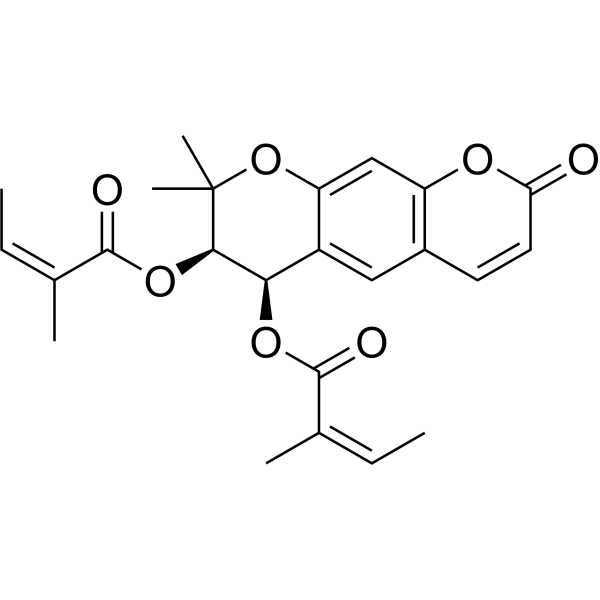
Qianhucoumarin J (Compound 2) is a khellactone-derived coumarin (3'(S)-angeloyloxy-4'(S)-propionyloxy-3',4'-dihydroseselin) that can be found in the roots of Peucedanum praeruptorum Dunn .
|
-
- HY-150314
-
|
|
Monocarboxylate Transporter
|
Cancer
|
|
MCT-IN-1 (Compound 2) is a potent MCT inhibitor, with IC50 values of 9 nM and 14 nM against MCT1 and MCT4, respectively. MCT-IN-1 can be used in research related to solid tumors .
|
-
- HY-W016825
-
|
|
Drug Intermediate
|
Others
|
|
2-(Pyridin-2-yl)acetic acid hydrochloride is a heterocyclic aromatic carboxylic acid compound. 2-(Pyridin-2-yl)acetic acid hydrochloride can be used as an organic synthesis intermediate or a metal complex .
|
-
- HY-W011955
-
|
|
Adenosine Receptor
|
Cardiovascular Disease
|
|
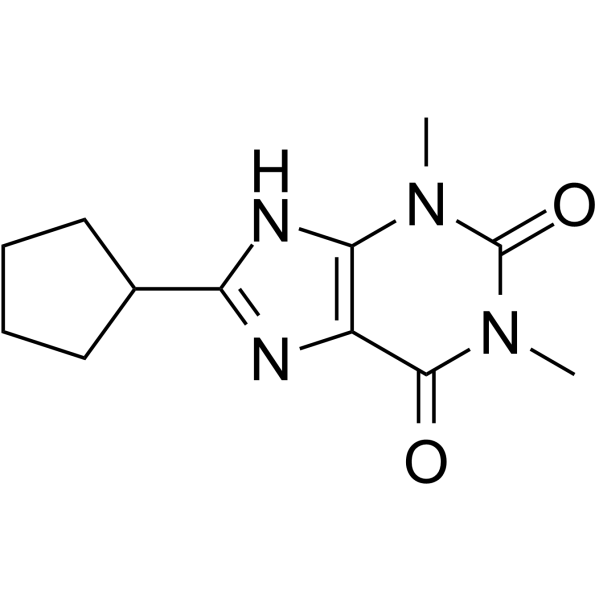
8-Cyclopentyl-1,3-dimethylxanthine (Compound 2a) is a selective adenosine A1 receptor antagonist with Kis of 10.9 nM and 1440 nM for A1 receptor and A2 receptor, respectively .
|
-
- HY-W026109
-
-
- HY-177296
-
-
- HY-143303
-
|
|
Apoptosis
|
Cancer
|
|
Anticancer agent 32 (compound 2g) is an anticancer agent. Anticancer agent 32 shows anticancer activities, affects cell cycle and induces cell apoptosis. Anticancer agent 32 can be used for the research of cancer .
|
-
- HY-W011955R
-
-
- HY-181261
-
-
- HY-Y0045
-
|
1-(1,3-Thiazol-2-yl)ethanone; 1-(Thiazol-2-yl)ethanone; Methyl 2-thiazolyl ketone
|
Biochemical Assay Reagents
|
Others
|
|
2-Acetylthiazole (1-(1,3-Thiazol-2-yl)ethanone; 1-(Thiazol-2-yl)ethanone; Methyl 2-thiazolyl ketone) is a flavor compound. 2-Acetylthiazole is a kind of biological materials or organic compounds that are widely used in life science research .
|
-
- HY-33287
-
|
|
Biochemical Assay Reagents
|
Cancer
|
|
2-Bromothiazole-5-carboxylic acid is a starting compound in the synthesis of active compounds. 2-Bromothiazole-5-carboxylic acid can be used in the synthesis of NAMPT/HDAC inhibitors. 2-Bromothiazole-5-carboxylic acid can be used in the research of colon cancer, lung cancer, and liver cancer .
|
-
- HY-W100829
-
|
|
Drug Intermediate
|
Others
|
|
FPPS ligand 3 (compound 2) is a farnesyl pyrophosphate synthase (FPPS) ligand. FPPS ligand 3 binds to the hydrophobic base region of the FPPS pocket. FPPS ligand 3 can be used to design and synthesize FPPS inhibitors .
|
-
- HY-12791
-
-
- HY-151371
-
|
|
CDK
|
Cancer
|
|
CDK8-IN-10 (compound 2) is a potent, selective cyclin-dependent kinase (CDK8) inhibitor with an IC50 value of 8.25 nM. CDK8-IN-10 can be used for research of cancer .
|
-
- HY-153565
-
|
|
Others
|
Inflammation/Immunology
|
|
Immune cell migration-IN-1 (compound 2) is a potent agent to inhibit immune cell migration. Immune cell migration-IN-1 can be used for research in alleviating dry eye diseases, eczema dermatitis and psoriasis .
|
-
- HY-150027
-
|
|
VEGFR
PDGFR
|
Cancer
|
|
Multi-kinase-IN-3 (compound 2) is a potent angiokinase inhibitor. Multi-kinase-IN-3 shows inhibition activity against VEGFR-2 and PDGFRβ, with IC50 values of 58.3 and 55 nM, respectively .
|
-
- HY-W017512
-
|
|
Drug Intermediate
|
Others
|
|
2-Methylindanone is a cyclic ketone compound. 2-Methylindanone is an important substrate for evaluating the effects of Pd and Ni in asymmetric α-arylation reactions. 2-Methylindanone can also be used as a drug intermediate .
|
-
- HY-169608
-
|
|
Bcr-Abl
|
Cancer
|
|
BCR-ABL-IN-11 (Compound 2) is a BCR-ABL inhibitor. BCR-ABL-IN-11 shows anticancer activity against chronic myelogenous leukemia (CML) (IC50 of 129.61 μM for K562 cells) .
|
-
- HY-162129
-
|
|
Photosensitizer
|
Cancer
|
|
Antitumor agent-131 (Compound 2-p) is an ER fluorescent probe with an IC50 value of 23 nM for HepG2 tumor cells. Antitumor agent-131 can be used as a photosensitizer for the study of cancer photodynamics .
|
-
- HY-N11880
-
|
|
COX
|
Cancer
|
|
2-O-Sinapoyl makisterone A (compound 2), a sinapinic acid-ecdysterone hybrid, is a selective inhibitor of COX-2. 2-O-Sinapoyl makisterone A significantly inhibits the expression of COX-2 protein .
|
-
- HY-174449
-
|
|
HDAC
|
Neurological Disease
|
|
HDAC6-IN-62 (Compound 2.12) is a selective HDAC6 inhibitor, with an IC50 value of 0.25 nM. HDAC6-IN-62 can be used in the research of Charcot-Marie-Tooth disease .
|
-
- HY-W015302R
-
|
Orthanilic acid (Standard); 2-Aminobenzenesulphonic acid (Standard)
|
Reference Standards
Drug Intermediate
|
Others
|
|
2-Aminobenzenesulfonic acid (Orthanilic acid) is an amine derivative. 2-Aminobenzenesulfonic can be used for the synthesis of other active compounds. 2-Aminobenzenesulfonic acid can be converted into Schiff base, and further used for the preparation of metal complexes .
|
-
- HY-180451
-
|
|
Bacterial
|
Infection
|
|
Antibacterial agent 310 (compound 2) is a bis-benzimidazole-derived chelating ligand exhibiting antibacterial activity. Antibacterial agent 310 shows inhibition activity against intracellular viruses. Antibacterial agent can be used for antibacterial research .
|
-
- HY-143496
-
|
|
RSV
Influenza Virus
|
Infection
|
|
RSV-IN-4 (Compound 2) is a dual inhibitor of respiratory syncytial virus (RSV) and influenza virus A (IAV). RSV-IN-4 shows anti-RSV activity (EC50 = 11.76 μM) .
|
-
- HY-N12664
-
|
|
Glycosidase
|
Metabolic Disease
|
|
α-Glucosidase-IN-54 (compound 2) is a α-glucosidase inhibitor with the IC50 of 0.011 mM, and can be isolated form Syzygium jambos (L.). α-Glucosidase-IN-54 can be used for study of diabetes .
|
-
- HY-115948
-
|
|
Others
|
Cancer
|
|
Antitumor agent-46 (Compound 2h) is an anti-tumor agent. Antitumor agent-46 demonstrates markedly higher antiproliferative activity on MCF-7 cells with an IC50 value of 2.08 µM .
|
-
- HY-142940
-
|
|
ROR
|
Inflammation/Immunology
|
|
RORγt modulator 5 is a RORγt modulator with a Ki value of <100 nM. RORγt modulator 5 has the potential for inflammatory, metabolic, autoimmune and other diseases mediated by RORy study (WO2017132432A1; compound 2) .
|
-
- HY-147528
-
|
|
mGluR
|
Neurological Disease
|
|
mGluR2 modulator 2 (compound 2) is a potent, selective and orally bioavailable mGluR2 positive allosteric modulator with an EC50 value of 0.13 μM. mGluR2 modulator 2 can be used for researching antipsychotic .
|
-
- HY-W018629
-
|
|
Bacterial
Drug Intermediate
|
Infection
|
|
Antibacterial agent 265 (Compound 2) is an antibacterial agent. Antibacterial agent 265 shows antibacterial activity against Staphylococcus Aureus, Micrococcus Luteus, Bacillus subtilis, gram-negative Escherichia coli, Pseudomonas aeruginosa and Flavobacterium devorans .
|
-
- HY-146106
-
|
|
Bacterial
Fungal
|
Infection
|
|
Antitubercular agent-22 (Compound 2) is a potent anticandidiasis and antitubercular agent with MIC values of 2.34 µg/ml and 2 µg/ml against Candida albicans MTCC 3017 and M. tuberculosis (H37Rv), respectively .
|
-
- HY-151145
-
|
|
Glycosidase
|
Metabolic Disease
|
|
α-Glucosidase-IN-21 (Compound 2B) is a potent, orally active α-glucosidase inhibitor with an IC50 of 2.62 μM. α-Glucosidase-IN-21 shows anti-diabetic activity .
|
-
- HY-N12071
-
|
|
Others
|
Others
|
|
Lucidin-ω-Me ether (Compound 2) can be isolated from the roots of Knoxia valerianoides. Lucidin-ω-Me ether inhibits the advanced glycation end products (AGEs) formation in vitro(IC50: 62.79 μM) .
|
-
- HY-W102837
-
|
|
Biochemical Assay Reagents
|
Others
|
|
2,3-Dihydroxy-6,7-Difluoroquinoxaline (Compound 2) is an intermediate in organic synthesis. 2,3-Dihydroxy-6,7-Difluoroquinoxaline can be used in research on polymer solar cells .
|
-
- HY-W102471
-
|
|
Photosensitizer
|
Others
|
|
3-Acetylbenzophenone (Compound 2) is the photolysis product of Ketoprofen (HY-B0227). 3-Acetylbenzophenone promotes the photoperoxidation reaction of Linoleic acid (HY-N0729), exhibits free radical scavenging and photosensitizing activity .
|
-
- HY-N9253
-
|
|
Others
|
Others
|
|
2,2-Dimethyl-6-phenylpyrano[3,4-b]pyran-8-one (Compound 2) is a pyranone isolated from the hexane extract of the aerial parts of Hypericum choisianum .
|
-
- HY-163751
-
-
- HY-125603
-
|
|
Free Fatty Acid Receptor
|
Neurological Disease
|
|
Termitomycamide B (compound 2) is a neuroprotective agent that can be obtained from Termitomyces titanicus. Termitomycamide B effectively inhibits endoplasmic reticulum stress-dependent cell death. Termitomycamide B can be used in the study of neurodegenerative diseases .
|
-
- HY-N12130
-
|
|
Insecticide
|
Others
|
|
Celangulatin D (Compound 2) is an insecticidal sesquiterpene polyol ester isolated from the root bark of the natural Celastrus angulatus. Celangulatin D has insecticidal activity against armyworms. Celangulatin D can be used for insecticidal and anti-tumor research .
|
-
- HY-Y1093S2
-
|
Ethyl acetylacetate-d5; EAA-d5
|
Bacterial
|
Others
|
|
Ethyl acetoacetate-d5 is the deuterium labeled Ethyl acetoacetate . Ethyl acetoacetate (Ethyl acetylacetate) is an ester widely used as an intermediate in the synthesis of many varieties of compounds . Ethyl acetoacetate is an inhibitor of bacterial biofilm .
|
-
- HY-176461
-
|
|
Src
Bcr-Abl
|
Cancer
|
|
Pro-Dasatinib (compound 2j), an amino acid analog of Dasatinib (HY-10181), is a potent Src/Abl kinase inhibitor. Pro-Dasatinib has antiproliferative activity against K652 leukemia cancer cells with an IC50 of 0.21 nM.
|
-
- HY-159801
-
|
|
E3 Ligase Ligand-Linker Conjugates
|
Cancer
|
|
E3 Ligase Ligand-linker Conjugate 122 (Compound 2c) is a conjugation of the E3 ligase ligand and the linker, and can be used for synthesis of PROTAC degrader NR-11c (HY-159798) .
|
-
- HY-204504
-
|
|
Drug Derivative
|
Others
|
|
42-O-(2-Aminoethyl)-rapamycin (compound 2.3) is a derivative of the mTOR inhibitor rapamycin. 42-O-(2-Aminoethyl)-rapamycin can be used in pharmaceutical research for developing conjugates .
|
-
- HY-112555
-
-
- HY-114173
-
-
- HY-W019829
-
|
|
Tyrosinase
Parasite
|
Infection
|
|
Polyphyllin C (compound 2) is a spirostanol saponin. Polyphyllin C exhibits mild (IC50=36.87 µM) activities against the tyrosinase and moderate (IC50=1.59 µg/mL) antileishmanial activities .
|
-
- HY-W010562R
-
|
|
Drug Derivative
Reference Standards
|
Others
|
|
2-Methoxypyrazine (Standard) is the analytical standard of 2-Methoxypyrazine. This product is intended for research and analytical applications. 2-Methoxypyrazine is an active compound. 2-Methoxypyrazine can be used for the research of various biochemical studies[1].
|
-
- HY-146030
-
|
|
Drug Derivative
|
Cancer
|
|
Anticancer agent 46 (compound 2) is a potent anticancer agent. Anticancer agent 46 shows antiproliferative activity with an IC50 of 0.986 µM for MGC803 cells. Anticancer agent 46 has the potential for the research of gastric cancer .
|
-
- HY-149061
-
|
|
Apoptosis
|
Cancer
|
|
Anticancer agent 99 (compound 2p) has good anticancer activity against HepG2 cells, with an IC50 value of 35.9 μM. Anticancer agent 99 can induce apoptosis and has anti-proliferation effect .
|
-
- HY-142481
-
|
|
Ras
|
Cancer
|
|
KRAS G12C inhibitor 30 is a KRAS G12C inhibitor extracted from patent WO2021252339A1, compound 2. KRAS G12C inhibitor 30 can be used for the research of cancer .
|
-
- HY-Y1093S3
-
|
EAA-13C
|
Bacterial
|
Others
|
|
Ethyl acetoacetate- 13C is the 13C labeled Ethyl acetoacetate . Ethyl acetoacetate (Ethyl acetylacetate) is an ester widely used as an intermediate in the synthesis of many varieties of compounds . Ethyl acetoacetate is an inhibitor of bacterial biofilm .
|
-
- HY-N3616
-
|
|
DNA/RNA Synthesis
Endogenous Metabolite
|
Cancer
|
|
trans-Coniferyl aldehyde (compound 2) is a natural compound isolated from the buds of clove (Syzygium aromaticum).trans-Coniferyl aldehyde suppresses 63% of the UV mutable gene expression at 1.20 μM, and with an ID50 value of 0.76 μM,and has the antimutagenic
activities against furylfuramide, Trp-P-1, and activated Trp-P-1 .
|
-
- HY-162040
-
|
|
P-glycoprotein
|
Cancer
|
|
P-gp inhibitor 17 (compound 2g) is a P-gp inhibitor directly interacted with the transmembrane domain of P-gp. P-gp inhibitor 17 can be used for P-gp-mediated multidrug-resistant in tumor cells study .
|
-
- HY-160877
-
|
|
Filovirus
|
Infection
|
|
EBOV-IN-2 (Compound 2) is an inhibitor of Ebola virus (EBOV) with IC50 values of 0.37 μM and 2.54 μM against Ebola virus glycoprotein pseudotype virus (pEBOV) and African swine fever virus (ASFV), respectively .
|
-
- HY-151339
-
|
|
Bacterial
|
Infection
|
|
Antitubercular agent-31 (Compound 2) is an antitubercular agent with an MIC of 0.03 μM against M. tuberculosis H37Rv. Antitubercular agent-31 also inhibits DprE1 with an IC50 of 1.1 μM .
|
-
- HY-143269
-
|
|
Amylases
Glycosidase
|
Metabolic Disease
|
|
HPA-IN-2 (Compound 2a-1) is a potent and selective human pancreatic α-amylase (HPA) inhibitor with IC50 values of 8.2 μM and 450.7 μM against HPA and α-glucosidase, respectively .
|
-
- HY-117072
-
|
|
Fluorescent Dye
|
Others
|
|
(E)-2-Hexadecenal alkyne (compound 2) is a chemical probe used to explore the cellular targets of 2-trans-Hexadecenal. It can covalently modify multiple proteins in cells and provide a tool for studying lipid metabolism-related diseases.
|
-
- HY-177070
-
|
|
Xanthine Oxidase
|
Inflammation/Immunology
|
|
Angexostat (Compound 2) is an inhibitor of xanthine oxidase. Angexostat exhibits high permeability. Angexostat inhibits CYP2C9 with an IC50 of 18.1 μM. Angexostat can be studied in research for xanthine oxidase-related diseases such as hyperuricemia and gout .
|
-
- HY-N16530
-
|
|
Endogenous Metabolite
|
Others
|
|
8-Methyl-2'-deoxydisporopsin (Compound 2) is a C-methylated high isomeric ketone and is one of the characteristic secondary metabolites of the Liliaceae family. 8-Methyl-2'-deoxydisporopsin shows no cytotoxic activity .
|
-
- HY-N15629
-
|
NSC 402921
|
Biochemical Assay Reagents
|
Others
|
|
Melicopicine (NSC 402921) (Compound 2) is an acridone alkaloid. Melicopicine is a 1,2,3,4-tetraoxygenated acridone precursor, which can be co-isolated from S. megistophylla and detected by GC-MS in the extract from S. follicularis .
|
-
- HY-N18196
-
|
|
Others
|
Others
|
|
25-O-Acetylcimigenol-3-O-alpha-l-arabinoside (compound 2) is a cycloartane glycoside. 25-O-Acetylcimigenol-3-O-alpha-l-arabinoside can be found in the rhizomes of Cimicifuga dahurica (Ranunculaceae) .
|
-
- HY-Y1093S1
-
|
|
Bacterial
|
Others
|
|
Ethyl acetoacetate- 13C4 is the 13C labeled Ethyl acetoacetate . Ethyl acetoacetate (Ethyl acetylacetate) is an ester widely used as an intermediate in the synthesis of many varieties of compounds . Ethyl acetoacetate is an inhibitor of bacterial biofilm .
|
-
- HY-134138
-
|
|
COX
|
Inflammation/Immunology
|
|
Indomethacin N-octyl amide (Compound 2) is a potent and selective COX-2 inhibitor with an IC50 of 40 nM. Indomethacin N-octyl amide shows >1000-fold selectivity against COX-1 (IC50 of 66 µM) .
|
-
- HY-176183
-
-
- HY-N15458
-
|
|
Apoptosis
|
Cancer
|
|
5,6,7,8,4'-Pentahydroxyflavone (Compound 2b) is a flavonoid with antitumor activity. 5,6,7,8,4'-Pentahydroxyflavone exerts cytotoxic effects via inhibiting cell proliferation and inducing apoptosis .
|
-
- HY-155230
-
|
|
Bacterial
|
Infection
|
|
T3SS-IN-2 (Compound 2h) is a type three secretion system (T3SS) inhibitor. T3SS-IN-2 can be used for bacterial infection research .
|
-
- HY-N16339
-
|
|
Bacterial
|
Infection
|
|
8-Desmethyleleutherin (Compound 2) is an antibacterial agent that can be extracted from the bulbs of Eleutherine americana. 8-Desmethyleleutherin has MIC values of both 62.5 µg/mL for S. aureus strains ATCC27664 and ATCC25923 .
|
-
- HY-129701
-
|
|
Bcl-2 Family
|
Cancer
|
|
MCL-1/BCL-2-IN-3 (Compound 2) is a potent and selective Mcl-1 and Bcl-2 dual inhibitor with IC50s of 5.95 and 4.78 μM, respectively .
|
-
- HY-151205
-
|
|
Bacterial
|
Infection
Inflammation/Immunology
|
|
Antituberculosis agent-3 (Compound 2) is an antituberculosis agent. Antituberculosis agent-3 shows anti-mycobacterial activity, and can inhibit M. tuberculosis H37Rv strain growth (MIC=12.5 μg/mL) .
|
-
- HY-100734
-
|
|
Histone Acetyltransferase
|
Cancer
|
|
Histone Acetyltransferase Inhibitor II (compound 2c) is a potent, selective and cell permeable p300 histone acetyltransferase inhibitor, with an IC50 of 5 µM. Histone Acetyltransferase Inhibitor II shows anti-acetylase activity in mammalian cells .
|
-
- HY-151628
-
|
|
Bacterial
|
Cancer
|
|
MRV03-068 (Compound 2) is a selective colibactin-activated peptidase (ClbP) inhibitor that blocks the genotoxic effect of Colibactin (HY-145930) on eukaryotic cells. MRV03-068 can be used in colorectal cancer research .
|
-
- HY-111798
-
|
|
Reactive Oxygen Species (ROS)
|
Cancer
|
|
Heme Oxygenase-1-IN-1 (compound 2) is a potent heme oxygenase 1 (HO-1) inhibitor, with an IC50 of 0.25 μM. Heme Oxygenase-1-IN-1 can be used for cancer research .
|
-
- HY-N10402
-
|
|
Fungal
Bacterial
Parasite
|
Infection
Cancer
|
|
Norbatzelladine L (Compound 2) is an inhibitor of the catalytic and functional activity of Pdr5p transporter. Norbatzelladine L inhibits Pdr5p ATPase activity with an IC50 of 3.8 µM. Norbatzelladine L shows antifungal, antiparasitic, antiviral, antibacterial and antitumoral activities .
|
-
- HY-148167
-
|
|
DNA/RNA Synthesis
Virus Protease
|
Infection
|
|
2'-Deoxy-2'-fluoro-l-uridine is an L-nucleoside compound. 2'-Deoxy-2'-fluoro-l-uridine is a potent, selective viral RNA polymerase inhibitor, thereby inhibiting RNA virus replication .
|
-
- HY-148134
-
|
|
Lipoxygenase
|
Inflammation/Immunology
|
|
5-LOX-IN-1 (compound 2b) is an inhibitor of human 5-Lipoxygenase (5-LOX) with an IC50 value of 2.3 μM. 5-LOX-IN-1 can be used for the research of inflammation .
|
-
- HY-161236
-
|
|
Molecular Glues
SOS1
Ras
|
Cancer
|
|
KRAS ligand 4 (compound 2) is a bifunctional molecular glue degrader based on SOS1. KRAS ligand 4 reduces downstream signaling markers pERK and pS6 and displays anti-additional activity in cells with multiple KRAS mutations .
|
-
- HY-161330
-
|
|
Bacterial
|
Infection
|
|
Anti-MRSA agent 10 (Compound 2d) is a Cephalosporin (HY-144229) derivative and exhibits antibacterial activity. Anti-MRSA agent 10 is slightly drug resistane and exhibits low cytotoxicity in cells HUVEC and HBZY-1 .
|
-
- HY-136535
-
|
hTrkA-IN-1
|
Trk Receptor
|
Inflammation/Immunology
|
|
Anizatrectinib (hTrkA-IN-1) is a potent and orally active inhibitor of TrkA kinase with an IC50 of 1.3 nM, compound 2 extracted from patent WO2015175788. Anizatrectinib can be used for the study of inflammatory disease, such as prostatitis, pelvic, et al .
|
-
- HY-154965
-
|
SIM0417; SARS-CoV-2-IN-41
|
SARS-CoV
|
Infection
|
|
SARS-CoV-2-IN-41 (compound 2) is a potent SARS-CoV-2 3CL pro inhibitor with an IC50 value of 0.022 µM. SARS-CoV-2-IN-41 shows antiviral effect .
|
-
- HY-170381
-
|
|
α-synuclein
|
Neurological Disease
|
|
α-syn aggregation inhibitor-1 (Compound 2e) is an inhibitor for α-syn aggregation. α-syn aggregation inhibitor-1 inhibits the cell viability of SH-SY5Y .
|
-
- HY-143452
-
|
|
Tyrosinase
Bacterial
|
Inflammation/Immunology
|
|
MtTMPK-IN-4 (compound 2), a para-piperidine, is a potent mycobacterium tuberculosis thymidylate kinase (MtTMPK) inhibitor with an IC50 of 6.1 μM. MtTMPK-IN-4 is a potent tyrosinase inhibitor. MtTMPK-IN-4 is a potent antibacterial agent .
|
-
- HY-168603
-
-
- HY-162528
-
|
|
CDK
|
Cancer
|
|
CDK12-IN-7 (Compound 2) is a CDK12 and CDK2 inhibitor with IC50 values of 42 and 196 nM, respectively. CDK12-IN-7 has anti-cell proliferation activity and can be used in cancer research .
|
-
- HY-144673
-
-
- HY-N15219
-
|
|
Endogenous Metabolite
NO Synthase
|
Inflammation/Immunology
|
|
6-Hydroxygenistein-7-O-β-D-glucopyranoside (compound 2) is a glucopyranoside that can be isolated from Pueraria lobata flower. The isoflavones in Pueraria lobata flower are potential anti-inflammatory agents for microglia and can inhibit the production of NO .
|
-
- HY-146020
-
|
|
Topoisomerase
|
Cancer
|
|
Topoisomerase IIα-IN-1 (compound 2) is a potent DNA-binding ligands and topoisomerase IIα inhibitor. Topoisomerase IIα-IN-1 exhibits high antiproliferative activity against human cancer cell lines .
|
-
- HY-176055
-
|
|
Carbonic Anhydrase
|
Infection
|
|
hCAI/II-IN-11 (compound 2c) is a Carbonic Anhydrase Inhibitor with IC50 values of 12.56 μM and 13.02 μM for hCA I and hCA II, respectively. hCAI/II-IN-11 shows antioxidant and antimicrobial effects .
|
-
- HY-163633
-
|
|
Cytochrome P450
Fungal
Bacterial
|
Infection
|
|
CYP51-IN-18 (compound 2l) is a potent CYP51 inhibitor with an IC50 of 0.219 μg/mL. CYP51-IN-18 shows significant fungicidal activity against B. cinerea with an EC50 of 0.369 μg/mL .
|
-
- HY-Y0370
-
|
|
Proteasome
|
Cardiovascular Disease
|
|
6-Chlorooxindole (compound 2) is a selective chymase inhibitor with an IC50 of 470 μM. 6-Chlorooxindole shows >100-fold selectivity for chymase over cathepsin G. 6-Chlorooxindole can be used for the study of cardiovascular disease .
|
-
- HY-N1881
-
|
|
Lipoxygenase
Glycosidase
|
Inflammation/Immunology
|
|
4',5-Dihydroxyflavone (Compound 2c; Compound B3) is a type of flavonoid compound. 4',5-Dihydroxyflavone can inhibit various oxidases and its IC50 values for collagenase A (ColA) and α-glucosidase are less than 1 μM and 66 μM respectively; for soybean lipoxygenase-1 (LOX-1), its Ki value is 102.6 μM. 4',5-Dihydroxyflavone can be used in studies on anti-toxicity and anti-diabetes .
|
-
- HY-W012956R
-
|
|
Drug Intermediate
Reference Standards
|
Others
|
|
2-Acetylpyrrole (Standard) is the analytical standard of 2-Acetylpyrrole (HY-W012956). This product is intended for research and analytical applications. 2-Acetylpyrrole is an organic compound containing a pyrrole ring. 2-Acetylpyrrole is one of the products of the Maillard browning reaction and can serve as a major flavor component in many foods. As an intermediate, 2-acetylpyrrole can also be used in the synthesis of other active compounds, such as the flavor compound 2-acetyl-1-pyrroline .
|
-
- HY-34887
-
|
|
Drug Derivative
|
Others
|
|
Acridone-4-carboxylic acid (ACA) (Compound 2c) is a heme-interacting acridone derivatives that prevents free heme-mediated protein oxidation and degradation. Acridone-4-carboxylic acid inhibits protein carbonyl formation with an IC50 of 43 μM .
|
-
- HY-170392
-
|
|
Drug Derivative
|
Cardiovascular Disease
|
|
Vasorelaxant agent-1 (Compound 2j) is a BBB-penetrable vasodilator. Vasorelaxant agent-1 has excellent vasodilator activity with an EC50 of 0.02916 μM. Vasorelaxant agent-1 is non-carcinogenic and can be used in the study of hypertension .
|
-
- HY-158020
-
|
|
DNA/RNA Synthesis
|
Cancer
|
|
Anticancer agent 197 (compound 2b) shows cell cytotoxicity with IC50 values of 10.03 µM and 73.54 µM for HL-60 cells and A549 cells, respectively. Anticancer agent 197 can induce DNA damage .
|
-
- HY-W700392
-
|
|
IMPDH
|
Cancer
|
|
IMPDH-IN-2 (compound 2) is an inhibitor of inosine monophosphate dehydrogenase (IMPDH) with IC50Values are 0.15 and 0.17 μM, respectively. IMPDH-IN-2 has antitumor activity .
|
-
- HY-147570
-
|
|
ATM/ATR
|
Cancer
|
|
ATR-IN-18 (compound 2) is an orally active and potent ATR kinase inhibitor, with an IC50 of 0.69 nM. ATR-IN-18 shows antiproliferative activity in LoVo cells, with an IC50 of 37.34 nM. ATR-IN-18 has anti-tumor activity .
|
-
- HY-169118
-
|
|
TNF Receptor
|
Inflammation/Immunology
|
|
EGR-1-IN-2 (compound 2) is an EGR-1 inhibitor with anti-inflammatory activity. EGR-1-IN-2 inhibits the formation of EGR-1-DNA complexes induced by TNF-α in HaCaT cells .
|
-
- HY-157934
-
|
|
Monoamine Oxidase
|
Neurological Disease
|
|
MAO-IN-4 (Compound 2l) is a monoamine oxidase (MAO) inhibitor, with IC50 values of 0.07 and 0.75 μM for MAO-A and MAO-B Enzymes, respectively. MAO-IN-4 can be used for the research of depression and Parkinson’s disease (PD) .
|
-
- HY-146286
-
|
|
Apoptosis
|
Cancer
|
|
Anticancer agent 44 (compound 2a) is a potent anticancer agent. Anticancer agent 44 shows cytotoxicity activity in cancer cells. Anticancer agent 44 induces apoptosis. Anticancer agent 44 shows low toxicity towards activated lymphocytes of human blood .
|
-
- HY-W010054
-
|
|
Environmental Pollutants
Biochemical Assay Reagents
|
Others
|
|
2-Ethoxynaphthalene is a naphthalene compound. 2-Ethoxynaphthalene can be converted into products such as 1,4-diethoxy-2,3-benzodioxane and ethyl glyoxalate through ozonolysis. 2-Ethoxynaphthalene is promising for research of ozonolysis reaction .
|
-
- HY-180577
-
|
|
Glycosidase
|
Metabolic Disease
|
|
α-Glucosidase-IN-108 (Compound 2h) is a potent competitive α-glucosidase inhibitor with an IC50 of 9.64 μM and a Ki of 7.39 μM. α-Glucosidase-IN-108 can be used for the research of type 2 diabetes .
|
-
- HY-W104527
-
|
|
Bacterial
Fungal
|
Infection
|
|
2,4-Dinitrobenzenesulfonamide (Compound 2d) is an antibacterial and antifungal agent. 2,4-Dinitrobenzenesulfonamide interacts with dihydrofolate synthetase. 2,4-Dinitrobenzenesulfonamide shows inhibitory effect against A. niger, C. albicans, B. subtilis, and S. aureus .
|
-
- HY-130076
-
|
|
MMP
|
Cancer
|
|
MMP-2 Inhibitor II (compound 2) is a selective MMP-2 inhibitor. The Kinetic parameters for MMP inhibition are 2.4 μM (MMP-2), 45 μM (MMP-1), and 379 μM (MMP-7), respectively .
|
-
- HY-147226
-
|
|
Prostaglandin Receptor
|
Neurological Disease
Endocrinology
|
|
EP3 antagonist 3 (compound 2) is an orally active, potent and selective EP3 antagonist, with a pKi of 8.3. EP3 antagonist 3 shows excellent pharmacokinetic properties. EP3 antagonist 3 can be used for overactive bladder (OAB) research .
|
-
- HY-N17756
-
|
|
HSP
|
Cancer
|
|
Withanolide D (Compound 2) is a steroidal ester found in Withania somnifera (L.) Dunal, with anticancer activity. Withanolide D can activate the heat-shock factor 1 (HSF1)-dependent stress response. Withanolide D can be used for the research of cancer such as lymphoma .
|
-
- HY-161899
-
|
|
MCHR1 (GPR24)
|
Others
|
|
MCHR1 antagonist 4 (Compound 2m) is a blood-brain barrier permeable MCHR1 antagonist with Ki values of 0.74 nM and 0.76 nM for hMCHR1 and rMCHR1, respectively. MCHR1 antagonist 4 is also an effective anti-obesity agent .
|
-
- HY-146195
-
-
- HY-N10431
-
|
|
Keap1-Nrf2
|
Neurological Disease
|
|
Stigmane B (Compound 2) is a nuclear factor E2-related factor (Nrf2) activator. Stigmane B downregulates apoptosis and reactive oxygen species (ROS) generation, and increases antioxidant enzyme activities. Stigmane B shows neuroprotective effects .
|
-
- HY-126536
-
|
|
Chemerin Receptor
|
Inflammation/Immunology
|
|
ChemR23-IN-1 (compound 2) is a ChemR23 inhibitor with IC50s of 38 nM and 100 nM for human and mouse ChemR23, respectively. ChemR23-IN-1 inhibits chemotaxis of CAL-1 triggered by Chemerin in vitro .
|
-
- HY-144971
-
|
|
Molecular Glues
CDK
|
Cancer
|
|
dCeMM2 (Compound 2) is a molecular glue-type degrader that targets cyclin K. dCeMM2 induces ubiquitination and degradation of cyclin K by prompting an interaction of CDK12-cyclin K with a CRL4B ligase complex .
|
-
- HY-W104758
-
|
|
Elastase
Antibiotic
Bacterial
|
Others
|
|
Elastase-IN-3 (Compound 2i) is an Elastase inhibitor of Pseudomonas aeruginosa. Elastase-IN-3 inhibits the quorum sensing system of Pseudomonas aeruginosa by targeting the LasR protein (KD value of 7.04 M), thereby preventing food spoilage caused by Pseudomonas aeruginosa .
|
-
- HY-175429
-
|
|
p38 MAPK
|
Inflammation/Immunology
|
|
p38 MAPK-IN-7 (Compound 2) is an orally active, potent and selective p38 MAP kinase inhibitor (IC50=170 nM). p38 MAPK-IN-7 is promising for research of inflammatory diseases such as rheumatoid arthritis and septic shock .
|
-
- HY-144311
-
-
- HY-116198
-
|
|
15-PGDH
|
Metabolic Disease
|
|
15-PGDH-IN-2 (Compound 2) is a 15-PGDH inhibitor with an IC50 value of 0.274 nM. 15-PGDH-IN-2 can be used in research on hair loss, bone formation, gastric ulcer healing, and dermal wound healing .
|
-
- HY-N10947
-
|
|
Others
|
Others
|
|
Lanosta-7,9(11),24-trien-3β,15α-dihydrcxy-26-oic acid (compound 2) is a nature product that could be isolated from the Chinese medicinal fungus Ganoderma lucidurn .
|
-
- HY-146327
-
|
|
Bacterial
Antibiotic
|
Infection
|
|
PqsR/LasR-IN-1 (compound 2a) is a potent PqsR and LasR systems inhibitor. PqsR/LasR-IN-1 has anti-virulence activity against Pseudomonas aeruginosa. PqsR/LasR-IN-1 can reduce production of biofilm, pyocyanin, and rhamnolipids in PA .
|
-
- HY-130794
-
-
- HY-150583
-
|
|
Fungal
|
Inflammation/Immunology
|
|
Chitin synthase inhibitor 2 (compound 2b) is a potent inhibitor of chitin synthase with the IC50 value of 0.09 mM and the Ki value of 0.12 mM. Chitin synthase inhibitor 2 has antimicrobial activities in vitro and shows synergistic or additive effects with fluconazole or polyoxin B .
|
-
- HY-Y0426
-
|
3-Deazauracil
|
HIV
|
Infection
|
|
2,4-Dihydroxypyridine (compound 2) is a pyridine derivative which is active against both Topo IIKHIV activity and HIV-1 replication, with a pIC50 of 5.05 and 4.07 against Topo IIKHIV and HIV-1 replication, reespectively .
|
-
- HY-149512
-
|
|
FGFR
VEGFR
|
Cancer
|
|
FGFR1/VEGFR2-IN-1 (compound 2b) is an FGFR1/VEGFR2 inhibitor. FGFR1/VEGFR2-IN-1 can be used for cancer research .
|
-
- HY-119197
-
|
|
PPAR
|
Metabolic Disease
|
|
PPARα/γ/δ agonist 1 (Compound 2) is a potent PPARα/γ/δ agonist, with an IC50 of 70 nM for PPARγ. PPARα/γ/δ agonist 1 can be used for the research of type 2 diabetes .
|
-
- HY-153701
-
|
|
JAK
|
Cancer
|
|
JAK-IN-26 (compound 2) is an orally active JAK inhibitor with good pharmacokinetic characteristics. JAK-IN-26 inhibits IFN-α2B-induced phosphorylation of STAT3 in Jurkat cells (IC50=17.2 nM) .
|
-
- HY-N1797
-
|
|
Others
|
Metabolic Disease
|
|
3, 7-di-o-methylducheside A (Compound 2) is a ethyl acetate extract of Psittacanthus cucullaris. 3, 7-di-o-methylducheside A stimulates the formation of glycosaminoglycan chains. 3, 7-di-o-methylducheside A can be used to study the rate of glycosaminoglycan synthesis .
|
-
- HY-146290
-
|
|
Apoptosis
|
Cancer
|
|
Anticancer agent 46 (compound 2b) is a potent and selective anticancer agent. Anticancer agent 46 shows cytotoxicity activity in cancer cells. Anticancer agent 46 induces apoptosis. Anticancer agent 46 shows low toxicity towards activated lymphocytes of human blood .
|
-
- HY-W030105
-
|
|
Drug Intermediate
|
Others
|
|
2-Amino-2-thiazoline is a nitrogen-sulfur heterocyclic compound. 2-Amino-2-thiazoline acts as a bidentate ligand involved in the synthesis of nickel (II) complexes, thereby constructing metal complexes with potential DNA-binding capabilities .
|
-
- HY-155536
-
|
|
Parasite
|
Infection
|
|
Antimalarial agent 28 (Compound 2i) is an antiplasmodial agent. Antimalarial agent 28 inhibits P. berghei, with IC50s of 0.561 μM, 0.14 μM, 4.34 μM for Liver stage, early gametocytes and ring stages of P. falciparum .
|
-
- HY-142830
-
|
|
Raf
|
Cancer
|
|
B-Raf IN 6 (compound 2c) is a potent inhibitor of protein kinase B-Raf with an IC50 of 1.7 nM. B-Raf IN 6 is devoid of binding to the secondary target PXR and resists rapid metabolism. B-Raf IN 6 has the potential for the research of cancer disease .
|
-
- HY-W081348
-
-
- HY-137479
-
|
|
YAP
|
Cancer
|
|
TEAD-IN-1 (Compound 2) is potent TEAD autopalmitoylation inhibitor, with an IC50 of 603 nM. TEAD-IN-1 increases the interaction of TEAD and VGLL4. TEAD-IN-1 decreases the interaction of YAP and TEAD. TEAD-IN-1 can be used for the research of cancer .
|
-
- HY-153788
-
|
|
Casein Kinase
|
Cancer
|
|
CK2-IN-7 (compound 2) is an inhibitor of casein kinase 2 (CK2). CK2-IN-7 shows synergistic effect with structurally distinct CK2 chemical probe: SGC-CK2-1, against cancer .
|
-
- HY-N12137
-
|
|
Others
|
Cancer
|
|
Glycoside St-J (Compound 2) is a triterpenoid saponin. Glycoside St-J has antitumor activity and inhibits HeLa cell proliferation. Glycoside St-J Isolates from natural Anemone flaccida. Glycoside St-J can be used in the development of new anticancer agents .
|
-
- HY-75813
-
|
|
Biochemical Assay Reagents
Akt
5-HT Receptor
|
Neurological Disease
Cancer
|
|
2-Aminonicotinaldehyde is a synthetic intermediate. 2-Aminonicotinaldehyde can be used for the synthesis of 5-HT3 receptor antagonists, AKT inhibitors, and other compounds. 2-Aminonicotinaldehyde is applicable to research on depression and cancers (including hepatocellular carcinoma) .
|
-
- HY-150055
-
|
|
NO Synthase
|
Inflammation/Immunology
|
|
iNOs-IN-3 (Compound 2d) is an orally active nitric oxide synthase (iNOS) inhibitor (IC50=3.342 µM). iNOs-IN-3 shows anti-inflammatory activity and can be used in LPS-induced acute lung injury (ALI) research .
|
-
- HY-146319
-
-
- HY-160168
-
-
- HY-117089R
-
|
|
Reference Standards
Fungal
|
Infection
|
|
Tetraconazole (Standard) is the analytical standard of Tetraconazole. This product is intended for research and analytical applications. Tetraconazole, a chiral triazole fungicide, is widely used for the prevention of plant disease in wheat fields . Tetraconazole alters the methionine and ergosterol biosynthesis pathways in Saccharomyces yeasts promoting changes on volatile derived compounds .
|
-
- HY-128455
-
|
|
Phytohormone
|
Others
|
|
Plant growth regulator 1 (Compound 2) is a Brassinolide (HY-N0273) antagonist. Plant growth regulator 1 can significantly inhibit the rice leaf tilting response induced by Brassinolide. Plant growth regulator 1 can be used for the research of plant growth regulator .
|
-
- HY-147719
-
|
|
COX
|
Inflammation/Immunology
|
|
COX-2-IN-16 (compound 2b) is a potent, selective and orally active COX-2 inhibitor with an IC50 of 102 µM. COX-2-IN-16 inhibits the NO production. COX-2-IN-16 shows anti-inflammatory activity .
|
-
- HY-168747
-
|
|
5-HT Receptor
|
Neurological Disease
|
|
4-Bromo-2,5-DMMA (Compound 2) has affinity for 5-HT2 binding sites. 4-Bromo-2,5-DMMA has an ED50 of 0.82 mg/kg in the rat discrimination tests .
|
-
- HY-169514
-
|
|
Trk Receptor
|
Cancer
|
|
TrkA-IN-8 (Compound 2) is a TrkA inhibitor with a Kd value of 3.3 µM. RTKs-IN-1 exhibits concentration-dependent inhibition of cell proliferation in lung cancer cell lines. RTKs-IN-1 holds potential for research in non-small cell lung cancer .
|
-
- HY-116463D
-
|
|
Sigma Receptor
|
Neurological Disease
|
|
(Rac)-E1R (Compound 2) is the racemate of E1R. (Rac)-E1R is a sigma-1 receptor positive allosteric modulator (Sig1R PAM) used for the research of cognition/memory disorders .
|
-
- HY-W015302
-
|
Orthanilic acid; 2-Aminobenzenesulphonic acid
|
Drug Intermediate
|
Others
|
|
2-Aminobenzenesulfonic acid is an anilinesulfonic acid and also the ortho-isomer of aminobenzenesulfonic acid. 2-Aminobenzenesulfonic acid can be used in the synthesis of other active compounds. 2-Aminobenzenesulfonic acid can coordinate via its -NH2 and -SO3 groups to form polymeric copper (II) complexes .
|
-
- HY-135785
-
|
|
OGT
Acyltransferase
|
Metabolic Disease
|
|
OSMI-3 (Compound 2b) is a potent, long-lasting, and cell-permeable O-linked N-acetylglucosamine transferase (OGT) inhibitor. Cells contain a large nuclear pool of partially spliced OGT transcript, and OSMI-3 increases detained intron splicing in cells .
|
-
- HY-143899
-
|
|
Fructose-1,6-bisphosphate aldolase
Fungal
|
Infection
|
|
FBA-IN-1 (compound 2a11) is a first-in-class, covalent and allosteric inhibitor of fructose-1,6-bisphosphate aldolase from Candida albicans (CaFBA). FBA-IN-1 inhibits the growth of Azole-resistant strains 103 with the MIC80 of 1 μg/mL .
|
-
- HY-151555
-
|
|
Fungal
|
Infection
|
|
Antifungal agent 44 (compound 2A-5) is an antifungal agent, and shows excellent fungicidal activity superior to Kresoxim-methyl (HY-125776). Antifungal agent 44 shows fungicidal activity against Phytophthora capsici most remarkably, with an EC50 value of about 5 μM .
|
-
- HY-123544
-
|
|
MDM-2/p53
|
Cancer
|
|
RDR03871 (compound 2) is a potent dual MDM2/MDM4 inhibitor with IC50 values of 35.4 nM and 10.4 nM for MDM2-p53 and MDM4-p53, respectively .
|
-
- HY-W102669
-
|
|
Drug Intermediate
|
Cancer
|
|
Spiro[4.5]decane-7,9-dione (Compound 2e) is a cyclic 1,3-diketone. Spiro[4.5]decane-7,9-dione can be used in the study of glioma tumors .
|
-
- HY-162693
-
|
|
Cholinesterase (ChE)
|
Neurological Disease
|
|
AChE-IN-68 (compound 2l) is a potent and selective AChE inhibitor, with an IC50 value of 0.040 μM. AChE-IN-68 has high blood-brain barrier permeability. AChE-IN-68 can be used for the research of neurodegenerative disorders, particularly Alzheimer’s disease .
|
-
- HY-139323
-
-
- HY-W016153
-
|
|
Biochemical Assay Reagents
Bacterial
Fungal
|
Infection
|
|
2-Bromo-4-methylphenol is a versatile compound. 2-Bromo-4-methylphenol produces an iodine-like odor in reverse osmosis water and red wine matrices. 2-Bromo-4-methylphenol exhibits antibacterial properties and effectively inhibits the growth of bacteria and fungal. 2-Bromo-4-methylphenol is an important intermediate for a variety of organic compounds .
|
-
- HY-136809
-
|
|
Histone Methyltransferase
|
Cancer
|
|
PRMT6-IN-2 (compound 2) is a dual inhibitor of protein arginine methyltransferase PRMT6 and CARM1 with an IC50 of 30 nM. PRMT6 is abnormally expressed in many cancer cells, and PRMT6-IN-2-based derivatives have potential anticancer activity.
|
-
- HY-N11137
-
|
|
Bacterial
|
Infection
|
|
3′-Omethyl-5′-hydroxydiplacone (compound 2), an C-6-geranylflavonoid, can be isolated from the ethanol extract of Paulownia tomentosa fruits. 3′-Omethyl-5′-hydroxydiplacone has antibacterial activity against Gram-positive bacteria .
|
-
- HY-163713
-
|
|
SARS-CoV
|
Infection
|
|
SARS-CoV-2-IN-89 (Compound 2) is a SARS-CoV-2 inhibitor. SARS-CoV-2-IN-89 enhances IFN-I responses to SARS-CoV-2 infection in A549.hACE2 cells .
|
-
- HY-142675
-
|
|
Epigenetic Reader Domain
|
Cancer
|
|
BRD4-BD1/2-IN-2 is a potent BRD4 BD2 inhibitor with IC50s of <0.5 nM and <300 nM for BRD4 BD2 and BRD4 BD1, respectively (WO2021233371A1, compound 2) .
|
-
- HY-139331
-
|
|
Proteasome
|
Neurological Disease
Inflammation/Immunology
Cancer
|
|
20S Proteasome-IN-1 is a 26S proteasome inhibitor extracted from patent WO2006128196A2 compound 2. 20S Proteasome-IN-1 has the potential for cancer, immune-related disorders, inflammation, ischemic conditions, neurodegenerative disorders and other diseases research .
|
-
- HY-W027126
-
|
|
Apoptosis
|
Metabolic Disease
|
|
Hepatoprotective agent-2 (compound 2a), a 4-phenyl-tetrahydroquinoline derivative, displays a remarkable hepatoprotective effect. Hepatoprotective agent-2 has antiapoptotic activity. Hepatoprotective agent-2 notably prevents the chemically induced elevation of hepatic indicators associated with liver injury .
|
-
- HY-181553A
-
|
|
PROTACs
Epigenetic Reader Domain
|
Cancer
|
|
PROTAC BRD4 Degrader-45 (Compound 2b) is a PROTAC degrader targeting BRD4. PROTAC BRD4 Degrader-45 exhibits enhanced passive membrane permeability, stability in cell culture medium supplemented with 10% FBS, and higher intracellular concentrations in cancer cells .
|
-
- HY-157766
-
|
|
FAAH
TRP Channel
|
Inflammation/Immunology
|
|
FAAH/TRPV1 blocker-1 (compound 2R) is a dual FAAH/TRPV1 blocker, with IC50 of 0.12 and 94.9 μM, respectively. FAAH/TRPV1 blocker-1 plays an important role in analgesic and anti-inflammatory research .
|
-
- HY-151204
-
|
|
Bacterial
|
Infection
Inflammation/Immunology
|
|
PknB-IN-1 (Compound 2) is a protein kinase B (PknB) inhibitor (IC50=14.4 μM). PknB-IN-1 shows anti-mycobacterial activity, can inhibit M. tuberculosis H37Rv strain growth (MIC=6.2 μg/mL) .
|
-
- HY-162527
-
|
|
Bacterial
|
Infection
|
|
Antibacterial agent 216 (Compound 2a) is an antibacterial agent that exhibits significant bactericidal effects when combined with INH and RIF. Antibacterial agent 216 has demonstrated remarkable in vitro anti-tuberculosis activity against Mtb H37Rv and MDR clinical isolates and can be used for tuberculosis research .
|
-
- HY-N3879
-
|
|
Others
|
Others
|
|
Eudesm-4(14)-ene-3α,11-diol (compound 2) is a sesquiterpenoid. Eudesm-4(14)-ene-3α,11-diol can be isolated from Neocallitropsis Pancheri Florin .
|
-
- HY-N16645
-
|
|
Cholinesterase (ChE)
|
Cancer
|
|
Plasiaticine B (Compound 2) is an indole alkaloid found in Plantago asiatica. Plasiaticine B shows no significant cytotoxicity to HL-60, A-549 and MCF-7 cells with IC50 >40 μM. Plasiaticine B shows no significant inhibitory effect on AChE, with an inhibition rate <60% .
|
-
- HY-149637
-
|
|
Sirtuin
HSP
|
Cancer
|
|
HSP70/SIRT2-IN-1 (Compounds 2a) is a dual inhibitor for SIRT2 and HSP70, with IC50 of 17.3±2.0 μM for SIRT2. HSP70/SIRT2-IN-1 has antitumor activity .
|
-
- HY-162331
-
|
|
Molecular Glues
STING
|
Inflammation/Immunology
Cancer
|
|
STING Degrader-1 (compound 2), a molecular glue, is a potent STING degrader that covalently binds to STING and E3 ligase. STING Degrader-1 exhibits a "hook effect", that degrades 75% STING protein at 10 μM, and degrades ca. 30% STING protein at 30 μM .
|
-
- HY-119265
-
|
|
Acyltransferase
|
Metabolic Disease
|
|
LDL-IN-4 (Compound 2) inhibits human acyl-CoA:cholesterol acyltransferase-1 and -2 activities. LDL-IN-4 inhibits copper-mediated low density lipoprotein (LDL) oxidation, with an IC50 of 3 μM. LDL-IN-4 has anti-atherosclerotic biological activity .
|
-
- HY-156330
-
|
|
HIV
Cytochrome P450
|
Infection
|
|
HIV-IN-9 (Compound 2b) is a HIV inhibitor (IC50: 6.65 μg/mL), and has high binding affinity with HIV-RT. HIV-IN-9 also inhibits CYP3A4, CYP1A2, CYP2C1, and CYP2D6 .
|
-
- HY-155597
-
|
|
NTPDase
|
Metabolic Disease
Inflammation/Immunology
Cancer
|
|
h-NTPDase8-IN-1 (compound 2d) is a sulfamoyl-benzamides based and selective inhibitor for h-NTPDases8 (IC50=0.28 μM). h-NTPDases8 is involved in a variety of physiological and pathological functions,such as thrombosis,diabetes,inflammation,and cancer .
|
-
- HY-144824
-
|
|
Cytochrome P450
Monoamine Oxidase
|
Neurological Disease
Cancer
|
|
Monoamine oxidase/Aromatase-IN-1 (compound 2q) is a highly potent monoamine oxidase (MAO) and aromatase dual inhibitor with IC50s of 39 nM and 31 nM for MAO-B and aromatase, respectively. Monoamine oxidase/Aromatase-IN-1 can be used for researching neurological disorder and breast cancer .
|
-
- HY-N15700
-
|
|
Estrogen Receptor/ERR
|
Cardiovascular Disease
Endocrinology
Cancer
|
|
Toralactone 9-O-triglucoside (Compound 2) is a phenolic trisaccharide. Toralactone 9-O-triglucoside can be isolated from Cassia seed. Toralactone 9-O-triglucoside can be used in the research of estrogen-related diseases such as breast cancer, prostate cancer, osteoporosis and cardiovascular disease .
|
-
- HY-176223
-
|
|
Parasite
|
Infection
|
|
Antimalarial agent 51 (Compound 2) is an orally active antimalarial compound. Antimalarial agent 51 blocks nutrient uptake by Plasmodium by inhibiting the plasmodium surface anion channel (PSAC). Antimalarial agent 51 significantly inhibits the growth of Plasmodium under nutrient-restricted conditions. Combination of antimalarial agent 51 with the residual transport inhibitor PRT-2 can enhance the antimalarial effect. Antimalarial agent 51 can be used in the study of malaria targeting the PSAC channel .
|
-
- HY-W095672A
-
|
|
Drug Intermediate
|
Others
|
|
(2R,7aS)-2-Fluorotetrahydro-1H-pyrrolizine-7a(5H)-methanol is a drug intermediate for synthesis of various active compounds. (2R,7aS)-2-Fluorotetrahydro-1H-pyrrolizine-7a(5H)-methanol is a core structural framework of the compounds targeting KRAS G12D mutation.
|
-
- HY-Y0045S
-
|
1-(1,3-Thiazol-2-yl)ethanone-13C2; 1-(Thiazol-2-yl)ethanone-13C2; Methyl 2-thiazolyl ketone-13C2
|
Isotope-Labeled Compounds
|
Others
|
|
2-Acetylthiazole- 13C2 is 13C labeled 2-Acetylthiazole (HY-Y0045). 2-Acetylthiazole (1-(1,3-Thiazol-2-yl)ethanone; 1-(Thiazol-2-yl)ethanone; Methyl 2-thiazolyl ketone) is a flavor compound. 2-Acetylthiazole is a kind of biological materials or organic compounds that are widely used in life science research .
|
-
- HY-155648
-
|
|
Bacterial
|
Infection
|
|
Tuberculosis inhibitor 6 (compound 2c) is a 3-methoxy-2-phenylimidazo[1,2-b]pyridazine derivative that shows highly active against Mycobacterium tuberculosis (MIC90 of ≤1.66 μM) and Mycobacterium marinum (MIC90 of 2.65 μM) .
|
-
- HY-139343
-
|
|
E3 Ligase Ligand-Linker Conjugates
|
Cancer
|
|
Pomalidomide 4'-alkylC2-azide (compound 2a) is an E3 ligase ligand-linker conjugate containing a Pomalidomide (HY-10984) based cereblon (CRBN) ligand and a linker. Pomalidomide 4'-alkylC2-azide can be used in the synthesis of PROTAC .
|
-
- HY-143322
-
|
|
Parasite
|
Infection
|
|
CRK12-IN-2 (compound 2) is an inhibitor of CRK12. CRK12-IN-2 shows potency against Trypanosoma congolense and Trypanosoma vivax with EC50 values of 3.2 and 0.08 nM. CRK12-IN-2 can be used for the research of animal trypanosomiasis .
|
-
- HY-180540
-
|
|
DNA Methyltransferase
|
Neurological Disease
Cancer
|
|
MGMT-IN-1 (Compound 2) is a light-activated MGMT inhibitor. MGMT-IN-1 can effectively enhance the cytotoxicity of Temozolomide (TMZ) (HY-17364) only under light conditions, significantly increasing the DNA damage caused by TMZ. MGMT-IN-1 can be used for the study of chordoma .
|
-
- HY-139341
-
|
|
E3 Ligase Ligand-Linker Conjugates
|
Cancer
|
|
Pomalidomide 4'-alkylC3-azide (compound 2a) is an E3 ligase ligand-linker conjugate containing a Pomalidomide (HY-10984) based cereblon (CRBN) ligand and a linker. Pomalidomide 4'-alkylC3-azide can be used in the synthesis of PROTAC .
|
-
- HY-179628
-
|
|
Drug Derivative
|
Cancer
|
|
STING agonist-49-CO-C2-mal-Cys (compound 2), the derivative of STING agonist-49-CO-C2-mal (HY-179627), is the product of ADC catabolism and payload release, exhibits antitumor activity in vivo .
|
-
- HY-155649
-
|
|
Bacterial
|
Infection
|
|
Tuberculosis inhibitor 7 (compound 2d) is a 3-methoxy-2-phenylimidazo[1,2-b]pyridazine derivative that shows highly active against Mycobacterium tuberculosis (MIC90 of 0.63 μM) and Mycobacterium marinum (MIC90 of 0.63 μM) .
|
-
- HY-119014
-
|
|
MDM-2/p53
E1/E2/E3 Enzyme
|
Cancer
|
|
NU-8231 (Compound 2) is a p53-MDM2 binding inhibitor with an IC50 of 5.3-200 μM for inhibiting the p53-MDM2 interaction. NU-8231 is applicable for cancer research .
|
-
- HY-181855
-
|
|
PI3K
|
Cancer
|
|
PI3K/PIKK-IN-2 (compound 2) is an inhibitor of PI3K/PIKK. PI3K/PIKK-IN-2 can be used in preparing antibody-drug conjugates (ADCs) .
|
-
- HY-153910
-
|
|
Others
|
Cancer
|
|
AGPS-IN-1 (Compound 2i) is an effective AGPS binder. AGPS-IN-1 reduces ether lipids levels and cell migration rate. AGPS-IN-1 inhibits epithelial-mesenchymal transition (EMT) in prostate PC-3 and breast MDA-MB-231 cancer cells .
|
-
- HY-W009245
-
|
|
HIV
|
Infection
Cancer
|
|
Bz-RS-iSer(3-Ph)-OMe (compound 2), a Taxol derivative, inhibits HSV replication cycle at low cytotoxicity, blocks mitotic divisions of Vero cells, influences M-MSV induced tumor size and affects immune response by inhibiting PHA-induced T lymphocyte proliferation .
|
-
- HY-N17187
-
|
|
Others
|
Neurological Disease
Metabolic Disease
|
|
2,4,6,1'-Tetra-O-acetyl-3',6'-di-O-feruloylsucrose (Compound 2) is a phenylpropanoid glycoside that can be found in chinese folk medicine “San Leng” (Sparganium stoloniferum Buch.-Hamil.). San Leng can be used for emmenagogue, galactagogue, and antispasmodic applications .
|
-
- HY-I0834
-
|
|
Microtubule/Tubulin
|
Cancer
|
|
(S)-3-(4-(2-Chloro-5-iodobenzyl)phenoxy)tetrahydrofuran (compound 2d), a halogenated Phenstatin analog, is a microtubule destabilizing agent. (S)-3-(4-(2-Chloro-5-iodobenzyl)phenoxy)tetrahydrofuran shows anticancer activities .
|
-
- HY-155768
-
|
|
COX
|
Cancer
|
|
COX-1/2-IN-5 (compound 2a) is a dual inhibitor of COX1/2 (IC50=2.650 μM, 0.958 μM), with anticancer activity. COX-1/2-IN-5 inhibits liver cancer HepG2 with an IC50 of 60.75 μM .
|
-
- HY-W078239
-
|
|
Ephrin Receptor
|
Cancer
|
|
EPHA4 antagonist-1 (Compound 2) is an EphA4 receptor antagonist. EPHA4 antagonist-1 is also an EphA2 receptor antagonist. EPHA4 antagonist-1 inhibits ephrin-A5 AP binding to EphA4 Fc receptor, with an IC50 of 10 μM .
|
-
- HY-161878
-
|
|
Deubiquitinase
|
Cancer
|
|
USP1-IN-10 (compound 2) is a potent tricyclic USP1 inhibitor with an IC50 of 7.6 nM. USP1-IN-10 inhibits MDA-MB-436 viability (IC50=21.58 nM). USP1-IN-10 has the potential for cancers research .
|
-
- HY-155557
-
|
|
Apoptosis
|
Cancer
|
|
Anti-inflammatory agent 45 (compound 2v) is an anticancer agent with direct inhibitory effects on the growth of different blood cancers including leukemia, lymphoma and myeloma cell lines. Anti-inflammatory agent 45 induces apoptosis and inhibits NO production in HL60 leukemia cells (IC50=14.7 μM) .
|
-
- HY-144212
-
|
|
SOS1
Ras
|
Cancer
|
|
SOS1-IN-8 is a potent SOS1 inhibitor with IC50s of 11.6 and 40.7 nM for SOS1-G12D and SOS1-G12V, respectively (WO2022017339A1, compound 2) .
|
-
- HY-155389
-
|
|
Caspase
|
Cancer
|
|
Caspase-3 activator 2 (Compound 2f) is a caspase 3 activator that induces apoptosis and can be used in cancer research. Caspase-3 activator 2 is cytotoxic to HL-60 cells and K562 cells, with IC50 values of 33.52 μM and 76.90 μM respectively .
|
-
- HY-N10638
-
|
|
Reactive Oxygen Species (ROS)
NF-κB
|
Inflammation/Immunology
|
|
N-Acetyldopamine dimer-2 (compound 2) is a N-acetyldopamine dimer that can be isolated from the yellow powder form Periostracum Cicadae with antioxidant and anti-inflammatory activities. N-Acetyldopamine dimer-2 inhibits oxidized low-density lipoprotein (LDL) oxidation, ROS generation, NO production, and NF-κB activity .
|
-
- HY-125524
-
|
|
Bacterial
|
Infection
|
|
Antibacterial agent 199 (Compound 2) is an activator for caseinolytic protease (ClpP) with a Kd of 0.7 μM. Antibacterial agent 199 exhibits antibacterial efficacy against Gram-positive strains Staphylococcus aureus, Streptococcus pneumoniae and Gram-negative strain Neisseria meningitidis, with MICs of 16, 0.5 and 0.5 μg/mL, respectively .
|
-
- HY-149420
-
|
|
Epigenetic Reader Domain
|
Others
|
|
BRD7-IN-2 (compound 2-77) is a potent inhibitor of bromodomain-containing protein 7 (BRD7), targeting to prostate cancer cells. BRD7-IN-2 is selective for BRD7 rather than BRD9, with IC50s of 5.4 μM, and >300 μM, respectively.
|
-
- HY-147746
-
|
|
MMP
|
Cancer
|
|
MMP2-IN-3 (compound 2) is a potent MMP-2 (matrix metalloproteinases) inhibitor, with an IC50 of 31 μM. MMP2-IN-3 also shows inhibitory activity against MMP-9 and MMP-8, with IC50 values of 26.6, and 32 μM, respectively .
|
-
- HY-161272
-
|
|
Sodium Channel
|
Neurological Disease
|
|
Nav1.8-IN-6 (Compound 2j) is a novel pyridinone amide Nav1.8 channel inhibitor. The IC50 values in the resting state and semi-activated state are 513.33 and 471.81 nM, respectively. Nav1.8-IN-6 has analgesic activity .
|
-
- HY-163041
-
-
- HY-163323
-
|
|
Aldose Reductase
|
Cancer
|
|
AKR1C3-IN-12 (compound 2j) is an aldo-keto reductase 1C3 (AKR1C3) inhibitor with an IC50 of 27 nM. AKR1C3-IN-12 enhances the efficacy of Gemcitabine and Cisplatin in bladder cancer .
|
-
- HY-169296
-
|
|
IMPDH
|
Cancer
|
|
IMPDH2-IN-4 (Compound 2d) is a selective IMPDH2 inhibitor with a Ki,app value of 1.8 μM. IMPDH2-IN-4 exhibits anti-cancer activity against osteosarcoma. IMPDH2-IN-4 can be used in research related to osteosarcoma .
|
-
- HY-161332
-
|
|
Ferroptosis
Pyroptosis
Apoptosis
Reactive Oxygen Species (ROS)
|
Cancer
|
|
Antitumor agent-143 (compound 2c) is an antitumor agent that blocks cell proliferation of A549 cells during the S phase and induces an early apoptosis. Antitumor agent-143 induces cell death via ferroptosis, apoptosis by a ROS-mediated mitochondrial dysfunction pathway and GSDMD-mediated pyroptosis .
|
-
- HY-181306
-
|
|
PROTACs
Histone Methyltransferase
|
Cancer
|
|
PROTAC EZH2 Degrader-11 (compound 2) is a EZH2-targeting PROTAC protein degrader. PROTAC EZH2 Degrader-11 reduces tumor size and viability in 3D spheroid models. PROTAC EZH2 Degrader-11 can be used for the research of cancer .
|
-
- HY-D0113
-
|
|
Reactive Oxygen Species (ROS)
|
Others
|
|
7-Hydroxy-4-methyl-2(1H)-quinolone (compound 2b) is a fluorescent hydroxylated product. 7-Hydroxy-4-methyl-2(1H)-quinolone can be used for detecting hydroxyl radicals of DNA damage .
|
-
- HY-176837
-
-
- HY-112505
-
|
|
BCRP
|
Cancer
|
|
Efflux inhibitor-1 (compound 2) is a pyrazolo[1,5-a]pyrimidine efflux inhibitor. Efflux inhibitor-1 selectively targets toward ABCG2/BCRP over ABCB1 with IC50s of 0.45 μM and 2.17 μM, respectively .
|
-
- HY-168212
-
-
- HY-171977
-
|
|
Drug Derivative
|
Cancer
|
|
UTKO1 (Compound 2) is a derivate of Moverastin.UTKO1 has optical activity and significant inhibitory activity against tumor cell migration by abrogating the binding of 14-3-3ζ/Tiam1. UTKO1 can be used for cancers like esophageal cancer and epidermoid carcinoma research .
|
-
- HY-149496
-
-
- HY-W714898
-
|
|
Apoptosis
Caspase
|
Cancer
|
|
2-Hexadecanol is a fatty acid based compound. 2-Hexadecanol can be isolated from marine organism Sea pen. 2-Hexadecanol induces Apoptosis, elevates the expression of caspase-3 and caspase-8. 2-Hexadecanol exhibits anticancer activity against breast cancer and cervical cancer .
|
-
- HY-18773
-
|
|
Oct3/4
|
Inflammation/Immunology
|
|
Oct3/4-inducer-1 (compound 2) is a potent Oct3/4 inducer. Oct3/4-inducer-1 promotes expression and stabilization of Oct3/4, and enhances its transcriptional activity in diverse human somatic cells .
|
-
- HY-147836
-
|
|
Akt
NF-κB
JNK
TNF Receptor
COX
|
Inflammation/Immunology
|
|
Akt/NF-κB/JNK-IN-1 (Compound 2i) is an inhibitor of Akt, NF-κB and JNK signaling pathways. Akt/NF-κB/JNK-IN-1 inhibits nitric oxide production with an IC50 of 3.15 μM. Akt/NF-κB/JNK-IN-1 shows anti-inflammatory activities .
|
-
- HY-N16838
-
|
|
Drug Derivative
|
Inflammation/Immunology
|
|
cis-Oxyresveratrol-4'-O-glucoside (compound 2a) is a β-D-glucoside derivative of oxyresveratrol, whose parent compound possesses potential anti-inflammatory, antioxidant, free radical scavenging, and tyrosinase inhibitory activities, and can be used in anti-inflammatory, antioxidant, and whitening-related research. cis-Oxyresveratrol-4'-O-glucoside is a product obtained by the biotransformation of oxyresveratrol using cell suspension cultures of Solanum mammosum (a plant of the genus Solanum in the Solanaceae family) .
|
-
- HY-144056
-
|
|
EGFR
|
Cancer
|
|
EGFR-IN-39 is a potent inhibitor of EGFR. EGFR-IN-39 is an anti-tumor agent with low toxic side effects. EGFR-IN-39 is an acrylamide derivative compound. Overexpression and mutation of the epidermal growth factor receptor (EGFR) has been clearly demonstrated to lead to uncontrollable cell growth and is associated with the progression of most cancer diseases, especially NSCLC. EGFR-IN-39 has the potential for the research of diseases associated with EGFR mutations (extracted from patent WO2021185348A1, compound 2) .
|
-
- HY-142048
-
|
|
Histone Methyltransferase
|
Cancer
|
|
BI-9466 (Compound 2) is a nuclear receptor-binding SET domain 3 (NSD3)-PWWP1 domain antagonist with a Kd of 144 µM. BI-9466 is a negative control compound of BI-9321 (HY-114208). BI-9466 has no inhibitory activity against NSD3-PWWP1 domain by introduction of a much basic nitrogen heterocycle at the 5-position of BI-9321 .
|
-
- HY-60218
-
|
|
Biochemical Assay Reagents
Drug Intermediate
|
Cancer
|
|
1-Boc-3-(hydroxymethyl)pyrrolidine is an intermediate. 1-Boc-3-(hydroxymethyl)pyrrolidine can be used to synthesize a FGFR1/2/3/4 inhibitor (Compound 2). 1-Boc-3-(hydroxymethyl)pyrrolidine can be used in cancer research .
|
-
- HY-149549
-
|
|
Biochemical Assay Reagents
|
Others
|
|
1-Stearoyl-3-Oleoyl-rac-glycerol (Compound 2) is a diacylglycerol with a stearic acid and an oleic acid at sn-1 and sn-3 position. 1-Stearoyl-3-Oleoyl-rac-glycerol can be used as the food additive, such as the substitute for cocoa butter, the ingredient in shortening, or candy coating .
|
-
- HY-146496
-
|
|
Bacterial
|
Infection
|
|
Antitubercular agent-20 (Compound 2d) is an orally active antitubercular agent. Antitubercular agent-20 shows excellent activity against MTB H37Rv and MDR-MTB strains (MIC: <0.016 µg/ml). Antitubercular agent-20 has low cytotoxicity and good tolerance in BALB/c mice .
|
-
- HY-176975
-
-
- HY-B0503S
-
|
Thiouracil-13C,15N2
|
Isotope-Labeled Compounds
NO Synthase
|
Endocrinology
Cancer
|
|
2-Thiouracil- 13C, 15N2 is the 13C, 15N labeled 2-Thiouracil. 2-Thiouracil (Thiouracil) is an antithyroid compound. 2-Thiouracil can function as a highly specific melanoma seeker. 2-Thiouracil is a selective inhibitor of neuronal nitric oxide synthase (nNOS) with a Ki of 20 μM.
|
-
- HY-144046
-
|
|
HBV
DNA/RNA Synthesis
|
Infection
|
|
HBV-IN-15 is a potent inhibitor of covalently closed circular DNA (cccDNA). cccDNA serves as the template for viral RNA transcription and subsequent viral DNA generation. HBV-IN-15 is a flavone derivative. HBV-IN-16 has the potential for the research of HBV infection (extracted from patent WO2020052774A1, compound 2) .
|
-
- HY-W008038R
-
|
|
Reference Standards
iGluR
|
Others
|
|
NMDAR antagonist 3 (Standard) is the analytical standard of NMDAR antagonist 3. This product is intended for research and analytical applications. NMDAR antagonist 3 (Compound 2) is an antagonist of the NMDA receptor. NMDAR antagonist 3 has a certain but weak inhibitory activity against the NR1A/2B subtype of the NMDA receptor .
|
-
- HY-147725
-
|
|
Microtubule/Tubulin
|
Cancer
|
|
Microtubule inhibitor 4 (compound 2) is a potent microtubule inhibitor. Microtubule inhibitor 4 shows cytotoxicity with IC50s of 4.0, 3.2, 2.1 nM for NCI-H460, BxPC-3, HT-29 cells, respectively. Microtubule inhibitor 4 shows the inhibition of tubulin polymerization .
|
-
- HY-185425
-
|
|
Integrin
|
Inflammation/Immunology
|
|
SM6.1-azide (Compound 2a) is a ligand for αvβ6 integrin with a azide group. The azide group of SM6.1-azide can undergo a click chemical reaction with small molecules, peptides or siRNA containing DBCO or Alkyne groups, enabling pulmonary-targeted delivery .
|
-
- HY-161611
-
|
|
YAP
|
Others
|
|
14-3-3-IN-1 (Compound 2) is an inhibitor for 14-3-3 proteins in Arabidopsis thaliana, with an IC50 of 1.21 μM. 14-3-3-IN-1 exhibits different inhibitory activities against different 14-3-3 isomers. 14-3-3-IN-1 promotes the closure of stomata on leaves .
|
-
- HY-147957
-
|
|
Bacterial
|
Infection
|
|
Antibacterial agent 112 (compound 2) is a potent antibacterial agent. Antibacterial agent 112 shows antibacterial activity against P.aeruginosa, S.mutans, B.subtilis, E.coli, E.faecalis, S.typhimuriumand, and S.aureus microorganisms, with MIC values of 625, 625, 1250, 1250, 1250, 1250 and 1250 μM, respectively .
|
-
- HY-155119
-
|
|
SARS-CoV
|
Infection
|
|
SARS-CoV-2-IN-54 (Compound 2) is a SARS-CoV-2 inhibitor. SARS-CoV-2-IN-54 has antiviral activity. SARS-CoV-2-IN-54 inhibits SARS-CoV-2 in Vero E6 cells, with an IC50 of 21.4 μM .
|
-
- HY-W007980
-
|
|
Fungal
|
Infection
|
|
Antifungal agent 98 (compound 2) is an antifungal agent. Antifungal agent 98 (100 μg/mL) shows insecticidal activity against Bipolaris sorokinianum, Fusarium oxysporium f. sp.vasinfectum, Pyricularia oryzae, Alternaria
Brassicae and Alternaria alternata with a death rate of 41.5%, 40.0%, 23.4, 36.8%, and 35.0% .
|
-
- HY-152945
-
|
|
NF-κB
|
Cancer
|
|
Antiproliferative agent-22 (compound 2) is an anticancer agent. Antiproliferative agent-22 shoes anti-proliferative activities against MCF-7, MDA-MB-231 and MDA-MB-468 cells with IC50 values of 6.2 μM, 3.3 μM and 3.3 μM, respectively .
|
-
- HY-W223348
-
-
- HY-175509
-
|
|
5-HT Receptor
|
Neurological Disease
|
|
5-HT2A agonist 6 (compound 2-6) is a 5-HT2A agonist with an EC50 of 1.7 nM. 5-HT2A agonist 6 is used in the study of stress-related disorders, namely depression, anxiety, and post-traumatic stress disorder .
|
-
- HY-176974
-
-
- HY-185217
-
|
|
Ras
|
Cancer
|
|
PPI stabilizer-1-1 (Compound 2) is a KRAS dimerizing agent. PPI stabilizer-1-1 dimerizes KRAS with a KD of 3.8 µM. PPI stabilizer-1-1 co-crystallizes with GCP-KRAS G12D. PPI stabilizer-1 can be used for the research of KRAS-driven cancers .
|
-
- HY-W719681
-
|
|
Isotope-Labeled Compounds
Drug Derivative
|
Others
|
|
2-(Methoxy-d3)-10H-phenothiazine is the deuterium labeled 2-Methoxyphenothiazine (HY-W012258). 2-Methoxyphenothiazine (2-Methoxy-10H-phenothiazine) is an active compound. 2-Methoxyphenothiazine can be used for the research of various biochemical studies .
|
-
- HY-143306
-
|
|
Isocitrate Dehydrogenase (IDH)
|
Cancer
|
|
IDH1 Inhibitor 5 (compound 2) is an IDH1 (isocitrate dehydrogenase 1) inhibitor. IDH1 Inhibitor 5 inhibits MOG cells and wild-type IDH1 glioma cells with expressing exogenous mutant IDH1 R132H protein with IC50s of 64.4 and 34.9 nM, respectively .
|
-
- HY-147922
-
|
|
Carbonic Anhydrase
|
Inflammation/Immunology
|
|
hCAI/II-IN-2 (compound 2b) is a potent dual hCA I/II inhibitor with Ki values of 40.97, 15.15 and 61.88 nM for hCA I, hCA II and hCA Ⅸ. hCAI/II-IN-2 possesses anti-hypoxic activity against acute mountain sickness (AMS) and low cellular activity .
|
-
- HY-118565
-
|
|
Endogenous Metabolite
Bacterial
|
Infection
|
|
Rhizocarpic acid (Compound 2) is a secondary metabolite of lichen. Rhizocarpic acid effectively inhibits the growth of bacteria, such as Bacillus subtilis and Staphylococcus aureus, as well as murine myeloma NS-1 cells. Rhizocarpic acid is an antioxidant and an insect antifeedant with an ED50 of 71 μmol/g dry weight against neonate larvae of the Egyptian cotton leaf worm Spodoptera littoralis .
|
-
- HY-153271
-
|
|
Bacterial
|
Infection
|
|
Antifungal agent 147 (compound 2) is a lipophilic antibacterial agent with dark toxicity. Antifungal agent 147 shows a phototoxic effect on S. aureus and E. coli. Antifungal agent 147 can penetrate the bacterial cell membrane and disturb its structure, leading to dark toxicity. Antifungal agent 147 can be used for bacteria infection research .
|
-
- HY-155611
-
|
|
Cathepsin
|
Inflammation/Immunology
|
|
Cathepsin C-IN-6 (compound 2) is a E-64c-hydrazideas based inhibitor of cathepsin C with anti-inflammatory activity. Cathepsin C-IN-6 inhibts activation of neutrophil elastase,exhibits potential efficacy in inflammatory diseases with high neutrophil load (e.g.,chronic obstructive pulmonary disease) .
|
-
- HY-177738
-
|
|
Drug Derivative
|
Neurological Disease
Metabolic Disease
|
|
6'Nicotinate Ac4ManNAz (Compound 2) is a brain-penetrant carbohydrate-neuroactive heteromer conjugating Ac4ManNAz (HY-W728531) and Nicotinic acid (HY-B0143). 6'Nicotinate Ac4ManNAz can be used for the development of glycosylation-regulating agents or diagnostic probes that cross the BBB .
|
-
- HY-148318
-
|
|
Casein Kinase
|
Cancer
|
|
CK2α-IN-1 (compound 2) is a selective CK2α inhibitor (IC50=7.0 µM; Ki=1.6 µM) that exhibits a non-ATP-competitive mode of action. CK2α-IN-1 exhibits good potential for anticancer studies .
|
-
- HY-155390
-
|
|
Caspase
Apoptosis
|
Cancer
|
|
Caspase-3 activator 3 (compound 2h) induces apoptosis in HL-60 and K562 cells via significant caspase 3 activation. Caspase-3 activator 3 shows antileukemic acticity against HL-60 and K562 cells, with IC50 values of 42.89 and 33.61 μM, respectively .
|
-
- HY-155466
-
|
|
Dopamine Receptor
|
Neurological Disease
|
|
Boc-MIF-1-Am (compound 2) is a human dopamine D2 receptor enhancer (EC50=17.82 nM) and is a bioconjugate of melanostatin (MIF-1) and amantadine. Boc-MIF-1-Am (200 μM) exhibited mild neurotoxicity in SH-SY5Y cells .
|
-
- HY-161516
-
|
|
HDAC
|
Cancer
|
|
HDAC6-IN-42 (compound 2b) is an HDAC6 inhibitor (IC50=0.009 μM). HDAC6-IN-42 shows significant anti-leukemia activity and synergistic effect with Decitabine (HY-A0004). HDAC6-IN-42 can be used for the AML research .
|
-
- HY-N16428
-
|
NSC 356436
|
Endogenous Metabolite
Fungal
Bacterial
|
Infection
Cancer
|
|
Neoaspergillic acid (NSC 356436) (Compound 2) is a microbial secondary metabolite. Neoaspergillic acid can be isolated from the endophytic fungus Aspergillus sp. SPH2. Neoaspergillic acid has potent antifungal activity against Alternaria alternata, Botrytis cinerea and Fusarium oxysporum. Neoaspergillic acid appears during the exponential phase of fungal growth. Neoaspergillic acid also antitumor and antibacterial effects .
|
-
- HY-176810
-
|
|
STING
|
Cancer
|
|
CDN prodrug-1 (Compound 2) is a STING ligand. CDN prodrug-1 consists of a cyclic dinucleotide (CDN) and a dialanine peptide linker. CDN prodrug-1 can be cleaved following internalization into endolysosomes by cathepsins and subsequently release the parent CDN. CDN prodrug-1 can be used for synthesis nanoparticles for drug delivery research .
|
-
- HY-155127
-
|
|
Fungal
|
Cancer
|
|
Antiproliferative agent-33 (Compound 2g) is an anti-proliferative, antifungal, and antibacterial agent. Antiproliferative agent-33 inhibits MDA-MB-231 cell proliferation (IC50: 16.38 μM). Antiproliferative agent-33 inhibits gram-negative bacteria growth, and inhibits S. faecalis with an MIC value of 8 μg/mL .
|
-
- HY-164311
-
|
|
Transmembrane Glycoprotein
|
Neurological Disease
|
|
GPR17 modulator-1 (Compound 2-046) is a modulator for G protein-coupled receptor 17 GPR17, with an IC50<10 nM for hGPR17 in CHO. GPR17 modulator-1 exhibits moderate pharmacokinetic characteristics in mice. GPR17 modulator-1 ix blood-brain barrier (BBB) permeable .
|
-
- HY-153762
-
|
|
NO Synthase
NF-κB
COX
|
Inflammation/Immunology
|
|
COX-2-IN-32 (Compound 2f) is an iNOS and COX-2 inhibitor. COX-2-IN-32 decreases the expression of NF-κB. COX-2-IN-32 has anti-inflammatory activity by inhibits NO production in LPS-induced RAW264.7 macrophages (IC50: 11.2 μM) .
|
-
- HY-N16369
-
|
|
Thrombin
|
Cardiovascular Disease
|
|
1,2-Di-(9Z-hexadecenoyl)-sn-glycerol (Compound 2e) is a diacylglycerol derivative that can be isolated from the fungus Stereum Hirsutum. 1,2-Di-(9Z-hexadecenoyl)-sn-glycerol has potential thrombin-inhibiting activity and can be used in research related to antithrombotic drugs .
|
-
- HY-146354
-
|
|
Apoptosis
Reactive Oxygen Species (ROS)
|
Cancer
|
|
Antiproliferative agent-4 (compound 2y) has excellent anti-proliferative activity against certain cancer cell lines. Antiproliferative agent-4 reduces the mitochondrial membrane potential, and increases the apoptosis rate and the level of ROS on EC109. Antiproliferative agent-4 inhibits tumour growth in nude mice, with low toxicity .
|
-
- HY-N13078
-
|
|
Others
|
Cancer
|
|
3-epi-Resibufogenin (compound 2) is an anticancer agent that can be produced by biotransformation of Resibufogenin (HY-N0815) from Actinomucor elegans AS 3.2778. 3-epi-Resibufogenin exhibits cytotoxicity against cancer cells with IC50 values of 42.5 μM (A549) and 48.4 μM (H1299), respectively .
|
-
- HY-153475
-
|
|
IRE1
|
Cancer
|
|
IRE1α kinase-IN-9 (compound 2) is a potent IRE-1α inhibitor,exhibits an average IC50 value of <0.1 μM. IRE1α kinase-IN-9 can be used for research in diseases associated with the unfolded protein response or with regulated IRE1-dependent decay (RIDD) .
|
-
- HY-142723
-
|
|
Potassium Channel
|
Neurological Disease
|
|
KCa2 channel modulator 1 (compound 2o) is a potent subtype-selective positive modulator of KCa2 channel. KCa2 channel modulator 1 potentiates human KCa2.3 channels with an EC50 value of 0.19 μM and 0.99 μM on the rat KCa2.2 channel subtype .
|
-
- HY-176252
-
|
|
Apoptosis
|
Cancer
|
|
CALR ligand 1 (Compound 2a) is a calreticulin (CALR) ligand. CALR ligand 1 shows antitumor activity against triple-negative breast cancer (TNBC) cells (IC50=0.1 μM). CALR ligand 1 induces intracellular calcium overloading and triggers apoptosis in TNBC cells. CALR ligand 1 is promising for research of TNBC .
|
-
- HY-175196
-
-
- HY-143457
-
|
|
NO Synthase
|
Inflammation/Immunology
|
|
Anti-inflammatory agent 19 (compound 2b) shows NO inhibitory activity, with an IC50 of 36.00 μM. Anti-inflammatory agent 19 inhibits HMGB1-induced later inflammation. Anti-inflammatory agent 19 can be used for the research of later inflammation diseases such as coronavirus diseases (COVID-19) and sepsis, etc .
|
-
- HY-155730
-
|
|
PI3K
|
Cancer
|
|
PI3K-IN-41 (compound 2) is a photocaged compound, as well as a photocaged PI3K inhibitor (IC50=18.92 nM) with anticancer properties. PI3K-IN-41 has potential to be used in precisely controlled cancer therapeutics. PI3K-IN-41 exhibits potent PI3K ihibition upon UV light irradiation, and enhances antitumor effect .
|
-
- HY-W076794
-
|
|
Bacterial
|
Infection
|
|
3-Bromo-1H-pyrrole-2,5-dione (compound 2c) is a 3-substituted pyrrole-2,5-dione compound with antibacterial activity. 3-Bromo-1H-pyrrole-2,5-dione inhibits pathogenic strains of S. aureus ATCC 25923, E. coli ATCC 25922, P. aeruginosa ATCC 27853, with MIC values of 32 μg/mL, 32 μg/mL, and 64 μg/mL, respectively .
|
-
- HY-168364
-
|
|
Wnt
β-catenin
Drug Derivative
|
Neurological Disease
|
|
1(R),2(S)-epoxy Cannabidiol (Compound 2a) is a structural analogue of phytocannabinoidsphytocannabinoids. 1(R),2(S)-epoxy Cannabidiol exhibits potent inhibitory activity against Wnt/β-catenin pathway. 1(R),2(S)-epoxy Cannabidiol is promising for research of neuroprotective agents .
|
-
- HY-101265
-
|
S1p receptor agonist 1
|
LPL Receptor
|
Inflammation/Immunology
|
|
Icanbelimod (S1p receptor agonist 1) is a potent and orally active S1P receptor agonist, exhibits an activity of inducing S1P1 internalization (EC50=9.83 nM). Icanbelimod has the potential for the study of arthritis and EAE (experimental autoimmune encephalitis). Icanbelimod is extracted from patent WO2015039587A1, Compound 2.
|
-
- HY-111166
-
|
|
Deubiquitinase
|
Cancer
|
|
USP7/USP47 inhibitor 1 (compound 2) is an inhibitor of USP47, with an EC50 of 14 μM. USP7/USP47 inhibitor 1 has an EC50 of >31.6 μM for USP7. USP7/USP47 inhibitor 1 can be used for cancer research .
|
-
- HY-147590
-
|
|
CD73
|
Inflammation/Immunology
|
|
CD73-IN-9 (compound 2) is a potent inhibitor of CD73. CD73 can catalyze the production of adenosine from extracellular 5'-phosphate adenosine (5'-AMP), and adenosine can induce immunosuppressive effects and promote tumor proliferation and/or metastasis. CD73-IN-9 can be used for the study of tumor-related diseases .
|
-
- HY-128306
-
|
|
HCV Protease
DNA/RNA Synthesis
|
Infection
|
|
HCV-IN-50 (Compound 2) is a competitive and selective HCV NS5B RNA-dependent RNA polymerase inhibitor with an IC50 of 0.3 μM for NS5B △C21 enzyme over △C55 enzyme. HCV-IN-50 has an antiviral activity and efficiently blocks replication of HCV subgenomic replicons especially mutant replicons .
|
-
- HY-163418
-
|
|
EGFR
|
Cancer
|
|
HER2-IN-17 (Compound 2) is an inhibitor for HER2, which inhibits the Her YVMA exon 20 insertion mutation (HER2 YVMA) with an IC50 <200 nM. HER2-IN-17 inhibits proliferation of HER2 YVMA mutated BaF3 cells with an IC50 <200 nM and amliorates non-small-cell lung cancer (NSCLC) .
|
-
- HY-144049
-
|
|
EGFR
|
Cancer
|
|
EGFR-IN-32 is a potent inhibitor of EGFR. Overexpression and mutation of the epidermal growth factor receptor (EGFR) has been clearly demonstrated to lead to uncontrollable cell growth and is associated with the progression of most cancer diseases, especially NSCLC. EGFR-IN-32 has the potential for the research of diseases associated with EGFR mutations (extracted from patent WO2021185297A1, compound 2) .
|
-
- HY-N15457
-
|
|
Drug Intermediate
|
Metabolic Disease
|
|
(2R,3S)-3-Isopropylmalic acid (Compound (2R,3S)-3-Isopropylmalate) is an intermediate of the leucine biosynthetic pathway. (2R,3S)-3-Isopropylmalic acid serves as the main endogenous substrate for the Saccharomyces cerevisiae Tmt1 methyltransferase.
|
-
- HY-144428
-
|
|
Bcl-2 Family
|
Cancer
|
|
Bcl-2/Mcl-1-IN-2 (compound 2) is a Bcl-2/Mcl-1 inhibitor, with Kis of 0.88 μM and 4.70 μM for Mcl-1 and Bcl-2, respectively. Bcl-2/Mcl-1-IN-2 can be used for the research of cancer .
|
-
- HY-144048
-
|
|
EGFR
|
Cancer
|
|
EGFR-IN-31 is a potent inhibitor of EGFR. Overexpression and mutation of the epidermal growth factor receptor (EGFR) has been clearly demonstrated to lead to uncontrollable cell growth and is associated with the progression of most cancer diseases, especially NSCLC. EGFR-IN-31 has the potential for the research of diseases associated with EGFR mutations (extracted from patent WO2021185298A1, compound 2) .
|
-
- HY-175287
-
|
|
Integrin
|
Cancer
|
|
α5β1 integrin agonist-2 (Compound 2) is a selective α5β1 integrin agonist (EC50 = 45.98 nM). α5β1 integrin agonist-2 induces integrin activation. α5β1 integrin agonist-2 is applicable to the research of leukemia .
|
-
- HY-181553
-
|
|
PROTACs
Epigenetic Reader Domain
|
Cancer
|
|
PROTAC BRD4 Degrader-44 (compound 2a) is a PROTAC degrader targeting BRD4 with passive membrane permeability. PROTAC BRD4 Degrader-44 maintains stability within 6 hours in medium supplemented with 10% FBS. PROTAC BRD4 Degrader-44 shows a trend of increasing intracellular accumulation within 6 hours, indicating reduced efflux .
|
-
- HY-163772
-
|
|
Keap1-Nrf2
|
Neurological Disease
|
|
Fraxinellone analog 1 (compound 2) is a potent and rapid activator of the Nrf2 mediated antioxidant defense system, which protects against glutamate-mediated excitotoxicity and induces the expression of antioxidant genes Gpx4, Sod1, and Nqo1. Fraxinellone analog 1 has neuroprotective effects and regulatory effects against oxidative stress and inflammation, and can be used in the study of neurodegenerative diseases .
|
-
- HY-116463B
-
|
|
Sigma Receptor
|
Neurological Disease
|
|
(2S,3S)-E1R (Compound 2d) is an enantiomer of E1R. (2S,3S)-E1R is a sigma-1 receptor positive allosteric modulator (Sig1R PAM) for the treatment of cognition/memory disorders .
|
-
- HY-142441
-
|
|
Thyroid Hormone Receptor
|
Endocrinology
|
|
THR-β Agonist 1 is a potent and selective agonist of THRβ. Thyroid hormone receptor mediates the physiological activity of thyroid hormones which plays a key role in normal growth and development of the body and in maintaining metabolic balance. THR-β Agonist 1 has the potential for the research of thyroid hormone receptor-related diseases (extracted from patent WO2021104288A1, compound 2) .
|
-
- HY-155599
-
|
|
HIV
PKC
|
Infection
|
|
HIV-1 protease-IN-10 (Compound 2) has HIV-1 latency reversing activity (IC50: 0.22 μM). HIV-1 protease-IN-10 binds to the PKCδ C1b domain (IC50: 0.69 μM). HIV-1 protease-IN-10 has stability against esterase-mediated hydrolysis .
|
-
- HY-142735
-
|
|
Potassium Channel
|
Neurological Disease
|
|
KCa2 channel modulator 2 (compound 2q) is a potent subtype-selective positive modulator of KCa2 channel. KCa2 channel modulator 2 exhibits similar potency on the rat KCa2.2a and human KCa2.3 channel subtypes, with EC50s of 0.64 μM and 0.60 μM, respectively
|
-
- HY-116463C
-
|
|
Sigma Receptor
|
Neurological Disease
|
|
(2R,3R)-E1R (Compound 2b) is an enantiomer of E1R. (2R,3R)-E1R is a sigma-1 receptor positive allosteric modulator (Sig1R PAM) for the treatment of cognition/memory disorders .
|
-
- HY-17658
-
|
|
Apoptosis
|
Cancer
|
|
Apiol analog-1 (Compound 2b) is an analog of Apiol (HY-135217). Apiole is an anti-tumor agent that induces apoptosis and inhibits human colon cancer cells by inducing G0/G1 cell cycle arrest. Apiole also significantly inhibited colon tumor development in an in vivo mouse xenograft model .
|
-
- HY-149265
-
|
|
Reactive Oxygen Species (ROS)
TrxR
Ferroptosis
Apoptosis
|
Cancer
|
|
ROS-generating agent 1 (Compound 2c) covalently modifies the Sec-498 residue of TrxR to generate ROS. ROS-generating agent 1 reduces intracellular TrxR protein level. ROS-generating agent 1 results in ROS-dependent apoptosis and ferroptosis of NCI-H460 cells. ROS-generating agent 1 has anti-cancer activities .
|
-
- HY-147863
-
|
|
HBV
|
Infection
Neurological Disease
|
|
HBV-IN-24 (compound (2ʹS, 6S)-1a) is a potent HBV inhibitor. HBV-IN-24 exhibits potent inhibition activity against HBV DNA, HBsAg, and HBeAg, with EC50 values of 0.6, 0.6, and 4.6 nM, respectively. HBV-IN-24 shows excellent antiviral activity, could have improved neurotoxicity .
|
-
- HY-116463A
-
|
|
Sigma Receptor
|
Neurological Disease
|
|
(2R,3S)-E1R (Compound 2c) is an enantiomer of E1R. (2R,3S)-E1R is a sigma-1 receptor positive allosteric modulator (Sig1R PAM) for the treatment of cognition/memory disorders .
|
-
- HY-144307
-
|
|
Aurora Kinase
PKC
|
Cancer
|
|
Aurora A/PKC-IN-1 (Compound 2e) is a potent dual inhibitor of Aurora A (AurA) and PKC (α, β1, β2, and θ) kinases with IC50s of 6.9 nM and 16.9 nM for AurA and PKCα, respectively. Aurora A/PKC-IN-1 has antiproliferative activity in breast cancer cells and antimetastatic activity .
|
-
- HY-168595
-
|
|
Casein Kinase
|
Infection
|
|
CSNK2-IN-2 (compound 2) is an orally active CSNK2 inhibitor. CSNK2-IN-2 has an IC50 of 29 μM against CLK11. CSNK2-IN-2 has a half-life of 2.5 h and an AUC of 10,100 h × nM. CSNK2-IN-2 can be used in antiviral studies .
|
-
- HY-P11336
-
|
|
Phosphatase
|
Cancer
|
|
Oscillamide C (Compound 2), a ureido-containing cyclic peptide, is a Protein phosphatase 1 (PP1) and Protein phosphatase 2A (PP2A) inhibitor with IC50s of 0.90 and 1.33 μM for PP1 and PP2A, respectively. Oscillamide C can be isolated from the cyanobacteria Planktothrix agardhii and P. rubescens. Oscillamide C can be used for cancers research .
|
-
- HY-172102
-
|
|
NO Synthase
NOD-like Receptor (NLR)
|
Inflammation/Immunology
|
|
NLRP3-IN-68 (Compound 2d) is a 1,3,4-oxadiazole derivative. NLRP3-IN-68 has strong anti-inflammatory and antioxidant activities, which can inhibit inflammatory cytokines secretion, iNOS expression and NLRP3 inflammasome activation. NLRP3-IN-68 can be used in the research of anti-inflammatory drugs .
|
-
- HY-156672
-
|
|
FGFR
|
Cancer
|
|
S6K2-IN-1 (Compound 2) is a S6K2 inhibitor (IC50: 22 nM). S6K2-IN-1 also inhibits FGFR4 (IC50: 216 nM). S6K2-IN-1 has acceptable stability in mouse liver microsomes .
|
-
- HY-170378
-
|
|
Fungal
|
Infection
|
|
Laccase-IN-5 (Compound 2b) is the inhibitor for Laccase with an IC50 of 0.82 μM. Laccase-IN-5 increases the cell membrane permeability, limits the growth of hyphae, destorys the cell wall, and induces oxidative stress responses. Laccase-IN-5 exhibits antifungal activity against various plant pathogenic fungi and oomycetes, inhibits B. dothidea with an EC50 of 0.96 mg/L .
|
-
- HY-157876
-
|
|
P-glycoprotein
BCRP
|
Cancer
|
|
Anticancer agent 191 (Compound 2) is a derivative of probenecid (HY-B0545). As a cancer cell efflux inhibitor, Anticancer agent 191 is designed to inhibit P-glycoprotein (P-gp), breast cancer resistance protein (BCRP), and/or multiple multidrug resistance proteins (MRPs). Anticancer agent 191 increases the accumulation of vinblastine in cancer cells, which is used for cancer research .
|
-
- HY-N10621
-
|
|
Others
|
Cancer
|
|
3,5-Dimethoxy-2,7-phenanthrenediol (compound 2) is a phenanthrene compound isolated from the roots of Combretum laxum. 3,5-Dimethoxy-2,7-phenanthrenediol is cytotoxic to human cancer cell lines 786-0, MCF-7 and NCI/ADR-RES, with IC50s of 73.26 μM, 118.40 μM and 83.99 μM respectively. 3,5-Dimethoxy-2,7-phenanthrenediol also has free radical scavenging activity with an IC50 of 20.4 μM .
|
-
- HY-N4190
-
|
1,6-O,O-Diacetylbritannilactone; Di-O-acetylbritannilactone
|
NO Synthase
|
Neurological Disease
Inflammation/Immunology
|
|
Britannilactone diacetate (1,6-O,O-Diacetylbritannilactone; Compound 2) exhibits potential NO inhibition effect. Britannilactone diacetate exhibits activity against NO production induced by LPS in BV-2 microglial cells with the EC50 value of 6.3 μM. Britannilactone diacetate exhibits a favorable blood-brain barriers (BBB) penetration and absorption, distribution, metabolism, excretion, and toxicity (ADMET) property .
|
-
- HY-139135
-
|
|
NO Synthase
|
Others
|
|
Methyl-L-NIO (compound 2d) hydrochloride is a potential selective inhibitor (IC50: 70 μM) of dimethylarginine dimethylaminohydrolase hDDAH. Methyl-L-NIO also has inhibitory activity against NO synthase. The inhibition rates of Methyl-L-NIO on different isoforms of NO synthase at a concentration of 100 μM are 77% (nNOS), 20% (eNOS), and 72% (iNOS) respectively; the inhibition rates at a concentration of 1 mM are 100% (nNOS), 85% (eNOS), 100% (iNOS) .
|
-
- HY-143872
-
|
|
Bcl-2 Family
|
Cancer
|
|
Bcl-2-IN-4 is a potent, orally active and selective Bcl-2 inhibitor with an IC50 of 1.5 nM. Bcl-2-IN-4 displays >200-fold selectivity over Bcl-xL (IC50 of 411 nM). Bcl-2-IN-4 inhibits RS4; 11 cell proliferation with an IC50 of 2.7 nM (WO2021180040A1; compound 2) .
|
-
- HY-107847
-
|
|
5-HT Receptor
Adrenergic Receptor
|
Neurological Disease
|
|
2-(2-Methoxyphenoxy)ethylamine hydrochloride (Compound 2b) is a mixed agonist/antagonist. 2-(2-Methoxyphenoxy)ethylamine hydrochloride is a5-HT1A receptor partial agonist and a α1-adrenergic receptor antagonist. 2-(2-Methoxyphenoxy)ethylamine hydrochloride can be used for neurological diseases research, such as anxiety, depression and psychosis .
|
-
- HY-148926
-
|
|
17β-HSD
|
Metabolic Disease
|
|
HSD17B13-IN-1 (compound 2) is a ppotent inhibitor of hydroxysteroid 17?-dehydrogenase 13 (HSD17B13), with the IC50 of < 0.1 μM? estradiol? as substrates. HSD17B13-IN-1? plays an important role in nonalcoholic fatty liver diseases (NAFLDs) including NASH (nonalcoholic steatohepatitis) .
|
-
- HY-N8374
-
|
|
Parasite
|
Infection
|
|
Pheanthine (Compound 2) is an antiplasmodial agent, that inhibits chloroquine-resistant Plasmodium falciparum K-1 (IC50 is 0.8 μM) and chloroquine-sensitive P. falciparum strain NF54 A19A (IC50 of 0.03 μM). Pheanthine exhibits low cytotoxicity in human lung fibrosblast (MRC-5, IC50 is 11.2 μM) and macrophages (PMM, IC50 is 8 μM) .
|
-
- HY-156441
-
|
|
SARS-CoV
|
Infection
|
|
SARS-CoV-2-IN-65 (compound 2f (81)) is a potent,orally active and reversible SARS-CoV-2 entry inhibitor. SARS-CoV-2-IN-65 inhibits the pseudovirus entry in a ACE2-dependent pathway, via mainly inhibiting RBD:ACE2 interaction and TMPRSS2 activity in Calu-3 cells .
|
-
- HY-147692
-
|
|
COX
|
Inflammation/Immunology
|
|
COX-2-IN-14 (compound 2a) is a potent and selective COX-2 (cyclooxygenase-2) inhibitor. COX-2-IN-14 shows effective binding at the active site of COX-2 co-crystal. COX-2-IN-14 exhibits a high level of in vivo anti-inflammatory activity, reducing ear edema and myeloperoxidase (MPO) activity in mice .
|
-
- HY-W070884
-
|
|
nAChR
|
Infection
|
|
nAChR-IN-2 (Compound 2) is an inhibitor of insect nicotinic acetylcholine receptors (nAChR). nAChR-IN-2 inhibits the binding of α-bungarotoxin (HY-P1264) to the ACh site of insect nAChR in honeybee heads, with an IC50 of 360 μM. nAChR-IN-2 also inhibits the binding of Phencyclidine to the NCB/PCP site of insect nAChR in honeybee heads, with an IC50 of 84 μM .
|
-
- HY-115912
-
|
|
Glycoprotein VI
|
Cardiovascular Disease
|
|
GPVI antagonist 3 (Compound 2) is a potential antagonist of Glycoprotein VI (GPVI). IC50 values of GPVI antagonist 3 are, respectively, 1.01 μM for collagen, 1.92 μM for CRP, 7.24 μM for convulxin and 51.74 μM for thrombin. Glycoprotein VI (GPVI) is a platelet major collagen receptor and a target for potent and safe antithrombotic research. GPVI antagonist 3 is a promising antiplatelet agent .
|
-
- HY-148424
-
|
|
ADC Payload
DNA Alkylator/Crosslinker
|
Cancer
|
|
PBD dimer-2 (compound 2c) is a C8-linked pyrrolobenzodiazepine dimer. PBD dimer-2 can span an extra base pair and cross-link the 5′-Pu-GA(T/A)TC-Py sequence. PBD dimer-2 can be used as a payload for antibody–agent conjugates (ADCs), and it can be used for the research of cancer .
|
-
- HY-N16649
-
|
|
Others
|
Neurological Disease
|
|
Clausenalansine B (Compound 2) is a carbazole alkaloid found in the fruits of Clausena lansium. Clausenalansine B exhibits potent neuroprotective effects. Clausenalansine B prevents SH-SY5Y cells death from 6-OHDA (HY-B1081A) with an EC50 of 5.82 μM. Clausenalansine B can be used for the research of neurological disease, such as Parkinson’s disease .
|
-
- HY-N16690
-
|
|
Bacterial
Fungal
|
Infection
|
|
3-Hydroxy-4-methoxycinnamaldehyde (compound 2) is a cinnamaldehyde from the stem bark of Flemingia paniculata Wall. 3-Hydroxy-4-methoxycinnamaldehyde exhibits antibacterial (both Gram-positive and Gram-negative) and antifungal activities (MIC = 12.5-50 μg/mL). 3-Hydroxy-4-methoxycinnamaldehyde can be used for microbial infections research .
|
-
- HY-D1684
-
|
|
Amyloid-β
|
Neurological Disease
|
|
DCDAPH (Compound 2c) is a novel smart NIRF probe for detection of β-amyloid (Aβ) plaques (λex/λem=597/665 nm in PBS). DCDAPH shows high affinity for Aβ aggregates (Ki=37 nM, Kd=27 nM). DCDAPH shows good blood brain barrier permeation and can meet most of the requirements for the detection of Aβ plaques both in vitro and in vivo .
|
-
- HY-143599
-
|
|
Ras
|
Cancer
|
|
KRAS G12D inhibitor 8 is a potent inhibitor of KRAS G12D. The Ras family of proteins is an important intracellular signaling molecule that plays an important role in growth and development. KRAS G12D inhibitor 8 has the potential for the research of KRAS G12D-mediated cancer (extracted from patent WO2021107160A1, compound 2) .
|
-
- HY-100734R
-
|
|
Histone Acetyltransferase
Reference Standards
|
Cancer
|
|
Histone Acetyltransferase Inhibitor II (Standard) is the analytical standard of Histone Acetyltransferase Inhibitor II (HY-100734). This product is intended for research and analytical applications. Histone Acetyltransferase Inhibitor II (compound 2c) is a potent, selective and cell permeable p300 histone acetyltransferase inhibitor, with an IC50 of 5 μM. Histone Acetyltransferase Inhibitor II shows anti-acetylase activity in mammalian cells .
|
-
- HY-161596
-
|
|
Parasite
Cathepsin
|
Infection
|
|
SmCB1-IN-1 (Compound 2h) is an inhibitor for S. mansoni cathepsin B1 (SmCB1) with an Ki of 0.05 μM . SmCB1-IN-1 exhibits selectivity toward human off-target cathepsins (29% and 37% inhibition for CatB and CatL at 20 μM). SmCB1-IN-1 inhibits 68% Schistosoma mansoni at 1 μM .
|
-
- HY-N17574
-
|
|
|
Others
|
|
3-(1,1-Dimethylallyl) xanthyletin (compound 2) is a pyranocoumarin present in the roots of Stauranthus perforatus. 3-(1,1-Dimethylallyl) xanthyletin inhibits the uncoupled electron transport from water to ferricyanide in spinach thylakoids. 3-(1,1-Dimethylallyl) xanthyletin act as a Hill reaction inhibitor. 3-(1,1-Dimethylallyl) xanthyletin interferes with plant energy metabolism at the photosynthetic level .
|
-
- HY-168023
-
|
|
NOD-like Receptor (NLR)
|
Inflammation/Immunology
|
|
NOD1/-IN-1 (Compound 2) is a potent RIPK2 inhibitor with an IC50 value of 0.65 nM determined by ADP-Glo assays. NOD1/-IN-1 selectively inhibits the NOD1 pathway (with an IC50 of 33 nM for NOD1), blocking the production of pro-inflammatory cytokines and thereby reducing inflammation. NOD1/-IN-1 is applicable for research in the field of colitis .
|
-
- HY-168631
-
|
|
Bacterial
|
Infection
|
|
Antibacterial agent 254 (Compound 2) is a dispersion sensor (DspS) activator that disperses Pseudomonas aeruginosa biofilms. Antibacterial agent 254 can dislodge 7-day P. aeruginosa biofilms at 50 μM. Antibacterial agent 254 also enhances the effects of Ciprofloxacin (HY-B0356) against P. aeruginosa and increases the expression of matrix-degrading enzyme genes pelA, pslG and eddA .
|
-
- HY-W014785
-
|
|
Drug Intermediate
|
Cancer
|
|
1,4-Diphenylbuta-1,3-diyne (Compound 2a) is a synthetic symmetrical 1,3-diene derivative. 1,4-Diphenylbuta-1,3-diyne exhibits significant selective anti-proliferative activity against HeLa cells. 1,4-Diphenylbuta-1,3-diyne can be utilized in cervical cancer research .
|
-
- HY-177020
-
|
1'-Cyano-2'-C-methyl 4-aza-7,9-dideaza adenosine
|
Nucleoside Antimetabolite/Analog
|
Infection
|
|
GS-6620 PM (Compound 2) is an analog of 2′-C-methyl 4-aza-7,9-dideaza adenosine. 2′-C-methyl 4-aza-7,9-dideaza adenosine is an inhibitor of HCV replication in cell culture. GS-6620 PM can be used in the study of hepatitis C virus (HCV) infection .
|
-
- HY-147884
-
|
|
Bacterial
|
Infection
|
|
Antitubercular agent-28 (compound 2) is a potent antitubercular agent with an IC50 value of 1.5 µM, an MIC value of 4.5 µM, an IC90 value of 2.5 µM. Antitubercular agent-28 shows antimycobacterial activity for resistant isolates of Mycobacterium tuberculosis H37Rv. Antitubercular agent-28 shows effective intracellular antimycobacterial activity and low cytotoxicity .
|
-
- HY-121835
-
|
|
GCGR
|
Metabolic Disease
|
|
GLP-1R agonist 2 (compound 2) is an effective GLP-1R agonist that exerts its activating effect by forming hydrogen bonds with the Tyr42, Cys71, and Ser84 residues of GLP-1R. GLP-1R agonist 2 has the potential for research in metabolic diseases such as type 2 diabetes and obesity .
|
-
- HY-170904
-
-
- HY-P11336A
-
|
|
Phosphatase
|
Cancer
|
|
Oscillamide C TFA (Compound 2), a ureido-containing cyclic peptide, is a Protein phosphatase 1 (PP1) and Protein phosphatase 2A (PP2A) inhibitor with IC50s of 0.90 and 1.33 μM for PP1 and PP2A, respectively. Oscillamide C TFA can be isolated from the cyanobacteria Planktothrix agardhii and P. rubescens. Oscillamide C TFA can be used for cancers research .
|
-
- HY-W016825S1
-
|
|
Isotope-Labeled Compounds
Drug Intermediate
|
Others
|
|
2-(Pyridin-2-yl)acetic acid-d4 hydrochloride is the deuterated derivative of 2-(Pyridin-2-yl)acetic acid hydrochloride (HY-W016825). 2-(Pyridin-2-yl)acetic acid hydrochloride is a heterocyclic aromatic carboxylic acid compound. 2-(Pyridin-2-yl)acetic acid hydrochloride can be used as an organic synthesis intermediate or a metal complex.
|
-
- HY-162488
-
|
|
Fungal
|
Infection
|
|
Laccase-IN-3 (Compound 2b) is a laccase inhibitor (IC50 = 1.02= μM) with significant antifungal activity. Laccase-IN-3 shows superior inhibitory effect on Botryosphaeria dothidea (EC50 = 0.17 mg/L). Laccase-IN-3 effectively blocks the catalytic function of laccase by binding to its active center. Laccase-IN-3 also disrupts pathogen cell membrane integrity and increases ROS .
|
-
- HY-176528
-
|
|
ERK
PROTACs
|
Cancer
|
|
PROTAC ERK5 degrader-1 (compound 2) is a bifunctional ERK5 PROTAC degrader. PROTAC ERK5 degrader-1 induces ERK5 degradation via VHL-mediated proteasome pathway in MOLT-4 cells. PROTAC ERK5 degrader-1 can be used for the study of a disease or disorder characterized by aberrant ERK5 activity, such as acute lymphoblastic leukemia .
|
-
- HY-W016825S
-
|
|
Isotope-Labeled Compounds
Drug Intermediate
|
Others
|
|
2-(Pyridin-2-yl)acetic acid-d6 hydrochloride is the deuterated derivative of 2-(Pyridin-2-yl)acetic acid hydrochloride (HY-W016825). 2-(Pyridin-2-yl)acetic acid hydrochloride is a heterocyclic aromatic carboxylic acid compound. 2-(Pyridin-2-yl)acetic acid hydrochloride can be used as an organic synthesis intermediate or a metal complex.
|
-
- HY-180276
-
|
|
HyT
PARP
Drug Derivative
Autophagy
|
Cancer
|
|
PARP1 degrader 1 (Compound 2c) is a comparatively potent PARP1 HyT degrader (DC50: 618 nM for intracellular PARP-1). PARP1 degrader 1 is also a HyT-Olaparib (HY-10162) conjugate. PARP1 degrader 1 induces UPR/autophagy, thus facilitating the degradation of PARP-1. PARP1 Degrader 1 can be used in the research of cancer .
|
-
- HY-163435
-
|
|
Apoptosis
Caspase
PARP
Bcl-2 Family
|
Cancer
|
|
Anticancer agent 201 (Compound 2f) has IC50 values in the low micromolar range for multiple tumor cell lines. Anticancer agent 201 is highly cytotoxic to CCRF-CEM cells in vitro, inducing apotosis by activating caspase-3 in the intrinsic mitochondrial pathway and lysis of PARP, as well as reducing the expression of Bcl-2 and Bcl-XL proteins. Anticancer agent 201 can be used in cancer research .
|
-
- HY-122723
-
|
|
Reactive Oxygen Species (ROS)
|
Cancer
|
|
GOT1 inhibitor-1 (compound 2c), a tryptamine-based derivative, acts as a novel, potent and non-covalent inhibitor of glutamate oxaloacetate transaminase 1 (GOT1) with an IC50 of 8.2 uM. GOT1 plays an important role in energy metabolism and Reactive Oxygen Species (ROS) balance. GOT1 inhibitor-1 can be used for the research of pancreatic ductal adenocarcinoma (PDAC) .
|
-
- HY-175173
-
|
|
EGFR
|
Cancer
|
|
EGFR-IN-166 (Compound 2) is a EGFR inhibitor. EGFR-IN-166 has potent anticancer activity against breast cancer cells with IC50s of 69.63 and 22.84 μM for MCF-7 and MDA-MB-231 cells, respectively. EGFR-IN-166 significantly inhibits cell migration and EGFR expression. EGFR-IN-166 can be used for breast cancer research .
|
-
- HY-143723
-
|
|
Monoamine Oxidase
|
Cardiovascular Disease
Metabolic Disease
Inflammation/Immunology
|
|
SSAO inhibitor-3 (Compound 2) is a semicarbazide-sensitive amine oxidase (SSAO) inhibitor with IC50s of <10 nM, and 0.1-10 μM for human SSAO and AOC1, respectively. SSAO inhibitor-3 can be used for the research of atherosclerosis, diabetes and its complications, obesity, stroke, chronic kidney disease, retinopathy, chronic obstructive pulmonary disease (COPD), autoimmune diseases, multiple sclerosis, etc .
|
-
- HY-169165
-
|
|
Fungal
|
Infection
|
|
14α-Demethylase-IN-1 (compound 2e) is a 14α-demethylase inhibitor and can be used as an antifungal agent. 14α-Demethylase-IN-1 (48 h) exhibits MIC50 values of 2.47 μM, 1.23 μM, 19.70 μM, and 19.70 μM for C. albicans, C. parapsilosis, C. krusei, and C. glabrata, respectively .
|
-
- HY-W016825S2
-
|
|
Isotope-Labeled Compounds
Drug Intermediate
|
Others
|
|
2-(Pyridin-2-yl)acetic acid-d2 hydrochloride is the deuterated derivative of 2-(Pyridin-2-yl)acetic acid hydrochloride (HY-W016825). 2-(Pyridin-2-yl)acetic acid hydrochloride is a heterocyclic aromatic carboxylic acid compound. 2-(Pyridin-2-yl)acetic acid hydrochloride can be used as an organic synthesis intermediate or a metal complex.
|
-
- HY-168011
-
|
|
Ferroptosis
Glutathione Peroxidase
Reactive Oxygen Species (ROS)
|
Cancer
|
|
GPX4-IN-14 (compound 2c) is an inhibitor of GPX4, with free radical scavenging activity (maximum scavenging rate is 72.52%) and anti-tumor proliferation activity in vitro. GPX4-IN-14 inhibits GPX4 protein, increases lipid peroxide levels and intracellular Reactive Oxygen Species (ROS) levels, thereby inducing ferroptosis and exerting anti-tumor proliferation effects .
|
-
- HY-175364
-
|
|
Parasite
Reactive Oxygen Species (ROS)
|
Infection
|
|
Antiparasitic agent-27 (Compound 2) is a potent antiparasitic agent targeting Leishmania infantum (IC50=3.1 μM). Antiparasitic agent-27 induces G0/G1 cell cycle arrest and reactive oxygen species (ROS) generation to trigger programmed cell death. Antiparasitic agent-27 is promising for research of visceral leishmaniasis (VL) .
|
-
- HY-D2476
-
|
|
Fluorescent Dye
|
Others
|
|
H2S Fluorescent probe 1 (Compound 2) is a fluorescent probe that detects hydrogen sulfide (H2S) with almost no cytotoxicity. Upon the addition of increasing amounts of HS - to DMSO solution of H2S Fluorescent probe 1, a new absorption peak appears gradually at 485 nm. H2S Fluorescent probe 1, the fluorescence intensity notes at 434 nm increasing rapidly by titration of HS - .
|
-
- HY-157389
-
|
|
Bcr-Abl
|
Cancer
|
|
AK-HW-90 (compound 2B) is a potent panBcr-Abl inhibitor with significant inhibitory activity against Imatinib (HY-15463)-resistant mutants. AK-HW-90 inhibits the resistance mutant Bcr-Abl T315I with an IC50 of 0.65 nM. AK-HW-90 has potential anticancer activity and can be used in the study of chronic myelogenous leukemia (CML) .
|
-
- HY-162955
-
|
|
HDAC
Histone Demethylase
|
Cancer
|
|
LSD1/HDAC-IN-1 (compound 2) is a potent inhibitor of HDAC and LSD1, with IC50s of 0.125 nM, 0.373 nM, 0.0118 nM, 0.103 nM, and 0.571 μM for HDAC1, HDAC2, HDAC6, HDAC8 and LSD1, respectively. LSD1/HDAC-IN-1 plays an important role in cancer research .
|
-
- HY-155705
-
|
|
TGF-β Receptor
GSK-3
β-catenin
|
Others
|
|
BMP agonist 1 (compound 2 b) is a small-molecule agonist of bone morphogenic protein (BMP). BMP induces C2C12 cell differentiation with BMP and highly depends on active BMP signaling. BMP agonist 1 inhibits GSK3β, increases β-catenin signaling and synergistically regulates Id2and Id3 expression. BMP agonist 1 is used in diseases and defects of the skeleton research .
|
-
- HY-161398
-
|
|
TGF-β Receptor
TGF-beta/Smad
|
Cancer
|
|
TGFβRII-IN-3 (Compound 2r) is a selective inhibitor of the TGFβ type II receptor (TGFβ RII) (IC50 = 4.1 μM). TGFβRII-IN-3 inhibits TGFβ signaling by promoting the proteolytic degradation of TGFβ RII. TGFβRII-IN-3 can block endothelial-to-mesenchymal transition and cell migration. TGFβRII-IN-3 can be used in cancer research .
|
-
- HY-145037
-
|
|
MAP4K
|
Inflammation/Immunology
Cancer
|
|
HPK1-IN-11 is potent inhibitor of HPK1. HPK1 is a serine/threonine protein kinase cloned from hematopoietic progenitor cells and belongs to the MAP4K family of mammalian Ste-20-related protein kinases. HPK1-IN-11 has the potential for the research of HPK1 related diseases (extracted from patent WO2021213317A1, compound 2) .
|
-
- HY-175464
-
-
- HY-155764
-
|
|
COX
|
Cancer
|
|
COX-1/2-IN-4 (compound 2b) is anCOX inhibitorwith IC50 values of 0.239 μM and 0.191 μM for COX-1 enzyme and COX-2 enzyme , respectively. COX-1/2-IN-4showsmoderateanticanceractivity against COLO205 and B16F1 cancer cell lines with IC50 values of 30.79 and 74.15 μM, respectively .
|
-
- HY-161846
-
|
|
Tyrosinase
|
Neurological Disease
|
|
Tyrosinase-IN-31 (compound 2-06) is a central-targeting tyrosinase inhibitor (tyrosinase: monophenolase IC50=70.44 μM, diphenolase IC50=1.89 μM). Tyrosinase-IN-31 can inhibit the tyrosinase and melanogenesis. Tyrosinase-IN-31 can penetrate the BBB and enter the central nervous system (CNS). Tyrosinase-IN-31 shows neuroprotective effects and Parkinsonism behavior improving function .
|
-
- HY-159584
-
|
|
iGluR
|
Neurological Disease
|
|
LBG20304 (compound 2s) is a ligand for the homologous GluK5 receptor (IC50: 432 nM), more than 40-fold selective over the homologous GluK1-3 isoforms. Low doses of LBG20304 (<10 μM) have no agonist or antagonist functional response at heterologous GluK2/5 receptors, and at high doses (>10 μM), it exhibits low agonist activity in neuronal slices (rat) .
|
-
- HY-N16513
-
|
|
Others
|
Metabolic Disease
|
|
Muurol-4-ene-3,8-dione (Compound 2), a sesquiterpene, is one of the main hepatotoxic components in Eupatorium adenophorum. Muurol-4-ene-3,8-dione has an inhibitory effect on the growth of both the normal human hepatocyte cell L02 and the human hepatocellular carcinoma cell HepG2 with IC50 values of 87.52 and 104.48 μM .
|
-
- HY-159921
-
|
|
Microtubule/Tubulin
|
Cancer
|
|
Tubulin Polymerization-IN-1 prodrug (Compound 2b) is a palladium (Pd)-mediated tubulin polymerization inhibitor prodrug. Developed based on colchicine binding site inhibitors (CBSIs), it reduces toxicity and enhances targeted release properties. Compared to the parent compound, Tubulin Polymerization-IN-1 prodrug exhibited 68.3-fold lower cytotoxicity, which can be restored in situ in the presence of Pd resin. Mechanistic studies showed that its anticancer activity is consistent with CBSIs. In vivo, Tubulin Polymerization-IN-1 prodrug significantly inhibited tumor growth (63.2%) when activated by Pd resin. It holds promise for research in the field of anticancer therapy .
|
-
- HY-180158
-
|
|
Parasite
Reactive Oxygen Species (ROS)
|
Infection
Cancer
|
|
Antitrypanosomal agent 28 (Compound 2a) is a trypanocidal agent. Antitrypanosomal agent 28 effectively inhibits Trypanosoma cruzi by inducing the generation of ROS and mitochondrial damage, with an IC₅₀ of 49.4 μM. Antitrypanosomal agent 28 exhibits broad-spectrum anti-tumor activity against various tumor cell lines, especially being sensitive to leukemia, colon cancer, and breast cancer. Antitrypanosomal agent 28 can be used for research on anti-cancer and anti-trypanosome activities .
|
-
- HY-N7860
-
|
|
Others
|
Infection
|
|
Δ2-cis Eicosenoic acid is an α,β-unsaturated fatty acid that has been extracted from fresh water clams and purified. A related compound, 2-octadecenoic acid, has been shown to improve liver function and decrease blood sugar in streptozocin-induced diabetic rats. Δ2-cis Eicosenoic acid and its salts have potential medicinal use for treating diabetes and improving lipid metabolism.
|
-
- HY-160496
-
|
|
STAT
|
Cancer
|
|
STAT3-IN-25 (Compound 2p) is a potent STAT3 inhibitor with a p-trifluoroethoxy benzyl substituent. STAT3-IN-25 shows STAT3 luciferase inhibition activity using HEK293T cells with an IC50 of 22.3 nM and ATP production inhibition activity using BxPC-3 cells with an IC50 of 32.5 nM. STAT3-IN-25 has the potential for pancreatic cancer research .
|
-
- HY-182941
-
|
|
EAAT
|
Neurological Disease
|
|
Parawixin10 (Compound 2) is an N-acylpolyamine. Parawixin10 fails to enhance glutamate uptake in radioligand uptake assays of EAAT1, EAAT2 or EAAT3. Parawixin10 exhibits no positive allosteric modulatory activity in radioligand uptake assays of EAAT1−EAAT3, nor can it improve neuronal survival rates in mice in a dose-dependent and statistically significant manner. Parawixin10 has no neuroprotective activity .
|
-
- HY-176063
-
|
|
TRP Channel
Opioid Receptor
|
Neurological Disease
|
|
TRPV1 antagonist 11 (compound 2ac) is a potent TRPV1 antagonist with an IC50 of 29.3 nM. TRPV1 antagonist 11 is a potent μ-opioid receptor (MOR) agonist with a Ki of 60.3 nM. TRPV1 antagonist 11, a pyrimidine piperazine, exhibits pain relieving effects by antagonizing TRPV1 and stimulating MOR. TRPV1 antagonist 11 shows a potent, dose-dependent anti-nociceptive effect in a Formalin-induced pain model in mice .
|
-
- HY-176767
-
|
|
Mas-related G-protein-coupled Receptor (MRGPR)
|
Inflammation/Immunology
|
|
MrgprX2-IN-1 (Compound 2-10) is a selective Mas-related G-protein coupled receptor X2 (MRGPRX2) antagonist. MrgprX2-IN-1 blocks IgE-independent immune responses by inhibiting MRGPRX2-mediated mast cell degranulation and release of inflammatory mediators. MrgprX2-IN-1 is promising for research of pseudo-allergic reactions, chronic pruritus, and inflammatory diseases .
|
-
- HY-162166
-
|
|
COX
Lipoxygenase
|
Inflammation/Immunology
|
|
COX-2/15-LOX/mPGES1-IN-1 (Compound 2c) is an inhibitor of COX-2, 15-LOX, and mPGES-1 enzymes with IC50 values of 0.057, 2.39, and 2.8 μM, respectively. COX-2/15-LOX/mPGES1-IN-1 possesses anti-inflammatory activity and can inhibit rat paw edema in vivo experiments .
|
-
- HY-161213
-
|
|
17β-HSD
|
Metabolic Disease
|
|
HSD17B13-IN-11 (Compound 2) is an inhibitor of hydroxysteroid 17β-dehydrogenase 13 (HSD17B13) with an IC50 value of ≤ 1 μM for leukotriene B3 and ≤ 0.1 μM for estradiol. HSD17B13-IN-11 can be used in the research of liver diseases, metabolic disorders, or cardiovascular diseases such as NAFLD or NASH, or drug-induced liver injury (DILI) .
|
-
- HY-170594
-
|
|
Atg7
Autophagy
|
Cancer
|
|
Antitumor agent-192 (Compound 2f) is a β-carboline antitumor agent. Antitumor agent-192 induces autophagy in HCT116 cells via the ATG5/ATG7 pathway. Antitumor agent-192 has an IC50 of less than 5 μM for human tumor cell lines and significantly inhibits tumor development and reduces tumor weight in a mouse colorectal cancer model transplanted with allografts [1].
|
-
- HY-101136
-
|
AT-265
|
Antibiotic
Carbonic Anhydrase
Bacterial
|
Infection
|
|
Dealanylascamycin (AT-265) (Compound 2) is a nucleoside antibiotic. AT 265 is a carbonic anhydrase (CA) inhibitor, with Ki values of 167, 65.2, 234, and 143 nM for hCA I, hCA II, hCA IV, and hCA IX respectively. Dealanylascamycin is the active form of Ascamycin (HY-121071). Dealanylascamycin exhibits broad-spectrum antibacterial activity and is effective against pathogenic bacteria such as Xanthomonas citri (MIC = 0.4 μg/mL). Dealanylascamycin has high cytotoxicity .
|
-
- HY-158616
-
|
|
Fluorescent Dye
|
Others
|
|
4-Methyl-7-(2-nitrophenoxy)-2H-chromen-2-one (compound 2f) is a selenol fluorescent probe designed based on a nucleophilic aromatic substitution mechanism. It can selectively recognize selenols in neutral aqueous solution without significant interference from biological thiols, amines or alcohols. It can be used to quantify the selenium content in selenoenzymes and to image the activity of endogenous selenols in living cells.
|
-
- HY-130538
-
|
|
HDAC
|
Cancer
|
|
1-Naphthohydroxamic acid (Compound 2) is a potent and selective HDAC8 inhibitor with an IC50 of 14 μM. 1-Naphthohydroxamic acid is more selectively for HDAC8 than class I HDAC1 and class II HDAC6 (IC50 >100 μM). 1-Naphthohydroxamic acid does not increase global histone H4 acetylation and also does not reduce total intracellular HDAC activity .1-Naphthohydroxamic acid can induce tubulin acetylation .
|
-
- HY-162639
-
|
|
Glycosidase
Cholinesterase (ChE)
|
Neurological Disease
Metabolic Disease
|
|
α-Glucosidase-IN-68 (Compound 2) is an inhibitor for α-Glucosidase, AChE, and BChE, with IC50 of 0.251, 0.774 and 0.793 μM, respectively. α-Glucosidase-IN-68 exhibits antioxidant efficacy, with IC50 of 0.69 μM and 0.02 μM, in DPPH and ABTS experiments. α-Glucosidase-IN-68 exhibits antidiabetic effect in Streptozotocin (HY-13753)-induced diabetic rat models .
|
-
- HY-W070306
-
|
|
PDK-1
FGFR
Wee1
MARK
|
Neurological Disease
Cancer
|
|
PDK1-IN-1 (Compound 2-11) is a PDK1 inhibitor. PDK1-IN-1 is also useful as inhibitor of other kinases such as FGFR3, NTRK3, RP-S6K and WEE1. PDK1-IN-1 selectively inhibits microtubule affinity regulating kinase (MARK). PDK1-IN-1 can be used for researches of myeloproliferative disorders, cancer and Alzheimer's disease .
|
-
- HY-157942
-
|
|
Cytochrome P450
|
Cancer
|
|
CYP1B1-IN-7 (compound 2a) is a selective inhibitor of CYP1B1 (IC50: 75 nM). CYP1B1-IN-7 also reverses resistance (IC50: 29 μM) and exhibits cytotoxicity in the CYP1B1-overexpressing MCF-7 cell line that is resistant to Docetaxel (HY-B0011) .
|
-
- HY-101265R
-
|
S1p receptor agonist 1 (Standard)
|
LPL Receptor
Reference Standards
|
Inflammation/Immunology
|
|
Icanbelimod (Standard) is the analytical standard of Icanbelimod (HY-101265). This product is intended for research and analytical applications. Icanbelimod (S1p receptor agonist 1) is a potent and orally active S1P receptor agonist, exhibits an activity of inducing S1P1 internalization (EC50=9.83 nM). Icanbelimod has the potential for the study of arthritis and EAE (experimental autoimmune encephalitis). Icanbelimod is extracted from patent WO2015039587A1, Compound 2.
|
-
- HY-150331
-
|
|
DNA/RNA Synthesis
Bacterial
|
Infection
|
|
DNA ligase-IN-2 (compound 2) is a potent LigA inhibitor and inhibits the DNA-independent autoadenylation activity of both full-length LigA and a truncated enzyme, LigA:AD (IC50=29 nM). DNA ligase-IN-2 effectively inhibits the growth of Staphylococcus aureus in vitro, with MIC valuse of 1, 1, and >64 μg/mL for S. aureus ATCC 29213, S. aureus ATCC 700699 and E. coli ATCC 25922, respectively .
|
-
- HY-144038
-
|
|
DNA-PK
|
Cancer
|
|
DNA-PK-IN-5 is a potent inhibitor of DNA-PK. DNA-PK-IN-5 inhibits DNA-PKcs activity, thus greatly reducing tumor DNA repair and inducing cells to enter the apoptotic program. DNA-PK-IN-5 enhances the sensitivity of tumor tissues to radiotherapy, overcomes the problem of agent resistance, and enhances the inhibitory effect on a variety of solid tumors and hematological tumors (extracted from patent WO2021204111A1, compound 2) .
|
-
- HY-N15301
-
|
|
ROCK
Myosin
|
Others
|
|
Nocarnickelamide B (Compound 2) is a linear peptide and ROCK1/2 inhibitor. Nocarnickelamide B exhibits dual inhibitory activity against ROCK1 and ROCK2 with IC50s of 14.9 μM and 21.9 μM, respectively. Nocarnickelamide B binds to the ATP-binding site. Nocarnickelamide B inhibits the activation of ROCK-regulated cytoskeletal contraction markers such as the myosin light chain. Nocarnickelamide B is potential for glaucoma reasearch .
|
-
- HY-W015338
-
|
|
Drug Metabolite
|
Inflammation/Immunology
|
|
1-(4-Methoxyphenyl)-1-propanol (Compound 2) is an orally active derivative of anethole. 1-(4-Methoxyphenyl)-1-propanol exhibits significant antioxidant activity. 1-(4-Methoxyphenyl)-1-propanol has anti-inflammatory activity and moderate gastric protective activity in mice. 1-(4-Methoxyphenyl)-1-propanol can be used for the study of gastric ulcers .
|
-
- HY-180854
-
|
|
Bacterial
|
Infection
|
|
Antitubercular agent-55 (Compound 2e) is an anti-tuberculous agent. Antitubercular agent-55 exhibits significant inhibitory activity against the standard strain of Mycobacterium tuberculosis H37Rv and also has moderate inhibitory activity against multidrug-resistant TB (MDR-TB). Antitubercular agent-55 has a strong affinity for the key enzyme InhA involved in the biosynthesis of mycotic acids. Antitubercular agent-55 can be used for research on tuberculosis infection caused by Mycobacterium tuberculosis.
|
-
- HY-178948
-
|
|
HDAC
|
Cancer
|
HDAC10-IN-3 (Compound 2a) is a potent HDAC10 inhibitor with an IC50s of 0.41, 37, 350 and 4500 nM against HDAC10, HDAC6, HDAC8 and HDAC1. HDAC10-IN-3 exhibits moderate cytotoxicity in KB and SK-OV-3 cells, but does not show significant cytotoxicity against most cancer cell lines. HDAC10-IN-3 can be used for the study of cancers .
|
-
- HY-180291
-
|
|
NF-κB
Interleukin Related
COX
NO Synthase
|
Metabolic Disease
Inflammation/Immunology
|
|
Anti-inflammatory agent 109 (Compound 2m) is an anti-inflammatory agent. Anti-inflammatory agent 109 directly interacts with p65, attenuates aberrant activation of the NF-κB pathway. Anti-inflammatory agent 109 significantly suppresses the release of key pro-inflammatory mediators, including IL-1β, COX-2, and iNOS. Anti-inflammatory agent 109 conferres robust protection against LPS-induced acute liver injury in septic mice .
|
-
- HY-153673
-
|
|
IRAK
PROTACs
|
Cancer
|
|
PROTAC IRAK4 degrader-8 (Compound 2) is a PROTAC IRAK4 degrader (IC50: 15.5 nM). PROTAC IRAK4 degrader-8 degrades IRAK4 in THP-1 cells (DC50: 1.8 nM)。PROTAC IRAK4 degrader-8 also inhibits L-6 production in human whole blood and LPS-induced human PBMC cells, with IC50s of 246 nM and 2.2 nM respectively .
|
-
- HY-149537
-
|
|
Potassium Channel
|
Neurological Disease
|
|
TWIK-1/TREK-1-IN-2 (Compound 2g) is a TWIK-1/TREK-1 inhibitor. TWIK-1/TREK-1-IN-2 inhibits TREK-1 homodimer and TWIK-1/TREK-1 heterodimer with IC50s of 10.13 μM and 15.5 μM. TWIK-1/TREK-1-IN-2 is an antidepressant .
|
-
- HY-N12422
-
|
|
Adenosine Receptor
|
Inflammation/Immunology
Cancer
|
|
3′-Methoxyfurano[4″,5″:3,4]chalcone (compound 2) is a selective A2AAR antagonist (IC50=33.5 nM) with high affinity. 3′-Methoxyfurano[4″,5″:3,4]chalcone is also a natural product obtained from the bark of Allium cepa L. 3′-Methoxyfurano[4″,5″:3,4]chalcone can promote T cell activation and can be used in cancer immunity research .
|
-
- HY-172771
-
|
|
PI3K
DNA-PK
P-glycoprotein
|
Cancer
|
|
Multi-target kinase inhibitor 4 (Compound 2) is a PI3K/DNA-PK inhibitor and potent chemosensitizer that can increase the amount of DNA double strand breaks induced by Doxorubicin (HY-15142A). Multi-target kinase inhibitor 4, is an efficient inhibitor of multidrug resistance (MDR) that exhibits inhibitory activity toward P-glycoprotein-mediated drug efflux. Multi-target kinase inhibitor 4 can be loaded into PEG-coated LNPs .
|
-
- HY-156736
-
|
|
17β-HSD
|
Cancer
|
|
HSD17B13-IN-3 (compound 2) is a potent hydroxysteroid 17ß-dehydrogenase 13 (HSD17B13) inhibitor with IC50s of 0.38 μM and 0.45 μM in biochemical assays using both β-estradiol or Leukotriene B4 (LTB4) as substrate and NAD + as cofactor. HSD17B13-IN-3 shows low cell penetration .
|
-
- HY-169386
-
|
|
AUTOTACs
|
Cancer
|
|
YT 6-2 analog-1 (compound 2-3) is the p62/SQSTM1 targeting, autophagy-targeting ligand (ATL) of AUTOTAC ATC-324 (HY-169385), which is an bivalent AR (Androgen Receptor) degrader. ATC-324 can reduce nuclear AR levels and downregulate target gene expression of AR and AR-v7, and also has a degradation effect on common AR mutants in PCa .
|
-
- HY-182675
-
|
|
Antibiotic
Bacterial
|
Infection
|
|
Antibiotic adjuvant 5 (Compound 2) acts as an Antibiotic adjuvant. Antibiotic adjuvant 5 enhances the activity of Azithromycin (HY-17506), Clarithromycin (HY-17508), Doripenem (HY-B0187) and Rifampin (HY-B0272) against *Pseudomonas aeruginosa* PAO1. When used in combination with Azithromycin, Antibiotic adjuvant 5 increases the survival rate of *Galleria mellonella* during *Pseudomonas aeruginosa* PAO1 infection. Antibiotic adjuvant 5 is applicable for the research of *Pseudomonas aeruginosa* infection .
|
-
- HY-N16529
-
|
|
Glycosidase
|
Metabolic Disease
|
|
1,6,8-Trihydroxy-2,7-dimethoxy-3-methylanthraquinone (Compound 2) is a anthraquinone aglycone found in Cassia obtusefolia. 1,6,8-Trihydroxy-2,7-dimethoxy-3-methylanthraquinone can inhibit α-glucosidase with an IC50 of 120.65 μg/mL. 1,6,8-Trihydroxy-2,7-dimethoxy-3-methylanthraquinone can be used for the research of diabetes .
|
-
- HY-N15744
-
|
|
NO Synthase
|
Cardiovascular Disease
|
|
Anti-Heart Failure Agent 3 (Compound 2) is an anti-heart failure agent with anti-inflammatory activity found in processed Cornus officinalis. Anti-Heart Failure Agent 3 inhibits NO release in LPS-induced RAW264.7 cells. Anti-Heart Failure Agent 3 alleviates myocardial ischemia-reperfusion injury, reduces myocardial infarction size, and improves myocardial histopathological changes. Anti-Heart Failure Agent 3 is promising for research of heart failure .
|
-
- HY-W267205
-
|
|
17β-HSD
|
Endocrinology
Cancer
|
|
3-Acetyl-7-Hydroxycoumarin (Compound 2) is a high selective 17-beta-hydroxysteroid dehydrogenase type 1 (17β-HSD1) inhibitor. 3-Acetyl-7-Hydroxycoumarin shows a significant improvement of the inhibitory potency, with 57% inhibition of 17β-HSD1 at 6 μM. 3-Acetyl-7-Hydroxycoumarin is promising for research of hormone-dependent diseases, such as breast cancer and endometriosis .
|
-
- HY-D1637
-
|
|
Fluorescent Dye
|
Others
|
|
5-Nitro BAPTA tetramethyl ester is a calcium chelator. 5-Nitro BAPTA tetramethyl ester involves in the two-photon probe synthesis, and is used for real-time imaging of intracellular calcium ions, calcium waves monitoring at a depth of 100-300 μm in liver tissues for 1100-4000 s. 5-Nitro BAPTA tetramethyl ester, together with fluorescent compound 2-Me-substituted TM, can be used to form a red fluorescent probe (CaTM-2 AM) .
|
-
- HY-174466
-
|
|
5-HT Receptor
Arrestin
|
Neurological Disease
|
|
5-HT2AR ligand 1 (Compound 2 cis) is a 5-HT2AR ligand with nanomolar affinity for 5-HT2AR (Ki: 32 nM). 5-HT2AR ligand 1 is capable of inducing β-arrestin 2 recruitment. 5-HT2AR ligand 1 can be used in the research of neurological diseases .
|
-
- HY-N17847
-
|
|
Others
|
Others
|
|
Quercetin-3-O-β-D-xylosyl-(1→2)-β-D-galactoside (compound 2) is a flavonol glycoside. Quercetin-3-O-β-D-xylosyl-(1→2)-β-D-galactoside occurs in the leaves of horseradish Armoracia rusticana. Quercetin-3-O-β-D-xylosyl-(1→2)-β-D-galactoside serves as one of the feeding stimulants for the flea beetle Phyllotreta armoraciae .
|
-
- HY-173160
-
|
|
HDAC
|
Cancer
|
|
HDAC1-IN-10 (Compound 2b) is a potent, selective and orally active HDAC1/2 inhibitor with IC50 values of 6 and 190 nM. HDAC1-IN-10 shows IC50 > 50 μM for HDAC3-8. HDAC1-IN-10 can inhibit tumor growth in HCT-116 colon xenograft nude mice model. HDAC1-IN-10 can be used for research of colon cancer .
|
-
- HY-179563
-
|
|
c-Kit
|
Cancer
|
|
C-Kit-IN-12 (Compound 2a) is a potent c-Kit inhibitor, with its IC50 value for c-Kit being less than 10 nM in four KIT mutant cell models (BAF3 KIT EX11 DEL, EX11 DEL/D816H, EX11 DEL/T670I, EX11 DEL/V654A). C-Kit-IN-12 can be used for studying diseases or disorders related to c-Kit, such as cancer .
|
-
- HY-W010271
-
|
(2S,3R,4S)-4-Hydroxy-L-isoleucine
|
Insulin Receptor
|
Metabolic Disease
|
|
(2S,3R,4S)-4-Hydroxyisoleucine is an orally active compound. (2S,3R,4S)-4-Hydroxyisoleucine can be isolated from Trigonella foenum-graecum. (2S,3R,4S)-4-Hydroxyisoleucine has anti-diabetic and anti-diabetic nephropathy activity .
|
-
- HY-103521
-
|
|
GABA Receptor
|
Neurological Disease
|
|
Anxiolytic/nonsedative agent-1 (compound 2b) is a potent and selective GABAA agonist. Anxiolytic/nonsedative agent-1 shows appreciable affinity for the BzR in bovine brain membranes with Kis of 14, 121, 239 nM for α1β2γ2, α2β2γ2, α5β3γ2, respectively. Anxiolytic/nonsedative agent-1 shows α2 selective efficacy in vitro and anxioselective effects in vivo .
|
-
- HY-162299
-
|
|
EGFR
|
Cancer
|
|
EGFR kinase inhibitor 3 (compound 2) is a bivalent ATP-allosteric EGFR kinase inhibitor with IC50s of <10 nM, 1.5 nM, 0.059 nM, 0.064 nM for WT EGFR, EGFR-activating mutations L858R, L858R/T790M and L858R/T790M/C797S, respectively. EGFR kinase inhibitor 3 is a C-linked inhibitor .
|
-
- HY-163987
-
|
|
Sirtuin
|
Neurological Disease
|
|
SIRT3 activator 2 (compound 2a) is a SIRT3 activator. SIRT3 activator 2 improved the thermal stability of SIRT3 in SH-SY5Y cells, indicating that it can directly bind to SIRT3, has SIRT3 dependency in SH-SY5Y to clear α-Syn. SIRT3 activator 2 improves motor function in Parkinson mice, preventing Parkinson (DA) neuron loss in the substantia nigra in a dose-dependent manner .
|
-
- HY-168998
-
|
|
Fungal
Casein Kinase
|
Infection
|
|
Yck2-IN-1 (Compound 2a) is an inhibitor of the fungal Candida albicans Yck2 kinase. It exhibits an IC50 of approximately 80 nM against Yck2 and a MIC80 of 12.5 µM against C. albicans, with good metabolic stability (66% remaining in mouse liver microsomes). In a mouse model of drug-resistant candidiasis, Yck2-IN-1 significantly reduced fungal burden in the kidneys. Yck2-IN-1 holds promise for research in the field of antifungal infection .
|
-
- HY-173081
-
|
|
SARS-CoV
|
Infection
|
|
4"-(2-(p-Chlorophenyl)acetoxyl)spiramycin (Compound 2d) is a broad-spectrum anti-coronaviral agent via targeting frameshifting element (FSE). 4"-(2-(p-Chlorophenyl)acetoxyl)spiramycin inhibits HCoV-OC43 and HCoV-229E with EC50 values of 0.85 μM and 1.45 μM. 4"-(2-(p-Chlorophenyl)acetoxyl)spiramycin shows a dual-target mechanism that acts on both viral FSE RNA and host DIS3L2 .
|
-
- HY-161777
-
|
|
SARS-CoV
Virus Protease
|
Infection
|
|
SARS-CoV-2 Mpro-IN-23 (Compound 2) is an inhibitor for SARS-CoV-2 main protease (Mpro), which inhibits wildtype Mpro and mutant Mpro variants, with IC50 of 0.057-0.92 μM. SARS-CoV-2 Mpro-IN-23 inhibits the post-entry viral processes of wild-type SARS-CoV-2 single-round infectious particles (SRIPs), suppresses the viral replication of Mpro wildtype and Mpro mutants with EC50 of 0.02-0.52 μM .
|
-
- HY-168935
-
|
|
NO Synthase
TNF Receptor
Interleukin Related
|
Inflammation/Immunology
|
|
Anti-inflammatory agent 95 (Compound 2e) is an anti-inflammatory agent that exhibits the most potent anti-inflammatory activity in LPS (HY-D1056)-induced RAW 264.7 mouse macrophages.
It significantly inhibits the production of NO, with an IC50 of 8.8 μM, and reduces the secretion of TNF-α and IL-1β, with inhibition rates reaching 60% and over 90%, respectively, at a concentration of 100 μM.
Anti-inflammatory agent 95 holds promise for research in the field of inflammatory diseases .
|
-
- HY-P11488
-
|
|
Radionuclide-Drug Conjugates (RDCs)
Somatostatin Receptor
PSMA
|
Cancer
|
|
JR11-PEG3-DOTA-PSMA-03 (Compound 2) is an RDC-related compound containing the chelating agent DOTA (HY-W053583), the JR11 peptide (SSTR2 antagonist), and the PSMA ligand. JR11-PEG3-DOTA-PSMA-03 shows SSTR2-binding affinities and PSMA-binding affinities, with IC50 s of 94.0 nM, 81.8 nM, respectively. JR11-PEG3-DOTA-PSMA-03 can be radiolabeled with [ 68Ga]. [ 68Ga] radiolabeled JR11-PEG3-DOTA-PSMA-03 can be used in diagnostic studies of neuroendocrine differentiated prostate cancer .
|
-
- HY-147038
-
|
|
AMPK
|
Metabolic Disease
|
|
AMPK activator 8 (compound 2) is an AMP-activated protein kinase (AMPK) activator with EC50s of 11, 27, 4, 2, and 4 nM for rAMPK α1β1γ1, rAMPK α2β1γ1, rAMPK α1β2γ1, rAMPK α2β2γ1, rAMPK α2β2γ3, respectively. AMPK activator 8 can be used for the research of type 2 diabetes .
|
-
- HY-N10907
-
|
|
Bacterial
|
Infection
|
|
4(1H)-Quinolinone, 1-methyl-2-(5Z)-5-undecen-1-yl- (compound 2) is a quinolone alkaloid that can be isolated from Cnidium. 4(1H)-Quinolinone, 1-methyl-2-(5Z)-5-undecen-1-yl- has methicillin-resistant Staphylococcus aureus (MRSA) activity, with MIC values of 32 μg/mL (ATCC 33591) and 16 μM/mL (ATCC 25923), respectively .
|
-
- HY-107847R
-
|
|
Reference Standards
5-HT Receptor
Adrenergic Receptor
|
Neurological Disease
|
|
2-(2-Methoxyphenoxy)ethylamine hydrochloride (Standard) is the analytical standard of 2-(2-Methoxyphenoxy)ethylamine (hydrochloride) (HY-107847). This product is intended for research and analytical applications. 2-(2-Methoxyphenoxy)ethylamine hydrochloride (Compound 2b) is a mixed agonist/antagonist. 2-(2-Methoxyphenoxy)ethylamine hydrochloride is a5-HT1A receptor partial agonist and a α1-adrenergic receptor antagonist. 2-(2-Methoxyphenoxy)ethylamine hydrochloride can be used for neurological diseases research, such as anxiety, depression and psychosis .
|
-
- HY-175673
-
|
|
Carnitine Palmitoyltransferase (CPT)
Apoptosis
Oxidative Phosphorylation
Mitochondrial Metabolism
Reactive Oxygen Species (ROS)
|
Cancer
|
|
LCB-2151 (Compound 2), a nucleoside analogue, is an anticancer agent. LCB-2151 disrupts the two primary sources of ATP production (glycolysis and mitochondrial oxidative phosphorylation), reducing the bioenergetic capacity of KRAS-mutated pancreatic cancer cells and inducing ROS formation. LCB-2151 effectively inhibits key enzymes (such as CACT and CPT2) in glycolysis, the TCA cycle and fatty acid β-oxidation. LCB-2151 has significant cytotoxicity and induces cells apoptosis. LCB-2151 can be used for radiation therapy of cancers research .
|
-
- HY-169311
-
|
|
Ras
|
Cancer
|
|
KRAS inhibitor-37 (compound 2) is a potent KRAS inhibitor with KDs of 0.004 nM, 0.041 nM, 0.019 nM and 0.144 nM for KRAS wild type, KRAS G12D, KRAS G12C and KRAS G12V by SPR binding assay, respectively. KRAS inhibitor-37 inhibits cell proliferation with IC50s of <2 nM-14 nM for H358, SW620, PANC08.13 cells, respectively. KRAS inhibitor-37 has the potential for cancer research .
|
-
- HY-173473
-
|
|
Reactive Oxygen Species (ROS)
Apoptosis
Ferroptosis
|
Cancer
|
|
Anticancer agent 272 (Compound 2) is an anticancer agent. Anticancer agent 272 has significant anti-bladder cancer cell (T-24) activity (IC50: 2.81 μM). Anticancer agent 272 consumes glutathione (GSH) through Fenton-like reaction, produces reactive oxygen species (ROS) and hydroxyl radicals (?OH), and induces apoptosis and ferroptosis. Anticancer agent 272 can enhance chemodynamic therapy (CDT) and promote tumor cell death through mitochondrial dysfunction and autophagy. Anticancer agent 272 has potential in the study of bladder cancer .
|
-
- HY-W012399
-
|
|
Environmental Pollutants
Calcium Channel
COX
Lipoxygenase
|
Inflammation/Immunology
Cancer
|
|
2,5-Di-tert-butylhydroquinone (BHQ) (Compound 2), an indirect food additive, is a Sarco/endoplasmic reticulum Ca 2+ ATPase (SERCA) inhibitor with an IC50 of 400 nM. 2,5-Di-tert-butylhydroquinone disrupts the gating function of the residue Glu309 which prevents Ca 2+ from reaching their binding site. 2,5-Di-tert-butylhydroquinone regulates the activity of 5-lipoxygenase and COX-2 (IC50: 1.8 and 14.1 μM for 5-LO and COX-2, respectively) .
|
-
- HY-179563A
-
|
|
c-Kit
|
Cancer
|
|
(S)-c-Kit-IN-12 (Compound 2b) is a potent c-Kit inhibitor, with its IC50 value for c-Kit being less than 10 nM in four KIT mutant cell models (BAF3 KIT EX11 DEL, EX11 DEL/D816H, EX11 DEL/T670I, EX11 DEL/V654A). (S)-c-Kit-IN-12 can be used for studying diseases or disorders related to c-Kit, such as cancer .
|
-
- HY-161935
-
|
|
Bacterial
|
Infection
Inflammation/Immunology
|
|
6-(12-Tridecene-1-yl)-2,4-Dihydroxy benzoic acid (Compound 2) exhibits antibacterial activity against methicillin-resistant Staphylococcus aureus (MRSA) and Vancomycin enterococci (VRE). 6-(12-Tridecene-1-yl)-2,4-Dihydroxy benzoic acid interfers with the integrity and function of the bacterial cell membrane, and affects metabolism in MRSA. 6-(12-Tridecene-1-yl)-2,4-Dihydroxy benzoic acid exhibits anti-inflammatory and anti-infective efficacy, and promotes angiogenesis in mice .
|
-
- HY-186122
-
|
|
Cholecystokinin Receptor
|
Neurological Disease
Inflammation/Immunology
|
|
CCK2R agonist-1 (Compound 2S) is a CCK2R agonist, with an IC50 of 48 nM against wild-type CCK-2R and an IC50 of 450 nM against mutant CCK-2R (N353L). CCK2R agonist-1 stimulates the production of inositol phosphate. The changes in pH and HDC induced by CCK2R agonist-1 in mice are comparable to those induced by the full-length peptide agonist Gastrin. CCK2R agonist-1 can be used in studies of gastric diseases and pain .
|
-
- HY-139996
-
|
|
PROTACs
Apoptosis
FLT3
c-Kit
FGFR
VEGFR
PDGFR
c-Fms
|
Cancer
|
|
Pomalidomide-C5-Dovitinib (compound 2) is a PROTAC containing Pomalidomide, Dovitinib and connected with CRBN. Pomalidomide-C5-Dovitinib shows enhanced antiproliferative effects against FLT3-ITD+ AML cells. Pomalidomide-C5-Dovitinib induces the degradation of the FLT3-ITD and KIT proteins in a ubiquitin-proteasome-dependent manner and completely blocks their downstream signaling pathway. Pomalidomide-C5-Dovitinib has the potential for the research of FLT3-ITD + acute myeloid leukemia .
|
-
- HY-146307
-
|
|
TrxR
|
Cancer
|
|
TrxR-IN-3 (Compound 2c) is a potent inhibitor of TrxR. TrxR-IN-3 exhibits potent antiproliferative activities against five human cancer cell lines, especially against breast tumor cells. TrxR-IN-3 increases ROS levels and resulted in marked apoptosis by regulating apoptosis-related proteins expressed in the breast cancer cells. TrxR-IN-3 also triggers the formation of autophagosomes and autolysosomes by promoting the expression of LC3-II and Beclin-1 and diminishing the expression of LC3-I and p62 proteins .
|
-
- HY-175234
-
|
|
DNA/RNA Synthesis
Virus Protease
|
Infection
|
|
CHIKV nsP2 protease-IN-2 (Compound 2o) is a allosteric nonstructural protein 2 helicase (nsP2hel) inhibitor with IC50s of 0.5 μM and 0.9 μM for nsP2 ATPase and RNA unwindase, respectively. CHIKV nsP2 protease-IN-2 has broad-spectrum antialphaviral activity against chikungunya virus (CHIKV), Mayaro virus (MAYV), and Venezuelan equine encephalitis virus (VEEV) (EC50 of 120 nM for CHIKV-nLuc). CHIKV nsP2 protease-IN-2 can be used for alphaviruses infections research .
|
-
- HY-173115
-
|
|
COX
Lipoxygenase
Interleukin Related
PPAR
|
Metabolic Disease
Inflammation/Immunology
|
|
15-LOX-IN-2 (Compound 2a) is an orally active COX-2/15-LOX inhibitor and a partial agonist of PPARγ. 15-LOX-IN-2 has anti-inflammatory activity and inhibits the levels of 20-HETE, IL-1β and TNF-α in RAW 264.7 cells treated with LPS (HY-D1056). In addition, 15-LOX-IN-2 has significant glucose uptake capacity in the absence of insulin. 15-LOX-IN-2 can be used for the research of metabolic diseases .
|
-
- HY-103084
-
|
|
Phosphodiesterase (PDE)
|
Cardiovascular Disease
|
|
PDE5-IN-1 (compound 2) is a PDE5 inhibitor with an IC50 of 5.6 nM and oral bioavailability. PDE5-IN-1 forms hydrogen bond interactions with the Q817 residue in the catalytic domain of PDE5, and aromatic π-π stacking interactions with the F820 residue. PDE5-IN-1 exerts anti-cardiac hypertrophy and vasodilatory effects, reduces mean pulmonary arterial pressure and right ventricular hypertrophy index. PDE5-IN-1 can be used in the research of pulmonary arterial hypertension .
|
-
- HY-W097223
-
|
|
PD-1/PD-L1
|
Infection
|
|
PD-1/PD-L1-IN-58 (compound 2) is a novel inhibitor of PD-1/PD-L1. PD-1/PD-L1-IN-58 selectively binds to PD-L1 over PD-1, with a dissociation rate constant (KD) value of 77.60 nM. PD-1/PD-L1-IN-58 has oral activity. PD-1/PD-L1-IN-58 can be used in the research of influenza A virus .
|
-
- HY-172118
-
|
|
GSK-3
|
Neurological Disease
|
|
CDKL5/GSK3-IN-1 (Compound 2) is a potent and selectivity chemical probe for CDKL5/GSK3.CDKL5/GSK3-IN-1 has potent inhibition of CDKL5 and GSK3α/β, with IC50 values of 4.6, 24 and 9.5 nM for CDKL5, GSK3β and GSK3α, respectively, in the NanoBRET assay. CDKL5/GSK3-IN-1 can be used for the research of CNS diseases .
|
-
- HY-170669
-
|
|
PROTACs
CRM1
Apoptosis
NF-κB
|
Cancer
|
|
PROTAC XPO1 degrader-1 (Compound 2c) is an XPO1 degrader. PROTAC XPO1 degrader-1 exhibits anti-proliferative effects, can induce cell apoptosis, inhibit NF-κB activity, and cause cell cycle arrest in the G1 phase. PROTAC XPO1 degrader-1 can be used in research on hematological malignancies (Pink: Target Protein Ligand (HY-170672); Black: Linker (HY-W010525); Blue: E3 Ligase Ligand (HY-170671); E3 Ligase Ligand-Linker Conjugate (HY-170673)) .
|
-
- HY-177903
-
|
|
Drug Derivative
GLUT
DNA/RNA Synthesis
|
Cancer
|
|
Triptolide-6-succinate-β-D-glucose (Compound 2) is a glucose-conjugated derivative of Triptolide (HY-32735). Triptolide-6-succinate-β-D-glucose is a tumor-selective prodrug targeting glucose transporters ( GLUT). Triptolide-6-succinate-β-D-glucose can induce the degradation of the RPB subunit of RNA polymerase II. Triptolide-6-succinate-β-D-glucose inhibits the proliferation of HEK293T cells with an IC50 value of 268 nM. Triptolide-6-succinate-β-D-glucose can be used for the research of cancer, such as prostatic cancer .
|
-
- HY-180806
-
|
|
RIP kinase
Apoptosis
|
Cardiovascular Disease
Neurological Disease
|
|
RIPK1-IN-39 (compound 2) is a potent and selective RIPK1 inhibitor (IC50 = 69.40 nM) exhibiting >100-fold selectivity over RIPK3 (IC50 = 6946 nM). RIPK1-IN-39 protects HT-22 and HT-29 cells from necroptosis by inhibiting the phosphorylation and activation of the RIPK1-RIPK3-MLKL pathway. RIPK1-IN-39 demonstrates neuroprotective effects in a rat model of middle cerebral artery occlusion (MCAO). RIPK1-IN-39 can be used for acute ischemic stroke (AIS) research .
|
-
- HY-N16410
-
|
5-cis-C12-HSL
|
Bacterial
|
Infection
|
|
N-cis-Dodec-5(Z)-enoyl-L-homoserine lactone (5-cis-C12-HSL) (Compound 2) is an acylated homoserine lactone. N-cis-Dodec-5(Z)-enoyl-L-homoserine lactone can be isolated for Mesorhizobium sp. N-cis-Dodec-5(Z)-enoyl-L-homoserine lactone restores protease and pyoverdin production of an AHL-deficient Pseudomonas aeruginosa PAO1 lasI rhlI double mutant. N-cis-Dodec-5(Z)-enoyl-L-homoserine lactone has no significant antibacterial activity and cytotoxicity against tumor cells .
|
-
- HY-149536
-
|
|
Potassium Channel
|
Neurological Disease
|
|
TWIK-1/TREK-1-IN-1 (compound 2a) is an inhibitor of the TWIK-related potassium channel (Potassium Channel) TREK-1. TREK-1 contains a two-pore domain potassium (K2p) channel that dimerizes into TREK-1 homodimer and TWIK-1/TREK-1 heterodimer, and is an important antidepressant target. TWIK-1/TREK-1-IN-3 targets TREK-1 homodimer and TWIK-1/TREK-1 heterodimer with IC50s of 9.36 μM and 14.6 μM, respectively, and has antidepressant-like effects .
|
-
- HY-W756467
-
|
1-Cyclopropyl-6,7-difluoro-8-methoxy-4-oxo-1,4-dihydroquinoline-3-carboxylic Acid-13C,d3
|
Isotope-Labeled Compounds
Bacterial
Drug Intermediate
|
Infection
|
|
Antibacterial agent 265- 13C,d3 (1-Cyclopropyl-6,7-difluoro-8-methoxy-4-oxo-1,4-dihydroquinoline-3-carboxylic Acid- 13C,d3) is the deuterium labeled and 13C-labeled Antibacterial agent 265 (HY-W018629). Antibacterial agent 265 (Compound 2) is an antibacterial agent. Antibacterial agent 265 shows antibacterial activity against Staphylococcus Aureus, Micrococcus Luteus, Bacillus subtilis, gram-negative Escherichia coli, Pseudomonas aeruginosa and Flavobacterium devorans .
|
-
- HY-178950
-
|
|
Src
TNF Receptor
Interleukin Related
NOD-like Receptor (NLR)
Caspase
|
Inflammation/Immunology
|
|
Hck-IN-3 (compound 2D) is an orally effective inhibitor targeting HCK (KD = 3.92 μM). Hck-IN-3 can inhibit the release of NO. Hck-IN-3 has an IC50 of 6.52 μM in RAW264.7 cells. Hck-IN-3 can inhibit the release of TNF-α, IL-6, and IL-1β in a concentration dependent manner. Hck-IN-3 downregulates the protein expression of NLRP3, ASC, pro-caspase-1, and pro-IL-1β in a concentration dependent manner. Hck-IN-3 can be used for research on acute non traumatic inflammatory conditions .
|
-
- HY-153703
-
|
|
PI3K
|
Cancer
|
|
PI3Kγ inhibitor 7 (compound 2) is a potent and orally active PI3Kγ inhibitor with IC50 values of 4768, 878.1, 3.42, 355.2 nM for PI3Kα, PI3Kβ, PI3Kγ, PI3Kδ, respectively. PI3Kγ inhibitor 7 shows antitumor activity . PI3Kγ inhibitor 7 is a click chemistry reagent, it contains an Alkyne group and can undergo copper-catalyzed azide-alkyne cycloaddition (CuAAc) with molecules containing Azide groups.
|
-
- HY-149538
-
|
|
Potassium Channel
|
Neurological Disease
|
|
TWIK-1/TREK-1-IN-3 (compound 2h) is an inhibitor of TWIK-related potassium channel (Potassium Channel) TREK-1. TREK-1 contains a two-pore domain potassium (K2p) channel that dimerizes into TREK-1 homodimer and TWIK-1/TREK-1 heterodimer, and is an important antidepressant target. TWIK-1/TREK-1-IN-3 targets TREK-1 homodimer and TWIK-1/TREK-1 heterodimer with IC50s of 9.74 μM and 16.5 μM, respectively, and has antidepressant-like effects .
|
-
- HY-147946
-
|
|
Phosphodiesterase (PDE)
Calcium Channel
|
Inflammation/Immunology
|
|
PDE1-IN-4 (compound 2g) is a potent and selective PDE1 (phosphodiesterase-1) inhibitor, with IC50 values of 10, 145, and 354 nM for PDE1C, PDE1A, and PDE1B, respectively. PDE1-IN-4 inhibits myofibroblast differentiation of human lung fibroblasts induced by TGF-β1. PDE1-IN-4 shows anti-fibrosis effects through the regulation of cAMP (3′,5′-cyclic adenosine monophosphate) and cGMP (3′,5′-cyclic guanosine monophosphate). PDE1-IN-4 can be used for idiopathic pulmonary fibrosis (IPF) research .
|
-
- HY-168714
-
|
|
Microtubule/Tubulin
Apoptosis
|
Cancer
|
|
Microtubule inhibitor 12 (Compound 2k) is an inhibitor for microtubule polymerization with an IC50 of 22.23 μM. Microtubule inhibitor 12 arrests the cell cycle of B16-F10 at G2/M phase, induces apoptosis in B16-F10, and inhibits cell migration. Microtubule inhibitor 12 inhibits the proliferation of cancer cells B16-f10, A549, HepG2 and MCF-7, with IC50s of 0.098, 0.135, 0.109, and 0.259 μM, respectively. Microtubule inhibitor 12 exhibits antitumor efficacy in mouse model .
|
-
- HY-173182
-
|
|
Microtubule/Tubulin
P-glycoprotein
|
Cancer
|
|
Antitumor agent-200 (Compound 2g) is a microtubule synthesis inhibitor. By binding to the colchicine site of tubulin, it causes G2/M cell cycle arrest and generates reactive oxygen species (ROS). Antitumor agent-200 exhibits significant inhibitory activity against MCF7/ADR and KBV200 cell lines with overexpression of P-glycoprotein (P-gp), with drug resistance indices (DRI) of 0.83 and 0.58 respectively. In the MCF-7 xenograft model, Antitumor agent-200 (25 mg/kg, intraperitoneal injection) can achieve a tumor growth inhibition rate of 57.2%. Antitumor agent-200 can be used in the research of the anti-cancer field .
|
-
- HY-179012
-
|
|
APC
CDK
Raf
Akt
HSP
|
Cancer
|
|
CDC20/HSP90-IN-1 (Compound 2b) is a Cdc20/Hsp90 inhibitor with a Kd of 16.2 μM for Cdc20 and a Kd of 0.241 μM for Hsp90α. CDC20/HSP90-IN-1 exerts potent antitumor activity through reducing p53-mediated Cdc20, upregulating Bim, downregulating Cyclin B1 expression, and disturbing B-Raf and AKT pathways via destroying Hsp90 chaperone function. CDC20/HSP90-IN-1 overcomes Vemurafenib (HY-12057)-induced resistant melanoma .
|
-
- HY-174215
-
|
|
Tau Protein
|
Neurological Disease
|
|
TAU-IN-3 (Compound 2) is an orally active TAU inhibitor. TAU-IN-3 inhibits the expression of MAPT exon 10 DDPAC mutant gene in HeLa cells (IC50: 0.6 µM). TAU-IN-3 reduces the 4R/3R MAPT mRNA ratio in HeLa cells transfected with WT or DDPAC minigenes. TAU-IN-3 inhibits the insertion of endogenous MAPT exon 10 and the production of 4R tau protein in cells. TAU-IN-3 modulates tau splicing in htau mice and improves the associated behavioral phenotypes. TAU-IN-3 can be used to study neurodegenerative diseases .
|
-
- HY-175048
-
|
Platinum(II)-N-heterocyclic carbene complex 2C
|
Reactive Oxygen Species (ROS)
Apoptosis
ER-phagy
|
Cancer
|
|
Pt(II)-NHC Complex 2C (Platinum(II)-N-Heterocyclic Carbene complex 2C) (Compound 2C) is a platinum(II) complex based on N-heterocyclic carbene (NHC). Pt(II)-NHC Complex 2C is an immunogenic cell death (ICD) inducer that can induce endoplasmic reticulum stress (ERS) in liver cancer cells and produce reactive oxygen species (ROS), ultimately leading to the release of damage-associated molecular patterns (DAMP). Pt(II)-NHC Complex 2C blocks the cell cycle at the S phase and significantly induces cell apoptosis. Pt(II)-NHC Complex 2C shows anti-liver cancer potential in mouse models and activates immune cells in liver injury models.
|
-
- HY-155811
-
|
|
iGluR
|
Neurological Disease
|
|
DQP-997-74 (compound 2i) is a selective negative allosteric modulator of N-methyl-d-aspartate receptor (NMDAR), specifically targeting GluN2C/D (IC50: 0.069 μM and 0.035 μM), with blood-brain barrier penetrability. Where DQP refers to dihydroquinoline-pyrazoline. DQP-997-74 acts synergistically with the agonist glutamate to exhibit time-dependent enhanced potency in inhibiting hypersynchronous activity driven by high-frequency excitatory synaptic transmission. DQP-997-74 reduces the number of epileptogenesis in a murine model of tuberous sclerosis complex (TSC)-induced epilepsy. DQP-997-74 can be used for research on NMDAR-related neurological diseases .
|
-
- HY-N18102
-
|
|
Bacterial
|
Infection
|
|
3,4-Seco-mansumbinoic acid (Compound 2) is an Antibacterial agent. 3,4-Seco-mansumbinoic acid can be isolated from the oleo-resin of Commiphora molmol. 3,4-Seco-mansumbinoic acid exhibits in vitro anti-staphylococcal activity, with the strongest activity against the multidrug-resistant Staphylococcus aureus strain SA-1199B (MIC 4 μg/mL) 3,4-Seco-mansumbinoic acid displays weak potentiation of Ciprofloxacin (HY-B0356) and Tetracycline (HY-A0107) activity against strains of Salmonella enterica serovar Typhimurium SL1344 and L10. 3,4-Seco-mansumbinoic acid can be used for the research of multidrug-resistant bacterial infection (Staphylococcus aureus, Salmonella enterica serovar Typhimurium) .
|
-
- HY-W012399R
-
|
|
Reference Standards
Calcium Channel
Lipoxygenase
COX
|
Inflammation/Immunology
|
|
2,5-Di-tert-butylhydroquinone (Standard) is the analytical standard of 2,5-Di-tert-butylhydroquinone. This product is intended for research and analytical applications. 2,5-Di-tert-butylhydroquinone (BHQ) (Compound 2), an indirect food additive, is a Sarco/endoplasmic reticulum Ca 2+ ATPase (SERCA) inhibitor with an IC50 of 400 nM. 2,5-Di-tert-butylhydroquinone disrupts the gating function of the residue Glu309 which prevents Ca 2+ from reaching their binding site. 2,5-Di-tert-butylhydroquinone regulates the activity of 5-lipoxygenase and COX-2 (IC50: 1.8 and 14.1 μM for 5-LO and COX-2, respectively) .
|
-
- HY-N13821
-
|
|
NO Synthase
|
Inflammation/Immunology
|
|
2α-Acetoxy-14,15-cyclopimara-7β,16-diol (compound 2) is a potential anti-inflammatory agent, exhibiting weak anti-inflammatory activity by inhibiting inflammation-related NO production. 2α-Acetoxy-14,15-cyclopimara-7β,16-diol only inhibits nitric oxide (NO) production in LPS-induced RAW264.7 macrophages, with an inhibition rate of 28.1%. 2α-Acetoxy-14,15-cyclopimara-7β,16-diol can be naturally extracted from the 70% ethanol extract of the seeds of Caesalpinia minax Hance (a plant of the Caesalpinia genus in the Fabaceae family) .
|
-
- HY-162083
-
|
|
Cannabinoid Receptor
5-HT Receptor
|
Neurological Disease
|
|
CB2R/5-HT1AR agonist 1 (Compound 2o) is an orally active partial agonist of the CB2 receptor (EC50=479.6 nM). CB2R/5-HT1AR agonist 1 is a full agonist of 5-HT1A receptor (EC50=2.7 μM). CB2R/5-HT1AR agonist 1 exhibits anti-anxiety and anti-depressive effects. CB2R/5-HT1AR agonist 1 possesses favorable pharmacokinetic properties .
|
-
- HY-164445
-
|
|
STAT
|
Cancer
|
|
STAT3-IN-32 (compound 2p) is an orally active, potent STAT3 dual phosphorylation inhibitor with an indole-containing tetra-aromatic heterocycle scaffold. STAT3-IN-32 exhibits STAT3 luciferase inhibition activity using HEK293T cells with an IC50 of 5.3 nM and ATP production inhibition activity using BxPC-3 cells with an IC50 of 4.2 nM. STAT3-IN-32 significantly blocks p-Tyr705 and p-Ser727 and causes the abrogation of the corresponding nuclear transcription and mitochondrial oxidative phosphorylation functions of STAT3 by targeting the STAT3 SH2 domain (KD=21.3 nM). STAT3-IN-32 exhibits significant suppressive effects in a pancreatic cancer xenograft model .
|
-
- HY-W015229R
-
|
Indole-3-propionic acid (Standard); 3-IPA (Standard)
|
Reference Standards
Endogenous Metabolite
Reactive Oxygen Species (ROS)
|
Neurological Disease
Metabolic Disease
|
|
3-Indolepropionic acid (Standard) is the analytical standard of 3-Indolepropionic acid. This product is intended for research and analytical applications. 3-Indolepropionic acid is shown to be a powerful antioxidant and has potential in the treatment for Alzheimer’s disease.
In Vitro: 3-Indolepropionic acid is shown to be a powerful antioxidant and has potential in the treatment for Alzheimer’s disease . 3-Indolepropionic acid is a more potent scavenger of hydroxyl radicals than melatonin. Similar to melatonin but unlike other antioxidants, 3-Indolepropionic acid scavenges radicals without subsequently generating reactive and pro-oxidant intermediate compounds . It is also suggested that indolepropionic acid, a gut microbiota-produced metabolite, is a potential biomarker for the development of type 2 diabetes (T2D) that may mediate its protective effect by preservation of β-cell function .
|
-
- HY-N16377
-
|
|
Others
|
Cancer
|
|
1-Butyl-3,5,8-trihydroxy-9,10-anthracenedione (Compound 2) is an anthraquinone analog. 1-Butyl-3,5,8-trihydroxy-9,10-anthracenedione can be isolated from soil Actinomycete Streptomyces. 1-Butyl-3,5,8-trihydroxy-9,10-anthracenedione has potent cytotoxicity against HepG2, A875, BGC-823 and MCF-7 cells with IC50s of 2.29, 4.90, 0.99 and 1.66 μg/mL, respectively. 1-Butyl-3,5,8-trihydroxy-9,10-anthracenedione has an antitumor activity .
|
-
- HY-W010271R
-
|
(2S,3R,4S)-4-Hydroxy-L-isoleucine (Standard)
|
Insulin Receptor
Reference Standards
|
Metabolic Disease
|
|
(2S,3R,4S)-4-Hydroxyisoleucine (Standard) is the analytical standard of (2S,3R,4S)-4-Hydroxyisoleucine (HY-W010271). This product is intended for research and analytical applications. (2S,3R,4S)-4-Hydroxyisoleucine is an orally active compound. (2S,3R,4S)-4-Hydroxyisoleucine can be isolated from Trigonella foenum-graecum. (2S,3R,4S)-4-Hydroxyisoleucine has anti-diabetic and anti-diabetic nephropathy activity .
|
-
- HY-N12135
-
|
|
Others
|
Cancer
|
|
15α-Hydroxy-20-oxo-6,7-seco-ent-kaur-16-en-1,7α(6,11α)-diolide (compound 2) is an enantio-kaurene diterpenoid (ent -kaurene diterpenoid), which can be isolated from Rubescens rubescens. 15α-Hydroxy-20-oxo-6,7-seco-ent-kaur-16-en-1,7α(6,11α)-diolide has cellular activity against EC-1, U87, A549, MCF-7 and HeLa cell lines Toxicity, IC50s are 37.69 μM, 79.362 μM, 80.07 μM, 197.35 μM, 462.13 μM, and 180.09 μM respectively .
|
-
| Cat. No. |
Product Name |
Type |
-
- HY-D2476
-
|
|
Fluorescent Dye
|
|
H2S Fluorescent probe 1 (Compound 2) is a fluorescent probe that detects hydrogen sulfide (H2S) with almost no cytotoxicity. Upon the addition of increasing amounts of HS - to DMSO solution of H2S Fluorescent probe 1, a new absorption peak appears gradually at 485 nm. H2S Fluorescent probe 1, the fluorescence intensity notes at 434 nm increasing rapidly by titration of HS - .
|
-
- HY-162129
-
|
|
Fluorescent Dye
|
|
Antitumor agent-131 (Compound 2-p) is an ER fluorescent probe with an IC50 value of 23 nM for HepG2 tumor cells. Antitumor agent-131 can be used as a photosensitizer for the study of cancer photodynamics .
|
-
- HY-D0113
-
|
|
Fluorescent Dye
|
|
7-Hydroxy-4-methyl-2(1H)-quinolone (compound 2b) is a fluorescent hydroxylated product. 7-Hydroxy-4-methyl-2(1H)-quinolone can be used for detecting hydroxyl radicals of DNA damage .
|
-
- HY-D1684
-
|
|
Fluorescent Dye
|
|
DCDAPH (Compound 2c) is a novel smart NIRF probe for detection of β-amyloid (Aβ) plaques (λex/λem=597/665 nm in PBS). DCDAPH shows high affinity for Aβ aggregates (Ki=37 nM, Kd=27 nM). DCDAPH shows good blood brain barrier permeation and can meet most of the requirements for the detection of Aβ plaques both in vitro and in vivo .
|
-
- HY-158616
-
|
|
Fluorescent Dye
|
|
4-Methyl-7-(2-nitrophenoxy)-2H-chromen-2-one (compound 2f) is a selenol fluorescent probe designed based on a nucleophilic aromatic substitution mechanism. It can selectively recognize selenols in neutral aqueous solution without significant interference from biological thiols, amines or alcohols. It can be used to quantify the selenium content in selenoenzymes and to image the activity of endogenous selenols in living cells.
|
| Cat. No. |
Product Name |
Type |
-
- HY-75813
-
|
|
Biochemical Assay Reagents
|
|
2-Aminonicotinaldehyde is a synthetic intermediate. 2-Aminonicotinaldehyde can be used for the synthesis of 5-HT3 receptor antagonists, AKT inhibitors, and other compounds. 2-Aminonicotinaldehyde is applicable to research on depression and cancers (including hepatocellular carcinoma) .
|
-
- HY-W016153
-
|
|
Biochemical Assay Reagents
|
|
2-Bromo-4-methylphenol is a versatile compound. 2-Bromo-4-methylphenol produces an iodine-like odor in reverse osmosis water and red wine matrices. 2-Bromo-4-methylphenol exhibits antibacterial properties and effectively inhibits the growth of bacteria and fungal. 2-Bromo-4-methylphenol is an important intermediate for a variety of organic compounds .
|
-
- HY-Y0410
-
|
2-Iminobenzimidazoline; 1H-Benzimidazol-2-ylamine; 2-Benzimidazolamine
|
Biochemical Assay Reagents
|
|
2-Aminobenzimidazole (2-Iminobenzimidazoline; 1H-Benzimidazol-2-ylamine; 2-Benzimidazolamine) is a heterocyclic aromatic compound. 2-Aminobenzimidazole is a kind of biological materials or organic compounds that are widely used in life science research .
|
-
- HY-W002878
-
|
|
Biochemical Assay Reagents
|
|
TsDPEN (Compound 2) is a biochemical reagent. TsDPEN derivatives containing N,N,N imide chiral ligands can be applied to copper catalyzed asymmetric Kinugasa reactions .
|
-
- HY-Y0045
-
|
1-(1,3-Thiazol-2-yl)ethanone; 1-(Thiazol-2-yl)ethanone; Methyl 2-thiazolyl ketone
|
Biochemical Assay Reagents
|
|
2-Acetylthiazole (1-(1,3-Thiazol-2-yl)ethanone; 1-(Thiazol-2-yl)ethanone; Methyl 2-thiazolyl ketone) is a flavor compound. 2-Acetylthiazole is a kind of biological materials or organic compounds that are widely used in life science research .
|
-
- HY-33287
-
|
|
Biochemical Assay Reagents
|
|
2-Bromothiazole-5-carboxylic acid is a starting compound in the synthesis of active compounds. 2-Bromothiazole-5-carboxylic acid can be used in the synthesis of NAMPT/HDAC inhibitors. 2-Bromothiazole-5-carboxylic acid can be used in the research of colon cancer, lung cancer, and liver cancer .
|
-
- HY-W070306
-
|
|
Biochemical Assay Reagents
|
|
PDK1-IN-1 (Compound 2-11) is a PDK1 inhibitor. PDK1-IN-1 is also useful as inhibitor of other kinases such as FGFR3, NTRK3, RP-S6K and WEE1. PDK1-IN-1 selectively inhibits microtubule affinity regulating kinase (MARK). PDK1-IN-1 can be used for researches of myeloproliferative disorders, cancer and Alzheimer's disease .
|
-
- HY-40269
-
|
|
Biochemical Assay Reagents
|
|
L-Pyroglutamic acid ethyl ester (Compound 2c) is an intermediate. L-Pyroglutamic acid ethyl ester is involved in the synthesis of γ-aminobutyrate transaminase inactivators. L-Pyroglutamic acid ethyl ester can be used in epilepsy and Huntington's disease research .
|
-
- HY-W016825
-
|
|
Biochemical Assay Reagents
|
|
2-(Pyridin-2-yl)acetic acid hydrochloride is a heterocyclic aromatic carboxylic acid compound. 2-(Pyridin-2-yl)acetic acid hydrochloride can be used as an organic synthesis intermediate or a metal complex .
|
-
- HY-157915
-
|
Tetrakis[3,5-bis(1,1,1,3,3,3-hexafluoro-2-methoxy-2-propyl)phenyl]borate, sodium salt, trihydrate
|
Biochemical Assay Reagents
|
|
HFPB (Compound 2) is a type of cation exchanger with high lipophilicity and acid resistivity, which can be used in membrane electrode research .
|
-
- HY-60218
-
|
|
Biochemical Assay Reagents
|
|
1-Boc-3-(hydroxymethyl)pyrrolidine is an intermediate. 1-Boc-3-(hydroxymethyl)pyrrolidine can be used to synthesize a FGFR1/2/3/4 inhibitor (Compound 2). 1-Boc-3-(hydroxymethyl)pyrrolidine can be used in cancer research .
|
| Cat. No. |
Product Name |
Target |
Research Area |
-
- HY-125357
-
|
|
Peptides
|
Metabolic Disease
|
|
Ternatin (compound 2) is a cyclic heptapeptides that can be isolated from mushroom Coliorus versicolor. Ternatin inhibits fat-accumulation with an IC50 of 0.027 μM in 3T3-L1 adipocytes .
|
-
- HY-P11336
-
|
|
Phosphatase
|
Cancer
|
|
Oscillamide C (Compound 2), a ureido-containing cyclic peptide, is a Protein phosphatase 1 (PP1) and Protein phosphatase 2A (PP2A) inhibitor with IC50s of 0.90 and 1.33 μM for PP1 and PP2A, respectively. Oscillamide C can be isolated from the cyanobacteria Planktothrix agardhii and P. rubescens. Oscillamide C can be used for cancers research .
|
-
- HY-P5699
-
|
|
Bacterial
|
Infection
|
|
Cyclopetide 2 (Compound 2) is an antimicrobial peptide with moderate activity against B. subtilis, with a MIC of 50 μg/mL .
|
-
- HY-P3045
-
|
|
Opioid Receptor
|
Others
|
|
Bilaid B (compound 2a) is a tetrapeptide. Bilaid B resembles opioid peptides albeit with a unique, alternating LDLD amino acid configuration. .
|
-
- HY-P2178
-
|
|
HDAC
|
Cancer
|
|
Dihydrochlamydocin analog-1 (compound 2) is a Chlamydocin (HY-115761) analogue that inhibits histone H4 peptide deacetylation with IC50 of 30 nM .
|
-
- HY-P11336A
-
|
|
Phosphatase
|
Cancer
|
|
Oscillamide C TFA (Compound 2), a ureido-containing cyclic peptide, is a Protein phosphatase 1 (PP1) and Protein phosphatase 2A (PP2A) inhibitor with IC50s of 0.90 and 1.33 μM for PP1 and PP2A, respectively. Oscillamide C TFA can be isolated from the cyanobacteria Planktothrix agardhii and P. rubescens. Oscillamide C TFA can be used for cancers research .
|
-
- HY-P11488
-
|
|
Radionuclide-Drug Conjugates (RDCs)
Somatostatin Receptor
PSMA
|
Cancer
|
|
JR11-PEG3-DOTA-PSMA-03 (Compound 2) is an RDC-related compound containing the chelating agent DOTA (HY-W053583), the JR11 peptide (SSTR2 antagonist), and the PSMA ligand. JR11-PEG3-DOTA-PSMA-03 shows SSTR2-binding affinities and PSMA-binding affinities, with IC50 s of 94.0 nM, 81.8 nM, respectively. JR11-PEG3-DOTA-PSMA-03 can be radiolabeled with [ 68Ga]. [ 68Ga] radiolabeled JR11-PEG3-DOTA-PSMA-03 can be used in diagnostic studies of neuroendocrine differentiated prostate cancer .
|
| Cat. No. |
Product Name |
Category |
Target |
Chemical Structure |
- HY-N12250
-
-
- HY-N13156
-
-
- HY-N15223
-
-
- HY-N13118
-
-
- HY-W707365
-
-
- HY-N9192
-
-
- HY-N12660
-
-
- HY-155236
-
-
- HY-N10438
-
-
- HY-N12584
-
-
- HY-N12703
-
-
- HY-N12022
-
-
- HY-N12601
-
-
- HY-N13116
-
-
- HY-N13076
-
-
- HY-N13134
-
-
- HY-155411
-
-
- HY-N15578
-
-
- HY-N1947
-
-
- HY-N16401
-
-
- HY-N11880
-
-
- HY-W015302R
-
-
- HY-N12664
-
-
- HY-N12071
-
-
- HY-N12130
-
-
- HY-N12827
-
-
- HY-N17971
-
-
- HY-N17966
-
-
- HY-N17376
-
-
- HY-W976179
-
-
- HY-N12585
-
-
- HY-N18189
-
-
- HY-N11281
-
-
- HY-N12251
-
-
- HY-N12923
-
-
- HY-N18212
-
-
- HY-N18258
-
-
- HY-N17856
-
-
- HY-N17667
-
-
- HY-N17956
-
-
- HY-N18103
-
-
- HY-N9935
-
-
- HY-N17900
-
-
- HY-136974
-
-
- HY-N17469
-
-
- HY-N18131
-
-
- HY-N3687
-
-
- HY-180734
-
-
- HY-N15705
-
-
- HY-N17508
-
-
- HY-W019829
-
-
- HY-N3616
-
-
- HY-N16530
-
-
- HY-N15629
-
-
- HY-N18196
-
-
- HY-N15458
-
-
- HY-N16339
-
-
- HY-N10402
-
|
|
Alkaloids
Microorganisms
Source Classification
|
Fungal
Bacterial
Parasite
|
|
Norbatzelladine L (Compound 2) is an inhibitor of the catalytic and functional activity of Pdr5p transporter. Norbatzelladine L inhibits Pdr5p ATPase activity with an IC50 of 3.8 µM. Norbatzelladine L shows antifungal, antiparasitic, antiviral, antibacterial and antitumoral activities .
|
-
- HY-N15219
-
-
- HY-N1881
-
-
- HY-W012956R
-
|
|
Alkaloids
Structural Classification
Microorganisms
Pyrrole Alkaloids
Source Classification
|
Drug Intermediate
Reference Standards
|
|
2-Acetylpyrrole (Standard) is the analytical standard of 2-Acetylpyrrole (HY-W012956). This product is intended for research and analytical applications. 2-Acetylpyrrole is an organic compound containing a pyrrole ring. 2-Acetylpyrrole is one of the products of the Maillard browning reaction and can serve as a major flavor component in many foods. As an intermediate, 2-acetylpyrrole can also be used in the synthesis of other active compounds, such as the flavor compound 2-acetyl-1-pyrroline .
|
-
- HY-N17756
-
-
- HY-N10431
-
-
- HY-N10947
-
-
- HY-N1797
-
-
- HY-N12137
-
-
- HY-W015302
-
-
- HY-N11137
-
-
- HY-N3879
-
-
- HY-N16645
-
-
- HY-N15700
-
-
- HY-N17187
-
-
- HY-125524
-
|
|
Natural Products
Microorganisms
Source Classification
|
Bacterial
|
|
Antibacterial agent 199 (Compound 2) is an activator for caseinolytic protease (ClpP) with a Kd of 0.7 μM. Antibacterial agent 199 exhibits antibacterial efficacy against Gram-positive strains Staphylococcus aureus, Streptococcus pneumoniae and Gram-negative strain Neisseria meningitidis, with MICs of 16, 0.5 and 0.5 μg/mL, respectively .
|
-
- HY-W714898
-
-
- HY-N16838
-
|
|
Structural Classification
Solanum mammosum L.
Phenols
Polyphenols
Solanaceae
Plants
Source Classification
|
Drug Derivative
|
|
cis-Oxyresveratrol-4'-O-glucoside (compound 2a) is a β-D-glucoside derivative of oxyresveratrol, whose parent compound possesses potential anti-inflammatory, antioxidant, free radical scavenging, and tyrosinase inhibitory activities, and can be used in anti-inflammatory, antioxidant, and whitening-related research. cis-Oxyresveratrol-4'-O-glucoside is a product obtained by the biotransformation of oxyresveratrol using cell suspension cultures of Solanum mammosum (a plant of the genus Solanum in the Solanaceae family) .
|
-
- HY-118565
-
-
- HY-N16428
-
|
NSC 356436
|
Natural Products
Microorganisms
Source Classification
|
Endogenous Metabolite
Fungal
Bacterial
|
|
Neoaspergillic acid (NSC 356436) (Compound 2) is a microbial secondary metabolite. Neoaspergillic acid can be isolated from the endophytic fungus Aspergillus sp. SPH2. Neoaspergillic acid has potent antifungal activity against Alternaria alternata, Botrytis cinerea and Fusarium oxysporum. Neoaspergillic acid appears during the exponential phase of fungal growth. Neoaspergillic acid also antitumor and antibacterial effects .
|
-
- HY-N16369
-
-
- HY-N13078
-
|
|
Structural Classification
Microorganisms
Steroids
Source Classification
|
Others
|
|
3-epi-Resibufogenin (compound 2) is an anticancer agent that can be produced by biotransformation of Resibufogenin (HY-N0815) from Actinomucor elegans AS 3.2778. 3-epi-Resibufogenin exhibits cytotoxicity against cancer cells with IC50 values of 42.5 μM (A549) and 48.4 μM (H1299), respectively .
|
-
- HY-N15457
-
-
- HY-N10621
-
|
|
Combretaceae
Phenols
Polyphenols
Plants
Quisqualis indica Linn.
|
Others
|
|
3,5-Dimethoxy-2,7-phenanthrenediol (compound 2) is a phenanthrene compound isolated from the roots of Combretum laxum. 3,5-Dimethoxy-2,7-phenanthrenediol is cytotoxic to human cancer cell lines 786-0, MCF-7 and NCI/ADR-RES, with IC50s of 73.26 μM, 118.40 μM and 83.99 μM respectively. 3,5-Dimethoxy-2,7-phenanthrenediol also has free radical scavenging activity with an IC50 of 20.4 μM .
|
-
- HY-N4190
-
-
- HY-N8374
-
-
- HY-N16649
-
-
- HY-N16690
-
-
- HY-N17574
-
-
- HY-N16513
-
-
- HY-N7860
-
|
|
Animals
Ketones, Aldehydes, Acids
Source Classification
|
Others
|
|
Δ2-cis Eicosenoic acid is an α,β-unsaturated fatty acid that has been extracted from fresh water clams and purified. A related compound, 2-octadecenoic acid, has been shown to improve liver function and decrease blood sugar in streptozocin-induced diabetic rats. Δ2-cis Eicosenoic acid and its salts have potential medicinal use for treating diabetes and improving lipid metabolism.
|
-
- HY-N15301
-
|
|
Microorganisms
Ketones, Aldehydes, Acids
Source Classification
|
ROCK
Myosin
|
|
Nocarnickelamide B (Compound 2) is a linear peptide and ROCK1/2 inhibitor. Nocarnickelamide B exhibits dual inhibitory activity against ROCK1 and ROCK2 with IC50s of 14.9 μM and 21.9 μM, respectively. Nocarnickelamide B binds to the ATP-binding site. Nocarnickelamide B inhibits the activation of ROCK-regulated cytoskeletal contraction markers such as the myosin light chain. Nocarnickelamide B is potential for glaucoma reasearch .
|
-
- HY-N12422
-
|
|
Natural Products
Liliaceae
Allium cepa L.
Plants
Source Classification
|
Adenosine Receptor
|
|
3′-Methoxyfurano[4″,5″:3,4]chalcone (compound 2) is a selective A2AAR antagonist (IC50=33.5 nM) with high affinity. 3′-Methoxyfurano[4″,5″:3,4]chalcone is also a natural product obtained from the bark of Allium cepa L. 3′-Methoxyfurano[4″,5″:3,4]chalcone can promote T cell activation and can be used in cancer immunity research .
|
-
- HY-N16529
-
-
- HY-N15744
-
|
|
Cornaceae
Cornus officinalis Sieb. et Zucc.
Ketones, Aldehydes, Acids
Plants
Source Classification
|
NO Synthase
|
|
Anti-Heart Failure Agent 3 (Compound 2) is an anti-heart failure agent with anti-inflammatory activity found in processed Cornus officinalis. Anti-Heart Failure Agent 3 inhibits NO release in LPS-induced RAW264.7 cells. Anti-Heart Failure Agent 3 alleviates myocardial ischemia-reperfusion injury, reduces myocardial infarction size, and improves myocardial histopathological changes. Anti-Heart Failure Agent 3 is promising for research of heart failure .
|
-
- HY-N17847
-
-
- HY-W010271
-
|
(2S,3R,4S)-4-Hydroxy-L-isoleucine
|
Structural Classification
Classification of Application Fields
Leguminosae
Ketones, Aldehydes, Acids
Metabolic Disease
Plants
Trigonella foenum-graecum Linn.
Disease Research Fields
Source Classification
|
Insulin Receptor
|
|
(2S,3R,4S)-4-Hydroxyisoleucine is an orally active compound. (2S,3R,4S)-4-Hydroxyisoleucine can be isolated from Trigonella foenum-graecum. (2S,3R,4S)-4-Hydroxyisoleucine has anti-diabetic and anti-diabetic nephropathy activity .
|
-
- HY-N10907
-
-
- HY-161935
-
|
|
Lysimachia tengyuehensis Hand.-Mazz.
Antibiotics
Plants
Primulaceae
Other Antibiotics
Source Classification
|
Bacterial
|
|
6-(12-Tridecene-1-yl)-2,4-Dihydroxy benzoic acid (Compound 2) exhibits antibacterial activity against methicillin-resistant Staphylococcus aureus (MRSA) and Vancomycin enterococci (VRE). 6-(12-Tridecene-1-yl)-2,4-Dihydroxy benzoic acid interfers with the integrity and function of the bacterial cell membrane, and affects metabolism in MRSA. 6-(12-Tridecene-1-yl)-2,4-Dihydroxy benzoic acid exhibits anti-inflammatory and anti-infective efficacy, and promotes angiogenesis in mice .
|
-
- HY-N16410
-
|
5-cis-C12-HSL
|
Natural Products
Microorganisms
Source Classification
|
Bacterial
|
|
N-cis-Dodec-5(Z)-enoyl-L-homoserine lactone (5-cis-C12-HSL) (Compound 2) is an acylated homoserine lactone. N-cis-Dodec-5(Z)-enoyl-L-homoserine lactone can be isolated for Mesorhizobium sp. N-cis-Dodec-5(Z)-enoyl-L-homoserine lactone restores protease and pyoverdin production of an AHL-deficient Pseudomonas aeruginosa PAO1 lasI rhlI double mutant. N-cis-Dodec-5(Z)-enoyl-L-homoserine lactone has no significant antibacterial activity and cytotoxicity against tumor cells .
|
-
- HY-N18102
-
|
|
Structural Classification
Commiphora myrrha (Nees) Engl.
Ketones, Aldehydes, Acids
Plants
Burseraceae
Source Classification
|
Bacterial
|
|
3,4-Seco-mansumbinoic acid (Compound 2) is an Antibacterial agent. 3,4-Seco-mansumbinoic acid can be isolated from the oleo-resin of Commiphora molmol. 3,4-Seco-mansumbinoic acid exhibits in vitro anti-staphylococcal activity, with the strongest activity against the multidrug-resistant Staphylococcus aureus strain SA-1199B (MIC 4 μg/mL) 3,4-Seco-mansumbinoic acid displays weak potentiation of Ciprofloxacin (HY-B0356) and Tetracycline (HY-A0107) activity against strains of Salmonella enterica serovar Typhimurium SL1344 and L10. 3,4-Seco-mansumbinoic acid can be used for the research of multidrug-resistant bacterial infection (Staphylococcus aureus, Salmonella enterica serovar Typhimurium) .
|
-
- HY-N13821
-
|
|
Triterpenes
Structural Classification
Terpenoids
Plants
Guilandina minax (Hance) G. P. Lewis
Fabaceae
Source Classification
|
NO Synthase
|
|
2α-Acetoxy-14,15-cyclopimara-7β,16-diol (compound 2) is a potential anti-inflammatory agent, exhibiting weak anti-inflammatory activity by inhibiting inflammation-related NO production. 2α-Acetoxy-14,15-cyclopimara-7β,16-diol only inhibits nitric oxide (NO) production in LPS-induced RAW264.7 macrophages, with an inhibition rate of 28.1%. 2α-Acetoxy-14,15-cyclopimara-7β,16-diol can be naturally extracted from the 70% ethanol extract of the seeds of Caesalpinia minax Hance (a plant of the Caesalpinia genus in the Fabaceae family) .
|
-
- HY-W015229R
-
|
Indole-3-propionic acid (Standard); 3-IPA (Standard)
|
Structural Classification
Human Gut Microbiota Metabolites
Microorganisms
Ketones, Aldehydes, Acids
Endogenous metabolite
Source Classification
|
Reference Standards
Endogenous Metabolite
Reactive Oxygen Species (ROS)
|
|
3-Indolepropionic acid (Standard) is the analytical standard of 3-Indolepropionic acid. This product is intended for research and analytical applications. 3-Indolepropionic acid is shown to be a powerful antioxidant and has potential in the treatment for Alzheimer’s disease.
In Vitro: 3-Indolepropionic acid is shown to be a powerful antioxidant and has potential in the treatment for Alzheimer’s disease . 3-Indolepropionic acid is a more potent scavenger of hydroxyl radicals than melatonin. Similar to melatonin but unlike other antioxidants, 3-Indolepropionic acid scavenges radicals without subsequently generating reactive and pro-oxidant intermediate compounds . It is also suggested that indolepropionic acid, a gut microbiota-produced metabolite, is a potential biomarker for the development of type 2 diabetes (T2D) that may mediate its protective effect by preservation of β-cell function .
|
-
- HY-N16377
-
|
|
Quinones
Microorganisms
Anthraquinones
Source Classification
|
Others
|
|
1-Butyl-3,5,8-trihydroxy-9,10-anthracenedione (Compound 2) is an anthraquinone analog. 1-Butyl-3,5,8-trihydroxy-9,10-anthracenedione can be isolated from soil Actinomycete Streptomyces. 1-Butyl-3,5,8-trihydroxy-9,10-anthracenedione has potent cytotoxicity against HepG2, A875, BGC-823 and MCF-7 cells with IC50s of 2.29, 4.90, 0.99 and 1.66 μg/mL, respectively. 1-Butyl-3,5,8-trihydroxy-9,10-anthracenedione has an antitumor activity .
|
-
- HY-W010271R
-
|
(2S,3R,4S)-4-Hydroxy-L-isoleucine (Standard)
|
Structural Classification
Leguminosae
Ketones, Aldehydes, Acids
Plants
Trigonella foenum-graecum Linn.
Source Classification
|
Insulin Receptor
Reference Standards
|
|
(2S,3R,4S)-4-Hydroxyisoleucine (Standard) is the analytical standard of (2S,3R,4S)-4-Hydroxyisoleucine (HY-W010271). This product is intended for research and analytical applications. (2S,3R,4S)-4-Hydroxyisoleucine is an orally active compound. (2S,3R,4S)-4-Hydroxyisoleucine can be isolated from Trigonella foenum-graecum. (2S,3R,4S)-4-Hydroxyisoleucine has anti-diabetic and anti-diabetic nephropathy activity .
|
-
- HY-N12135
-
|
|
Senegalia pennata (L.) Maslin
Terpenoids
Labiatae
Diterpenoids
Plants
Source Classification
|
Others
|
|
15α-Hydroxy-20-oxo-6,7-seco-ent-kaur-16-en-1,7α(6,11α)-diolide (compound 2) is an enantio-kaurene diterpenoid (ent -kaurene diterpenoid), which can be isolated from Rubescens rubescens. 15α-Hydroxy-20-oxo-6,7-seco-ent-kaur-16-en-1,7α(6,11α)-diolide has cellular activity against EC-1, U87, A549, MCF-7 and HeLa cell lines Toxicity, IC50s are 37.69 μM, 79.362 μM, 80.07 μM, 197.35 μM, 462.13 μM, and 180.09 μM respectively .
|
-
| Cat. No. |
Product Name |
Chemical Structure |
-
- HY-W088037S
-
|
|
|
Tridecane-d28 is the deuterium labeled Tridecane . Tridecane is a short chain aliphatic hydrocarbon containing 13 carbon atoms. Tridecane is an volatile oil component isolated from essential oil of Piper aduncum L. Tridecane is a stress compound released by the brown marmorated stink bugs stress compound .
|
-
-
- HY-Y1093S1
-
|
|
|
Ethyl acetoacetate- 13C4 is the 13C labeled Ethyl acetoacetate . Ethyl acetoacetate (Ethyl acetylacetate) is an ester widely used as an intermediate in the synthesis of many varieties of compounds . Ethyl acetoacetate is an inhibitor of bacterial biofilm .
|
-
-
- HY-34487S2
-
|
|
|
1,3-Dimethoxybenzene-d6 is the deuterium labeled 1,3-Dimethoxybenzene . 1,3-Dimethoxybenzene belongs to the class of organic compounds known as dimethoxybenzenes. 1,3-Dimethoxybenzene is an intermediate in synthesis of organic compounds .
|
-
-
- HY-34487S
-
|
|
|
1,3-Dimethoxybenzene-d10 is the deuterium labeled 1,3-Dimethoxybenzene . 1,3-Dimethoxybenzene belongs to the class of organic compounds known as dimethoxybenzenes. 1,3-Dimethoxybenzene is an intermediate in synthesis of organic compounds .
|
-
-
- HY-Y1093S3
-
|
|
|
Ethyl acetoacetate- 13C is the 13C labeled Ethyl acetoacetate . Ethyl acetoacetate (Ethyl acetylacetate) is an ester widely used as an intermediate in the synthesis of many varieties of compounds . Ethyl acetoacetate is an inhibitor of bacterial biofilm .
|
-
-
- HY-Y1093S2
-
|
|
|
Ethyl acetoacetate-d5 is the deuterium labeled Ethyl acetoacetate . Ethyl acetoacetate (Ethyl acetylacetate) is an ester widely used as an intermediate in the synthesis of many varieties of compounds . Ethyl acetoacetate is an inhibitor of bacterial biofilm .
|
-
-
- HY-Y0045S
-
|
|
|
2-Acetylthiazole- 13C2 is 13C labeled 2-Acetylthiazole (HY-Y0045). 2-Acetylthiazole (1-(1,3-Thiazol-2-yl)ethanone; 1-(Thiazol-2-yl)ethanone; Methyl 2-thiazolyl ketone) is a flavor compound. 2-Acetylthiazole is a kind of biological materials or organic compounds that are widely used in life science research .
|
-
-
- HY-B0503S
-
|
|
|
2-Thiouracil- 13C, 15N2 is the 13C, 15N labeled 2-Thiouracil. 2-Thiouracil (Thiouracil) is an antithyroid compound. 2-Thiouracil can function as a highly specific melanoma seeker. 2-Thiouracil is a selective inhibitor of neuronal nitric oxide synthase (nNOS) with a Ki of 20 μM.
|
-
-
- HY-W719681
-
|
|
|
2-(Methoxy-d3)-10H-phenothiazine is the deuterium labeled 2-Methoxyphenothiazine (HY-W012258). 2-Methoxyphenothiazine (2-Methoxy-10H-phenothiazine) is an active compound. 2-Methoxyphenothiazine can be used for the research of various biochemical studies .
|
-
-
- HY-W016825S1
-
|
|
|
2-(Pyridin-2-yl)acetic acid-d4 hydrochloride is the deuterated derivative of 2-(Pyridin-2-yl)acetic acid hydrochloride (HY-W016825). 2-(Pyridin-2-yl)acetic acid hydrochloride is a heterocyclic aromatic carboxylic acid compound. 2-(Pyridin-2-yl)acetic acid hydrochloride can be used as an organic synthesis intermediate or a metal complex.
|
-
-
- HY-W756467
-
|
|
|
Antibacterial agent 265- 13C,d3 (1-Cyclopropyl-6,7-difluoro-8-methoxy-4-oxo-1,4-dihydroquinoline-3-carboxylic Acid- 13C,d3) is the deuterium labeled and 13C-labeled Antibacterial agent 265 (HY-W018629). Antibacterial agent 265 (Compound 2) is an antibacterial agent. Antibacterial agent 265 shows antibacterial activity against Staphylococcus Aureus, Micrococcus Luteus, Bacillus subtilis, gram-negative Escherichia coli, Pseudomonas aeruginosa and Flavobacterium devorans .
|
-
-
- HY-34487S1
-
|
|
|
1,3-Dimethoxybenzene-d4 is the deuterium labeled 1,3-Dimethoxybenzene . 1,3-Dimethoxybenzene belongs to the class of organic compounds known as dimethoxybenzenes. 1,3-Dimethoxybenzene is an intermediate in synthesis of organic compounds .
|
-
-
- HY-W010562S
-
|
|
|
2-Methoxypyrazine-d3 is the deuterium labeled 2-Methoxypyrazine . 2-Methoxypyrazine is an active compound. 2-Methoxypyrazine can be used for the research of various biochemical studies .
|
-
-
- HY-W016825S
-
|
|
|
2-(Pyridin-2-yl)acetic acid-d6 hydrochloride is the deuterated derivative of 2-(Pyridin-2-yl)acetic acid hydrochloride (HY-W016825). 2-(Pyridin-2-yl)acetic acid hydrochloride is a heterocyclic aromatic carboxylic acid compound. 2-(Pyridin-2-yl)acetic acid hydrochloride can be used as an organic synthesis intermediate or a metal complex.
|
-
-
- HY-W016825S2
-
|
|
|
2-(Pyridin-2-yl)acetic acid-d2 hydrochloride is the deuterated derivative of 2-(Pyridin-2-yl)acetic acid hydrochloride (HY-W016825). 2-(Pyridin-2-yl)acetic acid hydrochloride is a heterocyclic aromatic carboxylic acid compound. 2-(Pyridin-2-yl)acetic acid hydrochloride can be used as an organic synthesis intermediate or a metal complex.
|
-
| Cat. No. |
Product Name |
|
Classification |
-
- HY-157573
-
|
|
|
Azide
|
|
N-Acetylmuramic acid-azide (Compound 2) is a derivative of N-acetylaminoacetic acid (NAM) in bacterial peptidoglycan. Incorporated into bacterial peptidoglycan during biosynthesis .
|
-
- HY-145472
-
|
|
|
Alkynes
|
|
Sphingosine (d18:1) alkyne (compound 2b) is an alkyne-labeled Sphingosine (d18:1) that can be used in click chemistry reactions .
|
-
- HY-W457949
-
|
|
|
Azide
|
|
Pomalidomide 4'-alkylC4-azide (Compound 2) is an azide compound containing a MIDI group and is one of the compounds used to construct a library of MIDI azide compounds. Pomalidomide 4'-alkylC4-azide is an E3 ligase ligand and linker conjugate (E3 Ligase Ligand-Linker Conjugate). Pomalidomide 4'-alkylC4-azide can be used to develop research on PROTAC degraders .
|
-
- HY-162446
-
|
|
|
Alkynes
|
|
pan-KRAS-IN-13 (compound 2) is a potent inhibitor of KRAS, with IC50s of 2.75 nM and 2.89 nM for G12D and G12V, respectively
|
-
- HY-178035
-
|
|
|
Alkynes
|
|
OSBP ligand-1 (Compound 2) is an Oxysterol-binding protein (OSBP) inhibitor. OSBP ligand-1 can be used for synthesis of PROTAC OSBP Degrader-1 (HY-178034) .
|
-
- HY-159150
-
|
|
|
Azide
|
|
HIV-1 inhibitor-71 (compound 2a) blocks the transport of endocytosed HIV-1 particles into nuclear envelope invagination (NEIs) that can inhibit productive infection .
|
-
- HY-162129
-
|
|
|
Azide
|
|
Antitumor agent-131 (Compound 2-p) is an ER fluorescent probe with an IC50 value of 23 nM for HepG2 tumor cells. Antitumor agent-131 can be used as a photosensitizer for the study of cancer photodynamics .
|
-
- HY-117072
-
|
|
|
Alkynes
|
|
(E)-2-Hexadecenal alkyne (compound 2) is a chemical probe used to explore the cellular targets of 2-trans-Hexadecenal. It can covalently modify multiple proteins in cells and provide a tool for studying lipid metabolism-related diseases.
|
-
- HY-139343
-
|
|
|
Azide
|
|
Pomalidomide 4'-alkylC2-azide (compound 2a) is an E3 ligase ligand-linker conjugate containing a Pomalidomide (HY-10984) based cereblon (CRBN) ligand and a linker. Pomalidomide 4'-alkylC2-azide can be used in the synthesis of PROTAC .
|
-
- HY-139341
-
|
|
|
Azide
|
|
Pomalidomide 4'-alkylC3-azide (compound 2a) is an E3 ligase ligand-linker conjugate containing a Pomalidomide (HY-10984) based cereblon (CRBN) ligand and a linker. Pomalidomide 4'-alkylC3-azide can be used in the synthesis of PROTAC .
|
-
- HY-159584
-
|
|
|
Azide
|
|
LBG20304 (compound 2s) is a ligand for the homologous GluK5 receptor (IC50: 432 nM), more than 40-fold selective over the homologous GluK1-3 isoforms. Low doses of LBG20304 (<10 μM) have no agonist or antagonist functional response at heterologous GluK2/5 receptors, and at high doses (>10 μM), it exhibits low agonist activity in neuronal slices (rat) .
|
-
- HY-159921
-
|
|
|
Alkynes
|
|
Tubulin Polymerization-IN-1 prodrug (Compound 2b) is a palladium (Pd)-mediated tubulin polymerization inhibitor prodrug. Developed based on colchicine binding site inhibitors (CBSIs), it reduces toxicity and enhances targeted release properties. Compared to the parent compound, Tubulin Polymerization-IN-1 prodrug exhibited 68.3-fold lower cytotoxicity, which can be restored in situ in the presence of Pd resin. Mechanistic studies showed that its anticancer activity is consistent with CBSIs. In vivo, Tubulin Polymerization-IN-1 prodrug significantly inhibited tumor growth (63.2%) when activated by Pd resin. It holds promise for research in the field of anticancer therapy .
|
-
- HY-173115
-
|
|
|
Alkynes
|
|
15-LOX-IN-2 (Compound 2a) is an orally active COX-2/15-LOX inhibitor and a partial agonist of PPARγ. 15-LOX-IN-2 has anti-inflammatory activity and inhibits the levels of 20-HETE, IL-1β and TNF-α in RAW 264.7 cells treated with LPS (HY-D1056). In addition, 15-LOX-IN-2 has significant glucose uptake capacity in the absence of insulin. 15-LOX-IN-2 can be used for the research of metabolic diseases .
|
-
- HY-159801
-
|
|
|
Azide
|
|
E3 Ligase Ligand-linker Conjugate 122 (Compound 2c) is a conjugation of the E3 ligase ligand and the linker, and can be used for synthesis of PROTAC degrader NR-11c (HY-159798) .
|
| Cat. No. |
Product Name |
|
Classification |
Your information is safe with us. * Required Fields.
Inquiry Information
- Product Name:
- Cat. No.:
- Quantity:
- MCE Japan Authorized Agent:

