1. Search Result
Search Result
Results for "

concentration dependent

" in MedChemExpress (MCE) Product Catalog:

321

Inhibitors & Agonists

1

Screening Libraries

11

Fluorescent Dyes

6

Biochemical Assay Reagents

20

Peptides

1

Inhibitory Antibodies

54

Natural
Products

10

Isotope-Labeled Compounds

3

Click Chemistry

7

Oligonucleotides

Cat. No. Product Name Target Research Areas Chemical Structure
  • HY-N6687
    Calcimycin
    Maximum Cited Publications
    24 Publications Verification

    A-23187; Antibiotic A-23187

    Oxidative Phosphorylation Bacterial Fungal Apoptosis Autophagy Antibiotic Infection Inflammation/Immunology Cancer
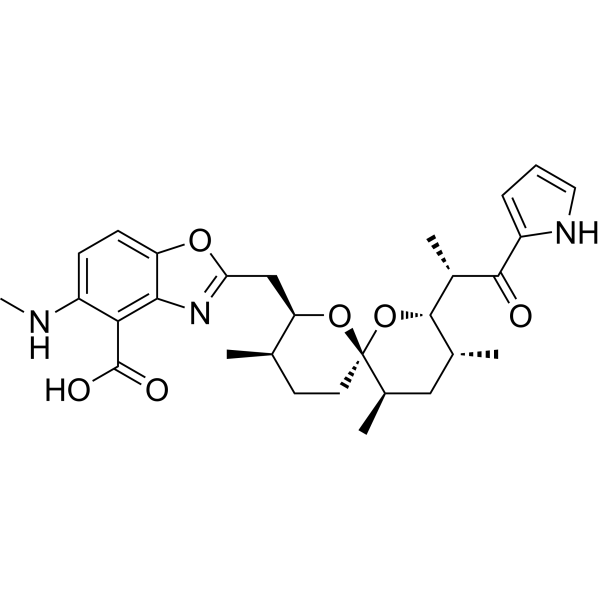
    Calcimycin (A-23187) is an antibiotic and a unique divalent cation ionophore (like calcium and magnesium). Calcimycin induces Ca 2+-dependent cell death by increasing intracellular calcium concentration. Calcimycin inhibits the growth of Gram-positive bacteria and some fungi. Calcimycin also inhibits the activity of ATPase and uncouples oxidative phosphorylation (OXPHOS) of mammalian cells. Calcimycin induces apoptosis and autophagy .
    Calcimycin
  • HY-112083
    BAY-3827
    10+ Cited Publications

    AMPK Cancer
    BAY-3827, a chemical probe, is a potent and selective AMPK inhibitor with IC50 values of 1.4 nM at low (10 μM ATP concentration) and 15 nM at high (2 mM ATP concentration). BAY-3827 shows over 500-fold selectivity for most of the 331 kinases. BAY-3827 prevents phosphorylation of acetyl-CoA carboxylase 1 and shows strongest anti-proliferative activity in androgen-dependent prostate cancer cell lines .
    BAY-3827
  • HY-100407
    JNJ16259685
    3 Publications Verification

    mGluR Neurological Disease
    JNJ16259685 is a selective antagonist of mGlu1 receptor, and inhibits the synaptic activation of mGlu1 in a concentration-dependent manner with IC50 of 19 nM.
    JNJ16259685
  • HY-10562
    Ketanserin
    15+ Cited Publications

    R41468

    5-HT Receptor Potassium Channel Autophagy Neurological Disease
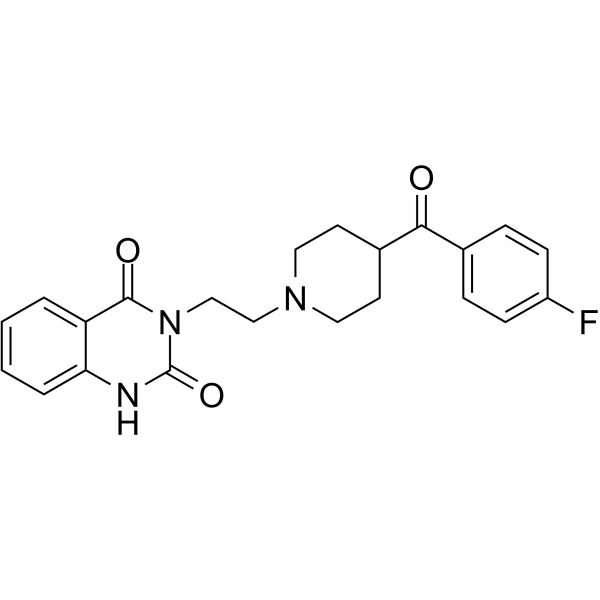
    Ketanserin is a selective 5-HT2 receptor antagonist. Ketanserin also blocks hERG current (IhERG) in a concentration-dependent manner (IC50=0.11 μM).
    Ketanserin
  • HY-121026
    DMNQ
    5+ Cited Publications

    Reactive Oxygen Species (ROS) ROS Kinase Cardiovascular Disease
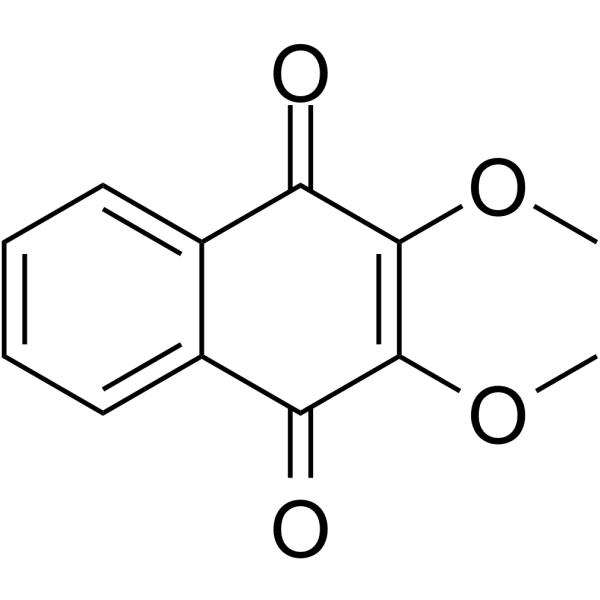
    DMNQ is a redox cycling agent. DMNQ produces hydrogen peroxide in cells in a concentration-dependent manner. DMNQ can induce the increase of ROS production .
    DMNQ
  • HY-B0267

    mAChR Potassium Channel Neurological Disease Cancer
    Oxybutynin is an anticholinergic agent, which inhibits vascular Kv channels in a concentration-dependent manner, with an IC50 of 11.51 μM . Oxybutynin is a click chemistry reagent, it contains an Alkyne group and can undergo copper-catalyzed azide-alkyne cycloaddition (CuAAc) with molecules containing Azide groups.
    Oxybutynin
  • HY-13103
    NS 11021
    3 Publications Verification

    Potassium Channel Others
    NS 11021 is a potent and specific Ca 2+-activated big-conductance K + Channels (KCa1.1 channels) activator. NS 11021 at concentrations above 0.3 μM activates KCa1.1 in a concentration-dependent manner by parallelshifting the channel activation curves to more negative potentials .
    NS 11021
  • HY-P1236

    Atrial natriuretic factor (1-28) (rat, mouse)

    Endothelin Receptor Cardiovascular Disease Endocrinology
    Atrial Natriuretic Peptide (ANP) (1-28), rat, mouse is a major circulating form of ANP in rats, potently inhibits Angiotensin II (Ang II)-stimulated endothelin-1 secretion in a concentration-dependent manner.
    Atrial Natriuretic Peptide (ANP) (1-28), rat, mouse
  • HY-N11200

    Endogenous Metabolite Metabolic Disease
    3-Hydroxyisovalerylcarnitine is a carnitine derivative. 3-Hydroxyisovaleryl carnitine in plasma may serve as a novel biomarker of biotin deficiency in humans, with its concentration increasing with biotin deficiency. Biotin deficiency reduces the activity of biotin-dependent 3-methylcrotonyl-CoA carboxylase, hinders the conversion of 3-methylcrotonyl-CoA into 3-methylglutaconyl-CoA, and impairs the leucine catabolism pathway; resulting in plasma 3-Hydroxyisovalerylcarnitine concentrations rise .
    3-Hydroxyisovalerylcarnitine
  • HY-B2133

    Potassium Channel Inflammation/Immunology
    Cloperastine hydrochloride inhibits the hERG K + currents in a concentration-dependent manner with an IC50 value of 27 nM .
    Cloperastine hydrochloride
  • HY-P5366

    Liposome Others
    PEP1 is an amphipathic α-helical peptide containing 31 residues. The interaction of PEP1 with POPC-supported lipid bilayers (SLBs) is concentration-dependent: at low concentrations, it inserts into SLBs to generate compressive stress; at medium concentrations, it saturates the membrane surface to maintain constant stress; and at high concentrations, it solubilizes SLBs. PEP1 can be used for research on the mechanism of membrane-peptide interactions .
    PEP1
  • HY-10562A
    Ketanserin tartrate
    15+ Cited Publications

    R41468 tartrate

    5-HT Receptor Potassium Channel Autophagy Neurological Disease
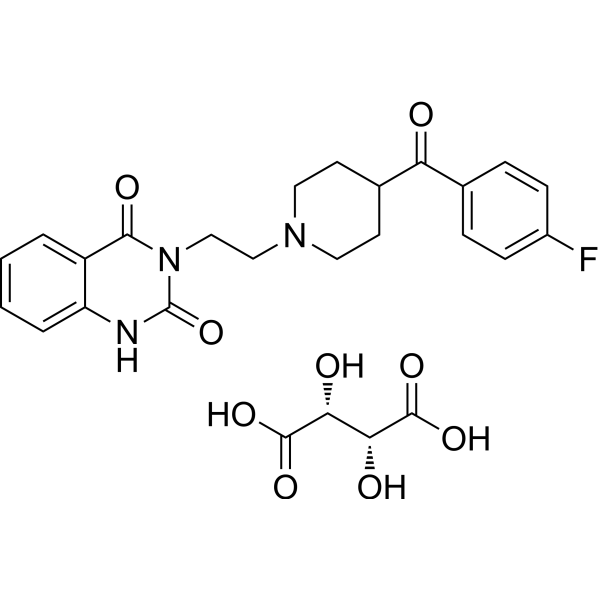
    Ketanserin (R41468) tartrate is a selective 5-HT2 receptor antagonist. Ketanserin tartrate also blocks hERG current (IhERG) in a concentration-dependent manner (IC50=0.11 μM).
    Ketanserin tartrate
  • HY-15480
    NSC 42834
    3 Publications Verification

    JAK2 Inhibitor V; Z3

    JAK Cancer
    NSC 42834 (JAK2 Inhibitor V), a novel specific inhibitor of Jak2, inhibits Jak2-V617F and Jak2-WT autophosphorylation in a dose-dependent manner but was not cytotoxic to cells at concentrations that inhibited kinase activity.
    NSC 42834
  • HY-132191

    Fungal SARS-CoV HIV Infection
    Pradimicin A is a potent antifungal agent with a minimum inhibitory concentration (MIC) of 4 μg/mL against Candida rugosa. Pradimicin A exhibits antiviral activity against SARS-CoV, human immunodeficiency virus (HIV) and other enveloped viruses. Pradimicin A exerts its fungicidal activity through a Ca 2+-dependent mechanism, which induces fungal lysis. Pradimicin A can be used in research related to fungal infections, HIV infections and COVID-19 .
    Pradimicin A
  • HY-B2179

    Potassium Channel Inflammation/Immunology
    Cloperastine fendizoate inhibits the hERG K + currents in a concentration-dependent manner with an IC50 value of 27 nM.
    Cloperastine fendizoate
  • HY-N4301

    Others Others
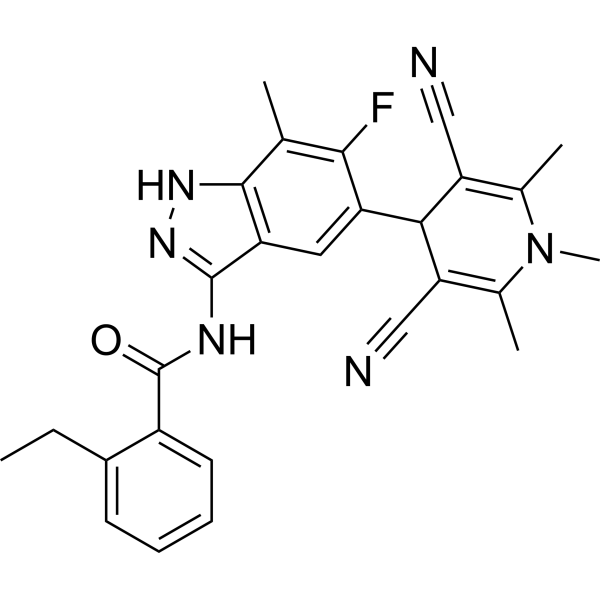
    Monensin B is a polyketide produced by Streptomyces cinnamonensis. Fermentations of Streptomyces cinnamonensis produce a mixture of Monensin A and Monensin B in a ratio dependent upon the relative concentrations of ethylmalonyl-CoA and methylmalonyl-CoA .
    Monensin B
  • HY-P1236A

    Atrial natriuretic factor (1-28) (rat, mouse) TFA

    Endothelin Receptor Cardiovascular Disease Endocrinology
    Atrial Natriuretic Peptide (ANP) (1-28), rat, mouse (TFA) is a major circulating form of ANP in rats, potently inhibits Angiotensin II (Ang II)-stimulated endothelin-1 secretion in a concentration-dependent manner.
    Atrial Natriuretic Peptide (ANP) (1-28), rat, mouse TFA
  • HY-14304A
    Zinterol hydrochloride
    1 Publications Verification

    MJ 9184 hydrochloride

    Adrenergic Receptor Cardiovascular Disease
    Zinterol hydrochloride (MJ 9184 hydrochloride) is a potent and selective β2-adrenoceptor agonist . Zinterol hydrochloride increases ICa in a concentration-dependent manner with an EC50 of 2.2 nM . Zinterol hydrochloride induces ventricular arrhythmias in conscious heart failure rabbits .
    Zinterol hydrochloride
  • HY-128878

    Cholecystokinin Receptor P-glycoprotein Metabolic Disease Endocrinology
    Dexloxiglumide is an orally active and selective cholecystokinin type A (CCKA) receptor antagonist. Dexloxiglumide is the active enantiomer of Loxiglumide, inhibits smooth muscle cell contractions induced by cholecystokinin-octapeptide (CCK-8). Dexloxiglumide exhibits moderate Caco-2 permeability that is polarized, concentration dependent, and pH dependent. Dexloxiglumide increases MRP1-substrate fluorescein uptake. Dexloxiglumide can be studied in research for gastrointestinal diseases and tumors .
    Dexloxiglumide
  • HY-109066
    Olinciguat
    1 Publications Verification

    IW-1701

    Guanylate Cyclase Cardiovascular Disease
    Olinciguat (IW-1701) is an oral guanylate cyclase (sGC) stimulator with concentration-dependent stimulation of sGC in purified rat and human enzyme assays and a whole cell assay .
    Olinciguat
  • HY-N10117

    RANKL/RANK Others
    2,3-Bis(3-indolylmethyl)indole significantly suppresses RANKL-induced osteoclast formation, actin ring formation, and bone resorption in a concentration-dependent manner.
    2,3-Bis(3-indolylmethyl)indole
  • HY-N4053

    Nuclear Factor of activated T Cells (NFAT) Inflammation/Immunology
    Heraclenin, a natural furanocoumarin, significantly inhibits T cell receptor-mediated proliferation in human primary T cells in a concentration-dependent manner by targeting nuclear factor of activated T-cells (NFAT) .
    Heraclenin
  • HY-113269
    alpha-CEHC
    1 Publications Verification

    Drug Metabolite Others
    alpha-CEHC is a water-soluble metabolite of alpha-tocopherol (α-TOH) with potential antioxidant activity. alpha-CEHC slightly inhibits macrophage-induced low-density lipoprotein (LDL) oxidation, and its inhibitory potency is concentration-dependent .
    alpha-CEHC
  • HY-10174
    PD184161
    2 Publications Verification

    MEK Apoptosis Neurological Disease Cancer
    PD184161 is an orally active MEK inhibitor. PD184161 inhibits MEK activity (IC50=10-100 nM) in a time- and concentration-dependent manner. PD184161 inhibits cell proliferation and induces apoptosis. PD184161 produces depressive-like behavior .
    PD184161
  • HY-W440988

    Liposome Others
    DOPE-mPEG2000 is a phospholipid polydisperse PEG (or DOPE liposome), can be used for preparation of targeted delivery of liposomal drug and giant unilamellar vesicles (GUVs). DOPE-mPEG2000 significantly reduces the pH-sensitivity of the liposome in a concentration dependent manner .
    DOPE-mPEG2000
  • HY-77537

    7DX

    Thymidylate Synthase Cardiovascular Disease
    7-Deazaxanthine (7DX) is an inhibitor of thymidine phosphorylase (TPase). 7-Deazaxanthine inhibits TPase reaction in a concentration-dependent manner with an IC50 value of 40 μM. 7-Deazaxanthine also has a significant angiogenesis inhibitory effect .
    7-Deazaxanthine
  • HY-14276A

    Methoxyverapamil hydrochloride

    Calcium Channel Cardiovascular Disease
    Gallopamil hydrochloride (Methoxyverapamil hydrochloride), a methoxy derivative of Verapamil, is a phenylalkylamine calcium antagonist . Gallopamil hydrochloride inhibits acid secretion in a concentration-dependent manner with an IC50 of 10.9 μM . Gallopamil hydrochloride is a potent antiarrhythmic and vasodilator agent .
    Gallopamil hydrochloride
  • HY-136190

    TRP Channel Neurological Disease
    TRPC6-PAM-C20 is a selective positive allosteric modulator (PAM) of TRPC6 channels. TRPC6-PAM-C20 is a potent enhancer of channel activation, enabling low basal concentrations of DAG to induce activation of the ion channel. TRPC6-PAM-C20 induces increases in intracellular Ca 2+ concentrations ([Ca 2+]i) in TRPC6-expressing HEK293 cells with an EC50 of 2.37 μM. TRPC6-PAM-C20 can be used as a valuable tool to selectively exaggerate TRPC6-dependent signals .
    TRPC6-PAM-C20
  • HY-Y1890B

    Biochemical Assay Reagents Others
    Cremophor EL-10 is a nonionic polyoxyethylene castor oil surfactant with multiple functions including organic solubilizer, mixed zinc anode corrosion inhibitor and dendrite growth inhibitor. By forming a physical barrier to block electrolyte contact and constructing oriented hydration channels to reduce the desolvation energy barrier of Zn 2+ , Cremophor EL-10 achieves a corrosion inhibition efficiency of over 99%. Cremophor EL-10 exerts no significant effects on the mitochondrial activity and cell viability of epithelial cells, making it suitable for in vitro drug delivery and biopharmaceutical research at concentrations ≤10% v/v. However, Cremophor EL-10 may induce sustained non-endothelium-dependent contraction in rat aortic rings and exert concentration-dependent inhibitory effects on acetylcholine-induced endothelium-dependent relaxation responses .
    Cremophor EL-10
  • HY-N7659A

    Phytohormone Microtubule/Tubulin Apoptosis Others
    Glucobrassicin potassium is an indole-based anticancer agent and plant growth-regulating hormone. Glucobrassicin potassium exerts its biological activity by disrupting the integrity of microtubule networks in both plant and mammalian cells. At high concentrations, Glucobrassicin potassium inhibits seed germination and root growth; it can also specifically induce apoptosis in mammalian cancer cells and interfere with the intercellular transmission of viruses that rely on microtubules. In plants, Glucobrassicin potassium can be catalyzed by myrosinase to release growth-regulating substances, exhibiting a concentration-dependent growth-regulating effect .
    Glucobrassicin potassium
  • HY-N7659

    Phytohormone Apoptosis Microtubule/Tubulin Cancer
    Glucobrassicin is an indole-based anticancer agent and plant growth-regulating hormone. Glucobrassicin exerts its biological activity by disrupting the integrity of microtubule networks in both plant and mammalian cells. At high concentrations, Glucobrassicin inhibits seed germination and root growth; it can also specifically induce apoptosis in mammalian cancer cells and interfere with the intercellular transmission of viruses that rely on microtubules. In plants, Glucobrassicin can be catalyzed by myrosinase to release growth-regulating substances, exhibiting a concentration-dependent growth-regulating effect .
    Glucobrassicin
  • HY-126789

    Biochemical Assay Reagents Metabolic Disease
    DM-Nitrophen is a photolabile caged calcium compound that acts as a calcium releaser. DM-Nitrophen binds Ca 2+ with high affinity and Mg 2+ with considerable affinity before photolysis. DM-Nitrophen releases Ca 2+ into the cytosol upon ultraviolet light irradiation. DM-Nitrophen induces calcium concentration pulses, triggers cytosolic calcium transients, promotes calcium-dependent exocytosis. DM-Nitrophen can be used for the research of calcium-dependent cellular processes .
    DM-Nitrophen
  • HY-U00027

    FR71021

    Histamine Receptor Leukotriene Receptor Prostaglandin Receptor Inflammation/Immunology Endocrinology
    Quinotolast sodium in the concentration range of 1-100 μg/mL inhibits histamine, LTC4 and PGD2 release in a concentration-dependent manner.
    Quinotolast sodium
  • HY-P2206

    Bacterial Antibiotic Infection
    Zelkovamycin is a cyclic peptide antibiotic originally isolated from Streptomyces. It inhibits growth of X. oryzae, P. oryzae, S. aureus, and A. laidlawii in a concentration-dependent manner when used at concentrations ranging from 0.01 to 300 μg/mL.
    Zelkovamycin
  • HY-B0267AS

    Isotope-Labeled Compounds mAChR Potassium Channel Neurological Disease
    Oxybutynin-d11 (chloride) is the deuterium labeled Oxybutynin chloride. Oxybutynin chloride is an anticholinergic agent, which inhibits vascular Kv channels in a concentration-dependent manner, with an IC50 of 11.51 μM .
    Oxybutynin-d11 chloride
  • HY-101436A

    CK-1752 hydrochloride

    Potassium Channel Cardiovascular Disease
    Sematilide hydrochloride (CK-1752 hydrochloride) is a selective IKr channel blocker. Sematilide causes a concentration-dependent inhibition of the delayed rectifier K + current (IC50=25 μM). Sematilide is a class III antiarrhythmic agent .
    Sematilide hydrochloride
  • HY-N9506

    GABA Receptor Neurological Disease
    Anisatin, a pure toxic substance isolated from the seeds of a Japanese plant (Illicium anisatum) acts as a picrotoxin-like, non-competitive GABA antagonist. Anisatin suppresses GABA-induced currents in a concentration-dependent manner with an EC50 of ~1.10 μM .
    Anisatin
  • HY-W008820R

    Reference Standards Endogenous Metabolite Metabolic Disease
    Glutaric acid (Standard) is the analytical standard of Glutaric acid. This product is intended for research and analytical applications. Glutaric acid, C5 dicarboxylic acid, is an intermediate during the catabolic pathways of lysine and tryptophan. Glutaric acid affects pericyte contractility and migration. Glutaric acid is an indicator of glutaric aciduria type I . In Vitro: Glutaric acid (GA) at concentrations of 1 and 2 mM is able to reduce TRAP measurement by up to 28% in a dose-dependent manner (β=0.77; P<0.001). Furthermore, a significantly inverse correlation is also verified between chemiluminescence and TRAP (β=0.81; P<0.001). Glutaric acid does not alter the activities of Cat and SOD, but strongly inhibits (up to 46%) the activity of GPx even at the lower concentration used (0.5 mM). It is observed that the metabolite inhibits this activity in a dose-dependent manner at concentrations as low as 0.05 mM .
    Glutaric acid (Standard)
  • HY-131871

    Fat Mass and Obesity-associated Protein (FTO) Cancer
    Ethyl LipotF is a selective FTO inhibitor that significant increases modified N6-methyladenosine (m6A) levels in HeLa cells in a concentration-dependent manner .
    Ethyl LipotF
  • HY-121710

    7-Monohydroxyethylrutoside

    Carbonyl Reductase Cardiovascular Disease
    MonoHER (7-Monohydroxyethylrutoside) is a Carbonyl reductase 1 (CBR1) inhibitor and can be used as a cardioprotective agent. MonoHER inhibits the activity of CBR1 V88 and CBR1 I88 in a concentration-dependent manner .
    MonoHER
  • HY-122215

    N-696

    Adrenergic Receptor Endocrinology
    Tilisolol hydrochloride (N-696) is a non-selective β-adrenergic antagonist with vasodilatory and hypotensive activities. Tilisolol hydrochloride exerts its effects in canine coronary arteries by opening ATP-sensitive K+ channels. Tilisolol hydrochloride exhibits concentration-dependent relaxation in KCl-precontracted rat thoracic aorta. Tilisolol hydrochloride reduces diastolic blood pressure in a dose-dependent manner and slightly increases heart rate in spinal cord stimulated rats .
    Tilisolol hydrochloride
  • HY-119615

    Adrenergic Receptor Neurological Disease Endocrinology
    Mezilamine is a potent antidopaminergic agent. Mezilamine induces a concentration dependent increase in the electrically stimulated overflow of 3H-noradrenaline from rat cortical slices, without affecting the basal overflow. Mezilamine acts as a presynaptic α-adrenoceptor antagonist and a postsynaptic α-adrenoceptor agonist .
    Mezilamine
  • HY-W025817

    Fluorescent Dye Others
    Citrazinic acid is a weakly fluorescent compound whose optical properties are dependent on aggregation states and chemical environment. Citrazinic acid strongly tends to form dimers at high concentrations .
    Citrazinic acid
  • HY-W012896

    Biochemical Assay Reagents Others
    2-Thiohydantoin acts as an inhibitor for the corrosion of mild steel in 0.1 M HCl and its inhibition efficiency is both concentration and immersion time dependent .
    2-Thiohydantoin
  • HY-14304

    MJ 9184

    Adrenergic Receptor Cardiovascular Disease
    Zinterol (MJ 9184) is a potent and selective β2-adrenoceptor agonist . Zinterol increases ICa in a concentration-dependent manner with an EC50 of 2.2 nM .
    Zinterol
  • HY-N1210

    Spiramine C acetate (ester)

    Bacterial Cancer
    Spiramine A (Spiramine C acetate (ester)) is a diterpene alkaloid with antitumor and antimicrobial activity. Spiramine A inhibits PAF-induced rabbit platelet aggregation in a concentration-dependent manner, with an IC50 vallue of 6.7 μM .
    Spiramine A
  • HY-14276

    Methoxyverapamil

    Calcium Channel Cardiovascular Disease
    Gallopamil (Methoxyverapamil), a methoxy derivative of Verapamil, is a phenylalkylamine calcium antagonist . Gallopamil inhibits acid secretion in a concentration-dependent manner with an IC50 of 10.9 μM . Gallopamil is a potent antiarrhythmic and vasodilator agent .
    Gallopamil
  • HY-W092110

    Angiotensin-converting Enzyme (ACE) Cardiovascular Disease
    Phe-Tyr is an ACE inhibitor. Phe-Tyr can be isolated from wakame. Phe-Tyr exhibits mild concentration-dependent toxicity to fibroblasts. Phe-Tyr can be used in studies related to hypertension and cardiovascular diseases .
    Phe-Tyr
  • HY-N11960

    Opioid Receptor Inflammation/Immunology
    Ignavine is a conformational modulator of μ-opioid receptors (IC50 = 2.0 μM). Ignavine exhibits a concentration dependent bidirectional regulatory effect in vitro. Ignavine has analgesic activity. Ignavine can be used for research on pain related conditions .
    Ignavine
  • HY-137373

    PKG Others
    Rp-8-pCPT-cGMPS is a competitive inhibitor of cGMP-dependent protein kinase (PKG) (Ki=0.5 μM). Rp-8-pCPT-cGMPS has high lipid solubility and can more easily penetrate the cell membrane and reach sufficient concentration inside the cell to inhibit cGMP-dependent protein kinase. Rp-8-pCPT-cGMPS can be used to study the activity and function of cGMP-dependent protein kinase in platelets .
    Rp-8-pCPT-cGMPS

Inquiry Online

Your information is safe with us. * Required Fields.

Salutation


Country or Region *

Applicant Name *


Organization Name *

Department *


Email Address *


Product Name *

Cat. No.


Requested quantity *

Phone Number *


Remarks

Inquiry Online

Inquiry Information

Product Name:
Cat. No.:
Quantity:
MCE Japan Authorized Agent:

