8 Results for "

cytoplasmic vacuolization

" in MedChemExpress (MCE) Product Catalog:
Products (8)

8 Results for "cytoplasmic vacuolization" in MCE Product Catalog:

1
1 Cited Publications
Cat. No.: HY-155994
CAS No.: 3036457-38-9
Purity:  99.90%
Target:  

PROTACs PIKfyve Autophagy

Research Areas:  

Cancer

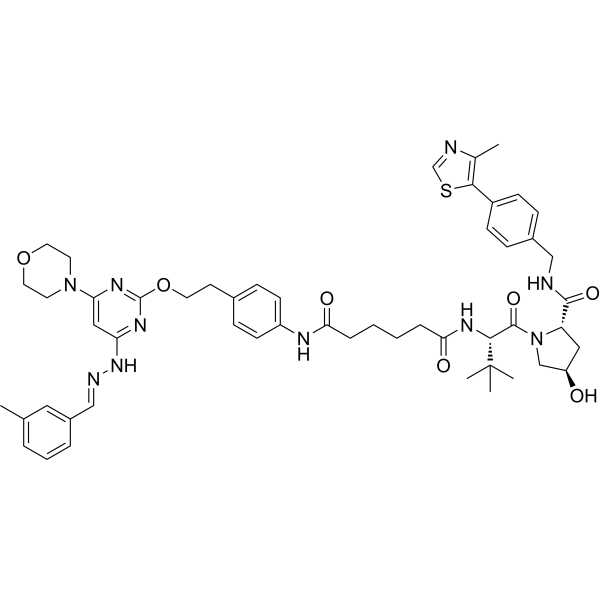
PIK5-12d is a PROTAC PIKfyve degrader (DC50 = 1.48 nM). PIK5-12d induces massive cytoplasmic vacuolization and blocks autophagic flux in multiple prostate cancer cells. PIK5-12d inhibits prostate cancer cell proliferation. PIK5-12d significantly suppresses tumor proliferation in mice bearing LTL-331R human prostate cancer PDX tumors. PIK5-12d can be used for the study of prostate cancer .
loading...
    loading...
Cat. No.: HY-144627
CAS No.: 3033401-45-2
Purity:  98.01%
Target:  

PROTACs TAM Receptor Ras

Research Areas:  

Cancer

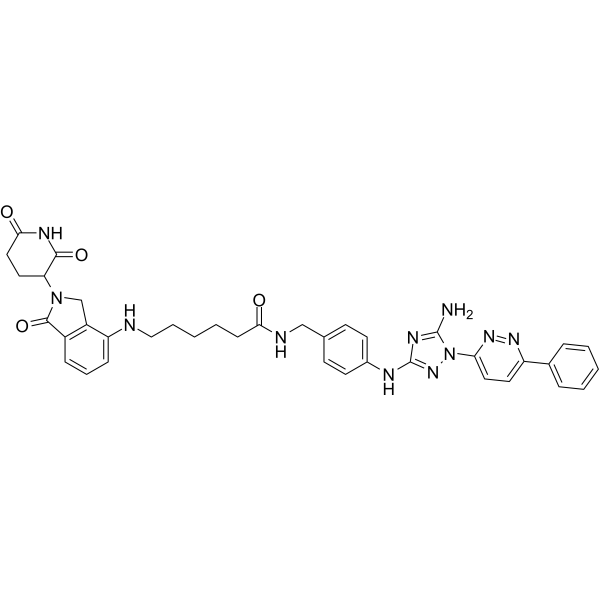
PROTAC Axl Degrader 2 is an orally active and selective AXL PROTAC degrader with dual activities of AXL kinase inhibition and AXL protein degradation. PROTAC Axl Degrader 2 induces cytoplasmic vacuolization, excessive macropinosome production, oncosis, H-Ras activation, and Rac1-dependent non-apoptotic cell death. PROTAC Axl Degrader 2 inhibits the proliferation and migration of cancer cells, and also suppresses the growth of tumor cell xenografts under in vivo conditions. PROTAC Axl Degrader 2 can be used in research related to breast cancer .
loading...
    loading...
Cat. No.: HY-177120
CAS No.: 133156-42-0
Target:  

Autophagy

Research Areas:  

Cancer

DMBP is a VPS41 inhibitor. DMBP induces methuosis and inhibits autophagy in cancer cells. DMBP inhibits the fusion of late endosomes and autophagosomes with lysosomes. DMBP effectively inhibits metastasis in a mouse metastatic melanoma model. DMBP can be used for the study of melanoma .
loading...
    loading...
Cat. No.: HY-144624
CAS No.: 3033401-47-4
Target:  

PROTACs TAM Receptor Ras

Research Areas:  

Cancer

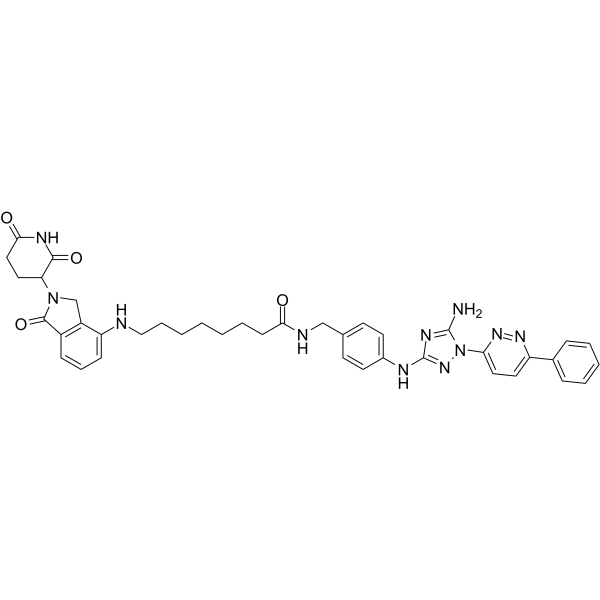
PROTAC Axl Degrader 1 is an orally active PROTAC degrader targeting the AXL receptor tyrosine kinase, with an IC50 of 0.92 μM against human targets. PROTAC Axl Degrader 1 induces cytoplasmic vacuolization, methuosis (macropinocytosis-induced cell death), excessive macropinosome production, and Rac1 activation. PROTAC Axl Degrader 1 inhibits the proliferation and migration of cancer cells. PROTAC Axl Degrader 1 can be used in breast cancer-related research .
loading...
    loading...
Cat. No.: HY-W504391
CAS No.: 804-36-4
Synonyms: Difurazon
Nitrovin (Difurazon) is a thioredoxin reductase 1 (TrxR1) inhibitor with both antibacterial and anticancer activities. Nitrovin interacts with TrxR1 to generate reactive oxygen species (ROS), which in turn induces cytoplasmic vacuolization, activates MAPK and inhibits Alix. Nitrovin induces paraptosis-like non-apoptotic cell death, thereby exerting significant cytotoxicity against cancer cells. Nitrovin can be used in the research of heart disease and glioblastoma multiforme .
loading...
    loading...
Cat. No.: HY-156244
Target:  

PROTACs Paraptosis

Research Areas:  

Cancer

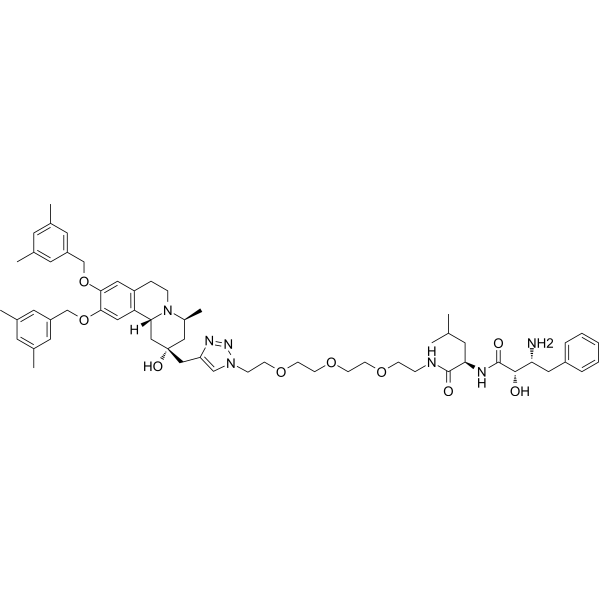
PROTAC GDI2 Degrader-1 is a GDI2 PROTAC degrader with a DC50 value of 1.48 μM and a Kd value of 23.9 μM. PROTAC GDI2 Degrader-1 triggers paraptosis in tumor cells via endoplasmic reticulum expansion and fusion, endoplasmic reticulum stress, unfolded protein response, and cytoplasmic vacuolization. PROTAC GDI2 Degrader-1 exhibits significant in vivo anti-tumor activity in pancreatic cancer xenograft models. PROTAC GDI2 Degrader-1 can be used for research related to pancreatic cancer .
loading...
    loading...
Cat. No.: HY-115901
CAS No.: 2243355-51-1
Purity:  99.08%
Research Areas:  

Cancer

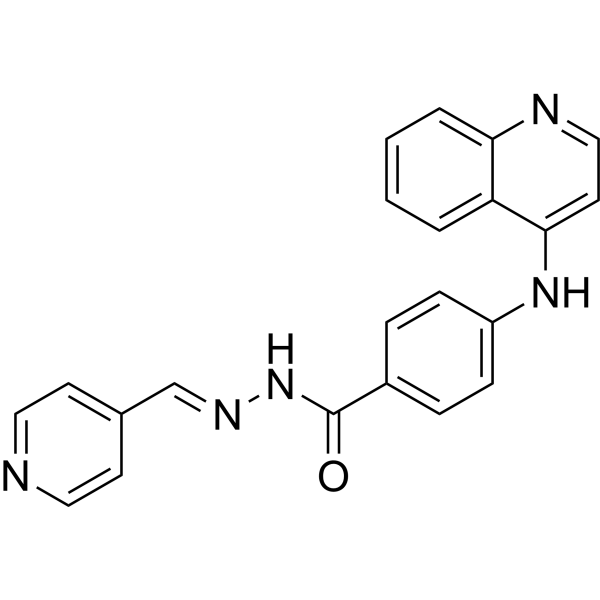
4-PQBH is a potent Nur77 binder (KD=1.17 μM). 4-PQBH extensively induces caspase-independent cytoplasmic vacuolization and paraptosis through Nur77-mediated ER stress and autophagy. 4-PQBH can be used for cancer research .
loading...
    loading...
Cat. No.: HY-119753
CAS No.: 68284-69-5
Synonyms: SC-31828
Target:  

Others

Research Areas:  

Cardiovascular Disease

Disobutamide (SC-31828) is an orally active, blood-brain barrier permeable cationic amphiphilic ditertiary amine piperidine ring compound with antiarrhythmic properties. Disobutamide induces lysosomal phospholipid accumulation, which triggers extensive cytoplasmic vacuolization and leads to cell death. Disobutamide prolongs multiple electrocardiographic intervals in canine hearts, induces cardiac arrest at high doses, and causes decreased retinal reflectivity. Disobutamide can be used in studies related to arrhythmias, and also serves as a model drug for investigating the storage mechanisms and toxicity thresholds of intracellular amphiphilic compounds .
loading...
    loading...

