
1. Search Result
Search Result
Results for "

damage-associated molecular patterns

" in MedChemExpress (MCE) Product Catalog:

14

Inhibitors & Agonists

1

Screening Libraries

1

Biochemical Assay Reagents

2

Peptides

1

Inhibitory Antibodies

1

Click Chemistry

Targets Recommended:
Cat. No. Product Name Target Research Areas Chemical Structure
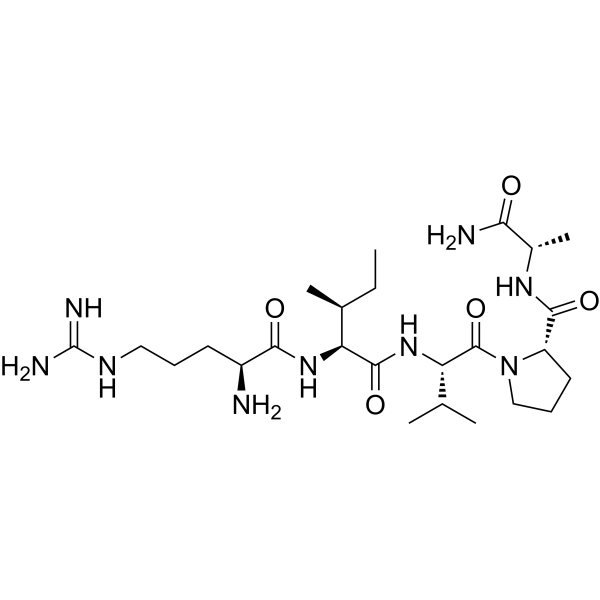
  • HY-P2076

    SGX942

    p62 Bacterial Infection Cancer
    Dusquetide (SGX942) is a first-in-class innate defense regulator (IDR). Dusquetide modulates the innate immune response to both PAMPs and DAMPs by binding to p62. Dusquetide shows activity in both reducing inflammation and increasing clearance of bacterial infection . DAMPs: damage-associated molecular patterns; PAMPs: pathogen-associated molecular patterns
    Dusquetide
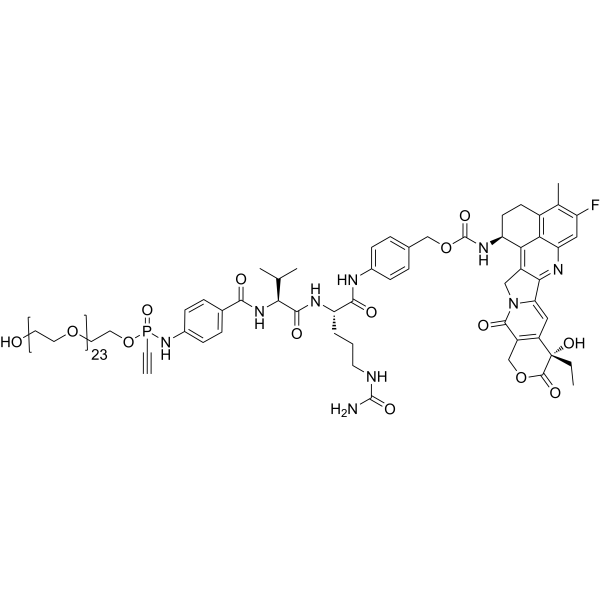
  • HY-163099

    Drug-Linker Conjugates for ADC Topoisomerase Apoptosis Cancer
    P5 (PEG24)-VC-PAB-Exatecan is a TOP1 inhibitor payload with antibody-conjugation-dependent activity. Conjugation of P5 (PEG24)-VC-PAB-Exatecan with Trastuzumab (HY-P9907) generates a DAR8 antibody-drug conjugate (ADCs) with antibody-like pharmacokinetic properties. P5 (PEG24)-VC-PAB-Exatecan induces S-phase and G2-M-phase cell cycle arrest, DNA damage and apoptosis in target-positive tumor cells, and releases damage-associated molecular patterns (DAMP) related to immunogenic cell death (ICD). The ADCs prepared from it exert bystander killing effects on non-target tumor cells. ADCs based on P5 (PEG24)-VC-PAB-Exatecan exhibit linker stability in vitro and in vivo, show in vivo efficacy, and can be used in research related to HER2-positive cancers .
    P5(PEG24)-VC-PAB-Exatecan
  • HY-W040255

    PGPC

    Ferroptosis FABP Caspase Interleukin Related Apoptosis Inflammation/Immunology
    1-Palmitoyl-2-glutaryl-sn-glycero-3-phosphocholine is an oxidized phospholipid. 1-Palmitoyl-2-glutaryl-sn-glycero-3-phosphocholine reduces the viability of HUVECs, increases the levels of ferrous ions and lipid peroxidation, promotes the production of superoxide anions, and decreases the levels of glutathione and GPX4 in cells. 1-Palmitoyl-2-glutaryl-sn-glycero-3-phosphocholine upregulates the mRNA and protein levels of FABP3 in HUVECs, impairs mitochondrial membrane potential, and induces ferroptosis-related changes as well as mitochondrial dysfunction and damage. 1-Palmitoyl-2-glutaryl-sn-glycero-3-phosphocholine activates caspase-11 and promotes the continuous release of IL-1β from macrophages and dendritic cells. 1-Palmitoyl-2-glutaryl-sn-glycero-3-phosphocholine inhibits the proliferation of aortic smooth muscle cells and induces apoptosis in these cells. 1-Palmitoyl-2-glutaryl-sn-glycero-3-phosphocholine is applicable to relevant research on atherosclerosis .
    1-Palmitoyl-2-glutaryl-sn-glycero-3-phosphocholine
  • HY-P99928

    MK 7110; CD24 Fc

    Transmembrane Glycoprotein Cancer
    Efprezimod alfa (MK 7110; CD24 Fc) is a humanized CD24-Fc fusion protein. Efprezimod alfa enhances the interaction between CD24 and Siglec-10, thereby regulating the response of innate immune cells to damage-associated molecular patterns, inhibiting the activation of antigen-presenting cells and subsequent inflammatory responses. Efprezimod alfa is applicable to the research of acute graft-versus-host disease and acquired immunodeficiency syndrome .
    Efprezimod alfa
  • HY-148187

    NOD-like Receptor (NLR) Infection Cardiovascular Disease Neurological Disease Inflammation/Immunology
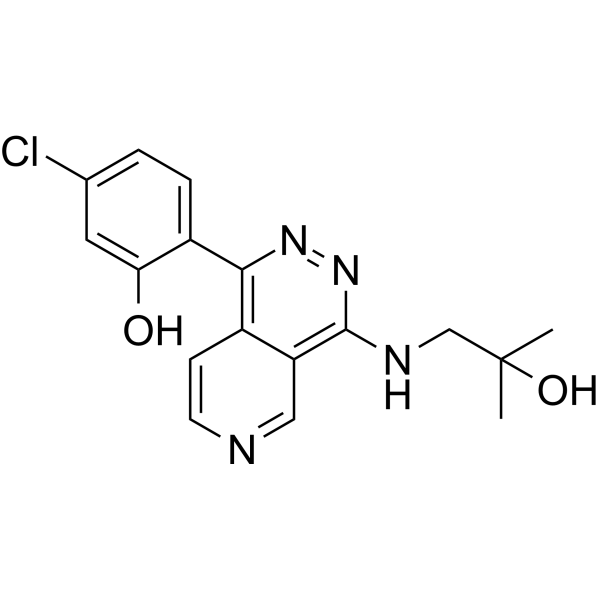
    NLRP3-IN-11 is a NLR family pyrin domain containing 3 (NLRP3) proteins inhibitor. NLRP3-IN-11 has biological activity for NLRP3 with an IC50 value of <0.3 μM. NLRP3-IN-11 can be used for the researh of inflammatory and degenerative diseases including NASH, atherosclerosis and other cardiovascular diseases, Alzheimer's disease, Parkinson's disease, diabetes, gout, and numerous other autoinflammatory diseases .
    NLRP3-IN-11
  • HY-142956

    Reactive Oxygen Species (ROS) Cancer
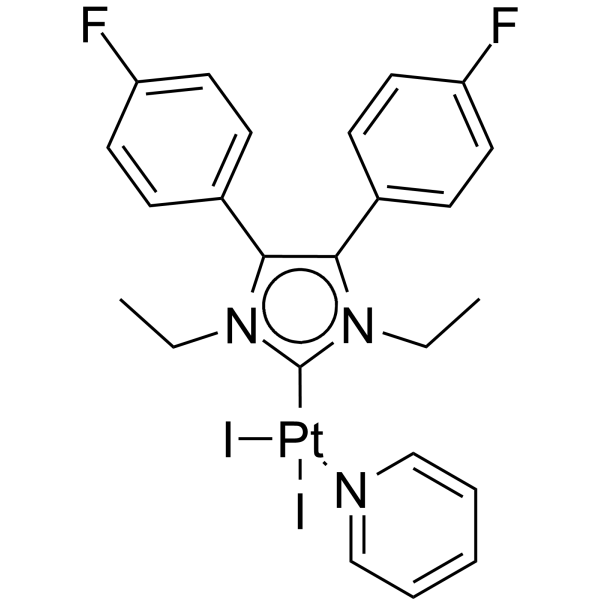
    ROS-ERS inducer 1 is a type II ICD (immunogenic cell death) inducer. ROS-ERS inducer 1 is a Pt(II)-N-heterocyclic carbene (Pt(II)-NHC) complex derived from 4,5-diarylimidazole. ROS-ERS inducer 1 successfully induces endoplasmic reticulum stress (ERS) accompanied by reactive oxygen species (ROS) generation and finally lead to the release of damage-associated molecular patterns (DAMPs) in HCC cells. ROS-ERS inducer 1 displays much higher anticancer activities than Cisplatin .
    ROS-ERS inducer 1
  • HY-P2076A

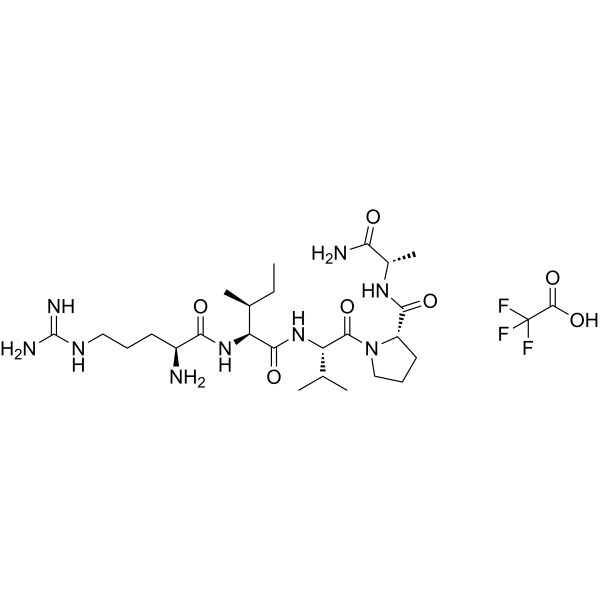
    SGX942 TFA

    p62 Bacterial Infection Cancer
    Dusquetide (SGX942) TFA is a first-in-class innate defense regulator (IDR). Dusquetide TFA modulates the innate immune response to both PAMPs and DAMPs by binding to p62. Dusquetide TFA shows activity in both reducing inflammation and increasing clearance of bacterial infection . DAMPs: damage-associated molecular patterns; PAMPs: pathogen-associated molecular patterns
    Dusquetide TFA
  • HY-169957

    Reactive Oxygen Species (ROS) Cancer
    ROS-ERS inducer 2 (Complex 3f) triggers intracellular ROS generation and affect the function of mitochondria. promote the release of damage-associated molecular patterns (DAMPs), induce immunogenic cell death (ICD) and activates endoplasmic reticulum stress (ERS). ROS-ERS inducer 2 plays an important role in anti-liver cancer research .
    ROS-ERS inducer 2
  • HY-173023

    Apoptosis Indoleamine 2,3-Dioxygenase (IDO) Reactive Oxygen Species (ROS) Cancer
    IDOi-Pt(IV) prodrug-1 (Compound 10) is an IDOi-Pt(IV) prodrug. IDOi-Pt(IV) prodrug-1 inhibits IDO expression. IDOi-Pt(IV) prodrug-1 induces apoptosis, decreases the mitochondrial membrane potential, inhibits tumor cell migration and invasion. IDOi-Pt(IV) prodrug-1 induces reactive oxygen species-mediated endoplasmic reticulum stress and secretion of damage-associated molecular patterns (DAMPs), thereby presenting immunogenic cell death (ICD) effects. IDOi-Pt(IV) prodrug-1 has high-efficiency and low-toxicity antitumor effects compared to Cisplatin (HY-17394) .
    IDOi-Pt(IV) prodrug-1
  • HY-149879

    Reactive Oxygen Species (ROS) Cancer
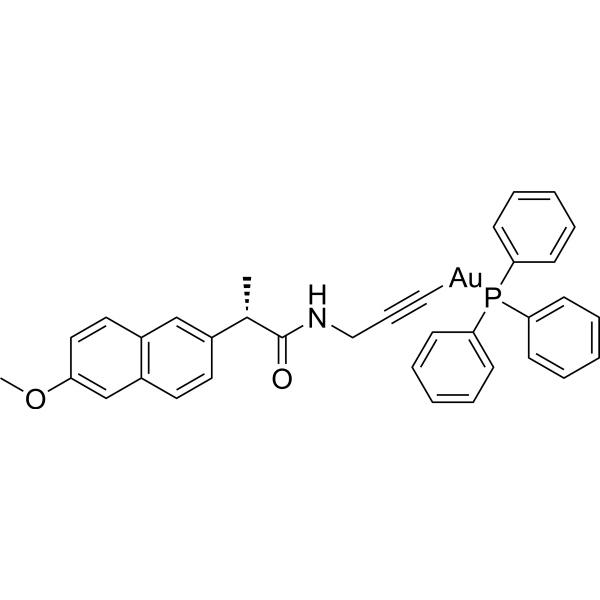
    Npx-Au is a NSAID–Au(I) complex with antitumor activity. Npx-Au can be used for the research of ovarian cancer . Npx-Au is a click chemistry reagent, it contains an Alkyne group and can undergo copper-catalyzed azide-alkyne cycloaddition (CuAAc) with molecules containing Azide groups.
    Npx-Au
  • HY-180555

    PROTACs STING Inflammation/Immunology Cancer
    SN38-(PEG)2-Pom-α is a selective PROTAC RPL15 degrader. SN38-(PEG)2-Pom-α induces ubiquitin-mediated degradation of RPL15 without affecting TOP1. SN38-(PEG)2-Pom-α induces damage-associated molecular pattern (DAMP) secretion from cancer cells, which activated cGAS-STING signaling in dendritic cells. SN38-(PEG)2-Pom-α enhances anti-PD-1 immunotherapy in a murine melanoma tumor model expressing human CRBN. SN38-(PEG)2-Pom-α can be used for melanoma research .
    SN38-(PEG)2-Pom-α
  • HY-W017180

    α-(Bromomethyl)acrylic acid; α-Methylated acrylamide; α-MAA

    Btk Cancer
    2-(Bromomethyl) acrylic acid is a Bruton's tyrosine kinase (BTK) inhibitor. 2-(Bromomethyl) acrylic acid forms a covalent bond with the cysteine 481 (Cys481) residue of BTK via a nucleophilic addition-elimination reaction, thereby inhibiting the downstream B-cell receptor signaling pathway. 2-(Bromomethyl) acrylic acid induces immunogenic cell death in BTK-expressing B-cell lymphoma cells by releasing damage-associated molecular patterns including extracellular ATP and HMGB1. 2-(Bromomethyl) acrylic acid exhibits cytotoxicity against BTK-expressing B-cell lymphoma cells, but shows low toxicity to BTK-negative cells. 2-(Bromomethyl) acrylic acid can be used in studies related to B-cell lymphoma .
    2-(Bromomethyl)acrylic acid
  • HY-175048

    Platinum(II)-N-heterocyclic carbene complex 2C

    Reactive Oxygen Species (ROS) Apoptosis ER-phagy Cancer
    Pt(II)-NHC Complex 2C (Platinum(II)-N-Heterocyclic Carbene complex 2C) (Compound 2C) is a platinum(II) complex based on N-heterocyclic carbene (NHC). Pt(II)-NHC Complex 2C is an immunogenic cell death (ICD) inducer that can induce endoplasmic reticulum stress (ERS) in liver cancer cells and produce reactive oxygen species (ROS), ultimately leading to the release of damage-associated molecular patterns (DAMP). Pt(II)-NHC Complex 2C blocks the cell cycle at the S phase and significantly induces cell apoptosis. Pt(II)-NHC Complex 2C shows anti-liver cancer potential in mouse models and activates immune cells in liver injury models.
    Pt(II)-NHC complex 2C
  • HY-182066

    PANoptosis Cancer
    Photosensitizer-9 is an iridium (III)-based photosensitizer with anti-melanoma activity. Photosensitizer-9 exhibits significant phototoxicity (IC50=0.98 μM) and an ideal phototoxicity index (PI=3.05). Under light irradiation, Photosensitizer-9 generates large amounts of intracellular •OH in an oxygen-independent manner. Photosensitizer-9 mediates photodynamic therapy under hypoxic conditions and synergistically activates PANoptosis (by upregulating cleaved Caspase-3, GSDMD-N, p-MLKL), ferroptosis (by disrupting the GSH-GPX4-LPO axis), apoptosis, pyroptosis and necroptosis in melanoma cells. Photosensitizer-9 induces immunogenic cell death by promoting the release of damage-associated molecular patterns under hypoxic conditions and increases the maturation rate of dendritic cells. Photosensitizer-9 reduces tumor volume in melanoma-bearing mice. Photosensitizer-9 is applicable to relevant studies on melanoma .
    Photosensitizer-9

Inquiry Online

Your information is safe with us. * Required Fields.

Salutation


Country or Region *

Applicant Name *


Organization Name *

Department *


Email Address *


Product Name *

Cat. No.


Requested quantity *

Phone Number *


Remarks

Inquiry Online

Inquiry Information

Product Name:
Cat. No.:
Quantity:
MCE Japan Authorized Agent:

