


1. Search Result
Search Result
Results for "

disrupter

" in MedChemExpress (MCE) Product Catalog:

1672

Inhibitors & Agonists

5

Screening Libraries

15

Fluorescent Dyes

134

Biochemical Assay Reagents

132

Peptides

6

MCE Kits

29

Inhibitory Antibodies

176

Natural
Products

93

Isotope-Labeled Compounds

8

Click Chemistry

13

Oligonucleotides

2

GMP Molecules

Cat. No. Product Name Target Research Areas Chemical Structure
  • HY-108801A
    Aflibercept (VEGF Trap)
    1 Publications Verification

    VEGFR Cardiovascular Disease Metabolic Disease Cancer
    Aflibercept (VEGF Trap) is a soluble decoy VEGFR constructed by fusing the Ig domains of VEGFR1 and VEGFR2 with the Fc region of human IgG1. Aflibercept inhibits VEGF signaling by reducing VEGF-regulated processes. Aflibercept can be used for thr research of age-related macular degeneration (AMD) and cardiovascular disease .
    Aflibercept (VEGF Trap)
  • HY-108801
    Aflibercept
    1 Publications Verification

    VEGF Trap; VEGF-TRAPR1R2; VEGF-trapR1

    VEGFR Cardiovascular Disease Metabolic Disease Cancer
    Aflibercept (VEGF Trap) is a soluble decoy VEGFR constructed by fusing the Ig domains of VEGFR1 and VEGFR2 with the Fc region of human IgG1. Aflibercept inhibits VEGF signaling by reducing VEGF-regulated processes. Aflibercept can be used for thr research of age-related macular degeneration (AMD) and cardiovascular disease .
    Aflibercept
  • HY-B1066
    Butylhydroxyanisole
    5 Publications Verification

    Butylated hydroxyanisole; E320

    Environmental Pollutants Reactive Oxygen Species (ROS) Ferroptosis Neurological Disease Inflammation/Immunology
    Butylhydroxyanisole (Butylated hydroxyanisole) is an antioxidant used as a food additive preservative. Butylhydroxyanisole mediates liver toxicity, retardation in reproductive organ development and learning, and sleep deficit. Butylhydroxyanisole exerts neurotoxic effects and leads to disruption of the brain and nerve development . Butylhydroxyanisole is a ferroptosis inducer .
    Butylhydroxyanisole
  • HY-W100026

    Environmental Pollutants Estrogen Receptor/ERR Glutathione S-transferase Metabolic Disease
    Galaxolide is a polycyclic musk synthetic fragrance. Galaxolide possesses endocrine-disrupting activity and can exert anti-androgenic/estrogenic effects. Galaxolide exhibits in vivo androgenic activity in immature rats . Galaxolide can be used in studies related to endocrine disruption .
    Galaxolide
  • HY-B0507
    Sulfathiazole
    5 Publications Verification

    Environmental Pollutants Antibiotic Bacterial Endocrinology Cancer
    Sulfathiazole is an orally active, endocrine disruptor targeting the steroidogenic pathway, specifically enhancing the activity of CYP19 in human adrenal cancer cells (H295R) and upregulating the mRN expression of CYP17, CYP19, and 3β-HSD. Sulfathiazole increases the production of 17-estradiol (E2) and has endocrine disrupting effects on aquatic organisms such as the Japanese medaka fish .
    Sulfathiazole
  • HY-W011927

    Bisphenol S; Bis(4-hydroxyphenyl) sulfone

    Estrogen Receptor/ERR Histone Methyltransferase Thyroid Hormone Receptor PI3K Akt mTOR Androgen Receptor Drug Derivative Cardiovascular Disease Neurological Disease Metabolic Disease Inflammation/Immunology Cancer
    4,4'-Sulfonyldiphenol (Bisphenol S; Bis(4-hydroxyphenyl) sulfone), a substitute for Bisphenol A (HY-18260), is widely used in industrial and consumer products. 4,4'-Sulfonyldiphenol is an oally ative estrogen receptor (ER) agonist and can competitively bind to thyroid hormone receptors (TR) with IC50 values for TRα and TRβ are 2650 μM and 2294 μM respectively, thereby affecting breast development and reducing the expression of androgen receptor (AR) in fetal testes. 4,4'-Sulfonyldiphenol promotes the progression of glioblastoma by upregulating the EZH2 mediated PI3K/AKT/mTOR pathway. Under chronic exposure, 4,4'-Sulfonyldiphenol can cause significant lipid deposition and dyslipidemia in the mouse liver by upregulating JunB and Atf3, and has a role in causing obesity at low doses. 4,4'-Sulfonyldiphenol induces intestinal inflammation by altering the intestinal microbiome. 4,4'-Sulfonyldiphenol accelerates the progression of atherosclerosis in zebrafish embryo larvae .
    4,4'-Sulfonyldiphenol
  • HY-164421

    G-quadruplex DNA/RNA Synthesis Cancer
    PhpC is a G-quadruplex (G4)-DNA/RNA disruptor. PhpC disrupts DNA and RNA G4 structures and promotes G4 helicase activity. PhpC effectively enhancing the activity of Taq polymerase. PhpC modulates G-quadruplexs (G4s) both in vitro and in cells .
    PhpC
  • HY-W013935

    Endogenous Metabolite Estrogen Receptor/ERR Reactive Oxygen Species (ROS) Endocrinology
    Bisphenol B is a close structural analog of Bisphenol A (BPA) (HY-18260). Bisphenol B is a potent, orally active endocrine disruptor (ED). Bisphenol B binds to G protein-coupled estrogen receptor (GPER) (IC50 = 3.3 μM) with higher affinity and agonistic activity than BPA. Bisphenol B promotes GPER mediated cell migration. Bisphenol B exerts estrogenic effects via GPER pathway at nanomolar concentration. Bisphenol B is used in the manufacture of polycarbonate resin with ED properties .
    Bisphenol B
  • HY-151424

    Proteasome Mitosis Cancer
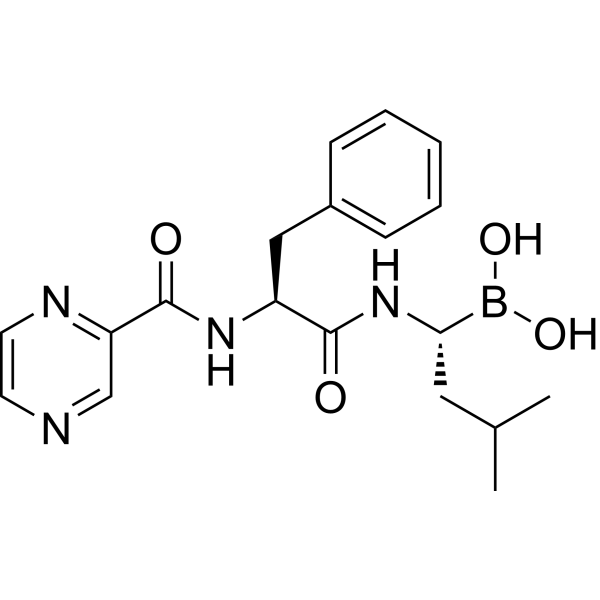
    Vimentin-IN-1 is a FiVe1 derivative, an orally active and selective anticancer agent. FiVe1 binds type III intermediate filament protein vimentin (VIM), to induce hyperphosphorylation of Ser56, resulting selective disruption of mitosis and multinucleation in transformed VIM-expressing mesenchymal cancer cells. Vimentin-IN-1 shows better oral bioavailability and pharmacokinetic profiles than FiVe1 .
    Vimentin-IN-1
  • HY-101295
    Pan-RAS-IN-1
    5+ Cited Publications

    Ras Cancer
    Pan-RAS-IN-1 is a pan-Ras inhibitor that disrupts the interaction of Ras proteins and their effectors.
    Pan-RAS-IN-1
  • HY-A0067
    Oxybenzone
    5+ Cited Publications

    Benzophenone 3

    Environmental Pollutants Autophagy RAR/RXR Apoptosis Neurological Disease
    Oxybenzone (Benzophenone 3) is a commonly used UV filter in sun tans and skin protectants. Oxybenzone act as endocrine disrupting chemicals (EDCs) and can pass through the placental and blood-brain barriers. Benzophenone-3 impairs autophagy, alters epigenetic status, and disrupts retinoid X receptor signaling in apoptotic neuronal cells .
    Oxybenzone
  • HY-117660
    Lincomycin
    5 Publications Verification

    U-10149

    Antibiotic Bacterial DNA/RNA Synthesis Infection Metabolic Disease
    Lincomycin (U-10149) is an orally active lincosamide antibiotic. Lincomycin binds to the ribosomes of Gram-positive bacteria to inhibit protein synthesis. Lincomycin can inhibit chloroplast translation, disrupt chloroplast integrity, and activate chloroplast-to-nucleus retrograde signaling in Arabidopsis thaliana seedlings. Lincomycin induces alterations in lipid profiles and liver injury, disrupts blood glucose and insulin levels, and increases growth rate in mice .
    Lincomycin
  • HY-B1162
    Sulisobenzone
    1 Publications Verification

    Benzophenone-4

    Environmental Pollutants Biochemical Assay Reagents Metabolic Disease
    Sulisobenzone (Benzophenone-4) is a benzophenone-type UV filter. Sulisobenzone can act as a endocrine disrupting compound. Sulisobenzone disrupts energy metabolism, nucleotide synthesis, oxidative stress response, and endocrine function. Sulisobenzone thyroid hormone biosynthesis and induces oxidative stress .
    Sulisobenzone
  • HY-19560
    SBI-0640756
    3 Publications Verification

    SBI-756

    Eukaryotic Initiation Factor (eIF) Autophagy Cancer
    SBI-0640756 (SBI-756) is an inhibitor of eIF4G1 and disrupts the eIF4F complex.
    SBI-0640756
  • HY-145061

    ADAMTS Metabolic Disease Inflammation/Immunology
    ADAMTS-5-IN-3 (Example 37-2) is a potent inhibitor of ADAMTS-5 and ADAMTS-4 with IC50s of 8 and 12 nM, respectively. ADAMTS-5-IN-3 can be used for the research of diseases involving degradation of cartilage or disruption of cartilage homeostasis, in particular osteoarthrosis and/or rheumatoid arthritis .
    ADAMTS-5-IN-3
  • HY-17587
    4-Methylbenzylidene camphor
    2 Publications Verification

    4-MBC; Enzacamene

    Apoptosis PI3K Akt ERK Metabolic Disease
    4-Methylbenzylidene camphor (4-MBC) is an endocrine disrupter that produces estrogen-like effects. 4-Methylbenzylidene camphor decreases the proliferation of human trophoblast cells and induces apoptosis. 4-Methylbenzylidene camphor activates PI3K/AKT and ERK1/2 signaling pathways and elevates intracellular ROS production. 4-Methylbenzylidene camphor is a ultraviolet (UV) filter and may hamper normal placental formation during early pregnancy .
    4-Methylbenzylidene camphor
  • HY-21197

    Perfluoroheptanoic acid; Tridecafluoroheptanoic acid; PFHpA

    PPAR Neurological Disease Metabolic Disease Inflammation/Immunology
    Perfluoroenanthic acid (Perfluoroheptanoic acid) is a kind of perfluoroalkyl carboxylic acid organic pollutant. Perfluoroenanthic acid has environmental persistence and bioaccumulation, and exposure can occur via oral, dermal and other routes. Perfluoroenanthic acid exhibits reproductive toxicity, neurotoxicity, hepatotoxicity, immunotoxicity and endocrine-disrupting effects. Perfluoroenanthic acid exerts definite adverse effects on development, spermatogenesis, neuronal activity and liver tissue .
    Perfluoroenanthic acid
  • HY-W590549

    DODAC

    Liposome Cancer
    Dioleyldimethylammonium chloride (DODAC) is a positively charged lipid promoter with membrane-disrupting activity, which is often formulated into cationic liposomes with dioleoylphosphatidylethanolamine. Dioleyldimethylammonium chloride is used in gene transfection research; through electrostatic interactions, it effectively promotes the binding of programmable fusion vesicles to cells and induces membrane disruption. Dioleyldimethylammonium chloride is also applied in studies on L1210 leukemia and LS180 human colon cancer .
    Dioleyldimethylammonium chloride
  • HY-B0417A
    Lincomycin hydrochloride
    5 Publications Verification

    U10149A

    DNA/RNA Synthesis Antibiotic Bacterial Infection Metabolic Disease
    Lincomycin hydrochloride (U10149A) is an orally active lincosamide antibiotic. Lincomycin hydrochloride binds to the ribosomes of Gram-positive bacteria to inhibit protein synthesis. Lincomycin hydrochloride can inhibit chloroplast translation, disrupt chloroplast integrity, and activate chloroplast-to-nucleus retrograde signaling in Arabidopsis thaliana seedlings. Lincomycin hydrochloride induces alterations in lipid profiles and liver injury, disrupts blood glucose and insulin levels, and increases growth rate in mice .
    Lincomycin hydrochloride
  • HY-B1358
    Lincomycin hydrochloride monohydrate
    5 Publications Verification

    U-10149 hydrochloride monohydrate

    DNA/RNA Synthesis Antibiotic Bacterial Infection Metabolic Disease
    Lincomycin (U-10149) hydrochloride monohydrate is an orally active lincosamide antibiotic. Lincomycin hydrochloride monohydrate binds to the ribosomes of Gram-positive bacteria to inhibit protein synthesis. Lincomycin hydrochloride monohydrate can inhibit chloroplast translation, disrupt chloroplast integrity, and activate chloroplast-to-nucleus retrograde signaling in Arabidopsis thaliana seedlings. Lincomycin hydrochloride monohydrate induces alterations in lipid profiles and liver injury, disrupts blood glucose and insulin levels, and increases growth rate in mice .
    Lincomycin hydrochloride monohydrate
  • HY-N1136

    Bacterial Infection
    (+)-Totarol is a diterpenoid membrane-disrupting agent and membrane structure regulator found in plants of the genus Podocarpus spp. (+)-Totarol inserts into phospholipid model membranes, disrupts phospholipid packing, and impairs the functional integrity of membranes. (+)-Totarol exhibits antibacterial activity against a variety of bacterial species and β-lactam-resistant strains, and its action is associated with changes in membrane physical properties. (+)-Totarol can be used in studies related to bacterial infections .
    (+)-Totarol
  • HY-W036120

    2,2′,4,4′-Tetrahydroxybenzophenone

    Environmental Pollutants Glycosidase Estrogen Receptor/ERR Pregnane X Receptor (PXR) Metabolic Disease Endocrinology
    Benzophenone-2 (2,2',4,4'-Tetrahydroxybenzophenone) is an organic ultraviolet absorber that is widely used in personal care products and industrial products such as plastics and coatings. Benzophenone-2 is an endocrine disruptor that can interfere with estrogen receptors (ERα receptor) and pregnane X receptor (PXR receptor) activity, leading to reproductive toxicity, immune disorders, and metabolic abnormalities. Benzophenone-2 can inhibit the activity of α-glucosidase (IC50 = 49.72 μM), and can be used for research on diabetes .
    Benzophenone-2
  • HY-12411
    AMG-3969
    1 Publications Verification

    Glucokinase Metabolic Disease
    AMG-3969 is a potent glucokinase-glucokinase regulatory protein interaction (GK-GKRP) disruptor with an IC50 of 4 nM.
    AMG-3969
  • HY-122683
    sAJM589
    2 Publications Verification

    c-Myc Cancer
    sAJM589 is a Myc inhibitor which potently disrupts the Myc-Max heterodimer with an IC50 of 1.8 μM .
    sAJM589
  • HY-Y1322

    Environmental Pollutants Mitophagy Apoptosis NF-κB p38 MAPK ERK JNK PI3K Akt Monoamine Oxidase Reactive Oxygen Species (ROS) PPAR Indoleamine 2,3-Dioxygenase (IDO) Cardiovascular Disease Neurological Disease Metabolic Disease Inflammation/Immunology Endocrinology
    Triphenyl phosphate is an orally active, blood-brain barrier-permeable aryl organophosphate flame retardant and endocrine disruptor. Triphenyl phosphate disrupts mitochondrial dynamic balance through oxidative stress, induces excessive mitophagy and apoptosis, and ultimately leads to myocardial fibrosis. In the brain, Triphenyl phosphate activates the NF-κB inflammatory pathway by disrupting the gut microbiota, alters tryptophan metabolism and elevates neurotoxins, thereby inducing anxiety- and depression-like behaviors. In the skeletal and reproductive systems, Triphenyl phosphate inhibits osteoblast differentiation and induces germ cell apoptosis by suppressing the MAPK/ERK pathway and activating the JNK signal, respectively. In adipose and placental tissues, Triphenyl phosphate promotes lipid accumulation by activating the PI3K/AKT-PPARγ axis, and disrupts placental metabolism via the MAOA/ROS/NF-κB cascade, impairing neurodevelopment of offspring .
    Triphenyl phosphate
  • HY-W011927S
    4,4'-Sulfonyldiphenol-d8
    1 Publications Verification

    Bisphenol S (4,4'-Sulfonyldiphenol)-d8

    Isotope-Labeled Compounds Estrogen Receptor/ERR Histone Methyltransferase Thyroid Hormone Receptor PI3K Akt mTOR Androgen Receptor Cardiovascular Disease Metabolic Disease Inflammation/Immunology Endocrinology Cancer
    4,4'-Sulfonyldiphenol-d8 (Bisphenol S (4,4'-Sulfonyldiphenol)-d8) is the deuterium labeled 4,4'-Sulfonyldiphenol (HY-W011927).4,4'-Sulfonyldiphenol (Bisphenol S; Bis(4-hydroxyphenyl) sulfone), a substitute for Bisphenol A (HY-18260), is widely used in industrial and consumer products. 4,4'-Sulfonyldiphenol is an estrogen receptor (ER) agonist and can competitively bind to thyroid hormone receptors (TR) with IC50 values for TRα and TRβ are 2650 μM and 2294 μM respectively, thereby affecting breast development and reducing the expression of androgen receptor (AR) in fetal testes. 4,4'-Sulfonyldiphenol promotes the progression of glioblastoma by upregulating the EZH2 mediated PI3K/AKT/mTOR pathway. Under chronic exposure, 4,4'-Sulfonyldiphenol can cause significant lipid deposition and dyslipidemia in the mouse liver by upregulating JunB and Atf3, and has a role in causing obesity at low doses. 4,4'-Sulfonyldiphenol induces intestinal inflammation by altering the intestinal microbiome. 4,4'-Sulfonyldiphenol accelerates the progression of atherosclerosis in zebrafish embryo larvae.
    4,4'-Sulfonyldiphenol-d8
  • HY-111009

    Fungal Infection
    Swinholide A is the actin-binding marine polyketide and dimerizes actin with the Kd of ~ 50 nM . Swinholide A is a microfilament disrupting marine toxin that stabilizes actin dimers and severs actin filaments. Swinholide A disrupts the actin cytoskeleton of cells.Antifungal activity .
    Swinholide A
  • HY-Y1004

    Decyl alcohol

    Environmental Pollutants Biochemical Assay Reagents Parasite Apoptosis Infection
    1-Decanol (Decyl alcohol) is a nematicidal agent derived from Houttuynia cordata, with an LC50 of 31.5 μg/mL against potato cyst nematodes (PCN). 1-decanol directly damages nematode surface structures, induces cellular apoptosis, and disrupts the oxidative stress regulation system, while also downregulating defense-related metabolic pathways in potato, thereby promoting the reallocation of metabolic resources from defense to growth. 1-Decanol can be used for the research of potato cyst nematode infestation .
    1-Decanol
  • HY-138294
    RAS/RAS-RAF-IN-1
    2 Publications Verification

    Ras Raf Cancer
    RAS/RAS-RAF-IN-1 is a potent RAS and RAS-RAF inhibitor. RAS/RAS-RAF-IN-1 has a KD of 5.0 μΜ-15 μΜ for cyclophilin A (CYPA) binding affinity. RAS/RAS-RAF-IN-1 has antitumor activity .
    RAS/RAS-RAF-IN-1
  • HY-16114
    BNC105
    1 Publications Verification

    Microtubule/Tubulin Cancer
    BNC105 is a tubulin polymerization inhibitor with potent antiproliferative and tumor vascular disrupting properties.
    BNC105
  • HY-15579AS
    MMAF-d8 hydrochloride
    1 Publications Verification

    Microtubule/Tubulin ADC Payload Cancer
    MMAF-d8 (hydrochloride)e is a deuterated form of MMAF hydrochloride, which is a microtubule disrupting agent.
    MMAF-d8 hydrochloride
  • HY-W679754

    PFTrDA

    Biochemical Assay Reagents Cytochrome P450 Metabolic Disease
    Pentacosafluorotridecanoic Acid (PFTrDA) is a long-chain perfluoroalkyl carboxylic acid with strong endocrine-disrupting activity. Pentacosafluorotridecanoic Acid exhibits estrogenic effects and disrupts vtg1 transcription as well as sex hormone homeostasis in male Danio rerio. Pentacosafluorotridecanoic Acid disturbs steroidogenesis and HPG axis function in a sex-dependent pattern. Pentacosafluorotridecanoic Acid inhibits CYP17A and CYP11A1 to reduce testosterone and increase E2/T ratio in H295R cells. Pentacosafluorotridecanoic Acid triggers gender-specific immunomodulation after prenatal exposure. Pentacosafluorotridecanoic Acid correlates with lower eczema risk in female infants. Pentacosafluorotridecanoic Acid can be used for the research of endocrine disruption and eczema .
    Pentacosafluorotridecanoic Acid
  • HY-N6701

    Arp2/3 Complex DNA/RNA Synthesis Calcium Channel Inflammation/Immunology
    Dihydrocytochalasin B is an Actin disruptor. Dihydrocytochalasin B disrupts actin microfilament bundles, inhibits actin polymerization, and alters intracellular actin cytoskeletal structures. Dihydrocytochalasin B blocks the initiation of DNA synthesis. Dihydrocytochalasin B inhibits Calcium transport. Dihydrocytochalasin B inhibits cytokinesis and alters cell morphology. Dihydrocytochalasin B can be used in studies related to rickets .
    Dihydrocytochalasin B
  • HY-18256

    AVE8062 hydrochloride; AC7700 hydrochloride

    Microtubule/Tubulin Cardiovascular Disease Cancer
    Ombrabulin hydrochloride is a derivative of CA-4 phosphate, which is known to exhibit antivascular effects through selective disruption of the tubulin cytoskeleton of endothelial cells.
    Ombrabulin hydrochloride
  • HY-N6724

    Dihydroalterperylenol

    Others Metabolic Disease
    Altertoxin I (Dihydroalterperylenol) is a quinone-type mycotoxin produced by Alternaria alternata fungi, which is mutagenic and cytotoxic, and can weakly disrupts metabolic communication .
    Altertoxin I
  • HY-14797

    AVE8062; AC7700

    Microtubule/Tubulin Cardiovascular Disease Cancer
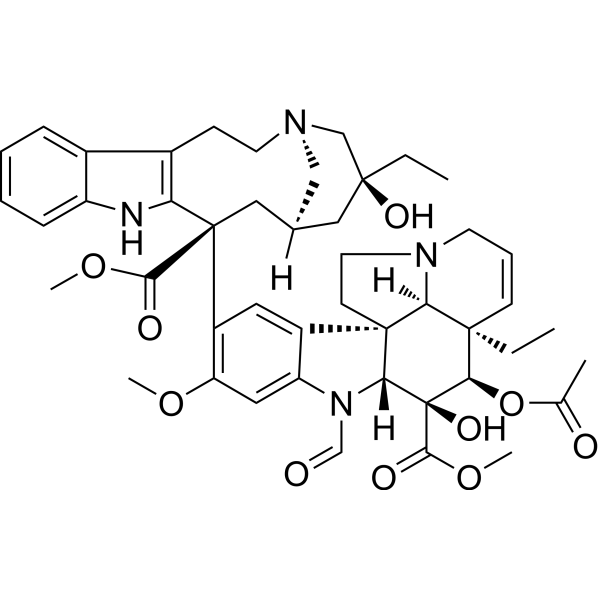
    Ombrabulin (AVE8062) is a derivative of CA-4 phosphate, which is known to exhibit antivascular effects through selective disruption of the tubulin cytoskeleton of endothelial cells.
    Ombrabulin
  • HY-W092533

    Tryptophan Hydroxylase Neurological Disease
    6-Fluorotryptophan, a competitive inhibitor of tryptophan hydroxylase, produced a transient disruption of sleep in rats chronically implanted with EEG recording electrodes .
    6-Fluorotryptophan
  • HY-157417

    DNA/RNA Synthesis Others
    G-quadruplex ligand 1, a G-quadruplex ligand, disrupts G-Quadruplex DNA structure and enhances gene expression .
    G-quadruplex ligand 1
  • HY-132260

    IMGN529; Debio 1562

    Antibody-Drug Conjugates (ADCs) Apoptosis Cancer
    Naratuximab emtansine (IMGN529) is a CD37-targeted ADC consisting of a humanized IgG1 mAb coupled to the microtubule disruptor DM1. Naratuximab emtansine has high affinity and specificity for CD37, allowing ADC internalization, processing and intracellular release of DM1. Due to its ability to disrupt microtubule assembly, DM1 can subsequently induce cell cycle arrest and apoptosis .
    Naratuximab emtansine
  • HY-Y0716

    Environmental Pollutants Biochemical Assay Reagents Metabolic Disease
    3-t-Butylphenol is a mitochondrial uncoupler. 3-t-Butylphenol disrupts the proton gradient, inhibits ATP synthesis and induces cytotoxicity .
    3-t-Butylphenol
  • HY-121287

    Herbicide Cardiovascular Disease
    Ioxynil is an herbicide that act as endocrine disruptor. Ioxynil can disrupt vascular and heart development in zebrafish .
    Ioxynil
  • HY-114982

    Caspase Apoptosis Cancer
    KEA1-97 is a selective Thioredoxin-caspase 3 interaction disruptor (IC50=10 μM). KEA1-97 disrupts the interaction of thioredoxin with caspase 3, activates caspases, and induces apoptosis without affecting thioredoxin activity .
    KEA1-97
  • HY-B2007

    Environmental Pollutants Acetyl-CoA Carboxylase Herbicide Metabolic Disease Inflammation/Immunology
    Fluazifop-P-butyl is an orally active herbicide and ACCase inhibitor. Fluazifop-P-butyl blocks the formation of malonyl-CoA, disrupts lipid synthesis in sensitive plants, and exhibits concentration-dependent phytotoxicity to non-target maize seedlings. Fluazifop-P-butyl induces oxidative stress in male Wistar rats, impairs their liver and kidney functions, and disrupts testicular function .
    Fluazifop-P-butyl
  • HY-A0067S

    RAR/RXR Apoptosis Autophagy Neurological Disease
    Oxybenzone-d5 is the deuterium labeled Oxybenzone . Oxybenzone (Benzophenone 3) is a commonly used UV filter in sun tans and skin protectants. Oxybenzone act as endocrine disrupting chemicals (EDCs) and can pass through the placental and blood-brain barriers. Benzophenone-3 impairs autophagy, alters epigenetic status, and disrupts retinoid X receptor signaling in apoptotic neuronal cells .
    Oxybenzone-d5
  • HY-W011927R

    Bisphenol S (Standard); Bis(4-hydroxyphenyl) sulfone (Standard)

    Reference Standards Estrogen Receptor/ERR Histone Methyltransferase Thyroid Hormone Receptor PI3K Akt mTOR Androgen Receptor Drug Derivative Cardiovascular Disease Metabolic Disease Inflammation/Immunology Endocrinology Cancer
    4,4'-Sulfonyldiphenol (Bisphenol S; Bis(4-hydroxyphenyl) sulfone) (Standard) is the analytical standard of 4,4'-Sulfonyldiphenol (HY-W011927). This product is intended for research and analytical applications. 4,4'-Sulfonyldiphenol, a substitute for Bisphenol A (HY-18260), is widely used in industrial and consumer products. 4,4'-Sulfonyldiphenol is an estrogen receptor (ER) agonist and can competitively bind to thyroid hormone receptors (TR) with IC50 values for TRα and TRβ are 2650 μM and 2294 μM respectively, thereby affecting breast development and reducing the expression of androgen receptor (AR) in fetal testes. 4,4'-Sulfonyldiphenol promotes the progression of glioblastoma by upregulating the EZH2 mediated PI3K/AKT/mTOR pathway. Under chronic exposure, 4,4'-Sulfonyldiphenol can cause significant lipid deposition and dyslipidemia in the mouse liver by upregulating JunB and Atf3, and has a role in causing obesity at low doses. 4,4'-Sulfonyldiphenol induces intestinal inflammation by altering the intestinal microbiome. 4,4'-Sulfonyldiphenol accelerates the progression of atherosclerosis in zebrafish embryo larvae.
    4,4'-Sulfonyldiphenol (Standard)
  • HY-B1866R

    Reference Standards Androgen Receptor Endocrinology
    Linuron (Standard) is the analytical standard of Linuron. This product is intended for research and analytical applications. Linuron is a phenylurea herbicide that is widely used to control the growth of grass and weeds in various agriculture crops and in orchards. Linuron is a photosystem II inhibitor. Linuron is also a competitive androgen receptor (AR) antagonist with a Ki of 100 μM. Linuron shows reproductive toxicity in animals that acts as an endocrine disruptor .
    Linuron (Standard)
  • HY-P2261
    STAD 2
    1 Publications Verification

    PKA Infection
    STAD 2 is a potent and selective disruptor of PKA-RII, with a Kd of 6.2 nM. STAD 2 disrupts interactions between PKA and AKAP in an isoform-selective manner. STAD 2 displays antimalarial activity through a PKA-independent mechanism .
    STAD 2
  • HY-Y1322S

    Celluflex TPP-d15; DHPF 005-d15; Disflamol TP-d15; Disflamoll TP-d15; NSC 57868-d15; Phenyl phosphate ((PhO)3PO)-d15; Phoscon FR 903N-d15

    Isotope-Labeled Compounds Environmental Pollutants ERK Indoleamine 2,3-Dioxygenase (IDO) p38 MAPK NF-κB Akt Monoamine Oxidase Mitophagy Reactive Oxygen Species (ROS) JNK PI3K PPAR Apoptosis Cardiovascular Disease Neurological Disease Metabolic Disease Inflammation/Immunology Endocrinology
    Triphenyl phosphate-d15 is the deuterium labeled Triphenyl phosphate. Triphenyl phosphate is an orally active, blood-brain barrier-permeable aryl organophosphate flame retardant and endocrine disruptor. Triphenyl phosphate disrupts mitochondrial dynamic balance through oxidative stress, induces excessive mitophagy and apoptosis, and ultimately leads to myocardial fibrosis. In the brain, Triphenyl phosphate activates the NF-κB inflammatory pathway by disrupting the gut microbiota, alters tryptophan metabolism and elevates neurotoxins, thereby inducing anxiety- and depression-like behaviors. In the skeletal and reproductive systems, Triphenyl phosphate inhibits osteoblast differentiation and induces germ cell apoptosis by suppressing the MAPK/ERK pathway and activating the JNK signal, respectively. In adipose and placental tissues, Triphenyl phosphate promotes lipid accumulation by activating the PI3K/AKT-PPARγ axis, and disrupts placental metabolism via the MAOA/ROS/NF-κB cascade, impairing neurodevelopment of offspring.
    Triphenyl phosphate-d15
  • HY-B2058

    Fungal Androgen Receptor Infection
    Triticonazole is an orally active triazole fungicide and androgen receptor antagonist. Triticonazole inhibits testosterone-induced androgen receptor activation and reduces basal testosterone secretion. Prenatal exposure to Triticonazole causes shortened anogenital distance in male rat fetuses and induces organ-specific histopathological changes in pigs. Triticonazole can be used for detoxification of seeds contaminated with fungal pathogens, but there is a risk of animal poisoning if the treated seeds are used as animal feed .
    Triticonazole
  • HY-134975

    c-Myc Cancer
    NY2267 is a disruptor of Myc-Max interaction, with an IC50 of 36.5 μM. NY2267 inhibits Myc- and Jun-induced transcriptional activation .
    NY2267

Inquiry Online

Your information is safe with us. * Required Fields.

Salutation


Country or Region *

Applicant Name *


Organization Name *

Department *


Email Address *


Product Name *

Cat. No.


Requested quantity *

Phone Number *


Remarks

Inquiry Online

Inquiry Information

Product Name:
Cat. No.:
Quantity:
MCE Japan Authorized Agent:

