Search Result
Results for "
flowers
" in MedChemExpress (MCE) Product Catalog:
1
Biochemical Assay Reagents
6
Isotope-Labeled Compounds
| Cat. No. |
Product Name |
Target |
Research Areas |
Chemical Structure |
-
- HY-N0792
-
-
-
- HY-N0773
-
|
Saponaretin; Homovitexin
|
JNK
NF-κB
|
Inflammation/Immunology
|
|
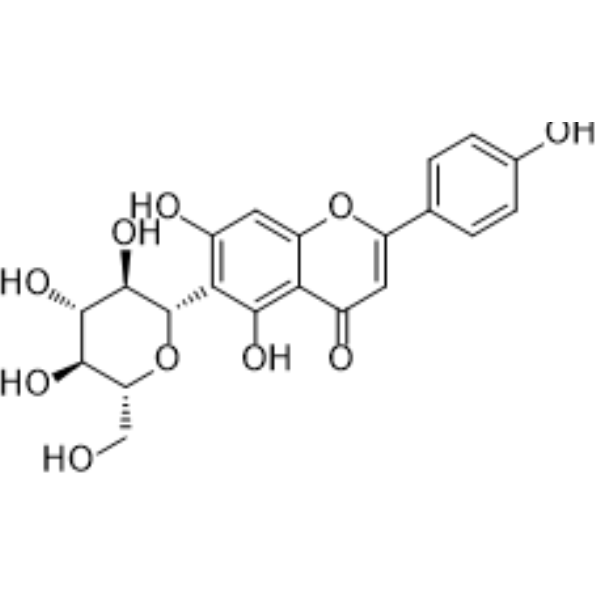
Isovitexin is a flavonoid isolated from passion flower, Cannabis and, and the palm, possesses anti-inflammatory and anti-oxidant activities; Isovitexin acts like a JNK1/2 inhibitor and inhibits the activation of NF-κB.
|
-
-
- HY-N6673
-
-
-
- HY-Y0078
-
-
-
- HY-129139
-
|
|
Others
|
Others
|
|
Cyanidin-3-O-arabinoside is a pigment isolated from flowers of Rhododendron cv. Lems Stormcloud .
|
-
-
- HY-Y1110H
-
|
Magnogene, suitable for insect cell culture
|
Environmental Pollutants
Biochemical Assay Reagents
|
Others
|
|
Magnesium chloride anhydrous, suitable for insect cell culture is an inorganic salt and cell culture medium component that can be used to prepare Tris buffer. Magnesium chloride anhydrous, suitable for insect cell culture is a component of Hunter's Thrips medium, which supports the in vitro culture of western flower thrip embryonic cells, and promotes the adhesion of tissue fragments/cells as well as the growth of fibroblast-like and epithelial-like cells .
|
-
-
- HY-W068212
-
|
Juniperic acid
|
Drug Intermediate
|
Metabolic Disease
|
|
16-Hydroxyhexadecanoic acid (Juniperic acid) is one of the main monomers of cutin in Vicia faba flower petals. 16-Hydroxyhexadecanoic acid can be used as an internal standard for the measurement of hydroxy and hydroperoxy fatty acids in plasma .
|
-
-
- HY-N7058
-
|
|
Environmental Pollutants
Insecticide
|
Others
|
|
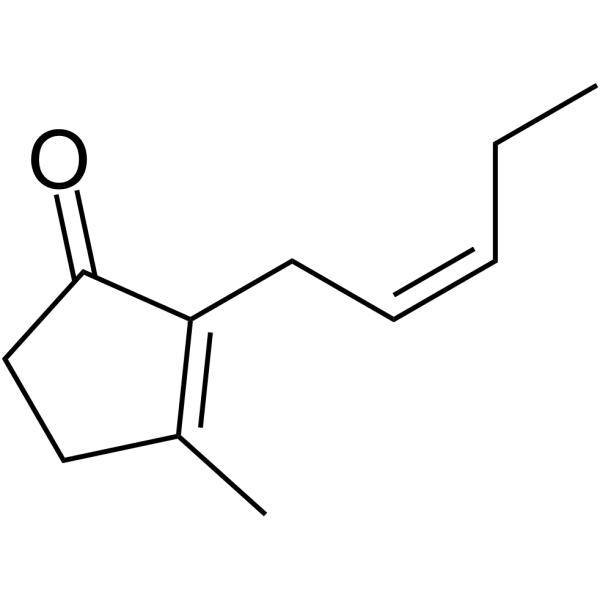
Cis-Jasmone is a plant-derived natural product. Cis-Jasmone is constitutively released by many flowers and sometimes by leaves as an attractant for pollinators or as a chemical cue for host location by insect flower herbivores. Cis-Jasmone treatment of crop plants not only induces direct defense against herbivores, but also induces indirect defense by releasing VOCs that attract natural enemies .
|
-
-
- HY-N4058
-
|
|
Apoptosis
|
Cancer
|
|
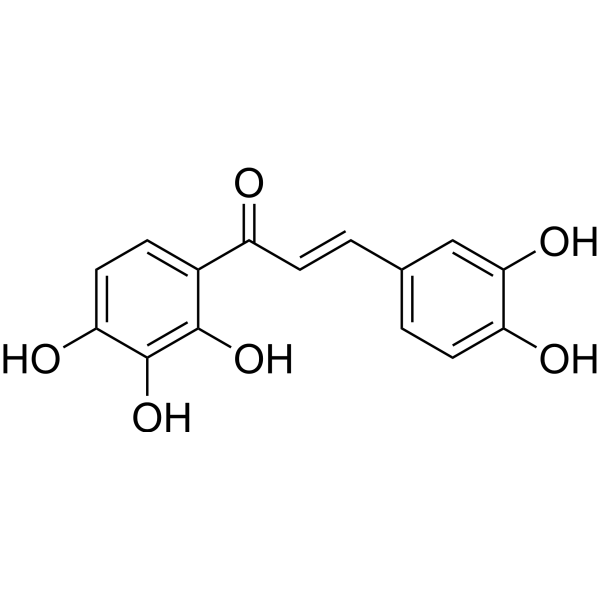
Helichrysetin is isolated from the flower Helichrysum odoratissimum. Helichrysetin is an ID2 (DNA binding inhibitor 2) inhibitor. Helichrysetin induces apoptosis. Helichrysetin has anti-tumor and antioxidant activity .
|
-
-
- HY-N8028
-
|
|
Others
|
Cancer
|
|
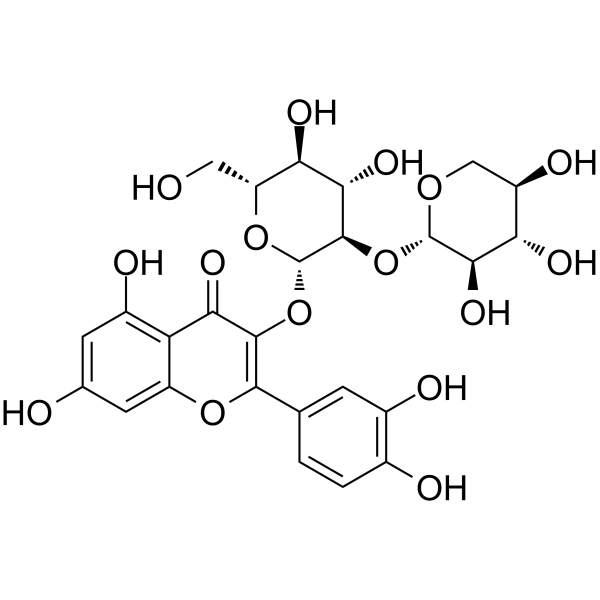
Quercetin-3-O-sambubioside is a monomeric compound found in Eucommia ulmoides male flowers. Quercetin-3-O-sambubioside promotes the stimulation of the nerve center. Antioxidant and anticancer activities .
|
-
-
- HY-N0129
-
-
-
- HY-N8117
-
-
-
- HY-N0938
-
|
|
Fluorescent Dye
|
Others
|
|
Safflower yellow is extracted from the flowers of the plant safflower (Carthamus tinctorius) and as the traditional Chinese medicine it has been extensively used for the treatment of cardio cerebrovascular diseases.
|
-
-
- HY-N4244
-
-
-
- HY-N9357
-
|
|
Bacterial
Fungal
|
Infection
|
|
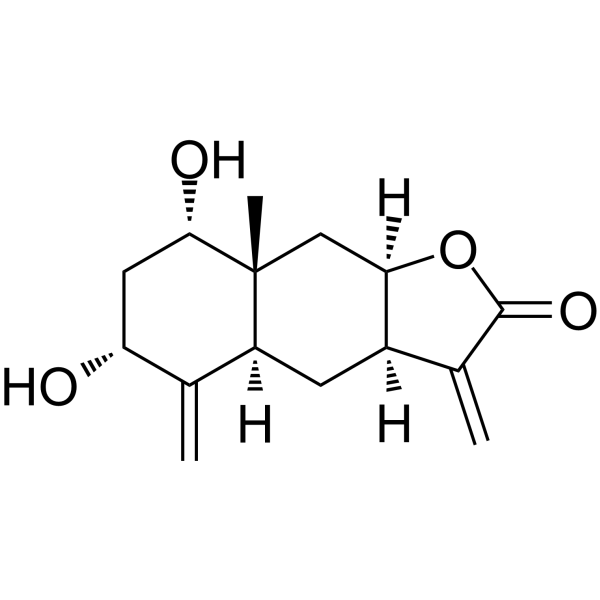
Granilin, a sesquiterpene lactone, can be found in the flower buds of Carpesium triste. Granilin can be used as the bactericide and fungicide .
|
-
-
- HY-N4168
-
|
|
HBV
|
Infection
Cancer
|
|
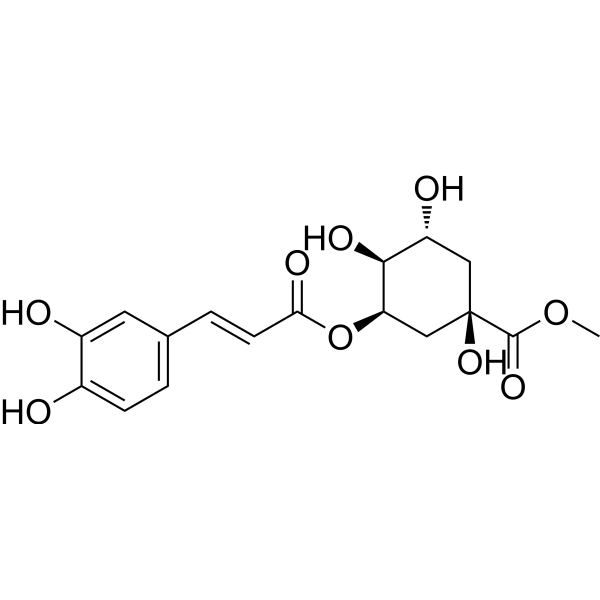
3-O-Caffeoylquinic acid methyl ester is a monocaffeoylquinic acid derivative and phenolic acid component, which can be found in the whole plant of Pyrrosia calvata (Backer) Ching and the flower buds of Lonicera japonica Thunb .
|
-
-
- HY-N4172
-
|
|
Others
|
Others
|
|
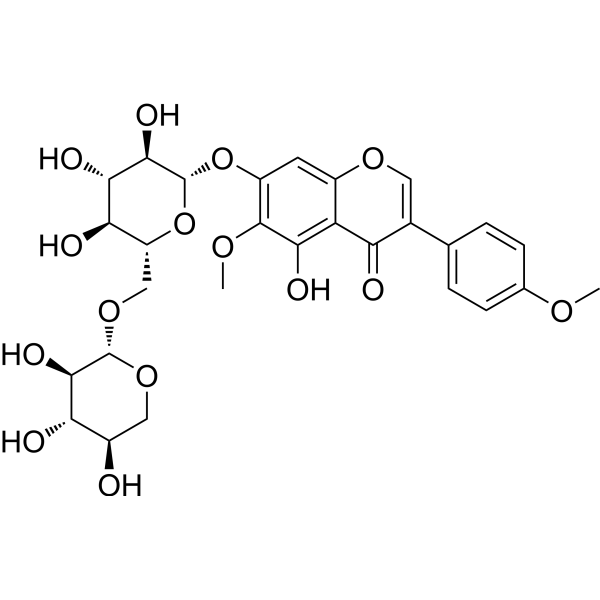
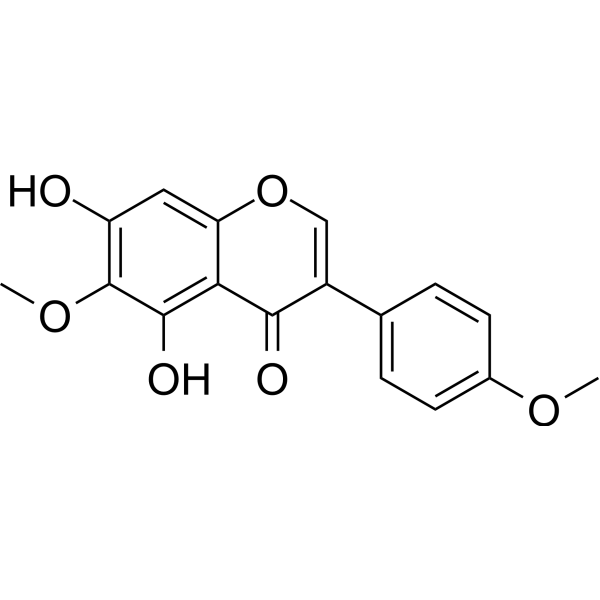
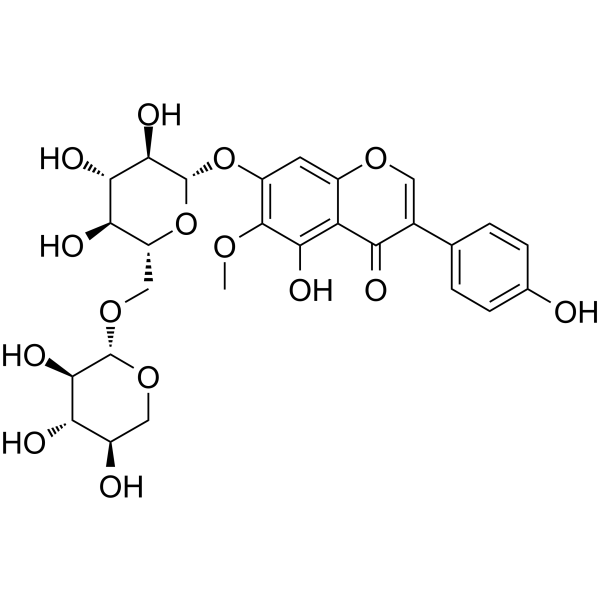
Tectorigenin 7-O-Xylosyl Glucoside is a glycosidic isoflavone isolated from Pueraria thomsonii flower .
|
-
-
- HY-108277
-
|
|
Apoptosis
|
Cancer
|
|
Ginsenoside F5, from crude extracts of flower buds of Panax ginseng, remarkably inhibits the growth of HL-60 cells by the apoptosis pathway .
|
-
-
- HY-N6990
-
|
|
Others
|
Cancer
|
|
Anhydrosecoisolariciresinol is from the flower of Wedelia biflora, has anti-tumor activities .
Anhydrosecoisolariciresinol decreases the growth of human breast cancer MCF-7 and MDA-MB-231 cell lines .
|
-
-
- HY-N8243
-
|
|
Others
|
Metabolic Disease
|
|
Coreopsin is a natural product that can be isolated from Coreopsis tinctoria Nutt. flower. Coreopsin can be used for hypertension and diabetes research .
|
-
-
- HY-N2496
-
|
|
Others
|
Others
|
|
Apigenin 7-O-malonylglucoside is found in chrysanthemum flowers .
|
-
-
- HY-W001154
-
|
|
Others
|
Others
|
|
Methyl 2,6-dihydroxybenzoate is a volatile, that can be isolated from whole flowers and corolla of Primula spectabilis .
|
-
-
- HY-N10994
-
|
|
Others
|
Others
|
|
Peucenin 7-O-methyl ether is a natural product that can be isolated from the flowers of Rosa rugosa .
|
-
-
- HY-N9319
-
|
Decaisoside E
|
Others
|
Others
|
|
Fulvotomentoside A (Decaisoside E) is a triterpenoid saponin compound isolated from the flowers of Lonicera fulvotomentosa Hsu et S.C. Cheng .
|
-
-
- HY-115684
-
|
Undecan-2-ol
|
Endogenous Metabolite
|
Others
|
|
2-Undecanol (Undecan-2-ol) is a male specific volatile identified from the sap beetle Lobiopa insularis. 2-undecanol is a flower emitted volatile, used by various species of Hymenoptera as a pheromone component .
|
-
-
- HY-N10451
-
|
|
Others
|
Others
|
|
Chlorogenin is a natural product that can be isolated from the flowers of Agave americana .
|
-
-
- HY-B0887A
-
|
(+)-trans-NRDC-143; (1R)-trans-Permethrin
|
Insecticide
|
Others
|
|
(+)-trans-Permethrin ((+)-trans-NRDC-143) is a pyrethroid which is synthetic derivative of the natural toxins pyrethrins contained in the flowers of Chrysanthemum species .
|
-
-
- HY-147113
-
|
|
Others
|
Others
|
|
2-Methyl-3-buten-1-ol is a component of ylang-ylang oils can be extracted from the flowers .
|
-
-
- HY-N0792R
-
|
|
Reference Standards
Others
|
Inflammation/Immunology
Cancer
|
|
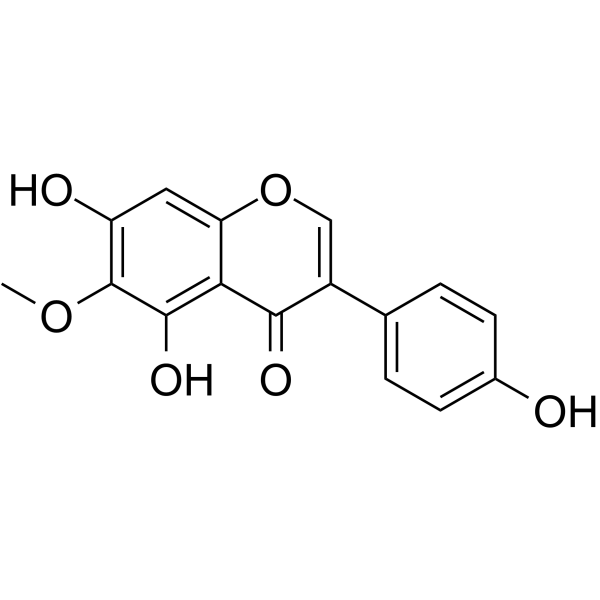
Tectorigenin (Standard) is the analytical standard of Tectorigenin. This product is intended for research and analytical applications. Tectorigenin is a plant isoflavonoid originally isolated from the dried flower of Pueraria lobate Benth.
|
-
-
- HY-N7058R
-
|
|
Reference Standards
Insecticide
|
Others
|
|
cis-Jasmone (Standard) is the analytical standard of cis-Jasmone. This product is intended for research and analytical applications. Cis-Jasmone is a plant-derived natural product. Cis-Jasmone is a plant-derived natural product. Cis-Jasmone is constitutively released by many flowers and sometimes by leaves as an attractant for pollinators or as a chemical cue for host location by insect flower herbivores. Cis-Jasmone treatment of crop plants not only induces direct defense against herbivores, but also induces indirect defense by releasing VOCs that attract natural enemies .
|
-
-
- HY-N5104
-
|
|
Others
|
Others
|
|
Clemaphenol A is a chemical constituent of the flower of Fritillaria pallidiflora .
|
-
-
- HY-N0895
-
|
Desacetylinulicin
|
Others
|
Infection
Cancer
|
|
Britannilactone(Desacetylinulicin) is a methanol extract of the dried flower of Inula britannica L.
|
-
-
- HY-123091
-
|
|
Others
|
Cancer
|
|
Ivangustin is a sesquiterpene isolated from the flower heads of the medicinal plant Inula britannica .
|
-
-
- HY-N8408
-
|
|
Others
|
Others
|
|
Peonidin 3,5-diglucoside is a classic anthocyanin isolated from violet flowers .
|
-
-
- HY-W540802
-
|
|
Others
|
Others
|
|
2-Ethoxypropane is one of the constituents of the volatile oils of the flowers of Tibetan medicine Rhododendron anthopogon .
|
-
-
- HY-N5039
-
|
1,2-O-Dilinoleoyl-3-O-β-D-galactopyranosylracglycerol
|
Others
|
Others
|
|
1,2-O-Dilinoleoyl-3-O-Beta-D-Galactopyranosylracglycerol is isolated from the flower of Magnolia denudate.
|
-
-
- HY-N7265
-
|
|
Cholinesterase (ChE)
|
Neurological Disease
|
|
Epi-galantamine is a diastereomer of Galantamine. Epi-galantamine is an alkaloid isolated from the bulbs and flowers of Caucasian snowdrop (Galanthus woronowii). Epi-galantamine inhibits AChE with an EC50 of 45.7 μM .
|
-
-
- HY-N17672
-
|
|
Others
|
Others
|
|
Quercetin 3-O-β-D-glucuronide 6"-ethyl ester is a flavonoid. Quercetin 3-O-β-D-glucuronide 6"-ethyl ester can be extracted from flowers of Tamarix nilotica .
|
-
-
- HY-N10698
-
|
|
Others
|
Inflammation/Immunology
|
|
(2E,4E)-8-Hydroxy-2,7-dimethyl-decadien-(2,4)-disaeure-(1,10)-dioic acid is a nature product that could be isolated form bunge auriculate flower. (2E,4E)-8-Hydroxy-2,7-dimethyl-decadien-(2,4)-disaeure-(1,10)-dioic acid has antioxidant and anti-inflammatory active .
|
-
-
- HY-N8971
-
|
16α-Hydroxybauerenol
|
Bacterial
|
Infection
|
|
Bauer-7-ene-3β,16α-diol, a triterpenoid, is a natural product that can be isolated from dried flower buds of Tussilago farfara L. or Petasites tricholobus (Compositae). Bauer-7-ene-3β,16α-diol shows medium antibacterial activity against E. coli .
|
-
-
- HY-N13225
-
|
|
Others
|
Others
|
|
Hops Flower Extract is the extract of Hops Flower.
|
-
-
- HY-N12733
-
|
|
Others
|
Others
|
|
Chrysindin A is a polyacetylene from the flowers of Chrysanthemum indicum .
|
-
-
- HY-119642
-
|
|
Others
|
Others
|
|
Kopsinine is an indole alkaloid extracted from periwinkle flowers .
|
-
-
- HY-N15219
-
|
|
Endogenous Metabolite
NO Synthase
|
Inflammation/Immunology
|
|
6-Hydroxygenistein-7-O-β-D-glucopyranoside (compound 2) is a glucopyranoside that can be isolated from Pueraria lobata flower. The isoflavones in Pueraria lobata flower are potential anti-inflammatory agents for microglia and can inhibit the production of NO .
|
-
-
- HY-N12092
-
-
-
- HY-N3334
-
|
|
Others
|
Others
|
|
Maglifloenone is a Lignans product that can be isolated from the flowers of Magnolia liliflora .
|
-
-
- HY-N10984
-
|
|
Others
|
Others
|
|
Jacquilenin is a natural product that can be isolated from the flowers of Picris hieracioides L. .
|
-
-
- HY-N11510
-
|
Flavanocorepsin
|
Others
|
Cancer
|
|
Isocoreopsin (Flavanocorepsin) is an anticancer agent that can be isolated from Butea monosperma flowers .
|
-
-
- HY-N10029
-
|
|
Others
|
Others
|
|
Edgeworoside C (compound 5) is a coumarin isolated from the flower buds of Edgeworthia chrysantha .
|
-
-
- HY-N8575A
-
|
|
Others
|
Others
|
|
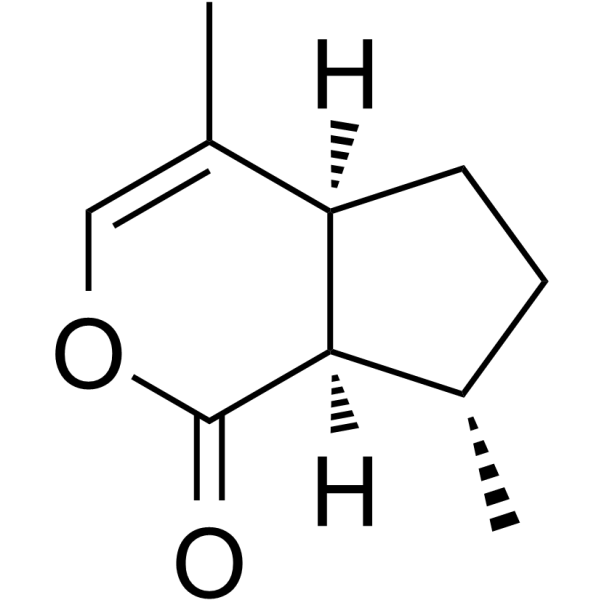
(1R)-Chrysanthemolactone is a Monoterpenoids product that can be isolated from the flowers of Dendranthema indicum .
|
-
- HY-N8575
-
|
|
Others
|
Others
|
|
(1S)-Chrysanthemolactone is a Monoterpenoids product that can be isolated from the flowers of Dendranthema indicum .
|
-
- HY-N7902
-
|
|
Others
|
Others
|
|
6''-O-Xylosylglycitin is a natural isoflavonoid compound found in the flower of Pueraria thunbergiana Benth .
|
-
- HY-N15695
-
|
|
Others
|
Others
|
|
Giganteoside J' is a triterpenoid saponin. Giganteoside J' is found in m the roots and flowers of C. kotschyi .
|
-
- HY-N3932
-
|
|
Others
|
Others
|
|
Garjasmin (compound 1) is a kind of iridoid aglycone. Garjasmin can be isolated from the flowers of Gardenia jasminoides Ellis .
|
-
- HY-N10172
-
|
|
Others
|
Others
|
|
Irilone (compound 13) is a kind of flavonoid. Irilone can be isolated from the flowers and leaves of red clover (Trifolium pratense) .
|
-
- HY-N12043
-
|
|
Others
|
Others
|
|
Bidenoside C (compound 10) is a polyacetylene glycoside (Polyacetylene Glycoside), which can be isolated from the flowers of Coreopsis lanceolata (Asteraceae) .
|
-
- HY-N1742
-
|
2''-O-p-Cumaroyleuglanin; Kaempferol 3-O-[2′′-(E)-p-coumaroyl]-α-L-arabinofuranoside
|
Others
|
Others
|
|
2''-O-Coumaroyljuglanin (2''-O-p-Cumaroyleuglanin) is a flavonoid which can be isolated from the flowers of Prunus spinosa .
|
-
- HY-N15659
-
-
- HY-N7058S
-
|
|
Isotope-Labeled Compounds
Insecticide
|
Others
|
|
Cis-Jasmone-d2 is deuterated labeled Cis-Jasmone (HY-N7058). Cis-Jasmone is a plant-derived natural product. Cis-Jasmone is constitutively released by many flowers and sometimes by leaves as an attractant for pollinators or as a chemical cue for host location by insect flower herbivores. Cis-Jasmone treatment of crop plants not only induces direct defense against herbivores, but also induces indirect defense by releasing VOCs that attract natural enemies .
|
-
- HY-133216
-
-
- HY-N0129R
-
|
|
Reference Standards
Bacterial
|
Infection
|
|
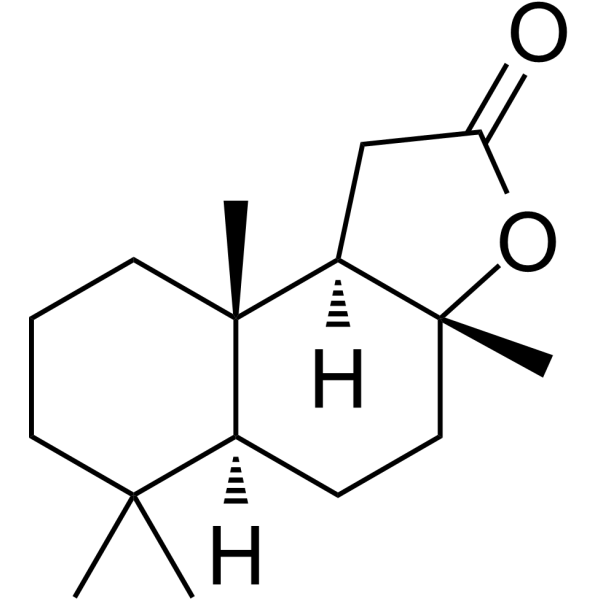
Sclareolide (Standard) is the analytical standard of Sclareolide. This product is intended for research and analytical applications. Sclareolide is isolated from the flower of Perilla frutescens with antibacterial and cytotoxic activities[1].
|
-
- HY-N9075
-
|
|
Glycosidase
|
Cancer
|
|
9-(4′-Hydroxyphenyl)-2-methoxyphenalen-1-one is a phytoalexin and mixed competitive α-glucosidase inhibitor of Bacillus stearothermophilus (IC50: 3.86 mg/L) .
|
-
- HY-W017140S
-
|
SBMP-d3
|
Isotope-Labeled Compounds
|
Others
|
|
2-Sec-butyl-3-methoxypyrazine-d3 is deuterated labeled cis-?Jasmone (HY-N7058). Cis-Jasmone is a plant-derived natural product. Cis-Jasmone is constitutively released by many flowers and sometimes by leaves as an attractant for pollinators or as a chemical cue for host location by insect flower herbivores. Cis-Jasmone treatment of crop plants not only induces direct defense against herbivores, but also induces indirect defense by releasing VOCs that attract natural enemies .
|
-
- HY-N8946
-
|
|
Others
|
Others
|
|
1-O-Acetyl-6alpha-O-(2-methylbutyryl)britannilactone is a Sesquiterpenoids product that can be isolated from the flower heads of Inula britannica. .
|
-
- HY-N12862
-
|
|
Aldose Reductase
|
Inflammation/Immunology
|
|
Floramanoside A is a flavonol glycoside that can be isolated from the flowers of Abelmouschus manihot. Floramanoside A has DPPH scavenging (IC50: 10.1 μM) and aldose reductase inhibition activities (IC50: 17.8 μM) .
|
-
- HY-N12863
-
|
|
Others
|
Endocrinology
|
|
Myricetin-3-O-robinoside is a flavonoid isolated from cassava flowers by chromatographic techniques. Its structure consists of a myricetin backbone to which a robinose moiety is attached at the third position .
|
-
- HY-N8862
-
|
|
Others
|
Inflammation/Immunology
|
|
Anti-inflammatory agent 69 (compound 12), sesquiterpenoid, is an anti-inflammatory agent isolated from the dried flower buds of Tussilago farfara. Anti-inflammatory agent 69 can inhibit the NO production with IC50 value of 24 μM .
|
-
- HY-W1121871
-
|
|
Drug Derivative
|
Cancer
|
|
Dihydro-β-ionol is a derivative of β-Ionone (HY-W015084) found in in the aromatic components of Osmanthus flower and of Hakuto peach. Dihydro-β-ionol inhibits intracellular melanin synthesis and can be used for the research of cancer, such as melanoma .
|
-
- HY-W976179
-
|
|
Others
|
Others
|
|
2E,4E-Decadienoylpiperidide (Compound 2) is a cyclic amide compound that can be found in the roots, leaves, and flowers of Achillea ptarmica .
|
-
- HY-N19859
-
|
Milliettiioside
|
Others
|
Others
|
|
Everlastoside C (Milliettiioside) (Compound 3) is a glycoside that can be found in the flowers of Helichrysum arenarium. Glycosidic compounds typically possess anti-inflammatory, anti-infective, anti-cancer, and antioxidant properties, playing a variety of important roles within biological organisms .
|
-
- HY-N17437
-
|
|
Drug Derivative
|
Others
|
|
(20S,24S)-20,24-Dihydroxy-3,4-secodammara-4(28),25-dien-3-oic acid is a secodammarane-type triterpenic acid that can be found in the male flowers of Alnus japonica .
|
-
- HY-N18800
-
|
|
Others
|
Others
|
|
Davana oil is isolated from the flower of Artemisia Pallens plant.
|
-
- HY-N17350
-
-
- HY-N18815
-
|
|
Others
|
Others
|
|
Neroli bigarade is a product obtained by processing flowers of the bitter orange tree.
|
-
- HY-N17586
-
|
|
Others
|
Others
|
|
Azukisaponin I is a saponin found in the flowers of Pueraria lobata and Pueraria thomsonii .
|
-
- HY-N9726
-
|
|
Others
|
Others
|
|
Campsiketalin (Compound 6) is a cyclohexylethanoid that can be found in the flowers of Campsis grandiflora .
|
-
- HY-N17918
-
|
|
Others
|
Others
|
|
(Z)-Harpagoside is a triterpenoid saponin found in the leaves and flowers of Verbesina virginica .
|
-
- HY-N18000
-
|
|
Others
|
Others
|
|
2''-O-Arabinopyranosylorientin is a flavonoid found in the flowers of Trollius ledibouri Reichb .
|
-
- HY-N17924
-
|
|
Others
|
Others
|
|
Gehuain is an isoflavonoid glycoside that can be found in the flowers of Pueraria lobata (Willd.) Ohwi .
|
-
- HY-W775024
-
|
|
Others
|
Others
|
|
Butyl 2-ethylhexyl phthalate is isolated from Parthenium hysterophorus flower .
|
-
- HY-N17947
-
|
|
Others
|
Others
|
|
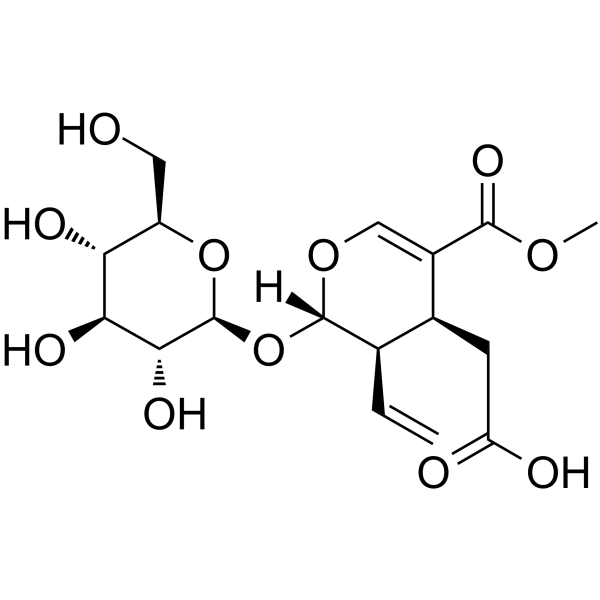
7-Epi-loganin is an iridoid glucoside found in the flower buds of Lonicera japonica .
|
-
- HY-N18797
-
|
|
Others
|
Others
|
|
Hop oil is a kind of essential oil isolated from the hop cones, or flowers of the hop plant.
|
-
- HY-N17305
-
|
|
Others
|
Others
|
|
Nobotanin D (Compound 23) is a hydrolyzable tannin found in the fresh flowers of Camellia reticulata .
|
-
- HY-N18181
-
|
|
Others
|
Others
|
|
Tamarixetin 7-O-rutinoside is a flavonoid glycoside found in the flowers of Verbascum phlomoides L. .
|
-
- HY-N18808
-
|
|
Others
|
Others
|
|
Matricaria oil is extracted from the flower heads or flowering tops of Matricaria recutita L. It can be used in cosmetics.
|
-
- HY-N17972
-
|
|
Others
|
Others
|
|
Floranotoginsenoside D (Compound 4) is a dammarane-type triterpene saponin found in the flowers of Panax notoginseng .
|
-
- HY-N18829
-
|
|
Others
|
Others
|
|
Chamomile essential oil is extracted from fresh chamomile flowers through distillation and is mainly used in cosmetic research.
|
-
- HY-W719544
-
|
|
Parasite
|
Infection
|
|
Cyenopyrafen is a mitochondrial complex II inhibitor and acaricide. Cyenopyrafen controls spider mites on fruit trees, vegetables and flowers .
|
-
- HY-N18160
-
|
|
Others
|
Others
|
|
Omphalocarpin is a 5,7-dimethoxy-8-substituted coumarin found in the flowers of Murraya paniculata var. omphalocarpa .
|
-
- HY-N18699
-
|
|
Others
|
Others
|
|
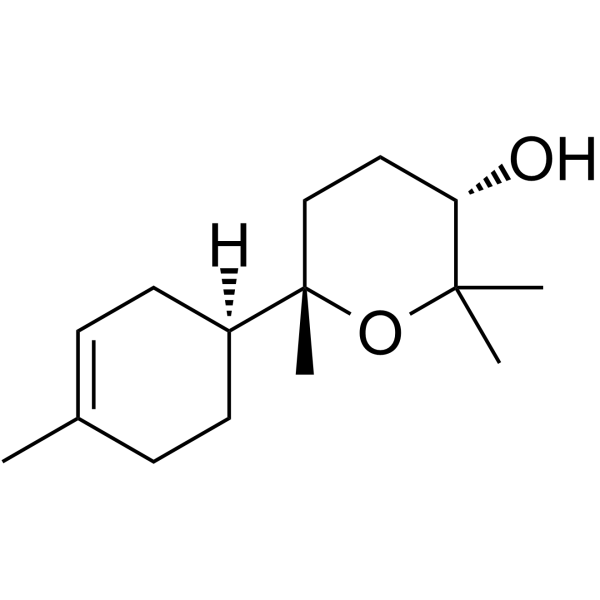
The main active ingredient bisabolol contained in the Chamomilla Recutita Flower Extract has a good skin care effect, and it is widely used in functional cosmetics.
|
-
- HY-111991
-
|
|
Insecticide
|
Infection
|
|
Cyhalothrin is a pyrethroid, a class of man-made insecticides that mimic the structure and insecticidal properties of the naturally-occurring insecticide pyrethrum which comes from the flowers of chrysanthemums.
|
-
- HY-N8940
-
|
|
Others
|
Others
|
|
1-O-Acetyl-6-O-isobutyrylbritannilactone is a Sesquiterpenoids product that can be isolated from the flower heads of Inula britannica. .
|
-
- HY-N18816
-
|
|
Others
|
Others
|
|
Clary Sage Oil is obtained from the flowers and leaves of scented perilla through steam distillation. Clary sage oil has the effects of nourishing, moisturizing, hydrating and maintaining skin.
|
-
- HY-N19051
-
|
|
Others
|
Inflammation/Immunology
|
|
Adhatoda vasica extract, derived from the flower Justicia adhatoda (also known as Vasaka or Adulsa), is known for its bronchodilatory and anti-inflammatory effects and can be used in research on respiratory diseases such as asthma, bronchitis, and cough.
|
-
- HY-N18243
-
|
|
Drug Derivative
|
Inflammation/Immunology
|
|
O-(E)-p-Coumaroylquinic acid methyl ester is a coumaric acid derivative found in the flowers of Vaccinium corymbosum. O-(E)-p-Coumaroylquinic acid methyl ester shows antioxidant effects and can be used for nutraceutical and functional food applications .
|
-
- HY-131269R
-
|
|
Drug Metabolite
Reference Standards
|
Others
|
|
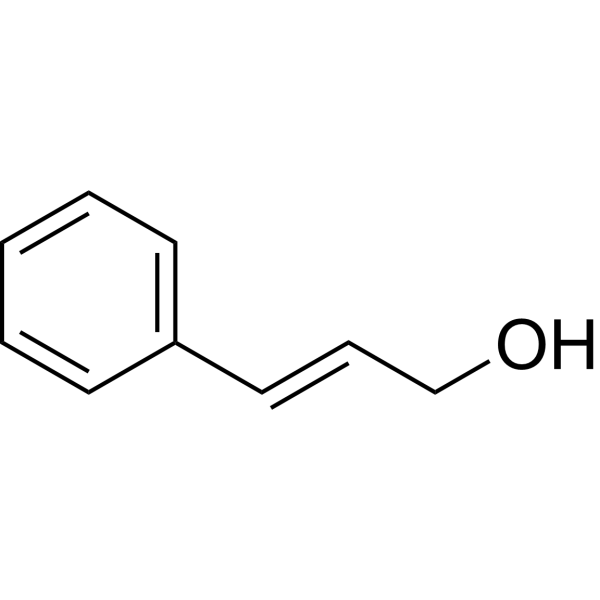
Cinnamyl Alcohol (Standard) is the analytical standard of Cinnamyl Alcohol. This product is intended for research and analytical applications. Cinnamyl Alcohol is an active component from chestnut flower, inhibits increased PPARγ expression, with anti-obesity activity .
|
-
- HY-N2307B
-
|
(-)-Lirinidine
|
Melanocortin Receptor
|
Cancer
|
|
(R)-Lirinidine ((-)-Lirinidine) is an aporphine-type alkaloid found in the flower buds and leaves of Nelumbo nucifera. (R)-Lirinidineand inhibits melanogenesis with an IC50 of 19.3 μM. (R)-Lirinidine exerts cytotoxic effects at 100 μM .
|
-
- HY-178369S
-
|
|
Isotope-Labeled Compounds
Insecticide
|
Others
|
|
Cyhalothrin-d9 is the deuterium labeled Cyhalothrin (HY-111991). Cyhalothrin is a pyrethroid, a class of man-made insecticides that mimic the structure and insecticidal properties of the naturally-occurring insecticide pyrethrum which comes from the flowers of chrysanthemums.
|
-
- HY-N13011
-
|
|
Bacterial
|
Infection
|
|
Maniladiol is a triterpenoid that can be isolated from the flowers of Chrysanthemum morifolium. Maniladiol exhibits antitubercular activity against Mycobacterium tuberculosis strain H37Rv with a MIC of 4 mg/mL. Maniladiol can be used for Mycobacterium tuberculosis infection research .
|
-
- HY-N9835
-
|
|
Drug Derivative
|
Infection
Cancer
|
|
Thymol isobutyrate is a thymol derivative that can be naturally extracted from the essential oil of the roots and aerial parts (leaves, stems, and flowers) of Carpesium cernuum L. This plant's essential oil has antibacterial and cytotoxic activity and can be used in antibacterial and antitumor research .
|
-
- HY-N2412
-
|
|
Chloride Channel
|
Neurological Disease
Cancer
|
|
Irisolidone is a major isoflavone found in Pueraria lobata flowers. Irisolidone exhibits potent hepatoprotective activity. Irisolidone shows the high efficacy for volume-regulated anion channels (VRAC) blockade (IC50=9.8 μM) .
|
-
- HY-N11889
-
|
|
Others
|
Others
|
|
Isorhamnetin 3,4′-diglucoside is a flavonol diglucoside that can be isolated from red-skinned onions (Allium cepa L.) from southern Italy, shallots (Allium ascalonicum Hort.), Zea mays pollen, and flowers of Crocus chrysanthus-biflorus cultivars .
|
-
- HY-N12503
-
|
|
Apoptosis
Caspase
|
Cancer
|
|
Patuletin is a flavonol, that can be isolated from the flowers of Tagetes patula. Patuletin shows anti-proliferative activity against cancer cells. Patuletin causes significant nuclear fragmentation and has a great capacity to induce caspase-3 activation .
|
-
- HY-Y0078S1
-
-
- HY-Y0078S
-
-
- HY-N7069
-
|
|
Environmental Pollutants
|
Cancer
|
|
4-Isopropylbenzyl alcohol is a chemical composition of the essential oils from the leaves and flowers of Camellia nitidissima. C. nitidissima possess multiple biological activities including antioxidant activity, anticancer activity, and cytotoxicity as well as inhibiting the formation of advanced glycation end-products .
|
-
- HY-N8117R
-
|
|
Reference Standards
Biochemical Assay Reagents
|
Inflammation/Immunology
|
|
Bisabolol oxide A (Standard) is the analytical standard of Bisabolol oxide A (HY-N8117). This product is intended for research and analytical applications. Bisabolol oxide A is a bisabolane-type sesquiterpenoid found in the flowers of Matricaria chamomilla. Bisabolol oxide A contributes to the antispasmodic effect of chamomile preparations .
|
-
- HY-133216R
-
|
|
Reference Standards
Fungal
Adenosine Deaminase
|
Infection
|
|
Bupirimate (Standard) is the analytical standard of Bupirimate (HY-133216). This product is intended for research and analytical applications. Bupirimate is a systemic fungicide that inhibits adenosine deaminase (ADA). Bupirimate is widely used in the cultivation of fruit trees, vegetables, flowers, and other crops to control powdery mildew .
|
-
- HY-W742564
-
|
|
Cholinesterase (ChE)
|
Neurological Disease
|
|
Acacetin-7-O-β-D-galactopyranoside is a flavonoid that can be isolated from flower heads of Chrysanthemum morifolium. Acacetin-7-O-β-D-galactopyranoside inhibits AChE activity and can be used for research of Alzheimer’s disease .
|
-
- HY-N8934
-
|
|
Others
|
Cancer
|
|
6β-Hydroxytomentosin, a sesquiterpenoid, can be found in flowers of Inula japonica. 6β-Hydroxytomentosin exhibits weak cytotoxicities against A549, SK-OV-3, HepG-2 and HT-29 cell lines .
|
-
- HY-N1867R
-
|
|
Reference Standards
PPAR
|
Metabolic Disease
|
|
trans-Cinnamyl alcohol is a trans-isomer of Cinnamyl alcohol. Cinnamyl Alcohol is an active component from chestnut flower, inhibits increased PPARγ expression, with anti-obesity activity. trans-Cinnamyl alcohol, belongs to the class of organic compounds known as cinnamyl alcohols, is a primary metabolite .
|
-
- HY-N0406
-
|
|
P-glycoprotein
|
Inflammation/Immunology
|
|
2"-O-beta-L-galactopyranosylorientin is extracted from the flowers of Trollius ledebouri. 2"-O-beta-L-galactopyranosylorientin involves transporter mediated efflux in addition to passive diffusion and is the substrate of multidrug resistance protein 2 (MRP2). Anti-inflammatory effect .
|
-
- HY-N1867
-
|
|
PPAR
|
Metabolic Disease
|
|
trans-Cinnamyl alcohol is a trans-isomer of Cinnamyl alcohol. Cinnamyl Alcohol is an active component from chestnut flower, inhibits increased PPARγ expression, with anti-obesity activity. trans-Cinnamyl alcohol, belongs to the class of organic compounds known as cinnamyl alcohols, is a primary metabolite .
|
-
- HY-N10847
-
|
|
Others
|
Cancer
|
|
1-O-Acetyl-6beta-O-Isobutyrylbritannilactone (compound 5), a sesquiterpene lactone, can be isolated from the flowers of Inula britannica. 1-O-Acetyl-6beta-O-Isobutyrylbritannilactone shows significant cytotoxicity to tumor cells .
|
-
- HY-N0773R
-
|
Saponaretin (Standard); Homovitexin (Standard)
|
Reference Standards
JNK
NF-κB
|
Inflammation/Immunology
|
|
Isovitexin (Standard) is the analytical standard of Isovitexin. This product is intended for research and analytical applications. Isovitexin is a flavonoid isolated from passion flower, Cannabis and, and the palm, possesses anti-inflammatory and anti-oxidant activities; Isovitexin acts like a JNK1/2 inhibitor and inhibits the activation of NF-κB.
|
-
- HY-N4058R
-
|
|
Reference Standards
Apoptosis
|
Cancer
|
|
Helichrysetin (Standard) is the analytical standard of Helichrysetin. This product is intended for research and analytical applications. Helichrysetin is isolated from the flower Helichrysum odoratissimum. Helichrysetin is an ID2 (DNA binding inhibitor 2) inhibitor. Helichrysetin induces apoptosis. Helichrysetin has anti-tumor and antioxidant activity .
|
-
- HY-N3808
-
|
|
Others
|
Others
|
|
(4α,11β,15β)-11,15-Dihydroxykaur-16-en-19-oic acid is a compound isolated from the Tunisian Pulicaria laciniata (Coss.et Kral.) Thell. flowers .
|
-
- HY-Y0078R
-
-
- HY-N8491A
-
|
|
Others
|
Others
|
|
(+)-Dihydrocarvone elicits strong antennal responses of A. mellifera. (+)-Dihydrocarvone influences bee foraging preference for tomato .
|
-
- HY-W068212R
-
-
- HY-N7717
-
|
(–)-(1R)-N-methylcoclaurine
|
Drug Derivative
|
Metabolic Disease
|
|
(-)-N-methylcoclaurine ((-)-(1R)-N-methylcoclaurine) is a benzylisoquinoline alkaloid and melanogenesis inhibitor with an IC50 of 6.5 μM that can be found in the flower buds of Nelumbo nucifera. (-)-N-methylcoclaurine inhibits theophylline-stimulated melanogenesis in melanoma cells. (-)-N-methylcoclaurine can be used for the research of skin hyperpigmentation disorders .
|
-
- HY-N12496
-
|
|
Fungal
Bacterial
|
Infection
|
|
Di-O-methylhonokiol is a natural phenolic compound that can be isolated from magnolia flowers. Di-O-methylhonokiol has significant antibacterial activity against Gram-positive bacteria, acid-fast bacilli, and yeast-like and filamentous fungi. Di-O-methylhonokiol can be used in the study of fungal infections .
|
-
- HY-N5038
-
|
|
Topoisomerase
|
Cardiovascular Disease
Neurological Disease
Metabolic Disease
|
|
Mauritianin is an orally active kaempferol glycoside. Mauritianin can be isolated from the flowers and leaves of Acalypha indica. Mauritianin is a topoisomerase I inhibitor. Mauritianin has hepatoprotective, neuroprotective, and renoprotective activities. Mauritianin increases vascular tone when used in combination with Alcesefoliside (HY-N5049) .
|
-
- HY-W010235
-
|
|
Drug Derivative
|
Infection
|
|
3,5-Dimethoxytoluene, a methylated phenolic derivative, is one of characteristic scent compounds emitted from flowers of most rose varieties. 3,5-Dimethoxytoluene shows significant fumigant toxicity against L. serricorne and L. bostrychophila with LC50 values of 4.99 mg/L air and 0.91 mg/L air, respectively .
|
-
- HY-N10337
-
|
(-)-Norjuziphine
|
Drug Derivative
|
Cancer
|
|
Norjuziphine ((-)-Norjuziphine) is an alkaloid found in the lotus flower (Nelumbo nucifera). Norjuziphine inhibits the melanogenesis of murine B16 melanoma 4A5 cells stimulated by Theophylline (HY-B0809) (IC50=14.4 μM). Norjuziphine is promising for research of skin whitening and related skin pigmentation diseases .
|
-
- HY-N13164
-
|
|
PI3K
Akt
Apoptosis
|
Cancer
|
Polygalacin D3 is a triterpenoid saponin compound that can be extracted from the roots of the balloon flower. Polygalacin D3 can inhibit the proliferation of non-small cell lung cancer (NSCLC) cell lines by blocking the PI3K/Akt pathway, and it induces cell cycle arrest and cell apoptosis .
|
-
- HY-N15754
-
|
|
Drug Metabolite
|
Metabolic Disease
Inflammation/Immunology
Endocrinology
Cancer
|
|
3-Hydroxy-2-methylglutaric acid is a carboxylic acid metabolite. 3-Hydroxy-2-methylglutaric acid can be isolated from the flower Veronica incana L. 3-Hydroxy-2-methylglutaric acid can be used for upper respiratory tract diseases, malignant neoplasms, gastrointestinal tract and genitourinary system disorders and diabetes mellitus research .
|
-
- HY-N13813
-
|
|
Phosphatase
Glycosidase
|
Others
|
|
Ethyl-3,5-di-O-caffeoylquinate is an ethyl caffeoylquinate (ECQ), and ECQ analogs are potential α-glucosidase (α-glucosidase) inhibitors and PTP1B inhibitors. Ethyl-3,5-di-O-caffeoylquinate, which can be isolated from the flower buds of Lonicera macranthoides, is an isomer of chlorogenic acid (ethyl dicaffeoylquinate) .
|
-
- HY-N7150
-
|
5,7-Dihydroxy-3',4',5'-trimethoxyflavone
|
Xanthine Oxidase
|
Metabolic Disease
|
|
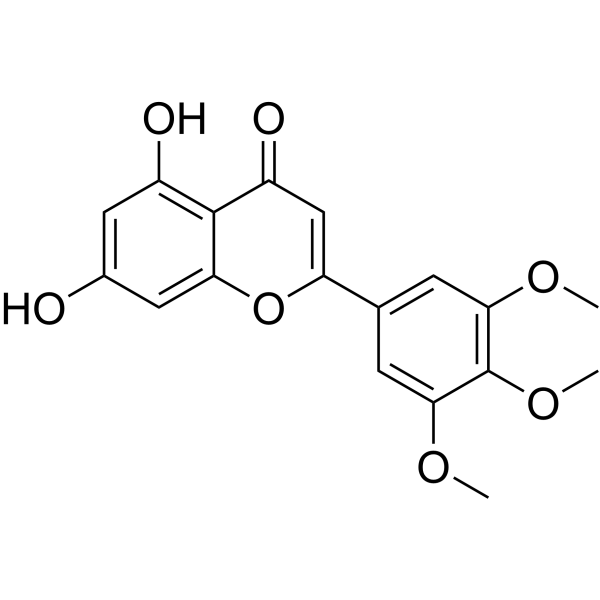
Tricetin 3',4',5'-trimethyl ether (5,7-Dihydroxy-3',4',5'-trimethoxyflavone) is a flavone glucoside, that can be isolated the flowers of Chrysanthemum sinensea. Tricetin 3',4',5'-trimethyl ether displays xanthine oxidase competitive-type inhibitory activity, with an IC50 of 0.51 μM and a Ki of 0.37 μM .
|
-
- HY-N3661
-
|
|
Bacterial
|
Infection
|
|
(24S)-Cycloartane-3β,24,25-triol, a cycloartane, has antitubercular activity against Mycobacterium tuberculosis H37Rv (MIC: 32 μg/mL). (24S)-Cycloartane-3β,24,25-triol can be isolated from the flowers of Chrysanthemum morifolium .
|
-
- HY-W068212S
-
|
Juniperic acid-13C2
|
Isotope-Labeled Compounds
Drug Intermediate
|
Metabolic Disease
|
|
16-Hydroxyhexadecanoic acid- 13C2 (Juniperic acid- 13C2) is the 13C-labeled 16-Hydroxyhexadecanoic acid (HY-W068212). 16-Hydroxyhexadecanoic acid (Juniperic acid) is one of the main monomers of cutin in Vicia faba flower petals. 16-Hydroxyhexadecanoic acid can be used as an internal standard for the measurement of hydroxy and hydroperoxy fatty acids in plasma
|
-
- HY-128454
-
|
|
Environmental Pollutants
Biochemical Assay Reagents
|
Infection
Neurological Disease
|
|
Dimethyl trisulfide is a cyanide scavenger. Dimethyl trisulfide can be isolated from garlic, onions, broccoli and similar plants. Dimethyl trisulfide converts cyanide into thiocyanate. Dimethyl trisulfide is used by saprophagous insects to locate breeding sites (decaying organic matter), and is also used by deceptive flowers in brood sites to attract such insects. Dimethyl trisulfide induces electrophysiological responses in houseflies .
|
-
- HY-N3009
-
|
|
Drug Derivative
Apoptosis
Bcl-2 Family
|
Cardiovascular Disease
Inflammation/Immunology
Cancer
|
|
Secoxyloganin is an orally effective iridoid derivative. Secoxyloganin can be isolated from the flower buds of L. japonica. Secoxyloganin induces Apoptosis by inhibiting the expression of Bcl-2. Secoxyloganin potently inhibits the proliferation of breast cancer cells, while exerting weak activity against normal mammary epithelial cells. Secoxyloganin inhibits the decrease in tail vein blood flow associated with allergic reactions .
|
-
- HY-N1434
-
|
Methyl 4-hydroxycinnamate
|
Fungal
|
Infection
Cancer
|
|
Methyl p-coumarate (Methyl 4-hydroxycinnamate), an orally active esterified derivative of p-Coumaric acid (pCA), can be isolated from the flower of Trixis michuacana var longifolia. Methyl p-coumarate could inhibit the melanin formation in B16 mouse melanoma cells. Methyl p-coumarate also has strong in vitro inhibitory effect on A. alternata and other pathogens .
|
-
- HY-W008484
-
|
|
Environmental Pollutants
Herbicide
|
Infection
|
|
Aminopyralid is a synthetic auxin herbicide. Aminopyralid provides foliar and soil residual weed control, and also increases forage yield in bahiagrass pastures. When present as a soil residue, Aminopyralid causes phytotoxicity, reduced plant height, decreased flower number and fruit yield loss in rotated vegetable crops. Aminopyralid is registered for the control of annual and perennial broadleaf weeds in pastures, permanent grasslands and non-cropped areas .
|
-
- HY-N0406R
-
|
|
Reference Standards
Others
|
Inflammation/Immunology
|
|
2"-O-beta-L-galactopyranosylorientin (Standard) is the analytical standard of 2"-O-beta-L-galactopyranosylorientin. This product is intended for research and analytical applications. 2"-O-beta-L-galactopyranosylorientin is extracted from the flowers of Trollius ledebouri. 2"-O-beta-L-galactopyranosylorientin involves transporter mediated efflux in addition to passive diffusion and is the substrate of multidrug resistance protein 2 (MRP2). Anti-inflammatory effect .
|
-
- HY-W612164
-
|
|
Drug Derivative
|
Infection
|
|
2-Methyl-3-phenylpropanal is a volatile aromatic compound found in the flowers of legume host plants such as cowpeas and lentils. 2-Methyl-3-phenylpropanal can specifically bind to the odor-binding protein MvitOBP3 of the bean pod moth and exert potential oviposition attraction activity. 2-Methyl-3-phenylpropanal can be used for pest control .
|
-
- HY-W015912
-
|
2-Furyl methyl ketone
|
Drug Intermediate
|
Infection
|
|
2-Acetylfuran (2-Furyl methyl ketone), an important flavour compound or intermediate in foods, is isolated from essential oils, sweet corn products, fruits and flowers. 2-Acetylfuran also can be formed from glucose and glycine by Maillard reaction. 2-Acetylfuran can be used to synthesis Cefuroxime. 2-acetylfuran can be used in the synthesis of reagents with antiamoebic activity .
|
-
- HY-N15682
-
|
(7Z)-Provitamin A; (7Z)-beta-Carotene
|
Drug Isomer
|
Inflammation/Immunology
|
|
13-cis-β-Carotene ((7Z)-Provitamin A; (7Z)-beta-Carotene) is a provitamin A carotenoid isomer found in leaves, flowers, stems, and fruit of Momordica charantia. 13-cis-β-Carotene undergoes nonenzymatic isomerization to other β-carotene isomers during aerobic incubation, extraction, and analysis. 13-cis-β-Carotene can be used for the research of chronic diseases .
|
-
- HY-W015912R
-
|
2-Furyl methyl ketone (Standard)
|
Reference Standards
Others
|
Others
|
|
2-Acetylfuran (Standard) is the analytical standard of 2-Acetylfuran. This product is intended for research and analytical applications. 2-Acetylfuran (2-Furyl methyl ketone), an important flavour compound or intermediate in foods, is isolated from essential oils, sweet corn products, fruits and flowers. 2-Acetylfuran also can be formed from glucose and glycine by Maillard reaction. 2-Acetylfuran can be used to synthesis Cefuroxime .
|
-
- HY-W010235R
-
|
|
Reference Standards
Biochemical Assay Reagents
|
Infection
|
|
3,5-Dimethoxytoluene (Standard) is the analytical standard of 3,5-Dimethoxytoluene. This product is intended for research and analytical applications. 3,5-Dimethoxytoluene, a methylated phenolic derivative, is one of characteristic scent compounds emitted from flowers of most rose varieties. 3,5-Dimethoxytoluene shows significant fumigant toxicity against L. serricorne and L. bostrychophila with LC50 values of 4.99 mg/L air and 0.91 mg/L air, respectively[1].
|
-
- HY-N10802
-
|
|
ERK
Akt
PI3K
Epigenetic Reader Domain
|
Cancer
|
|
6-O-Isobutyrylbritannilactone is a natural melanogenesis inhibitor. 6-O-Isobutyrylbritannilactone, a sesquiterpene, can be isolated from the flowers of Inula britannica. 6-O-Isobutyrylbritannilactone inhibits IBMX (HY-12318)-induced melanin production in B16F10 cells. 6-O-Isobutyrylbritannilactone also regulates ERK, PI3K/AKT, and CREB, shows antimelanogenic activity in zebrafish embryos models .
|
-
- HY-125572
-
|
GA7
|
Endogenous Metabolite
Reactive Oxygen Species (ROS)
Fungal
|
Infection
|
|
Gibberellin A7 (GA7) is a terpenoid that serve as an important plant hormone. Gibberellin A7 acts as a growth and response modulator against injuries and parasitism. Gibberellin A7 presents antibiofilm properties at 940 mM concentration. Gibberellin A7 can inhibit flower bud formation in some plants. Gibberellin A7 shows antioxidant activity against peroxyl radicals. Gibberellin A7 exhibits anti-Candida activity against Candia albicans .
|
-
- HY-N16985
-
|
|
Others
|
Inflammation/Immunology
|
|
Taraxasteryl palmitate is a taraxasterol-type triterpene ester compound with antiemetic activity. Intralymphatic injection of 30 mg/kg and 100 mg/kg Taraxasteryl palmitate significantly inhibited vomiting in a copper sulfate-induced frog vomiting model, with vomiting latency extension rates of 116.9% and 120.0%, respectively. Taraxasteryl palmitate exerts its anti-reflex vomiting activity by prolonging the vomiting latency. Taraxasteryl palmitate can be used in the study of vomiting-related diseases (especially reflex vomiting). Taraxasteryl palmitate can be naturally extracted from the flowers of Inula linariaefolia .
|
-
- HY-N0713
-
|
|
SARS-CoV
NF-κB
Interleukin Related
|
Infection
|
|
Diosmetin-7-O-β-D-glucopyranoside is a natural product that can be isolated from the flowers of Chrysanthemum morifolium. Diosmetin-7-O-β-D-glucopyranoside has potent antiviral and anti-inflammatory activities against SARS-CoV-2 both in vitro (IC50 = 0.74 μM) and in vivo. Diosmetin-7-O-β-D-glucopyranoside has significant anti-thrombotic activity when combined with Pae and 5-HMF at a ratio of 3:4:3 in a zebrafish model .
|
-
- HY-N6005
-
|
|
Bacterial
Fungal
Apoptosis
Bcl-2 Family
|
Infection
Metabolic Disease
Cancer
|
|
Methyl caffeate is a phenylpropanoid, antibacterial agent, and Apoptosis-inducing agent. Methyl caffeate can be isolated from the flowers of peach Prunus persica (L.). Methyl caffeate upregulates the expression of pro-apoptotic proteins Bid, Bax and p53, and downregulates the expression of anti-apoptotic protein BCL-2. Methyl caffeate downregulates SASP factors. Methyl caffeate enhances glucose-stimulated insulin secretion. Methyl caffeate inhibits the growth of Gram-positive bacteria, Gram-negative bacteria, fungi, and Mycobacterium tuberculosis strains. Methyl caffeate can be used in studies related to breast cancer, type 2 diabetes, and tuberculosis .
|
-
- HY-N17821
-
|
|
Sirtuin
Aurora Kinase
Akt
GSK-3
β-catenin
TGF-β Receptor
Apoptosis
Reactive Oxygen Species (ROS)
Wnt
NF-κB
TNF Receptor
Interleukin Related
IKK
|
Neurological Disease
Inflammation/Immunology
Cancer
|
|
Butrin is a compound found in Butea monosperma flowers. Butrin reduces expression of SIRT1, AURKB, cyclin D1, pAKT, GSK-3β, β-catenin, and TGF-3β expression, enhances apoptosis and ROS production in cancer cells. Butrin downregulates Wnt and NF-κB signaling, mitigates oxidative stress, reduces proinflammatory cytokine (TNF-α, IL-6 and IL-8) production and suppresses neuroinflammation. Butrin inhibits IKK enzyme activity. Butrin can be used for the researches of colorectal cancer, Alzheimer’s disease, and rheumatoid arthritis .
|
-
- HY-N4168A
-
|
5-O-Caffeoylquinic acid methyl ester
|
Quinone Reductase
HBV
|
Infection
Cancer
|
|
Neochlorogenic acid (5-O-Caffeoylquinic) methyl ester is a selective quinone reductase inducer (EC50 = 6.7 μM) and also exhibits hydroxyl radical scavenging activity (EC50 = 0.81 μM). Neochlorogenic acid methyl ester scavenges hydroxyl radicals by donating electrons or hydrogen atoms, while simultaneously inducing quinone reductase expression to enhance carcinogen detoxification, thus exerting antioxidant and cancer chemopreventive activities. Neochlorogenic acid methyl ester is used in research on antioxidant damage and promoting detoxification metabolism, primarily in the fields of cancer chemotherapy and antioxidant-related diseases. Neochlorogenic acid methyl ester is also an HBV inhibitor and can be isolated from the flower buds of *L. japonica* .
|
-
- HY-135752
-
|
|
Bacterial
|
Infection
|
|
Carbendazim mixture with flusilazole is a fungicide used to control sooty mold caused by Botrytis narcissicola. The disease is the most common foliar disease of daffodils (Narcissus cultivars) in the UK and causes significant losses in bulb and flower production. Carbendazim mixture with flusilazole was found to be effective in reducing lesion size and significantly reducing symptoms of secondary sooty mold after spraying when used in combination with several other fungicides. In field trials in Cambridgeshire and Lincolnshire, a spraying program using this fungicide mixture was effective in controlling sooty mold. In addition, alternating four to six sprays using two or three fungicides with different modes of action not only reduced disease damage but also increased bulb production. The study discusses the selection of appropriate fungicides and control methods that may reduce the number of spraying applications.
|
-
- HY-107207
-
|
Kaempferol 3-O-neohesperidoside
|
Insulin Receptor
PI3K
PKC
|
Metabolic Disease
|
|
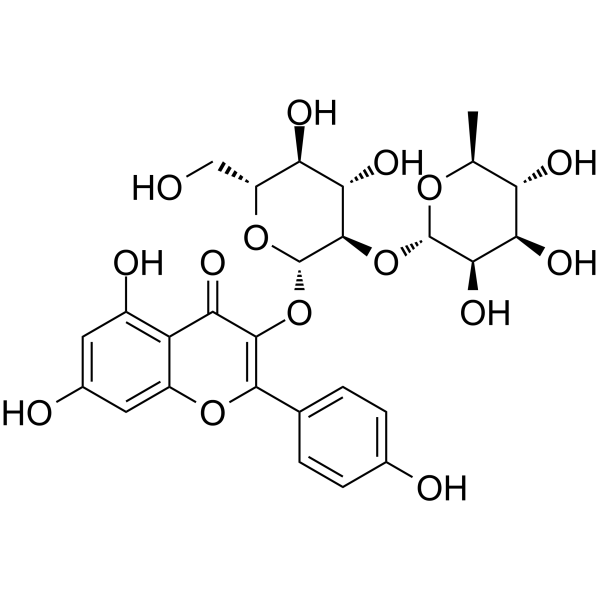
Kaempferol 3-neohesperidoside (Kaempferol 3-O-neohesperidoside) is a flavonoid. Kaempferol 3-neohesperidoside mimics insulin action via the PI3K/PKC pathway, significantly promoting glucose uptake and increasing muscle glycogen content in rat soleus muscles. Kaempferol 3-neohesperidoside also exhibits anti-glycation activity. Kaempferol 3-neohesperidoside binds to albumin through hydrogen bonding and hydrophobic interactions, and inhibits the formation of advanced glycation end products. Kaempferol 3-neohesperidoside can be used in studies of diabetes and its related complications .
|
-
- HY-N17771
-
|
|
Endogenous Metabolite
|
Metabolic Disease
|
|
(6-O-p-Coumaroyl)-β-D-glucopyranosyl-2-O-(4-hydroxybenzoyl)-4-O-β-D-glucopyranosyl-6-hydroxyphenylacetate is a selective α-glucosidase inhibitor (IC50=10.53 μg/mL) with anti-hepatic fibrosis and anti-diabetic properties. It also inhibits the growth of mouse hepatic stellate cells (t-HSC/Cl-6) with an IC50 of 109.2 μg/mL. (6-O-p-Coumaroyl)-β-D-glucopyranosyl-2-O-(4-hydroxybenzoyl)-4-O-β-D-glucopyranosyl-6-hydroxyphenylacetate can be isolated from the ester derivatives of Impatiens balsamina L. flowers. (6-O-p-Coumaroyl)-β-D-glucopyranosyl-2-O-(4-hydroxybenzoyl)-4-O-β-D-glucopyranosyl-6-hydroxyphenylacetate can be used in research related to hepatic fibrosis and type 2 diabetes.
|
-
| Cat. No. |
Product Name |
Type |
-
- HY-N0938
-
|
|
Fluorescent Dyes
|
|
Safflower yellow is extracted from the flowers of the plant safflower (Carthamus tinctorius) and as the traditional Chinese medicine it has been extensively used for the treatment of cardio cerebrovascular diseases.
|
| Cat. No. |
Product Name |
Type |
-
- HY-Y1110H
-
|
Magnogene, suitable for insect cell culture
|
Biochemical Assay Reagents
|
|
Magnesium chloride anhydrous, suitable for insect cell culture is an inorganic salt and cell culture medium component that can be used to prepare Tris buffer. Magnesium chloride anhydrous, suitable for insect cell culture is a component of Hunter's Thrips medium, which supports the in vitro culture of western flower thrip embryonic cells, and promotes the adhesion of tissue fragments/cells as well as the growth of fibroblast-like and epithelial-like cells .
|
| Cat. No. |
Product Name |
Category |
Target |
Chemical Structure |
-
- HY-N0792
-
-
-
- HY-N0773
-
-
-
- HY-N6673
-
-
-
- HY-Y0078
-
-
-
- HY-129139
-
-
-
- HY-N7058
-
-
-
- HY-N4058
-
-
-
- HY-N8028
-
-
-
- HY-N0129
-
-
-
- HY-N8117
-
-
-
- HY-N0938
-
-
-
- HY-N4244
-
-
-
- HY-N12503
-
-
-
- HY-N1867
-
|
|
Natural Products
Rosaceae
Plants
Source Classification
|
PPAR
|
|
trans-Cinnamyl alcohol is a trans-isomer of Cinnamyl alcohol. Cinnamyl Alcohol is an active component from chestnut flower, inhibits increased PPARγ expression, with anti-obesity activity. trans-Cinnamyl alcohol, belongs to the class of organic compounds known as cinnamyl alcohols, is a primary metabolite .
|
-
-
- HY-N9357
-
-
-
- HY-N4168
-
-
-
- HY-N4172
-
-
-
- HY-108277
-
-
-
- HY-N6990
-
-
-
- HY-N2412
-
-
-
- HY-N0406
-
-
-
- HY-N8243
-
-
-
- HY-N2496
-
-
-
- HY-W001154
-
-
-
- HY-N10994
-
-
-
- HY-N9319
-
-
-
- HY-115684
-
-
-
- HY-N10451
-
-
-
- HY-N0792R
-
-
-
- HY-N7058R
-
|
|
Structural Classification
Oleaceae
Ketones, Aldehydes, Acids
Jasminum sambac (L.) Aiton
Plants
Source Classification
|
Reference Standards
Insecticide
|
|
cis-Jasmone (Standard) is the analytical standard of cis-Jasmone. This product is intended for research and analytical applications. Cis-Jasmone is a plant-derived natural product. Cis-Jasmone is a plant-derived natural product. Cis-Jasmone is constitutively released by many flowers and sometimes by leaves as an attractant for pollinators or as a chemical cue for host location by insect flower herbivores. Cis-Jasmone treatment of crop plants not only induces direct defense against herbivores, but also induces indirect defense by releasing VOCs that attract natural enemies .
|
-
-
- HY-N7069
-
-
-
- HY-N10847
-
-
-
- HY-N0773R
-
-
-
- HY-N5104
-
-
-
- HY-N0895
-
-
-
- HY-123091
-
-
-
- HY-N8408
-
-
-
- HY-W540802
-
-
-
- HY-N5039
-
-
-
- HY-N7265
-
-
-
- HY-N17672
-
-
-
- HY-W742564
-
-
-
- HY-N8934
-
-
-
- HY-N10698
-
|
|
Apocynaceae
Ketones, Aldehydes, Acids
Plants
Cynanchum bungei Decne.
Source Classification
|
Others
|
|
(2E,4E)-8-Hydroxy-2,7-dimethyl-decadien-(2,4)-disaeure-(1,10)-dioic acid is a nature product that could be isolated form bunge auriculate flower. (2E,4E)-8-Hydroxy-2,7-dimethyl-decadien-(2,4)-disaeure-(1,10)-dioic acid has antioxidant and anti-inflammatory active .
|
-
-
- HY-N13225
-
-
-
- HY-N12733
-
-
-
- HY-119642
-
-
-
- HY-N15219
-
-
-
- HY-N12092
-
-
-
- HY-N3334
-
-
- HY-N10984
-
-
- HY-N11510
-
-
- HY-N10029
-
-
- HY-N8575A
-
-
- HY-N8575
-
-
- HY-N7902
-
-
- HY-N15695
-
-
- HY-N3932
-
-
- HY-N10172
-
-
- HY-N12043
-
-
- HY-N1742
-
-
- HY-N15659
-
-
- HY-N0129R
-
-
- HY-N9075
-
-
- HY-N8946
-
-
- HY-N12862
-
-
- HY-N12863
-
-
- HY-N8862
-
-
- HY-W1121871
-
-
- HY-N8117R
-
-
- HY-N1867R
-
-
- HY-W976179
-
-
- HY-N19859
-
-
- HY-N17437
-
-
- HY-N18800
-
-
- HY-N17350
-
-
- HY-N18815
-
-
- HY-N17586
-
-
- HY-N9726
-
-
- HY-N17918
-
-
- HY-N18000
-
-
- HY-N17924
-
-
- HY-W775024
-
-
- HY-N17947
-
-
- HY-N18797
-
-
- HY-N17305
-
-
- HY-N18181
-
-
- HY-N18808
-
-
- HY-N17972
-
-
- HY-N18829
-
-
- HY-N18160
-
-
- HY-N18699
-
|
|
Structural Classification
Extract
|
Others
|
|
The main active ingredient bisabolol contained in the Chamomilla Recutita Flower Extract has a good skin care effect, and it is widely used in functional cosmetics.
|
-
- HY-N8940
-
-
- HY-N18816
-
|
|
Structural Classification
Extract
|
Others
|
|
Clary Sage Oil is obtained from the flowers and leaves of scented perilla through steam distillation. Clary sage oil has the effects of nourishing, moisturizing, hydrating and maintaining skin.
|
-
- HY-N19051
-
|
|
Structural Classification
Extract
|
Others
|
|
Adhatoda vasica extract, derived from the flower Justicia adhatoda (also known as Vasaka or Adulsa), is known for its bronchodilatory and anti-inflammatory effects and can be used in research on respiratory diseases such as asthma, bronchitis, and cough.
|
-
- HY-N18243
-
-
- HY-N2307B
-
-
- HY-N13011
-
-
- HY-N9835
-
-
- HY-N11889
-
-
- HY-N4058R
-
-
- HY-Y0078R
-
-
- HY-N8491A
-
-
- HY-N7717
-
-
- HY-N12496
-
|
|
Natural Products
Magnoliaceae
Plants
Source Classification
|
Fungal
Bacterial
|
|
Di-O-methylhonokiol is a natural phenolic compound that can be isolated from magnolia flowers. Di-O-methylhonokiol has significant antibacterial activity against Gram-positive bacteria, acid-fast bacilli, and yeast-like and filamentous fungi. Di-O-methylhonokiol can be used in the study of fungal infections .
|
-
- HY-N5038
-
-
- HY-W010235
-
|
|
Source Classification
|
Drug Derivative
|
|
3,5-Dimethoxytoluene, a methylated phenolic derivative, is one of characteristic scent compounds emitted from flowers of most rose varieties. 3,5-Dimethoxytoluene shows significant fumigant toxicity against L. serricorne and L. bostrychophila with LC50 values of 4.99 mg/L air and 0.91 mg/L air, respectively .
|
-
- HY-N10337
-
-
- HY-N13164
-
-
- HY-N15754
-
-
- HY-N13813
-
-
- HY-N7150
-
|
5,7-Dihydroxy-3',4',5'-trimethoxyflavone
|
Flavonols
Haplopteris anguste-elongata (Hayata) E. H. Crane
Flavonoids
Chrysanthemum × morifolium (Ramat.) Hemsl.
Pteridaceae
Plants
Compositae
Source Classification
|
Xanthine Oxidase
|
|
Tricetin 3',4',5'-trimethyl ether (5,7-Dihydroxy-3',4',5'-trimethoxyflavone) is a flavone glucoside, that can be isolated the flowers of Chrysanthemum sinensea. Tricetin 3',4',5'-trimethyl ether displays xanthine oxidase competitive-type inhibitory activity, with an IC50 of 0.51 μM and a Ki of 0.37 μM .
|
-
- HY-N3661
-
-
- HY-128454
-
-
- HY-N3009
-
-
- HY-N1434
-
-
- HY-N0406R
-
|
|
Structural Classification
Flavonoids
other families
Plants
Isoflavones
Source Classification
|
Reference Standards
Others
|
|
2"-O-beta-L-galactopyranosylorientin (Standard) is the analytical standard of 2"-O-beta-L-galactopyranosylorientin. This product is intended for research and analytical applications. 2"-O-beta-L-galactopyranosylorientin is extracted from the flowers of Trollius ledebouri. 2"-O-beta-L-galactopyranosylorientin involves transporter mediated efflux in addition to passive diffusion and is the substrate of multidrug resistance protein 2 (MRP2). Anti-inflammatory effect .
|
-
- HY-W612164
-
-
- HY-W015912
-
|
2-Furyl methyl ketone
|
Microorganisms
Source Classification
|
Drug Intermediate
|
|
2-Acetylfuran (2-Furyl methyl ketone), an important flavour compound or intermediate in foods, is isolated from essential oils, sweet corn products, fruits and flowers. 2-Acetylfuran also can be formed from glucose and glycine by Maillard reaction. 2-Acetylfuran can be used to synthesis Cefuroxime. 2-acetylfuran can be used in the synthesis of reagents with antiamoebic activity .
|
-
- HY-N15682
-
-
- HY-W015912R
-
|
2-Furyl methyl ketone (Standard)
|
Microorganisms
Source Classification
|
Reference Standards
Others
|
|
2-Acetylfuran (Standard) is the analytical standard of 2-Acetylfuran. This product is intended for research and analytical applications. 2-Acetylfuran (2-Furyl methyl ketone), an important flavour compound or intermediate in foods, is isolated from essential oils, sweet corn products, fruits and flowers. 2-Acetylfuran also can be formed from glucose and glycine by Maillard reaction. 2-Acetylfuran can be used to synthesis Cefuroxime .
|
-
- HY-W010235R
-
|
|
Microorganisms
Source Classification
|
Reference Standards
Biochemical Assay Reagents
|
|
3,5-Dimethoxytoluene (Standard) is the analytical standard of 3,5-Dimethoxytoluene. This product is intended for research and analytical applications. 3,5-Dimethoxytoluene, a methylated phenolic derivative, is one of characteristic scent compounds emitted from flowers of most rose varieties. 3,5-Dimethoxytoluene shows significant fumigant toxicity against L. serricorne and L. bostrychophila with LC50 values of 4.99 mg/L air and 0.91 mg/L air, respectively[1].
|
-
- HY-N10802
-
-
- HY-125572
-
-
- HY-N16985
-
|
|
Structural Classification
Terpenoids
Asteraceae
Plants
Pentacyclic Triterpenoids
Inula linariifolia Turcz.
Source Classification
|
Others
|
|
Taraxasteryl palmitate is a taraxasterol-type triterpene ester compound with antiemetic activity. Intralymphatic injection of 30 mg/kg and 100 mg/kg Taraxasteryl palmitate significantly inhibited vomiting in a copper sulfate-induced frog vomiting model, with vomiting latency extension rates of 116.9% and 120.0%, respectively. Taraxasteryl palmitate exerts its anti-reflex vomiting activity by prolonging the vomiting latency. Taraxasteryl palmitate can be used in the study of vomiting-related diseases (especially reflex vomiting). Taraxasteryl palmitate can be naturally extracted from the flowers of Inula linariaefolia .
|
-
- HY-N0713
-
-
- HY-N6005
-
-
- HY-N17821
-
|
|
Structural Classification
Flavonoids
Flavones
Leguminosae
Plants
Butea monosperma Kuntze
Source Classification
|
Sirtuin
Aurora Kinase
Akt
GSK-3
β-catenin
TGF-β Receptor
Apoptosis
Reactive Oxygen Species (ROS)
Wnt
NF-κB
TNF Receptor
Interleukin Related
IKK
|
|
Butrin is a compound found in Butea monosperma flowers. Butrin reduces expression of SIRT1, AURKB, cyclin D1, pAKT, GSK-3β, β-catenin, and TGF-3β expression, enhances apoptosis and ROS production in cancer cells. Butrin downregulates Wnt and NF-κB signaling, mitigates oxidative stress, reduces proinflammatory cytokine (TNF-α, IL-6 and IL-8) production and suppresses neuroinflammation. Butrin inhibits IKK enzyme activity. Butrin can be used for the researches of colorectal cancer, Alzheimer’s disease, and rheumatoid arthritis .
|
-
- HY-N4168A
-
|
5-O-Caffeoylquinic acid methyl ester
|
Structural Classification
Caprifoliaceae
Lonicera japonica Thunb.
Phenols
Polyphenols
Plants
Source Classification
|
Quinone Reductase
HBV
|
|
Neochlorogenic acid (5-O-Caffeoylquinic) methyl ester is a selective quinone reductase inducer (EC50 = 6.7 μM) and also exhibits hydroxyl radical scavenging activity (EC50 = 0.81 μM). Neochlorogenic acid methyl ester scavenges hydroxyl radicals by donating electrons or hydrogen atoms, while simultaneously inducing quinone reductase expression to enhance carcinogen detoxification, thus exerting antioxidant and cancer chemopreventive activities. Neochlorogenic acid methyl ester is used in research on antioxidant damage and promoting detoxification metabolism, primarily in the fields of cancer chemotherapy and antioxidant-related diseases. Neochlorogenic acid methyl ester is also an HBV inhibitor and can be isolated from the flower buds of *L. japonica* .
|
-
- HY-107207
-
-
- HY-N17771
-
|
|
Structural Classification
Impatiens balsamina Linn.
Balsaminaceae
Phenols
Polyphenols
Plants
Source Classification
|
Endogenous Metabolite
|
|
(6-O-p-Coumaroyl)-β-D-glucopyranosyl-2-O-(4-hydroxybenzoyl)-4-O-β-D-glucopyranosyl-6-hydroxyphenylacetate is a selective α-glucosidase inhibitor (IC50=10.53 μg/mL) with anti-hepatic fibrosis and anti-diabetic properties. It also inhibits the growth of mouse hepatic stellate cells (t-HSC/Cl-6) with an IC50 of 109.2 μg/mL. (6-O-p-Coumaroyl)-β-D-glucopyranosyl-2-O-(4-hydroxybenzoyl)-4-O-β-D-glucopyranosyl-6-hydroxyphenylacetate can be isolated from the ester derivatives of Impatiens balsamina L. flowers. (6-O-p-Coumaroyl)-β-D-glucopyranosyl-2-O-(4-hydroxybenzoyl)-4-O-β-D-glucopyranosyl-6-hydroxyphenylacetate can be used in research related to hepatic fibrosis and type 2 diabetes.
|
-
| Cat. No. |
Product Name |
Chemical Structure |
-
- HY-N7058S
-
|
|
|
Cis-Jasmone-d2 is deuterated labeled Cis-Jasmone (HY-N7058). Cis-Jasmone is a plant-derived natural product. Cis-Jasmone is constitutively released by many flowers and sometimes by leaves as an attractant for pollinators or as a chemical cue for host location by insect flower herbivores. Cis-Jasmone treatment of crop plants not only induces direct defense against herbivores, but also induces indirect defense by releasing VOCs that attract natural enemies .
|
-
-
- HY-W017140S
-
|
|
|
2-Sec-butyl-3-methoxypyrazine-d3 is deuterated labeled cis-?Jasmone (HY-N7058). Cis-Jasmone is a plant-derived natural product. Cis-Jasmone is constitutively released by many flowers and sometimes by leaves as an attractant for pollinators or as a chemical cue for host location by insect flower herbivores. Cis-Jasmone treatment of crop plants not only induces direct defense against herbivores, but also induces indirect defense by releasing VOCs that attract natural enemies .
|
-
-
- HY-Y0078S1
-
|
|
|
Cinnamyl Alcohol-d9 is deuterated labeled Cinnamyl Alcohole (HY-Y0045). Cinnamyl Alcohol is an active component from chestnut flower, inhibits increased PPARγ expression, exhibits anti-obesity, antioxidant and anti-inflammatory activities .
|
-
-
- HY-Y0078S
-
|
|
|
Cinnamyl Alcohol-d5 is deuterated labeled Cinnamyl Alcohole (HY-Y0045). Cinnamyl Alcohol is an active component from chestnut flower, inhibits increased PPARγ expression, exhibits anti-obesity, antioxidant and anti-inflammatory activities .
|
-
-
- HY-178369S
-
|
|
|
Cyhalothrin-d9 is the deuterium labeled Cyhalothrin (HY-111991). Cyhalothrin is a pyrethroid, a class of man-made insecticides that mimic the structure and insecticidal properties of the naturally-occurring insecticide pyrethrum which comes from the flowers of chrysanthemums.
|
-
-
- HY-W068212S
-
|
|
|
16-Hydroxyhexadecanoic acid- 13C2 (Juniperic acid- 13C2) is the 13C-labeled 16-Hydroxyhexadecanoic acid (HY-W068212). 16-Hydroxyhexadecanoic acid (Juniperic acid) is one of the main monomers of cutin in Vicia faba flower petals. 16-Hydroxyhexadecanoic acid can be used as an internal standard for the measurement of hydroxy and hydroperoxy fatty acids in plasma
|
-
Your information is safe with us. * Required Fields.
Inquiry Information
- Product Name:
- Cat. No.:
- Quantity:
- MCE Japan Authorized Agent:

