20 Results for "

genetic disorders

" in MedChemExpress (MCE) Product Catalog:
Products (20)

20 Results for "genetic disorders" in MCE Product Catalog:

5
5 Cited Publications
Cat. No.: HY-134781
CAS No.: 1432494-65-9
Purity:  ≥98.0%
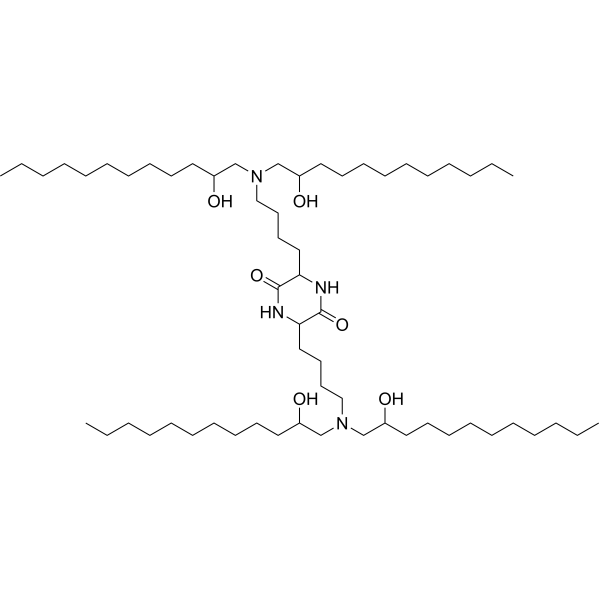
CKK-E12 is a ionizable lipid in combination with other lipids make up the lipid nanoparticles which are used to deliver RNA-based research. CKK-E12 is highly selective toward liver parenchymal cell in vivo,
loading...
    loading...
2
2 Cited Publications
Cat. No.: HY-B0607
CAS No.: 104206-65-7
Synonyms: NTBC; Nitisone; SC0735
Target:  

HPPD

Research Areas:  

Metabolic Disease

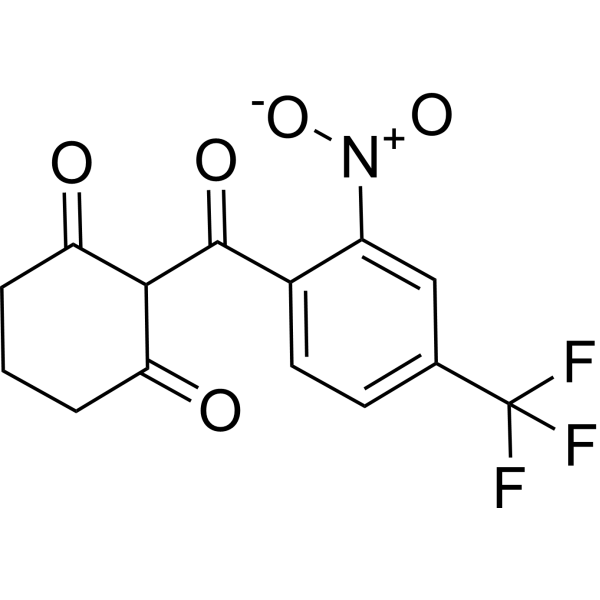
Nitisinone is an orally active, competitive and reversible 4-hydroxyphenylpyruvate dioxygenase (4-HPPD) inhibitor with an IC50 of 173 nM. Nitisinone promotes tyrosine accumulation in a dose-dependent manner. nitisinone can be used in studies of hereditary tyrosinemia type 1 (HT-1) (a rare genetic disorder) and albinism .
loading...
    loading...
1
1 Cited Publications
Cat. No.: HY-101203
CAS No.: 1459687-89-8
Target:  

Drug Derivative

Research Areas:  

Metabolic Disease Cancer

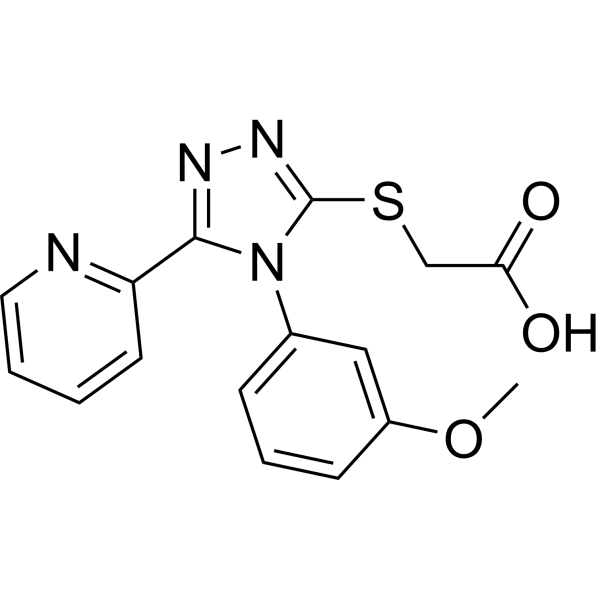
GJ103 is a read-through compound that can induce read through of premature stop codons. GJ103 has potential for the research of genetic disorders caused by nonsense mutations .
loading...
    loading...
1
1 Cited Publications
Cat. No.: HY-101203A
CAS No.: 1459687-96-7
Purity:  99.46%
Target:  

DNA/RNA Synthesis

Research Areas:  

Metabolic Disease Cancer

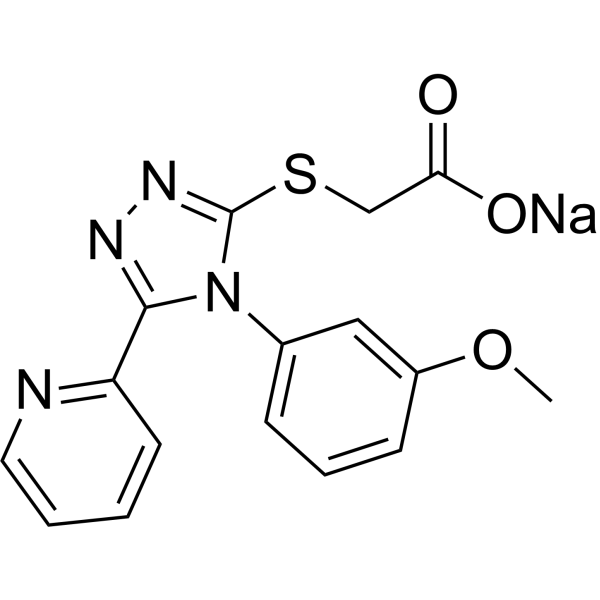
GJ103 sodium is a read-through compound that can induce read through of premature stop codons. GJ103 sodium has potential for the research of genetic disorders caused by nonsense mutations .
loading...
    loading...
Cat. No.: HY-12443
CAS No.: 1293395-67-1
Purity:  99.56%
Target:  

Casein Kinase

Research Areas:  

Neurological Disease

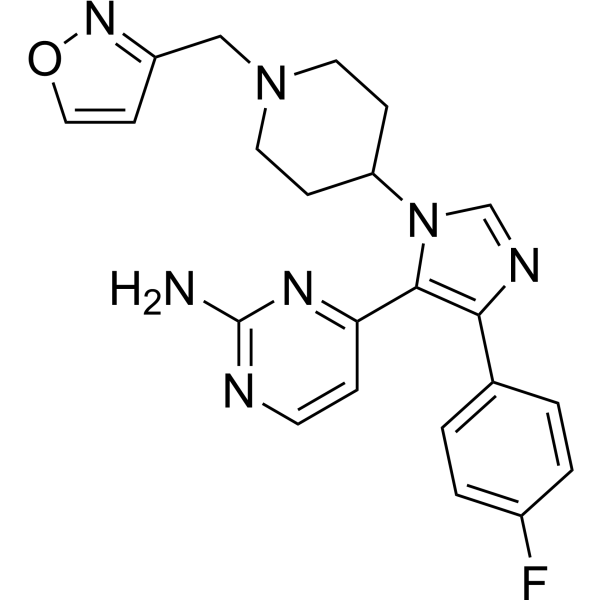
PF-5006739 is a potent and selective inhibitor of CK1δ/ε with IC50s of 3.9 nM and 17.0 nM, respectively. PF-5006739 is a potential therapeutic agent for a range of psychiatric disorders with low nanomolar in vitro potency for CK1δ/ε and high kinome selectivity. PF-5006739 attenuats opioid agent-seeking behavior in a rodent operant reinstatement model in animals in a dose-dependent manner . PF-5006739 improves glucose tolerance in both diet-induced obesity (DIO) and genetic (ob/ob) mice models of obesity .
loading...
    loading...
Cat. No.: HY-W019815
CAS No.: 759-73-9
Synonyms: ENU; N-Nitroso-N-ethylurea
Target:  

DNA/RNA Synthesis

Research Areas:  

Neurological Disease Cancer

N-Ethyl-N-nitrosourea (ENU) is a DNA alkylating agent. N-Ethyl-N-nitrosourea induces leukemia by alkylating nucleobases, disrupting DNA, and resulting in bone marrow suppression and the formation of leukemic cells. N-Ethyl-N-nitrosourea is teratogenic in vivo, inducing tumor formation and paw malformations in pregnant rats. N-Ethyl-N-nitrosourea cause central nervous system (CNS) tumors and genetic disorders .
loading...
    loading...
Cat. No.: HY-132187
CAS No.: 1670-26-4
Purity:  99.50%
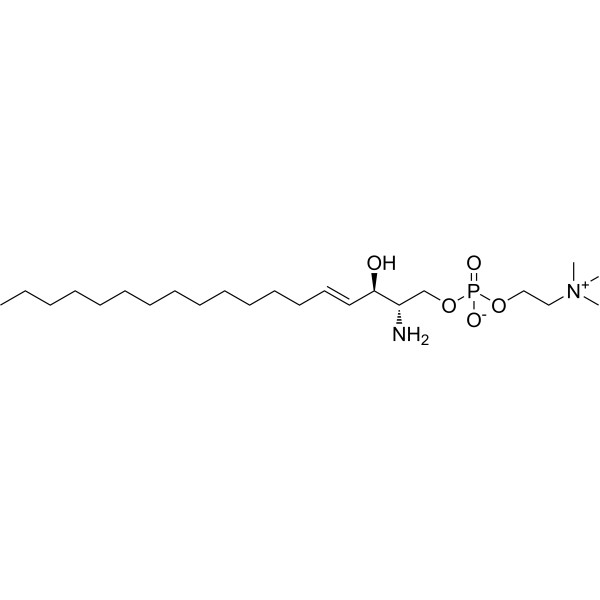
Sphingosylphosphorylcholine is a bioactive lipid and a major component of plasma high-density lipoprotein that binds to OGR1 with a Kd of 33.3 nM. Sphingosylphosphorylcholine triggers delayed phosphorylation of Smad2, upregulates α-SMA expression, and activates TRPM3. Sphingosylphosphorylcholine reduces Apoptosis and upregulates the expression of uPA and its receptor uPA-R. Sphingosylphosphorylcholine exerts anti-apoptotic, anti-cardiac hypertrophy and pro-wound healing effects. Sphingosylphosphorylcholine induces scratching behavior in mice. Sphingosylphosphorylcholine is used in studies related to atopic dermatitis, promyelocytic leukemia, heart failure, myocardial ischemia/reperfusion injury, ovarian cancer, breast cancer, pancreatic cancer, and skin wound healing disorders in genetically impaired healing diabetes .
loading...
    loading...
Cat. No.: HY-B0607R
CAS No.: 104206-65-7
Synonyms: NTBC (Standard); Nitisone (Standard); SC0735 (Standard)
Research Areas:  

Metabolic Disease

Nitisinone (Standard) is the analytical standard of Nitisinone. This product is intended for research and analytical applications. Nitisinone is an orally active, competitive and reversible 4-hydroxyphenylpyruvate dioxygenase (4-HPPD) inhibitor with an IC50 of 173 nM. Nitisinone promotes tyrosine accumulation in a dose-dependent manner. nitisinone can be used in studies of hereditary tyrosinemia type 1 (HT-1) (a rare genetic disorder) and albinism .
loading...
    loading...
Cat. No.: HY-177058
Research Areas:  

Inflammation/Immunology

DSP30 is a phosphorothioate cpG-oligodeoxynucleotide and a TLR9 agonist. DSP30 can activate immune system cells, including B cells and dendritic cells, by inducing proliferation and cytokine production.DSP30 can enhance the immunosuppressive function of bone marrow-multipotent mesenchymal stromal cells (BM-MSC). DSP30 combined with interleukin 2 (IL2) is an effective mitotic stimulant in B-cell disorders. DSP30 can be used for the genetic characteristic research and analysis of chronic lymphocytic leukemia (CLL) .
loading...
    loading...
Cat. No.: HY-164977
CAS No.: 3093519-24-2
Target:  

PROTACs Phosphatase

Research Areas:  

Cancer

JCS-1 is a potent DcpS PROTAC degrader. JCS-1 non-covalently binds DcpS with a RG3039-based warhead and recruits the E3 ligase VHL. JCS-1 promotes ubiquitination and degradation of DcpS at nanomolar concentrations (DC50 in MOLM-14 cells: 87 nM). JCS-1 can be used for the research of AML and other DcpS-dependent genetic disorders .
loading...
    loading...
Cat. No.: HY-123359
CAS No.: 414909-09-4
Research Areas:  

Others

RTC14 is a read-through compound (RTC) that can induce ribosomes to bypass nonsense mutations in mRNA and allow the production of full-length functional proteins. RTC14 has the potential to be used in the research of various genetic disorders, such as nonsense mutations in the ataxia-telangiectasia mutated (ATM) gene and the dystrophin gene .
loading...
    loading...
Cat. No.: HY-171981
CAS No.: 1934241-32-3
Target:  

mAChR

Research Areas:  

Neurological Disease

VU6002703 (Compound 17) is a BBB-penetrable M4 mAChR positive allosteric modulator (PAM) with an EC50 of 0.6  μM for hM4. VU6002703 can be used for neuropsychiatric and rare genetic CNS disorders research .
loading...
    loading...
Cat. No.: HY-153057
CAS No.: 380192-76-7
Research Areas:  

Metabolic Disease Cancer

PRMT5-IN-46 (compound 278) inhibits PRMT5 with IC50s of 1-10 μM. PRMT5 is a methyltransferase which is associated with specific genetic alterations. PRMT5-IN-46 can be used for research of proliferative diseases, metabolic disorders, and blood diseases .
loading...
    loading...
Cat. No.: HY-16771B
CAS No.: 1639208-51-7
Synonyms: NBI-98854 dihydrochloride
Target:  

Dopamine Receptor

Research Areas:  

Neurological Disease

Valbenazine (NBI-98854) dihydrochloride is a VMAT2 inhibitor, used to treat tardive dyskinesia. Valbenazine dihydrochloride demonstrates potential benefit in alleviating symptoms associated with movement disorders resulting from chronic dopamine receptor blocking medications. Valbenazine dihydrochloride has been supported by evidence from preclinical models examining its role in the genetic factors linked to tardive dyskinesia.
loading...
    loading...
Cat. No.: HY-B0607S
Synonyms: NTBC-d3; Nitisone-d3; SC0735-d3
Nitisinone-d3 (NTBC-d3) is deuterium labeled Nitisinone. Nitisinone is an orally active, competitive and reversible 4-hydroxyphenylpyruvate dioxygenase (4-HPPD) inhibitor with an IC50 of 173 nM. Nitisinone promotes tyrosine accumulation in a dose-dependent manner. nitisinone can be used in studies of hereditary tyrosinemia type 1 (HT-1) (a rare genetic disorder) and albinism .
loading...
    loading...
Cat. No.: HY-W777526
CAS No.: 1246815-63-3
Nitisinone- 13C6 is a 13C-labeled Nitisinone (HY-B0607). Nitisinone is an orally active, competitive and reversible 4-hydroxyphenylpyruvate dioxygenase (4-HPPD) inhibitor with an IC50 of 173 nM. Nitisinone promotes tyrosine accumulation in a dose-dependent manner. nitisinone can be used in studies of hereditary tyrosinemia type 1 (HT-1) (a rare genetic disorder) and albinism .
loading...
    loading...
Cat. No.: HY-101203AR
CAS No.: 1459687-96-7
GJ103 (sodium) (Standard) is the analytical standard of GJ103 (sodium) (HY-101203A). This product is intended for research and analytical applications. GJ103 sodium is a read-through compound that can induce read through of premature stop codons. GJ103 sodium has potential for the research of genetic disorders caused by nonsense mutations .
loading...
    loading...
Cat. No.: HY-L090
2,513 compounds

Transcription is the essential first step in the conversion of the genetic information in the DNA into protein and the major point at which gene expression is controlled. Transcription of protein-coding genes is accomplished by the multi-subunit enzyme RNA polymerase II and an ensemble of ancillary proteins, called transcription factors (TFs). Transcription factors play an important role in the long-term regulation of cell growth, differentiation and responses to environmental cues. Deregulated transcription factors contribute to the pathogenesis of a plethora of human diseases, ranging from diabetes, inflammatory disorders and cardiovascular disease to many cancers, and thus these proteins hold great therapeutic potential.

MCE offers a unique collection of 2,513 compounds with validated transcription factor targets modulating properties. MCE transcription factor-targeted compound library is an effective tool for researching transcription factors as drug targets as well as modulation of TFs for different therapeutic applications.

Cat. No.: HY-L102
1,897 compounds

Rare diseases are an important public-health issue and a challenge for the medical community. Most rare diseases are genetic disorders, which are often severely disabling, substantially affect life expectancy, and impair physical and mental abilities. Currently, there are about 7,000 identified rare diseases, together affecting 10% of the population. However, fewer than 6% of all rare diseases have an approved treatment option, highlighting their tremendous unmet needs in drug development. The process of repurposing drugs for new indications, compared with the development of novel orphan drugs, is a time-saving and cost-efficient method resulting in higher success rates, which can therefore drastically reduce the risk of drug development for rare diseases.

MCE carefully collects a unique of 1,897 compounds studied in preclinical, clinical trials or approved used in rare diseases treatment. MCE rare diseases drug library is a useful tool for the research of rare diseases. All compounds can provide corresponding indications for rare diseases.

Cat. No.: HY-L917
5,619 compounds

RNA is crucial for the regulation of numerous cellular processes and functions. With the in-depth study of disease mechanisms, processes such as RNA expression, splicing, translation, and stability regulation have become new targets for disease intervention. RNA has provided new therapeutic modalities for metabolic diseases, genetic disorders, and cancer patients, resulting in several innovative drugs.

MCE R&D team collected small molecules targeting RNA from the PDB, R-BIND, ROBIN, and internal database as the positive dataset, and non-targeting RNA small molecules from ROBIN as the negative dataset. Based on the GeminiMol pre-trained model, we encoded the molecules and calculated over 1700 molecular descriptors using Mordred as inputs for the model. Subsequently, we employed 13 deep learning models to learn from the data. All of which yielded good training results, with AUROCs greater than 0.75. Ultimately, we selected the Finetune model to screen HY-L901P, which exhibited the best classification performance, achieving an AUROC of 0.82 and a prediction accuracy of 0.76. We then applied filtering based on StaR rules (with at least two of the following properties: cLogP ≥ 1.5, Molar Refractivity ≥ 4, Relative Polar Surface Area ≤ 0.3) to obtain a library containing approximately 5,000 small molecule compounds targeting RNA. This library serves as a valuable tool for screening small molecules that interact with RNA.

  • 1

