1. Search Result
Search Result
Results for "

guanidine

" in MedChemExpress (MCE) Product Catalog:

38

Inhibitors & Agonists

6

Biochemical Assay Reagents

2

Peptides

7

Natural
Products

7

Isotope-Labeled Compounds

Cat. No. Product Name Target Research Areas Chemical Structure
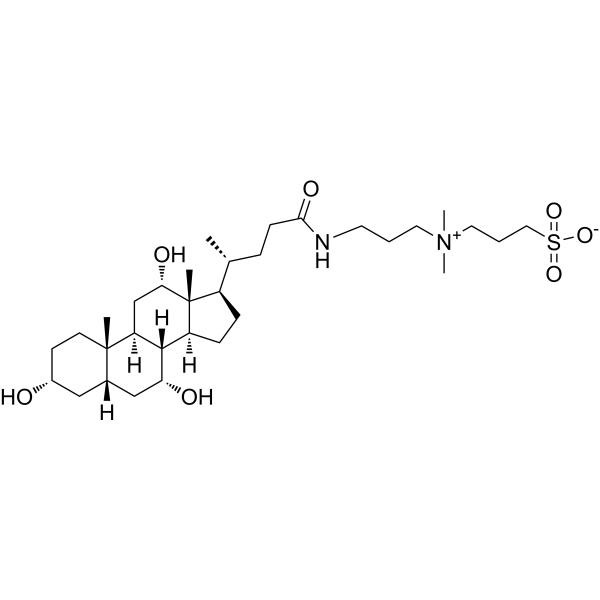
  • HY-15435
    CHAPS
    4 Publications Verification

    Exosomes Biochemical Assay Reagents Others
    CHAPS is a cholic acid-derived, sulfobetaine-type zwitterionic detergent and micelle-forming agent. CHAPS exhibits properties of weak cationic or nonionic surfactants in different solution systems, undergoes micellization, and forms small, loose hydrophilic aggregates that are temperature-dependent. CHAPS stabilizes mononucleosomes under different ionic strengths, reduces nucleosome sequence specificity, promotes sliding of histone cores along DNA, solubilizes Tamm-Horsfall protein to reduce its interference with urinary exosome isolation, and maintains vesicle structure and the activity of related proteins at the same time. CHAPS is used to recover native folded fusion proteins, enhance the binding capacity of GST fusion proteins, and restore GST enzyme activity. However, CHAPS cannot refold proteins denatured by urea, guanidine hydrochloride or heat, nor can it construct the structure of intrinsically disordered proteins. CHAPS is commonly used in research on the separation and purification of membrane proteins .
    CHAPS
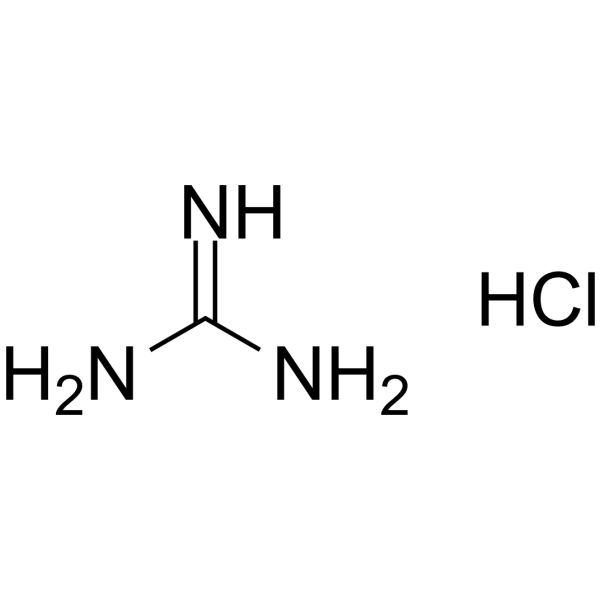
  • HY-B0178A
    Guanidine hydrochloride
    3 Publications Verification

    Guanidinium chloride; Aminoformamidine hydrochloride

    Autophagy Endogenous Metabolite Metabolic Disease Cancer
    Guanidine hydrochloride (Guanidinium chloride) a strong chaotrope, is also a strong denaturant of proteins .
    Guanidine hydrochloride
  • HY-121360

    DNA/RNA Synthesis Reactive Oxygen Species (ROS) Cancer
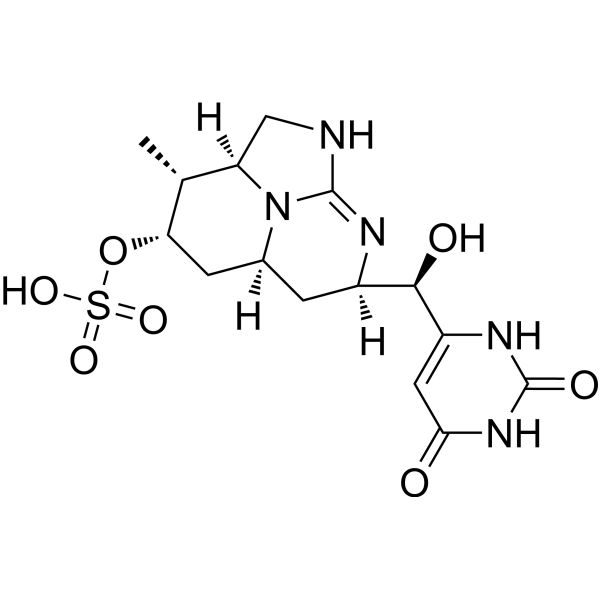
    Cylindrospermopsin, a cyanotoxin, is a polycyclic uracil derivative containing guanidine and sulfate groups, which can inhibit protein synthesis and covalently modify DNA or RNA. Cylindrospermopsin induces hepatocellular hypertrophy, renal cellular hypertrophy, intracellular reactive oxygen species (ROS), DNA strand breaks, mitochondrial hyperpolarisation, ultrastructural damage, and altered gene expression in liver, kidney, and intestinal cells. Cylindrospermopsin can be used in research including hepatocellular carcinoma and water quality testing .
    Cylindrospermopsin
  • HY-59156

    Drug Intermediate Others
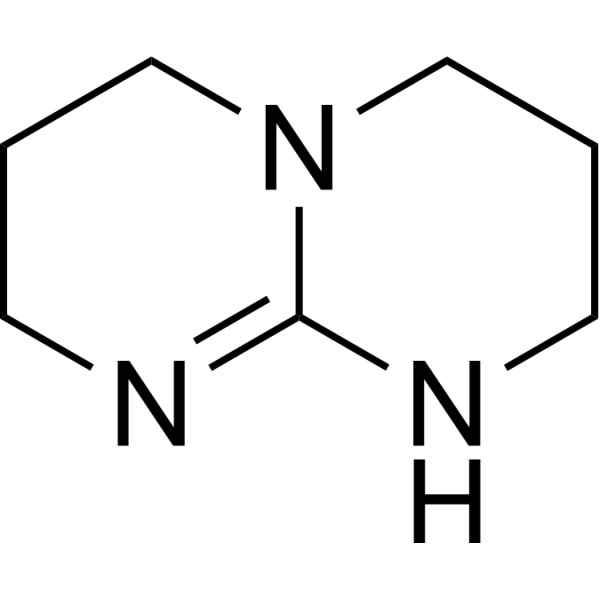
    Triazabicyclodecene is a bicyclic guanidine compound that can serve as a pharmaceutical intermediate for the formation of amides or esters .
    Triazabicyclodecene
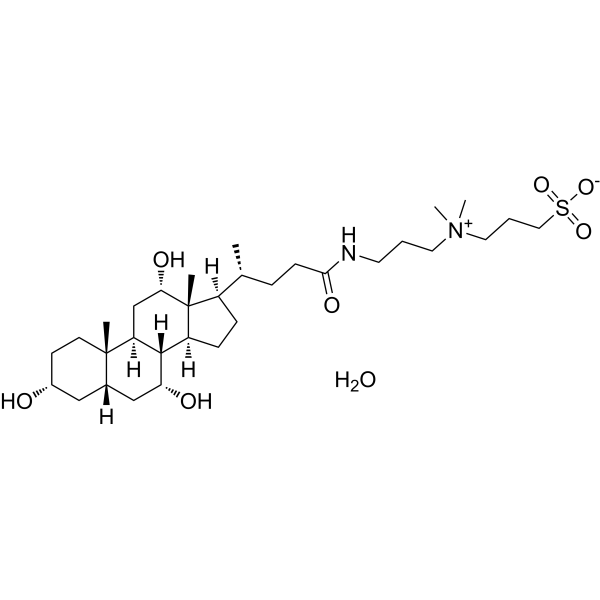
  • HY-15435A
    CHAPS hydrate
    4 Publications Verification

    Biochemical Assay Reagents Exosomes Others
    CHAPS hydrate is a cholic acid-derived, sulfobetaine-type zwitterionic detergent and micelle-forming agent. CHAPS hydrate exhibits properties of weak cationic or nonionic surfactants in different solution systems, undergoes micellization, and forms small, loose hydrophilic aggregates that are temperature-dependent. CHAPS hydrate stabilizes mononucleosomes under different ionic strengths, reduces nucleosome sequence specificity, promotes sliding of histone cores along DNA, solubilizes Tamm‑Horsfall protein to reduce its interference with urinary exosome isolation, and maintains vesicle structure and the activity of related proteins at the same time. CHAPS hydrate is used to recover native folded fusion proteins, enhance the binding capacity of GST fusion proteins, and restore GST enzyme activity. However, CHAPS hydrate cannot refold proteins denatured by urea, guanidine hydrochloride or heat, nor can it construct the structure of intrinsically disordered proteins. CHAPS hydrate is commonly used in research on the separation and purification of membrane proteins .
    CHAPS hydrate
  • HY-W250727
    TNS sodium
    1 Publications Verification

    6-(p-Tolylamino)naphthalene-2-sulfonate sodium

    Fluorescent Dye Others
    TNS (6-(p-Tolylamino) naphthalene-2-sulfonate) sodium is a fluorescent probe used to detect the conformational state of proteins. TNS sodium binds to the central hydrophobic calyx of β-lactoglobulin (β-LG) to form a 1:1 complex, which stabilizes the folded conformation of β-LG. TNS sodium shows weak fluorescent signals in aqueous solution, but its fluorescence intensity increases significantly upon binding to the hydrophobic domains of proteins, with the maximum excitation wavelength and maximum emission wavelength located at 321 nm and 446 nm, respectively .
    TNS sodium
  • HY-N0930B

    AMPK Bacterial Infection Metabolic Disease
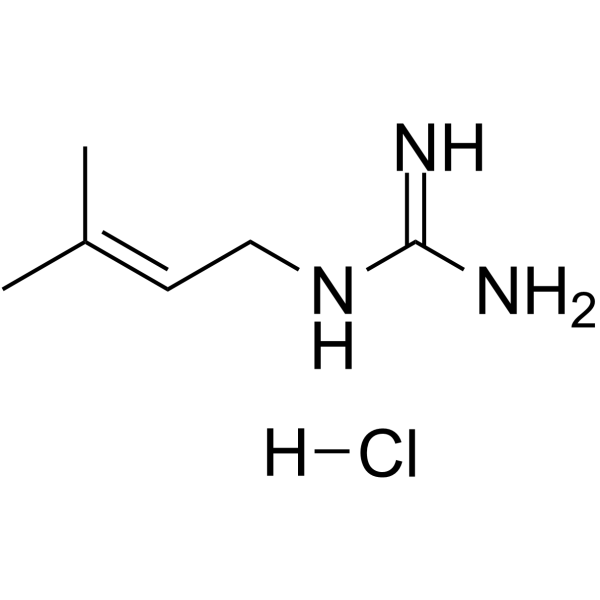
    Galegine hydrochloride, a guanidine derivative, contributes to weight loss in mice. Guanidine hydrochloride is the compound derived from G. officinalis, which gave rise to the biguanides, metformin and phenformin. Galegine hydrochloride activates AMPK in 3T3-L1 adipocytes and L6 myotubes, as well as in the H4IIE rat hepatoma and HEK293 human kidney cell lines. Galegine hydrochloride has antibacterial activity, with minimum inhibitory concentration of 4 mg/L against Staphylococcus aureus strains .
    Galegine hydrochloride
  • HY-107757

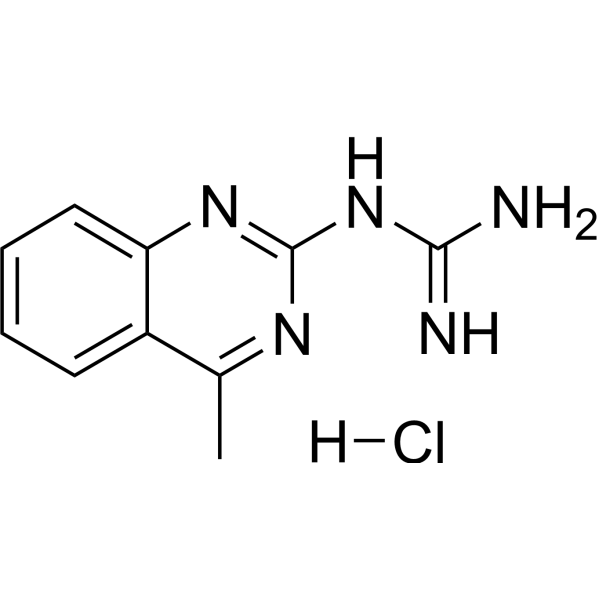
    2-guanidine-4-methylquinazoline hydrochloride

    Sodium Channel Neurological Disease
    GMQ (hydrochloride) is a ASIC (acid-sensing ion) channel activator with an EC50 value of 1.83 mM for ASIC3 at pH 7.4. GMQ (hydrochloride) opens only ASIC3 but no other ASICs at pH 7.4. GMQ (hydrochloride) can be used for neurological disease research .
    GMQ hydrochloride
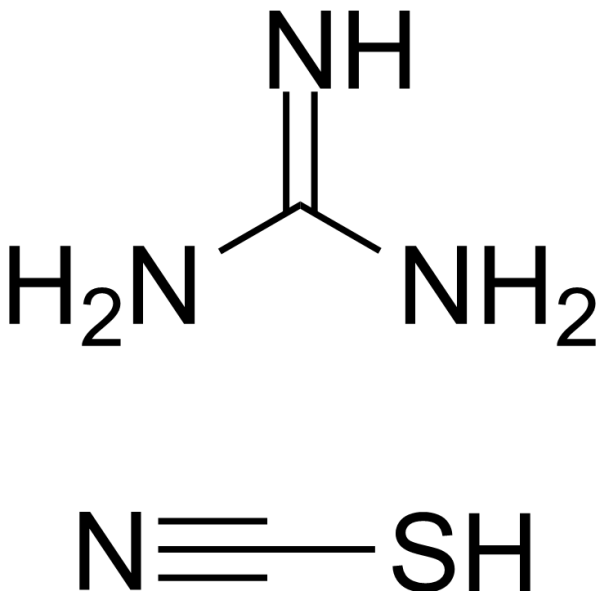
  • HY-D0841
    Guanidine thiocyanate
    3 Publications Verification

    Endogenous Metabolite Infection Cancer
    Guanidine thiocyanate is a strong protein denaturant and potent inhibitor of nucleases. Guanidinium thiocyanate is a nucleic acid protector in the extraction of DNA and RNA from cells. Guanidine thiocyanate is a common component of buffers used for nucleic acid extraction .
    Guanidine thiocyanate
  • HY-N0930A

    AMPK Bacterial Infection Metabolic Disease
    Galegine hemisulfate, a guanidine derivative, contributes to weight loss in mice. Galegine hemisulfate activates AMPK in 3T3-L1 adipocytes and L6 myotubes, as well as in the H4IIE rat hepatoma and HEK293 human kidney cell lines. Galegine hemisulfate has antibacterial activity, with minimum inhibitory concentration of 4 mg/L against Staphylococcus aureus strains .
    Galegine hemisulfate
  • HY-B0178B

    6M Guanidinium chloride Solution; 6M Aminoformamidine hydrochloride Solution

    Biochemical Assay Reagents Others
    6M Guanidine hydrochloride Solution (6M Guanidinium chloride Solution) is a strong protein denaturant. 6M Guanidine hydrochloride Solution causes proteins to assume a random coil conformation .
    6M Guanidine hydrochloride Solution
  • HY-100939

    Sodium Channel Neurological Disease
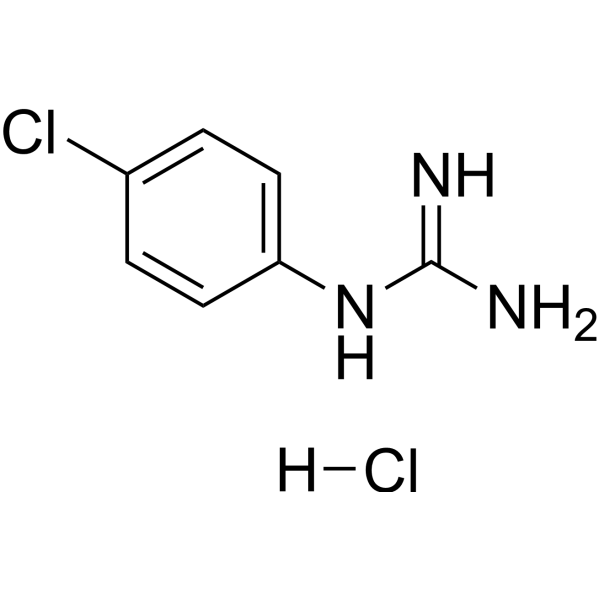
    4-Chlorophenylguanidine hydrochloride is an urokinase-type plasminogen activator inhibitor. 4-Chlorophenylguanidine hydrochloride is a potent ASIC3 positive allosteric modulator and reverses the effects of ASIC3 desensitization. 4-Chlorophenylguanidine hydrochloride influences ASIC3 activity through directly activating the channel and increasing proton sensitivity. 4-Chlorophenylguanidine hydrochloride offers a chemical backbone for the design of new ASIC3 ligands to study ASIC3 in vivo .
    4-Chlorophenylguanidine hydrochloride
  • HY-W105860S

    Isotope-Labeled Compounds Others
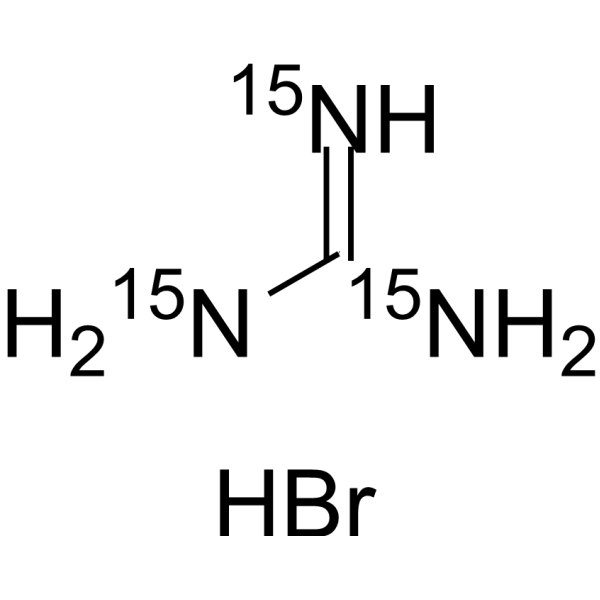
    Guanidine Hydrobromide- 15N3 is the 15N labeled Guanidine Hydrobromide[1].
    Guanidine-15N3 hydrobromide
  • HY-D0841R

    Endogenous Metabolite Reference Standards Infection Cancer
    Guanidine thiocyanate (Standard) is the analytical standard of Guanidine thiocyanate. This product is intended for research and analytical applications. Guanidine thiocyanate is a strong protein denaturant and potent inhibitor of nucleases. Guanidinium thiocyanate is a nucleic acid protector in the extraction of DNA and RNA from cells. Guanidine thiocyanate is a common component of buffers used for nucleic acid extraction .
    Guanidine thiocyanate (Standard)
  • HY-B0178AS

    Guanidinium-13C,15N3 chloride; Aminoformamidine-13C,15N3 hydrochloride

    Isotope-Labeled Compounds Endogenous Metabolite Metabolic Disease
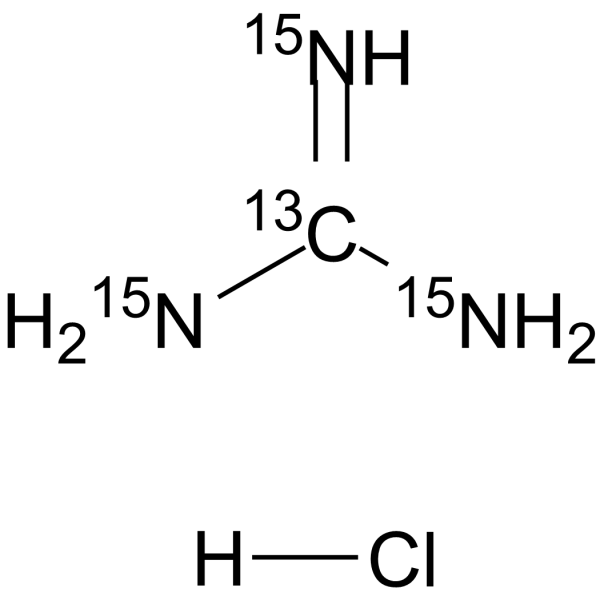
    Guanidine- 13C, 15N3 (hydrochloride)is the 13C-labeled and 15N-labeled Guanidine hydrochloride. Guanidine hydrochloride (Guanidinium chloride) a strong chaotrope, is also a strong denaturant of proteins .
    Guanidine-13C,15N3 hydrochloride
  • HY-139226

    2-guanidine-4-methylquinazoline

    GABA Receptor Inflammation/Immunology
    GMQ is an acid-sensing ion channel modulator, competitive GABAAR antagonist. GMQ preferentially, potently, competitively inhibits GABAARs. GMQ inhibits α1β2, α1β2γ2, α4β2γ2 and α5β2γ2 GABAARs. GMQ enhances neuronal excitation through inhibition of GABAergic transmission. GMQ has anti-histamine effects in the enteric system, inhibiting gastric acid secretion .
    GMQ
  • HY-47228

    Sigma Receptor Inflammation/Immunology
    KB-5492 free base is a potent and selective inhibitor of sigma receptor, inhibits specific [ 3H]1,3-di(2-tolyl)guanidine (DTG) binding to the sigma receptor with an IC50 of 3.15 μM. KB-5492 free base is an anti-ulcer agent .
    KB-5492 free base
  • HY-W710540

    Isotope-Labeled Compounds Cancer
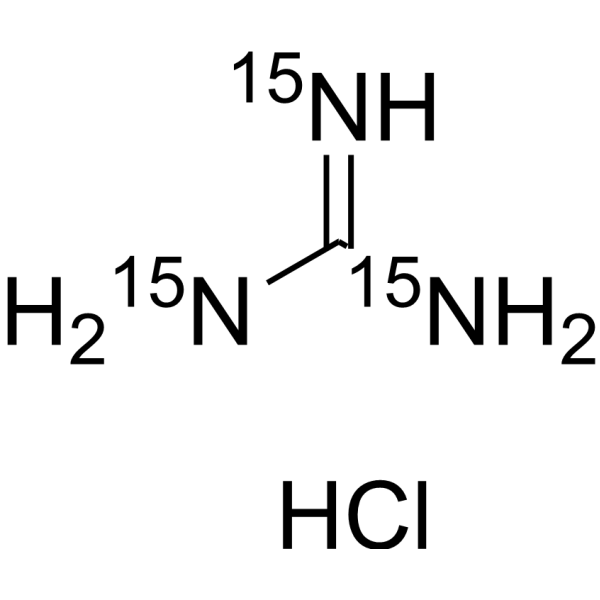
    Guanidine- 15N3 hydrochloride is the 15N-labeled Guanidine Hydrobromide (HY-W710540) .
    Guanidine-15N3 hydrochloride
  • HY-B0178AR

    Guanidinium chloride (Standard); Aminoformamidine hydrochloride (Standard)

    Autophagy Reference Standards Endogenous Metabolite Metabolic Disease Cancer
    Guanidine (hydrochloride) (Standard) is the analytical standard of Guanidine (hydrochloride). This product is intended for research and analytical applications. Guanidine hydrochloride (Guanidinium chloride) a strong chaotrope, is also a strong denaturant of proteins .
    Guanidine hydrochloride (Standard)
  • HY-B0178AS1

    Guanidinium-d5 chloride; Aminoformamidine-d5 hydrochloride

    Endogenous Metabolite Metabolic Disease
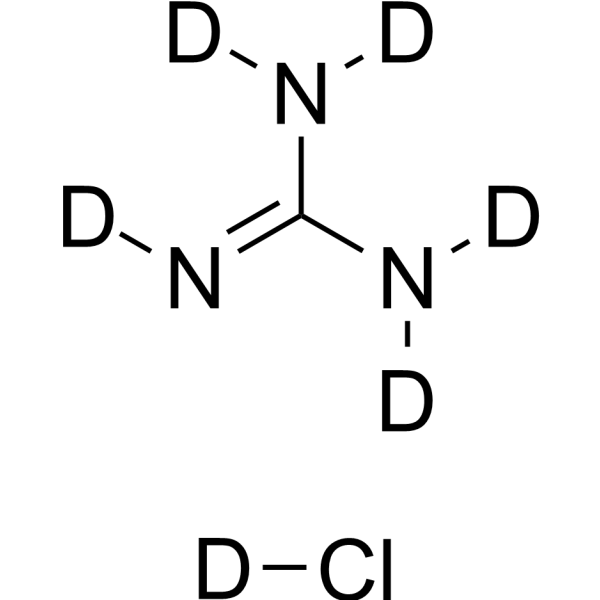
    Guanidine-d5 (hydrochloride) is the deuterium labeled Guanidine hydrochloride . Guanidine hydrochloride (Guanidinium chloride) a strong chaotrope, is also a strong denaturant of proteins .
    Guanidine-d5 hydrochloride
  • HY-W023072S

    1-(4-Aminobutyl)guanidine-d8 dihydrochloride

    Isotope-Labeled Compounds Others
    Agmatine-d8 (dihydrochloride) (1-(4-Aminobutyl)guanidine-d8 (dihydrochloride)) is the deuterium labeled 1-(4-Aminobutyl)guanidine dihydrochloride (HY-W023072).
    Agmatine-d8 dihydrochloride
  • HY-105747A

    N-(3-Phenoxypropyl)guanidine nitrate; (3-Phenoxypropyl)guanidine nitrate

    Endogenous Metabolite Infection Neurological Disease
    Guanoxyfen (N-(3-Phenoxypropyl)guanidine) nitrate is a compound that exhibits potent inhibitory activity against the serine protease enzyme TMPRSS2, which plays a crucial role in the infectivity of coronaviruses. Guanoxyfen nitrate is also an effective inhibitor of vasoconstrictor responses to sympathetic nerve stimulation.
    Guanoxyfen nitrate
  • HY-106504

    Imidazoline Receptor Neurological Disease
    Aganodine is a guanidine that activates presynaptic imidazoline receptors and can inhibit electrically evoked [ 3H]-norepinephrine release .
    Aganodine
  • HY-W777037

    Isotope-Labeled Compounds Others
    2,3-Dichlorobenzamidyl Guanidine- 13C2 is the 13C-labeled 2-(2,3-Dichlorobenzoyl)hydrazine-1-carboximidamide (HY-W727201).
    2,3-Dichlorobenzamidyl Guanidine-13C2
  • HY-W699749

    Isotope-Labeled Compounds Others
    Guanyl Urea hydrochloride- 15N4 is the 15N labeled Carbamoyl-guanidine Amidino Urea (HY-W738276).
    Guanyl Urea hydrochloride-15N4
  • HY-N1051

    Bacterial Infection Cancer
    Zarzissine is a cytotoxic guanidine alkaloid that can be isolated from the Mediterranean sponge Anchinoe paupertas. Zarzissine shows antimicrobial and anticancer activities .
    Zarzissine
  • HY-124910

    Histamine Receptor Adrenergic Receptor Cardiovascular Disease
    BU-E-75 is a guanidine-type H2 receptor agonist that exhibits antagonism at postsynaptic α-adrenoceptors, which can relax the noradrenaline-precontracted vessels .
    BU-E-75
  • HY-117868

    CP-Dpm-GA

    Fluorescent Dye Others
    NC-174 is a super-strong guanidine compound that is sweeter than sucrose. NC-174 is more than 300,000 times sweeter than sucrose and has the potential to be a probe for sweet taste receptors .
    NC-174
  • HY-161325

    Parasite Infection
    Antileishmanial agent-26 (Compound 69) is a guanidine-containing compound with anti-Leishmania donovani activity. Its IC50 value against Leishmania donovani is 5.67 μM, and its CC50 value against THP-1 is 3.79 μM. Antileishmanial agent-26 can be used in the research of tropical diseases .
    Antileishmanial agent-26
  • HY-19120

    Sigma Receptor Inflammation/Immunology
    KB-5492 anhydrous is a potent and selective inhibitor of sigma receptor, inhibits specific [ 3H]1,3-di(2-tolyl)guanidine (DTG) binding to the sigma receptor with an IC50 of 3.15 μM. KB-5492 anhydrous is an anti-ulcer agent .
    KB-5492 anhydrous
  • HY-182988

    Liposome Cancer
    L-Arg-DSPE is an arginine-functionalized DSPE lipid containing free guanidine groups. L-Arg-DSPE serves as a component of NO-responsive degradable drug-loaded liposomal nanomotors (L-Arg@Lip-DOX), promoting drug deep tumor tissue penetration and cellular internalization. L-Arg-DSPE can be used for the research of drug delivery .
    L-Arg-DSPE
  • HY-WAA0304

    5-HT Receptor Adrenergic Receptor Imidazoline Receptor Neurological Disease
    1-(4-Aminobutyl) guanidine (Agmatine) is an orally active analgesic that can cross the blood-brain barrier. 1-(4-Aminobutyl) guanidine targets the 5-HT2A receptor, 5-HT3 receptor, α2-adrenergic receptor, and I1 imidazoline receptor. 1-(4-Aminobutyl) guanidine produces dose-dependent analgesic effects in various pain models. 1-(4-Aminobutyl) guanidine can be used in research related to visceral pain, neuropathic pain, and inflammatory pain .
    Agmatine
  • HY-W012074R

    Reference Standards
    2-(4-(((2-Cyanoethyl)thio)methyl)thiazol-2-yl)guanidine (Standard) is the analytical standard of 2-(4-(((2-Cyanoethyl)thio)methyl)thiazol-2-yl)guanidine. This product is intended for research and analytical applications.
    Famotidine impurity 16 (Standard)
  • HY-107757R

    2-guanidine-4-methylquinazoline hydrochloride (Standard)

    Reference Standards Sodium Channel Neurological Disease
    GMQ hydrochloride (Standard) is the analytical standard of GMQ (hydrochloride) (HY-107757). This product is intended for research and analytical applications. GMQ (hydrochloride) is a ASIC (acid-sensing ion) channel activator with an EC50 value of 1.83 mM for ASIC3 at pH 7.4. GMQ (hydrochloride) opens only ASIC3 but no other ASICs at pH 7.4. GMQ (hydrochloride) can be used for neurological disease research .
    GMQ hydrochloride (Standard)
  • HY-W845699

    Amino Acid Derivatives Others
    H-His-Arg-OH is a dipeptide containing guanidine groups. H-His-Arg-OH can be used as a dissociating agent to reduce the critical micelle concentration and form a stable nano lotion .
    H-His-Arg-OH
  • HY-P2768A

    Biochemical Assay Reagents Metabolic Disease
    Leucine dehydrogenase, Bacillus sp. (EC 1.4.1.9) is a carboxyl lyase that cleaves carbon-carbon bonds. L-Arginine Decarboxylase has one substrate, L-arginine, and two products, guanidine and CO2.
    Leucine dehydrogenase, Bacillus sp.
  • HY-E70998

    Biochemical Assay Reagents Metabolic Disease
    L-Arginine Decarboxylase, Escherichia coli (EC 4.1.1.19) is a carboxyl lyase that cleaves carbon-carbon bonds. L-Arginine Decarboxylase has one substrate, L-arginine, and two products, guanidine and CO2.
    L-Arginine Decarboxylase, Escherichia coli
  • HY-12896

    SphK Cancer
    SLR080811 is a guanidine-based selective sphingosine kinase 2 (SphK2) inhibitor with a Ki of 1.3 μM, exhibiting ~10-fold selectivity over SphK1 (Ki = 12 μM). SLR080811 reduces sphingosine 1-phosphate (S1P) levels in vitro, but drives a SphK1-dependent increase in S1P in mice. SLR080811 can be used for cancers and fibrosis research .
    SLR080811

Inquiry Online

Your information is safe with us. * Required Fields.

Salutation


Country or Region *

Applicant Name *


Organization Name *

Department *


Email Address *


Product Name *

Cat. No.


Requested quantity *

Phone Number *


Remarks

Inquiry Online

Inquiry Information

Product Name:
Cat. No.:
Quantity:
MCE Japan Authorized Agent:

