



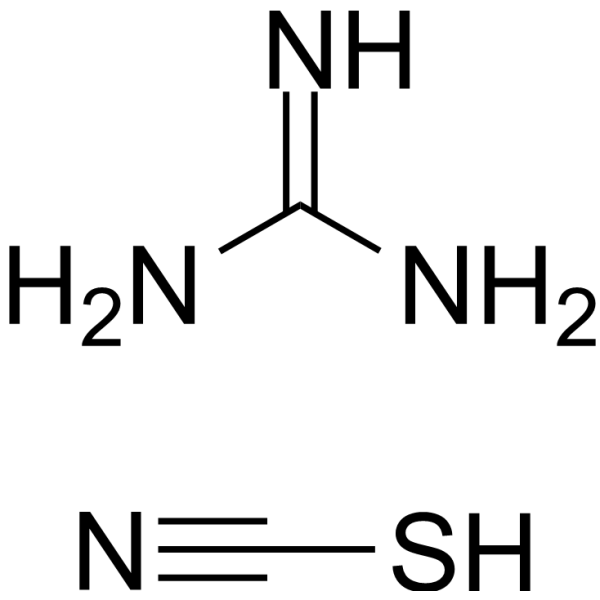
Guanidine thiocyanate
Based on 3 publication(s) in Google Scholar
Guanidine thiocyanate is a strong protein denaturant and potent inhibitor of nucleases. Guanidinium thiocyanate is a nucleic acid protector in the extraction of DNA and RNA from cells. Guanidine thiocyanate is a common component of buffers used for nucleic acid extraction.
For research use only. We do not sell to patients.
- Purity : 99.96%
- CAS No.: 593-84-0
- Formula: C2H6N4S
- Molecular Weight:118.16
-
Storage:Powder -20°C, 3 years , 4°C, 2 years ; In solvent -80°C, 6 months , -20°C, 1 month

To place orders, for customer services and technical support, please contact: MedChemExpress USA
Tel: 609-228-6898 E-mail: [email protected] [email protected]


-
 Biological Activity
-
Chemical Information
-
Solvent & Solubility
- Purity & Documentation
- References
-
 Help & FAQs


-
HY-B0178A
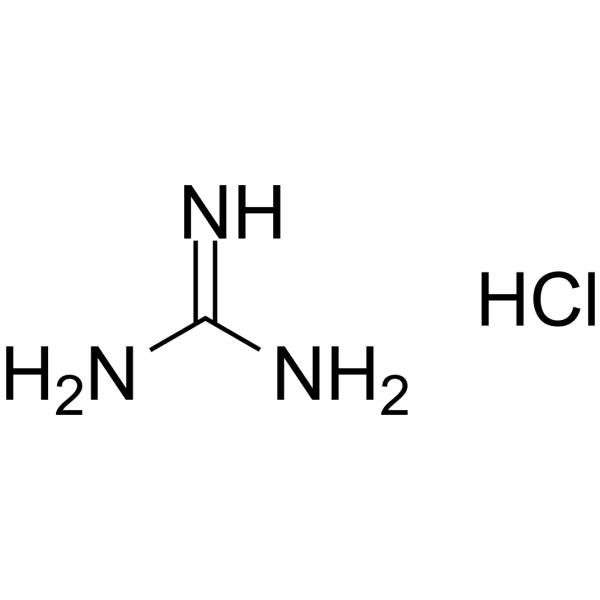
Guanidine hydrochlorideProtein Denaturant -

HY-Y1891
Tween 80 -
HY-B0141
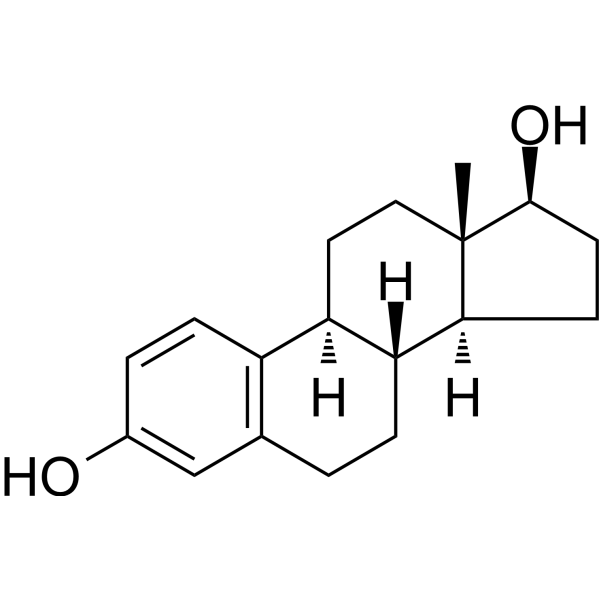
EstradiolHuman Endogenous Metabolite -
HY-142979
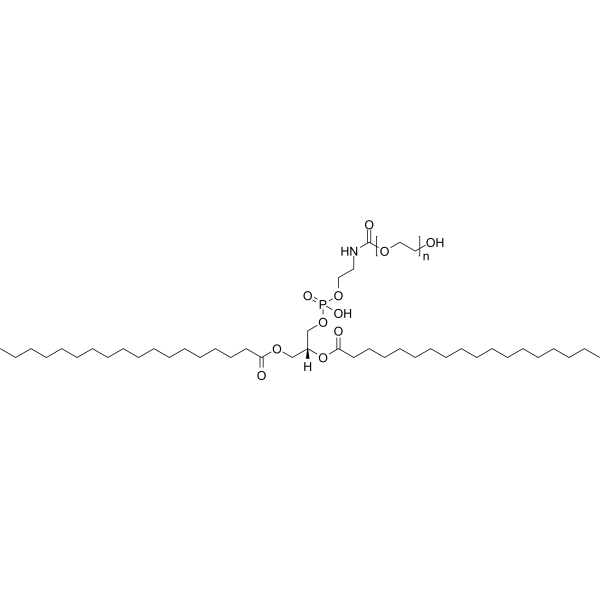
DSPE-PEG 2000PEG Lipid -

HY-141415
Tween 20Nonionic Surfactant -
HY-Y0271
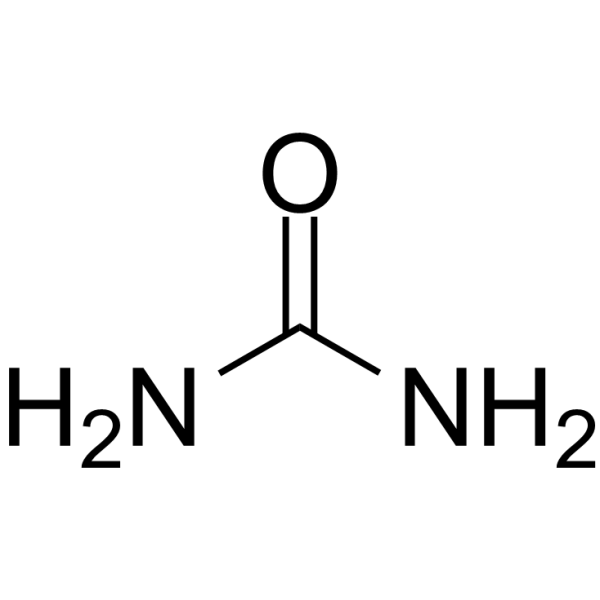
UreaProtein Denaturant -
HY-B1659
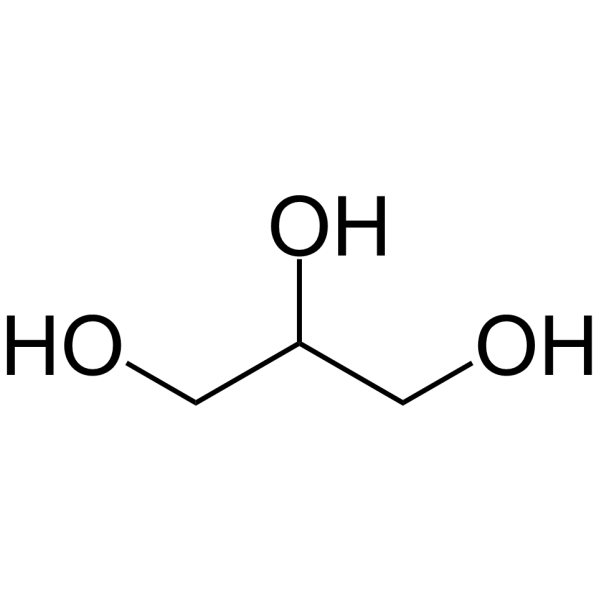
GlycerolEndogenous Metabolite -

HY-Y0271R
Urea (Standard)Endogenous Metabolite -

HY-B0178B
6M Guanidine hydrochloride SolutionProtein Denaturant -

HY-D0841R
Guanidine thiocyanate (Standard)Protein Denaturant/Nucleases Inhibitor -

HY-B1659R
Glycerol (Standard)Endogenous Metabolite
Publications Citing Use of MedChemExpress (MCE) Guanidine thiocyanate
More Customer Validation & Images

-
Bio/Physico-chemical Assay
-
IF
All Endogenous Metabolite Isoforms
More

Biological Activity
Description
IC50 & Target
|
Human Endogenous Metabolite |
In Vitro
Guanidine thiocyanate based-nucleic acid extraction buffers can effectively inactivate high-consequence enveloped viruses, such as Ebola virus, Marburg virus, and Rift Valley Fever virus, as well as West Nile virus, influenza, Venezuelan equine encephalitis virus, and recently, SARS-CoV-2[1].
Guanidine thiocyanate-based nucleic acid extraction buffers are an effective means of inactivating poliovirus infectious materials and potentially infectious materials[1].
MedChemExpress (MCE) has not independently confirmed the accuracy of these methods. They are for reference only. .


Chemical Information
-
CAS No. 593-84-0
-
Appearance Solid
-
Molecular Weight 118.16
-
Formula C2H6N4S
-
Color White to off-white
-
SMILES
SC#N.NC(N)=N
-
Initial Source
-
Shipping
Room temperature in continental US; may vary elsewhere.
-
Storage
Powder -20°C 3 years 4°C 2 years In solvent -80°C 6 months -20°C 1 month


Publications (3)
-
Journal Impact Factor
-
Most Recent
-
Int J Biol Macromol
α-Conotoxin LvID, an antagonist of α7 nicotinic acetylcholine receptor, mitigates Alzheimer-associated phenotypes by inhibiting Aβ deposition and reactive astrogliosis. [Abstract]2026 Mar:349:150933. PMID: 41692211 -
Virol J
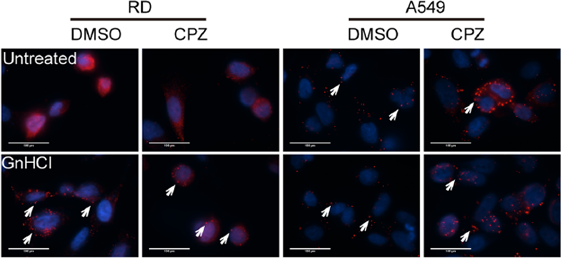
Enhanced human enterovirus 71 infection by endocytosis inhibitors reveals multiple entry pathways by enterovirus causing hand-foot-and-mouth diseases. [Abstract]2018 Jan 3;15(1):1. PMID: 29298696
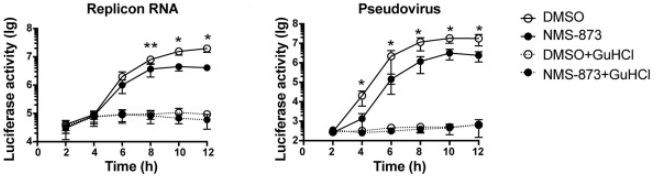
Guanidine thiocyanate purchased from MedChemExpress. Usage Cited in: Virol J. 2018 Jan 3;15(1):1. [Abstract]
Immunofluorescence analysis is performed on RD and A549 cells infected with EV71 at an MOI of 10 (in RD) and 50 (in A549) in the presence or absence of 2.5 mM GnHCl.
-
Virus Res
2020 Jul 2:283:197974. PMID: 32289342
Guanidine thiocyanate purchased from MedChemExpress. Usage Cited in: Virus Res. 2020 Jul 2:283:197974. [Abstract]
RD cells were pretreated with DMSO, NMS-873 (8 μM), DMSO plus GuHCl (2 μM) or NMS-873 plus GuHCl for 30 min. Then cells were transfected with EVA71 replicon RNA (0.1 μg/well) or infected with EVA71 pesudovirus (25 μl/well). Luciferase activity was quantified at different time points post transfection or infection.


Solvent & Solubility
In Vitro:
DMSO : 100 mg/mL (846.31 mM; Need ultrasonic; Hygroscopic DMSO has a significant impact on the solubility of product, please use newly opened DMSO)
H2O : 100 mg/mL (846.31 mM; Need ultrasonic)
Please refer to the solubility information to select the appropriate solvent. Once prepared, please aliquot and store the solution to prevent product inactivation from repeated freeze-thaw cycles.
Storage method and period of stock solution: -80°C, 6 months; -20°C, 1 month. When stored at -80°C, please use it within 6 months. When stored at -20°C, please use it within 1 month.
* Note: If you choose water as the stock solution, please dilute it to the working solution, then filter and sterilize it with a 0.22 μm filter before use.
Please refer to the solubility information to select the appropriate solvent. Once prepared, please aliquot and store the solution to prevent product inactivation from repeated freeze-thaw cycles.
Storage method and period of stock solution: -80°C, 6 months; -20°C, 1 month. When stored at -80°C, please use it within 6 months. When stored at -20°C, please use it within 1 month.
* Note: If you choose water as the stock solution, please dilute it to the working solution, then filter and sterilize it with a 0.22 μm filter before use.
Concentration (start) × Volume (start) = Concentration (final) × Volume (final)
In Vivo:
Select the appropriate dissolution method based on your experimental animal and administration route.
- For the following dissolution methods, please ensure to first prepare a clear stock solution using an In Vitro approach and then sequentially add co-solvents:
- To ensure reliable experimental results, the clarified stock solution can be appropriately stored based on storage conditions. As for the working solution for In Vivo experiments, it is recommended to prepare freshly and use it on the same day.
- The percentages shown for the solvents indicate their volumetric ratio in the final prepared solution. If precipitation or phase separation occurs during preparation, heat and/or sonication can be used to aid dissolution.
Add each solvent one by one: 10% DMSO 40% PEG300 5% Tween-80 45% Saline
Solubility: ≥ 2.5 mg/mL (21.16 mM); Clear solution
This protocol yields a clear solution of ≥ 2.5 mg/mL (saturation unknown).
Taking 1 mL working solution as an example, add 100 μL DMSO stock solution (25.0 mg/mL) to 400 μL PEG300, and mix evenly; then add 50 μL Tween-80 and mix evenly; then add 450 μL Saline to adjust the volume to 1 mL.
Preparation of Saline: Dissolve 0.9 g sodium chloride in ddH₂O and dilute to 100 mL to obtain a clear Saline solution.
Add each solvent one by one: 10% DMSO 90% (20% SBE-β-CD in Saline)
Solubility: ≥ 2.5 mg/mL (21.16 mM); Clear solution
This protocol yields a clear solution of ≥ 2.5 mg/mL (saturation unknown).
Taking 1 mL working solution as an example, add 100 μL DMSO stock solution (25.0 mg/mL) to 900 μL 20% SBE-β-CD in Saline, and mix evenly.
Preparation of 20% SBE-β-CD in Saline (4°C, storage for one week): 2 g SBE-β-CD powder is dissolved in 10 mL Saline, completely dissolve until clear.
In Vivo Dissolution Calculator
Please enter the basic information of animal experiments:
-
-
-
-
Recommended: Prepare an additional quantity of animals to account for potential losses during experiments.
Working solution concentration: 0.22 mg/mL
This product has good water solubility, please refer to the measured solubility data in water/PBS/Saline for details.


Purity & Documentation
-
Data Sheet (272 KB)
-
SDS (615 KB)
- English - EN (615 KB)
- Français - FR (615 KB)
- Deutsch - DE (615 KB)
- Norwegian - NO (615 KB)
- Español - ES (615 KB)
- Swedish - SV (615 KB)
- Italian - IT (615 KB)
- Korean - KR (615 KB)
- Portuguese - PT (615 KB)
-
Handling Instructions (2659 KB)
References


Complete Stock Solution Preparation Table
Please refer to the solubility information to select the appropriate solvent. Once prepared, please aliquot and store the solution to prevent product inactivation from repeated freeze-thaw cycles.
Storage method and period of stock solution: -80°C, 6 months; -20°C, 1 month. When stored at -80°C, please use it within 6 months. When stored at -20°C, please use it within 1 month.
| Optional Solvent | Concentration Solvent Mass | 1 mg | 5 mg | 10 mg | 25 mg |
|---|---|---|---|---|---|
| DMSO / H2O | 1 mM | 8.4631 mL | 42.3155 mL | 84.6310 mL | 211.5775 mL |
| 5 mM | 1.6926 mL | 8.4631 mL | 16.9262 mL | 42.3155 mL | |
| 10 mM | 0.8463 mL | 4.2316 mL | 8.4631 mL | 21.1578 mL | |
| 15 mM | 0.5642 mL | 2.8210 mL | 5.6421 mL | 14.1052 mL | |
| 20 mM | 0.4232 mL | 2.1158 mL | 4.2316 mL | 10.5789 mL | |
| 25 mM | 0.3385 mL | 1.6926 mL | 3.3852 mL | 8.4631 mL | |
| 30 mM | 0.2821 mL | 1.4105 mL | 2.8210 mL | 7.0526 mL | |
| 40 mM | 0.2116 mL | 1.0579 mL | 2.1158 mL | 5.2894 mL | |
| 50 mM | 0.1693 mL | 0.8463 mL | 1.6926 mL | 4.2316 mL | |
| 60 mM | 0.1411 mL | 0.7053 mL | 1.4105 mL | 3.5263 mL | |
| 80 mM | 0.1058 mL | 0.5289 mL | 1.0579 mL | 2.6447 mL | |
| 100 mM | 0.0846 mL | 0.4232 mL | 0.8463 mL | 2.1158 mL |
* Note: If you choose water as the stock solution, please dilute it to the working solution, then filter and sterilize it with a 0.22 μm filter before use.


Guanidine thiocyanate Related Classifications
HY-D0841 Related Classifications
 Powered by Bioz