28 Results for "

human 5-HT2B receptor

" in MedChemExpress (MCE) Product Catalog:
Products (28)

28 Results for "human 5-HT2B receptor" in MCE Product Catalog:

4
4 Cited Publications
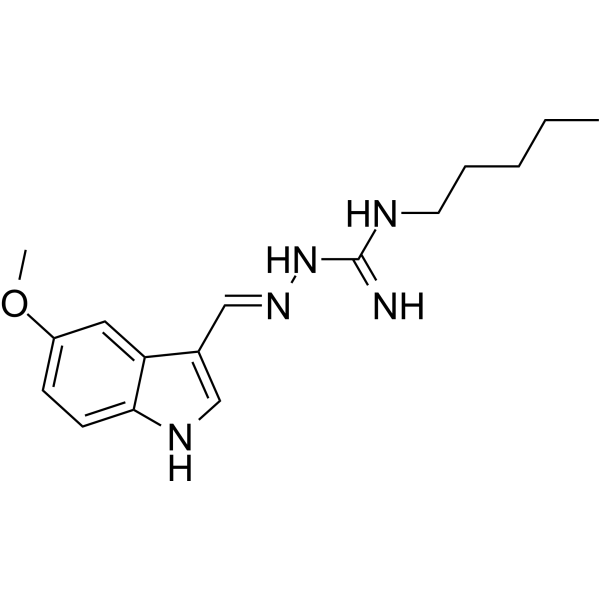
Cat. No.: HY-14153
CAS No.: 145158-71-0
Purity:  99.89%
Target:  

5-HT Receptor Apoptosis

Research Areas:  

Metabolic Disease Cancer

Tegaserod is an orally active serotonin receptor 4 (HTR4; 5-HT4R) agonist and a 5-HT2B receptor antagonist. Tegaserod has pKis of 7.5, 8.4 and 7.0 for human recombinant 5-HT2A, 5-HT2B and 5-HT2C receptors, respectively. Tegaserod causes tumor cell apoptosis, blunts PI3K/Akt/mTOR signaling and decreases S6 phosphorylation. Tegaserod has anti-tumor activity and has the potential for irritable bowel syndrome (IBS) research .
loading...
    loading...
4
4 Cited Publications
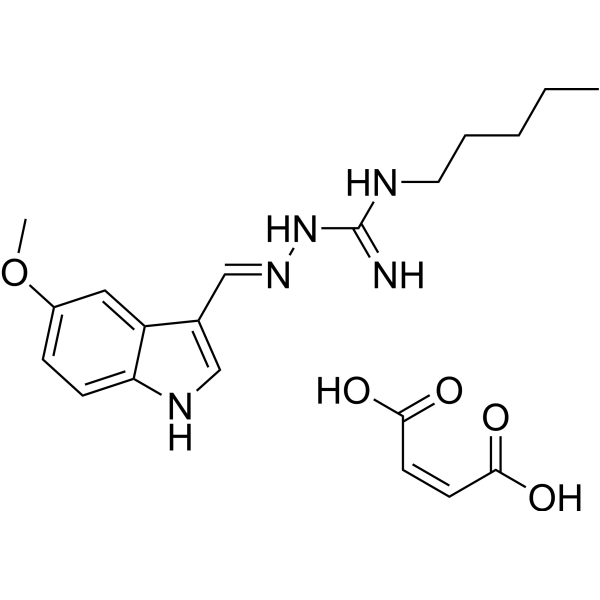
Cat. No.: HY-14153A
CAS No.: 189188-57-6
Purity:  99.90%
Synonyms: SDZ-HTF-919; HTF-919
Tegaserod maleate (SDZ-HTF-919) is an orally active serotonin receptor 4 (HTR4; 5-HT4R) agonist and a 5-HT2B receptor antagonist. Tegaserod maleate has pKis of 7.5, 8.4 and 7.0 for human recombinant 5-HT2A, 5-HT2B and 5-HT2C receptors, respectively. Tegaserod maleate causes tumor cell apoptosis, blunts PI3K/Akt/mTOR signaling and decreases S6 phosphorylation. Tegaserod maleate has anti-tumor activity and has the potential for irritable bowel syndrome (IBS) research .
loading...
    loading...
3
3 Cited Publications
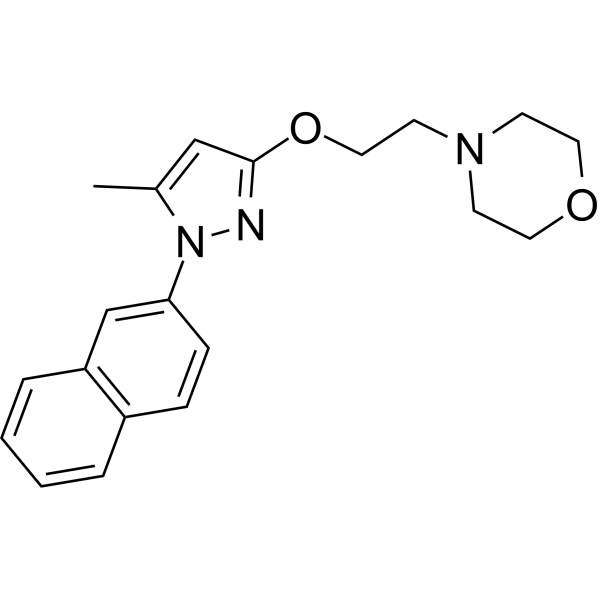
Cat. No.: HY-18099
CAS No.: 878141-96-9
Synonyms: E-52862
Research Areas:  

Neurological Disease

S1RA (E-52862) is a highly selective σ1 receptor (σ1R) antagonist with Kis of 17 nM and 23.5 nM for human σ1R and guinea pig σ1R, respectively. S1RA has Moderate antagonistic activity for human 5-HT2B receptor (Ki= 328 nM). S1RA has antinociceptive effects in neuropathic pain models. S1RA prevents mechanical and cold hypersensitivity in Oxaliplatin (HY-17371)-treated mice .
loading...
    loading...
3
3 Cited Publications
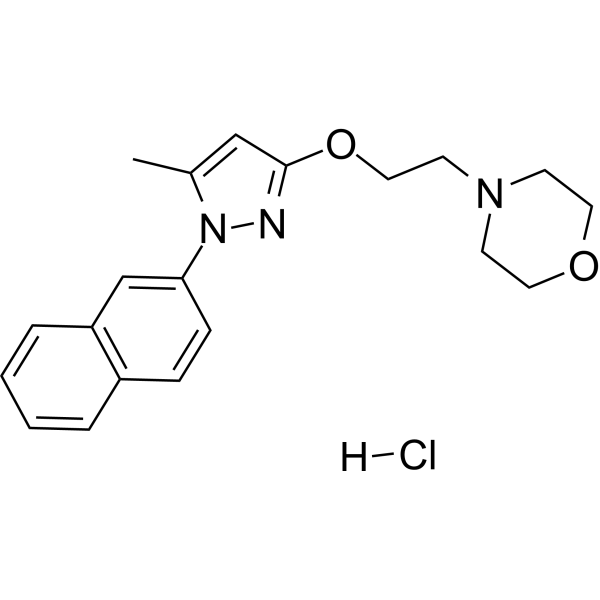
Cat. No.: HY-18099A
CAS No.: 1265917-14-3
Synonyms: E-52862 hydrochloride
Research Areas:  

Neurological Disease

S1RA (E-52862) hydrochloride is an orally active and selective sigma-1 receptor (σ1R) antagonist with a Ki value of 17 nM. S1RA hydrochloride shows good selectivity against σ2R (Ki >1000 nM). S1RA hydrochloride is a human 5-HT2B receptor antagonist with an IC50 value of 4.7 μM. S1RA hydrochloride inhibits neuropathic pain and activity-induced spinal sensitization .
loading...
    loading...
2
2 Cited Publications
Cat. No.: HY-15543A
CAS No.: 1215721-40-6
Purity:  99.37%
Target:  

5-HT Receptor

Research Areas:  

Neurological Disease

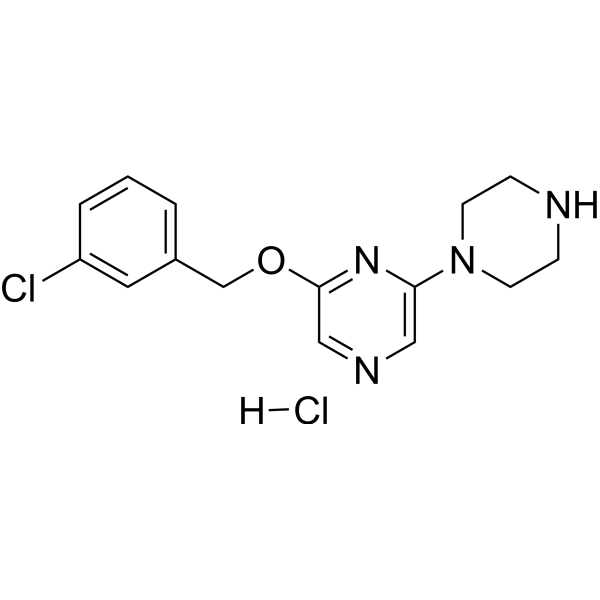
CP-809101 hydrochloride is a potent and highly selective 5-HT2C receptor agonist, with pEC50s of 9.96, 7.19 and 6.81 M for human 5HT2C, 5HT2B and 5HT2A receptor. CP-809101 hydrochloride inhibits conditioned avoidance responding in rats and antagonizes both PCP (phencyclidine hydrochloride)- and d-amphetamine-induced hyperactivity. CP-809101 hydrochloride also reduces food and nicotine dependence in rats, can be used in studies of antipsychotic and nicotine dependence .
loading...
    loading...
1
1 Cited Publications
Cat. No.: HY-103110
CAS No.: 1210-81-7
Purity:  99.70%
Research Areas:  

Neurological Disease

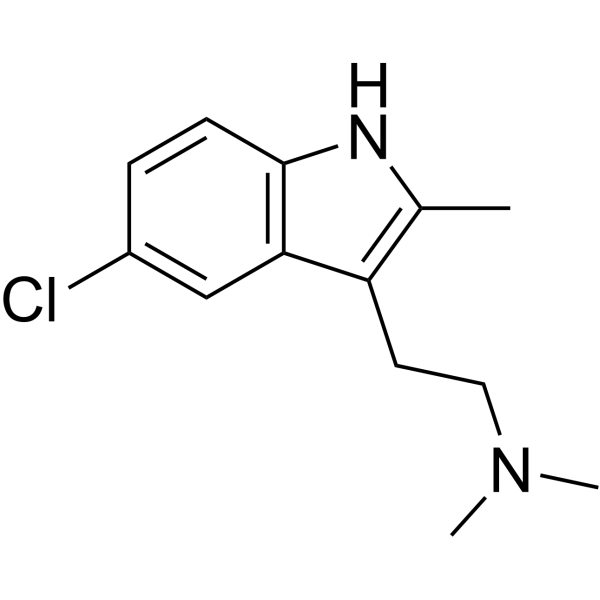
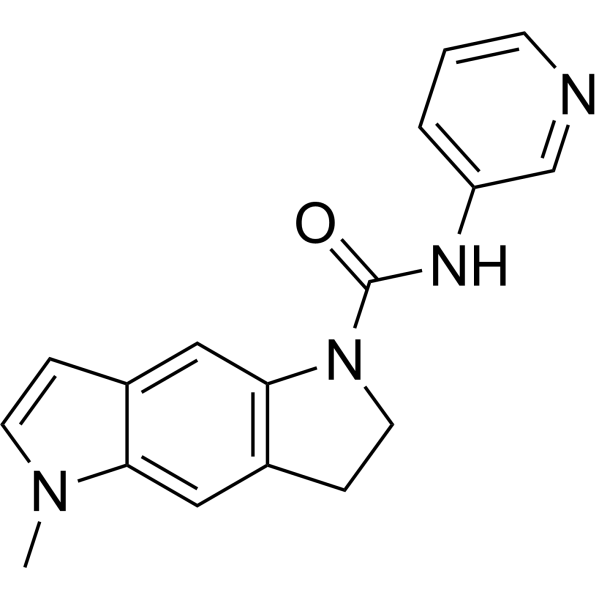
ST1936 is a selective, nanomolar affinity 5-HT6 receptor agonist with Ki values of 13 nM, 168 nM and 245 nM for human 5-HT6, 5-HT7 and 5-HT2B receptors, respectively. ST1936 also shows moderate affinity (Ki of 300 nM) for human and rat α2 adrenergic receptor .
loading...
    loading...
Cat. No.: HY-100656
CAS No.: 839712-15-1
Purity:  97.02%
Research Areas:  

Neurological Disease

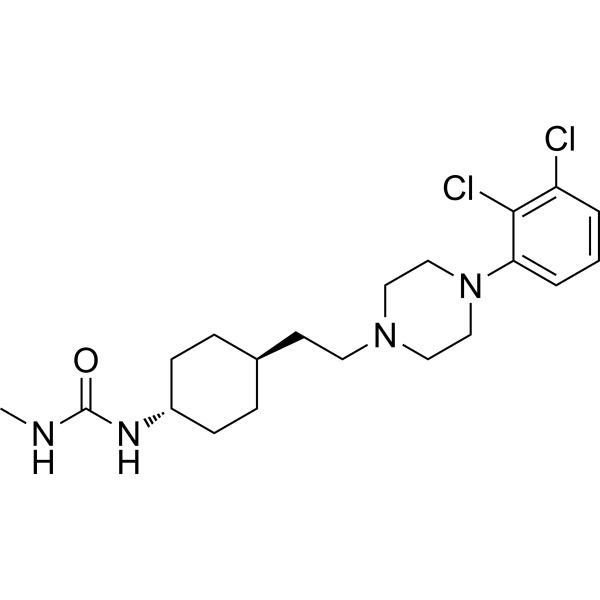
Desmethyl cariprazine is a major active metabolite of cariprazine, with activities at human dopamine receptors and serotonin receptors, showing a pEC50 of 8.90 at human D2 receptors, a pEC50 of 8.09 at D3 receptors, and a pEC50 of 6.28 at 5-HT1A receptors. Desmethyl cariprazine inhibits forskolin-induced cAMP production at D2, D3 and 5-HT1A receptors, and suppresses serotonin-induced Ca 2+ release at 5-HT2B receptors. Desmethyl cariprazine is applicable to research related to schizophrenia, bipolar disorder type I and bipolar disorder.
loading...
    loading...
Cat. No.: HY-100658
CAS No.: 839712-25-3
Purity:  99.79%
Research Areas:  

Neurological Disease

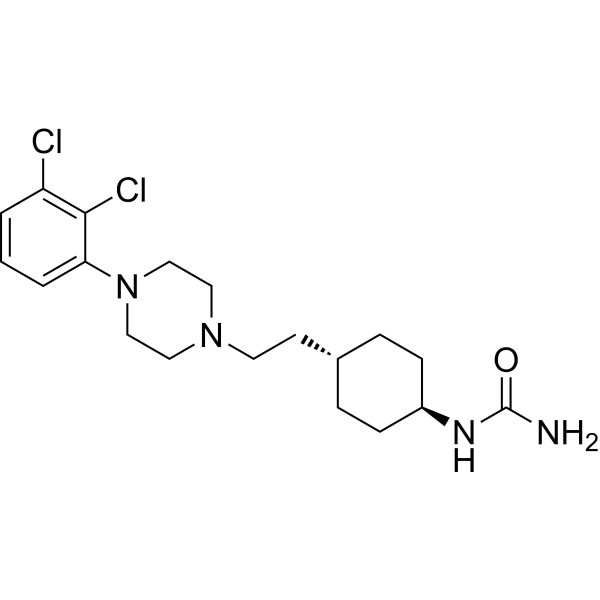
Didesmethyl cariprazine is an orally active, BBB-permeable metabolite of Cariprazine (HY-14763). Didesmethyl cariprazine is a partial agonist at the D2 and D3 receptors, full agonist at the 5-HT1A receptor, and antagonist at the human 5-HT2B receptor (Ki: 1.41 nM (human D2L), 0.056 nM (human D3), 1.7 nM (human 5-HT1A), 0.52 nM (human 5-HT2B)). Didesmethyl cariprazine dose-dependently inhibits the spontaneous activity of rat midbrain dopaminergic neurons .
loading...
    loading...
Cat. No.: HY-118301
CAS No.: 1207440-88-7
Research Areas:  

Neurological Disease

ADX71441 is an orally active, blood-brain barrier penetrant positive allosteric modulator of GABAB receptor. ADX71441 potentiates the activity of endogenous GABA at GABAB receptor, with an EC50 of 96 nM. ADX71441 functionally inhibits adenosine transporters and 5-HT2B receptor. ADX71441 produces anxiolytic-like, analgesic, muscle relaxant, hypothermic and overactive bladder inhibitory effects, reduces acute locomotor activity levels, decreases voluntary intake of alcohol and saccharin, attenuates stress-induced neuronal activation, and exhibits anti-hyperalgesic activity .
loading...
    loading...
Cat. No.: HY-132225
CAS No.: 158942-04-2
Purity:  99.35%
Target:  

5-HT Receptor

Research Areas:  

Inflammation/Immunology

SB 206553 is a 5-HT2C inverse agonist. SB 206553 can attenuate methamphetamine-seeking in rats. SB 206553 has activity for 5-HT2 receptor ligands in HEK-293 or CHO-K1 cells expressing human recombinant 5-HT2 receptors with pKi values of 5.6 nM (5-HT2A), 7.7 nM (5-HT2B) and 7.8 nM (5-HT2C), respectively. SB 206553 can be used for the research of psychostimulant abuse disorders .
loading...
    loading...
Cat. No.: HY-126057
CAS No.: 57452-98-9
Purity:  99.10%
Target:  

Parasite 5-HT Receptor

Research Areas:  

Infection

(R)-Praziquantel, the active enantiomer of Praziquantel, is a partial agonist of the human 5-HT2B receptor. (R)-Praziquantel acts as an antischistosomal eutomer .
loading...
    loading...
Cat. No.: HY-103135
CAS No.: 1197334-04-5
Purity:  99.36%
Target:  

5-HT Receptor

Research Areas:  

Neurological Disease

SB 206553 hydrochloride is a high affinity, selective and orally active 5-HT2B / 5-HT2C receptor antagonist (rat 5-HT2B pA2 = 8.89, human 5-HT2C pKi = 7.92) . SB 206553 possesses anxiolytic-like properties .
loading...
    loading...
Cat. No.: HY-126057S
CAS No.: 1399880-38-6
Purity:  99.57%
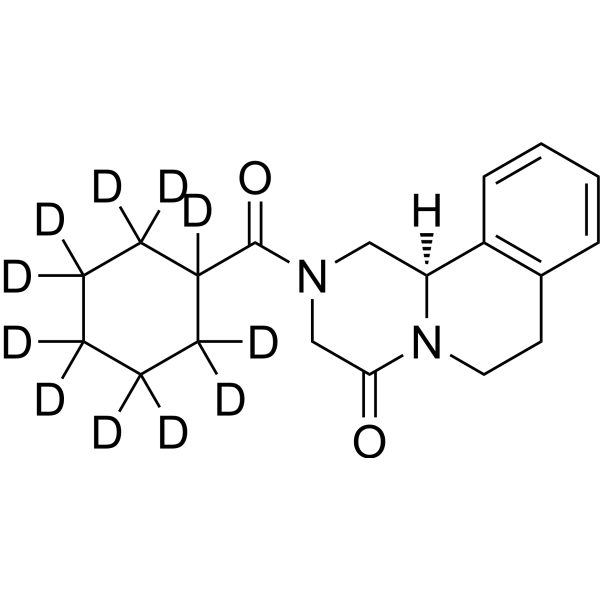
(R)-Praziquantel-d11 is the deuterium labeled (R)-Praziquantel. (R)-Praziquantel, the active enantiomer of Praziquantel, is a partial agonist of the human 5-HT2B receptor. (R)-Praziquantel acts as an antischistosomal eutomer .
loading...
    loading...
Cat. No.: HY-163671
CAS No.: 2767348-36-5
Target:  

GPR52 Arrestin

Research Areas:  

Neurological Disease

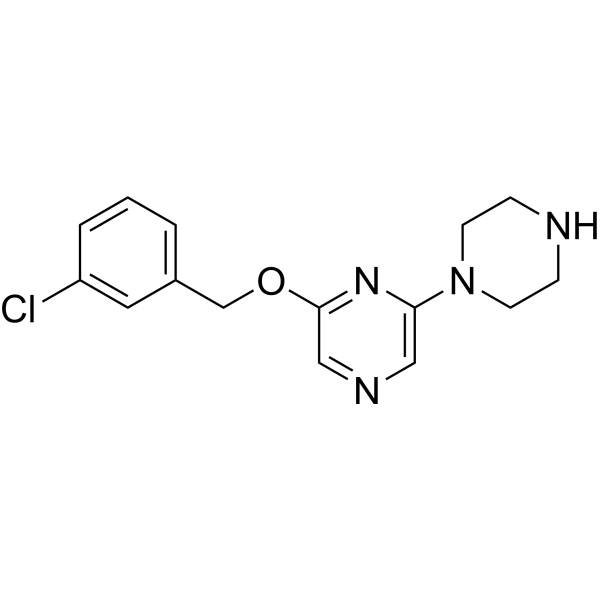
PW0729 is a selective GPR52 agonist. PW0729 activates G protein/cAMP signaling pathway, with bias toward this pathway over β-arrestin recruitment, and induces GPR52 desensitization. PW0729 can be used for the research of neuropsychiatric and neurological diseases .
loading...
    loading...
Cat. No.: HY-101228
CAS No.: 1407632-07-8
Research Areas:  

Neurological Disease

PSB-12054 is a P2X4 receptor antagonist with IC50 values of 0.19 μM, 2.10 μM and 1.77 μM against human, rat and mouse receptors, respectively, and exhibits selectivity over other human P2X receptor subtypes. PSB-12054 inhibits ATP-induced calcium influx, suppresses shear stress-induced transverse Ca 2+ wave generation, and elevates basal Ca 2+ levels in rat atrial myocytes. PSB-12054 binds to the 5-HT2B receptor. PSB-12054 can be used in research related to neuropathic pain, traumatic brain injury, cerebral ischemia and spinal cord injury .
loading...
    loading...
Cat. No.: HY-178760
Target:  

5-HT Receptor

Research Areas:  

Neurological Disease

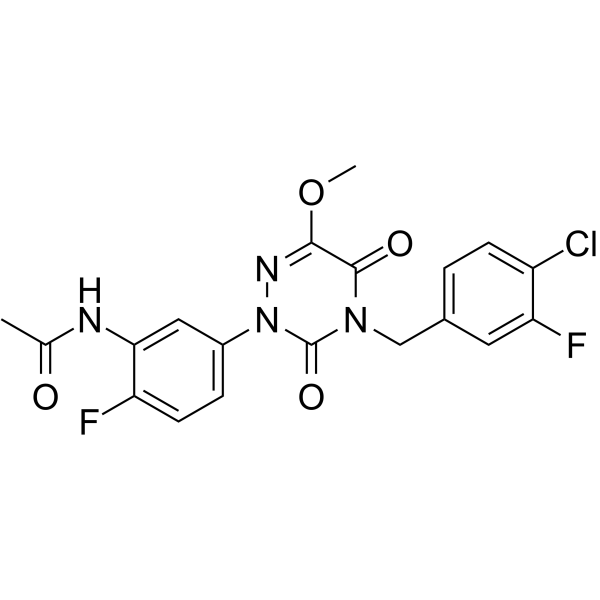
TGF-8027 is a selective 5-HT2A agonist that can cross the blood-brain barrier. TGF-8027 exhibits EC50s of 3.3 nM, 160 nM and 7600 nM against human 5-HT2A, 5-HT2C and 5-HT2B and exhibits EC50s against mouse 5-HT2A and mouse 5-HT2C of 14 and 210 nM. TGF-8027 can induce a head-shaking response in mice. TGF-8027 can be used to study diseases that target the 5-HT2A receptor (such as depression) .
loading...
    loading...
Cat. No.: HY-15543
CAS No.: 479683-64-2
Target:  

5-HT Receptor

Research Areas:  

Neurological Disease

CP-809101 is a potent and highly selective 5-HT2C receptor agonist, with pEC50s of 9.96, 7.19 and 6.81 M for human 5HT2C, 5HT2B and 5HT2A receptor. CP-809101 inhibits conditioned avoidance responding in rats and antagonizes both PCP (phencyclidine hydrochloride)- and d-amphetamine-induced hyperactivity. CP-809101 also reduces food and nicotine dependence in rats, can be used in studies of antipsychotic and nicotine dependence .
loading...
    loading...
Cat. No.: HY-123480
CAS No.: 755040-97-2
Target:  

5-HT Receptor

Research Areas:  

Neurological Disease

EGIS-7625 is an orally active and selective competitive antagonist of 5-HT2B receptor, with a human Ki value of 1 nM. EGIS-7625 shows low affinity for 5-HT2A and 5-HT2C receptors. The pKi values of EGIS-7625 for human 5-HT2B, 5-HT2A and 5-HT2C are 9.0, 6.2 and 7.7, respectively. EGIS-7625 alleviates mCPP-induced hypoactivity .
loading...
    loading...
Cat. No.: HY-103110A
CAS No.: 1782228-83-4
Research Areas:  

Neurological Disease

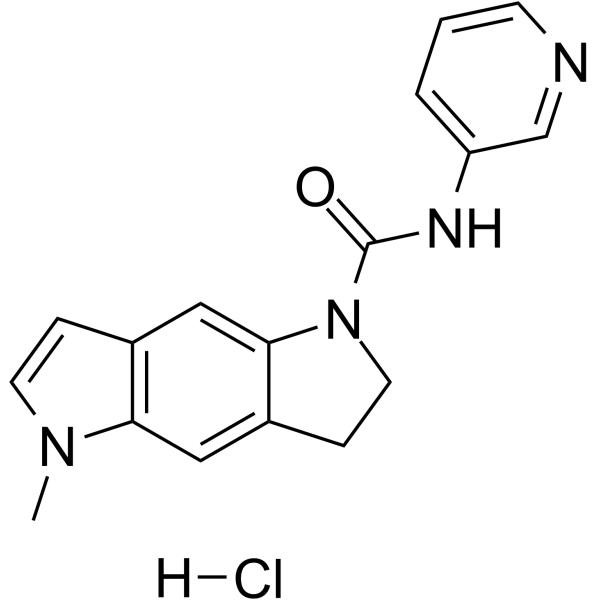
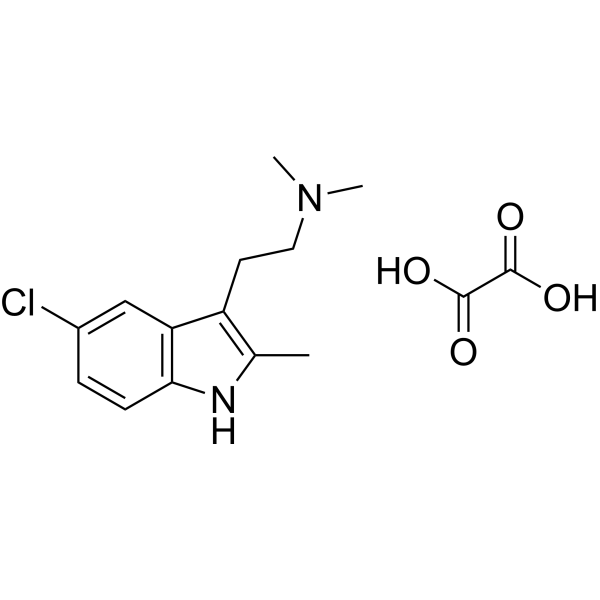
ST1936 oxalate is a selective, nanomolar affinity 5-HT6 receptor agonist with Ki values of 13 nM, 168 nM and 245 nM for human 5-HT6, 5-HT7 and 5-HT2B receptors, respectively. ST1936 oxalate also shows moderate affinity (Ki of 300 nM) for human and rat α2 adrenergic receptor .
loading...
    loading...
Cat. No.: HY-14153S
CAS No.: 1134188-56-9
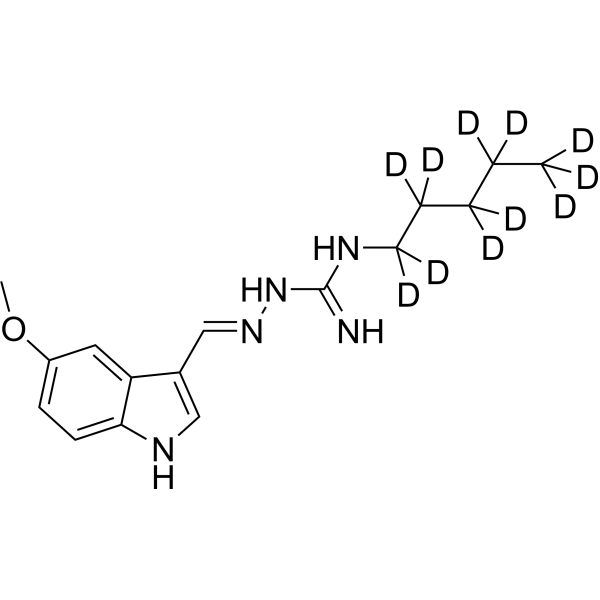
Tegaserod-d11 is deuterated labeled Tegaserod (HY-14153). Tegaserod is an orally active serotonin receptor 4 (HTR4; 5-HT4R) agonist and a 5-HT2B receptor antagonist. Tegaserod has pKis of 7.5, 8.4 and 7.0 for human recombinant 5-HT2A, 5-HT2B and 5-HT2C receptors, respectively. Tegaserod causes tumor cell apoptosis, blunts PI3K/Akt/mTOR signaling and decreases S6 phosphorylation. Tegaserod has anti-tumor activity and has the potential for irritable bowel syndrome (IBS) research .
loading...
    loading...

