18 Results for "

human PXR

" in MedChemExpress (MCE) Product Catalog:
Products (18)

18 Results for "human PXR" in MCE Product Catalog:

7
7 Cited Publications
Cat. No.: HY-100793
CAS No.: 126411-39-0
Purity:  99.80%
Synonyms: GW 485801
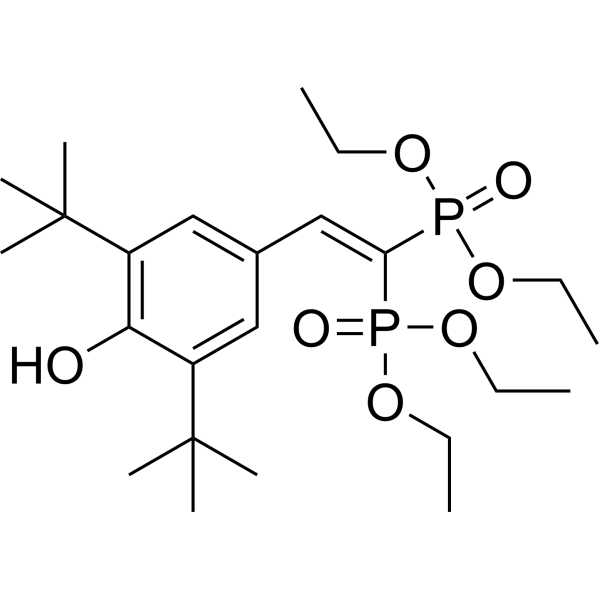
SR12813 (GW 485801) is an inhibitor of 3-hydroxy-3-methylglutaryl-coenzyme A (HMG-CoA) reductase, with an IC50 value of 0.85 μM . SR12813 is also an efficient agonist of human pregnane X receptor (hPXR). SR12813 can strongly bind to hPXR but not to mouse PXR (mPXR) .
loading...
    loading...
1
1 Cited Publications
Cat. No.: HY-111828
CAS No.: 953778-63-7
Purity:  99.33%
Target:  

Calcium Channel

Research Areas:  

Neurological Disease

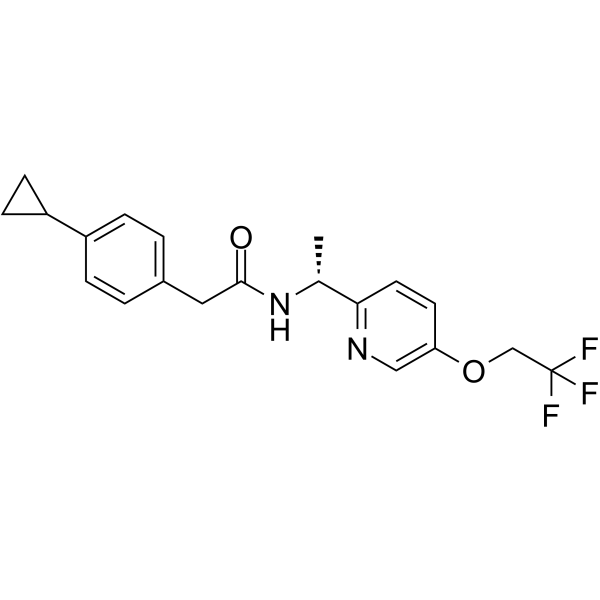
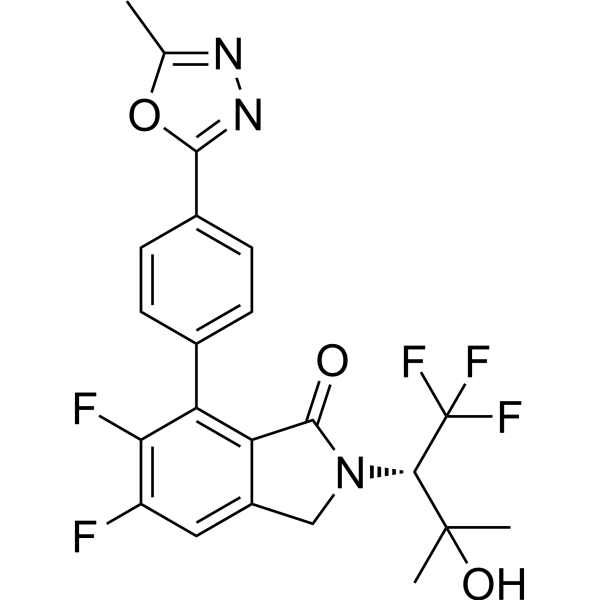
TTA-A2 is a potent, selective and orally active t-type voltage gated calcium channel antagonist with reduced pregnane X receptor (PXR) activation. TTA-A2 is equally potent against the Cav3.1 (a1G) and Cav3.2 (a1H) channels with IC50 values of 89 nM and 92 nM, respectively, at -80 and -100 mV holding potentials. TTA-A2 can be used for the research of a variety of human neurological diseases, including sleep disorders and epilepsy .
loading...
    loading...
Cat. No.: HY-N6066
CAS No.: 78478-28-1
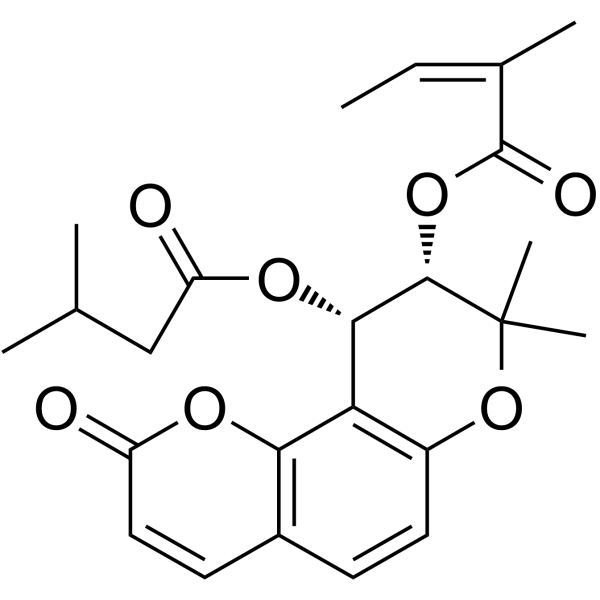
Praeruptorin E is an orally active pyranocoumarin compound. Praeruptorin E can be isolated from the dried roots of Peucedanum praeruptorum Dunn. Praeruptorin E reduces the expression of NF-κB. Praeruptorin E upregulates the expression of PXR and CYP3A4. Praeruptorin E inhibits Th2 cytokines, TNF-α, IL6, MPO, and blocks the Ca 2+ slow channel. Praeruptorin E promotes pulmonary tissue repair and relaxes porcine coronary artery strips. Praeruptorin E protects mice from lipopolysaccharide- and hydrochloric acid-induced acute lung injury. Praeruptorin E can be used in studies related to asthma and acute lung injury .
loading...
    loading...
Cat. No.: HY-168328
CAS No.: 2238839-34-2
Research Areas:  

Inflammation/Immunology

FKK6 is a selective agonist for pregnane X receptor (PXR) with an EC50 of 1.2 µM. FKK6 exhibits good affinity with plasma proteins, and good metabolic metabolism in human microsomes. FKK6 inhibits PXR-related NF-κB signaling pathway, inhibits the expression of inflammatory factors, and exhibits anti-inflammatory activity against DSS (HY-116282)-induced colitis in mouse model .
loading...
    loading...
Cat. No.: HY-175266
MI1013 is a PROTAC PXR degrader (DC50 = 89 nM, Dmax = 82%). MI1013 degrades PXR in human hepatocellular carcinoma RG cells (HepaRG). MI1013 specifically and safely regulates CYP3A4 promoter activity through PXR degradation. MI1013 affects several key genes involved in sulfate conjugation (e.g., SULT1E1), bile acid synthesis (CYP7A1), gluconeogenesis (PCK1), ketone synthesis (HMGCS20), and hepatocyte proliferation (MKI67). (Pink: PXR ligand 3: HY-175267, Blue: Pomalidomide-propargyl ligand: HY-W410002, Pink + Black: PXR ligand-Linker Conjugate 1: HY-175268) .
loading...
    loading...
Cat. No.: HY-N9454
CAS No.: 91893-83-3
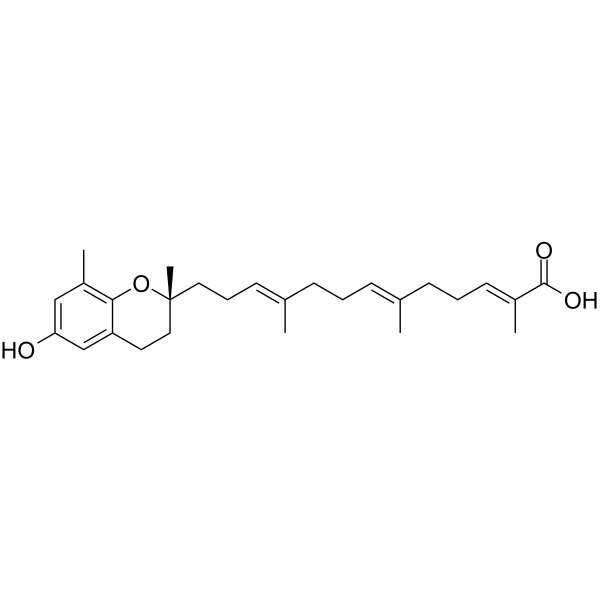
Garcinoic acid is an orally active anti-inflammatory agent that crosses the blood-brain barrier. Garcinoic acid also enhances efferocytosis and enzyme/receptor regulation, and selectively inhibits human COX-2, porcine α-amylase, Saccharomyces cerevisiae α-glucosidase and human DNA polymerase β (IC50=11 μM), as well as activates human PXR. Garcinoic acid enhances macrophage efferocytosis via receptors such as MerTK and LRP-1, and promotes the production of pro-resolving lipid mediators. Garcinoic acid inhibits NF-κB activation and pro-inflammatory cytokine secretion, interferes with aggregation, downregulates NLRP3 inflammasome activity, and binds to targets including CD44 and EGFR to inhibit leukemia cell proliferation. The pharmacological activities of Garcinoic acid, such as antioxidant, anti-inflammatory and lipid metabolism-regulating effects, are widely used in studies related to various diseases including atherosclerosis, Alzheimer's disease, type 2 diabetes, inflammatory bowel disease and viral pneumonia .
loading...
    loading...
Cat. No.: HY-173033
CAS No.: 2530027-71-3
MI-883 is orally active constitutive androstane receptor (CAR) (EC50 of 73 nM) agonist and pregnane X Receptor (PXR) (IC50 of 100 nM) antagonist. MI-883 binds to CAR and PXR ligand-binding domains, promotes CAR LBD assembly, activates CAR3 variant, stimulates CAR cytoplasmic-nuclear translocation, upregulates CAR target genes, recruits coactivators NCOA1, NCOA2, NCOA3, inhibits basal and agonist-induced PXR activation, downregulates PXR target genes, disrupts PXR-NCOR2 interaction, blocks agonist-mediated PXR-NCOA1 recruitment. MI-883 reduces plasma total cholesterol, LDL cholesterol, and hepatic free cholesterol levels, increases fecal bile acid excretion, regulates genes involved in xenobiotic metabolism, cholesterol homeostasis, and bile acid homeostasis. MI-883 exhibits metabolic stability, liver-predominant distribution, a safety profile with no observed toxicity, and does not stimulate human hepatocyte hypertrophy or hyperplasia. MI-883 can be used for the research of diet-induced hypercholesterolemia .
loading...
    loading...
Cat. No.: HY-B0661CS
CAS No.: 1189923-88-3
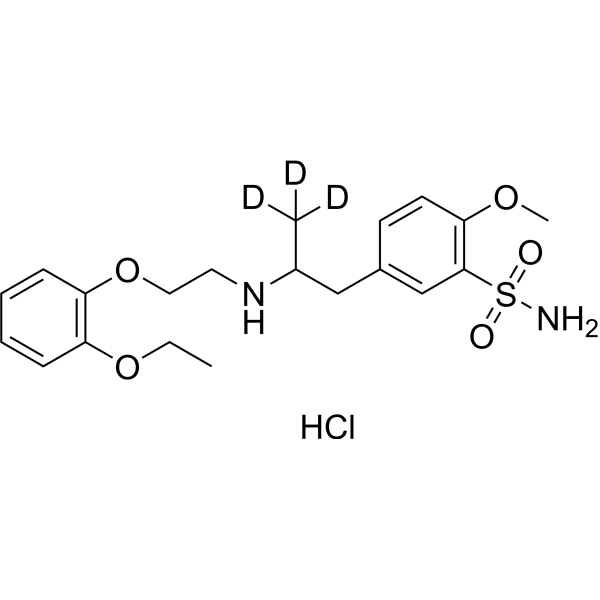
(Rac)-Tamsulosin-d3 hydrochloride is the deuterated-labeled Tamsolusin hydrochloride (HY-B0661C). Tamsolusin hydrochloride (YM12617 hydrochloride; LY253351 hydrochloride) is an isomer of Tamsulosin (HY-B0661). Tamsolusin hydrochloride is a sulfonamide phenethylamine derivative and a competitive antagonist of selective post-synaptic α1-adrenoceptors. Tamsolusin hydrochloride inhibits CYP3A4 activity in a non-competitive, enantiomer-specific manner, with an IC50 and Ki of 6.75 μM. Tamsolusin hydrochloride produces dose-dependent hypotension, preferentially antagonizing α1-adrenoceptor-mediated pressor responses, and inhibits α2-adrenoceptor-mediated pressor responses at high doses. Tamsolusin hydrochloride can be used in research related to various diseases such as metabolism .
loading...
    loading...
Cat. No.: HY-145516
CAS No.: 253688-61-8
Synonyms: Ro 47-8634
Research Areas:  

Metabolic Disease

Desmethyl bosentan is an active metabolite of the endothelin receptor antagonist bosentan (HY-A0013).1 Desmethyl bosentan (25 μM) activates the pregnane X receptor (PXR) in CV-1 monkey kidney cells expressing the human receptor in a reporter assay.
loading...
    loading...
Cat. No.: HY-163131
CAS No.: 2776965-41-2
Research Areas:  

Neurological Disease

Glucosylceramide synthase-IN-4 (compound 12) is a potent glucosylceramide synthase (GCS) inhibitor, with an IC50 of 6.8 nM. Glucosylceramide synthase-IN-4 shows excellent PK properties and stability in human hepatocytes. Glucosylceramide synthase-IN-4 has good CNS penetration and acceptable PXR selectivity .
loading...
    loading...
Cat. No.: HY-134522
CAS No.: 2259710-64-8
DL5050 is a selective and potent human constitutive androstane receptor (hCAR) agonist that does not activate pregnane X receptor (PXR). DL5050 preferentially induces the expression of CYP2B6 (target of hCAR) over CYP3A4 (target of hPXR) on both the mRNA and protein levels. DL5050 can be used for the researches of cancer and metabolic disease, such as diabetes .
loading...
    loading...
Cat. No.: HY-B0661C
CAS No.: 80223-99-0
Synonyms: YM12617 hydrochloride; LY253351 hydrochloride
Tamsolusin hydrochloride (YM12617 hydrochloride; LY253351 hydrochloride) is an isomer of Tamsulosin (HY-B0661). Tamsolusin hydrochloride is a sulfonamide phenethylamine derivative and a competitive antagonist of selective post-synaptic α1-adrenoceptors. Tamsolusin hydrochloride inhibits CYP3A4 activity in a non-competitive, enantiomer-specific manner, with an IC50 and Ki of 6.75 μM. Tamsolusin hydrochloride produces dose-dependent hypotension, preferentially antagonizing α1-adrenoceptor-mediated pressor responses, and inhibits α2-adrenoceptor-mediated pressor responses at high doses. Tamsolusin hydrochloride can be used in research related to various diseases such as metabolism .
loading...
    loading...
Cat. No.: HY-169264
Research Areas:  

Cancer

SJYHJ-026 is a PROTAC degrader targeting PXR, with a DC50 of 86.6 nM in SNU-C4 HiBiT-PXR KI cells. SJYHJ-026 shows higher selectivity for PXR over CAR, VDR, FXR, LXRα and LXRβ, and can bind to VHL to form a PXR-SJYHJ-026-VHL complex, inducing proteasomal degradation of PXR. SJYHJ-026 blocks agonist-induced PXR-mediated gene expression (including CYP3A4) and reduces basal PXR activity at the CYP3A4 promoter. SJYHJ-026 can be used for the research of colorectal cancer .
loading...
    loading...
Cat. No.: HY-P701396
Purity:  ≥ 90%, as determined by reducing SDS-PAGE.
Synonyms: NR1I2; Nuclear receptor subfamily 1 group I member 2; Orphan nuclear receptor PAR1; Orphan nuclear receptor PXR; Pregnane X receptor; Steroid and xenobiotic receptor; SXR
Species:  
Source:  
loading...
    loading...
Cat. No.: HY-P701397
Purity:  ≥ 90%, as determined by reducing SDS-PAGE.
Synonyms: NR1I2; Nuclear receptor subfamily 1 group I member 2; Orphan nuclear receptor PAR1; Orphan nuclear receptor PXR; Pregnane X receptor; Steroid and xenobiotic receptor; SXR
Species:  
Source:  
loading...
    loading...
Cat. No.: HY-100793R
CAS No.: 126411-39-0
Synonyms: GW 485801 (Standard)
SR12813 (Standard) is the analytical standard of SR12813 (HY-100793). This product is intended for research and analytical applications. SR12813 (GW 485801) is an inhibitor of 3-hydroxy-3-methylglutaryl-coenzyme A (HMG-CoA) reductase, with an IC50 value of 0.85 μM . SR12813 is also an efficient agonist of human pregnane X receptor (hPXR). SR12813 can strongly bind to hPXR but not to mouse PXR (mPXR) .
loading...
    loading...
Cat. No.: HY-125421
CAS No.: 1610952-07-2
Target:  

11β-HSD

Research Areas:  

Metabolic Disease

11β-HSD1-IN-26 (Compound 9f) is a type 1 11β-hydroxysteroid dehydrogenase (11β-HSD-1) inhibitor, with an IC50 of 1.6 nM against the human form and 241 nM against the murine form. 11β-HSD1-IN-26 exhibits inhibitory activity against CYP1C19, with an IC50 of 2 μM. 11β-HSD1-IN-26 can be used for research on metabolic syndrome .
loading...
    loading...
Cat. No.: HY-E72104
Target:  

Cytochrome P450

Research Areas:  

Others

Human CYP3A5, Reductase+b5 refers to a near-physiological recombinant microsomal system co-expressed in insect cells, consisting of human cytochrome P450 3A5, NADPH-P450 oxidoreductase (CPR) and cytochrome b5. Human CYP3A5 is a human cytochrome P450 subtype belonging to the CYP3 family, which is predominantly expressed in human liver and intestine and metabolizes a variety of active compounds .
loading...
    loading...
  • 1

