

1. Search Result
Search Result
Results for "

hydrolyzing

" in MedChemExpress (MCE) Product Catalog:

409

Inhibitors & Agonists

24

Fluorescent Dye

60

Biochemical Assay Reagents

44

Peptides

2

MCE Kits

1

Inhibitory Antibodies

40

Natural
Products

1

Recombinant Proteins

12

Isotope-Labeled Compounds

3

Antibodies

13

Oligonucleotides

Cat. No. Product Name Target Research Areas Chemical Structure
  • HY-NP003

    Collagen

    Collagen Inflammation/Immunology
    Collagen, Type II, from bovine snout membrane is a type II collagen that can be used for cell culture . This product is enzymatically hydrolyzed collagen peptides.
    Collagen, Type II, from bovine snout membrane
  • HY-W015495
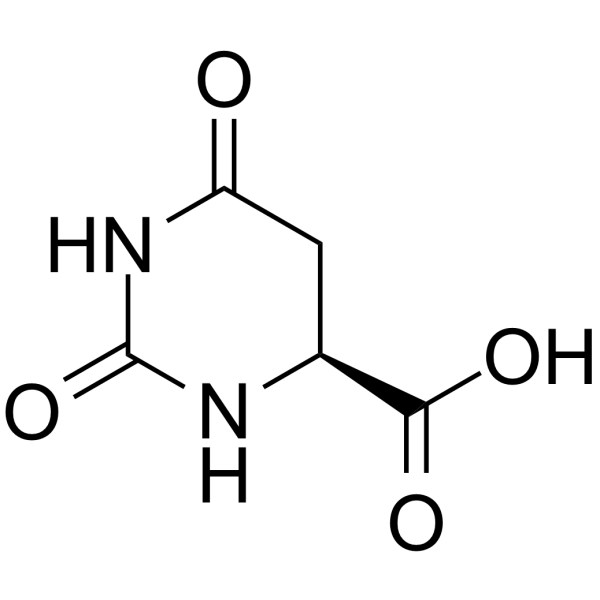
    L-Dihydroorotic acid
    1 Publications Verification

    Endogenous Metabolite Dihydroorotate Dehydrogenase Others
    L-Dihydroorotic acid is an important intermediate in the metabolism of orotic acid and a substrate of dihydroorotate dehydrogenase (DHODH). L-Dihydroorotic acid can reversibly hydrolyze to yield the acyclic L-ureidosuccinic acid by dihydrowhey enzyme .
    L-Dihydroorotic acid
  • HY-P2802
    α-Glucosidase, Yeast
    1 Publications Verification

    α-D-Glucosidase, Yeast

    Glycosidase Metabolic Disease
    α-Glucosidase, Yeast (α-D-Glucosidase, Yeast), a carbohydrate hydrolyzing enzyme, catalyzes the liberation of α-glucose from the non-reducing end of the substrate. α-Glucosidase can facilitate the absorption of glucose by the small intestine. Inhibition of α-Glucosidase is an effective management of non-insulin-dependent diabetes mellitus (NIDDM) .
    α-Glucosidase, Yeast
  • HY-P2373
    Kinase, Natto fermentation
    4 Publications Verification

    PAI-1 Cardiovascular Disease
    Kinase, Natto fermentation is a potent fibrinolytic enzyme. Kinase, Natto fermentation can break down blood clots by directly hydrolyzing fibrin and plasmin substrate. Kinase, Natto fermentation can be used for the research of cardiovascular diseases .
    Kinase, Natto fermentation
  • HY-77956

    Deoxyribose

    Endogenous Metabolite Metabolic Disease
    Thyminose is a natural product, a 2-deoxyaldopentose, that can be obtained by hydrolyzing the nucleosides that make up thym nucleic acid .
    Thyminose
  • HY-P2869

    EC 3.2.1.23; GAL

    Glycosidase Metabolic Disease
    β-Galactosidase, E. coli (EC 3.2.1.23; GAL) is a glycoside hydrolase that hydrolyzes the β-glycosidic bonds formed between galactose and its organic moieties. β-Galactosidase, E. coli can hydrolyze lactose to form glucose and galactose, and enter glycolysis; it can also catalyze the transgalactosylation of lactose into allolactose; allolactose can be cracked into monosaccharides .
    β-Galactosidase, E. coli
  • HY-P2803
    Beta-glucuronidase (Escherichia coli)
    1 Publications Verification

    β-glucuronidase Metabolic Disease
    Beta-glucuronidase is a glycosyl hydrolase that hydrolyzes β-glucuronic acid and sulfate esters in urine and other biological fluids, and then releases β-glucuronate .
    Beta-glucuronidase (Escherichia coli)
  • HY-126386

    EC 3.2.1.15

    Biochemical Assay Reagents Others
    Pectinase (EC 3.2.1.15) is a mixed enzymes that hydrolyze pectic substances, it mostly presents in microorganisms and higher plants. Pectinase is involved in the metabolism of the cell wall as well as in the growth of the cell, senescence, ripening of fruits, pathogenesis and abscission process .
    Pectinase, aspergillus niger
  • HY-Y0850J

    PVA (Mw 13000-23000, 87-89% hydrolyzed); Poly(Ethenol) (Mw 13000-23000, 87-89% hydrolyzed)

    Environmental Pollutants Biochemical Assay Reagents Cancer
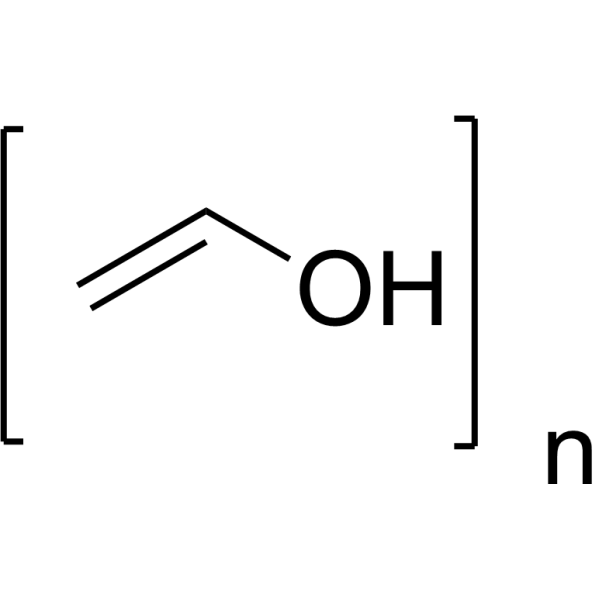
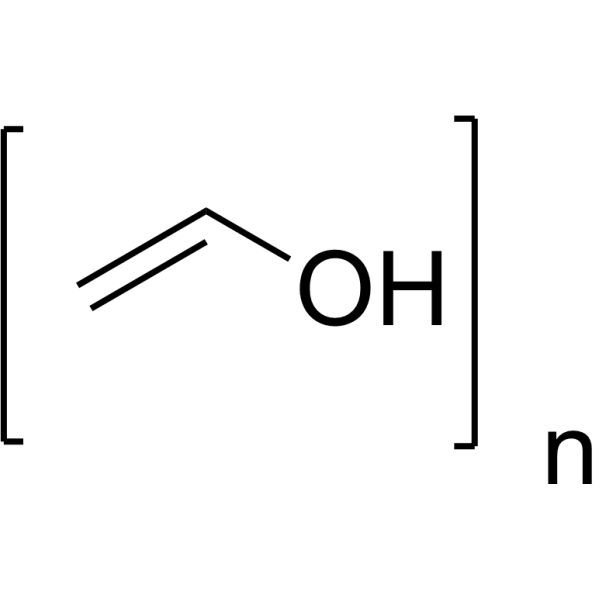
    Polyvinyl alcohol (Mw 13000-23000, 87-89% hydrolyzed) is a polyvinyl alcohol with a molecular weight of 130000-23000 and hydrolytic properties. Polyvinyl alcohol (Mw 13000-23000, 87-89% hydrolyzed) is the hydrolysis and removal of acetate groups after the polymerization of ethylene acetate and polyvinyl alcohol is obtained. A degree of hydrolysis of 87-89% indicates that a large part of the acetate groups have been removed, resulting in a large number of hydroxyl groups in the PVA structure. Polyvinyl alcohol with different degrees of hydrolysis can be used to self-crosslink to form cryogel, which can be used as biological excipient. Polyvinyl alcohol can be used in tissue engineering by electrospinning. Polyvinyl alcohol can achieve high cellular density, infiltration, and uniform distribution, facilitating functional connections between cells. Polyvinyl alcohol can improve cell vitality through in vitro cultivation. Polyvinyl alcohol demonstrates promising inhibition of ostersarcoma cancer cells with Doxorubicin (HY-15142A) .
    Polyvinyl alcohol (Mw 13000-23000, 87-89% hydrolyzed)
  • HY-Y1422

    Alkaline lipase

    Environmental Pollutants Lipase Metabolic Disease
    Triacylglycerol lipase is an enzyme catalyzing the hydrolysis of triacylglycerol. Triacylglycerol lipase promotes fat decomposition, providing energy and lipid precursors for cells. Triacylglycerol lipase is used in the research of metabolic diseases such as diabetes and obesity .
    Triacylglycerol lipase
  • HY-B0645
    Prednisolone disodium phosphate
    1 Publications Verification

    Prednisolone 21-phosphate disodium

    Glucocorticoid Receptor Inflammation/Immunology Endocrinology
    Prednisolone disodium phosphate is a synthetic glucocorticoid with anti-inflammatory and immunomodulating properties. Prednisolone disodium phosphate can be rapidly and completely hydrolyzed to Prednisolone in the plasma .
    Prednisolone disodium phosphate
  • HY-E70563

    Biochemical Assay Reagents Others
    Endoproteinase Lys-N (MS grade) is a protease that specifically hydrolyzes the N-terminal peptide bond of lysine fragments .
    Endoproteinase Lys-N (MS grade)
  • HY-N6840

    Biochemical Assay Reagents Others
    Xylotetraose is a xylo-oligosaccharide and a substrate of Taxy11. Xylotetraose serves as a substrate for the endo-xylanase Taxy11, and is hydrolyzed by it into xylobiose and xylotriose .
    Xylotetraose
  • HY-P2803A
    Beta-glucuronidase (bovine liver)
    1 Publications Verification

    β-glucuronidase Metabolic Disease
    Beta-glucuronidase (bovine liver) is a glycosyl hydrolase that hydrolyzes β-glucuronic acid and sulfate esters in urine and other biological fluids, and then releases β-glucuronate .
    Beta-glucuronidase (bovine liver)
  • HY-Y0850L

    PVA (Mw 85000-124000, 99+% hydrolyzed); Poly(Ethenol) (Mw 85000-124000, 99+% hydrolyzed)

    Environmental Pollutants Biochemical Assay Reagents Cancer
    Polyvinyl alcohol (Mw 85000-124000, 99+% hydrolyzed) is a polyvinyl alcohol with a molecular weight of 85000-124000 and hydrolytic properties. Polyvinyl alcohol (Mw 85000-124000, 99+% hydrolyzed) forms hydrogels that can be used to simulate digestive organs and lesion models for the training of endoscopic ultrasound (EUS) and endoscopic ultrasound elastography (EUS-E). Polyvinyl alcohol with different degrees of hydrolysis can be used to self-crosslink to form cryogel, which can be used as biological excipients .
    Polyvinyl alcohol (Mw 85000-124000, 99+% hydrolyzed)
  • HY-Y0850P

    PVA (Mw 146000-186000, 87-89% hydrolyzed); Poly(Ethenol) (Mw 146000-186000, 87-89% hydrolyzed)

    Environmental Pollutants Biochemical Assay Reagents Cancer
    Polyvinyl alcohol (Mw 146000-186000, 87-89% hydrolyzed) is a polyvinyl alcohol with a molecular weight of 146000-186000 and hydrolytic properties. Polyvinyl alcohol (Mw 146000-186000, 87-89% hydrolyzed) is the hydrolysis and removal of acetate groups after the polymerization of ethylene acetate. And polyvinyl alcohol is obtained. Polyvinyl alcohol with different degrees of hydrolysis can be used to self-crosslink to form cryogel, which can be used as biological excipient. Polyvinyl alcohol can be used in tissue engineering by electrospinning. Polyvinyl alcohol can achieve high cellular density, infiltration, and uniform distribution, facilitating functional connections between cells. Polyvinyl alcohol can improve cell vitality through in vitro cultivation. Polyvinyl alcohol demonstrates promising inhibition of ostersarcoma cancer cells with Doxorubicin (HY-15142A) .
    Polyvinyl alcohol (Mw 146000-186000, 87-89% hydrolyzed)
  • HY-B1278
    D-α-Tocopherol acetate
    1 Publications Verification

    D-Vitamin E acetate

    Environmental Pollutants Endogenous Metabolite NF-κB Interleukin Related Metabolic Disease Inflammation/Immunology Cancer
    D-α-Tocopherol acetate (D-Vitamin E acetate) can be hydrolyzed to d-alpha-tocopherol (VE) and absorbed in the small intestine .
    D-α-Tocopherol acetate
  • HY-E70194

    V8 protease; Glu-C

    Ser/Thr Protease Others
    Endoproteinase Glu-C (MS grade) is a serine proteinase. Endoproteinase GluC is able to hydrolyze some serpins and all classes of mammalian immunoglobulins .
    Endoproteinase Glu-C (MS grade)
  • HY-P2803B
    Beta-glucuronidase (helix pomatia)
    1 Publications Verification

    β-glucuronidase Metabolic Disease
    Beta-glucuronidase (helix pomatia) is a glycosyl hydrolase that hydrolyzes β-glucuronic acid and sulfate esters in urine and other biological fluids, and then releases β-glucuronate .
    Beta-glucuronidase (helix pomatia)
  • HY-150278

    Biochemical Assay Reagents Others
    Peptone from casein is derived from casein hydrolysis, casein is hydrolyzed by pancreatic enzymes and refined into peptone.
    Peptone from casein
  • HY-W337672

    Prolylhydroxyproline; Pro-Hyp

    Biochemical Assay Reagents Others
    H-Pro-Hyp-OH is a collagen peptide composed of proline (Pro) and hydroxyproline (Hyp). H-Pro-Hyp-OH can be used in research on slowing down facial aging .
    H-Pro-Hyp-OH
  • HY-P1068A

    Bacterial Infection
    Recombinant human lysozyme (plant expression) is a conserved anti-bacterial protein that causes bacterial lysis and death by hydrolyzing bacterial cell wall peptidoglycan (PG). Recombinant human lysozyme (plant expression) can be used to study bacterial infections .
    Recombinant human lysozyme (plant expression)
  • HY-Y0850U9

    Polyvinyl alcohol (Mw 67000, 87-89% hydrolyzed, ~1400 polymerization); Poly(Ethenol) (Mw 67000, 87-89% hydrolyzed, ~1400 polymerization)

    Biochemical Assay Reagents Others
    PVA (Mw 67000, 87-89% hydrolyzed, ~1400 polymerization) is a polyvinyl alcohol with a molecular weight of 67000 and hydrolytic properties. Degree of hydrolysis refers to the conversion rate of acetate groups in the original polyvinyl acetate to hydroxyl groups; PVA (Mw 67000, 87-89% hydrolyzed, ~1400 polymerization) is obtained by hydrolyzing and removing acetate groups after the polymerization of vinyl acetate. Polyvinyl alcohol with different degrees of hydrolysis can be used to form self-crosslinked cryogels and is applied as a biological adjuvant .
    PVA (Mw 67000, 87-89% hydrolyzed, ~1400 polymerization)
  • HY-Y0850U4

    Polyvinyl alcohol (Mw 145000, 99+% hydrolyzed, ~3300 polymerization); Poly(Ethenol) (Mw 145000, 99+% hydrolyzed, ~3300 polymerization)

    Biochemical Assay Reagents Others
    PVA (Mw 145000, 99+% hydrolyzed, ~3300 polymerization) is a polyvinyl alcohol with molecular weight of 145000 with hydrolysis properties. PVA (Mw 145000, 99+% hydrolyzed, ~3300 polymerization) is obtained by polymerizing vinyl acetate followed by hydrolysis to remove acetate groups, yielding polyvinyl alcohol .
    PVA (Mw 145000, 99+% hydrolyzed, ~3300 polymerization)
  • HY-Y0850U3

    Polyvinyl alcohol (Mw 125000, 98-99% hydrolyzed, ~2800 polymerization); Poly(Ethenol) (Mw 125000, 98-99% hydrolyzed, ~2800 polymerization)

    Biochemical Assay Reagents Others
    PVA (Polyvinyl alcohol) (Mw 125000, 98-99% hydrolyzed, ~2800 polymerization) is a water-soluble, biodegradable, biocompatible and non-immunogenic polymer. PVA (Mw 125000, 98-99% hydrolyzed, ~2800 polymerization) causes no irritation to rabbit eyes, no skin sensitization in guinea pigs, promotes the proliferation of human skin keratinocytes, and reduces the loss of corneal endothelial cells. The LD50 of PVA (Mw 125000, 98-99% hydrolyzed, ~2800 polymerization) in rats and dogs is greater than 10 g/kg. PVA (Mw 125000, 98-99% hydrolyzed, ~2800 polymerization) is hardly absorbed by the digestive system, causes no adverse effects upon long-term oral administration, and shows no mutagenicity or carcinogenicity. However, repeated intravenous or portal vein injection of PVA (Mw 125000, 98-99% hydrolyzed, ~2800 polymerization) may induce pathological changes such as glomerular lesions, anemia, hypertension or liver fibrosis in rats or dogs. Crosslinked nanofibers prepared by modifying PVA (Mw 125000, 98-99% hydrolyzed, ~2800 polymerization) can be used in studies related to wound dressings and other applications .
    PVA (Mw 125000, 98-99% hydrolyzed, ~2800 polymerization)
  • HY-Y0850N

    PVA (Mw 13000-23000, 98% hydrolyzed); Poly(Ethenol) (Mw 13000-23000, 98% hydrolyzed)

    Environmental Pollutants Biochemical Assay Reagents Cancer
    Polyvinyl alcohol (PVA; Poly(Ethenol)) (Mw 13000-23000, 98% hydrolyzed) , also known as PVA, is a vinyl water-soluble polymer that can be used as a non-ionic surfactant. Polyvinyl alcohol (Mw 13000-23000, 98% hydrolyzed) can also be used as a biodegradable polymer and can be used in adhesives, coatings, textiles, ceramics and cosmetics. Polyvinyl alcohol (Mw 13,000–23,000, 98% hydrolyzed) can be used in studies involving breast cancer as well as cisplatin (HY-17394)-induced sensorineural hearing loss .
    Polyvinyl alcohol (Mw 13000-23000, 98% hydrolyzed)
  • HY-101541

    Methyl docosahexaenoate; all cis-DHA methyl ester

    Drug Intermediate Neurological Disease
    Docosahexaenoic Acid methyl ester is a methylated docosahexaenoic acid analog which can be intercalated into membrane phospholipids without being oxidized or hydrolyzed.
    Docosahexaenoic acid methyl ester
  • HY-Y0850O

    PVA (Mw 31000-50000, 87-89% hydrolyzed); Poly(Ethenol) (Mw 31000-50000, 87-89% hydrolyzed)

    Environmental Pollutants Biochemical Assay Reagents Cancer
    Polyvinyl alcohol (PVA; Poly (Ethenol)) (Mw 31000-50000, 87-89% hydrolyzed) is a polymer with emulsifying and stabilizing properties, with a degree of hydrolysis of 87-89%. Polyvinyl alcohol (Mw 31000-50000, 87-89% hydrolyzed) mainly acts as a stabilizer in the preparation of nanomedicines; it not only maintains the structural integrity of PEGylated PLGA nanoparticles during double emulsion synthesis, but also facilitates the preparation of chitosan/matrine-PLGA nanoparticle aqueous solutions and lipid-polymer nanoparticles. Polyvinyl alcohol (Mw 31000-50000, 87-89% hydrolyzed) can be widely used in research related to fields such as breast cancer .
    Polyvinyl alcohol (Mw 31000-50000, 87-89% hydrolyzed)
  • HY-P2869A

    Glycosidase Metabolic Disease
    β1-3 Galactosidase is a GH42 exoglycosidase that specifically hydrolyzes terminal β1-3-linked galactose. β1-3 Galactosidase uses Glu164 as the acid/base catalyst and Glu324 as the catalytic nucleophile to hydrolyze β1-3 galactosidic linkages. β1-3 Galactosidase can be used for research on galactoside metabolism .
    β1-3 Galactosidase
  • HY-N7060
    Helicin
    1 Publications Verification

    Others Infection Metabolic Disease
    Helicin, found in Rosaceae, is a moderate syrB inducer. Helicon can be hydrolyzed by BglY enzyme .
    Helicin
  • HY-B1323

    Dipivefrine hydrochloride

    Endogenous Metabolite Neurological Disease
    Dipivefrin hydrochloride (Dipivefrine hydrochloride) is an antiglaucoma proagent that is hydrolyzed to the active compound, epinephrine, by esterases in the cornea .
    Dipivefrin hydrochloride
  • HY-41877

    pyrrolidine-2,5-dione

    Biochemical Assay Reagents Others Neurological Disease
    Succinimide rapidly hydrolyzes into aspartic acid and aspartic acid during the reduction/alkylation process. Succinimide is utilized in the development of antiepileptic agent .
    Succinimide
  • HY-B1731

    Bacterial Neurological Disease
    Phenyl salicylate (PS) has antibacterial activity when hydrolyzed in small intestine and is often used as nervous system inhibitor and intestinal preservative .
    Phenyl salicylate
  • HY-113862

    Fluorescent Dye Others
    PHOME is a fluorogenic substrate for sEH. sEH can hydrolyze the epoxy ring in the PHOME substrate. PHOME can be used for fluorescent epoxide hydrolase assay .
    PHOME
  • HY-147062

    Biochemical Assay Reagents Metabolic Disease
    N-acetyl-D-galactosamine 6-phosphate is a galactosamine phosphate that involved in galactose metabolism and phosphotransferase system (PTS). N-Acetyl-D-galactosamine-6-phosphate can be hydrolyze by NagA .
    N-Acetyl-D-galactosamine-6-phosphate
  • HY-P2827

    ACS

    Acetyl-CoA synthetase Cancer
    Acetyl-CoA synthetase (ACS) is a key enzyme that catalyzes the conversion of acetate to acetyl-CoA (Ac-CoA). Acetyl-CoA synthetase catalyzes the formation of thioester bonds between coenzyme A and carboxylic acids, while simultaneously hydrolyzing ATP into AMP and pyrophosphate .
    Acetyl-CoA synthetase
  • HY-Y0850U5

    Polyvinyl alcohol (Mw 27000, 98-99% hydrolyzed, ~600 polymerization); Poly(Ethenol) (Mw 27000, 98-99% hydrolyzed, ~600 polymerization)

    Biochemical Assay Reagents Fungal Infection
    PVA (Polyvinyl alcohol) (Mw 27000, 98-99% hydrolyzed, ~600 polymerization) is a nonionic ethanol homopolymer with hydrophilicity, water solubility and biodegradability. PVA (Mw 27000, 98-99% hydrolyzed, ~600 polymerization) exhibits biocompatibility, non-toxicity and non-carcinogenicity, as well as antibacterial activity against Gram-positive bacteria, Gram-negative bacteria and fungal strains. PVA (Mw 27000, 98-99% hydrolyzed, ~600 polymerization) can serve as a solubilizer, stabilizer, mucoadhesive agent and sustained-release agent, and has a synergistic solubilizing effect on voriconazole/sulfobutyl ether β-cyclodextrin complexes. By stabilizing such complexes, PVA (Mw 27000, 98-99% hydrolyzed, ~600 polymerization) forms freeze-thaw hydrogels with high mucoadhesion, sustained drug release and ex vivo corneal permeability. When compounded with hyaluronic acid hydrogels, PVA (Mw 27000, 98-99% hydrolyzed, ~600 polymerization) supports chondrocyte growth in vitro, and also forms complexes with Cu 2+, Co 2+, Ni 2+ and Zn 2+ ions. PVA (Mw 27000, 98-99% hydrolyzed, ~600 polymerization) can be used in studies related to fungal keratitis, bacterial infections and fungal infections .
    PVA (Mw 27000, 98-99% hydrolyzed, ~600 polymerization)
  • HY-P3188

    Biochemical Assay Reagents Others
    Nitrilase is able to hydrolyze nitriles into their corresponding carboxylic acids and ammonia. Nitrilase is a green biocatalyst for the production of high value-added products .
    Nitrilase
  • HY-P2738A

    MMP Inflammation/Immunology
    Type I collagen peptide is a fibrillar form of collagen that promotes the activation and growth of epithelial cells . This product is an enzymatically hydrolyzed collagen short peptide.
    Collagen petide Type I
  • HY-N2339
    Cholesteryl behenate
    1 Publications Verification

    Cholesteryl docosanoate; Cholesterol behenate

    Endogenous Metabolite Metabolic Disease
    Cholesteryl behenate is a cholesterol ester associated with the neutral core of low density lipoprotein Receptor-LDL complexes are taken up by lysosomes and hydrolyzed to release cholesterol from the esters.
    Cholesteryl behenate
  • HY-E70103

    Glycosidase Others
    α-L-Arabinofuranosidase is a kind of glycoside hydrolase. It hydrolyzes the non-reducing ends of α-L-arabinofuranosyl residues to form the side chains of arabinoxylan, arabinogalactan and arabinan .
    α-L-Arabinofuranosidase
  • HY-108880

    Carbenicillin indanyl sodium; CP-15464-2

    Bacterial Infection
    Carindacillin (Carbenicillin indanyl) sodium is an orally active and broad-spectrum antimicrobial agent. Carindacillin sodium can be hydrolyzed to Carbenicillin in vivo. Carindacillin sodium can be used for the research of urinary-tract infection .
    Carindacillin sodium
  • HY-W015495R

    Reference Standards Endogenous Metabolite Dihydroorotate Dehydrogenase Others
    L-Dihydroorotic acid (Standard) is an analytical reference standard for L-Dihydroorotic acid. This product is used for research and analytical applications. L-Dihydroorotic acid is an important intermediate in the metabolism of orotic acid and a substrate of dihydroorotate dehydrogenase (DHODH). L-Dihydroorotic acid can reversibly hydrolyze to yield the acyclic L-ureidosuccinic acid by dihydrowhey enzyme .
    L-Dihydroorotic acid (Standard)
  • HY-Y0850U1

    Polyvinyl alcohol (Mw 61000, 98-99% hydrolyzed, ~1400 polymerization); Poly(Ethenol) (Mw 61000, 98-99% hydrolyzed, ~1400 polymerization)

    Biochemical Assay Reagents Others
    PVA (Mw 61000, 98-99% hydrolyzed, ~1400 polymerization) (Polyvinyl alcohol (Mw 61000, 98-99% hydrolyzed, ~1400 polymerization); Poly(Ethenol) (Mw 61000, 98-99% hydrolyzed, ~1400 polymerization)) is a biodegradable of polymer. PVA (Mw 61000, 98-99% hydrolyzed, ~1400 polymerization) can be used to produce bio-composite films .
    PVA (Mw 61000, 98-99% hydrolyzed, ~1400 polymerization)
  • HY-Y0850U2

    Polyvinyl alcohol (Mw 130000, 87-89% hydrolyzed, ~2700 polymerization); Poly(Ethenol) (Mw 130000, 87-89% hydrolyzed, ~2700 polymerization)

    Biochemical Assay Reagents Others
    PVA (Mw 130000, 87-89% hydrolyzed, ~2700 polymerization) (Polyvinyl alcohol (Mw 130000, 87-89% hydrolyzed, ~2700 polymerization); Poly(Ethenol) (Mw 130000, 87-89% hydrolyzed, ~2700 polymerization)) is a biodegradable of polymer. PVA (Mw 130000, 87-89% hydrolyzed, ~2700 polymerization) can be used to blend with various biopolymers and hydrophilic synthetic polymers to improve mechanical properties of films .
    PVA (Mw 130000, 87-89% hydrolyzed, ~2700 polymerization)
  • HY-Y0850U

    Polyvinyl alcohol (Mw 31000, 87-89% hydrolyzed, ~630 polymerization); Poly(Ethenol) (Mw 31000, 87-89% hydrolyzed, ~630 polymerization)

    Biochemical Assay Reagents Others
    PVA (Mw 31000, 87-89% hydrolyzed, ~630 polymerization) (Polyvinyl alcohol (Mw 31000, 87-89% hydrolyzed, ~630 polymerization); Poly(Ethenol) (Mw 31000, 87-89% hydrolyzed, ~630 polymerization)) is a biocompatible, biodegradable, nontoxic and hydrophilic synthetic polymer. PVA (Mw 31000, 87-89% hydrolyzed, ~630 polymerization) can be used to produce bone tissue engineering scaffold [1]
    PVA (Mw 31000, 87-89% hydrolyzed, ~630 polymerization)
  • HY-Y0850U7

    Polyvinyl alcohol (Mw 195000, 98-99% hydrolyzed, ~4300 polymerization); Poly(Ethenol) (Mw 195000, 98-99% hydrolyzed, ~4300 polymerization)

    Biochemical Assay Reagents Others
    PVA (Mw 195000, 98-99% hydrolyzed, ~4300 polymerization) is polyvinyl alcohol with a molecular weight of 195,000 and hydrolytic properties. PVA (Mw 195000, 98-99% hydrolyzed, ~4300 polymerization) is obtained by polymerizing vinyl acetate followed by hydrolysis to remove acetate groups, yielding polyvinyl alcohol .
    PVA (Mw 195000, 98-99% hydrolyzed, ~4300 polymerization)
  • HY-E70392

    Ser/Thr Protease Others
    Recombinant Trypsin is a serine protease enzyme, and hydrolyzes proteins at the carboxyl side of the Lysine or Arginine .
    Recombinant Trypsin
  • HY-137815

    Biochemical Assay Reagents Metabolic Disease
    4-Nitrophenyl α-L-rhamnopyranoside is a commonly used substrate in various biochemical assays to measure the activity of enzymes that hydrolyze rhamnose, such as α-L-rhamnosidase. 4-Nitrophenyl α-L-rhamnopyranoside has unique chemical properties that allow it to be hydrolyzed by these enzymes to form a yellow product called p-nitrophenol. This makes it a useful tool for detecting and quantifying rhamnohydrolase activity in biological samples or microbial cultures.
    4-Nitrophenyl α-L-rhamnopyranoside
  • HY-Y0850U8

    Polyvinyl alcohol (Mw 47000, 98-99% hydrolyzed, ~1000 polymerization); Poly(Ethenol) (Mw 47000, 98-99% hydrolyzed, ~1000 polymerization)

    Biochemical Assay Reagents Others
    PVA (Mw 47000, 98-99% hydrolyzed, ~1000 polymerization) is a polyvinyl alcohol with molecular weight of 47000 with hydrolysis properties. Hydrolysis degree refers to the conversion rate of acetic acid group hydrolysis to hydroxyl group in the original polyvinyl acetate, PVA (Mw 47000, 98-99% hydrolyzed, ~1000 polymerization). In addition, polyvinyl alcohol is obtained from polymerization of vinyl acetate to remove acetic acid group by hydrolysis. Polyvinyl alcohol with different degrees of hydrolysis can be self-crosslinked to form frozen gels and used as biological excipients .
    PVA (Mw 47000, 98-99% hydrolyzed, ~1000 polymerization)

Inquiry Online

Your information is safe with us. * Required Fields.

Salutation


Country or Region *

Applicant Name *


Organization Name *

Department *


Email Address *


Product Name *

Cat. No.


Requested quantity *

Phone Number *


Remarks

Inquiry Online

Inquiry Information

Product Name:
Cat. No.:
Quantity:
MCE Japan Authorized Agent:

