Search Result
Results for "
imaging probe
" in MedChemExpress (MCE) Product Catalog:
3
Biochemical Assay Reagents
1
Isotope-Labeled Compounds
| Cat. No. |
Product Name |
Target |
Research Areas |
Chemical Structure |
-
- HY-128890
-
|
|
ADC Linker
|
Cancer
|
|
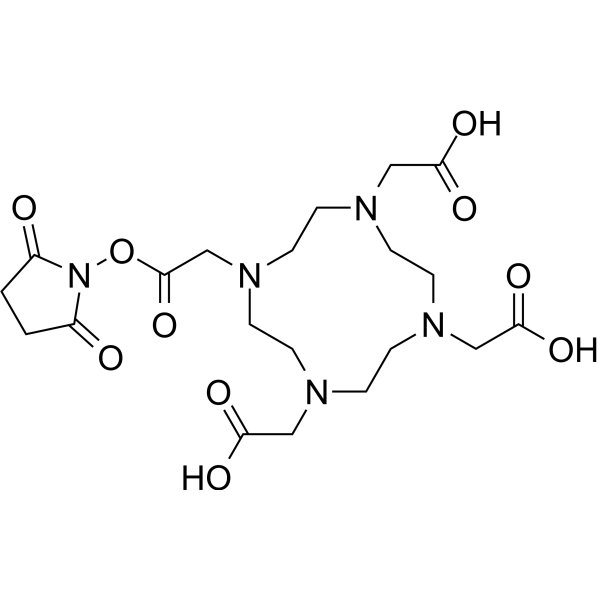
DOTA-NHS-ester is a linker for affibody molecules and is applied in small animals PET, SPECT, and CT. DOTA-NHS-ester can be used to label radiotherapeutic agents or imaging probes for the detection of tumors .
|
-
-
- HY-D1041
-
|
ICG-OSu
|
Fluorescent Dye
|
Cancer
|
|
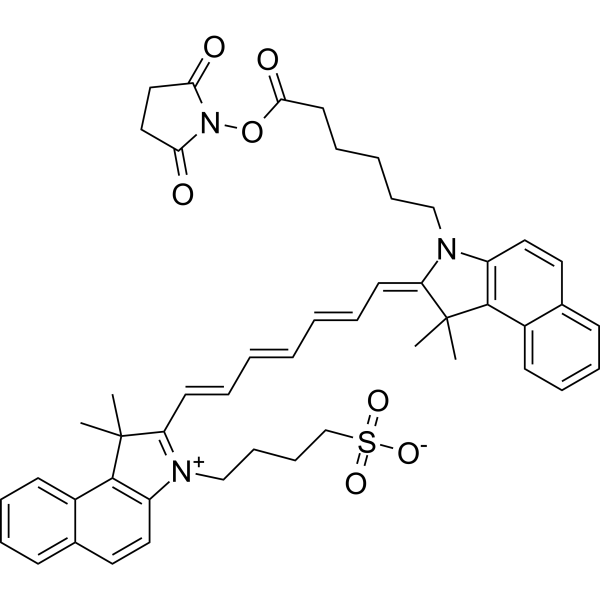
ICG NHS ester (ICG-OSu) is a near-infrared fluorescent agent ICG derivative. ICG NHS ester is amine-reactive and has been widely used to design in vivo imaging probes .
|
-
-
- HY-110210
-
|
BODIPY FL,SE
|
Fluorescent Dye
|
Others
|
|
BODIPY FL NHS ester (BODIPY FL, SE) is a cell membranes-penatrable amine-reactive fluorescent probe. The maximum excitation/emission wavelength of the BODIPY-FL NHS ester are 502/511 nm, respectively. BODIPY-FL NHS ester has high stability and is insensitive to the polarity, pH and type of solvent, and can maintain stable fluorescence properties under different environmental conditions. BODIPY-FL NHS ester can be used for the synthesis of protease substrates, live cell imaging, protein labeling and immunoassay .
|
-
-
- HY-136641
-
|
|
Radionuclide-Drug Conjugates (RDCs)
FAP
|
Cancer
|
|
NOTA-FAPI is a fibroblast activation protein (FAP) inhibitor. NOTA-FAPI can be used as a probe for FAP-targeted tumour imaging. NOTA-FAPI has good tumour detection efficacy and excellent imaging quality .
|
-
-
- HY-D1378
-
|
|
Fluorescent Dye
|
Others
|
|
C-Laurdan is a modified Laurdan (HY-D0080) probe that imaging lipid rafts with environmentally sensitive fluorescence. C-Laurdan can be used in research of lipid arrangement and fluidity in biological membranes or artificial lipid membranes .
|
-
-
- HY-134418
-
|
|
Radionuclide-Drug Conjugates (RDCs)
|
Cardiovascular Disease
Cancer
|
|
NOTA is a bifunctional chelate which acts as the framework to construct PET imaging tools. NOTA also can be used for probe design and signal amplification via the multivalent effect. NOTA can be used in multiple myeloma, breast cancer, lymphoma and myocardial infarction research .
|
-
-
- HY-D1464
-
CH1055
1 Publications Verification
|
Fluorescent Dye
|
Cancer
|
|
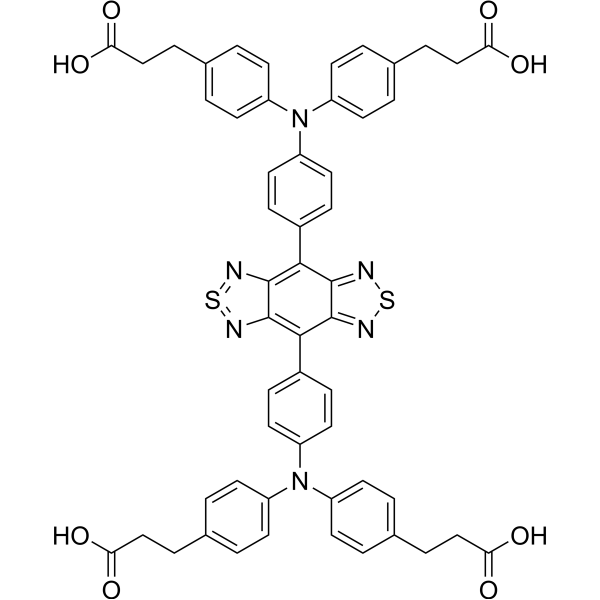
CH1055 is a near-infrared II (NIR-II) fluorescent dye that can be used as a fluorescent probe for in vivo imaging. CH1055 can be conjugated with antibodies or ligands for specific imaging (for example the tumor imaging) .
|
-
-
- HY-D1244
-
|
|
Fluorescent Dye
|
Cardiovascular Disease
Inflammation/Immunology
|
|
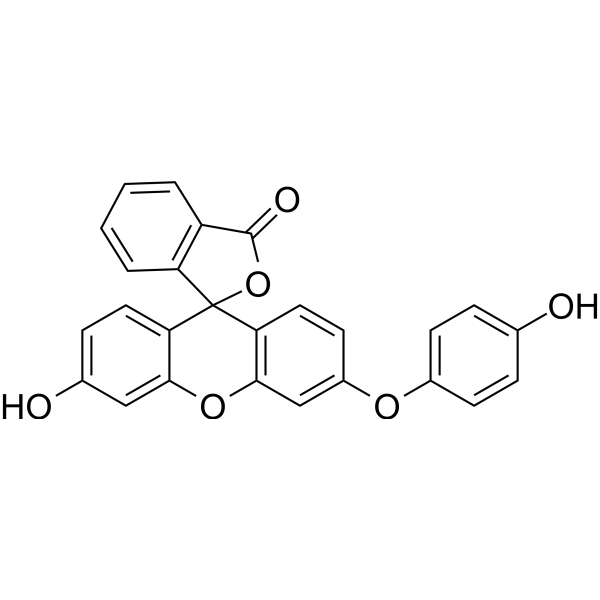
CO probe 1 (probe 2) is a highly efficient fluorescent CO probe (Ex=493 nm) with an allyl ether reaction site. In the presence of PdCl₂, CO reduces Pd 2+ to Pd 0, triggering a Tsuji-Trost reaction that removes the allyl protecting group, releases fluorescein, and generates a significant fluorescence signal. CO probe 1 has high selectivity, rapid response (fluorescence enhancement of 150 times within 20 minutes), and low cytotoxicity, and can be used for real-time imaging of CO in living cells. CO probe 1 may be used to study pathological mechanisms involving CO signaling regulation, such as inflammation, vascular disease, or cancer .
|
-
-
- HY-D0077
-
|
Oregon green 488
|
Fluorescent Dye
|
Others
|
|
2',7'-Difluorofluorescein (Oregon green 488) is a fluorescein derivative and a pH-sensitive fluorescent probe (pKa ~4.7). Upon excitation at 488 nm, 2',7'-Difluorofluorescein exhibits pH-sensitive fluorescence intensity through the formation of dianions, while its pH sensitivity decreases under excitation at 450 nm, allowing its use in ratiometric pH analysis. 2',7'-Difluorofluorescein can be used for the quantitative analysis of pH values in the range of 2-7 in submicron aerosol particles. 2',7'-Difluorofluorescein undergoes buffer-mediated and buffer-free excited-state proton transfer between different protonated forms, and its cationic form undergoes rapid excited-state deprotonation. 2',7'-Difluorofluorescein is resistant to photodegradation, maintains stable absorption and fluorescence properties within the physiological pH range, and serves as a fluorescent protein label, a component of Ca 2+ indicators, a fluorescent imaging agent, and an anisotropy probe .
|
-
-
- HY-115640
-
|
|
TrxR
|
Others
|
|
TRFS-green is a highly selective off−on fluorescent probe for imaging selenoprotein thioredoxin reductase (TrxR) in living cells. TRFS-green has the maximum absorbance at around 373 nm. After it is activated by TrxR, the maximum absorbance shifts to around 440 nm .
|
-
-
- HY-149931
-
|
|
Fluorescent Dye
|
Cancer
|
|
BMV109 is a quenched probe that becomes fluorescent when cleaved and covalently bound by active cathepsin proteases. BMV109 can be exploited for tumor imaging .
|
-
-
- HY-113870
-
|
|
Fluorescent Dye
|
Others
|
|
6-NBDG is a fluorescent glucose analogue, it can be used for fluorescence imaging and monitoring glucose transport and uptake. 6-NBDG can be used as a fluorescent probe for detecting macrophage-rich atherosclerotic plaques .
|
-
-
- HY-D1251
-
|
|
Fluorescent Dye
|
Others
|
|
TRFS-red, a red fluorescence emission off-on probe, is selective for thioredoxin reductase (TrxR). TRFS-red exhibits high response rate and sensitivity. TRFS-red can be used for imaging live cells .
|
-
-
- HY-100335
-
|
|
Fluorescent Dye
Btk
|
Cancer
|
|
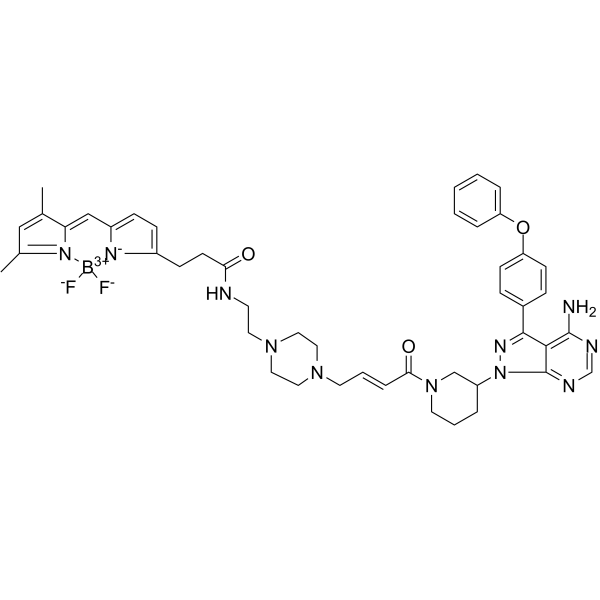
PCI-33380 is a fluorescent probe ( (Ex=532 nm, Em=555 nm). PCI-33380 consists of a (BTK) inhibitor PCI-32765 (HY-10997) attaching with a Bodipy-FL fluorophore via a piperazine linker. PCI-33380 binds predominantly to Btk in B cell lysates with cell permeable activity. PCI-33380 can be used for imaging live cancer cells such as non-Hodgkin lymphoma research
|
-
-
- HY-D1719
-
Cypate
1 Publications Verification
|
Fluorescent Dye
|
Others
|
|
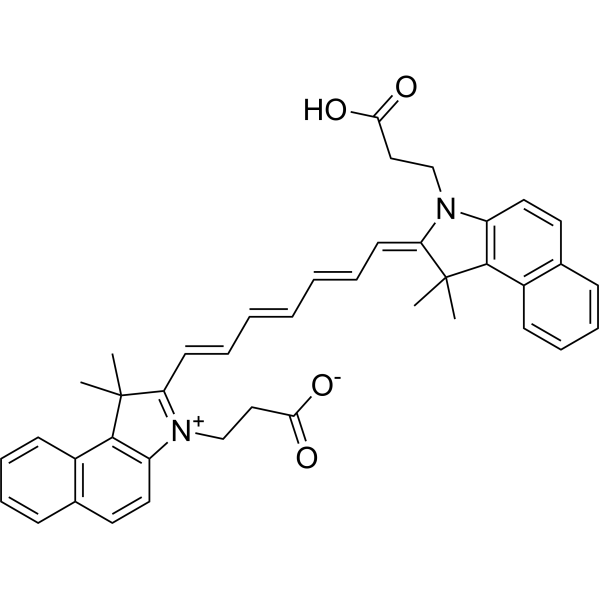
Cypate, a cyanine dye, is a near infrared (NIR) fluorescent probe for in vivo tumor imaging .
|
-
-
- HY-105252A
-
-
-
- HY-P5287
-
|
|
Integrin
|
Cancer
|
|
cRGDfK-thioacetyl ester is a bioactive polypeptide molecule. cRGDfK peptide has a selective affinity for integrins. cRGDfK peptide can modify NIR fluorescent probes for cancer targeting imaging .
|
-
-
- HY-D0029
-
|
5(6)-AFM; Fluoresceinamine mixed isomers
|
Fluorescent Dye
|
Others
|
|
5(6)-Aminofluorescein (5(6)-AFM) is an amino-containing fluorescein dye primarily used for biomolecular labeling, fluorescence imaging, and as a precursor for the synthesis of fluorescent probes (Ex/Em = 495/515 nm).
|
-
-
- HY-D1353
-
|
|
Fluorescent Dye
|
Others
|
|
LipidGreen 2 is a second generation small molecule probe for lipid imaging. LipidGreen 2 has a better fluorescence signal compared with the previous LipidGreen, and selectively stains neutral lipids in cells and fat deposits in live zebrafish .
|
-
-
- HY-D1443
-
|
(trans,trans)-1-Bromo-2,5-bis-(3-hydroxycarbonyl-4-hydroxy)styrylbenzene
|
Amyloid-β
|
Others
|
|
BSB is a Congo red-derived fluorescent probe. BSB binds not only to extracellular amyloid β protein, but also many intracellular lesions composed of abnormal tau and synuclein proteins. BSB acts as a prototype imaging agent for Alzheimer's disease .
|
-
-
- HY-D1252
-
|
|
Fluorescent Dye
|
Others
|
|
Fast-TRFS is a selective and superfast fluorogenic probe of thioredoxin reductase (TrxR). Fast-TRFS can be used for imaging TrxR activity in live cells .
|
-
-
- HY-W008048
-
|
|
Nucleoside Antimetabolite/Analog
|
Others
|
|
2',3'-O-Isopropylideneadenosine is a nucleoside compound and also a Golgi-targeting moiety. 2',3'-O-Isopropylideneadenosine constitutes a furanose ribose group that undergoes cyclization at the O (2') and O (3') atoms. As a component of the fluorescent probe TPE-Ade, 2',3'-O-Isopropylideneadenosine enables specific Golgi localization for fluorescence imaging. 2',3'-O-Isopropylideneadenosine participates in the synthesis of aggregation-induced emission (AIE) fluorescent probes .
|
-
-
- HY-D1250
-
|
|
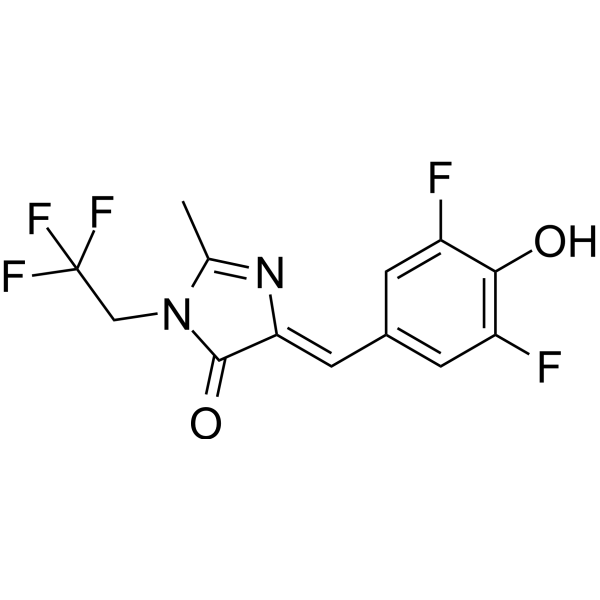
Fluorescent Dye
|
Cancer
|
|
Mito-TRFS, the first off-on probe, is used to image the mitochondrial thioredoxin reductase (TrxR2) in live cells .
|
-
-
- HY-D1719A
-
|
|
Fluorescent Dye
|
Cancer
|
|
Cypate is a near-infrared fluorescent dye that belongs to the family of photosensitizers. Cypate has high photostability and optical properties, and is often used in near-infrared optical imaging, as well as optical imaging, tumor marking, and drug delivery. In addition, Cypate is also used as a molecular probe and combined with targeting molecules (such as CBT or small interfering RNA) to achieve efficient detection and imaging of specific cells or tissues .
|
-
-
- HY-D1707
-
|
|
Fluorescent Dye
|
Others
|
|
FDGlcU can be used as a fluorescent probe for non-invasively image with a high level of fluorescent activity. FDGlcU is non-fluorescent when the fluorescein is conjugated with two mono-glucuronides (Ex/Em=480/514 nm) .
|
-
-
- HY-D2346
-
|
|
Fluorescent Dye
|
Others
|
|
HBmito Crimson is a deep red fluorescent probe (λex: 658 nm, λem: 678 nm) for the inner mitochondrial membrane. HBmito Crimson is a cell membrane-permeable probe with high selectivity for the mitochondrial inner membrane, suitable for specific fluorescence staining of the inner mitochondrial membrane in living cells. HBmito Crimson has high photostability and brightness, suitable for long-term dynamic fluorescence imaging.
|
-
-
- HY-D2443
-
|
|
Fluorescent Dye
|
Cancer
|
|
AF594 DBCO is an AlexaFluor 594-conjugated DBCO click chemistry probe for fluorescent labeling of azido-modified cholesterol probes. DBCO is a commonly used chemical biomarker group. AF594 DBCO (Excitation wavelength about 590 nm, emission wavelength about 617 nm) can be used to label proteins, cells and other biomolecules for fluorescence imaging and flow cytometry detection .
|
-
-
- HY-DY1072
-
|
ICG-OSu (solution)
|
Fluorescent Dye
|
Cancer
|
ICG NHS ester (ICG-OSu) (solution) is a near-infrared fluorescent agent ICG derivative. ICG NHS ester is amine-reactive and has been widely used to design in vivo imaging probes . Solvent and concentration: DMSO: 10 mM
|
-
-
- HY-P11057
-
|
|
Fluorescent Dye
|
Others
|
|
FGGH is a water-soluble peptide-based probe. FGGH performs the sequential detection of Cu 2+ and S 2- by fluorescence and colorimetry with high sensitivity (LOD: 1.42 and 22.2 nM for Cu 2+ and S 2-, respectively) (Ex=488 nm, Em=525 nm), and images both two ions in living cells and zebrafish models with low cytotoxicity. FGGH can be used for in vivo imaging and environmental pollution monitoring research .
|
-
-
- HY-D1255
-
|
|
Fluorescent Dye
|
Cancer
|
|
Sel-green, a selective selenol fluorescent probe, is applied to quantify the Sec content in the selenoenzyme thioredoxin reductase and image endogenous Sec in live HepG2 cells .
|
-
-
- HY-150209
-
-
-
- HY-D2315
-
|
|
Fluorescent Dye
|
Cancer
|
|
Probe-Cys is a water-soluble and selective near-infrared fluorescent probe for Cysteine (Cys) (λex= 680 nm, λem=710 nm) that is not interfered by Hcy, GSH, and HS-. Probe-Cys can react with the stimulant DTT (HY-15917) and the NEM (HY-D0843) in HepG2 cells and zebrafish for the detection of endogenous Cys. Probe-Cys can also be used for imaging Cys in Arabidopsis thaliana. Probe-Cys provides a method for cancer diagnosis and exploration of plant sulfur metabolism .
|
-
-
- HY-119493
-
|
|
Fluorescent Dye
|
Others
|
|
MSBN is a highly selective fluorogenic probe for thiols. MSBN can be used to image thiols in live cells selectively and specifically label protein thiols with a signal to determine various reversible protein thiol modifications .
|
-
-
- HY-D1265
-
|
HClO-green
|
Fluorescent Dye
|
Others
|
|
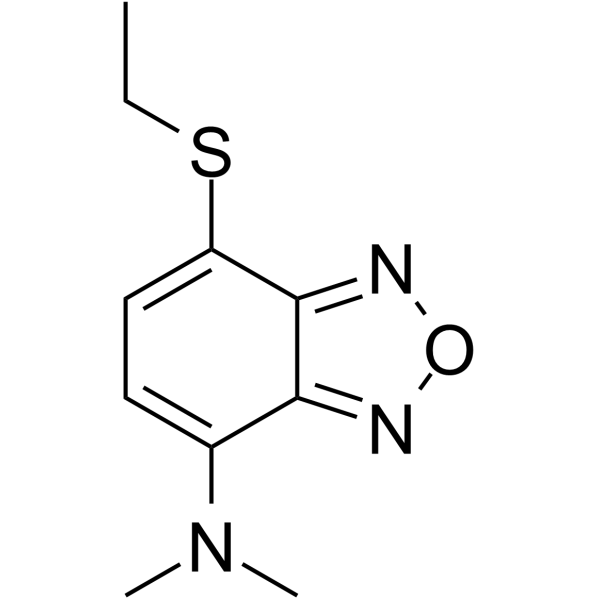
EtS-DMAB (HClO-green) is a fluorescent probe, which can selectively detect hypochlorous acid (HOCl) (λex=440 nm, λem=610 nm). EtS-DMAB is applied to image exogenous and endogenous HOCl in live cells .
|
-
-
- HY-D2344
-
|
3-Benzothiazole-daphnetin
|
Fluorescent Dye
|
Others
|
|
3-BTD (3-Benzothiazole-daphnetin) is a Catechol-O-methyltransferase (COMT) two-photon fluorescence probe. 3-BTD can also be used for biological imaging of endogenous COMT in living cells and tissue sections .
|
-
-
- HY-D1464A
-
|
|
Fluorescent Dye
|
Cancer
|
|
CH1055 triethylamine is a near-infrared II (NIR-II) fluorescent dye that can be used as a fluorescent probe for in vivo imaging. CH1055 triethylamine can be conjugated with antibodies or ligands for specific imaging (for example the tumor imaging) .
|
-
-
- HY-D1622
-
|
Cy3-DBCO hexafluorophosphate
|
Fluorescent Dye
|
Others
|
|
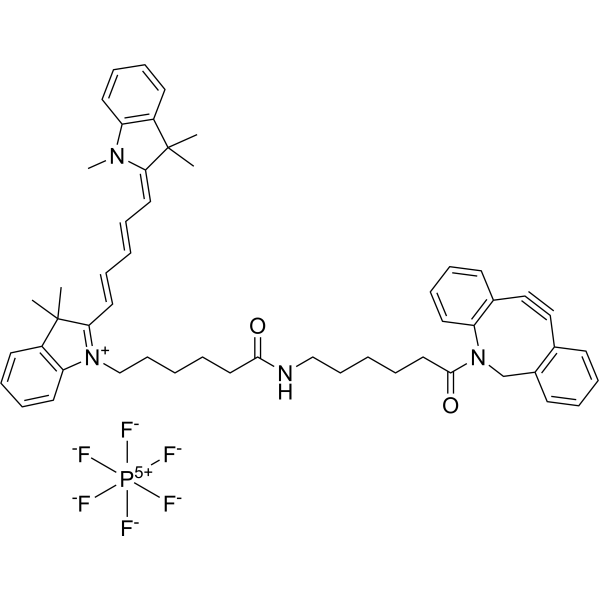
Cyanine3 DBCO (Cy3-DBCO) hexafluorophosphate is a azide reactive probe, for imaging azide-labeled biomolecules via a copper-free "click-through" reaction.
|
-
-
- HY-D2418
-
|
|
Fluorescent Dye
|
Metabolic Disease
|
|
PS-SCOTfluor-12 (compound 10) is a fluorescent probe for imaging Lactic acid (HY-B2227) metabolism in live cells. λex/λem= 485/605 nm .
|
-
-
- HY-130022
-
|
|
Fluorescent Dye
|
Others
|
|
HKPerox-1 is a highly sensitive green fluorescent probe for the specific detection of H2O2 in living cells with a maximum excitation wavelength and emission wavelength of 520 nm and 543 nm, respectively .
|
-
-
- HY-P11339A
-
|
|
Integrin
|
Cancer
|
|
c-RGD-SH TFA is an Integrin αvβ3 ligand. c-RGD-SH TFA conjugated with core-crosslinked polymeric micelles (CCPM) can be used for synthesis a dual modality nanoparticle probe, and this probe labeled with both Cy7 and 111In can be used for SPECT and NIRF imaging of tumor .
|
-
-
- HY-134418R
-
|
|
Radionuclide-Drug Conjugates (RDCs)
Reference Standards
|
Cardiovascular Disease
Cancer
|
|
NOTA (Standard) is the analytical standard of NOTA. This product is intended for research and analytical applications. NOTA is a bifunctional chelate which acts as the framework to construct PET imaging tools. NOTA also can be used for probe design and signal amplification via the multivalent effect. NOTA can be used in multiple myeloma, breast cancer, lymphoma and myocardial infarction research .
|
-
-
- HY-P11263
-
|
|
iGluR
|
Neurological Disease
|
|
AVLX-144 is a highly potent inhibitor of postsynaptic density protein 95 (PSD-95). AVLX-144 can be used as a template to develop imaging probes for postsynaptic density (PSD) molecules, and can be labeled with fluorine-18 (¹⁸F) or tritium (³H) to visualize PSD-95 in vivo. AVLX-144 can be utilized for the study of Parkinson's disease .
|
-
-
- HY-D1412
-
|
|
Ferroptosis
|
Others
|
|
LPd peroxida probe-1, a marker of ferroptosis, is a useful fluorescent probe for investigating the roles of lipid peroxidation in a variety of cell pathophysiologies. LPd peroxida probe-1 reduces lipid hydroperoxides to lipid alcohols and is used for imaging lipid hydroperoxides in living cells .
|
-
-
- HY-D1391
-
|
PbS/CdSe QD
|
Fluorescent Dye
|
Others
|
|
PbS/CdS QDs (PbS/CdSe QD) is a fluorescent probe that can be used for in vivo fluorescence imaging in the second near-infrared window .
|
-
-
- HY-D1637
-
|
|
Fluorescent Dye
|
Others
|
|
5-Nitro BAPTA tetramethyl ester is a calcium chelator. 5-Nitro BAPTA tetramethyl ester involves in the two-photon probe synthesis, and is used for real-time imaging of intracellular calcium ions, calcium waves monitoring at a depth of 100-300 μm in liver tissues for 1100-4000 s. 5-Nitro BAPTA tetramethyl ester, together with fluorescent compound 2-Me-substituted TM, can be used to form a red fluorescent probe (CaTM-2 AM) .
|
-
-
- HY-101182
-
|
|
Microtubule/Tubulin
|
Neurological Disease
|
|
THK-5117, an arylquinoline derivative, displays high binding affinity to tau fibrils with a Ki of 10.5 nM. THK-5117 has high binding affinity to tau protein aggregates and tau-rich Alzheimer disease (AD) brain homogenates. 18F-THK-5117 has the potential to act as a tau imaging PET probe .
|
-
-
- HY-D2971
-
|
|
Fluorescent Dye
Autophagy
|
Neurological Disease
|
|
NCIC-VIS is a lysosome-targeted, viscosity-sensitive two-photon near-infrared fluorescent probe. NCIC-VIS has a rigid structure that can restrict molecular torsion, thereby increasing the fluorescence quantum yield and two-photon absorption cross-section. NCIC-VIS enables real-time imaging of the autophagy process in cells .
|
-
-
- HY-112636
-
|
|
Amyloid-β
|
Others
|
|
Astrophloxine is a fluorescent imaging probe capable of targeting antiparallel dimers. Astrophloxine can be used to detect aggregated Aβ in brain tissue and cerebrospinal fluid samples of Alzheimer's disease (AD) mice .
|
-
-
- HY-D1591
-
|
|
Fluorescent Dye
|
Others
|
|
BODIPY R6G methyl ester (compound 5′-1) is a BODIPY-like fluorescent dye with good light stability and insensitive to pH value. BODIPY R6G methyl ester shows good photostability, high sensitivity and insensitive to pH value. BODIPY R6G methyl ester can be used in research areas such as photodynamic research, PH probes, ion recognition, photocatalysis, protein labeling, cell imaging, and proteomic analysis .
|
-
-
- HY-141646
-
|
|
Fluorescent Dye
|
Others
|
|
MIT-PZR is a mitochondria-targeted,? low cytotoxicity fluorescent probe that can be used in live cells and in vivo imaging. Ex / Em = 485 / 705 nm
|
-
- HY-D2931
-
|
|
Fluorescent Dye
|
Others
|
|
SNAP-FAM is a FAM-labeled SNAP tag fluorescent probe, specifically designed for live-cell protein labeling and real-time imaging applications .
|
-
- HY-172137
-
|
|
FAP
|
Cancer
|
|
FAPI-FUSCC-07 is a targeted probe for fibroblast activation protein (FAP), exhibiting high affinity binding to FAP for applications in molecular imaging, tumor diagnosis, and radiotherapy .
|
-
- HY-163618
-
|
|
Fluorescent Dye
Monoamine Oxidase
|
Cancer
|
|
DHMQ is a NIR fluorescent probe that binds to the propylamino group of monoamine oxidase A (MAO-A). DHMQ tracks MAO-A activity in real-time by using fluorescence imaging on mice and cells .
|
-
- HY-P5287A
-
|
|
Integrin
|
Cancer
|
|
cRGDfK-thioacetyl ester TFA is a bioactive polypeptide molecule. cRGDfK peptide has a selective affinity for integrins. cRGDfK peptide can modify NIR fluorescent probes for cancer targeting imaging .
|
-
- HY-156842
-
|
|
Amyloid-β
|
Neurological Disease
|
|
MCAAD-3 is a near-infrared Aβ imaging probe with blood-brain barrier penetrability. MCAAD-3 has a strong affinity for Aβ polymers (Ki >106 nM) and can label Aβ plaques in the brains of transgenic mice .
|
-
- HY-D2756
-
|
|
Fluorescent Dye
|
Others
|
|
OG 488 alkyne is a bright, green-fluorescent alkyne-activated probe routinely used for imaging of azide-containing biomolecules. OG 488 Alkyne reacts with azides via a copper-catalyzed click reaction (CuAAC) to form a stable triazole linker.
|
-
- HY-136404
-
|
|
Fluorescent Dye
|
Cancer
|
|
Melanin probe-1 is an 18F-picolinamides based PET probe. Melanin probe-1 can be used for PET imaging of malignant melanoma. Melanin probe-1 exhibits high tumor targeting efficiency, excellent tumor imaging contrasts, desirable biodistribution patterns, and good in vivo stability .
|
-
- HY-D2334
-
|
|
Radionuclide-Drug Conjugates (RDCs)
HSP
|
Cancer
|
|
AlF-NOTA-c-d-VAP is a peptide positron emission tomography (PET) probe that used for targeted tumor imaging of GRP78. AlF-NOTA-c-d-VAP demonstrates high stability in vitro and in vivo .
|
-
- HY-164867
-
|
|
Amino Acid Derivatives
|
Others
|
|
Fmoc-L-Dap(NBSD)-OH is a benzodiazole amino acid that can be used as a building block for constructing background-free peptide probes for fluorescence imaging .
|
-
- HY-D2183
-
|
|
Fluorescent Dye
|
Others
|
|
6-Carboxy-JF5252 is a fluorophore. 6-Carboxy-JF5252 can be used as probes, dyes, tags. 6-Carboxy-JF5252 can be used for the research of super-resolution imaging .
|
-
- HY-149765
-
|
|
Fluorescent Dye
|
Others
|
|
Bone-1064 is a EuK-based PSMA tetramer bone probe for high-contrast visualization of bone in surrounding tissue. Bone-1064 specifically binds hydroxyapatite in bone tissue and can be used for NIR-II fluorescence imaging in animal models .
|
-
- HY-151554
-
|
|
Amyloid-β
|
Others
|
|
SQ-3 is a quinoline analogue, displays moderate selectivity for α-syn aggregates (Ki=39.3 nM) over β-amyloid (Aβ) aggregates (Ki=230 nM). [ 18F]SQ3 has basic properties as a lead compound for the development of a useful α-syn imaging probe .
|
-
- HY-D2953
-
|
CLIP-CPY
|
Fluorescent Dye
|
Others
|
|
BC-CPY is a CLIP-tagged probe based on the pyridine-benzoanthrone (CPY) fluorophore (Ex/Em: 580 nm/610 nm). BC-CPY has excellent cell membrane permeability, enabling deep imaging, low phototoxicity and high signal-to-noise ratio. BC-CPY can be used for super-resolution microscopy imaging of living cells .
|
-
- HY-101181
-
|
|
Microtubule/Tubulin
|
Neurological Disease
|
|
THK-5105, an arylquinoline derivative, displays high binding affinity to tau fibrils. THK-5105 has high binding affinity to tau protein aggregates and tau-rich Alzheimer disease (AD) brain homogenates. 18F-THK-5105 has the potential to act as a tau imaging PET probe .
|
-
- HY-D2954
-
|
CLIP-PEG-NH2
|
Drug Intermediate
|
Others
|
|
BC-PEG-NH2 (CLIP-PEG-NH2) is a chemical building block specifically designed for the CLIP-tag system, featuring enhanced water solubility and reactivity. BC-PEG-NH2 can be used for the synthesis of super-resolution imaging probes .
|
-
- HY-D2254
-
|
|
Fluorescent Dye
|
Others
|
|
CTB probe-1 (probe 1) a lysosome-targeting fluorogenic small-molecule probe for fluorescence imaging in living cells .
|
-
- HY-139685
-
|
|
Cathepsin
|
Others
|
|
ABP 25 is an activity-based probe for cathepsin K imaging with excellent potency and selectivity.
|
-
- HY-145882
-
|
|
Fluorescent Dye
|
Others
|
|
BOD-NH-NP is an activatable fluorescent probe for imaging endogenous nitric oxide via the eNOS enzymatic pathway .
|
-
- HY-P991650
-
|
|
PSMA
|
Cancer
|
|
MDX1201 is a humanized monoclonal antibody targeting PSMA1/7. MDX1201 conjugated with a fluorescent dye AlexaTM488 can be used as a probe for near-infrared fluorescence imaging (NIRF) imaging of prostate cancer .
|
-
- HY-D2310
-
|
|
CXCR
|
Inflammation/Immunology
|
|
CXCR2 Probe 1 (Compound [18F]16b) is a selective ligand for CXCR2 and is a radiotracer for PET imaging of neutrophils in inflammatory diseases .
|
-
- HY-162051
-
|
|
Cytochrome P450
|
Cancer
|
|
CYP1B1-IN-6 (compound 19) is a fluorescence molecular probes which inhibits CYP1B1 activity. CYP1B1-IN-6 can identify tumor sites in fluorescence imaging and photoacoustic imaging modes .
|
-
- HY-149835
-
|
|
Fluorescent Dye
|
Others
|
|
TTX-P is a fluorescent probe. TTX-P responds in situ to the overexpressed alkaline phosphatase (ALP) in liver, imaging of diabetic liver injury in the near-infrared second-window (NIR-II) region .
|
-
- HY-152102
-
|
|
Fluorescent Dye
|
Cancer
|
|
BTCy is a near-infrared (NIR) fluorescence probe with polarity-responsive and cell plasma membrane-targeting properties. BTCy can be used for in vivo imaging of tumor tissue (λex = 561 nm, λem = 600-700 nm) .
|
-
- HY-W800692
-
|
|
Fluorescent Dye
|
Others
|
|
BP Fluor 350 Azide is a blue-fluorescent, azide-activated probe that reacts with terminal alkynes via a copper-catalyzed click reaction (CuAAC). It also reacts with strained cyclooctyne via a copper-free click chemistry reaction to form a stable triazole and does not require Cu-catalyst or elevated temperatures.
BP Fluor 350 is a water-soluble, moderately photostable, blue-fluorescent probe optimally excited by the 350 nm laser line. It is routinely used for generation of stable signal in imaging and flow cytometry. The brightness and photostability of blue dyes are best suited to direct imaging of high-abundance targets.
|
-
- HY-W724743
-
|
|
Biochemical Assay Reagents
|
Cardiovascular Disease
|
|
Losartan azide is a click chemistry reagent containing an azide group and is a synthetic intermediate for the preparation of angiotensin AT1R-targeted renal PET imaging probe [18 F]fluoropyridine-losartan .
|
-
- HY-W800698
-
|
|
Fluorescent Dye
|
Others
|
|
BP Fluor 430 Alkyne is a green-fluorescent alkyne-activated probe routinely used for imaging of moderate to high abundance azide-containing biomolecules. BP Fluor 430 Alkyne reacts with azides via a copper-catalyzed click reaction (CuAAC) to form a stable triazole linker.
BP Fluor 430 is a bright, photostable, green-fluorescent probe optimally excited near 430 nm. This probe is water-soluble and its fluorescence is pH independent over a wide pH range.
|
-
- HY-D2325
-
|
|
Fluorescent Dye
|
Others
|
|
Arg-Flipper 34 is one of the flipper probes which have been introduced as small molecule fluorophores to image membrane tension in living systems. Arg-Flipper 34 can be used to assess the mechanics of early endocytosis .
|
-
- HY-D2266
-
|
|
Fluorescent Dye
|
Neurological Disease
|
|
FluoBar1 is an imaging fluorescence probe modified by a barbiturate ligand with fluorescent coumarin. FluoBar1 can monitor L-type voltage-gated calcium channels (LTCC) in living cells in real time for the study of neurological diseases .
|
-
- HY-172534
-
|
|
Fluorescent Dye
EGFR
TSPO
|
Cancer
|
|
BPN-01 is a fluorescent probe targeting translocator protein (TSPO) and human epidermal growth factor receptor 2 (HER2) with binding affinities of -10.7 kcal/mol for TSPO and -11.3 kcal/mol for HER2. BPN-01 is promising for research of solid tumor imaging during fluorescence image-guided surgery (FIGS) (Ex/Em = 475/510 nm) .
|
-
- HY-D2962
-
|
|
Fluorescent Dye
|
Neurological Disease
|
CAQ is a near-infrared fluorescent probe based on a curcumin scaffold (Ex/Em = 565/635). CAQ exhibits high affinity for Aβ1-42 aggregates (Kd = 78.89 nM) and excellent selectivity toward common biomolecules. CAQ’s emission wavelength shows significant solvent dependence. CAQ, by incorporating intramolecular rotation donors and quinoline functional groups, can be used for the specific detection and imaging of Aβ aggregates in Alzheimer's disease .
|
-
- HY-D2924
-
|
|
Fluorescent Dye
|
Others
|
|
CBG-549-QSY7 is a Dylight 549-labeled SNAP tag fluorescent probe (Ex/Em: 546 nm/580 nm), specially designed for non-washable fluorescence imaging applications. CBG-549-QSY7 employs an intramolecular FRET quenching mechanism: intramolecular fluorescence quenching occurs before binding to the SNAP tag, and upon binding, the quenching group is cleaved, releasing fluorescence. The background fluorescence of CBG-549-QSY7 is extremely low, and clear cell membrane images can be obtained after 5 minutes of incubation .
|
-
- HY-D3152
-
|
|
Fluorescent Dye
|
Others
|
|
NRh-Cu is a highly sensitive near-infrared fluorescence turn-on indicator and Cu 2+-selective probe (λex=680 nm, λem=740 nm). When NRh-Cu interacts with Cu 2+, it undergoes a structural transition from a non-fluorescent spirocyclic state to a fluorescent ring-opened state, which drives the enhancement of fluorescence emission. NRh-Cu can be used for Cu 2+ imaging in live cells and in vivo .
|
-
- HY-100335R
-
|
|
Fluorescent Dye
Reference Standards
Btk
|
Cancer
|
|
PCI-33380 (Standard) is the analytical standard of PCI-33380 (HY-100335). This product is intended for research and analytical applications. PCI-33380 is a fluorescent probe ( (Ex=532 nm, Em=555 nm). PCI-33380 consists of a (BTK) inhibitor PCI-32765 (HY-10997) attaching with a Bodipy-FL fluorophore via a piperazine linker. PCI-33380 binds predominantly to Btk in B cell lysates with cell permeable activity. PCI-33380 can be used for imaging live cancer cells such as non-Hodgkin lymphoma research
|
-
- HY-D2982
-
|
|
Fluorescent Dye
|
Infection
|
|
BTP9-Neu5Ac is a fluorescent imaging probe specifically designed for detecting the neuraminidase (NA) sialidase activity of influenza viruses. BTP9-Neu5Ac can visualize the intracellular Golgi localization of the viral NA activity. BTP9-Neu5Ac can be used for precise and temporal monitoring of the key enzyme activities during the viral life cycle .
|
-
- HY-D2970
-
|
|
Fluorescent Dye
|
Neurological Disease
|
|
Golgi-P is a near-infrared Golgi-targeted fluorescent probe specifically used for the detection of Golgi polarity in living cells and living tissues. Golgi-P exhibits a significant polarity-dependent spectral behavior, with its emission wavelength shifting redward with polarity (Ex/Em: 700 nm/780-825 nm). Golgi-P achieves near-infrared fluorescence imaging directly in the brain tissue of depressed mice. Golgi-P combines polarity sensing with Golgi-targeting functionality, providing a new tool for the molecular diagnosis of depression .
|
-
- HY-D3157
-
|
|
Fluorescent Dye
|
Others
|
|
Photoactive esterase probe is a photoactivatable fluorescent probe for esterase. Photoactive esterase probe is used for the detection and imaging of esterase activity in living cells .
|
-
- HY-D3064
-
|
|
Biochemical Assay Reagents
|
Others
|
|
510 Calibration probe is a chemiluminescent group that can be used as a probe for in vivo imaging studies, with an emission maximum around 520 nm .
|
-
- HY-D3447
-
|
|
Fluorescent Dye
Ferroptosis
|
Others
|
|
LPd peroxida probe-2 (Compound I-1) is a lipid peroxidation fluorescent indicator (Ex = 488 nm, Em = 535 nm). LPd peroxida probe-2 undergoes fluorescence spectral changes in response to lipid hydroperoxides and can be used for Ferroptosis detection and cell imaging.
|
-
- HY-17672
-
|
|
Drug Derivative
|
Cancer
|
|
Jasplakinolide probe-1 (Compound 12), a Jasplakinolide (HY-P0027) derivative, is a Jasplakinolide probe. Jasplakinolide probe-1 shows anti-proliferative activity and can inhibit the dynamics of actin, cause the collapse of cell lamellipodia, interfering with the dynamic balance of actin. Jasplakinolide probe-1 can be used for imaging of actin structure in cells conjugated with a fluorescent dye .
|
-
- HY-D3004
-
|
|
Fluorescent Dye
|
Others
|
|
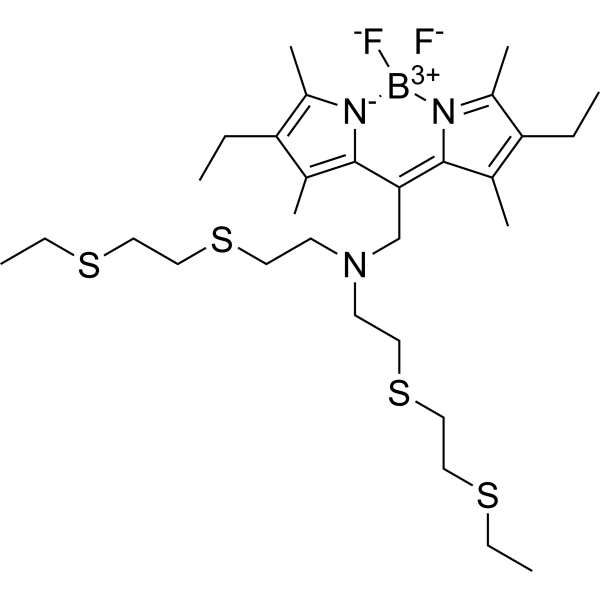
GSH Tracker Probe (CPDSA) is a cyanine-based fluorescent probe with a NIR emission that is specific for GSH (excitation: 635 nm; emission: 655-755 nm). CPDSA can monitor and image GSH levels in live cells and in vivo .
|
-
- HY-D3266
-
|
|
Fluorescent Dye
|
Cancer
|
|
IR 650 DBCO is a far-red-fluorescent probe, pH-insensitive, azide-reactive probe routinely used for imaging of azide-containing biomolecules without the need for a copper catalyst. (Ex=651nm, Em=668 nm)
|
-
- HY-D3267
-
|
|
Fluorescent Dye
|
Others
|
|
ACu1 is a copper (I)-selective two-photon fluorescent probe that enables the visual imaging of Cu + distribution in living cells and tissues .
|
-
- HY-175163
-
|
|
Photosensitizer
|
Cancer
|
|
TPAPyN is a nitroreductase(NTR)-responsive type I photosensitizer. TPAPyN facilitates the imaging of hypoxic cancer cells and image-guided photodynamic therapy (PDT). TPAPyN does not emit fluorescence in the aqueous environment, but restores when NTR cleaves the nitrofuran quencher with aggregation-induced emission. TPAPyN can be used as a fluorescent probe for specific imaging of hypoxic cancer .
|
-
- HY-D2976
-
|
|
Fluorescent Dye
|
Cardiovascular Disease
|
|
CN-N2 is a visible light fluorescent probe. CN-N2 has high selectivity, rapid penetration, good biocompatibility, and imaging effects. CN-N2 is suitable for intraoperative rapid imaging of atherosclerotic plaque .
|
-
- HY-D3214
-
|
|
Fluorescent Dye
|
Others
|
|
NIR-Cu (Ⅱ) is a near-infrared fluorescent Cu 2+ probe. NIR-Cu (Ⅱ) enables fluorescence imaging of Cu 2+ in living mice. NIR-Cu (Ⅱ) reduces self-absorption and exhibits minimal photobleaching, thus supporting in vivo imaging applications .
|
-
- HY-183740
-
|
N-Acryloylindole-alkyne
|
Biochemical Assay Reagents
|
Others
|
|
NAIA (N-Acryloylindole-alkyne) is a cysteine-reactive probe. NAIA can be used as an imaging agent, proteome profiling agent, and covalent ligand screening tool .
|
-
- HY-161476
-
|
|
Fluorescent Dye
|
Cancer
|
|
Ir-ImNO is a mitochondria-targeted two-photon probe with excellent cell membrane permeability, capable of detecting both endogenous and exogenous cell membrane permeability. Ir-ImNO can monitor different immune response states of macrophages through various imaging techniques, including one-photon and two-photon phosphorescence imaging as well as phosphorescence lifetime imaging. Ir-ImNO can be utilized in the research to assist in the clinical monitoring of immunotherapy .
|
-
- HY-179330
-
|
|
Fluorescent Dye
|
Cancer
|
|
PSMA-1092 is a fluorescence probe targeting prostate-specific membrane antigen (PSMA) with a Ki of 80 pM. PSMA-1092 can be used for tumor localization and imaging, such as prostate cancer .
|
-
- HY-D3141
-
|
|
|
Cancer
|
|
DR probe is a "dual-key-and-lock" fluorescent probe designed based on the Resorufin (HY-123533) scaffold (Ex/Em = 647 nm/663-738 nm). DR probe can be sequentially activated by hydrogen peroxide to form the intermediate SR, which acts as a tyrosinase substrate to trigger a fluorescence turn-on signal. DR probe can distinguish normal melanocytes from melanoma cells. DR probe supports cell imaging and can be applied to mouse melanoma models to achieve melanoma diagnosis with higher accuracy and lower false-positive rates. DR probe is applicable to relevant research on melanoma .
|
-
- HY-D3240
-
|
|
Fluorescent Dye
|
Others
|
|
Photoactive NTR probe (Compound 1) is a covalent crosslinker and Fluorescent indicator targeting Nitroreductase. The Photoactive NTR probe undergoes a sequential activation process: it is first activated via nitroreductase-mediated nitro-to-amino conversion, and then forms a fluorescent product upon photoactivation. The Photoactive NTR probe can form covalent adducts with the side chains of cysteine, tyrosine, lysine and histidine in adjacent proteins to reduce fluorophore diffusion. The Photoactive NTR probe enables super-resolution (STORM) imaging of active mitochondrial nitroreductase microdomains in living cells .
|
-
- HY-P10152
-
|
|
Biochemical Assay Reagents
|
Infection
|
|
INF7 is a derivative of the N-terminal domain of the HA2 protein and is sensitive to pH. INF7 disrupts the stability of endosomal membranes through a mechanism independent of membrane fusion. INF7 can be used to enhance the endosome escape of complex or liposome-encapsulated proteins. Co-encapsulation of INF7 and molecular imaging probes in liposomes can enhance intracellular signaling and probe retention .
|
-
- HY-163386
-
|
|
Biochemical Assay Reagents
|
Others
|
|
HFTC-HClO 1 is a stable and sensitive ratiometric probe, which images the endogenous HClO. HFTC-HClO 1 exhibits a main emission peak at 579 nm. HFTC-HClO-1 visualizes HClO generated in the rheumatoid arthritis mouse model .
|
-
- HY-110251A
-
|
|
DNA Stain
|
Others
|
|
DFHBI-2T is a membrane-permeable RNA aptamers-activated fluorescence probe (ex/em=500 nm/523 nm). DFHBI-2T is used to image RNA in live cells .
|
-
- HY-105252AR
-
|
|
Reference Standards
Amyloid-β
|
Neurological Disease
|
|
BF 227 (Standard) is the analytical standard of BF 227 (HY-105252A). This product is intended for research and analytical applications. BF 227 is a candidate for an amyloid imaging probe for PET, with a Ki of 4.3 nM for Aβ1-42 fibrils.
|
-
- HY-D1254
-
|
NBL-SS perchlorate
|
Fluorescent Dye
|
Others
|
|
Trx-red (NBL-SS perchlorate) is a red-emitting fluorescent probe derivatized from the nile blue fluorophore. Trx-red is used for selectively imaging thioredoxin (Trx) in live cells and in vivo (λex=615 nm, λem=661 nm) .
|
-
- HY-D1264
-
|
Zn-green
|
Fluorescent Dye
|
Others
|
|
PMQA (Zn-green), an 8-aminoquinoline-based ratiometric fluorescent sensor, demonstrates the Zn 2+-induced redshift of emission (85 nm). PMQA (Zn-green) is a cell membrane-permeable probe and suitable for imaging Zn 2+ in living cells .
|
-
- HY-D2320
-
|
|
Fluorescent Dye
|
Others
|
|
ER Flipper-TR 28 is a flipper probe with a small molecule fluorophore that can image membrane tension in the endoplasmic reticulum (ER). ER Flipper-TR 28 bears a pentafluorophenyl group and also reacts with protein thiolate on the ER surface facing the cytoplasm .
|
-
- HY-W800704
-
|
|
Fluorescent Dye
|
Others
|
|
BP Fluor 594 alkyne is a bright, red-fluorescent alkyne-activated probe routinely used for imaging of azide-containing biomolecules. BP Fluor 594 alkyne reacts with azides via a copper-catalyzed click reaction (CuAAC) to form a stable triazole linker.
|
-
- HY-145746
-
|
|
Fluorescent Dye
PD-1/PD-L1
|
Inflammation/Immunology
Cancer
|
|
Sulfo-Cy5 azide is a near-infrared fluorescent probe with favorable click chemistry reactivity. Sulfo-Cy5 azide enables fluorescence imaging, tissue and cellular visualization of PD-L1 in tumors, and site-specific modification of anti-PD-L1 antibodies. Sulfo-Cy5 azide has been employed for RNA labeling and imaging. Sulfo-Cy5 azide can be conjugated to targeting agents for fluorescence imaging in atherosclerosis and breast cancer models (Ex/Em = 645/670 nm) .
|
-
- HY-P10679
-
|
|
MMP
|
Cancer
|
|
GPLGLAGGWGERDGS is a peptide with MMP enzyme responsiveness and tumor targeting function, which can be used to monitor enzyme-guided nanoparticle assembly in tumors .
|
-
- HY-168571
-
-
- HY-DY1074
-
|
|
Fluorescent Dye
|
Others
|
ER-Tracker dye is a derivative of BODIPY series dyes coupled with Glibenclamide (HY-15206) , highly selective binding to the endoplasmic reticulum, non-toxic to cells at low concentrations, this type of dye is an environmentally sensitive probe, and formaldehyde treatment can still retain part of the fluorescence, with high fluorescence life, good extinction coefficient and other characteristics. Glibenclamide is an atp-dependent K + channel blocker (Kir6, KATP) and CFTR Cl-channel blocker that binds in the endoplasmic reticulum. ER-Tracker is not suitable for staining fixed cells. Staining followed by fixation is possible, but cells fixed with aldehydes will only retain partial fluorescence . Solvent and concentration: DMSO: 1 mM
|
-
- HY-149170
-
|
|
5-HT Receptor
Monoamine Transporter
|
Neurological Disease
|
|
FFN246 is a fluorescent, dual substrate of serotonin transporter (SERT) probe and vesicular monoamine transporter 2 (VMAT2) with excitation and emission spectra 392/427 nm. FFN246 can be used for labeling serotonergic neurons in mouse brain tissue through SERT-dependent accumulation .
|
-
- HY-D1429
-
|
|
Fluorescent Dye
|
Others
|
|
ER-Tracker dye is a derivative of BODIPY series dyes coupled with Glibenclamide (HY-15206), highly selective binding to the endoplasmic reticulum, non-toxic to cells at low concentrations, this type of dye is an environmentally sensitive probe, and formaldehyde treatment can still retain part of the fluorescence, with high fluorescence life, good extinction coefficient and other characteristics. Glibenclamide is an atp-dependent K + channel blocker (Kir6, KATP) and CFTR Cl-channel blocker that binds in the endoplasmic reticulum. ER-Tracker is not suitable for staining fixed cells. Staining followed by fixation is possible, but cells fixed with aldehydes will only retain partial fluorescence (Ex/Em = 374/ 430-640 nm) .
|
-
- HY-D3000
-
|
|
Fluorescent Dye
|
Metabolic Disease
|
|
NIR-RED ROS-H2O2 Probe is a near-infrared fluorescent probe used for detecting hydrogen peroxide (H₂O₂) and featuring dual-modal fluorescence/photoacoustic imaging capabilities. NIR-RED ROS-H2O2 Probe successfully detects the upregulated fluorescence signal of H₂O₂ in HepG2 cells and a mouse liver injury model. NIR-RED ROS-H2O2 Probe can be used as a biomarker detection tool for drug-induced liver injury (DILI) .
|
-
- HY-D3221
-
|
|
Fluorescent Dye
Monoamine Oxidase
Amyloid-β
|
Neurological Disease
|
|
MAO Probe 1 is a reactive two-photon fluorescent probe capable of crossing the blood-brain barrier, which is used to detect the activity of monoamine oxidases (MAO-A/MAO-B), with Km values of 70 μM (MAO-A) and 75 μM (MAO-B), respectively. IBC 2 (benzo[g]imino-coumarin 2), the enzymatic product of MAO Probe 1, can further specifically bind to and image Aβ plaques, enabling in vivo two-photon co-monitoring of MAO activity and Aβ plaques. MAO Probe 1 can be used in Alzheimer's disease research (IBC 2: Ex/Em = 850 nm/570-620 nm) .
|
-
- HY-149836A
-
|
|
Fluorescent Dye
|
Others
|
|
3-MeOARh-NTR chloride is an activatable imaging probe with high selectivity, and good stability. 3-MeOARh-NTR chloride possesses high selectivity and high signal-to-noise ratio for nitroreductase (NTR) detection, and serves as an efficient molecular tool for endogenous NTR detection .
|
-
- HY-D2991
-
|
|
Bacterial
Fluorescent Dye
|
Infection
|
|
CDG-DNB3 is a selective fluorescent probe for Mycobacterium tuberculosis. CDG-DNB3 provides rapid and specific labeling of live Mycobacterium tuberculosis. CDG-DNB3 can image Bacillus Calmette-Guérin phagocytosis in real time .
|
-
- HY-149836
-
|
|
Fluorescent Dye
|
Others
|
|
3-MeOARh-NTR is an activatable imaging probe with high selectivity, and good stability. 3-MeOARh-NTR possesses high selectivity and high signal-to-noise ratio for nitroreductase (NTR) detection, and serves as an efficient molecular tool for endogenous NTR detection .
|
-
- HY-119287
-
TSQ
5 Publications Verification
|
Fluorescent Dye
|
Others
|
|
TSQ is a cytosolic zinc ion fluorescence probe that is membrane permeable and can be used for intracellular imaging of zinc proteins (λmax ~470 nm). TSQ can combine with Zn 2+ in the presence of Ca 2+ and Mg 2+ to produce blue fluorescence (Ex/Em = 334/495 nm) .
|
-
- HY-D3225
-
|
|
Fluorescent Dye
|
Neurological Disease
|
|
MD-B is a •OH Fluorescent probe with blood-brain barrier permeability. MD-B undergoes single-electron oxidation by hydroxyl radicals (•OH), which triggers fluorescence enhancement and enables in-situ imaging of •OH. MD-B allows imaging analysis of hydroxyl radicals (•OH) in the mouse brain, revealing a positive correlation between elevated •OH levels and the severity of depressive phenotypes. MD-B can be used in depression-related research .
|
-
- HY-P10943
-
|
|
Fluorescent Dye
|
Inflammation/Immunology
Cancer
|
|
APO-15 is a phosphatidylserine-binding fluorescent probe and apoptosis imaging reagent. APO-15 exhibits high chemical stability under proteolytic and oxidative conditions, enables quantification and imaging of drug-induced apoptosis in preclinical mouse models, and is applicable to fixed tissue samples and multiple in vivo administration routes (Ex = 488 nm; Em = 525 nm). APO-15 can be used in studies related to acute lung injury and breast cancer .
|
-
- HY-128890B
-
|
|
ADC Linker
Biochemical Assay Reagents
|
Cancer
|
|
DOTA-NHS-ester (TFA) is used as a linker for affibody molecules, and it can be employed in small animal positron emission tomography (PET), single photon emission computed tomography (SPECT), and CT scanning. DOTA-NHS-ester can be used to label radiotracers or imaging probes for tumor detection .
|
-
- HY-D0154
-
|
Tetramethylrhodamine-6-isothiocyanate
|
Fluorescent Dye
|
Others
|
|
6-TRITC (Tetramethylrhodamine-6-isothiocyanate) is a potent fluorescent tracer. 6-TRITC can be used as an probe for haptenated proteins/peptides for the research of contact allergy. 6-TRITC can be used as a tracer for the confocal imaging in living cells .
|
-
- HY-P11785
-
|
|
Claudin
|
Cancer
|
|
Cpe30 MT2 is a short peptide that binds tightly junction protein Claudin‑4 (CLDN4) with high affinity, with a Kd value of 1.97 nM. Cpe30 MT2 can be used for the synthesis of PET molecular imaging probes targeting pancreatic cancer .
|
-
- HY-163574
-
|
|
hnRNP
|
Neurological Disease
|
|
TDP-43 ligand-1 is a specific ligand for TDP43, and its Ki value for binding to TDP-43 protein aggregates is 78 nM. TDP-43 ligand-1 can be used in the research of PET imaging probes for TDP-43 proteinopathies.
|
-
- HY-D1876
-
|
|
Fluorescent Dye
|
Cancer
|
|
ZY-2 is a specific fluorescent probe for pyruvate kinase M2 (PKM2). ZY-2 can image in PKM2-positive cells in a time- and concentration-dependent manner. ZY-2 can be used for the detection of cancer cells .
|
-
- HY-D1260
-
|
PSH-red
|
Fluorescent Dye
|
Neurological Disease
|
|
FM-red (PSH-red) is a red-emitting and environment-sensitive probe for selectively detecting and labeling protein thiols. FM-red can be used to image protein sulfhydryl groups in live cells and in vivo. FM-red also could be used to measure of the redox states of thioredoxin (Trx) .
|
-
- HY-155486
-
|
|
Fluorescent Dye
|
Cancer
|
|
HCy-AAN-Bio is a tumor-targeted hemicyanine (HCy) probe for Fluorescent/photoacoustic (FL/PA) imaging of legumain in vivo. Legumain can specifically cleave HCy-AAN-Bio with the generation of FL/PA signal. HCy-AAN-Bio is a powerful tool for early diagnosis of associated cancer .
|
-
- HY-P10744
-
|
|
Radionuclide-Drug Conjugates (RDCs)
PSMA
|
Cancer
|
|
BQ7859 is a probe targeting PSMA that contains a NOTA chelator and demonstrates excellent imaging performance. BQ7859 can be labeled with various radionuclides, such as 68Ga, 18F, 55Co, and 111In. In a mouse prostate cancer xenograft model, BQ7859 (labeled with 111In) efficiently accumulates in tumor regions in a PSMA-dependent manner and provides high-contrast tumor imaging. BQ7859 shows potential for research in prostate cancer imaging, particularly in positron emission tomography (PET) and single-photon emission computed tomography (SPECT) . BQ7859 can be used for the synthesis/research of Radionuclide-Drug Conjugates (RDCs).
|
-
- HY-125385
-
|
|
Endogenous Metabolite
|
Metabolic Disease
|
|
Sulforhodamine 101 DHPE is a fluorescent probe made from the conjugation of the phospholipid 1,2-dipalmitoyl-sn-glycero-3-PE to sulforhodamine 101, a red fluorescent dye that displays excitation/emission spectra of 586/605 nm, respectively. It integrates into phospholipid bilayers and has been used for imaging of solid supported lipid bilayers, detection of protein-ligand binding on bilayers, and to monitor colocalization of lipid probes in liposomes via resonance energy transfer (RET).
|
-
- HY-D2755
-
|
|
Fluorescent Dye
|
Others
|
|
BP Light 650 carboxylic acid is an vibrant far-red fluorochrome with comparable or improved performance over other dyes, including BP Fluor 647 and Cy5 dye, for fluorescent applications. It is used to label antibodies and other proteins as molecular probes for cellular imaging and other fluorescence detection methods application.
|
-
- HY-D1883B
-
|
|
Fluorescent Dye
|
Others
|
|
Cy7.5-COOH bromide, a cyanine dye, is a highly fluorescent compound (Abs/Em = 781/808 nm). Cy7.5-COOH bromide can be used as a fluorescent probe in a wide-range of applications such as DNA sequencing, flow cytometry and in vivo imaging .
|
-
- HY-D2988
-
|
|
Fluorescent Dye
Bacterial
|
Infection
|
|
BIN-3 is a novel near-infrared fluorescent probe. BIN-3 has excellent biocompatibility, no cytotoxicity, and no hemolysis. BIN-3 can be used for highly sensitive and selective imaging of drug-resistant bacterial infections expressing β-lactam enzymes in live mice .
|
-
- HY-D3416
-
|
TAMRA-2,4-dinitroaniline
|
Fluorescent Dye
|
Others
|
|
TMR-DN (TAMRA-2,4-dinitroaniline) is a bright orange fluorescent probe that binds to the SRB-2 aptamer, with a Kd value of 35 nM for the SRB-2 aptamer. TMR-DN exhibits low background fluorescence, enabling wash-free live-cell RNA imaging .
|
-
- HY-D3430
-
|
|
Fluorescent Dye
Amyloid-β
|
Neurological Disease
|
|
PTPA-QM is a low-cytotoxicity Aβ protein probe that can be used for live-cell imaging and tissue section staining (Lys. Ex/Em = 385/615 nm). PTPA-QM can intercalate into the β-sheet layered structure of β-amyloid fibrils, form intermolecular interactions with amino acid residues, restrict intramolecular rotation and trigger fluorescence activation for imaging purposes. PTPA-QM is applicable to Alzheimer's disease-related research. Maximum excitation/emission wavelength: 448/605 nm .
|
-
- HY-149618
-
|
|
Fluorescent Dye
|
Others
|
|
Cy5-PEG3-endo-BCN is a derivative of the Cyanine 5 (Cy5) (HY-D0821) dye bearing 3 PEG units. Cy5-PEG3-endo-BCN contains the lyophilic bidentate macrocyclic ligand endo-BCN, which allows for further synthesis of macrocyclic complexes. In click chemistry, endo-BCN forms stable triazoles with azide-containing molecules under catalyst-free conditions .
|
-
- HY-DY1055
-
|
|
Fluorescent Dye
|
Others
|
TSQ (solution) is a cytosolic zinc ion fluorescence probe that is membrane permeable and can be used for intracellular imaging of zinc proteins (λmax ~470 nm). TSQ can combine with Zn 2+ in the presence of Ca 2+ and Mg 2+ to produce blue fluorescence (Ex/Em = 334/495 nm) . Solvent and concentration: DMSO: 10 mM
|
-
- HY-D1883
-
|
|
Fluorescent Dye
|
Others
|
|
Cy7.5-COOH (compound 8f), a cyanine dye, is a highly fluorescent compound (Abs/Em = 781/808 nm). Cy7.5-COOH can be used as a fluorescent probe in a wide-range of applications such as DNA sequencing, flow cytometry and in vivo imaging .
|
-
- HY-130015
-
|
|
Reactive Oxygen Species (ROS)
|
Others
|
|
HKSOX-1 (5/6-mixture) is a fluorescent probe which is used for imaging and detection of endogenous superoxide in live cells and in vivo. HKSOX-1 (5/6-mixture) exhibits excellent selectivity and sensitivity towards superoxide anion radical (Ex/Em = 509/534 nm) .
|
-
- HY-130017
-
|
|
Reactive Oxygen Species (ROS)
|
Others
|
|
HKSOX-1r (5/6-mixture) is a fluorescent probe which is used for imaging and detection of endogenous superoxide in live cells and in vivo. HKSOX-1r (5/6-mixture) exhibits excellent selectivity and sensitivity towards superoxide anion radical .
|
-
- HY-D2525
-
|
|
Fluorescent Dye
|
Others
|
|
Cy3-PEG-DMPE is a fluorescent probe that combines Cy3 (HY-D0822) fluorescent dye, polyethylene glycol (PEG) and DMPE (HY-142983). Cy3-PEG-DMPE is widely used in biomolecule labeling, cell imaging and liposome research.
|
-
- HY-D2968
-
|
|
Fluorescent Dye
|
Neurological Disease
|
|
DCM-ONOO is a near-infrared two-photon fluorescence probe specifically designed for real-time monitoring of the dynamic fluctuations of peroxynitrite (ONOO⁻) in epilepsy models. DCM-ONOO exhibits excellent optical properties, with a single photon excitation (Ex) of 520 nm; a single photon emission (Em) of 685 nm; a two-photon excitation of 820 nm; and a Stokes shift of 165 nm. When DCM-ONOO is combined with ONOO⁻, it shifts from 460 nm to 512 nm, and only generates a significant fluorescence response to ONOO⁻. DCM-ONOO has been successfully applied to rat epilepsy models .
|
-
- HY-D2279
-
|
|
Fluorescent Dye
|
Inflammation/Immunology
|
|
NFL-NH2 is a mitochondrial-targeted near-infrared ratiometric fluorescent probe. NFL-NH2 can rapidly detect NO levels associated with the inflammatory damage degree in rheumatoid arthritis (RA) mice models by ratiometric fluorescence imaging. The excitation wavelength and emission wavelength are 650 nm and 780 nm, respectively .
|
-
- HY-P10932
-
|
|
Fluorescent Dye
|
Neurological Disease
|
|
pGk13a is an amphipathic membrane-labeling probe containing an azide group, which can bind to fluorophores. pGk13a enables high-resolution imaging of cell membranes in the ultrastructure expansion microscopy (umExM) technique, facilitating the observation of membrane-associated structures and proteins. pGk13a is applicable to neuronal structure research .
|
-
- HY-W753658
-
|
|
Fluorescent Dye
|
Others
|
|
Coppersensor-3 (CS3) is a bright small-molecule fluorescent probe for selective Cu(I) detection. Coppersensor-3 is selective and sensitive enough to image labile copper pools in living cells at endogenous, basal levels. Coppersensor-3 can be used for the cell biology of copper research .
|
-
- HY-D2998
-
|
|
Fluorescent Dye
|
Others
|
|
ONOO-LysopH is a new Rhodamine-based near-infrared fluorescent probe. ONOO-LysopH is acid-sensitive, exhibiting rapid near-infrared fluorescence enhancement around 686 nm under acidic pH conditions. ONOO-LysopH also displays a rapid NIR turn-on fluorescence around 678 nm for ONOO− at physiological pH. ONOO-LysopH can target lysosomes to track lysosomal pH changes and image endogenous/exogenous ONOO− in live cells. ONOO-LysopH is applicable for cell imaging ONOO− and tracking lysosomal pH changes .
|
-
- HY-D1275
-
|
|
Fluorescent Dye
|
Others
|
|
CAY10731 (compound 3) is a highly selective fluorescent probe for detection of hydrogen sulfide (H2S). CAY10731 is used to monitor exo- and endogenous H2S in both cancer and normal cells. CAY10731 is applied for imaging of H2S in living tissues at variable depths and in nematodes .
|
-
- HY-D2987
-
|
|
Fluorescent Dye
Bacterial
|
Others
|
|
BacGO is a highly selective, wash free fluorescent probe for Gram positive bacteria. BacGO binds to the carbohydrate structure in peptidoglycan through boric acid and exhibits depolymerization induced luminescence (DIE) properties. BacGO can be used for imaging complex environmental samples (such as activated sludge) and flat plate bacteria without affecting bacterial activity .
|
-
- HY-D1883A
-
|
|
Fluorescent Dye
|
Others
|
|
Cy7.5-COOH TEA (compound 8f), a cyanine dye, is a highly fluorescent compound (Abs/Em = 781/808 nm). Cy7.5-COOH TEA can be used as a fluorescent probe in a wide-range of applications such as DNA sequencing, flow cytometry and in vivo imaging .
|
-
- HY-118667
-
|
|
Liposome
|
Others
|
|
Dehydroergosterolis a naturally occurring fluorescent sterol analog (Ex/Em=325/375 nm), which mimics the properties of cholesterol in cell membranes. DehydroergosterolEasily conjugated by cholesterol-binding proteins for real-time imaging in live cells. DehydroergosterolThe sterol environment and intracellular sterol transport in vivo can be probed/elucidated in real time .
|
-
- HY-D1625
-
|
|
Fluorescent Dye
|
Others
|
|
Cy5 DBCO chloride is an azide reaction probe and the addition of DBCO molecules allows the imaging of azide-labelled biomolecules by a copper-free "Click Chemistry" reaction . Cy5 DBCO (chloride) is a click chemistry reagent, it contains a DBCO group that can undergo strain-promoted alkyne-azide cycloaddition (SPAAC) with molecules containing Azide groups.
|
-
- HY-185550
-
|
|
Drug Intermediate
|
Neurological Disease
|
|
ACI-19626 precursor (Compound 20) is the precursor of the TDP-43 protein probe ACI-19626 (HY-163575). ACI-19626 is a TDP-43 aggregation inhibitor that can be used in imaging diagnostics such as positron emission tomography (PET) to detect and distinguish related neurodegenerative diseases .
|
-
- HY-W800838
-
|
|
Fluorescent Dye
|
Cancer
|
|
BP Fluor 488 Tetrazine is a bright, green-fluorescent probe used for detection TCO-tagged biopolymers. BP Fluor 488 Tetrazine demonstrates exceptionally fast cycloaddition kinetics (up to 30 000 M-1 s-1) with trans-cyclooctenes (TCO) as the dienophile, the fastest kinetics ever reported for any bioorthogonal reaction. In applications such as in vivo cancer imaging or pre?targeted cell labeling studies where rapid reaction kinetics is a must BP Fluor 488 Tetrazine probe would of great value.
|
-
- HY-20167A
-
|
|
Neurokinin Receptor
|
Cancer
|
|
H-Glu(OtBu)-OtBu hydrochloride is a key intermediate that can be used to synthesize prostate-specific membrane antigen (PSMA) targeting probes. H-Glu(OtBu)-OtBu hydrochloride can reduce nonspecific background binding through negatively charged linkers, improve tumor/background contrast, and can be used in prostate cancer PET/SPECT imaging studies .
|
-
- HY-124473
-
|
Naphthafluorescein
|
HIF/HIF Prolyl-Hydroxylase
|
Cancer
|
|
Naphthofluorescein inhibits the interaction between HIF-1 and Mint3.
Naphthofluorescein suppresses Mint3-dependent HIF-1 activity and glycolysis in cancer cells and macrophages without cytotoxicity in vitro and adverse effect in vivo . Naphthofluorescein is also a fluorescent pH-sensitive probe that can be used for functional Cerenkov imaging .
|
-
- HY-D2285
-
|
|
Fluorescent Dye
|
Cancer
|
|
MOR-CES2 is a near-infrared fluorescent probe (Ex= 630 nm, Em=735 nm) capable of identifying cancer cells and tissues, as well as exhibiting a sensitive response to inflammation. MOR-CES2 holds potential as an efficient imaging tool in assisting surgical resection of CES2-related tumors .
|
-
- HY-D1450
-
|
S01448
|
Fluorescent Dye
|
Cancer
|
|
IR-1048 is a nitroreductase (NTR)-responsive near-infrared fluorescence (NIR)/photoacoustic (PA) imaging probe and photothermal agent. IR-1048 is coupled with a nitroimidazole group to form IR-1048-MZ. IR-1048-MZ is catalytically reduced by NTR in a hypoxic environment, restoring strong near-infrared absorption and fluorescence emission (NIR II window), while activating the photothermal effect. IR-1048 relies on NTR-mediated electron transfer to relieve intramolecular fluorescence quenching, achieving specific imaging and photothermal ablation of tumor hypoxic areas. IR-1048 is mainly used for high-contrast NIR II/photoacoustic imaging and photothermal therapy research and tumor diagnosis of the tumor hypoxic microenvironment .
|
-
- HY-W338446
-
|
|
Tau Protein
|
Neurological Disease
|
|
BF-170 is a selective tau fibril binding agent with an EC50 of 221 nM. It exhibits good blood-brain barrier permeability, and after intravenous injection in mice, the concentration in brain tissue reaches 9.1% ID/g within 2 minutes (with a brain clearance rate of 0.25% ID/g after 30 minutes). BF-170 can be used as a probe for tau protein pathology imaging in Alzheimer's disease (AD). It plays an important role in early-stage AD research and holds potential for imaging studies of tau-related neurodegenerative diseases .
|
-
- HY-D2994
-
|
SNAP-MaP555
|
Fluorescent Dye
|
Others
|
|
SPY555-BG (SNAP-MaP555) is the benzylguanine derivative of SPY555 fluorophore. SPY555-BG emits light in the orange part of the UV-ViS spectrum. SPY555-BG is fluorogenic, highly cell permeable and well suited for STED and SIM superresolution imaging. SPY555-BG can be imaged with a standard Cy3 filterset. SPY555-BG can be used for widefield, confocal, SIM or STED imaging in living or fixed cells and tissue .
|
-
- HY-123733A
-
|
RPS-001 TFA
|
PSMA
|
Cancer
|
|
MIP-1095 (RPS-001) TFA is a potent inhibitor of PSMA with good biodistribution and efficient targeting of tumor lesions. In applications, MIP-1095 TFA will be isotopically labeled ( 131I labeled) as an imaging probe to indicate tumor progression. And 131I-MIP-1095 showed higher renal uptake in mice .
|
-
- HY-P11613
-
|
|
EGFR
|
Cancer
|
|
DOTA-WC8 is a HER2-targeting peptide probe with a KD of 61.20 nM. 68Ga-labeled DOTA-WC8 serves as a PET imaging agent for the specific identification of HER2-positive breast cancer. DOTA-WC8 is applicable to breast cancer-related research .
|
-
- HY-D3234
-
|
|
Fluorescent Dye
|
Others
|
|
Cy-AP is a hypoxia-sensitive near-infrared Fluorescent probe (emission wavelength: 725 nm). Cy-AP exhibits no fluorescence under normoxic microenvironments, while under hypoxic microenvironments, its azo group is reduced, releasing strong near-infrared fluorescence with an emission at 725 nm. Cy-AP enables visualization of intracellular hypoxic status through multiple imaging modalities .
|
-
- HY-P10932A
-
|
|
Fluorescent Dye
|
Neurological Disease
|
|
pGk13a TFA is an azide (azide group can be combined with fluorophore)-containing amphiphilic membrane labeling probe. pGk13a TFA enables high-resolution imaging of cell membranes in the ultrastructural membrane expansion microscopy (umExM) technique, facilitating the observation of membrane-associated structures and proteins. pGk13a TFA can be used for neuronal structural studies .
|
-
- HY-155438
-
|
|
Fluorescent Dye
|
Others
|
|
Mal-Cz is a maltose-derived fluorescence-on imaging probe for the detection of E. coli and Staphylococcus aureus . It contains an Azide group and can undergo copper-catalyzed azide-alkyne cycloaddition reaction (CuAAc) with molecules containing Alkyne groups. It can also undergo strain-promoted alkyne-azide cycloaddition (SPAAC) reactions with molecules containing DBCO or BCN groups.
|
-
- HY-178271
-
|
|
Drug Intermediate
|
Cancer
|
|
P-SCN-Bn-NOTA is a metal chelator and molecular imaging probe precursor that allows radiolabeling with Ga-68. P-SCN-Bn-NOTA can be conjugated to CD70-specific molecules B3, B6, ABDB3 and ABDB6 to form NOTA-labeled derivatives. P-SCN-Bn-NOTA is applicable for preclinical PET/CT imaging of CD70-expressing tumors in NCG mouse PDX models. P-SCN-Bn-NOTA can be used in studies related to CD70-positive tumors .
|
-
- HY-147507
-
|
|
Fluorescent Dye
|
Others
|
|
SBP-1 is a sulfite bioluminescent probe (SBP). SBP-1 exhibits the excellent responsivity, selectivity and sensitivity towards sulfite. The recognition of SBP-1 towards sulfite is based on the mechanism of a sulfite-mediated intramolecular cleavage reaction. SBP-1 can be used for detection of exogenous and endogenous sulfite in living animal. SBP-1 also possesses a capability for quantitatively detecting sulfite within a certain concentration range in solution .
|
-
- HY-D3166
-
|
|
Fluorescent Dye
|
Others
|
|
CEMT is a carboxylesterase (CE) substrate and a ratiometric two-photon fluorescent reporter probe. CEMT can be hydrolyzed by CE to generate HMT, which is used for mitochondrial pH sensing. After activation by CE, CEMT exhibits ratiometric fluorescence changes in response to pH variations. CEMT targets and covalently binds to mitochondria, and can avoid leakage during acidification, thus enabling in situ imaging .
|
-
- HY-D0053
-
|
6-Carboxy-X-rhodamine
|
Fluorescent Dye
|
Others
|
|
6-ROX is a selective fluorescent probe and potential inhibitor of COX-2. 6-ROX binds to the active site of COX-2 and inhibits its conversion of arachidonic acid into prostaglandins. 6-ROX is often used in the field of optical imaging related to tumors and inflammation, and helps detect diseased tissues with high expression of COX-2 .
|
-
- HY-152103
-
|
|
Fluorescent Dye
|
Others
|
|
CB2-H is a dual-channel fluorescent probe for the simultaneous detection of HOCl and ONOO -. CB2-H enables the concurrent detection of HOCl and ONOO - at two independent channels without spectral cross-interference and can be applied for dual-channel fluorescence imaging of endogenously produced HOCl and ONOO - in living cells and zebrafish under different stimulants .
|
-
- HY-D2949
-
|
|
Fluorescent Dye
|
Others
|
|
SNAP-549 is a DY-549P1-labeled SNAP tag fluorescent probe, specifically designed for single-molecule imaging and dynamic tracking of proteins in living cells. SNAP-549 only labels SNAP-tag fusion proteins, with low background signals and forming irreversible connections, making it suitable for long-term observation .
|
-
- HY-159529
-
|
DBCO-PEG4-Eosin Y
|
Fluorescent Dye
|
Others
|
DBCO-PEG4-Eosin 5-isothiocyanate (DBCO-PEG4-Eosin Y) is a fluorescent probe. DBCO-PEG4-Eosin 5-isothiocyanate contains a clickable functional group, DBCO, and four PEG units. DBCO-PEG4-Eosin 5-isothiocyanate can be used for various imaging detections.
|
-
- HY-159701A
-
|
|
Drug Intermediate
|
Others
|
|
DBCO-PEG2000-alendronic acid sodium is a PEG linker conjugated with alendronic acid (HY-B0631) and DBCO groups. Alendronic acid possesses bone-targeting properties, enabling strong chelation with calcium ions in bone and hydroxyapatite, and exhibits high specific adsorption on mineralized tissues such as bones and teeth. This compound can be applied to construct bone-targeted drug delivery systems and bone tissue imaging probes.
|
-
- HY-D1258
-
|
VDP-green
|
Fluorescent Dye
|
Others
|
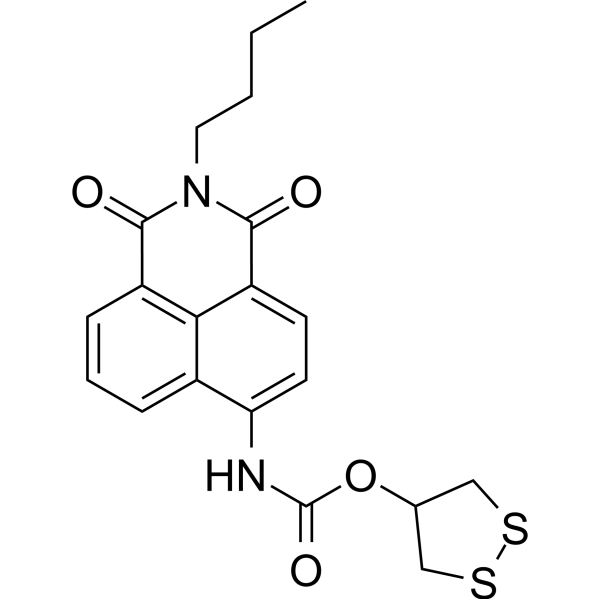
AC-green (VDP-green) is a β-allyl carbamate fluorescent probe for specifically imaging vicinal dithiol proteins (VDPs) in living systems (λex/λem=400/475 nm). AC-green can detect the reduced bovine serum albumin (rBSA) with high sensitivity. AC-green displays low toxicity and features high sensitivity, and is suitable for sensing VDPs in living cells and zebrafishes .
|
-
- HY-P11430
-
|
|
Biochemical Assay Reagents
|
Infection
|
|
UBI (31-38) is a Ubiquicidin-derived octapeptide and anti-bacterial agent. UBI (31-38) selectively interacts with anionic phospholipid membranes and restricts lipid lateral motion. UBI (31-38) induces anionic vesicle aggregation via electrostatic repulsion screening, and undergoes conformational changes in membrane-mimicking environments. UBI (31-38) can be used for the research of infection imaging probes .
|
-
- HY-162928
-
|
|
RIP kinase
|
Neurological Disease
|
|
RIPK1-IN-26 (Compound 8a) is a potent receptor-interacting serine/threonine-protein kinase 1 (RIPK1) inhibitor with cell anti-necroptosis potency. RIPK1-IN-26 demonstrats good metabolic stability and good binding specificity in mice. RIPK1-IN-26 is promising for research of PET imaging probe development and neurodegenerative disorders .
|
-
- HY-D2956
-
|
CLIP-GLA-NHS
|
Biochemical Assay Reagents
|
Others
|
|
BC-GLA-NHS (CLIP-GLA-NHS) is a NHS-labeled CLIP tag, which is an amine-reactive crosslinker and can achieve site-specific protein labeling. The NHS ester of BC-GLA-NHS reacts with the primary amine of the target molecule (such as antibodies, quantum dots) in a pH 7.5-8.5 buffer solution to form a stable amide bond. After coupling, the BC molecule undergoes a nucleophilic substitution reaction with the active site (Cys) of the CLIP-tagged fusion protein, releasing benzylcytosine and forming an irreversible thioether bond, achieving covalent labeling. BC-GLA-NHS can be used for click chemistry labeling .
|
-
- HY-W244412
-
|
|
Biochemical Assay Reagents
|
Cancer
|
|
2,5-Dioxopyrrolidin-1-yl 6-hydrazinylnicotinate hydrochloride is an intermediate of a radionuclide molecular probe targeting the CD4 receptor. 2,5-Dioxopyrrolidin-1-yl 6-hydrazinylnicotinate hydrochloride serves as an imaging agent for heart transplant rejection. This CD4 probe is prepared by mixing leukocyte differentiation antigen 4 monoclonal antibody with a solution of 6-hydrazinylnicotinoyl succinimide ester hydrochloride, followed by extraction and reaction to obtain 6-hydrazinylnicotinate-leukocyte differentiation antigen 4 monoclonal antibody; this antibody is then mixed with N-tris (hydroxymethyl) glycine, stannous chloride and technetium for an oscillatory reaction. This CD4 probe exhibits high affinity for CD4 + T lymphocytes, along with the characteristics of high sensitivity and high specificity, enabling early diagnosis of acute rejection .
|
-
- HY-D1460
-
|
|
Bacterial
β-glucuronidase
|
Infection
|
|
Fluorescein Di-β-D-Glucuronide is an orally active fluorescent probe substrate and an indicator of β-glucuronidase (βG) activity in intestinal bacteria. Fluorescein Di-β-D-Glucuronide can be used for non-invasive time-lapse optical imaging of βG activity in intestinal bacteria in nude mice. Fluorescein Di-β-D-Glucuronide supports the quantitative analysis of bacterial βG enzyme activity and inhibition .
|
-
- HY-D3255
-
|
|
Fluorescent Dye
|
Others
|
|
CTAP-1 is a monovalent copper ion probe. CTAP-1 binds to monovalent copper Cu (I) to inhibit photoinduced electron transfer, thereby enhancing fluorescence emission. CTAP-1 produces copper-dependent perinuclear staining that colocalizes with mitochondria and the Golgi apparatus. CTAP-1 can be used for imaging Cu (I) pools, excitation/emission Wavelength: 365/480 nm .
|
-
- HY-110251
-
|
|
DNA Stain
|
Others
|
|
DFHBI-1T is a membrane-permeable RNA aptamers-activated fluorescence probe (ex/em=472 nm/507 nm). DFHBI-1T binds to RNA aptamers (Spinach, Spinach2, iSpinach, and Broccoli) and causes specific fluorescence and lower background fluorescence. DFHBI-1T is used to image RNA in live cells .
|
-
- HY-151704
-
|
|
Fluorescent Dye
|
Cancer
|
|
ICG-alkyne is a short-wave infrared (SWIR)-emitting cyanine fluorescent probe based on alkyne-derivatized indocyanine green. ICG-alkyne can undergo click chemistry reaction to conjugate with antibody molecules via binding to the azide groups introduced into antibodies. ICG-alkyne enables SWIR fluorescent molecular imaging of breast tumors in living mice. ICG-alkyne can be used in breast cancer-related research .
|
-
- HY-W740363
-
|
5-AF hydrochloride
|
Fluorescent Dye
|
|
|
5-Aminofluorescein hydrochloride (5-AF hydrochloride) is a protein fluorescent labeling reagent with excellent fluorescence activity. It is widely used in cell imaging and molecular probes in biomedical research. 5-Aminofluorescein hydrochloride can be used to observe the location of proteins and their dynamic changes, providing in-depth biological understanding. 5-Aminofluorescein hydrochloride is also used to detect interactions between biomolecules and help analyze complex biological processes.
|
-
- HY-P11050A
-
|
|
Apoptosis
|
Cancer
|
|
SP94 is a peptide ligand with high specificity for hepatocellular carcinoma cells. SP94 selectively binds to multiple hepatocellular carcinoma cell lines in vitro. SP94 inhibits tumor growth in a mouse model of hepatocellular carcinoma by promoting apoptosis and reducing angiogenesis. SP94 can be used as a specific probe for hepatocellular carcinoma imaging. SP94 is useful for hepatocellular carcinoma research .
|
-
- HY-W008048S
-
|
|
Isotope-Labeled Compounds
Nucleoside Antimetabolite/Analog
|
Others
|
|
2',3'-O-Isopropylideneadenosine- 13C5 is the 13C-labeled 2',3'-O-Isopropylideneadenosine (HY-W008048). 2',3'-O-Isopropylideneadenosine is a nucleoside compound and also a Golgi-targeting moiety. 2',3'-O-Isopropylideneadenosine constitutes a furanose ribose group that undergoes cyclization at the O (2') and O (3') atoms. As a component of the fluorescent probe TPE-Ade, 2',3'-O-Isopropylideneadenosine enables specific Golgi localization for fluorescence imaging. 2',3'-O-Isopropylideneadenosine participates in the synthesis of aggregation-induced emission (AIE) fluorescent probes .
|
-
- HY-P992459
-
|
|
ADC Antibody
Transmembrane Glycoprotein
|
Cancer
|
|
SGM-101 Antibody is a chimeric monoclonal antibody targeting carcinoembryonic antigen (CEA). SGM-101 Antibody can serve as a tumor-specific fluorescent imaging probe after being covalently conjugated with the near-infrared fluorescent dye BM104 . SGM-101 Antibody accumulates in CEA-positive tumor tissues via antigen-antibody specific binding, and emits near-infrared fluorescence to enable imaging of tumor lesions. SGM-101 Antibody can be used in research related to gastric cancer, colorectal cancer, pancreatic cancer, non-small cell lung cancer, breast cancer, peritoneal carcinomatosis, and liver metastases .
|
-
- HY-203233
-
|
|
Fluorescent Dye
|
Others
|
|
Rhodamine-DHPE is a fluorescently labeled phosphatidylethanolamine lipid that labels phospholipid bilayers. Rhodamine-DHPE serves as a fluorescence quenching substrate and membrane stain. The fluorescence lifetime of Rhodamine-DHPE decreases significantly in the presence of Cu 2+-PS complexes. Rhodamine-DHPE effectively stains the membranes of human red blood cells and mouse fibroblasts, and supports lifetime-resolved imaging via pump-probe fluorescence microscopy .
|
-
- HY-D1636
-
|
|
Fluorescent Dye
|
Others
|
|
5-Nitro BAPTA is a calcium chelator, combinded with 2-Me-substituted TM ( as a fluorescent moiety), can be used to form a red fluorescent probe (CaTM-2 AM), for imaging of cytoplasmic Ca 2+ in cultured living cells. 5-Nitro BAPTA is a building block used in the synthesis of Ca 2+ specific chelators, Ca 2+ buffers, and fluorescent Ca 2+ indicators .
|
-
- HY-P10743
-
|
|
Radionuclide-Drug Conjugates (RDCs)
PSMA
|
Cancer
|
|
BQ7876 is a probe targeting prostate-specific membrane antigen (PSMA) that contains a DOTA chelator. BQ7876, after being radiolabeled with radionuclide (177Lu), functions in both radionuclide imaging and tumor cell destruction by specifically binding to PSMA. BQ7876 shows potential for research in the field of metastatic castration-resistant prostate cancer (mCRPC) . BQ7876 can be used for the synthesis/research of Radionuclide-Drug Conjugates (RDCs).
|
-
- HY-P11143
-
|
|
Interleukin Related
|
Cardiovascular Disease
|
|
IL4RPep-1 is a peptide that can specifically target atherosclerotic plaque, and its target is IL-4 receptor. IL4RPep-1 exhibits good plaque targeting and is not enriched in normal tissues. IL4RPep-1 has potential application as a targeting delivery system or molecular imaging probe for atherosclerosis research .
|
-
- HY-148958
-
-
- HY-D2941
-
|
SNAP-AF
|
Fluorescent Dye
|
Others
|
BGAF (SNAP-AF) is a fluorescent diacetyl fluorescein-labeled SNAP tag fluorescent probe, specifically designed for the covalent labeling of SNAP-tag fusion proteins in living cells. BGAF utilizes the specific reaction of the human DNA repair protein hAGT to achieve specific fluorescent labeling of the target protein in the living cell environment .
|
-
- HY-D1456
-
|
|
Pyruvate Kinase
|
Cancer
|
|
TEPC466 is a novel TEPP-46-based aggregation-induced emission (AIE) probe. TEPC466 shows a high degree of selectivity and sensitivity for the detection of PKM2 protein via the AIE effect. EPC466 can be used for the detection of PKM2. TEPC466 is successfully applied in imaging the PKM2 protein in colorectal cancer cells with low toxicity. TEPC466 is a useful tool for cancer diagnosis and research .
|
-
- HY-136675
-
|
|
Fluorescent Dye
|
Others
|
|
ASMI is a ratiometric, two-photon excited fluorescent probe, composed of a highly two-photon active and biocompatible merocyanine fluorophore and an acrylate moiety as a thiol reactive site. ASMI is able to selectively detect and monitor mitochondrial Cys with rapid responsiveness, imaging living cells and intact tissues with high contrast and brightness at a depth of 150 μm. The two-photon action cross section (Φσmax) of ASMI is 65.2 GM, corresponding to an excitation wavelength (λex) of 740 nm.
|
-
- HY-141511
-
Coppersensor 1
Maximum Cited Publications
29 Publications Verification
|
Fluorescent Dye
|
Neurological Disease
Cancer
|
|
Coppersensor-1 (CS1) is a membrane-permeable fluorescent dye. Coppersensor-1 has a picomolar affinity for Cu + with high selectivity over competing cellular metalions. Coppersensor-1 as a probe, can selective and sensitive detection of copper(I) ions (Cu +) in biological samples, including live cells. Coppersensor-1 can be used for the research of imaging of severe diseases such as cancer, cardiovascular disorders and neurogenerative diseases .
|
-
- HY-D3220
-
|
|
Fluorescent Dye
Amyloid-β
|
Neurological Disease
|
|
PTO-41 is a blood-brain barrier-permeable near-infrared fluorescent probe that targets β-amyloid oligomers (Aβ Oligomers, AβOs) with a Kd of 349 nM. PTO-41 exhibits low cytotoxicity, high sensitivity to β-amyloid oligomers in in vitro phantom imaging, and can be rapidly cleared from the brain. PTO-41 is applicable to the research of Alzheimer's disease (Ex/Em = 538 nM/680 nM) .
|
-
- HY-176513
-
|
|
Fluorescent Dye
|
Others
|
|
Cy-OH-LP is a turn-on fluorescent and photoacoustic probe that can detect lipid-associated hydroxyl radicals. Cy-OH-LP can be oxidized to Cy7 in the presence of hydroxyl radicals, which displays weak fluorescent and photoacoustic signals in water-soluble environments and strong fluorescent and photoacoustic signals in lipid-rich environments due to its lipid solubility. Cy-OH-LP can be used for in vivo photoacoustic imaging of hydroxyl radicals .
|
-
- HY-DY1047
-
|
|
DNA Stain
|
Others
|
DFHBI-1T (solution) is a membrane-permeable RNA aptamers-activated fluorescence probe (ex/em=472 nm/507 nm). DFHBI-1T binds to RNA aptamers (Spinach, Spinach2, iSpinach, and Broccoli) and causes specific fluorescence and lower background fluorescence. DFHBI-1T is used to image RNA in live cells . Solvent and concentration: DMSO: 20 mM
|
-
- HY-D3171
-
|
|
Fluorescent Dye
Cholinesterase (ChE)
|
Neurological Disease
|
|
AD-BChE/HClO is a dual-target two-photon fluorescent probe. AD-BChE/HClO can release 4-methylumbelliferone via butyrylcholinesterase-mediated hydrolysis of the ester bond at position 7, as well as hypochlorous acid-mediated thiocarbonyl oxidation. AD-BChE/HClO enables two-photon imaging in nerve cells and mouse brain tissues via tail vein injection. AD-BChE/HClO can be used for the research of Alzheimer's disease .
|
-
- HY-111330
-
|
HPF; 3'-p-(Hydroxyphenyl) fluorescein
|
Fluorescent Dye
Reactive Oxygen Species (ROS)
|
Others
|
|
Hydroxyphenyl Fluorescein (HPF) is a stable ROS fluorescent probe dye. Hydroxyphenyl Fluorescein has stronger specificity and stability than H2DCFDA (HY-D0940). Hydroxyphenyl Fluorescein can produce strong green fluorescence through hydroxyl radical reaction with intracellular peroxynitroso. Hydroxyphenyl Fluorescein can be applied for fluorescence microscopy, high-throughput imager, luciferase microplate reader or flow cytometry. Ex/Em=490/515 nm .
|
-
- HY-173138
-
|
|
Monoamine Oxidase
|
Neurological Disease
|
|
FCOB02 is a monoamine oxidase B (MAO-B) ligand. FCOB02 can be labeled as [18F]FCOB02, a 4-methylcoumarin-like targeting probe. [18F]FCOB02 has a high affinity for MAO-B with an IC50 of 10.68 nM. [18F]FCOB02 can be used in specific MAO-B imaging as well as quantitative analysis in vivo .
|
-
- HY-160116
-
|
|
Radionuclide-Drug Conjugates (RDCs)
Fluorescent Dye
α-synuclein
|
Neurological Disease
|
|
α-Synuclein aggregate binder 1 (Compound C05-05) is a specific binder for α-synuclein aggregates and can inhibit α-synuclein aggregation. α-Synuclein aggregate binder 1 can be used as a fluorescent probe (excitation wavelength 900 nm, detection wavelength 500-550 nm) for optical imaging, and can also inhibit α-synuclein fibril formation by blocking the aggregation process. α-Synuclein aggregate binder 1 can be used for positron emission tomography (PET) imaging after being labeled with 18F. α-Synuclein aggregate binder 1 can be used for visual diagnosis of brain lesions and mechanism research of neurodegenerative diseases such as Parkinson's disease and Lewy body dementia .
|
-
- HY-W800701
-
|
|
Biochemical Assay Reagents
|
Others
|
|
BP Fluor 546 DBCO is an azide-reactive probe that can be used for imaging azide-tagged biomolecules via a copper-free click reaction. The DBCO moiety reacts with azides to form a stable triazole and does not require a Cu-catalyst or elevated temperatures. In applications where the presence of copper is a concern, BP Fluor 546 DBCO is an ideal alternative to copper-requiring fluorescent alkynes.
BP Fluor 546 is a water-soluble, pH-insensitive (from pH 4-10), orange-fluorescent dye with absorption and emission maxima at 554 and 570 nm, respectively. It can be used with the 488 nm and 532 nm laser lines. BP Fluor 546 dye conjugates to a variety of antibodies, peptides, proteins, tracers, and amplification substrates, which are often used for generating stable signals in imaging and flow cytometry.
|
-
- HY-DY1087
-
|
|
Fluorescent Dye
|
Cancer
|
Coppersensor 1 (solution) is a membrane-permeable fluorescent dye. Coppersensor-1 has a picomolar affinity for Cu + with high selectivity over competing cellular metalions. Coppersensor-1 as a probe, can selective and sensitive detection of copper(I) ions (Cu +) in biological samples, including live cells. Coppersensor-1 can be used for the research of imaging of severe diseases such as cancer, cardiovascular disorders and neurogenerative diseases . Solvent and concentration: DMSO: 2 mM
|
-
- HY-165424
-
|
|
Fluorescent Dye
Glycosidase
|
Cardiovascular Disease
Cancer
|
|
NIR-BG2 is a near-infrared fluorescent probe targeting senescence-associated β-galactosidase (SA-β-Gal). NIR-BG2 is activated by SA-β-Gal and undergoes hydrolysis to release electrophilic quinone methide that covalently binds to surrounding proteins for in situ labeling, with a 16-fold enhancement of fluorescence signal at 709 nm . NIR-BG2 is promising for research of vivo imaging of cellular senescence .
|
-
- HY-158616
-
|
|
Fluorescent Dye
|
Others
|
|
4-Methyl-7-(2-nitrophenoxy)-2H-chromen-2-one (compound 2f) is a selenol fluorescent probe designed based on a nucleophilic aromatic substitution mechanism. It can selectively recognize selenols in neutral aqueous solution without significant interference from biological thiols, amines or alcohols. It can be used to quantify the selenium content in selenoenzymes and to image the activity of endogenous selenols in living cells.
|
-
- HY-D2341
-
|
|
Fluorescent Dye
|
Cancer
|
|
6FC-GABA-Taxol is a fluorescent probe with cell permeability, which is formed by connecting 6FC to the anticancer drug Taxol (HY-B0015) via γ-aminobutyric acid (GABA). 6FC-GABA-Taxol can bind to microtubules in living cells and image them through confocal microscopy. Additionally, 6FC-GABA-Taxol enables the quantification of microtubule binding using flow cytometry without the addition of efflux inhibitors .
|
-
- HY-D3172
-
|
|
Fluorescent Dye
|
Metabolic Disease
|
|
BD-105 is a glucagon-binding fluorescent probe with a Ka value of 13.3 μM. BD-105 exhibits changes in fluorescence intensity upon interaction with glucagon, and colocalizes with glucagon in cells and tissues. BD-105 is a selective cell stain that labels glucagon-secreting cells without staining insulin-secreting cells or non-endocrine control cells. BD-105 serves as an imaging reagent for glucagon in live cells and tissues .
|
-
- HY-D3168
-
|
|
Fluorescent Dye
Reactive Oxygen Species (ROS)
|
Inflammation/Immunology
|
|
PCL-2 is a reactive oxygen species-responsive fluorescent probe that shows almost no response to biologically relevant reactive oxygen species other than hydrogen peroxide. PCL-2 reacts with hydrogen peroxide to release 6-hydroxy-2-cyanobenzothiazole. PCL-2 can be used for chemoselective imaging of hydrogen peroxide in in vitro models and acute inflammation mouse models. PCL-2 is applicable to studies related to acute inflammation .
|
-
- HY-147508
-
|
|
Fluorescent Dye
|
Others
|
|
SBP-2 is a sulfite bioluminescent probe (SBP). The recognition of SBP-2 towards sulfite is based on the mechanism of a sulfite-mediated intramolecular cleavage reaction .
|
-
- HY-147509
-
|
|
Fluorescent Dye
|
Others
|
|
SBP-3 is a sulfite bioluminescent probe (SBP). The recognition of SBP-3 towards sulfite is based on the mechanism of a sulfite-mediated intramolecular cleavage reaction .
|
-
- HY-D2999
-
|
|
Fluorescent Dye
|
Metabolic Disease
|
|
NIR-RED ATP Probe is a NIR-II fluorescent probe. NIR-RED ATP Probe exhibits high affinity and selectivity for ATP and can non-invasively and with high contrast detect changes in ATP concentration at the cellular level, with minimal interference to the abundant biomolecules within the cells. NIR-RED ATP Probe can be used as a biomarker detection tool for drug-induced liver injury (DILI) .
|
-
- HY-D2930
-
|
SNAP-SS-SulfoCy5
|
Fluorescent Dye
|
Others
|
|
BG-SS-SulfoCy5 (SNAP-SS-SulfoCy5) is a SulfoCy5-labeled SNAP tag fluorescent probe, linked by a disulfide bond. BG-SS-SulfoCy5 combines the specific recognition of SNAP-tag, the cleavability of disulfide bond, and the excellent optical properties of SulfoCy5. BG-SS-SulfoCy5 can be used for tracking the internalization of cell surface proteins and multiple labeling experiments .
|
-
- HY-DY1035
-
|
|
Reactive Oxygen Species (ROS)
Fluorescent Dye
|
Others
|
Hydroxyphenyl Fluorescein (HPF) (solution) is a stable ROS fluorescent probe dye. Hydroxyphenyl Fluorescein has stronger specificity and stability than H2DCFDA (HY-D0940). Hydroxyphenyl Fluorescein can produce strong green fluorescence through hydroxyl radical reaction with intracellular peroxynitroso. Hydroxyphenyl Fluorescein can be applied for fluorescence microscopy, high-throughput imager, luciferase microplate reader or flow cytometry. Ex/Em=490/515 nm . Solvent and concentration: DMSO: 10 mM
|
-
- HY-W112090
-
|
PdTFPP; 5,10,15,20-Tetrakis(pentafluorophenyl)-21H,23H-porphine palladium(II)
|
Fluorescent Dye
|
Others
|
|
Palladium meso-tetra(pentafluorophenyl)porphyrin (PdTFPP) derives from palladium(II), acting as a fluorescence-quenched optical probe and high-performance oxygen concentration sensor with outstanding photostability and antioxidant capacity. Palladium meso-tetra(pentafluorophenyl)porphyrin exhibits reduced luminescence intensity as dissolved oxygen concentration rises. Palladium meso-tetra(pentafluorophenyl)porphyrin can be applied for real-time monitoring of live-cell respiration, hypoxic tissue imaging, and nanofibrous organic semiconductors in photodetectors for ambient oxygen detection .
|
-
- HY-D2942
-
|
|
Fluorescent Dye
|
Others
|
|
BDP-V BG-BODIPY is a SNAP tag fluorescent probe labeled with a BODIPY molecular motor. BDP-V BG-BODIPY contains a BODIPY molecular rotor that functions as a viscosity-sensitive fluorophore, which is highly responsive to local viscosity changes and enables the specific monitoring of the local microviscosity of proteins. BDP-V BG-BODIPY supports one-photon and two-photon imaging, with an excitation wavelength (Ex) of 488 nm (for one-photon excitation) and 850 nm (for two-photon excitation), and an emission wavelength (Em) of 500-600 nm .
|
-
- HY-76573
-
|
|
Apoptosis
|
Cardiovascular Disease
Cancer
|
|
ML-10 is a small molecule apoptosis probe. Due to the presence of fluorine atoms, ML-10 can be radiolabeled with 18F isotopes and can be used for apoptosis positron emission tomography imaging studies. ML-10 is selectively taken up and accumulated in apoptotic cells, while being excluded from live or necrotic cells. In addition, the uptake of ML-10 is associated with apoptotic features such as caspase activation, Annexin-V binding, and disruption of mitochondrial membrane potential .
|
-
- HY-D3224
-
|
|
Fluorescent Dye
|
Neurological Disease
|
|
HCP is a two-photon fluorescent probe capable of crossing the blood-brain barrier, which is specifically designed for real-time detection of hypochlorous acid (HClO/ClO -) produced by myeloperoxidase (MPO). Chlorination of the quinoline skeleton of HCP generates HCP-Cl, which eliminates intramolecular charge transfer (ICT) quenching and thereby produces fluorescence. HCP is suitable for in vivo dynamic imaging of HClO in the brains of epileptic mice and high-throughput screening of antiepileptic drugs (HCP-Cl: Ex/Em = 800 nm/495 nm) .
|
-
- HY-W800831
-
|
|
Fluorescent Dye
|
Others
|
|
Tetra-sulfo-Cy7 DBCO is a bright and photostable near-IR probe. The Cy7 DBCO is water-soluble, hydrophilic dye often a reagent of choice for assay where minimal non-specific binding and exceptional brightness is required. The fluorescence of Cy7 DBCO is pH insensitive from pH 4 to pH 10 and produces minimal autofluorescence of biological specimens in this region of the spectrum. Fluorescence of this long-wavelength Cyanine dye is not visible to the human eye but is readily detected by most imaging systems.
|
-
- HY-D2939
-
|
|
Fluorescent Dye
|
Others
|
BGSBD is a SNAP-tag-based fluorescent probe (Ex/Em: 435 nm/516 nm) based on the environmentally sensitive fluorescent group SBD, specifically designed for protein labeling of live cells without washing. BGSBD achieves a 280-fold fluorescence enhancement after labeling by ingeniously utilizing the hydrophobic binding pocket of the SNAP-tag protein, providing an ideal tool for real-time monitoring of protein dynamics within cells .
|
-
- HY-150175
-
|
|
Fluorescent Dye
|
Inflammation/Immunology
|
|
HKSOX-1 and its derivatives (HKSOX-1r and HKSOX-1m) are novel fluorescent probes designed for highly sensitive and selective detection of the superoxide anion radical (O2 •−) in cellular environments. These probes utilize an aryl trifluoromethanesulfonate group that undergoes O2 •−-mediated cleavage, releasing a free phenol and emitting fluorescence. They demonstrate excellent specificity and sensitivity across various pH ranges, withstand interference from strong oxidants and reductants typical in cellular contexts. HKSOX-1r, optimized for cellular retention, has been effectively employed in diverse assays including confocal imaging, flow cytometry, and zebrafish embryo studies, highlighting its utility in investigating O2 •− roles in inflammation, mitochondrial stress, and other physiological processes .
|
-
- HY-W024271
-
|
9-Formyl-8-hydroxyjulolidine
|
Fluorescent Dye
|
Cardiovascular Disease
Neurological Disease
|
|
8-Hydroxyjulolidine-9-carboxaldehyde (9-Formyl-8-hydroxyjulolidine) is a highly selective fluorescent probe for hydrogen sulfide (S 2−) and silicate (SiO3 2−). 8-Hydroxyjulolidine-9-carboxaldehyde operates via a mechanism of blocking intramolecular charge transfer (ICT), exhibiting significant fluorescence enhancement in the presence of weak acid ions. 8-Hydroxyjulolidine-9-carboxaldehyde is promising for research of fluorescence imaging of hydrogen sulfide within living cells .
|
-
- HY-W089353
-
|
|
MOFs
Fluorescent Dye
|
Others
|
|
8-Phenyl-BODIPY 505/515 is a molecular rotor based on the BODIPY scaffold, specifically used as a microviscosity probe. The working principle of 8-Phenyl-BODIPY 505/515 is based on the restriction of molecular motion by viscosity: in a high-viscosity environment, the rotational freedom of its chemical bonds is inhibited, which leads to a significant extension of fluorescence lifetime. This property makes 8-Phenyl-BODIPY 505/515 an effective tool for monitoring changes in the viscosity of intracellular microenvironments via fluorescence lifetime imaging (FLIM) technology .
|
-
- HY-156404
-
PM-1
2 Publications Verification
|
Fluorescent Dye
|
Others
|
|
PM-1, a derivative of Thioflavin-T (ThT; HY-D0218), is a small but highly specific plasma membrane (PM) fluorescent dye for specific and long-time membrane imaging of living and fixed cells. PM-1 is embedded directly into the cell membrane and exhibits a very long retention time on the plasma membrane with a half-life of approximately 15 h. PM-1 can be used in combination with protein labeling probes to study ectodomain shedding and endocytosis processes of cell surface proteins .
|
-
- HY-D2967
-
|
|
Fluorescent Dye
|
Neurological Disease
|
|
Golgi-NO is a Golgi-targeted fluorescent probe for nitric oxide (NO) (Ex/Em: 560 nm/589 nm). Golgi-NO exhibits excellent selectivity for various potential interfering substances. Golgi-NO can be used to study the function of NO within the Golgi apparatus in disease models such as Alzheimer's disease (AD) .
|
-
- HY-D2317
-
|
|
Fluorescent Dye
|
Others
|
|
HaloFlipper 30 is a fluorescent probe that covalently reacts with HaloTag fusion proteins to form an ester bond, which allows the probe to be stably attached to membrane structures. HaloFlipper 30 has high specificity, precision and good cell permeability .
|
-
- HY-D1583
-
|
DBCO-Cy5 hexafluorophosphate; Cyanine5 dibenzocyclooctyne hexafluorophosphate
|
Fluorescent Dye
|
Others
|
|
Cyanine5 DBCO (DBCO-Cy5) hexafluorophosphate is a low-toxicity azide reactive probe (NIR fluorescent dye), for imaging azide-labeled biomolecules via a copper-free "click-through" reaction. Cyanine5 DBCO hexafluorophosphate has no apparent cytotoxicity or animal toxicity and shows no damage to the physiological functions of cells other than the target cells (azide-labeled cells). Cyanine5 DBCO hexafluorophosphate can be used to label and track cells in vitro and in vivo (Ex=635 nm, Em=650-700 nm) .
|
-
- HY-P11253
-
|
|
VISTA
|
Inflammation/Immunology
|
|
DOTA-Bn-CA-170 is a molecular probe targeting the VISTA protein, with a Kd value of 0.124 nM. DOTA-Bn-CA-170 is formed by covalently linking the p-SCN-Bn-DOTA ligand with CA-170 (HY-101093). DOTA-Bn-CA-170 labeled with [ 68Ga]Ga successfully achieves specific and high-contrast PET imaging of VISTA expression in various tumor-bearing mouse models. DOTA-Bn-CA-170 can be used for the study of VISTA-targeted immunotherapy .
|
-
- HY-128536
-
|
|
Fluorescent Dye
|
Others
|
|
KMG-104AM is a Mg 2+ fluorescent probe. KMG-104AM is a membrane-permeable ester-modified derivative of KMG-104, which serves as a reporter and imaging agent. KMG-104AM can track the increase in intracellular free magnesium ion concentration induced by mitochondrial uncoupling. KMG-104AM enables visualization of the three-dimensional distribution of intracellular magnesium ion concentration. KMG-104AM is applicable to research related to the functions of intracellular magnesium ions .
|
-
- HY-149203
-
|
|
Fluorescent Dye
|
Others
|
|
MQA-P is a multifunctional near-infrared (NIR) fluorescent probe for simultaneously detecting ONOO -, viscosity, and polarity within mitochondria. MQA-P exhibits a remarkable turn-on response to ONOO - (λem=645 nm) and is highly sensitive to viscosity/polarity in the NIR channel with λem>704 nm. MQA-P exhibits excited-state intramolecular charge transfer (ESICT) feature that is highly polarity-sensitive by engineering N,N-dimethylamino as the electron donor and a quinoline cationic unit as the electron acceptor. MQA-P is used for ferroptosis or cancer diagnosis in vitro and in vivo via dual-channel images .
|
-
- HY-P11618
-
|
|
Glycoprotein VI
|
Cancer
|
|
10P3Me is a Glypican-3 (GPC3)-targeting probe with a Ka of 93.8 nM for the human target. 10P3Me exhibits high binding affinity to GPC3, targets GPC3-positive cells, and serves as an agent for PET imaging. 10P3Me selectively accumulates in GPC3-positive tumor tissues, including subcutaneous xenograft models and orthotopic HepG2-LUC liver cancer models, to achieve precise localization of lesions .
|
-
- HY-D2907
-
|
DBCO-Cy5; Cyanine5 dibenzocyclooctyne
|
Fluorescent Dye
|
Others
|
|
Cyanine5 DBCO (DBCO-Cy5) is a low-toxicity azide reactive probe (NIR fluorescent dye), for imaging azide-labeled biomolecules via a copper-free "click-through" reaction. Cyanine5 DBCO has no apparent cytotoxicity or animal toxicity and shows no damage to the physiological functions of cells other than the target cells (azide-labeled cells). Cyanine5 DBCO can be used to label and track cells in vitro and in vivo (Ex=635 nm, Em=650-700 nm) .
|
-
- HY-D2729
-
|
|
Fluorescent Dye
|
Infection
|
|
Cy3-NO2-Tre is a nitroreductase-responsive cyanine-based fluorescent probe that specifically labels Mycobacterium tuberculosis (Mtb). Cy3-NO2-tre generated fluorescence after activation by a specific nitroreductase, Rv3368c, which is conserved in the Mycobacteriaceae. Cy3-NO2-tre effectively imaged mycobacteria within infected host cells, tracked the infection process, and visualized Mycobacterium smegmatis being endocytosed by macrophages (Ex/Em= 540-550/575-625 nm) .
|
-
- HY-D3007
-
|
|
Fluorescent Dye
|
Others
|
|
LD-CK is a fluorescent probe based on a coumarin-chromone structure, specifically designed to visualize lipid droplet polarity changes and endowed with multimodal imaging capability. LD-CK contains a high-performance lipophilic coumarin moiety, which enables it to specifically target lipid droplets upon cellular entry while minimizing background fluorescence to the greatest extent. LD-CK has an excitation wavelength (Ex) of 488 nm and an emission wavelength (Em) of 540 nm (in low-polarity environments such as toluene) or 640 nm (in high-polarity environments such as glycerol), with its emission peak undergoing a redshift as solvent polarity increases .
|
-
- HY-D2943
-
|
SNAP-SS-SulfoCy3
|
Fluorescent Dye
|
Others
|
|
BG-SS-SulfoCy3 is a SulfoCy3-labeled SNAP tag fluorescent probe, which is linked by a disulfide bond to achieve selective labeling and controllable cleavage. BG-SS-SulfoCy3 can be used to study the endocytosis and trafficking of membrane proteins such as GPCRs .
|
-
- HY-D2966
-
|
|
Fluorescent Dye
|
Others
|
|
TMR-NO-BG is a hybrid probe (Ex/Em: 557 nm/571 nm). TMR-NO-BG covalently connects the tetramethylrhodamine (TMR) lactone NO sensing unit with the SNAP-tag reactive benzyl guanine (BG) for achieving subcellular-specific nitric oxide (NO) detection .
|
-
- HY-D1063
-
|
|
Fluorescent Dye
Apoptosis
Reactive Oxygen Species (ROS)
|
Cancer
|
|
IR-780 is a near-infrared fluorescent probe for in vivo imaging of tumor cells. IR-780 is transported into tumor cells via OATPs and ABCB10, with uptake dependent on glycolytic activity and plasma membrane potential. IR-780 preferentially accumulates in tumor cell mitochondria, including those of drug-resistant cancer cells, without chemical conjugation. IR-780 generates reactive oxygen species (ROS), induces hyperthermia and apoptosis, inhibits tumor growth and recurrence, and modulates HSP70 expression upon ultrasound or 808 nm laser exposure. IR-780 acts as a sonosensitizer, photodynamic and photothermal agent, and drug delivery carrier, with low acute imaging-dose toxicity and rapid vital organ clearance. IR-780 can be used for the research of cancer, such as breast cancer, lung cancer, and non-small cell lung cancer (NSCLC) .
|
-
- HY-181506
-
|
|
Fluorescent Dye
Molecular Glues
CaMK
c-Myc
Bcl-2 Family
Cadherin
|
Cancer
|
|
TYMJ-01 is a fluorescent probe and eEF2K degrader. TYMJ-01 induces dose-dependent and specific degradation of eEF2K via the ubiquitin-proteasome pathway, with a DC50 of 82 nM. TYMJ-01 inhibits the proliferation, migration and invasion of triple-negative breast cancer cells. TYMJ-01 enables dynamic fluorescent imaging of eEF2K degradation in triple-negative breast cancer cells; it enhances the anti-tumor activity of Paclitaxel (HY-B0015). TYMJ-01 can be used for the research of triple-negative breast cancer .
|
-
- HY-D3195
-
|
|
Fluorescent Dye
Bacterial
|
Infection
|
|
CDr15 is a deep-red fluorescent probe (Ex=733 nm) that can selectively intercalate into and label bacterial extracellular DNA (eDNA). CDr15 exhibits extremely high specificity for biofilm imaging and cannot effectively bind to mammalian nuclear DNA. CDr15 enables real-time visualization of the microcolony structure and developmental process of three-dimensional *Pseudomonas aeruginosa* biofilms, and accurately localizes biofilm-forming regions of microorganisms in a mouse corneal infection model. With low background interference signals, CDr15 serves as an ideal diagnostic tool for research fields including bacterial biofilms and corneal infections .
|
-
- HY-149203A
-
|
|
Fluorescent Dye
|
Others
|
|
MQA-P is a multifunctional near-infrared (NIR) fluorescent probe that simultaneously detects ONOO -, viscosity, and polarity within mitochondria. MQA-P exhibits significant response to ONOO -, λem=645 nm; and NIR channel at λem>704 nm Medium is highly sensitive to viscosity/polarity. MQA-P possesses excited-state intramolecular charge transfer (ESICT) properties that are highly sensitive to polarity by designing the N,N-dimethylamino group as the electron donor and the quinoline cation unit as the electron acceptor. MQA-P is used for ferroptosis or cancer diagnosis in vitro and in vivo via dual-channel images .
|
-
- HY-P11486
-
-
- HY-DY1068
-
|
|
Fluorescent Dye
|
Others
|
Cyanine5 DBCO (DBCO-Cy5) hexafluorophosphate (solution) is a low-toxicity azide reactive probe (NIR fluorescent dye) , for imaging azide-labeled biomolecules via a copper-free "click-through" reaction. Cyanine5 DBCO hexafluorophosphate has no apparent cytotoxicity or animal toxicity and shows no damage to the physiological functions of cells other than the target cells (azide-labeled cells). Cyanine5 DBCO hexafluorophosphate can be used to label and track cells in vitro and in vivo (Ex=635 nm, Em=650-700 nm) . Solvent and concentration: DMSO: 10 mM
|
-
- HY-153552A
-
|
|
FAP
|
Cancer
|
|
NH2-UAMC1110 TFA is an aminobutoxy derivative of the fibroblast activation protein (FAP) inhibitor UAMC1110 (HY-100684), and is a precursor compound for the synthesis of FAP inhibitor probes, not directly used in bioactivity experiments. For example, NH2-UAMC1110 TFA is involved in the synthesis of the radiotracer FAPI-QS, which exhibits high tumor selectivity and high dose effect, and has been used in tumor diagnosis. NH2-UAMC1110 TFA structurally incorporates an active amino group, allowing it to form covalent bonds with various molecules (such as DOTA, DATA5m, radionuclide chelators, etc.) to synthesize molecular imaging probes or targeted compounds with the ability to target FAP. NH2-UAMC1110 TFA specifically binds to the FAP active site, inhibiting its proline-selective serine protease activity (including dipeptidyl peptidase and endopeptidase activity), blocking FAP-mediated tissue remodeling-related processes. Its key activity is high targeting and high affinity, and its core function is to act as a targeting module coupled with bifunctional chelators (such as DOTA, DATA5m). NH2-UAMC1110 TFA can be applied to diagnostic imaging studies of tumors expressing FAP (such as colorectal cancer, pancreatic cancer, etc.), and also provides molecular tools for targeted research of FAP-related diseases with high FAP expression, such as fibrosis and arthritis .
|
-
- HY-153552
-
|
|
FAP
|
Cancer
|
|
NH2-UAMC1110 is an aminobutoxy derivative of the fibroblast activation protein (FAP) inhibitor UAMC1110 (HY-100684), and is a precursor compound for the synthesis of FAP inhibitor probes, not directly used in bioactivity experiments. For example, NH2-UAMC1110 is involved in the synthesis of the radiotracer FAPI-QS, which exhibits high tumor selectivity and high dose-response, and has been used for tumor diagnosis. NH2-UAMC1110 introduces an active amino group into its structure, enabling it to form covalent bonds with various molecules (such as DOTA, DATA5m, radionuclide chelators, etc.), thereby synthesizing molecular imaging probes or targeted compounds with the ability to target FAP. NH2-UAMC1110 specifically binds to the FAP active site, inhibiting its proline-selective serine protease activity (including dipeptidyl peptidase and endopeptidase activity), blocking FAP-mediated tissue remodeling processes. Its key activity is high targeting and high affinity, and its core function is to be coupled with bifunctional chelators (such as DOTA, DATA5m) as a targeting module. NH2-UAMC1110 can be applied to diagnostic imaging studies of tumors expressing FAP (such as colorectal cancer, pancreatic cancer, etc.), and also provides molecular tools for targeted research of FAP-related diseases with high FAP expression, such as fibrosis and arthritis .
|
-
- HY-160062
-
|
|
Mucin
|
Cancer
|
|
S2.2 aptamer sodium is a nucleic acid-based MUC1-binding aptamer with high affinity and low toxicity. Upon binding to its target, S2.2 aptamer sodium undergoes a conformational switch and restores fluorescence signal, serving as a targeted imaging agent for MUC1-positive cancer cells. S2.2 aptamer sodium enables targeted delivery to breast cancer cells with overexpressed MUC1. When formulated as the S2.2-PEG-MZF molecular probe, S2.2 aptamer sodium possesses the functions of T2 signal inhibition, magnetic field-induced hyperthermia and targeted magnetic resonance molecular imaging. In the S2.2-PEG-MZF/DOX nanoliposome, S2.2 aptamer sodium supports targeted thermochemotherapy, effectively inhibiting cancer cell proliferation and invasion as well as inducing apoptosis, and is widely used in studies related to breast cancer .
|
-
- HY-P11265
-
|
|
GnRH Receptor
Fluorescent Dye
|
Cancer
|
|
YQGN-7 is a targeted fluorescent probe for the gonadotropin-releasing hormone receptor (RnRHR). YQGN-7 exhibits high selectivity and affinity for breast cancer cells (KD = 217.8 nM). YQGN-7 achieves precise visualization of the primary and metastatic lesions of breast cancer by targeting the highly expressed GnRHR in tumor cells. YQGN-7 can be used in the research of breast cancer breast-conserving surgery (BCS) .
|
-
- HY-D1428
-
|
|
Fluorescent Dye
|
Inflammation/Immunology
|
|
Di-4-ANEPPDHQ is a polarity-sensitive membrane probe with a doubly positive charge that can be used to visualize membrane microdomains in living Arabidopsis cells. Di-4-ANEPPDHQ produces a fluorescence spectrum shift by changing the polarity of the lipid environment after embedding into the cell membrane, thereby quantifying the degree of lipid accumulation. The excitation wavelength of Di-4-ANEPPDHQ is 488 nm, and the emission wavelengths are 560 nm and 650 nm in the liquid ordered and disordered phases, respectively. Di-4-ANEPPDHQ is often used for fluorescence imaging studies of membrane microstructure, lipid order, and membrane tension response in living cells[1][2][3].
|
-
- HY-W011696
-
|
cis-1-Amino-9-octadecene, 80-90%
|
Environmental Pollutants
Biochemical Assay Reagents
|
Cancer
|
|
Oleylamine, 80-90% (cis-1-Amino-9-octadecene, 80-90%) is a multifunctional reagent used for metal ion coordination and nanoparticle surface modification, and acts as a solvent, surfactant and reducing agent in the synthesis of metal oxide nanoparticles. Oleylamine, 80-90% regulates nanoparticle morphology, magnetization intensity and water proton relaxation rate via thiol-ene "click" reaction, and enhances the colloidal stability of nanoparticles in organic reagents. Oleylamine, 80-90% is mainly used in research and applications in fields such as nanomaterial synthesis, biomedical imaging (MRI contrast agents, fluorescent probes), cancer cell targeting and drug delivery .
|
-
- HY-D3192
-
|
|
Fluorescent Dye
Bacterial
Amyloid-β
|
Infection
|
|
CDy11 is a fluorescent probe and amyloid-binding dye (λex=590 nm; λem=612 nm), with a Ka of 29 μM for Pseudomonas aeruginosa Fap. CDy11 specifically recognizes amyloid fibrils in bacterial biofilms and exhibits significantly enhanced fluorescence upon binding to the target. CDy11 shows no staining effect on amyloid-deficient mutant strains, planktonic cells or protein monomers. CDy11 supports in vivo imaging of Pseudomonas aeruginosa biofilms in mouse implant and corneal infection models. CDy11 is widely used in studies of Staphylococcus aureus biofilm infections, dental caries, and Pseudomonas aeruginosa-associated implant and corneal infections .
|
-
- HY-D3187
-
|
|
Fluorescent Dye
Glycosidase
|
Infection
Cancer
|
|
HMRef-αMan is a substrate-based green fluorescent probe (Ex/Em=465 nm/515 nm) targeting MAN2C1 (α-mannosidase). HMRef-αMan can be specifically cleaved by MAN2C1 to generate a highly fluorescent product, which thus gets activated to produce green fluorescence in malignant breast tissues, benign lesions and living cancer cells. The signal intensity of HMRef-αMan is directly correlated with MAN2C1 activity, and it can effectively detect tiny breast cancer lesions with a diameter of less than 1 mm. When used in combination with the red-emitting γ-glutamyl transpeptidase (GGT) probe gGlu-2OMe SiR600 (HY-D3188), HMRef-αMan enables precise optical differentiation of breast tissue types via a dual-color imaging strategy. HMRef-αMan has been widely used in the research of breast diseases such as breast cancer, fibroadenoma, phyllodes tumor and various types of papilloma .
|
-
- HY-176834
-
|
|
GLUT
|
Cancer
|
|
3-Deoxy-3-fluoro-D-fructose (Compound 12) is a derivative of 2,5-Anhydro-D-mannitol. 3-Deoxy-3-fluoro-D-fructose is a selective probe of Hexose transporter 5 (GLUT5). 3-Deoxy-3-fluoro-D-fructose inhibits the transport of D-fructose labeled with 14C by GLUT5 with IC50s of 1.16 and 2.37 µM in EMT-6 and MCF-7 cells. 3-Deoxy-3-fluoro-D-fructose can be used for positron emission tomography (PET) imaging of cancers .
|
-
- HY-DY1089
-
|
|
Fluorescent Dye
|
Others
|
Di-4-ANEPPDHQ (solution) is a polarity-sensitive membrane probe with a doubly positive charge that can be used to visualize membrane microdomains in living Arabidopsis cells. Di-4-ANEPPDHQ produces a fluorescence spectrum shift by changing the polarity of the lipid environment after embedding into the cell membrane, thereby quantifying the degree of lipid accumulation. The excitation wavelength of Di-4-ANEPPDHQ is 488 nm, and the emission wavelengths are 560 nm and 650 nm in the liquid ordered and disordered phases, respectively. Di-4-ANEPPDHQ is often used for fluorescence imaging studies of membrane microstructure, lipid order, and membrane tension response in living cells[1][2][3]. Solvent and concentration: DMSO: 5 mM
|
-
- HY-P5520
-
|
|
Bombesin Receptor
Radionuclide-Drug Conjugates (RDCs)
|
Cancer
|
|
GB-6 is a short linear peptide that targets the gastrin releasing peptide receptor (GRPR). GRPR is overexpressed in pancreatic cancer. Based on the tumor selectivity and tumor-specific accumulation properties of GB-6, GB-6 labeled with near infrared (NIR) fluorescent dyes or radionuclide netium-99m (99mTc) can be used as a high-contrast imaging probe. GB-6 has excellent in vivo stability, with tumor to pancreatic and intestinal fluorescence signal ratios of 5.2 and 6.3, respectively, in SW199 0 subcutaneous xenograft models. GB-6 can rapidly target tumors and accurately delineate tumor boundaries, which has broad application prospects .
|
-
- HY-D3189
-
|
|
Fluorescent Dye
PSMA
|
Cancer
|
|
5GluAF-2MeTG is an activatable fluorescent probe targeting the glutamate carboxypeptidase (CP) activity of PSMA (Ex/Em=490/500-600 nm). After being hydrolyzed by PSMA, 5GluAF-2MeTG releases a cell membrane-permeable fluorescent product, and achieves fluorescence activation by disrupting donor-excited photoinduced electron transfer (d-PeT). 5GluAF-2MeTG enables fluorescence imaging of live PSMA-expressing prostate cancer cells in vitro and visualizes the carboxypeptidase activity of PSMA. 5GluAF-2MeTG can be used to detect prostate cancer regions in preclinical excised tissue specimens .
|
-
- HY-P10792A
-
|
|
EGFR
|
Cancer
|
|
HYNIC-H6F is a SPECT imaging probe with binding specificity for human epidermal growth factor receptor 2 (HER2) domain II (IC50 = 11 nM). HYNIC-H6F accumulates in HER2-positive breast cancer xenografts via receptor-mediated uptake, while shows low uptake in HER2-negative breast cancer xenografts. HYNIC-H6F enables non-invasive detection of HER2-positive breast cancer in mouse models and allows evaluation of HER2 expression levels without blocking interference. HYNIC-H6F can be used in breast cancer-related research .
|
-
- HY-D1991
-
|
|
Fluorescent Dye
|
Others
|
|
ATTO 647 is a carborhodamine fluorophore and imaging tracer with photostable properties. ATTO 647 serves as a fluorescent probe to investigate cell membrane structure and diffusion characteristics. When conjugated with wheat germ agglutinin, ATTO 647 specifically binds to N-acetyl-β-D-glucosamine and sialic acid residues on membrane glycoproteins, enabling single-molecule tracing of glycoprotein diffusion. ATTO 647 exhibits highly stable fluorescence properties with significantly reduced blinking in mounting media such as ROXS (AA/MV) and ROXS (TX/TQ), whereas its brightness properties vary in Ibidi-MM and Vectashield. ATTO 647 can also be used to label histone H2B-GFP in fixed cells for confocal microscopy photobleaching experiments .
|
-
- HY-D3391
-
|
|
Bacterial
|
Infection
|
|
RMR-Tre is a fluorescent probe targeting the mycobacterial acyltransferase Ag85. Under the catalysis of Ag85, RMR-Tre undergoes 6-position mycoloylation and anchors to the mycobacterial membrane, while achieving fluorescence activation by inhibiting the intramolecular twisted charge transfer state transition. RMR-Tre can distinguish live mycobacteria from dead ones through metabolism-driven labeling, enabling rapid, wash-free, low-background detection of viable bacteria. RMR-Tre reports the drug resistance of Mycobacterium tuberculosis via the trehalose catalytic shift activity readout associated with TreS. In addition, RMR-Tre can be combined with flow cytometry or high-content imaging techniques to visualize and quantitatively analyze the metabolic heterogeneity of Mycobacterium tuberculosis related to persistence and drug resistance. RMR-Tre is widely used in tuberculosis-related research .
|
-
- HY-D3186
-
|
|
Fluorescent Dye
Glycosidase
|
Cancer
|
|
HMRef-βGal is a fluorescent probe and a substrate responsive to β-galactosidase (β-galactosidase) (Ex/Em=498 nm/505-600 nm). After being cleaved by β-galactosidase, HMRef-βGal triggers significant fluorescence enhancement via intramolecular spirocyclic function regulation. HMRef-βGal generates bright fluorescence in cancer cells with elevated β-galactosidase activity, enabling visualization of tiny peritoneal metastases in mouse models. HMRef-βGal exhibits low in vitro cytotoxicity and low acute in vivo toxicity in mice. HMRef-βGal can be used for preclinical fluorescence-guided diagnosis and cytoreductive surgery of peritoneal metastases, including compatibility with real-time naked-eye detection and endoscopic imaging, as well as for studies related to peritoneal metastases of ovarian cancer .
|
-
- HY-170779
-
|
|
FAP
|
Cancer
|
|
DOTA-NI-FAPI-04 is a FAP inhibitor (IC50 = 7.44 nM). By integrating FAP targeting with hypoxia-sensitive groups (nitroimidazole), DOTA-NI-FAPI-04 significantly enhances tumor uptake and retention capabilities. DOTA-NI-FAPI-04 chelates metallic isotopes (such as 68Ga and 177Lu) through DOTA to produce radioactive probes ([68Ga]Ga/DOTA-NI-FAPI-04 and [177Lu]Lu/DOTA-NI-FAPI-04), which can be used for research in tumor diagnostics and therapeutic agents. DOTA-NI-FAPI-04 holds dual targeting potential in the fields of cancer imaging, tumor microenvironment analysis, and radionuclide therapy, particularly suitable for scenarios where the tumor stroma and hypoxic regions synergistically interact .
|
-
- HY-172754
-
|
|
Fluorescent Dye
|
Cancer
|
|
ICAAc is a solvatochromic fluorophore with reduced basicity. ICAAc demonstrates significant solvatochromic behavior across solvents of varying polarity, with a large dipole moment difference and low quantum yield in water, making it a tunable solvatochromic fluorophore. ICAAc enables pH sensing via UV-vis/fluorescence detection and in microenvironments including sodium lauryl sulfate micelle Stern layers. ICAAc acts as a supravital cell stain for epifluorescence imaging of live cancer cells .
|
-
| Cat. No. |
Product Name |
Type |
-
- HY-D1041
-
|
ICG-OSu
|
Fluorescent Dye
|
|
ICG NHS ester (ICG-OSu) is a near-infrared fluorescent agent ICG derivative. ICG NHS ester is amine-reactive and has been widely used to design in vivo imaging probes .
|
-
- HY-110210
-
|
BODIPY FL,SE
|
Fluorescent Dye
|
|
BODIPY FL NHS ester (BODIPY FL, SE) is a cell membranes-penatrable amine-reactive fluorescent probe. The maximum excitation/emission wavelength of the BODIPY-FL NHS ester are 502/511 nm, respectively. BODIPY-FL NHS ester has high stability and is insensitive to the polarity, pH and type of solvent, and can maintain stable fluorescence properties under different environmental conditions. BODIPY-FL NHS ester can be used for the synthesis of protease substrates, live cell imaging, protein labeling and immunoassay .
|
-
- HY-D1378
-
|
|
Fluorescent Dye
|
|
C-Laurdan is a modified Laurdan (HY-D0080) probe that imaging lipid rafts with environmentally sensitive fluorescence. C-Laurdan can be used in research of lipid arrangement and fluidity in biological membranes or artificial lipid membranes .
|
-
- HY-145746
-
|
|
Fluorescent Dye
|
|
Sulfo-Cy5 azide is a near-infrared fluorescent probe with favorable click chemistry reactivity. Sulfo-Cy5 azide enables fluorescence imaging, tissue and cellular visualization of PD-L1 in tumors, and site-specific modification of anti-PD-L1 antibodies. Sulfo-Cy5 azide has been employed for RNA labeling and imaging. Sulfo-Cy5 azide can be conjugated to targeting agents for fluorescence imaging in atherosclerosis and breast cancer models (Ex/Em = 645/670 nm) .
|
-
- HY-119287
-
TSQ
5 Publications Verification
|
Fluorescent Dye
|
|
TSQ is a cytosolic zinc ion fluorescence probe that is membrane permeable and can be used for intracellular imaging of zinc proteins (λmax ~470 nm). TSQ can combine with Zn 2+ in the presence of Ca 2+ and Mg 2+ to produce blue fluorescence (Ex/Em = 334/495 nm) .
|
-
- HY-D1464
-
CH1055
1 Publications Verification
|
Fluorescent Dye
|
|
CH1055 is a near-infrared II (NIR-II) fluorescent dye that can be used as a fluorescent probe for in vivo imaging. CH1055 can be conjugated with antibodies or ligands for specific imaging (for example the tumor imaging) .
|
-
- HY-D1244
-
|
|
Fluorescent Dye
|
|
CO probe 1 (probe 2) is a highly efficient fluorescent CO probe (Ex=493 nm) with an allyl ether reaction site. In the presence of PdCl₂, CO reduces Pd 2+ to Pd 0, triggering a Tsuji-Trost reaction that removes the allyl protecting group, releases fluorescein, and generates a significant fluorescence signal. CO probe 1 has high selectivity, rapid response (fluorescence enhancement of 150 times within 20 minutes), and low cytotoxicity, and can be used for real-time imaging of CO in living cells. CO probe 1 may be used to study pathological mechanisms involving CO signaling regulation, such as inflammation, vascular disease, or cancer .
|
-
- HY-D1429
-
|
|
Fluorescent Dye
|
|
ER-Tracker dye is a derivative of BODIPY series dyes coupled with Glibenclamide (HY-15206), highly selective binding to the endoplasmic reticulum, non-toxic to cells at low concentrations, this type of dye is an environmentally sensitive probe, and formaldehyde treatment can still retain part of the fluorescence, with high fluorescence life, good extinction coefficient and other characteristics. Glibenclamide is an atp-dependent K + channel blocker (Kir6, KATP) and CFTR Cl-channel blocker that binds in the endoplasmic reticulum. ER-Tracker is not suitable for staining fixed cells. Staining followed by fixation is possible, but cells fixed with aldehydes will only retain partial fluorescence (Ex/Em = 374/ 430-640 nm) .
|
-
- HY-159529
-
|
DBCO-PEG4-Eosin Y
|
Fluorescent Dye
|
DBCO-PEG4-Eosin 5-isothiocyanate (DBCO-PEG4-Eosin Y) is a fluorescent probe. DBCO-PEG4-Eosin 5-isothiocyanate contains a clickable functional group, DBCO, and four PEG units. DBCO-PEG4-Eosin 5-isothiocyanate can be used for various imaging detections.
|
-
- HY-D0154
-
|
Tetramethylrhodamine-6-isothiocyanate
|
Fluorescent Dye
|
|
6-TRITC (Tetramethylrhodamine-6-isothiocyanate) is a potent fluorescent tracer. 6-TRITC can be used as an probe for haptenated proteins/peptides for the research of contact allergy. 6-TRITC can be used as a tracer for the confocal imaging in living cells .
|
-
- HY-D0053
-
|
6-Carboxy-X-rhodamine
|
Fluorescent Dye
|
|
6-ROX is a selective fluorescent probe and potential inhibitor of COX-2. 6-ROX binds to the active site of COX-2 and inhibits its conversion of arachidonic acid into prostaglandins. 6-ROX is often used in the field of optical imaging related to tumors and inflammation, and helps detect diseased tissues with high expression of COX-2 .
|
-
- HY-113870
-
|
|
Fluorescent Dye
|
|
6-NBDG is a fluorescent glucose analogue, it can be used for fluorescence imaging and monitoring glucose transport and uptake. 6-NBDG can be used as a fluorescent probe for detecting macrophage-rich atherosclerotic plaques .
|
-
- HY-D1251
-
|
|
Fluorescent Dye
|
|
TRFS-red, a red fluorescence emission off-on probe, is selective for thioredoxin reductase (TrxR). TRFS-red exhibits high response rate and sensitivity. TRFS-red can be used for imaging live cells .
|
-
- HY-D0029
-
|
5(6)-AFM; Fluoresceinamine mixed isomers
|
Fluorescent Dye
|
|
5(6)-Aminofluorescein (5(6)-AFM) is an amino-containing fluorescein dye primarily used for biomolecular labeling, fluorescence imaging, and as a precursor for the synthesis of fluorescent probes (Ex/Em = 495/515 nm).
|
-
- HY-D1353
-
|
|
Fluorescent Dye
|
|
LipidGreen 2 is a second generation small molecule probe for lipid imaging. LipidGreen 2 has a better fluorescence signal compared with the previous LipidGreen, and selectively stains neutral lipids in cells and fat deposits in live zebrafish .
|
-
- HY-D1443
-
|
(trans,trans)-1-Bromo-2,5-bis-(3-hydroxycarbonyl-4-hydroxy)styrylbenzene
|
Fluorescent Dye
|
|
BSB is a Congo red-derived fluorescent probe. BSB binds not only to extracellular amyloid β protein, but also many intracellular lesions composed of abnormal tau and synuclein proteins. BSB acts as a prototype imaging agent for Alzheimer's disease .
|
-
- HY-DY1074
-
|
|
Fluorescent Dye
|
ER-Tracker dye is a derivative of BODIPY series dyes coupled with Glibenclamide (HY-15206) , highly selective binding to the endoplasmic reticulum, non-toxic to cells at low concentrations, this type of dye is an environmentally sensitive probe, and formaldehyde treatment can still retain part of the fluorescence, with high fluorescence life, good extinction coefficient and other characteristics. Glibenclamide is an atp-dependent K + channel blocker (Kir6, KATP) and CFTR Cl-channel blocker that binds in the endoplasmic reticulum. ER-Tracker is not suitable for staining fixed cells. Staining followed by fixation is possible, but cells fixed with aldehydes will only retain partial fluorescence . Solvent and concentration: DMSO: 1 mM
|
-
- HY-130015
-
|
|
Fluorescent Dye
|
|
HKSOX-1 (5/6-mixture) is a fluorescent probe which is used for imaging and detection of endogenous superoxide in live cells and in vivo. HKSOX-1 (5/6-mixture) exhibits excellent selectivity and sensitivity towards superoxide anion radical (Ex/Em = 509/534 nm) .
|
-
- HY-130017
-
|
|
Fluorescent Dye
|
|
HKSOX-1r (5/6-mixture) is a fluorescent probe which is used for imaging and detection of endogenous superoxide in live cells and in vivo. HKSOX-1r (5/6-mixture) exhibits excellent selectivity and sensitivity towards superoxide anion radical .
|
-
- HY-D1252
-
|
|
Fluorescent Dye
|
|
Fast-TRFS is a selective and superfast fluorogenic probe of thioredoxin reductase (TrxR). Fast-TRFS can be used for imaging TrxR activity in live cells .
|
-
- HY-D1250
-
|
|
Fluorescent Dye
|
|
Mito-TRFS, the first off-on probe, is used to image the mitochondrial thioredoxin reductase (TrxR2) in live cells .
|
-
- HY-D1707
-
|
|
Fluorescent Dye
|
|
FDGlcU can be used as a fluorescent probe for non-invasively image with a high level of fluorescent activity. FDGlcU is non-fluorescent when the fluorescein is conjugated with two mono-glucuronides (Ex/Em=480/514 nm) .
|
-
- HY-D2346
-
|
|
Fluorescent Dye
|
|
HBmito Crimson is a deep red fluorescent probe (λex: 658 nm, λem: 678 nm) for the inner mitochondrial membrane. HBmito Crimson is a cell membrane-permeable probe with high selectivity for the mitochondrial inner membrane, suitable for specific fluorescence staining of the inner mitochondrial membrane in living cells. HBmito Crimson has high photostability and brightness, suitable for long-term dynamic fluorescence imaging.
|
-
- HY-D2443
-
|
|
Fluorescent Dye
|
|
AF594 DBCO is an AlexaFluor 594-conjugated DBCO click chemistry probe for fluorescent labeling of azido-modified cholesterol probes. DBCO is a commonly used chemical biomarker group. AF594 DBCO (Excitation wavelength about 590 nm, emission wavelength about 617 nm) can be used to label proteins, cells and other biomolecules for fluorescence imaging and flow cytometry detection .
|
-
- HY-149618
-
|
|
Fluorescent Dye
|
|
Cy5-PEG3-endo-BCN is a derivative of the Cyanine 5 (Cy5) (HY-D0821) dye bearing 3 PEG units. Cy5-PEG3-endo-BCN contains the lyophilic bidentate macrocyclic ligand endo-BCN, which allows for further synthesis of macrocyclic complexes. In click chemistry, endo-BCN forms stable triazoles with azide-containing molecules under catalyst-free conditions .
|
-
- HY-DY1072
-
|
ICG-OSu (solution)
|
Fluorescent Dye
|
ICG NHS ester (ICG-OSu) (solution) is a near-infrared fluorescent agent ICG derivative. ICG NHS ester is amine-reactive and has been widely used to design in vivo imaging probes . Solvent and concentration: DMSO: 10 mM
|
-
- HY-D1255
-
|
|
Fluorescent Dye
|
|
Sel-green, a selective selenol fluorescent probe, is applied to quantify the Sec content in the selenoenzyme thioredoxin reductase and image endogenous Sec in live HepG2 cells .
|
-
- HY-D2315
-
|
|
Fluorescent Dye
|
|
Probe-Cys is a water-soluble and selective near-infrared fluorescent probe for Cysteine (Cys) (λex= 680 nm, λem=710 nm) that is not interfered by Hcy, GSH, and HS-. Probe-Cys can react with the stimulant DTT (HY-15917) and the NEM (HY-D0843) in HepG2 cells and zebrafish for the detection of endogenous Cys. Probe-Cys can also be used for imaging Cys in Arabidopsis thaliana. Probe-Cys provides a method for cancer diagnosis and exploration of plant sulfur metabolism .
|
-
- HY-D1265
-
|
HClO-green
|
Fluorescent Dye
|
|
EtS-DMAB (HClO-green) is a fluorescent probe, which can selectively detect hypochlorous acid (HOCl) (λex=440 nm, λem=610 nm). EtS-DMAB is applied to image exogenous and endogenous HOCl in live cells .
|
-
- HY-D2344
-
|
3-Benzothiazole-daphnetin
|
Fluorescent Dye
|
|
3-BTD (3-Benzothiazole-daphnetin) is a Catechol-O-methyltransferase (COMT) two-photon fluorescence probe. 3-BTD can also be used for biological imaging of endogenous COMT in living cells and tissue sections .
|
-
- HY-110251A
-
|
|
Fluorescent Dye
|
|
DFHBI-2T is a membrane-permeable RNA aptamers-activated fluorescence probe (ex/em=500 nm/523 nm). DFHBI-2T is used to image RNA in live cells .
|
-
- HY-D2320
-
|
|
Fluorescent Dye
|
|
ER Flipper-TR 28 is a flipper probe with a small molecule fluorophore that can image membrane tension in the endoplasmic reticulum (ER). ER Flipper-TR 28 bears a pentafluorophenyl group and also reacts with protein thiolate on the ER surface facing the cytoplasm .
|
-
- HY-D1464A
-
|
|
Fluorescent Dye
|
|
CH1055 triethylamine is a near-infrared II (NIR-II) fluorescent dye that can be used as a fluorescent probe for in vivo imaging. CH1055 triethylamine can be conjugated with antibodies or ligands for specific imaging (for example the tumor imaging) .
|
-
- HY-D1622
-
|
Cy3-DBCO hexafluorophosphate
|
Fluorescent Dye
|
|
Cyanine3 DBCO (Cy3-DBCO) hexafluorophosphate is a azide reactive probe, for imaging azide-labeled biomolecules via a copper-free "click-through" reaction.
|
-
- HY-D2418
-
|
|
Fluorescent Dye
|
|
PS-SCOTfluor-12 (compound 10) is a fluorescent probe for imaging Lactic acid (HY-B2227) metabolism in live cells. λex/λem= 485/605 nm .
|
-
- HY-130022
-
|
|
Fluorescent Dye
|
|
HKPerox-1 is a highly sensitive green fluorescent probe for the specific detection of H2O2 in living cells with a maximum excitation wavelength and emission wavelength of 520 nm and 543 nm, respectively .
|
-
- HY-D1254
-
|
NBL-SS perchlorate
|
Fluorescent Dye
|
|
Trx-red (NBL-SS perchlorate) is a red-emitting fluorescent probe derivatized from the nile blue fluorophore. Trx-red is used for selectively imaging thioredoxin (Trx) in live cells and in vivo (λex=615 nm, λem=661 nm) .
|
-
- HY-D1260
-
|
PSH-red
|
Fluorescent Dye
|
|
FM-red (PSH-red) is a red-emitting and environment-sensitive probe for selectively detecting and labeling protein thiols. FM-red can be used to image protein sulfhydryl groups in live cells and in vivo. FM-red also could be used to measure of the redox states of thioredoxin (Trx) .
|
-
- HY-D1275
-
|
|
Fluorescent Dye
|
|
CAY10731 (compound 3) is a highly selective fluorescent probe for detection of hydrogen sulfide (H2S). CAY10731 is used to monitor exo- and endogenous H2S in both cancer and normal cells. CAY10731 is applied for imaging of H2S in living tissues at variable depths and in nematodes .
|
-
- HY-D1412
-
|
|
Fluorescent Dye
|
|
LPd peroxida probe-1, a marker of ferroptosis, is a useful fluorescent probe for investigating the roles of lipid peroxidation in a variety of cell pathophysiologies. LPd peroxida probe-1 reduces lipid hydroperoxides to lipid alcohols and is used for imaging lipid hydroperoxides in living cells .
|
-
- HY-D1883B
-
|
|
Fluorescent Dye
|
|
Cy7.5-COOH bromide, a cyanine dye, is a highly fluorescent compound (Abs/Em = 781/808 nm). Cy7.5-COOH bromide can be used as a fluorescent probe in a wide-range of applications such as DNA sequencing, flow cytometry and in vivo imaging .
|
-
- HY-DY1055
-
|
|
Fluorescent Dye
|
TSQ (solution) is a cytosolic zinc ion fluorescence probe that is membrane permeable and can be used for intracellular imaging of zinc proteins (λmax ~470 nm). TSQ can combine with Zn 2+ in the presence of Ca 2+ and Mg 2+ to produce blue fluorescence (Ex/Em = 334/495 nm) . Solvent and concentration: DMSO: 10 mM
|
-
- HY-D1883
-
|
|
Fluorescent Dye
|
|
Cy7.5-COOH (compound 8f), a cyanine dye, is a highly fluorescent compound (Abs/Em = 781/808 nm). Cy7.5-COOH can be used as a fluorescent probe in a wide-range of applications such as DNA sequencing, flow cytometry and in vivo imaging .
|
-
- HY-D1625
-
|
|
Fluorescent Dye
|
|
Cy5 DBCO chloride is an azide reaction probe and the addition of DBCO molecules allows the imaging of azide-labelled biomolecules by a copper-free "Click Chemistry" reaction . Cy5 DBCO (chloride) is a click chemistry reagent, it contains a DBCO group that can undergo strain-promoted alkyne-azide cycloaddition (SPAAC) with molecules containing Azide groups.
|
-
- HY-D2994
-
|
SNAP-MaP555
|
Fluorescent Dye
|
|
SPY555-BG (SNAP-MaP555) is the benzylguanine derivative of SPY555 fluorophore. SPY555-BG emits light in the orange part of the UV-ViS spectrum. SPY555-BG is fluorogenic, highly cell permeable and well suited for STED and SIM superresolution imaging. SPY555-BG can be imaged with a standard Cy3 filterset. SPY555-BG can be used for widefield, confocal, SIM or STED imaging in living or fixed cells and tissue .
|
-
- HY-D1391
-
|
PbS/CdSe QD
|
Fluorescent Dye
|
|
PbS/CdS QDs (PbS/CdSe QD) is a fluorescent probe that can be used for in vivo fluorescence imaging in the second near-infrared window .
|
-
- HY-D2971
-
|
|
Fluorescent Dye
|
|
NCIC-VIS is a lysosome-targeted, viscosity-sensitive two-photon near-infrared fluorescent probe. NCIC-VIS has a rigid structure that can restrict molecular torsion, thereby increasing the fluorescence quantum yield and two-photon absorption cross-section. NCIC-VIS enables real-time imaging of the autophagy process in cells .
|
-
- HY-D1591
-
|
|
Fluorescent Dye
|
|
BODIPY R6G methyl ester (compound 5′-1) is a BODIPY-like fluorescent dye with good light stability and insensitive to pH value. BODIPY R6G methyl ester shows good photostability, high sensitivity and insensitive to pH value. BODIPY R6G methyl ester can be used in research areas such as photodynamic research, PH probes, ion recognition, photocatalysis, protein labeling, cell imaging, and proteomic analysis .
|
-
- HY-141646
-
|
|
Fluorescent Dye
|
|
MIT-PZR is a mitochondria-targeted,? low cytotoxicity fluorescent probe that can be used in live cells and in vivo imaging. Ex / Em = 485 / 705 nm
|
-
- HY-D2931
-
|
|
Fluorescent Dye
|
|
SNAP-FAM is a FAM-labeled SNAP tag fluorescent probe, specifically designed for live-cell protein labeling and real-time imaging applications .
|
- HY-D2756
-
|
|
Fluorescent Dye
|
|
OG 488 alkyne is a bright, green-fluorescent alkyne-activated probe routinely used for imaging of azide-containing biomolecules. OG 488 Alkyne reacts with azides via a copper-catalyzed click reaction (CuAAC) to form a stable triazole linker.
|
- HY-D1264
-
|
Zn-green
|
Fluorescent Dye
|
|
PMQA (Zn-green), an 8-aminoquinoline-based ratiometric fluorescent sensor, demonstrates the Zn 2+-induced redshift of emission (85 nm). PMQA (Zn-green) is a cell membrane-permeable probe and suitable for imaging Zn 2+ in living cells .
|
- HY-D3000
-
|
|
Fluorescent Dye
|
|
NIR-RED ROS-H2O2 Probe is a near-infrared fluorescent probe used for detecting hydrogen peroxide (H₂O₂) and featuring dual-modal fluorescence/photoacoustic imaging capabilities. NIR-RED ROS-H2O2 Probe successfully detects the upregulated fluorescence signal of H₂O₂ in HepG2 cells and a mouse liver injury model. NIR-RED ROS-H2O2 Probe can be used as a biomarker detection tool for drug-induced liver injury (DILI) .
|
- HY-D2987
-
|
|
Fluorescent Dye
|
|
BacGO is a highly selective, wash free fluorescent probe for Gram positive bacteria. BacGO binds to the carbohydrate structure in peptidoglycan through boric acid and exhibits depolymerization induced luminescence (DIE) properties. BacGO can be used for imaging complex environmental samples (such as activated sludge) and flat plate bacteria without affecting bacterial activity .
|
- HY-D2949
-
|
|
Fluorescent Dye
|
|
SNAP-549 is a DY-549P1-labeled SNAP tag fluorescent probe, specifically designed for single-molecule imaging and dynamic tracking of proteins in living cells. SNAP-549 only labels SNAP-tag fusion proteins, with low background signals and forming irreversible connections, making it suitable for long-term observation .
|
- HY-D2334
-
|
|
Fluorescent Dye
|
|
AlF-NOTA-c-d-VAP is a peptide positron emission tomography (PET) probe that used for targeted tumor imaging of GRP78. AlF-NOTA-c-d-VAP demonstrates high stability in vitro and in vivo .
|
- HY-D2183
-
|
|
Fluorescent Dye
|
|
6-Carboxy-JF5252 is a fluorophore. 6-Carboxy-JF5252 can be used as probes, dyes, tags. 6-Carboxy-JF5252 can be used for the research of super-resolution imaging .
|
- HY-D2953
-
|
CLIP-CPY
|
Fluorescent Dye
|
|
BC-CPY is a CLIP-tagged probe based on the pyridine-benzoanthrone (CPY) fluorophore (Ex/Em: 580 nm/610 nm). BC-CPY has excellent cell membrane permeability, enabling deep imaging, low phototoxicity and high signal-to-noise ratio. BC-CPY can be used for super-resolution microscopy imaging of living cells .
|
- HY-D2954
-
|
CLIP-PEG-NH2
|
Fluorescent Dye
|
|
BC-PEG-NH2 (CLIP-PEG-NH2) is a chemical building block specifically designed for the CLIP-tag system, featuring enhanced water solubility and reactivity. BC-PEG-NH2 can be used for the synthesis of super-resolution imaging probes .
|
- HY-D2254
-
|
|
Fluorescent Dye
|
|
CTB probe-1 (probe 1) a lysosome-targeting fluorogenic small-molecule probe for fluorescence imaging in living cells .
|
- HY-D2310
-
|
|
Fluorescent Dye
|
|
CXCR2 Probe 1 (Compound [18F]16b) is a selective ligand for CXCR2 and is a radiotracer for PET imaging of neutrophils in inflammatory diseases .
|
- HY-162051
-
|
|
Fluorescent Dye
|
|
CYP1B1-IN-6 (compound 19) is a fluorescence molecular probes which inhibits CYP1B1 activity. CYP1B1-IN-6 can identify tumor sites in fluorescence imaging and photoacoustic imaging modes .
|
- HY-149835
-
|
|
Fluorescent Dye
|
|
TTX-P is a fluorescent probe. TTX-P responds in situ to the overexpressed alkaline phosphatase (ALP) in liver, imaging of diabetic liver injury in the near-infrared second-window (NIR-II) region .
|
- HY-W800692
-
|
|
Fluorescent Dye
|
|
BP Fluor 350 Azide is a blue-fluorescent, azide-activated probe that reacts with terminal alkynes via a copper-catalyzed click reaction (CuAAC). It also reacts with strained cyclooctyne via a copper-free click chemistry reaction to form a stable triazole and does not require Cu-catalyst or elevated temperatures.
BP Fluor 350 is a water-soluble, moderately photostable, blue-fluorescent probe optimally excited by the 350 nm laser line. It is routinely used for generation of stable signal in imaging and flow cytometry. The brightness and photostability of blue dyes are best suited to direct imaging of high-abundance targets.
|
- HY-W800698
-
|
|
Fluorescent Dye
|
|
BP Fluor 430 Alkyne is a green-fluorescent alkyne-activated probe routinely used for imaging of moderate to high abundance azide-containing biomolecules. BP Fluor 430 Alkyne reacts with azides via a copper-catalyzed click reaction (CuAAC) to form a stable triazole linker.
BP Fluor 430 is a bright, photostable, green-fluorescent probe optimally excited near 430 nm. This probe is water-soluble and its fluorescence is pH independent over a wide pH range.
|
- HY-D2325
-
|
|
Fluorescent Dye
|
|
Arg-Flipper 34 is one of the flipper probes which have been introduced as small molecule fluorophores to image membrane tension in living systems. Arg-Flipper 34 can be used to assess the mechanics of early endocytosis .
|
- HY-D2266
-
|
|
Fluorescent Dye
|
|
FluoBar1 is an imaging fluorescence probe modified by a barbiturate ligand with fluorescent coumarin. FluoBar1 can monitor L-type voltage-gated calcium channels (LTCC) in living cells in real time for the study of neurological diseases .
|
- HY-W800704
-
|
|
Fluorescent Dye
|
|
BP Fluor 594 alkyne is a bright, red-fluorescent alkyne-activated probe routinely used for imaging of azide-containing biomolecules. BP Fluor 594 alkyne reacts with azides via a copper-catalyzed click reaction (CuAAC) to form a stable triazole linker.
|
- HY-D1876
-
|
|
Fluorescent Dye
|
|
ZY-2 is a specific fluorescent probe for pyruvate kinase M2 (PKM2). ZY-2 can image in PKM2-positive cells in a time- and concentration-dependent manner. ZY-2 can be used for the detection of cancer cells .
|
- HY-D2988
-
|
|
Fluorescent Dye
|
|
BIN-3 is a novel near-infrared fluorescent probe. BIN-3 has excellent biocompatibility, no cytotoxicity, and no hemolysis. BIN-3 can be used for highly sensitive and selective imaging of drug-resistant bacterial infections expressing β-lactam enzymes in live mice .
|
- HY-D2525
-
|
|
Fluorescent Dye
|
|
Cy3-PEG-DMPE is a fluorescent probe that combines Cy3 (HY-D0822) fluorescent dye, polyethylene glycol (PEG) and DMPE (HY-142983). Cy3-PEG-DMPE is widely used in biomolecule labeling, cell imaging and liposome research.
|
- HY-D2968
-
|
|
Fluorescent Dye
|
|
DCM-ONOO is a near-infrared two-photon fluorescence probe specifically designed for real-time monitoring of the dynamic fluctuations of peroxynitrite (ONOO⁻) in epilepsy models. DCM-ONOO exhibits excellent optical properties, with a single photon excitation (Ex) of 520 nm; a single photon emission (Em) of 685 nm; a two-photon excitation of 820 nm; and a Stokes shift of 165 nm. When DCM-ONOO is combined with ONOO⁻, it shifts from 460 nm to 512 nm, and only generates a significant fluorescence response to ONOO⁻. DCM-ONOO has been successfully applied to rat epilepsy models .
|
- HY-D2279
-
|
|
Fluorescent Dye
|
|
NFL-NH2 is a mitochondrial-targeted near-infrared ratiometric fluorescent probe. NFL-NH2 can rapidly detect NO levels associated with the inflammatory damage degree in rheumatoid arthritis (RA) mice models by ratiometric fluorescence imaging. The excitation wavelength and emission wavelength are 650 nm and 780 nm, respectively .
|
- HY-D1883A
-
|
|
Fluorescent Dye
|
|
Cy7.5-COOH TEA (compound 8f), a cyanine dye, is a highly fluorescent compound (Abs/Em = 781/808 nm). Cy7.5-COOH TEA can be used as a fluorescent probe in a wide-range of applications such as DNA sequencing, flow cytometry and in vivo imaging .
|
- HY-W800838
-
|
|
Fluorescent Dye
|
|
BP Fluor 488 Tetrazine is a bright, green-fluorescent probe used for detection TCO-tagged biopolymers. BP Fluor 488 Tetrazine demonstrates exceptionally fast cycloaddition kinetics (up to 30 000 M-1 s-1) with trans-cyclooctenes (TCO) as the dienophile, the fastest kinetics ever reported for any bioorthogonal reaction. In applications such as in vivo cancer imaging or pre?targeted cell labeling studies where rapid reaction kinetics is a must BP Fluor 488 Tetrazine probe would of great value.
|
- HY-D2285
-
|
|
Fluorescent Dye
|
|
MOR-CES2 is a near-infrared fluorescent probe (Ex= 630 nm, Em=735 nm) capable of identifying cancer cells and tissues, as well as exhibiting a sensitive response to inflammation. MOR-CES2 holds potential as an efficient imaging tool in assisting surgical resection of CES2-related tumors .
|
- HY-155438
-
|
|
Fluorescent Dye
|
|
Mal-Cz is a maltose-derived fluorescence-on imaging probe for the detection of E. coli and Staphylococcus aureus . It contains an Azide group and can undergo copper-catalyzed azide-alkyne cycloaddition reaction (CuAAc) with molecules containing Alkyne groups. It can also undergo strain-promoted alkyne-azide cycloaddition (SPAAC) reactions with molecules containing DBCO or BCN groups.
|
- HY-D2962
-
|
|
Fluorescent Dye
|
CAQ is a near-infrared fluorescent probe based on a curcumin scaffold (Ex/Em = 565/635). CAQ exhibits high affinity for Aβ1-42 aggregates (Kd = 78.89 nM) and excellent selectivity toward common biomolecules. CAQ’s emission wavelength shows significant solvent dependence. CAQ, by incorporating intramolecular rotation donors and quinoline functional groups, can be used for the specific detection and imaging of Aβ aggregates in Alzheimer's disease .
|
- HY-D2924
-
|
|
Fluorescent Dye
|
|
CBG-549-QSY7 is a Dylight 549-labeled SNAP tag fluorescent probe (Ex/Em: 546 nm/580 nm), specially designed for non-washable fluorescence imaging applications. CBG-549-QSY7 employs an intramolecular FRET quenching mechanism: intramolecular fluorescence quenching occurs before binding to the SNAP tag, and upon binding, the quenching group is cleaved, releasing fluorescence. The background fluorescence of CBG-549-QSY7 is extremely low, and clear cell membrane images can be obtained after 5 minutes of incubation .
|
- HY-D3152
-
|
|
Fluorescent Dye
|
|
NRh-Cu is a highly sensitive near-infrared fluorescence turn-on indicator and Cu 2+-selective probe (λex=680 nm, λem=740 nm). When NRh-Cu interacts with Cu 2+, it undergoes a structural transition from a non-fluorescent spirocyclic state to a fluorescent ring-opened state, which drives the enhancement of fluorescence emission. NRh-Cu can be used for Cu 2+ imaging in live cells and in vivo .
|
- HY-D2982
-
|
|
Fluorescent Dye
|
|
BTP9-Neu5Ac is a fluorescent imaging probe specifically designed for detecting the neuraminidase (NA) sialidase activity of influenza viruses. BTP9-Neu5Ac can visualize the intracellular Golgi localization of the viral NA activity. BTP9-Neu5Ac can be used for precise and temporal monitoring of the key enzyme activities during the viral life cycle .
|
- HY-D2970
-
|
|
Fluorescent Dye
|
|
Golgi-P is a near-infrared Golgi-targeted fluorescent probe specifically used for the detection of Golgi polarity in living cells and living tissues. Golgi-P exhibits a significant polarity-dependent spectral behavior, with its emission wavelength shifting redward with polarity (Ex/Em: 700 nm/780-825 nm). Golgi-P achieves near-infrared fluorescence imaging directly in the brain tissue of depressed mice. Golgi-P combines polarity sensing with Golgi-targeting functionality, providing a new tool for the molecular diagnosis of depression .
|
- HY-D3157
-
|
|
Fluorescent Dye
|
|
Photoactive esterase probe is a photoactivatable fluorescent probe for esterase. Photoactive esterase probe is used for the detection and imaging of esterase activity in living cells .
|
- HY-D3064
-
|
|
Fluorescent Dye
|
|
510 Calibration probe is a chemiluminescent group that can be used as a probe for in vivo imaging studies, with an emission maximum around 520 nm .
|
- HY-D3004
-
|
|
Fluorescent Dye
|
|
GSH Tracker Probe (CPDSA) is a cyanine-based fluorescent probe with a NIR emission that is specific for GSH (excitation: 635 nm; emission: 655-755 nm). CPDSA can monitor and image GSH levels in live cells and in vivo .
|
- HY-D3266
-
|
|
Fluorescent Dye
|
|
IR 650 DBCO is a far-red-fluorescent probe, pH-insensitive, azide-reactive probe routinely used for imaging of azide-containing biomolecules without the need for a copper catalyst. (Ex=651nm, Em=668 nm)
|
- HY-D3267
-
|
|
Fluorescent Dye
|
|
ACu1 is a copper (I)-selective two-photon fluorescent probe that enables the visual imaging of Cu + distribution in living cells and tissues .
|
- HY-D2976
-
|
|
Fluorescent Dye
|
|
CN-N2 is a visible light fluorescent probe. CN-N2 has high selectivity, rapid penetration, good biocompatibility, and imaging effects. CN-N2 is suitable for intraoperative rapid imaging of atherosclerotic plaque .
|
- HY-D3214
-
|
|
Fluorescent Dye
|
|
NIR-Cu (Ⅱ) is a near-infrared fluorescent Cu 2+ probe. NIR-Cu (Ⅱ) enables fluorescence imaging of Cu 2+ in living mice. NIR-Cu (Ⅱ) reduces self-absorption and exhibits minimal photobleaching, thus supporting in vivo imaging applications .
|
- HY-D3141
-
|
|
Fluorescent Dye
|
|
DR probe is a "dual-key-and-lock" fluorescent probe designed based on the Resorufin (HY-123533) scaffold (Ex/Em = 647 nm/663-738 nm). DR probe can be sequentially activated by hydrogen peroxide to form the intermediate SR, which acts as a tyrosinase substrate to trigger a fluorescence turn-on signal. DR probe can distinguish normal melanocytes from melanoma cells. DR probe supports cell imaging and can be applied to mouse melanoma models to achieve melanoma diagnosis with higher accuracy and lower false-positive rates. DR probe is applicable to relevant research on melanoma .
|
- HY-D3240
-
|
|
Fluorescent Dye
|
|
Photoactive NTR probe (Compound 1) is a covalent crosslinker and Fluorescent indicator targeting Nitroreductase. The Photoactive NTR probe undergoes a sequential activation process: it is first activated via nitroreductase-mediated nitro-to-amino conversion, and then forms a fluorescent product upon photoactivation. The Photoactive NTR probe can form covalent adducts with the side chains of cysteine, tyrosine, lysine and histidine in adjacent proteins to reduce fluorophore diffusion. The Photoactive NTR probe enables super-resolution (STORM) imaging of active mitochondrial nitroreductase microdomains in living cells .
|
- HY-D3221
-
|
|
Fluorescent Dye
|
|
MAO Probe 1 is a reactive two-photon fluorescent probe capable of crossing the blood-brain barrier, which is used to detect the activity of monoamine oxidases (MAO-A/MAO-B), with Km values of 70 μM (MAO-A) and 75 μM (MAO-B), respectively. IBC 2 (benzo[g]imino-coumarin 2), the enzymatic product of MAO Probe 1, can further specifically bind to and image Aβ plaques, enabling in vivo two-photon co-monitoring of MAO activity and Aβ plaques. MAO Probe 1 can be used in Alzheimer's disease research (IBC 2: Ex/Em = 850 nm/570-620 nm) .
|
- HY-D2991
-
|
|
Fluorescent Dye
|
|
CDG-DNB3 is a selective fluorescent probe for Mycobacterium tuberculosis. CDG-DNB3 provides rapid and specific labeling of live Mycobacterium tuberculosis. CDG-DNB3 can image Bacillus Calmette-Guérin phagocytosis in real time .
|
- HY-D3225
-
|
|
Fluorescent Dye
|
|
MD-B is a •OH Fluorescent probe with blood-brain barrier permeability. MD-B undergoes single-electron oxidation by hydroxyl radicals (•OH), which triggers fluorescence enhancement and enables in-situ imaging of •OH. MD-B allows imaging analysis of hydroxyl radicals (•OH) in the mouse brain, revealing a positive correlation between elevated •OH levels and the severity of depressive phenotypes. MD-B can be used in depression-related research .
|
- HY-D2755
-
|
|
Fluorescent Dye
|
|
BP Light 650 carboxylic acid is an vibrant far-red fluorochrome with comparable or improved performance over other dyes, including BP Fluor 647 and Cy5 dye, for fluorescent applications. It is used to label antibodies and other proteins as molecular probes for cellular imaging and other fluorescence detection methods application.
|
- HY-D3416
-
|
TAMRA-2,4-dinitroaniline
|
Fluorescent Dye
|
|
TMR-DN (TAMRA-2,4-dinitroaniline) is a bright orange fluorescent probe that binds to the SRB-2 aptamer, with a Kd value of 35 nM for the SRB-2 aptamer. TMR-DN exhibits low background fluorescence, enabling wash-free live-cell RNA imaging .
|
- HY-D3430
-
|
|
Fluorescent Dye
|
|
PTPA-QM is a low-cytotoxicity Aβ protein probe that can be used for live-cell imaging and tissue section staining (Lys. Ex/Em = 385/615 nm). PTPA-QM can intercalate into the β-sheet layered structure of β-amyloid fibrils, form intermolecular interactions with amino acid residues, restrict intramolecular rotation and trigger fluorescence activation for imaging purposes. PTPA-QM is applicable to Alzheimer's disease-related research. Maximum excitation/emission wavelength: 448/605 nm .
|
- HY-D2998
-
|
|
Fluorescent Dye
|
|
ONOO-LysopH is a new Rhodamine-based near-infrared fluorescent probe. ONOO-LysopH is acid-sensitive, exhibiting rapid near-infrared fluorescence enhancement around 686 nm under acidic pH conditions. ONOO-LysopH also displays a rapid NIR turn-on fluorescence around 678 nm for ONOO− at physiological pH. ONOO-LysopH can target lysosomes to track lysosomal pH changes and image endogenous/exogenous ONOO− in live cells. ONOO-LysopH is applicable for cell imaging ONOO− and tracking lysosomal pH changes .
|
- HY-D3234
-
|
|
Fluorescent Dye
|
|
Cy-AP is a hypoxia-sensitive near-infrared Fluorescent probe (emission wavelength: 725 nm). Cy-AP exhibits no fluorescence under normoxic microenvironments, while under hypoxic microenvironments, its azo group is reduced, releasing strong near-infrared fluorescence with an emission at 725 nm. Cy-AP enables visualization of intracellular hypoxic status through multiple imaging modalities .
|
- HY-D3166
-
|
|
Fluorescent Dye
|
|
CEMT is a carboxylesterase (CE) substrate and a ratiometric two-photon fluorescent reporter probe. CEMT can be hydrolyzed by CE to generate HMT, which is used for mitochondrial pH sensing. After activation by CE, CEMT exhibits ratiometric fluorescence changes in response to pH variations. CEMT targets and covalently binds to mitochondria, and can avoid leakage during acidification, thus enabling in situ imaging .
|
- HY-D1258
-
|
VDP-green
|
Fluorescent Dye
|
AC-green (VDP-green) is a β-allyl carbamate fluorescent probe for specifically imaging vicinal dithiol proteins (VDPs) in living systems (λex/λem=400/475 nm). AC-green can detect the reduced bovine serum albumin (rBSA) with high sensitivity. AC-green displays low toxicity and features high sensitivity, and is suitable for sensing VDPs in living cells and zebrafishes .
|
- HY-D2956
-
|
CLIP-GLA-NHS
|
Fluorescent Dye
|
|
BC-GLA-NHS (CLIP-GLA-NHS) is a NHS-labeled CLIP tag, which is an amine-reactive crosslinker and can achieve site-specific protein labeling. The NHS ester of BC-GLA-NHS reacts with the primary amine of the target molecule (such as antibodies, quantum dots) in a pH 7.5-8.5 buffer solution to form a stable amide bond. After coupling, the BC molecule undergoes a nucleophilic substitution reaction with the active site (Cys) of the CLIP-tagged fusion protein, releasing benzylcytosine and forming an irreversible thioether bond, achieving covalent labeling. BC-GLA-NHS can be used for click chemistry labeling .
|
- HY-D1460
-
|
|
Fluorescent Dye
|
|
Fluorescein Di-β-D-Glucuronide is an orally active fluorescent probe substrate and an indicator of β-glucuronidase (βG) activity in intestinal bacteria. Fluorescein Di-β-D-Glucuronide can be used for non-invasive time-lapse optical imaging of βG activity in intestinal bacteria in nude mice. Fluorescein Di-β-D-Glucuronide supports the quantitative analysis of bacterial βG enzyme activity and inhibition .
|
- HY-D3255
-
|
|
Fluorescent Dye
|
|
CTAP-1 is a monovalent copper ion probe. CTAP-1 binds to monovalent copper Cu (I) to inhibit photoinduced electron transfer, thereby enhancing fluorescence emission. CTAP-1 produces copper-dependent perinuclear staining that colocalizes with mitochondria and the Golgi apparatus. CTAP-1 can be used for imaging Cu (I) pools, excitation/emission Wavelength: 365/480 nm .
|
- HY-110251
-
|
|
Fluorescent Dye
|
|
DFHBI-1T is a membrane-permeable RNA aptamers-activated fluorescence probe (ex/em=472 nm/507 nm). DFHBI-1T binds to RNA aptamers (Spinach, Spinach2, iSpinach, and Broccoli) and causes specific fluorescence and lower background fluorescence. DFHBI-1T is used to image RNA in live cells .
|
- HY-151704
-
|
|
Fluorescent Dye
|
|
ICG-alkyne is a short-wave infrared (SWIR)-emitting cyanine fluorescent probe based on alkyne-derivatized indocyanine green. ICG-alkyne can undergo click chemistry reaction to conjugate with antibody molecules via binding to the azide groups introduced into antibodies. ICG-alkyne enables SWIR fluorescent molecular imaging of breast tumors in living mice. ICG-alkyne can be used in breast cancer-related research .
|
- HY-203233
-
|
|
Fluorescent Dye
|
|
Rhodamine-DHPE is a fluorescently labeled phosphatidylethanolamine lipid that labels phospholipid bilayers. Rhodamine-DHPE serves as a fluorescence quenching substrate and membrane stain. The fluorescence lifetime of Rhodamine-DHPE decreases significantly in the presence of Cu 2+-PS complexes. Rhodamine-DHPE effectively stains the membranes of human red blood cells and mouse fibroblasts, and supports lifetime-resolved imaging via pump-probe fluorescence microscopy .
|
- HY-148958
-
|
|
Fluorescent Dye
|
SNAP-Biotin is a biotin-labeled SNAP tag probe. SNAP-Biotin can be used for protein biotinylation .
|
- HY-D2941
-
|
SNAP-AF
|
Fluorescent Dye
|
BGAF (SNAP-AF) is a fluorescent diacetyl fluorescein-labeled SNAP tag fluorescent probe, specifically designed for the covalent labeling of SNAP-tag fusion proteins in living cells. BGAF utilizes the specific reaction of the human DNA repair protein hAGT to achieve specific fluorescent labeling of the target protein in the living cell environment .
|
- HY-D1456
-
|
|
Fluorescent Dye
|
|
TEPC466 is a novel TEPP-46-based aggregation-induced emission (AIE) probe. TEPC466 shows a high degree of selectivity and sensitivity for the detection of PKM2 protein via the AIE effect. EPC466 can be used for the detection of PKM2. TEPC466 is successfully applied in imaging the PKM2 protein in colorectal cancer cells with low toxicity. TEPC466 is a useful tool for cancer diagnosis and research .
|
- HY-141511
-
Coppersensor 1
Maximum Cited Publications
29 Publications Verification
|
Fluorescent Dye
|
|
Coppersensor-1 (CS1) is a membrane-permeable fluorescent dye. Coppersensor-1 has a picomolar affinity for Cu + with high selectivity over competing cellular metalions. Coppersensor-1 as a probe, can selective and sensitive detection of copper(I) ions (Cu +) in biological samples, including live cells. Coppersensor-1 can be used for the research of imaging of severe diseases such as cancer, cardiovascular disorders and neurogenerative diseases .
|
- HY-D3220
-
|
|
Fluorescent Dye
|
|
PTO-41 is a blood-brain barrier-permeable near-infrared fluorescent probe that targets β-amyloid oligomers (Aβ Oligomers, AβOs) with a Kd of 349 nM. PTO-41 exhibits low cytotoxicity, high sensitivity to β-amyloid oligomers in in vitro phantom imaging, and can be rapidly cleared from the brain. PTO-41 is applicable to the research of Alzheimer's disease (Ex/Em = 538 nM/680 nM) .
|
- HY-DY1047
-
|
|
Fluorescent Dye
|
DFHBI-1T (solution) is a membrane-permeable RNA aptamers-activated fluorescence probe (ex/em=472 nm/507 nm). DFHBI-1T binds to RNA aptamers (Spinach, Spinach2, iSpinach, and Broccoli) and causes specific fluorescence and lower background fluorescence. DFHBI-1T is used to image RNA in live cells . Solvent and concentration: DMSO: 20 mM
|
- HY-D3171
-
|
|
Fluorescent Dye
|
|
AD-BChE/HClO is a dual-target two-photon fluorescent probe. AD-BChE/HClO can release 4-methylumbelliferone via butyrylcholinesterase-mediated hydrolysis of the ester bond at position 7, as well as hypochlorous acid-mediated thiocarbonyl oxidation. AD-BChE/HClO enables two-photon imaging in nerve cells and mouse brain tissues via tail vein injection. AD-BChE/HClO can be used for the research of Alzheimer's disease .
|
- HY-111330
-
|
HPF; 3'-p-(Hydroxyphenyl) fluorescein
|
Fluorescent Dye
|
|
Hydroxyphenyl Fluorescein (HPF) is a stable ROS fluorescent probe dye. Hydroxyphenyl Fluorescein has stronger specificity and stability than H2DCFDA (HY-D0940). Hydroxyphenyl Fluorescein can produce strong green fluorescence through hydroxyl radical reaction with intracellular peroxynitroso. Hydroxyphenyl Fluorescein can be applied for fluorescence microscopy, high-throughput imager, luciferase microplate reader or flow cytometry. Ex/Em=490/515 nm .
|
- HY-W800701
-
|
|
Fluorescent Dye
|
|
BP Fluor 546 DBCO is an azide-reactive probe that can be used for imaging azide-tagged biomolecules via a copper-free click reaction. The DBCO moiety reacts with azides to form a stable triazole and does not require a Cu-catalyst or elevated temperatures. In applications where the presence of copper is a concern, BP Fluor 546 DBCO is an ideal alternative to copper-requiring fluorescent alkynes.
BP Fluor 546 is a water-soluble, pH-insensitive (from pH 4-10), orange-fluorescent dye with absorption and emission maxima at 554 and 570 nm, respectively. It can be used with the 488 nm and 532 nm laser lines. BP Fluor 546 dye conjugates to a variety of antibodies, peptides, proteins, tracers, and amplification substrates, which are often used for generating stable signals in imaging and flow cytometry.
|
- HY-DY1087
-
|
|
Fluorescent Dye
|
Coppersensor 1 (solution) is a membrane-permeable fluorescent dye. Coppersensor-1 has a picomolar affinity for Cu + with high selectivity over competing cellular metalions. Coppersensor-1 as a probe, can selective and sensitive detection of copper(I) ions (Cu +) in biological samples, including live cells. Coppersensor-1 can be used for the research of imaging of severe diseases such as cancer, cardiovascular disorders and neurogenerative diseases . Solvent and concentration: DMSO: 2 mM
|
- HY-158616
-
|
|
Fluorescent Dye
|
|
4-Methyl-7-(2-nitrophenoxy)-2H-chromen-2-one (compound 2f) is a selenol fluorescent probe designed based on a nucleophilic aromatic substitution mechanism. It can selectively recognize selenols in neutral aqueous solution without significant interference from biological thiols, amines or alcohols. It can be used to quantify the selenium content in selenoenzymes and to image the activity of endogenous selenols in living cells.
|
- HY-D2341
-
|
|
Fluorescent Dye
|
|
6FC-GABA-Taxol is a fluorescent probe with cell permeability, which is formed by connecting 6FC to the anticancer drug Taxol (HY-B0015) via γ-aminobutyric acid (GABA). 6FC-GABA-Taxol can bind to microtubules in living cells and image them through confocal microscopy. Additionally, 6FC-GABA-Taxol enables the quantification of microtubule binding using flow cytometry without the addition of efflux inhibitors .
|
- HY-D3172
-
|
|
Fluorescent Dye
|
|
BD-105 is a glucagon-binding fluorescent probe with a Ka value of 13.3 μM. BD-105 exhibits changes in fluorescence intensity upon interaction with glucagon, and colocalizes with glucagon in cells and tissues. BD-105 is a selective cell stain that labels glucagon-secreting cells without staining insulin-secreting cells or non-endocrine control cells. BD-105 serves as an imaging reagent for glucagon in live cells and tissues .
|
- HY-D3168
-
|
|
Fluorescent Dye
|
|
PCL-2 is a reactive oxygen species-responsive fluorescent probe that shows almost no response to biologically relevant reactive oxygen species other than hydrogen peroxide. PCL-2 reacts with hydrogen peroxide to release 6-hydroxy-2-cyanobenzothiazole. PCL-2 can be used for chemoselective imaging of hydrogen peroxide in in vitro models and acute inflammation mouse models. PCL-2 is applicable to studies related to acute inflammation .
|
- HY-D2999
-
|
|
Fluorescent Dye
|
|
NIR-RED ATP Probe is a NIR-II fluorescent probe. NIR-RED ATP Probe exhibits high affinity and selectivity for ATP and can non-invasively and with high contrast detect changes in ATP concentration at the cellular level, with minimal interference to the abundant biomolecules within the cells. NIR-RED ATP Probe can be used as a biomarker detection tool for drug-induced liver injury (DILI) .
|
- HY-D2930
-
|
SNAP-SS-SulfoCy5
|
Fluorescent Dye
|
|
BG-SS-SulfoCy5 (SNAP-SS-SulfoCy5) is a SulfoCy5-labeled SNAP tag fluorescent probe, linked by a disulfide bond. BG-SS-SulfoCy5 combines the specific recognition of SNAP-tag, the cleavability of disulfide bond, and the excellent optical properties of SulfoCy5. BG-SS-SulfoCy5 can be used for tracking the internalization of cell surface proteins and multiple labeling experiments .
|
- HY-DY1035
-
|
|
Fluorescent Dye
|
Hydroxyphenyl Fluorescein (HPF) (solution) is a stable ROS fluorescent probe dye. Hydroxyphenyl Fluorescein has stronger specificity and stability than H2DCFDA (HY-D0940). Hydroxyphenyl Fluorescein can produce strong green fluorescence through hydroxyl radical reaction with intracellular peroxynitroso. Hydroxyphenyl Fluorescein can be applied for fluorescence microscopy, high-throughput imager, luciferase microplate reader or flow cytometry. Ex/Em=490/515 nm . Solvent and concentration: DMSO: 10 mM
|
- HY-D2942
-
|
|
Fluorescent Dye
|
|
BDP-V BG-BODIPY is a SNAP tag fluorescent probe labeled with a BODIPY molecular motor. BDP-V BG-BODIPY contains a BODIPY molecular rotor that functions as a viscosity-sensitive fluorophore, which is highly responsive to local viscosity changes and enables the specific monitoring of the local microviscosity of proteins. BDP-V BG-BODIPY supports one-photon and two-photon imaging, with an excitation wavelength (Ex) of 488 nm (for one-photon excitation) and 850 nm (for two-photon excitation), and an emission wavelength (Em) of 500-600 nm .
|
- HY-D3224
-
|
|
Fluorescent Dye
|
|
HCP is a two-photon fluorescent probe capable of crossing the blood-brain barrier, which is specifically designed for real-time detection of hypochlorous acid (HClO/ClO -) produced by myeloperoxidase (MPO). Chlorination of the quinoline skeleton of HCP generates HCP-Cl, which eliminates intramolecular charge transfer (ICT) quenching and thereby produces fluorescence. HCP is suitable for in vivo dynamic imaging of HClO in the brains of epileptic mice and high-throughput screening of antiepileptic drugs (HCP-Cl: Ex/Em = 800 nm/495 nm) .
|
- HY-W800831
-
|
|
Fluorescent Dye
|
|
Tetra-sulfo-Cy7 DBCO is a bright and photostable near-IR probe. The Cy7 DBCO is water-soluble, hydrophilic dye often a reagent of choice for assay where minimal non-specific binding and exceptional brightness is required. The fluorescence of Cy7 DBCO is pH insensitive from pH 4 to pH 10 and produces minimal autofluorescence of biological specimens in this region of the spectrum. Fluorescence of this long-wavelength Cyanine dye is not visible to the human eye but is readily detected by most imaging systems.
|
- HY-D2939
-
|
|
Fluorescent Dye
|
BGSBD is a SNAP-tag-based fluorescent probe (Ex/Em: 435 nm/516 nm) based on the environmentally sensitive fluorescent group SBD, specifically designed for protein labeling of live cells without washing. BGSBD achieves a 280-fold fluorescence enhancement after labeling by ingeniously utilizing the hydrophobic binding pocket of the SNAP-tag protein, providing an ideal tool for real-time monitoring of protein dynamics within cells .
|
- HY-W089353
-
|
|
Fluorescent Dye
|
|
8-Phenyl-BODIPY 505/515 is a molecular rotor based on the BODIPY scaffold, specifically used as a microviscosity probe. The working principle of 8-Phenyl-BODIPY 505/515 is based on the restriction of molecular motion by viscosity: in a high-viscosity environment, the rotational freedom of its chemical bonds is inhibited, which leads to a significant extension of fluorescence lifetime. This property makes 8-Phenyl-BODIPY 505/515 an effective tool for monitoring changes in the viscosity of intracellular microenvironments via fluorescence lifetime imaging (FLIM) technology .
|
- HY-156404
-
PM-1
2 Publications Verification
|
Fluorescent Dye
|
|
PM-1, a derivative of Thioflavin-T (ThT; HY-D0218), is a small but highly specific plasma membrane (PM) fluorescent dye for specific and long-time membrane imaging of living and fixed cells. PM-1 is embedded directly into the cell membrane and exhibits a very long retention time on the plasma membrane with a half-life of approximately 15 h. PM-1 can be used in combination with protein labeling probes to study ectodomain shedding and endocytosis processes of cell surface proteins .
|
- HY-D2967
-
|
|
Fluorescent Dye
|
|
Golgi-NO is a Golgi-targeted fluorescent probe for nitric oxide (NO) (Ex/Em: 560 nm/589 nm). Golgi-NO exhibits excellent selectivity for various potential interfering substances. Golgi-NO can be used to study the function of NO within the Golgi apparatus in disease models such as Alzheimer's disease (AD) .
|
- HY-D2317
-
|
|
Fluorescent Dye
|
|
HaloFlipper 30 is a fluorescent probe that covalently reacts with HaloTag fusion proteins to form an ester bond, which allows the probe to be stably attached to membrane structures. HaloFlipper 30 has high specificity, precision and good cell permeability .
|
- HY-D1583
-
|
DBCO-Cy5 hexafluorophosphate; Cyanine5 dibenzocyclooctyne hexafluorophosphate
|
Fluorescent Dye
|
|
Cyanine5 DBCO (DBCO-Cy5) hexafluorophosphate is a low-toxicity azide reactive probe (NIR fluorescent dye), for imaging azide-labeled biomolecules via a copper-free "click-through" reaction. Cyanine5 DBCO hexafluorophosphate has no apparent cytotoxicity or animal toxicity and shows no damage to the physiological functions of cells other than the target cells (azide-labeled cells). Cyanine5 DBCO hexafluorophosphate can be used to label and track cells in vitro and in vivo (Ex=635 nm, Em=650-700 nm) .
|
- HY-128536
-
|
|
Fluorescent Dye
|
|
KMG-104AM is a Mg 2+ fluorescent probe. KMG-104AM is a membrane-permeable ester-modified derivative of KMG-104, which serves as a reporter and imaging agent. KMG-104AM can track the increase in intracellular free magnesium ion concentration induced by mitochondrial uncoupling. KMG-104AM enables visualization of the three-dimensional distribution of intracellular magnesium ion concentration. KMG-104AM is applicable to research related to the functions of intracellular magnesium ions .
|
- HY-149203
-
|
|
Fluorescent Dye
|
|
MQA-P is a multifunctional near-infrared (NIR) fluorescent probe for simultaneously detecting ONOO -, viscosity, and polarity within mitochondria. MQA-P exhibits a remarkable turn-on response to ONOO - (λem=645 nm) and is highly sensitive to viscosity/polarity in the NIR channel with λem>704 nm. MQA-P exhibits excited-state intramolecular charge transfer (ESICT) feature that is highly polarity-sensitive by engineering N,N-dimethylamino as the electron donor and a quinoline cationic unit as the electron acceptor. MQA-P is used for ferroptosis or cancer diagnosis in vitro and in vivo via dual-channel images .
|
- HY-D2907
-
|
DBCO-Cy5; Cyanine5 dibenzocyclooctyne
|
Fluorescent Dye
|
|
Cyanine5 DBCO (DBCO-Cy5) is a low-toxicity azide reactive probe (NIR fluorescent dye), for imaging azide-labeled biomolecules via a copper-free "click-through" reaction. Cyanine5 DBCO has no apparent cytotoxicity or animal toxicity and shows no damage to the physiological functions of cells other than the target cells (azide-labeled cells). Cyanine5 DBCO can be used to label and track cells in vitro and in vivo (Ex=635 nm, Em=650-700 nm) .
|
- HY-D2729
-
|
|
Fluorescent Dye
|
|
Cy3-NO2-Tre is a nitroreductase-responsive cyanine-based fluorescent probe that specifically labels Mycobacterium tuberculosis (Mtb). Cy3-NO2-tre generated fluorescence after activation by a specific nitroreductase, Rv3368c, which is conserved in the Mycobacteriaceae. Cy3-NO2-tre effectively imaged mycobacteria within infected host cells, tracked the infection process, and visualized Mycobacterium smegmatis being endocytosed by macrophages (Ex/Em= 540-550/575-625 nm) .
|
- HY-D3007
-
|
|
Fluorescent Dye
|
|
LD-CK is a fluorescent probe based on a coumarin-chromone structure, specifically designed to visualize lipid droplet polarity changes and endowed with multimodal imaging capability. LD-CK contains a high-performance lipophilic coumarin moiety, which enables it to specifically target lipid droplets upon cellular entry while minimizing background fluorescence to the greatest extent. LD-CK has an excitation wavelength (Ex) of 488 nm and an emission wavelength (Em) of 540 nm (in low-polarity environments such as toluene) or 640 nm (in high-polarity environments such as glycerol), with its emission peak undergoing a redshift as solvent polarity increases .
|
- HY-D2943
-
|
SNAP-SS-SulfoCy3
|
Fluorescent Dye
|
|
BG-SS-SulfoCy3 is a SulfoCy3-labeled SNAP tag fluorescent probe, which is linked by a disulfide bond to achieve selective labeling and controllable cleavage. BG-SS-SulfoCy3 can be used to study the endocytosis and trafficking of membrane proteins such as GPCRs .
|
- HY-D2966
-
|
|
Fluorescent Dye
|
|
TMR-NO-BG is a hybrid probe (Ex/Em: 557 nm/571 nm). TMR-NO-BG covalently connects the tetramethylrhodamine (TMR) lactone NO sensing unit with the SNAP-tag reactive benzyl guanine (BG) for achieving subcellular-specific nitric oxide (NO) detection .
|
- HY-D1063
-
|
|
Fluorescent Dye
|
|
IR-780 is a near-infrared fluorescent probe for in vivo imaging of tumor cells. IR-780 is transported into tumor cells via OATPs and ABCB10, with uptake dependent on glycolytic activity and plasma membrane potential. IR-780 preferentially accumulates in tumor cell mitochondria, including those of drug-resistant cancer cells, without chemical conjugation. IR-780 generates reactive oxygen species (ROS), induces hyperthermia and apoptosis, inhibits tumor growth and recurrence, and modulates HSP70 expression upon ultrasound or 808 nm laser exposure. IR-780 acts as a sonosensitizer, photodynamic and photothermal agent, and drug delivery carrier, with low acute imaging-dose toxicity and rapid vital organ clearance. IR-780 can be used for the research of cancer, such as breast cancer, lung cancer, and non-small cell lung cancer (NSCLC) .
|
- HY-D3195
-
|
|
Fluorescent Dye
|
|
CDr15 is a deep-red fluorescent probe (Ex=733 nm) that can selectively intercalate into and label bacterial extracellular DNA (eDNA). CDr15 exhibits extremely high specificity for biofilm imaging and cannot effectively bind to mammalian nuclear DNA. CDr15 enables real-time visualization of the microcolony structure and developmental process of three-dimensional *Pseudomonas aeruginosa* biofilms, and accurately localizes biofilm-forming regions of microorganisms in a mouse corneal infection model. With low background interference signals, CDr15 serves as an ideal diagnostic tool for research fields including bacterial biofilms and corneal infections .
|
- HY-DY1068
-
|
|
Fluorescent Dye
|
Cyanine5 DBCO (DBCO-Cy5) hexafluorophosphate (solution) is a low-toxicity azide reactive probe (NIR fluorescent dye) , for imaging azide-labeled biomolecules via a copper-free "click-through" reaction. Cyanine5 DBCO hexafluorophosphate has no apparent cytotoxicity or animal toxicity and shows no damage to the physiological functions of cells other than the target cells (azide-labeled cells). Cyanine5 DBCO hexafluorophosphate can be used to label and track cells in vitro and in vivo (Ex=635 nm, Em=650-700 nm) . Solvent and concentration: DMSO: 10 mM
|
- HY-D1428
-
|
|
Fluorescent Dye
|
|
Di-4-ANEPPDHQ is a polarity-sensitive membrane probe with a doubly positive charge that can be used to visualize membrane microdomains in living Arabidopsis cells. Di-4-ANEPPDHQ produces a fluorescence spectrum shift by changing the polarity of the lipid environment after embedding into the cell membrane, thereby quantifying the degree of lipid accumulation. The excitation wavelength of Di-4-ANEPPDHQ is 488 nm, and the emission wavelengths are 560 nm and 650 nm in the liquid ordered and disordered phases, respectively. Di-4-ANEPPDHQ is often used for fluorescence imaging studies of membrane microstructure, lipid order, and membrane tension response in living cells[1][2][3].
|
- HY-D3192
-
|
|
Fluorescent Dye
|
|
CDy11 is a fluorescent probe and amyloid-binding dye (λex=590 nm; λem=612 nm), with a Ka of 29 μM for Pseudomonas aeruginosa Fap. CDy11 specifically recognizes amyloid fibrils in bacterial biofilms and exhibits significantly enhanced fluorescence upon binding to the target. CDy11 shows no staining effect on amyloid-deficient mutant strains, planktonic cells or protein monomers. CDy11 supports in vivo imaging of Pseudomonas aeruginosa biofilms in mouse implant and corneal infection models. CDy11 is widely used in studies of Staphylococcus aureus biofilm infections, dental caries, and Pseudomonas aeruginosa-associated implant and corneal infections .
|
- HY-D3187
-
|
|
Fluorescent Dye
|
|
HMRef-αMan is a substrate-based green fluorescent probe (Ex/Em=465 nm/515 nm) targeting MAN2C1 (α-mannosidase). HMRef-αMan can be specifically cleaved by MAN2C1 to generate a highly fluorescent product, which thus gets activated to produce green fluorescence in malignant breast tissues, benign lesions and living cancer cells. The signal intensity of HMRef-αMan is directly correlated with MAN2C1 activity, and it can effectively detect tiny breast cancer lesions with a diameter of less than 1 mm. When used in combination with the red-emitting γ-glutamyl transpeptidase (GGT) probe gGlu-2OMe SiR600 (HY-D3188), HMRef-αMan enables precise optical differentiation of breast tissue types via a dual-color imaging strategy. HMRef-αMan has been widely used in the research of breast diseases such as breast cancer, fibroadenoma, phyllodes tumor and various types of papilloma .
|
- HY-DY1089
-
|
|
Fluorescent Dye
|
Di-4-ANEPPDHQ (solution) is a polarity-sensitive membrane probe with a doubly positive charge that can be used to visualize membrane microdomains in living Arabidopsis cells. Di-4-ANEPPDHQ produces a fluorescence spectrum shift by changing the polarity of the lipid environment after embedding into the cell membrane, thereby quantifying the degree of lipid accumulation. The excitation wavelength of Di-4-ANEPPDHQ is 488 nm, and the emission wavelengths are 560 nm and 650 nm in the liquid ordered and disordered phases, respectively. Di-4-ANEPPDHQ is often used for fluorescence imaging studies of membrane microstructure, lipid order, and membrane tension response in living cells[1][2][3]. Solvent and concentration: DMSO: 5 mM
|
- HY-D3189
-
|
|
Fluorescent Dye
|
|
5GluAF-2MeTG is an activatable fluorescent probe targeting the glutamate carboxypeptidase (CP) activity of PSMA (Ex/Em=490/500-600 nm). After being hydrolyzed by PSMA, 5GluAF-2MeTG releases a cell membrane-permeable fluorescent product, and achieves fluorescence activation by disrupting donor-excited photoinduced electron transfer (d-PeT). 5GluAF-2MeTG enables fluorescence imaging of live PSMA-expressing prostate cancer cells in vitro and visualizes the carboxypeptidase activity of PSMA. 5GluAF-2MeTG can be used to detect prostate cancer regions in preclinical excised tissue specimens .
|
- HY-D1991
-
|
|
Fluorescent Dye
|
|
ATTO 647 is a carborhodamine fluorophore and imaging tracer with photostable properties. ATTO 647 serves as a fluorescent probe to investigate cell membrane structure and diffusion characteristics. When conjugated with wheat germ agglutinin, ATTO 647 specifically binds to N-acetyl-β-D-glucosamine and sialic acid residues on membrane glycoproteins, enabling single-molecule tracing of glycoprotein diffusion. ATTO 647 exhibits highly stable fluorescence properties with significantly reduced blinking in mounting media such as ROXS (AA/MV) and ROXS (TX/TQ), whereas its brightness properties vary in Ibidi-MM and Vectashield. ATTO 647 can also be used to label histone H2B-GFP in fixed cells for confocal microscopy photobleaching experiments .
|
- HY-D3391
-
|
|
Fluorescent Dye
|
|
RMR-Tre is a fluorescent probe targeting the mycobacterial acyltransferase Ag85. Under the catalysis of Ag85, RMR-Tre undergoes 6-position mycoloylation and anchors to the mycobacterial membrane, while achieving fluorescence activation by inhibiting the intramolecular twisted charge transfer state transition. RMR-Tre can distinguish live mycobacteria from dead ones through metabolism-driven labeling, enabling rapid, wash-free, low-background detection of viable bacteria. RMR-Tre reports the drug resistance of Mycobacterium tuberculosis via the trehalose catalytic shift activity readout associated with TreS. In addition, RMR-Tre can be combined with flow cytometry or high-content imaging techniques to visualize and quantitatively analyze the metabolic heterogeneity of Mycobacterium tuberculosis related to persistence and drug resistance. RMR-Tre is widely used in tuberculosis-related research .
|
- HY-D3186
-
|
|
Fluorescent Dye
|
|
HMRef-βGal is a fluorescent probe and a substrate responsive to β-galactosidase (β-galactosidase) (Ex/Em=498 nm/505-600 nm). After being cleaved by β-galactosidase, HMRef-βGal triggers significant fluorescence enhancement via intramolecular spirocyclic function regulation. HMRef-βGal generates bright fluorescence in cancer cells with elevated β-galactosidase activity, enabling visualization of tiny peritoneal metastases in mouse models. HMRef-βGal exhibits low in vitro cytotoxicity and low acute in vivo toxicity in mice. HMRef-βGal can be used for preclinical fluorescence-guided diagnosis and cytoreductive surgery of peritoneal metastases, including compatibility with real-time naked-eye detection and endoscopic imaging, as well as for studies related to peritoneal metastases of ovarian cancer .
|
- HY-172754
-
|
|
Fluorescent Dye
|
|
ICAAc is a solvatochromic fluorophore with reduced basicity. ICAAc demonstrates significant solvatochromic behavior across solvents of varying polarity, with a large dipole moment difference and low quantum yield in water, making it a tunable solvatochromic fluorophore. ICAAc enables pH sensing via UV-vis/fluorescence detection and in microenvironments including sodium lauryl sulfate micelle Stern layers. ICAAc acts as a supravital cell stain for epifluorescence imaging of live cancer cells .
|
| Cat. No. |
Product Name |
Type |
-
- HY-W011696
-
|
cis-1-Amino-9-octadecene, 80-90%
|
Biochemical Assay Reagents
|
|
Oleylamine, 80-90% (cis-1-Amino-9-octadecene, 80-90%) is a multifunctional reagent used for metal ion coordination and nanoparticle surface modification, and acts as a solvent, surfactant and reducing agent in the synthesis of metal oxide nanoparticles. Oleylamine, 80-90% regulates nanoparticle morphology, magnetization intensity and water proton relaxation rate via thiol-ene "click" reaction, and enhances the colloidal stability of nanoparticles in organic reagents. Oleylamine, 80-90% is mainly used in research and applications in fields such as nanomaterial synthesis, biomedical imaging (MRI contrast agents, fluorescent probes), cancer cell targeting and drug delivery .
|
-
- HY-118667
-
|
|
Biochemical Assay Reagents
|
|
Dehydroergosterolis a naturally occurring fluorescent sterol analog (Ex/Em=325/375 nm), which mimics the properties of cholesterol in cell membranes. DehydroergosterolEasily conjugated by cholesterol-binding proteins for real-time imaging in live cells. DehydroergosterolThe sterol environment and intracellular sterol transport in vivo can be probed/elucidated in real time .
|
-
- HY-W740363
-
|
5-AF hydrochloride
|
Biochemical Assay Reagents
|
|
5-Aminofluorescein hydrochloride (5-AF hydrochloride) is a protein fluorescent labeling reagent with excellent fluorescence activity. It is widely used in cell imaging and molecular probes in biomedical research. 5-Aminofluorescein hydrochloride can be used to observe the location of proteins and their dynamic changes, providing in-depth biological understanding. 5-Aminofluorescein hydrochloride is also used to detect interactions between biomolecules and help analyze complex biological processes.
|
| Cat. No. |
Product Name |
Target |
Research Area |
-
- HY-P10152
-
|
|
Biochemical Assay Reagents
|
Infection
|
|
INF7 is a derivative of the N-terminal domain of the HA2 protein and is sensitive to pH. INF7 disrupts the stability of endosomal membranes through a mechanism independent of membrane fusion. INF7 can be used to enhance the endosome escape of complex or liposome-encapsulated proteins. Co-encapsulation of INF7 and molecular imaging probes in liposomes can enhance intracellular signaling and probe retention .
|
-
- HY-20167A
-
|
|
Neurokinin Receptor
|
Cancer
|
|
H-Glu(OtBu)-OtBu hydrochloride is a key intermediate that can be used to synthesize prostate-specific membrane antigen (PSMA) targeting probes. H-Glu(OtBu)-OtBu hydrochloride can reduce nonspecific background binding through negatively charged linkers, improve tumor/background contrast, and can be used in prostate cancer PET/SPECT imaging studies .
|
-
- HY-P10932A
-
|
|
Fluorescent Dye
|
Neurological Disease
|
|
pGk13a TFA is an azide (azide group can be combined with fluorophore)-containing amphiphilic membrane labeling probe. pGk13a TFA enables high-resolution imaging of cell membranes in the ultrastructural membrane expansion microscopy (umExM) technique, facilitating the observation of membrane-associated structures and proteins. pGk13a TFA can be used for neuronal structural studies .
|
-
- HY-P5287
-
|
|
Integrin
|
Cancer
|
|
cRGDfK-thioacetyl ester is a bioactive polypeptide molecule. cRGDfK peptide has a selective affinity for integrins. cRGDfK peptide can modify NIR fluorescent probes for cancer targeting imaging .
|
-
- HY-P10943
-
|
|
Fluorescent Dye
|
Inflammation/Immunology
Cancer
|
|
APO-15 is a phosphatidylserine-binding fluorescent probe and apoptosis imaging reagent. APO-15 exhibits high chemical stability under proteolytic and oxidative conditions, enables quantification and imaging of drug-induced apoptosis in preclinical mouse models, and is applicable to fixed tissue samples and multiple in vivo administration routes (Ex = 488 nm; Em = 525 nm). APO-15 can be used in studies related to acute lung injury and breast cancer .
|
-
- HY-P11057
-
|
|
Fluorescent Dye
|
Others
|
|
FGGH is a water-soluble peptide-based probe. FGGH performs the sequential detection of Cu 2+ and S 2- by fluorescence and colorimetry with high sensitivity (LOD: 1.42 and 22.2 nM for Cu 2+ and S 2-, respectively) (Ex=488 nm, Em=525 nm), and images both two ions in living cells and zebrafish models with low cytotoxicity. FGGH can be used for in vivo imaging and environmental pollution monitoring research .
|
-
- HY-P10932
-
|
|
Fluorescent Dye
|
Neurological Disease
|
|
pGk13a is an amphipathic membrane-labeling probe containing an azide group, which can bind to fluorophores. pGk13a enables high-resolution imaging of cell membranes in the ultrastructure expansion microscopy (umExM) technique, facilitating the observation of membrane-associated structures and proteins. pGk13a is applicable to neuronal structure research .
|
-
- HY-P10679
-
|
|
MMP
|
Cancer
|
|
GPLGLAGGWGERDGS is a peptide with MMP enzyme responsiveness and tumor targeting function, which can be used to monitor enzyme-guided nanoparticle assembly in tumors .
|
-
- HY-P11430
-
|
|
Biochemical Assay Reagents
|
Infection
|
|
UBI (31-38) is a Ubiquicidin-derived octapeptide and anti-bacterial agent. UBI (31-38) selectively interacts with anionic phospholipid membranes and restricts lipid lateral motion. UBI (31-38) induces anionic vesicle aggregation via electrostatic repulsion screening, and undergoes conformational changes in membrane-mimicking environments. UBI (31-38) can be used for the research of infection imaging probes .
|
-
- HY-P11050A
-
|
|
Apoptosis
|
Cancer
|
|
SP94 is a peptide ligand with high specificity for hepatocellular carcinoma cells. SP94 selectively binds to multiple hepatocellular carcinoma cell lines in vitro. SP94 inhibits tumor growth in a mouse model of hepatocellular carcinoma by promoting apoptosis and reducing angiogenesis. SP94 can be used as a specific probe for hepatocellular carcinoma imaging. SP94 is useful for hepatocellular carcinoma research .
|
-
- HY-P11339A
-
|
|
Integrin
|
Cancer
|
|
c-RGD-SH TFA is an Integrin αvβ3 ligand. c-RGD-SH TFA conjugated with core-crosslinked polymeric micelles (CCPM) can be used for synthesis a dual modality nanoparticle probe, and this probe labeled with both Cy7 and 111In can be used for SPECT and NIRF imaging of tumor .
|
-
- HY-P11263
-
|
|
iGluR
|
Neurological Disease
|
|
AVLX-144 is a highly potent inhibitor of postsynaptic density protein 95 (PSD-95). AVLX-144 can be used as a template to develop imaging probes for postsynaptic density (PSD) molecules, and can be labeled with fluorine-18 (¹⁸F) or tritium (³H) to visualize PSD-95 in vivo. AVLX-144 can be utilized for the study of Parkinson's disease .
|
-
- HY-P5287A
-
|
|
Integrin
|
Cancer
|
|
cRGDfK-thioacetyl ester TFA is a bioactive polypeptide molecule. cRGDfK peptide has a selective affinity for integrins. cRGDfK peptide can modify NIR fluorescent probes for cancer targeting imaging .
|
-
- HY-P10743
-
|
|
Radionuclide-Drug Conjugates (RDCs)
PSMA
|
Cancer
|
|
BQ7876 is a probe targeting prostate-specific membrane antigen (PSMA) that contains a DOTA chelator. BQ7876, after being radiolabeled with radionuclide (177Lu), functions in both radionuclide imaging and tumor cell destruction by specifically binding to PSMA. BQ7876 shows potential for research in the field of metastatic castration-resistant prostate cancer (mCRPC) . BQ7876 can be used for the synthesis/research of Radionuclide-Drug Conjugates (RDCs).
|
-
- HY-P11253
-
|
|
VISTA
|
Inflammation/Immunology
|
|
DOTA-Bn-CA-170 is a molecular probe targeting the VISTA protein, with a Kd value of 0.124 nM. DOTA-Bn-CA-170 is formed by covalently linking the p-SCN-Bn-DOTA ligand with CA-170 (HY-101093). DOTA-Bn-CA-170 labeled with [ 68Ga]Ga successfully achieves specific and high-contrast PET imaging of VISTA expression in various tumor-bearing mouse models. DOTA-Bn-CA-170 can be used for the study of VISTA-targeted immunotherapy .
|
-
- HY-P11265
-
|
|
GnRH Receptor
Fluorescent Dye
|
Cancer
|
|
YQGN-7 is a targeted fluorescent probe for the gonadotropin-releasing hormone receptor (RnRHR). YQGN-7 exhibits high selectivity and affinity for breast cancer cells (KD = 217.8 nM). YQGN-7 achieves precise visualization of the primary and metastatic lesions of breast cancer by targeting the highly expressed GnRHR in tumor cells. YQGN-7 can be used in the research of breast cancer breast-conserving surgery (BCS) .
|
-
- HY-P5520
-
|
|
Bombesin Receptor
Radionuclide-Drug Conjugates (RDCs)
|
Cancer
|
|
GB-6 is a short linear peptide that targets the gastrin releasing peptide receptor (GRPR). GRPR is overexpressed in pancreatic cancer. Based on the tumor selectivity and tumor-specific accumulation properties of GB-6, GB-6 labeled with near infrared (NIR) fluorescent dyes or radionuclide netium-99m (99mTc) can be used as a high-contrast imaging probe. GB-6 has excellent in vivo stability, with tumor to pancreatic and intestinal fluorescence signal ratios of 5.2 and 6.3, respectively, in SW199 0 subcutaneous xenograft models. GB-6 can rapidly target tumors and accurately delineate tumor boundaries, which has broad application prospects .
|
-
- HY-P10744
-
|
|
Radionuclide-Drug Conjugates (RDCs)
PSMA
|
Cancer
|
|
BQ7859 is a probe targeting PSMA that contains a NOTA chelator and demonstrates excellent imaging performance. BQ7859 can be labeled with various radionuclides, such as 68Ga, 18F, 55Co, and 111In. In a mouse prostate cancer xenograft model, BQ7859 (labeled with 111In) efficiently accumulates in tumor regions in a PSMA-dependent manner and provides high-contrast tumor imaging. BQ7859 shows potential for research in prostate cancer imaging, particularly in positron emission tomography (PET) and single-photon emission computed tomography (SPECT) . BQ7859 can be used for the synthesis/research of Radionuclide-Drug Conjugates (RDCs).
|
-
- HY-P11143
-
|
|
Interleukin Related
|
Cardiovascular Disease
|
|
IL4RPep-1 is a peptide that can specifically target atherosclerotic plaque, and its target is IL-4 receptor. IL4RPep-1 exhibits good plaque targeting and is not enriched in normal tissues. IL4RPep-1 has potential application as a targeting delivery system or molecular imaging probe for atherosclerosis research .
|
-
- HY-P11415
-
|
|
Peptides
|
Cancer
|
|
GX1 is a tumor-homing peptide, and its amino acid sequence is CGNSNPKSC. GX1 can specifically target the vascular endothelial cells of gastric cancer and can be used as a specific imaging probe for gastric cancer angiogenesis .
|
-
- HY-P11785
-
|
|
Claudin
|
Cancer
|
|
Cpe30 MT2 is a short peptide that binds tightly junction protein Claudin‑4 (CLDN4) with high affinity, with a Kd value of 1.97 nM. Cpe30 MT2 can be used for the synthesis of PET molecular imaging probes targeting pancreatic cancer .
|
-
- HY-P11613
-
|
|
EGFR
|
Cancer
|
|
DOTA-WC8 is a HER2-targeting peptide probe with a KD of 61.20 nM. 68Ga-labeled DOTA-WC8 serves as a PET imaging agent for the specific identification of HER2-positive breast cancer. DOTA-WC8 is applicable to breast cancer-related research .
|
-
- HY-P11662
-
|
|
Peptides
|
Cancer
|
|
NLS peptide is a nuclear localization signal peptide, a short amino acid sequence that can be recognized by nuclear transport machinery (such as the Importin protein complex). NLS peptide can directionally transport the molecules or nanoparticles linked to it into the nucleus, and the N-terminal Cys terminus can be used for subsequent coupling. NLS peptide can be used to construct nucleus-specific imaging probes and nucleus-targeted nanoparticles
|
-
- HY-P11618
-
|
|
Glycoprotein VI
|
Cancer
|
|
10P3Me is a Glypican-3 (GPC3)-targeting probe with a Ka of 93.8 nM for the human target. 10P3Me exhibits high binding affinity to GPC3, targets GPC3-positive cells, and serves as an agent for PET imaging. 10P3Me selectively accumulates in GPC3-positive tumor tissues, including subcutaneous xenograft models and orthotopic HepG2-LUC liver cancer models, to achieve precise localization of lesions .
|
-
- HY-P11486
-
-
- HY-P10792A
-
|
|
EGFR
|
Cancer
|
|
HYNIC-H6F is a SPECT imaging probe with binding specificity for human epidermal growth factor receptor 2 (HER2) domain II (IC50 = 11 nM). HYNIC-H6F accumulates in HER2-positive breast cancer xenografts via receptor-mediated uptake, while shows low uptake in HER2-negative breast cancer xenografts. HYNIC-H6F enables non-invasive detection of HER2-positive breast cancer in mouse models and allows evaluation of HER2 expression levels without blocking interference. HYNIC-H6F can be used in breast cancer-related research .
|
| Cat. No. |
Product Name |
Target |
Research Area |
Image |
-
- HY-P991650
-
|
|
PSMA
|
Cancer
|
|
MDX1201 is a humanized monoclonal antibody targeting PSMA1/7. MDX1201 conjugated with a fluorescent dye AlexaTM488 can be used as a probe for near-infrared fluorescence imaging (NIRF) imaging of prostate cancer .
|
-
(5)
-
- HY-P992459
-
|
|
ADC Antibody
Transmembrane Glycoprotein
|
Cancer
|
|
SGM-101 Antibody is a chimeric monoclonal antibody targeting carcinoembryonic antigen (CEA). SGM-101 Antibody can serve as a tumor-specific fluorescent imaging probe after being covalently conjugated with the near-infrared fluorescent dye BM104 . SGM-101 Antibody accumulates in CEA-positive tumor tissues via antigen-antibody specific binding, and emits near-infrared fluorescence to enable imaging of tumor lesions. SGM-101 Antibody can be used in research related to gastric cancer, colorectal cancer, pancreatic cancer, non-small cell lung cancer, breast cancer, peritoneal carcinomatosis, and liver metastases .
|
-
(5)
| Cat. No. |
Product Name |
Category |
Target |
Chemical Structure |
-
- HY-118667
-
|
|
Microorganisms
Source Classification
|
Liposome
|
|
Dehydroergosterolis a naturally occurring fluorescent sterol analog (Ex/Em=325/375 nm), which mimics the properties of cholesterol in cell membranes. DehydroergosterolEasily conjugated by cholesterol-binding proteins for real-time imaging in live cells. DehydroergosterolThe sterol environment and intracellular sterol transport in vivo can be probed/elucidated in real time .
|
-
-
- HY-165424
-
-
| Cat. No. |
Product Name |
Chemical Structure |
-
- HY-W008048S
-
|
|
|
2',3'-O-Isopropylideneadenosine- 13C5 is the 13C-labeled 2',3'-O-Isopropylideneadenosine (HY-W008048). 2',3'-O-Isopropylideneadenosine is a nucleoside compound and also a Golgi-targeting moiety. 2',3'-O-Isopropylideneadenosine constitutes a furanose ribose group that undergoes cyclization at the O (2') and O (3') atoms. As a component of the fluorescent probe TPE-Ade, 2',3'-O-Isopropylideneadenosine enables specific Golgi localization for fluorescence imaging. 2',3'-O-Isopropylideneadenosine participates in the synthesis of aggregation-induced emission (AIE) fluorescent probes .
|
-
| Cat. No. |
Product Name |
|
Classification |
-
- HY-145746
-
|
|
|
Azide
Labeling and Fluorescence Imaging
|
|
Sulfo-Cy5 azide is a near-infrared fluorescent probe with favorable click chemistry reactivity. Sulfo-Cy5 azide enables fluorescence imaging, tissue and cellular visualization of PD-L1 in tumors, and site-specific modification of anti-PD-L1 antibodies. Sulfo-Cy5 azide has been employed for RNA labeling and imaging. Sulfo-Cy5 azide can be conjugated to targeting agents for fluorescence imaging in atherosclerosis and breast cancer models (Ex/Em = 645/670 nm) .
|
-
- HY-D1583
-
|
DBCO-Cy5 hexafluorophosphate; Cyanine5 dibenzocyclooctyne hexafluorophosphate
|
|
DBCO
|
|
Cyanine5 DBCO (DBCO-Cy5) hexafluorophosphate is a low-toxicity azide reactive probe (NIR fluorescent dye), for imaging azide-labeled biomolecules via a copper-free "click-through" reaction. Cyanine5 DBCO hexafluorophosphate has no apparent cytotoxicity or animal toxicity and shows no damage to the physiological functions of cells other than the target cells (azide-labeled cells). Cyanine5 DBCO hexafluorophosphate can be used to label and track cells in vitro and in vivo (Ex=635 nm, Em=650-700 nm) .
|
-
- HY-159529
-
|
DBCO-PEG4-Eosin Y
|
|
DBCO
|
DBCO-PEG4-Eosin 5-isothiocyanate (DBCO-PEG4-Eosin Y) is a fluorescent probe. DBCO-PEG4-Eosin 5-isothiocyanate contains a clickable functional group, DBCO, and four PEG units. DBCO-PEG4-Eosin 5-isothiocyanate can be used for various imaging detections.
|
-
- HY-D2443
-
|
|
|
DBCO
|
|
AF594 DBCO is an AlexaFluor 594-conjugated DBCO click chemistry probe for fluorescent labeling of azido-modified cholesterol probes. DBCO is a commonly used chemical biomarker group. AF594 DBCO (Excitation wavelength about 590 nm, emission wavelength about 617 nm) can be used to label proteins, cells and other biomolecules for fluorescence imaging and flow cytometry detection .
|
-
- HY-149618
-
|
|
|
BCN
Labeling and Fluorescence Imaging
|
|
Cy5-PEG3-endo-BCN is a derivative of the Cyanine 5 (Cy5) (HY-D0821) dye bearing 3 PEG units. Cy5-PEG3-endo-BCN contains the lyophilic bidentate macrocyclic ligand endo-BCN, which allows for further synthesis of macrocyclic complexes. In click chemistry, endo-BCN forms stable triazoles with azide-containing molecules under catalyst-free conditions .
|
-
- HY-P10932
-
|
|
|
Azide
|
|
pGk13a is an amphipathic membrane-labeling probe containing an azide group, which can bind to fluorophores. pGk13a enables high-resolution imaging of cell membranes in the ultrastructure expansion microscopy (umExM) technique, facilitating the observation of membrane-associated structures and proteins. pGk13a is applicable to neuronal structure research .
|
-
- HY-D1622
-
|
Cy3-DBCO hexafluorophosphate
|
|
DBCO
|
|
Cyanine3 DBCO (Cy3-DBCO) hexafluorophosphate is a azide reactive probe, for imaging azide-labeled biomolecules via a copper-free "click-through" reaction.
|
-
- HY-D1625
-
|
|
|
DBCO
Labeling and Fluorescence Imaging
|
|
Cy5 DBCO chloride is an azide reaction probe and the addition of DBCO molecules allows the imaging of azide-labelled biomolecules by a copper-free "Click Chemistry" reaction . Cy5 DBCO (chloride) is a click chemistry reagent, it contains a DBCO group that can undergo strain-promoted alkyne-azide cycloaddition (SPAAC) with molecules containing Azide groups.
|
-
- HY-D2756
-
|
|
|
Alkynes
|
|
OG 488 alkyne is a bright, green-fluorescent alkyne-activated probe routinely used for imaging of azide-containing biomolecules. OG 488 Alkyne reacts with azides via a copper-catalyzed click reaction (CuAAC) to form a stable triazole linker.
|
-
- HY-151704
-
|
|
|
Alkynes
|
|
ICG-alkyne is a short-wave infrared (SWIR)-emitting cyanine fluorescent probe based on alkyne-derivatized indocyanine green. ICG-alkyne can undergo click chemistry reaction to conjugate with antibody molecules via binding to the azide groups introduced into antibodies. ICG-alkyne enables SWIR fluorescent molecular imaging of breast tumors in living mice. ICG-alkyne can be used in breast cancer-related research .
|
-
- HY-W800698
-
|
|
|
Alkynes
|
|
BP Fluor 430 Alkyne is a green-fluorescent alkyne-activated probe routinely used for imaging of moderate to high abundance azide-containing biomolecules. BP Fluor 430 Alkyne reacts with azides via a copper-catalyzed click reaction (CuAAC) to form a stable triazole linker.
BP Fluor 430 is a bright, photostable, green-fluorescent probe optimally excited near 430 nm. This probe is water-soluble and its fluorescence is pH independent over a wide pH range.
|
-
- HY-155438
-
|
|
|
Azide
|
|
Mal-Cz is a maltose-derived fluorescence-on imaging probe for the detection of E. coli and Staphylococcus aureus . It contains an Azide group and can undergo copper-catalyzed azide-alkyne cycloaddition reaction (CuAAc) with molecules containing Alkyne groups. It can also undergo strain-promoted alkyne-azide cycloaddition (SPAAC) reactions with molecules containing DBCO or BCN groups.
|
-
- HY-D3266
-
|
|
|
DBCO
|
|
IR 650 DBCO is a far-red-fluorescent probe, pH-insensitive, azide-reactive probe routinely used for imaging of azide-containing biomolecules without the need for a copper catalyst. (Ex=651nm, Em=668 nm)
|
-
- HY-183740
-
|
N-Acryloylindole-alkyne
|
|
Alkynes
|
|
NAIA (N-Acryloylindole-alkyne) is a cysteine-reactive probe. NAIA can be used as an imaging agent, proteome profiling agent, and covalent ligand screening tool .
|
| Cat. No. |
Product Name |
|
Classification |
-
- HY-D1378
-
|
|
|
Fluorescent Lipids
|
|
C-Laurdan is a modified Laurdan (HY-D0080) probe that imaging lipid rafts with environmentally sensitive fluorescence. C-Laurdan can be used in research of lipid arrangement and fluidity in biological membranes or artificial lipid membranes .
|
-
- HY-W008048
-
|
|
|
Nucleoside Analogs
Adenosine
|
|
2',3'-O-Isopropylideneadenosine is a nucleoside compound and also a Golgi-targeting moiety. 2',3'-O-Isopropylideneadenosine constitutes a furanose ribose group that undergoes cyclization at the O (2') and O (3') atoms. As a component of the fluorescent probe TPE-Ade, 2',3'-O-Isopropylideneadenosine enables specific Golgi localization for fluorescence imaging. 2',3'-O-Isopropylideneadenosine participates in the synthesis of aggregation-induced emission (AIE) fluorescent probes .
|
-
- HY-160062
-
|
|
|
Aptamers
|
|
S2.2 aptamer sodium is a nucleic acid-based MUC1-binding aptamer with high affinity and low toxicity. Upon binding to its target, S2.2 aptamer sodium undergoes a conformational switch and restores fluorescence signal, serving as a targeted imaging agent for MUC1-positive cancer cells. S2.2 aptamer sodium enables targeted delivery to breast cancer cells with overexpressed MUC1. When formulated as the S2.2-PEG-MZF molecular probe, S2.2 aptamer sodium possesses the functions of T2 signal inhibition, magnetic field-induced hyperthermia and targeted magnetic resonance molecular imaging. In the S2.2-PEG-MZF/DOX nanoliposome, S2.2 aptamer sodium supports targeted thermochemotherapy, effectively inhibiting cancer cell proliferation and invasion as well as inducing apoptosis, and is widely used in studies related to breast cancer .
|
-
- HY-118667
-
|
|
|
Cholesterol
|
|
Dehydroergosterolis a naturally occurring fluorescent sterol analog (Ex/Em=325/375 nm), which mimics the properties of cholesterol in cell membranes. DehydroergosterolEasily conjugated by cholesterol-binding proteins for real-time imaging in live cells. DehydroergosterolThe sterol environment and intracellular sterol transport in vivo can be probed/elucidated in real time .
|
-
- HY-D2525
-
|
|
|
Fluorescent Lipids
|
|
Cy3-PEG-DMPE is a fluorescent probe that combines Cy3 (HY-D0822) fluorescent dye, polyethylene glycol (PEG) and DMPE (HY-142983). Cy3-PEG-DMPE is widely used in biomolecule labeling, cell imaging and liposome research.
|
Your information is safe with us. * Required Fields.
Inquiry Information
- Product Name:
- Cat. No.:
- Quantity:
- MCE Japan Authorized Agent:

