6 Results for "

large intestine

" in MedChemExpress (MCE) Product Catalog:
Products (6)

6 Results for "large intestine" in MCE Product Catalog:

Cat. No.: HY-126360
CAS No.: 15646-46-5
Purity:  ≥98.0%
Research Areas:  

Inflammation/Immunology

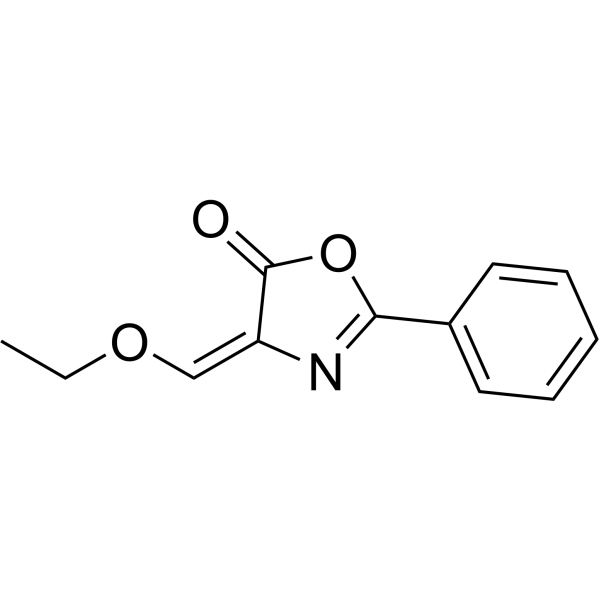
Oxazolone is a haptenizing agent that induces acute or chronic inflammation of the large intestine and is used to construct models of colitis. Oxazolone can cause Th1/Th2-dependent colitis with weight loss and diarrhea. Oxazolone-induced inflammation can be mitigated by neutralizing anti-IL-4 or anti-TNF-α antibodies or decoy IL-13R2-α-FC proteins .
loading...
    loading...
Cat. No.: HY-N15135
CAS No.: 9040-27-1
Arabinoxylan Medium viscosity is an orally active Dectin-1 splice variant modulator, glucose absorption inhibitor, and chyme viscosity enhancer. Arabinoxylan Medium viscosity inhibits particulate β-glucan-induced Dectin-1A activation and mildly suppresses Dectin-1B activation. In human dendritic cells stimulated with particulate β-glucan, Arabinoxylan Medium viscosity reduces the production of IL-10 and TNF-α, and increases the production of IL-4 and IL-23. Arabinoxylan Medium viscosity also supports antifungal immune responses without activating TLR2, TLR4 or TLR5, and does not induce cytokine production when used to stimulate human dendritic cells alone. Arabinoxylan Medium viscosity increases small intestinal chyme viscosity, gets degraded in the large intestine to produce short-chain fatty acids, reduces glucose absorption and insulin response, and improves glucose homeostasis. Arabinoxylan Medium viscosity supports microbial fermentation and the growth of beneficial microbiota in the gastrointestinal tract, prevents bile acid reabsorption, and delays starch digestion. Arabinoxylan Medium viscosity can be used in research related to type 2 diabetes, impaired glucose tolerance, and metabolic syndrome .
loading...
    loading...
Cat. No.: HY-W094747A
CAS No.: 588-68-1
Target:  

Drug Intermediate

Research Areas:  

Inflammation/Immunology

Benzalazine is a 5-azo derivative of 5-Aminosalicylic Acid (HY-15027) that can be used for the research of ulcerative colitis and Crohn's disease of the large intestine. The benzalazine metabolite 5-ASA and the 5-ASA metabolite acetyl-5-aminosalicylic acid are excreted mainly with the faeces .
loading...
    loading...
Cat. No.: HY-W396714
CAS No.: 14047-56-4
Synonyms: Wormwood acid sodium
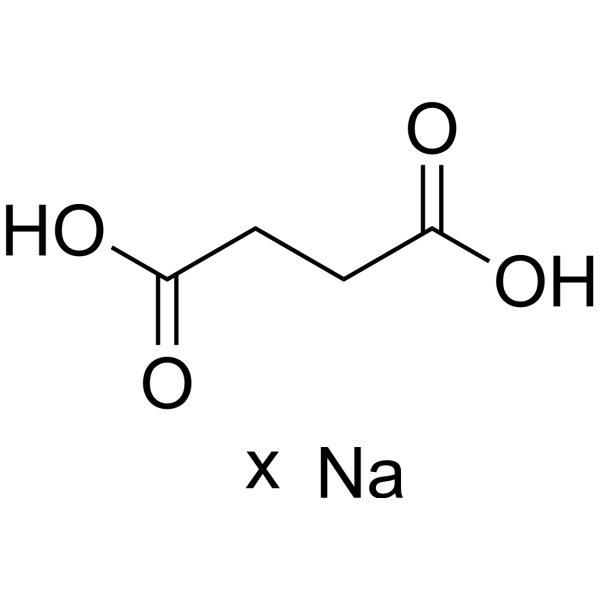
Succinic acid sodium is a potent and orally active anxiolytic agent. Succinic acid sodium shows inhibitory effects on colonic epithelial cell proliferation in vivo. Succinic acid sodium can down-regulate the expression of KCNMB1 (potassium channel subunit β1) and TET1 (ten?eleven translocation 1). Succinic acid sodium can be used for gestational hypertension research .
loading...
    loading...
Cat. No.: HY-129878
CAS No.: 26295-56-7
Synonyms: AD-41
Target:  

Endogenous Metabolite

Research Areas:  

Cancer

N-Trifluoroacetyladriamycin (AD-41) is a chemotherapeutic compound with antitumor activity. N-Trifluoroacetyladriamycin exhibits the highest fluorescence and radioactivity levels in the small intestine and liver, indicating its significant accumulation in these tissues. N-Trifluoroacetyladriamycin also shows significant accumulation in the kidney, spleen, large intestine, lung, and heart. N-Trifluoroacetyladriamycin is a metabolite of Valrubicin, which is used to inhibit bladder cancer. The presence of N-Trifluoroacetyladriamycin and its derivatives may be related to the biotransformation of the compound and its antitumor mechanism .
loading...
    loading...
Cat. No.: HY-L103
2,632 compounds

Colorectal cancer (CRC), also known as bowel cancer, colon cancer, or rectal cancer, arises as adenocarcinoma from glandular epithelial cells of the large intestine comprised of the colon and rectum. The majority of cases of CRC are sporadic and result from risk factors, such as a sedentary lifestyle, obesity, processed diets, alcohol consumption and smoking. CRC is also a common preventable cancer.

Studies showed several cellular signaling pathways dysregulated in CRC, leading to the onset of malignant phenotypes. Therefore, it is necessary to analyze the signaling pathways involved in the occurrence and development of colorectal cancer to study the progression and drug treatment of colorectal cancer. Among them, Wnt/β-catenin, p53, TGF-β/SMAD, NF-κB, Notch, VEGF and other target genes and signaling pathways are the focus of research. MCE offers a unique collection of 2,632 compounds with identified and potential anti-colorectal cancer activity. MCE anti-colorectal cancer compound library is a useful tool for anti-colorectal cancer drugs screening and other related research.

