21 Results for "

lipid moiety

" in MedChemExpress (MCE) Product Catalog:
Products (21)

21 Results for "lipid moiety" in MCE Product Catalog:

Cat. No.: HY-N16040
CAS No.: 2936622-30-7
Category:  

Lipids

Target:  

Liposome

DMG-pSar25 is a double lipid-tailed polysarcosine lipid with 25 sarcosine moieties, serving as a PEG lipid substitute in lipid nanoparticle formulations for mRNA delivery. DMG-pSar25 supports mRNA delivery in lipid nanoparticle formulations .
loading...
    loading...
Cat. No.: HY-165613
CAS No.: 656831-18-4
Synonyms: Dipalmitoyl-S-glyceryl-cysteine; S-[2,3-Bis(palmitoyloxy)propyl]cysteine
Pam2Cys (Dipalmitoyl-S-glyceryl-cysteine; S-[2,3-Bis(palmitoyloxy)propyl]cysteine) is a TLR2 agonist and immunostimulant. Pam2Cys binds to TLR2 to activate dendritic cells and trigger the TLR2-dependent NF-κB signaling pathway. Pam2Cys also induces dendritic cell maturation by upregulating the expression of cell surface MHC II molecules. Pam2Cys activates innate immune signaling pathways, drives pro-inflammatory and antimicrobial responses, enhances the expression of macrophage activation markers, increases phagocytic activity, induces the release of IL-12 and pro-inflammatory cytokines, and polarizes macrophages into a pro-inflammatory, antimicrobial phenotype without interfering with IL-10-induced macrophage polarization. Pam2Cys also serves as the lipid moiety in synthetic lipopeptide vaccines and possesses self-adjuvant properties. Pam2Cys enhances the immunogenicity of conjugated peptide segments and induces cellular and humoral immune responses. However, it does not activate CD4 T cells in mouse splenocyte cultures when used alone. Pam2Cys activates pulmonary TLR2 signaling pathways, triggers innate immune responses, recruits neutrophils and macrophages, induces the secretion of various cytokines, alleviates symptoms and damages associated with influenza A virus infection in mice without impairing adaptive immunity. Pam2Cys can be used in studies related to tuberculosis and influenza A virus infection .
loading...
    loading...
Cat. No.: HY-143692
CAS No.: 123036-44-2
Purity:  ≥99.0%
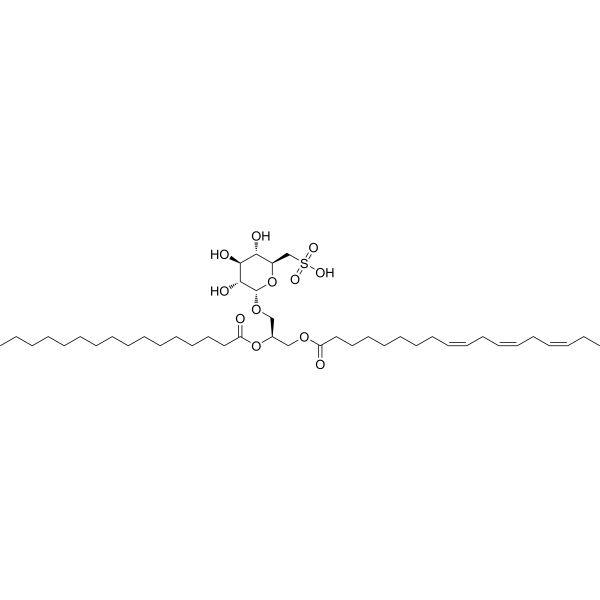
SQDG inhibits topoisomerase I and P-selectin receptor, exhibits anti-inflammatory, antiviral and antitumor activities. SQDG is a glycolipid that possesses sugar moieties in their head groups. SQDG is a membrane lipid that can be used to investigate the effects of structural lipid in LNP formulations .
loading...
    loading...
Cat. No.: HY-W440690
Target:  

Liposome

Research Areas:  

Cancer

Cholesterol-PEG2000-amine is a pegylated lipids which can be used for preparation of liposome or nanoparticle. The lipophilic moiety can encapsulate hydrophobic drugs whereas the hydrophilic PEG chain helps the overal water solubility of the micelles.
loading...
    loading...
Cat. No.: HY-W141932
CAS No.: 6333-54-6
Synonyms: Stearoylglycine; N-Octadecanoylglycine
Target:  

Endogenous Metabolite

Research Areas:  

Others

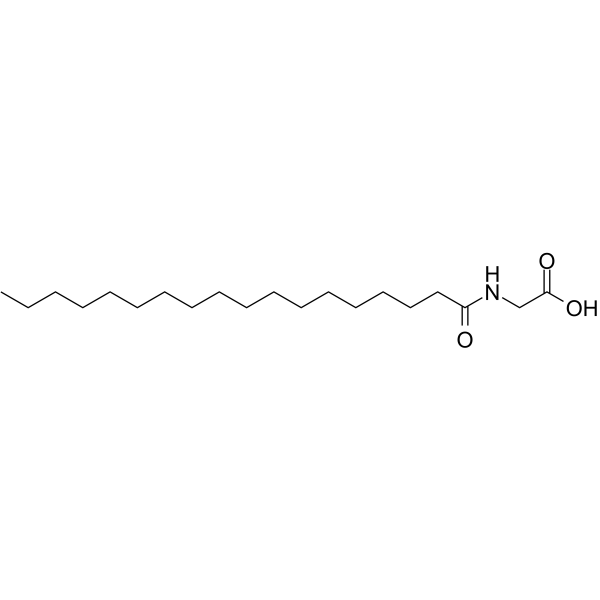
N-stearoylglycine is a lipid and has a small ionizable polar headgroup whose charge is pH dependent and whose amide moiety can form H-bonded network between adjacent molecules in ordered films .
loading...
    loading...
Cat. No.: HY-W440706
Target:  

Liposome

Research Areas:  

Cancer

Cholesterol-PEG2000-alcohol is a pegylated lipids which can be used for preparation of liposome or nanoparticle. The lipophilic moiety can encapsulate hydrophobic drugs whereas the hydrophilic PEG chain helps the overal water solubility of the micelles. The amine can react with an activated NHS ester to form a stable amide bond.
loading...
    loading...
Cat. No.: HY-159858
CAS No.: 3097638-11-1
Target:  

Liposome

Research Areas:  

Cancer

Lipid 16 is an ionizable lipid that can be used to synthesize lipid nanoparticles (LNP) for delivering mRNA and other payloads. Lipid 16 as a potent cell type-specific ionizable lipid for the CD11bhi macrophage population without an additional targeting moiety .
loading...
    loading...
Cat. No.: HY-125734
CAS No.: 774598-29-7
Target:  

Liposome

Research Areas:  

Others

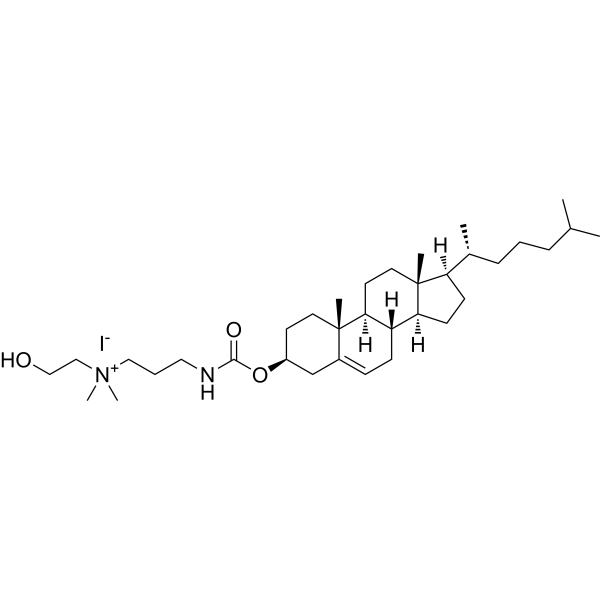
DMHAPC-Chol, a cationic lipid, contains a biodegradable carbamoyl linker and a hydroxyethyl group in the polar amino head moiety. DMHAPC-Chol can be used in both transfection experiments concerning plasmids or siRNA .
loading...
    loading...
Cat. No.: HY-W440722
Target:  

Liposome

Research Areas:  

Others

Cholesterol-PEG1000-Thiol is a PEGylated lipid that forms micelles in water and can be used to prepare liposomes or nanoparticles as drug delivery systems. The thiol moiety reacts with maleimide to form a stable thioether bond .
loading...
    loading...
Cat. No.: HY-W440901
Target:  

Liposome

Research Areas:  

Others

DSPE-PEG5000-SPDP is an amphiphilic polyPEG which forms lipid bilayer in water. It can be used to encapsualte therapeutic agents. The core can encapsulate hydrophilic nutrients, such as protein/peptide and mRNA/DNA/siRNA etc. while the lipid bilayer can solubilize hydrophobic drugs, such as doxorubicin, curcumin etc. The SPDP moiety can react with thiol molecule to form a disulfide bond.
loading...
    loading...
Cat. No.: HY-W800840
CAS No.: 1417790-98-7
Research Areas:  

Others

Alkyne Sphinganine a metabolic labeling reagent that contains a terminal alkyne moiety that allows for the subsequent tagging of protein?lipid complexes by click chemistry. The terminal alkyne group can be used in a highly specific linking reaction with azide-containing reagents, known as ‘click chemistry’, in the presence of a copper (Cu)-containing catalyst allowing for the visualization and proteomic profiling of protein?sphingolipid complexes in living cells.
loading...
    loading...
Cat. No.: HY-164813
CAS No.: 352523-18-3
Synonyms: 7-Ketocholesteryl-9-carboxynonanoate
Target:  

NF-κB

Research Areas:  

Metabolic Disease

oxLig-1 (7-Ketocholesteryl-9-carboxynonanoate) is the lipid moiety of oxidized low-density lipoprotein (oxLDL) and is a key ligand for β-glycoprotein I (β(2)-GPI). oxLig-1 causes nuclear translocation by activating the NF-κB pathway. oxLig-1 can be used in the study of atherosclerosis (AS) .
loading...
    loading...
Cat. No.: HY-161668
Research Areas:  

Cancer

Ru-Poma is a Ru(II)-based photosensitizer, which attenuates Cisplatin (HY-17394)-resistant tumor through photodynamic therapy (PDT). Ru-Poma photodegrades CRBN through a Pomalidomide (HY-10984) moiety. Ru-Poma induces ferroptosis, through an increase in lipid peroxide, downregulation of GPX4 and GAPDH expression. Ru-Poma exhibits cytotoxicity in A549, with IC50 of 18.46 μM and 0.37 μM in dark and upon irradiation, respectively .
loading...
    loading...
Cat. No.: HY-N15960
CAS No.: 2770684-40-5
Category:  

Lipids

Photoclick cholesterol II is a sterol lipid Cholesterol (HY-N0322) analog that contains a clickable terminal alkyne moiety and a photoactivatable diaziridine group.
loading...
    loading...
Cat. No.: HY-184364
CAS No.: 2989205-54-9
Research Areas:  

Others

Photoclick stearic acid is a bifunctional lipid probe derived from stearic acid, containing a photo-activatable diazirine group and a terminal clickable alkyne moiety. Photoclick stearic acid can be used as a chemical reporter to investigate protein lipidation and analyze membrane protein-protein interactions .
loading...
    loading...
Cat. No.: HY-N15775
CAS No.: 2260670-55-9
Synonyms: Azo-Cer
Category:  

Animals Lipids

ACe-1 is a ceramide derivative with an azobenzene moiety to allow for optical control of the N-acyl chain. ACe-1 is capable of reversibly switching lipid domains in a raft-like bilayer membrane .
loading...
    loading...
Cat. No.: HY-D3007
LD-CK is a fluorescent probe based on a coumarin-chromone structure, specifically designed to visualize lipid droplet polarity changes and endowed with multimodal imaging capability. LD-CK contains a high-performance lipophilic coumarin moiety, which enables it to specifically target lipid droplets upon cellular entry while minimizing background fluorescence to the greatest extent. LD-CK has an excitation wavelength (Ex) of 488 nm and an emission wavelength (Em) of 540 nm (in low-polarity environments such as toluene) or 640 nm (in high-polarity environments such as glycerol), with its emission peak undergoing a redshift as solvent polarity increases .
loading...
    loading...
Cat. No.: HY-W989128
CAS No.: 686723-15-9
Ethyl 8-hydroxy-α-(2-propynylamino) is a bifunctional iron chelator that inhibits lipid peroxidation (IC50 = 15 μM). Ethyl 8-hydroxy-α-(2-propynylamino) chelates Fe (II) and Fe (III) metal ions, and inhibits iron/ascorbic acid-induced mitochondrial membrane lipid peroxidation. Ethyl 8-hydroxy-α-(2-propynylamino) can be used in the research of oxidative stress and neurodegenerative diseases .
loading...
    loading...
Cat. No.: HY-184508
Target:  

Ligands for E3 Ligase

Research Areas:  

Cancer

E3 ligase Ligand 81 is a VHL E3 ubiquitin ligase ligand and constitutes the VHL ligand moiety of R4VPL3-1 (HY-184506). R4VPL3-1 is a PROTAC-like bifunctional degrader linking RNF4 and VHL; it binds to and modifies GPX4, thereby inhibiting its anti-ferroptotic function. R4VPL3-1 induces iron-dependent lipid peroxidation and rapid ferroptosis-mediated cell death in cancer cells. E3 ligase Ligand 81 can be used in research related to targeted protein degradation and tumors such as melanoma .
loading...
    loading...
Cat. No.: HY-185926
CAS No.: 2364414-05-9
Synonyms: NOX-D21; AON-D21
Ldalaptican pegol (AON-D21; NOX-D21) is a PEGylated mixed RNA/DNA L-aptamer that specifically binds to complement C5a. Ldalaptican pegol binds to C5a and the C5a moiety on uncleaved C5, thereby blocking C5a signaling. This inhibition suppresses downstream inflammatory responses, immune cell infiltration and chemotaxis, the release of pro-fibrotic factors, and abnormalities in lipid metabolism signaling pathways. Ldalaptican pegol can also alleviate allograft rejection. Ldalaptican pegol can be used in research on inflammatory muscle diseases, Duchenne muscular dystrophy (DMD), diabetes, renal fibrosis, and allograft organ transplant rejection .
loading...
    loading...

