


1. Search Result
Search Result
Pathways Recommended: Metabolic Enzyme/Protease
Results for "

lysosomal proteases

" in MedChemExpress (MCE) Product Catalog:

16

Inhibitors & Agonists

1

Fluorescent Dyes

2

Biochemical Assay Reagents

4

Peptides

Cat. No. Product Name Target Research Areas Chemical Structure
  • HY-108462
    ML-SA1
    Maximum Cited Publications
    9 Publications Verification

    Dengue Virus TRP Channel Flavivirus Infection
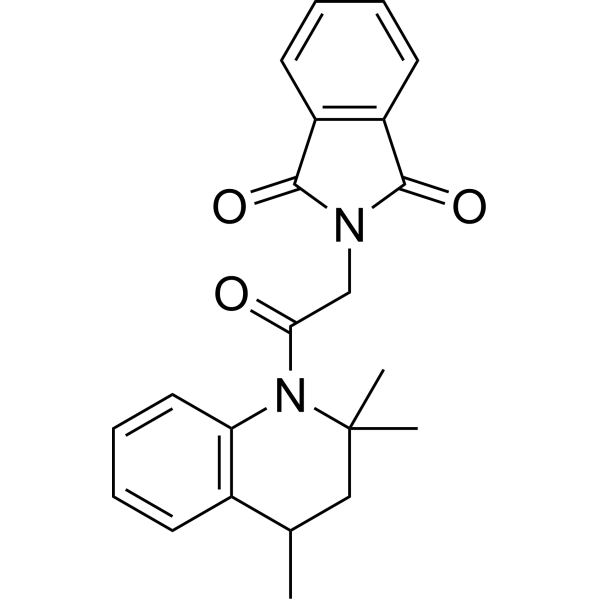
    ML-SA1, as a selective TRPML agonist, inhibits Dengue virus 2 (DENV2) and Zika virus (ZIKV) by promoting lysosomal acidification and protease activity. The IC50 value of ML-SA1 against DENV2 RNA and ZIKV RNA is 8.3 μM and 52.99 μM, respectively. ML-SA1 induces autophagy. ML-SA1 can be used for the research of broad-spectrum antiviral .
    ML-SA1
  • HY-D2449
    DQ-BSA-RED
    2 Publications Verification

    Fluorescent Dye Others
    DQ-BSA-Red is a bovine serum albumin labeled with a red fluorescent dye that can be used to detect lysosomal activity. The excitation wavelength and emission wavelength of DQ-BSA-Red are 590 nm and 620 nm, respectively. The BSA molecule in DQ-BSA-Red is labeled with high concentration of red fluorescent dye in multiple sites, which shows high fluorescence self-inhibition. Once DQ-BSA-RED enters the lysosome, DQ-BSA is cleaved by lysosomal proteases, resulting in unquenched and released fluorescent fragments, emitting bright fluorescence. Inactivated lysosomes are unable to degrade the BSA protein and thus have a lower or even no fluorescent signal .
    DQ-BSA-RED
  • HY-116815
    Lalistat 1
    2 Publications Verification

    Beta-lactamase Bacterial Infection Neurological Disease
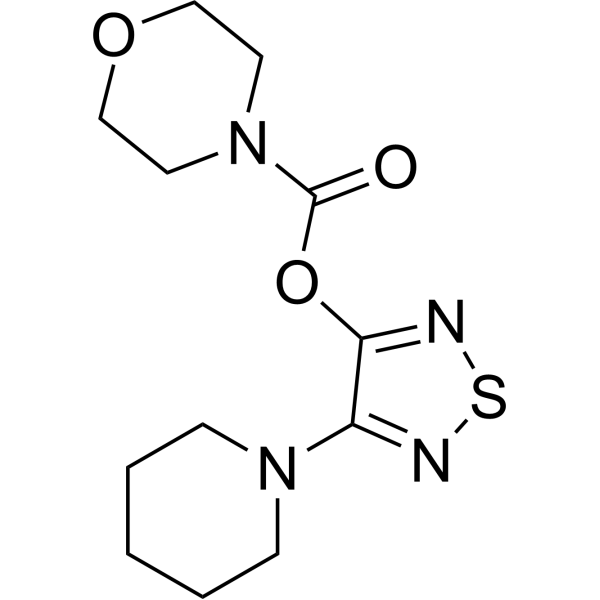
    Lalistat 1 is a potent, selective, and competitive inhibitor of lysosomal acid lipase (LAL) and against purified human LAL (phLAL) with an IC50 of 68 nM. Lalistat 1 is a inhibitor of immunoglobulin A1 protease (IgA1P) proteases for H. influenzae, has less effects on other serine hydrolases (trypsin or β-lactamase, etc.). Lalistat 1 can be used for the research of niemann-pick type C (NPC) disease .
    Lalistat 1
  • HY-42709

    Carbobenzoxy-L-valyl-L-alanine

    Amino Acid Derivatives Cancer
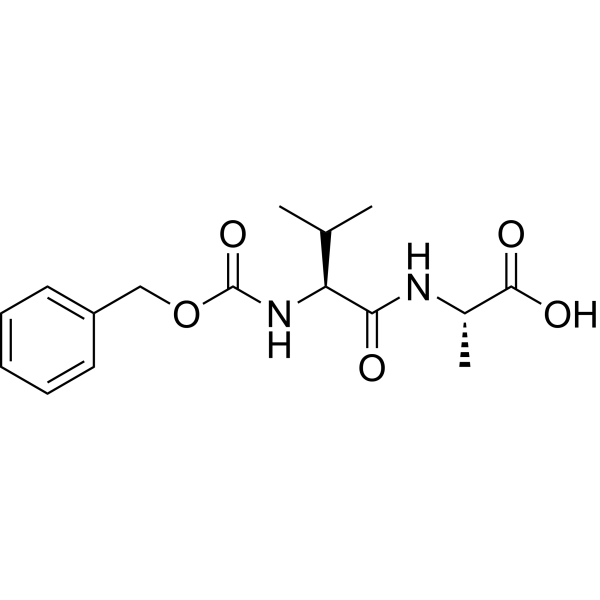
    Z-Val-Ala-OH is a dipeptide derivative of valine and alanine. Z-Val-Ala-OH undergoes cleavage by cathepsin B and other lysosomal proteases to enable payload release following lysosomal internalization. Z-Val-Ala-OH can be used for the research of antibody-drug conjugate (ADC) development[1] .
    Z-Val-Ala-OH
  • HY-138540
    1-Dodecylimidazole
    3 Publications Verification

    N-Dodecylimidazole

    Fungal Cancer
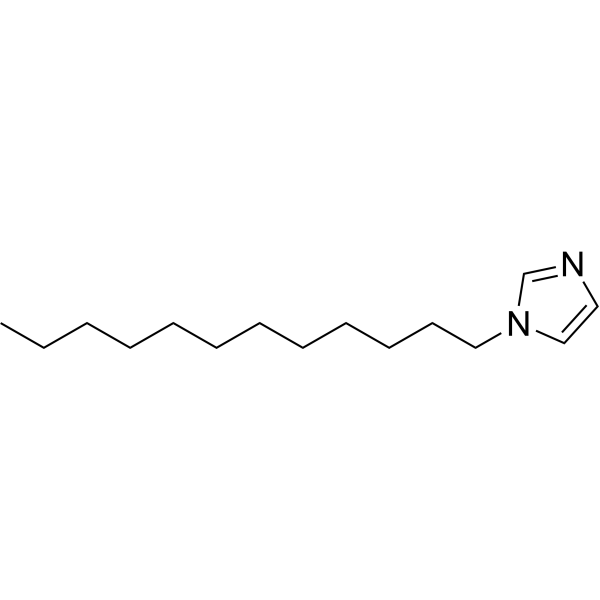
    1-Dodecylimidazole (N-Dodecylimidazole) is a lysosomotropic detergent and a cytotoxic agent. 1-Dodecylimidazole causes cell death by its acid-dependent accumulation in lysosomes, disruption of the lysosomal membrane, and releaseof cysteine proteases into the cytoplasm. 1-Dodecylimidazole has hypocholesterolaemic activity and broad-spectrum antifungal activity .
    1-Dodecylimidazole
  • HY-P2922

    Cathepsin Cancer
    Cathepsin C is a lysosomal cysteine protease essential for catalytic activation of many serine proteases, including proteinase 3 (PR3), neutrophil elastase (NE), cathepsin G (CTSG), granzyme A/B/C, and mast cell chymase .
    Cathepsin C
  • HY-P2750
    Cathepsin D
    1 Publications Verification

    CTSD

    Biochemical Assay Reagents Cardiovascular Disease Neurological Disease Cancer
    Cathepsin D (CTSD) is a lysosomal aspartic protease encoded by the CTSD gene. Cathepsin D regulates lysosomal protease activity. Loss of Cathepsin D leads to lysosomal dysfunction and the accumulation of various cellular proteins associated with neurodegenerative diseases. Cathepsin D is involved in breast cancer metastasis. Cathepsin D can be used in research on diseases such as breast cancer and stroke .
    Cathepsin D
  • HY-P5377

    Cathepsin K substrate

    Ser/Thr Protease Others
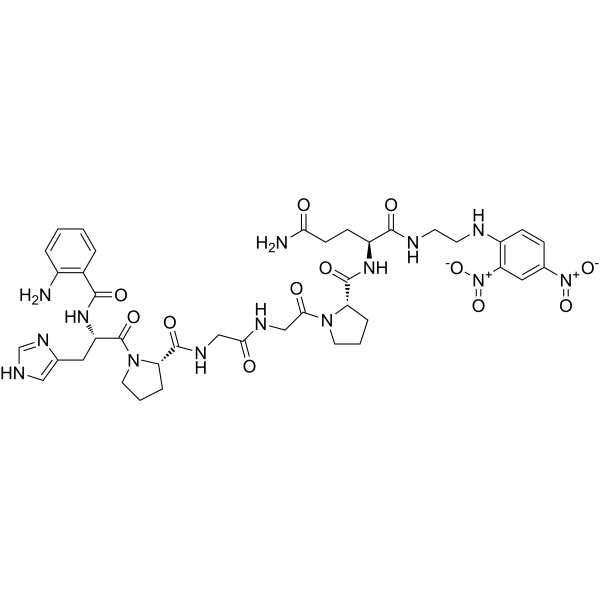
    Abz-HPGGPQ-EDDnp (Cathepsin K substrate) is a biological active peptide. (Cathepsins are a class of globular lysosomal proteases, playing a vital role in mammalian cellular turnover. They degrade polypeptides and are distinguished by their substrate specificities. Cathepsin K is the lysosomal cysteine protease involved in bone remodeling and resorption. It has potential as a drug target in autoimmune diseases and osteoporosis.This FRET peptide can be used to monitor selectively cathepsin K activity in physiological fluids and cell lysates. Abz-HPGGPQ-EDDnp [where Abz represents o-aminobenzoic acid and EDDnp represents N -(2, 4-dinitrophenyl)-ethylenediamine], a substrate initially developed for trypanosomal enzymes, is efficiently cleaved at the Gly-Gly bond by cathepsin K. This peptide is resistant to hydrolysis by cathepsins B, F, H, L, S and V, Ex/Em=340 nm/420 nm.)
    Abz-HPGGPQ-EDDnp
  • HY-E70228

    Ser/Thr Protease Cancer
    Cathepsin H, human liver is an aminopeptidase and an endopeptidase. Involved in the catabolism of proteins in the lysosomal system. Cathepsin H, human liver has a key role in the regulation of the biological behavior of tumor cells and the pathological processes of brain diseases .
    Cathepsin H, human liver
  • HY-126988

    α-MAPI

    Elastase Others
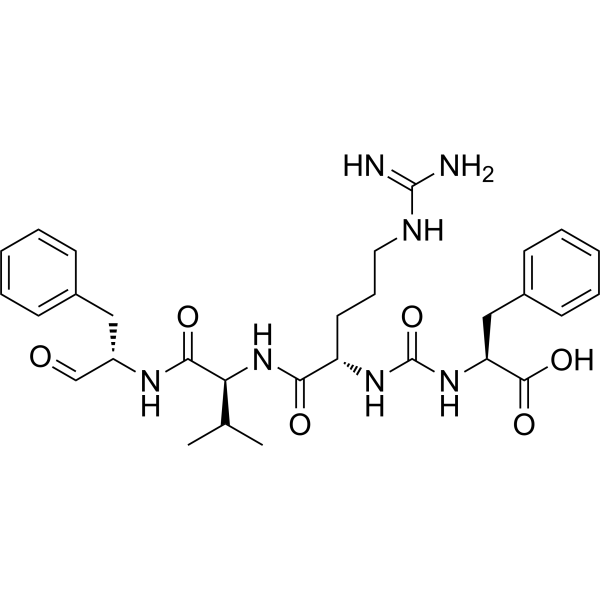
    SP-Chymostatin B (α-MAPI) is a strong inhibitor of many proteases, including chymotrypsin, papain, chymotrypsin-like serine proteinases, chymases, and lysosomal cysteine proteinases such as cathepsins A,B,C, H, and L. SP-Chymostatin B weakly inhibits human leucocyte elastase .
    SP-Chymostatin B
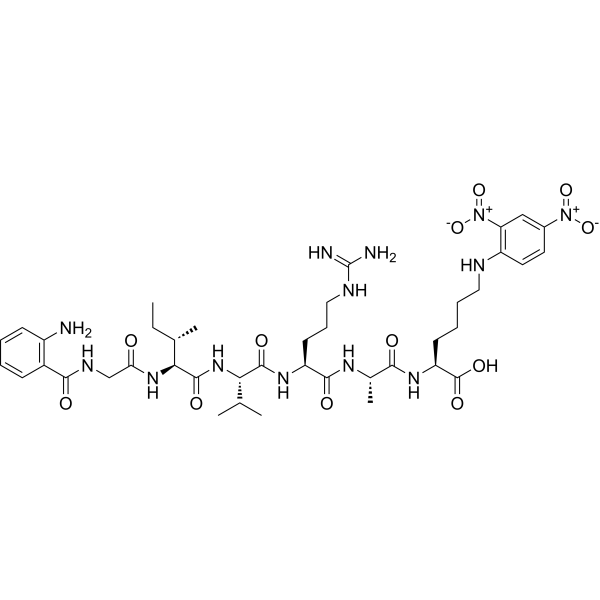
  • HY-P4404

    Cathepsin Others
    Abz-GIVRAK(Dnp) is the most efficient substrate for cathepsin B and is highly selective for this enzyme among lysosomal cysteine proteases. After Abz-GIVRAK(Dnp) is hydrolyzed, aminoacylbenziminosulfosuccinic acid (Abz-SAS) is released, and dinitrobenzoyl (Dnp) is also released. The product of this hydrolysis reaction, Abz-SAS, is fluorescent under ultraviolet light and can emit a fluorescent signal .
    Abz-GIVRAK(Dnp)
  • HY-P11311

    Proteasome Cancer
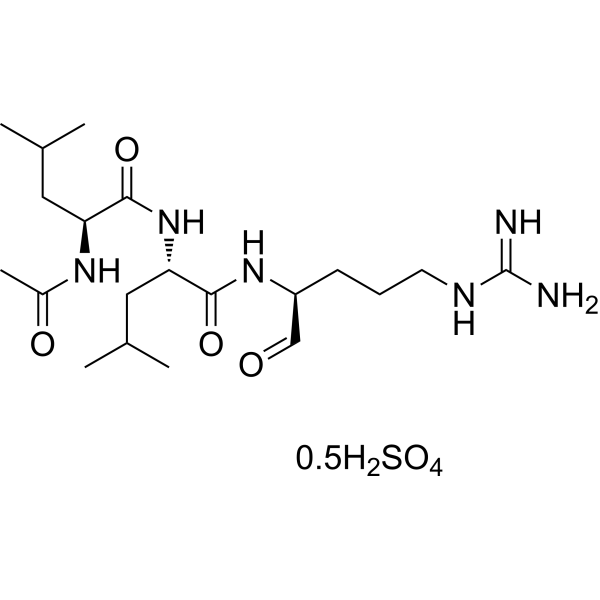
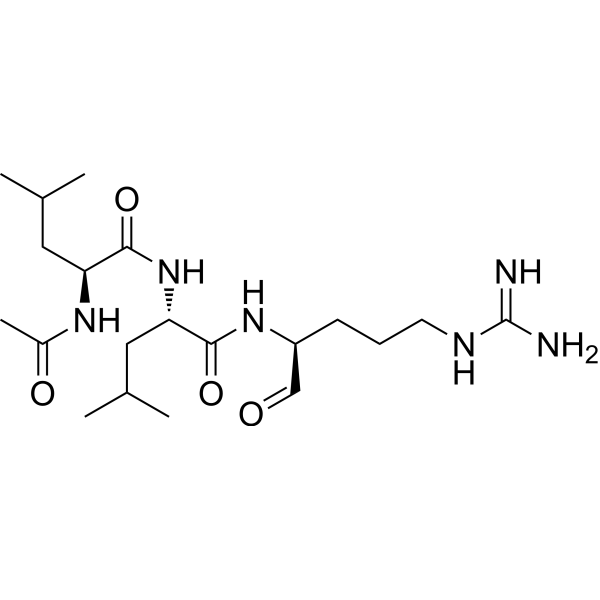
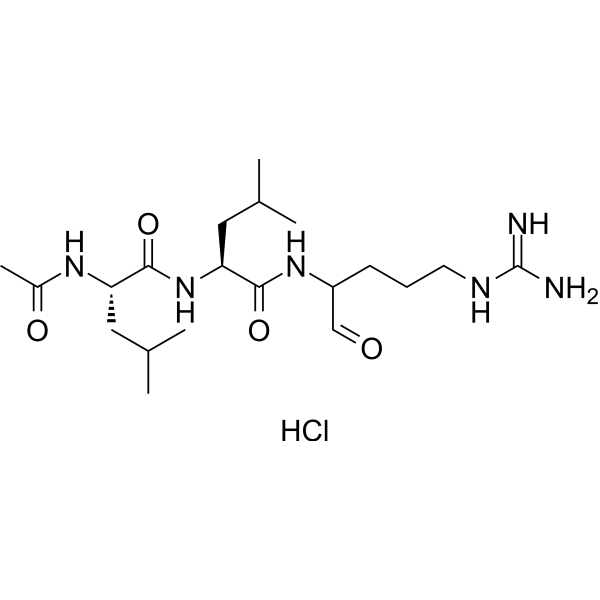
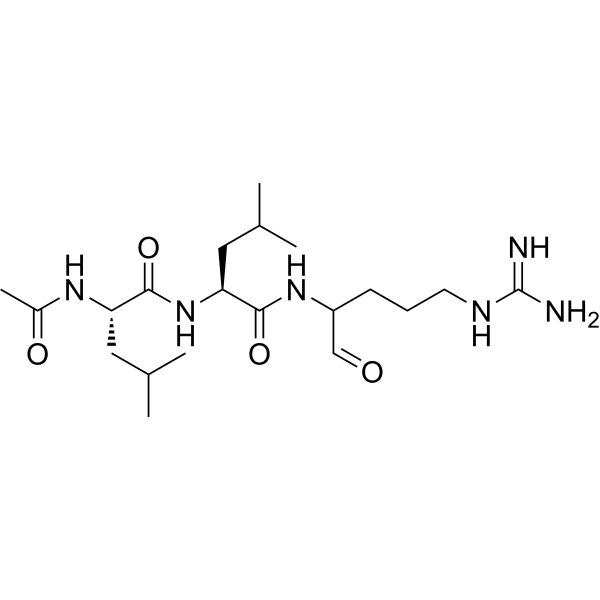
    NC-002, a cell-permeable peptide, is a Trypsin-like proteasome inhibitor without inhibition of lysosomal cysteine proteases. NC-002 is the epoxyketone derivative of Leupeptin (HY-18234). NC-002 sensitizes myeloma cells to Bortezomib (HY-10227) and Carfilzomib (HY-10455). NC-002 can be used for cancers research .
    NC-002
  • HY-167924

    Kallikrein Thrombin Ser/Thr Protease Inflammation/Immunology
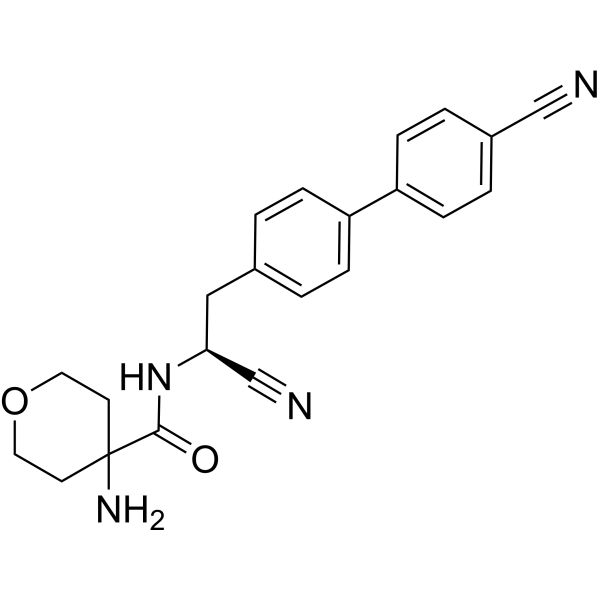
    Ono 3307 Free base is a novel synthetic protease inhibitor that exhibits protective effects against acute pancreatitis by preventing hyperamylasemia and pancreatic edema. Ono 3307 Free base also inhibits the redistribution of lysosomal enzymes in acinar cells and mitigates lactic dehydrogenase discharge. Ono 3307 Free base effectively reduces cathepsin B leakage from lysosomes in a dose-dependent manner. Ono 3307 Free base is able to target trypsin (Ki=48 nM), thrombin (Ki=0.18 μM), plasma kallikrein (Ki=0.29 μM), plasmin (Ki=0.31 μM), pancreatic kallikrein (Ki=3.6 μM), and chymotrypsin (Ki=47 μM).
    Ono 3307 free base
  • HY-108462R

    Dengue Virus Reference Standards TRP Channel Flavivirus Infection
    ML-SA1 (Standard) is the analytical standard of ML-SA1 (HY-108462). This product is intended for research and analytical applications. ML-SA1, as a selective TRPML agonist, inhibits Dengue virus 2 (DENV2) and Zika virus (ZIKV) by promoting lysosomal acidification and protease activity. The IC50 value of ML-SA1 against DENV2 RNA and ZIKV RNA is 8.3 μM and 52.99 μM, respectively. ML-SA1 induces autophagy. ML-SA1 can be used for the research of broad-spectrum antiviral .
    ML-SA1 (Standard)
  • HY-E70958

    Carboxypeptidase Metabolic Disease
    Carboxypeptidase G, Pseudomonas sp. (EC 3.4.17.11) is a lysosomal thiol-dependent protease that stepwise cleaves γ-glutamylpteroyl polyγ-glutamic acid to generate pteroyl-α-glutamic acid (folic acid) and free glutamic acid. Carboxypeptidase G is highly specific for the γ-glutamyl bond but not for the C-terminal amino acid of the leaving group. Carboxypeptidase G can be activated by Zn 2+ ions.
    Carboxypeptidase G, Pseudomonas sp.
  • HY-138540R

    N-Dodecylimidazole (Standard)

    Fungal Reference Standards Cancer
    1-Dodecylimidazole (Standard) is the analytical standard of 1-Dodecylimidazole. This product is intended for research and analytical applications. 1-Dodecylimidazole (N-Dodecylimidazole) is a lysosomotropic detergent and a cytotoxic agent. 1-Dodecylimidazole causes cell death by its acid-dependent accumulation in lysosomes, disruption of the lysosomal membrane, and releaseof cysteine proteases into the cytoplasm. 1-Dodecylimidazole has hypocholesterolaemic activity and broad-spectrum antifungal activity .
    1-Dodecylimidazole (Standard)

Inquiry Online

Your information is safe with us. * Required Fields.

Salutation


Country or Region *

Applicant Name *


Organization Name *

Department *


Email Address *


Product Name *

Cat. No.


Requested quantity *

Phone Number *


Remarks

Inquiry Online

Inquiry Information

Product Name:
Cat. No.:
Quantity:
MCE Japan Authorized Agent:

