
Search Result
Results for "
manufacturing
" in MedChemExpress (MCE) Product Catalog:
169
Biochemical Assay Reagents
33
Isotope-Labeled Compounds
| Cat. No. |
Product Name |
Target |
Research Areas |
Chemical Structure |
-
- HY-Y1883
-
|
|
Environmental Pollutants
Biochemical Assay Reagents
Apoptosis
|
Infection
Cancer
|
|
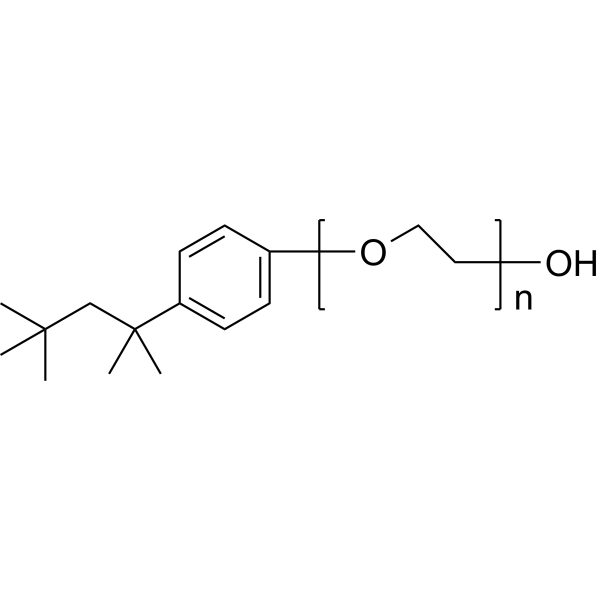
Polyethylene glycol mono(4-tert-octylphenyl) ether surfactant is a non-denaturing detergent that solubilizes lipid membranes. Polyethylene glycol mono(4-tert-octylphenyl) ether surfactant is commonly used in laboratories and is applied to vaccines at different stages of the manufacturing process. Polyethylene glycol mono(4-tert-octylphenyl) ether surfactant is listed as an excipient in certain vaccines including split virus influenza vaccines. Polyethylene glycol mono(4-tert-octylphenyl) ether surfactant is a nonionic surfactant. Polyethylene glycol mono(4-tert-octylphenyl) ether surfactant induces Apoptosis in prostate and colon cancer cell lines and reduces the infectivity of classic enveloped viruses such as WNV .
|
-
-
- HY-41417
-
|
Caprylic acid
|
Environmental Pollutants
Endogenous Metabolite
|
Metabolic Disease
|
|
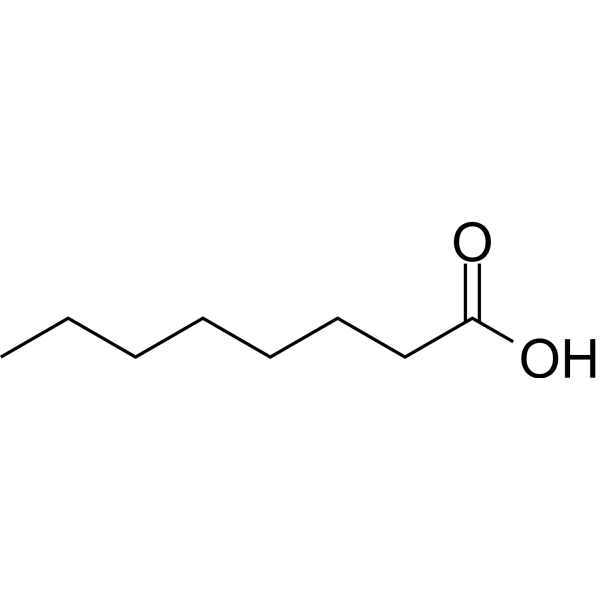
Octanoic acid (Caprylic acid) is an oily liquid with a slightly unpleasant rancid taste and used commercially in the production of esters used in perfumery and also in the manufacture of dyes. Octanoic acid is also a tremor-suppressing agent .
|
-
-
- HY-E70452
-
|
MTG; MTGase; Protein-glutamine-γ-glutamyltransferase
|
Biochemical Assay Reagents
|
Others
|
|
Microbial Transglutaminase (MTG) is a transglutaminase. Enzymes have high catalytic efficiency, high specificity, and mild operating conditions. It can be applied in industries such as pharmaceuticals, industrial production, food manufacturing, and aquaculture .
|
-
-
- HY-Y1883A
-
|
|
Environmental Pollutants
Biochemical Assay Reagents
|
Infection
Cancer
|
|
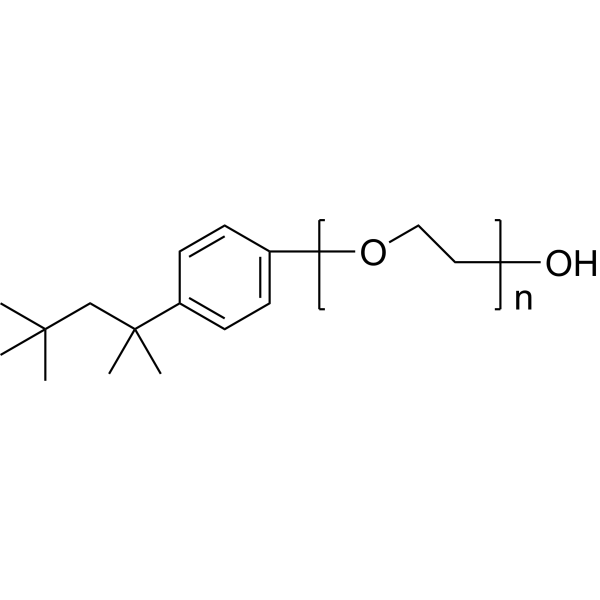
Polyethylene glycol mono(4-tert-octylphenyl) ether is a non-denaturing detergent that solubilizes lipid membranes. Polyethylene glycol mono(4-tert-octylphenyl) ether is commonly used in laboratories and is applied to vaccines at different stages of the manufacturing process. Polyethylene glycol mono(4-tert-octylphenyl) ether is listed as an excipient in certain vaccines including split virus influenza vaccines. Polyethylene glycol mono(4-tert-octylphenyl) ether is a nonionic surfactant. Polyethylene glycol mono(4-tert-octylphenyl) ether induces Apoptosis in prostate and colon cancer cell lines and reduces the infectivity of classic enveloped viruses such as WNV .
|
-
-
- HY-Y0308
-
|
|
Environmental Pollutants
Biochemical Assay Reagents
|
Others
|
|
Disodium phosphate is commonly used as a food additive, buffer and laboratory reagent. Disodium phosphate has unique chemical properties that make it an important ingredient in the manufacture of fertilizers, detergents and water treatment products. Additionally, it is used in various medical applications such as osmotic laxatives and electrolyte replacement solutions.
|
-
-
- HY-13012G
-
|
E-616452; SJN 2511
|
TGF-β Receptor
|
Metabolic Disease
|
|
RepSox (E-616452) (GMP) is a RepSox (HY-13012) produced by using GMP guidelines. GMP small molecules works appropriately as an auxiliary reagent for cell therapy manufacture. RepSox is a potent and selective TGF-β-RI/ALK5 inhibitor .
|
-
-
- HY-B0166G
-
-
-
- HY-14649G
-
|
Vitamin A acid; all-trans-Retinoic acid; ATRA
|
RAR/RXR
PPAR
Endogenous Metabolite
Autophagy
|
Cancer
|
|
Retinoic acid (Vitamin A acid) (GMP) is Retinoic acid (HY-14649) produced by using GMP guidelines. GMP small molecules works appropriately as an auxiliary reagent for cell therapy manufacture. Retinoic acid is an agonist of RAR nuclear receptors .
|
-
-
- HY-128793
-
|
(E)-Stilbene
|
Drug Intermediate
|
Others
|
|
trans-Stilbene ((E)-Stilbene) is used in the manufacturing of dye lasers, optical brighteners, non-steroidal synthetic estrogens .
|
-
-
- HY-B2221
-
|
Pectin glycosidase
|
Environmental Pollutants
Endogenous Metabolite
|
Others
Cancer
|
|
Cellulose (Pectin glycosidase) is a natural high molecular weight polysaccharide found in many plants and organisms. It is widely used in manufacturing industries, such as in paper making, textiles, food and medicine, etc. As a renewable resource, Cellulose is biodegradable and sustainable, and can also be used to manufacture chemicals such as Cellulose Esters, Cellulose Acetate and Cellulose Nitrate. In addition, Cellulose is often used as a food additive to increase the stability and quality of food.
|
-
-
- HY-14648G
-
-
-
- HY-13027G
-
-
-
- HY-N7703
-
|
|
Others
|
Cancer
|
|
D-Mannuronic acid sodium is a uronic acid monosaccharide that is frequently utilized in alginate manufacturing. D-Mannuronic acid can be used for the study of cancer .
|
-
-
- HY-W015339
-
-
-
- HY-13257G
-
|
|
ROCK
|
Cancer
|
|
Thiazovivin (GMP) is Thiazovivin (HY-13257) produced by using GMP guidelines. GMP small molecules work appropriately as an auxiliary reagent for cell therapy manufacture. Thiazovivin is a potent ROCK inhibitor .
|
-
-
- HY-176747
-
|
DMPPD
|
Reactive Oxygen Species (ROS)
|
Others
|
|
7-PPD (DMPPD) is a rubber antioxidant that scavenges free radicals and inhibits the oxidative degradation of rubber chains. 7-PPD shows promise for research in tire manufacturing and rubber product processing .
|
-
-
- HY-P2877
-
|
|
Endogenous Metabolite
|
Others
|
|
Tannase is a tannin acyl hydrolase. Tannase catalyzes the hydrolysis of ester bonds in gallotannins, complex tannins and gallic acid esters to release gallic acid. Tannase plays a role in industrial production, including the manufacture of instant tea, beer, fruit juice, some wines, and the production of gallic acid .
|
-
-
- HY-10432G
-
|
|
Anaplastic lymphoma kinase (ALK)
|
Cancer
|
|
A 83-01 (GMP) is A 83-01 (HY-10432) produced by using GMP guidelines. GMP small molecules works appropriately as an auxiliary reagent for cell therapy manufacture. A 83-01 is a potent ALK4/5/7 inhibitor .
|
-
-
- HY-N1384
-
|
|
Environmental Pollutants
|
Others
|
|
Ambroxide is a naturally occurring terpenoid. Ambroxide is one of the key constituents of ambergris. Ambroxide is used in the manufacture of high-end perfumes to improve the aroma quality and fragrance lasting time of perfumes .
|
-
-
- HY-41417S4
-
|
Caprylic acid-13C4
|
Endogenous Metabolite
|
Metabolic Disease
|
|
Octanoic acid- 13C4 is the 13C labeled Octanoic acid. Octanoic acid (Caprylic acid) is an oily liquid with a slightly unpleasant rancid taste and used commercially in the production of esters used in perfumery and also in the manufacture of dyes.
|
-
-
- HY-15147G
-
|
|
PARP
|
Neurological Disease
Cancer
|
|
XAV-939 (GMP) is XAV-939 (HY-15347) produced by using GMP guidelines. GMP small molecules works appropriately as an auxiliary reagent for cell therapy manufacture. XAV-939 is a tankyrase inhibitor .
|
-
-
- HY-B1353
-
|
4'-Hydroxypropiophenone
|
Estrogen Receptor/ERR
|
Endocrinology
|
|
Paroxypropione (4'-Hydroxypropiophenone) is a manufactured, nonsteroidal estrogen and can be used for endocrine research .
|
-
-
- HY-W130442
-
|
|
SOD
|
Inflammation/Immunology
|
|
N-Isopropyl-N'-phenyl-p-phenylenediamine is an antioxidant used in rubber manufacturing to reduce the detrimental effect of oxygen. N-Isopropyl-N'-phenyl-p-phenylenediamine can cause contact allergy .
|
-
-
- HY-15108G
-
|
|
Smo
|
Neurological Disease
Cancer
|
|
Purmorphamine (GMP) is Purmorphamine (HY-15108) produced by using GMP guidelines. GMP small molecules work appropriately as an auxiliary reagent for cell therapy manufacture. Purmorphamine is a smoothened/Smo receptor agonist with an EC50 of 1 μM .
|
-
-
- HY-15682G
-
|
Ro 13-7410; Arotinoid acid; AGN191183
|
RAR/RXR
|
Cancer
|
|
TTNPB (Ro 13-7410) (GMP) is TTNPB (HY-15682) produced by using GMP guidelines. GMP small molecules work appropriately as an auxiliary reagent for cell therapy manufacture. TTNPB is a highly potent retinoic acid receptor (RAR) agonist .
|
-
-
- HY-E70445
-
|
|
Biochemical Assay Reagents
|
Others
|
|
Chondroitinase AC II is a hydrolase. Enzymes have high catalytic efficiency, high specificity, and mild operating conditions. It can be applied in industries such as pharmaceuticals, industrial production, food manufacturing, and aquaculture .
|
-
-
- HY-W127474
-
|
|
Biochemical Assay Reagents
|
Others
|
|
Ethyl pentadecanoate is an organic compound that is commonly used as a flavoring and food additive, and can also be used in industrial manufacturing, such as the production of lubricants and surfactants. In addition, Ethyl pentadecanoate has biological activities such as antibacterial, insecticidal and antiseptic.
|
-
-
- HY-41417R
-
|
Caprylic acid (Standard)
|
Reference Standards
Endogenous Metabolite
|
Metabolic Disease
|
|
Octanoic acid (Standard) is the analytical standard of Octanoic acid. This product is intended for research and analytical applications. Octanoic acid (Caprylic acid) is an oily liquid with a slightly unpleasant rancid taste and used commercially in the production of esters used in perfumery and also in the manufacture of dyes.
|
-
-
- HY-W127624
-
|
|
Biochemical Assay Reagents
|
Others
|
|
Polyoxyethylene monocetyl ether (n=approx. 23) is a nonionic surfactant and can be used to manufacture hand sanitizer, laundry detergent, body wash, laundry powder, dish soap, metal cleaning agents and other products .
|
-
-
- HY-41417S3
-
|
Caprylic acid-13C
|
Isotope-Labeled Compounds
Endogenous Metabolite
|
Metabolic Disease
|
|
Octanoic acid- 13C is the 13C labeled Octanoic acid. Octanoic acid (Caprylic acid) is an oily liquid with a slightly unpleasant rancid taste and used commercially in the production of esters used in perfumery and also in the manufacture of dyes.
|
-
-
- HY-41417S
-
|
Caprylic acid-d15
|
Endogenous Metabolite
|
Metabolic Disease
|
|
Octanoic acid-d15 is the deuterium labeled Octanoic acid. Octanoic acid (Caprylic acid) is an oily liquid with a slightly unpleasant rancid taste and used commercially in the production of esters used in perfumery and also in the manufacture of dyes.
|
-
-
- HY-17447AG
-
|
SKF 385 hydrochloride
|
Monoamine Oxidase
|
Cardiovascular Disease
Endocrinology
|
|
Tranylcypromine (SKF 385) hydrochloride (GMP) is Tranylcypromine hydrochloride (HY-17447A) produced by using GMP guidelines. GMP small molecules work appropriately as an auxiliary reagent for cell therapy manufacture. Tranylcypromine hydrochloride is a potent monoamine oxidase (MAO) inhibitor .
|
-
-
- HY-W007437
-
|
Naphthalene-2-carboxylic acid
|
Biochemical Assay Reagents
|
Others
|
|
2-Naphthoic acid is an organic compound commonly used as a raw material for dyes and the production of other chemicals. It can form dyes with other organic substances and is widely used in textile, printing and manufacturing fields. In addition, the compound is also used as a photosensitive material and a lubricant.
|
-
-
- HY-ER019
-
|
N-Benzyl-N,N-dibutylbutan-1-aminium chloride
|
Biochemical Assay Reagents
|
Others
|
|
Benzyltributylammonium chloride is an organic salt compound, usually used in catalytic reactions and surfactants. It can play a catalytic role in some organic synthesis reactions, and can be used as a cleaning agent, lubricant and emulsifier. In addition, the compound is widely used in certain industrial fields, such as in the plastic, rubber and textile manufacturing processes.
|
-
-
- HY-10475G
-
|
CD336; NSC608001; Ro 40-6055
|
RAR/RXR
|
Cancer
|
|
AM580 (CD336) (GMP) is AM580= (HY-10475) produced by using GMP guidelines. GMP small molecules works appropriately as an auxiliary reagent for cell therapy manufacture. AM580 is a selective RARα agonist .
|
-
-
- HY-W009400
-
|
|
Drug Intermediate
|
Others
|
|
(2-Dodecen-1-yl)succinic anhydride is an organic compound commonly used in certain polymerization reactions. It is used in the manufacture of products such as plastics and resins, and is widely used in certain industrial fields, such as coatings, inks and textile manufacturing. In addition, the compound is also used as a raw material for pharmaceutical intermediates and surfactants.
|
-
-
- HY-13952
-
|
|
Drug Intermediate
Bacterial
|
Others
|
|
TP-808 is a key enone intermediate for the discovery and manufacture of Tetracycline (HY-A0107) analogs and synthetic tetracyclines including eravacycline .
|
-
-
- HY-B2221S1
-
|
|
Isotope-Labeled Compounds
Endogenous Metabolite
|
Others
|
|
U- 13C Cellulose from chicory is the 13C labeled Cellulose (HY-B2221). Cellulose (Pectin glycosidase) is a natural high molecular weight polysaccharide found in many plants and organisms. It is widely used in manufacturing industries, such as in paper making, textiles, food and medicine, etc. As a renewable resource, Cellulose is biodegradable and sustainable, and can also be used to manufacture chemicals such as Cellulose Esters, Cellulose Acetate and Cellulose Nitrate. In addition, Cellulose is often used as a food additive to increase the stability and quality of food .
|
-
-
- HY-E70428
-
|
|
Biochemical Assay Reagents
|
Others
|
|
D-Xylose dehydrogenase is a peptidase. Enzymes have high catalytic efficiency, high specificity, and mild operating conditions. It can be applied in industries such as pharmaceuticals, industrial production, food manufacturing, and aquaculture .
|
-
-
- HY-E70438
-
|
|
Biochemical Assay Reagents
|
Others
|
|
Endoproteinase Pro-C is a hydrolase. Enzymes have high catalytic efficiency, high specificity, and mild operating conditions. It can be applied in industries such as pharmaceuticals, industrial production, food manufacturing, and aquaculture .
|
-
-
- HY-E70426
-
|
|
Biochemical Assay Reagents
|
Others
|
|
Polyphosphate kinase (RsPPK) is a kinase. Enzymes have high catalytic efficiency, high specificity, and mild operating conditions. It can be applied in industries such as pharmaceuticals, industrial production, food manufacturing, and aquaculture .
|
-
-
- HY-41417S1
-
|
Caprylic acid-d3
|
Isotope-Labeled Compounds
Endogenous Metabolite
|
Metabolic Disease
|
|
Octanoic acid-d3 is the deuterium labeled Octanoic acid. Octanoic acid (Caprylic acid) is an oily liquid with a slightly unpleasant rancid taste and used commercially in the production of esters used in perfumery and also in the manufacture of dyes.
|
-
-
- HY-E70436
-
|
TG1; TGase 1
|
Biochemical Assay Reagents
|
Others
|
|
Human keratinocyte transglutaminase (TG1) is a transglutaminase. Enzymes have high catalytic efficiency, high specificity, and mild operating conditions. It can be applied in industries such as pharmaceuticals, industrial production, food manufacturing, and aquaculture .
|
-
-
- HY-E70454
-
|
Neuronal Transglutaminase; TGy; TG6
|
Biochemical Assay Reagents
|
Others
|
|
Human epidermal transglutaminase (Neuronal Transglutaminase) is a transglutaminase. Enzymes have high catalytic efficiency, high specificity, and mild operating conditions. It can be applied in industries such as pharmaceuticals, industrial production, food manufacturing, and aquaculture .
|
-
-
- HY-W654078
-
|
BPAF-13C12; 4,4'-(Perfluoropropane-2,2-diyl)diphenol-13C12
|
Isotope-Labeled Compounds
|
Others
|
|
Bisphenol AF- 13C12 is an isotopic label of Bisphenol AF. Bisphenol AF is used in polycarbonate plastic and epoxy resin manufacturing. Bisphenol AF can significantly increase intracellular ROS levels .
|
-
-
- HY-E70439
-
|
TG3; TGase 3
|
Biochemical Assay Reagents
|
Others
|
|
Human epidermal transglutaminase (TG3) is a transferase. Enzymes have high catalytic efficiency, high specificity, and mild operating conditions. It can be applied in industries such as pharmaceuticals, industrial production, food manufacturing, and aquaculture .
|
-
-
- HY-P2728A
-
|
|
Biochemical Assay Reagents
|
Cardiovascular Disease
|
|
Murine Antithrombin III is a blood coagulation inhibitory enzyme with high catalytic efficiency, high specificity, mild action conditions, etc., and can be used in the pharmaceutical industry, industrial production, food manufacturing, aquaculture and other industries .
|
-
-
- HY-145980
-
|
|
Nucleoside Antimetabolite/Analog
|
Others
|
|
m7GpppUpG, an oligonucleotide, is an M 7GpppNpG trinucleotide cap analogue. m7GpppUpG can be used as a chemical tool enabling manufacturing of RNA featuring either cap 0 or cap 1 structures .
|
-
-
- HY-145982
-
|
|
Nucleoside Antimetabolite/Analog
|
Others
|
|
m7GpppCmpG, an oligonucleotide, is an M 7GpppNpG trinucleotide cap analogue. m7GpppCmpG can be used as a chemical tool enabling manufacturing of RNA featuring either cap 0 or cap 1 structures .
|
-
-
- HY-E70437
-
|
Tissue-type transglutaminase; TG2; TGase 2
|
Biochemical Assay Reagents
|
Others
|
|
Guinea pig liver transglutaminase (Tissue-type transglutaminase) is an exoenzyme. Enzymes have high catalytic efficiency, high specificity, and mild operating conditions. It can be applied in industries such as pharmaceuticals, industrial production, food manufacturing, and aquaculture .
|
-
- HY-145979
-
|
|
Nucleoside Antimetabolite/Analog
|
Others
|
|
m7GpppUmpG, an oligonucleotide, is an M 7GpppNpG trinucleotide cap analogue. m7GpppUmpG can be used as a chemical tool enabling manufacturing of RNA featuring either cap 0 or cap 1 structures .
|
-
- HY-145981
-
|
|
Nucleoside Antimetabolite/Analog
|
Others
|
|
m7GpppCpG, an oligonucleotide, is an M 7GpppNpG trinucleotide cap analogue. m7GpppCpG can be used as a chemical tool enabling manufacturing of RNA featuring either cap 0 or cap 1 structures .
|
-
- HY-12362G
-
|
|
ADC Linker
|
Cancer
|
|
Val-cit-PAB-OH GMP is a GMP grade Val-cit-PAB-OH (HY-12362). GMP small molecules works appropriately as an auxiliary reagent for cell therapy manufacture. Val-cit-PAB-OH is a degradable ADC linker.
|
-
- HY-50895G
-
|
ZD1839
|
EGFR
Autophagy
Apoptosis
|
Cancer
|
|
Gefitinib (ZD1839) (GMP) is Gefitinib (HY-50895) produced by using GMP guidelines. GMP small molecules work appropriately as an auxiliary reagent for cell therapy manufacture. Gefitinib is a potent, selective and orally active EGFR tyrosine kinase inhibitor .
|
-
- HY-100224G
-
|
|
Smo
Hedgehog
|
Cancer
|
|
SANT-1 (GMP) is SANT-1 (HY-100224) produced by using GMP guidelines. GMP small molecules works appropriately as an auxiliary reagent for cell therapy manufacture. SANT-1, a potent Smo antagonist, inhibits Hedgehog signaling .
|
-
- HY-12519G
-
|
RP 35972 (GMP); NSC 347901 (GMP)
|
HIF/HIF Prolyl-Hydroxylase
HIV
Keap1-Nrf2
Parasite
|
Cancer
|
|
Oltipraz (GMP) is Oltipraz (HY-12519) produced by using GMP guidelines. GMP small molecules works appropriately as an auxiliary reagent for cell therapy manufacture. Oltipraz has an inhibitory effect on HIF-1α activation. Oltipraz is a potent Nrf2 activator .
|
-
- HY-U00449G
-
|
|
RAR/RXR
|
Cancer
|
|
AGN 193109 (GMP) is AGN 193109 (HY-U00449) produced by using GMP guidelines. GMP small molecules works appropriately as an auxiliary reagent for cell therapy manufacture. AGN 193109 is a specific and highly effective retinoic acid receptor (RAR) antagonist . AGN 193109 (GMP) is a click chemistry reagent, it contains an Alkyne group and can undergo copper-catalyzed azide-alkyne cycloaddition (CuAAc) with molecules containing Azide groups. AGN 193109 is the antidote for retinoic acidosis, that ameliorates the skin and mucosal toxicity.
|
-
- HY-W087892
-
|
|
Biochemical Assay Reagents
|
Others
|
|
Barium diphenylamine-4-sulfonate can be employed as an intermediate in pharmaceutical manufacturing and in chemical research, and serves as a dosing agent in analytical testing .
|
-
- HY-B2221S
-
|
|
Isotope-Labeled Compounds
Endogenous Metabolite
|
Others
|
|
U- 13C Cellulose high DP from potato is the 13C labeled Cellulose (HY-B2221). Cellulose (Pectin glycosidase) is a natural high molecular weight polysaccharide found in many plants and organisms. It is widely used in manufacturing industries, such as in paper making, textiles, food and medicine, etc. As a renewable resource, Cellulose is biodegradable and sustainable, and can also be used to manufacture chemicals such as Cellulose Esters, Cellulose Acetate and Cellulose Nitrate. In addition, Cellulose is often used as a food additive to increase the stability and quality of food .
|
-
- HY-133604
-
|
|
Drug Intermediate
|
Others
|
|
3,4,5-Trichloroveratrole is one of the biodegradation products of bacterial O-methylation of Tri- and Tetra chloroguaiacols. The Tri- and Tetra chloroguaiacols are formed during bleaching of wood pulp in the paper manufacturing industry .
|
-
- HY-16910G
-
|
|
Wnt
|
Cardiovascular Disease
Cancer
|
|
WIKI4 (GMP) is WIKI4 (HY-16910) produced by using GMP guidelines. GMP small molecules work appropriately as an auxiliary reagent for cell therapy manufacture. WIKI4 is a potent tankyrase inhibitor .
|
-
- HY-171561G
-
|
|
Biochemical Assay Reagents
|
Others
|
|
DOTAM-Maleimide triTFA (GMP) is DOTAM-Maleimide triTFA (HY-171561) produced by using GMP guidelines. GMP small molecules works appropriately as an auxiliary reagent for cell therapy manufacture. DOTAM-Maleimide triTFA is a bifunctional chelator .
|
-
- HY-W127496
-
|
|
Biochemical Assay Reagents
|
Others
|
|
Methyl 13-Methyltetradecanoate is a methylated bacterial fatty acid methyl ester. By GC-MS, it has been used as a marker of bacteria in sewage sludge and bacterial contamination in pharmaceutical manufacturing.
|
-
- HY-E70422
-
|
|
Biochemical Assay Reagents
|
Others
|
|
Cyclomaltodextrinase is a hydrolase. Enzymes have high catalytic efficiency, high specificity, and mild operating conditions. It can be applied in industries such as pharmaceuticals, industrial production, food manufacturing, and aquaculture .
|
-
- HY-E70448
-
|
|
Biochemical Assay Reagents
|
Others
|
|
Oligopeptidase is a peptidase. Enzymes have high catalytic efficiency, high specificity, and mild operating conditions. It can be applied in industries such as pharmaceuticals, industrial production, food manufacturing, and aquaculture .
|
-
- HY-E70451
-
|
|
Biochemical Assay Reagents
|
Others
|
|
Phosphopentomutase is an oxidase. Enzymes have high catalytic efficiency, high specificity, and mild operating conditions. It can be applied in industries such as pharmaceuticals, industrial production, food manufacturing, and aquaculture .
|
-
- HY-133605
-
|
|
Bacterial
|
Others
|
|
Tetrachloroveratrole is one of the biodegradation products of bacterial O-methylation of Tri- and Tetra chloroguaiacols. The Tri- and Tetra chloroguaiacols are formed during bleaching of wood pulp in the paper manufacturing industry .
|
-
- HY-B2221S5
-
|
|
Isotope-Labeled Compounds
Endogenous Metabolite
|
Others
|
|
U- 13C Cellulose from broccoli is the 13C labeled Cellulose (HY-B2221). Cellulose is a natural high molecular weight polysaccharide found in many plants and organisms. It is widely used in manufacturing industries, such as in paper making, textiles, food and medicine, etc. As a renewable resource, Cellulose is biodegradable and sustainable, and can also be used to manufacture chemicals such as Cellulose Esters, Cellulose Acetate and Cellulose Nitrate. In addition, Cellulose is often used as a food additive to increase the stability and quality of food .
|
-
- HY-E70446
-
|
|
Biochemical Assay Reagents
|
Others
|
|
Exolytic heparinase is a dehydrogenase. Enzymes have high catalytic efficiency, high specificity, and mild operating conditions. It can be applied in industries such as pharmaceuticals, industrial production, food manufacturing, and aquaculture .
|
-
- HY-E70433
-
|
|
Biochemical Assay Reagents
|
Others
|
|
SaCas9 is a nuclease. Enzymes have high catalytic efficiency, high specificity, and mild operating conditions. It can be applied in industries such as pharmaceuticals, industrial production, food manufacturing, and aquaculture .
|
-
- HY-112111A
-
|
|
Biochemical Assay Reagents
|
|
|
Poly-L-Glutamic acid (MW 100000) is a biopolymer composed of L-glutamic acid units. It has the activity of forming stable water-soluble complexes with metal ions and is widely used in the manufacture of biodegradable materials.
|
-
- HY-E70440
-
|
|
Biochemical Assay Reagents
|
Others
|
|
L-Arabinose isomerase is a transglutaminase. Enzymes have high catalytic efficiency, high specificity, and mild operating conditions. It can be applied in industries such as pharmaceuticals, industrial production, food manufacturing, and aquaculture .
|
-
- HY-E70442
-
|
|
Biochemical Assay Reagents
|
Others
|
|
Methionine aminopeptidase is a kinase. Enzymes have high catalytic efficiency, high specificity, and mild operating conditions. It can be applied in industries such as pharmaceuticals, industrial production, food manufacturing, and aquaculture .
|
-
- HY-E70423
-
|
|
Biochemical Assay Reagents
|
Others
|
|
UDP-glucuronic acid decarboxylase is a decarboxylase. Enzymes have high catalytic efficiency, high specificity, and mild operating conditions. It can be applied in industries such as pharmaceuticals, industrial production, food manufacturing, and aquaculture .
|
-
- HY-E70431
-
|
|
Biochemical Assay Reagents
|
Others
|
|
D-Xylonolactone lactonase is a peptidase. Enzymes have high catalytic efficiency, high specificity, and mild operating conditions. It can be applied in industries such as pharmaceuticals, industrial production, food manufacturing, and aquaculture .
|
-
- HY-E70444
-
|
|
Biochemical Assay Reagents
|
Others
|
|
Chondroitinase ABC II is a hydrolase. Enzymes have high catalytic efficiency, high specificity, and mild operating conditions. It can be applied in industries such as pharmaceuticals, industrial production, food manufacturing, and aquaculture .
|
-
- HY-B2221S3
-
|
|
Isotope-Labeled Compounds
Endogenous Metabolite
|
Others
|
|
U- 13C Cellulose high DP from maize is the 13C labeled Cellulose (HY-B2221). Cellulose (Pectin glycosidase) is a natural high molecular weight polysaccharide found in many plants and organisms. It is widely used in manufacturing industries, such as in paper making, textiles, food and medicine, etc. As a renewable resource, Cellulose is biodegradable and sustainable, and can also be used to manufacture chemicals such as Cellulose Esters, Cellulose Acetate and Cellulose Nitrate. In addition, Cellulose is often used as a food additive to increase the stability and quality of food .
|
-
- HY-E70443
-
|
|
Biochemical Assay Reagents
|
Others
|
|
Chondroitinase ABC I is a hydrolase with high catalytic efficiency, high specificity, mild action conditions, etc., and can be used in the pharmaceutical industry, industrial production, food manufacturing, aquaculture and other industries .
|
-
- HY-41417S6
-
|
Caprylic acid-d5
|
Endogenous Metabolite
|
Metabolic Disease
|
|
Octanoic acid-d5 is the deuterium labeled Octanoic acid . Octanoic acid (Caprylic acid) is an oily liquid with a slightly unpleasant rancid taste and used commercially in the production of esters used in perfumery and also in the manufacture of dyes.
|
-
- HY-E70424
-
|
|
Biochemical Assay Reagents
|
Others
|
|
Glucose-1-phosphate thymidyltransferase is an endoprotease. Enzymes have high catalytic efficiency, high specificity, and mild operating conditions. It can be applied in industries such as pharmaceuticals, industrial production, food manufacturing, and aquaculture .
|
-
- HY-W800732
-
|
Dilinoleoyllecithin
|
Liposome
|
Others
|
|
1,2-Dilinoleoyl-sn-glycero-3-PC (Dilinoleoyllecithin) is a phospholipid. 1,2-Dilinoleoyl-sn-glycero-3-PC can be used in the manufacture of artificial membranes .
|
-
- HY-P1032S
-
|
|
Isotope-Labeled Compounds
Endogenous Metabolite
|
Others
|
|
Angiotensin I- 13C19, 15N3 (human, mouse, rat) is the 13C and 15N labeled Angiotensin I (human, mouse, rat) (HY-P1032). Cellulose (Pectin glycosidase) is a natural high molecular weight polysaccharide found in many plants and organisms. It is widely used in manufacturing industries, such as in paper making, textiles, food and medicine, etc. As a renewable resource, Cellulose is biodegradable and sustainable, and can also be used to manufacture chemicals such as Cellulose Esters, Cellulose Acetate and Cellulose Nitrate. In addition, Cellulose is often used as a food additive to increase the stability and quality of food .
|
-
- HY-P2950B
-
|
|
Biochemical Assay Reagents
|
Others
|
|
α-(1-2,3,6) Mannosidase is a glycosidase. Enzymes have high catalytic efficiency, high specificity, and mild operating conditions. It can be applied in industries such as pharmaceuticals, industrial production, food manufacturing, and aquaculture .
|
-
- HY-128793S1
-
|
(E)-Stilbene-d12
|
Isotope-Labeled Compounds
Drug Intermediate
|
Others
|
|
trans-Stilbene-d12 ((E)-Stilbene-d12) is the deuterium labeled trans-Stilbene (HY-128793) . trans-Stilbene ((E)-Stilbene) is used in the manufacturing of dye lasers, optical brighteners, non-steroidal synthetic estrogens .
|
-
- HY-128793S3
-
|
(E)-Stilbene-d2
|
Isotope-Labeled Compounds
Drug Intermediate
|
Others
|
|
trans-Stilbene-d2 ((E)-Stilbene-d2) is the deuterium labeled trans-Stilbene (HY-128793) . trans-Stilbene ((E)-Stilbene) is used in the manufacturing of dye lasers, optical brighteners, non-steroidal synthetic estrogens .
|
-
- HY-76217
-
|
2,5-Diformylfuran
|
Drug Derivative
|
Others
|
|
2,5-Furandicarboxaldehyde (2,5-Diformylfuran), a furan derivative, is a volatile organic compound. 2,5-Furandicarboxaldehyde the aerobic oxidation product of 5-Hydroxymethylfurfural (HY-Y0051), and can be used in organic synthesis and functional polymer manufacture, such as fluorescent material, surfactants, and vitrimer .
|
-
- HY-N18790
-
|
|
Others
|
Others
|
|
Coconut oil hydrogenated is a vegetable oil which is hydrogenated. It can be used in food manufactures.
|
-
- HY-N18834
-
|
|
Others
|
Others
|
|
Tall oil is a by-product of the kraft process of wood pulp manufacture when pulping mainly coniferous trees.
|
-
- HY-E70429
-
|
|
Biochemical Assay Reagents
|
Others
|
|
Ketohexokinases is a transglutaminase. Enzymes have high catalytic efficiency, high specificity, and mild operating conditions. It can be applied in industries such as pharmaceuticals, industrial production, food manufacturing, and aquaculture .
|
-
- HY-E70430
-
|
|
Biochemical Assay Reagents
|
Others
|
|
N-Acylhexosamine oxidase is an isomerase. Enzymes have high catalytic efficiency, high specificity, and mild operating conditions. It can be applied in industries such as pharmaceuticals, industrial production, food manufacturing, and aquaculture .
|
-
- HY-E70434
-
|
|
Biochemical Assay Reagents
|
Others
|
|
Dipeptidyl peptidase III (human) is a hydrolase. Enzymes have high catalytic efficiency, high specificity, and mild operating conditions. It can be applied in industries such as pharmaceuticals, industrial production, food manufacturing, and aquaculture .
|
-
- HY-41417S2
-
|
Caprylic acid-d2
|
Isotope-Labeled Compounds
Endogenous Metabolite
|
Metabolic Disease
|
|
Octanoic acid-d2 is the deuterium labeled Octanoic acid. Octanoic acid (Caprylic acid) is an oily liquid with a slightly unpleasant rancid taste and used commercially in the production of esters used in perfumery and also in the manufacture of dyes.
|
-
- HY-E70427
-
|
|
Biochemical Assay Reagents
|
Others
|
|
Dipeptidyl peptidase IX (human) is a hydrolase. Enzymes have high catalytic efficiency, high specificity, and mild operating conditions. It can be applied in industries such as pharmaceuticals, industrial production, food manufacturing, and aquaculture .
|
-
- HY-E70432
-
|
|
Biochemical Assay Reagents
|
Others
|
|
Dipeptidyl peptidase VII (human) is a peptidase. Enzymes have high catalytic efficiency, high specificity, and mild operating conditions. It can be applied in industries such as pharmaceuticals, industrial production, food manufacturing, and aquaculture .
|
-
- HY-E70435
-
|
PEP-Mx
|
Biochemical Assay Reagents
|
Others
|
|
Prolylendopeptidase, myxococcus xanthus (PEP-Mx) is an endopeptidase. Enzymes have high catalytic efficiency, high specificity, and mild operating conditions. It can be applied in industries such as pharmaceuticals, industrial production, food manufacturing, and aquaculture .
|
-
- HY-W009400R
-
|
|
Others
Reference Standards
|
Others
|
|
(2-Dodecen-1-yl)succinic anhydride (Standard) is the analytical standard of (2-Dodecen-1-yl)succinic anhydride (HY-W009400). This product is intended for research and analytical applications. (2-Dodecen-1-yl)succinic anhydride is an organic compound commonly used in certain polymerization reactions. It is used in the manufacture of products such as plastics and resins, and is widely used in certain industrial fields, such as coatings, inks and textile manufacturing. In addition, the compound is also used as a raw material for pharmaceutical intermediates and surfactants.
|
-
- HY-N1384B
-
|
|
Biochemical Assay Reagents
|
Others
|
|
(rel)-Ambroxide is the racemic form of Ambroxide (HY-N1384). Ambroxide is a naturally occurring terpenoid. Ambroxide is one of the key constituents of ambergris. Ambroxide is used in the manufacture of high-end perfumes to improve the aroma quality and fragrance lasting time of perfumes .
|
-
- HY-N1384A
-
|
|
Biochemical Assay Reagents
|
Others
|
|
(rac)-Ambroxide is a racemic mixture of Ambroxide (HY-N1384). Ambroxide is a naturally occurring terpenoid. Ambroxide is one of the key constituents of ambergris. Ambroxide is used in the manufacture of high-end perfumes to improve the aroma quality and fragrance lasting time of perfumes .
|
-
- HY-128793S2
-
|
(E)-Stilbene-d10
|
Isotope-Labeled Compounds
Drug Intermediate
|
Others
|
|
trans-Stilbene-d10 ((E)-Stilbene-d10) is the deuterium labeled trans-Stilbene (HY-128793) . trans-Stilbene ((E)-Stilbene) is used in the manufacturing of dye lasers, optical brighteners, non-steroidal synthetic estrogens .
|
-
- HY-121774
-
|
C.I. 37550
|
Biochemical Assay Reagents
|
Others
|
|
Naphthol AS-ITR (C.I. 37550) is used as a dyeing base agent for cotton and has a high affinity for cotton. Naphthol AS-ITR can also be used for dyeing viscose fibers, silk, nylon, and printing cotton fabrics, as well as for manufacturing lake pigments .
|
-
- HY-10254G
-
|
PD0325901; PD325901
|
MEK
|
Cancer
|
|
Mirdametinib (PD0325901) (GMP) is Mirdametinib (HY-10254) produced by using GMP guidelines. GMP small molecules works appropriately as an auxiliary reagent for cell therapy manufacture. Mirdametinib is an orally active, selective and non-ATP-competitive MEK inhibitor .
|
-
- HY-W127640
-
|
|
Biochemical Assay Reagents
|
Others
|
|
Phosphocholine Chloride Sodium Salt is an organic compound containing phosphate, choline and chloride ions. It is commonly used to prepare cell membranes and liposomes for drug delivery systems. Phosphocholine Chloride Sodium Salt has various applications in the pharmaceutical industry, especially as a stabilizer and surfactant. In addition, it is used as an emulsifier and conditioning agent in the manufacture of cosmetic and personal care products.
|
-
- HY-41685
-
|
Trimethylbenzylammonium dichloroiodide
|
Biochemical Assay Reagents
|
Others
|
|
Benzyltrimethylammonium dichloroiodide is an organic compound commonly used as a catalyst and surfactant. It can play a catalytic role in some organic synthesis reactions, and can be used as a cleaning agent, lubricant and emulsifier. In addition, the compound is widely used in certain industrial fields, such as in the plastic, rubber and textile manufacturing processes.
|
-
- HY-128793S
-
|
(E)-Stilbene-13C2
|
Isotope-Labeled Compounds
Drug Intermediate
|
Others
|
|
trans-Stilbene- 13C2 ((E)-Stilbene- 13C2) is the 13C labeled trans-Stilbene (HY-128793) . trans-Stilbene ((E)-Stilbene) is used in the manufacturing of dye lasers, optical brighteners, non-steroidal synthetic estrogens .
|
-
- HY-W665882
-
|
|
TNF Receptor
Parasite
Drug Metabolite
|
Infection
Inflammation/Immunology
|
|
Norketotifen is the active metabolite of Ketotifen (HY-B0157). Norketotifen exhibits skin anti-inflammatory activity, anti-malarial activity, and antipruritic activity against non-histamine-mediated dog itching in mice. Norketotifen effectively inhibits TNF-α release without causing any sedative side effects. Norketotifen can be used for research on non-sedating anti-inflammatory agents .
|
-
- HY-13526G
-
|
Dibenzazepine; DBZ
|
Notch
γ-secretase
|
Cancer
|
|
YO-01027 (Dibenzazepine) (GMP) is YO-01027 (HY-13526) produced by using GMP guidelines. GMP small molecules work appropriately as an auxiliary reagent for cell therapy manufacture. YO-01027 is a potent γ-secretase inhibitor .
|
-
- HY-10182G
-
|
CHIR-99021; CT99021
|
GSK-3
Wnt
β-catenin
Autophagy
|
Metabolic Disease
Cancer
|
|
Laduviglusib (CHIR-99021) (GMP) is Laduviglusib (HY-10182) produced by using GMP guidelines. GMP small molecules works appropriately as an auxiliary reagent for cell therapy manufacture. Laduviglusib is a potent, orally active and selective GSK-3α/β inhibitor.
|
-
- HY-101445G
-
|
|
Reactive Oxygen Species (ROS)
Ferroptosis
Apoptosis
|
Cancer
|
|
Trolox (GMP) is Trolox (HY-101445) produced by using GMP guidelines. GMP small molecules works appropriately as an auxiliary reagent for cell therapy manufacture. Trolox is an analogue of vitamin E with a powerful antioxidant effect. Trolox is also a powerful inhibitor of membrane damage .
|
-
- HY-14398G
-
|
SC 58635
|
COX
|
Inflammation/Immunology
|
|
Celecoxib (GMP) is Celecoxib (HY-14398) produced by using GMP guidelines. GMP small molecules work appropriately as an auxiliary reagent for cell therapy manufacture. Celecoxib,a selective non-steroidal anti-inflammatory drug (NSAID), is a selective COX-2 inhibitor with an IC50 of 40 nM.
|
-
- HY-W750625
-
|
|
Isotope-Labeled Compounds
Insecticide
|
Others
|
|
1,4-Dichlorobenzene- 13C6 is the 13C-labeled 1,4-Dichlorobenzene. 1,4-Dichlorobenzene is used as an intermediate product in the manufacture of pigments, pesticides and disinfectants. 1,4-Dichlorobenzene is also employed as a moth control agent .
|
-
- HY-W004963
-
|
TBAT
|
Biochemical Assay Reagents
|
Others
|
|
Tetrabutylammonium difluorotriphenylsilicate(IV) (TBAT) is an organic compound commonly used as a catalyst and surfactant. It can play a catalytic role in some organic synthesis reactions, and can be used as a cleaning agent, lubricant and stabilizer. In addition, the compound is widely used in certain industrial fields, such as in the plastic, rubber and textile manufacturing processes.
|
-
- HY-D0902
-
|
|
Biochemical Assay Reagents
|
Others
|
|
Triethanolamine borate is a compound belonging to the class of borates. It is commonly used in the manufacture of personal care and cosmetics as an emulsifier, pH adjuster and buffer. Triethanolamine borate helps stabilize and thicken products such as lotions and creams and can improve their overall texture. It is also used in industrial applications such as the production of lubricants and metalworking fluids.
|
-
- HY-12186G
-
|
DZNep hydrochloride; NSC 617989 hydrochloride; 3-Deazaneplanocin hydrochloride
|
Histone Methyltransferase
Orthopoxvirus
|
Infection
Cancer
|
|
3-Deazaneplanocin A (DZNep) hydrochloride (GMP) is 3-Deazaneplanocin A hydrochloride (HY-12186) produced by using GMP guidelines. GMP small molecules work appropriately as an auxiliary reagent for cell therapy manufacture. 3-Deazaneplanocin A hydrochloride is a potent histone methyltransferase EZH2 inhibitor .
|
-
- HY-15141G
-
|
Antibiotic AM-2282; STS; AM-2282
|
PKC
|
Infection
Cancer
|
|
Staurosporine (AM-2282) (GMP) is Staurosporine (HY-15141) produced by using GMP guidelines. GMP small molecules works appropriately as an auxiliary reagent for cell therapy manufacture. Staurosporine is a potent, ATP-competitive and non-selective inhibitor of protein kinases .
|
-
- HY-B0445GL
-
|
β-DPN (GMP Like); β-NAD (GMP Like); β-Nicotinamide Adenine Dinucleotide (GMP Like)
|
Endogenous Metabolite
|
Metabolic Disease
|
|
NAD+ (GMP Like) is NAD+ (HY-B0445) produced by using GMP like guidelines. GMP Like small molecules works appropriately as an auxiliary reagent for cell therapy manufacture. NAD+ is a coenzyme composed of ribosylnicotinamide 5'-diphosphate coupled to adenosine 5'-phosphate by pyrophosphate linkage.
|
-
- HY-Y1275S1
-
|
NMP-d3; N-Methyl-2-pyrrolidone-d3
|
Isotope-Labeled Compounds
|
Others
|
|
N-Methylpyrrolidone-d3 is the deuterium labeled N-Methylpyrrolidone . N-Methylpyrrolidone (1-Methyl-2-pyrrolidinone), a five-membered cyclic amide, is an organic polar solvent. N-Methylpyrrolidone is extensively used in the manufacture of adhesives, paints, fuels, and pharmaceuticals .
|
-
- HY-138300GL
-
|
|
Liposome
|
Inflammation/Immunology
|
|
ALC-0159 (GMP Like) is the GMP Like class ALC-0159 (HY-138300). GMP small molecules works appropriately as an auxiliary reagent for cell therapy manufacture. ALC-0159, a polyethylene glycol (PEG) lipid conjugate, could be used as vaccine excipient .
|
-
- HY-W127346
-
|
|
Environmental Pollutants
Biochemical Assay Reagents
|
Others
|
|
Pentaerythrityl tetrastearate is an ester compound commonly used as a lubricant, emollient or thickener in various cosmetic and personal care products. It is also used as a plasticizer or stabilizer in the production of plastics and resins. Pentaerythrityl tetrastearate has unique chemical properties that make it an important ingredient in a variety of industrial processes, including the manufacture of adhesives, coatings and sealants.
|
-
- HY-W013809
-
|
Stearic acid ethyl ester
|
Biochemical Assay Reagents
|
Others
|
|
Ethyl stearate is an ester compound produced by the reaction of ethanol and stearic acid. It is commonly used as a flavoring agent in various foods such as baked goods, beverages and desserts. Ethyl stearate is also used as a fragrance ingredient in the manufacture of perfume, cologne and personal care products. Additionally, it has applications in industrial settings such as the production of lubricants and plasticizers.
|
-
- HY-18085G
-
-
- HY-12318G
-
|
3-Isobutyl-1-methylxanthine; Isobutylmethylxanthine
|
Phosphodiesterase (PDE)
|
Inflammation/Immunology
|
|
IBMX (3-Isobutyl-1-methylxanthine) (GMP) is IBMX (HY-12318) produced by using GMP guidelines. GMP small molecules works appropriately as an auxiliary reagent for cell therapy manufacture. IBMX is a broad-spectrum phosphodiesterase (PDE) inhibitor .
|
-
- HY-W009938
-
|
Anthracen-9(10H)-one
|
Biochemical Assay Reagents
|
Others
|
|
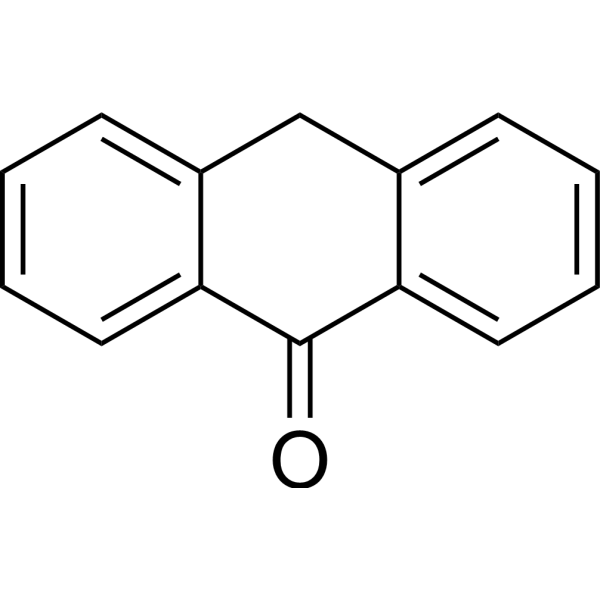
Anthrone is an organic compound commonly used as a dye and intermediate. It can be used to make products such as pigments, dyes and fluorescent whitening agents, and is widely used in certain industrial production fields such as textile manufacturing, soap making and paper making. In addition, this compound is also used as a reagent and catalyst in some organic synthesis reactions.
|
-
- HY-10431G
-
|
|
TGF-β Receptor
|
Neurological Disease
Cancer
|
|
SB-431542 (GMP) is SB-431542 (HY-10431) produced by using GMP guidelines. GMP small molecules works appropriately as an auxiliary reagent for cell therapy manufacture. SB-431542 is a TGF-β receptor kinase inhibitor (TRKI) in SMAD signaling .
|
-
- HY-32100
-
|
Quinolin-5(1H)-one
|
Biochemical Assay Reagents
|
Others
|
|
5-Hydroxyquinoline is an organic compound commonly used in certain chemical reactions and biological research. It can be used in the manufacture of dyes, cellulase, oxidants and passivators, etc., and is widely used in the pigment, paint and rubber industries. In addition, the compound is also used as the precursor, intermediate and metal ion complexing agent of certain drugs.
|
-
- HY-112005GL
-
|
Dioleoylphosphatidylethanolamine (GMP Like); 1,2-Dioleoyl-sn-glycero-3-phosphoethanolamine (GMP Like)
|
Liposome
Endogenous Metabolite
|
Inflammation/Immunology
|
|
DOPE (GMP Like) is the GMP Like class DOPE (HY-112005), and can be used as pharmaceutical excipients. GMP small molecules works appropriately as an auxiliary reagent for cell therapy manufacture. DOPE is a neutral helper lipid for cationic liposome and combines with cationic phospholipids to improve transfection efficiency of naked siRNA .
|
-
- HY-W007801
-
|
TPAP
|
Biochemical Assay Reagents
|
Others
|
|
Tetrapropylammonium perruthenate (TPAP) is an organic compound commonly used as a catalyst and oxidizing agent. It can play an oxidation role in some organic synthesis reactions, and can catalyze the oxidation reactions of olefins and aromatic compounds. In addition, the compound is widely used in some industrial production areas, such as in the application of plastics, rubber and textile manufacturing processes.
|
-
- HY-133540G
-
|
Maleimido-mono-amide-DOTA
|
ADC Linker
|
Inflammation/Immunology
Cancer
|
|
Maleimide-DOTA (Maleimido-mono-amide-DOTA) (GMP) is Maleimide-DOTA (HY-133540) produced by using GMP guidelines. GMP small molecules works appropriately as an auxiliary reagent for cell therapy manufacture. Maleimide-DOTA is a non-cleavable ADC linker used in the synthesis of antibody-drug conjugates (ADCs) .
|
-
- HY-W087892R
-
|
|
Reference Standards
Biochemical Assay Reagents
|
Others
|
|
Barium diphenylamine-4-sulfonate (Standard) is the analytical standard of Barium diphenylamine-4-sulfonate. This product is intended for research and analytical applications. Barium diphenylamine-4-sulfonate can be employed as an intermediate in pharmaceutical manufacturing and in chemical research, and serves as a dosing agent in analytical testing .
|
-
- HY-101952G
-
|
PGE2; Dinoprostone
|
Endogenous Metabolite
|
Cardiovascular Disease
Endocrinology
|
|
Prostaglandin E2 (GMP) is Prostaglandin E2 (HY-101952) produced by using GMP guidelines. GMP small molecules work appropriately as an auxiliary reagent for cell therapy manufacture. Prostaglandin E2, an inflammatory mediator, is a endogenous hormone-like substance that participate in a wide range of body functions .
|
-
- HY-107771R
-
|
MCW-2 (Standard)
|
Reference Standards
Parasite
|
Cancer
|
|
Propane sultone (Standard) is the analytical standard of Propane sultone. This product is intended for research and analytical applications. Propane sultone is a versatile intermediate. Propane sultone is utilized as an additive in the electrolyte in lithium battery. Propane sultone combines with cellulose and carbohydrate, that can be used in sizing, printing and textile. Propane sultone is utilized in dye manufacture .
|
-
- HY-15659G
-
|
C59
|
Porcupine
Wnt
|
Cancer
|
|
Wnt-C59 (C59) GMP is a GMP grade Wnt-C59 (HY-15659). GMP small molecules works appropriately as an auxiliary reagent for cell therapy manufacture. Wnt-C59 (C59) is a highly potent and oral porcupine (PORCN) inhibitor with an IC50 of 74 pM.
|
-
- HY-W008816
-
|
Octyl carbinol; Pelargonic alcohol
|
Environmental Pollutants
|
Others
|
|
Nonan-1-ol is an organic compound commonly used in the manufacture of surfactants and lubricants, among others. It can be used as a detergent, emulsifier and stabilizer, and is widely used in some cosmetics, personal care products and printing inks. In addition, the compound has important applications in certain industrial fields, for example in the production of plastics and rubber.
|
-
- HY-W127364
-
|
Pentaerythritol distearate [Lubricants]
|
Environmental Pollutants
Biochemical Assay Reagents
|
Others
|
|
Pentaerythritol distearate (mixture) is a mixture of ester compounds commonly used as a thickener, emulsifier or lubricant in various cosmetic and personal care products. It is also used as a plasticizer or stabilizer in the production of plastics and resins. Pentaerythritol distearate (mixture) has unique chemical properties that make it an important ingredient in a variety of industrial processes, including the manufacture of adhesives, coatings and sealants.
|
-
- HY-124082
-
|
Lauryl gallate
|
Flavivirus
Bacterial
|
Infection
|
|
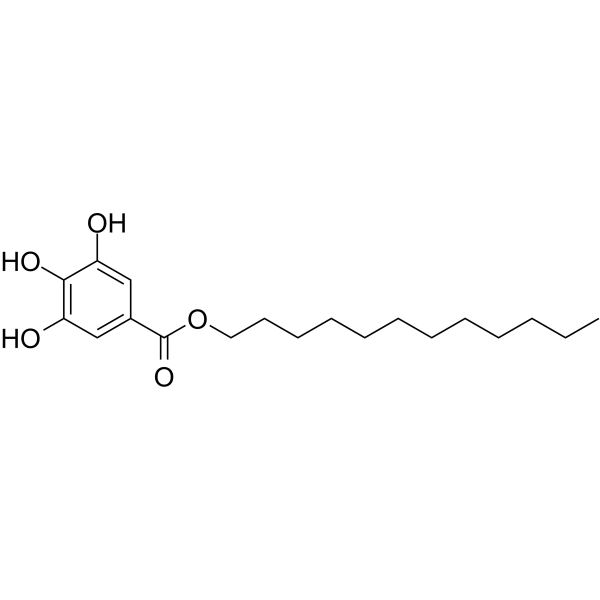
Dodecyl gallate (Lauryl gallate) has been widely used as an antioxidant in food manufacturing, as well as in the pharmaceutical and cosmetic industries. Dodecyl gallate also acts antibacterial activity specifically against Gram-positive bacteria. Dodecyl gallate also is active against a highly relevant animal virus such as African swine fever virus (ASFV) .
|
-
- HY-W008992
-
|
8-Hydroxyquinoline sulfate hydrate
|
Biochemical Assay Reagents
|
Others
|
|
Quinolin-8-ol sulfate hydrate is an organic compound commonly used in dyes and as a raw material for chemical analysis. It can cooperate with metal ions to form dyes, and is widely used in the fields of dyes, printing and textile manufacturing. In addition, the compound also has good toxicity and biocompatibility, and is also used in some medical fields.
|
-
- HY-E70447
-
|
|
Biochemical Assay Reagents
|
Others
|
|
UDP-4-Keto-6-deoxy-D-glucose 3,5-epimerase/4-reductase (ApmUGER) is an epimerase/reductase. Enzymes have high catalytic efficiency, high specificity, and mild operating conditions. It can be applied in industries such as pharmaceuticals, industrial production, food manufacturing, and aquaculture .
|
-
- HY-A0070AG
-
|
Triiodothyronine; 3,3',5-Triiodo-L-thyronine; T3
|
Thyroid Hormone Receptor
|
Endocrinology
Cancer
|
|
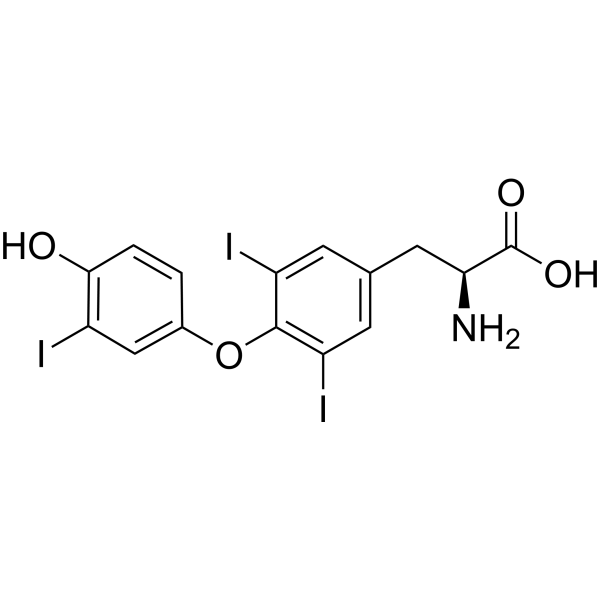
Liothyronine (Triiodothyronine) (GMP) is the Liothyronine (HY-A0070A) produced by using GMP guidelines. GMP small molecules work appropriately as an auxiliary reagent for cell therapy manufacture. Liothyronine is a potent thyroid hormone receptors TRα and TRβ agonist with Kis of 2.33 nM for hTRα and hTRβ, respectively .
|
-
- HY-N0083G
-
|
Trochol
|
Endogenous Metabolite
Apoptosis
Fatty Acid Synthase (FASN)
|
Cancer
|
|
Betulin (GMP) (Trochol (GMP)) is Betulin (HY-N0083) produced by using GMP guidelines. GMP small molecules works appropriately as an auxiliary reagent for cell therapy manufacture. Betulin (Trochol), is a sterol regulatory element-binding protein (SREBP) inhibitor with an IC50 of 14.5 μM in K562 cell line.
|
-
- HY-W114419
-
|
|
Estrogen Receptor/ERR
mTOR
|
Cardiovascular Disease
Metabolic Disease
|
|
Bisphenol C is an estrogen receptor-α (ERα) agonist and an ERβ antagonist, with IC50 values of 2.65 nM for ERα and 1.94 nM for ERβ. Bisphenol C is a material of manufacturing polyester polymers like polycarbonate, is widely used in daily items like water bottles, food packaging, textile and so on .
|
-
- HY-13227G
-
|
|
TGF-β Receptor
|
Cancer
|
|
SD-208 (GMP) is SD-208 (HY-13227) produced by using GMP guidelines. GMP small molecules works appropriately as an auxiliary reagent for cell therapy manufacture. SD-208 is a selective TGF-βRI (ALK5) inhibitor with IC50 of 48 nM, and > 100-fold selectivity over TGF-βRII.
|
-
- HY-W015308
-
|
Pelargonic acid methyl ester
|
Biochemical Assay Reagents
Endogenous Metabolite
|
Others
|
|
Methyl nonanoate is an ester compound obtained by the reaction of methanol and nonanoic acid. It has a fruity aroma and is commonly used as a flavoring agent in a variety of foods such as baked goods, confectionary and beverages. Methyl nonanoate is also used as a fragrance ingredient in the manufacture of perfume, cologne and personal care products. Furthermore, it has applications in industrial settings, for example in the production of solvents, resins and plasticizers.
|
-
- HY-18985G
-
|
Phorbol dibutyrate; PDBu
|
PKC
|
Cancer
|
|
Phorbol 12,13-dibutyrate (Phorbol dibutyrate) (GMP) is Phorbol 12,13-dibutyrate (HY-18985) produced by using GMP guidelines. GMP small molecules works appropriately as an auxiliary reagent for cell therapy manufacture. Phorbol 12,13-dibutyrate is a PKC activator and a potent skin tumor promoter .
|
-
- HY-D0352
-
|
Pigment Orange 5
|
Environmental Pollutants
Biochemical Assay Reagents
|
Others
|
|
Permanent Orange is a synthetic pigment commonly used in the manufacture of paints and coatings. It belongs to the class of organic pigments and consists of carbon and other elements. Permanent Orange produces a bright orange color that is fade and weather resistant, making it ideal for outdoor applications. It can be mixed with other pigments to produce a range of colors and is compatible with a wide range of binders and solvents.
|
-
- HY-B0434G
-
|
Ribasphere; ICN-1229
|
Antibiotic
RSV
HCV
Orthopoxvirus
|
Infection
|
|
Ribavirin (GMP) is Ribavirin (HY-B0434) produced by using GMP guidelines. GMP small molecules work appropriately as an auxiliary reagent for cell therapy manufacture. Ribavirin (ICN-1229) is an antiviral agent against a broad spectrum of viruses including HCV, HIVl, and RSV. Ribavirin also has anti-orthopoxvirus and anti-variola activities.
|
-
- HY-124082R
-
|
Lauryl gallate (Standard)
|
Flavivirus
Bacterial
Reference Standards
|
Infection
|
|
Dodecyl gallate (Standard) is the analytical standard of Dodecyl gallate. This product is intended for research and analytical applications. Dodecyl gallate (Lauryl gallate) has been widely used as an antioxidant in food manufacturing, as well as in the pharmaceutical and cosmetic industries. Dodecyl gallate also is active against a highly relevant animal virus such as African swine fever virus (ASFV) .
|
-
- HY-18733G
-
|
(R)-(+)-α-Lipoic acid; R-(+)-Thioctic acid
|
Reactive Oxygen Species (ROS)
Mitochondrial Metabolism
Endogenous Metabolite
|
Inflammation/Immunology
Cancer
|
|
Lipoic acid (GMP) ((R)-(+)-α-Lipoic acid (GMP)) is Lipoic acid (HY-18733) produced by using GMP guidelines. GMP small molecules works appropriately as an auxiliary reagent for cell therapy manufacture. Lipoic acid ((R)-(+)-α-Lipoic acid) is an antioxidant, which is an essential cofactor of mitochondrial enzyme complexes. (R)-(+)-α-Lipoic acid is more effective than racemic Lipoic acid.
|
-
- HY-10407G
-
|
|
VEGFR
EGFR
PDGFR
|
Cancer
|
|
SU 5402 (GMP) is SU 5402 (HY-10407) produced by using GMP guidelines. GMP small molecules work appropriately as an auxiliary reagent for cell therapy manufacture. SU 5402 is a potent multi-targeted receptor tyrosine kinase inhibitor with IC50 of 20 nM, 30 nM, and 510 nM for VEGFR2, FGFR1, and PDGFRβ, respectively .
|
-
- HY-W127375
-
|
Sodium pelargonate
|
Biochemical Assay Reagents
|
Others
|
|
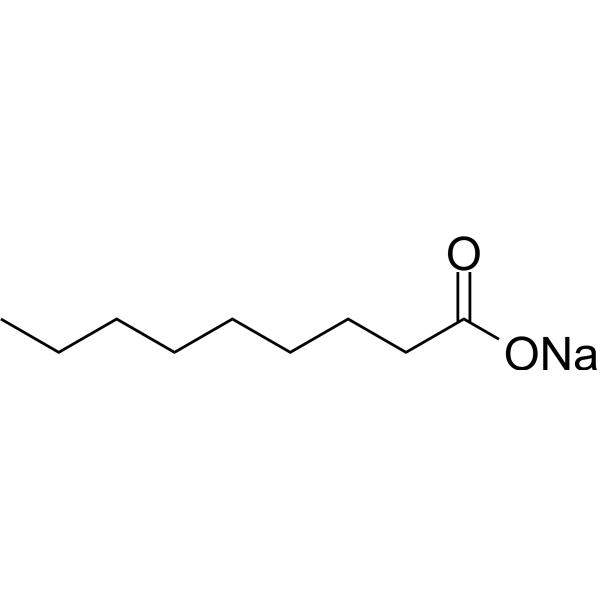
Sodium nonanoate is a salt-like compound commonly used as a surfactant or emulsifier in a variety of industrial applications, including the production of detergents, soaps and personal care products. In addition, it can be used as an intermediate in the synthesis of various organic compounds, including pharmaceuticals and agrochemicals. Its unique chemical properties make it an important ingredient in a variety of industrial processes, especially in the manufacture of textiles and paper products.
|
-
- HY-128387
-
|
|
Endogenous Metabolite
|
Cardiovascular Disease
|
|
2,3-Butanediol is microbially derived compound that is a discriminating urinary biomarker of Fmo5 -/- mice. 2,3-Butanediol prevents age-related increases in the plasma concentration of cholesterol. 2,3-Butanediol has potential applications in the manufacture of printing inks, perfumes, fumigants, moistening and softening agents, plasticizers, and as a carrier for pharmaceuticals .
|
-
- HY-W127653
-
|
Dimethylditetradecylammonium bromide
|
Biochemical Assay Reagents
|
Others
|
|
Dimethyldimyristylammonium bromide is a quaternary ammonium compound commonly used as a surfactant or emulsifier in a variety of industrial applications, including the production of detergents, fabric softeners and hair conditioners. In addition, it can also be used as an intermediate in the synthesis of various organic compounds. Its unique chemical properties make it an important ingredient in a variety of industrial processes, especially in the manufacture of personal care products and pharmaceuticals.
|
-
- HY-W127604
-
|
Myristic acid sodium
|
Biochemical Assay Reagents
|
Others
|
|
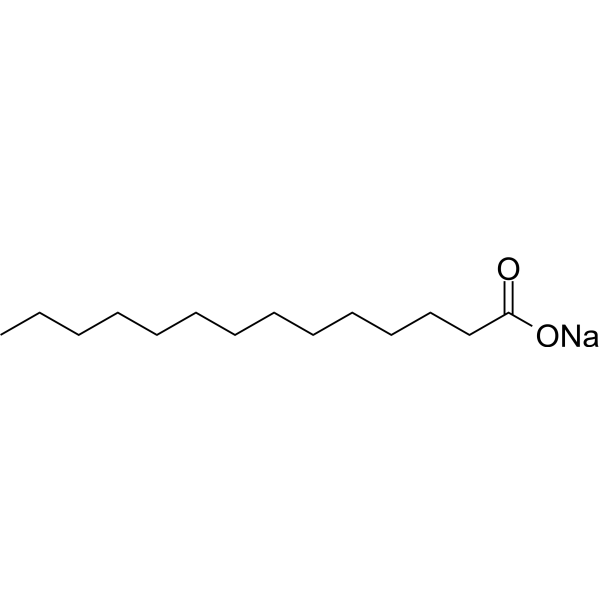
Sodium myristate is a salt-like compound commonly used as a surfactant or emulsifier in a variety of industrial applications, including the production of detergents, soaps, and personal care products. In addition, it can be used as an intermediate in the synthesis of various organic compounds, including fragrances and pharmaceuticals. Its unique chemical properties make it an important ingredient in a variety of industrial processes, especially in the manufacture of textiles and paper products.
|
-
- HY-111582G
-
|
|
Toll-like Receptor (TLR)
|
Inflammation/Immunology
|
|
BBIQ (GMP) is BBIQ (HY-111582) produced by using GMP guidelines. GMP small molecules works appropriately as an auxiliary reagent for cell therapy manufacture. BBIQ is a potent and selectively toll-like receptor 7 (TLR7) agonist with an EC50 of 59.1 nM. BBIQ is a powerful vaccine adjuvant that enhances innate immune responses .
|
-
- HY-13418G
-
|
Compound C dihydrochloride; BML-275 dihydrochloride
|
AMPK
|
Neurological Disease
Cancer
|
|
Dorsomorphin dihydrochloride (GMP) is the GMP level of Dorsomorphin dihydrochloride (HY-13418). GMP guidelines are used to produce Dorsomorphin dihydrochloride (GMP). GMP small molecules works appropriately as an auxiliary reagent for cell research manufacture. Dorsomorphin dihydrochloride (GMP) is a potent, selective and ATP-competitive AMPK inhibitor. Dorsomorphin dihydrochloride (GMP) can be used for the research of induced differentiation of pluripotent stem cells (PSCs) .
|
-
- HY-111783G
-
|
|
DNA-PK
ATM/ATR
PI3K
Apoptosis
|
Cancer
|
|
AZD-7648 (GMP) is AZD-7648 (HY-111783) produced by using GMP guidelines. GMP small molecules works appropriately as an auxiliary reagent for cell therapy manufacture. AZD-7648 is a potent, orally active, selective DNA-PK inhibitor with an IC50 of 0.6 nM. AZD-7648 induces apoptosis and shows antitumor activity .
|
-
- HY-112251GL
-
|
|
Liposome
|
Cancer
|
|
D-Lin-MC3-DMA (GMP Like) is the GMP Like class D-Lin-MC3-DMA (HY-112251). GMP small molecules works appropriately as an auxiliary reagent for cell therapy manufacture. D-Lin-MC3-DMA, an ionizable cationic lipid, is a potent siRNA delivery vehicle.
|
-
- HY-15233G
-
|
AIC246; MK-8228
|
CMV
|
Infection
|
|
Letermovir (GMP) is the GMP grade of Letermovir (HY-15233). GMP small molecules works appropriately as an auxiliary reagent for cell therapy manufacture. Letermovir (GMP) is an orally active CMV inhibitor. Letermovir (GMP) targets the CMV terminase complex rather than CMV DNA polymerase and exerts its antiviral activity. Letermovir (GMP) can be used in the study of CMV infection .
|
-
- HY-148748G
-
|
|
JAK
STAT
p38 MAPK
|
Cardiovascular Disease
|
|
Butyzamide (GMP) is Butyzamide (HY-148748) produced by using GMP guidelines. GMP small molecules works appropriately as an auxiliary reagent for cell therapy manufacture. Butyzamide is an orally active activator of Mpl, a thrombopoietin (TPO) receptor. Butyzamide increases the phosphorylation level of JAK2, STAT3, STAT5 and MAPK. Butyzamide increases the level of platelets in mouse xenotransplantation assay .
|
-
- HY-14823G
-
|
GC-1; QRX-431
|
Thyroid Hormone Receptor
|
Metabolic Disease
Endocrinology
|
|
Sobetirome (GMP) is Sobetirome (HY-14823) produced by using GMP guidelines. GMP small molecules works appropriately as an auxiliary reagent for cell therapy manufacture. Sobetirome (GC-1) is a thyroid hormone receptor β (TRβ)-specific agonist which bind selectively to TRβ-1 with an EC50 of 0.16 μM .
|
-
- HY-W034392
-
|
|
Biochemical Assay Reagents
Endogenous Metabolite
|
Others
|
|
Stewart-Grubbs catalyst is an effective catalyst for the cross-metathesis of olefins with a large number of allylic substituents. In addition, ChemBeads are chemically coated glass beads that improve flowability and chemical homogeneity, making them ideal for automated solid dispensing and high-throughput experiments. Notably, the manufacture of ChemBeads does not require additional chemicals or surfactants, allowing for precise dispensing of sub-milligram amounts of catalyst.
|
-
- HY-Y1275
-
|
NMP; 1-Methyl-2-pyrrolidinone
|
Environmental Pollutants
Biochemical Assay Reagents
|
Cancer
|
|
N-Methylpyrrolidone (1-Methyl-2-pyrrolidinone), a five-membered cyclic amide, is an orally active organic polar solvent with teratogenicity and toxicity. N-Methylpyrrolidone is low in acute toxicity with a LD50 value of 3914 mg/kg in rats and of 4050 mg/kg in mice. N-Methylpyrrolidone is extensively used in the manufacture of adhesives, paints, fuels, and pharmaceuticals .
|
-
- HY-107343
-
|
Ethyl docosahexaenoate
|
COX
|
Neurological Disease
Metabolic Disease
|
|
Docosahexaenoic acid ethyl ester (Ethyl docosahexaenoate) is a 90% concentrated ethyl ester of docosahexaenoic acid manufactured from the microalgal oil. Docosahexaenoic acid ethyl ester enhances 6-hydroxydopamine-induced neuronal damage by induction of lipid peroxidation in mouse striatum. Docosahexaenoic acid (DHA) is a key component of the cell membrane, and its peroxidation is inducible due to the double-bond chemical structure. Docosahexaenoic acid has neuroprotective effects .
|
-
- HY-ER010
-
|
Imidazole hydrochloride
|
Biochemical Assay Reagents
|
Others
|
|
1H-Imidazole hydrochloride can be used as ligand, buffer and catalyst, etc., and also plays an important role in the process of drug synthesis and extraction of natural products. In addition, the compound is widely used in certain industrial fields, such as in the manufacturing process of plastics, coatings, textiles and electronic materials. Although the compound has no direct medical applications, it plays an important role in chemical research and laboratory studies.
|
-
- HY-13740G
-
|
R848; S28463
|
Toll-like Receptor (TLR)
|
Inflammation/Immunology
Cancer
|
|
Resiquimod (R848) (GMP) is Resiquimod (HY-13740) produced by using GMP guidelines. GMP small molecules work appropriately as an auxiliary reagent for cell therapy manufacture. Resiquimod is a Toll-like receptor 7 and 8 (TLR7/TLR8) agonist. Resiquimod (GMP) can induce human mMDSC to mature into inflammatory macrophages .
|
-
- HY-W005176
-
|
Methyl Butyrylacetate; Methyl 3-oxohexanoate
|
Biochemical Assay Reagents
|
Others
|
|
Methyl 3-oxohexanoate (Methyl Butyrylacetate) is an organic compound commonly used in the manufacture of fragrances, drugs, and other chemicals. It can be used as a condensation reagent, a diazotization reagent and an addition reagent, and it plays a catalytic role in some organic synthesis reactions, and can also play a role in some drug synthesis. In addition, the compound is widely used in the food industry, for example in products such as juices, beer and confectionery.
|
-
- HY-Y0407A
-
|
TPAOH (40% w/w in water)
|
Biochemical Assay Reagents
|
Others
|
|
Tetrapropylammonium hydroxide (40% w/w in water)It is a compound belonging to the class of quaternary ammonium compounds and is a strong base with cationic properties. Tetrapropylammonium hydroxide (40% w/w in water)It is usually used as a phase transfer catalyst to promote the transfer of reactants between immiscible phases in various organic synthesis reactions. It is also used in the production of semiconductors, especially the manufacture of thin-film transistors and other electronic devices.
|
-
- HY-13912G
-
IWP-2
1 Publications Verification
|
Wnt
|
Cancer
|
|
IWP-2 (GMP) is >IWP-2 (HY-13912) produced by using GMP guidelines. GMP small molecules work appropriately as an auxiliary reagent for cell therapy manufacture. IWP-2 is an inhibitor of Wnt processing and secretion with an IC50 of 27 nM. IWP-2 targets the membrane-bound O-acyltransferase porcupine (Porcn) and blocks Wnt ligand palmitoylation .
|
-
- HY-13990G
-
|
TNKS656
|
PPAR
Apoptosis
|
Cancer
|
|
NVP-TNKS656 (GMP) is NVP-TNKS656 (HY-13990) produced by using GMP guidelines. GMP small molecules works appropriately as an auxiliary reagent for cell therapy manufacture. NVP-TNKS656 is a highly potent, selective, and orally active TNKS2 inhibitor with IC50 of 6 nM, and is > 300 fold selectivity against PARP1 and PARP2.
|
-
- HY-50698G
-
|
|
Polo-like Kinase (PLK)
Apoptosis
Epigenetic Reader Domain
|
Cancer
|
|
BI 2536 (GMP) is BI 2536 (HY-50698) produced by using GMP guidelines. GMP small molecules works appropriately as an auxiliary reagent for cell therapy manufacture. BI 2536 is a dual PLK1 and BRD4 inhibitor with IC50s of 0.83 and 25 nM, respectively . BI-2536 suppresses IFNB (encoding IFN-β) gene transcription .
|
-
- HY-20336G
-
|
|
ADC Linker
|
Cancer
|
|
Mc-Val-Cit-PABC-PNP GMP is a GMP grade Mc-Val-Cit-PABC-PNP (HY-20336). GMP small molecules works appropriately as an auxiliary reagent for cell therapy manufacture. Mc-Val-Cit-PABC-PNP is a cathepsin cleavable ADC linker. Mc-Val-Cit-PABC-PNP can be used in the synthesis of antibody-drug conjugates (ADCs) .
|
-
- HY-W004293
-
|
Tridecyl Alcohol
|
Environmental Pollutants
Biochemical Assay Reagents
|
Others
|
|
1-Tridecanol is an organic compound commonly used as a surfactant, lubricant, and stabilizer, among others. It can be used in some cleaning products, preservatives and plastic additives, and can help enhance their performance and stability. In addition, the compound is used in some industrial fields, for example in the manufacture of products such as cellulose and paints. Although the compound has no direct medical application, it plays an important role in consumer products and industrial production.
|
-
- HY-W013809R
-
|
Stearic acid ethyl ester (Standard)
|
Biochemical Assay Reagents
Reference Standards
|
Others
|
|
Ethyl stearate (Standard) is the analytical standard of Ethyl stearate. This product is intended for research and analytical applications. Ethyl stearate is an ester compound produced by the reaction of ethanol and stearic acid. It is commonly used as a flavoring agent in various foods such as baked goods, beverages and desserts. Ethyl stearate is also used as a fragrance ingredient in the manufacture of perfume, cologne and personal care products. Additionally, it has applications in industrial settings such as the production of lubricants and plasticizers.
|
-
- HY-70044G
-
|
GSK-1070916A
|
Apoptosis
Aurora Kinase
|
Cancer
|
|
GSK-1070916 (GMP) is GSK-1070916 (HY-70044) produced by using GMP guidelines. GMP small molecules works appropriately as an auxiliary reagent for cell therapy manufacture. GSK-1070916 is a potent and selective ATP-competitive inhibitor of aurora B and aurora C with Kis of 0.38 and 1.5 nM, respectively, and is >250- fold selective over Aurora A .
|
-
- HY-10583G
-
|
|
ROCK
|
Neurological Disease
Cancer
|
|
Y-27632 dihydrochloride (GMP) is the GMP level of Y-27632 dihydrochloride (HY-10583). GMP guidelines are used to produce Y-27632 dihydrochloride (GMP). GMP small molecules works appropriately as an auxiliary reagent for cell research manufacture. Y-27632 dihydrochloride is an orally active and ATP-competitive ROCK (Rho-kinase) inhibitor with antiepileptic effect .
|
-
- HY-44980G
-
|
|
ADC Linker
|
Cancer
|
|
Fmoc-Gly-NH-CH2-acetyloxy GMP is a GMP grade Fmoc-Gly-NH-CH2-acetyloxy (HY-44980). GMP small molecules works appropriately as an auxiliary reagent for cell therapy manufacture. Fmoc-Gly-NH-CH2-acetyloxy is a cleavable linker that can be used to synthesize antiboy-drug Conjugates (ADCs).
|
-
- HY-13319G
-
|
JNK Inhibitor XVI
|
JNK
|
Cancer
|
|
JNK-IN-8 (JNK Inhibitor XVI) (GMP) is JNK-IN-8 (HY-13319) produced by using GMP guidelines. GMP small molecules work appropriately as an auxiliary reagent for cell therapy manufacture. JNK-IN-8 is a potent JNK inhibitor with IC50s of 4.7 nM, 18.7 nM, and 1 nM for JNK1, JNK2, and JNK3, respectively .
|
-
- HY-W142432R
-
|
|
Reference Standards
Biochemical Assay Reagents
|
Others
|
|
Perfluoroundecanoic acid (Standard) is the analytical standard of Perfluoroundecanoic acid. This product is intended for research and analytical applications. Perfluoroundecanoic acid is an orally active inducer of oxidative stress and DNA damage. Perfluoroundecanoic acid exhibits genotoxicity and reproductive toxicity in swiss mice. Perfluoroundecanoic acid is utilized as a processing aid in the manufacture of fluoropolymer for its thermal and pressure stability, and properties of having both water-repellent and oil-repellent groups and hydrophilic groups on the same molecule .
|
-
- HY-N8451
-
|
Triacontanoic acid
|
Biochemical Assay Reagents
|
Others
|
|
Melissic acid, which belongs to the category of long-chain saturated fatty acids. It is a 30-carbon straight-chain fatty acid found in a variety of natural sources, including beeswax and coconut oil. Due to its unique physical properties, such as high melting point and viscosity, Melissic acid has a variety of uses in industry. It can be used as a lubricant in the production of some plastics and rubber, and is also used in the manufacture of surfactants and detergents.
|
-
- HY-16294G
-
|
|
GSK-3
|
Cancer
|
|
LY2090314 (GMP) is LY2090314 (HY-16294) produced by using GMP guidelines. GMP small molecules works appropriately as an auxiliary reagent for cell therapy manufacture. LY2090314 is a potent inhibitor of glycogen synthase kinase-3 (GSK-3) with IC50 values of 1.5 nM and 0.9 nM for GSK-3α and GSK-3β, respectively.
|
-
- HY-15579G
-
|
Monomethylauristatin F
|
Microtubule/Tubulin
ADC Payload
|
Cancer
|
|
MMAF (Monomethylauristatin F) GMP is a GMP grade MMAF (HY-15579). GMP small molecules works appropriately as an auxiliary reagent for cell therapy manufacture. MMAF (Monomethylauristatin F) is a potent tubulin polymerization inhibitor and is used as a antitumor agent. MMAF (Monomethylauristatin F) is widely used as a cytotoxic component of antibody-drug conjugates (ADCs) such as vorsetuzumab mafodotin and SGN-CD19A .
|
-
- HY-10219G
-
|
Sirolimus; AY-22989; NSC 226080
|
mTOR
FKBP
Fungal
Autophagy
Endogenous Metabolite
Antibiotic
Bacterial
|
Infection
Cancer
|
|
Rapamycin (Sirolimus) (GMP) is Rapamycin (HY-10219) produced by using GMP guidelines. GMP small molecules works appropriately as an auxiliary reagent for cell therapy manufacture. Rapamycin (Sirolimus; AY 22989) is a potent and specific mTOR inhibitor with an IC50 of 0.1 nM in HEK293 cells. Rapamycin binds to FKBP12 and specifically acts as an allosteric inhibitor of mTORC1 . Rapamycin is an autophagy activator, an immunosuppressant .
|
-
- HY-N0737AG
-
|
Telepathine
|
DYRK
5-HT Receptor
|
Neurological Disease
Inflammation/Immunology
Cancer
|
|
Harmine (GMP) (Telepathine (GMP)) is Harmine (HY-N0737A) produced by using GMP guidelines. GMP small molecules works appropriately as an auxiliary reagent for cell therapy manufacture. Harmine is a natural dual-specificity tyrosine phosphorylation-regulated kinase (DYRK) inhibitor with anticancer and anti-inflammatory activities. Harmine has a high affinity of 5-HT2A serotonin receptor, with an Ki of 397 nM .
|
-
- HY-N9666
-
|
|
Antibiotic
Bacterial
|
Infection
Cancer
|
|
Chromomycin A4, a major byproduct of Chromomycin A3 (HY-W040129)'s manufacture, is an antibiotic produced by Streptomyces griseus No. 7. Chromomycin A4 exhibits cancerostatic and antitumor activity. Chromomycin A4 shows strong growth inhibition against Gram-positive bacteria and and activity against tuberculous bacilli. Chromomycin A4 can be used for the research of bacterial infection .
|
-
- HY-112754AGL
-
|
1,2-Dioleoyl-3-trimethylammonium-propane chloride (GMP Like)
|
Liposome
|
Others
|
|
DOTAP chloride (GMP Like) is the GMP Like class DOTAP chloride (HY-112754A). GMP small molecules works appropriately as an auxiliary reagent for cell therapy manufacture. DOTAP chloride is a cationic lipid with good membrane fusion ability and biocompatibility. DOTAP chloride (GMP Like) can be used as an excipient for transient and stable transfection DNA (plasmids, bacmids) and modified nucleic acids (antisense oligonucleotides) without the use of helper lipid .
|
-
- HY-W106486
-
|
N,N-Dimethyl-N-2-propenyl-2-propen-1-aminium chloride
|
Biochemical Assay Reagents
|
Others
|
|
Diallyldimethylammonium chloride (60% in water) is a quaternary ammonium compound belonging to the class of alkylammonium salts. The compound is widely used as a cationic monomer in the production of water-soluble polymers, especially in the manufacture of flocculants and coagulants for water treatment processes. In addition, it can be used as an antimicrobial agent, surfactant or adhesive in various industrial applications. Its unique chemical properties make it an important ingredient in a variety of industrial processes, including papermaking, textiles and personal care products.
|
-
- HY-W008829
-
|
|
NF-κB
NO Synthase
Interleukin Related
TNF Receptor
Cytochrome P450
|
Inflammation/Immunology
|
|
N,N-Diethylacetamide is a polar solvent widely used in film and fiber manufacturing, as well as in laboratories as a carrier for water-insoluble chemicals. N,N-Diethylacetamide exerts potent anti-inflammatory effects by inhibiting the NF-κB pathway, suppressing the expression of NO and iNOS, and downregulating key inflammatory cytokines such as TNF-α and IL-6, without affecting the MAPK pathway. N,N-Diethylacetamide can be used to study inflammatory preterm birth.
|
-
- HY-W127740
-
|
Isomethyl-α-ionone; α-Isomethylionone
|
Environmental Pollutants
Biochemical Assay Reagents
|
Others
|
|
Isonaline 70 is an industrial solvent that belongs to the family of high flash point aromatic naphtha solvents. It is commonly used in a variety of industries including paints and coatings, adhesives and rubber manufacturing, as a thinner and thinner for resins and polymers. Isonaline 70 has various properties that make it suitable for these applications, including its low viscosity, high solvency and good compatibility with other materials. In addition, it can also be used as a cleaning agent for mechanical equipment.
|
-
- HY-20457G
-
|
|
Toll-like Receptor (TLR)
Bacterial
Interleukin Related
|
Inflammation/Immunology
Cancer
|
|
TL8-506 (GMP) is TL8-506 (HY-20457) produced by using GMP guidelines. GMP small molecules work appropriately as an auxiliary reagent for cell therapy manufacture. TL8-506 is a specific TLR8 agonist with an EC50 of 30?nM. TL8-506 has immunomodulatory effects and can be used in the study of tuberculosis and cancer immunotherapy .
|
-
- HY-B1511G
-
|
Cyclic adenosine monophosphate; Adenosine cyclic 3', 5'-monophosphate; cAMP
|
Endogenous Metabolite
|
Neurological Disease
Metabolic Disease
Cancer
|
|
Cyclic AMP (GMP) (Cyclic adenosine monophosphate (GMP)) is Cyclic AMP (HY-B1511) produced by using GMP guidelines. GMP small molecules works appropriately as an auxiliary reagent for cell therapy manufacture. Cyclic AMP (Cyclic adenosine monophosphate), adenosine triphosphate derivative, is an intracellular signaling molecule responsible for directing cellular responses to extracellular signals. Cyclic AMP is an important second messenger in many biological processes .
|
-
- HY-100596G
-
|
|
Autophagy
|
Metabolic Disease
|
|
AS1842856 (GMP) is AS1842856 (HY-100596) produced by using GMP guidelines. GMP small molecules works appropriately as an auxiliary reagent for cell therapy manufacture. AS1842856, a specific Foxo1 inhibitor (IC50=30 nM), potently suppresses autophagy . AS1842856 reduces Foxo1 activity and, to a lesser extent, inhibits Foxo1 protein expression by simply binding to Foxo1 .
|
-
- HY-10219GL
-
|
Sirolimus (GMP Like); AY-22989 (GMP Like); NSC 226080 (GMP Like)
|
mTOR
FKBP
Fungal
Autophagy
Endogenous Metabolite
Antibiotic
Bacterial
|
Cancer
|
|
Rapamycin (Sirolimus) GMP Like is Rapamycin (HY-10219) produced by using GMP like guidelines. GMP Like small molecules works appropriately as an auxiliary reagent for cell therapy manufacture. Rapamycin (Sirolimus; AY 22989) is a potent and specific mTOR inhibitor with an IC50 of 0.1 nM in HEK293 cells. Rapamycin binds to FKBP12 and specifically acts as an allosteric inhibitor of mTORC1 . Rapamycin is an autophagy activator, an immunosuppressant .
|
-
- HY-W008816R
-
|
Octyl carbinol (Standard); Pelargonic alcohol (Standard)
|
Others
Reference Standards
|
Others
|
|
Nonanol (Standard) is the analytical standard of Nonanol (HY-W008816). This product is intended for research and analytical applications. Nonan-1-ol is an organic compound commonly used in the manufacture of surfactants and lubricants, among others. It can be used as a detergent, emulsifier and stabilizer, and is widely used in some cosmetics, personal care products and printing inks. In addition, the compound has important applications in certain industrial fields, for example in the production of plastics and rubber.
|
-
- HY-15825G
-
|
Porcn Inhibitor III
|
Porcupine
|
Cancer
|
|
IWP L6 (GMP) (Porcn Inhibitor III (GMP)) is IWP L6 (HY-15825) produced by using GMP guidelines. GMP small molecules works appropriately as an auxiliary reagent for cell therapy manufacture. IWP L6 (Porcn Inhibitor III) is a Porcupine (Porcn) inhibitor with an EC50 of 0.5 nM. IWP L6 disrupts well-established Wnt-dependent developmental processes of embryonic and juvenile zebrafish .
|
-
- HY-D0352R
-
|
Pigment Orange 5 (Standard)
|
Biochemical Assay Reagents
Reference Standards
|
Others
|
|
Permanent Orange (Standard) is the analytical standard of Permanent Orange. This product is intended for research and analytical applications. Permanent Orange is a synthetic pigment commonly used in the manufacture of paints and coatings. It belongs to the class of organic pigments and consists of carbon and other elements. Permanent Orange produces a bright orange color that is fade and weather resistant, making it ideal for outdoor applications. It can be mixed with other pigments to produce a range of colors and is compatible with a wide range of binders and solvents.
|
-
- HY-W015308R
-
|
Pelargonic acid methyl ester (Standard)
|
Biochemical Assay Reagents
Reference Standards
Endogenous Metabolite
|
Others
|
|
Methyl nonanoate (Standard) is the analytical standard of Methyl nonanoate. This product is intended for research and analytical applications. Methyl nonanoate is an ester compound obtained by the reaction of methanol and nonanoic acid. It has a fruity aroma and is commonly used as a flavoring agent in a variety of foods such as baked goods, confectionary and beverages. Methyl nonanoate is also used as a fragrance ingredient in the manufacture of perfume, cologne and personal care products. Furthermore, it has applications in industrial settings, for example in the production of solvents, resins and plasticizers.
|
-
- HY-B0450AG
-
|
Ciclopirox ethanolamine; HOE 296
|
Bacterial
Fungal
Ferroptosis
|
Infection
|
|
Ciclopirox (olamine) (GMP) is Ciclopirox olamine (HY-B0450A) produced by using GMP guidelines. GMP small molecules work appropriately as an auxiliary reagent for cell therapy manufacture. Ciclopirox (HOE296b) is a synthetic antifungal agent that can be used for superficial mycoses reseaech. Ciclopirox olamine has a very broad spectrum of activity and inhibits dermatophytes, yeasts, molds, and many Gram-positive and Gram-negative species pathogenic .
|
-
- HY-W778240
-
|
Naphthalene-2-carboxylic acid-13C6
|
Isotope-Labeled Compounds
Biochemical Assay Reagents
|
Others
|
|
2-Naphthoic acid- 13C6 (Naphthalene-2-carboxylic acid- 13C6) is the 13C-labeled 2-Naphthoic acid (HY-W007437). 2-Naphthoic acid is an organic compound commonly used as a raw material for dyes and the production of other chemicals. It can form dyes with other organic substances and is widely used in textile, printing and manufacturing fields. In addition, the compound is also used as a photosensitive material and a lubricant.
|
-
- HY-W145522
-
|
|
Biochemical Assay Reagents
|
Others
|
|
Pullulan (Pullulan standard 5800) (Mw 362-480 kDa; Mn 100-200 kDa) is a class of orally active and water-soluble linear glucosic polysaccharide. Pullulan can be isolated from the polymorphic fungus Aureobasidium pullulans. Pullulan is composed of maltotriose repeating units linked by α-1,6 linkages and is an amorphous slime matter. Pullulan is widely used in food, environment, pharmaceutical, manufacturing, and electronics .
|
-
- HY-107343R
-
|
Ethyl docosahexaenoate (Standard)
|
Endogenous Metabolite
Reference Standards
|
Neurological Disease
Metabolic Disease
|
|
Docosahexaenoic acid ethyl ester (Standard) is the analytical standard of Docosahexaenoic acid ethyl ester. This product is intended for research and analytical applications. Docosahexaenoic acid ethyl ester (Ethyl docosahexaenoate) is a 90% concentrated ethyl ester of docosahexaenoic acid manufactured from the microalgal oil. Docosahexaenoic acid ethyl ester enhances 6-hydroxydopamine-induced neuronal damage by induction of lipid peroxidation in mouse striatum. Docosahexaenoic acid (DHA) is a key component of the cell membrane, and its peroxidation is inducible due to the double-bond chemical structure. Docosahexaenoic acid has neuroprotective effects .
|
-
- HY-141520G
-
|
|
DNA/RNA Synthesis
|
Cancer
|
|
ART558 (GMP) is ART558 (HY-141520) produced by using GMP guidelines. GMP small molecules works appropriately as an auxiliary reagent for cell therapy manufacture. ART558 is a potent, selective and allosteric DNA polymerase theta (Polθ) inhibitor (IC50=7.9 nM). ART558 elicits BRCA-gene synthetic lethality and DNA damage. ART558 can be used for the research of cancer, such as breast cancer .
|
-
- HY-W016149R
-
|
Dichloro-1,2-dithiacyclopentenone (Standard)
|
Reference Standards
Bacterial
|
Infection
|
|
4,5-Dichloro-3H-1,2-dithiol-3-one (Dichloro-1,2-dithiacyclopentenone) is an E. coli FabH inhibitor (IC50: 2.9 µM). 4,5-Dichloro-3H-1,2-dithiol-3-one can be used as a slimicide in the manufacture of food-contact paper and paperboard .
|
-
- HY-134541G
-
|
|
Liposome
|
Infection
|
|
SM-102 (GMP) is SM-102 (HY-134541) produced by using GMP guidelines. GMP small molecules works appropriately as an auxiliary reagent for cell therapy manufacture. SM-102 is an amino cationic lipid useful in the formation of lipid nanoparticles (LNPs). SM-102 has higher transfection efficiency. SM-102 plays an important role in the effectiveness of lipid nanoparticles (LNPs) in delivering mRNA therapeutics and vaccines .
|
-
- HY-107343S
-
|
Ethyl docosahexaenoate-d5
|
Isotope-Labeled Compounds
|
Neurological Disease
Metabolic Disease
|
|
Docosahexaenoic acid ethyl ester-d5 is the deuterium labeled Docosahexaenoic acid ethyl ester. Docosahexaenoic acid ethyl ester (Ethyl docosahexaenoate) is a 90% concentrated ethyl ester of docosahexaenoic acid manufactured from the microalgal oil. Docosahexaenoic acid ethyl ester enhances 6-hydroxydopamine-induced neuronal damage by induction of lipid peroxidation in mouse striatum. Docosahexaenoic acid (DHA) is a key component of the cell membrane, and its peroxidation is inducible due to the double-bond chemical structure. Docosahexaenoic acid has neuroprotective effects .
|
-
- HY-107343S1
-
|
Ethyl docosahexaenoate-d5-1
|
Isotope-Labeled Compounds
|
Others
|
|
Docosahexaenoic acid ethyl ester-d5-1 is the deuterium labeled Docosahexaenoic acid ethyl ester. Docosahexaenoic acid ethyl ester (Ethyl docosahexaenoate) is a 90% concentrated ethyl ester of docosahexaenoic acid manufactured from the microalgal oil. Docosahexaenoic acid ethyl ester enhances 6-hydroxydopamine-induced neuronal damage by induction of lipid peroxidation in mouse striatum. Docosahexaenoic acid (DHA) is a key component of the cell membrane, and its peroxidation is inducible due to the double-bond chemical structure. Docosahexaenoic acid has neuroprotective effects .
|
-
- HY-N3994
-
|
|
Drug Intermediate
|
Others
|
|
16α,17α-Epoxyprogesterone is an important steroid, serving as an intermediate for many hormonal drugs such as Hydrocortisone (HY-N0583) and Megestrol (HY-B1834). 16α,17α-Epoxyprogesterone can further biotransform into another significant intermediate, 11α-hydroxy-16α,17α-epoxyprogesterone, to manufacture additional compounds .
|
-
- HY-W013636AG
-
|
Alpha-Ketoglutaric acid Sodium
|
Tyrosinase
Endogenous Metabolite
|
Neurological Disease
Metabolic Disease
|
|
2-Ketoglutaric acid (Alpha-Ketoglutaric acid) Sodium (GMP) is 2-Ketoglutaric acid Sodium (HY-W013636A) produced by using GMP guidelines. GMP small molecules work appropriately as an auxiliary reagent for cell therapy manufacture. 2-Ketoglutaric acid Sodium is an intermediate in the production of ATP or GTP in the Krebs cycle. 2-Ketoglutaric acid Sodium also acts as the major carbon skeleton for nitrogen-assimilatory reactions. 2-Ketoglutaric acid Sodium is a reversible inhibitor of tyrosinase (IC50=15 mM) .
|
-
- HY-Y0546
-
|
|
Environmental Pollutants
Endogenous Metabolite
Photosensitizer
|
Cancer
|
|
Benzophenone is an endogenous metabolite. Benzophenone is a photosensitizer, that absorbs UV light, transfers its energy to DNA, and triggers DNA damage. Benzophenone can be used as the fragrance enhancer, ultraviolet curing agent, additive in plastics, or the flavor ingredient. Benzophenone can also be used in the manufacturing of insecticides, agricultural chemicals, hypnotics, antihistamines, and other pharmaceuticals. Benzophenone exhibits certain carcinogenicity in mouse/rat models under long term exposure. Benzophenone exhibits estrogenic activity .
|
-
- HY-D0166A
-
|
|
Biochemical Assay Reagents
|
Others
|
|
Neutral Red (IND) is an organic dye commonly used in biology and cytology laboratories. It can be used to stain living cells, secreted proteins and other molecular structures, etc., and has a wide range of applications in cell imaging and staining. In addition, Neutral Red (IND) is widely used in industrial fields such as water treatment, food processing and paper manufacturing, for example as an indicator or colorant. Although the compound has no direct medical application, it has important application value in the fields of biology, chemistry and industry.
|
-
- HY-50751G
-
|
ABT-869; AL-39324
|
VEGFR
PDGFR
|
Cancer
|
|
Linifanib (ABT-869) (GMP) is Linifanib (HY-50751) produced by using GMP guidelines. GMP small molecules work appropriately as an auxiliary reagent for cell therapy manufacture. Linifanib is a potent and orally active multi-target inhibitor of VEGFR and PDGFR family with IC50s of 4, 3, 66, and 4 nM for KDR, FLT1, PDGFRβ, and FLT3, respectively. Linifanib (GMP) promotes the generation and reprogramming of iPSCs from somatic cells .
|
-
- HY-W016149
-
|
Dichloro-1,2-dithiacyclopentenone
|
Environmental Pollutants
Bacterial
|
Infection
|
|
4,5-Dichloro-3H-1,2-dithiol-3-one (Dichloro-1,2-dithiacyclopentenone) is an E. coli FabH inhibitor (IC50: 2.9 µM). 4,5-Dichloro-3H-1,2-dithiol-3-one can be used as a slimicide in the manufacture of food-contact paper and paperboard .
|
-
- HY-14397G
-
|
Indometacin
|
Antibiotic
Influenza Virus
Bacterial
COX
|
Inflammation/Immunology
Cancer
|
|
Indomethacin (GMP) is Indomethacin (HY-14397) produced by using GMP guidelines. GMP small molecules work appropriately as an auxiliary reagent for cell therapy manufacture. Indomethacin (Indometacin) is a potent, orally active COX1/2 inhibitor with IC50 values of 18 nM and 26 nM for COX-1 and COX-2, respectively. Indomethacin has anticancer activity and anti-infective activity. Indomethacin can be used for cancer, inflammation and viral infection research .
|
-
- HY-42360G
-
|
|
ADC Linker
|
Inflammation/Immunology
Cancer
|
|
SMCC (GMP) is the GMP level of SMCC (HY-42360). GMP guidelines are used to produce SMCC (HY-42360) (GMP). GMP small molecules works appropriately as an auxiliary reagent for cell research manufacture. SMCC (GMP) is a protein crosslinker. SMCC (GMP) contains an amine-reactive N-hydroxysuccinimide ester and a sulfhydryl-reactive maleimide group that can be used in the conjugation of proteins. SMCC-conjugated antigen coupled spleen cells to induce antigen-specific immune responses.
|
-
- HY-178399S
-
|
Pelargonic acid methyl ester-d17
|
Isotope-Labeled Compounds
Endogenous Metabolite
Biochemical Assay Reagents
|
Others
|
|
Methyl nonanoate-d17 (Pelargonic acid methyl ester-d17) is the deuterium labeled Methyl nonanoate (HY-W015308). Methyl nonanoate is an ester compound obtained by the reaction of methanol and nonanoic acid. It has a fruity aroma and is commonly used as a flavoring agent in a variety of foods such as baked goods, confectionary and beverages. Methyl nonanoate is also used as a fragrance ingredient in the manufacture of perfume, cologne and personal care products. Furthermore, it has applications in industrial settings, for example in the production of solvents, resins and plasticizers.
|
-
- HY-112764GL
-
|
|
Liposome
|
Metabolic Disease
|
|
DMG-PEG 2000 (GMP Like) is DMG-PEG 2000 (HY-112764) produced by using GMP like guidelines. GMP Like small molecules works appropriately as an auxiliary reagent for cell therapy manufacture. DMG-PEG 2000 is used for the preparation of liposome for siRNA delivery with improved transfection efficiency in vitro. DMG-PEG 2000 is also used for the lipid nanoparticle for an oral plasmid DNA delivery approach in vivo through a facile surface modification to improve the mucus permeability and delivery efficiency of the nanoparticles .
|
-
- HY-B0497G
-
|
BAY2353
|
Antibiotic
Parasite
STAT
|
Cancer
|
|
Niclosamide (GMP) is Niclosamide (HY-B0497) produced by using GMP guidelines. GMP small molecules work appropriately as an auxiliary reagent for cell therapy manufacture. Niclosamide (BAY2353) is an orally active antihelminthic agent used in parasitic infection research . Niclosamide is a STAT3 inhibitor with an IC50 of 0.25 μM in HeLa cells . Niclosamide has biological activities against cancer, inhibits DNA replication in Vero E6 cells .
|
-
- HY-W013935
-
|
|
Endogenous Metabolite
Estrogen Receptor/ERR
Reactive Oxygen Species (ROS)
|
Endocrinology
|
|
Bisphenol B is a close structural analog of Bisphenol A (BPA) (HY-18260). Bisphenol B is a potent, orally active endocrine disruptor (ED). Bisphenol B binds to G protein-coupled estrogen receptor (GPER) (IC50 = 3.3 μM) with higher affinity and agonistic activity than BPA. Bisphenol B promotes GPER mediated cell migration. Bisphenol B exerts estrogenic effects via GPER pathway at nanomolar concentration. Bisphenol B is used in the manufacture of polycarbonate resin with ED properties .
|
-
- HY-128387R
-
|
|
Reference Standards
Endogenous Metabolite
|
Cardiovascular Disease
|
|
2,3-Butanediol (Standard) is the analytical standard of 2,3-Butanediol (HY-128387). This product is intended for research and analytical applications. 2,3-Butanediol is microbially derived compound that is a discriminating urinary biomarker of Fmo5 -/- mice. 2,3-Butanediol prevents age-related increases in the plasma concentration of cholesterol. 2,3-Butanediol has potential applications in the manufacture of printing inks, perfumes, fumigants, moistening and softening agents, plasticizers, and as a carrier for pharmaceuticals.
|
-
- HY-128387S
-
|
|
Isotope-Labeled Compounds
Endogenous Metabolite
|
Infection
|
|
2,3-Butanediol-d6 is the deuterium labeled 2,3-Butanediol (HY-128387) . 2,3-Butanediol is microbially derived compound that is a discriminating urinary biomarker of Fmo5 -/- mice. 2,3-Butanediol prevents age-related increases in the plasma concentration of cholesterol. 2,3-Butanediol has potential applications in the manufacture of printing inks, perfumes, fumigants, moistening and softening agents, plasticizers, and as a carrier for pharmaceuticals .
|
-
- HY-Y1275S
-
|
NMP-d9; 1-Methyl-2-pyrrolidinone-d9
|
Isotope-Labeled Compounds
Biochemical Assay Reagents
|
Cancer
|
|
N-Methylpyrrolidone-d9 (NMP-d9) is deuterium labeled N-Methylpyrrolidone. N-Methylpyrrolidone (1-Methyl-2-pyrrolidinone), a five-membered cyclic amide, is an orally active organic polar solvent with teratogenicity and toxicity. N-Methylpyrrolidone is low in acute toxicity with a LD50 value of 3914 mg/kg in rats and of 4050 mg/kg in mice. N-Methylpyrrolidone is extensively used in the manufacture of adhesives, paints, fuels, and pharmaceuticals .
|
-
- HY-13271AG
-
|
|
HDAC
Beta-lactamase
Autophagy
Apoptosis
|
Cancer
|
|
Tubastatin A (GMP) is the Tubastatin A (HY-13271A) produced by using GMP guidelines. GMP small molecules work appropriately as an auxiliary reagent for cell therapy manufacture. Tubastatin A is a potent and selective HDAC6 inhibitor with an IC50 of 15 nM in a cell-free assay, and is selective (1000-fold more) against all other isozymes except HDAC8 (57-fold more). Tubastatin A also inhibits HDAC10 and metallo-β-lactamase domain-containing protein 2 (MBLAC2).
|
-
- HY-13642G
-
|
|
DNA Methyltransferase
|
Cancer
|
|
RG108 (GMP) is RG108 (HY-13642) produced by using GMP guidelines. GMP small molecules works appropriately as an auxiliary reagent for cell therapy manufacture. RG108 (N-Phthalyl-L-tryptophan) is a non-nucleoside DNA methyltransferases (DNMTs) inhibitor (IC50=115 nM) that blocks the DNMTs active site. RG108 (N-Phthalyl-L-tryptophan) causes demethylation and reactivation of tumor suppressor genes, but it does not affect the methylation of centromeric satellite sequences .
|
-
- HY-134541GL
-
|
|
Liposome
|
Infection
|
|
SM-102 (GMP Like) is SM-102 (HY-134541) produced by using GMP like guidelines. GMP Like small molecules works appropriately as an auxiliary reagent for cell therapy manufacture. SM-102 is an amino cationic lipid useful in the formation of lipid nanoparticles (LNPs). SM-102 has higher transfection efficiency. SM-102 plays an important role in the effectiveness of lipid nanoparticles (LNPs) in delivering mRNA therapeutics and vaccines .
|
-
- HY-128387S1
-
|
|
Isotope-Labeled Compounds
Endogenous Metabolite
|
Cardiovascular Disease
|
|
2,3-Butanediol-d8 is the deuterium labeled 2,3-Butanediol (HY-128387) . 2,3-Butanediol is microbially derived compound that is a discriminating urinary biomarker of Fmo5 -/- mice. 2,3-Butanediol prevents age-related increases in the plasma concentration of cholesterol. 2,3-Butanediol has potential applications in the manufacture of printing inks, perfumes, fumigants, moistening and softening agents, plasticizers, and as a carrier for pharmaceuticals .
|
-
- HY-12041G
-
|
|
JNK
Autophagy
Apoptosis
Ferroptosis
|
Cancer
|
|
SP600125 (GMP) is SP600125 (HY-12041) produced by using GMP guidelines. GMP small molecules works appropriately as an auxiliary reagent for cell therapy manufacture. SP600125 is an orally active, reversible, and ATP-competitive JNK inhibitor with IC50s of 40, 40 and 90 nM for JNK1, JNK2 and JNK3, respectively. SP600125 is a potent ferroptosis inhibitor. SP600125 induces the transformation of bladder cancer cells from autophagy to apoptosis .
|
-
- HY-W040193GL
-
|
1,2-Distearoyl-sn-glycero-3-PC (GMP Like); 1,2-Distearoyl-sn-glycero-3-phosphorylcholine (GMP Like)
|
Liposome
|
Others
|
|
DSPC (GMP Like) (1,2-Distearoyl-sn-glycero-3-phosphorylcholine) is DSPC (HY-W040193) produced by using GMP like guidelines. GMP Like small molecules works appropriately as an auxiliary reagent for cell therapy manufacture. DSPC (1,2-Distearoyl-sn-glycero-3-phosphorylcholine) is a cylindrical-shaped lipid. DSPC is used to synthesize liposomes, and is the lipid component in the lipid nanoparticle (LNP) system .
|
-
- HY-B0185G
-
|
Lignocaine
|
Apoptosis
Sodium Channel
MEK
ERK
NF-κB
|
Cancer
|
|
Lidocaine (GMP) is Lidocaine (HY-B0185) produced by using GMP guidelines. GMP small molecules work appropriately as an auxiliary reagent for cell therapy manufacture. Lidocaine inhibits sodium channels involving complex voltage and using dependence . Lidocaine decreases growth, migration and invasion of gastric carcinoma cells via up-regulating miR-145 expression and further inactivation of MEK/ERK and NF-κB signaling pathways. Lidocaine is an amide derivative and has potential for the research of ventricular arrhythmia .
|
-
- HY-B0399G
-
|
(R)-Carnitine; Levocarnitine
|
Endogenous Metabolite
|
Neurological Disease
Cancer
|
|
L-Carnitine (GMP) is L-Carnitine (HY-B0399) produced by using GMP guidelines. GMP small molecules work appropriately as an auxiliary reagent for cell therapy manufacture. L-Carnitine, a highly polar, small zwitterion, is an essential co-factor for the mitochondrial β-oxidation pathway. L-Carnitine functions to transport long chain fatty acyl-CoAs into the mitochondria for degradation by β-oxidation. L-Carnitine is an antioxidant. L-Carnitine can ameliorate metabolic imbalances in many inborn errors of metabolism .
|
-
- HY-W011188S
-
|
|
Isotope-Labeled Compounds
Biochemical Assay Reagents
|
Others
|
|
Glycidyl stearate-d5 is a deuterium labeled Glycidyl stearate (HY-W011188). Oxiran-2-ylmethyl stearate is a compound belonging to the class of esters. It contains reactive oxirane or epoxy groups that give the molecule its unique properties. Oxiran-2-ylmethyl stearate is derived from stearic acid and epichlorohydrin, which are naturally occurring substances. Glycidyl stearate is commonly used in various industrial applications such as the production of coatings, adhesives and surfactants. It can also be used as a crosslinking agent in the manufacture of polymers and resins.
|
-
- HY-12278G
-
|
|
TGF-β Receptor
|
Cancer
|
|
K02288 (GMP) is K02288 (HY-12278) produced by using GMP guidelines. GMP small molecules works appropriately as an auxiliary reagent for cell therapy manufacture. K02288 is a potent bone morphogenetic protein (BMP) type I receptor inhibitor with IC50s of 1.8, 1.1, 6.4 nM for ALK1, ALK2 and ALK6, respectively. K02288 shows slightly weaker inhibition against ALK3 and ALK6 with IC50s of of 5-34 nM.
|
-
- HY-Y0546S2
-
|
|
Isotope-Labeled Compounds
Endogenous Metabolite
Photosensitizer
|
Cancer
|
|
Benzophenone- 13C is the 13C labeled Benzophenone (HY-Y0546). Benzophenone is an endogenous metabolite. Benzophenone is a photosensitizer, that absorbs UV light, transfers its energy to DNA, and triggers DNA damage. Benzophenone can be used as the fragrance enhancer, ultraviolet curing agent, additive in plastics, or the flavor ingredient. Benzophenone can also be used in the manufacturing of insecticides, agricultural chemicals, hypnotics, antihistamines, and other pharmaceuticals. Benzophenone exhibits certain carcinogenicity in mouse/rat models under long term exposure. Benzophenone exhibits estrogenic activity .
|
-
- HY-19980G
-
|
APR-246; PRIMA-1Met
|
MDM-2/p53
Apoptosis
Autophagy
Ferroptosis
|
Cancer
|
|
Eprenetapopt (GMP) (APR-246(GMP)) is Eprenetapopt (HY-19980) in GMP grade. GMP small molecules works appropriately as an auxiliary reagent for cell therapy manufacture. Eprenetapopt (APR-246) is a first-in-class, small molecule that restores wild-type p53 functions in TP53-mutant cells. Eprenetapopt triggers apoptosis in tumor cells. Eprenetapopt also targets the selenoprotein thioredoxin reductase 1 (TrxR1), a key regulator of cellular redox balance .
|
-
- HY-18964G
-
|
Calpain inhibitor I; Ac-LLnL-CHO; ALLN
|
Proteasome
Apoptosis
|
Cancer
|
|
MG-101 (GMP) (Calpain inhibitor I (GMP)) is MG-101 (HY-18964) produced by using GMP guidelines. GMP small molecules works appropriately as an auxiliary reagent for cell therapy manufacture. MG-101 (ALLN) is an inhibitor of cysteine proteases which inhibits calpain I, calpain II, cathepsin B and cathepsin L with Kis of 190, 220, 150 and 500 pM, respectively. MG-101 induces apoptosis and inhibits tumor growth, it can be used for the research of colon cancer .
|
-
- HY-Y0546S1
-
|
|
Isotope-Labeled Compounds
Endogenous Metabolite
Photosensitizer
|
Cancer
|
|
Benzophenone-d5 is the deuterium labeled Benzophenone (HY-Y0546). Benzophenone is an endogenous metabolite. Benzophenone is a photosensitizer, that absorbs UV light, transfers its energy to DNA, and triggers DNA damage. Benzophenone can be used as the fragrance enhancer, ultraviolet curing agent, additive in plastics, or the flavor ingredient. Benzophenone can also be used in the manufacturing of insecticides, agricultural chemicals, hypnotics, antihistamines, and other pharmaceuticals. Benzophenone exhibits certain carcinogenicity in mouse/rat models under long term exposure. Benzophenone exhibits estrogenic activity .
|
-
- HY-12305G
-
|
|
Caspase
HIV
|
Infection
Cancer
|
|
Q-VD-OPh (GMP) is Q-VD-OPh (HY-12305) produced by using GMP guidelines. GMP small molecules works appropriately as an auxiliary reagent for cell therapy manufacture. Q-VD-OPh is an irreversible pan-caspase inhibitor with potent antiapoptotic properties; inhibits caspase 7 with an IC50 of 48 nM and 25-400 nM for other caspases including caspase 1, 3, 8, 9, 10, and 12. Q-VD-OPh can inhibits HIV infection. Q-VD-OPh is able to cross the blood-brain barrier.
|
-
- HY-Y0546S
-
|
|
Isotope-Labeled Compounds
Endogenous Metabolite
Photosensitizer
|
Cancer
|
|
Benzophenone-d10 is the deuterium labeled Benzophenone (HY-Y0546). Benzophenone is an endogenous metabolite. Benzophenone is a photosensitizer, that absorbs UV light, transfers its energy to DNA, and triggers DNA damage. Benzophenone can be used as the fragrance enhancer, ultraviolet curing agent, additive in plastics, or the flavor ingredient. Benzophenone can also be used in the manufacturing of insecticides, agricultural chemicals, hypnotics, antihistamines, and other pharmaceuticals. Benzophenone exhibits certain carcinogenicity in mouse/rat models under long term exposure. Benzophenone exhibits estrogenic activity .
|
-
- HY-W747639
-
|
|
Isotope-Labeled Compounds
Biochemical Assay Reagents
|
Others
|
|
Glycidyl Stearate- 13C3 is 13C labeled Glycidyl stearate. Oxiran-2-ylmethyl stearate is a compound belonging to the class of esters. It contains reactive oxirane or epoxy groups that give the molecule its unique properties. Oxiran-2-ylmethyl stearate is derived from stearic acid and epichlorohydrin, which are naturally occurring substances. Glycidyl stearate is commonly used in various industrial applications such as the production of coatings, adhesives and surfactants. It can also be used as a crosslinking agent in the manufacture of polymers and resins .
|
-
- HY-P2995A
-
|
|
Biochemical Assay Reagents
|
Others
|
|
Hemoglobin porcine is an oxygen-transporting protein present in the blood of domestic pigs, and also an oxygen carrier with higher oxygen affinity than human hemoglobin. Hemoglobin porcine exhibits cooperative oxygen-binding properties, with weaker heme-heme interactions than those of human hemoglobin .
|
-
- HY-P11279
-
|
|
GLP Receptor
GCGR
Neuropeptide Y Receptor
|
Metabolic Disease
|
TC2 is an efficient GIPR-preferring monomeric quadruple agonist that can respectively activate GIPR, GLP-1R, GcgR, and Y2R with IC50 values of 0.47, 2.1, 30, and 55 nM respectively. TC2 exhibits a significant GLP-1R preference, with a significant reduction in β-inhibitory protein 2 (βArr2) recruitment, while maintaining a strong cAMP signal. TC2 can be used for research on obesity and diabetes .
|
-
- HY-138170GL
-
|
|
Liposome
SARS-CoV
|
Infection
|
|
ALC-0315 (GMP Like) is ALC-0315 (HY-138170) produced by using GMP like guidelines. GMP Like small molecules works appropriately as an auxiliary reagent for cell therapy manufacture. ALC-0315 is an ionisable aminolipid that is responsible for mRNA compaction and aids mRNA cellular delivery and its cytoplasmic release through suspected endosomal destabilization. ALC-0315 can be used to form lipid nanoparticle (LNP) delivery vehicles. Lipid-Nanoparticles have been used in the research of mRNA COVID-19 vaccine .
|
-
- HY-W701446
-
|
|
Isotope-Labeled Compounds
Biochemical Assay Reagents
|
Others
|
|
Oxiran-2-ylmethyl octadecanoate-d35 is the deuterium labeled Glycidyl stearate (HY-W011188). Oxiran-2-ylmethyl stearate is a compound belonging to the class of esters. It contains reactive oxirane or epoxy groups that give the molecule its unique properties. Oxiran-2-ylmethyl stearate is derived from stearic acid and epichlorohydrin, which are naturally occurring substances. Glycidyl stearate is commonly used in various industrial applications such as the production of coatings, adhesives and surfactants. It can also be used as a crosslinking agent in the manufacture of polymers and resins.
|
-
- HY-B0150G
-
|
Niacinamide; Nicotinic acid amide
|
Endogenous Metabolite
Sirtuin
HBV
|
Infection
Cancer
|
|
Nicotinamide (GMP) (Niacinamide (GMP)) is the GMP level of Nicotinamide (HY-B0150). GMP guidelines are used to produce Nicotinamide (GMP). GMP small molecules works appropriately as an auxiliary reagent for cell research manufacture. Nicotinamide is a form of vitamin B3 or niacin. Nicotinamide Hydrochloride inhibits SIRT2 activity (IC50: 2 μM). Nicotinamide also inhibits SIRT1. Nicotinamide increases cellular NAD+, ATP, ROS levels. Nicotinamide inhibits tumor growth and improves survival. Nicotinamide also has anti-HBV activity .
|
-
- HY-13067G
-
|
Tripterine; Tripterin
|
Endogenous Metabolite
Proteasome
Antibiotic
Apoptosis
Bacterial
Autophagy
Mitophagy
|
Infection
Inflammation/Immunology
Cancer
|
|
Celastrol (GMP) (Tripterine (GMP)) is Celastrol (HY-10227) produced by using GMP guidelines. GMP small molecules works appropriately as an auxiliary reagent for cell therapy manufacture. Celastrol (Tripterine;Tripterin) is a proteasome inhibitor which potently and preferentially inhibits the chymotrypsin-like activity of a purified 20S proteasome with IC50 of 2.5 μM. In addition, Celastrol is also an antibiotic with potent antimicrobial activity against standard and clinical methicillin-resistant Staphylococcus aureus (MRSA) strains, inducing oxidative stress and inhibiting DNA synthesis by binding to P5CDH .
|
-
- HY-17356G
-
|
|
Cytochrome P450
PPAR
Autophagy
|
Cardiovascular Disease
|
|
Fenofibrate (GMP) is Fenofibrate (HY-17356) produced by using GMP guidelines. GMP small molecules work appropriately as an auxiliary reagent for cell therapy manufacture. Fenofibrate is a selective PPARα agonist with an EC50 of 30 μM. Fenofibrate also inhibits human cytochrome P450 isoforms, with IC50s of 0.2, 0.7, 9.7, 4.8 and 142.1 μM for CYP2C19, CYP2B6, CYP2C9, CYP2C8, and CYP3A4, respectively.
|
-
- HY-W087187G
-
|
|
Radionuclide-Drug Conjugates (RDCs)
|
Cancer
|
|
DOTAGA-anhydride (GMP) is DOTAGA-anhydride (HY-W087187) produced by using GMP guidelines. GMP small molecules works appropriately as an auxiliary reagent for cell therapy manufacture. DOTAGA-anhydride is a DOTA-based metal chelator that can bind to radionuclides and is used to prepare radionuclide drug conjugates (RDCs). DOTAGA-anhydride has been successfully used for labeling antibodies (e.g., Trastuzumab (HY-P9907)). DOTAGA-anhydride can be used for the synthesis of a bimodal tag for Single-photon emission computed tomography (SPECT) or PET/optical imaging .
|
-
- HY-Y0546R
-
|
|
Reference Standards
Endogenous Metabolite
Photosensitizer
|
Cancer
|
|
Benzophenone (Standard) is the analytical standard of Benzophenone. This product is intended for research and analytical applications. Benzophenone standard is a photosensitizer, that absorbs UV light, transfers its energy to DNA, and triggers DNA damage. Benzophenone standard can be used as the fragrance enhancer, ultraviolet curing agent, additive in plastics, or the flavor ingredient. Benzophenone standard can also be used in the manufacturing of insecticides, agricultural chemicals, hypnotics, antihistamines, and other pharmaceuticals. Benzophenone standard exhibits certain carcinogenicity in mouse/rat models under long term exposure. Benzophenone standard exhibits estrogenic activity .
|
-
- HY-10181GL
-
|
BMS-354825 (GMP Like)
|
Bcr-Abl
Src
Autophagy
Apoptosis
|
Cancer
|
|
Dasatinib (GMP Like) (BMS-354825 (GMP Like)) is Dasatinib (HY-10181) produced by using GMP like guidelines. GMP Like small molecules works appropriately as an auxiliary reagent for cell therapy manufacture. Dasatinib (BMS-354825) is a highly potent, ATP competitive, orally active dual Src/Bcr-Abl inhibitor with potent antitumor activity. The Kis are 16 pM and 30 pM for Src and Bcr-Abl, respectively. Dasatinib inhibits Bcr-Abl and Src with IC50s of <1.0 nM and 0.5 nM, respectively . Dasatinib also induces apoptosis and autophagy.
|
-
- HY-W013935R
-
|
|
Reference Standards
Endogenous Metabolite
Estrogen Receptor/ERR
Reactive Oxygen Species (ROS)
|
Endocrinology
|
|
Bisphenol B (Standard) is the analytical standard of Bisphenol B. This product is intended for research and analytical applications. Bisphenol B is a close structural analog of Bisphenol A (BPA) (HY-18260). Bisphenol B is a potent, orally active endocrine disruptor (ED). Bisphenol B binds to G protein-coupled estrogen receptor (GPER) (IC50 = 3.3 μM) with higher affinity and agonistic activity than BPA. Bisphenol B promotes GPER mediated cell migration. Bisphenol B exerts estrogenic effects via GPER pathway at nanomolar concentration. Bisphenol B is used in the manufacture of polycarbonate resin with ED properties .
|
-
- HY-15149G
-
|
FK 228; FR 901228; NSC 630176
|
HDAC
Apoptosis
|
Cancer
|
|
Romidepsin (GMP) (FK 228 (GMP)) is Romidepsin (HY-15149) produced by using GMP guidelines. GMP small molecules works appropriately as an auxiliary reagent for cell therapy manufacture. Romidepsin (FK 228) is a Histone deacetylase (HDAC) inhibitor with anti-tumor activities. Romidepsin (FK 228) inhibits HDAC1, HDAC2, HDAC4, and HDAC6 with IC50s of 36 nM, 47 nM, 510 nM and 1.4 μM, respectively . Romidepsin (FK 228) is produced by Chromobacterium violaceum, induces cell G2/M phase arrest and apoptosis .
|
-
- HY-N0322GL
-
|
|
Liposome
Estrogen Receptor/ERR
Endogenous Metabolite
|
Metabolic Disease
Cancer
|
|
Cholesterol (GMP Like) is Cholesterol (HY-N0322) produced by using GMP like guidelines. GMP Like small molecules works appropriately as an auxiliary reagent for cell therapy manufacture. Cholesterol is the major sterol in mammals. It is making up 20-25% of structural component of the plasma membrane. Plasma membranes are highly permeable to water but relatively impermeable to ions and protons. Cholesterol plays an important role in determining the fluidity and permeability characteristics of the membrane as well as the function of both the transporters and signaling proteins . Cholesterol is also an endogenous estrogen-related receptor α (ERRα) agonist .
|
-
- HY-112582AGL
-
|
1-Methylpseudouridine-5′-triphosphate (GMP like)
|
Nucleoside Antimetabolite/Analog
DNA/RNA Synthesis
|
Others
|
|
N1-Methylpseudouridine-5′-triphosphate (GMP like) (1-Methylpseudouridine-5′-triphosphate (GMP like)) is N1-Methylpseudouridine-5′-triphosphate (HY-112582A) produced by using GMP like guidelines. GMP Like small molecules works appropriately as an auxiliary reagent for cell therapy manufacture. N1-Methylpseudouridine-5′-triphosphate (1-Methylpseudouridine-5′-triphosphate) is a nucleobase-modified nucleotide, used for synthesizing mRNA with reduced immunogenicity and improved stability.
|
-
- HY-12071G
-
|
DM-3189
|
Organoid
TGF-β Receptor
|
Cancer
|
|
LDN193189 GMP is LDN193189 (HY-12071) produced by using GMP guidelines. GMP small molecules works appropriately as an auxiliary reagent for cell therapy manufacture. LDN193189 (DM-3189) is a potent selective BMP type I receptor (BMP I) inhibitor. LDN193189 efficiently inhibits transcriptional activity of the BMP type I receptors ALK2 and ALK3 with IC50 values of 5 nM and 30 nM, respectively. LDN193189 can be used for the research of bone morphogenetic protein signalling, such as fibrodysplasia ossificans progressiva .
|
-
- HY-13259G
-
|
Z-Leu-Leu-Leu-al
|
Proteasome
Autophagy
Apoptosis
|
Cancer
|
|
MG-132 (GMP) (Z-Leu-Leu-Leu-al (GMP)) is MG-132 (HY-13259) produced by using GMP guidelines. GMP small molecules works appropriately as an auxiliary reagent for cell therapy manufacture. MG-132 (Z-Leu-Leu-Leu-al) is a potent proteasome and calpain inhibitor with IC50s of 100 nM and 1.2 μM, respectively. MG-132 effectively blocks the proteolytic activity of the 26S proteasome complex. MG-132, a peptide aldehyde, also is an autophagy activator. MG-132 also induces apoptosis .
|
-
- HY-10227G
-
|
PS-341; LDP-341; NSC 681239
|
Proteasome
NF-κB
Apoptosis
Autophagy
TREM receptor
|
Cancer
|
|
Bortezomib (GMP) (PS-341 (GMP)) is Bortezomib (HY-10227) produced by using GMP guidelines. GMP small molecules works appropriately as an auxiliary reagent for cell therapy manufacture. Bortezomib (PS-341) is a reversible and selective proteasome inhibitor, and potently inhibits 20S proteasome (Ki=0.6 nM) by targeting a threonine residue. Bortezomib disrupts the cell cycle, induces apoptosis, and inhibits NF-κB. Bortezomib is the first proteasome inhibitor anticancer agent. Bortezomib can be used for the study of multiple myeloma (MM) . Bortezomib effectively inhibits TREM2 expression in tumor-associated macrophages (TAMs) .
|
-
- HY-101570G
-
|
Peposertib; M3814
|
DNA-PK
BCRP
|
Cancer
|
|
Nedisertib (GMP) (Peposertib (GMP)) is Nedisertib (HY-101570) produced by using GMP guidelines. GMP small molecules works appropriately as an auxiliary reagent for cell therapy manufacture. Nedisertib is an orally active selective DNA-dependent protein kinase (DNA-PK) inhibitor with an IC50 value of less than 3 nM. Nedisertib also acts as a modulator of ABCG2, capable of reversing ABCG2-mediated multidrug resistance (MDR), thus providing new strategies for combination therapy. By inhibiting DNA double-strand break repair, Nedisertib can enhance the efficacy of chemotherapy and radiotherapy. Nedisertib exhibits antitumor activity .
|
-
- HY-110397G
-
|
|
MMP
|
Cardiovascular Disease
|
|
KP-457 (GMP) is KP-457 (HY-110397) produced by using GMP guidelines. GMP small molecules work appropriately as an auxiliary reagent for cell therapy manufacture.KP-457 is a selective a disintegrin and metalloproteinase 17 (ADAM17) inhibitor, with higher selectivity for ADAM17 than for other MMPs and ADAM10, and IC50s are 11.1 nM (ADAM17), 748 nM (ADAM10), 717 nM (MMP2), 9760 nM (MMP3), 2200 nM (MMP8), 5410 nM (MMP9), 930 nM (MMP13), 2140 nM (MMP14), and 7100 nM (MMP17), respectively .
|
-
- HY-15893G
-
|
Dimethyloxallyl Glycine
|
Autophagy
HIF/HIF Prolyl-Hydroxylase
|
Cardiovascular Disease
|
|
DMOG (GMP) is the GMP level of DMOG (HY-15893). GMP small molecules works appropriately as an auxiliary reagent for cell therapy manufacture. DMOG (GMP) is a HIF-1α stabilizer. DMOG (GMP) promotes the osteogenic, angiogenic, and chondrogenic differentiation of stem cells by stabilizing the expression of HIF-1α. DMOG (GMP) can enhance the osteogenic and angiogenic differentiation potential of stem cells, thereby improving bone regeneration in bone defects. DMOG (GMP) can be used in the research of bone defect repair, vascularized bone regeneration, and the treatment of bone-related diseases (such as osteoporosis and femoral head necrosis) .
|
-
- HY-128952G
-
|
SG3249
|
Drug-Linker Conjugates for ADC
DNA Alkylator/Crosslinker
|
Cancer
|
|
Tesirine (GMP) (SG3249 (GMP)) is Tesirine (HY-128952) produced by using GMP guidelines. GMP small molecules works appropriately as an auxiliary reagent for cell therapy manufacture. Tesirine (SG3249) is an antibody-drug conjugate (ADC) pyrrolobenzodiazepine (PBD) dimer payload. Tesirine combines potent antitumor activity with desirable physicochemical properties such as favorable hydrophobicity and improved conjugation characteristics. SG3199 (HY-101161) is the released warhead component of the ADC payload Tesirine. SG3199 retains picomolar activity in a panel of cancer cell lines. PBD dimers are highly efficient DNA minor groove cross-linking agents with potent cytotoxicity .
|
-
- HY-145540
-
|
1,2-Palmitin-3-caprylin
|
Biochemical Assay Reagents
|
Metabolic Disease
|
|
1,2-Dipalmitoyl-3-Octanoyl-rac-glycerol is a triacylglycerol containing palmitic acid (HY-N0830) at the sn-1 and sn-2 positions and octanoic acid (HY-41417) at the sn-3 position. Palmitic acid is a long-chain saturated fatty acid commonly found in both animals and plants. PA can induce the expression of glucose-regulated protein 78 (GRP78) and CCAAT/enhancer binding protein homologous protein (CHOP) in in mouse granulosa cells. Octanoic acid is an oily liquid with a slightly unpleasant rancid taste and used commercially in the production of esters used in perfumery and also in the manufacture of dyes. Octanoic acid is also a tremor-suppressing agent .
|
-
- HY-W1048843AG
-
|
4-Arm PEG5000-amine
|
Biochemical Assay Reagents
|
Others
|
|
4-Arm PEG5000-NH2 (GMP) (4-Arm PEG5000-amine (GMP)) is 4-Arm PEG-NH2 (HY-W1048843A) produced by using GMP guidelines. GMP small molecules works appropriately as an auxiliary reagent for cell therapy manufacture. 4-Arm PEG5000-NH2 is a multi-arm PEG derivative with amine groups at each end of four arms attached to a pentaerythritol core. The reactive primary amine or NH2 groups can react rapidly with activated carboxylic acids such as NHS esters to form stable amide bonds .
|
-
- HY-121779
-
|
2,4'-DDE; 2,4-Dichlorodiphenyldichloroethylene; 2,4'-DDE; o,p'-Dichlorodiphenyldichloroethylene
|
Insecticide
|
Endocrinology
|
|
o,p'-DDE (2,4-Dichlorodiphenyldichloroethylene) is a metabolite and degradation product of the organochlorine pesticide DDT. It accumulates in smallmouth buffalo, channel catfish, and largemouth bass, and in sediments from DDT manufacturing plants around the Huntsville Spring Branch-Indian Creek tributary system, where it is considered a persistent organic pollutant (POP). o,p'-DDE inhibits estrogen binding to the rainbow trout estrogen receptor (rtER) with an IC50 value of 3.2 μM. It induces concentration-dependent estradiol secretion in co-cultures of granulosa and theca cells isolated from porcine follicles. In ovo exposure to o,p'-DDE increases follicular degeneration and reduces testis size in Japanese medaka (O. latipes).
|
-
- HY-159642G
-
|
TYRA-300
|
FGFR
ERK
|
Metabolic Disease
Cancer
|
|
Dabogratinib (TYRA-300) (GMP) is Dabogratinib (HY-159642) produced by using GMP guidelines. GMP small molecules work appropriately as an auxiliary reagent for cell therapy manufacture. Dabogratinib is an orally active, selective FGFR3 inhibitor with an IC50 of 11 nM. Dabogratinib exhibits antitumor activity against urothelial carcinoma and solid tumors. Dabogratinib downregulates the FGFR3 and ERK1/2 signaling pathways, and induces tumor growth inhibition and regression in FGFR3-altered xenograft models. Dabogratinib promotes chondrocyte proliferation and differentiation, drives endochondral bone formation and overall body growth, partially restores long bone proportions, and improves craniofacial and spinal morphology. Dabogratinib can be used for the research of metastatic urothelial carcinoma, achondroplasia and hypochondroplasia .
|
-
- HY-107413G
-
|
|
RAR/RXR
Tyrosine Hydroxylase
|
Neurological Disease
Inflammation/Immunology
|
|
SR11237 GMP is SR11237 (HY-107413) produced by using GMP guidelines. GMP small molecules works appropriately as an auxiliary reagent for cell therapy manufacture. SR11237 is a RXR activator and lipid metabolism regulator that promotes the differentiation of induced neural stem cells into dopaminergic (TH-positive) neurons. SR11237 induces transcriptional regulation of lipogenic genes and cholesterol transporters, increases glycosaminoglycan release, and elevates total cellular triglyceride levels. SR11237 promotes heterodimerization of RXR with Nurr1, thereby enhancing tyrosine hydroxylase expression and facilitating dopamine release. SR11237 produces a synergistic effect when used in combination with bFGF/EGF. SR11237 is mainly used in studies related to osteoarthritis and Parkinson's disease .
|
-
- HY-16561G
-
|
trans-Resveratrol; SRT501
|
DNA/RNA Synthesis
IKK
Autophagy
Mitophagy
Sirtuin
Apoptosis
Bacterial
Fungal
Keap1-Nrf2
|
Infection
Inflammation/Immunology
Cancer
|
|
Resveratrol (GMP) is Resveratrol (HY-16561) produced by using GMP guidelines. GMP small molecules work appropriately as an auxiliary reagent for cell therapy manufacture. Resveratrol (trans-Resveratrol; SRT501), a natural polyphenolic phytoalexin that possesses anti-oxidant, anti-inflammatory, cardioprotective, and anti-cancer properties. Resveratrol (SRT 501) has a wide spectrum of targets including mTOR, JAK, β-amyloid, Adenylyl cyclase, IKKβ, DNA polymerase. Resveratrol also is a specific SIRT1 activator . Resveratrol is a potent pregnane X receptor (PXR) inhibitor . Resveratrol is an Nrf2 activator, ameliorates aging-related progressive renal injury in mice model . Resveratrol increases production of NO in endothelial cells .
|
-
- HY-W1048843AGL
-
|
4-Arm PEG5000-amine (GMP Like)
|
Biochemical Assay Reagents
|
Others
|
|
4-Arm PEG5000-NH2 (GMP Like) (4-Arm PEG5000-amine (GMP Like)) is 4-Arm PEG-NH2 (HY-W1048843A) produced by using GMP like guidelines. GMP like small molecules works appropriately as an auxiliary reagent for cell therapy manufacture. 4-Arm PEG5000-NH2 is a multi-arm PEG derivative with amine groups at each end of four arms attached to a pentaerythritol core. The reactive primary amine or NH2 groups can react rapidly with activated carboxylic acids such as NHS esters to form stable amide bonds .
|
-
- HY-W014589
-
|
2,4-DTBP
|
Endogenous Metabolite
Fungal
Apoptosis
RAR/RXR
Amyloid-β
|
Infection
Neurological Disease
Inflammation/Immunology
Cancer
|
|
2,4-Di-tert-butylphenol (2,4-DTBP) is an orally active RXRα activator and a human estrogen receptor ligand with anti-inflammatory and antioxidant activities, which can induce apoptosis in tumor cells. 2,4-Di-tert-butylphenol can activate the RXRα subtype in LXRα/RXRα, PPARγ/RXRα, and hormone receptor β/RXRα. 2,4-Di-tert-butylphenol also has antiviral and antifungal activities and has the potential to inhibit Aβ-induced neurotoxicity. 2,4-Di-tert-butylphenol can be used as an intermediate in the preparation of antioxidants and UV stabilizers, and is also used in the manufacture of drugs and fragrances .
|
-
- HY-15947G
-
|
GDC-0994
|
ERK
c-Myc
Hexokinase
Lactate Dehydrogenase
|
Cancer
|
|
Ravoxertinib GMP is Ravoxertinib (HY-15947) produced by using GMP guidelines. GMP small molecules works appropriately as an auxiliary reagent for cell therapy manufacture. Ravoxertinib (GDC-0994) is an orally active ERK1/2 inhibitor. Ravoxertinib inhibits the ERK1/2 MAPK signaling pathway and reduces the expression levels of c-Myc, HK2 and LDHA. Ravoxertinib decreases mammosphere formation, and exerts additive and/or superadditive cytotoxicity when combined with Ipatasertib (HY-15186) in 3D tumor sphere models. Ravoxertinib can be used in research related to various cancers including breast cancer, melanoma, head and neck cancer, non-small cell lung cancer, ovarian cancer and Merkel cell carcinoma .
|
-
- HY-135146G
-
|
|
DNA Methyltransferase
Apoptosis
|
Cancer
|
|
GSK-3484862 GMP is GSK-3484862 (HY-135146) produced by using GMP guidelines. GMP small molecules works appropriately as an auxiliary reagent for cell therapy manufacture. GSK-3484862 is a highly potent non-covalent inhibitor and demethylating agent of DNMT1. GSK-3484862 induces genome-wide DNA demethylation, including the regulatory elements of DNMT3B and the promoter region of TERT, and significantly inhibits cell viability, growth, proliferation and self-renewal. GSK-3484862 blocks the transformation of young AT2 cells, induces apoptosis, and generates transcriptomic features similar to those of senescent cells. GSK-3484862 is widely used in studies related to lung cancer, oral squamous cell carcinoma and lung adenocarcinoma .
|
-
- HY-W035903
-
|
2-Aminoethanol hydrochloride
|
Biochemical Assay Reagents
|
Others
|
|
Ethanolamine hydrochloride, is an organic compound used in various industrial applications. It is a white or colorless solid that is soluble in water and has a faint odor. One of the major uses of Ethanolamine hydrochloride is in the production of detergents and surfactants. Used as a raw material in the manufacture of compounds such as ethylenediaminetetraacetic acid (EDTA) and diethanolamine, which are commonly used in household and industrial cleaning products. Ethanolamine hydrochloride is also used in the synthesis of pharmaceuticals, agrochemicals and rubber processing agents. It acts as a buffer in certain chemical reactions, helping to adjust pH and maintain stability. Ethanolamine hydrochloride can be used for gas purification and metal corrosion inhibitor. Its ability to react with acid gases such as carbon dioxide and sulfur dioxide makes it useful for removing impurities from natural gas and other industrial gases. Overall, Ethanolamine hydrochloride is a multifunctional compound with many potential industrial applications. Its ability to act as a buffer, chelating agent, and corrosion inhibitor makes it an important tool in a variety of industries.
|
-
- HY-107413
-
|
BMS-649
|
RAR/RXR
Tyrosine Hydroxylase
|
Cancer
|
|
SR11237 (BMS-649) GMP is SR11237 (HY-107413) produced by using GMP guidelines. GMP small molecules works appropriately as an auxiliary reagent for cell therapy manufacture. SR11237 is a RXR activator and lipid metabolism regulator that promotes the differentiation of induced neural stem cells into dopaminergic (TH-positive) neurons. SR11237 induces transcriptional regulation of lipogenic genes and cholesterol transporters, increases glycosaminoglycan release, and elevates total cellular triglyceride levels. SR11237 promotes heterodimerization of RXR with Nurr1, thereby enhancing tyrosine hydroxylase expression and facilitating dopamine release. SR11237 produces a synergistic effect when used in combination with bFGF/EGF. SR11237 is mainly used in studies related to osteoarthritis and Parkinson's disease .
|
-
- HY-12238G
-
|
endo-IWR 1; IWR-1-endo
|
Organoid
Wnt
|
Inflammation/Immunology
Cancer
|
|
IWR-1 (IWR-1-endo) (GMP) is the IWR-1 (HY-12238) produced by using GMP guidelines. GMP small molecules work appropriately as an auxiliary reagent for cell therapy manufacture. IWR-1 (IWR-1-endo) is a tankyrase inhibitor targeting Wnt/β-catenin (IC50 = 180 nM). IWR-1 compromises critical steps of the canonical Wnt signaling, namely translocation of β-catenin to the nucleus and subsequent TCF/LEF activation and expression of Wnt/β-catenin downstream targets. IWR-1 promotes β-catenin phosphorylation by promoting stability of Axin-scaffolded destruction complexes. IWR-1 can be studied in research for anti-tumor purposes, and diseases such as osteosarcoma, colorectal cancer and psoriasis .
|
-
- HY-W243460
-
|
|
Biochemical Assay Reagents
|
Others
|
|
EDTA copper (II) disodium salt, 97% is a negatively charged copper (II)-ethylenediaminetetraacetic acid chelate and also an adsorption substrate. EDTA copper (II) disodium salt, 97% forms amide bonds with chitosan amino groups in weakly acidic (pH 3-5) solutions, while it forms the CuEDTA (OH) 3− hydroxyl complex in strongly alkaline (pH > 12) solutions. EDTA copper (II) disodium salt, 97% can be adsorbed onto granular activated carbon, with electrostatic interactions dominating its pH-dependent adsorption behavior. EDTA copper (II) disodium salt, 97% can be used to eliminate the inhibition of enzyme-catalyzed reactions caused by trace heavy metals .
|
-
- HY-B0356G
-
|
Bay-09867
|
Bacterial
Topoisomerase
Akt
β-catenin
|
Inflammation/Immunology
|
|
Ciprofloxacin GMP is Ciprofloxacin (HY-B0356) produced by using GMP guidelines. GMP small molecules works appropriately as an auxiliary reagent for cell therapy manufacture. Ciprofloxacin (Bay-09867) is an orally active, blood-brain barrier permeable fluoroquinolone antibacterial agent. Ciprofloxacin exerts bactericidal effects primarily by inhibiting topoisomerase II and IV. Ciprofloxacin inhibits the proliferation of human dental pulp stem cells and chondrocytes from young rats, and also activates the Akt signaling pathway and upregulates markers such as β-catenin and Nanog to maintain the morphological characteristics of stem cells. Ciprofloxacin induces significant neurotoxicity and tissue damage, including reducing serotonin and glutathione levels in the brain, inducing oxidative stress and depression-like behaviors, and causing articular cartilage damage. Ciprofloxacin can be applied to research related to infections of necrotic young permanent teeth and neurotoxicity .
|
-
- HY-10321G
-
|
|
FGFR
TGF-beta/Smad
|
Cancer
|
|
PD173074 GMP is PD173074 (HY-10321) produced by using GMP guidelines. GMP small molecules works appropriately as an auxiliary reagent for cell therapy manufacture. PD173074 is an orally active FGFR inhibitor that targets the transphosphorylation of FGFR1 and FGFR2 and blocks the FGF signaling pathway. By reducing the phosphorylation level of SMAD2 and altering the expression of Nodal/Activin target genes, PD173074 eliminates endothelial differentiation potential, thereby inhibiting the formation of capillary-like structures. PD173074 blocks the proliferation and colony formation of tumor cells and increases intratumoral cell apoptosis. PD173074 successfully reverses FGF-2-induced chemoresistance to enhance the effect of cisplatin (HY-17394) in small cell lung cancer models. PD173074 can be applied to research related to critical limb ischemia and small cell lung cancer .
|
-
- HY-112005G
-
|
Dioleoylphosphatidylethanolamine; 1,2-Dioleoyl-sn-glycero-3-phosphoethanolamine
|
Ferroptosis
Glutathione Peroxidase
ACSL Family
Amino acid Transporter
|
Neurological Disease
Inflammation/Immunology
|
|
DOPE GMP is DOPE (HY-112005) produced by using GMP guidelines. GMP small molecules works appropriately as an auxiliary reagent for cell therapy manufacture. DOPE (Dioleoylphosphatidylethanolamine; 1,2-Dioleoyl-sn-glycero-3-phosphoethanolamine) is an orally active inhibitor of ferroptosis with anti-inflammatory and intestinal barrier maintenance activities. DOPE regulates the expression of ACSL4, SLC7A11 and GPX4 to restore the redox system balance, thereby reducing the levels of lipid peroxides, iron ions and intestinal inflammatory factors (IL-1β and IL-6). DOPE promotes the migration and proliferation of intestinal epithelial cells and increases the level of tight junction proteins; it also destabilizes endosomal membranes, mediates the conjugation of RVG peptides with mesenchymal stem cell-derived exosomes to enhance brain targeting. DOPE can be applied to research related to neonatal necrotizing enterocolitis and Alzheimer's disease .
|
-
- HY-N0390G
-
|
|
mTOR
NF-κB
STAT
HIF/HIF Prolyl-Hydroxylase
|
Cardiovascular Disease
Neurological Disease
Metabolic Disease
Inflammation/Immunology
|
|
L-Glutamine GMP is L-Glutamine (HY-N0390) produced by using GMP guidelines. GMP small molecules works appropriately as an auxiliary reagent for cell therapy manufacture. L-Glutamine is an orally active nutritional agent and cellular metabolism regulator. L-Glutamine is taken up in a Na +-dependent manner and targets multiple key molecules including glutaminase, mTORC1, NF-κB, STAT-3 and HIF-1α. L-Glutamine enhances glutaminolytic catabolism, drives the conversion of glutamate to α-ketoglutarate, thereby regulating gene expression, integrating metabolic signals, mediating glutamine flux and maintaining redox homeostasis. L-Glutamine also promotes cell proliferation, osteogenic differentiation and fracture healing, exerts neuroprotective and cardioprotective effects, and inhibits osteoarthritis. L-Glutamine can be applied to research related to osteoporosis, osteoarthritis, ischemic stroke and acute cantharidin-induced cardiotoxicity .
|
-
- HY-W014589R
-
|
2,4-DTBP (Standard)
|
Reference Standards
Endogenous Metabolite
Fungal
Apoptosis
RAR/RXR
Amyloid-β
|
Infection
Neurological Disease
Inflammation/Immunology
Cancer
|
|
2,4-Di-tert-butylphenol (Standard) is the analytical standard of 2,4-Di-tert-butylphenol (HY-W014589). This product is intended for research and analytical applications. 2,4-Di-tert-butylphenol (2,4-DTBP) is an orally active RXRα activator and a human estrogen receptor ligand with anti-inflammatory and antioxidant activities, which can induce apoptosis in tumor cells. 2,4-Di-tert-butylphenol can activate the RXRα subtype in LXRα/RXRα, PPARγ/RXRα, and hormone receptor β/RXRα. 2,4-Di-tert-butylphenol also has antiviral and antifungal activities, and has the potential to inhibit Aβ-induced neurotoxicity. 2,4-Di-tert-butylphenol can be used as an intermediate in the preparation of antioxidants and UV stabilizers, and is also used in the manufacture of pharmaceuticals and fragrances .
|
-
- HY-10966G
-
|
|
Raf
Apoptosis
|
Cardiovascular Disease
Cancer
|
|
SB-590885 GMP is SB-590885 (HY-10966) produced by using GMP guidelines. GMP small molecules works appropriately as an auxiliary reagent for cell therapy manufacture. SB-590885 is a BRAF/c-Raf kinase inhibitor that selectively targets B-Raf, and it amplifies the ERK/MAPK signaling pathway in RAS-activated cells. SB-590885 effectively inhibits the malignant proliferation, transformation and tumorigenicity of oncogenic B-Raf cells; it also induces the proliferation of erythroid progenitor cells, delays their differentiation and promotes hemoglobin synthesis, thereby improving ineffective erythropoiesis and reducing apoptosis. SB-590885 exerts a synergistic effect with TGF-β inhibitors and glucocorticoids, significantly promoting the formation of erythroid colonies in cells from patients with Diamond-Blackfan anemia (DBA). SB-590885 is mainly used in relevant studies on DBA, cisplatin-induced myelosuppression-related anemia, and pan-cancers such as melanoma and colorectal cancer .
|
-
- HY-126675G
-
|
|
CDK
TGF-beta/Smad
Apoptosis
|
Inflammation/Immunology
|
|
AS2863619 GMP is AS2863619 (HY-126675) produced by using GMP guidelines. GMP small molecules works appropriately as an auxiliary reagent for cell therapy manufacture. AS2863619 is an orally active CDK8/19 inhibitor that also inhibits BMP2, MDA5 and RIG-I receptors. AS2863619 targets Stat5a-CDK8/19 to promote the differentiation of CD4 + T cells into regulatory T cells and induce FOXP3 expression, thereby restoring immune homeostasis and establishing transplant immune tolerance. AS2863619 also enhances the BMP2/SMAD signaling pathway to promote osteogenic differentiation and inhibit adipogenic differentiation. AS2863619 exerts osteoprotective effects by alleviating inflammation-induced impairment of osteogenic function and inducing neutrophil apoptosis (apoptosis). AS2863619 can be applied to research in related fields such as periodontitis-induced bone defects .
|
-
- HY-16900G
-
|
|
Phosphodiesterase (PDE)
Epigenetic Reader Domain
Amyloid-β
|
Neurological Disease
Inflammation/Immunology
Cancer
|
|
Rolipram GMP is Rolipram (HY-16900) produced by using GMP guidelines. GMP small molecules works appropriately as an auxiliary reagent for cell therapy manufacture. Rolipram is a PDE4 inhibitor, with blood-brain barrier permeability, that reverses β-amyloid-induced learning and memory impairment in rats. Rolipram elevates intracellular cAMP and clevels and regulates the cAMP/CREB signaling pathway, thereby alleviating neuroinflammation and apoptotic responses. Rolipram promotes neuronal differentiation of human bone marrow mesenchymal stem cells and inhibits Methamphetamine- and morphine-induced hyperlocomotion in mice. Rolipram also reduces the viability of glioblastoma stem-like cells and enhances Bevacizumab (HY-P9906)-induced cell death. Rolipram inhibits the expression of proinflammatory cytokines and enhances central noradrenergic transmission. Rolipram is mainly used in studies related to various central nervous system diseases including Alzheimer's disease, major depressive disorder, glioblastoma multiforme, and multiple sclerosis .
|
-
- HY-W014589S
-
|
2,4-DTBP-d19
|
Isotope-Labeled Compounds
RAR/RXR
Amyloid-β
Fungal
Apoptosis
Endogenous Metabolite
|
Infection
Neurological Disease
Inflammation/Immunology
Cancer
|
|
2,4-Di-tert-butylphenol-d19 (2,4-DTBP-d19) is the deuterium labeled 2,4-Di-tert-butylphenol (HY-W014589). 2,4-Di-tert-butylphenol (2,4-DTBP) is an orally active RXRα activator and a human estrogen receptor ligand with anti-inflammatory and antioxidant activities, which can induce apoptosis in tumor cells. 2,4-Di-tert-butylphenol can activate the RXRα subtype in LXRα/RXRα, PPARγ/RXRα, and hormone receptor β/RXRα. 2,4-Di-tert-butylphenol also has antiviral and antifungal activities and has the potential to inhibit Aβ-induced neurotoxicity. 2,4-Di-tert-butylphenol can be used as an intermediate in the preparation of antioxidants and UV stabilizers, and is also used in the manufacture of drugs and fragrances .
|
-
- HY-W749327
-
|
2,4-DTBP-d21
|
Isotope-Labeled Compounds
RAR/RXR
Amyloid-β
Fungal
Apoptosis
Endogenous Metabolite
|
Infection
Neurological Disease
Inflammation/Immunology
Cancer
|
|
2,4-Di-tert-butylphenol-d21 (2,4-DTBP-d21) is the deuterium labeled 2,4-Di-tert-butylphenol (HY-W014589). 2,4-Di-tert-butylphenol (2,4-DTBP) is an orally active RXRα activator and a human estrogen receptor ligand with anti-inflammatory and antioxidant activities, which can induce apoptosis in tumor cells. 2,4-Di-tert-butylphenol can activate the RXRα subtype in LXRα/RXRα, PPARγ/RXRα, and hormone receptor β/RXRα. 2,4-Di-tert-butylphenol also has antiviral and antifungal activities and has the potential to inhibit Aβ-induced neurotoxicity. 2,4-Di-tert-butylphenol can be used as an intermediate in the preparation of antioxidants and UV stabilizers, and is also used in the manufacture of drugs and fragrances .
|
-
- HY-12299G
-
|
Dual LCK/SRC inhibitor
|
Src
|
Cancer
|
|
WH-4-023 GMP is WH-4-023 (HY-12299) produced by using GMP guidelines. GMP small molecules works appropriately as an auxiliary reagent for cell therapy manufacture. WH-4-023 (Dual LCK/SRC inhibitor) is a Lck/Src dual target inhibitor with functions in stem cell maintenance and differentiation regulation. WH-4-023 blocks epithelial-mesenchymal transition, supports the self-renewal of porcine embryonic stem cells, and inhibits their differentiation into mesoderm and endoderm. WH-4-023 is a key component of 3i/LAF medium, and enables the stable establishment and long-term maintenance of porcine pre-gastrulation epiblast stem cell lines. Removal of WH-4-023 reduces the expression of pluripotency factors in porcine and human extended pluripotent stem cells. WH-4-023 can be applied to relevant studies such as non-small cell lung cancer resistant to EGFR-TKIs .
|
-
- HY-138794G
-
|
|
Deubiquitinase
SARS-CoV
Histone Demethylase
|
Cancer
|
|
XL177A GMP is XL177A (HY-138794) produced by using GMP guidelines. GMP small molecules works appropriately as an auxiliary reagent for cell therapy manufacture. XL177A is a covalent USP7 inhibitor that blocks the deubiquitinase activity of USP7. XL177A destabilizes non-canonical PRC1 complexes or KDM6A and reduces chromatin deposition of H2AK119Ub, thereby relieving the repression of neuronal differentiation programs. Meanwhile, XL177A also regulates the ELOF1-UVSSA-USP7-nuclear β-catenin axis, decreasing the transcription levels of related proteins and the accumulation of nuclear β-catenin. XL177A exerts antiviral effects by reducing the expression levels of coronavirus receptors, and exhibits inhibitory activity against APC-mutated colorectal cancer cells, neuroblastoma, and coronaviruses including SARS-CoV-2 variants. XL177A is mainly used in studies related to colorectal cancer, neuroblastoma, and coronavirus infections .
|
-
- HY-N0565AG
-
|
|
Apoptosis
MMP
Akt
PI3K
|
Infection
Neurological Disease
Inflammation/Immunology
Cancer
|
|
Doxycycline hydrochloride GMP is Doxycycline (hydrochloride) (HY-N0565A) produced by using GMP guidelines. GMP small molecules works appropriately as an auxiliary reagent for cell therapy manufacture. Doxycycline hydrochloride is an orally active highly lipophilic, tissue-permeable MMP inhibitor with broad-spectrum antibacterial activity. Doxycycline hydrochloride is also a semi-synthetic antibiotic with chelating properties, which blocks bacterial protein synthesis and inhibits extracellular matrix degradation through interactions with zinc and calcium atoms. Doxycycline hydrochloride also inhibits mitochondrial biogenesis, translation, and the expression of respiratory chain proteins. Doxycycline hydrochloride induces apoptosis, inhibits autophagy and EMT, downregulates stem cell markers, and activates the PI3K-AKT pathway, thereby effectively inhibiting the viability and proliferation of cancer cells such as breast cancer cells. Doxycycline hydrochloride also promotes the survival and self-renewal of embryonic stem cells and neural stem cells, and reduces the frequency of medium changes in culture. Doxycycline hydrochloride has been applied in studies related to breast cancer, prostate cancer, bladder cancer, and other cancers .
|
-
- HY-13689G
-
|
|
PKC
Histone Methyltransferase
DNA Methyltransferase
DNA/RNA Synthesis
|
Inflammation/Immunology
|
|
Go 6983 GMP is Go 6983 (HY-13689) produced by using GMP guidelines. GMP small molecules works appropriately as an auxiliary reagent for cell therapy manufacture. Go 6983 is a dual inhibitor targeting Suv39h1/2 (KMT1A/KMT1B) and PKC, as well as a transcriptional activator capable of inducing DNA hypomethylation. Go 6983 stimulates the transcription of Prdm14 by reducing Suv39h1/2 protein levels, decreasing histone modifications in the Prdm14 promoter region, and increasing the recruitment of RNA polymerase II. Go 6983 induces genome-wide DNA hypomethylation by inhibiting de novo methyltransferase expression and increasing Tet1/Tet2 levels, thereby promoting self-renewal and pluripotency maintenance of stem cells. Meanwhile, Go 6983 can block PKC-mediated signaling pathways to reduce the expression of EMT-related genes and eliminate the upregulation of antioxidant genes downstream of NRF2. Go 6983 is mainly used in mechanism studies related to myocardial ischemia/reperfusion injury .
|
-
- HY-15244G
-
|
|
PI3K
Apoptosis
|
Cancer
|
|
Alpelisib GMP is Alpelisib (HY-15244) produced by using GMP guidelines. GMP small molecules works appropriately as an auxiliary reagent for cell therapy manufacture. Alpelisib (BYL-719) is an orally active PI3Kα-selective inhibitor that blocks the conversion of PIP2 to PIP3, thereby inhibiting pathways including PI3K/AKT/mTOR, MAPK/ERK, Notch and JAK-STAT. Alpelisib also induces apoptosis, G0/G1 phase arrest and senescence; it significantly inhibits the proliferation, self-renewal, stemness and epithelial-mesenchymal transition (EMT) of tumor cells, reduces cancer stem cell populations and decreases the expression of stem cell markers. Alpelisib not only enhances the sensitivity to Eribulin (HY-13442) and exerts a synergistic effect with Paclitaxel (HY-B0015), but may also induce drug resistance by upregulating the SGK3/GSK3β/β-catenin signaling pathway. Alpelisib can be applied to research related to breast cancer, gastric cancer and lipomas associated with PTEN hamartoma tumor syndrome .
|
-
- HY-12292G
-
|
|
NF-κB
STAT
GSK-3
β-catenin
Bcr-Abl
|
Cancer
|
|
IM-12 GMP is IM-12 (HY-12292) produced by using GMP guidelines. GMP small molecules works appropriately as an auxiliary reagent for cell therapy manufacture. IM-12 is an orally active anti-inflammatory agent that targets and inhibits the NF-κB and STAT3 signaling pathways. IM-12 activates the Wnt signaling pathway and promotes the nuclear translocation of β-catenin by inhibiting GSK3β, while also blocking the tyrosine kinase activity of p210BCR/ABL. IM-12 reduces the levels of IL-6, IL-17, NO, prostaglandin E2, iNOS and COX-2, and induces ER stress, Ca 2+ release, autophagy and apoptosis. IM-12 is heat-sensitive and does not induce autophagy in IM-resistant p210BCR/ABL T315I mutant cells. IM-12 is also a component of the 5iLA medium used for naive pluripotent stem cell research. IM-12 has been applied in studies related to carrageenan (HY-125474)-induced hind paw edema, TNBS-induced colitis, and acute and chronic myeloid leukemia .
|
-
-
-
HY-L0130V
-
|
|
10,000,000 compounds
|
|
A collection of over 10 million screening compounds from 18+ manufacturers. The data has been cleaned, suitable for virtual screening and AI screening.
|
-
-
HY-L0129V
-
|
|
2,000,000 compounds
|
|
A collection of over 2 million screening compounds from manufacturers such as VitasM, Specs, Otava and more, available at competitive prices, suitable for virtual screening and AI-driven screening applications.
|
-
-
HY-L096
-
|
|
185 compounds
|
|
An inactive ingredient is any component of a drug product other than the active ingredient. Inactive ingredients are added during the manufacturing process of pharmaceutical products such as tablets, capsules, suppositories, and injections. In new drug development, once an inactive ingredient has appeared in an approved drug product for a particular route of administration, the inactive ingredient is not considered new and may require a less extensive review the next time it is included in a new drug product.
MCE offers a unique collection of 185 inactive ingredients, which only contain inactive ingredients of the final dosage forms of the drug. MCE Inactive Ingredient library is a powerful tool for aiding in the development of the drug and saving unnecessary time.
|
| Cat. No. |
Product Name |
Type |
-
- HY-10583G
-
|
|
Fluorescent Dyes
|
|
Y-27632 dihydrochloride (GMP) is the GMP level of Y-27632 dihydrochloride (HY-10583). GMP guidelines are used to produce Y-27632 dihydrochloride (GMP). GMP small molecules works appropriately as an auxiliary reagent for cell research manufacture. Y-27632 dihydrochloride is an orally active and ATP-competitive ROCK (Rho-kinase) inhibitor with antiepileptic effect .
|
-
- HY-10182G
-
|
CHIR-99021; CT99021
|
Fluorescent Dyes
|
|
Laduviglusib (CHIR-99021) (GMP) is Laduviglusib (HY-10182) produced by using GMP guidelines. GMP small molecules works appropriately as an auxiliary reagent for cell therapy manufacture. Laduviglusib is a potent, orally active and selective GSK-3α/β inhibitor.
|
-
- HY-10431G
-
|
|
Fluorescent Dyes
|
|
SB-431542 (GMP) is SB-431542 (HY-10431) produced by using GMP guidelines. GMP small molecules works appropriately as an auxiliary reagent for cell therapy manufacture. SB-431542 is a TGF-β receptor kinase inhibitor (TRKI) in SMAD signaling .
|
-
- HY-13012G
-
|
E-616452; SJN 2511
|
Fluorescent Dyes
|
|
RepSox (E-616452) (GMP) is a RepSox (HY-13012) produced by using GMP guidelines. GMP small molecules works appropriately as an auxiliary reagent for cell therapy manufacture. RepSox is a potent and selective TGF-β-RI/ALK5 inhibitor .
|
-
- HY-B0166G
-
|
L-Ascorbate; Vitamin C
|
Fluorescent Dyes
|
|
L-Ascorbic acid (L-Ascorbate) (GMP) is Ascorbic acid (HY-B0166) produced by using GMP guidelines. GMP small molecules works appropriately as an auxiliary reagent for cell therapy manufacture. L-Ascorbic acid is an inhibitor of Cav 3.2 channels .
|
-
- HY-14649G
-
|
Vitamin A acid; all-trans-Retinoic acid; ATRA
|
Fluorescent Dyes
|
|
Retinoic acid (Vitamin A acid) (GMP) is Retinoic acid (HY-14649) produced by using GMP guidelines. GMP small molecules works appropriately as an auxiliary reagent for cell therapy manufacture. Retinoic acid is an agonist of RAR nuclear receptors .
|
-
- HY-14648G
-
|
Hexadecadrol; Prednisolone F
|
Fluorescent Dyes
|
|
Dexamethasone (Hexadecadrol) (GMP) is Dexamethasone (HY-14648) produced by using GMP guidelines. GMP small molecules works appropriately as an auxiliary reagent for cell therapy manufacture. Dexamethasone is an agonist of glucocorticoid receptor .
|
-
- HY-101952G
-
|
PGE2; Dinoprostone
|
Fluorescent Dyes
|
|
Prostaglandin E2 (GMP) is Prostaglandin E2 (HY-101952) produced by using GMP guidelines. GMP small molecules work appropriately as an auxiliary reagent for cell therapy manufacture. Prostaglandin E2, an inflammatory mediator, is a endogenous hormone-like substance that participate in a wide range of body functions .
|
-
- HY-A0070AG
-
|
Triiodothyronine; 3,3',5-Triiodo-L-thyronine; T3
|
Fluorescent Dyes
|
|
Liothyronine (Triiodothyronine) (GMP) is the Liothyronine (HY-A0070A) produced by using GMP guidelines. GMP small molecules work appropriately as an auxiliary reagent for cell therapy manufacture. Liothyronine is a potent thyroid hormone receptors TRα and TRβ agonist with Kis of 2.33 nM for hTRα and hTRβ, respectively .
|
-
- HY-D0166A
-
|
|
Fluorescent Dyes
|
|
Neutral Red (IND) is an organic dye commonly used in biology and cytology laboratories. It can be used to stain living cells, secreted proteins and other molecular structures, etc., and has a wide range of applications in cell imaging and staining. In addition, Neutral Red (IND) is widely used in industrial fields such as water treatment, food processing and paper manufacturing, for example as an indicator or colorant. Although the compound has no direct medical application, it has important application value in the fields of biology, chemistry and industry.
|
-
- HY-13027G
-
|
GSI-IX
|
Fluorescent Dyes
|
|
DAPT (GSI-IX) (GMP) is DAPT (HY-13027) produced by using GMP guidelines. GMP small molecules works appropriately as an auxiliary reagent for cell therapy manufacture. DAPT is a potent and orally active γ-secretase inhibitor .
|
-
- HY-10254G
-
|
PD0325901; PD325901
|
Fluorescent Dyes
|
|
Mirdametinib (PD0325901) (GMP) is Mirdametinib (HY-10254) produced by using GMP guidelines. GMP small molecules works appropriately as an auxiliary reagent for cell therapy manufacture. Mirdametinib is an orally active, selective and non-ATP-competitive MEK inhibitor .
|
-
- HY-13257G
-
|
|
Fluorescent Dyes
|
|
Thiazovivin (GMP) is Thiazovivin (HY-13257) produced by using GMP guidelines. GMP small molecules work appropriately as an auxiliary reagent for cell therapy manufacture. Thiazovivin is a potent ROCK inhibitor .
|
-
- HY-10432G
-
|
|
Fluorescent Dyes
|
|
A 83-01 (GMP) is A 83-01 (HY-10432) produced by using GMP guidelines. GMP small molecules works appropriately as an auxiliary reagent for cell therapy manufacture. A 83-01 is a potent ALK4/5/7 inhibitor .
|
-
- HY-B0445GL
-
|
β-DPN (GMP Like); β-NAD (GMP Like); β-Nicotinamide Adenine Dinucleotide (GMP Like)
|
Fluorescent Dyes
|
|
NAD+ (GMP Like) is NAD+ (HY-B0445) produced by using GMP like guidelines. GMP Like small molecules works appropriately as an auxiliary reagent for cell therapy manufacture. NAD+ is a coenzyme composed of ribosylnicotinamide 5'-diphosphate coupled to adenosine 5'-phosphate by pyrophosphate linkage.
|
-
- HY-12318G
-
|
3-Isobutyl-1-methylxanthine; Isobutylmethylxanthine
|
Fluorescent Dyes
|
|
IBMX (3-Isobutyl-1-methylxanthine) (GMP) is IBMX (HY-12318) produced by using GMP guidelines. GMP small molecules works appropriately as an auxiliary reagent for cell therapy manufacture. IBMX is a broad-spectrum phosphodiesterase (PDE) inhibitor .
|
-
- HY-15659G
-
|
C59
|
Fluorescent Dyes
|
|
Wnt-C59 (C59) GMP is a GMP grade Wnt-C59 (HY-15659). GMP small molecules works appropriately as an auxiliary reagent for cell therapy manufacture. Wnt-C59 (C59) is a highly potent and oral porcupine (PORCN) inhibitor with an IC50 of 74 pM.
|
-
- HY-13740G
-
|
R848; S28463
|
Fluorescent Dyes
|
|
Resiquimod (R848) (GMP) is Resiquimod (HY-13740) produced by using GMP guidelines. GMP small molecules work appropriately as an auxiliary reagent for cell therapy manufacture. Resiquimod is a Toll-like receptor 7 and 8 (TLR7/TLR8) agonist. Resiquimod (GMP) can induce human mMDSC to mature into inflammatory macrophages .
|
-
- HY-15147G
-
|
|
Fluorescent Dyes
|
|
XAV-939 (GMP) is XAV-939 (HY-15347) produced by using GMP guidelines. GMP small molecules works appropriately as an auxiliary reagent for cell therapy manufacture. XAV-939 is a tankyrase inhibitor .
|
-
- HY-18085G
-
|
|
Fluorescent Dyes
|
|
Quercetin GMP is Quercetin (HY-18085) produced by using GMP guidelines. GMP small molecules works appropriately as an auxiliary reagent for cell therapy manufacture. Quercetin is a flavonoid antioxidant, a PI3K inhibitor and a SIRT1 Activator .
|
-
- HY-15141G
-
|
Antibiotic AM-2282; STS; AM-2282
|
Fluorescent Dyes
|
|
Staurosporine (AM-2282) (GMP) is Staurosporine (HY-15141) produced by using GMP guidelines. GMP small molecules works appropriately as an auxiliary reagent for cell therapy manufacture. Staurosporine is a potent, ATP-competitive and non-selective inhibitor of protein kinases .
|
-
- HY-13912G
-
IWP-2
1 Publications Verification
|
Fluorescent Dyes
|
|
IWP-2 (GMP) is >IWP-2 (HY-13912) produced by using GMP guidelines. GMP small molecules work appropriately as an auxiliary reagent for cell therapy manufacture. IWP-2 is an inhibitor of Wnt processing and secretion with an IC50 of 27 nM. IWP-2 targets the membrane-bound O-acyltransferase porcupine (Porcn) and blocks Wnt ligand palmitoylation .
|
-
- HY-10219G
-
|
Sirolimus; AY-22989; NSC 226080
|
Fluorescent Dyes
|
|
Rapamycin (Sirolimus) (GMP) is Rapamycin (HY-10219) produced by using GMP guidelines. GMP small molecules works appropriately as an auxiliary reagent for cell therapy manufacture. Rapamycin (Sirolimus; AY 22989) is a potent and specific mTOR inhibitor with an IC50 of 0.1 nM in HEK293 cells. Rapamycin binds to FKBP12 and specifically acts as an allosteric inhibitor of mTORC1 . Rapamycin is an autophagy activator, an immunosuppressant .
|
-
- HY-112754AGL
-
|
1,2-Dioleoyl-3-trimethylammonium-propane chloride (GMP Like)
|
Fluorescent Dyes
|
|
DOTAP chloride (GMP Like) is the GMP Like class DOTAP chloride (HY-112754A). GMP small molecules works appropriately as an auxiliary reagent for cell therapy manufacture. DOTAP chloride is a cationic lipid with good membrane fusion ability and biocompatibility. DOTAP chloride (GMP Like) can be used as an excipient for transient and stable transfection DNA (plasmids, bacmids) and modified nucleic acids (antisense oligonucleotides) without the use of helper lipid .
|
-
- HY-10219GL
-
|
Sirolimus (GMP Like); AY-22989 (GMP Like); NSC 226080 (GMP Like)
|
Fluorescent Dyes
|
|
Rapamycin (Sirolimus) GMP Like is Rapamycin (HY-10219) produced by using GMP like guidelines. GMP Like small molecules works appropriately as an auxiliary reagent for cell therapy manufacture. Rapamycin (Sirolimus; AY 22989) is a potent and specific mTOR inhibitor with an IC50 of 0.1 nM in HEK293 cells. Rapamycin binds to FKBP12 and specifically acts as an allosteric inhibitor of mTORC1 . Rapamycin is an autophagy activator, an immunosuppressant .
|
-
- HY-134541GL
-
|
|
Fluorescent Dyes
|
|
SM-102 (GMP Like) is SM-102 (HY-134541) produced by using GMP like guidelines. GMP Like small molecules works appropriately as an auxiliary reagent for cell therapy manufacture. SM-102 is an amino cationic lipid useful in the formation of lipid nanoparticles (LNPs). SM-102 has higher transfection efficiency. SM-102 plays an important role in the effectiveness of lipid nanoparticles (LNPs) in delivering mRNA therapeutics and vaccines .
|
-
- HY-15108G
-
|
|
Fluorescent Dyes
|
|
Purmorphamine (GMP) is Purmorphamine (HY-15108) produced by using GMP guidelines. GMP small molecules work appropriately as an auxiliary reagent for cell therapy manufacture. Purmorphamine is a smoothened/Smo receptor agonist with an EC50 of 1 μM .
|
-
- HY-15682G
-
|
Ro 13-7410; Arotinoid acid; AGN191183
|
Fluorescent Dyes
|
|
TTNPB (Ro 13-7410) (GMP) is TTNPB (HY-15682) produced by using GMP guidelines. GMP small molecules work appropriately as an auxiliary reagent for cell therapy manufacture. TTNPB is a highly potent retinoic acid receptor (RAR) agonist .
|
-
- HY-13418G
-
|
Compound C dihydrochloride; BML-275 dihydrochloride
|
Fluorescent Dyes
|
|
Dorsomorphin dihydrochloride (GMP) is the GMP level of Dorsomorphin dihydrochloride (HY-13418). GMP guidelines are used to produce Dorsomorphin dihydrochloride (GMP). GMP small molecules works appropriately as an auxiliary reagent for cell research manufacture. Dorsomorphin dihydrochloride (GMP) is a potent, selective and ATP-competitive AMPK inhibitor. Dorsomorphin dihydrochloride (GMP) can be used for the research of induced differentiation of pluripotent stem cells (PSCs) .
|
-
- HY-134541G
-
|
|
Fluorescent Dyes
|
|
SM-102 (GMP) is SM-102 (HY-134541) produced by using GMP guidelines. GMP small molecules works appropriately as an auxiliary reagent for cell therapy manufacture. SM-102 is an amino cationic lipid useful in the formation of lipid nanoparticles (LNPs). SM-102 has higher transfection efficiency. SM-102 plays an important role in the effectiveness of lipid nanoparticles (LNPs) in delivering mRNA therapeutics and vaccines .
|
-
- HY-112251GL
-
|
|
Fluorescent Dyes
|
|
D-Lin-MC3-DMA (GMP Like) is the GMP Like class D-Lin-MC3-DMA (HY-112251). GMP small molecules works appropriately as an auxiliary reagent for cell therapy manufacture. D-Lin-MC3-DMA, an ionizable cationic lipid, is a potent siRNA delivery vehicle.
|
-
- HY-15579G
-
|
Monomethylauristatin F
|
Fluorescent Dyes
|
|
MMAF (Monomethylauristatin F) GMP is a GMP grade MMAF (HY-15579). GMP small molecules works appropriately as an auxiliary reagent for cell therapy manufacture. MMAF (Monomethylauristatin F) is a potent tubulin polymerization inhibitor and is used as a antitumor agent. MMAF (Monomethylauristatin F) is widely used as a cytotoxic component of antibody-drug conjugates (ADCs) such as vorsetuzumab mafodotin and SGN-CD19A .
|
-
- HY-17447AG
-
|
SKF 385 hydrochloride
|
Fluorescent Dyes
|
|
Tranylcypromine (SKF 385) hydrochloride (GMP) is Tranylcypromine hydrochloride (HY-17447A) produced by using GMP guidelines. GMP small molecules work appropriately as an auxiliary reagent for cell therapy manufacture. Tranylcypromine hydrochloride is a potent monoamine oxidase (MAO) inhibitor .
|
-
- HY-138300GL
-
|
|
Fluorescent Dyes
|
|
ALC-0159 (GMP Like) is the GMP Like class ALC-0159 (HY-138300). GMP small molecules works appropriately as an auxiliary reagent for cell therapy manufacture. ALC-0159, a polyethylene glycol (PEG) lipid conjugate, could be used as vaccine excipient .
|
-
- HY-10407G
-
|
|
Fluorescent Dyes
|
|
SU 5402 (GMP) is SU 5402 (HY-10407) produced by using GMP guidelines. GMP small molecules work appropriately as an auxiliary reagent for cell therapy manufacture. SU 5402 is a potent multi-targeted receptor tyrosine kinase inhibitor with IC50 of 20 nM, 30 nM, and 510 nM for VEGFR2, FGFR1, and PDGFRβ, respectively .
|
-
- HY-148748G
-
|
|
Fluorescent Dyes
|
|
Butyzamide (GMP) is Butyzamide (HY-148748) produced by using GMP guidelines. GMP small molecules works appropriately as an auxiliary reagent for cell therapy manufacture. Butyzamide is an orally active activator of Mpl, a thrombopoietin (TPO) receptor. Butyzamide increases the phosphorylation level of JAK2, STAT3, STAT5 and MAPK. Butyzamide increases the level of platelets in mouse xenotransplantation assay .
|
-
- HY-14823G
-
|
GC-1; QRX-431
|
Fluorescent Dyes
|
|
Sobetirome (GMP) is Sobetirome (HY-14823) produced by using GMP guidelines. GMP small molecules works appropriately as an auxiliary reagent for cell therapy manufacture. Sobetirome (GC-1) is a thyroid hormone receptor β (TRβ)-specific agonist which bind selectively to TRβ-1 with an EC50 of 0.16 μM .
|
-
- HY-N0737AG
-
|
Telepathine
|
Fluorescent Dyes
|
|
Harmine (GMP) (Telepathine (GMP)) is Harmine (HY-N0737A) produced by using GMP guidelines. GMP small molecules works appropriately as an auxiliary reagent for cell therapy manufacture. Harmine is a natural dual-specificity tyrosine phosphorylation-regulated kinase (DYRK) inhibitor with anticancer and anti-inflammatory activities. Harmine has a high affinity of 5-HT2A serotonin receptor, with an Ki of 397 nM .
|
-
- HY-138170GL
-
|
|
Fluorescent Dyes
|
|
ALC-0315 (GMP Like) is ALC-0315 (HY-138170) produced by using GMP like guidelines. GMP Like small molecules works appropriately as an auxiliary reagent for cell therapy manufacture. ALC-0315 is an ionisable aminolipid that is responsible for mRNA compaction and aids mRNA cellular delivery and its cytoplasmic release through suspected endosomal destabilization. ALC-0315 can be used to form lipid nanoparticle (LNP) delivery vehicles. Lipid-Nanoparticles have been used in the research of mRNA COVID-19 vaccine .
|
-
- HY-10475G
-
|
CD336; NSC608001; Ro 40-6055
|
Fluorescent Dyes
|
|
AM580 (CD336) (GMP) is AM580= (HY-10475) produced by using GMP guidelines. GMP small molecules works appropriately as an auxiliary reagent for cell therapy manufacture. AM580 is a selective RARα agonist .
|
-
- HY-12362G
-
|
|
Fluorescent Dyes
|
|
Val-cit-PAB-OH GMP is a GMP grade Val-cit-PAB-OH (HY-12362). GMP small molecules works appropriately as an auxiliary reagent for cell therapy manufacture. Val-cit-PAB-OH is a degradable ADC linker.
|
-
- HY-50895G
-
|
ZD1839
|
Fluorescent Dyes
|
|
Gefitinib (ZD1839) (GMP) is Gefitinib (HY-50895) produced by using GMP guidelines. GMP small molecules work appropriately as an auxiliary reagent for cell therapy manufacture. Gefitinib is a potent, selective and orally active EGFR tyrosine kinase inhibitor .
|
-
- HY-100224G
-
|
|
Fluorescent Dyes
|
|
SANT-1 (GMP) is SANT-1 (HY-100224) produced by using GMP guidelines. GMP small molecules works appropriately as an auxiliary reagent for cell therapy manufacture. SANT-1, a potent Smo antagonist, inhibits Hedgehog signaling .
|
-
- HY-13526G
-
|
Dibenzazepine; DBZ
|
Fluorescent Dyes
|
|
YO-01027 (Dibenzazepine) (GMP) is YO-01027 (HY-13526) produced by using GMP guidelines. GMP small molecules work appropriately as an auxiliary reagent for cell therapy manufacture. YO-01027 is a potent γ-secretase inhibitor .
|
-
- HY-112005GL
-
|
Dioleoylphosphatidylethanolamine (GMP Like); 1,2-Dioleoyl-sn-glycero-3-phosphoethanolamine (GMP Like)
|
Fluorescent Dyes
|
|
DOPE (GMP Like) is the GMP Like class DOPE (HY-112005), and can be used as pharmaceutical excipients. GMP small molecules works appropriately as an auxiliary reagent for cell therapy manufacture. DOPE is a neutral helper lipid for cationic liposome and combines with cationic phospholipids to improve transfection efficiency of naked siRNA .
|
-
- HY-18985G
-
|
Phorbol dibutyrate; PDBu
|
Fluorescent Dyes
|
|
Phorbol 12,13-dibutyrate (Phorbol dibutyrate) (GMP) is Phorbol 12,13-dibutyrate (HY-18985) produced by using GMP guidelines. GMP small molecules works appropriately as an auxiliary reagent for cell therapy manufacture. Phorbol 12,13-dibutyrate is a PKC activator and a potent skin tumor promoter .
|
-
- HY-B0434G
-
|
Ribasphere; ICN-1229
|
Fluorescent Dyes
|
|
Ribavirin (GMP) is Ribavirin (HY-B0434) produced by using GMP guidelines. GMP small molecules work appropriately as an auxiliary reagent for cell therapy manufacture. Ribavirin (ICN-1229) is an antiviral agent against a broad spectrum of viruses including HCV, HIVl, and RSV. Ribavirin also has anti-orthopoxvirus and anti-variola activities.
|
-
- HY-111783G
-
|
|
Fluorescent Dyes
|
|
AZD-7648 (GMP) is AZD-7648 (HY-111783) produced by using GMP guidelines. GMP small molecules works appropriately as an auxiliary reagent for cell therapy manufacture. AZD-7648 is a potent, orally active, selective DNA-PK inhibitor with an IC50 of 0.6 nM. AZD-7648 induces apoptosis and shows antitumor activity .
|
-
- HY-50698G
-
|
|
Fluorescent Dyes
|
|
BI 2536 (GMP) is BI 2536 (HY-50698) produced by using GMP guidelines. GMP small molecules works appropriately as an auxiliary reagent for cell therapy manufacture. BI 2536 is a dual PLK1 and BRD4 inhibitor with IC50s of 0.83 and 25 nM, respectively . BI-2536 suppresses IFNB (encoding IFN-β) gene transcription .
|
-
- HY-20336G
-
|
|
Fluorescent Dyes
|
|
Mc-Val-Cit-PABC-PNP GMP is a GMP grade Mc-Val-Cit-PABC-PNP (HY-20336). GMP small molecules works appropriately as an auxiliary reagent for cell therapy manufacture. Mc-Val-Cit-PABC-PNP is a cathepsin cleavable ADC linker. Mc-Val-Cit-PABC-PNP can be used in the synthesis of antibody-drug conjugates (ADCs) .
|
- HY-13319G
-
|
JNK Inhibitor XVI
|
Fluorescent Dyes
|
|
JNK-IN-8 (JNK Inhibitor XVI) (GMP) is JNK-IN-8 (HY-13319) produced by using GMP guidelines. GMP small molecules work appropriately as an auxiliary reagent for cell therapy manufacture. JNK-IN-8 is a potent JNK inhibitor with IC50s of 4.7 nM, 18.7 nM, and 1 nM for JNK1, JNK2, and JNK3, respectively .
|
- HY-100596G
-
|
|
Fluorescent Dyes
|
|
AS1842856 (GMP) is AS1842856 (HY-100596) produced by using GMP guidelines. GMP small molecules works appropriately as an auxiliary reagent for cell therapy manufacture. AS1842856, a specific Foxo1 inhibitor (IC50=30 nM), potently suppresses autophagy . AS1842856 reduces Foxo1 activity and, to a lesser extent, inhibits Foxo1 protein expression by simply binding to Foxo1 .
|
- HY-50751G
-
|
ABT-869; AL-39324
|
Fluorescent Dyes
|
|
Linifanib (ABT-869) (GMP) is Linifanib (HY-50751) produced by using GMP guidelines. GMP small molecules work appropriately as an auxiliary reagent for cell therapy manufacture. Linifanib is a potent and orally active multi-target inhibitor of VEGFR and PDGFR family with IC50s of 4, 3, 66, and 4 nM for KDR, FLT1, PDGFRβ, and FLT3, respectively. Linifanib (GMP) promotes the generation and reprogramming of iPSCs from somatic cells .
|
- HY-112764GL
-
|
|
Fluorescent Dyes
|
|
DMG-PEG 2000 (GMP Like) is DMG-PEG 2000 (HY-112764) produced by using GMP like guidelines. GMP Like small molecules works appropriately as an auxiliary reagent for cell therapy manufacture. DMG-PEG 2000 is used for the preparation of liposome for siRNA delivery with improved transfection efficiency in vitro. DMG-PEG 2000 is also used for the lipid nanoparticle for an oral plasmid DNA delivery approach in vivo through a facile surface modification to improve the mucus permeability and delivery efficiency of the nanoparticles .
|
- HY-W040193GL
-
|
1,2-Distearoyl-sn-glycero-3-PC (GMP Like); 1,2-Distearoyl-sn-glycero-3-phosphorylcholine (GMP Like)
|
Fluorescent Dyes
|
|
DSPC (GMP Like) (1,2-Distearoyl-sn-glycero-3-phosphorylcholine) is DSPC (HY-W040193) produced by using GMP like guidelines. GMP Like small molecules works appropriately as an auxiliary reagent for cell therapy manufacture. DSPC (1,2-Distearoyl-sn-glycero-3-phosphorylcholine) is a cylindrical-shaped lipid. DSPC is used to synthesize liposomes, and is the lipid component in the lipid nanoparticle (LNP) system .
|
- HY-N0322GL
-
|
|
Fluorescent Dyes
|
|
Cholesterol (GMP Like) is Cholesterol (HY-N0322) produced by using GMP like guidelines. GMP Like small molecules works appropriately as an auxiliary reagent for cell therapy manufacture. Cholesterol is the major sterol in mammals. It is making up 20-25% of structural component of the plasma membrane. Plasma membranes are highly permeable to water but relatively impermeable to ions and protons. Cholesterol plays an important role in determining the fluidity and permeability characteristics of the membrane as well as the function of both the transporters and signaling proteins . Cholesterol is also an endogenous estrogen-related receptor α (ERRα) agonist .
|
- HY-15149G
-
|
FK 228; FR 901228; NSC 630176
|
Fluorescent Dyes
|
|
Romidepsin (GMP) (FK 228 (GMP)) is Romidepsin (HY-15149) produced by using GMP guidelines. GMP small molecules works appropriately as an auxiliary reagent for cell therapy manufacture. Romidepsin (FK 228) is a Histone deacetylase (HDAC) inhibitor with anti-tumor activities. Romidepsin (FK 228) inhibits HDAC1, HDAC2, HDAC4, and HDAC6 with IC50s of 36 nM, 47 nM, 510 nM and 1.4 μM, respectively . Romidepsin (FK 228) is produced by Chromobacterium violaceum, induces cell G2/M phase arrest and apoptosis .
|
- HY-12519G
-
|
RP 35972 (GMP); NSC 347901 (GMP)
|
Fluorescent Dyes
|
|
Oltipraz (GMP) is Oltipraz (HY-12519) produced by using GMP guidelines. GMP small molecules works appropriately as an auxiliary reagent for cell therapy manufacture. Oltipraz has an inhibitory effect on HIF-1α activation. Oltipraz is a potent Nrf2 activator .
|
- HY-U00449G
-
|
|
Fluorescent Dyes
|
|
AGN 193109 (GMP) is AGN 193109 (HY-U00449) produced by using GMP guidelines. GMP small molecules works appropriately as an auxiliary reagent for cell therapy manufacture. AGN 193109 is a specific and highly effective retinoic acid receptor (RAR) antagonist . AGN 193109 (GMP) is a click chemistry reagent, it contains an Alkyne group and can undergo copper-catalyzed azide-alkyne cycloaddition (CuAAc) with molecules containing Azide groups. AGN 193109 is the antidote for retinoic acidosis, that ameliorates the skin and mucosal toxicity.
|
- HY-16910G
-
|
|
Fluorescent Dyes
|
|
WIKI4 (GMP) is WIKI4 (HY-16910) produced by using GMP guidelines. GMP small molecules work appropriately as an auxiliary reagent for cell therapy manufacture. WIKI4 is a potent tankyrase inhibitor .
|
- HY-101445G
-
|
|
Fluorescent Dyes
|
|
Trolox (GMP) is Trolox (HY-101445) produced by using GMP guidelines. GMP small molecules works appropriately as an auxiliary reagent for cell therapy manufacture. Trolox is an analogue of vitamin E with a powerful antioxidant effect. Trolox is also a powerful inhibitor of membrane damage .
|
- HY-14398G
-
|
SC 58635
|
Fluorescent Dyes
|
|
Celecoxib (GMP) is Celecoxib (HY-14398) produced by using GMP guidelines. GMP small molecules work appropriately as an auxiliary reagent for cell therapy manufacture. Celecoxib,a selective non-steroidal anti-inflammatory drug (NSAID), is a selective COX-2 inhibitor with an IC50 of 40 nM.
|
- HY-12186G
-
|
DZNep hydrochloride; NSC 617989 hydrochloride; 3-Deazaneplanocin hydrochloride
|
Fluorescent Dyes
|
|
3-Deazaneplanocin A (DZNep) hydrochloride (GMP) is 3-Deazaneplanocin A hydrochloride (HY-12186) produced by using GMP guidelines. GMP small molecules work appropriately as an auxiliary reagent for cell therapy manufacture. 3-Deazaneplanocin A hydrochloride is a potent histone methyltransferase EZH2 inhibitor .
|
- HY-133540G
-
|
Maleimido-mono-amide-DOTA
|
Fluorescent Dyes
|
|
Maleimide-DOTA (Maleimido-mono-amide-DOTA) (GMP) is Maleimide-DOTA (HY-133540) produced by using GMP guidelines. GMP small molecules works appropriately as an auxiliary reagent for cell therapy manufacture. Maleimide-DOTA is a non-cleavable ADC linker used in the synthesis of antibody-drug conjugates (ADCs) .
|
- HY-N0083G
-
|
Trochol
|
Fluorescent Dyes
|
|
Betulin (GMP) (Trochol (GMP)) is Betulin (HY-N0083) produced by using GMP guidelines. GMP small molecules works appropriately as an auxiliary reagent for cell therapy manufacture. Betulin (Trochol), is a sterol regulatory element-binding protein (SREBP) inhibitor with an IC50 of 14.5 μM in K562 cell line.
|
- HY-13990G
-
|
TNKS656
|
Fluorescent Dyes
|
|
NVP-TNKS656 (GMP) is NVP-TNKS656 (HY-13990) produced by using GMP guidelines. GMP small molecules works appropriately as an auxiliary reagent for cell therapy manufacture. NVP-TNKS656 is a highly potent, selective, and orally active TNKS2 inhibitor with IC50 of 6 nM, and is > 300 fold selectivity against PARP1 and PARP2.
|
- HY-20457G
-
|
|
Fluorescent Dyes
|
|
TL8-506 (GMP) is TL8-506 (HY-20457) produced by using GMP guidelines. GMP small molecules work appropriately as an auxiliary reagent for cell therapy manufacture. TL8-506 is a specific TLR8 agonist with an EC50 of 30?nM. TL8-506 has immunomodulatory effects and can be used in the study of tuberculosis and cancer immunotherapy .
|
- HY-141520G
-
|
|
Fluorescent Dyes
|
|
ART558 (GMP) is ART558 (HY-141520) produced by using GMP guidelines. GMP small molecules works appropriately as an auxiliary reagent for cell therapy manufacture. ART558 is a potent, selective and allosteric DNA polymerase theta (Polθ) inhibitor (IC50=7.9 nM). ART558 elicits BRCA-gene synthetic lethality and DNA damage. ART558 can be used for the research of cancer, such as breast cancer .
|
- HY-14397G
-
|
Indometacin
|
Fluorescent Dyes
|
|
Indomethacin (GMP) is Indomethacin (HY-14397) produced by using GMP guidelines. GMP small molecules work appropriately as an auxiliary reagent for cell therapy manufacture. Indomethacin (Indometacin) is a potent, orally active COX1/2 inhibitor with IC50 values of 18 nM and 26 nM for COX-1 and COX-2, respectively. Indomethacin has anticancer activity and anti-infective activity. Indomethacin can be used for cancer, inflammation and viral infection research .
|
- HY-B0185G
-
|
Lignocaine
|
Fluorescent Dyes
|
|
Lidocaine (GMP) is Lidocaine (HY-B0185) produced by using GMP guidelines. GMP small molecules work appropriately as an auxiliary reagent for cell therapy manufacture. Lidocaine inhibits sodium channels involving complex voltage and using dependence . Lidocaine decreases growth, migration and invasion of gastric carcinoma cells via up-regulating miR-145 expression and further inactivation of MEK/ERK and NF-κB signaling pathways. Lidocaine is an amide derivative and has potential for the research of ventricular arrhythmia .
|
- HY-19980G
-
|
APR-246; PRIMA-1Met
|
Fluorescent Dyes
|
|
Eprenetapopt (GMP) (APR-246(GMP)) is Eprenetapopt (HY-19980) in GMP grade. GMP small molecules works appropriately as an auxiliary reagent for cell therapy manufacture. Eprenetapopt (APR-246) is a first-in-class, small molecule that restores wild-type p53 functions in TP53-mutant cells. Eprenetapopt triggers apoptosis in tumor cells. Eprenetapopt also targets the selenoprotein thioredoxin reductase 1 (TrxR1), a key regulator of cellular redox balance .
|
- HY-18964G
-
|
Calpain inhibitor I; Ac-LLnL-CHO; ALLN
|
Fluorescent Dyes
|
|
MG-101 (GMP) (Calpain inhibitor I (GMP)) is MG-101 (HY-18964) produced by using GMP guidelines. GMP small molecules works appropriately as an auxiliary reagent for cell therapy manufacture. MG-101 (ALLN) is an inhibitor of cysteine proteases which inhibits calpain I, calpain II, cathepsin B and cathepsin L with Kis of 190, 220, 150 and 500 pM, respectively. MG-101 induces apoptosis and inhibits tumor growth, it can be used for the research of colon cancer .
|
- HY-12305G
-
|
|
Fluorescent Dyes
|
|
Q-VD-OPh (GMP) is Q-VD-OPh (HY-12305) produced by using GMP guidelines. GMP small molecules works appropriately as an auxiliary reagent for cell therapy manufacture. Q-VD-OPh is an irreversible pan-caspase inhibitor with potent antiapoptotic properties; inhibits caspase 7 with an IC50 of 48 nM and 25-400 nM for other caspases including caspase 1, 3, 8, 9, 10, and 12. Q-VD-OPh can inhibits HIV infection. Q-VD-OPh is able to cross the blood-brain barrier.
|
- HY-13067G
-
|
Tripterine; Tripterin
|
Fluorescent Dyes
|
|
Celastrol (GMP) (Tripterine (GMP)) is Celastrol (HY-10227) produced by using GMP guidelines. GMP small molecules works appropriately as an auxiliary reagent for cell therapy manufacture. Celastrol (Tripterine;Tripterin) is a proteasome inhibitor which potently and preferentially inhibits the chymotrypsin-like activity of a purified 20S proteasome with IC50 of 2.5 μM. In addition, Celastrol is also an antibiotic with potent antimicrobial activity against standard and clinical methicillin-resistant Staphylococcus aureus (MRSA) strains, inducing oxidative stress and inhibiting DNA synthesis by binding to P5CDH .
|
- HY-17356G
-
|
|
Fluorescent Dyes
|
|
Fenofibrate (GMP) is Fenofibrate (HY-17356) produced by using GMP guidelines. GMP small molecules work appropriately as an auxiliary reagent for cell therapy manufacture. Fenofibrate is a selective PPARα agonist with an EC50 of 30 μM. Fenofibrate also inhibits human cytochrome P450 isoforms, with IC50s of 0.2, 0.7, 9.7, 4.8 and 142.1 μM for CYP2C19, CYP2B6, CYP2C9, CYP2C8, and CYP3A4, respectively.
|
- HY-W087187G
-
|
|
Fluorescent Dyes
|
|
DOTAGA-anhydride (GMP) is DOTAGA-anhydride (HY-W087187) produced by using GMP guidelines. GMP small molecules works appropriately as an auxiliary reagent for cell therapy manufacture. DOTAGA-anhydride is a DOTA-based metal chelator that can bind to radionuclides and is used to prepare radionuclide drug conjugates (RDCs). DOTAGA-anhydride has been successfully used for labeling antibodies (e.g., Trastuzumab (HY-P9907)). DOTAGA-anhydride can be used for the synthesis of a bimodal tag for Single-photon emission computed tomography (SPECT) or PET/optical imaging .
|
- HY-171561G
-
|
|
Fluorescent Dyes
|
|
DOTAM-Maleimide triTFA (GMP) is DOTAM-Maleimide triTFA (HY-171561) produced by using GMP guidelines. GMP small molecules works appropriately as an auxiliary reagent for cell therapy manufacture. DOTAM-Maleimide triTFA is a bifunctional chelator .
|
- HY-160198G
-
|
|
Fluorescent Dyes
|
|
Vaccine adjuvant-1 GMP is Vaccine adjuvant-1 produced by using GMP guidelines. GMP small molecules works appropriately as an auxiliary reagent for cell therapy manufacture. Vaccine adjuvant-1 is an vaccine adjuvant is a vaccine adjuvant containing an oil phase, emulsifying agent and water .
|
- HY-D0352
-
|
Pigment Orange 5
|
Fluorescent Dyes
|
|
Permanent Orange is a synthetic pigment commonly used in the manufacture of paints and coatings. It belongs to the class of organic pigments and consists of carbon and other elements. Permanent Orange produces a bright orange color that is fade and weather resistant, making it ideal for outdoor applications. It can be mixed with other pigments to produce a range of colors and is compatible with a wide range of binders and solvents.
|
- HY-111582G
-
|
|
Fluorescent Dyes
|
|
BBIQ (GMP) is BBIQ (HY-111582) produced by using GMP guidelines. GMP small molecules works appropriately as an auxiliary reagent for cell therapy manufacture. BBIQ is a potent and selectively toll-like receptor 7 (TLR7) agonist with an EC50 of 59.1 nM. BBIQ is a powerful vaccine adjuvant that enhances innate immune responses .
|
- HY-15233G
-
|
AIC246; MK-8228
|
Fluorescent Dyes
|
|
Letermovir (GMP) is the GMP grade of Letermovir (HY-15233). GMP small molecules works appropriately as an auxiliary reagent for cell therapy manufacture. Letermovir (GMP) is an orally active CMV inhibitor. Letermovir (GMP) targets the CMV terminase complex rather than CMV DNA polymerase and exerts its antiviral activity. Letermovir (GMP) can be used in the study of CMV infection .
|
- HY-70044G
-
|
GSK-1070916A
|
Fluorescent Dyes
|
|
GSK-1070916 (GMP) is GSK-1070916 (HY-70044) produced by using GMP guidelines. GMP small molecules works appropriately as an auxiliary reagent for cell therapy manufacture. GSK-1070916 is a potent and selective ATP-competitive inhibitor of aurora B and aurora C with Kis of 0.38 and 1.5 nM, respectively, and is >250- fold selective over Aurora A .
|
- HY-44980G
-
|
|
Fluorescent Dyes
|
|
Fmoc-Gly-NH-CH2-acetyloxy GMP is a GMP grade Fmoc-Gly-NH-CH2-acetyloxy (HY-44980). GMP small molecules works appropriately as an auxiliary reagent for cell therapy manufacture. Fmoc-Gly-NH-CH2-acetyloxy is a cleavable linker that can be used to synthesize antiboy-drug Conjugates (ADCs).
|
- HY-15825G
-
|
Porcn Inhibitor III
|
Fluorescent Dyes
|
|
IWP L6 (GMP) (Porcn Inhibitor III (GMP)) is IWP L6 (HY-15825) produced by using GMP guidelines. GMP small molecules works appropriately as an auxiliary reagent for cell therapy manufacture. IWP L6 (Porcn Inhibitor III) is a Porcupine (Porcn) inhibitor with an EC50 of 0.5 nM. IWP L6 disrupts well-established Wnt-dependent developmental processes of embryonic and juvenile zebrafish .
|
- HY-B0450AG
-
|
Ciclopirox ethanolamine; HOE 296
|
Fluorescent Dyes
|
|
Ciclopirox (olamine) (GMP) is Ciclopirox olamine (HY-B0450A) produced by using GMP guidelines. GMP small molecules work appropriately as an auxiliary reagent for cell therapy manufacture. Ciclopirox (HOE296b) is a synthetic antifungal agent that can be used for superficial mycoses reseaech. Ciclopirox olamine has a very broad spectrum of activity and inhibits dermatophytes, yeasts, molds, and many Gram-positive and Gram-negative species pathogenic .
|
- HY-W013636AG
-
|
Alpha-Ketoglutaric acid Sodium
|
Fluorescent Dyes
|
|
2-Ketoglutaric acid (Alpha-Ketoglutaric acid) Sodium (GMP) is 2-Ketoglutaric acid Sodium (HY-W013636A) produced by using GMP guidelines. GMP small molecules work appropriately as an auxiliary reagent for cell therapy manufacture. 2-Ketoglutaric acid Sodium is an intermediate in the production of ATP or GTP in the Krebs cycle. 2-Ketoglutaric acid Sodium also acts as the major carbon skeleton for nitrogen-assimilatory reactions. 2-Ketoglutaric acid Sodium is a reversible inhibitor of tyrosinase (IC50=15 mM) .
|
- HY-B0497G
-
|
BAY2353
|
Fluorescent Dyes
|
|
Niclosamide (GMP) is Niclosamide (HY-B0497) produced by using GMP guidelines. GMP small molecules work appropriately as an auxiliary reagent for cell therapy manufacture. Niclosamide (BAY2353) is an orally active antihelminthic agent used in parasitic infection research . Niclosamide is a STAT3 inhibitor with an IC50 of 0.25 μM in HeLa cells . Niclosamide has biological activities against cancer, inhibits DNA replication in Vero E6 cells .
|
- HY-13271AG
-
|
|
Fluorescent Dyes
|
|
Tubastatin A (GMP) is the Tubastatin A (HY-13271A) produced by using GMP guidelines. GMP small molecules work appropriately as an auxiliary reagent for cell therapy manufacture. Tubastatin A is a potent and selective HDAC6 inhibitor with an IC50 of 15 nM in a cell-free assay, and is selective (1000-fold more) against all other isozymes except HDAC8 (57-fold more). Tubastatin A also inhibits HDAC10 and metallo-β-lactamase domain-containing protein 2 (MBLAC2).
|
- HY-B0399G
-
|
(R)-Carnitine; Levocarnitine
|
Fluorescent Dyes
|
|
L-Carnitine (GMP) is L-Carnitine (HY-B0399) produced by using GMP guidelines. GMP small molecules work appropriately as an auxiliary reagent for cell therapy manufacture. L-Carnitine, a highly polar, small zwitterion, is an essential co-factor for the mitochondrial β-oxidation pathway. L-Carnitine functions to transport long chain fatty acyl-CoAs into the mitochondria for degradation by β-oxidation. L-Carnitine is an antioxidant. L-Carnitine can ameliorate metabolic imbalances in many inborn errors of metabolism .
|
- HY-13227G
-
|
|
Fluorescent Dyes
|
|
SD-208 (GMP) is SD-208 (HY-13227) produced by using GMP guidelines. GMP small molecules works appropriately as an auxiliary reagent for cell therapy manufacture. SD-208 is a selective TGF-βRI (ALK5) inhibitor with IC50 of 48 nM, and > 100-fold selectivity over TGF-βRII.
|
- HY-18733G
-
|
(R)-(+)-α-Lipoic acid; R-(+)-Thioctic acid
|
Fluorescent Dyes
|
|
Lipoic acid (GMP) ((R)-(+)-α-Lipoic acid (GMP)) is Lipoic acid (HY-18733) produced by using GMP guidelines. GMP small molecules works appropriately as an auxiliary reagent for cell therapy manufacture. Lipoic acid ((R)-(+)-α-Lipoic acid) is an antioxidant, which is an essential cofactor of mitochondrial enzyme complexes. (R)-(+)-α-Lipoic acid is more effective than racemic Lipoic acid.
|
- HY-16294G
-
|
|
Fluorescent Dyes
|
|
LY2090314 (GMP) is LY2090314 (HY-16294) produced by using GMP guidelines. GMP small molecules works appropriately as an auxiliary reagent for cell therapy manufacture. LY2090314 is a potent inhibitor of glycogen synthase kinase-3 (GSK-3) with IC50 values of 1.5 nM and 0.9 nM for GSK-3α and GSK-3β, respectively.
|
- HY-B1511G
-
|
Cyclic adenosine monophosphate; Adenosine cyclic 3', 5'-monophosphate; cAMP
|
Fluorescent Dyes
|
|
Cyclic AMP (GMP) (Cyclic adenosine monophosphate (GMP)) is Cyclic AMP (HY-B1511) produced by using GMP guidelines. GMP small molecules works appropriately as an auxiliary reagent for cell therapy manufacture. Cyclic AMP (Cyclic adenosine monophosphate), adenosine triphosphate derivative, is an intracellular signaling molecule responsible for directing cellular responses to extracellular signals. Cyclic AMP is an important second messenger in many biological processes .
|
- HY-D0352R
-
|
Pigment Orange 5 (Standard)
|
Fluorescent Dyes
|
|
Permanent Orange (Standard) is the analytical standard of Permanent Orange. This product is intended for research and analytical applications. Permanent Orange is a synthetic pigment commonly used in the manufacture of paints and coatings. It belongs to the class of organic pigments and consists of carbon and other elements. Permanent Orange produces a bright orange color that is fade and weather resistant, making it ideal for outdoor applications. It can be mixed with other pigments to produce a range of colors and is compatible with a wide range of binders and solvents.
|
- HY-42360G
-
|
|
Fluorescent Dyes
|
|
SMCC (GMP) is the GMP level of SMCC (HY-42360). GMP guidelines are used to produce SMCC (HY-42360) (GMP). GMP small molecules works appropriately as an auxiliary reagent for cell research manufacture. SMCC (GMP) is a protein crosslinker. SMCC (GMP) contains an amine-reactive N-hydroxysuccinimide ester and a sulfhydryl-reactive maleimide group that can be used in the conjugation of proteins. SMCC-conjugated antigen coupled spleen cells to induce antigen-specific immune responses.
|
- HY-13642G
-
|
|
Fluorescent Dyes
|
|
RG108 (GMP) is RG108 (HY-13642) produced by using GMP guidelines. GMP small molecules works appropriately as an auxiliary reagent for cell therapy manufacture. RG108 (N-Phthalyl-L-tryptophan) is a non-nucleoside DNA methyltransferases (DNMTs) inhibitor (IC50=115 nM) that blocks the DNMTs active site. RG108 (N-Phthalyl-L-tryptophan) causes demethylation and reactivation of tumor suppressor genes, but it does not affect the methylation of centromeric satellite sequences .
|
- HY-12041G
-
|
|
Fluorescent Dyes
|
|
SP600125 (GMP) is SP600125 (HY-12041) produced by using GMP guidelines. GMP small molecules works appropriately as an auxiliary reagent for cell therapy manufacture. SP600125 is an orally active, reversible, and ATP-competitive JNK inhibitor with IC50s of 40, 40 and 90 nM for JNK1, JNK2 and JNK3, respectively. SP600125 is a potent ferroptosis inhibitor. SP600125 induces the transformation of bladder cancer cells from autophagy to apoptosis .
|
- HY-12278G
-
|
|
Fluorescent Dyes
|
|
K02288 (GMP) is K02288 (HY-12278) produced by using GMP guidelines. GMP small molecules works appropriately as an auxiliary reagent for cell therapy manufacture. K02288 is a potent bone morphogenetic protein (BMP) type I receptor inhibitor with IC50s of 1.8, 1.1, 6.4 nM for ALK1, ALK2 and ALK6, respectively. K02288 shows slightly weaker inhibition against ALK3 and ALK6 with IC50s of of 5-34 nM.
|
- HY-B0150G
-
|
Niacinamide; Nicotinic acid amide
|
Fluorescent Dyes
|
|
Nicotinamide (GMP) (Niacinamide (GMP)) is the GMP level of Nicotinamide (HY-B0150). GMP guidelines are used to produce Nicotinamide (GMP). GMP small molecules works appropriately as an auxiliary reagent for cell research manufacture. Nicotinamide is a form of vitamin B3 or niacin. Nicotinamide Hydrochloride inhibits SIRT2 activity (IC50: 2 μM). Nicotinamide also inhibits SIRT1. Nicotinamide increases cellular NAD+, ATP, ROS levels. Nicotinamide inhibits tumor growth and improves survival. Nicotinamide also has anti-HBV activity .
|
- HY-10181GL
-
|
BMS-354825 (GMP Like)
|
Fluorescent Dyes
|
|
Dasatinib (GMP Like) (BMS-354825 (GMP Like)) is Dasatinib (HY-10181) produced by using GMP like guidelines. GMP Like small molecules works appropriately as an auxiliary reagent for cell therapy manufacture. Dasatinib (BMS-354825) is a highly potent, ATP competitive, orally active dual Src/Bcr-Abl inhibitor with potent antitumor activity. The Kis are 16 pM and 30 pM for Src and Bcr-Abl, respectively. Dasatinib inhibits Bcr-Abl and Src with IC50s of <1.0 nM and 0.5 nM, respectively . Dasatinib also induces apoptosis and autophagy.
|
- HY-12071G
-
|
DM-3189
|
Fluorescent Dyes
|
|
LDN193189 GMP is LDN193189 (HY-12071) produced by using GMP guidelines. GMP small molecules works appropriately as an auxiliary reagent for cell therapy manufacture. LDN193189 (DM-3189) is a potent selective BMP type I receptor (BMP I) inhibitor. LDN193189 efficiently inhibits transcriptional activity of the BMP type I receptors ALK2 and ALK3 with IC50 values of 5 nM and 30 nM, respectively. LDN193189 can be used for the research of bone morphogenetic protein signalling, such as fibrodysplasia ossificans progressiva .
|
- HY-13259G
-
|
Z-Leu-Leu-Leu-al
|
Fluorescent Dyes
|
|
MG-132 (GMP) (Z-Leu-Leu-Leu-al (GMP)) is MG-132 (HY-13259) produced by using GMP guidelines. GMP small molecules works appropriately as an auxiliary reagent for cell therapy manufacture. MG-132 (Z-Leu-Leu-Leu-al) is a potent proteasome and calpain inhibitor with IC50s of 100 nM and 1.2 μM, respectively. MG-132 effectively blocks the proteolytic activity of the 26S proteasome complex. MG-132, a peptide aldehyde, also is an autophagy activator. MG-132 also induces apoptosis .
|
- HY-10227G
-
|
PS-341; LDP-341; NSC 681239
|
Fluorescent Dyes
|
|
Bortezomib (GMP) (PS-341 (GMP)) is Bortezomib (HY-10227) produced by using GMP guidelines. GMP small molecules works appropriately as an auxiliary reagent for cell therapy manufacture. Bortezomib (PS-341) is a reversible and selective proteasome inhibitor, and potently inhibits 20S proteasome (Ki=0.6 nM) by targeting a threonine residue. Bortezomib disrupts the cell cycle, induces apoptosis, and inhibits NF-κB. Bortezomib is the first proteasome inhibitor anticancer agent. Bortezomib can be used for the study of multiple myeloma (MM) . Bortezomib effectively inhibits TREM2 expression in tumor-associated macrophages (TAMs) .
|
- HY-110397G
-
|
|
Fluorescent Dyes
|
|
KP-457 (GMP) is KP-457 (HY-110397) produced by using GMP guidelines. GMP small molecules work appropriately as an auxiliary reagent for cell therapy manufacture.KP-457 is a selective a disintegrin and metalloproteinase 17 (ADAM17) inhibitor, with higher selectivity for ADAM17 than for other MMPs and ADAM10, and IC50s are 11.1 nM (ADAM17), 748 nM (ADAM10), 717 nM (MMP2), 9760 nM (MMP3), 2200 nM (MMP8), 5410 nM (MMP9), 930 nM (MMP13), 2140 nM (MMP14), and 7100 nM (MMP17), respectively .
|
- HY-15893G
-
|
Dimethyloxallyl Glycine
|
Fluorescent Dyes
|
|
DMOG (GMP) is the GMP level of DMOG (HY-15893). GMP small molecules works appropriately as an auxiliary reagent for cell therapy manufacture. DMOG (GMP) is a HIF-1α stabilizer. DMOG (GMP) promotes the osteogenic, angiogenic, and chondrogenic differentiation of stem cells by stabilizing the expression of HIF-1α. DMOG (GMP) can enhance the osteogenic and angiogenic differentiation potential of stem cells, thereby improving bone regeneration in bone defects. DMOG (GMP) can be used in the research of bone defect repair, vascularized bone regeneration, and the treatment of bone-related diseases (such as osteoporosis and femoral head necrosis) .
|
- HY-128952G
-
|
SG3249
|
Fluorescent Dyes
|
|
Tesirine (GMP) (SG3249 (GMP)) is Tesirine (HY-128952) produced by using GMP guidelines. GMP small molecules works appropriately as an auxiliary reagent for cell therapy manufacture. Tesirine (SG3249) is an antibody-drug conjugate (ADC) pyrrolobenzodiazepine (PBD) dimer payload. Tesirine combines potent antitumor activity with desirable physicochemical properties such as favorable hydrophobicity and improved conjugation characteristics. SG3199 (HY-101161) is the released warhead component of the ADC payload Tesirine. SG3199 retains picomolar activity in a panel of cancer cell lines. PBD dimers are highly efficient DNA minor groove cross-linking agents with potent cytotoxicity .
|
- HY-W1048843AG
-
|
4-Arm PEG5000-amine
|
Fluorescent Dyes
|
|
4-Arm PEG5000-NH2 (GMP) (4-Arm PEG5000-amine (GMP)) is 4-Arm PEG-NH2 (HY-W1048843A) produced by using GMP guidelines. GMP small molecules works appropriately as an auxiliary reagent for cell therapy manufacture. 4-Arm PEG5000-NH2 is a multi-arm PEG derivative with amine groups at each end of four arms attached to a pentaerythritol core. The reactive primary amine or NH2 groups can react rapidly with activated carboxylic acids such as NHS esters to form stable amide bonds .
|
- HY-159642G
-
|
TYRA-300
|
Fluorescent Dyes
|
|
Dabogratinib (TYRA-300) (GMP) is Dabogratinib (HY-159642) produced by using GMP guidelines. GMP small molecules work appropriately as an auxiliary reagent for cell therapy manufacture. Dabogratinib is an orally active, selective FGFR3 inhibitor with an IC50 of 11 nM. Dabogratinib exhibits antitumor activity against urothelial carcinoma and solid tumors. Dabogratinib downregulates the FGFR3 and ERK1/2 signaling pathways, and induces tumor growth inhibition and regression in FGFR3-altered xenograft models. Dabogratinib promotes chondrocyte proliferation and differentiation, drives endochondral bone formation and overall body growth, partially restores long bone proportions, and improves craniofacial and spinal morphology. Dabogratinib can be used for the research of metastatic urothelial carcinoma, achondroplasia and hypochondroplasia .
|
- HY-107413G
-
|
|
Fluorescent Dyes
|
|
SR11237 GMP is SR11237 (HY-107413) produced by using GMP guidelines. GMP small molecules works appropriately as an auxiliary reagent for cell therapy manufacture. SR11237 is a RXR activator and lipid metabolism regulator that promotes the differentiation of induced neural stem cells into dopaminergic (TH-positive) neurons. SR11237 induces transcriptional regulation of lipogenic genes and cholesterol transporters, increases glycosaminoglycan release, and elevates total cellular triglyceride levels. SR11237 promotes heterodimerization of RXR with Nurr1, thereby enhancing tyrosine hydroxylase expression and facilitating dopamine release. SR11237 produces a synergistic effect when used in combination with bFGF/EGF. SR11237 is mainly used in studies related to osteoarthritis and Parkinson's disease .
|
- HY-16561G
-
|
trans-Resveratrol; SRT501
|
Fluorescent Dyes
|
|
Resveratrol (GMP) is Resveratrol (HY-16561) produced by using GMP guidelines. GMP small molecules work appropriately as an auxiliary reagent for cell therapy manufacture. Resveratrol (trans-Resveratrol; SRT501), a natural polyphenolic phytoalexin that possesses anti-oxidant, anti-inflammatory, cardioprotective, and anti-cancer properties. Resveratrol (SRT 501) has a wide spectrum of targets including mTOR, JAK, β-amyloid, Adenylyl cyclase, IKKβ, DNA polymerase. Resveratrol also is a specific SIRT1 activator . Resveratrol is a potent pregnane X receptor (PXR) inhibitor . Resveratrol is an Nrf2 activator, ameliorates aging-related progressive renal injury in mice model . Resveratrol increases production of NO in endothelial cells .
|
- HY-W1048843AGL
-
|
4-Arm PEG5000-amine (GMP Like)
|
Fluorescent Dyes
|
|
4-Arm PEG5000-NH2 (GMP Like) (4-Arm PEG5000-amine (GMP Like)) is 4-Arm PEG-NH2 (HY-W1048843A) produced by using GMP like guidelines. GMP like small molecules works appropriately as an auxiliary reagent for cell therapy manufacture. 4-Arm PEG5000-NH2 is a multi-arm PEG derivative with amine groups at each end of four arms attached to a pentaerythritol core. The reactive primary amine or NH2 groups can react rapidly with activated carboxylic acids such as NHS esters to form stable amide bonds .
|
- HY-15947G
-
|
GDC-0994
|
Fluorescent Dyes
|
|
Ravoxertinib GMP is Ravoxertinib (HY-15947) produced by using GMP guidelines. GMP small molecules works appropriately as an auxiliary reagent for cell therapy manufacture. Ravoxertinib (GDC-0994) is an orally active ERK1/2 inhibitor. Ravoxertinib inhibits the ERK1/2 MAPK signaling pathway and reduces the expression levels of c-Myc, HK2 and LDHA. Ravoxertinib decreases mammosphere formation, and exerts additive and/or superadditive cytotoxicity when combined with Ipatasertib (HY-15186) in 3D tumor sphere models. Ravoxertinib can be used in research related to various cancers including breast cancer, melanoma, head and neck cancer, non-small cell lung cancer, ovarian cancer and Merkel cell carcinoma .
|
- HY-135146G
-
|
|
Fluorescent Dyes
|
|
GSK-3484862 GMP is GSK-3484862 (HY-135146) produced by using GMP guidelines. GMP small molecules works appropriately as an auxiliary reagent for cell therapy manufacture. GSK-3484862 is a highly potent non-covalent inhibitor and demethylating agent of DNMT1. GSK-3484862 induces genome-wide DNA demethylation, including the regulatory elements of DNMT3B and the promoter region of TERT, and significantly inhibits cell viability, growth, proliferation and self-renewal. GSK-3484862 blocks the transformation of young AT2 cells, induces apoptosis, and generates transcriptomic features similar to those of senescent cells. GSK-3484862 is widely used in studies related to lung cancer, oral squamous cell carcinoma and lung adenocarcinoma .
|
- HY-12238G
-
|
endo-IWR 1; IWR-1-endo
|
Fluorescent Dyes
|
|
IWR-1 (IWR-1-endo) (GMP) is the IWR-1 (HY-12238) produced by using GMP guidelines. GMP small molecules work appropriately as an auxiliary reagent for cell therapy manufacture. IWR-1 (IWR-1-endo) is a tankyrase inhibitor targeting Wnt/β-catenin (IC50 = 180 nM). IWR-1 compromises critical steps of the canonical Wnt signaling, namely translocation of β-catenin to the nucleus and subsequent TCF/LEF activation and expression of Wnt/β-catenin downstream targets. IWR-1 promotes β-catenin phosphorylation by promoting stability of Axin-scaffolded destruction complexes. IWR-1 can be studied in research for anti-tumor purposes, and diseases such as osteosarcoma, colorectal cancer and psoriasis .
|
- HY-B0356G
-
|
Bay-09867
|
Fluorescent Dyes
|
|
Ciprofloxacin GMP is Ciprofloxacin (HY-B0356) produced by using GMP guidelines. GMP small molecules works appropriately as an auxiliary reagent for cell therapy manufacture. Ciprofloxacin (Bay-09867) is an orally active, blood-brain barrier permeable fluoroquinolone antibacterial agent. Ciprofloxacin exerts bactericidal effects primarily by inhibiting topoisomerase II and IV. Ciprofloxacin inhibits the proliferation of human dental pulp stem cells and chondrocytes from young rats, and also activates the Akt signaling pathway and upregulates markers such as β-catenin and Nanog to maintain the morphological characteristics of stem cells. Ciprofloxacin induces significant neurotoxicity and tissue damage, including reducing serotonin and glutathione levels in the brain, inducing oxidative stress and depression-like behaviors, and causing articular cartilage damage. Ciprofloxacin can be applied to research related to infections of necrotic young permanent teeth and neurotoxicity .
|
- HY-10321G
-
|
|
Fluorescent Dyes
|
|
PD173074 GMP is PD173074 (HY-10321) produced by using GMP guidelines. GMP small molecules works appropriately as an auxiliary reagent for cell therapy manufacture. PD173074 is an orally active FGFR inhibitor that targets the transphosphorylation of FGFR1 and FGFR2 and blocks the FGF signaling pathway. By reducing the phosphorylation level of SMAD2 and altering the expression of Nodal/Activin target genes, PD173074 eliminates endothelial differentiation potential, thereby inhibiting the formation of capillary-like structures. PD173074 blocks the proliferation and colony formation of tumor cells and increases intratumoral cell apoptosis. PD173074 successfully reverses FGF-2-induced chemoresistance to enhance the effect of cisplatin (HY-17394) in small cell lung cancer models. PD173074 can be applied to research related to critical limb ischemia and small cell lung cancer .
|
- HY-112005G
-
|
Dioleoylphosphatidylethanolamine; 1,2-Dioleoyl-sn-glycero-3-phosphoethanolamine
|
Fluorescent Dyes
|
|
DOPE GMP is DOPE (HY-112005) produced by using GMP guidelines. GMP small molecules works appropriately as an auxiliary reagent for cell therapy manufacture. DOPE (Dioleoylphosphatidylethanolamine; 1,2-Dioleoyl-sn-glycero-3-phosphoethanolamine) is an orally active inhibitor of ferroptosis with anti-inflammatory and intestinal barrier maintenance activities. DOPE regulates the expression of ACSL4, SLC7A11 and GPX4 to restore the redox system balance, thereby reducing the levels of lipid peroxides, iron ions and intestinal inflammatory factors (IL-1β and IL-6). DOPE promotes the migration and proliferation of intestinal epithelial cells and increases the level of tight junction proteins; it also destabilizes endosomal membranes, mediates the conjugation of RVG peptides with mesenchymal stem cell-derived exosomes to enhance brain targeting. DOPE can be applied to research related to neonatal necrotizing enterocolitis and Alzheimer's disease .
|
- HY-N0390G
-
|
|
Fluorescent Dyes
|
|
L-Glutamine GMP is L-Glutamine (HY-N0390) produced by using GMP guidelines. GMP small molecules works appropriately as an auxiliary reagent for cell therapy manufacture. L-Glutamine is an orally active nutritional agent and cellular metabolism regulator. L-Glutamine is taken up in a Na +-dependent manner and targets multiple key molecules including glutaminase, mTORC1, NF-κB, STAT-3 and HIF-1α. L-Glutamine enhances glutaminolytic catabolism, drives the conversion of glutamate to α-ketoglutarate, thereby regulating gene expression, integrating metabolic signals, mediating glutamine flux and maintaining redox homeostasis. L-Glutamine also promotes cell proliferation, osteogenic differentiation and fracture healing, exerts neuroprotective and cardioprotective effects, and inhibits osteoarthritis. L-Glutamine can be applied to research related to osteoporosis, osteoarthritis, ischemic stroke and acute cantharidin-induced cardiotoxicity .
|
- HY-10966G
-
|
|
Fluorescent Dyes
|
|
SB-590885 GMP is SB-590885 (HY-10966) produced by using GMP guidelines. GMP small molecules works appropriately as an auxiliary reagent for cell therapy manufacture. SB-590885 is a BRAF/c-Raf kinase inhibitor that selectively targets B-Raf, and it amplifies the ERK/MAPK signaling pathway in RAS-activated cells. SB-590885 effectively inhibits the malignant proliferation, transformation and tumorigenicity of oncogenic B-Raf cells; it also induces the proliferation of erythroid progenitor cells, delays their differentiation and promotes hemoglobin synthesis, thereby improving ineffective erythropoiesis and reducing apoptosis. SB-590885 exerts a synergistic effect with TGF-β inhibitors and glucocorticoids, significantly promoting the formation of erythroid colonies in cells from patients with Diamond-Blackfan anemia (DBA). SB-590885 is mainly used in relevant studies on DBA, cisplatin-induced myelosuppression-related anemia, and pan-cancers such as melanoma and colorectal cancer .
|
- HY-126675G
-
|
|
Fluorescent Dyes
|
|
AS2863619 GMP is AS2863619 (HY-126675) produced by using GMP guidelines. GMP small molecules works appropriately as an auxiliary reagent for cell therapy manufacture. AS2863619 is an orally active CDK8/19 inhibitor that also inhibits BMP2, MDA5 and RIG-I receptors. AS2863619 targets Stat5a-CDK8/19 to promote the differentiation of CD4 + T cells into regulatory T cells and induce FOXP3 expression, thereby restoring immune homeostasis and establishing transplant immune tolerance. AS2863619 also enhances the BMP2/SMAD signaling pathway to promote osteogenic differentiation and inhibit adipogenic differentiation. AS2863619 exerts osteoprotective effects by alleviating inflammation-induced impairment of osteogenic function and inducing neutrophil apoptosis (apoptosis). AS2863619 can be applied to research in related fields such as periodontitis-induced bone defects .
|
- HY-16900G
-
|
|
Fluorescent Dyes
|
|
Rolipram GMP is Rolipram (HY-16900) produced by using GMP guidelines. GMP small molecules works appropriately as an auxiliary reagent for cell therapy manufacture. Rolipram is a PDE4 inhibitor, with blood-brain barrier permeability, that reverses β-amyloid-induced learning and memory impairment in rats. Rolipram elevates intracellular cAMP and clevels and regulates the cAMP/CREB signaling pathway, thereby alleviating neuroinflammation and apoptotic responses. Rolipram promotes neuronal differentiation of human bone marrow mesenchymal stem cells and inhibits Methamphetamine- and morphine-induced hyperlocomotion in mice. Rolipram also reduces the viability of glioblastoma stem-like cells and enhances Bevacizumab (HY-P9906)-induced cell death. Rolipram inhibits the expression of proinflammatory cytokines and enhances central noradrenergic transmission. Rolipram is mainly used in studies related to various central nervous system diseases including Alzheimer's disease, major depressive disorder, glioblastoma multiforme, and multiple sclerosis .
|
- HY-12299G
-
|
Dual LCK/SRC inhibitor
|
Fluorescent Dyes
|
|
WH-4-023 GMP is WH-4-023 (HY-12299) produced by using GMP guidelines. GMP small molecules works appropriately as an auxiliary reagent for cell therapy manufacture. WH-4-023 (Dual LCK/SRC inhibitor) is a Lck/Src dual target inhibitor with functions in stem cell maintenance and differentiation regulation. WH-4-023 blocks epithelial-mesenchymal transition, supports the self-renewal of porcine embryonic stem cells, and inhibits their differentiation into mesoderm and endoderm. WH-4-023 is a key component of 3i/LAF medium, and enables the stable establishment and long-term maintenance of porcine pre-gastrulation epiblast stem cell lines. Removal of WH-4-023 reduces the expression of pluripotency factors in porcine and human extended pluripotent stem cells. WH-4-023 can be applied to relevant studies such as non-small cell lung cancer resistant to EGFR-TKIs .
|
- HY-138794G
-
|
|
Fluorescent Dyes
|
|
XL177A GMP is XL177A (HY-138794) produced by using GMP guidelines. GMP small molecules works appropriately as an auxiliary reagent for cell therapy manufacture. XL177A is a covalent USP7 inhibitor that blocks the deubiquitinase activity of USP7. XL177A destabilizes non-canonical PRC1 complexes or KDM6A and reduces chromatin deposition of H2AK119Ub, thereby relieving the repression of neuronal differentiation programs. Meanwhile, XL177A also regulates the ELOF1-UVSSA-USP7-nuclear β-catenin axis, decreasing the transcription levels of related proteins and the accumulation of nuclear β-catenin. XL177A exerts antiviral effects by reducing the expression levels of coronavirus receptors, and exhibits inhibitory activity against APC-mutated colorectal cancer cells, neuroblastoma, and coronaviruses including SARS-CoV-2 variants. XL177A is mainly used in studies related to colorectal cancer, neuroblastoma, and coronavirus infections .
|
- HY-N0565AG
-
|
|
Fluorescent Dyes
|
|
Doxycycline hydrochloride GMP is Doxycycline (hydrochloride) (HY-N0565A) produced by using GMP guidelines. GMP small molecules works appropriately as an auxiliary reagent for cell therapy manufacture. Doxycycline hydrochloride is an orally active highly lipophilic, tissue-permeable MMP inhibitor with broad-spectrum antibacterial activity. Doxycycline hydrochloride is also a semi-synthetic antibiotic with chelating properties, which blocks bacterial protein synthesis and inhibits extracellular matrix degradation through interactions with zinc and calcium atoms. Doxycycline hydrochloride also inhibits mitochondrial biogenesis, translation, and the expression of respiratory chain proteins. Doxycycline hydrochloride induces apoptosis, inhibits autophagy and EMT, downregulates stem cell markers, and activates the PI3K-AKT pathway, thereby effectively inhibiting the viability and proliferation of cancer cells such as breast cancer cells. Doxycycline hydrochloride also promotes the survival and self-renewal of embryonic stem cells and neural stem cells, and reduces the frequency of medium changes in culture. Doxycycline hydrochloride has been applied in studies related to breast cancer, prostate cancer, bladder cancer, and other cancers .
|
- HY-13689G
-
|
|
Fluorescent Dyes
|
|
Go 6983 GMP is Go 6983 (HY-13689) produced by using GMP guidelines. GMP small molecules works appropriately as an auxiliary reagent for cell therapy manufacture. Go 6983 is a dual inhibitor targeting Suv39h1/2 (KMT1A/KMT1B) and PKC, as well as a transcriptional activator capable of inducing DNA hypomethylation. Go 6983 stimulates the transcription of Prdm14 by reducing Suv39h1/2 protein levels, decreasing histone modifications in the Prdm14 promoter region, and increasing the recruitment of RNA polymerase II. Go 6983 induces genome-wide DNA hypomethylation by inhibiting de novo methyltransferase expression and increasing Tet1/Tet2 levels, thereby promoting self-renewal and pluripotency maintenance of stem cells. Meanwhile, Go 6983 can block PKC-mediated signaling pathways to reduce the expression of EMT-related genes and eliminate the upregulation of antioxidant genes downstream of NRF2. Go 6983 is mainly used in mechanism studies related to myocardial ischemia/reperfusion injury .
|
- HY-15244G
-
|
|
Fluorescent Dyes
|
|
Alpelisib GMP is Alpelisib (HY-15244) produced by using GMP guidelines. GMP small molecules works appropriately as an auxiliary reagent for cell therapy manufacture. Alpelisib (BYL-719) is an orally active PI3Kα-selective inhibitor that blocks the conversion of PIP2 to PIP3, thereby inhibiting pathways including PI3K/AKT/mTOR, MAPK/ERK, Notch and JAK-STAT. Alpelisib also induces apoptosis, G0/G1 phase arrest and senescence; it significantly inhibits the proliferation, self-renewal, stemness and epithelial-mesenchymal transition (EMT) of tumor cells, reduces cancer stem cell populations and decreases the expression of stem cell markers. Alpelisib not only enhances the sensitivity to Eribulin (HY-13442) and exerts a synergistic effect with Paclitaxel (HY-B0015), but may also induce drug resistance by upregulating the SGK3/GSK3β/β-catenin signaling pathway. Alpelisib can be applied to research related to breast cancer, gastric cancer and lipomas associated with PTEN hamartoma tumor syndrome .
|
- HY-12292G
-
|
|
Fluorescent Dyes
|
|
IM-12 GMP is IM-12 (HY-12292) produced by using GMP guidelines. GMP small molecules works appropriately as an auxiliary reagent for cell therapy manufacture. IM-12 is an orally active anti-inflammatory agent that targets and inhibits the NF-κB and STAT3 signaling pathways. IM-12 activates the Wnt signaling pathway and promotes the nuclear translocation of β-catenin by inhibiting GSK3β, while also blocking the tyrosine kinase activity of p210BCR/ABL. IM-12 reduces the levels of IL-6, IL-17, NO, prostaglandin E2, iNOS and COX-2, and induces ER stress, Ca 2+ release, autophagy and apoptosis. IM-12 is heat-sensitive and does not induce autophagy in IM-resistant p210BCR/ABL T315I mutant cells. IM-12 is also a component of the 5iLA medium used for naive pluripotent stem cell research. IM-12 has been applied in studies related to carrageenan (HY-125474)-induced hind paw edema, TNBS-induced colitis, and acute and chronic myeloid leukemia .
|
| Cat. No. |
Product Name |
Type |
-
- HY-Y1275
-
|
NMP; 1-Methyl-2-pyrrolidinone
|
Biochemical Assay Reagents
|
|
N-Methylpyrrolidone (1-Methyl-2-pyrrolidinone), a five-membered cyclic amide, is an orally active organic polar solvent with teratogenicity and toxicity. N-Methylpyrrolidone is low in acute toxicity with a LD50 value of 3914 mg/kg in rats and of 4050 mg/kg in mice. N-Methylpyrrolidone is extensively used in the manufacture of adhesives, paints, fuels, and pharmaceuticals .
|
-
- HY-Y1883
-
|
|
Biochemical Assay Reagents
|
|
Polyethylene glycol mono(4-tert-octylphenyl) ether surfactant is a non-denaturing detergent that solubilizes lipid membranes. Polyethylene glycol mono(4-tert-octylphenyl) ether surfactant is commonly used in laboratories and is applied to vaccines at different stages of the manufacturing process. Polyethylene glycol mono(4-tert-octylphenyl) ether surfactant is listed as an excipient in certain vaccines including split virus influenza vaccines. Polyethylene glycol mono(4-tert-octylphenyl) ether surfactant is a nonionic surfactant. Polyethylene glycol mono(4-tert-octylphenyl) ether surfactant induces Apoptosis in prostate and colon cancer cell lines and reduces the infectivity of classic enveloped viruses such as WNV .
|
-
- HY-10583G
-
|
|
Biochemical Assay Reagents
|
|
Y-27632 dihydrochloride (GMP) is the GMP level of Y-27632 dihydrochloride (HY-10583). GMP guidelines are used to produce Y-27632 dihydrochloride (GMP). GMP small molecules works appropriately as an auxiliary reagent for cell research manufacture. Y-27632 dihydrochloride is an orally active and ATP-competitive ROCK (Rho-kinase) inhibitor with antiepileptic effect .
|
-
- HY-10182G
-
|
CHIR-99021; CT99021
|
Biochemical Assay Reagents
|
|
Laduviglusib (CHIR-99021) (GMP) is Laduviglusib (HY-10182) produced by using GMP guidelines. GMP small molecules works appropriately as an auxiliary reagent for cell therapy manufacture. Laduviglusib is a potent, orally active and selective GSK-3α/β inhibitor.
|
-
- HY-10431G
-
|
|
Biochemical Assay Reagents
|
|
SB-431542 (GMP) is SB-431542 (HY-10431) produced by using GMP guidelines. GMP small molecules works appropriately as an auxiliary reagent for cell therapy manufacture. SB-431542 is a TGF-β receptor kinase inhibitor (TRKI) in SMAD signaling .
|
-
- HY-13012G
-
|
E-616452; SJN 2511
|
Biochemical Assay Reagents
|
|
RepSox (E-616452) (GMP) is a RepSox (HY-13012) produced by using GMP guidelines. GMP small molecules works appropriately as an auxiliary reagent for cell therapy manufacture. RepSox is a potent and selective TGF-β-RI/ALK5 inhibitor .
|
-
- HY-W007801
-
|
TPAP
|
Biochemical Assay Reagents
|
|
Tetrapropylammonium perruthenate (TPAP) is an organic compound commonly used as a catalyst and oxidizing agent. It can play an oxidation role in some organic synthesis reactions, and can catalyze the oxidation reactions of olefins and aromatic compounds. In addition, the compound is widely used in some industrial production areas, such as in the application of plastics, rubber and textile manufacturing processes.
|
-
- HY-B0166G
-
|
L-Ascorbate; Vitamin C
|
Biochemical Assay Reagents
|
|
L-Ascorbic acid (L-Ascorbate) (GMP) is Ascorbic acid (HY-B0166) produced by using GMP guidelines. GMP small molecules works appropriately as an auxiliary reagent for cell therapy manufacture. L-Ascorbic acid is an inhibitor of Cav 3.2 channels .
|
-
- HY-14649G
-
|
Vitamin A acid; all-trans-Retinoic acid; ATRA
|
Biochemical Assay Reagents
|
|
Retinoic acid (Vitamin A acid) (GMP) is Retinoic acid (HY-14649) produced by using GMP guidelines. GMP small molecules works appropriately as an auxiliary reagent for cell therapy manufacture. Retinoic acid is an agonist of RAR nuclear receptors .
|
-
- HY-14648G
-
|
Hexadecadrol; Prednisolone F
|
Biochemical Assay Reagents
|
|
Dexamethasone (Hexadecadrol) (GMP) is Dexamethasone (HY-14648) produced by using GMP guidelines. GMP small molecules works appropriately as an auxiliary reagent for cell therapy manufacture. Dexamethasone is an agonist of glucocorticoid receptor .
|
-
- HY-101952G
-
|
PGE2; Dinoprostone
|
Biochemical Assay Reagents
|
|
Prostaglandin E2 (GMP) is Prostaglandin E2 (HY-101952) produced by using GMP guidelines. GMP small molecules work appropriately as an auxiliary reagent for cell therapy manufacture. Prostaglandin E2, an inflammatory mediator, is a endogenous hormone-like substance that participate in a wide range of body functions .
|
-
- HY-A0070AG
-
|
Triiodothyronine; 3,3',5-Triiodo-L-thyronine; T3
|
Biochemical Assay Reagents
|
|
Liothyronine (Triiodothyronine) (GMP) is the Liothyronine (HY-A0070A) produced by using GMP guidelines. GMP small molecules work appropriately as an auxiliary reagent for cell therapy manufacture. Liothyronine is a potent thyroid hormone receptors TRα and TRβ agonist with Kis of 2.33 nM for hTRα and hTRβ, respectively .
|
-
- HY-13027G
-
|
GSI-IX
|
Biochemical Assay Reagents
|
|
DAPT (GSI-IX) (GMP) is DAPT (HY-13027) produced by using GMP guidelines. GMP small molecules works appropriately as an auxiliary reagent for cell therapy manufacture. DAPT is a potent and orally active γ-secretase inhibitor .
|
-
- HY-W015339
-
|
|
Biochemical Assay Reagents
|
|
Octanoate, 99% sodium is an oily liquid with a slightly unpleasant rancid taste and used commercially in the production of esters used in perfumery and also in the manufacture of dyes. Octanoate, 99% sodium is also an orally active tremor-suppressing agent .
|
-
- HY-10254G
-
|
PD0325901; PD325901
|
Biochemical Assay Reagents
|
|
Mirdametinib (PD0325901) (GMP) is Mirdametinib (HY-10254) produced by using GMP guidelines. GMP small molecules works appropriately as an auxiliary reagent for cell therapy manufacture. Mirdametinib is an orally active, selective and non-ATP-competitive MEK inhibitor .
|
-
- HY-W009938
-
|
Anthracen-9(10H)-one
|
Biochemical Assay Reagents
|
|
Anthrone is an organic compound commonly used as a dye and intermediate. It can be used to make products such as pigments, dyes and fluorescent whitening agents, and is widely used in certain industrial production fields such as textile manufacturing, soap making and paper making. In addition, this compound is also used as a reagent and catalyst in some organic synthesis reactions.
|
-
- HY-13257G
-
|
|
Biochemical Assay Reagents
|
|
Thiazovivin (GMP) is Thiazovivin (HY-13257) produced by using GMP guidelines. GMP small molecules work appropriately as an auxiliary reagent for cell therapy manufacture. Thiazovivin is a potent ROCK inhibitor .
|
-
- HY-10432G
-
|
|
Biochemical Assay Reagents
|
|
A 83-01 (GMP) is A 83-01 (HY-10432) produced by using GMP guidelines. GMP small molecules works appropriately as an auxiliary reagent for cell therapy manufacture. A 83-01 is a potent ALK4/5/7 inhibitor .
|
-
- HY-B0445GL
-
|
β-DPN (GMP Like); β-NAD (GMP Like); β-Nicotinamide Adenine Dinucleotide (GMP Like)
|
Biochemical Assay Reagents
|
|
NAD+ (GMP Like) is NAD+ (HY-B0445) produced by using GMP like guidelines. GMP Like small molecules works appropriately as an auxiliary reagent for cell therapy manufacture. NAD+ is a coenzyme composed of ribosylnicotinamide 5'-diphosphate coupled to adenosine 5'-phosphate by pyrophosphate linkage.
|
-
- HY-12318G
-
|
3-Isobutyl-1-methylxanthine; Isobutylmethylxanthine
|
Biochemical Assay Reagents
|
|
IBMX (3-Isobutyl-1-methylxanthine) (GMP) is IBMX (HY-12318) produced by using GMP guidelines. GMP small molecules works appropriately as an auxiliary reagent for cell therapy manufacture. IBMX is a broad-spectrum phosphodiesterase (PDE) inhibitor .
|
-
- HY-15659G
-
|
C59
|
Biochemical Assay Reagents
|
|
Wnt-C59 (C59) GMP is a GMP grade Wnt-C59 (HY-15659). GMP small molecules works appropriately as an auxiliary reagent for cell therapy manufacture. Wnt-C59 (C59) is a highly potent and oral porcupine (PORCN) inhibitor with an IC50 of 74 pM.
|
-
- HY-W127604
-
|
Myristic acid sodium
|
Biochemical Assay Reagents
|
|
Sodium myristate is a salt-like compound commonly used as a surfactant or emulsifier in a variety of industrial applications, including the production of detergents, soaps, and personal care products. In addition, it can be used as an intermediate in the synthesis of various organic compounds, including fragrances and pharmaceuticals. Its unique chemical properties make it an important ingredient in a variety of industrial processes, especially in the manufacture of textiles and paper products.
|
-
- HY-13740G
-
|
R848; S28463
|
Biochemical Assay Reagents
|
|
Resiquimod (R848) (GMP) is Resiquimod (HY-13740) produced by using GMP guidelines. GMP small molecules work appropriately as an auxiliary reagent for cell therapy manufacture. Resiquimod is a Toll-like receptor 7 and 8 (TLR7/TLR8) agonist. Resiquimod (GMP) can induce human mMDSC to mature into inflammatory macrophages .
|
-
- HY-15147G
-
|
|
Biochemical Assay Reagents
|
|
XAV-939 (GMP) is XAV-939 (HY-15347) produced by using GMP guidelines. GMP small molecules works appropriately as an auxiliary reagent for cell therapy manufacture. XAV-939 is a tankyrase inhibitor .
|
-
- HY-18085G
-
|
|
Biochemical Assay Reagents
|
|
Quercetin GMP is Quercetin (HY-18085) produced by using GMP guidelines. GMP small molecules works appropriately as an auxiliary reagent for cell therapy manufacture. Quercetin is a flavonoid antioxidant, a PI3K inhibitor and a SIRT1 Activator .
|
-
- HY-15141G
-
|
Antibiotic AM-2282; STS; AM-2282
|
Biochemical Assay Reagents
|
|
Staurosporine (AM-2282) (GMP) is Staurosporine (HY-15141) produced by using GMP guidelines. GMP small molecules works appropriately as an auxiliary reagent for cell therapy manufacture. Staurosporine is a potent, ATP-competitive and non-selective inhibitor of protein kinases .
|
-
- HY-W013809
-
|
Stearic acid ethyl ester
|
Biochemical Assay Reagents
|
|
Ethyl stearate is an ester compound produced by the reaction of ethanol and stearic acid. It is commonly used as a flavoring agent in various foods such as baked goods, beverages and desserts. Ethyl stearate is also used as a fragrance ingredient in the manufacture of perfume, cologne and personal care products. Additionally, it has applications in industrial settings such as the production of lubricants and plasticizers.
|
-
- HY-ER010
-
|
Imidazole hydrochloride
|
Biochemical Assay Reagents
|
|
1H-Imidazole hydrochloride can be used as ligand, buffer and catalyst, etc., and also plays an important role in the process of drug synthesis and extraction of natural products. In addition, the compound is widely used in certain industrial fields, such as in the manufacturing process of plastics, coatings, textiles and electronic materials. Although the compound has no direct medical applications, it plays an important role in chemical research and laboratory studies.
|
-
- HY-13912G
-
IWP-2
1 Publications Verification
|
Biochemical Assay Reagents
|
|
IWP-2 (GMP) is >IWP-2 (HY-13912) produced by using GMP guidelines. GMP small molecules work appropriately as an auxiliary reagent for cell therapy manufacture. IWP-2 is an inhibitor of Wnt processing and secretion with an IC50 of 27 nM. IWP-2 targets the membrane-bound O-acyltransferase porcupine (Porcn) and blocks Wnt ligand palmitoylation .
|
-
- HY-N8451
-
|
Triacontanoic acid
|
Biochemical Assay Reagents
|
|
Melissic acid, which belongs to the category of long-chain saturated fatty acids. It is a 30-carbon straight-chain fatty acid found in a variety of natural sources, including beeswax and coconut oil. Due to its unique physical properties, such as high melting point and viscosity, Melissic acid has a variety of uses in industry. It can be used as a lubricant in the production of some plastics and rubber, and is also used in the manufacture of surfactants and detergents.
|
-
- HY-10219G
-
|
Sirolimus; AY-22989; NSC 226080
|
Biochemical Assay Reagents
|
|
Rapamycin (Sirolimus) (GMP) is Rapamycin (HY-10219) produced by using GMP guidelines. GMP small molecules works appropriately as an auxiliary reagent for cell therapy manufacture. Rapamycin (Sirolimus; AY 22989) is a potent and specific mTOR inhibitor with an IC50 of 0.1 nM in HEK293 cells. Rapamycin binds to FKBP12 and specifically acts as an allosteric inhibitor of mTORC1 . Rapamycin is an autophagy activator, an immunosuppressant .
|
-
- HY-112754AGL
-
|
1,2-Dioleoyl-3-trimethylammonium-propane chloride (GMP Like)
|
Biochemical Assay Reagents
|
|
DOTAP chloride (GMP Like) is the GMP Like class DOTAP chloride (HY-112754A). GMP small molecules works appropriately as an auxiliary reagent for cell therapy manufacture. DOTAP chloride is a cationic lipid with good membrane fusion ability and biocompatibility. DOTAP chloride (GMP Like) can be used as an excipient for transient and stable transfection DNA (plasmids, bacmids) and modified nucleic acids (antisense oligonucleotides) without the use of helper lipid .
|
-
- HY-15108G
-
|
|
Biochemical Assay Reagents
|
|
Purmorphamine (GMP) is Purmorphamine (HY-15108) produced by using GMP guidelines. GMP small molecules work appropriately as an auxiliary reagent for cell therapy manufacture. Purmorphamine is a smoothened/Smo receptor agonist with an EC50 of 1 μM .
|
-
- HY-15682G
-
|
Ro 13-7410; Arotinoid acid; AGN191183
|
Biochemical Assay Reagents
|
|
TTNPB (Ro 13-7410) (GMP) is TTNPB (HY-15682) produced by using GMP guidelines. GMP small molecules work appropriately as an auxiliary reagent for cell therapy manufacture. TTNPB is a highly potent retinoic acid receptor (RAR) agonist .
|
-
- HY-13418G
-
|
Compound C dihydrochloride; BML-275 dihydrochloride
|
Biochemical Assay Reagents
|
|
Dorsomorphin dihydrochloride (GMP) is the GMP level of Dorsomorphin dihydrochloride (HY-13418). GMP guidelines are used to produce Dorsomorphin dihydrochloride (GMP). GMP small molecules works appropriately as an auxiliary reagent for cell research manufacture. Dorsomorphin dihydrochloride (GMP) is a potent, selective and ATP-competitive AMPK inhibitor. Dorsomorphin dihydrochloride (GMP) can be used for the research of induced differentiation of pluripotent stem cells (PSCs) .
|
-
- HY-W004293
-
|
Tridecyl Alcohol
|
Biochemical Assay Reagents
|
|
1-Tridecanol is an organic compound commonly used as a surfactant, lubricant, and stabilizer, among others. It can be used in some cleaning products, preservatives and plastic additives, and can help enhance their performance and stability. In addition, the compound is used in some industrial fields, for example in the manufacture of products such as cellulose and paints. Although the compound has no direct medical application, it plays an important role in consumer products and industrial production.
|
-
- HY-W127474
-
|
|
Biochemical Assay Reagents
|
|
Ethyl pentadecanoate is an organic compound that is commonly used as a flavoring and food additive, and can also be used in industrial manufacturing, such as the production of lubricants and surfactants. In addition, Ethyl pentadecanoate has biological activities such as antibacterial, insecticidal and antiseptic.
|
-
- HY-W127624
-
|
|
Biochemical Assay Reagents
|
|
Polyoxyethylene monocetyl ether (n=approx. 23) is a nonionic surfactant and can be used to manufacture hand sanitizer, laundry detergent, body wash, laundry powder, dish soap, metal cleaning agents and other products .
|
-
- HY-W127640
-
|
|
Biochemical Assay Reagents
|
|
Phosphocholine Chloride Sodium Salt is an organic compound containing phosphate, choline and chloride ions. It is commonly used to prepare cell membranes and liposomes for drug delivery systems. Phosphocholine Chloride Sodium Salt has various applications in the pharmaceutical industry, especially as a stabilizer and surfactant. In addition, it is used as an emulsifier and conditioning agent in the manufacture of cosmetic and personal care products.
|
-
- HY-W004963
-
|
TBAT
|
Biochemical Assay Reagents
|
|
Tetrabutylammonium difluorotriphenylsilicate(IV) (TBAT) is an organic compound commonly used as a catalyst and surfactant. It can play a catalytic role in some organic synthesis reactions, and can be used as a cleaning agent, lubricant and stabilizer. In addition, the compound is widely used in certain industrial fields, such as in the plastic, rubber and textile manufacturing processes.
|
-
- HY-32100
-
|
Quinolin-5(1H)-one
|
Biochemical Assay Reagents
|
|
5-Hydroxyquinoline is an organic compound commonly used in certain chemical reactions and biological research. It can be used in the manufacture of dyes, cellulase, oxidants and passivators, etc., and is widely used in the pigment, paint and rubber industries. In addition, the compound is also used as the precursor, intermediate and metal ion complexing agent of certain drugs.
|
-
- HY-W127653
-
|
Dimethylditetradecylammonium bromide
|
Biochemical Assay Reagents
|
|
Dimethyldimyristylammonium bromide is a quaternary ammonium compound commonly used as a surfactant or emulsifier in a variety of industrial applications, including the production of detergents, fabric softeners and hair conditioners. In addition, it can also be used as an intermediate in the synthesis of various organic compounds. Its unique chemical properties make it an important ingredient in a variety of industrial processes, especially in the manufacture of personal care products and pharmaceuticals.
|
-
- HY-112251GL
-
|
|
Biochemical Assay Reagents
|
|
D-Lin-MC3-DMA (GMP Like) is the GMP Like class D-Lin-MC3-DMA (HY-112251). GMP small molecules works appropriately as an auxiliary reagent for cell therapy manufacture. D-Lin-MC3-DMA, an ionizable cationic lipid, is a potent siRNA delivery vehicle.
|
-
- HY-15579G
-
|
Monomethylauristatin F
|
Biochemical Assay Reagents
|
|
MMAF (Monomethylauristatin F) GMP is a GMP grade MMAF (HY-15579). GMP small molecules works appropriately as an auxiliary reagent for cell therapy manufacture. MMAF (Monomethylauristatin F) is a potent tubulin polymerization inhibitor and is used as a antitumor agent. MMAF (Monomethylauristatin F) is widely used as a cytotoxic component of antibody-drug conjugates (ADCs) such as vorsetuzumab mafodotin and SGN-CD19A .
|
-
- HY-17447AG
-
|
SKF 385 hydrochloride
|
Biochemical Assay Reagents
|
|
Tranylcypromine (SKF 385) hydrochloride (GMP) is Tranylcypromine hydrochloride (HY-17447A) produced by using GMP guidelines. GMP small molecules work appropriately as an auxiliary reagent for cell therapy manufacture. Tranylcypromine hydrochloride is a potent monoamine oxidase (MAO) inhibitor .
|
-
- HY-W007437
-
|
Naphthalene-2-carboxylic acid
|
Biochemical Assay Reagents
|
|
2-Naphthoic acid is an organic compound commonly used as a raw material for dyes and the production of other chemicals. It can form dyes with other organic substances and is widely used in textile, printing and manufacturing fields. In addition, the compound is also used as a photosensitive material and a lubricant.
|
-
- HY-ER019
-
|
N-Benzyl-N,N-dibutylbutan-1-aminium chloride
|
Biochemical Assay Reagents
|
|
Benzyltributylammonium chloride is an organic salt compound, usually used in catalytic reactions and surfactants. It can play a catalytic role in some organic synthesis reactions, and can be used as a cleaning agent, lubricant and emulsifier. In addition, the compound is widely used in certain industrial fields, such as in the plastic, rubber and textile manufacturing processes.
|
-
- HY-D0902
-
|
|
Biochemical Assay Reagents
|
|
Triethanolamine borate is a compound belonging to the class of borates. It is commonly used in the manufacture of personal care and cosmetics as an emulsifier, pH adjuster and buffer. Triethanolamine borate helps stabilize and thicken products such as lotions and creams and can improve their overall texture. It is also used in industrial applications such as the production of lubricants and metalworking fluids.
|
-
- HY-138300GL
-
|
|
Biochemical Assay Reagents
|
|
ALC-0159 (GMP Like) is the GMP Like class ALC-0159 (HY-138300). GMP small molecules works appropriately as an auxiliary reagent for cell therapy manufacture. ALC-0159, a polyethylene glycol (PEG) lipid conjugate, could be used as vaccine excipient .
|
-
- HY-W008816
-
|
Octyl carbinol; Pelargonic alcohol
|
Biochemical Assay Reagents
|
|
Nonan-1-ol is an organic compound commonly used in the manufacture of surfactants and lubricants, among others. It can be used as a detergent, emulsifier and stabilizer, and is widely used in some cosmetics, personal care products and printing inks. In addition, the compound has important applications in certain industrial fields, for example in the production of plastics and rubber.
|
- HY-W008992
-
|
8-Hydroxyquinoline sulfate hydrate
|
Biochemical Assay Reagents
|
|
Quinolin-8-ol sulfate hydrate is an organic compound commonly used in dyes and as a raw material for chemical analysis. It can cooperate with metal ions to form dyes, and is widely used in the fields of dyes, printing and textile manufacturing. In addition, the compound also has good toxicity and biocompatibility, and is also used in some medical fields.
|
- HY-W015308
-
|
Pelargonic acid methyl ester
|
Biochemical Assay Reagents
|
|
Methyl nonanoate is an ester compound obtained by the reaction of methanol and nonanoic acid. It has a fruity aroma and is commonly used as a flavoring agent in a variety of foods such as baked goods, confectionary and beverages. Methyl nonanoate is also used as a fragrance ingredient in the manufacture of perfume, cologne and personal care products. Furthermore, it has applications in industrial settings, for example in the production of solvents, resins and plasticizers.
|
- HY-10407G
-
|
|
Biochemical Assay Reagents
|
|
SU 5402 (GMP) is SU 5402 (HY-10407) produced by using GMP guidelines. GMP small molecules work appropriately as an auxiliary reagent for cell therapy manufacture. SU 5402 is a potent multi-targeted receptor tyrosine kinase inhibitor with IC50 of 20 nM, 30 nM, and 510 nM for VEGFR2, FGFR1, and PDGFRβ, respectively .
|
- HY-148748G
-
|
|
Biochemical Assay Reagents
|
|
Butyzamide (GMP) is Butyzamide (HY-148748) produced by using GMP guidelines. GMP small molecules works appropriately as an auxiliary reagent for cell therapy manufacture. Butyzamide is an orally active activator of Mpl, a thrombopoietin (TPO) receptor. Butyzamide increases the phosphorylation level of JAK2, STAT3, STAT5 and MAPK. Butyzamide increases the level of platelets in mouse xenotransplantation assay .
|
- HY-14823G
-
|
GC-1; QRX-431
|
Biochemical Assay Reagents
|
|
Sobetirome (GMP) is Sobetirome (HY-14823) produced by using GMP guidelines. GMP small molecules works appropriately as an auxiliary reagent for cell therapy manufacture. Sobetirome (GC-1) is a thyroid hormone receptor β (TRβ)-specific agonist which bind selectively to TRβ-1 with an EC50 of 0.16 μM .
|
- HY-W005176
-
|
Methyl Butyrylacetate; Methyl 3-oxohexanoate
|
Biochemical Assay Reagents
|
|
Methyl 3-oxohexanoate (Methyl Butyrylacetate) is an organic compound commonly used in the manufacture of fragrances, drugs, and other chemicals. It can be used as a condensation reagent, a diazotization reagent and an addition reagent, and it plays a catalytic role in some organic synthesis reactions, and can also play a role in some drug synthesis. In addition, the compound is widely used in the food industry, for example in products such as juices, beer and confectionery.
|
- HY-Y0407A
-
|
TPAOH (40% w/w in water)
|
Biochemical Assay Reagents
|
|
Tetrapropylammonium hydroxide (40% w/w in water)It is a compound belonging to the class of quaternary ammonium compounds and is a strong base with cationic properties. Tetrapropylammonium hydroxide (40% w/w in water)It is usually used as a phase transfer catalyst to promote the transfer of reactants between immiscible phases in various organic synthesis reactions. It is also used in the production of semiconductors, especially the manufacture of thin-film transistors and other electronic devices.
|
- HY-N0737AG
-
|
Telepathine
|
Biochemical Assay Reagents
|
|
Harmine (GMP) (Telepathine (GMP)) is Harmine (HY-N0737A) produced by using GMP guidelines. GMP small molecules works appropriately as an auxiliary reagent for cell therapy manufacture. Harmine is a natural dual-specificity tyrosine phosphorylation-regulated kinase (DYRK) inhibitor with anticancer and anti-inflammatory activities. Harmine has a high affinity of 5-HT2A serotonin receptor, with an Ki of 397 nM .
|
- HY-10475G
-
|
CD336; NSC608001; Ro 40-6055
|
Biochemical Assay Reagents
|
|
AM580 (CD336) (GMP) is AM580= (HY-10475) produced by using GMP guidelines. GMP small molecules works appropriately as an auxiliary reagent for cell therapy manufacture. AM580 is a selective RARα agonist .
|
- HY-W009400
-
|
|
Biochemical Assay Reagents
|
|
(2-Dodecen-1-yl)succinic anhydride is an organic compound commonly used in certain polymerization reactions. It is used in the manufacture of products such as plastics and resins, and is widely used in certain industrial fields, such as coatings, inks and textile manufacturing. In addition, the compound is also used as a raw material for pharmaceutical intermediates and surfactants.
|
- HY-12362G
-
|
|
Biochemical Assay Reagents
|
|
Val-cit-PAB-OH GMP is a GMP grade Val-cit-PAB-OH (HY-12362). GMP small molecules works appropriately as an auxiliary reagent for cell therapy manufacture. Val-cit-PAB-OH is a degradable ADC linker.
|
- HY-50895G
-
|
ZD1839
|
Biochemical Assay Reagents
|
|
Gefitinib (ZD1839) (GMP) is Gefitinib (HY-50895) produced by using GMP guidelines. GMP small molecules work appropriately as an auxiliary reagent for cell therapy manufacture. Gefitinib is a potent, selective and orally active EGFR tyrosine kinase inhibitor .
|
- HY-100224G
-
|
|
Biochemical Assay Reagents
|
|
SANT-1 (GMP) is SANT-1 (HY-100224) produced by using GMP guidelines. GMP small molecules works appropriately as an auxiliary reagent for cell therapy manufacture. SANT-1, a potent Smo antagonist, inhibits Hedgehog signaling .
|
- HY-13526G
-
|
Dibenzazepine; DBZ
|
Biochemical Assay Reagents
|
|
YO-01027 (Dibenzazepine) (GMP) is YO-01027 (HY-13526) produced by using GMP guidelines. GMP small molecules work appropriately as an auxiliary reagent for cell therapy manufacture. YO-01027 is a potent γ-secretase inhibitor .
|
- HY-112005GL
-
|
Dioleoylphosphatidylethanolamine (GMP Like); 1,2-Dioleoyl-sn-glycero-3-phosphoethanolamine (GMP Like)
|
Biochemical Assay Reagents
|
|
DOPE (GMP Like) is the GMP Like class DOPE (HY-112005), and can be used as pharmaceutical excipients. GMP small molecules works appropriately as an auxiliary reagent for cell therapy manufacture. DOPE is a neutral helper lipid for cationic liposome and combines with cationic phospholipids to improve transfection efficiency of naked siRNA .
|
- HY-W127364
-
|
Pentaerythritol distearate [Lubricants]
|
Biochemical Assay Reagents
|
|
Pentaerythritol distearate (mixture) is a mixture of ester compounds commonly used as a thickener, emulsifier or lubricant in various cosmetic and personal care products. It is also used as a plasticizer or stabilizer in the production of plastics and resins. Pentaerythritol distearate (mixture) has unique chemical properties that make it an important ingredient in a variety of industrial processes, including the manufacture of adhesives, coatings and sealants.
|
- HY-18985G
-
|
Phorbol dibutyrate; PDBu
|
Biochemical Assay Reagents
|
|
Phorbol 12,13-dibutyrate (Phorbol dibutyrate) (GMP) is Phorbol 12,13-dibutyrate (HY-18985) produced by using GMP guidelines. GMP small molecules works appropriately as an auxiliary reagent for cell therapy manufacture. Phorbol 12,13-dibutyrate is a PKC activator and a potent skin tumor promoter .
|
- HY-B0434G
-
|
Ribasphere; ICN-1229
|
Biochemical Assay Reagents
|
|
Ribavirin (GMP) is Ribavirin (HY-B0434) produced by using GMP guidelines. GMP small molecules work appropriately as an auxiliary reagent for cell therapy manufacture. Ribavirin (ICN-1229) is an antiviral agent against a broad spectrum of viruses including HCV, HIVl, and RSV. Ribavirin also has anti-orthopoxvirus and anti-variola activities.
|
- HY-W127375
-
|
Sodium pelargonate
|
Biochemical Assay Reagents
|
|
Sodium nonanoate is a salt-like compound commonly used as a surfactant or emulsifier in a variety of industrial applications, including the production of detergents, soaps and personal care products. In addition, it can be used as an intermediate in the synthesis of various organic compounds, including pharmaceuticals and agrochemicals. Its unique chemical properties make it an important ingredient in a variety of industrial processes, especially in the manufacture of textiles and paper products.
|
- HY-111783G
-
|
|
Biochemical Assay Reagents
|
|
AZD-7648 (GMP) is AZD-7648 (HY-111783) produced by using GMP guidelines. GMP small molecules works appropriately as an auxiliary reagent for cell therapy manufacture. AZD-7648 is a potent, orally active, selective DNA-PK inhibitor with an IC50 of 0.6 nM. AZD-7648 induces apoptosis and shows antitumor activity .
|
- HY-W013809R
-
|
Stearic acid ethyl ester (Standard)
|
Biochemical Assay Reagents
|
|
Ethyl stearate (Standard) is the analytical standard of Ethyl stearate. This product is intended for research and analytical applications. Ethyl stearate is an ester compound produced by the reaction of ethanol and stearic acid. It is commonly used as a flavoring agent in various foods such as baked goods, beverages and desserts. Ethyl stearate is also used as a fragrance ingredient in the manufacture of perfume, cologne and personal care products. Additionally, it has applications in industrial settings such as the production of lubricants and plasticizers.
|
- HY-50698G
-
|
|
Biochemical Assay Reagents
|
|
BI 2536 (GMP) is BI 2536 (HY-50698) produced by using GMP guidelines. GMP small molecules works appropriately as an auxiliary reagent for cell therapy manufacture. BI 2536 is a dual PLK1 and BRD4 inhibitor with IC50s of 0.83 and 25 nM, respectively . BI-2536 suppresses IFNB (encoding IFN-β) gene transcription .
|
- HY-20336G
-
|
|
Biochemical Assay Reagents
|
|
Mc-Val-Cit-PABC-PNP GMP is a GMP grade Mc-Val-Cit-PABC-PNP (HY-20336). GMP small molecules works appropriately as an auxiliary reagent for cell therapy manufacture. Mc-Val-Cit-PABC-PNP is a cathepsin cleavable ADC linker. Mc-Val-Cit-PABC-PNP can be used in the synthesis of antibody-drug conjugates (ADCs) .
|
- HY-13319G
-
|
JNK Inhibitor XVI
|
Biochemical Assay Reagents
|
|
JNK-IN-8 (JNK Inhibitor XVI) (GMP) is JNK-IN-8 (HY-13319) produced by using GMP guidelines. GMP small molecules work appropriately as an auxiliary reagent for cell therapy manufacture. JNK-IN-8 is a potent JNK inhibitor with IC50s of 4.7 nM, 18.7 nM, and 1 nM for JNK1, JNK2, and JNK3, respectively .
|
- HY-12519G
-
|
RP 35972 (GMP); NSC 347901 (GMP)
|
Biochemical Assay Reagents
|
|
Oltipraz (GMP) is Oltipraz (HY-12519) produced by using GMP guidelines. GMP small molecules works appropriately as an auxiliary reagent for cell therapy manufacture. Oltipraz has an inhibitory effect on HIF-1α activation. Oltipraz is a potent Nrf2 activator .
|
- HY-U00449G
-
|
|
Biochemical Assay Reagents
|
|
AGN 193109 (GMP) is AGN 193109 (HY-U00449) produced by using GMP guidelines. GMP small molecules works appropriately as an auxiliary reagent for cell therapy manufacture. AGN 193109 is a specific and highly effective retinoic acid receptor (RAR) antagonist . AGN 193109 (GMP) is a click chemistry reagent, it contains an Alkyne group and can undergo copper-catalyzed azide-alkyne cycloaddition (CuAAc) with molecules containing Azide groups. AGN 193109 is the antidote for retinoic acidosis, that ameliorates the skin and mucosal toxicity.
|
- HY-W087892
-
|
|
Biochemical Assay Reagents
|
|
Barium diphenylamine-4-sulfonate can be employed as an intermediate in pharmaceutical manufacturing and in chemical research, and serves as a dosing agent in analytical testing .
|
- HY-16910G
-
|
|
Biochemical Assay Reagents
|
|
WIKI4 (GMP) is WIKI4 (HY-16910) produced by using GMP guidelines. GMP small molecules work appropriately as an auxiliary reagent for cell therapy manufacture. WIKI4 is a potent tankyrase inhibitor .
|
- HY-41685
-
|
Trimethylbenzylammonium dichloroiodide
|
Biochemical Assay Reagents
|
|
Benzyltrimethylammonium dichloroiodide is an organic compound commonly used as a catalyst and surfactant. It can play a catalytic role in some organic synthesis reactions, and can be used as a cleaning agent, lubricant and emulsifier. In addition, the compound is widely used in certain industrial fields, such as in the plastic, rubber and textile manufacturing processes.
|
- HY-101445G
-
|
|
Biochemical Assay Reagents
|
|
Trolox (GMP) is Trolox (HY-101445) produced by using GMP guidelines. GMP small molecules works appropriately as an auxiliary reagent for cell therapy manufacture. Trolox is an analogue of vitamin E with a powerful antioxidant effect. Trolox is also a powerful inhibitor of membrane damage .
|
- HY-14398G
-
|
SC 58635
|
Biochemical Assay Reagents
|
|
Celecoxib (GMP) is Celecoxib (HY-14398) produced by using GMP guidelines. GMP small molecules work appropriately as an auxiliary reagent for cell therapy manufacture. Celecoxib,a selective non-steroidal anti-inflammatory drug (NSAID), is a selective COX-2 inhibitor with an IC50 of 40 nM.
|
- HY-12186G
-
|
DZNep hydrochloride; NSC 617989 hydrochloride; 3-Deazaneplanocin hydrochloride
|
Biochemical Assay Reagents
|
|
3-Deazaneplanocin A (DZNep) hydrochloride (GMP) is 3-Deazaneplanocin A hydrochloride (HY-12186) produced by using GMP guidelines. GMP small molecules work appropriately as an auxiliary reagent for cell therapy manufacture. 3-Deazaneplanocin A hydrochloride is a potent histone methyltransferase EZH2 inhibitor .
|
- HY-133540G
-
|
Maleimido-mono-amide-DOTA
|
Biochemical Assay Reagents
|
|
Maleimide-DOTA (Maleimido-mono-amide-DOTA) (GMP) is Maleimide-DOTA (HY-133540) produced by using GMP guidelines. GMP small molecules works appropriately as an auxiliary reagent for cell therapy manufacture. Maleimide-DOTA is a non-cleavable ADC linker used in the synthesis of antibody-drug conjugates (ADCs) .
|
- HY-N0083G
-
|
Trochol
|
Biochemical Assay Reagents
|
|
Betulin (GMP) (Trochol (GMP)) is Betulin (HY-N0083) produced by using GMP guidelines. GMP small molecules works appropriately as an auxiliary reagent for cell therapy manufacture. Betulin (Trochol), is a sterol regulatory element-binding protein (SREBP) inhibitor with an IC50 of 14.5 μM in K562 cell line.
|
- HY-W034392
-
|
|
Biochemical Assay Reagents
|
|
Stewart-Grubbs catalyst is an effective catalyst for the cross-metathesis of olefins with a large number of allylic substituents. In addition, ChemBeads are chemically coated glass beads that improve flowability and chemical homogeneity, making them ideal for automated solid dispensing and high-throughput experiments. Notably, the manufacture of ChemBeads does not require additional chemicals or surfactants, allowing for precise dispensing of sub-milligram amounts of catalyst.
|
- HY-13990G
-
|
TNKS656
|
Biochemical Assay Reagents
|
|
NVP-TNKS656 (GMP) is NVP-TNKS656 (HY-13990) produced by using GMP guidelines. GMP small molecules works appropriately as an auxiliary reagent for cell therapy manufacture. NVP-TNKS656 is a highly potent, selective, and orally active TNKS2 inhibitor with IC50 of 6 nM, and is > 300 fold selectivity against PARP1 and PARP2.
|
- HY-171561G
-
|
|
Biochemical Assay Reagents
|
|
DOTAM-Maleimide triTFA (GMP) is DOTAM-Maleimide triTFA (HY-171561) produced by using GMP guidelines. GMP small molecules works appropriately as an auxiliary reagent for cell therapy manufacture. DOTAM-Maleimide triTFA is a bifunctional chelator .
|
- HY-W127496
-
|
|
Biochemical Assay Reagents
|
|
Methyl 13-Methyltetradecanoate is a methylated bacterial fatty acid methyl ester. By GC-MS, it has been used as a marker of bacteria in sewage sludge and bacterial contamination in pharmaceutical manufacturing.
|
- HY-112111A
-
|
|
Biochemical Assay Reagents
|
|
Poly-L-Glutamic acid (MW 100000) is a biopolymer composed of L-glutamic acid units. It has the activity of forming stable water-soluble complexes with metal ions and is widely used in the manufacture of biodegradable materials.
|
- HY-W127346
-
|
|
Biochemical Assay Reagents
|
|
Pentaerythrityl tetrastearate is an ester compound commonly used as a lubricant, emollient or thickener in various cosmetic and personal care products. It is also used as a plasticizer or stabilizer in the production of plastics and resins. Pentaerythrityl tetrastearate has unique chemical properties that make it an important ingredient in a variety of industrial processes, including the manufacture of adhesives, coatings and sealants.
|
- HY-160198G
-
|
|
Biochemical Assay Reagents
|
|
Vaccine adjuvant-1 GMP is Vaccine adjuvant-1 produced by using GMP guidelines. GMP small molecules works appropriately as an auxiliary reagent for cell therapy manufacture. Vaccine adjuvant-1 is an vaccine adjuvant is a vaccine adjuvant containing an oil phase, emulsifying agent and water .
|
- HY-111582G
-
|
|
Biochemical Assay Reagents
|
|
BBIQ (GMP) is BBIQ (HY-111582) produced by using GMP guidelines. GMP small molecules works appropriately as an auxiliary reagent for cell therapy manufacture. BBIQ is a potent and selectively toll-like receptor 7 (TLR7) agonist with an EC50 of 59.1 nM. BBIQ is a powerful vaccine adjuvant that enhances innate immune responses .
|
- HY-15233G
-
|
AIC246; MK-8228
|
Biochemical Assay Reagents
|
|
Letermovir (GMP) is the GMP grade of Letermovir (HY-15233). GMP small molecules works appropriately as an auxiliary reagent for cell therapy manufacture. Letermovir (GMP) is an orally active CMV inhibitor. Letermovir (GMP) targets the CMV terminase complex rather than CMV DNA polymerase and exerts its antiviral activity. Letermovir (GMP) can be used in the study of CMV infection .
|
- HY-70044G
-
|
GSK-1070916A
|
Biochemical Assay Reagents
|
|
GSK-1070916 (GMP) is GSK-1070916 (HY-70044) produced by using GMP guidelines. GMP small molecules works appropriately as an auxiliary reagent for cell therapy manufacture. GSK-1070916 is a potent and selective ATP-competitive inhibitor of aurora B and aurora C with Kis of 0.38 and 1.5 nM, respectively, and is >250- fold selective over Aurora A .
|
- HY-44980G
-
|
|
Biochemical Assay Reagents
|
|
Fmoc-Gly-NH-CH2-acetyloxy GMP is a GMP grade Fmoc-Gly-NH-CH2-acetyloxy (HY-44980). GMP small molecules works appropriately as an auxiliary reagent for cell therapy manufacture. Fmoc-Gly-NH-CH2-acetyloxy is a cleavable linker that can be used to synthesize antiboy-drug Conjugates (ADCs).
|
- HY-W009400R
-
|
|
Biochemical Assay Reagents
|
|
(2-Dodecen-1-yl)succinic anhydride (Standard) is the analytical standard of (2-Dodecen-1-yl)succinic anhydride (HY-W009400). This product is intended for research and analytical applications. (2-Dodecen-1-yl)succinic anhydride is an organic compound commonly used in certain polymerization reactions. It is used in the manufacture of products such as plastics and resins, and is widely used in certain industrial fields, such as coatings, inks and textile manufacturing. In addition, the compound is also used as a raw material for pharmaceutical intermediates and surfactants.
|
- HY-W087892R
-
|
|
Biochemical Assay Reagents
|
|
Barium diphenylamine-4-sulfonate (Standard) is the analytical standard of Barium diphenylamine-4-sulfonate. This product is intended for research and analytical applications. Barium diphenylamine-4-sulfonate can be employed as an intermediate in pharmaceutical manufacturing and in chemical research, and serves as a dosing agent in analytical testing .
|
- HY-13227G
-
|
|
Biochemical Assay Reagents
|
|
SD-208 (GMP) is SD-208 (HY-13227) produced by using GMP guidelines. GMP small molecules works appropriately as an auxiliary reagent for cell therapy manufacture. SD-208 is a selective TGF-βRI (ALK5) inhibitor with IC50 of 48 nM, and > 100-fold selectivity over TGF-βRII.
|
- HY-18733G
-
|
(R)-(+)-α-Lipoic acid; R-(+)-Thioctic acid
|
Biochemical Assay Reagents
|
|
Lipoic acid (GMP) ((R)-(+)-α-Lipoic acid (GMP)) is Lipoic acid (HY-18733) produced by using GMP guidelines. GMP small molecules works appropriately as an auxiliary reagent for cell therapy manufacture. Lipoic acid ((R)-(+)-α-Lipoic acid) is an antioxidant, which is an essential cofactor of mitochondrial enzyme complexes. (R)-(+)-α-Lipoic acid is more effective than racemic Lipoic acid.
|
- HY-16294G
-
|
|
Biochemical Assay Reagents
|
|
LY2090314 (GMP) is LY2090314 (HY-16294) produced by using GMP guidelines. GMP small molecules works appropriately as an auxiliary reagent for cell therapy manufacture. LY2090314 is a potent inhibitor of glycogen synthase kinase-3 (GSK-3) with IC50 values of 1.5 nM and 0.9 nM for GSK-3α and GSK-3β, respectively.
|
- HY-W106486
-
|
N,N-Dimethyl-N-2-propenyl-2-propen-1-aminium chloride
|
Biochemical Assay Reagents
|
|
Diallyldimethylammonium chloride (60% in water) is a quaternary ammonium compound belonging to the class of alkylammonium salts. The compound is widely used as a cationic monomer in the production of water-soluble polymers, especially in the manufacture of flocculants and coagulants for water treatment processes. In addition, it can be used as an antimicrobial agent, surfactant or adhesive in various industrial applications. Its unique chemical properties make it an important ingredient in a variety of industrial processes, including papermaking, textiles and personal care products.
|
- HY-W127740
-
|
Isomethyl-α-ionone; α-Isomethylionone
|
Biochemical Assay Reagents
|
|
Isonaline 70 is an industrial solvent that belongs to the family of high flash point aromatic naphtha solvents. It is commonly used in a variety of industries including paints and coatings, adhesives and rubber manufacturing, as a thinner and thinner for resins and polymers. Isonaline 70 has various properties that make it suitable for these applications, including its low viscosity, high solvency and good compatibility with other materials. In addition, it can also be used as a cleaning agent for mechanical equipment.
|
- HY-20457G
-
|
|
Biochemical Assay Reagents
|
|
TL8-506 (GMP) is TL8-506 (HY-20457) produced by using GMP guidelines. GMP small molecules work appropriately as an auxiliary reagent for cell therapy manufacture. TL8-506 is a specific TLR8 agonist with an EC50 of 30?nM. TL8-506 has immunomodulatory effects and can be used in the study of tuberculosis and cancer immunotherapy .
|
- HY-B1511G
-
|
Cyclic adenosine monophosphate; Adenosine cyclic 3', 5'-monophosphate; cAMP
|
Biochemical Assay Reagents
|
|
Cyclic AMP (GMP) (Cyclic adenosine monophosphate (GMP)) is Cyclic AMP (HY-B1511) produced by using GMP guidelines. GMP small molecules works appropriately as an auxiliary reagent for cell therapy manufacture. Cyclic AMP (Cyclic adenosine monophosphate), adenosine triphosphate derivative, is an intracellular signaling molecule responsible for directing cellular responses to extracellular signals. Cyclic AMP is an important second messenger in many biological processes .
|
- HY-100596G
-
|
|
Biochemical Assay Reagents
|
|
AS1842856 (GMP) is AS1842856 (HY-100596) produced by using GMP guidelines. GMP small molecules works appropriately as an auxiliary reagent for cell therapy manufacture. AS1842856, a specific Foxo1 inhibitor (IC50=30 nM), potently suppresses autophagy . AS1842856 reduces Foxo1 activity and, to a lesser extent, inhibits Foxo1 protein expression by simply binding to Foxo1 .
|
- HY-10219GL
-
|
Sirolimus (GMP Like); AY-22989 (GMP Like); NSC 226080 (GMP Like)
|
Biochemical Assay Reagents
|
|
Rapamycin (Sirolimus) GMP Like is Rapamycin (HY-10219) produced by using GMP like guidelines. GMP Like small molecules works appropriately as an auxiliary reagent for cell therapy manufacture. Rapamycin (Sirolimus; AY 22989) is a potent and specific mTOR inhibitor with an IC50 of 0.1 nM in HEK293 cells. Rapamycin binds to FKBP12 and specifically acts as an allosteric inhibitor of mTORC1 . Rapamycin is an autophagy activator, an immunosuppressant .
|
- HY-W008816R
-
|
Octyl carbinol (Standard); Pelargonic alcohol (Standard)
|
Biochemical Assay Reagents
|
|
Nonanol (Standard) is the analytical standard of Nonanol (HY-W008816). This product is intended for research and analytical applications. Nonan-1-ol is an organic compound commonly used in the manufacture of surfactants and lubricants, among others. It can be used as a detergent, emulsifier and stabilizer, and is widely used in some cosmetics, personal care products and printing inks. In addition, the compound has important applications in certain industrial fields, for example in the production of plastics and rubber.
|
- HY-15825G
-
|
Porcn Inhibitor III
|
Biochemical Assay Reagents
|
|
IWP L6 (GMP) (Porcn Inhibitor III (GMP)) is IWP L6 (HY-15825) produced by using GMP guidelines. GMP small molecules works appropriately as an auxiliary reagent for cell therapy manufacture. IWP L6 (Porcn Inhibitor III) is a Porcupine (Porcn) inhibitor with an EC50 of 0.5 nM. IWP L6 disrupts well-established Wnt-dependent developmental processes of embryonic and juvenile zebrafish .
|
- HY-W015308R
-
|
Pelargonic acid methyl ester (Standard)
|
Biochemical Assay Reagents
|
|
Methyl nonanoate (Standard) is the analytical standard of Methyl nonanoate. This product is intended for research and analytical applications. Methyl nonanoate is an ester compound obtained by the reaction of methanol and nonanoic acid. It has a fruity aroma and is commonly used as a flavoring agent in a variety of foods such as baked goods, confectionary and beverages. Methyl nonanoate is also used as a fragrance ingredient in the manufacture of perfume, cologne and personal care products. Furthermore, it has applications in industrial settings, for example in the production of solvents, resins and plasticizers.
|
- HY-B0450AG
-
|
Ciclopirox ethanolamine; HOE 296
|
Biochemical Assay Reagents
|
|
Ciclopirox (olamine) (GMP) is Ciclopirox olamine (HY-B0450A) produced by using GMP guidelines. GMP small molecules work appropriately as an auxiliary reagent for cell therapy manufacture. Ciclopirox (HOE296b) is a synthetic antifungal agent that can be used for superficial mycoses reseaech. Ciclopirox olamine has a very broad spectrum of activity and inhibits dermatophytes, yeasts, molds, and many Gram-positive and Gram-negative species pathogenic .
|
- HY-W145522
-
|
|
Biochemical Assay Reagents
|
|
Pullulan (Pullulan standard 5800) (Mw 362-480 kDa; Mn 100-200 kDa) is a class of orally active and water-soluble linear glucosic polysaccharide. Pullulan can be isolated from the polymorphic fungus Aureobasidium pullulans. Pullulan is composed of maltotriose repeating units linked by α-1,6 linkages and is an amorphous slime matter. Pullulan is widely used in food, environment, pharmaceutical, manufacturing, and electronics .
|
- HY-141520G
-
|
|
Biochemical Assay Reagents
|
|
ART558 (GMP) is ART558 (HY-141520) produced by using GMP guidelines. GMP small molecules works appropriately as an auxiliary reagent for cell therapy manufacture. ART558 is a potent, selective and allosteric DNA polymerase theta (Polθ) inhibitor (IC50=7.9 nM). ART558 elicits BRCA-gene synthetic lethality and DNA damage. ART558 can be used for the research of cancer, such as breast cancer .
|
- HY-W016149R
-
|
Dichloro-1,2-dithiacyclopentenone (Standard)
|
Biochemical Assay Reagents
|
|
4,5-Dichloro-3H-1,2-dithiol-3-one (Dichloro-1,2-dithiacyclopentenone) is an E. coli FabH inhibitor (IC50: 2.9 µM). 4,5-Dichloro-3H-1,2-dithiol-3-one can be used as a slimicide in the manufacture of food-contact paper and paperboard .
|
- HY-134541G
-
|
|
Biochemical Assay Reagents
|
|
SM-102 (GMP) is SM-102 (HY-134541) produced by using GMP guidelines. GMP small molecules works appropriately as an auxiliary reagent for cell therapy manufacture. SM-102 is an amino cationic lipid useful in the formation of lipid nanoparticles (LNPs). SM-102 has higher transfection efficiency. SM-102 plays an important role in the effectiveness of lipid nanoparticles (LNPs) in delivering mRNA therapeutics and vaccines .
|
- HY-W013636AG
-
|
Alpha-Ketoglutaric acid Sodium
|
Biochemical Assay Reagents
|
|
2-Ketoglutaric acid (Alpha-Ketoglutaric acid) Sodium (GMP) is 2-Ketoglutaric acid Sodium (HY-W013636A) produced by using GMP guidelines. GMP small molecules work appropriately as an auxiliary reagent for cell therapy manufacture. 2-Ketoglutaric acid Sodium is an intermediate in the production of ATP or GTP in the Krebs cycle. 2-Ketoglutaric acid Sodium also acts as the major carbon skeleton for nitrogen-assimilatory reactions. 2-Ketoglutaric acid Sodium is a reversible inhibitor of tyrosinase (IC50=15 mM) .
|
- HY-50751G
-
|
ABT-869; AL-39324
|
Biochemical Assay Reagents
|
|
Linifanib (ABT-869) (GMP) is Linifanib (HY-50751) produced by using GMP guidelines. GMP small molecules work appropriately as an auxiliary reagent for cell therapy manufacture. Linifanib is a potent and orally active multi-target inhibitor of VEGFR and PDGFR family with IC50s of 4, 3, 66, and 4 nM for KDR, FLT1, PDGFRβ, and FLT3, respectively. Linifanib (GMP) promotes the generation and reprogramming of iPSCs from somatic cells .
|
- HY-W016149
-
|
Dichloro-1,2-dithiacyclopentenone
|
Biochemical Assay Reagents
|
|
4,5-Dichloro-3H-1,2-dithiol-3-one (Dichloro-1,2-dithiacyclopentenone) is an E. coli FabH inhibitor (IC50: 2.9 µM). 4,5-Dichloro-3H-1,2-dithiol-3-one can be used as a slimicide in the manufacture of food-contact paper and paperboard .
|
- HY-14397G
-
|
Indometacin
|
Biochemical Assay Reagents
|
|
Indomethacin (GMP) is Indomethacin (HY-14397) produced by using GMP guidelines. GMP small molecules work appropriately as an auxiliary reagent for cell therapy manufacture. Indomethacin (Indometacin) is a potent, orally active COX1/2 inhibitor with IC50 values of 18 nM and 26 nM for COX-1 and COX-2, respectively. Indomethacin has anticancer activity and anti-infective activity. Indomethacin can be used for cancer, inflammation and viral infection research .
|
- HY-42360G
-
|
|
Biochemical Assay Reagents
|
|
SMCC (GMP) is the GMP level of SMCC (HY-42360). GMP guidelines are used to produce SMCC (HY-42360) (GMP). GMP small molecules works appropriately as an auxiliary reagent for cell research manufacture. SMCC (GMP) is a protein crosslinker. SMCC (GMP) contains an amine-reactive N-hydroxysuccinimide ester and a sulfhydryl-reactive maleimide group that can be used in the conjugation of proteins. SMCC-conjugated antigen coupled spleen cells to induce antigen-specific immune responses.
|
- HY-112764GL
-
|
|
Biochemical Assay Reagents
|
|
DMG-PEG 2000 (GMP Like) is DMG-PEG 2000 (HY-112764) produced by using GMP like guidelines. GMP Like small molecules works appropriately as an auxiliary reagent for cell therapy manufacture. DMG-PEG 2000 is used for the preparation of liposome for siRNA delivery with improved transfection efficiency in vitro. DMG-PEG 2000 is also used for the lipid nanoparticle for an oral plasmid DNA delivery approach in vivo through a facile surface modification to improve the mucus permeability and delivery efficiency of the nanoparticles .
|
- HY-B0497G
-
|
BAY2353
|
Biochemical Assay Reagents
|
|
Niclosamide (GMP) is Niclosamide (HY-B0497) produced by using GMP guidelines. GMP small molecules work appropriately as an auxiliary reagent for cell therapy manufacture. Niclosamide (BAY2353) is an orally active antihelminthic agent used in parasitic infection research . Niclosamide is a STAT3 inhibitor with an IC50 of 0.25 μM in HeLa cells . Niclosamide has biological activities against cancer, inhibits DNA replication in Vero E6 cells .
|
- HY-13271AG
-
|
|
Biochemical Assay Reagents
|
|
Tubastatin A (GMP) is the Tubastatin A (HY-13271A) produced by using GMP guidelines. GMP small molecules work appropriately as an auxiliary reagent for cell therapy manufacture. Tubastatin A is a potent and selective HDAC6 inhibitor with an IC50 of 15 nM in a cell-free assay, and is selective (1000-fold more) against all other isozymes except HDAC8 (57-fold more). Tubastatin A also inhibits HDAC10 and metallo-β-lactamase domain-containing protein 2 (MBLAC2).
|
- HY-13642G
-
|
|
Biochemical Assay Reagents
|
|
RG108 (GMP) is RG108 (HY-13642) produced by using GMP guidelines. GMP small molecules works appropriately as an auxiliary reagent for cell therapy manufacture. RG108 (N-Phthalyl-L-tryptophan) is a non-nucleoside DNA methyltransferases (DNMTs) inhibitor (IC50=115 nM) that blocks the DNMTs active site. RG108 (N-Phthalyl-L-tryptophan) causes demethylation and reactivation of tumor suppressor genes, but it does not affect the methylation of centromeric satellite sequences .
|
- HY-134541GL
-
|
|
Biochemical Assay Reagents
|
|
SM-102 (GMP Like) is SM-102 (HY-134541) produced by using GMP like guidelines. GMP Like small molecules works appropriately as an auxiliary reagent for cell therapy manufacture. SM-102 is an amino cationic lipid useful in the formation of lipid nanoparticles (LNPs). SM-102 has higher transfection efficiency. SM-102 plays an important role in the effectiveness of lipid nanoparticles (LNPs) in delivering mRNA therapeutics and vaccines .
|
- HY-12041G
-
|
|
Biochemical Assay Reagents
|
|
SP600125 (GMP) is SP600125 (HY-12041) produced by using GMP guidelines. GMP small molecules works appropriately as an auxiliary reagent for cell therapy manufacture. SP600125 is an orally active, reversible, and ATP-competitive JNK inhibitor with IC50s of 40, 40 and 90 nM for JNK1, JNK2 and JNK3, respectively. SP600125 is a potent ferroptosis inhibitor. SP600125 induces the transformation of bladder cancer cells from autophagy to apoptosis .
|
- HY-W040193GL
-
|
1,2-Distearoyl-sn-glycero-3-PC (GMP Like); 1,2-Distearoyl-sn-glycero-3-phosphorylcholine (GMP Like)
|
Biochemical Assay Reagents
|
|
DSPC (GMP Like) (1,2-Distearoyl-sn-glycero-3-phosphorylcholine) is DSPC (HY-W040193) produced by using GMP like guidelines. GMP Like small molecules works appropriately as an auxiliary reagent for cell therapy manufacture. DSPC (1,2-Distearoyl-sn-glycero-3-phosphorylcholine) is a cylindrical-shaped lipid. DSPC is used to synthesize liposomes, and is the lipid component in the lipid nanoparticle (LNP) system .
|
- HY-B0185G
-
|
Lignocaine
|
Biochemical Assay Reagents
|
|
Lidocaine (GMP) is Lidocaine (HY-B0185) produced by using GMP guidelines. GMP small molecules work appropriately as an auxiliary reagent for cell therapy manufacture. Lidocaine inhibits sodium channels involving complex voltage and using dependence . Lidocaine decreases growth, migration and invasion of gastric carcinoma cells via up-regulating miR-145 expression and further inactivation of MEK/ERK and NF-κB signaling pathways. Lidocaine is an amide derivative and has potential for the research of ventricular arrhythmia .
|
- HY-B0399G
-
|
(R)-Carnitine; Levocarnitine
|
Biochemical Assay Reagents
|
|
L-Carnitine (GMP) is L-Carnitine (HY-B0399) produced by using GMP guidelines. GMP small molecules work appropriately as an auxiliary reagent for cell therapy manufacture. L-Carnitine, a highly polar, small zwitterion, is an essential co-factor for the mitochondrial β-oxidation pathway. L-Carnitine functions to transport long chain fatty acyl-CoAs into the mitochondria for degradation by β-oxidation. L-Carnitine is an antioxidant. L-Carnitine can ameliorate metabolic imbalances in many inborn errors of metabolism .
|
- HY-12278G
-
|
|
Biochemical Assay Reagents
|
|
K02288 (GMP) is K02288 (HY-12278) produced by using GMP guidelines. GMP small molecules works appropriately as an auxiliary reagent for cell therapy manufacture. K02288 is a potent bone morphogenetic protein (BMP) type I receptor inhibitor with IC50s of 1.8, 1.1, 6.4 nM for ALK1, ALK2 and ALK6, respectively. K02288 shows slightly weaker inhibition against ALK3 and ALK6 with IC50s of of 5-34 nM.
|
- HY-19980G
-
|
APR-246; PRIMA-1Met
|
Biochemical Assay Reagents
|
|
Eprenetapopt (GMP) (APR-246(GMP)) is Eprenetapopt (HY-19980) in GMP grade. GMP small molecules works appropriately as an auxiliary reagent for cell therapy manufacture. Eprenetapopt (APR-246) is a first-in-class, small molecule that restores wild-type p53 functions in TP53-mutant cells. Eprenetapopt triggers apoptosis in tumor cells. Eprenetapopt also targets the selenoprotein thioredoxin reductase 1 (TrxR1), a key regulator of cellular redox balance .
|
- HY-18964G
-
|
Calpain inhibitor I; Ac-LLnL-CHO; ALLN
|
Biochemical Assay Reagents
|
|
MG-101 (GMP) (Calpain inhibitor I (GMP)) is MG-101 (HY-18964) produced by using GMP guidelines. GMP small molecules works appropriately as an auxiliary reagent for cell therapy manufacture. MG-101 (ALLN) is an inhibitor of cysteine proteases which inhibits calpain I, calpain II, cathepsin B and cathepsin L with Kis of 190, 220, 150 and 500 pM, respectively. MG-101 induces apoptosis and inhibits tumor growth, it can be used for the research of colon cancer .
|
- HY-12305G
-
|
|
Biochemical Assay Reagents
|
|
Q-VD-OPh (GMP) is Q-VD-OPh (HY-12305) produced by using GMP guidelines. GMP small molecules works appropriately as an auxiliary reagent for cell therapy manufacture. Q-VD-OPh is an irreversible pan-caspase inhibitor with potent antiapoptotic properties; inhibits caspase 7 with an IC50 of 48 nM and 25-400 nM for other caspases including caspase 1, 3, 8, 9, 10, and 12. Q-VD-OPh can inhibits HIV infection. Q-VD-OPh is able to cross the blood-brain barrier.
|
- HY-P2995A
-
|
|
Biochemical Assay Reagents
|
|
Hemoglobin porcine is an oxygen-transporting protein present in the blood of domestic pigs, and also an oxygen carrier with higher oxygen affinity than human hemoglobin. Hemoglobin porcine exhibits cooperative oxygen-binding properties, with weaker heme-heme interactions than those of human hemoglobin .
|
- HY-138170GL
-
|
|
Biochemical Assay Reagents
|
|
ALC-0315 (GMP Like) is ALC-0315 (HY-138170) produced by using GMP like guidelines. GMP Like small molecules works appropriately as an auxiliary reagent for cell therapy manufacture. ALC-0315 is an ionisable aminolipid that is responsible for mRNA compaction and aids mRNA cellular delivery and its cytoplasmic release through suspected endosomal destabilization. ALC-0315 can be used to form lipid nanoparticle (LNP) delivery vehicles. Lipid-Nanoparticles have been used in the research of mRNA COVID-19 vaccine .
|
- HY-B0150G
-
|
Niacinamide; Nicotinic acid amide
|
Biochemical Assay Reagents
|
|
Nicotinamide (GMP) (Niacinamide (GMP)) is the GMP level of Nicotinamide (HY-B0150). GMP guidelines are used to produce Nicotinamide (GMP). GMP small molecules works appropriately as an auxiliary reagent for cell research manufacture. Nicotinamide is a form of vitamin B3 or niacin. Nicotinamide Hydrochloride inhibits SIRT2 activity (IC50: 2 μM). Nicotinamide also inhibits SIRT1. Nicotinamide increases cellular NAD+, ATP, ROS levels. Nicotinamide inhibits tumor growth and improves survival. Nicotinamide also has anti-HBV activity .
|
- HY-13067G
-
|
Tripterine; Tripterin
|
Biochemical Assay Reagents
|
|
Celastrol (GMP) (Tripterine (GMP)) is Celastrol (HY-10227) produced by using GMP guidelines. GMP small molecules works appropriately as an auxiliary reagent for cell therapy manufacture. Celastrol (Tripterine;Tripterin) is a proteasome inhibitor which potently and preferentially inhibits the chymotrypsin-like activity of a purified 20S proteasome with IC50 of 2.5 μM. In addition, Celastrol is also an antibiotic with potent antimicrobial activity against standard and clinical methicillin-resistant Staphylococcus aureus (MRSA) strains, inducing oxidative stress and inhibiting DNA synthesis by binding to P5CDH .
|
- HY-17356G
-
|
|
Biochemical Assay Reagents
|
|
Fenofibrate (GMP) is Fenofibrate (HY-17356) produced by using GMP guidelines. GMP small molecules work appropriately as an auxiliary reagent for cell therapy manufacture. Fenofibrate is a selective PPARα agonist with an EC50 of 30 μM. Fenofibrate also inhibits human cytochrome P450 isoforms, with IC50s of 0.2, 0.7, 9.7, 4.8 and 142.1 μM for CYP2C19, CYP2B6, CYP2C9, CYP2C8, and CYP3A4, respectively.
|
- HY-W087187G
-
|
|
Biochemical Assay Reagents
|
|
DOTAGA-anhydride (GMP) is DOTAGA-anhydride (HY-W087187) produced by using GMP guidelines. GMP small molecules works appropriately as an auxiliary reagent for cell therapy manufacture. DOTAGA-anhydride is a DOTA-based metal chelator that can bind to radionuclides and is used to prepare radionuclide drug conjugates (RDCs). DOTAGA-anhydride has been successfully used for labeling antibodies (e.g., Trastuzumab (HY-P9907)). DOTAGA-anhydride can be used for the synthesis of a bimodal tag for Single-photon emission computed tomography (SPECT) or PET/optical imaging .
|
- HY-10181GL
-
|
BMS-354825 (GMP Like)
|
Biochemical Assay Reagents
|
|
Dasatinib (GMP Like) (BMS-354825 (GMP Like)) is Dasatinib (HY-10181) produced by using GMP like guidelines. GMP Like small molecules works appropriately as an auxiliary reagent for cell therapy manufacture. Dasatinib (BMS-354825) is a highly potent, ATP competitive, orally active dual Src/Bcr-Abl inhibitor with potent antitumor activity. The Kis are 16 pM and 30 pM for Src and Bcr-Abl, respectively. Dasatinib inhibits Bcr-Abl and Src with IC50s of <1.0 nM and 0.5 nM, respectively . Dasatinib also induces apoptosis and autophagy.
|
- HY-15149G
-
|
FK 228; FR 901228; NSC 630176
|
Biochemical Assay Reagents
|
|
Romidepsin (GMP) (FK 228 (GMP)) is Romidepsin (HY-15149) produced by using GMP guidelines. GMP small molecules works appropriately as an auxiliary reagent for cell therapy manufacture. Romidepsin (FK 228) is a Histone deacetylase (HDAC) inhibitor with anti-tumor activities. Romidepsin (FK 228) inhibits HDAC1, HDAC2, HDAC4, and HDAC6 with IC50s of 36 nM, 47 nM, 510 nM and 1.4 μM, respectively . Romidepsin (FK 228) is produced by Chromobacterium violaceum, induces cell G2/M phase arrest and apoptosis .
|
- HY-N0322GL
-
|
|
Biochemical Assay Reagents
|
|
Cholesterol (GMP Like) is Cholesterol (HY-N0322) produced by using GMP like guidelines. GMP Like small molecules works appropriately as an auxiliary reagent for cell therapy manufacture. Cholesterol is the major sterol in mammals. It is making up 20-25% of structural component of the plasma membrane. Plasma membranes are highly permeable to water but relatively impermeable to ions and protons. Cholesterol plays an important role in determining the fluidity and permeability characteristics of the membrane as well as the function of both the transporters and signaling proteins . Cholesterol is also an endogenous estrogen-related receptor α (ERRα) agonist .
|
- HY-12071G
-
|
DM-3189
|
Biochemical Assay Reagents
|
|
LDN193189 GMP is LDN193189 (HY-12071) produced by using GMP guidelines. GMP small molecules works appropriately as an auxiliary reagent for cell therapy manufacture. LDN193189 (DM-3189) is a potent selective BMP type I receptor (BMP I) inhibitor. LDN193189 efficiently inhibits transcriptional activity of the BMP type I receptors ALK2 and ALK3 with IC50 values of 5 nM and 30 nM, respectively. LDN193189 can be used for the research of bone morphogenetic protein signalling, such as fibrodysplasia ossificans progressiva .
|
- HY-13259G
-
|
Z-Leu-Leu-Leu-al
|
Biochemical Assay Reagents
|
|
MG-132 (GMP) (Z-Leu-Leu-Leu-al (GMP)) is MG-132 (HY-13259) produced by using GMP guidelines. GMP small molecules works appropriately as an auxiliary reagent for cell therapy manufacture. MG-132 (Z-Leu-Leu-Leu-al) is a potent proteasome and calpain inhibitor with IC50s of 100 nM and 1.2 μM, respectively. MG-132 effectively blocks the proteolytic activity of the 26S proteasome complex. MG-132, a peptide aldehyde, also is an autophagy activator. MG-132 also induces apoptosis .
|
- HY-10227G
-
|
PS-341; LDP-341; NSC 681239
|
Biochemical Assay Reagents
|
|
Bortezomib (GMP) (PS-341 (GMP)) is Bortezomib (HY-10227) produced by using GMP guidelines. GMP small molecules works appropriately as an auxiliary reagent for cell therapy manufacture. Bortezomib (PS-341) is a reversible and selective proteasome inhibitor, and potently inhibits 20S proteasome (Ki=0.6 nM) by targeting a threonine residue. Bortezomib disrupts the cell cycle, induces apoptosis, and inhibits NF-κB. Bortezomib is the first proteasome inhibitor anticancer agent. Bortezomib can be used for the study of multiple myeloma (MM) . Bortezomib effectively inhibits TREM2 expression in tumor-associated macrophages (TAMs) .
|
- HY-110397G
-
|
|
Biochemical Assay Reagents
|
|
KP-457 (GMP) is KP-457 (HY-110397) produced by using GMP guidelines. GMP small molecules work appropriately as an auxiliary reagent for cell therapy manufacture.KP-457 is a selective a disintegrin and metalloproteinase 17 (ADAM17) inhibitor, with higher selectivity for ADAM17 than for other MMPs and ADAM10, and IC50s are 11.1 nM (ADAM17), 748 nM (ADAM10), 717 nM (MMP2), 9760 nM (MMP3), 2200 nM (MMP8), 5410 nM (MMP9), 930 nM (MMP13), 2140 nM (MMP14), and 7100 nM (MMP17), respectively .
|
- HY-15893G
-
|
Dimethyloxallyl Glycine
|
Biochemical Assay Reagents
|
|
DMOG (GMP) is the GMP level of DMOG (HY-15893). GMP small molecules works appropriately as an auxiliary reagent for cell therapy manufacture. DMOG (GMP) is a HIF-1α stabilizer. DMOG (GMP) promotes the osteogenic, angiogenic, and chondrogenic differentiation of stem cells by stabilizing the expression of HIF-1α. DMOG (GMP) can enhance the osteogenic and angiogenic differentiation potential of stem cells, thereby improving bone regeneration in bone defects. DMOG (GMP) can be used in the research of bone defect repair, vascularized bone regeneration, and the treatment of bone-related diseases (such as osteoporosis and femoral head necrosis) .
|
- HY-128952G
-
|
SG3249
|
Biochemical Assay Reagents
|
|
Tesirine (GMP) (SG3249 (GMP)) is Tesirine (HY-128952) produced by using GMP guidelines. GMP small molecules works appropriately as an auxiliary reagent for cell therapy manufacture. Tesirine (SG3249) is an antibody-drug conjugate (ADC) pyrrolobenzodiazepine (PBD) dimer payload. Tesirine combines potent antitumor activity with desirable physicochemical properties such as favorable hydrophobicity and improved conjugation characteristics. SG3199 (HY-101161) is the released warhead component of the ADC payload Tesirine. SG3199 retains picomolar activity in a panel of cancer cell lines. PBD dimers are highly efficient DNA minor groove cross-linking agents with potent cytotoxicity .
|
- HY-W1048843AG
-
|
4-Arm PEG5000-amine
|
Biochemical Assay Reagents
|
|
4-Arm PEG5000-NH2 (GMP) (4-Arm PEG5000-amine (GMP)) is 4-Arm PEG-NH2 (HY-W1048843A) produced by using GMP guidelines. GMP small molecules works appropriately as an auxiliary reagent for cell therapy manufacture. 4-Arm PEG5000-NH2 is a multi-arm PEG derivative with amine groups at each end of four arms attached to a pentaerythritol core. The reactive primary amine or NH2 groups can react rapidly with activated carboxylic acids such as NHS esters to form stable amide bonds .
|
- HY-159642G
-
|
TYRA-300
|
Biochemical Assay Reagents
|
|
Dabogratinib (TYRA-300) (GMP) is Dabogratinib (HY-159642) produced by using GMP guidelines. GMP small molecules work appropriately as an auxiliary reagent for cell therapy manufacture. Dabogratinib is an orally active, selective FGFR3 inhibitor with an IC50 of 11 nM. Dabogratinib exhibits antitumor activity against urothelial carcinoma and solid tumors. Dabogratinib downregulates the FGFR3 and ERK1/2 signaling pathways, and induces tumor growth inhibition and regression in FGFR3-altered xenograft models. Dabogratinib promotes chondrocyte proliferation and differentiation, drives endochondral bone formation and overall body growth, partially restores long bone proportions, and improves craniofacial and spinal morphology. Dabogratinib can be used for the research of metastatic urothelial carcinoma, achondroplasia and hypochondroplasia .
|
- HY-107413G
-
|
|
Biochemical Assay Reagents
|
|
SR11237 GMP is SR11237 (HY-107413) produced by using GMP guidelines. GMP small molecules works appropriately as an auxiliary reagent for cell therapy manufacture. SR11237 is a RXR activator and lipid metabolism regulator that promotes the differentiation of induced neural stem cells into dopaminergic (TH-positive) neurons. SR11237 induces transcriptional regulation of lipogenic genes and cholesterol transporters, increases glycosaminoglycan release, and elevates total cellular triglyceride levels. SR11237 promotes heterodimerization of RXR with Nurr1, thereby enhancing tyrosine hydroxylase expression and facilitating dopamine release. SR11237 produces a synergistic effect when used in combination with bFGF/EGF. SR11237 is mainly used in studies related to osteoarthritis and Parkinson's disease .
|
- HY-16561G
-
|
trans-Resveratrol; SRT501
|
Biochemical Assay Reagents
|
|
Resveratrol (GMP) is Resveratrol (HY-16561) produced by using GMP guidelines. GMP small molecules work appropriately as an auxiliary reagent for cell therapy manufacture. Resveratrol (trans-Resveratrol; SRT501), a natural polyphenolic phytoalexin that possesses anti-oxidant, anti-inflammatory, cardioprotective, and anti-cancer properties. Resveratrol (SRT 501) has a wide spectrum of targets including mTOR, JAK, β-amyloid, Adenylyl cyclase, IKKβ, DNA polymerase. Resveratrol also is a specific SIRT1 activator . Resveratrol is a potent pregnane X receptor (PXR) inhibitor . Resveratrol is an Nrf2 activator, ameliorates aging-related progressive renal injury in mice model . Resveratrol increases production of NO in endothelial cells .
|
- HY-W1048843AGL
-
|
4-Arm PEG5000-amine (GMP Like)
|
Biochemical Assay Reagents
|
|
4-Arm PEG5000-NH2 (GMP Like) (4-Arm PEG5000-amine (GMP Like)) is 4-Arm PEG-NH2 (HY-W1048843A) produced by using GMP like guidelines. GMP like small molecules works appropriately as an auxiliary reagent for cell therapy manufacture. 4-Arm PEG5000-NH2 is a multi-arm PEG derivative with amine groups at each end of four arms attached to a pentaerythritol core. The reactive primary amine or NH2 groups can react rapidly with activated carboxylic acids such as NHS esters to form stable amide bonds .
|
- HY-15947G
-
|
GDC-0994
|
Biochemical Assay Reagents
|
|
Ravoxertinib GMP is Ravoxertinib (HY-15947) produced by using GMP guidelines. GMP small molecules works appropriately as an auxiliary reagent for cell therapy manufacture. Ravoxertinib (GDC-0994) is an orally active ERK1/2 inhibitor. Ravoxertinib inhibits the ERK1/2 MAPK signaling pathway and reduces the expression levels of c-Myc, HK2 and LDHA. Ravoxertinib decreases mammosphere formation, and exerts additive and/or superadditive cytotoxicity when combined with Ipatasertib (HY-15186) in 3D tumor sphere models. Ravoxertinib can be used in research related to various cancers including breast cancer, melanoma, head and neck cancer, non-small cell lung cancer, ovarian cancer and Merkel cell carcinoma .
|
- HY-135146G
-
|
|
Biochemical Assay Reagents
|
|
GSK-3484862 GMP is GSK-3484862 (HY-135146) produced by using GMP guidelines. GMP small molecules works appropriately as an auxiliary reagent for cell therapy manufacture. GSK-3484862 is a highly potent non-covalent inhibitor and demethylating agent of DNMT1. GSK-3484862 induces genome-wide DNA demethylation, including the regulatory elements of DNMT3B and the promoter region of TERT, and significantly inhibits cell viability, growth, proliferation and self-renewal. GSK-3484862 blocks the transformation of young AT2 cells, induces apoptosis, and generates transcriptomic features similar to those of senescent cells. GSK-3484862 is widely used in studies related to lung cancer, oral squamous cell carcinoma and lung adenocarcinoma .
|
- HY-W035903
-
|
2-Aminoethanol hydrochloride
|
Biochemical Assay Reagents
|
|
Ethanolamine hydrochloride, is an organic compound used in various industrial applications. It is a white or colorless solid that is soluble in water and has a faint odor. One of the major uses of Ethanolamine hydrochloride is in the production of detergents and surfactants. Used as a raw material in the manufacture of compounds such as ethylenediaminetetraacetic acid (EDTA) and diethanolamine, which are commonly used in household and industrial cleaning products. Ethanolamine hydrochloride is also used in the synthesis of pharmaceuticals, agrochemicals and rubber processing agents. It acts as a buffer in certain chemical reactions, helping to adjust pH and maintain stability. Ethanolamine hydrochloride can be used for gas purification and metal corrosion inhibitor. Its ability to react with acid gases such as carbon dioxide and sulfur dioxide makes it useful for removing impurities from natural gas and other industrial gases. Overall, Ethanolamine hydrochloride is a multifunctional compound with many potential industrial applications. Its ability to act as a buffer, chelating agent, and corrosion inhibitor makes it an important tool in a variety of industries.
|
- HY-12238G
-
|
endo-IWR 1; IWR-1-endo
|
Biochemical Assay Reagents
|
|
IWR-1 (IWR-1-endo) (GMP) is the IWR-1 (HY-12238) produced by using GMP guidelines. GMP small molecules work appropriately as an auxiliary reagent for cell therapy manufacture. IWR-1 (IWR-1-endo) is a tankyrase inhibitor targeting Wnt/β-catenin (IC50 = 180 nM). IWR-1 compromises critical steps of the canonical Wnt signaling, namely translocation of β-catenin to the nucleus and subsequent TCF/LEF activation and expression of Wnt/β-catenin downstream targets. IWR-1 promotes β-catenin phosphorylation by promoting stability of Axin-scaffolded destruction complexes. IWR-1 can be studied in research for anti-tumor purposes, and diseases such as osteosarcoma, colorectal cancer and psoriasis .
|
- HY-B0356G
-
|
Bay-09867
|
Biochemical Assay Reagents
|
|
Ciprofloxacin GMP is Ciprofloxacin (HY-B0356) produced by using GMP guidelines. GMP small molecules works appropriately as an auxiliary reagent for cell therapy manufacture. Ciprofloxacin (Bay-09867) is an orally active, blood-brain barrier permeable fluoroquinolone antibacterial agent. Ciprofloxacin exerts bactericidal effects primarily by inhibiting topoisomerase II and IV. Ciprofloxacin inhibits the proliferation of human dental pulp stem cells and chondrocytes from young rats, and also activates the Akt signaling pathway and upregulates markers such as β-catenin and Nanog to maintain the morphological characteristics of stem cells. Ciprofloxacin induces significant neurotoxicity and tissue damage, including reducing serotonin and glutathione levels in the brain, inducing oxidative stress and depression-like behaviors, and causing articular cartilage damage. Ciprofloxacin can be applied to research related to infections of necrotic young permanent teeth and neurotoxicity .
|
- HY-10321G
-
|
|
Biochemical Assay Reagents
|
|
PD173074 GMP is PD173074 (HY-10321) produced by using GMP guidelines. GMP small molecules works appropriately as an auxiliary reagent for cell therapy manufacture. PD173074 is an orally active FGFR inhibitor that targets the transphosphorylation of FGFR1 and FGFR2 and blocks the FGF signaling pathway. By reducing the phosphorylation level of SMAD2 and altering the expression of Nodal/Activin target genes, PD173074 eliminates endothelial differentiation potential, thereby inhibiting the formation of capillary-like structures. PD173074 blocks the proliferation and colony formation of tumor cells and increases intratumoral cell apoptosis. PD173074 successfully reverses FGF-2-induced chemoresistance to enhance the effect of cisplatin (HY-17394) in small cell lung cancer models. PD173074 can be applied to research related to critical limb ischemia and small cell lung cancer .
|
- HY-112005G
-
|
Dioleoylphosphatidylethanolamine; 1,2-Dioleoyl-sn-glycero-3-phosphoethanolamine
|
Biochemical Assay Reagents
|
|
DOPE GMP is DOPE (HY-112005) produced by using GMP guidelines. GMP small molecules works appropriately as an auxiliary reagent for cell therapy manufacture. DOPE (Dioleoylphosphatidylethanolamine; 1,2-Dioleoyl-sn-glycero-3-phosphoethanolamine) is an orally active inhibitor of ferroptosis with anti-inflammatory and intestinal barrier maintenance activities. DOPE regulates the expression of ACSL4, SLC7A11 and GPX4 to restore the redox system balance, thereby reducing the levels of lipid peroxides, iron ions and intestinal inflammatory factors (IL-1β and IL-6). DOPE promotes the migration and proliferation of intestinal epithelial cells and increases the level of tight junction proteins; it also destabilizes endosomal membranes, mediates the conjugation of RVG peptides with mesenchymal stem cell-derived exosomes to enhance brain targeting. DOPE can be applied to research related to neonatal necrotizing enterocolitis and Alzheimer's disease .
|
- HY-N0390G
-
|
|
Biochemical Assay Reagents
|
|
L-Glutamine GMP is L-Glutamine (HY-N0390) produced by using GMP guidelines. GMP small molecules works appropriately as an auxiliary reagent for cell therapy manufacture. L-Glutamine is an orally active nutritional agent and cellular metabolism regulator. L-Glutamine is taken up in a Na +-dependent manner and targets multiple key molecules including glutaminase, mTORC1, NF-κB, STAT-3 and HIF-1α. L-Glutamine enhances glutaminolytic catabolism, drives the conversion of glutamate to α-ketoglutarate, thereby regulating gene expression, integrating metabolic signals, mediating glutamine flux and maintaining redox homeostasis. L-Glutamine also promotes cell proliferation, osteogenic differentiation and fracture healing, exerts neuroprotective and cardioprotective effects, and inhibits osteoarthritis. L-Glutamine can be applied to research related to osteoporosis, osteoarthritis, ischemic stroke and acute cantharidin-induced cardiotoxicity .
|
- HY-10966G
-
|
|
Biochemical Assay Reagents
|
|
SB-590885 GMP is SB-590885 (HY-10966) produced by using GMP guidelines. GMP small molecules works appropriately as an auxiliary reagent for cell therapy manufacture. SB-590885 is a BRAF/c-Raf kinase inhibitor that selectively targets B-Raf, and it amplifies the ERK/MAPK signaling pathway in RAS-activated cells. SB-590885 effectively inhibits the malignant proliferation, transformation and tumorigenicity of oncogenic B-Raf cells; it also induces the proliferation of erythroid progenitor cells, delays their differentiation and promotes hemoglobin synthesis, thereby improving ineffective erythropoiesis and reducing apoptosis. SB-590885 exerts a synergistic effect with TGF-β inhibitors and glucocorticoids, significantly promoting the formation of erythroid colonies in cells from patients with Diamond-Blackfan anemia (DBA). SB-590885 is mainly used in relevant studies on DBA, cisplatin-induced myelosuppression-related anemia, and pan-cancers such as melanoma and colorectal cancer .
|
- HY-126675G
-
|
|
Biochemical Assay Reagents
|
|
AS2863619 GMP is AS2863619 (HY-126675) produced by using GMP guidelines. GMP small molecules works appropriately as an auxiliary reagent for cell therapy manufacture. AS2863619 is an orally active CDK8/19 inhibitor that also inhibits BMP2, MDA5 and RIG-I receptors. AS2863619 targets Stat5a-CDK8/19 to promote the differentiation of CD4 + T cells into regulatory T cells and induce FOXP3 expression, thereby restoring immune homeostasis and establishing transplant immune tolerance. AS2863619 also enhances the BMP2/SMAD signaling pathway to promote osteogenic differentiation and inhibit adipogenic differentiation. AS2863619 exerts osteoprotective effects by alleviating inflammation-induced impairment of osteogenic function and inducing neutrophil apoptosis (apoptosis). AS2863619 can be applied to research in related fields such as periodontitis-induced bone defects .
|
- HY-16900G
-
|
|
Biochemical Assay Reagents
|
|
Rolipram GMP is Rolipram (HY-16900) produced by using GMP guidelines. GMP small molecules works appropriately as an auxiliary reagent for cell therapy manufacture. Rolipram is a PDE4 inhibitor, with blood-brain barrier permeability, that reverses β-amyloid-induced learning and memory impairment in rats. Rolipram elevates intracellular cAMP and clevels and regulates the cAMP/CREB signaling pathway, thereby alleviating neuroinflammation and apoptotic responses. Rolipram promotes neuronal differentiation of human bone marrow mesenchymal stem cells and inhibits Methamphetamine- and morphine-induced hyperlocomotion in mice. Rolipram also reduces the viability of glioblastoma stem-like cells and enhances Bevacizumab (HY-P9906)-induced cell death. Rolipram inhibits the expression of proinflammatory cytokines and enhances central noradrenergic transmission. Rolipram is mainly used in studies related to various central nervous system diseases including Alzheimer's disease, major depressive disorder, glioblastoma multiforme, and multiple sclerosis .
|
- HY-12299G
-
|
Dual LCK/SRC inhibitor
|
Biochemical Assay Reagents
|
|
WH-4-023 GMP is WH-4-023 (HY-12299) produced by using GMP guidelines. GMP small molecules works appropriately as an auxiliary reagent for cell therapy manufacture. WH-4-023 (Dual LCK/SRC inhibitor) is a Lck/Src dual target inhibitor with functions in stem cell maintenance and differentiation regulation. WH-4-023 blocks epithelial-mesenchymal transition, supports the self-renewal of porcine embryonic stem cells, and inhibits their differentiation into mesoderm and endoderm. WH-4-023 is a key component of 3i/LAF medium, and enables the stable establishment and long-term maintenance of porcine pre-gastrulation epiblast stem cell lines. Removal of WH-4-023 reduces the expression of pluripotency factors in porcine and human extended pluripotent stem cells. WH-4-023 can be applied to relevant studies such as non-small cell lung cancer resistant to EGFR-TKIs .
|
- HY-138794G
-
|
|
Biochemical Assay Reagents
|
|
XL177A GMP is XL177A (HY-138794) produced by using GMP guidelines. GMP small molecules works appropriately as an auxiliary reagent for cell therapy manufacture. XL177A is a covalent USP7 inhibitor that blocks the deubiquitinase activity of USP7. XL177A destabilizes non-canonical PRC1 complexes or KDM6A and reduces chromatin deposition of H2AK119Ub, thereby relieving the repression of neuronal differentiation programs. Meanwhile, XL177A also regulates the ELOF1-UVSSA-USP7-nuclear β-catenin axis, decreasing the transcription levels of related proteins and the accumulation of nuclear β-catenin. XL177A exerts antiviral effects by reducing the expression levels of coronavirus receptors, and exhibits inhibitory activity against APC-mutated colorectal cancer cells, neuroblastoma, and coronaviruses including SARS-CoV-2 variants. XL177A is mainly used in studies related to colorectal cancer, neuroblastoma, and coronavirus infections .
|
- HY-N0565AG
-
|
|
Biochemical Assay Reagents
|
|
Doxycycline hydrochloride GMP is Doxycycline (hydrochloride) (HY-N0565A) produced by using GMP guidelines. GMP small molecules works appropriately as an auxiliary reagent for cell therapy manufacture. Doxycycline hydrochloride is an orally active highly lipophilic, tissue-permeable MMP inhibitor with broad-spectrum antibacterial activity. Doxycycline hydrochloride is also a semi-synthetic antibiotic with chelating properties, which blocks bacterial protein synthesis and inhibits extracellular matrix degradation through interactions with zinc and calcium atoms. Doxycycline hydrochloride also inhibits mitochondrial biogenesis, translation, and the expression of respiratory chain proteins. Doxycycline hydrochloride induces apoptosis, inhibits autophagy and EMT, downregulates stem cell markers, and activates the PI3K-AKT pathway, thereby effectively inhibiting the viability and proliferation of cancer cells such as breast cancer cells. Doxycycline hydrochloride also promotes the survival and self-renewal of embryonic stem cells and neural stem cells, and reduces the frequency of medium changes in culture. Doxycycline hydrochloride has been applied in studies related to breast cancer, prostate cancer, bladder cancer, and other cancers .
|
- HY-13689G
-
|
|
Biochemical Assay Reagents
|
|
Go 6983 GMP is Go 6983 (HY-13689) produced by using GMP guidelines. GMP small molecules works appropriately as an auxiliary reagent for cell therapy manufacture. Go 6983 is a dual inhibitor targeting Suv39h1/2 (KMT1A/KMT1B) and PKC, as well as a transcriptional activator capable of inducing DNA hypomethylation. Go 6983 stimulates the transcription of Prdm14 by reducing Suv39h1/2 protein levels, decreasing histone modifications in the Prdm14 promoter region, and increasing the recruitment of RNA polymerase II. Go 6983 induces genome-wide DNA hypomethylation by inhibiting de novo methyltransferase expression and increasing Tet1/Tet2 levels, thereby promoting self-renewal and pluripotency maintenance of stem cells. Meanwhile, Go 6983 can block PKC-mediated signaling pathways to reduce the expression of EMT-related genes and eliminate the upregulation of antioxidant genes downstream of NRF2. Go 6983 is mainly used in mechanism studies related to myocardial ischemia/reperfusion injury .
|
- HY-15244G
-
|
|
Biochemical Assay Reagents
|
|
Alpelisib GMP is Alpelisib (HY-15244) produced by using GMP guidelines. GMP small molecules works appropriately as an auxiliary reagent for cell therapy manufacture. Alpelisib (BYL-719) is an orally active PI3Kα-selective inhibitor that blocks the conversion of PIP2 to PIP3, thereby inhibiting pathways including PI3K/AKT/mTOR, MAPK/ERK, Notch and JAK-STAT. Alpelisib also induces apoptosis, G0/G1 phase arrest and senescence; it significantly inhibits the proliferation, self-renewal, stemness and epithelial-mesenchymal transition (EMT) of tumor cells, reduces cancer stem cell populations and decreases the expression of stem cell markers. Alpelisib not only enhances the sensitivity to Eribulin (HY-13442) and exerts a synergistic effect with Paclitaxel (HY-B0015), but may also induce drug resistance by upregulating the SGK3/GSK3β/β-catenin signaling pathway. Alpelisib can be applied to research related to breast cancer, gastric cancer and lipomas associated with PTEN hamartoma tumor syndrome .
|
- HY-12292G
-
|
|
Biochemical Assay Reagents
|
|
IM-12 GMP is IM-12 (HY-12292) produced by using GMP guidelines. GMP small molecules works appropriately as an auxiliary reagent for cell therapy manufacture. IM-12 is an orally active anti-inflammatory agent that targets and inhibits the NF-κB and STAT3 signaling pathways. IM-12 activates the Wnt signaling pathway and promotes the nuclear translocation of β-catenin by inhibiting GSK3β, while also blocking the tyrosine kinase activity of p210BCR/ABL. IM-12 reduces the levels of IL-6, IL-17, NO, prostaglandin E2, iNOS and COX-2, and induces ER stress, Ca 2+ release, autophagy and apoptosis. IM-12 is heat-sensitive and does not induce autophagy in IM-resistant p210BCR/ABL T315I mutant cells. IM-12 is also a component of the 5iLA medium used for naive pluripotent stem cell research. IM-12 has been applied in studies related to carrageenan (HY-125474)-induced hind paw edema, TNBS-induced colitis, and acute and chronic myeloid leukemia .
|
| Cat. No. |
Product Name |
Target |
Research Area |
-
- HY-P1032S
-
|
|
Isotope-Labeled Compounds
Endogenous Metabolite
|
Others
|
|
Angiotensin I- 13C19, 15N3 (human, mouse, rat) is the 13C and 15N labeled Angiotensin I (human, mouse, rat) (HY-P1032). Cellulose (Pectin glycosidase) is a natural high molecular weight polysaccharide found in many plants and organisms. It is widely used in manufacturing industries, such as in paper making, textiles, food and medicine, etc. As a renewable resource, Cellulose is biodegradable and sustainable, and can also be used to manufacture chemicals such as Cellulose Esters, Cellulose Acetate and Cellulose Nitrate. In addition, Cellulose is often used as a food additive to increase the stability and quality of food .
|
-
- HY-P11279
-
|
|
GLP Receptor
GCGR
Neuropeptide Y Receptor
|
Metabolic Disease
|
TC2 is an efficient GIPR-preferring monomeric quadruple agonist that can respectively activate GIPR, GLP-1R, GcgR, and Y2R with IC50 values of 0.47, 2.1, 30, and 55 nM respectively. TC2 exhibits a significant GLP-1R preference, with a significant reduction in β-inhibitory protein 2 (βArr2) recruitment, while maintaining a strong cAMP signal. TC2 can be used for research on obesity and diabetes .
|
-
- HY-K1099
-
3 Publications Verification
|
|
MCE Endotoxin Detection Kit (Recombinant Factor C) is suitable for the detection of endotoxins in therapeutic injectable drugs for human use (such as chemical drugs, antibiotics, and biologics), as well as in medical devices including dialysis fluids and implantable devices. It can be applied throughout raw material screening, process development, manufacturing, and commercialization stages.
|
| Cat. No. |
Product Name |
Category |
Target |
Chemical Structure |
-
- HY-41417
-
-
-
- HY-Y0546
-
|
|
Structural Classification
Microorganisms
Classification of Application Fields
Ketones, Aldehydes, Acids
Metabolic Disease
Endogenous metabolite
Disease Research Fields
Source Classification
|
Environmental Pollutants
Endogenous Metabolite
Photosensitizer
|
|
Benzophenone is an endogenous metabolite. Benzophenone is a photosensitizer, that absorbs UV light, transfers its energy to DNA, and triggers DNA damage. Benzophenone can be used as the fragrance enhancer, ultraviolet curing agent, additive in plastics, or the flavor ingredient. Benzophenone can also be used in the manufacturing of insecticides, agricultural chemicals, hypnotics, antihistamines, and other pharmaceuticals. Benzophenone exhibits certain carcinogenicity in mouse/rat models under long term exposure. Benzophenone exhibits estrogenic activity .
|
-
-
- HY-B2221
-
-
-
- HY-W013935
-
-
-
- HY-N7703
-
-
-
- HY-W014589
-
|
2,4-DTBP
|
Monophenols
Microorganisms
Classification of Application Fields
Phenols
Metabolic Disease
Endogenous metabolite
Disease Research Fields
Source Classification
|
Endogenous Metabolite
Fungal
Apoptosis
RAR/RXR
Amyloid-β
|
|
2,4-Di-tert-butylphenol (2,4-DTBP) is an orally active RXRα activator and a human estrogen receptor ligand with anti-inflammatory and antioxidant activities, which can induce apoptosis in tumor cells. 2,4-Di-tert-butylphenol can activate the RXRα subtype in LXRα/RXRα, PPARγ/RXRα, and hormone receptor β/RXRα. 2,4-Di-tert-butylphenol also has antiviral and antifungal activities and has the potential to inhibit Aβ-induced neurotoxicity. 2,4-Di-tert-butylphenol can be used as an intermediate in the preparation of antioxidants and UV stabilizers, and is also used in the manufacture of drugs and fragrances .
|
-
-
- HY-128387
-
-
-
- HY-N1384
-
-
-
- HY-41417R
-
-
-
- HY-W014589R
-
|
2,4-DTBP (Standard)
|
Structural Classification
Monophenols
Microorganisms
Phenols
Endogenous metabolite
Source Classification
|
Reference Standards
Endogenous Metabolite
Fungal
Apoptosis
RAR/RXR
Amyloid-β
|
|
2,4-Di-tert-butylphenol (Standard) is the analytical standard of 2,4-Di-tert-butylphenol (HY-W014589). This product is intended for research and analytical applications. 2,4-Di-tert-butylphenol (2,4-DTBP) is an orally active RXRα activator and a human estrogen receptor ligand with anti-inflammatory and antioxidant activities, which can induce apoptosis in tumor cells. 2,4-Di-tert-butylphenol can activate the RXRα subtype in LXRα/RXRα, PPARγ/RXRα, and hormone receptor β/RXRα. 2,4-Di-tert-butylphenol also has antiviral and antifungal activities, and has the potential to inhibit Aβ-induced neurotoxicity. 2,4-Di-tert-butylphenol can be used as an intermediate in the preparation of antioxidants and UV stabilizers, and is also used in the manufacture of pharmaceuticals and fragrances .
|
-
-
- HY-W008816
-
-
-
- HY-W015308
-
-
-
- HY-N0737AG
-
|
Telepathine
|
Alkaloids
Zygophyllaceae
Peganum harmala Linn.
Plants
Indole Alkaloids
Source Classification
|
DYRK
5-HT Receptor
|
|
Harmine (GMP) (Telepathine (GMP)) is Harmine (HY-N0737A) produced by using GMP guidelines. GMP small molecules works appropriately as an auxiliary reagent for cell therapy manufacture. Harmine is a natural dual-specificity tyrosine phosphorylation-regulated kinase (DYRK) inhibitor with anticancer and anti-inflammatory activities. Harmine has a high affinity of 5-HT2A serotonin receptor, with an Ki of 397 nM .
|
-
-
- HY-128387R
-
|
|
Structural Classification
Natural Products
Human Gut Microbiota Metabolites
Microorganisms
Endogenous metabolite
Source Classification
|
Reference Standards
Endogenous Metabolite
|
|
2,3-Butanediol (Standard) is the analytical standard of 2,3-Butanediol (HY-128387). This product is intended for research and analytical applications. 2,3-Butanediol is microbially derived compound that is a discriminating urinary biomarker of Fmo5 -/- mice. 2,3-Butanediol prevents age-related increases in the plasma concentration of cholesterol. 2,3-Butanediol has potential applications in the manufacture of printing inks, perfumes, fumigants, moistening and softening agents, plasticizers, and as a carrier for pharmaceuticals.
|
-
-
- HY-W127740
-
|
Isomethyl-α-ionone; α-Isomethylionone
|
Source Classification
|
Environmental Pollutants
Biochemical Assay Reagents
|
|
Isonaline 70 is an industrial solvent that belongs to the family of high flash point aromatic naphtha solvents. It is commonly used in a variety of industries including paints and coatings, adhesives and rubber manufacturing, as a thinner and thinner for resins and polymers. Isonaline 70 has various properties that make it suitable for these applications, including its low viscosity, high solvency and good compatibility with other materials. In addition, it can also be used as a cleaning agent for mechanical equipment.
|
-
-
- HY-W015308R
-
|
Pelargonic acid methyl ester (Standard)
|
Natural Products
Endogenous metabolite
Source Classification
|
Biochemical Assay Reagents
Reference Standards
Endogenous Metabolite
|
|
Methyl nonanoate (Standard) is the analytical standard of Methyl nonanoate. This product is intended for research and analytical applications. Methyl nonanoate is an ester compound obtained by the reaction of methanol and nonanoic acid. It has a fruity aroma and is commonly used as a flavoring agent in a variety of foods such as baked goods, confectionary and beverages. Methyl nonanoate is also used as a fragrance ingredient in the manufacture of perfume, cologne and personal care products. Furthermore, it has applications in industrial settings, for example in the production of solvents, resins and plasticizers.
|
-
-
- HY-Y0546R
-
|
|
Structural Classification
Microorganisms
Ketones, Aldehydes, Acids
Endogenous metabolite
Source Classification
|
Reference Standards
Endogenous Metabolite
Photosensitizer
|
|
Benzophenone (Standard) is the analytical standard of Benzophenone. This product is intended for research and analytical applications. Benzophenone standard is a photosensitizer, that absorbs UV light, transfers its energy to DNA, and triggers DNA damage. Benzophenone standard can be used as the fragrance enhancer, ultraviolet curing agent, additive in plastics, or the flavor ingredient. Benzophenone standard can also be used in the manufacturing of insecticides, agricultural chemicals, hypnotics, antihistamines, and other pharmaceuticals. Benzophenone standard exhibits certain carcinogenicity in mouse/rat models under long term exposure. Benzophenone standard exhibits estrogenic activity .
|
-
-
- HY-W013935R
-
|
|
Phenols
Polyphenols
Endogenous metabolite
Source Classification
|
Reference Standards
Endogenous Metabolite
Estrogen Receptor/ERR
Reactive Oxygen Species (ROS)
|
|
Bisphenol B (Standard) is the analytical standard of Bisphenol B. This product is intended for research and analytical applications. Bisphenol B is a close structural analog of Bisphenol A (BPA) (HY-18260). Bisphenol B is a potent, orally active endocrine disruptor (ED). Bisphenol B binds to G protein-coupled estrogen receptor (GPER) (IC50 = 3.3 μM) with higher affinity and agonistic activity than BPA. Bisphenol B promotes GPER mediated cell migration. Bisphenol B exerts estrogenic effects via GPER pathway at nanomolar concentration. Bisphenol B is used in the manufacture of polycarbonate resin with ED properties .
|
-
-
- HY-76217
-
|
2,5-Diformylfuran
|
Structural Classification
Natural Products
Animals
Source Classification
|
Drug Derivative
|
|
2,5-Furandicarboxaldehyde (2,5-Diformylfuran), a furan derivative, is a volatile organic compound. 2,5-Furandicarboxaldehyde the aerobic oxidation product of 5-Hydroxymethylfurfural (HY-Y0051), and can be used in organic synthesis and functional polymer manufacture, such as fluorescent material, surfactants, and vitrimer .
|
-
-
- HY-N18790
-
-
-
- HY-N18834
-
-
-
- HY-N1384B
-
-
-
- HY-N9666
-
|
|
Structural Classification
Microorganisms
Antibiotics
Source Classification
|
Antibiotic
Bacterial
|
|
Chromomycin A4, a major byproduct of Chromomycin A3 (HY-W040129)'s manufacture, is an antibiotic produced by Streptomyces griseus No. 7. Chromomycin A4 exhibits cancerostatic and antitumor activity. Chromomycin A4 shows strong growth inhibition against Gram-positive bacteria and and activity against tuberculous bacilli. Chromomycin A4 can be used for the research of bacterial infection .
|
-
-
- HY-W008816R
-
|
Octyl carbinol (Standard); Pelargonic alcohol (Standard)
|
Structural Classification
Natural Products
Rutaceae
Citrus × junos Siebold ex Tanaka
Plants
Source Classification
|
Others
Reference Standards
|
|
Nonanol (Standard) is the analytical standard of Nonanol (HY-W008816). This product is intended for research and analytical applications. Nonan-1-ol is an organic compound commonly used in the manufacture of surfactants and lubricants, among others. It can be used as a detergent, emulsifier and stabilizer, and is widely used in some cosmetics, personal care products and printing inks. In addition, the compound has important applications in certain industrial fields, for example in the production of plastics and rubber.
|
-
| Cat. No. |
Product Name |
Chemical Structure |
-
- HY-41417S4
-
|
|
|
Octanoic acid- 13C4 is the 13C labeled Octanoic acid. Octanoic acid (Caprylic acid) is an oily liquid with a slightly unpleasant rancid taste and used commercially in the production of esters used in perfumery and also in the manufacture of dyes.
|
-
-
- HY-Y0546S
-
|
|
|
Benzophenone-d10 is the deuterium labeled Benzophenone (HY-Y0546). Benzophenone is an endogenous metabolite. Benzophenone is a photosensitizer, that absorbs UV light, transfers its energy to DNA, and triggers DNA damage. Benzophenone can be used as the fragrance enhancer, ultraviolet curing agent, additive in plastics, or the flavor ingredient. Benzophenone can also be used in the manufacturing of insecticides, agricultural chemicals, hypnotics, antihistamines, and other pharmaceuticals. Benzophenone exhibits certain carcinogenicity in mouse/rat models under long term exposure. Benzophenone exhibits estrogenic activity .
|
-
-
- HY-W778240
-
|
|
|
2-Naphthoic acid- 13C6 (Naphthalene-2-carboxylic acid- 13C6) is the 13C-labeled 2-Naphthoic acid (HY-W007437). 2-Naphthoic acid is an organic compound commonly used as a raw material for dyes and the production of other chemicals. It can form dyes with other organic substances and is widely used in textile, printing and manufacturing fields. In addition, the compound is also used as a photosensitive material and a lubricant.
|
-
-
- HY-W749327
-
|
|
|
2,4-Di-tert-butylphenol-d21 (2,4-DTBP-d21) is the deuterium labeled 2,4-Di-tert-butylphenol (HY-W014589). 2,4-Di-tert-butylphenol (2,4-DTBP) is an orally active RXRα activator and a human estrogen receptor ligand with anti-inflammatory and antioxidant activities, which can induce apoptosis in tumor cells. 2,4-Di-tert-butylphenol can activate the RXRα subtype in LXRα/RXRα, PPARγ/RXRα, and hormone receptor β/RXRα. 2,4-Di-tert-butylphenol also has antiviral and antifungal activities and has the potential to inhibit Aβ-induced neurotoxicity. 2,4-Di-tert-butylphenol can be used as an intermediate in the preparation of antioxidants and UV stabilizers, and is also used in the manufacture of drugs and fragrances .
|
-
-
- HY-41417S3
-
|
|
|
Octanoic acid- 13C is the 13C labeled Octanoic acid. Octanoic acid (Caprylic acid) is an oily liquid with a slightly unpleasant rancid taste and used commercially in the production of esters used in perfumery and also in the manufacture of dyes.
|
-
-
- HY-41417S
-
|
|
|
Octanoic acid-d15 is the deuterium labeled Octanoic acid. Octanoic acid (Caprylic acid) is an oily liquid with a slightly unpleasant rancid taste and used commercially in the production of esters used in perfumery and also in the manufacture of dyes.
|
-
-
- HY-Y1275S
-
|
|
|
N-Methylpyrrolidone-d9 (NMP-d9) is deuterium labeled N-Methylpyrrolidone. N-Methylpyrrolidone (1-Methyl-2-pyrrolidinone), a five-membered cyclic amide, is an orally active organic polar solvent with teratogenicity and toxicity. N-Methylpyrrolidone is low in acute toxicity with a LD50 value of 3914 mg/kg in rats and of 4050 mg/kg in mice. N-Methylpyrrolidone is extensively used in the manufacture of adhesives, paints, fuels, and pharmaceuticals .
|
-
-
- HY-128387S1
-
|
|
|
2,3-Butanediol-d8 is the deuterium labeled 2,3-Butanediol (HY-128387) . 2,3-Butanediol is microbially derived compound that is a discriminating urinary biomarker of Fmo5 -/- mice. 2,3-Butanediol prevents age-related increases in the plasma concentration of cholesterol. 2,3-Butanediol has potential applications in the manufacture of printing inks, perfumes, fumigants, moistening and softening agents, plasticizers, and as a carrier for pharmaceuticals .
|
-
-
- HY-B2221S1
-
|
|
|
U- 13C Cellulose from chicory is the 13C labeled Cellulose (HY-B2221). Cellulose (Pectin glycosidase) is a natural high molecular weight polysaccharide found in many plants and organisms. It is widely used in manufacturing industries, such as in paper making, textiles, food and medicine, etc. As a renewable resource, Cellulose is biodegradable and sustainable, and can also be used to manufacture chemicals such as Cellulose Esters, Cellulose Acetate and Cellulose Nitrate. In addition, Cellulose is often used as a food additive to increase the stability and quality of food .
|
-
-
- HY-41417S1
-
|
|
|
Octanoic acid-d3 is the deuterium labeled Octanoic acid. Octanoic acid (Caprylic acid) is an oily liquid with a slightly unpleasant rancid taste and used commercially in the production of esters used in perfumery and also in the manufacture of dyes.
|
-
-
- HY-W654078
-
|
|
|
Bisphenol AF- 13C12 is an isotopic label of Bisphenol AF. Bisphenol AF is used in polycarbonate plastic and epoxy resin manufacturing. Bisphenol AF can significantly increase intracellular ROS levels .
|
-
-
- HY-Y0546S2
-
|
|
|
Benzophenone- 13C is the 13C labeled Benzophenone (HY-Y0546). Benzophenone is an endogenous metabolite. Benzophenone is a photosensitizer, that absorbs UV light, transfers its energy to DNA, and triggers DNA damage. Benzophenone can be used as the fragrance enhancer, ultraviolet curing agent, additive in plastics, or the flavor ingredient. Benzophenone can also be used in the manufacturing of insecticides, agricultural chemicals, hypnotics, antihistamines, and other pharmaceuticals. Benzophenone exhibits certain carcinogenicity in mouse/rat models under long term exposure. Benzophenone exhibits estrogenic activity .
|
-
-
- HY-B2221S
-
|
|
|
U- 13C Cellulose high DP from potato is the 13C labeled Cellulose (HY-B2221). Cellulose (Pectin glycosidase) is a natural high molecular weight polysaccharide found in many plants and organisms. It is widely used in manufacturing industries, such as in paper making, textiles, food and medicine, etc. As a renewable resource, Cellulose is biodegradable and sustainable, and can also be used to manufacture chemicals such as Cellulose Esters, Cellulose Acetate and Cellulose Nitrate. In addition, Cellulose is often used as a food additive to increase the stability and quality of food .
|
-
-
- HY-Y1275S1
-
|
|
|
N-Methylpyrrolidone-d3 is the deuterium labeled N-Methylpyrrolidone . N-Methylpyrrolidone (1-Methyl-2-pyrrolidinone), a five-membered cyclic amide, is an organic polar solvent. N-Methylpyrrolidone is extensively used in the manufacture of adhesives, paints, fuels, and pharmaceuticals .
|
-
-
- HY-B2221S5
-
|
|
|
U- 13C Cellulose from broccoli is the 13C labeled Cellulose (HY-B2221). Cellulose is a natural high molecular weight polysaccharide found in many plants and organisms. It is widely used in manufacturing industries, such as in paper making, textiles, food and medicine, etc. As a renewable resource, Cellulose is biodegradable and sustainable, and can also be used to manufacture chemicals such as Cellulose Esters, Cellulose Acetate and Cellulose Nitrate. In addition, Cellulose is often used as a food additive to increase the stability and quality of food .
|
-
-
- HY-B2221S3
-
|
|
|
U- 13C Cellulose high DP from maize is the 13C labeled Cellulose (HY-B2221). Cellulose (Pectin glycosidase) is a natural high molecular weight polysaccharide found in many plants and organisms. It is widely used in manufacturing industries, such as in paper making, textiles, food and medicine, etc. As a renewable resource, Cellulose is biodegradable and sustainable, and can also be used to manufacture chemicals such as Cellulose Esters, Cellulose Acetate and Cellulose Nitrate. In addition, Cellulose is often used as a food additive to increase the stability and quality of food .
|
-
-
- HY-41417S6
-
|
|
|
Octanoic acid-d5 is the deuterium labeled Octanoic acid . Octanoic acid (Caprylic acid) is an oily liquid with a slightly unpleasant rancid taste and used commercially in the production of esters used in perfumery and also in the manufacture of dyes.
|
-
-
- HY-P1032S
-
|
|
|
Angiotensin I- 13C19, 15N3 (human, mouse, rat) is the 13C and 15N labeled Angiotensin I (human, mouse, rat) (HY-P1032). Cellulose (Pectin glycosidase) is a natural high molecular weight polysaccharide found in many plants and organisms. It is widely used in manufacturing industries, such as in paper making, textiles, food and medicine, etc. As a renewable resource, Cellulose is biodegradable and sustainable, and can also be used to manufacture chemicals such as Cellulose Esters, Cellulose Acetate and Cellulose Nitrate. In addition, Cellulose is often used as a food additive to increase the stability and quality of food .
|
-
-
- HY-128793S1
-
|
|
|
trans-Stilbene-d12 ((E)-Stilbene-d12) is the deuterium labeled trans-Stilbene (HY-128793) . trans-Stilbene ((E)-Stilbene) is used in the manufacturing of dye lasers, optical brighteners, non-steroidal synthetic estrogens .
|
-
-
- HY-128793S3
-
|
|
|
trans-Stilbene-d2 ((E)-Stilbene-d2) is the deuterium labeled trans-Stilbene (HY-128793) . trans-Stilbene ((E)-Stilbene) is used in the manufacturing of dye lasers, optical brighteners, non-steroidal synthetic estrogens .
|
-
-
- HY-128793S
-
|
|
|
trans-Stilbene- 13C2 ((E)-Stilbene- 13C2) is the 13C labeled trans-Stilbene (HY-128793) . trans-Stilbene ((E)-Stilbene) is used in the manufacturing of dye lasers, optical brighteners, non-steroidal synthetic estrogens .
|
-
-
- HY-107343S
-
|
|
|
Docosahexaenoic acid ethyl ester-d5 is the deuterium labeled Docosahexaenoic acid ethyl ester. Docosahexaenoic acid ethyl ester (Ethyl docosahexaenoate) is a 90% concentrated ethyl ester of docosahexaenoic acid manufactured from the microalgal oil. Docosahexaenoic acid ethyl ester enhances 6-hydroxydopamine-induced neuronal damage by induction of lipid peroxidation in mouse striatum. Docosahexaenoic acid (DHA) is a key component of the cell membrane, and its peroxidation is inducible due to the double-bond chemical structure. Docosahexaenoic acid has neuroprotective effects .
|
-
-
- HY-107343S1
-
|
|
|
Docosahexaenoic acid ethyl ester-d5-1 is the deuterium labeled Docosahexaenoic acid ethyl ester. Docosahexaenoic acid ethyl ester (Ethyl docosahexaenoate) is a 90% concentrated ethyl ester of docosahexaenoic acid manufactured from the microalgal oil. Docosahexaenoic acid ethyl ester enhances 6-hydroxydopamine-induced neuronal damage by induction of lipid peroxidation in mouse striatum. Docosahexaenoic acid (DHA) is a key component of the cell membrane, and its peroxidation is inducible due to the double-bond chemical structure. Docosahexaenoic acid has neuroprotective effects .
|
-
-
- HY-128387S
-
|
|
|
2,3-Butanediol-d6 is the deuterium labeled 2,3-Butanediol (HY-128387) . 2,3-Butanediol is microbially derived compound that is a discriminating urinary biomarker of Fmo5 -/- mice. 2,3-Butanediol prevents age-related increases in the plasma concentration of cholesterol. 2,3-Butanediol has potential applications in the manufacture of printing inks, perfumes, fumigants, moistening and softening agents, plasticizers, and as a carrier for pharmaceuticals .
|
-
-
- HY-W011188S
-
|
|
|
Glycidyl stearate-d5 is a deuterium labeled Glycidyl stearate (HY-W011188). Oxiran-2-ylmethyl stearate is a compound belonging to the class of esters. It contains reactive oxirane or epoxy groups that give the molecule its unique properties. Oxiran-2-ylmethyl stearate is derived from stearic acid and epichlorohydrin, which are naturally occurring substances. Glycidyl stearate is commonly used in various industrial applications such as the production of coatings, adhesives and surfactants. It can also be used as a crosslinking agent in the manufacture of polymers and resins.
|
-
-
- HY-Y0546S1
-
|
|
|
Benzophenone-d5 is the deuterium labeled Benzophenone (HY-Y0546). Benzophenone is an endogenous metabolite. Benzophenone is a photosensitizer, that absorbs UV light, transfers its energy to DNA, and triggers DNA damage. Benzophenone can be used as the fragrance enhancer, ultraviolet curing agent, additive in plastics, or the flavor ingredient. Benzophenone can also be used in the manufacturing of insecticides, agricultural chemicals, hypnotics, antihistamines, and other pharmaceuticals. Benzophenone exhibits certain carcinogenicity in mouse/rat models under long term exposure. Benzophenone exhibits estrogenic activity .
|
-
-
- HY-W747639
-
|
|
|
Glycidyl Stearate- 13C3 is 13C labeled Glycidyl stearate. Oxiran-2-ylmethyl stearate is a compound belonging to the class of esters. It contains reactive oxirane or epoxy groups that give the molecule its unique properties. Oxiran-2-ylmethyl stearate is derived from stearic acid and epichlorohydrin, which are naturally occurring substances. Glycidyl stearate is commonly used in various industrial applications such as the production of coatings, adhesives and surfactants. It can also be used as a crosslinking agent in the manufacture of polymers and resins .
|
-
-
- HY-W701446
-
|
|
|
Oxiran-2-ylmethyl octadecanoate-d35 is the deuterium labeled Glycidyl stearate (HY-W011188). Oxiran-2-ylmethyl stearate is a compound belonging to the class of esters. It contains reactive oxirane or epoxy groups that give the molecule its unique properties. Oxiran-2-ylmethyl stearate is derived from stearic acid and epichlorohydrin, which are naturally occurring substances. Glycidyl stearate is commonly used in various industrial applications such as the production of coatings, adhesives and surfactants. It can also be used as a crosslinking agent in the manufacture of polymers and resins.
|
-
-
- HY-W014589S
-
|
|
|
2,4-Di-tert-butylphenol-d19 (2,4-DTBP-d19) is the deuterium labeled 2,4-Di-tert-butylphenol (HY-W014589). 2,4-Di-tert-butylphenol (2,4-DTBP) is an orally active RXRα activator and a human estrogen receptor ligand with anti-inflammatory and antioxidant activities, which can induce apoptosis in tumor cells. 2,4-Di-tert-butylphenol can activate the RXRα subtype in LXRα/RXRα, PPARγ/RXRα, and hormone receptor β/RXRα. 2,4-Di-tert-butylphenol also has antiviral and antifungal activities and has the potential to inhibit Aβ-induced neurotoxicity. 2,4-Di-tert-butylphenol can be used as an intermediate in the preparation of antioxidants and UV stabilizers, and is also used in the manufacture of drugs and fragrances .
|
-
-
- HY-41417S2
-
|
|
|
Octanoic acid-d2 is the deuterium labeled Octanoic acid. Octanoic acid (Caprylic acid) is an oily liquid with a slightly unpleasant rancid taste and used commercially in the production of esters used in perfumery and also in the manufacture of dyes.
|
-
-
- HY-128793S2
-
|
|
|
trans-Stilbene-d10 ((E)-Stilbene-d10) is the deuterium labeled trans-Stilbene (HY-128793) . trans-Stilbene ((E)-Stilbene) is used in the manufacturing of dye lasers, optical brighteners, non-steroidal synthetic estrogens .
|
-
-
- HY-W750625
-
|
|
|
1,4-Dichlorobenzene- 13C6 is the 13C-labeled 1,4-Dichlorobenzene. 1,4-Dichlorobenzene is used as an intermediate product in the manufacture of pigments, pesticides and disinfectants. 1,4-Dichlorobenzene is also employed as a moth control agent .
|
-
-
- HY-178399S
-
|
|
|
Methyl nonanoate-d17 (Pelargonic acid methyl ester-d17) is the deuterium labeled Methyl nonanoate (HY-W015308). Methyl nonanoate is an ester compound obtained by the reaction of methanol and nonanoic acid. It has a fruity aroma and is commonly used as a flavoring agent in a variety of foods such as baked goods, confectionary and beverages. Methyl nonanoate is also used as a fragrance ingredient in the manufacture of perfume, cologne and personal care products. Furthermore, it has applications in industrial settings, for example in the production of solvents, resins and plasticizers.
|
-
| Cat. No. |
Product Name |
|
Classification |
-
- HY-41417
-
|
Caprylic acid
|
|
Preservatives
|
|
Octanoic acid (Caprylic acid) is an oily liquid with a slightly unpleasant rancid taste and used commercially in the production of esters used in perfumery and also in the manufacture of dyes. Octanoic acid is also a tremor-suppressing agent .
|
-
- HY-Y0308
-
|
|
|
Chelating Agents
pH Modifiers
|
|
Disodium phosphate is commonly used as a food additive, buffer and laboratory reagent. Disodium phosphate has unique chemical properties that make it an important ingredient in the manufacture of fertilizers, detergents and water treatment products. Additionally, it is used in various medical applications such as osmotic laxatives and electrolyte replacement solutions.
|
-
- HY-B2221
-
|
Pectin glycosidase
|
|
Fillers
|
|
Cellulose (Pectin glycosidase) is a natural high molecular weight polysaccharide found in many plants and organisms. It is widely used in manufacturing industries, such as in paper making, textiles, food and medicine, etc. As a renewable resource, Cellulose is biodegradable and sustainable, and can also be used to manufacture chemicals such as Cellulose Esters, Cellulose Acetate and Cellulose Nitrate. In addition, Cellulose is often used as a food additive to increase the stability and quality of food.
|
-
- HY-W015339
-
|
|
|
Preservatives
|
|
Octanoate, 99% sodium is an oily liquid with a slightly unpleasant rancid taste and used commercially in the production of esters used in perfumery and also in the manufacture of dyes. Octanoate, 99% sodium is also an orally active tremor-suppressing agent .
|
-
- HY-W127653
-
|
Dimethylditetradecylammonium bromide
|
|
Cationic Lipids
|
|
Dimethyldimyristylammonium bromide is a quaternary ammonium compound commonly used as a surfactant or emulsifier in a variety of industrial applications, including the production of detergents, fabric softeners and hair conditioners. In addition, it can also be used as an intermediate in the synthesis of various organic compounds. Its unique chemical properties make it an important ingredient in a variety of industrial processes, especially in the manufacture of personal care products and pharmaceuticals.
|
-
- HY-145980
-
|
|
|
Cap Analogs
|
|
m7GpppUpG, an oligonucleotide, is an M 7GpppNpG trinucleotide cap analogue. m7GpppUpG can be used as a chemical tool enabling manufacturing of RNA featuring either cap 0 or cap 1 structures .
|
-
- HY-145982
-
|
|
|
Cap Analogs
|
|
m7GpppCmpG, an oligonucleotide, is an M 7GpppNpG trinucleotide cap analogue. m7GpppCmpG can be used as a chemical tool enabling manufacturing of RNA featuring either cap 0 or cap 1 structures .
|
-
- HY-145979
-
|
|
|
Cap Analogs
|
|
m7GpppUmpG, an oligonucleotide, is an M 7GpppNpG trinucleotide cap analogue. m7GpppUmpG can be used as a chemical tool enabling manufacturing of RNA featuring either cap 0 or cap 1 structures .
|
-
- HY-145981
-
|
|
|
Cap Analogs
|
|
m7GpppCpG, an oligonucleotide, is an M 7GpppNpG trinucleotide cap analogue. m7GpppCpG can be used as a chemical tool enabling manufacturing of RNA featuring either cap 0 or cap 1 structures .
|
-
- HY-W800732
-
|
Dilinoleoyllecithin
|
|
Phospholipids
|
|
1,2-Dilinoleoyl-sn-glycero-3-PC (Dilinoleoyllecithin) is a phospholipid. 1,2-Dilinoleoyl-sn-glycero-3-PC can be used in the manufacture of artificial membranes .
|
| Cat. No. |
Product Name |
Target |
Research Areas |
Chemical Structure |
-
- HY-171561G
-
|
|
Biochemical Assay Reagents
|
Others
|
|
DOTAM-Maleimide triTFA (GMP) is DOTAM-Maleimide triTFA (HY-171561) produced by using GMP guidelines. GMP small molecules works appropriately as an auxiliary reagent for cell therapy manufacture. DOTAM-Maleimide triTFA is a bifunctional chelator .
|
-
-
- HY-13027G
-
-
-
- HY-10475G
-
|
CD336; NSC608001; Ro 40-6055
|
RAR/RXR
|
Cancer
|
|
AM580 (CD336) (GMP) is AM580= (HY-10475) produced by using GMP guidelines. GMP small molecules works appropriately as an auxiliary reagent for cell therapy manufacture. AM580 is a selective RARα agonist .
|
-
-
- HY-U00449G
-
|
|
RAR/RXR
|
Cancer
|
|
AGN 193109 (GMP) is AGN 193109 (HY-U00449) produced by using GMP guidelines. GMP small molecules works appropriately as an auxiliary reagent for cell therapy manufacture. AGN 193109 is a specific and highly effective retinoic acid receptor (RAR) antagonist . AGN 193109 (GMP) is a click chemistry reagent, it contains an Alkyne group and can undergo copper-catalyzed azide-alkyne cycloaddition (CuAAc) with molecules containing Azide groups. AGN 193109 is the antidote for retinoic acidosis, that ameliorates the skin and mucosal toxicity.
|
-
-
- HY-13257G
-
|
|
ROCK
|
Cancer
|
|
Thiazovivin (GMP) is Thiazovivin (HY-13257) produced by using GMP guidelines. GMP small molecules work appropriately as an auxiliary reagent for cell therapy manufacture. Thiazovivin is a potent ROCK inhibitor .
|
-
-
- HY-15108G
-
|
|
Smo
|
Neurological Disease
Cancer
|
|
Purmorphamine (GMP) is Purmorphamine (HY-15108) produced by using GMP guidelines. GMP small molecules work appropriately as an auxiliary reagent for cell therapy manufacture. Purmorphamine is a smoothened/Smo receptor agonist with an EC50 of 1 μM .
|
-
-
- HY-16910G
-
|
|
Wnt
|
Cardiovascular Disease
Cancer
|
|
WIKI4 (GMP) is WIKI4 (HY-16910) produced by using GMP guidelines. GMP small molecules work appropriately as an auxiliary reagent for cell therapy manufacture. WIKI4 is a potent tankyrase inhibitor .
|
-
-
- HY-14648G
-
-
-
- HY-15147G
-
|
|
PARP
|
Neurological Disease
Cancer
|
|
XAV-939 (GMP) is XAV-939 (HY-15347) produced by using GMP guidelines. GMP small molecules works appropriately as an auxiliary reagent for cell therapy manufacture. XAV-939 is a tankyrase inhibitor .
|
-
-
- HY-17447AG
-
|
SKF 385 hydrochloride
|
Monoamine Oxidase
|
Cardiovascular Disease
Endocrinology
|
|
Tranylcypromine (SKF 385) hydrochloride (GMP) is Tranylcypromine hydrochloride (HY-17447A) produced by using GMP guidelines. GMP small molecules work appropriately as an auxiliary reagent for cell therapy manufacture. Tranylcypromine hydrochloride is a potent monoamine oxidase (MAO) inhibitor .
|
-
-
- HY-12362G
-
|
|
ADC Linker
|
Cancer
|
|
Val-cit-PAB-OH GMP is a GMP grade Val-cit-PAB-OH (HY-12362). GMP small molecules works appropriately as an auxiliary reagent for cell therapy manufacture. Val-cit-PAB-OH is a degradable ADC linker.
|
-
-
- HY-B0166G
-
-
-
- HY-15682G
-
|
Ro 13-7410; Arotinoid acid; AGN191183
|
RAR/RXR
|
Cancer
|
|
TTNPB (Ro 13-7410) (GMP) is TTNPB (HY-15682) produced by using GMP guidelines. GMP small molecules work appropriately as an auxiliary reagent for cell therapy manufacture. TTNPB is a highly potent retinoic acid receptor (RAR) agonist .
|
-
-
- HY-14649G
-
|
Vitamin A acid; all-trans-Retinoic acid; ATRA
|
RAR/RXR
PPAR
Endogenous Metabolite
Autophagy
|
Cancer
|
|
Retinoic acid (Vitamin A acid) (GMP) is Retinoic acid (HY-14649) produced by using GMP guidelines. GMP small molecules works appropriately as an auxiliary reagent for cell therapy manufacture. Retinoic acid is an agonist of RAR nuclear receptors .
|
-
-
- HY-10432G
-
|
|
Anaplastic lymphoma kinase (ALK)
|
Cancer
|
|
A 83-01 (GMP) is A 83-01 (HY-10432) produced by using GMP guidelines. GMP small molecules works appropriately as an auxiliary reagent for cell therapy manufacture. A 83-01 is a potent ALK4/5/7 inhibitor .
|
-
-
- HY-50895G
-
|
ZD1839
|
EGFR
Autophagy
Apoptosis
|
Cancer
|
|
Gefitinib (ZD1839) (GMP) is Gefitinib (HY-50895) produced by using GMP guidelines. GMP small molecules work appropriately as an auxiliary reagent for cell therapy manufacture. Gefitinib is a potent, selective and orally active EGFR tyrosine kinase inhibitor .
|
-
-
- HY-100224G
-
|
|
Smo
Hedgehog
|
Cancer
|
|
SANT-1 (GMP) is SANT-1 (HY-100224) produced by using GMP guidelines. GMP small molecules works appropriately as an auxiliary reagent for cell therapy manufacture. SANT-1, a potent Smo antagonist, inhibits Hedgehog signaling .
|
-
-
- HY-13012G
-
|
E-616452; SJN 2511
|
TGF-β Receptor
|
Metabolic Disease
|
|
RepSox (E-616452) (GMP) is a RepSox (HY-13012) produced by using GMP guidelines. GMP small molecules works appropriately as an auxiliary reagent for cell therapy manufacture. RepSox is a potent and selective TGF-β-RI/ALK5 inhibitor .
|
-
-
- HY-10254G
-
|
PD0325901; PD325901
|
MEK
|
Cancer
|
|
Mirdametinib (PD0325901) (GMP) is Mirdametinib (HY-10254) produced by using GMP guidelines. GMP small molecules works appropriately as an auxiliary reagent for cell therapy manufacture. Mirdametinib is an orally active, selective and non-ATP-competitive MEK inhibitor .
|
-
-
- HY-13526G
-
|
Dibenzazepine; DBZ
|
Notch
γ-secretase
|
Cancer
|
|
YO-01027 (Dibenzazepine) (GMP) is YO-01027 (HY-13526) produced by using GMP guidelines. GMP small molecules work appropriately as an auxiliary reagent for cell therapy manufacture. YO-01027 is a potent γ-secretase inhibitor .
|
-
-
- HY-10182G
-
|
CHIR-99021; CT99021
|
GSK-3
Wnt
β-catenin
Autophagy
|
Metabolic Disease
Cancer
|
|
Laduviglusib (CHIR-99021) (GMP) is Laduviglusib (HY-10182) produced by using GMP guidelines. GMP small molecules works appropriately as an auxiliary reagent for cell therapy manufacture. Laduviglusib is a potent, orally active and selective GSK-3α/β inhibitor.
|
-
-
- HY-101445G
-
|
|
Reactive Oxygen Species (ROS)
Ferroptosis
Apoptosis
|
Cancer
|
|
Trolox (GMP) is Trolox (HY-101445) produced by using GMP guidelines. GMP small molecules works appropriately as an auxiliary reagent for cell therapy manufacture. Trolox is an analogue of vitamin E with a powerful antioxidant effect. Trolox is also a powerful inhibitor of membrane damage .
|
-
-
- HY-14398G
-
|
SC 58635
|
COX
|
Inflammation/Immunology
|
|
Celecoxib (GMP) is Celecoxib (HY-14398) produced by using GMP guidelines. GMP small molecules work appropriately as an auxiliary reagent for cell therapy manufacture. Celecoxib,a selective non-steroidal anti-inflammatory drug (NSAID), is a selective COX-2 inhibitor with an IC50 of 40 nM.
|
-
-
- HY-12186G
-
|
DZNep hydrochloride; NSC 617989 hydrochloride; 3-Deazaneplanocin hydrochloride
|
Histone Methyltransferase
Orthopoxvirus
|
Infection
Cancer
|
|
3-Deazaneplanocin A (DZNep) hydrochloride (GMP) is 3-Deazaneplanocin A hydrochloride (HY-12186) produced by using GMP guidelines. GMP small molecules work appropriately as an auxiliary reagent for cell therapy manufacture. 3-Deazaneplanocin A hydrochloride is a potent histone methyltransferase EZH2 inhibitor .
|
-
-
- HY-15141G
-
|
Antibiotic AM-2282; STS; AM-2282
|
PKC
|
Infection
Cancer
|
|
Staurosporine (AM-2282) (GMP) is Staurosporine (HY-15141) produced by using GMP guidelines. GMP small molecules works appropriately as an auxiliary reagent for cell therapy manufacture. Staurosporine is a potent, ATP-competitive and non-selective inhibitor of protein kinases .
|
-
-
- HY-B0445GL
-
|
β-DPN (GMP Like); β-NAD (GMP Like); β-Nicotinamide Adenine Dinucleotide (GMP Like)
|
Endogenous Metabolite
|
Metabolic Disease
|
|
NAD+ (GMP Like) is NAD+ (HY-B0445) produced by using GMP like guidelines. GMP Like small molecules works appropriately as an auxiliary reagent for cell therapy manufacture. NAD+ is a coenzyme composed of ribosylnicotinamide 5'-diphosphate coupled to adenosine 5'-phosphate by pyrophosphate linkage.
|
-
-
- HY-138300GL
-
|
|
Liposome
|
Inflammation/Immunology
|
|
ALC-0159 (GMP Like) is the GMP Like class ALC-0159 (HY-138300). GMP small molecules works appropriately as an auxiliary reagent for cell therapy manufacture. ALC-0159, a polyethylene glycol (PEG) lipid conjugate, could be used as vaccine excipient .
|
-
-
- HY-18085G
-
-
-
- HY-12318G
-
|
3-Isobutyl-1-methylxanthine; Isobutylmethylxanthine
|
Phosphodiesterase (PDE)
|
Inflammation/Immunology
|
|
IBMX (3-Isobutyl-1-methylxanthine) (GMP) is IBMX (HY-12318) produced by using GMP guidelines. GMP small molecules works appropriately as an auxiliary reagent for cell therapy manufacture. IBMX is a broad-spectrum phosphodiesterase (PDE) inhibitor .
|
-
-
- HY-10431G
-
|
|
TGF-β Receptor
|
Neurological Disease
Cancer
|
|
SB-431542 (GMP) is SB-431542 (HY-10431) produced by using GMP guidelines. GMP small molecules works appropriately as an auxiliary reagent for cell therapy manufacture. SB-431542 is a TGF-β receptor kinase inhibitor (TRKI) in SMAD signaling .
|
-
-
- HY-112005GL
-
|
Dioleoylphosphatidylethanolamine (GMP Like); 1,2-Dioleoyl-sn-glycero-3-phosphoethanolamine (GMP Like)
|
Liposome
Endogenous Metabolite
|
Inflammation/Immunology
|
|
DOPE (GMP Like) is the GMP Like class DOPE (HY-112005), and can be used as pharmaceutical excipients. GMP small molecules works appropriately as an auxiliary reagent for cell therapy manufacture. DOPE is a neutral helper lipid for cationic liposome and combines with cationic phospholipids to improve transfection efficiency of naked siRNA .
|
-
-
- HY-133540G
-
|
Maleimido-mono-amide-DOTA
|
ADC Linker
|
Inflammation/Immunology
Cancer
|
|
Maleimide-DOTA (Maleimido-mono-amide-DOTA) (GMP) is Maleimide-DOTA (HY-133540) produced by using GMP guidelines. GMP small molecules works appropriately as an auxiliary reagent for cell therapy manufacture. Maleimide-DOTA is a non-cleavable ADC linker used in the synthesis of antibody-drug conjugates (ADCs) .
|
-
-
- HY-101952G
-
|
PGE2; Dinoprostone
|
Endogenous Metabolite
|
Cardiovascular Disease
Endocrinology
|
|
Prostaglandin E2 (GMP) is Prostaglandin E2 (HY-101952) produced by using GMP guidelines. GMP small molecules work appropriately as an auxiliary reagent for cell therapy manufacture. Prostaglandin E2, an inflammatory mediator, is a endogenous hormone-like substance that participate in a wide range of body functions .
|
-
-
- HY-15659G
-
|
C59
|
Porcupine
Wnt
|
Cancer
|
|
Wnt-C59 (C59) GMP is a GMP grade Wnt-C59 (HY-15659). GMP small molecules works appropriately as an auxiliary reagent for cell therapy manufacture. Wnt-C59 (C59) is a highly potent and oral porcupine (PORCN) inhibitor with an IC50 of 74 pM.
|
-
-
- HY-A0070AG
-
|
Triiodothyronine; 3,3',5-Triiodo-L-thyronine; T3
|
Thyroid Hormone Receptor
|
Endocrinology
Cancer
|
|
Liothyronine (Triiodothyronine) (GMP) is the Liothyronine (HY-A0070A) produced by using GMP guidelines. GMP small molecules work appropriately as an auxiliary reagent for cell therapy manufacture. Liothyronine is a potent thyroid hormone receptors TRα and TRβ agonist with Kis of 2.33 nM for hTRα and hTRβ, respectively .
|
-
-
- HY-N0083G
-
|
Trochol
|
Endogenous Metabolite
Apoptosis
Fatty Acid Synthase (FASN)
|
Cancer
|
|
Betulin (GMP) (Trochol (GMP)) is Betulin (HY-N0083) produced by using GMP guidelines. GMP small molecules works appropriately as an auxiliary reagent for cell therapy manufacture. Betulin (Trochol), is a sterol regulatory element-binding protein (SREBP) inhibitor with an IC50 of 14.5 μM in K562 cell line.
|
-
-
- HY-13227G
-
|
|
TGF-β Receptor
|
Cancer
|
|
SD-208 (GMP) is SD-208 (HY-13227) produced by using GMP guidelines. GMP small molecules works appropriately as an auxiliary reagent for cell therapy manufacture. SD-208 is a selective TGF-βRI (ALK5) inhibitor with IC50 of 48 nM, and > 100-fold selectivity over TGF-βRII.
|
-
-
- HY-18985G
-
|
Phorbol dibutyrate; PDBu
|
PKC
|
Cancer
|
|
Phorbol 12,13-dibutyrate (Phorbol dibutyrate) (GMP) is Phorbol 12,13-dibutyrate (HY-18985) produced by using GMP guidelines. GMP small molecules works appropriately as an auxiliary reagent for cell therapy manufacture. Phorbol 12,13-dibutyrate is a PKC activator and a potent skin tumor promoter .
|
-
-
- HY-B0434G
-
|
Ribasphere; ICN-1229
|
Antibiotic
RSV
HCV
Orthopoxvirus
|
Infection
|
|
Ribavirin (GMP) is Ribavirin (HY-B0434) produced by using GMP guidelines. GMP small molecules work appropriately as an auxiliary reagent for cell therapy manufacture. Ribavirin (ICN-1229) is an antiviral agent against a broad spectrum of viruses including HCV, HIVl, and RSV. Ribavirin also has anti-orthopoxvirus and anti-variola activities.
|
-
-
- HY-18733G
-
|
(R)-(+)-α-Lipoic acid; R-(+)-Thioctic acid
|
Reactive Oxygen Species (ROS)
Mitochondrial Metabolism
Endogenous Metabolite
|
Inflammation/Immunology
Cancer
|
|
Lipoic acid (GMP) ((R)-(+)-α-Lipoic acid (GMP)) is Lipoic acid (HY-18733) produced by using GMP guidelines. GMP small molecules works appropriately as an auxiliary reagent for cell therapy manufacture. Lipoic acid ((R)-(+)-α-Lipoic acid) is an antioxidant, which is an essential cofactor of mitochondrial enzyme complexes. (R)-(+)-α-Lipoic acid is more effective than racemic Lipoic acid.
|
-
-
- HY-10407G
-
|
|
VEGFR
EGFR
PDGFR
|
Cancer
|
|
SU 5402 (GMP) is SU 5402 (HY-10407) produced by using GMP guidelines. GMP small molecules work appropriately as an auxiliary reagent for cell therapy manufacture. SU 5402 is a potent multi-targeted receptor tyrosine kinase inhibitor with IC50 of 20 nM, 30 nM, and 510 nM for VEGFR2, FGFR1, and PDGFRβ, respectively .
|
-
-
- HY-13418G
-
|
Compound C dihydrochloride; BML-275 dihydrochloride
|
AMPK
|
Neurological Disease
Cancer
|
|
Dorsomorphin dihydrochloride (GMP) is the GMP level of Dorsomorphin dihydrochloride (HY-13418). GMP guidelines are used to produce Dorsomorphin dihydrochloride (GMP). GMP small molecules works appropriately as an auxiliary reagent for cell research manufacture. Dorsomorphin dihydrochloride (GMP) is a potent, selective and ATP-competitive AMPK inhibitor. Dorsomorphin dihydrochloride (GMP) can be used for the research of induced differentiation of pluripotent stem cells (PSCs) .
|
-
-
- HY-111783G
-
|
|
DNA-PK
ATM/ATR
PI3K
Apoptosis
|
Cancer
|
|
AZD-7648 (GMP) is AZD-7648 (HY-111783) produced by using GMP guidelines. GMP small molecules works appropriately as an auxiliary reagent for cell therapy manufacture. AZD-7648 is a potent, orally active, selective DNA-PK inhibitor with an IC50 of 0.6 nM. AZD-7648 induces apoptosis and shows antitumor activity .
|
-
-
- HY-112251GL
-
|
|
Liposome
|
Cancer
|
|
D-Lin-MC3-DMA (GMP Like) is the GMP Like class D-Lin-MC3-DMA (HY-112251). GMP small molecules works appropriately as an auxiliary reagent for cell therapy manufacture. D-Lin-MC3-DMA, an ionizable cationic lipid, is a potent siRNA delivery vehicle.
|
-
-
- HY-15233G
-
|
AIC246; MK-8228
|
CMV
|
Infection
|
|
Letermovir (GMP) is the GMP grade of Letermovir (HY-15233). GMP small molecules works appropriately as an auxiliary reagent for cell therapy manufacture. Letermovir (GMP) is an orally active CMV inhibitor. Letermovir (GMP) targets the CMV terminase complex rather than CMV DNA polymerase and exerts its antiviral activity. Letermovir (GMP) can be used in the study of CMV infection .
|
-
-
- HY-148748G
-
|
|
JAK
STAT
p38 MAPK
|
Cardiovascular Disease
|
|
Butyzamide (GMP) is Butyzamide (HY-148748) produced by using GMP guidelines. GMP small molecules works appropriately as an auxiliary reagent for cell therapy manufacture. Butyzamide is an orally active activator of Mpl, a thrombopoietin (TPO) receptor. Butyzamide increases the phosphorylation level of JAK2, STAT3, STAT5 and MAPK. Butyzamide increases the level of platelets in mouse xenotransplantation assay .
|
-
-
- HY-14823G
-
|
GC-1; QRX-431
|
Thyroid Hormone Receptor
|
Metabolic Disease
Endocrinology
|
|
Sobetirome (GMP) is Sobetirome (HY-14823) produced by using GMP guidelines. GMP small molecules works appropriately as an auxiliary reagent for cell therapy manufacture. Sobetirome (GC-1) is a thyroid hormone receptor β (TRβ)-specific agonist which bind selectively to TRβ-1 with an EC50 of 0.16 μM .
|
-
-
- HY-13740G
-
|
R848; S28463
|
Toll-like Receptor (TLR)
|
Inflammation/Immunology
Cancer
|
|
Resiquimod (R848) (GMP) is Resiquimod (HY-13740) produced by using GMP guidelines. GMP small molecules work appropriately as an auxiliary reagent for cell therapy manufacture. Resiquimod is a Toll-like receptor 7 and 8 (TLR7/TLR8) agonist. Resiquimod (GMP) can induce human mMDSC to mature into inflammatory macrophages .
|
-
-
- HY-13912G
-
IWP-2
1 Publications Verification
|
Wnt
|
Cancer
|
|
IWP-2 (GMP) is >IWP-2 (HY-13912) produced by using GMP guidelines. GMP small molecules work appropriately as an auxiliary reagent for cell therapy manufacture. IWP-2 is an inhibitor of Wnt processing and secretion with an IC50 of 27 nM. IWP-2 targets the membrane-bound O-acyltransferase porcupine (Porcn) and blocks Wnt ligand palmitoylation .
|
-
-
- HY-13990G
-
|
TNKS656
|
PPAR
Apoptosis
|
Cancer
|
|
NVP-TNKS656 (GMP) is NVP-TNKS656 (HY-13990) produced by using GMP guidelines. GMP small molecules works appropriately as an auxiliary reagent for cell therapy manufacture. NVP-TNKS656 is a highly potent, selective, and orally active TNKS2 inhibitor with IC50 of 6 nM, and is > 300 fold selectivity against PARP1 and PARP2.
|
-
- HY-50698G
-
|
|
Polo-like Kinase (PLK)
Apoptosis
Epigenetic Reader Domain
|
Cancer
|
|
BI 2536 (GMP) is BI 2536 (HY-50698) produced by using GMP guidelines. GMP small molecules works appropriately as an auxiliary reagent for cell therapy manufacture. BI 2536 is a dual PLK1 and BRD4 inhibitor with IC50s of 0.83 and 25 nM, respectively . BI-2536 suppresses IFNB (encoding IFN-β) gene transcription .
|
-
- HY-20336G
-
|
|
ADC Linker
|
Cancer
|
|
Mc-Val-Cit-PABC-PNP GMP is a GMP grade Mc-Val-Cit-PABC-PNP (HY-20336). GMP small molecules works appropriately as an auxiliary reagent for cell therapy manufacture. Mc-Val-Cit-PABC-PNP is a cathepsin cleavable ADC linker. Mc-Val-Cit-PABC-PNP can be used in the synthesis of antibody-drug conjugates (ADCs) .
|
-
- HY-70044G
-
|
GSK-1070916A
|
Apoptosis
Aurora Kinase
|
Cancer
|
|
GSK-1070916 (GMP) is GSK-1070916 (HY-70044) produced by using GMP guidelines. GMP small molecules works appropriately as an auxiliary reagent for cell therapy manufacture. GSK-1070916 is a potent and selective ATP-competitive inhibitor of aurora B and aurora C with Kis of 0.38 and 1.5 nM, respectively, and is >250- fold selective over Aurora A .
|
-
- HY-10583G
-
|
|
ROCK
|
Neurological Disease
Cancer
|
|
Y-27632 dihydrochloride (GMP) is the GMP level of Y-27632 dihydrochloride (HY-10583). GMP guidelines are used to produce Y-27632 dihydrochloride (GMP). GMP small molecules works appropriately as an auxiliary reagent for cell research manufacture. Y-27632 dihydrochloride is an orally active and ATP-competitive ROCK (Rho-kinase) inhibitor with antiepileptic effect .
|
-
- HY-44980G
-
|
|
ADC Linker
|
Cancer
|
|
Fmoc-Gly-NH-CH2-acetyloxy GMP is a GMP grade Fmoc-Gly-NH-CH2-acetyloxy (HY-44980). GMP small molecules works appropriately as an auxiliary reagent for cell therapy manufacture. Fmoc-Gly-NH-CH2-acetyloxy is a cleavable linker that can be used to synthesize antiboy-drug Conjugates (ADCs).
|
-
- HY-13319G
-
|
JNK Inhibitor XVI
|
JNK
|
Cancer
|
|
JNK-IN-8 (JNK Inhibitor XVI) (GMP) is JNK-IN-8 (HY-13319) produced by using GMP guidelines. GMP small molecules work appropriately as an auxiliary reagent for cell therapy manufacture. JNK-IN-8 is a potent JNK inhibitor with IC50s of 4.7 nM, 18.7 nM, and 1 nM for JNK1, JNK2, and JNK3, respectively .
|
-
- HY-16294G
-
|
|
GSK-3
|
Cancer
|
|
LY2090314 (GMP) is LY2090314 (HY-16294) produced by using GMP guidelines. GMP small molecules works appropriately as an auxiliary reagent for cell therapy manufacture. LY2090314 is a potent inhibitor of glycogen synthase kinase-3 (GSK-3) with IC50 values of 1.5 nM and 0.9 nM for GSK-3α and GSK-3β, respectively.
|
-
- HY-15579G
-
|
Monomethylauristatin F
|
Microtubule/Tubulin
ADC Payload
|
Cancer
|
|
MMAF (Monomethylauristatin F) GMP is a GMP grade MMAF (HY-15579). GMP small molecules works appropriately as an auxiliary reagent for cell therapy manufacture. MMAF (Monomethylauristatin F) is a potent tubulin polymerization inhibitor and is used as a antitumor agent. MMAF (Monomethylauristatin F) is widely used as a cytotoxic component of antibody-drug conjugates (ADCs) such as vorsetuzumab mafodotin and SGN-CD19A .
|
-
- HY-10219G
-
|
Sirolimus; AY-22989; NSC 226080
|
mTOR
FKBP
Fungal
Autophagy
Endogenous Metabolite
Antibiotic
Bacterial
|
Infection
Cancer
|
|
Rapamycin (Sirolimus) (GMP) is Rapamycin (HY-10219) produced by using GMP guidelines. GMP small molecules works appropriately as an auxiliary reagent for cell therapy manufacture. Rapamycin (Sirolimus; AY 22989) is a potent and specific mTOR inhibitor with an IC50 of 0.1 nM in HEK293 cells. Rapamycin binds to FKBP12 and specifically acts as an allosteric inhibitor of mTORC1 . Rapamycin is an autophagy activator, an immunosuppressant .
|
-
- HY-N0737AG
-
|
Telepathine
|
DYRK
5-HT Receptor
|
Neurological Disease
Inflammation/Immunology
Cancer
|
|
Harmine (GMP) (Telepathine (GMP)) is Harmine (HY-N0737A) produced by using GMP guidelines. GMP small molecules works appropriately as an auxiliary reagent for cell therapy manufacture. Harmine is a natural dual-specificity tyrosine phosphorylation-regulated kinase (DYRK) inhibitor with anticancer and anti-inflammatory activities. Harmine has a high affinity of 5-HT2A serotonin receptor, with an Ki of 397 nM .
|
-
- HY-112754AGL
-
|
1,2-Dioleoyl-3-trimethylammonium-propane chloride (GMP Like)
|
Liposome
|
Others
|
|
DOTAP chloride (GMP Like) is the GMP Like class DOTAP chloride (HY-112754A). GMP small molecules works appropriately as an auxiliary reagent for cell therapy manufacture. DOTAP chloride is a cationic lipid with good membrane fusion ability and biocompatibility. DOTAP chloride (GMP Like) can be used as an excipient for transient and stable transfection DNA (plasmids, bacmids) and modified nucleic acids (antisense oligonucleotides) without the use of helper lipid .
|
-
- HY-20457G
-
|
|
Toll-like Receptor (TLR)
Bacterial
Interleukin Related
|
Inflammation/Immunology
Cancer
|
|
TL8-506 (GMP) is TL8-506 (HY-20457) produced by using GMP guidelines. GMP small molecules work appropriately as an auxiliary reagent for cell therapy manufacture. TL8-506 is a specific TLR8 agonist with an EC50 of 30?nM. TL8-506 has immunomodulatory effects and can be used in the study of tuberculosis and cancer immunotherapy .
|
-
- HY-B1511G
-
|
Cyclic adenosine monophosphate; Adenosine cyclic 3', 5'-monophosphate; cAMP
|
Endogenous Metabolite
|
Neurological Disease
Metabolic Disease
Cancer
|
|
Cyclic AMP (GMP) (Cyclic adenosine monophosphate (GMP)) is Cyclic AMP (HY-B1511) produced by using GMP guidelines. GMP small molecules works appropriately as an auxiliary reagent for cell therapy manufacture. Cyclic AMP (Cyclic adenosine monophosphate), adenosine triphosphate derivative, is an intracellular signaling molecule responsible for directing cellular responses to extracellular signals. Cyclic AMP is an important second messenger in many biological processes .
|
-
- HY-100596G
-
|
|
Autophagy
|
Metabolic Disease
|
|
AS1842856 (GMP) is AS1842856 (HY-100596) produced by using GMP guidelines. GMP small molecules works appropriately as an auxiliary reagent for cell therapy manufacture. AS1842856, a specific Foxo1 inhibitor (IC50=30 nM), potently suppresses autophagy . AS1842856 reduces Foxo1 activity and, to a lesser extent, inhibits Foxo1 protein expression by simply binding to Foxo1 .
|
-
- HY-15825G
-
|
Porcn Inhibitor III
|
Porcupine
|
Cancer
|
|
IWP L6 (GMP) (Porcn Inhibitor III (GMP)) is IWP L6 (HY-15825) produced by using GMP guidelines. GMP small molecules works appropriately as an auxiliary reagent for cell therapy manufacture. IWP L6 (Porcn Inhibitor III) is a Porcupine (Porcn) inhibitor with an EC50 of 0.5 nM. IWP L6 disrupts well-established Wnt-dependent developmental processes of embryonic and juvenile zebrafish .
|
-
- HY-B0450AG
-
|
Ciclopirox ethanolamine; HOE 296
|
Bacterial
Fungal
Ferroptosis
|
Infection
|
|
Ciclopirox (olamine) (GMP) is Ciclopirox olamine (HY-B0450A) produced by using GMP guidelines. GMP small molecules work appropriately as an auxiliary reagent for cell therapy manufacture. Ciclopirox (HOE296b) is a synthetic antifungal agent that can be used for superficial mycoses reseaech. Ciclopirox olamine has a very broad spectrum of activity and inhibits dermatophytes, yeasts, molds, and many Gram-positive and Gram-negative species pathogenic .
|
-
- HY-141520G
-
|
|
DNA/RNA Synthesis
|
Cancer
|
|
ART558 (GMP) is ART558 (HY-141520) produced by using GMP guidelines. GMP small molecules works appropriately as an auxiliary reagent for cell therapy manufacture. ART558 is a potent, selective and allosteric DNA polymerase theta (Polθ) inhibitor (IC50=7.9 nM). ART558 elicits BRCA-gene synthetic lethality and DNA damage. ART558 can be used for the research of cancer, such as breast cancer .
|
-
- HY-134541G
-
|
|
Liposome
|
Infection
|
|
SM-102 (GMP) is SM-102 (HY-134541) produced by using GMP guidelines. GMP small molecules works appropriately as an auxiliary reagent for cell therapy manufacture. SM-102 is an amino cationic lipid useful in the formation of lipid nanoparticles (LNPs). SM-102 has higher transfection efficiency. SM-102 plays an important role in the effectiveness of lipid nanoparticles (LNPs) in delivering mRNA therapeutics and vaccines .
|
-
- HY-W013636AG
-
|
Alpha-Ketoglutaric acid Sodium
|
Tyrosinase
Endogenous Metabolite
|
Neurological Disease
Metabolic Disease
|
|
2-Ketoglutaric acid (Alpha-Ketoglutaric acid) Sodium (GMP) is 2-Ketoglutaric acid Sodium (HY-W013636A) produced by using GMP guidelines. GMP small molecules work appropriately as an auxiliary reagent for cell therapy manufacture. 2-Ketoglutaric acid Sodium is an intermediate in the production of ATP or GTP in the Krebs cycle. 2-Ketoglutaric acid Sodium also acts as the major carbon skeleton for nitrogen-assimilatory reactions. 2-Ketoglutaric acid Sodium is a reversible inhibitor of tyrosinase (IC50=15 mM) .
|
-
- HY-50751G
-
|
ABT-869; AL-39324
|
VEGFR
PDGFR
|
Cancer
|
|
Linifanib (ABT-869) (GMP) is Linifanib (HY-50751) produced by using GMP guidelines. GMP small molecules work appropriately as an auxiliary reagent for cell therapy manufacture. Linifanib is a potent and orally active multi-target inhibitor of VEGFR and PDGFR family with IC50s of 4, 3, 66, and 4 nM for KDR, FLT1, PDGFRβ, and FLT3, respectively. Linifanib (GMP) promotes the generation and reprogramming of iPSCs from somatic cells .
|
-
- HY-14397G
-
|
Indometacin
|
Antibiotic
Influenza Virus
Bacterial
COX
|
Inflammation/Immunology
Cancer
|
|
Indomethacin (GMP) is Indomethacin (HY-14397) produced by using GMP guidelines. GMP small molecules work appropriately as an auxiliary reagent for cell therapy manufacture. Indomethacin (Indometacin) is a potent, orally active COX1/2 inhibitor with IC50 values of 18 nM and 26 nM for COX-1 and COX-2, respectively. Indomethacin has anticancer activity and anti-infective activity. Indomethacin can be used for cancer, inflammation and viral infection research .
|
-
- HY-42360G
-
|
|
ADC Linker
|
Inflammation/Immunology
Cancer
|
|
SMCC (GMP) is the GMP level of SMCC (HY-42360). GMP guidelines are used to produce SMCC (HY-42360) (GMP). GMP small molecules works appropriately as an auxiliary reagent for cell research manufacture. SMCC (GMP) is a protein crosslinker. SMCC (GMP) contains an amine-reactive N-hydroxysuccinimide ester and a sulfhydryl-reactive maleimide group that can be used in the conjugation of proteins. SMCC-conjugated antigen coupled spleen cells to induce antigen-specific immune responses.
|
-
- HY-112764GL
-
|
|
Liposome
|
Metabolic Disease
|
|
DMG-PEG 2000 (GMP Like) is DMG-PEG 2000 (HY-112764) produced by using GMP like guidelines. GMP Like small molecules works appropriately as an auxiliary reagent for cell therapy manufacture. DMG-PEG 2000 is used for the preparation of liposome for siRNA delivery with improved transfection efficiency in vitro. DMG-PEG 2000 is also used for the lipid nanoparticle for an oral plasmid DNA delivery approach in vivo through a facile surface modification to improve the mucus permeability and delivery efficiency of the nanoparticles .
|
-
- HY-B0497G
-
|
BAY2353
|
Antibiotic
Parasite
STAT
|
Cancer
|
|
Niclosamide (GMP) is Niclosamide (HY-B0497) produced by using GMP guidelines. GMP small molecules work appropriately as an auxiliary reagent for cell therapy manufacture. Niclosamide (BAY2353) is an orally active antihelminthic agent used in parasitic infection research . Niclosamide is a STAT3 inhibitor with an IC50 of 0.25 μM in HeLa cells . Niclosamide has biological activities against cancer, inhibits DNA replication in Vero E6 cells .
|
-
- HY-13271AG
-
|
|
HDAC
Beta-lactamase
Autophagy
Apoptosis
|
Cancer
|
|
Tubastatin A (GMP) is the Tubastatin A (HY-13271A) produced by using GMP guidelines. GMP small molecules work appropriately as an auxiliary reagent for cell therapy manufacture. Tubastatin A is a potent and selective HDAC6 inhibitor with an IC50 of 15 nM in a cell-free assay, and is selective (1000-fold more) against all other isozymes except HDAC8 (57-fold more). Tubastatin A also inhibits HDAC10 and metallo-β-lactamase domain-containing protein 2 (MBLAC2).
|
-
- HY-13642G
-
|
|
DNA Methyltransferase
|
Cancer
|
|
RG108 (GMP) is RG108 (HY-13642) produced by using GMP guidelines. GMP small molecules works appropriately as an auxiliary reagent for cell therapy manufacture. RG108 (N-Phthalyl-L-tryptophan) is a non-nucleoside DNA methyltransferases (DNMTs) inhibitor (IC50=115 nM) that blocks the DNMTs active site. RG108 (N-Phthalyl-L-tryptophan) causes demethylation and reactivation of tumor suppressor genes, but it does not affect the methylation of centromeric satellite sequences .
|
-
- HY-134541GL
-
|
|
Liposome
|
Infection
|
|
SM-102 (GMP Like) is SM-102 (HY-134541) produced by using GMP like guidelines. GMP Like small molecules works appropriately as an auxiliary reagent for cell therapy manufacture. SM-102 is an amino cationic lipid useful in the formation of lipid nanoparticles (LNPs). SM-102 has higher transfection efficiency. SM-102 plays an important role in the effectiveness of lipid nanoparticles (LNPs) in delivering mRNA therapeutics and vaccines .
|
-
- HY-12041G
-
|
|
JNK
Autophagy
Apoptosis
Ferroptosis
|
Cancer
|
|
SP600125 (GMP) is SP600125 (HY-12041) produced by using GMP guidelines. GMP small molecules works appropriately as an auxiliary reagent for cell therapy manufacture. SP600125 is an orally active, reversible, and ATP-competitive JNK inhibitor with IC50s of 40, 40 and 90 nM for JNK1, JNK2 and JNK3, respectively. SP600125 is a potent ferroptosis inhibitor. SP600125 induces the transformation of bladder cancer cells from autophagy to apoptosis .
|
-
- HY-W040193GL
-
|
1,2-Distearoyl-sn-glycero-3-PC (GMP Like); 1,2-Distearoyl-sn-glycero-3-phosphorylcholine (GMP Like)
|
Liposome
|
Others
|
|
DSPC (GMP Like) (1,2-Distearoyl-sn-glycero-3-phosphorylcholine) is DSPC (HY-W040193) produced by using GMP like guidelines. GMP Like small molecules works appropriately as an auxiliary reagent for cell therapy manufacture. DSPC (1,2-Distearoyl-sn-glycero-3-phosphorylcholine) is a cylindrical-shaped lipid. DSPC is used to synthesize liposomes, and is the lipid component in the lipid nanoparticle (LNP) system .
|
-
- HY-B0185G
-
|
Lignocaine
|
Apoptosis
Sodium Channel
MEK
ERK
NF-κB
|
Cancer
|
|
Lidocaine (GMP) is Lidocaine (HY-B0185) produced by using GMP guidelines. GMP small molecules work appropriately as an auxiliary reagent for cell therapy manufacture. Lidocaine inhibits sodium channels involving complex voltage and using dependence . Lidocaine decreases growth, migration and invasion of gastric carcinoma cells via up-regulating miR-145 expression and further inactivation of MEK/ERK and NF-κB signaling pathways. Lidocaine is an amide derivative and has potential for the research of ventricular arrhythmia .
|
-
- HY-B0399G
-
|
(R)-Carnitine; Levocarnitine
|
Endogenous Metabolite
|
Neurological Disease
Cancer
|
|
L-Carnitine (GMP) is L-Carnitine (HY-B0399) produced by using GMP guidelines. GMP small molecules work appropriately as an auxiliary reagent for cell therapy manufacture. L-Carnitine, a highly polar, small zwitterion, is an essential co-factor for the mitochondrial β-oxidation pathway. L-Carnitine functions to transport long chain fatty acyl-CoAs into the mitochondria for degradation by β-oxidation. L-Carnitine is an antioxidant. L-Carnitine can ameliorate metabolic imbalances in many inborn errors of metabolism .
|
-
- HY-12278G
-
|
|
TGF-β Receptor
|
Cancer
|
|
K02288 (GMP) is K02288 (HY-12278) produced by using GMP guidelines. GMP small molecules works appropriately as an auxiliary reagent for cell therapy manufacture. K02288 is a potent bone morphogenetic protein (BMP) type I receptor inhibitor with IC50s of 1.8, 1.1, 6.4 nM for ALK1, ALK2 and ALK6, respectively. K02288 shows slightly weaker inhibition against ALK3 and ALK6 with IC50s of of 5-34 nM.
|
-
- HY-19980G
-
|
APR-246; PRIMA-1Met
|
MDM-2/p53
Apoptosis
Autophagy
Ferroptosis
|
Cancer
|
|
Eprenetapopt (GMP) (APR-246(GMP)) is Eprenetapopt (HY-19980) in GMP grade. GMP small molecules works appropriately as an auxiliary reagent for cell therapy manufacture. Eprenetapopt (APR-246) is a first-in-class, small molecule that restores wild-type p53 functions in TP53-mutant cells. Eprenetapopt triggers apoptosis in tumor cells. Eprenetapopt also targets the selenoprotein thioredoxin reductase 1 (TrxR1), a key regulator of cellular redox balance .
|
-
- HY-18964G
-
|
Calpain inhibitor I; Ac-LLnL-CHO; ALLN
|
Proteasome
Apoptosis
|
Cancer
|
|
MG-101 (GMP) (Calpain inhibitor I (GMP)) is MG-101 (HY-18964) produced by using GMP guidelines. GMP small molecules works appropriately as an auxiliary reagent for cell therapy manufacture. MG-101 (ALLN) is an inhibitor of cysteine proteases which inhibits calpain I, calpain II, cathepsin B and cathepsin L with Kis of 190, 220, 150 and 500 pM, respectively. MG-101 induces apoptosis and inhibits tumor growth, it can be used for the research of colon cancer .
|
-
- HY-12305G
-
|
|
Caspase
HIV
|
Infection
Cancer
|
|
Q-VD-OPh (GMP) is Q-VD-OPh (HY-12305) produced by using GMP guidelines. GMP small molecules works appropriately as an auxiliary reagent for cell therapy manufacture. Q-VD-OPh is an irreversible pan-caspase inhibitor with potent antiapoptotic properties; inhibits caspase 7 with an IC50 of 48 nM and 25-400 nM for other caspases including caspase 1, 3, 8, 9, 10, and 12. Q-VD-OPh can inhibits HIV infection. Q-VD-OPh is able to cross the blood-brain barrier.
|
-
- HY-138170GL
-
|
|
Liposome
SARS-CoV
|
Infection
|
|
ALC-0315 (GMP Like) is ALC-0315 (HY-138170) produced by using GMP like guidelines. GMP Like small molecules works appropriately as an auxiliary reagent for cell therapy manufacture. ALC-0315 is an ionisable aminolipid that is responsible for mRNA compaction and aids mRNA cellular delivery and its cytoplasmic release through suspected endosomal destabilization. ALC-0315 can be used to form lipid nanoparticle (LNP) delivery vehicles. Lipid-Nanoparticles have been used in the research of mRNA COVID-19 vaccine .
|
-
- HY-B0150G
-
|
Niacinamide; Nicotinic acid amide
|
Endogenous Metabolite
Sirtuin
HBV
|
Infection
Cancer
|
|
Nicotinamide (GMP) (Niacinamide (GMP)) is the GMP level of Nicotinamide (HY-B0150). GMP guidelines are used to produce Nicotinamide (GMP). GMP small molecules works appropriately as an auxiliary reagent for cell research manufacture. Nicotinamide is a form of vitamin B3 or niacin. Nicotinamide Hydrochloride inhibits SIRT2 activity (IC50: 2 μM). Nicotinamide also inhibits SIRT1. Nicotinamide increases cellular NAD+, ATP, ROS levels. Nicotinamide inhibits tumor growth and improves survival. Nicotinamide also has anti-HBV activity .
|
-
- HY-13067G
-
|
Tripterine; Tripterin
|
Endogenous Metabolite
Proteasome
Antibiotic
Apoptosis
Bacterial
Autophagy
Mitophagy
|
Infection
Inflammation/Immunology
Cancer
|
|
Celastrol (GMP) (Tripterine (GMP)) is Celastrol (HY-10227) produced by using GMP guidelines. GMP small molecules works appropriately as an auxiliary reagent for cell therapy manufacture. Celastrol (Tripterine;Tripterin) is a proteasome inhibitor which potently and preferentially inhibits the chymotrypsin-like activity of a purified 20S proteasome with IC50 of 2.5 μM. In addition, Celastrol is also an antibiotic with potent antimicrobial activity against standard and clinical methicillin-resistant Staphylococcus aureus (MRSA) strains, inducing oxidative stress and inhibiting DNA synthesis by binding to P5CDH .
|
-
- HY-17356G
-
|
|
Cytochrome P450
PPAR
Autophagy
|
Cardiovascular Disease
|
|
Fenofibrate (GMP) is Fenofibrate (HY-17356) produced by using GMP guidelines. GMP small molecules work appropriately as an auxiliary reagent for cell therapy manufacture. Fenofibrate is a selective PPARα agonist with an EC50 of 30 μM. Fenofibrate also inhibits human cytochrome P450 isoforms, with IC50s of 0.2, 0.7, 9.7, 4.8 and 142.1 μM for CYP2C19, CYP2B6, CYP2C9, CYP2C8, and CYP3A4, respectively.
|
-
- HY-W087187G
-
|
|
Radionuclide-Drug Conjugates (RDCs)
|
Cancer
|
|
DOTAGA-anhydride (GMP) is DOTAGA-anhydride (HY-W087187) produced by using GMP guidelines. GMP small molecules works appropriately as an auxiliary reagent for cell therapy manufacture. DOTAGA-anhydride is a DOTA-based metal chelator that can bind to radionuclides and is used to prepare radionuclide drug conjugates (RDCs). DOTAGA-anhydride has been successfully used for labeling antibodies (e.g., Trastuzumab (HY-P9907)). DOTAGA-anhydride can be used for the synthesis of a bimodal tag for Single-photon emission computed tomography (SPECT) or PET/optical imaging .
|
-
- HY-10181GL
-
|
BMS-354825 (GMP Like)
|
Bcr-Abl
Src
Autophagy
Apoptosis
|
Cancer
|
|
Dasatinib (GMP Like) (BMS-354825 (GMP Like)) is Dasatinib (HY-10181) produced by using GMP like guidelines. GMP Like small molecules works appropriately as an auxiliary reagent for cell therapy manufacture. Dasatinib (BMS-354825) is a highly potent, ATP competitive, orally active dual Src/Bcr-Abl inhibitor with potent antitumor activity. The Kis are 16 pM and 30 pM for Src and Bcr-Abl, respectively. Dasatinib inhibits Bcr-Abl and Src with IC50s of <1.0 nM and 0.5 nM, respectively . Dasatinib also induces apoptosis and autophagy.
|
-
- HY-15149G
-
|
FK 228; FR 901228; NSC 630176
|
HDAC
Apoptosis
|
Cancer
|
|
Romidepsin (GMP) (FK 228 (GMP)) is Romidepsin (HY-15149) produced by using GMP guidelines. GMP small molecules works appropriately as an auxiliary reagent for cell therapy manufacture. Romidepsin (FK 228) is a Histone deacetylase (HDAC) inhibitor with anti-tumor activities. Romidepsin (FK 228) inhibits HDAC1, HDAC2, HDAC4, and HDAC6 with IC50s of 36 nM, 47 nM, 510 nM and 1.4 μM, respectively . Romidepsin (FK 228) is produced by Chromobacterium violaceum, induces cell G2/M phase arrest and apoptosis .
|
-
- HY-N0322GL
-
|
|
Liposome
Estrogen Receptor/ERR
Endogenous Metabolite
|
Metabolic Disease
Cancer
|
|
Cholesterol (GMP Like) is Cholesterol (HY-N0322) produced by using GMP like guidelines. GMP Like small molecules works appropriately as an auxiliary reagent for cell therapy manufacture. Cholesterol is the major sterol in mammals. It is making up 20-25% of structural component of the plasma membrane. Plasma membranes are highly permeable to water but relatively impermeable to ions and protons. Cholesterol plays an important role in determining the fluidity and permeability characteristics of the membrane as well as the function of both the transporters and signaling proteins . Cholesterol is also an endogenous estrogen-related receptor α (ERRα) agonist .
|
-
- HY-12071G
-
|
DM-3189
|
Organoid
TGF-β Receptor
|
Cancer
|
|
LDN193189 GMP is LDN193189 (HY-12071) produced by using GMP guidelines. GMP small molecules works appropriately as an auxiliary reagent for cell therapy manufacture. LDN193189 (DM-3189) is a potent selective BMP type I receptor (BMP I) inhibitor. LDN193189 efficiently inhibits transcriptional activity of the BMP type I receptors ALK2 and ALK3 with IC50 values of 5 nM and 30 nM, respectively. LDN193189 can be used for the research of bone morphogenetic protein signalling, such as fibrodysplasia ossificans progressiva .
|
-
- HY-13259G
-
|
Z-Leu-Leu-Leu-al
|
Proteasome
Autophagy
Apoptosis
|
Cancer
|
|
MG-132 (GMP) (Z-Leu-Leu-Leu-al (GMP)) is MG-132 (HY-13259) produced by using GMP guidelines. GMP small molecules works appropriately as an auxiliary reagent for cell therapy manufacture. MG-132 (Z-Leu-Leu-Leu-al) is a potent proteasome and calpain inhibitor with IC50s of 100 nM and 1.2 μM, respectively. MG-132 effectively blocks the proteolytic activity of the 26S proteasome complex. MG-132, a peptide aldehyde, also is an autophagy activator. MG-132 also induces apoptosis .
|
-
- HY-10227G
-
|
PS-341; LDP-341; NSC 681239
|
Proteasome
NF-κB
Apoptosis
Autophagy
TREM receptor
|
Cancer
|
|
Bortezomib (GMP) (PS-341 (GMP)) is Bortezomib (HY-10227) produced by using GMP guidelines. GMP small molecules works appropriately as an auxiliary reagent for cell therapy manufacture. Bortezomib (PS-341) is a reversible and selective proteasome inhibitor, and potently inhibits 20S proteasome (Ki=0.6 nM) by targeting a threonine residue. Bortezomib disrupts the cell cycle, induces apoptosis, and inhibits NF-κB. Bortezomib is the first proteasome inhibitor anticancer agent. Bortezomib can be used for the study of multiple myeloma (MM) . Bortezomib effectively inhibits TREM2 expression in tumor-associated macrophages (TAMs) .
|
-
- HY-101570G
-
|
Peposertib; M3814
|
DNA-PK
BCRP
|
Cancer
|
|
Nedisertib (GMP) (Peposertib (GMP)) is Nedisertib (HY-101570) produced by using GMP guidelines. GMP small molecules works appropriately as an auxiliary reagent for cell therapy manufacture. Nedisertib is an orally active selective DNA-dependent protein kinase (DNA-PK) inhibitor with an IC50 value of less than 3 nM. Nedisertib also acts as a modulator of ABCG2, capable of reversing ABCG2-mediated multidrug resistance (MDR), thus providing new strategies for combination therapy. By inhibiting DNA double-strand break repair, Nedisertib can enhance the efficacy of chemotherapy and radiotherapy. Nedisertib exhibits antitumor activity .
|
-
- HY-110397G
-
|
|
MMP
|
Cardiovascular Disease
|
|
KP-457 (GMP) is KP-457 (HY-110397) produced by using GMP guidelines. GMP small molecules work appropriately as an auxiliary reagent for cell therapy manufacture.KP-457 is a selective a disintegrin and metalloproteinase 17 (ADAM17) inhibitor, with higher selectivity for ADAM17 than for other MMPs and ADAM10, and IC50s are 11.1 nM (ADAM17), 748 nM (ADAM10), 717 nM (MMP2), 9760 nM (MMP3), 2200 nM (MMP8), 5410 nM (MMP9), 930 nM (MMP13), 2140 nM (MMP14), and 7100 nM (MMP17), respectively .
|
-
- HY-15893G
-
|
Dimethyloxallyl Glycine
|
Autophagy
HIF/HIF Prolyl-Hydroxylase
|
Cardiovascular Disease
|
|
DMOG (GMP) is the GMP level of DMOG (HY-15893). GMP small molecules works appropriately as an auxiliary reagent for cell therapy manufacture. DMOG (GMP) is a HIF-1α stabilizer. DMOG (GMP) promotes the osteogenic, angiogenic, and chondrogenic differentiation of stem cells by stabilizing the expression of HIF-1α. DMOG (GMP) can enhance the osteogenic and angiogenic differentiation potential of stem cells, thereby improving bone regeneration in bone defects. DMOG (GMP) can be used in the research of bone defect repair, vascularized bone regeneration, and the treatment of bone-related diseases (such as osteoporosis and femoral head necrosis) .
|
-
- HY-128952G
-
|
SG3249
|
Drug-Linker Conjugates for ADC
DNA Alkylator/Crosslinker
|
Cancer
|
|
Tesirine (GMP) (SG3249 (GMP)) is Tesirine (HY-128952) produced by using GMP guidelines. GMP small molecules works appropriately as an auxiliary reagent for cell therapy manufacture. Tesirine (SG3249) is an antibody-drug conjugate (ADC) pyrrolobenzodiazepine (PBD) dimer payload. Tesirine combines potent antitumor activity with desirable physicochemical properties such as favorable hydrophobicity and improved conjugation characteristics. SG3199 (HY-101161) is the released warhead component of the ADC payload Tesirine. SG3199 retains picomolar activity in a panel of cancer cell lines. PBD dimers are highly efficient DNA minor groove cross-linking agents with potent cytotoxicity .
|
-
- HY-W1048843AG
-
|
4-Arm PEG5000-amine
|
Biochemical Assay Reagents
|
Others
|
|
4-Arm PEG5000-NH2 (GMP) (4-Arm PEG5000-amine (GMP)) is 4-Arm PEG-NH2 (HY-W1048843A) produced by using GMP guidelines. GMP small molecules works appropriately as an auxiliary reagent for cell therapy manufacture. 4-Arm PEG5000-NH2 is a multi-arm PEG derivative with amine groups at each end of four arms attached to a pentaerythritol core. The reactive primary amine or NH2 groups can react rapidly with activated carboxylic acids such as NHS esters to form stable amide bonds .
|
-
- HY-159642G
-
|
TYRA-300
|
FGFR
ERK
|
Metabolic Disease
Cancer
|
|
Dabogratinib (TYRA-300) (GMP) is Dabogratinib (HY-159642) produced by using GMP guidelines. GMP small molecules work appropriately as an auxiliary reagent for cell therapy manufacture. Dabogratinib is an orally active, selective FGFR3 inhibitor with an IC50 of 11 nM. Dabogratinib exhibits antitumor activity against urothelial carcinoma and solid tumors. Dabogratinib downregulates the FGFR3 and ERK1/2 signaling pathways, and induces tumor growth inhibition and regression in FGFR3-altered xenograft models. Dabogratinib promotes chondrocyte proliferation and differentiation, drives endochondral bone formation and overall body growth, partially restores long bone proportions, and improves craniofacial and spinal morphology. Dabogratinib can be used for the research of metastatic urothelial carcinoma, achondroplasia and hypochondroplasia .
|
-
- HY-107413G
-
|
|
RAR/RXR
Tyrosine Hydroxylase
|
Neurological Disease
Inflammation/Immunology
|
|
SR11237 GMP is SR11237 (HY-107413) produced by using GMP guidelines. GMP small molecules works appropriately as an auxiliary reagent for cell therapy manufacture. SR11237 is a RXR activator and lipid metabolism regulator that promotes the differentiation of induced neural stem cells into dopaminergic (TH-positive) neurons. SR11237 induces transcriptional regulation of lipogenic genes and cholesterol transporters, increases glycosaminoglycan release, and elevates total cellular triglyceride levels. SR11237 promotes heterodimerization of RXR with Nurr1, thereby enhancing tyrosine hydroxylase expression and facilitating dopamine release. SR11237 produces a synergistic effect when used in combination with bFGF/EGF. SR11237 is mainly used in studies related to osteoarthritis and Parkinson's disease .
|
-
- HY-16561G
-
|
trans-Resveratrol; SRT501
|
DNA/RNA Synthesis
IKK
Autophagy
Mitophagy
Sirtuin
Apoptosis
Bacterial
Fungal
Keap1-Nrf2
|
Infection
Inflammation/Immunology
Cancer
|
|
Resveratrol (GMP) is Resveratrol (HY-16561) produced by using GMP guidelines. GMP small molecules work appropriately as an auxiliary reagent for cell therapy manufacture. Resveratrol (trans-Resveratrol; SRT501), a natural polyphenolic phytoalexin that possesses anti-oxidant, anti-inflammatory, cardioprotective, and anti-cancer properties. Resveratrol (SRT 501) has a wide spectrum of targets including mTOR, JAK, β-amyloid, Adenylyl cyclase, IKKβ, DNA polymerase. Resveratrol also is a specific SIRT1 activator . Resveratrol is a potent pregnane X receptor (PXR) inhibitor . Resveratrol is an Nrf2 activator, ameliorates aging-related progressive renal injury in mice model . Resveratrol increases production of NO in endothelial cells .
|
-
- HY-W1048843AGL
-
|
4-Arm PEG5000-amine (GMP Like)
|
Biochemical Assay Reagents
|
Others
|
|
4-Arm PEG5000-NH2 (GMP Like) (4-Arm PEG5000-amine (GMP Like)) is 4-Arm PEG-NH2 (HY-W1048843A) produced by using GMP like guidelines. GMP like small molecules works appropriately as an auxiliary reagent for cell therapy manufacture. 4-Arm PEG5000-NH2 is a multi-arm PEG derivative with amine groups at each end of four arms attached to a pentaerythritol core. The reactive primary amine or NH2 groups can react rapidly with activated carboxylic acids such as NHS esters to form stable amide bonds .
|
-
- HY-15947G
-
|
GDC-0994
|
ERK
c-Myc
Hexokinase
Lactate Dehydrogenase
|
Cancer
|
|
Ravoxertinib GMP is Ravoxertinib (HY-15947) produced by using GMP guidelines. GMP small molecules works appropriately as an auxiliary reagent for cell therapy manufacture. Ravoxertinib (GDC-0994) is an orally active ERK1/2 inhibitor. Ravoxertinib inhibits the ERK1/2 MAPK signaling pathway and reduces the expression levels of c-Myc, HK2 and LDHA. Ravoxertinib decreases mammosphere formation, and exerts additive and/or superadditive cytotoxicity when combined with Ipatasertib (HY-15186) in 3D tumor sphere models. Ravoxertinib can be used in research related to various cancers including breast cancer, melanoma, head and neck cancer, non-small cell lung cancer, ovarian cancer and Merkel cell carcinoma .
|
-
- HY-135146G
-
|
|
DNA Methyltransferase
Apoptosis
|
Cancer
|
|
GSK-3484862 GMP is GSK-3484862 (HY-135146) produced by using GMP guidelines. GMP small molecules works appropriately as an auxiliary reagent for cell therapy manufacture. GSK-3484862 is a highly potent non-covalent inhibitor and demethylating agent of DNMT1. GSK-3484862 induces genome-wide DNA demethylation, including the regulatory elements of DNMT3B and the promoter region of TERT, and significantly inhibits cell viability, growth, proliferation and self-renewal. GSK-3484862 blocks the transformation of young AT2 cells, induces apoptosis, and generates transcriptomic features similar to those of senescent cells. GSK-3484862 is widely used in studies related to lung cancer, oral squamous cell carcinoma and lung adenocarcinoma .
|
-
- HY-12238G
-
|
endo-IWR 1; IWR-1-endo
|
Organoid
Wnt
|
Inflammation/Immunology
Cancer
|
|
IWR-1 (IWR-1-endo) (GMP) is the IWR-1 (HY-12238) produced by using GMP guidelines. GMP small molecules work appropriately as an auxiliary reagent for cell therapy manufacture. IWR-1 (IWR-1-endo) is a tankyrase inhibitor targeting Wnt/β-catenin (IC50 = 180 nM). IWR-1 compromises critical steps of the canonical Wnt signaling, namely translocation of β-catenin to the nucleus and subsequent TCF/LEF activation and expression of Wnt/β-catenin downstream targets. IWR-1 promotes β-catenin phosphorylation by promoting stability of Axin-scaffolded destruction complexes. IWR-1 can be studied in research for anti-tumor purposes, and diseases such as osteosarcoma, colorectal cancer and psoriasis .
|
-
- HY-B0356G
-
|
Bay-09867
|
Bacterial
Topoisomerase
Akt
β-catenin
|
Inflammation/Immunology
|
|
Ciprofloxacin GMP is Ciprofloxacin (HY-B0356) produced by using GMP guidelines. GMP small molecules works appropriately as an auxiliary reagent for cell therapy manufacture. Ciprofloxacin (Bay-09867) is an orally active, blood-brain barrier permeable fluoroquinolone antibacterial agent. Ciprofloxacin exerts bactericidal effects primarily by inhibiting topoisomerase II and IV. Ciprofloxacin inhibits the proliferation of human dental pulp stem cells and chondrocytes from young rats, and also activates the Akt signaling pathway and upregulates markers such as β-catenin and Nanog to maintain the morphological characteristics of stem cells. Ciprofloxacin induces significant neurotoxicity and tissue damage, including reducing serotonin and glutathione levels in the brain, inducing oxidative stress and depression-like behaviors, and causing articular cartilage damage. Ciprofloxacin can be applied to research related to infections of necrotic young permanent teeth and neurotoxicity .
|
-
- HY-10321G
-
|
|
FGFR
TGF-beta/Smad
|
Cancer
|
|
PD173074 GMP is PD173074 (HY-10321) produced by using GMP guidelines. GMP small molecules works appropriately as an auxiliary reagent for cell therapy manufacture. PD173074 is an orally active FGFR inhibitor that targets the transphosphorylation of FGFR1 and FGFR2 and blocks the FGF signaling pathway. By reducing the phosphorylation level of SMAD2 and altering the expression of Nodal/Activin target genes, PD173074 eliminates endothelial differentiation potential, thereby inhibiting the formation of capillary-like structures. PD173074 blocks the proliferation and colony formation of tumor cells and increases intratumoral cell apoptosis. PD173074 successfully reverses FGF-2-induced chemoresistance to enhance the effect of cisplatin (HY-17394) in small cell lung cancer models. PD173074 can be applied to research related to critical limb ischemia and small cell lung cancer .
|
-
- HY-112005G
-
|
Dioleoylphosphatidylethanolamine; 1,2-Dioleoyl-sn-glycero-3-phosphoethanolamine
|
Ferroptosis
Glutathione Peroxidase
ACSL Family
Amino acid Transporter
|
Neurological Disease
Inflammation/Immunology
|
|
DOPE GMP is DOPE (HY-112005) produced by using GMP guidelines. GMP small molecules works appropriately as an auxiliary reagent for cell therapy manufacture. DOPE (Dioleoylphosphatidylethanolamine; 1,2-Dioleoyl-sn-glycero-3-phosphoethanolamine) is an orally active inhibitor of ferroptosis with anti-inflammatory and intestinal barrier maintenance activities. DOPE regulates the expression of ACSL4, SLC7A11 and GPX4 to restore the redox system balance, thereby reducing the levels of lipid peroxides, iron ions and intestinal inflammatory factors (IL-1β and IL-6). DOPE promotes the migration and proliferation of intestinal epithelial cells and increases the level of tight junction proteins; it also destabilizes endosomal membranes, mediates the conjugation of RVG peptides with mesenchymal stem cell-derived exosomes to enhance brain targeting. DOPE can be applied to research related to neonatal necrotizing enterocolitis and Alzheimer's disease .
|
-
- HY-N0390G
-
|
|
mTOR
NF-κB
STAT
HIF/HIF Prolyl-Hydroxylase
|
Cardiovascular Disease
Neurological Disease
Metabolic Disease
Inflammation/Immunology
|
|
L-Glutamine GMP is L-Glutamine (HY-N0390) produced by using GMP guidelines. GMP small molecules works appropriately as an auxiliary reagent for cell therapy manufacture. L-Glutamine is an orally active nutritional agent and cellular metabolism regulator. L-Glutamine is taken up in a Na +-dependent manner and targets multiple key molecules including glutaminase, mTORC1, NF-κB, STAT-3 and HIF-1α. L-Glutamine enhances glutaminolytic catabolism, drives the conversion of glutamate to α-ketoglutarate, thereby regulating gene expression, integrating metabolic signals, mediating glutamine flux and maintaining redox homeostasis. L-Glutamine also promotes cell proliferation, osteogenic differentiation and fracture healing, exerts neuroprotective and cardioprotective effects, and inhibits osteoarthritis. L-Glutamine can be applied to research related to osteoporosis, osteoarthritis, ischemic stroke and acute cantharidin-induced cardiotoxicity .
|
-
- HY-10966G
-
|
|
Raf
Apoptosis
|
Cardiovascular Disease
Cancer
|
|
SB-590885 GMP is SB-590885 (HY-10966) produced by using GMP guidelines. GMP small molecules works appropriately as an auxiliary reagent for cell therapy manufacture. SB-590885 is a BRAF/c-Raf kinase inhibitor that selectively targets B-Raf, and it amplifies the ERK/MAPK signaling pathway in RAS-activated cells. SB-590885 effectively inhibits the malignant proliferation, transformation and tumorigenicity of oncogenic B-Raf cells; it also induces the proliferation of erythroid progenitor cells, delays their differentiation and promotes hemoglobin synthesis, thereby improving ineffective erythropoiesis and reducing apoptosis. SB-590885 exerts a synergistic effect with TGF-β inhibitors and glucocorticoids, significantly promoting the formation of erythroid colonies in cells from patients with Diamond-Blackfan anemia (DBA). SB-590885 is mainly used in relevant studies on DBA, cisplatin-induced myelosuppression-related anemia, and pan-cancers such as melanoma and colorectal cancer .
|
-
- HY-126675G
-
|
|
CDK
TGF-beta/Smad
Apoptosis
|
Inflammation/Immunology
|
|
AS2863619 GMP is AS2863619 (HY-126675) produced by using GMP guidelines. GMP small molecules works appropriately as an auxiliary reagent for cell therapy manufacture. AS2863619 is an orally active CDK8/19 inhibitor that also inhibits BMP2, MDA5 and RIG-I receptors. AS2863619 targets Stat5a-CDK8/19 to promote the differentiation of CD4 + T cells into regulatory T cells and induce FOXP3 expression, thereby restoring immune homeostasis and establishing transplant immune tolerance. AS2863619 also enhances the BMP2/SMAD signaling pathway to promote osteogenic differentiation and inhibit adipogenic differentiation. AS2863619 exerts osteoprotective effects by alleviating inflammation-induced impairment of osteogenic function and inducing neutrophil apoptosis (apoptosis). AS2863619 can be applied to research in related fields such as periodontitis-induced bone defects .
|
-
- HY-16900G
-
|
|
Phosphodiesterase (PDE)
Epigenetic Reader Domain
Amyloid-β
|
Neurological Disease
Inflammation/Immunology
Cancer
|
|
Rolipram GMP is Rolipram (HY-16900) produced by using GMP guidelines. GMP small molecules works appropriately as an auxiliary reagent for cell therapy manufacture. Rolipram is a PDE4 inhibitor, with blood-brain barrier permeability, that reverses β-amyloid-induced learning and memory impairment in rats. Rolipram elevates intracellular cAMP and clevels and regulates the cAMP/CREB signaling pathway, thereby alleviating neuroinflammation and apoptotic responses. Rolipram promotes neuronal differentiation of human bone marrow mesenchymal stem cells and inhibits Methamphetamine- and morphine-induced hyperlocomotion in mice. Rolipram also reduces the viability of glioblastoma stem-like cells and enhances Bevacizumab (HY-P9906)-induced cell death. Rolipram inhibits the expression of proinflammatory cytokines and enhances central noradrenergic transmission. Rolipram is mainly used in studies related to various central nervous system diseases including Alzheimer's disease, major depressive disorder, glioblastoma multiforme, and multiple sclerosis .
|
-
- HY-12299G
-
|
Dual LCK/SRC inhibitor
|
Src
|
Cancer
|
|
WH-4-023 GMP is WH-4-023 (HY-12299) produced by using GMP guidelines. GMP small molecules works appropriately as an auxiliary reagent for cell therapy manufacture. WH-4-023 (Dual LCK/SRC inhibitor) is a Lck/Src dual target inhibitor with functions in stem cell maintenance and differentiation regulation. WH-4-023 blocks epithelial-mesenchymal transition, supports the self-renewal of porcine embryonic stem cells, and inhibits their differentiation into mesoderm and endoderm. WH-4-023 is a key component of 3i/LAF medium, and enables the stable establishment and long-term maintenance of porcine pre-gastrulation epiblast stem cell lines. Removal of WH-4-023 reduces the expression of pluripotency factors in porcine and human extended pluripotent stem cells. WH-4-023 can be applied to relevant studies such as non-small cell lung cancer resistant to EGFR-TKIs .
|
-
- HY-138794G
-
|
|
Deubiquitinase
SARS-CoV
Histone Demethylase
|
Cancer
|
|
XL177A GMP is XL177A (HY-138794) produced by using GMP guidelines. GMP small molecules works appropriately as an auxiliary reagent for cell therapy manufacture. XL177A is a covalent USP7 inhibitor that blocks the deubiquitinase activity of USP7. XL177A destabilizes non-canonical PRC1 complexes or KDM6A and reduces chromatin deposition of H2AK119Ub, thereby relieving the repression of neuronal differentiation programs. Meanwhile, XL177A also regulates the ELOF1-UVSSA-USP7-nuclear β-catenin axis, decreasing the transcription levels of related proteins and the accumulation of nuclear β-catenin. XL177A exerts antiviral effects by reducing the expression levels of coronavirus receptors, and exhibits inhibitory activity against APC-mutated colorectal cancer cells, neuroblastoma, and coronaviruses including SARS-CoV-2 variants. XL177A is mainly used in studies related to colorectal cancer, neuroblastoma, and coronavirus infections .
|
-
- HY-N0565AG
-
|
|
Apoptosis
MMP
Akt
PI3K
|
Infection
Neurological Disease
Inflammation/Immunology
Cancer
|
|
Doxycycline hydrochloride GMP is Doxycycline (hydrochloride) (HY-N0565A) produced by using GMP guidelines. GMP small molecules works appropriately as an auxiliary reagent for cell therapy manufacture. Doxycycline hydrochloride is an orally active highly lipophilic, tissue-permeable MMP inhibitor with broad-spectrum antibacterial activity. Doxycycline hydrochloride is also a semi-synthetic antibiotic with chelating properties, which blocks bacterial protein synthesis and inhibits extracellular matrix degradation through interactions with zinc and calcium atoms. Doxycycline hydrochloride also inhibits mitochondrial biogenesis, translation, and the expression of respiratory chain proteins. Doxycycline hydrochloride induces apoptosis, inhibits autophagy and EMT, downregulates stem cell markers, and activates the PI3K-AKT pathway, thereby effectively inhibiting the viability and proliferation of cancer cells such as breast cancer cells. Doxycycline hydrochloride also promotes the survival and self-renewal of embryonic stem cells and neural stem cells, and reduces the frequency of medium changes in culture. Doxycycline hydrochloride has been applied in studies related to breast cancer, prostate cancer, bladder cancer, and other cancers .
|
-
- HY-13689G
-
|
|
PKC
Histone Methyltransferase
DNA Methyltransferase
DNA/RNA Synthesis
|
Inflammation/Immunology
|
|
Go 6983 GMP is Go 6983 (HY-13689) produced by using GMP guidelines. GMP small molecules works appropriately as an auxiliary reagent for cell therapy manufacture. Go 6983 is a dual inhibitor targeting Suv39h1/2 (KMT1A/KMT1B) and PKC, as well as a transcriptional activator capable of inducing DNA hypomethylation. Go 6983 stimulates the transcription of Prdm14 by reducing Suv39h1/2 protein levels, decreasing histone modifications in the Prdm14 promoter region, and increasing the recruitment of RNA polymerase II. Go 6983 induces genome-wide DNA hypomethylation by inhibiting de novo methyltransferase expression and increasing Tet1/Tet2 levels, thereby promoting self-renewal and pluripotency maintenance of stem cells. Meanwhile, Go 6983 can block PKC-mediated signaling pathways to reduce the expression of EMT-related genes and eliminate the upregulation of antioxidant genes downstream of NRF2. Go 6983 is mainly used in mechanism studies related to myocardial ischemia/reperfusion injury .
|
-
- HY-15244G
-
|
|
PI3K
Apoptosis
|
Cancer
|
|
Alpelisib GMP is Alpelisib (HY-15244) produced by using GMP guidelines. GMP small molecules works appropriately as an auxiliary reagent for cell therapy manufacture. Alpelisib (BYL-719) is an orally active PI3Kα-selective inhibitor that blocks the conversion of PIP2 to PIP3, thereby inhibiting pathways including PI3K/AKT/mTOR, MAPK/ERK, Notch and JAK-STAT. Alpelisib also induces apoptosis, G0/G1 phase arrest and senescence; it significantly inhibits the proliferation, self-renewal, stemness and epithelial-mesenchymal transition (EMT) of tumor cells, reduces cancer stem cell populations and decreases the expression of stem cell markers. Alpelisib not only enhances the sensitivity to Eribulin (HY-13442) and exerts a synergistic effect with Paclitaxel (HY-B0015), but may also induce drug resistance by upregulating the SGK3/GSK3β/β-catenin signaling pathway. Alpelisib can be applied to research related to breast cancer, gastric cancer and lipomas associated with PTEN hamartoma tumor syndrome .
|
-
- HY-12292G
-
|
|
NF-κB
STAT
GSK-3
β-catenin
Bcr-Abl
|
Cancer
|
|
IM-12 GMP is IM-12 (HY-12292) produced by using GMP guidelines. GMP small molecules works appropriately as an auxiliary reagent for cell therapy manufacture. IM-12 is an orally active anti-inflammatory agent that targets and inhibits the NF-κB and STAT3 signaling pathways. IM-12 activates the Wnt signaling pathway and promotes the nuclear translocation of β-catenin by inhibiting GSK3β, while also blocking the tyrosine kinase activity of p210BCR/ABL. IM-12 reduces the levels of IL-6, IL-17, NO, prostaglandin E2, iNOS and COX-2, and induces ER stress, Ca 2+ release, autophagy and apoptosis. IM-12 is heat-sensitive and does not induce autophagy in IM-resistant p210BCR/ABL T315I mutant cells. IM-12 is also a component of the 5iLA medium used for naive pluripotent stem cell research. IM-12 has been applied in studies related to carrageenan (HY-125474)-induced hind paw edema, TNBS-induced colitis, and acute and chronic myeloid leukemia .
|
-
Your information is safe with us. * Required Fields.
Inquiry Information
- Product Name:
- Cat. No.:
- Quantity:
- MCE Japan Authorized Agent:

