1. Search Result
Search Result
Pathways Recommended: Membrane Transporter/Ion Channel
Results for "

membrane protein solubilizing

" in MedChemExpress (MCE) Product Catalog:

35

Inhibitors & Agonists

18

Biochemical Assay Reagents

2

Isotope-Labeled Compounds

Targets Recommended:
Cat. No. Product Name Target Research Areas Chemical Structure
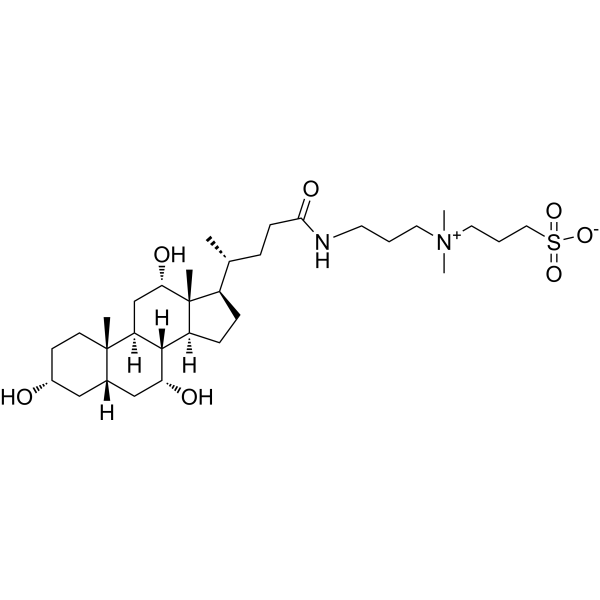
  • HY-15435
    CHAPS
    4 Publications Verification

    Exosomes Biochemical Assay Reagents Others
    CHAPS is a cholic acid-derived, sulfobetaine-type zwitterionic detergent and micelle-forming agent. CHAPS exhibits properties of weak cationic or nonionic surfactants in different solution systems, undergoes micellization, and forms small, loose hydrophilic aggregates that are temperature-dependent. CHAPS stabilizes mononucleosomes under different ionic strengths, reduces nucleosome sequence specificity, promotes sliding of histone cores along DNA, solubilizes Tamm-Horsfall protein to reduce its interference with urinary exosome isolation, and maintains vesicle structure and the activity of related proteins at the same time. CHAPS is used to recover native folded fusion proteins, enhance the binding capacity of GST fusion proteins, and restore GST enzyme activity. However, CHAPS cannot refold proteins denatured by urea, guanidine hydrochloride or heat, nor can it construct the structure of intrinsically disordered proteins. CHAPS is commonly used in research on the separation and purification of membrane proteins .
    CHAPS
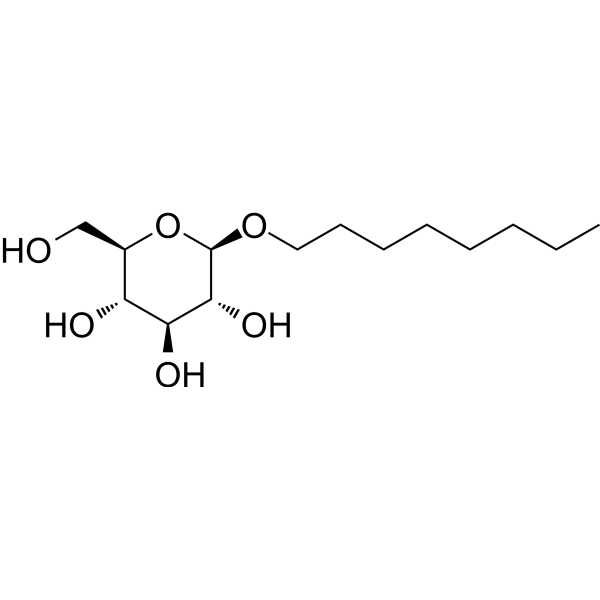
  • HY-116285
    n-Octyl β-D-glucopyranoside
    3 Publications Verification

    Biochemical Assay Reagents Others
    n-Octyl-β-d-glucopyranoside is a non-ionic detergent, it can be widely used in the research of biotechnical, biochemical applications, solubilization and crystallization of membrane proteins. n-Octyl-β-d-glucopyranoside can completely inhibit cavitation-induced cell lysis in vitro .
    n-Octyl β-D-glucopyranoside
  • HY-138941
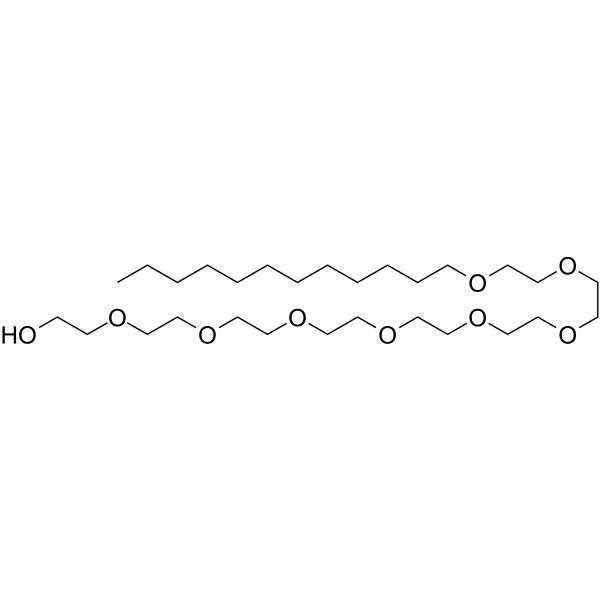
    Octaethylene glycol monododecyl ether
    1 Publications Verification

    C12E8

    Influenza Virus Infection
    Octaethylene glycol monododecyl ether (C12E8) is an non-ionic detergent that can be used for membrane protein extraction. Octaethylene glycol monododecyl ether can solubilize the viral membrane of intact influenza virus .
    Octaethylene glycol monododecyl ether
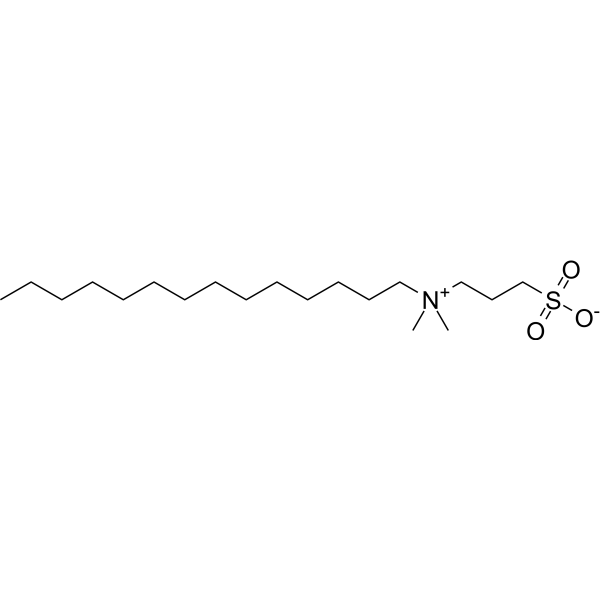
  • HY-W099581
    Sulfobetaine-14
    2 Publications Verification

    SB3-14; DMAPS

    Biochemical Assay Reagents Others
    Zwittergent 3-14 (DMAPS) is a zwitterionic detergent commonly used in biochemistry and molecular biology for the solubilization and purification of membrane-bound proteins and other hydrophobic biomolecules, which have both hydrophilic and hydrophobic moieties , so that it has good detergency properties, making it suitable for stabilizing membrane proteins in aqueous solutions. In addition, DMAPS has been used in various techniques such as electrophoresis and chromatography for the separation and analysis of biomolecules. The long The hydrocarbon chains provide it with good membrane penetration and solubilization capabilities, while the sulfonate and quaternary ammonium groups ensure water solubility and charge neutrality.
    Sulfobetaine-14
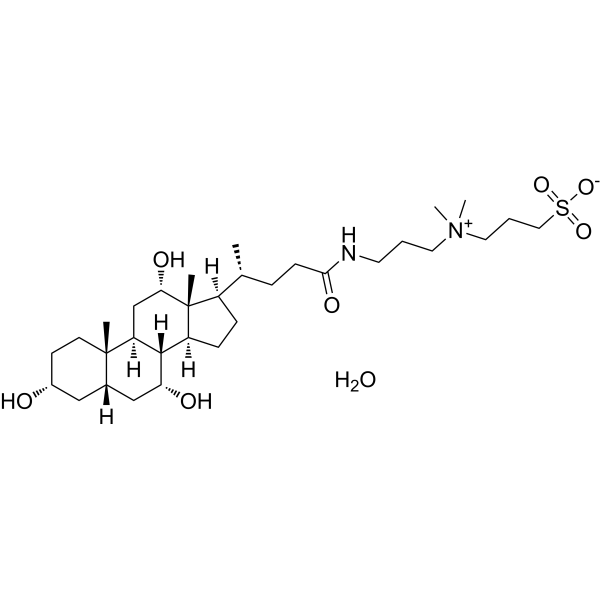
  • HY-15435A
    CHAPS hydrate
    4 Publications Verification

    Biochemical Assay Reagents Exosomes Others
    CHAPS hydrate is a cholic acid-derived, sulfobetaine-type zwitterionic detergent and micelle-forming agent. CHAPS hydrate exhibits properties of weak cationic or nonionic surfactants in different solution systems, undergoes micellization, and forms small, loose hydrophilic aggregates that are temperature-dependent. CHAPS hydrate stabilizes mononucleosomes under different ionic strengths, reduces nucleosome sequence specificity, promotes sliding of histone cores along DNA, solubilizes Tamm‑Horsfall protein to reduce its interference with urinary exosome isolation, and maintains vesicle structure and the activity of related proteins at the same time. CHAPS hydrate is used to recover native folded fusion proteins, enhance the binding capacity of GST fusion proteins, and restore GST enzyme activity. However, CHAPS hydrate cannot refold proteins denatured by urea, guanidine hydrochloride or heat, nor can it construct the structure of intrinsically disordered proteins. CHAPS hydrate is commonly used in research on the separation and purification of membrane proteins .
    CHAPS hydrate
  • HY-W040201

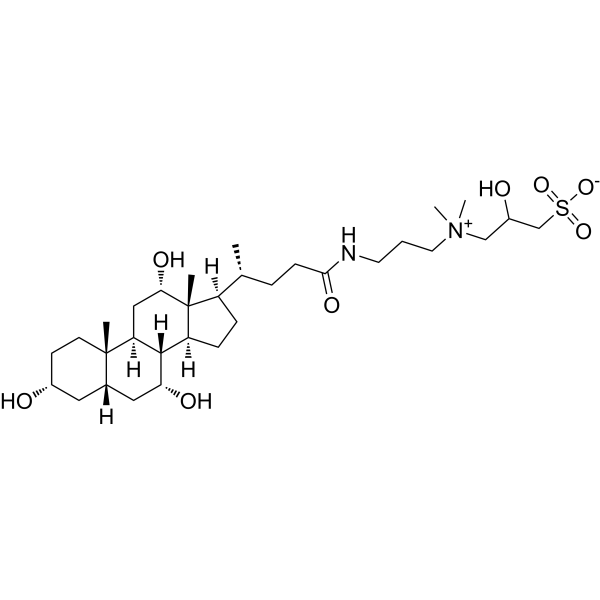
    3-[3-(Cholamidopropyl)dimethylammonio]-2-hydroxy-1-propanesulfonate

    Biochemical Assay Reagents Others
    CHAPSO is a bile derivative. CHAPSO reduces protein adsorption, improves the cryo-EM imaging quality. CHAPSO can be used as a detergent, or as the membrane protein solubilization and reconstruction reagent in membrane protein structural studies .
    CHAPSO
  • HY-W250195

    Biochemical Assay Reagents Others
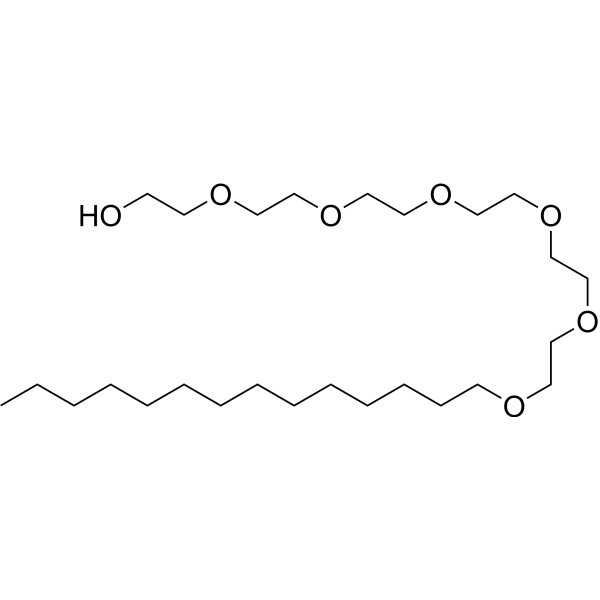
    Hexaethylene glycol monotetradecyl ether is a kind of nonionic surfactant with hydrophilic head and lipophilic tail. It belongs to the class of polyethylene glycol (PEG) ethers and is widely used in different industrial and research applications. Due to its unique properties, Hexaethylene glycol monotetradecyl ether is commonly used in lotions, detergents and solubilizers. It is particularly useful in the study of membrane proteins and can be used to stabilize and solubilize proteins for use in structural analysis techniques. Due to its moisturizing and emulsifying properties, Hexaethylene glycol monotetradecyl ether is also used in personal care and cosmetics.
    Hexaethylene glycol monotetradecyl ether
  • HY-W250172

    Biochemical Assay Reagents Others
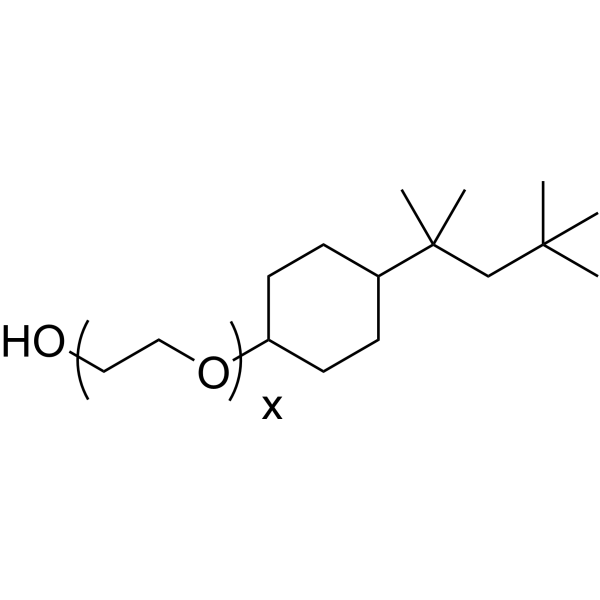
    Polyethylene glycol tert-octylphenyl ether X-405 (70% in H2O) is a nonionic surfactant commonly used in a variety of industrial and research applications. Polyethylene glycol tert-octylphenyl ether X-405 (70% in H2O) belongs to the family of polyethylene glycol (PEG) ethers with a hydrophilic head and lipophilic tail and is suitable for use in emulsions, detergents and solubilizers. Polyethylene glycol tert-octylphenyl ether X-405 (70% in H2O) is particularly useful in the study of membrane proteins, where it is used to solubilize and stabilize proteins for structural analysis techniques. It is also used in a variety of other applications, including drug delivery systems, nanotechnology, and diagnostic analysis. Additionally, Polyethylene glycol tert-octylphenyl ether X-405 (70% in H2O) is used in the production of microemulsions, salves and lotions due to its emulsifying and solubilizing properties. However, it can be toxic if ingested or inhaled, so proper handling and safety precautions are required.
    Polyethylene glycol tert-octylphenyl ether X-405 (70% in H2O)
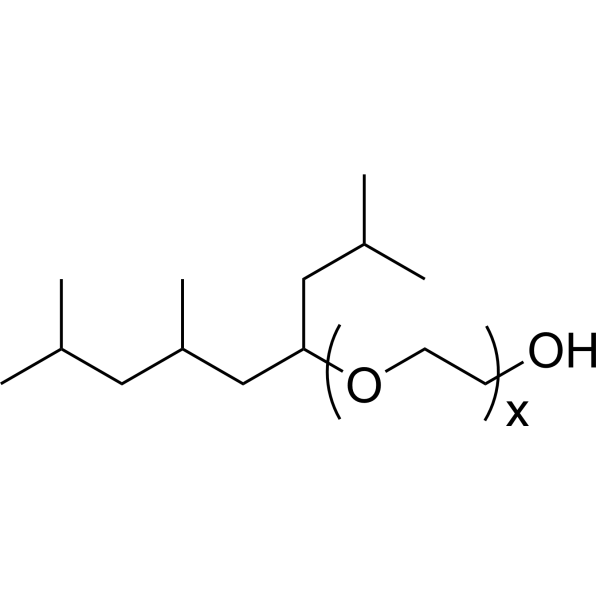
  • HY-W250176

    Biochemical Assay Reagents Others
    Polyethylene glycol trimethylnonyl ether, is a nonionic surfactant commonly used in various industrial and research applications. It belongs to the family of polyethylene glycol (PEG) ethers with a hydrophilic head and lipophilic tail and is suitable for use in lotions, detergents and solubilizers. Polyethylene glycol trimethylnonyl ether is particularly useful in protein chemistry, where it is used to solubilize and stabilize proteins, such as membrane proteins, for structural analysis techniques. In addition, Polyethylene glycol trimethylnonyl ether has potential applications in drug delivery and other medical fields due to its ability to interact with and penetrate cell membranes.
    Polyethylene glycol trimethylnonyl ether
  • HY-W099581R

    SB3-14 (Standard); DMAPS (Standard)

    Biochemical Assay Reagents Reference Standards Others
    Sulfobetaine-14 (Standard) is the analytical standard of Sulfobetaine-14. This product is intended for research and analytical applications. Zwittergent 3-14 (DMAPS) is a zwitterionic detergent commonly used in biochemistry and molecular biology for the solubilization and purification of membrane-bound proteins and other hydrophobic biomolecules, which have both hydrophilic and hydrophobic moieties , so that it has good detergency properties, making it suitable for stabilizing membrane proteins in aqueous solutions. In addition, DMAPS has been used in various techniques such as electrophoresis and chromatography for the separation and analysis of biomolecules. The long The hydrocarbon chains provide it with good membrane penetration and solubilization capabilities, while the sulfonate and quaternary ammonium groups ensure water solubility and charge neutrality.
    Sulfobetaine-14 (Standard)
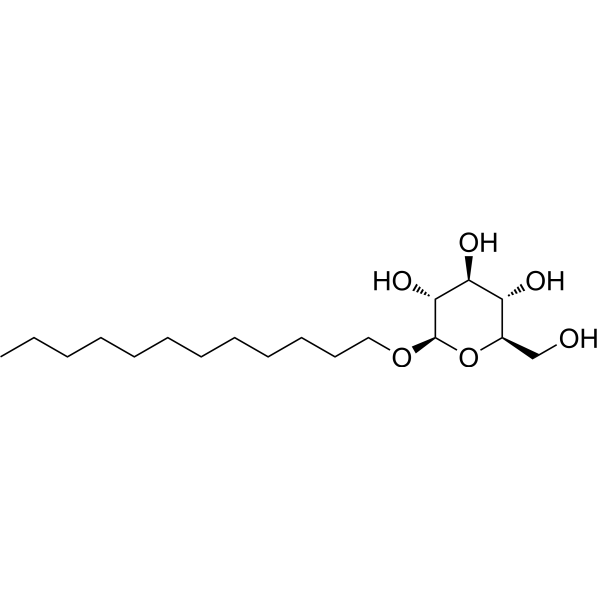
  • HY-W142692

    Biochemical Assay Reagents Others
    Dodecyl β-D-glucopyranoside is a non-ionic detergent and surfactant commonly used to solubilize and purify membrane proteins in biochemical research. Dodecyl β-D-glucopyranoside also interacts with bovine serum albumin (BSA) to quench its intrinsic fluorescence. The critical micelle concentration (CMC) of Dodecyl β-D-glucopyranoside (DG) and DG/BSA complex is 2.0 mM and 2.34 mM, respectively. Micelles can be formed in aqueous solutions above this concentration .
    Dodecyl β-D-glucopyranoside
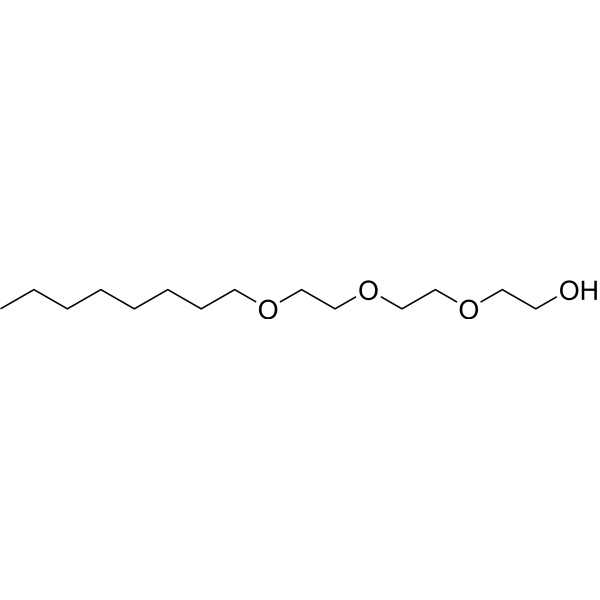
  • HY-W127401

    n-Octyltrioxyethylene

    Biochemical Assay Reagents Others
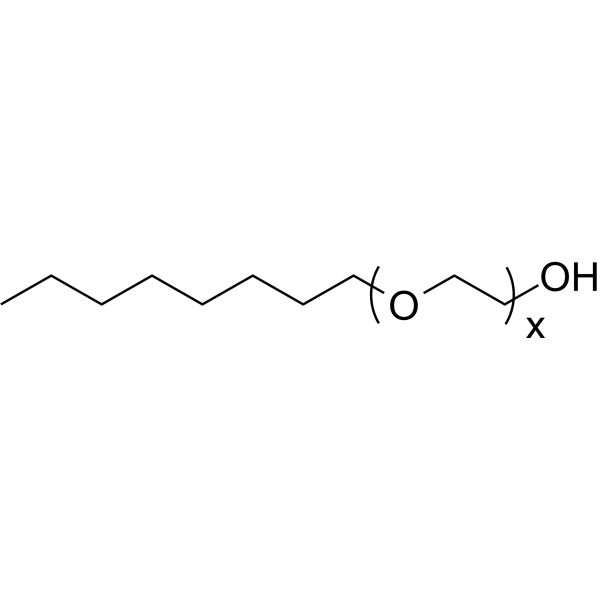
    Triethylene glycol monooctyl ether is a surfactant, C8E3 solubilizes membrane proteins.
    Triethylene glycol monooctyl ether
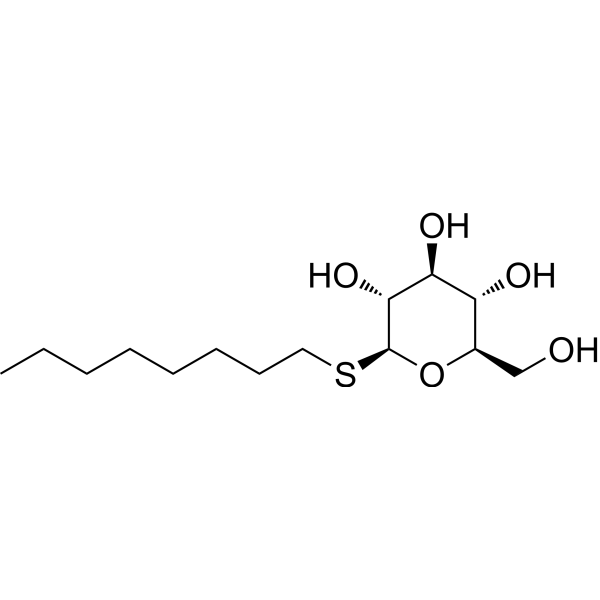
  • HY-W040224

    Biochemical Assay Reagents Others
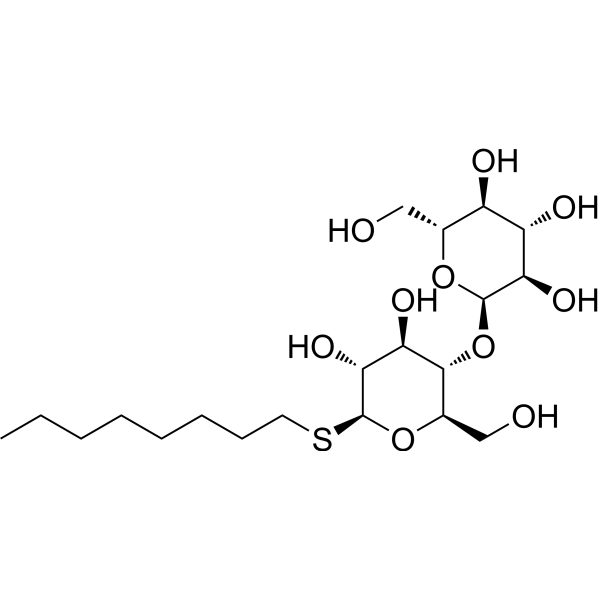
    Octyl β-D-thioglucopyranoside is a non-ionic detergent that can be used in the field of membrane biochemistry. Octyl β-D-thioglucopyranoside has the ability to solubilize E. coli membrane proteins .
    Octyl β-D-thioglucopyranoside
  • HY-W283166

    Biochemical Assay Reagents Others
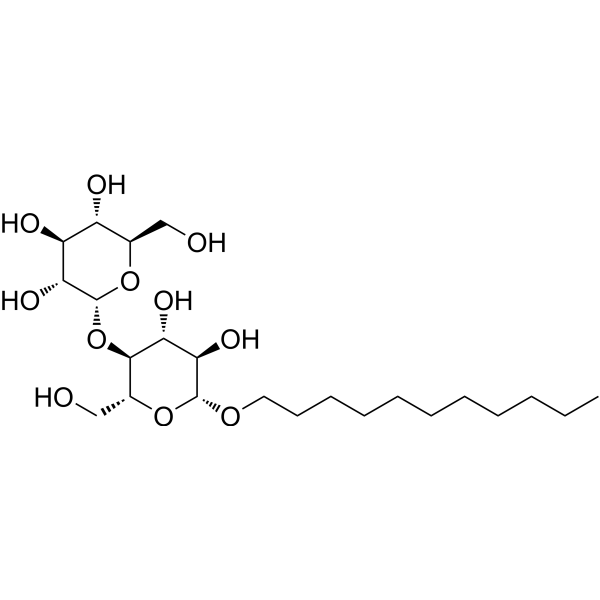
    n-Undecyl β-D-maltopyranoside is an n-alkyl β-D-maltopyranoside detergent that can be used for solubilization and structural determination of membrane proteins. n-Undecyl β-D-maltopyranoside effectively solubilizes CST from Golgi-enriched fractions of Pichia pastoris, but fails to maintain the functional activity of CST during subsequent partial purification and reconstitution into proteoliposomes. n-Undecyl β-D-maltopyranoside is more suitable for structural analysis studies of membrane proteins rather than functional reconstitution experiments .
    n-Undecyl β-D-maltopyranoside
  • HY-W250171

    Polyoxyethylene (10) cetyl ether

    Biochemical Assay Reagents Others
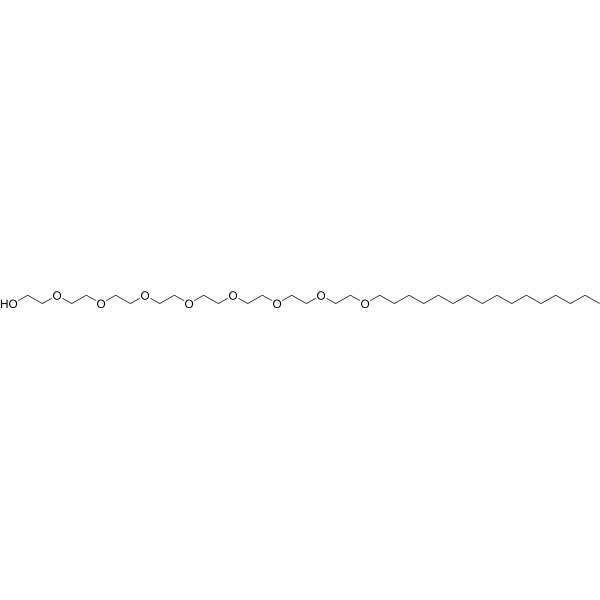
    Octaethylene glycol monohexadecyl ether, is a nonionic surfactant commonly used in various industrial and research applications. Octaethylene glycol monohexadecyl ether belongs to the family of polyethylene glycol (PEG) ethers with a hydrophilic head and lipophilic tail, suitable for use in lotions, detergents and solubilizers. Octaethylene glycol monohexadecyl ether is particularly useful in the study of membrane proteins, where it is used to solubilize and stabilize proteins for structural analysis techniques. In addition, Octaethylene glycol monohexadecyl ether has the ability to interact with and penetrate cell membranes, so it has potential applications in drug delivery and other medical fields.
    Octaethylene glycol monohexadecyl ether
  • HY-W250181

    Octyl β-D-thiomaltopyranoside

    Biochemical Assay Reagents Others
    Octyl thiomaltoside (OTM) is a nonionic detergent commonly used in the purification and crystallization of membrane proteins. It belongs to the family of maltoside detergents and has a hydrophilic head group and a lipophilic tail group, enabling it to interact with water-soluble and membrane-bound proteins. OTMs are known for their ability to solubilize integral membrane proteins without disrupting their structure or function, making them an invaluable tool in biochemical and biophysical research. In addition to protein research, OTMs are used in a variety of other applications, including drug delivery systems, nanotechnology, and diagnostic analysis.
    Octyl thiomaltoside
  • HY-116285S1

    Isotope-Labeled Compounds Others
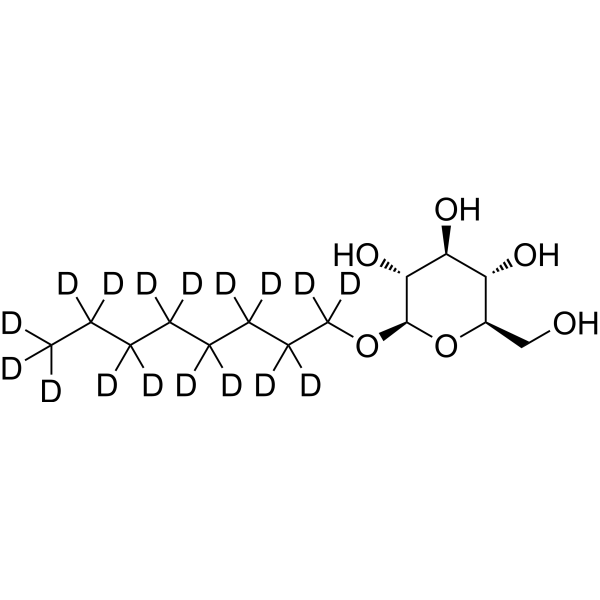
    1-O-n-Octyl-β-D-glucopyranoside-d17 is the deuterium labeled n-Octyl β-D-glucopyranoside . n-Octyl-β-d-glucopyranoside is a non-ionic detergent, it can be widely used in the research of biotechnical, biochemical applications, solubilization and crystallization of membrane proteins .
    1-O-n-Octyl-β-D-glucopyranoside-d17
  • HY-W019895

    Biochemical Assay Reagents Others
    Tetradecylphosphocholine is a zwitterionic surfactant that can be used as a detergent for membrane protein solubilization .
    Tetradecylphosphocholine
  • HY-W040218

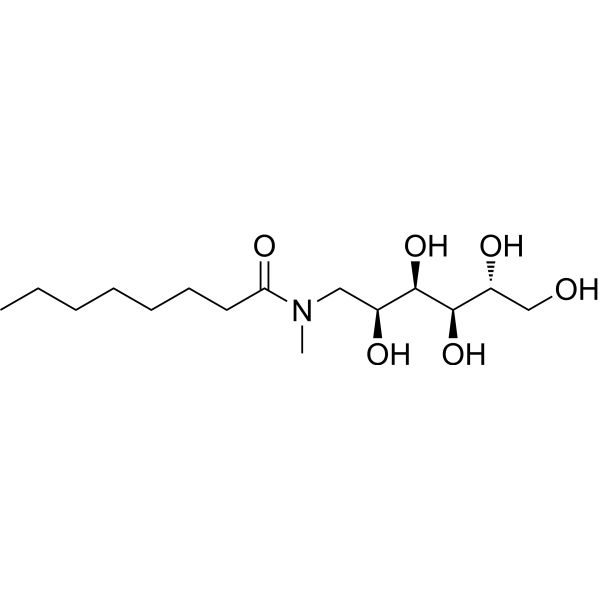
    N-Octanoyl-N-methylglucamine

    Biochemical Assay Reagents Others
    MEGA-8 (N-Octanoyl-N-methylglucamine) is a nonionic sugar-based surfactant. MEGA-8 can gently solubilize membrane proteins without easily causing their denaturation. MEGA-8 is a commonly used reagent for the extraction and study of membrane proteins in biochemistry .
    MEGA-8
  • HY-15435R

    Biochemical Assay Reagents Others
    CHAPS (Standard) is the analytical standard of CHAPS. This product is intended for research and analytical applications. CHAPS, a derivative of Cholic acid, is a zwitterionic detergent for solubilizing membrane proteins. CHAPS is used for stabilization of various protein-DNA complexes and can retain biochemical activity of proteins in solution .
    CHAPS (Standard)
  • HY-136962

    Amidosulfobetaine-14

    Biochemical Assay Reagents Others
    ASB-14 (Amidosulfobetaine-14) is a zwitterionic amidosulfobetaine surfactant with membrane protein solubilizing. ASB-14 can be used for the preparative extraction and solubilization of proteins .
    ASB-14
  • HY-175412

    Dodecylmercapto-S-(poly(tris(hydroxymethyl)acrylamidomethane); H12-TAC

    Biochemical Assay Reagents Others
    DDTAC (H12-TAC) is a detergent that can extract and solubilize membrane proteins. DDTAC has a thio dodecanoyl chain linked to a polar group made of Tris polyalcoholic moieties and can be utilized in extracting yeast ATP synthase from mitochondrial membranes .
    DDTAC
  • HY-158883

    Biochemical Assay Reagents Others
    ODG is a detergent that can solubilize membrane proteins .
    ODG
  • HY-W250178

    Biochemical Assay Reagents Others
    Octaethylene glycol monodecyl ether, is a nonionic surfactant commonly used in various industrial and research applications. It belongs to the family of polyethylene glycol (PEG) ethers with a hydrophilic head and lipophilic tail and is suitable for use in lotions, detergents and solubilizers. Octaethylene glycol monodecyl ether is particularly useful in the study of membrane proteins, where it is used to solubilize and stabilize proteins for structural analysis techniques. In addition, Octaethylene glycol monodecyl ether has the ability to interact with and penetrate cell membranes, so it has potential applications in drug delivery and other medical fields.
    Octaethylene glycol monodecyl ether
  • HY-138941R

    C12E8 (Standard)

    Influenza Virus Reference Standards Infection
    Octaethylene glycol monododecyl ether (Standard) is the analytical standard of Octaethylene glycol monododecyl ether. This product is intended for research and analytical applications. Octaethylene glycol monododecyl ether (C12E8) is an non-ionic detergent that can be used for membrane protein extraction. Octaethylene glycol monododecyl ether can solubilize the viral membrane of intact influenza virus .
    Octaethylene glycol monododecyl ether (Standard)
  • HY-160281

    GCGR Adenosine Receptor Metabolic Disease
    CCD-2 is a conventional detergent and is readily degraded. CCD-2 can efficiently solubilize and stabilize diverse G protein-coupled receptors (GPCRs). CCD-2 is amenable to the β-barrel protein research. The chemical cleavage of CCD-2 is rapid, complete and biorthogonal and should facilitate a chemical methodology for in situ detergent replacement in diverse membrane proteins (MPs) studies .
    CCD-2
  • HY-W250179

    Polyoxyethylene (6) cetyl ether

    Biochemical Assay Reagents Others
    Hexaethylene glycol monohexadecyl ether, is a nonionic surfactant belonging to the polyethylene glycol (PEG) ether family. It has a hydrophilic head and a lipophilic tail, which makes it suitable for a wide range of applications. Specifically, Hexaethylene glycol monohexadecyl ether is commonly used in membrane protein research, for solubilization and stabilization of proteins, and for structural analysis techniques such as X-ray crystallography and electron microscopy. Additionally, Hexaethylene glycol monohexadecyl ether is used in a variety of other industrial and research applications, including drug delivery systems, nanotechnology, and diagnostic analysis. Its unique properties make it ideal for facilitating interactions between molecules with different physicochemical properties.
    Hexaethylene glycol monohexadecyl ether
  • HY-158884

    Biochemical Assay Reagents Others
    CALXCHOL sodium is a calixarene detergent that can be used to solubilize and stabilize membrane proteins.
    CALXCHOL sodium
  • HY-175413

    Biochemical Assay Reagents Others
    FTAC6 (C6F-TAC) is a lipophobic surfactant. FTAC6 does not solubilize biological membranes as a non-detergent and can substitute for detergents to keep membrane proteins soluble and improves stability after conventional solubilization. FTAC6 can be utilized in in vitro synthesis of membrane proteins .
    FTAC6
  • HY-158724

    Biochemical Assay Reagents Others
    Calxgluk (compound 18 in page 22) is a calixarene detergent that can be used to solubilize membrane proteins .
    Calxgluk
  • HY-185564

    Biochemical Assay Reagents Others
    F6OM, a nonionic fluorinated octyl maltoside derivative, is a surfactant. F6OM readily interacts with and completely solubilizes phospholipid vesicles via a heterogeneous solubilization mechanism, without compromising membrane order at subsolubilizing concentrations. F6OM promotes bilayer insertion of an integral membrane enzyme in the absence of micelles to support functional refolding of integral membrane proteins. F6OM can be used for membrane-protein applications .
    F6OM
  • HY-158882

    Biochemical Assay Reagents Adenosine Receptor Others
    FLAC6 is a potent fluorinated detergent that can be used to solubilize membrane proteins (the native adenosine receptor A2AR, a G protein-coupled receptor, and two native transporters AcrB and BmrA). FLAC6 can maintain the structural and functional integrity of different membrane proteins .
    FLAC6
  • HY-168379

    Biochemical Assay Reagents Others
    DLAC is a detergent synthesized from Lactobionic acid (HY-N7059). DLAC can be used to solubilize membrane proteins, with a critical micelle concentration (CMC) of 1.3 mM .
    DLAC
  • HY-138193S

    LMNG-d42

    Isotope-Labeled Compounds Others
    Lauryl maltose neopentyl glycol-d42 (LMNG-d42) is the deuterium labeled Lauryl maltose neopentyl glycol (HY-138193). Lauryl maltose neopentyl glycol (LMNG) is a detergent that can solubilize and stabilize membrane proteins. Lauryl maltose neopentyl glycol extracts integral membrane proteins from membranes, and improves substantially the stability of various membrane proteins, including G protein-coupled receptors and respiratory complexes .
    Lauryl maltose neopentyl glycol-d42
  • HY-185061

    Biochemical Assay Reagents Others
    HEGA-10 is a mild detergent with a high critical micelle concentration (CMC), which can be used to dissolve and extract proteins (HIV-1 spike protein) from the membranes of virus-like particles (VLPs) .
    HEGA-10

Inquiry Online

Your information is safe with us. * Required Fields.

Salutation


Country or Region *

Applicant Name *


Organization Name *

Department *


Email Address *


Product Name *

Cat. No.


Requested quantity *

Phone Number *


Remarks

Inquiry Online

Inquiry Information

Product Name:
Cat. No.:
Quantity:
MCE Japan Authorized Agent:

