







1. Search Result
Search Result
Results for "

mitotic clonal expansion (MCE)

" in MedChemExpress (MCE) Product Catalog:

522

Inhibitors & Agonists

292

Screening Libraries

15

Fluorescent Dyes

10

Biochemical Assay Reagents

44

Peptides

472

MCE Kits

17

Inhibitory Antibodies

66

Natural
Products

3

Recombinant Proteins

22

Isotope-Labeled Compounds

28

Antibodies

6

Click Chemistry

8

Oligonucleotides

2

GMP Molecules

Cat. No. Product Name Target Research Areas Chemical Structure
  • HY-10971
    Alisertib
    70+ Cited Publications

    MLN 8237

    Aurora Kinase Autophagy Apoptosis Cancer
    Alisertib (MLN 8237) is an orally active and selective Aurora A kinase inhibitor (IC50=1.2 nM), which binds to Aurora A kinase resulting in mitotic spindle abnormalities, mitotic accumulation. Alisertib (MLN 8237) induces apoptosis and autophagy through targeting the AKT/mTOR/AMPK/p38 pathway in leukemic cells. Antitumor activity .
    Alisertib
  • HY-N0293
    Paeoniflorin
    35+ Cited Publications

    Peoniflorin

    HSP Infection Neurological Disease Cancer
    Paeoniflorin is a heat shock protein-inducing compound and commonly exists in the plants of Paeoniaceae family, with various biological activities, including anticancer activity, anti-inflammatory activity, enhancing cognition and attenuating learning impairment, anti-oxidative stress, antiplatelet aggregation, expansion of blood vessels, and reducing blood viscosity .
    Paeoniflorin
  • HY-12137
    Volasertib
    30+ Cited Publications

    BI 6727

    Polo-like Kinase (PLK) Apoptosis Cancer
    Volasertib (BI 6727) is an orally active, highly potent and ATP-competitive Polo-like kinase 1 (PLK1) inhibitor with an IC50 of 0.87 nM. Volasertib inhibits PLK2 and PLK3 with IC50s of 5 and 56 nM, respectively. Volasertib induces mitotic arrest and apoptosis. Volasertib, a dihydropteridinone derivative, shows marked antitumor activity in multiple cancer models .
    Volasertib
  • HY-18569
    3-Indoleacetic acid
    20+ Cited Publications

    Indole-3-acetic acid; 3-IAA

    Environmental Pollutants Endogenous Metabolite Metabolic Disease
    3-Indoleacetic acid is is an IAA hormone and growth regulator that can promote plant nutritional growth through processes such as cell expansion, differentiation, morphogenesis, and organogenesis .
    3-Indoleacetic acid
  • HY-N0282
    Demecolcine
    5+ Cited Publications

    Microtubule/Tubulin Apoptosis Inflammation/Immunology Cancer
    Demecolcine is a potent mitotic inhibitor with an IC50 value of 2.4 μM for inhibition of tubulin polymerization. Colcemid (Demecolcine) can interact with tubulin dimers to induce anti-mitotic action and inhibit microtubule growth. Colcemid (Demecolcine) can be used for inflammatory disorders and cancer research .
    Demecolcine
  • HY-N0007
    (E,E)-Bisdemethoxycurcumin
    4 Publications Verification

    (E,E)-Curcumin III; (E,E)-Didemethoxycurcumin

    Apoptosis Autophagy Cancer
    (E,E)-Bisdemethoxycurcumin ((E,E)-Curcumin III) is a curcumin derivative with anti-inflammatory and anticancer activities .
    (E,E)-Bisdemethoxycurcumin
  • HY-P2260
    Tat-beclin 1
    5+ Cited Publications

    CHIKV Autophagy HIV Infection
    Tat-beclin 1, a peptide derived from a region of the autophagy protein (beclin 1), is a potent inducer of autophagy and interacts with negative regulator of autophagy, GAPR-1 (GLIPR2). Tat-beclin 1 decreases the accumulation of polyglutamine expansion protein aggregates and the replication of several pathogens (including HIV-1) in vitro, and reduces mortality in mice infected with chikungunya (CHIKV) or West Nile virus (WNV) .
    Tat-beclin 1
  • HY-13716
    Noscapine
    2 Publications Verification

    (S,R)-Noscapine

    Opioid Receptor Apoptosis Neurological Disease Inflammation/Immunology Cancer
    Noscapine ((S,R)-Noscapine) is an orally active phthalideisoquinoline alkaloid with potent antitussive. Noscapine exerts its antitussive effects by activating sigma opioid receptors and is a non-competitive Bradykinin inhibitor. Noscapine disrupts microtubule dynamics, induces mitotic arrest and apoptosis. Noscapine possesses anticancer, neuroprotective, anti-inflammatory activities, and can cross the blood-brain barrier .
    Noscapine
  • HY-13674

    NSC 153858

    Microtubule/Tubulin Cancer
    Maytansine is a highly potent microtubule-targeted compound that induces mitotic arrest and kills tumor cells at subnanomolar concentrations .
    Maytansine
  • HY-Y0481

    Stannous chloride, 98%; Tin(II) chloride, anhydrous, 98%; Anhydrous stannous chloride, 98%

    Biochemical Assay Reagents Reactive Oxygen Species (ROS) Others
    Tin(II) chloride, 98% (Stannous chloride) is a biochemical reagent with genotoxicity, mutagenicity, mitotic recombinogenicity, and reactive oxygen species-inducing activity .
    Tin(II) chloride, 98%
  • HY-135960
    BO-264
    1 Publications Verification

    FGFR Apoptosis Cancer
    BO-264 is a highly potent and orally active transforming acidic coiled-coil 3 (TACC3) inhibitor with an IC50 of 188 nM and a Kd of 1.5 nM. BO-264 specifically blocks the function of FGFR3-TACC3 fusion protein. BO-264 induces spindle assembly checkpoint (SAC)-dependent mitotic arrest, DNA damage and apoptosis. BO-264 has broad-spectrum antitumor activity .
    BO-264
  • HY-B0413
    Fenbendazole
    5+ Cited Publications

    Parasite HIF/HIF Prolyl-Hydroxylase Microtubule/Tubulin Antibiotic Infection Cancer
    Fenbendazole is an orally active benzimidazole anthelmintic agent, with a broad antiparasitic range. Fenbendazole is a microtubule destabilizing agent and acts on helminthes primarily by binding to tubulin and disrupting the tubulin microtubule equilibrium. Fenbendazole stabilizes the transcriptional activator HIF-1α. Fenbendazole possesses an efficient anti-proliferative activity and induces apoptosis. Fenbendazole causes cell-cycle arrest and mitotic cell death, and has antitumor activity in mice xenografted with wild-type p53 .
    Fenbendazole
  • HY-134669

    N-Cyclopropene-L-Lysine

    Amino Acid Derivatives Cancer
    CypK (N-Cyclopropene-L-Lysine), a cyclopropene derivative of lysine, is efficiently incorporated into antibodies through genetic-code expansion. CypK is a minimal bioorthogonal handle for the creation of stable therapeutic protein conjugates .
    CypK
  • HY-50672

    Kinesin Apoptosis Lipoxygenase Cancer
    MK-0731 is a selective, non-competitive and allosteric kinesin spindle protein (KSP) inhibitor with an IC50 of 2.2 nM and a pKa of 7.6. MK-0731 is >20,000 fold selectivity against other kinesins. MK-0731 induces mitotic arrest and induces apoptosis in tumors. MK-0731 provides significant antitumor efficacy .
    MK-0731
  • HY-Y0481A

    Stannous chloride dihydrate; Tin dichloride dihydrate

    Biochemical Assay Reagents Reactive Oxygen Species (ROS) Others
    Tin(II) chloride dihydrate (Stannous chloride dihydrate) is a biochemical reagent with genotoxicity, mutagenicity, mitotic recombinogenicity, and reactive oxygen species-inducing activity .
    Tin(II) chloride dihydrate
  • HY-P10932A

    Fluorescent Dye Neurological Disease
    pGk13a TFA is an azide (azide group can be combined with fluorophore)-containing amphiphilic membrane labeling probe. pGk13a TFA enables high-resolution imaging of cell membranes in the ultrastructural membrane expansion microscopy (umExM) technique, facilitating the observation of membrane-associated structures and proteins. pGk13a TFA can be used for neuronal structural studies .
    pGk13a TFA
  • HY-113057

    Endogenous Metabolite Cancer
    3-Hydroxycapric acid is an inhibitor for mitotic progression.
    3-Hydroxycapric acid
  • HY-13649
    Indibulin
    1 Publications Verification

    ZIO 301; D 24851

    Apoptosis Microtubule/Tubulin Checkpoint Kinase (Chk) Neurological Disease Cancer
    Indibulin (ZIO 301), an orally applicable inhibitor of tubulin assembly, shows potent anticancer activity with a minimal neurotoxicity. Indibulin reduces inter-kinetochoric tension, produces aberrant spindles, activates mitotic checkpoint proteins Mad2 and BubR1, and induces mitotic arrest and apoptosis .
    Indibulin
  • HY-145034
    KIF18A-IN-1
    1 Publications Verification

    Kinesin Cancer
    KIF18A-IN-1 is an inhibitor of the mitotic kinesin KIF18A with anti-tumor activity. KIF18A targeted inhibitors may activate mitotic checkpoints and selectively kill chromosomally unstable cancer cells .
    KIF18A-IN-1
  • HY-10593

    Wnt Others
    IQ 1 is a Wnt/β-catenin/CBP signalling sustainer. IQ 1 maintains long-term expansion of Wnt/β-catenin-driven mouse embryonic stem cells (ESCs) and prevents spontaneous differentiation by enhancing β-catenin/CBP-mediated transcription and preventing conversion to β-catenin/p300-mediated transcription. IQ-1 regulates Wnt signalling by interacting with PR72/130. IQ 1 can be used in study of ESCs expansion .
    IQ 1
  • HY-109086
    Edicotinib
    3 Publications Verification

    JNJ-40346527; JNJ-527

    c-Fms Neurological Disease Inflammation/Immunology Cancer
    Edicotinib (JNJ-40346527) is a potent, selective, brain penetrant and orally active colony-stimulating factor-1 receptor (CSF-1R) inhibitor with an IC50 of 3.2 nM. Edicotinib exhibits less inhibitory effects on KIT and FLT3 with IC50 values of 20 nM and 190 nM, respectively . Edicotinib limits microglial expansion and attenuates microglial proliferation and neurodegeneration in mice. Edicotinib has the potential for Alzheimer’s disease and rheumatoid arthritis research .
    Edicotinib
  • HY-P1103
    CTCE-9908
    1 Publications Verification

    CXCR Cancer
    CTCE-9908 is a potent and selective CXCR4 antagonist. CTCE-9908 induces mitotic catastrophe, cytotoxicity and inhibits migration in CXCR4-expressing ovarian cancer cells .
    CTCE-9908
  • HY-13716A
    Noscapine hydrochloride
    2 Publications Verification

    (S,R)-Noscapine hydrochloride

    Opioid Receptor Apoptosis Neurological Disease Inflammation/Immunology Cancer
    Noscapine ((S,R)-Noscapine) hydrochloride is an orally active phthalideisoquinoline alkaloid with potent antitussive. Noscapine hydrochloride exerts its antitussive effects by activating sigma opioid receptors and is a non-competitive Bradykinin inhibitor. Noscapine hydrochloride disrupts microtubule dynamics, induces mitotic arrest and apoptosis. Noscapine hydrochloride possesses anticancer, neuroprotective, anti-inflammatory activities, and can crosse the blood-brain barrier .
    Noscapine hydrochloride
  • HY-B0413S
    Fenbendazole-d3
    5 Publications Verification

    HIF/HIF Prolyl-Hydroxylase Parasite Microtubule/Tubulin Antibiotic Infection
    Fenbendazole-d3 is a deuterium labeled Fenbendazole. Fenbendazole-d3 is a HIF-1α agonist and activates the HIF-1α-related GLUT1 pathway. Fenbendazole is an orally active benzimidazole anthelmintic agent, with a broad antiparasitic range. Fenbendazole is a microtubule destabilizing agent. Fenbendazole causes cell-cycle arrest and mitotic cell death, and has antitumor activity in mice xenografted with wild-type p53 .
    Fenbendazole-d3
  • HY-132581
    Tadnersen
    1 Publications Verification

    BIIB078; IONIS-C9Rx

    Ras Others Neurological Disease
    Tadnersen (BIIB078), an antisense oligonucleotide (ASO), selectively targets C9ORF72 transcript variants 1 and 3 that carry the expansion .
    Tadnersen
  • HY-15000

    Kinesin Cancer
    EMD534085 is a potent and selective inhibitor of the mitotic kinesin-5 with an IC50 of 8 nM.
    EMD534085
  • HY-129478
    TC11
    2 Publications Verification

    Caspase Bcl-2 Family CDK Cancer
    TC11 is a MCL1 degrader and Caspase-9 and CDK1 activator. TC11 functions as a phenylacetylamide derivative and is structurally related to immunomodulatory active molecules. TC11 induces degradation of MCL1 leading to apoptotic death during prolonged mitotic arrest.
    TC11
  • HY-151971
    Aurora kinase-IN-3
    1 Publications Verification

    Aurora Kinase Polo-like Kinase (PLK) Cancer
    Aurora kinase-IN-3 (Compound 15a) is an orally active AURKB inhibitor that elicits an AURKB-suppressive activity by disrupting the mitotic localization of AURKB, rather than inhibiting its phosphorylation of H3 at Ser10 .
    Aurora kinase-IN-3
  • HY-12137A
    Volasertib trihydrochloride
    30+ Cited Publications

    BI 6727 trihydrochloride

    Polo-like Kinase (PLK) Apoptosis Cancer
    Volasertib (BI 6727) trihydrochloride is an orally active, highly potent and ATP-competitive Polo-like kinase 1 (PLK1) inhibitor with an IC50 of 0.87 nM. Volasertib trihydrochloride inhibits PLK2 and PLK3 with IC50s of 5 and 56 nM, respectively. Volasertib trihydrochloride induces mitotic arrest and apoptosis. Volasertib trihydrochloride, a dihydropteridinone derivative, shows marked antitumor activity in multiple cancer models .
    Volasertib trihydrochloride
  • HY-136310
    PIP4K-IN-a131
    2 Publications Verification

    PI5P4K Cancer
    PIP4K-IN-a131 is PIP4K lipid kinases inhibitor, with IC50s of 1.9 μM and 0.6 μM for purified PIP4K2A and PIP4Ks, respectively. PIP4K-IN-a131 exhibits cancer-selective lethality via dual blockade of the lipid kinase PIP4Ks and mitotic pathways .
    PIP4K-IN-a131
  • HY-W058849

    AMPK mTOR Apoptosis Cancer
    MT 63-78 is a specific and potent direct AMPK activator with an EC50 of 25 μM. MT 63–78 also induces cell mitotic arrest and apoptosis. MT 63-78 blocks prostate cancer growth by inhibiting the lipogenesis and mTORC1 pathways. MT 63-78 has antitumor effects .
    MT 63-78
  • HY-155363

    AMPK Metabolic Disease
    AMPK activator 13 is a potent activator of AMPK. AMPK activator 13 inhibits mitotic clonal expansion of 3T3-L1 cells by activating AMPK pathway and enhances cell mitochondrial oxygen consumption rate. AMPK activator 13 can be used in study obesity .
    AMPK activator 13
  • HY-116057

    Apoptosis Others
    Stemazole is a protective agent that promotes stem cell survival. Stemazole has the protective effect of human embryonic stem cells (hESCs). Stemazole enhances clonal expansion of single cells and decreases apoptosis. Stemazole for the study of stem cell survival in starvation culture .
    Stemazole
  • HY-110242

    Mps1 Apoptosis Cancer
    Mps-BAY2a is a monopolar spindle 1 (MPS1) inhibitor with an IC50 of 1 nM against human MPS1. Mps-BAY2a induces mitotic aberrations and apoptosis in cancer cells .
    Mps-BAY2a
  • HY-N0293R

    Peoniflorin (Standard)

    Reference Standards HSP Infection Neurological Disease Cancer
    Paeoniflorin (Standard) is the analytical standard of Paeoniflorin. This product is intended for research and analytical applications. Paeoniflorin is a heat shock protein-inducing compound and commonly exists in the plants of Paeoniaceae family, with various biological activities, including anticancer activity, anti-inflammatory activity, enhancing cognition and attenuating learning impairment, anti-oxidative stress, antiplatelet aggregation, expansion of blood vessels, and reducing blood viscosity .
    Paeoniflorin (Standard)
  • HY-124761

    Polo-like Kinase (PLK) Autophagy Mitosis Cancer
    Poloppin is a potent, cell penetrant inhibitor of the mitotic Polo-like kinase (PLK) (IC50=26.9 μM) and prevents the protein-protein interaction via the Polo-box domain (PBD) (Kd= 29.5 μM). Poloppin selectively kills cells expressing mutant KRAS, enhancing death in mitosis. Poloppin is used for the study of KRAS-mutant cancers as single agents, or in combination with c-MET inhibitors .
    Poloppin
  • HY-162934

    Apoptosis Connective Peptide Cancer
    TFCP2L1-IN-1 is a specific small molecule targeting TFCP2L1’s active domain with anti-cancer activity. TFCP2L1-IN-1 synergizes with Sorafenib (HY-10201) to induce Apoptosis and reduces cell proliferation, invasion, metastasis, clonal formation and sphere-forming capacity in hepatocellular carcinoma cells .
    TFCP2L1-IN-1
  • HY-P10932

    Fluorescent Dye Neurological Disease
    pGk13a is an amphipathic membrane-labeling probe containing an azide group, which can bind to fluorophores. pGk13a enables high-resolution imaging of cell membranes in the ultrastructure expansion microscopy (umExM) technique, facilitating the observation of membrane-associated structures and proteins. pGk13a is applicable to neuronal structure research .
    pGk13a
  • HY-B0413R

    Reference Standards Parasite HIF/HIF Prolyl-Hydroxylase Microtubule/Tubulin Antibiotic Infection
    Fenbendazole (Standard) is the analytical standard of Fenbendazole. This product is intended for research and analytical applications. Fenbendazole is an orally active benzimidazole anthelmintic agent, with a broad antiparasitic range. Fenbendazole is a microtubule destabilizing agent and acts on helminthes primarily by binding to tubulin and disrupting the tubulin microtubule equilibrium. Fenbendazole stabilizes the transcriptional activator HIF-1α. Fenbendazole possesses an efficient anti-proliferative activity and induces apoptosis. Fenbendazole causes cell-cycle arrest and mitotic cell death, and has antitumor activity in mice xenografted with wild-type p53 .
    Fenbendazole (Standard)
  • HY-B1347

    Adrenergic Receptor Inflammation/Immunology Endocrinology
    Clorprenaline hydrochloride is a β2-adrenergic receptor agonist that is implicated in bronchial expansion. Clorprenaline has the potential for asthma research .
    Clorprenaline hydrochloride
  • HY-177246A

    Kinesin Infection Cardiovascular Disease Inflammation/Immunology Cancer
    Mitotic kinesin-IN-1 (Example 80) hydrochloride is a Mitotic kinesin inhibitor. Mitotic kinesin-IN-1 hydrochloride inhibits cell proliferation by suppressing mitosis. Mitotic kinesin-IN-1 hydrochloride can be used for cancer, cardiac hypertrophy, immune and inflammatory disorders, fungal infections research .
    Mitotic kinesin-IN-1 hydrochloride
  • HY-145802

    Kinesin Microtubule/Tubulin Cancer
    KIF18A-IN-2 is a potent KIF18A inhibitor (IC50=28 nM). KIF18A-IN-2 causes significant mitotic arrest and increases the number of mitotic cells in tumor tissues. KIF18A-IN-2 can be used for researching cancer .
    KIF18A-IN-2
  • HY-P3742

    Tyrosinase MHC Cancer
    Tyrosinase (192-200), human mouse is a HLA-B*4403-restricted tyrosinase epitope with affinity for HLA-B4403 and HLA-B4402. Tyrosinase (192-200), human mouse binds to HLA-B*4403 to form a complex, which is recognized by the autologous cytotoxic T lymphocyte clone 22/31 derived from melanoma. Tyrosinase (192-200), human mouse binds to HLA-B4402 to form a complex, which is recognized by the CTL clone 329B/5 derived from healthy HLA-B4402 donors. Tyrosinase (192-200), human mouse is applicable to melanoma-related research .
    Tyrosinase (192-200), human mouse
  • HY-N7654

    Apoptosis Cancer
    (-)-Epipodophyllotoxin (2) is an antiproliferative agent against cancer cells isolated from American mayapple Podophyllum peltatum, with GI50s of 0.36 and 0.24 μM in HeLa cells and MCF-7 cells, respectively. (-)-Epipodophyllotoxin can inhibit mitotic spindle assembly in vitro .
    (-)-Epipodophyllotoxin
  • HY-148122

    p97 Cancer
    NW 1028 is a potent VCP/p97 inhibitor. NW 1028 targets the ND1L domain of p97 and inhibits the degradation of a p97-dependent reporter. NW 1028 has good binding affinity with Kd values of 100 and 285 nM for ND1L and full length p97, respectively. NW 1028 has the function of regulating the mitotic spindle of cells .
    NW 1028
  • HY-149086

    RAR/RXR Apoptosis PARP Bcl-2 Family Cancer
    BPA-B9 is a RXRα ligand and antagonist targeting the pRXRα-PLK1 interaction. BPA-B9 has excellent RXRα-binding affinity (KD=39.29 ± 1.12 nM). BPA-B9 inhibits the proliferation of cancer cells by inducing mitotic arrest and cell apoptosis .
    BPA-B9
  • HY-132581A
    Tadnersen sodium
    1 Publications Verification

    BIIB078 sodium; IONIS-C9Rx sodium

    Ras Neurological Disease
    Tadnersen sodium, an antisense oligonucleotide (ASO), selectively targets C9ORF72 transcript variants 1 and 3 that carry the expansion .
    Tadnersen sodium
  • HY-N11274

    4,4-Dimethylzymosterol; 14-Norlanosterol

    Endogenous Metabolite Drug Intermediate Others
    T-MAS (4,4-Dimethylzymosterol) serves as an intermediate in cholesterol biosynthesis, stimulating oocytes for meiosis and modulating cumulus expansion .
    T-MAS
  • HY-147006

    MT-VC-ZD02044

    Mitosis Cancer
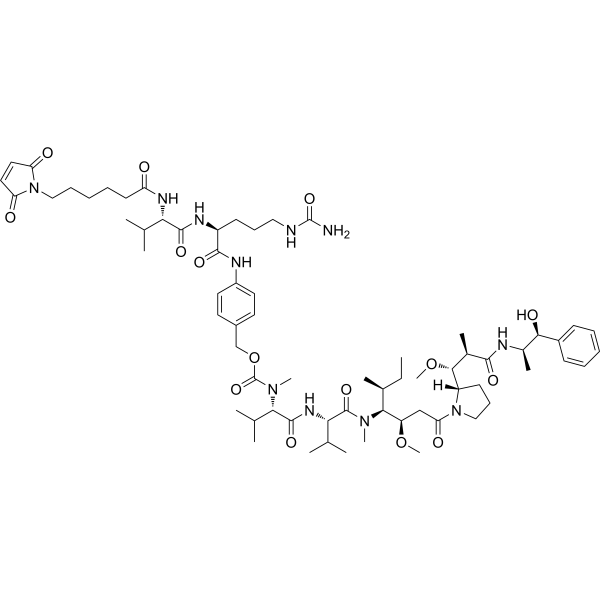
    MT-VC-ZD02044 is a cytotoxic and anti-mitotic agent .
    Zovodotin
  • HY-177247A

    Kinesin Infection Cardiovascular Disease Inflammation/Immunology Cancer
    Mitotic kinesin-IN-2 (Page 135, fifteenth) hydrochloride is a Mitotic kinesin inhibitor. Mitotic kinesin-IN-2 hydrochloride inhibits cell proliferation by suppressing mitosis. Mitotic kinesin-IN-2 hydrochloride can be used for cancer, cardiac hypertrophy, immune and inflammatory disorders, fungal infections research .
    Mitotic kinesin-IN-2 hydrochloride

Inquiry Online

Your information is safe with us. * Required Fields.

Salutation


Country or Region *

Applicant Name *


Organization Name *

Department *


Email Address *


Product Name *

Cat. No.


Requested quantity *

Phone Number *


Remarks

Inquiry Online

Inquiry Information

Product Name:
Cat. No.:
Quantity:
MCE Japan Authorized Agent:

